


Introduction
The Late Neolithic in the Iberian peninsula (c. 4200–3200 cal. bc) is characterized by demographic and economic intensification, accompanied by the expansion of monumental constructions such as ditched enclosures. Within this broader context, funerary activity increases significantly, including the widespread adoption of collective burial practices. By the third millennium bc, these practices are associated with large necropolises linked to fortified settlements or enclosures (Aranda et al. Reference Aranda, Díaz-Zorita and Hamilton2020; Valera et al. Reference Valera, Silva, Cunha, Evangelista and Valera2014).
Burial practices during this period exhibit notable regional variation across the Iberian peninsula. In the absence of megaliths, especially in the Mediterranean regions, bodies were placed in natural caves, rock-shelters and artificial structures such as hypogea, cists and pits (Boaventura et al. Reference Boaventura, Ferreira, Neves and Silva2014; Gibaja et al. Reference Gibaja, Carvalho and Chambon2012; Salazar-García et al. Reference Salazar-García, García-Puchol, de Miguel and Tálamo2016). Not all regions followed collective practices; in northeastern Iberia, individual burial remained prevalent until the second half of the fourth millennium bc (Clop & Majó Reference Clop, Majó, Barceló, Bogdanovic and Morell2017).
Megalithic constructions represent a major Neolithic innovation, both socially and materially. Their wide geographic distribution and regional variations complicate efforts to identify a single point of origin (Laporte & Bueno Reference Laporte, Bueno, Laporte, Large, Nespoulous, Scarre and Steimer2022). However, chronological models based on radiocarbon dates suggest that megalithism originated in northwestern France during the second half of the fifth millennium cal. bc, followed by rapid dissemination along Atlantic and Mediterranean coasts—including Iberia—most likely via maritime routes (Schulz Paulsson Reference Schulz Paulsson2019).
Although megaliths are strongly associated with Atlantic Europe, they are also present around the Mediterranean coast, as well as inland areas (Scarre Reference Scarre2002). The Iberian Plateau, crossed by the Central System and bisected by the Tagus basin, contains numerous megalithic sites (Bueno Ramírez et al. Reference Bueno Ramírez, Barroso, Balbín, Laporte and Scarre2016). The origin of the phenomenon at the end of the fifth millennium cal. bc has been highlighted in inland zones (Bueno Ramírez et al. Reference Bueno Ramírez, Barroso, Balbín, Laporte and Scarre2016; Reference Bueno Ramírez, Barroso, Balbín, Bartelheim, Bueno Ramírez and Kunst2017; Rojo & Garrido Reference Rojo, Garrido, Gibaja, Carvalho and Chambon2012) but these sites have been excluded from studies relating to the emergence of early megalithism as facilitated by coastal navigation. A lack of hygienic chronometric dates has also resulted in the area being underrepresented in such discussions (García Sanjuán et al. Reference García Sanjuán, Sánchez Díaz and Morell2022; Schulz Paulsson Reference Schulz Paulsson2017).
This paper presents the funerary practices at the Neolithic–Chalcolithic site of Valdelasilla (Illescas, Toledo), providing a secure funerary chronology and new evidence prompting a reassessment of the role of inland regions in the origin of Iberian megalithism. In parallel, its continental location supports phenomena of convergence rather than a unidirectional diffusion in the emergence of monumentality in Europe.
The archaeological context: the site of Valdelasilla (Illescas, Toledo)
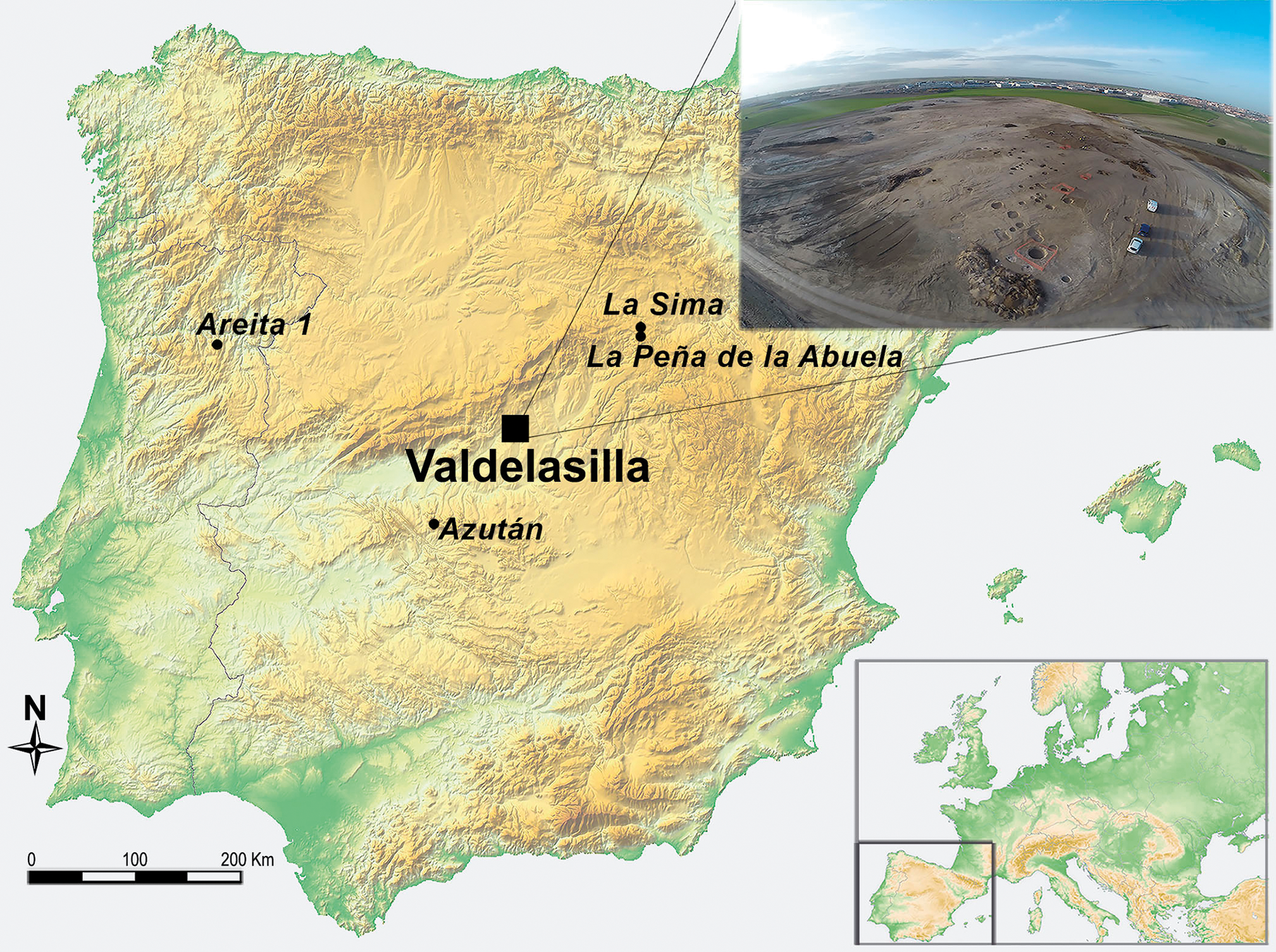
Valdelasilla (UTM: 30T 427416.632/4440390.199) is located on the southern plateau, within the basin of the Tagus River, which crosses the Iberian peninsula from east to west. The region is largely flat with a few hills and small rises, such as that occupied by the archaeological site, which is distributed across a gentle slope (from 575 to 561 masl) descending to the course of a small stream, the Viñuela, a tributary of the Tagus River. The geology consists of sands, shales and carbonate levels in the lower and middle sections, while the upper level features Quaternary glacial deposits dominated by silts and arkosic sands (IGME 2010). Current dryland farming activities have degraded the original environment (Fig. 1).
Location of the site in the Iberian peninsula and aerial photograph taken during the excavation work. Main sites mentioned in text.
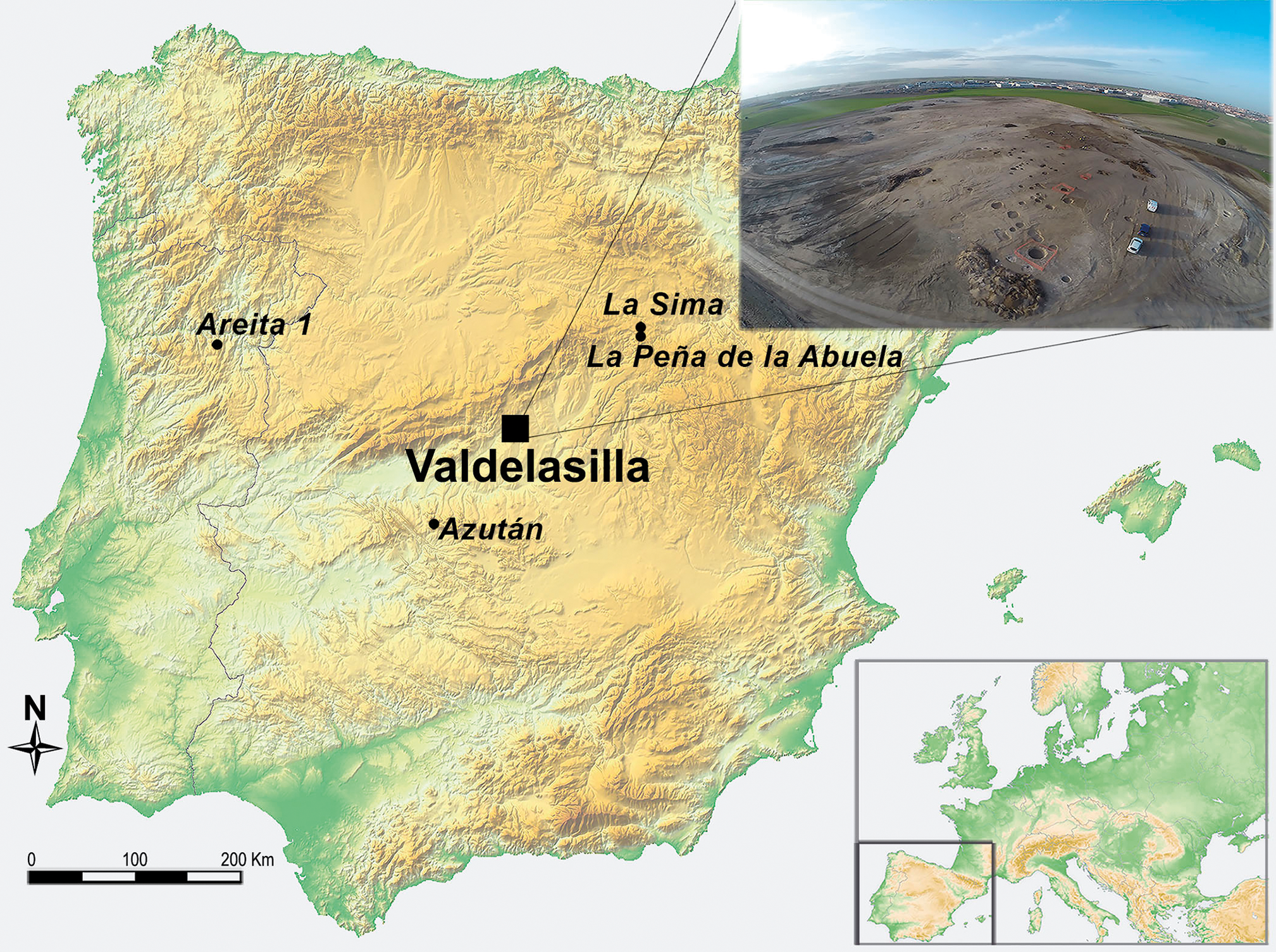
The archaeological site was identified by a rescue excavation that opened a large area of 45 ha. A total of 454 features of diverse morphology and content were identified, distributed over 11 ha. This extensive distribution of negative structures defines the late prehistoric sites of central Iberia where funerary and domestic areas overlap (Díaz-del-Río Reference Díaz-del-Rio, Díaz-del-Rio and García Sanjuán2006). Based on morphology and the remains, the settlement includes storage pits, post-holes, at least one house and several burials. A small number of pottery fragments, lithics and faunal remains were recovered from some of the features but 120 contained no material.
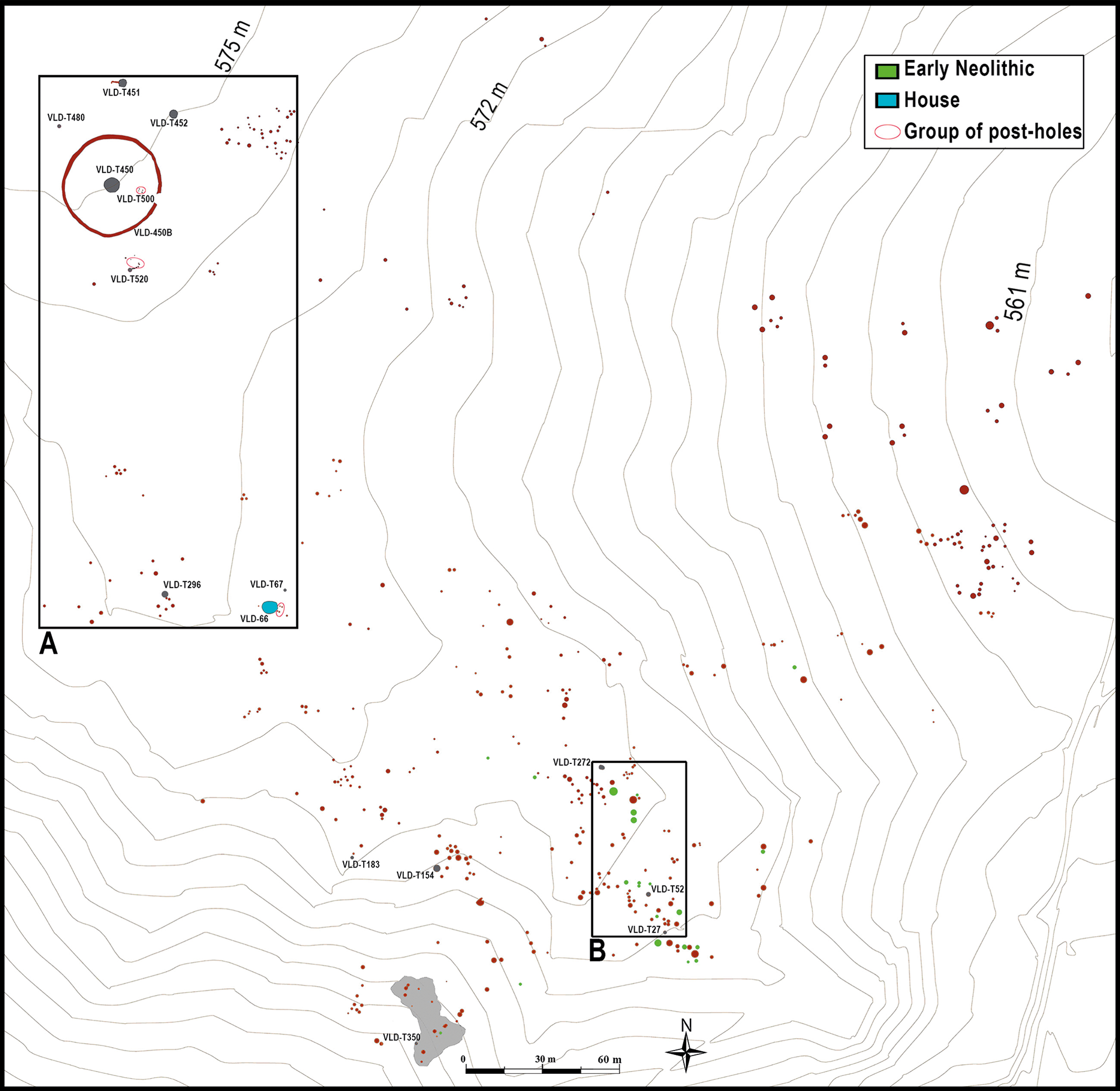
Pottery with decorations characteristic of the Early Neolithic period (Rojo et al. Reference Rojo, Martínez de Lagrán and Royo-Guillén2018) was present in 20 pits, all in the southern part of the site. In the remaining pits there was plain pottery (some with red pigment), and macrolithic and lithic tools consistent with a broad temporal span covering the Neolithic and Chalcolithic periods. There was no evidence of metal or of the characteristic Bell Beaker pottery known to be present in the region in the middle of the third millennium bc (Garrido Reference Garrido1997). The fieldwork and laboratory analysis of archaeological materials determined that 15 structures contained a variety of human remains. These burial features are distributed across two areas: an upper area defined as a necropolis and a lower area to the south containing burials with a random distribution (Fig. 2).
Site plan with the features and situation of the funerary structures. Indication of the two areas with the funerary structures analysed in this study: (A) upper area; (B) lower area.
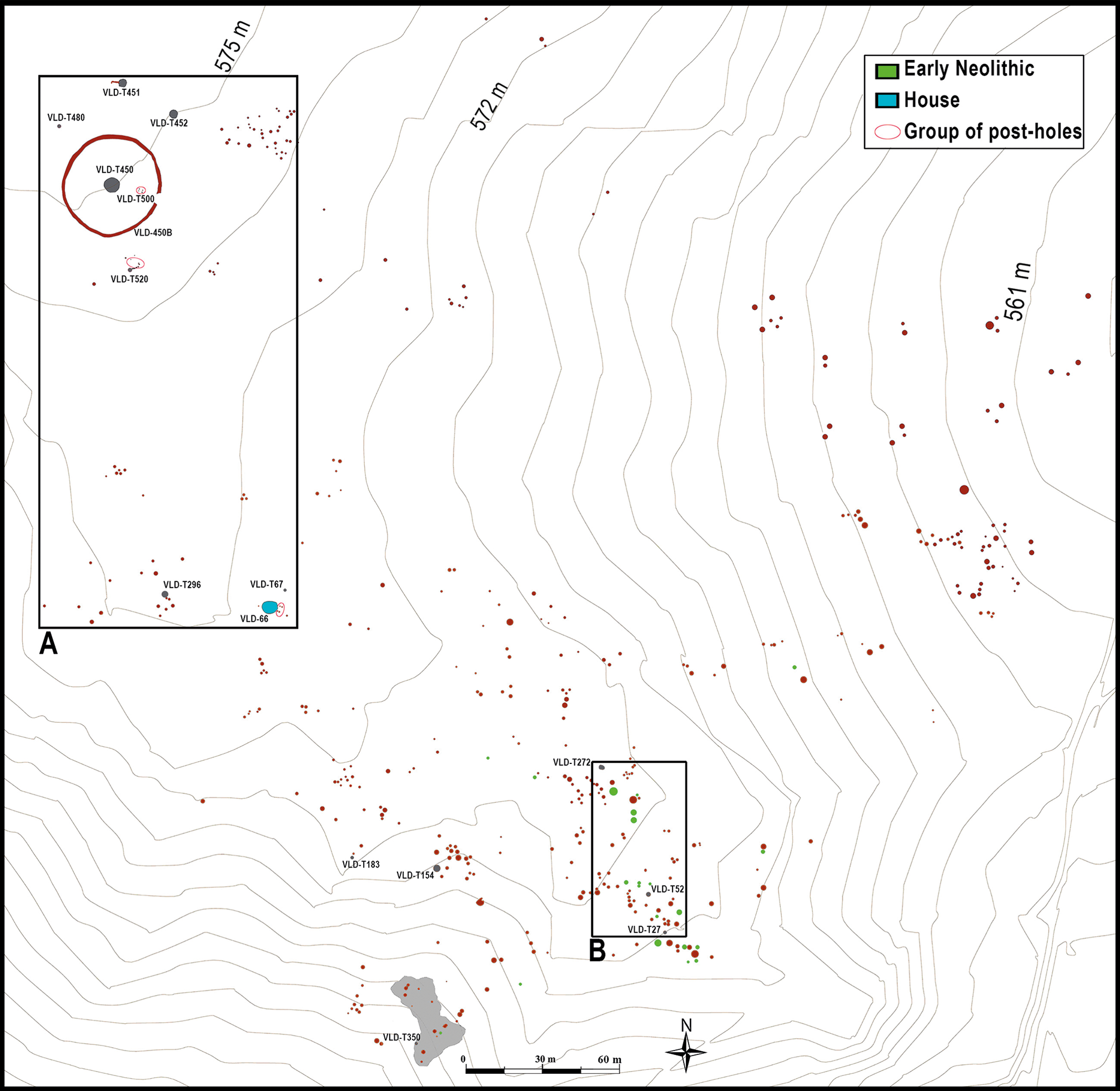
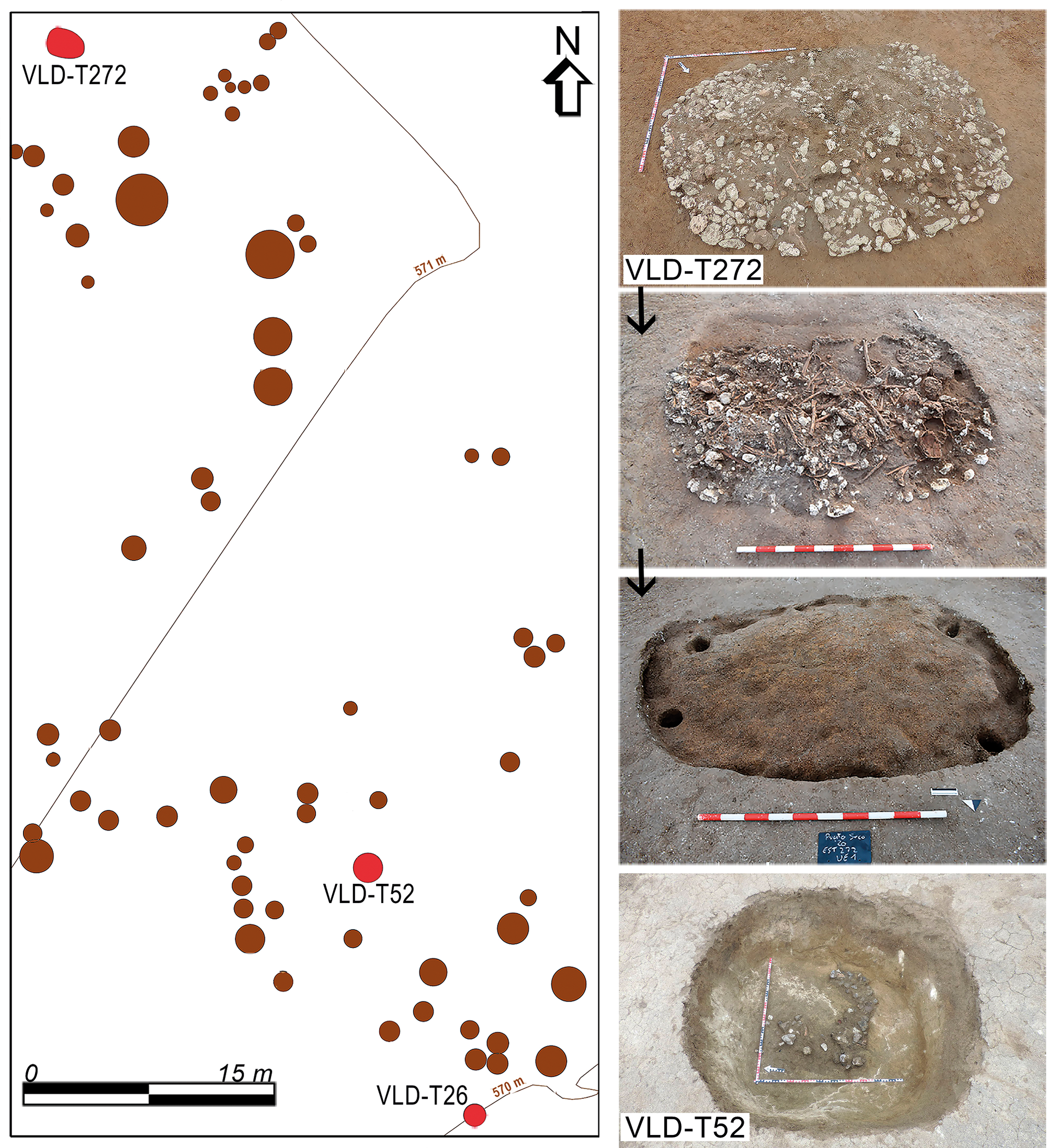
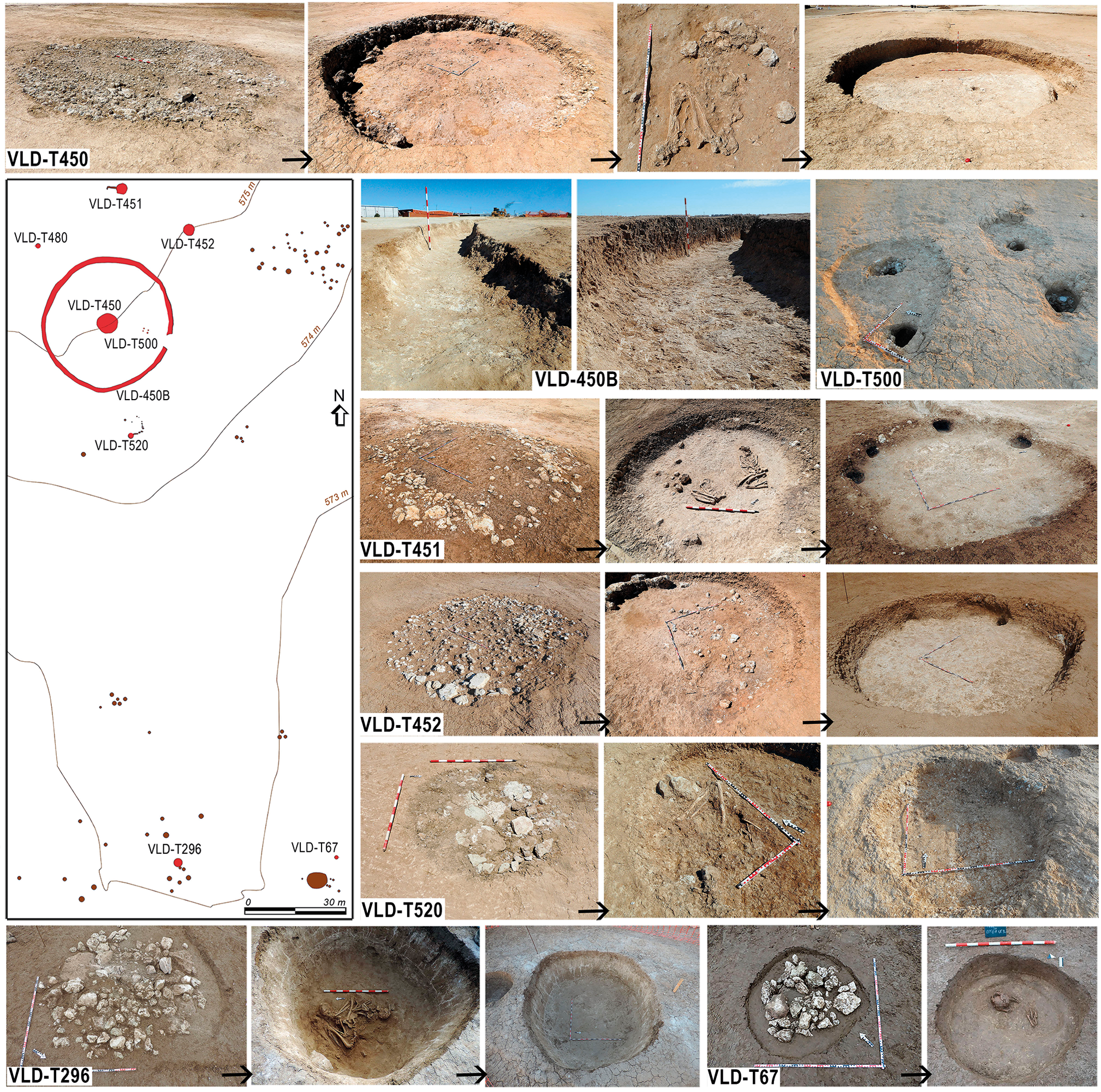
The necropolis is organized around the largest tomb (VLD-T450), located at the highest part of the upper area and surrounded by a ditched enclosure (VLD-450B) that has an entrance with four post-holes (VLD-T500). Outside the enclosure, tombs VLD-T451 and VLD-T452 are located 18.5 and 15 m to the north and T520 is situated 14 m south of the enclosure. Further away, 140 m from the enclosure, tombs VLD-T296 and VLD-T67 are located near a house (VLD-66), each with some human remains present at the surface. In the lower area of the site, six structures containing human remains were identified (VLD-T154; VLD-T272; VLD-T52; VLD-T26; VLD-T183, VLD-T350). This study focuses on 11 funerary structures with archaeological and osteological record contextualized by radiocarbon dates (Fig. 2A & 2B).
Methods
Valdelasilla was excavated in 2020 prior to the urban development of the area. The removal of the topsoil (0.20 m) disturbed by the agricultural works was carried out with mechanical equipment. Each feature was georeferenced and excavated manually through to the natural geology; stratigraphic relationships were recorded to identify construction, use and morphology. The archaeological remains were analysed and quantified for all features. To date, only a preliminary typological and raw material assessment has been carried out.
Anthropological analysis was carried out to estimate the MNI for each funerary structure and to determine the biological profile of the buried population at the site (White & Folkens Reference White and Folkens2005). Age-at-death of the adults was estimated based on molar wear according to Brothwell (Reference Brothwell1987). Where possible, the methodology proposed by Buikstra and Ubelaker (Reference Buikstra and Ubelaker1994) was applied regarding the epiphyseal fusion. For the non-adults, age-at-death was estimated according to the eruption and calcification of the mandibular and maxillary dentition (Ubelaker Reference Ubelaker1978). Measurements of tooth germs were taken according to Irurita et al. (Reference Irurita, Alemán and Viciano2014), for the application of the method proposed by Liversidge et al. (Reference Liversidge, Dean and Molleson1993).
The sex of adult individuals was determined through the skull and pelvis features according to standard criteria (Bruzek Reference Bruzek2002; Ferembach et al. Reference Ferembach, Schwindezky and Stoukal1980). When preservation conditions allowed, probabilistic sex diagnosis (DSP) (Murail et al. Reference Murail, Bruzek, Houët and Cunha2005) was applied to determine the sex using a quantitative approach, alongside the osteometric recording system provided in Buikstra and Ubelaker (Reference Buikstra and Ubelaker1994). This same approach was followed for the anthropometric analysis of the remains whenever possible. The individuals were divided into the following age groups: neonate (0–6 months), infant I (6 months–6 years), infant II (7–12 years), juvenile (13–20 years), adult (21– 40 years), mature (41-60 years).
A total of 21 radiocarbon dates were obtained from two laboratories: Beta Analytic and SUERC Radiocarbon Laboratory. The atomic C/N ratio fluctuates within acceptable values, from 3.1 to 3.5. The sample selection prioritized cranial and mandibular bones from the buried individuals, always according to the anthropological identification. Poor collagen preservation limited the final number of dates obtained. Only one sample was taken from charcoal previously identified as Juniperus sp.
For the construction of the Bayesian models, the BCal software was used, which is based on Markov Chain and Monte Carlo (MCMC) methods. The models used only human bone radiocarbon dates as observations (theta), and these were organized into phases according to the archaeological evidence, following the guidelines proposed by Buck et al. (Reference Buck, Cavanagh, Litton and Scott1996). The calibration of the radiocarbon dates was carried out using a custom function developed with the same tools and employing the IntCal20 calibration curve (Reimer et al. Reference Reimer, Austin and Bard2020). The results of the models are expressed considering the 95 per cent highest posterior density (HPD) intervals. The resulting probability distributions were exported and processed for graphical representation using the Python programming language.
Results
Graves and grave goods
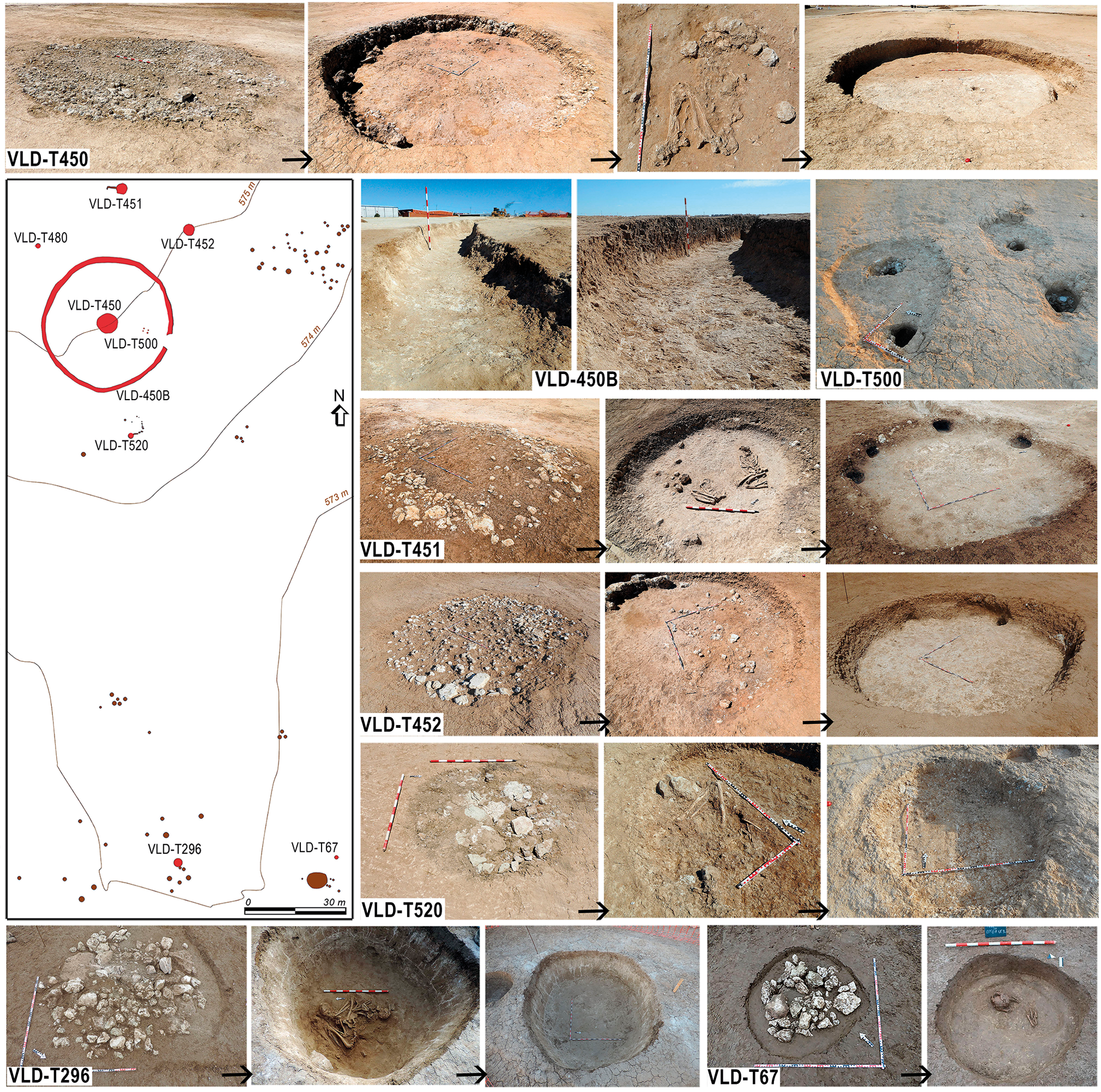
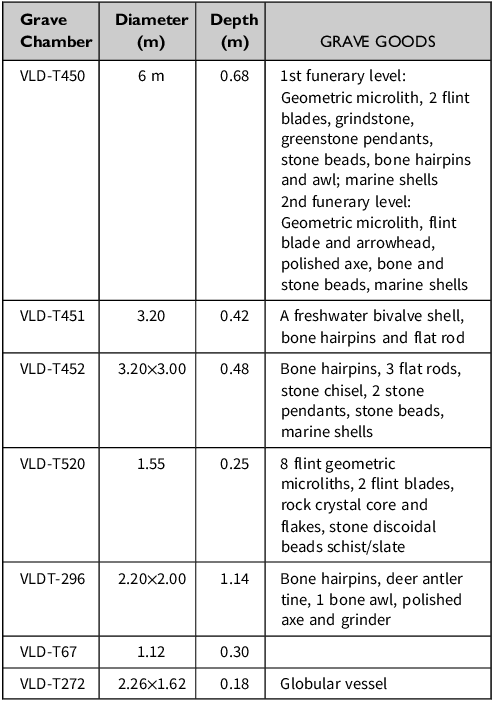
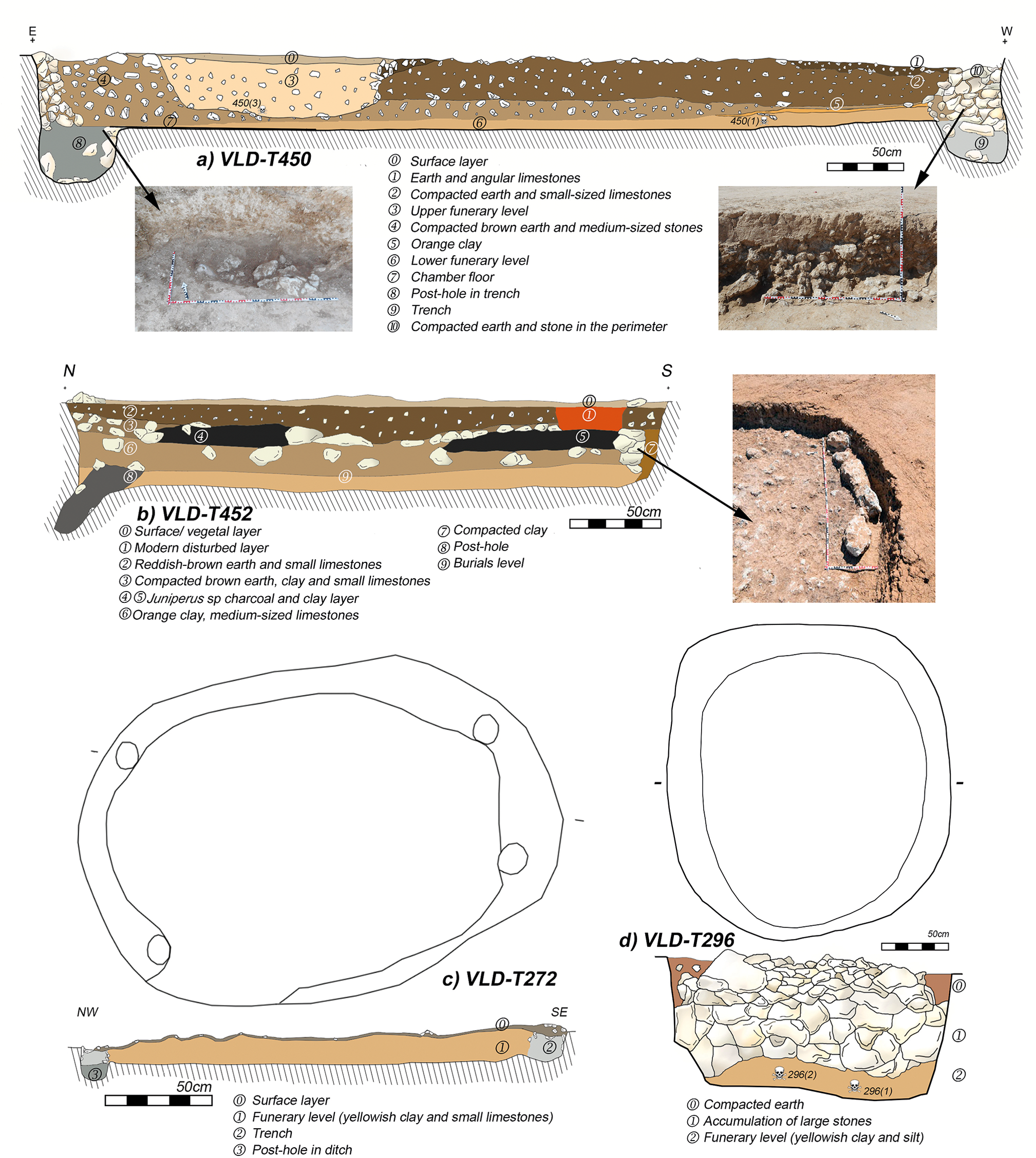
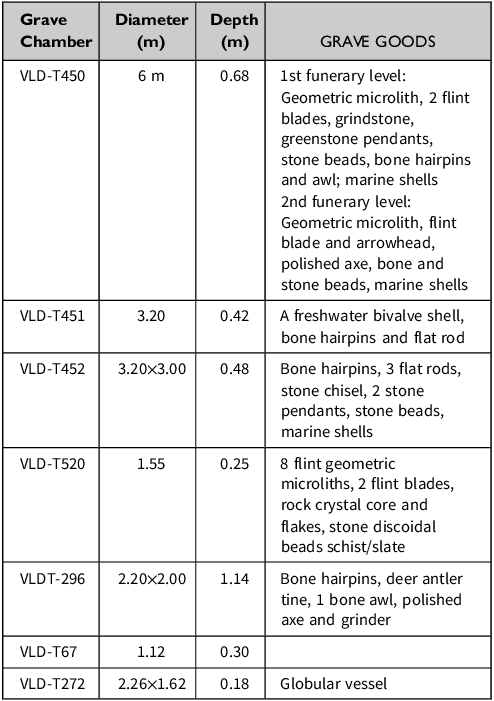
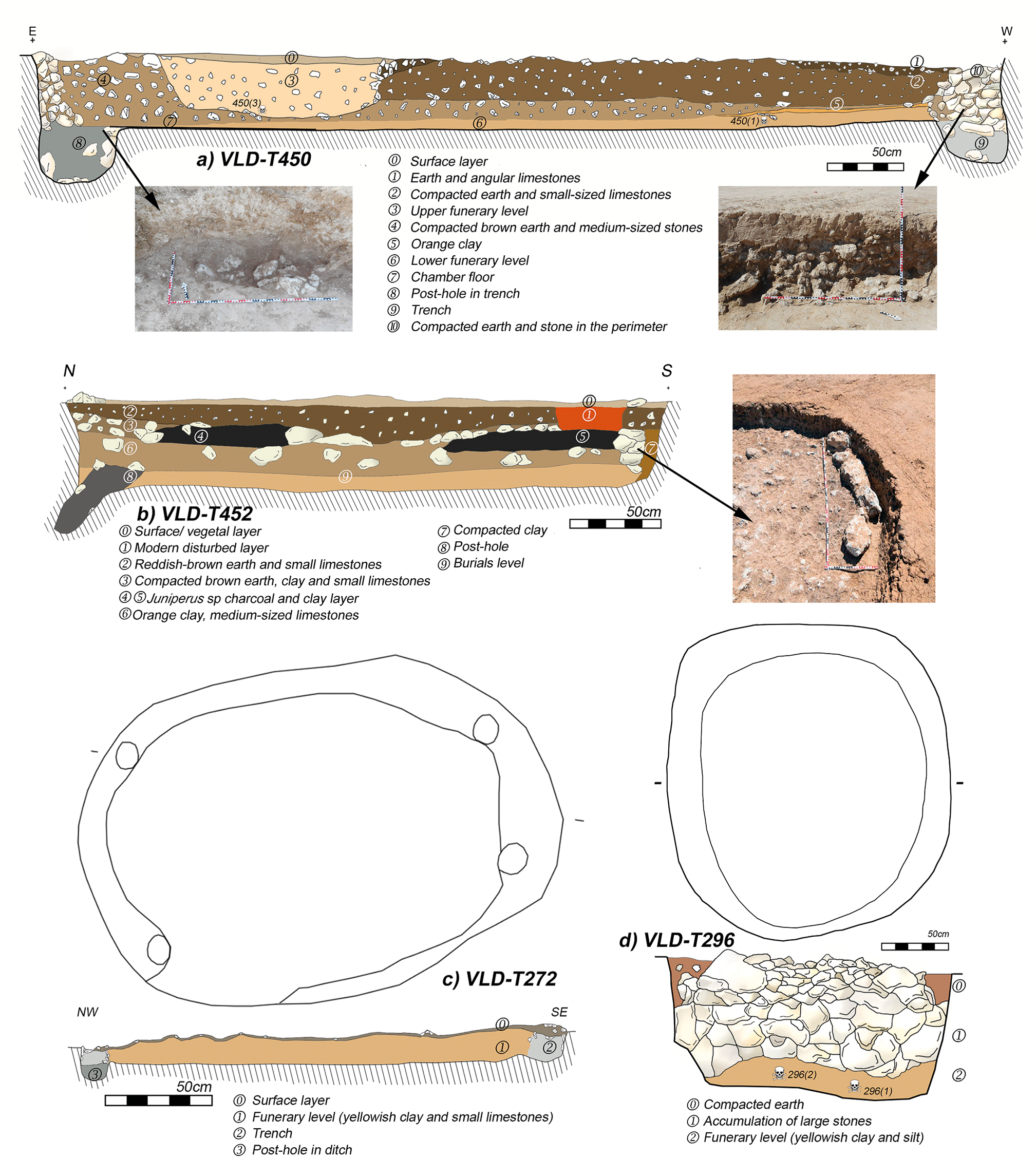
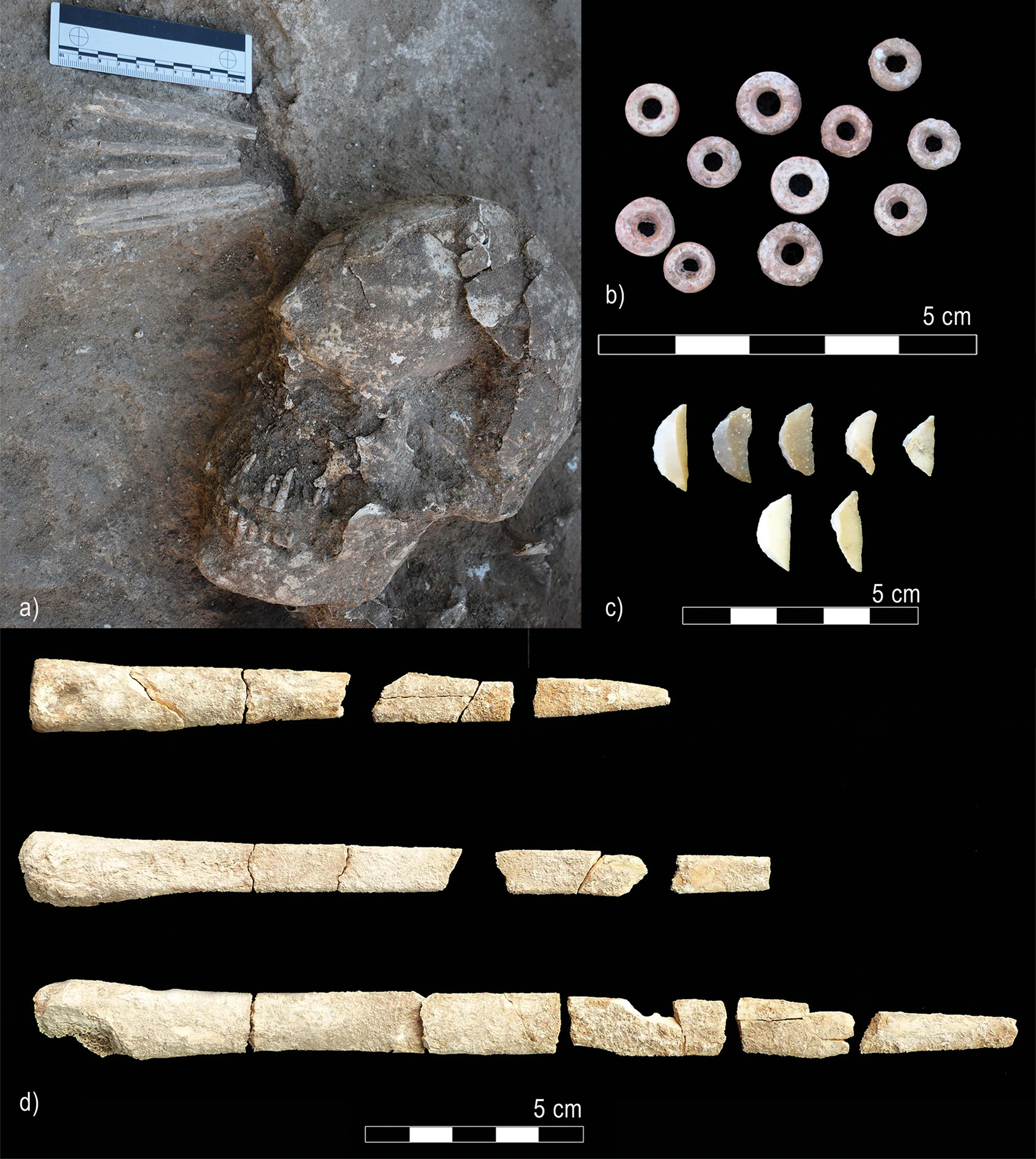
VLD-T450 is a circular chamber (Fig. 3; Table 1) with an inner perimeter ditch measuring 0.45 m wide and 0.30 m deep. This ditch has a gap of 1.62 m to the southeast, interpreted as an entrance. Two post-holes placed to the east and west, aligned with central post-holes, suggest that the structure was covered. A lower level of burials lay upon the ground in which the ditch was excavated. This level consists of a 0.18 m thick layer of compacted orange sediment. On the western side, an adult female individual, 450(1), was found in the primary position, flexed and on its right side. The burial was surrounded by stones and oriented southwest–northeast. Hairpins and a bone awl were found under the head. Scattered around this burial were the disarticulated and red-pigmented remains of a second adult female individual, 450(2), and several grave goods, including several personal ornaments. Alongside, at the same level on the eastern side, were found the teeth and small bone fragments of an infant individual, 450(10).
Graves (VLD-T450, T451, T452, T520, T296, T67), enclosure (VLD-450) and post-holes (VLD-T500) of upper area with the excavation sequence of each of them.
Grave measure and grave goods.
The lower funerary level was sealed and the tomb continued to be used. The upper 0.50 m of the stratigraphy is characterized by sediment containing small to medium-sized stones with compacted earth. A fourth individual, 450(3), with only partial anatomical connections preserved, was buried on the southeastern side of the chamber, above the basal funerary level. Surrounding this individual and extending up to the surface of the tomb were commingled bone accumulations and material items with no ordered stratigraphic sequence. The osteological study identified the remains of six more individuals, 450(4–9).
The tomb is surrounded by a circular ditched enclosure (VLD-450B) with an internal diameter of 36 m and an entrance of 3 m width to the southeast. The ditch is irregular, the width varying from 1.00 to 1.40 m and the depth from 0.40 to 0.90 m. The fill comprised stones, pottery fragments, lithics and faunal remains with signs of thermal alteration. There were no human remains. It was not possible to date the ditch directly since all five radiocarbon samples failed.
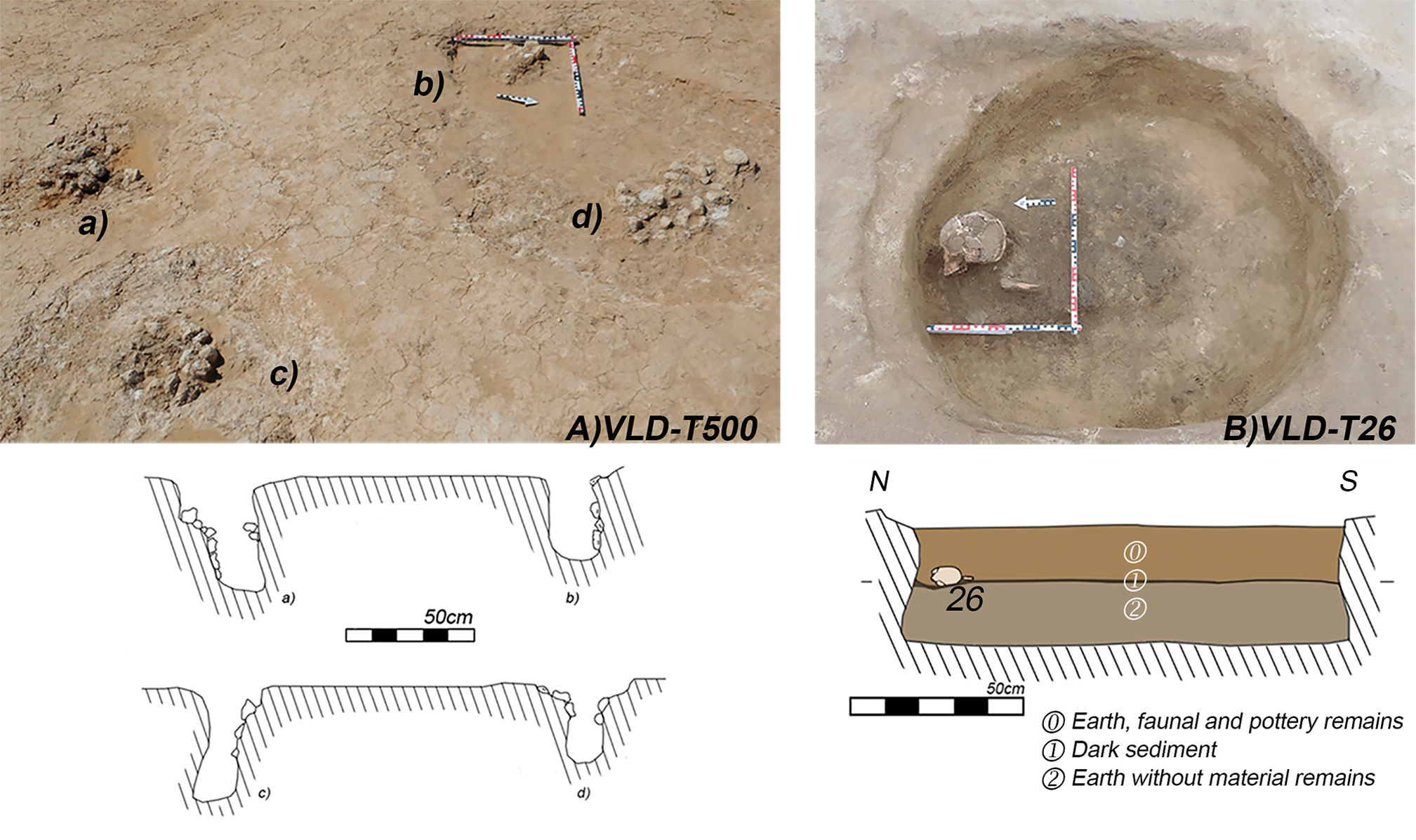
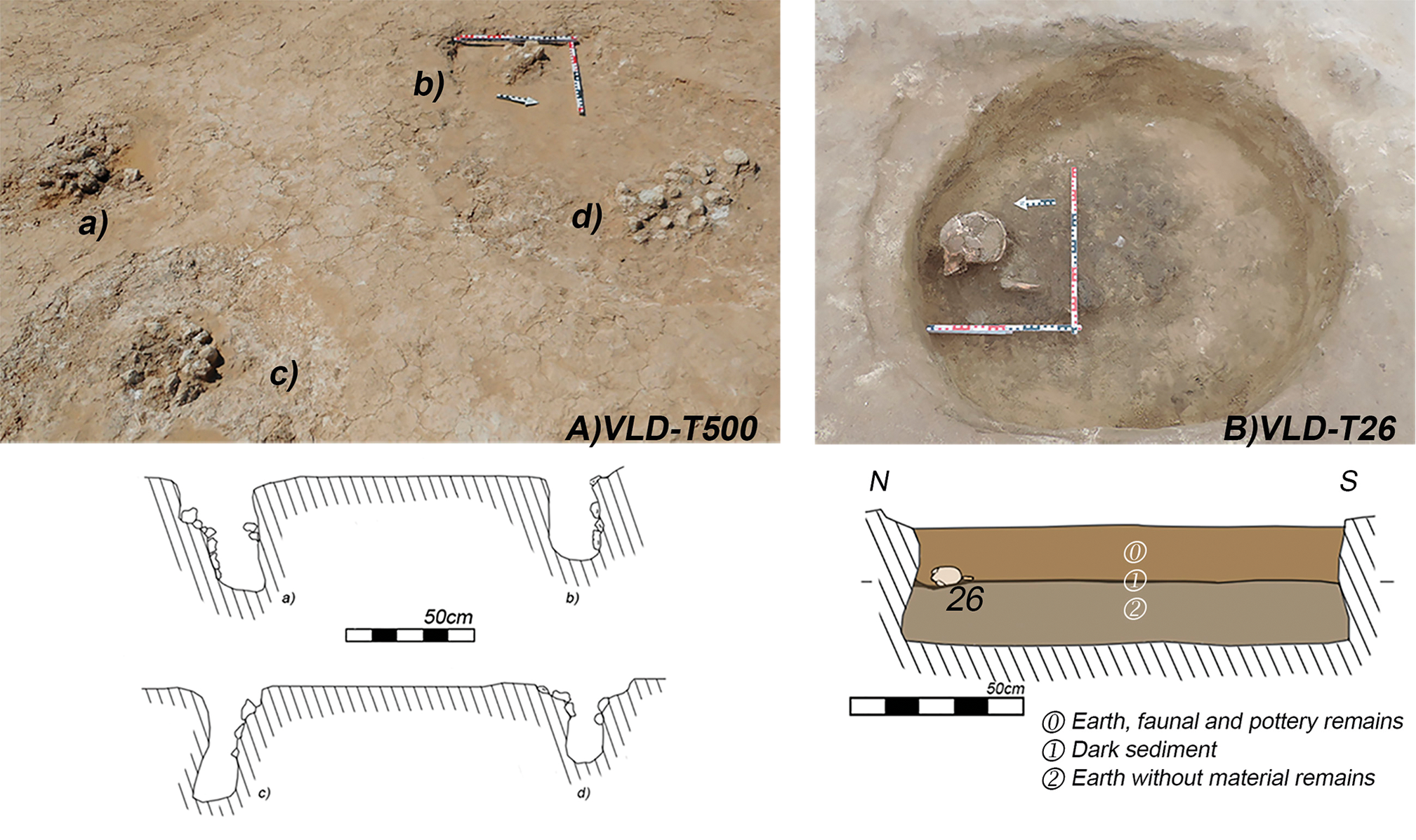
Located midway (7.5 m) between the inside edge of the ditch and the tomb’s entrance, structure VLD-T500 consists of four post-holes (3, 11, 21, 31) defining a rectangular structure of 1.40×0.8 m. Inside, packing stones are preserved; human remains were found within the sediment—mainly phalanges and teeth—from at least four individuals, as well as potsherds, beads and a perforated marine shell (Nucella lapillus). A tooth from an adult individual was dated. The features were covered with stone suggesting a secondary use.
VLD-T451 is a circular chamber surrounded by five post-holes with abundant remains of charcoal and burnt clay around the inner perimeter. Two adult male burials were found on the chamber floor. Individual 451(1) was in a secondary position with the postcranial skeleton hyperflexed; grave goods included a flat bone rod, and a freshwater shell probably collected in the nearby river. The second individual, 451(2), lay in a primary position 0.50 m away from 451(1) and orientated southeast–northwest. It was in a supine position on its right side, with both legs flexed. A set of hairpins was found beneath the skull. This burial level was covered by a 0.25 m thick layer of highly compacted sediment and stones. An entrance, to the east, is indicated by a less dense area of large rocks.
VLD-T452 is a circular chamber with three post-holes with evidence of fire and surrounded by compacted clay. Grave goods and the disarticulated remains of at least three individuals, 452(1–3), showing red pigment, were found on the chamber floor. The best-preserved individual was radiocarbon dated. The bones were cover by a layer of compacted clay and stones forming a ring, open to the east. The high concentrations of charcoal forming a semicircular shape inside the chamber could be interpreted as the remains of a wooden roof. The charcoal was radiocarbon dated.
VLD-T480 is a circular pit measuring 1.30×1.40 m in diameter and 1 m in depth. It contained a skull and mandible of an individual, placed 0.20 m above the base, without grave goods.
VL-T520 is a circular chamber filled with large stone blocks, having a poor level of preservation. The remains of a single individual with no anatomical connection were found on the western side, on a compacted clay floor. The grave goods comprised lithic tools and stone beads. The tomb overlaps an earlier large structure with post-holes, preserving a stratigraphic sequence that is rarely found at this kind of site.
VLD-T296 is an oval-shaped structure with closure formed by large stones. At the base, between layers of yellowish clay and silt, a double burial was found in the primary position. An adult male, 296(2), was placed in a flexed position on its right side, oriented northeast–southwest. A female individual, 296(1), partially rested against 296(2), and was also in a flexed position on her right side but oriented south–north. Traces of red ochre were found on both the bones and the sediment. The grave goods included bone hairpins near but not underneath the head.
VLD-T67 is a circular pit with a single burial of a child in a flexed position on its right side. The body was placed in an oval cavity in the base of the pit and surrounded and covered by stones. No material remains or grave goods were found. It is notable that the location is adjacent to the house, VLD-66.
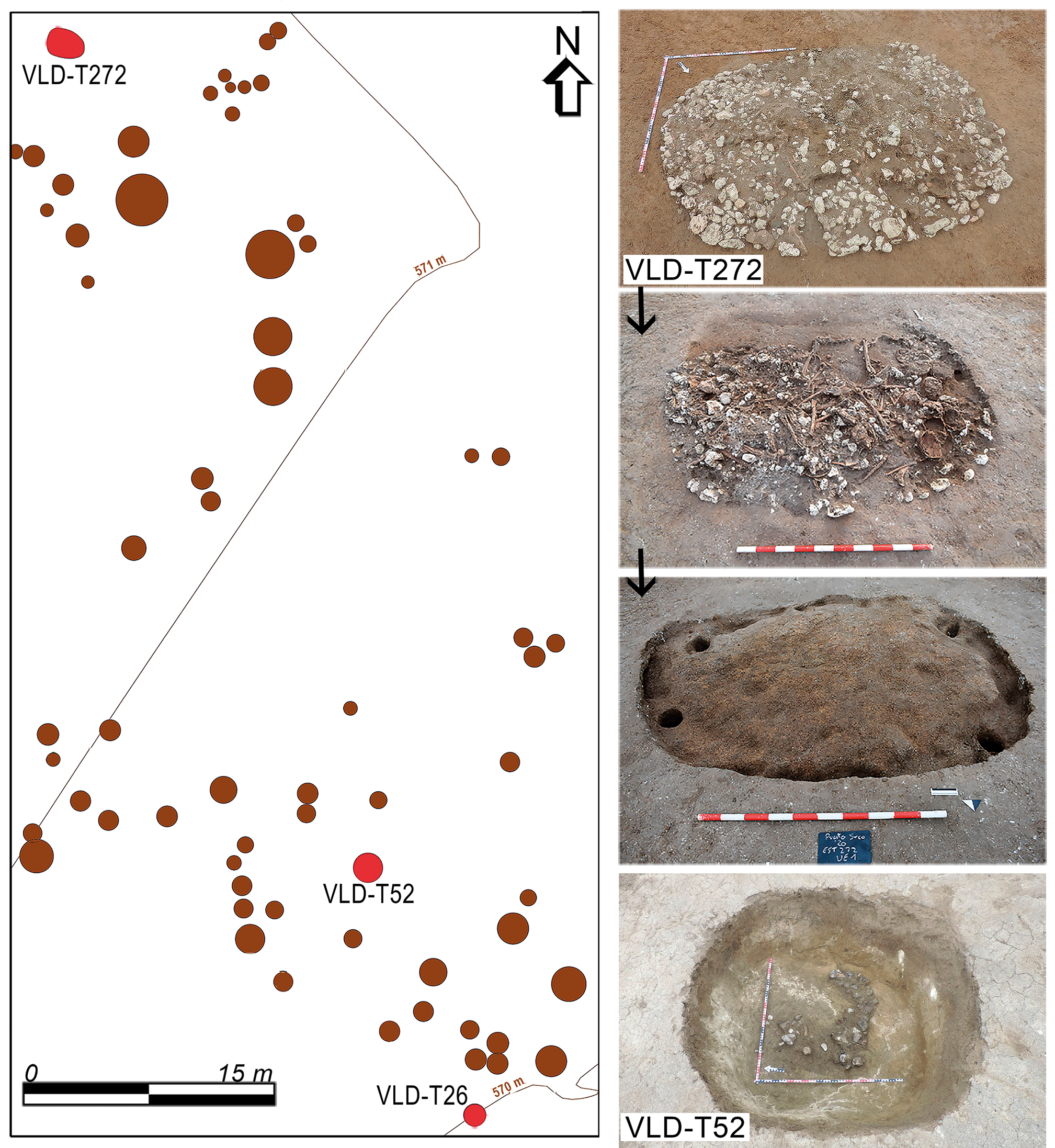
In the lower area of the site, three structures have been dated (Fig. 4). VLD-T26 is a pit measuring 1.36×1.24 m in diameter and 0.38 m in depth. At mid-depth, near the edge, was found the complete skull of an adult female. VLD-T52 is an oval pit measuring 1.80 m in maximum diameter and 0.64 m in depth. From within were recovered the cranial and mandibular remains of an individual. VLD-T272 is an oval-shaped chamber covered with small stones and clay, giving the appearance of a tumulus. An irregular narrow ditch (0.10–0.23 m wide) is present around the base with an entrance to the southwest. Within this, four post-holes were identified along the perimeter. Remains recovered from the tomb produced an MNI of 17 individuals, including a set of 10 skulls deliberately placed around the perimeter. A fragmented pottery vessel was identified as a grave good.
Graves of lower sector with the excavation sequence of chamber 272 and plan of burial pit VLD-T52.
In summary, the funerary structures present at Valdelasilla can be divided into two types: pits and chambers. The pits, approximately 1.50 m in diameter and less than 1 m deep, contain the remains of single individuals from which the skull or mandible is preferentially selected (Fig. 5). The bones are carelessly placed over earlier fills suggesting reuse of the pits. No grave goods were found but pottery fragments and faunal remains were present in the same secondary context. A particular example is that of the post-holes (VLD-T500) containing human bones, mostly teeth.
(A) Photograph of VLD-T500 and drawing of the section of each post-hole; (B) photograph of the skull and faunal remain found in VLD-T26 and section drawing of the structure.
The chambers vary in size, shape (Table 1) and include individual, double, triple and collective inhumations. They share a circular/oval plan with the base excavated into the ground, and a lack of orthostats. They range in size from 2–3 m through to 6 m in diameter. The tombs range from those with large stone coverings, resembling small cairns, to chambers with a ditch and post-holes, which suggest a robust architecture and non-ephemeral use. Nothing remains of the mounds that would have reinforced the construction, but the presence of an enclosure surrounding the main tomb is evidence of monumentalization.
The base of the original construction is preserved. The remains show the use of wood, stone and clay, although each structure was different (Fig. 6). The preserved structural remains are very limited, suggesting deliberate destruction of the tomb at the time of its closure. In VLD-T451 and VLD-T452 the posts and some rocks were burned, and there are fragments of clay compacted by heat, although the evidence indicates that the fire was never sufficiently extensive to involve the human bones or grave goods. The post-holes, sometimes located below the opening line of the feature, suggest a connection with the roof, but in VLD-T451 or VLD-T272, where less stone is present, they played a structural role together with the clay. The largest structure, VLD-T450, is the most complex to interpret. Its foundation trench, containing only two post-holes, cannot be attributed to a timber structure, though we do not rule out the possibility that it is a reconditioned trench from a previous feature. The perimeter of the substrate in which the tomb was excavated was lined with compacted earth and small stones to reinforce the walls that we propose were made of dry stone, as in VLD-T452. The final diameter of the chamber would not have exceeded 4.5 m. In VDL-T272, however, the trench held posts fitted within a small stone foundation. The stone rubble plastered with clay was likely used for the walls and the roof of the tomb.
Plan and section drawings of the chambers. (a) Section drawing of chamber VLD-T450 with photograph of a post-hole (8) and the stones accumulated in the perimeter of the chamber (10). The location of the dated primary burials is indicated; (b) section drawing of chamber VLD-T452 with photograph of the stones aligned along the edge of the structure; (c) plan and section of chamber VLD-T272; (d) plan and section of chamber VLD-T296 with the location of the dated primary burials.
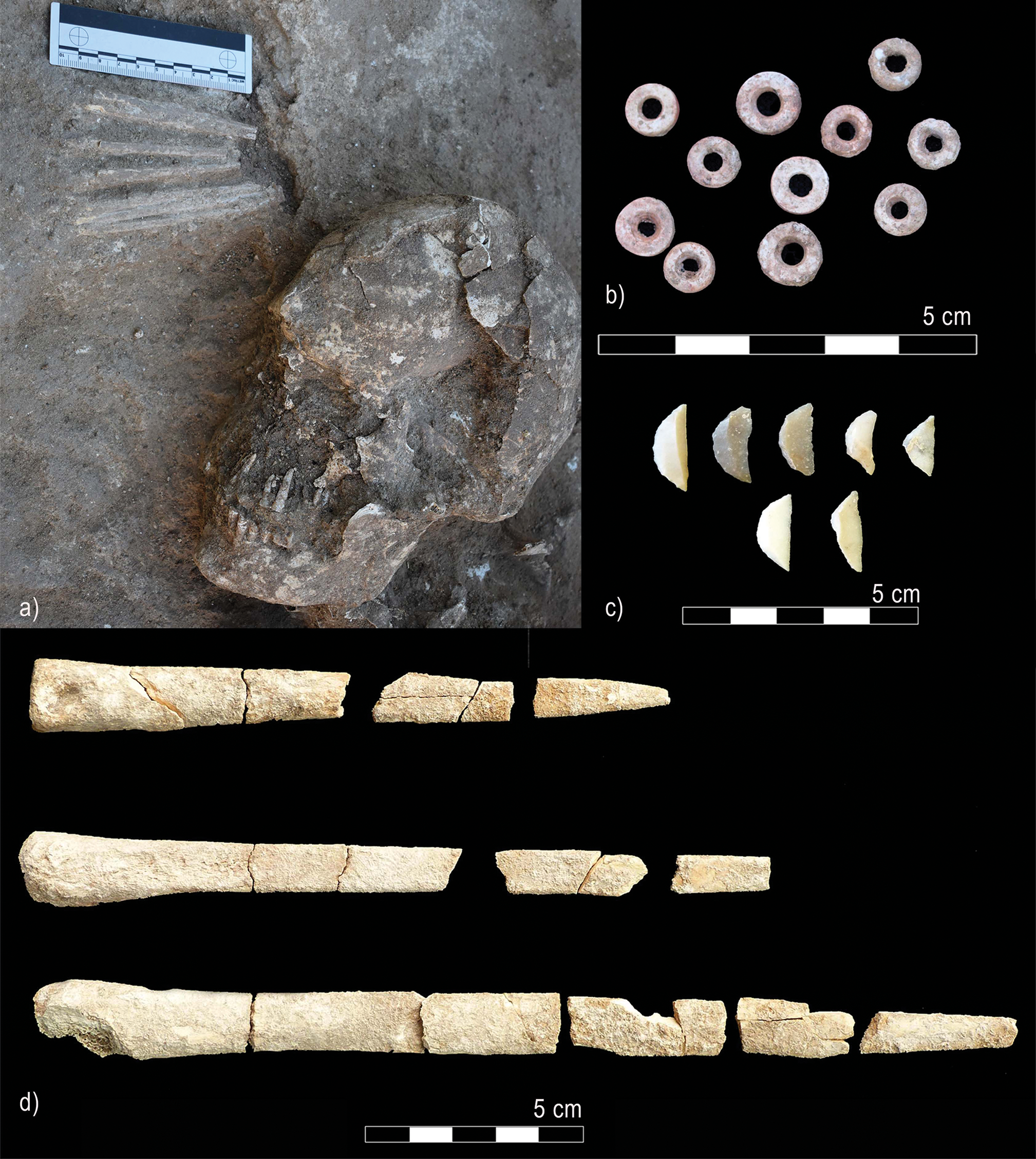
The grave goods include 21 bone artefacts including pointed tools such as flat rods made from the metapodials of deer, awls and sets of hairpins. Personal adornments, i.e. pendants and beads, are the most widespread, with over a hundred marine shells (Antalis sp) found in VLD-T450. These are followed by macrolithics tools while chipped lithics are less common (Fig. 7).
Grave goods. (a) Hairpins next to the skull in VLD-T296; (b) stone beads from chamber VLD-T450; (c) flint microliths from VLD-T520; (d) flat rods from VLD-T452.
Bioarchaeology
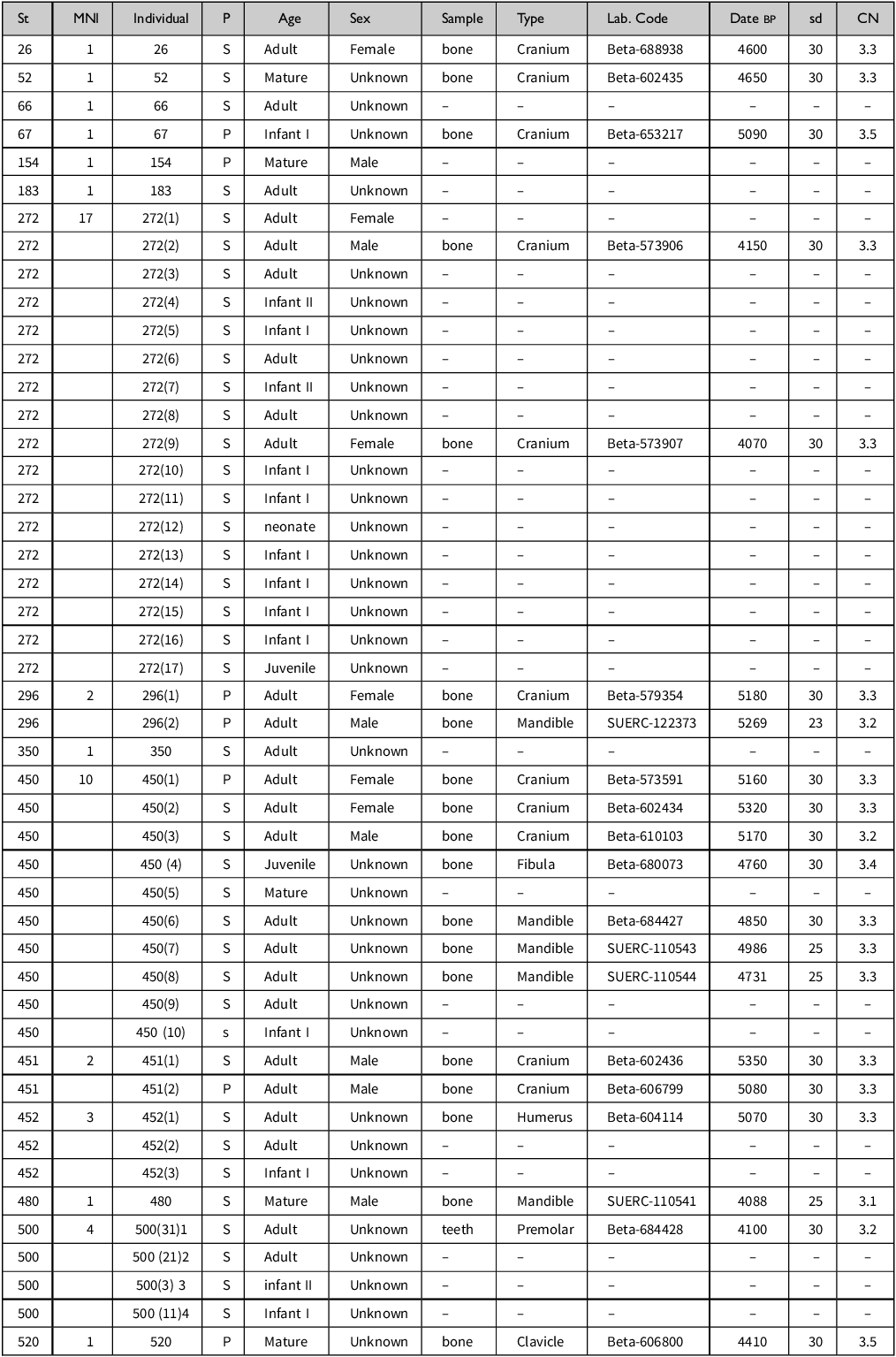
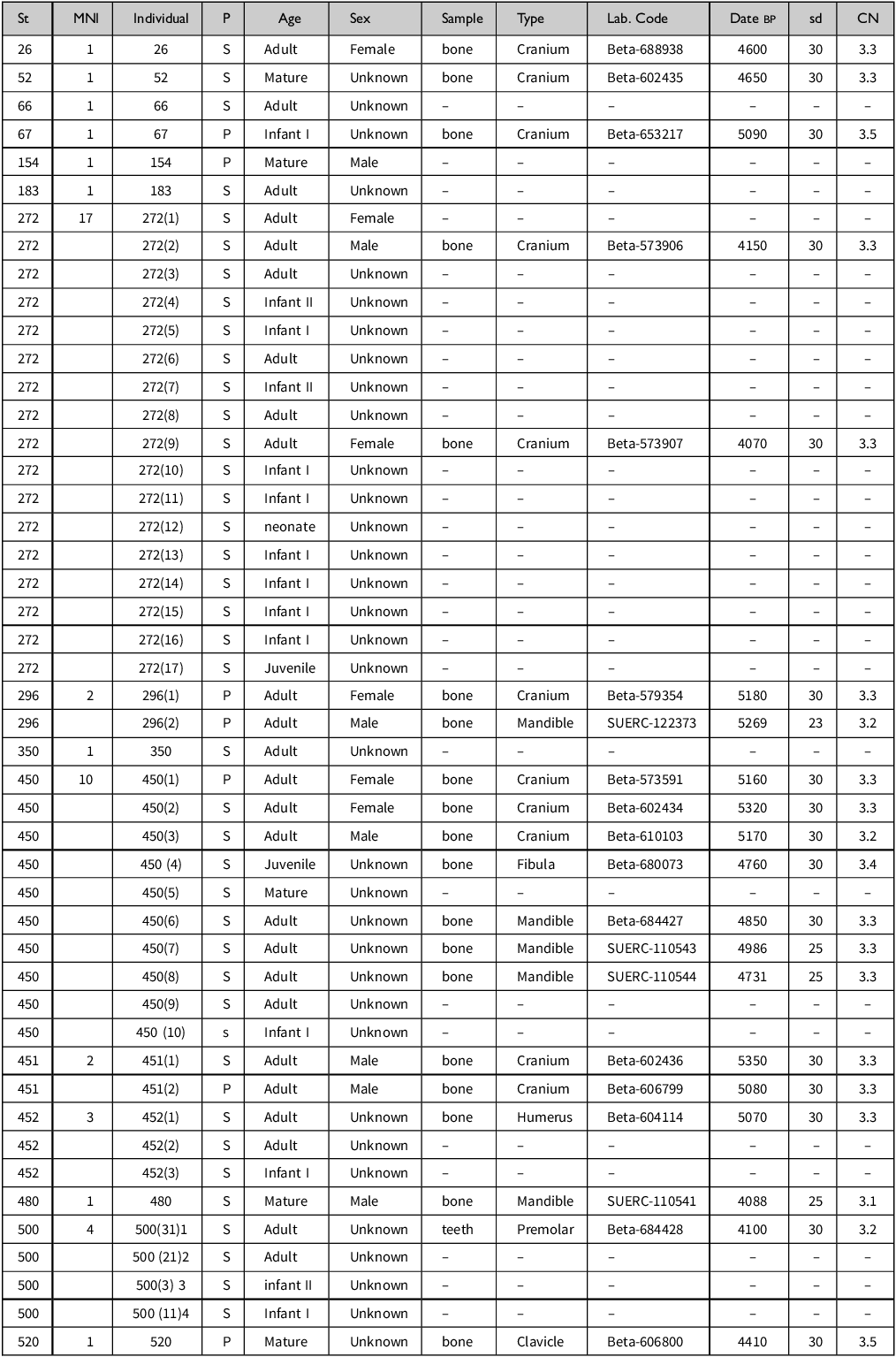
The anthropological study yielded a MNI=46, with 43 individuals located within the 11 analysed structures (Table 2). Adults predominate (51.1 per cent), followed by infants (34 per cent), juveniles (4.6 per cent) and mature individuals (9.3 per cent). Males and females were equally represented, although sex could be determined in only fewer than half the individuals.
Anthropological and chronological results for remains from Valdelasilla. St = Structure; MNI = Minimal number of individuals; Individual = Reference no.; P = Position (P/S: primary/secondary).
Chronology: Bayesian analysis
Different Bayesian models were used to determine (a) the general chronology of the burial activity of the site and (b) to explore the use of tomb VLD-T450 with a greater number of dates (Supplementary Appendix 1).
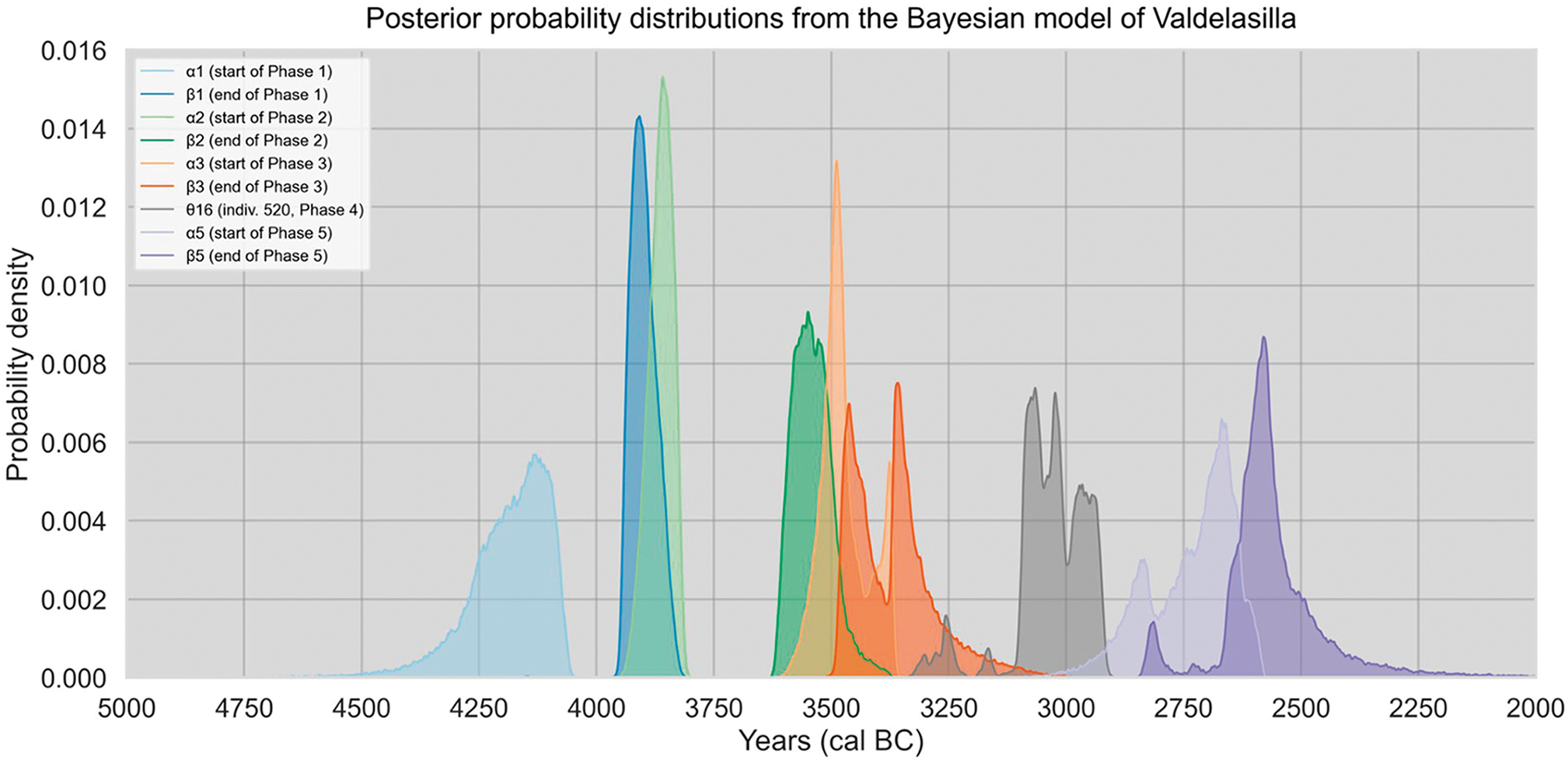
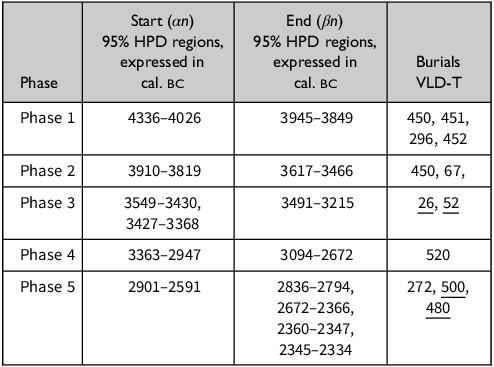
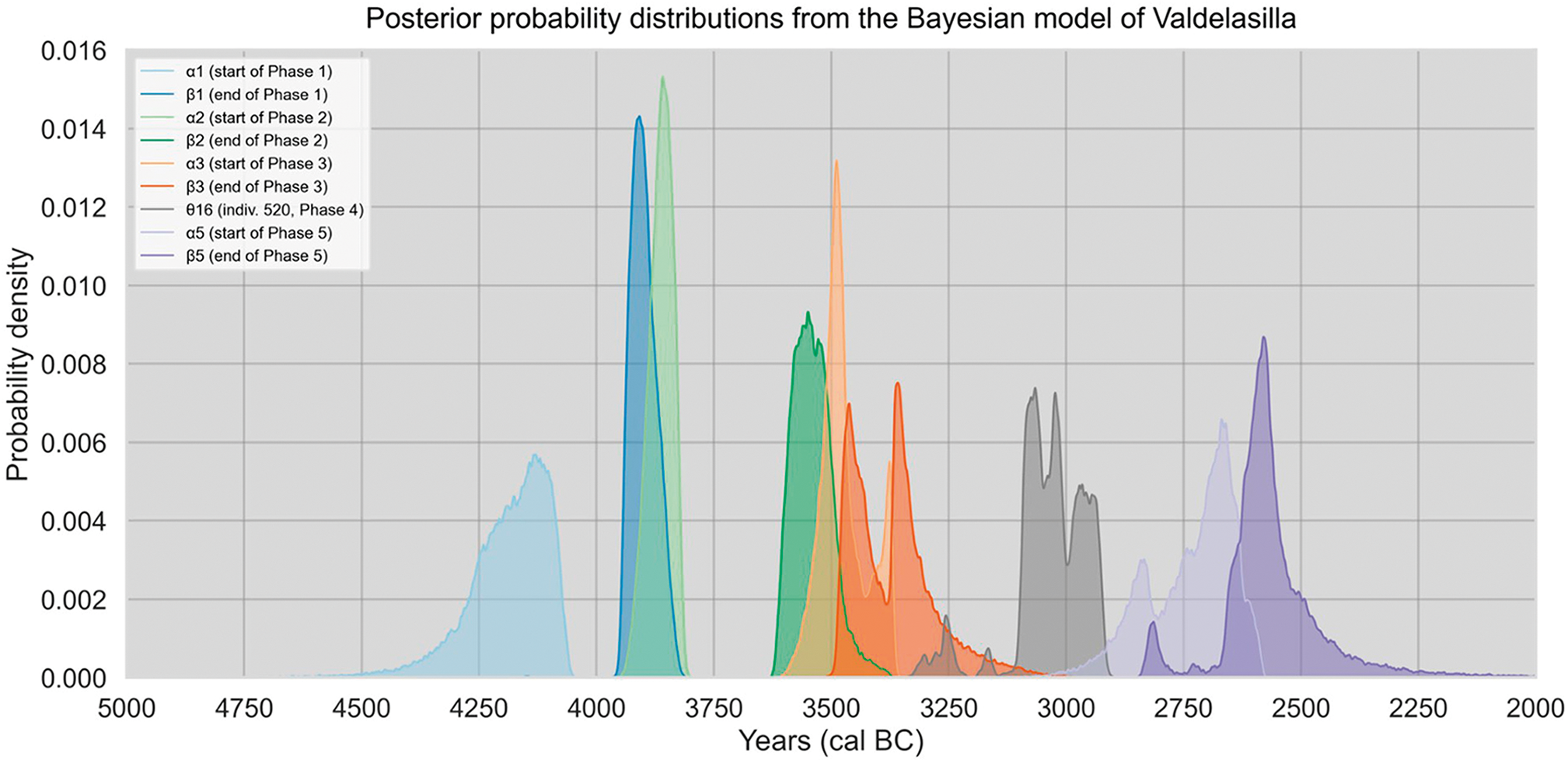
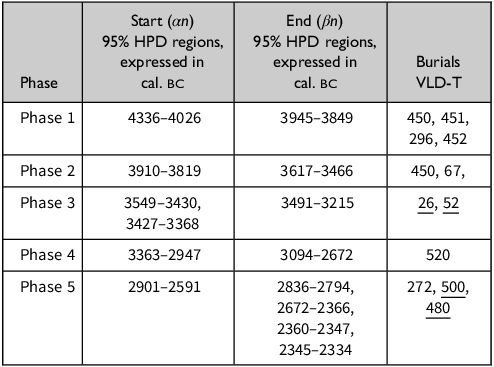
The general Bayesian model (Fig. 8; Table 3) revealed five phases in the site sequence. Note that the dating of Beta-659675 from tomb VLD-T452 (5590±30 bp) was obtained on charcoal and so was excluded to avoid the potential effect of wood reuse. In brief, Phase 1 includes the earliest sample dates, from tombs VLD-T296, VLD-T450 and VLD-T451. Phase 2 shows the reuse of tomb VLD-T450 once sealed, with burials on top and other new burials. Phase 3 reveals sporadic episodes of funerary use of the area, disconnected from the earlier tombs, particularly tomb VLD-T450. Phase 4 represents a single burial chronologically segregated from the others but spatially linked to the core of the necropolis. Finally, Phase 5 corresponds to burials from the third millennium cal. bc.
Informative posterior probability distributions from the Bayesian model of Valdelasilla.
Modelled start (αn) and end (βn) boundaries for the five phases, with 95% HPD intervals expressed in cal. bc and the associated VLD-T burials (pits underlined).
Detailed chronological sequence
Phase 1 indicates the initial use of tombs VLD-T296, VLD-T450, and VLD-T451, beginning between 4336 and 4062 cal. bc, as summarized in Table 3. This interval is consistent with the model generated for VLD-T450. The duration of this phase is estimated at between 138 and 449 years (HPD 95% of Δt (α1–β1). The larger number of radiocarbon dates available allows for a more precise estimation of the end of Phase 1 at between 3945 and 3849 cal. bc.
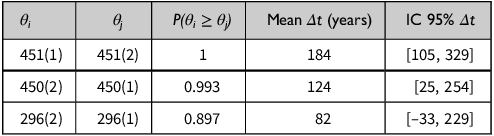
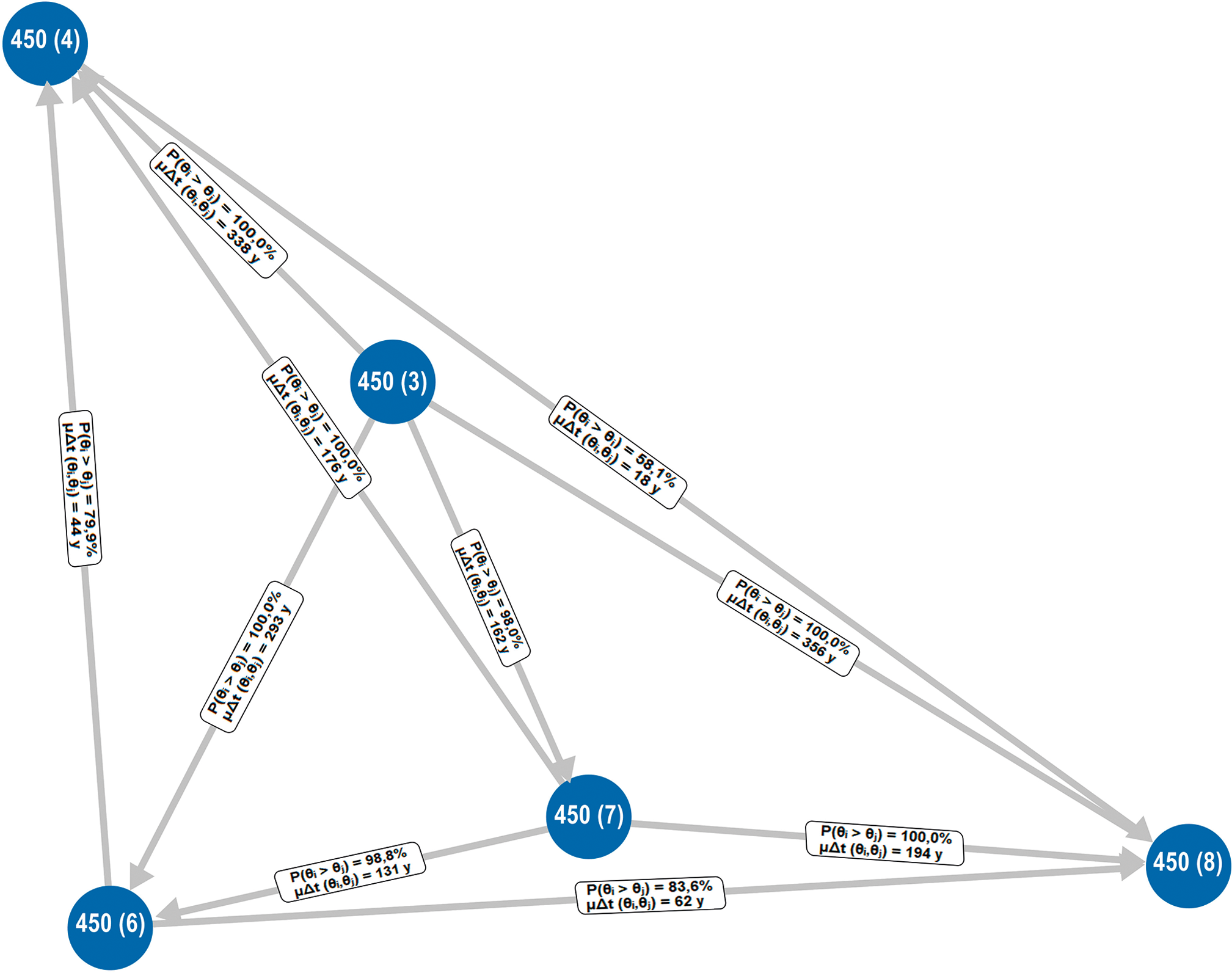
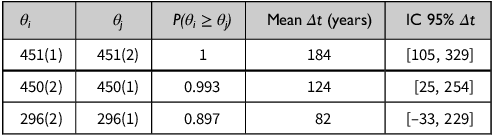
The end of Phase 1 marks the closure of VLD-T296, VLD-T451, and the first funerary level of VLD-T450 (Table 4). For VLD-T450 and VLD-T296, the end of Phase 1 of corresponds to two burials, 450(1) and 296(1) respectively, that appear to be contemporary. A discernible temporal hiatus is detected in VLD-T451, with individual 451(1) buried prior to individual 451(2) with total probability, the means of their posterior distributions differing by 183 years. In chamber VLD-T450, individual 450(2) predates individual 450(1) with 99% probability with a difference of 124 years between the means of their respective distributions. In VLD-T296, individual 296(2) died before individual 296(1) with an 89% probability and mean posterior distributions differing by 82 years; the latter was partially deposited over the former. These differences suggest that several generations passed between the first and second burials, during which the chambers remained in use.
Pairwise comparisons of posterior distributions for calibrated calendar dates (θ) of burials from Phase 2. The table reports, for each pair (θᵢ, θⱼ), the posterior probability that θᵢ occurred at the same time or later than θⱼ, along with the mean and 95% HPD for the temporal difference (Δt = θᵢ−θⱼ, in years).
As observed for tomb VLD-T450, the general model shows temporal overlaps between the closure phases of the first tombs (Phase 1) and the onset of the subsequent burial phase (Phase 2). In fact, the overlap between both phases is estimated to have occurred in an interval of not greater than 81 years (95% of HPD from Δt (β1–α2) = [0.81]). This indicates that the episodes of closure coincide with new burials in tomb VLD-T67.
According to the model, Phase 2 has a precise start between 3910–3819 cal. bc (α2) and ended at around 3617–3466 cal. bc (β2). The broader end interval produced by the Bayesian model for tomb VLD-T450 can therefore be attributed to the greater number of available radiocarbon dates. The duration of Phase 2 is estimated at between 231 and 418 years (95% HPD of Δt (α2–β2)).
Phase 3 is represented by two almost synchronous deaths in two separate pit burials (VLD-T52: Beta-688938 and VLD-T26: Beta-602435 respectively). This brief phase spans no more than 270 years (95% of HPD from Δt (β 3 –α 3 ) = [0, 270]) yet the two events very likely occurred close together in time. The model estimates the start of Phase 3 between 3549 and 3368 cal. bc (α 3 ) and its end between 3491 and 3215 cal. bc (β 3 ), i.e. with a considerable overlap.
Phase 4 includes a single individual, 520(1): Beta-606800. It is separated from Phase 3 by an interval of 152 to 532 years (95% HPD of Δt(β 3 −θ 16 ). The refined dating for this individual, indicative of this isolated use of the necropolis, is 3265–2917 cal. bc.
Phase 5 is better represented, with four radiocarbon dates from individuals in different areas of the site. It begins between 2901 and 2591 cal. bc and ends roughly between 2836 and 2334 cal. bc. In the case of tomb VLD-T 272, the death of individual 272(2) occurred prior to that of individual 272(9) with a 73.4% probability, and a temporal difference ranging from –59 to 199 years and from 204 to 217 years (95% HPD).
Discussion
Chambers are the most distinctive funerary structure type at Valdelasilla, being very different from the pit graves characteristic of Early and Middle Neolithic burials in the interior of the Iberian peninsula (Rojo et al. Reference Rojo, García-Martínez de Lagrán, Garrido and Bonet Rosado2016). Their complex and monumental architecture places them within the megalithic phenomenon (Guilaine Reference Guilaine2021).
Although the etymology of the term ‘megalith’ involves large stones, monuments were also constructed using perishable materials. The tombs at Valdelasilla, built with dry-stone walling, compacted clay and wood, could be related to the diverse funerary architecture of the interior of the Iberian Peninsula (Bueno Ramirez et al. Reference Bueno Ramírez, Barroso, Balbín, Laporte and Scarre2016; Bueno et al. Reference Bueno, Laporte and Wattez2022). Alongside megalithic structures made with large stones—from simple chambers to passage graves—there are also earthen constructions. While not exclusive to the Iberian interior, these reached a notable level of development in this region. The record includes mounds without internal stone chambers, small passage graves with circular mud-walled chambers over horizontal stone slab bases, and limestone constructions intentionally sealed by fire. The chambers of these various forms range in diameter from 2.5 to 5 m, similar to those at Valdelasilla (Bueno Ramirez et al. Reference Bueno Ramírez, Balbín and Barroso2005; Reference Bueno Ramírez, Barroso, Balbín, Laporte and Scarre2016; Rojo et al. Reference Rojo, Kunst, Garrido, García and Morán2005; Reference Rojo, Garrido and García2010; Rojo & Garrido Reference Rojo, Garrido, Gibaja, Carvalho and Chambon2012; Tejedor & Rojo Reference Tejedor, Rojo, Boaventura, Mataloto and Pereira2020).
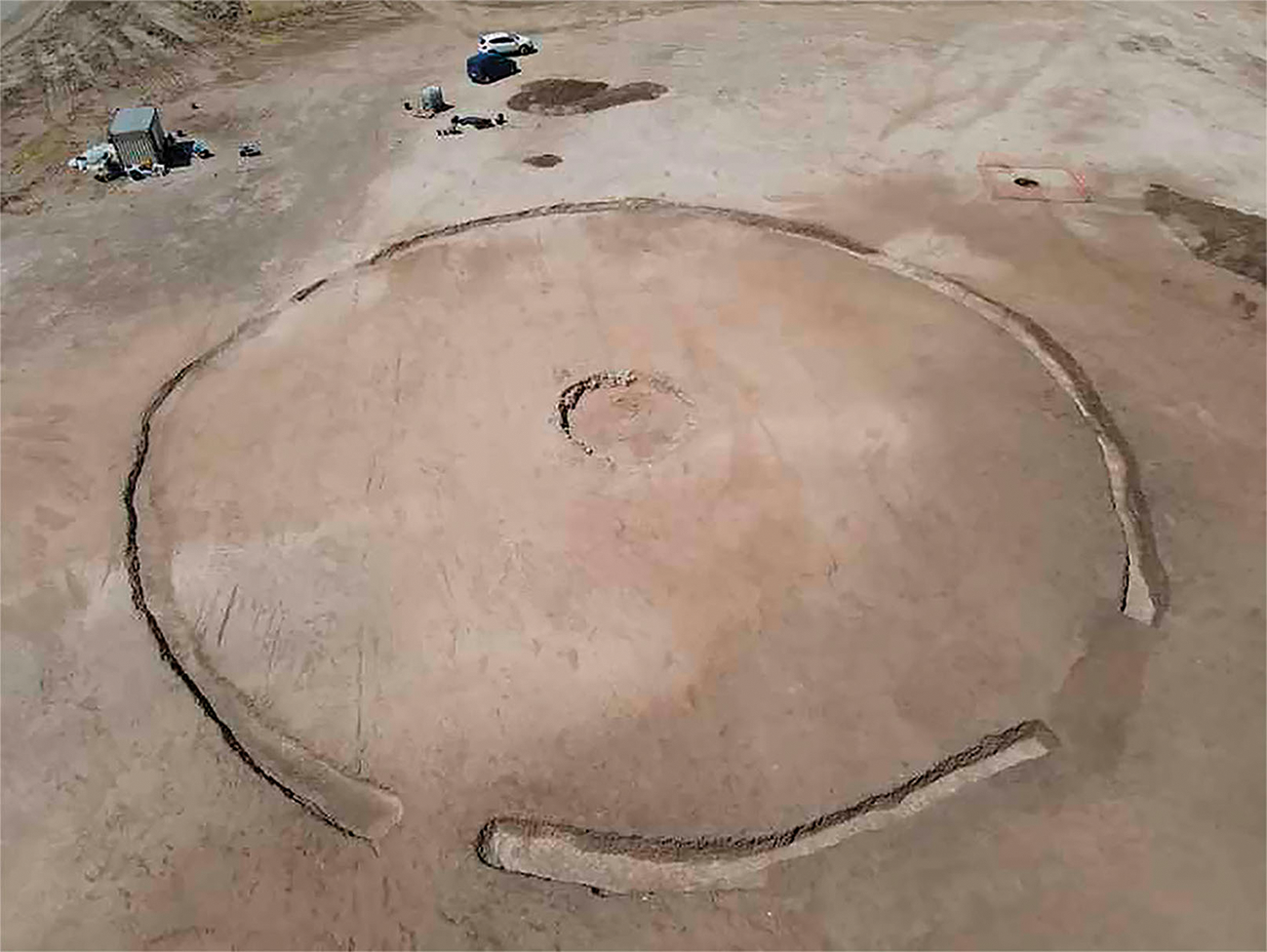
The enclosure surrounding the main tomb (VLD-T450) at Valdelasilla is an original feature that is currently unique in the region (Fig. 9). Attempts to date it directly have been unsuccessful, although its integration with the inner tomb as a single architectural complex is clearly indicated by the alignment of their entrances. Enclosures surrounding tombs are widely represented across Europe (Midgley Reference Midgley1985); sometimes they are the only features preserved from the mound (Chambon & Thomas Reference Chambon and Thomas2023). Some of the earliest examples of peninsular megalithism include stone rings that delimit an ambulatory space around the tomb (Domínguez-Bella & Bóveda Reference Domínguez-Bella and Bóveda2011; Rojo et al. Reference Rojo, Garrido-Pena and Tejedor2015). Other ditches have been considered to be the base of the earthen mound that enclosed the chamber (Bueno et al. Reference Bueno, Laporte and Wattez2022, 100; Vijande-Vila et al. Reference Vijande-Vila, Díaz-Zorita and Morell-Rovira2022). Their poor state of preservation and the absence of chronological data make it difficult to determine when these features were incorporated into the biography of the monument, or whether their function changed over time.
Aerial photograph of tomb and enclosure 450 during the excavation work.
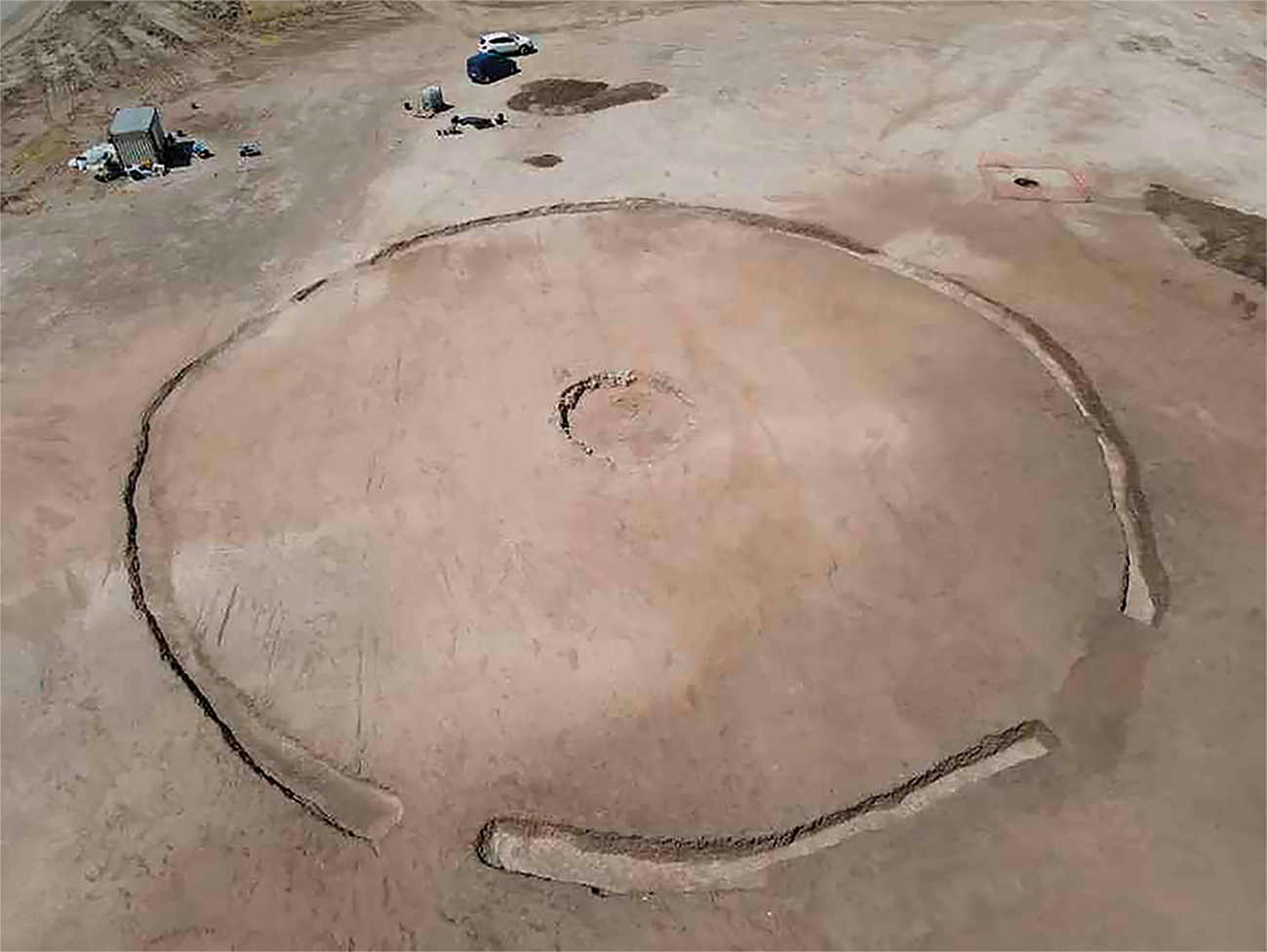
Several interpretations are plausible at Valdelasilla. The enclosure could have been used as a quarry for clay for the construction of the tombs and as the delimitation of an unpreserved mound. Such a mound could have included a passage or served as the closure of the tomb. Elsewhere in the Iberian peninsula, earthen mounds do remain, covering wooden or stone chambers, particularly in areas with low levels of farming activities (Blas Reference Blas2006; Molist & Clop Reference Molist and Clop2010). The four post-holes could indicate a division of a double mound, examples of which are also found in the region (Rojo et al. Reference Rojo, Kunst, Palomino, Rojo and Kunst2002). Alternatively, the ditch may have had a role emphasizing the position of the main tomb. A symbolic boundary would thus be established between the worlds of the living and the dead (Klassen & Knoche Reference Klassen, Knoche, Muller, Hinz and Wunderlich2019).
The overall chronological model of the site reveals a lengthy period of funerary activity, starting between 4336 and 4062 cal. bc and extending until sometime between 2836 and 2334 cal. bc. In the Tagus basin, many open-air sites were occupied from the late fourth millennium bc, reaching their peak development throughout the third millennium bc. However, although common for other areas such as southern Iberia (Márquez & Jiménez Reference Márquez and Jiménez2013), a chronological span starting from the late fifth and early fourth millennia bc such as that documented at Valdelasilla is unusual for the interior.
The first funerary activity (Phase 1) begins in two chambers (VLD-T450 & VLD-T451) of the central core area, without features, and in VLD-T296, located more than 100 m away. It is likely that tomb VLD-T452 also began its funerary use during this early phase, but the failure to date two of the three burials prevents confirmation of this. Thus, the configuration of the cemetery initially involved the organization of an area with an enclosure of over 2800 sq. m. The number of tombs could have been greater than those still preserved, and there could have been burials scattered across the site, given the distance to VLD-T296.
The three burial tombs, VTL-T450 & VLT-T451 VLD-T296, were established within a brief interval around 4336–4062 cal. bc. The first burials were carried out in a short period, possibly within the same generation, suggesting a structured planning of the cemetery with chambers of different types and dimensions. This organization is reinforced by the incorporation of subsequent burials separated by spans of up to 184 years (according to the probabilities of the models), but probably not exceeding four to five generations as the end of the phase was modelled at between 3945 and 3849 cal. bc.
The consolidation of a cemetery with a central core by the end of the fifth millennium cal. bc is a significant novelty in the interior of the Iberian peninsula. Organized pit grave groupings are known from open-air sites of the Early and Middle Neolithic (García & Sesma Reference García and Sesma2007; Rojo et al. Reference Rojo, García-Martínez de Lagrán, Garrido and Bonet Rosado2016), and it is common to find megalithic monuments dispersed throughout the landscape in the Plateau (Bueno Ramírez et al. Reference Bueno Ramírez, Barroso, Balbín, Laporte and Scarre2016; Santa Cruz Reference Santa Cruz2024); however, Valdelasilla is the first case of monumental tombs organized around a central space, clearly in use by the same community. The final dates of some of the pit grave groupings overlap with Phase 1 of Valdelasilla, providing continuity between these necropolises and the emergence of the funerary megalithic tradition. The hierarchical, spatial organization of the necropolis reflects a community with social divisions in place by the end of the fifth millennium bc. Moreover, radiocarbon dates suggest that this organization persisted over time, extending the use-life of the burial chambers and the social relationships sustaining them.
The earliest burials deposited in two of the tombs at Valdelasilla, VLD-T450(2) and VLD-T451(1), were documented in a secondary position within the chambers. Instances of bones beings displaced by the deposition of new bodies are common in collective burials and already occur in smaller monuments of early megalithism (Castany Reference Castany2008; Vijande-Vila et al. Reference Vijande-Vila, Díaz-Zorita and Morell-Rovira2022). On the other hand, lack of bone curation at Valdelasilla precludes us interpreting this as part of the Neolithic funerary practice of relic inclusion (Santana et al. Reference Santana, Caro and Camalich2024). The two burials in the primary position within tomb VLD-T296 provide alternative evidence that these tombs were the original grave for the earliest burials in the necropolis. In addition, the final primary burials, which mark the end of tombs VLD-T451 and VLD-T296 during this early phase of the cemetery, show that the smaller tombs were not temporary burials for individuals from the central tomb, as has been suggested for other peninsular megaliths (Delibes et al. Reference Delibes, Rojo and Santa Cruz2023).
The sealing of the first funerary level of the central tomb, as well as the double and triple tombs outside the enclosure, reveal a burial practice reserved for only a small number of individuals, regardless of the size or tomb type. Also noteworthy is the marked separation of the primary individual in the central tomb, isolated and surrounded by stones. A perishable covering may have been placed over the body, which would explain its preservation. Some kind of organic container is also likely for the first individuals buried in tombs VLD-T451 and VLD-T296 and the child in tomb VLD-T67, for whom a recess was opened specifically to fit the body. Although limited data is available concerning the sex of the individuals, a pattern of spatial dissociation by sex, as identified in other monuments with few individuals (Chambon & Thomas Reference Chambon and Thomas2023, 233), may also be present here. The central tomb, initially containing female burials, contrasts with the male individuals in tomb VLD-T451, while tomb VLD-T296, located away from the central core, contains one male and one female burial.
The monumentalization, funerary practices and chronology of these early burial chambers at Valdelasilla can be related to other examples of early megalithism in the Iberian peninsula. These include the cists and small chambers of the northeastern peninsular necropolises, which also use wood and organic containers (Morell et al. Reference Morell, Barceló and Oms2018; Remolins et al. Reference Remolins, Gibaja and Allièse2016; Roig et al. Reference Roig, Coil and Gibaja2010), and those of southwestern Iberia (García Sanjuán et al. Reference García Sanjuán, Fernández Rodríguez and Balsera Nieto2020; Vijande-Vila et al. Reference Vijande-Vila, Díaz-Zorita and Morell-Rovira2022), linking the coast and the interior. These various tombs have been referred to as proto-megalithic (Guilaine Reference Guilaine1996; Vijande-Vila et al. Reference Vijande-Vila, Díaz-Zorita and Morell-Rovira2022), transitional (Schultz Paulsson Reference Schulz Paulsson2017) and megalithic chambers (García Sanjuán et al. Reference García Sanjuán, Sánchez Díaz and Morell2022, 3; Morell et al. Reference Morell, Barceló and Oms2018), reflecting the diversity of the graves. Their characteristics include brief periods of use, lack of access to the chamber, a small number of burials, an incipient monumentalization and early chronologies. Emphasis is placed on the presence of large stones, but we must also consider the use of perishable materials combined with stone, as observed at Valdelasilla.
Dates from the late fifth-millennium cal. bc monuments from the northern plateau and the Tagus Valley (Bueno Ramírez et al. Reference Bueno Ramírez, Balbín and Barroso2005; Reference Bueno Ramírez, Barroso, Balbín, Laporte and Scarre2016; Tejedor & Rojo Reference Tejedor, Rojo, Boaventura, Mataloto and Pereira2020), previously discarded due to poor chronometric hygiene (Santa Cruz Reference Santa Cruz2024, 186), now find support in the bone dates from Valdelasilla. The date GrA-18518: 5170±60 bp on bone from the Portuguese dolmen Areita 1 (Cruz Reference Cruz2001), on the border of the northern plateau, is comparable to that from the individual in the primary position in tomb VLD-T450, supporting the early chronology of the megalithic phenomenon in central Iberia. It is also significant that several monuments from the plateau include individual graves within the chambers containing collective burials. In the dolmen of Azután (Toledo), as in Areita 1, a stone cist was found within the large burial chamber (Bueno Ramírez et al. Reference Bueno Ramírez, Balbín and Barroso2005; Gomes et al. Reference Gomes, de Carvalho and Perpétuo1998). However, the cist did not contain the original human remains of an individual, which may have been moved or integrated with the later burials, as was also proposed at La Sima II (Soria) (Rojo et al. Reference Rojo, Kunst, Garrido, García and Morán2005). The remodelling of individual burials and evidence of their early inclusion within the larger tomb is also observable at La Peña de la Abuela (Soria). At least two stone cists, one of them constructed from wood, were distributed within the chamber. These individualized spaces were created according to funerary needs: the necrophagous fauna present rules out the possibility that they are secondary remains (Rojo et al. Reference Rojo, Kunst, Garrido, García and Morán2005; Reference Rojo, Garrido and García2010).
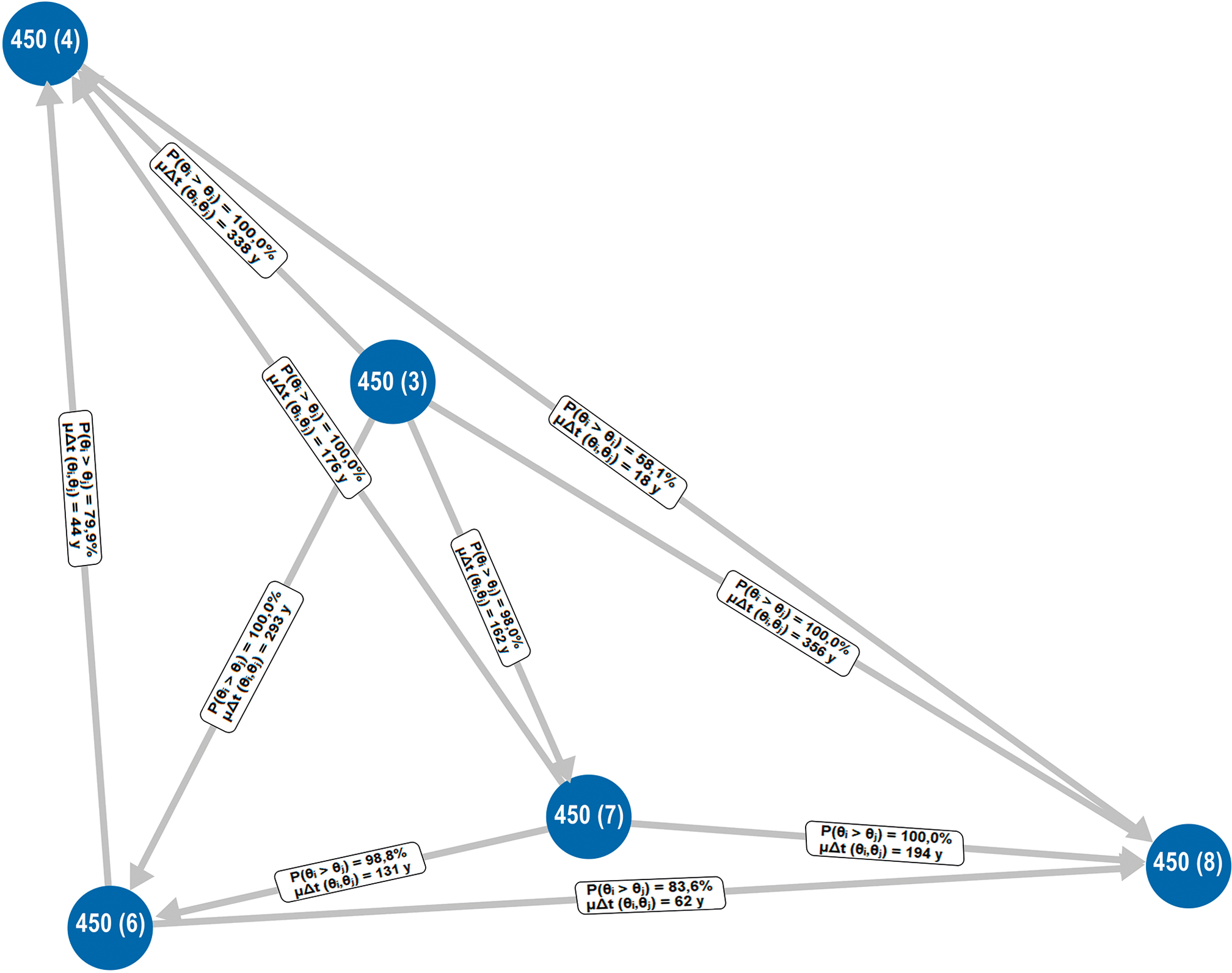
Individual burials are recorded throughout the whole sequence at Valdelasilla; however, the central tomb, VLD-T450, continued receiving burials. The closure of the smaller chambers, in around 3900–3800 cal. bc, does not end funerary activity in the core of the cemetery; it continues within the same tomb (Phase 2). In fact, the burial of a new individual (450-3) takes place immediately after the sealing of the basal level, suggesting some kind of restoration of the chamber. A requirement for dissociation by sex could explain why the lower female burials are set apart from this upper, male individual. Be that as it may, the central tomb becomes the focus for all funerary activity, reasserting its position and size at precisely the time that other regional megalithic monuments, both in stone and clay, appear to increase in number (Bueno Ramírez et al. Reference Bueno Ramírez, Barroso, Balbín, Laporte and Scarre2016; Rojo et al. Reference Rojo, Kunst, Garrido, García and Morán2005; Santa Cruz Reference Santa Cruz2024). The general model estimates the end of Phase 2 at between 3617 and 3466 cal. bc, whereas according to the VLD-T450 model use of the chamber ends between 3612 and 3193 cal. bc. Both models suggest a lengthy funerary use of the chamber, spanning 268 to 798 years and following an irregular pattern with some widely spaced burials and others occurring within a short period (Fig. 10). The prolonged and communal use of the tomb could reflect the needs of just a few individuals who wished to establish legitimacy through their ancestors. While VLD-T450 was being used for collective burials, individual tombs (e.g. VLD-T67) were also opened, a practice identified at other open-air settlements in the region (Díaz-del-Rio et al. Reference Díaz-del-Río, Waterman and Thomas2017a, 1445).
Temporal relationships for individuals from Phase 2 of VLD-T450 (Supplementary appendix 1) and posterior probabilities of date differences in a Bayesian framework.
The end of use of tomb VLD-T450 (Phase 3) is followed by change in funerary practice, with the remains of two individuals placed in pits located in the lower part of the site, some distance from the main burial area. Despite this, the core area of the necropolis was reactivated several centuries later (Phase 4), around the transition from the fourth to the third millennium cal. bc. In about 3265–2917 cal. bc, a new single chamber, VLD-T520, was opened. It was placed to the south of the enclosure, at the same distance from it as the first small chambers of the cemetery, and overlaps an earlier, oval, post-built structure. This suggests that there were originally a greater number of graves present, and that the discontinuity in use of the central necropolis as indicated by the dates may not have occurred.
Tomb VLD-T520 closes the funerary activity in the central core of the cemetery, which would henceforth take on a commemorative function. Sometime between 2901–2591 cal. bc and 2836–2334 cal. bc (Phase 5), during the pre-Bell Beaker Chalcolithic phase of the regional sequence, human remains were symbolically placed and divided among the four post-holes located inside the enclosure, maybe in a single event. This final episode aligns with reuse and symbolic deposits in evidence at other megalithic sites, extending the collective memory of the cemetery (O’Sullivan Reference O’Sullivan2005). However, the most meaningful sign of the change in the role of the cemetery is the opening of a new burial chamber, VLD-T272, located in the lower part of the site, far from the funerary focus of the previous millennium. Although the two available dates are insufficient to determine the dynamics of the ossuary containing 17 individuals, the grouping of skulls suggests a differential treatment that contrasts with earlier burials. Such collective funerary practices are common in Iberian burials from the first quarter of the third millennium cal. bc, taking place within megaliths, pits and caves (Díaz-del-Rio et al. Reference Díaz-del-Rio, Consuegra and Audije2017b; Beck et al. Reference Beck, Díaz-Zorita Bonilla, Domínguez, Hernández, Escudero and Díaz-del-Río2024). The features of the chamber, with a trench and post-holes, demonstrate a construction tradition rooted in the site (Fig. 4).
The grave goods from the Valdelasilla tombs highlight the significance of bone artefacts in the early phase of the cemetery. Along with the chipped lithics, macrolithics and personal ornaments, these are common in megalithic grave good assemblages in the region. There is one notable absence at Valdelasilla: the spatula idols of the type ‘San Martín – El Miradero’. These bone objects are characteristic of the first megalithic burials in the Iberian interior regions in the fourth millennium bc (Guerra & Delibes Reference Guerra, Delibes and Preston2013; Villalobos et al. Reference Villalobos, Delibes, Zapatero, Bueno and Soler2021). Some differences are revealed throughout the sequence, such as the presence of an arrowhead characteristic of the evolved grave goods, and the assemblage of black lithic beads from VLD-T520. The incorporation of ceramics takes place during the third millennium cal. bc. The only analysis carried out so far on the red pigment found in bones and sediment (VLD-T296) has identified ochre. Its use in funerary contexts is well documented in collective burials such as megaliths, pits and peninsular hypogea (Bueno Ramírez et al. Reference Bueno Ramírez, Barroso and Balbín2019). It should be noted that another type of red pigment, cinnabar, considered highly valuable due to its restricted use and long-distance provenance, had been used in the region since the sixth millennium bc (Hunt et al. Reference Hunt, Consuegra and Díaz del Río2011).
Although still preliminary, our analysis indicates a preference for locally or regionally sourced raw materials, except for the marine shells. This is a divergence from other necropolises of the emerging megalithism, where more exotic materials such as jadeite, amber or cinnabar from long-distance exchange are often present (Remolins et al. Reference Remolins, Gibaja and Allièse2016; Vijande-Vila et al. Reference Vijande-Vila, Dominguez-Bella, Cantillo, Martin and Barrena2015). It is therefore difficult to identify social distinctions among the buried individuals, despite the grave goods having well-preserved personal associations. The architectural contrasts are clearer than those reflected by grave goods, suggesting social and ideological distinctions were firmly established, while economic inequality was at an earlier stage. It is notable, however, that the child from tomb VLD-T67 has no grave goods, perhaps due to age. Conversely, the central tomb contains a higher number of ornaments than other tombs at the site, indicating its social significance.
Information regarding the settlements of megalith builders is abundant on the Iberian plateau, but their connection to their monuments remains imprecise. Megaliths are located around some of the largest peninsular enclosures identified (Schmitt Reference Schmitt, Bartelheim, Bueno Ramírez and Kunst2017) and excavation of the mounds has revealed evidence of previous settlements (Bueno Ramírez et al. Reference Bueno Ramírez, Balbín and Barroso2005; Reference Bueno Ramírez, Barroso, Balbín, Bartelheim, Bueno Ramírez and Kunst2017; Delibes & Zapatero Reference Delibes and Zapatero1996). Until we are able to date the domestic structure, VLD-66, its contemporaneity with the tombs at Valdelasilla cannot be confirmed, although, given the archaeological material recorded, this is the most reasonable scenario and is seen at other sites (Bruniaux et al. Reference Bruniaux, Mathé, Jalouneix and Ard2025). The domestic structure VLD-66 shares the features of other Neolithic dwellings known in the region (Díaz-del-Rio & Consuegra Reference Díaz-del-Rio, Consuegra, Bernabeu and Orozco1999). On the other hand, the material assemblages recovered from many of the domestic pits are consistent with settlement remains from other fourth-millennium bc sites (Bueno Ramírez et al. Reference Bueno Ramírez, Balbín and Barroso2005). In addition, the graves contain macrolithic tools indicating the incorporation of domestic refuse from surrounding areas during the construction, as at other sites (Martínez-Sevilla & Linares-Catela Reference Martínez-Sevilla and Linares-Catela2023). The positioning of the core of the necropolis on the highest point of the site could relate to the organization of the surrounding domestic spaces.
Conclusions
The site of Valdelasilla was temporarily occupied during the sixth millennium bc. A stable population was established from the late fifth to the early third millennium cal. bc, with only brief periods of inactivity, at least in funerary terms, as all available dates come from burials. Throughout this period, the funerary landscape evolved, with some structures being closed and others having their use significantly extended with new functions. Architectural evidence, burial contexts and radiocarbon dates from human bones indicate that the site includes the earliest known monumental necropolis in the interior of the Iberian peninsula. The burial chambers, although built with walls of wood, clay and small stones, are far from rudimentary and were designed for permanence and for visibility.
The necropolis, established in the late fifth millennium bc, shares many traits with other peninsular cemeteries associated with emerging megalithism in the northeast and southwest. However, the megalithic tradition combining monumentality and collective burials becomes consolidated within the cemetery over time. The central tomb at Valdelasilla, which involved the greatest collective labour investment, continued receiving burials, becoming a collective grave. Its use extends over a long period and reflects evolving funerary practices. Several centuries after the closure of the central tomb, a new tomb was incorporated into the necropolis and there is evidence of a commemorative event. This extended funerary activity sustained the monumentality of the necropolis, confirming its importance in the cultural landscape of these communities.
Until now, inland tombs have been little associated with the beginning of megalithism due to their peripheral location with respect to the assumed coastal and maritime spread of megalithism (Schulz Paulsson Reference Schulz Paulsson2019; Vijande-Vila et al. Reference Vijande-Vila, Díaz-Zorita and Morell-Rovira2022). Their early dates and the location of Valdelasilla on the plateau support a simultaneous development with distinct megalithic focal points across the Iberian peninsula. Instead of having a single point of origin, the emergence of megalithism in Europe appears to follow a multiple model of interconnected regions involving not only the coast but also continental areas.
Supplementary material
To view supplementary material for this article, please visit https://doi.org/10.1017/S0959774326100559
Acknowledgements
This study was carried out within the research projects SBPLY/21/180801/000019/; SBPLY/22/180801/000063/; SBPLY/24/180225/000102 funded by the Junta de Comunidades de Castilla-La Mancha-INNOCAM- FEDER and a grant from Palarq (2022) foundation.


 Open access

