


Introduction
Overcoming mental health related-stigma is an international issue. Mental health-related stigma has a major negative impact on help-seeking behaviour, and is a barrier to treatment and recovery for people with mental health problems (Ando et al., Reference Ando, Yamaguchi, Aoki and Thornicroft2013; Gronholm et al., Reference Gronholm, Thornicroft, Laurens and Evans-Lacko2017; Schnyder et al., Reference Schnyder, Panczak, Groth and Schultze-Lutter2017). More than 70% of persons who need mental health service have lacked access to care (Kohn et al., Reference Kohn, Saxena, Levav and Saraceno2004), despite mental illnesses being treatable (Insel, Reference Insel2009). The mental health treatment gap increases the enormous burden of mental illnesses worldwide (Whiteford et al., Reference Whiteford, Degenhardt, Rehm, Baxter, Ferrari, Erskine, Charlson, Norman, Flaxman, Johns, Burstein, Murray and Vos2013). Decreasing mental health-related stigma can lead to diminishing the mental health treatment gap (Kohn et al., Reference Kohn, Saxena, Levav and Saraceno2004).
Over the past three decades, many studies have examined the effects of anti-stigma interventions. Mental health-related stigma is constructed through multiple aspects such as knowledge, attitudes and behaviour (Corrigan and Watson Reference Corrigan and Watson2002; Rüsch et al., Reference Rüsch, Angermeyer and Corrigan2005; Thornicroft et al., Reference Thornicroft, Rose, Kassam and Sartorius2007). A lack of knowledge of mental illness is associated with negative attitudes toward mental illnesses, which contribute to actual discriminatory behaviour (Corrigan et al., Reference Corrigan, Markowitz, Watson, Rowan and Kubiak2003). Since more emphasis is placed on positive views of treatment and recovery process in the recent clinical strategy for mental illness (Bertolote and McGorry, Reference Bertolote and McGorry2005), knowledge of mental illness can also be divided into positive and evidence-based knowledge aspect (practically useful knowledge of mental illness) and negative stereotyped aspect (e.g., ‘people with mental illness are dangerous’) (Corrigan and Shapiro, Reference Corrigan and Shapiro2010; Koike et al., Reference Koike, Yamaguchi, Ojio, Shimada, Watanabe and Ando2015; Koike et al., Reference Koike, Yamaguchi, Ojio, Ohta, Shimada, Watanabe, Thornicroft and Ando2018a, Reference Koike, Yamaguchi, Ojio and Ando2018b). The practically useful knowledge has been considered to encourage better understanding toward people with mental health problems and may help-seeking behaviour (Rüsch et al., Reference Rüsch, Evans-Lacko, Henderson, Flach and Thornicroft2011). The educational approach has been recognised as an effective intervention for reducing mental health-related stigma, mainly through knowledge (or stereotype) (Yamaguchi et al., Reference Yamaguchi, Mino and Uddin2011; Thornicroft et al., Reference Thornicroft, Mehta, Clement, Evans-Lacko, Doherty, Rose, Koschorke, Shidhaye, O'Reilly and Henderson2016). Randomised controlled trials (RCTs) have shown that social contact or contact-based intervention (e.g., filmed social contact) is the most effective strategy for decreasing stigma, especially with regard to mental health-related attitudes and/or behavioural intentions (Thornicroft et al., Reference Thornicroft, Mehta, Clement, Evans-Lacko, Doherty, Rose, Koschorke, Shidhaye, O'Reilly and Henderson2016; Koike et al., Reference Koike, Yamaguchi, Ojio, Ohta, Shimada, Watanabe, Thornicroft and Ando2018a, Reference Koike, Yamaguchi, Ojio and Ando2018b; Yamaguchi et al., Reference Yamaguchi, Ojio, Ando, Bernick, Ohta, Watanabe, Thornicroft, Shiozawa and Koike2019). Combining social contact with knowledge-based education, rather than social contact alone, appears to enhance the effect of decreasing stigma (Griffiths et al., Reference Griffiths, Carron-Arthur, Parsons and Reid2014). However, it is still debatable what kind of educational content is effective in reducing stigma.
A consensus development study showed an expert opinion-based recommendation for designing educational interventions to tackle mental health-related stigma (Clement et al., Reference Clement, Jarrett, Henderson and Thornicroft2010). Expert opinions have recommended the following types of messages: ‘See the person’ (equal to social contact), ‘recovery-oriented’, ‘social inclusion/human rights’ and ‘high prevalence of mental illnesses’ (Clement et al., Reference Clement, Jarrett, Henderson and Thornicroft2010). Mental health literacy intervention, mainly focusing on promoting help-seeking efficiency, has also been recognised as an effective approach for decreasing stigma (Kutcher et al., Reference Kutcher, Wei and Morgan2016a, Reference Kutcher, Wei and Coniglio2016b; Wei et al., Reference Wei, Hayden, Kutcher, Zygmunt and McGrath2013). The educational contents in such programmes were diverse and mainly consisted of recommended messages (RCM) and some information about the biological basis for psychiatric disorders including, for example, that ‘the basic functions of the brain as the organ that controls thinking, moods and behaviour’ and ‘mental disorders are the result of changes that arise in usual brain function as a result of a complex interplay between a person's genes and environment’ (Watson et al., Reference Watson, Otey, Westbrook, Gardner, Lamb, Corrigan and Fenton2004; McLuckie et al., Reference McLuckie, Kutcher, Wei and Weaver2014; Milin et al., Reference Milin, Kutcher, Lewis, Walker, Wei, Ferrill and Armstrong2016). Past trial-based studies have produced evidence that biomedical information may contribute to decreasing stigma through affecting the stereotype by improving scientific-based medical knowledge, for example about the treatability of mental illnesses (Lebowitz and Ahn, Reference Lebowitz and Ahn2012; Han and Chen, Reference Han and Chen2014). Biological elements of mental illness enhance cognitive interpretations and/or judgments to a medicalised framing, and are therefore considered an effective anti-stigma strategy in healthcare (Knaak et al., Reference Knaak, Ungar and Patten2015; Ungar et al., Reference Ungar, Knaak and Szeto2016). Expert opinions and observational research findings have, however, suggested that biological explanations (e.g., about biological causes of mental illnesses, including genetics or chemical imbalance) may increase stigma and in part have been harmful during the past decade (Clement et al., Reference Clement, Jarrett, Henderson and Thornicroft2010; Angermeyer et al., Reference Angermeyer, Holzinger, Carta and Schomerus2011; Schomerus et al., Reference Schomerus, Schwahn, Holzinger, Corrigan, Grabe, Carta and Angermeyer2012). Whether biomedical information about mental illness itself is effective or harmful in decreasing stigma is controversial.
To the best of our knowledge, there have been no RCT testing whether biomedical messages (BMM) about mental illness are more effective in reducing stigma compared with the RCM. Our preliminary pilot study showed that BMM improved practically useful knowledge of mental illness more than RCM. In the present study, we aim to investigate whether a 10-min film with BMM improves more practically useful knowledge of mental illness towards people with mental health problems measured using the Mental Illness and Disorder Understanding Scale (MIDUS) from the baseline to the post-test survey compared with the RCM. As a secondary outcome, we conducted follow-up surveys for 1 year to explore the maintenance of the intervention effects.
Methods
Study design
We conducted an individual-level RCT with a parallel-group design. The present study included baseline, post-test, 1-month follow-up and 1-year follow-up surveys. We set three days in June and July 2017 for the baseline survey. Participants were individually allocated to either the BMM video lecture group or the RCM video lecture group, before the baseline survey. Each participant completed the baseline survey (mean duration 20 min), individually viewed one of the 10-min intervention videos on a personal computer, and completed the post-test survey immediately after the intervention. The intervention and the baseline and post-test surveys were completed in a room at The University of Tokyo. The 1-month and 1-year follow-ups were administered by means of a web survey in order to avoid attrition. All the surveys were conducted using anonymous, self-administered questionnaires. The allocation was masked to the researchers involved in processing and analysing the data until all the participants had completed their baseline survey. The researchers received the data from each assessment and allocation of each participant after the participant had completed the post-test survey. Therefore, this RCT was categorised as assessor-blinded in registration. The present study was registered at the University Hospital Medical Information Network Clinical Trial Registration before the start of the initial survey (trial number: UMIN000027727) and underwent no further methodological changes after registration.
Participants
We recruited a general population including high school students, undergraduate and graduate students, young adults and adults by means of recruitment boards in several high schools and universities and a commercial internet advertisement. Participants were recruited without being given any information indicating this was a mental health-related survey or trial to avoid influencing the results due to participants' interest in mental health, but it was explained that the project explored the effects of different learning methods. The study set the following exclusion criteria: those who are unable to read and write in Japanese at a level equivalent to graduation from junior high school in Japan. Ethical approval was obtained from the Research Ethics Committee of the Department of Arts and Sciences, The University of Tokyo (approval no. 507-2). All the participants provided informed written consent after receiving a full explanation of the study, including the detailed study settings and main purpose.
Sample size
We estimated an initial sample size of 76 participants in each group, based on the results of a preliminary pilot study in which 21 participants were allocated to each of the BMM and RCM groups. The sample size calculation was conducted based on a 3.00 mean difference between the group in the pilot study. Detecting this difference with α = 0.05 and β = 0.80 would require 76 participants. To allow for a dropout rate up to 25% and a reduced effect for 1-year, the final estimation was 95 participants for each group (190 in total).
Randomisation and blinding
Random allocation was conducted by an opaque and sealed envelope method. A research assistant (K.O.), independent from the interventions, assessments and data analysis, generated random permuted blocks with block sizes of four or six stratified by sex using a website (www.randomization.com). The research assistant produced the allocation sequence and all the envelopes before the start of the trial. The authors conducted enrolment and assignment without any information from the survey. As each participant was assigned to one of the groups during the baseline assessment, concealment of the allocation of each participant was maintained before completion of the assessment at baseline. The allocation was masked to the researchers involved in processing and analysing the data until all the participants had completed the baseline survey.
Interventions
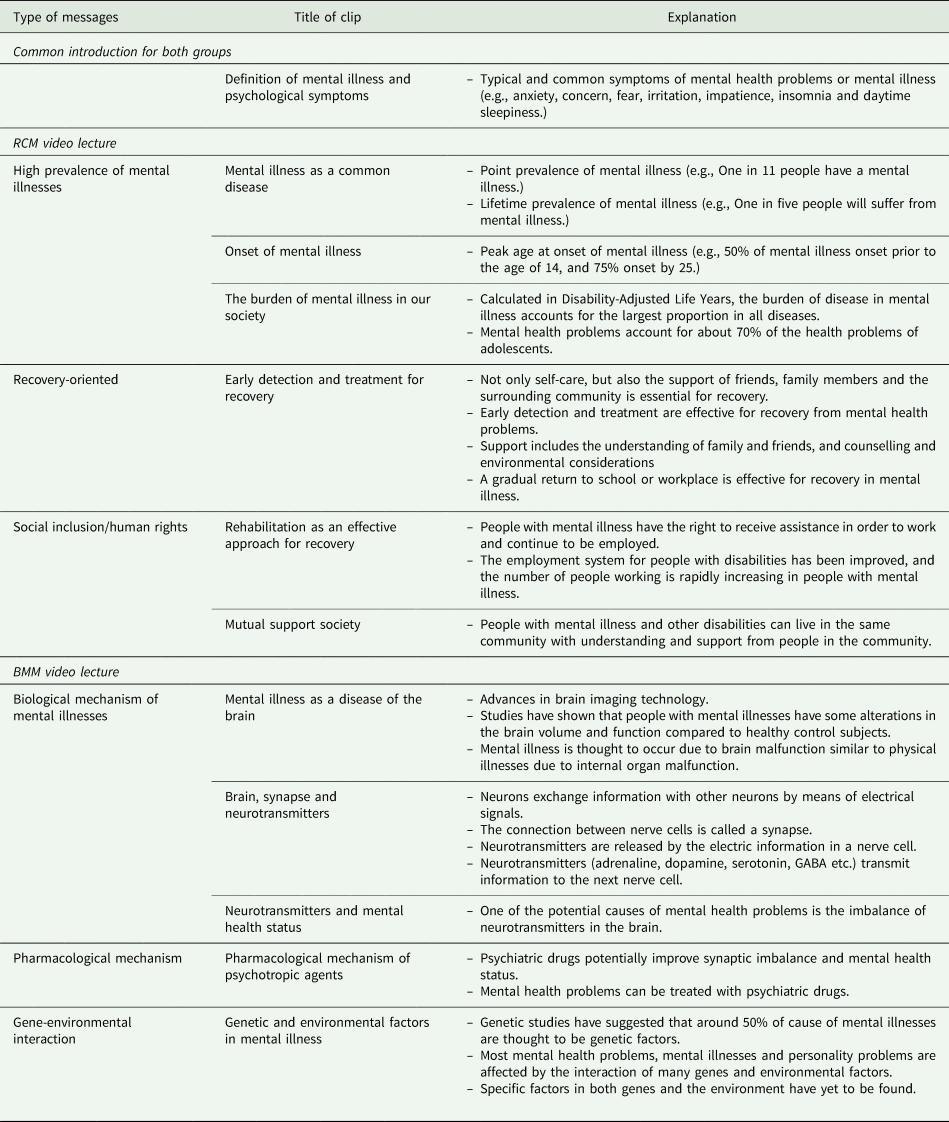
Following completion of the baseline survey, participants received individual laptop computers containing one of two 10-min interventions assigned according to the groups. Table 1 shows the contents of each film. The BMM group viewed a film covering ‘Biological mechanism of mental illnesses’, ‘Pharmacological mechanism’ and ‘Gene-environment interaction’. The film for the RCM group covered the following: (1) high prevalence of mental illnesses, (2) recovery-oriented messages and (3) social inclusion/human rights messages (Clement et al., Reference Clement, Jarrett, Henderson and Thornicroft2010). These messages have a confirmed positive impact on reducing negative stereotype (Thornicroft et al., Reference Thornicroft, Mehta, Clement, Evans-Lacko, Doherty, Rose, Koschorke, Shidhaye, O'Reilly and Henderson2016; Koike et al., Reference Koike, Yamaguchi, Ojio, Ohta, Shimada, Watanabe, Thornicroft and Ando2018a, Reference Koike, Yamaguchi, Ojio and Ando2018b; Yamaguchi et al., Reference Yamaguchi, Ojio, Ando, Bernick, Ohta, Watanabe, Thornicroft, Shiozawa and Koike2019). Filmed social contacts were not included in either BMM or RCM. The details of each film are shown in Table 1. Both films were produced by the authors, all of whom had sufficient experience in community mental health services. Draft intervention films were used in the preliminary pilot study. We received feedback on understandability and impact of all the clips in the films using an 11-Likert scale. We also asked the participants about their impressions, sympathy, understanding of the participant and the change of impression of mental health problems through the films, using an 11-Likert scale. We revised the films according to the feedback. The films used in the trial were also evaluated in a similar manner, and there was no significant difference between the films in mean understandability (BMM: 7.62 [s.d. = 1.49], RCM: 7.83 [1.31], p = 0.31) or impact (BMM: 6.94 [1.60], RCM: 7.09 [1.50], p = 0.53).
Contents of the interventions in this trial
Outcome measures
We assessed the change in stigma-related outcomes, according to the MIDUS, the Japanese version of the Reported and Intended Behaviour Scale (RIBS-J) and help-seeking intention scales in the baseline, post-test, 1-month follow-up and 1-year follow-up surveys. For the primary outcome measure, we used the MIDUS for the post-test survey.
MIDUS
The MIDUS was employed to assess practically useful knowledge of mental illness. The factor analysis revealed the three subscales including treatability of illness (e.g., ‘Mental illness is treatable’), efficacy of medication (e.g., ‘Medication is effective in improving symptoms’) and social recognition of illness (e.g., ‘Mental illnesses are very common’) (Tanaka, Reference Tanaka2003). It consists of 15 items on a five-point Likert scale (range 0 to 60, a lower score representing more practically useful). The MIDUS was originally developed in Japan, and its factorial validity and moderate internal consistency have been confirmed (Tanaka, Reference Tanaka2003). Cronbach's α was 0.79 in the baseline survey in the present sample.
RIBS-J
The RIBS-J consists of four binary items for past experience with people with mental health problems (RIBS-J past, range 0–4; ‘Yes’ = 1, ‘No’ = 0, ‘Don't know’ = 0; higher scores represent more social contact) and four items for future behavioural intentions on a 5-point Likert scale (RIBS-J future, range 4–20; ‘Strongly agree’ = 5 to ‘Strongly disagree’ = 1; higher scores indicate a more positive intention, such as ‘In the future, I would be willing to live with someone with a mental health problem’) (Evans-Lacko et al., Reference Evans-Lacko, Rose, Little, Flach, Rhydderch, Henderson and Thornicroft2011). Both the original and Japanese versions have good validity and reliability (Evans-Lacko et al., Reference Evans-Lacko, Rose, Little, Flach, Rhydderch, Henderson and Thornicroft2011; Yamaguchi et al., Reference Yamaguchi, Koike, Watanabe and Ando2014). Cronbach's α was 0.68 and 0.84 in the baseline survey in the present sample for the RIBS-J past and the RIBS-J future, respectively.
Help-seeking
The following two questions evaluated help-seeking intention and attitude to mental illness. First, whether participants had the intention to seek help from mental health professionals was measured by the following question: ‘If you felt that you had a mental health problem, how likely would you be to go to mental health professionals for help?’ Responses were rated on a Likert scale of 1 to 5, with higher scores indicating a greater likelihood of seeking help. The mean ± s.d. score for the 1751 adults was 4.2 ± 1.1 (Rüsch et al., Reference Rüsch, Evans-Lacko, Henderson, Flach and Thornicroft2011). Second, whether participants felt comfortable disclosing a mental illness to friends or relatives was measured by the question: ‘In general, how comfortable would you feel talking to a friend or family member about your mental health, for example, telling them you have a mental health diagnosis and how it affects you?’ Scores range from 1 to 7, with higher scores reflecting greater comfort with disclosure. The mean ± s.d. score for the 1751 adults was 5.1 ± 1.9 (Rüsch et al., Reference Rüsch, Evans-Lacko, Henderson, Flach and Thornicroft2011).
Statistical analysis
For the primary outcome, we used a repeated t-test for the MIDUS scale change between the group. Effect size η 2 was calculated, which was graded as 0.01 = small, 0.06 = medium and 0.14 = large. For secondary outcomes to test the differences in stigma scales over the four survey time points, we applied a random effect of intercept and slope in a mixed effect model with full maximum likelihood estimation. For the effect size of the mean difference between the group in each assessment point, through computing Cohen's d which was graded as 0.20 = small, 0.50 = medium and 0.80 = large. We also added sex and age as covariates to the models, because these variables have been regarded as potential confounders in previous stigma studies (Holzinger et al., Reference Holzinger, Floris, Schomerus, Carta and Angermeyer2012; Yamaguchi et al., Reference Yamaguchi, Wu, Biswas, Yate, Aoki, Barley and Thornicroft2013). For age, the participants were categorised into the following three subgroups: younger (aged 15–18 years, n = 58), mid-range (aged 18–21 years, n = 63) and older (aged 21–58 years, n = 58). As sensitivity analyses, we adjusted for sex, age, experience of having personal mental health problems, experience of attending a lecture on mental health and experience of watching media describing people with mental health problems, which were regarded as potential confounders or effect modifiers in past studies. For the proportion of mental health-related experiences during the follow-up periods, changes from baseline to 1-year follow-up in each group were tested using McNemar's test, and comparisons between groups at 1-year follow-up survey were tested using the χ2 test. To check for any an adverse effect of the interventions, we defined a 25% or more decrease in the RIBS-J future score from the baseline to each follow-up as an increase in stigma (Koike et al., Reference Koike, Yamaguchi, Ojio, Ohta, Shimada, Watanabe, Thornicroft and Ando2018a, Reference Koike, Yamaguchi, Ojio and Ando2018b) and compared the number of those who demonstrated an increase in stigma between the two groups using Fisher's exact test. Statistical significance was set at 5% of variance. All analyses were carried out in October 2018. Statistical analyses were conducted using Stata/SE 14.2, StataCorp, 2017.
Results
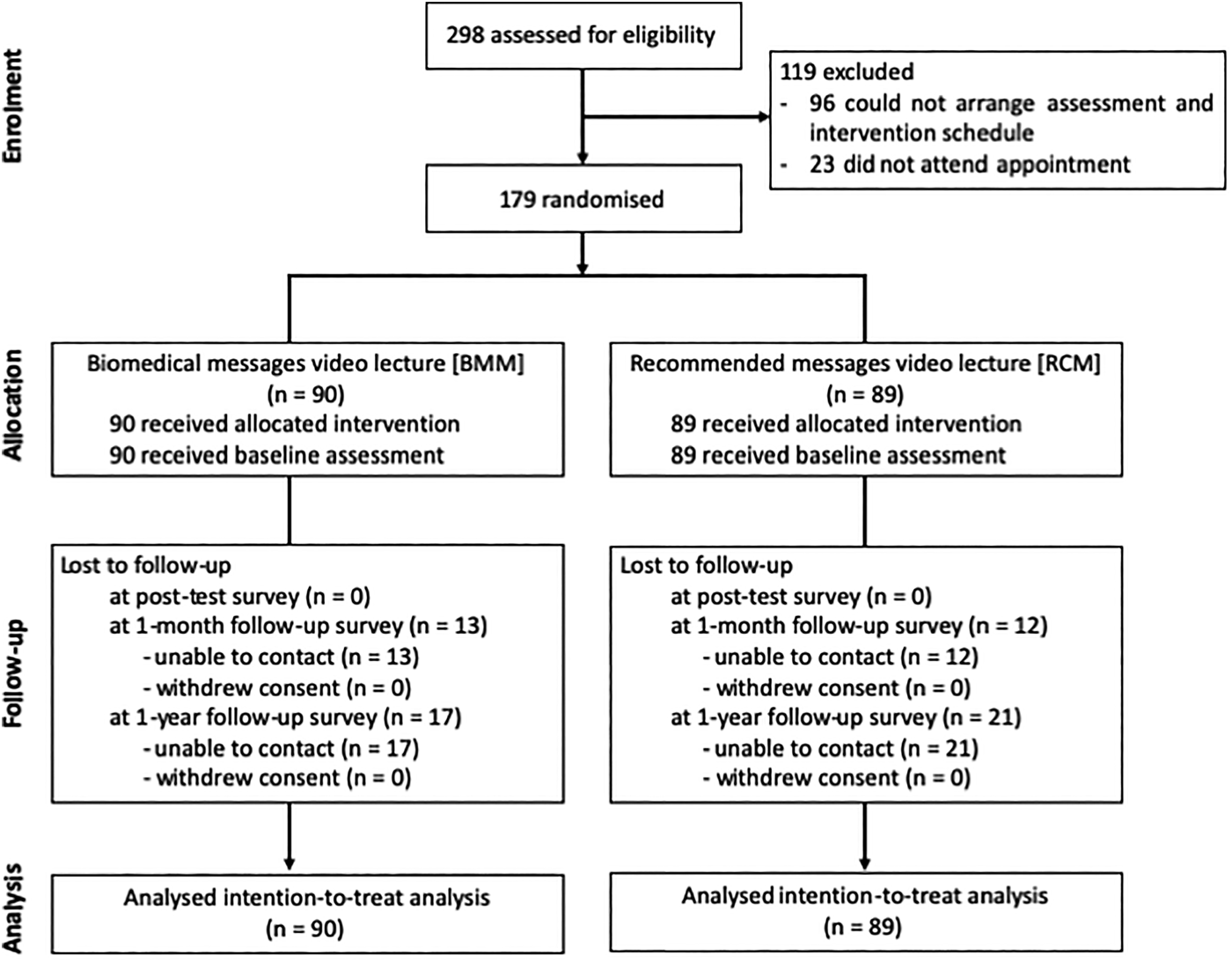
There were 298 applicants for this trial. Of these, 179 persons participated in the study and were randomly assigned to the BMM (n = 90) and RCM groups (n = 89) (Fig. 1). There were no differences in demographic characteristics or scores for outcome measures at baseline between the groups (Table 2).
CONSORT flow diagram of the study.
Characteristics of participants in this trial
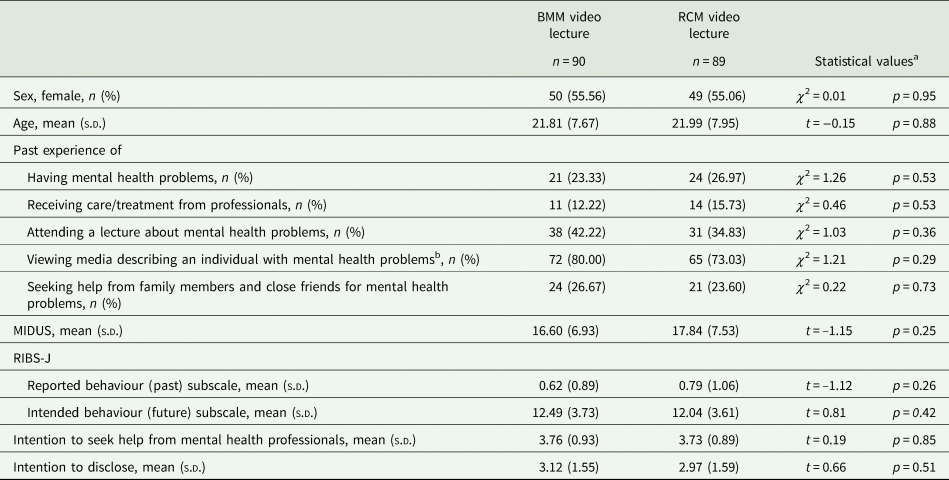
MIDUS, The Mental Illness and Disorder Understanding Scale; RIBS-J, The Japanese version of the Reported and Intended Behaviour Scale.
a Group differences were tested using the t-test for continuous variables and using the χ 2 test for categorical variables.
b Media include television, newspapers, internet, etc.
Effects of BMM on reducing the practically useful knowledge of mental illness-related stigma
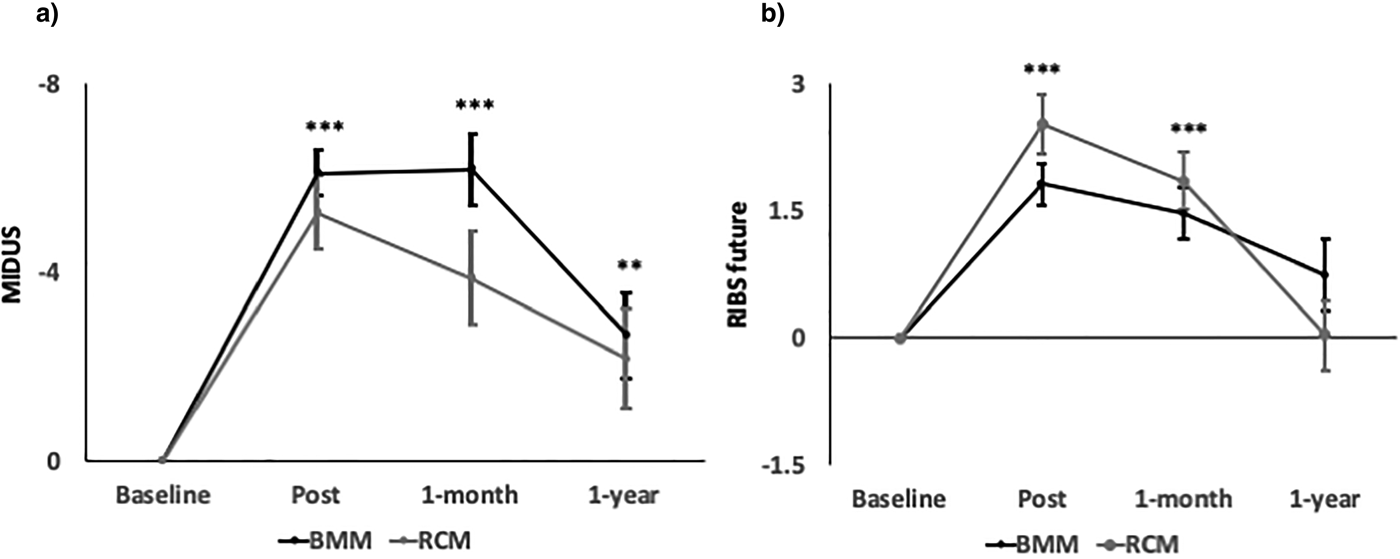
As the primary outcome, repeated measure analysis revealed that the main effect of time from baseline to post-test survey was significant for the MIDUS (F (1, 177) = 160.5, p < 0.001, η 2= 0.48), but not the main effect of group (F (1, 177) = 3.12, p = 0.08, η 2 = 0.02) or the group × time interaction (F (1, 177) = 0.88, p = 0.35, η 2 = 0.005). As secondary outcomes for the MIDUS at the 1-month follow-up and the 1-year follow-up, the main effect of time was significant with better scores from baseline to the 1-month follow-up (B [95% CI] = −5.87 [−7.44, −4.30], p < 0.001) and to the 1-year follow-up (B [95% CI] = −2.56 [−4.27, −0.85], p < 0.01) (Fig. 2 and online Supplementary Table S1). In both groups, the highest effect sizes were observed in the post-test survey. There was no significant main effect of group (B [95% CI] = 1.24 [ − 0.83, 3.31], p = 0.23) or group × time interaction in the post-test (B [95% CI] = 0.84 [−1.01, 2.69], p = 0.37), the 1-month follow-up (B [95% CI] = 2.20 [−0.02, 0.42], p = 0.05) or 1-year follow-up survey (B [95% CI] = 0.67 [−1.78, 3.13], p = 0.59). The analysis with MIDUS subscales showed that the group × time interaction for the ‘efficacy of medication’ subscale was significant in the post-test survey (B [95% CI] = 2.76 [1.71, 3.81], p < 0.001), the 1-month follow-up (B [95% CI] = 1.89 [0.75, 3.03], p < 0.01) and the 1-year follow-up survey (B [95% CI] = 1.39 [0.03, 2.75], p < 0.05), indicating that the BMM group underwent a greater change than the RCM group (online Supplementary Table S2).
Change in the MIDUS (a) and RIBS-J future (b). Bars show standard error. Significant differences and interactions are shown (**p < 0.01; ***p < 0.001). (a) The main effect of time for the MIDUS was significant in both BMM (black line) and RCM (grey line) in post-test, 1-month follow-up and 1-year follow-up surveys compared with the baseline. (b) The main effect of time for the RIBS was significant in both BMM (black line) and RCM (grey line) in post-test and 1-month follow-up surveys compared with baseline.
Effects of BMM on reducing the behavioural intention of mental illness-related stigma
For the RIBS-J future subscale, the main effect of time was significant with better scores in the post-test survey (B [95% CI] = 1.81 [1.22, 2.40], p < 0.001), in the 1-month follow-up (B [95% CI] = 1.51 [0.90, 2.12], p < 0.001), but not in the 1-year follow-up survey (B [95% CI] = 0.69 [−0.06, 1.43], p = 0.07). In both groups, the highest effect sizes were also observed in the post-test survey. There was no significant main effect of group (B [95% CI] = −0.44 [−1.44, 0.55], p = 0.38) or group × time interaction in the post-test (B [95% CI] = −0.72 [−0.11, 1.55], p = 0.09), the 1-month follow-up (B [95% CI] = 0.24 [−0.62, 1.11], p = 0.58) or the 1-year follow-up survey (B [95% CI] = −0.72 [−1.80, 0.35], p = 0.19).
Effects of BMM on the mental illness-related experience
For the RIBS-J past subscale, the main effects of time and group were not significant. The group × time interaction was significant (B [95% CI] = −0.38 [−0.66, −0.10], p < 0.01). The change in score from baseline to 1-year follow-up survey was greater in the BMM group compared with the RCM (online Supplementary Table S1). There were no significant changes in the proportions of participants who had other mental health-related experiences, except for ‘attending a lecture about mental health problems’ in RCM, during the 1-year follow-up in both groups, and no difference in the proportions at the 1-year follow-up survey between the groups (online Supplementary Table S3).
Effects of BMM on help-seeking intention
For help-seeking intention, including ‘intention to seek help’ and ‘intention to disclose’, significant associations were seen in the main effects of time in the post-test survey in intention to seek-help (B [95% CI] = 0.22 [0.07, 0.37], p < 0.01), and intention to disclose in the 1-month follow-up survey (B [95% CI] = 0.33 [0.04, 0.63], p < 0.05). The group × time interaction was significant in intention to disclose in the post-test survey (B [95% CI] = 0.32 [0.02, 0.62], p < 0.05) (online Supplementary Table S4), indicating that the RCM group underwent a greater change than the BMM group.
Effect of demographic characteristics on the difference in stigma between the groups
A significant interaction effect of group × time × sex for RIBS-J future, indicating that the female participants in the RCM group had a greater change compared with the males from the baseline to 1-month follow-up (B [95% CI] = 1.83 [0.11, 3.54], p < 0.05) and 1-year follow-up surveys (B [95% CI] = 2.27 [0.12, 4.42], p < 0.05) (online Supplementary Fig. S1). Among the three age groups, the sustained effect of each intervention on intention to disclose, and on help-seeking intention, was also significantly different, indicating that the younger participants in the RCM group had a greater change compared with the older participants from the baseline to post-test (B [95% CI] = −0.93 [1.66, −0.19], p < 0.05) and 1-year follow-up surveys (B [95% CI] = −1.72 [−3.07, −0.37], p < 0.05) (online Supplementary Fig. S2). Sensitivity analyses conducted after adjusting for demographic variables confirmed similar results in the primary and secondary outcomes.
Difference in the adverse effect
The differences in the prevalence of an adverse effect were not significant at any of the three times of the surveys (Table 3).
Prevalence of adverse effect
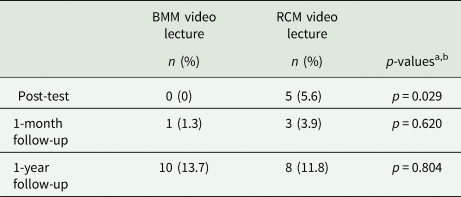
The adverse effect was defined using a 25% or more decrease (worsening) of the RIBS-J future score from the baseline in each survey.
a Group differences were tested using Fisher's exact test.
b The statistical significance threshold was adjusted to 0.05/3 = 0.017 with Bonferroni correction.
Discussion
The present trial shows that, contrary to the hypothesis, the 10-min BMM had a similar effect on improving practically useful knowledge of mental illness to the RCM. The results are inconsistent with the previous evidence (Angermeyer et al., Reference Angermeyer, Holzinger, Carta and Schomerus2011; Schomerus et al., Reference Schomerus, Schwahn, Holzinger, Corrigan, Grabe, Carta and Angermeyer2012), as both of the types of messages show similar effects on improving a wide range of stigma, including practically useful knowledge, behavioural intention and help-seeking intention. The reported adverse effect that BMM increase stigma was not confirmed. Thus, we demonstrate that BMM about mental health problems also work effectively in improving stereotype and behavioural intention, to the same extent as RCM.
Contrary to previous evidence, BMM had a positive impact on improving mental health-related stigma, as did RCM, and had little adverse effect. A meta-analysis shows the negative association between BMM and public acceptance in schizophrenia (Angermeyer et al., Reference Angermeyer, Holzinger, Carta and Schomerus2011), but not in depression (Schomerus et al., Reference Schomerus, Schwahn, Holzinger, Corrigan, Grabe, Carta and Angermeyer2012). In the current study, typical and common symptoms of mental health problems or mental illness were explained as the definition of mental illness and psychological symptoms without disease-specific explanation. ‘Efficacy of medication’ may also be essential information for decreasing mental health-related stigma, although it is a simple message (Lebowitz and Appelbaum, Reference Lebowitz and Appelbaum2018). As a message of ‘Efficacy of medication’, the BMM included ‘Mental health problems can be treated with psychiatric drugs’ (Table 1). Most of the negative effects of biomedical explanations in the previous studies appear to engender the perception that mental illnesses are deterministically and immutably caused by biological abnormalities (Lebowitz and Appelbaum, Reference Lebowitz and Appelbaum2018). Based on the theoretical consequence of generating the stigma (Corrigan and Watson Reference Corrigan and Watson2002; Rüsch et al., Reference Rüsch, Angermeyer and Corrigan2005; Thornicroft et al., Reference Thornicroft, Rose, Kassam and Sartorius2007), negative stereotype may reduce beliefs about blameworthiness but may increase concerns about dangerousness or unpredictability of illness that may then influence behaviours. Although we did not include items about such negative belief, the results showed these detrimental effects can be ameliorated by informing people about the existence of effective treatments for mental illness including the efficacy of medication as biological factors involved in psychopathology. The current findings suggest that combining biomedical explanations with information about effective treatments for mental illness appears to decrease the mental health-related stigma.
The results, however, do not support our hypothesis despite collecting the number of samples calculated from the preliminary pilot study, because the mean difference of the MIDUS score in BMM was smaller than that assumed from the preliminary pilot study. It might be argued that the failure to detect significant aggregate effects in the analyses reflects low statistical power. The calculated effect size might have been overestimated because the number of participants in the preliminary pilot study was relatively small (n = 21).
We found that the maintenance effects of intervention might vary according to sex or age in participants who received RCM. The female participants and younger participants (aged 15–18 years) who received the RCM had more improvement in the behavioural intention and help-seeking intention, respectively. In the content of the RCM, ‘recovery-oriented’ and ‘social inclusion/human rights’ messages may promote empathy (Table 1). These facts, on average, may correspond with the tendency for learning styles with individual characteristics, such as females being empathetic (Christov-Moore et al., Reference Christov-Moore, Simpson, Coudé, Grigaityte, Iacoboni and Ferrari2014) and adolescents being highly emotionally sensitive (Crone and Konijn, Reference Crone and Konijn2018). For example, the use of drama, animation and peer story-telling as an anti-stigma method to stimulate empathy and emotion may be effective in females and adolescents. Empirical data about responses to anti-stigma education that are unique to individual characteristics (e.g., sex or age) are limited, therefore the accumulation of research findings is necessary.
The improvement in both groups following the 10-min video education peaked immediately after the intervention, and statistically maintained its effect for 1-month in behavioural intentions and 1-year in knowledge regardless of message types. There are two considerations regarding these effects. First, these effects may include the effects of other mental health education and information. But in the present data, no difference was found in the proportions of participants who had mental health-related experiences during the 1-year follow-up between the groups. As a positive impact of the brief intervention on participants, it might have increased the exposure to other mental health education and information after the intervention. Second, the effect size gradually declined over the follow-up period. The previous RCT suggested that repeated education may be essential to maintain or boost the effects (Yamaguchi et al., Reference Yamaguchi, Ojio, Ando, Bernick, Ohta, Watanabe, Thornicroft, Shiozawa and Koike2019). Repeated classroom-based educational intervention may help to enhance and sustain effects through the influence of friends or colleagues (McLuckie et al., Reference McLuckie, Kutcher, Wei and Weaver2014). In the present study, we found that BMM is also available for the purpose of educational series and may provide a range of lecture contents. In future study, it may be important to discover how to implement long-term interventions that utilise the content of both BMM and RCM.
Strengths of this research
We recognise that evaluating information in order to identify the key elements for an anti-stigma programme using RCT as a scientific methodology is the greatest strength of this research. Development and implementation of educational programmes are often based on expert opinion, without the process of gathering scientific evidence. Researchers should examine the content and effectiveness of the programme according to strict, scientific rules to make an appeal to policymakers and authorities.
Limitations of this research
We also recognised several limitations that should be taken into consideration. First, because all the measurements were carried out using self-reported questionnaires, a possible methodological limitation, including social desirability bias, may have influenced the present findings. Mental health-related information from lectures and the media, and the personal experiences of participants and people close to them during the follow-up period may have improved the scores. However, the confidentiality and anonymity of the self-report questionnaires were confirmed, and the effects of the interventions were compared with controls. Therefore, these biases may have had less influence on the findings. Second, we used two single items for investigating the intention of help-seeking, which were used in a previous study and not evaluated for reliability and validity with a large number of subjects. Third, although no information relating to mental health problems was provided to the participants on recruitment, the intervention was conducted in Tokyo, Japan during the daytime. In addition, all the participants were Japanese. Social and cultural differences may have influenced the effect of the intervention (Angermeyer et al., Reference Angermeyer, Holzinger, Carta and Schomerus2011). Therefore, the current findings cannot easily be generalised to the wider population, and different results might be obtained from different demographic groups.
Conclusions
Our RCT shows that BMM have a positive impact on mental health-related stigma, comparable to that of RCM. The results provide helpful indications for the development of an anti-stigma educational programme. Previous anti-stigma programmes avoided including BMM and depended on expert opinions and other recommendations. The current findings may encourage reconsideration of this. Future anti-stigma programmes or campaigns with well-circumscribed and mixed biomedical and RCM could diminish the ‘mental health treatment gap’.
Supplementary material
The supplementary material for this article can be found at https://doi.org/10.1017/S2045796019000714
Data
Not all the data are freely accessible because no informed consent was given by the participants for open data sharing, but we can provide the data used in this study to researchers who want to use them, following approval by the ethics committee of the University of Tokyo.
Acknowledgements
The present study was supported by grants to SK from the JSPS/MEXT KAKENHI (Grant No. 17H05921 & 19H04878) and by UTokyo Center for Integrative Science of Human Behavior (CiSHuB) and the International Research Center for Neurointelligence (WPI-IRCN).
Author contributions
Yo contributed to writing the draft manuscript and the statistical analysis. SK, SY and YO, contributed to the conception and design of the study. SK and KO contributed to data management. All the authors contributed to the data assessment, and approved the final version of the manuscript.
Financial support
None.
Conflict of interest
All the authors have no conflicts of interest relating to this study.


 Open access

