


In December 2023, former and current executives of ArcBest Corporation gathered for a roundtable to commemorate the logistics firm’s centennial. Meeting at its Chaffee Crossing headquarters, an industrial park outside Fort Smith, Arkansas, the industry veterans reflected on the significance of any company surviving for a century in the turbulent trucking sector. Only five months earlier, Yellow Corporation, ArcBest’s oldest rival, had declared bankruptcy. When Yellow’s management belatedly attempted to consolidate operations, the International Brotherhood of Teamsters, the national union representing transportation employees, delivered a coup de grâce, blocking the plan’s closure of twenty-eight terminals. A month later, Yellow CEO Darren Hawkins informed its thirty thousand employees that it had filed for bankruptcy. With only empty dispatch chairs, blank computer screens, and idle trucks occupying Yellow’s premises, it seemed a depressing coda to an era when national less-than-load (LTL) carriers and the Teamsters dominated American highways.Footnote 1
Between 1935 and 1980, the American trucking industry operated under the regulatory framework established by the Motor Carrier Act of 1935. The Interstate Commerce Commission (ICC), the regulatory agency governing transportation, issued operating authority licenses to “common carriers” that hauled freight along specified routes. When an order filled a single trailer, a “truckload” (TL) shipment, the process was simple—a single trucker could retrieve and deliver the freight directly to the destination, or “point-to-point” shipping. But most shipments were small, requiring the freight to be sorted by destination at terminals. This “less-than-load” (LTL) freight was the heart of trucking, and the centrality of terminals in processing LTL shipments facilitated labor organization. By the 1950s, the Teamsters effectively negotiated industry standards for all truckers and warehouse workers through a single industry-wide agreement, the National Master Freight Agreement (NMFA). Beginning in 1980, this regulatory system was gradually reconfigured from “protected competition” to the regulation of industry standards, allowing independent “owner-operator” truckers to bypass both carriers and Teamsters to outbid common carriers for TL freight. Almost overnight, the trucking sector bifurcated into two distinct markets: TL and LTL. The unionized common carriers surviving deregulation, the so-called “legacy” carriers, reorganized in the LTL space, where their terminal systems and freight sorting processes kept them competitive. Or so was the thought.Footnote 2
With Yellow’s demise, ArcBest, through its subsidiary ABF Freight, is the last legacy LTL carrier. Organized by the Teamsters in the late 1940s, ABF’s Teamster-driven trucks, with their bright green and yellow logos, remain a defiant fixture on the highway in an era when competitors view unionized labor as distinctly disadvantageous. John Bendel, a former trucker turned editor at large for Land Line, notes that ABF “has always flown … below my personal radar” due to its penchant for not making headlines, “at least not the bad kind.” With a reputation for pleasing its customers and employees, the typically cynical Bendel confessed that the company’s survival “proves it’s doing something right.”Footnote 3
This article explores that “something.” As Arjan van Rooij poetically captures, business is a “Sisyphean mission,” and a continuing struggle between failure and success defines the essence of enterprise. Yet the degree to which this allegorical boulder is difficult to push varies. For the forty-five years the 1935 Motor Carrier Act governed US truckers, the stone was effectively set on rails—even somewhat inefficient applications of capital and labor could produce sustained profitability, as exemptions to antitrust prosecution enabled common carriers to meet and determine their own rates with the ICC’s approval. When these regulatory guardrails were removed, inefficiencies, such as the inability to set profitable, competitive prices, came to the fore, as nonunionized FTL carriers and independent truckers forced common carriers into price wars they could not win due to their extensive terminal systems and labor practices.Footnote 4
The relative completeness and neatness of this analysis of the trucking industry mirrors a classic theme in business history inherited from Schumpeter: Creation and destruction. Old, inefficient common carriers gave way to more efficient, often technologically advanced, cost-effective competitors unbridled by large terminal chains and organized labor. Yet ArcBest’s continued success reveals that the removal of regulatory guardrails was not, in and of itself, determinative of a legacy carrier’s survival. Moreover, in the absence of a dominant market position, this article highlights that ABF’s longevity is not due to any particular endowment or accumulation of financial resources or working capital. Despite its share of colorful characters and dramatic events, no singular business genius is responsible. Instead, the arc of the Arkansas company’s history is defined by management’s intentional maintenance of certain core values (a commitment to local corporate citizenship and investment in industrial relations) alongside a desire to incorporate new technologies (such as data analysis and AI), while revising corporate strategy in light of shifting external conditions. Though the end of protected competition left legacy carriers with cost structures ill-suited for competing on price—a strategy pursued by Yellow to its ultimate demise—ArcBest’s leaders leveraged the source of those costs into an asset to reposition the company as a premium, national carrier.Footnote 5
Drawing on theories of business failure, strategic renewal, and the methodology of the New Entrepreneurial History, this article explains how ArcBest’s leadership envisioned entrepreneurial opportunity and established a corporate identity and culture that informed successive executives’ responses to changing regulatory regimes and market conditions. It attributes ArcBest’s survival into the present as the cumulative product of the principles and corporate character instilled in the company by a trio of owner-managers over the course of seventy years. Nancy Hunt, ArcBest’s first long-term owner, converted a local warehouse operation into a regional common carrier known for safety, a strategy embraced as both good for business and as a civic responsibility. When Robert A. Young Jr. acquired the company, this reputation became the cornerstone of its operational identity. Ambitious and progressive, Young envisioned his trucking company, wedded to evangelical ethics, as a vehicle for democratizing industrial relations and economic progress in Arkansas. Mastering the regulatory era’s reliance on tacking for growth, Young aggressively grew ABF while investing in new technologies to capitalize on innovation. When Robert A. Young III succeeded his father, Robert navigated the trucking company through deregulation while adapting his father’s managerial philosophy and old-growth strategies to the new competitive environment. When managerial control finally passed from the Young family in the twenty-first century, Robert’s successor, Judy McReynolds, continued to build on the principles established by her predecessors while evolving the company into an integrated logistics firm that capitalized on shifting labor-force demographics.
This process was hardly smooth, with the company on the verge of failure multiple times. As Patrick Fridenson and van Rooij both note, business failure can often inform later success, and ArcBest’s story is marked by “near misses,” in which imminent failure was avoided through the integration of techniques, methods, and technologies that later informed managers’ responses to new market challenges. But, as Robert Fitzgerald, Romano Dyerson, and Tatsuya Mishimagi show in a case study of Japanese small and medium enterprises during the 1990s, technological investment in and of itself is no guarantee of success in the midst of external market changes: in a rush to abandon old practices for new, efficiency and business capabilities can be lost that leave firms less competitive than before. The “dynamic capabilities” of owner-managers to sense changing conditions and seize new opportunities by creating new competencies and by internally reconfiguring existing resources remain pivotal. This was certainly true in the case of ArcBest.Footnote 6
The skill of “sensing change” and “seizing opportunity,” however, should not be treated as formulaic or solely profit-driven. In the case of Japanese SMEs IMC and Precion, Fitzgerald, Dyerson, and Mishigami emphasize that both metal cutting companies sought to achieve “flexible” specialization, the ability to cater to multiple clients’ needs rather than fulfill a singular role for a few clients, by determining the optimal combination of skilled labor and technology upgrades. ArcBest’s leaders’ conception of success was not limited to maximizing growth or profitability, but to the social ends they believed their company’s profitability was intended to achieve. Whereas some competitors moved to shed their unions by creating subsidiaries or other schemes, ArcBest instead leveraged its reputation and technological investments to strategically shift its operations into services where it could justify price premiums or augment revenue by securing additional revenue from existing capacity.
While entrepreneurship in its classic sense is often conceptualized as a typology for the creation of novel or new businesses and products that attempt to capitalize upon specific, discrete opportunities, the New Entrepreneurial History advocated for by R. Daniel Wadhwani and Christina Lubinski provides a compelling framework for analyzing ArcBest’s management and their strategic decisions by replacing the emphasis on historical agents and firms with a focus on the creative processes that create economic change. Building on the analysis of Andrew Popp and Robin Holt that entrepreneurial opportunity should not be understood as a discrete moment in time where a decision or action occurs but rather as the product of a “constant interplay of person, becoming and place, set within the experiential flow of history,” that seeks to make an envisioned future present, Wadhwani and Lubinski suggest entrepreneurship is a process of enaction rather than discovery and exploitation. Entrepreneurial agents are those who engage in imagining and evaluating a desirable future, then allocate and reconfigure resources away from present endeavors to achieve this end. The novelty of these endeavors requires a legitimization process, as actors deploy rhetorical and discursive strategies to secure buy-in from stakeholders.Footnote 7
By emphasizing entrepreneurs’ evaluation of desirable futures, Wadhwani and Lubinski’s definition provides a window through which to examine the personal character of entrepreneurship beyond market-level changes. In tracing ArcBest’s story, this article highlights how this future can be distinctly localized, with the enterprise and innovation serving as necessary prerequisites for a desired vision of manager-employee relations and community development. For the Young family, ABF was considered a tool not only to improve laborers’ economic well-being but also to advance economic development in Arkansas. Moreover, the personal nature of entrepreneurial decisions is not limited to those agents themselves. Entrepreneurial processes take on a cumulative character across actors and over time, or a distributed agency. In the case of ABF, decisions made by its earliest owner-manager, Nancy Hunt, became embedded in management’s conception of the company’s brand and continue to influence and shape investments to this day.Footnote 8
By integrating managerial and entrepreneurial theory, this article complements several scholars who detail the extent to which deregulation diminished the labor status of truckers to “sweatshops” and indebtedness. Though a boardroom-level perspective on how ArcBest preserved its union through the reformulation of the company’s identity in the face of prevailing and anticipated regulatory and market transitions, it does not downplay the significance of labor in trucking. ArcBest executives themselves created the company’s work culture around the belief that its employees drive success. However, as Bendel observed, Yellow workers lost their jobs “not because they didn’t work well or hard enough, but because people being paid obscene [salaries] made some bad decisions.” By recovering the entrepreneurial processes that drove ArcBest’s strategic decisions, this study highlights that unionized labor was not necessarily a hindrance to innovation in trucking, but rather a value that required additional accommodation in crafting strategic positioning.Footnote 9
Founding and the Early Regulatory Years
ArcBest’s origins are somewhat obscured, shrouded by a fluidity of incorporations and documentation during the 1920s. While the Young family (ArcBest’s longest-serving owner-managers) claim the company originated in 1923 as O.K. Transfer and Storage, a local warehouse based in Fort Smith, an ICC report suggests O.K. started in 1917, a claim supported by a 1921 American Warehouseman’s Association meeting record and other contemporary sources. Despite challenges in identifying ArcBest’s exact origins, by 1927 Nancy Davis Hunt had become O.K.’s President and principal stockholder. In 1926, her husband, the president of a local grain company, purchased the warehouse ostensibly to help with marketing and insuring Oklahoma wheat. When he passed the following year, Hunt assumed control and appointed Roy C. Martin, an employee since 1923, to operate the warehouse.Footnote 10
The opportunity to transition to commercial trucking came during the 1930s. Mirroring the regulatory framework governing railroads, the Motor Carrier Act of 1935 sought to stabilize the trucking industry against “destructive” competition by securing profits and mediating labor disputes. In theory, the commission “rationalized” competition by balancing the class interests of shippers, operators, and labor under the prudent guidance of the public interest. In practice, the ICC exercised its control through approving carrier-proposed freight rates and by issuing operating authority licenses, which granted operators the right to haul restricted categories of freight across specific routes, just as railroads operated along particular lines. The commission assessed applications on a case-by-case basis through a legal process that involved justifying the extension of service, including validating unmet needs. These applications could be challenged by “protestants,” typically competing railroads and truckers threatened by the proposal. While creating an opportunity for existing carriers to improve profitability by blocking potential competition, the ICC revoked privileges if authorized carriers underserved a route. As a testament to farmers’ clout within the New Deal coalition, the sole exemption to this regulatory framework was for agricultural haulers carrying specific categories of farm products, an allowance for a submarket that emerged in response to a persistent agricultural crisis throughout the 1920s and 1930s.Footnote 11
Considering the court-like hearings that adjudicated applications, carriers retained general counsel, though legal representation offered no guarantee of success. However, a loophole existed for firms willing to gamble with debt. Given the difficulty in acquiring licenses through the application process, acquisitions and mergers presented a path to securing authorization through what the ICC colloquially referred to as a “grandfather” application. If the need existed before, the commission presumed it continued to exist. This process, called “tacking,” enabled carriers to grow more efficiently through mergers rather than license applications. These mergers required full disclosure of assets, operations, and financial justification and, when approved, often produced awkward route maps connected by central service center hubs.Footnote 12
As a warehouse, O.K. primarily stored and prepared agricultural products for shipment via railroad and delivered local freight. However, the passage of the MCA precipitated a corporate reorganization to bring the company within the New Deal’s regulatory framework. Notably, the “rationalizing” aspects of the law removed much of the uncertainty associated with entrepreneurial opportunity by resolving many of the operational questions related to trucking: what freight, where to, and for how much. If truckers operated at a loss through no considerable fault of their own, the ICC entertained rate increases to ensure profitability. Considering this, Hunt acquired Fort Smith-based Arkansas Motor Freight Lines (AMFL) to separate O.K.’s warehousing business from its shipping operations.
As a regulatory body, the ICC was primarily interested in the stability of the trucking industry. This required Hunt to accommodate regulatory hurdles by delineating the operations of her two companies to comply with the law and assuage concerns about an imbalance in economic power in her markets. Between 1935 and 1937, Hunt reconfigured her warehouse’s assets by merging AMFL into O.K. Transportation, Inc., to create a common carrier. In a convoluted sequence of events, O.K. Transportation ceded its rights and properties to a new corporation, Arkansas Motor Freight, Inc. (AMF), only after surrendering a narrow set of common carrier rights for special goods over irregular routes to a new corporation. Created in 1937, the new corporation, O.K. Transfer and Storage Company, Inc., also operated out of Fort Smith. Noting the evident confusion surrounding the merger, the ICC felt it necessary to state that there was no overlap in stockholders between the two O.K. firms, suggesting that Hunt had divided conflicting functions into independent companies. After completing this process, the ICC confirmed that AMF retained the previous O.K.’s shareholders, operators, and contractors.Footnote 13
The complicated merger highlights both the economic dynamics underpinning acquisitions and the ICC’s interpretation of its regulatory mandate. While AMF possessed $48,559 in total assets, it worked with roughly $8,000 in operational capital after depreciation. Despite hemorrhaging money and with current assets of only $26,460, Transportation controlled significantly more capital after depreciation, amounting to $13,328, though it operated at a $17,000 loss. The combination set a template for future mergers—profitable trucking companies acquired unprofitable firms, thereby gaining operational capital at a discount and access to their routes. The ICC approved the merger based on the complementary nature of the routes, common ownership, and economies gained by eliminating double fees, tariffs, and taxes. It reasoned that the combination aligned with the Commission’s stated goal of “corporate simplification” by providing a single-line service to customers in the Arkansas River Valley.Footnote 14
What envisioned future justified this reconfiguration? While Hunt left no records beyond periodicals and her company’s memory, the context of the 1930s offers some hints. The warehousing business she left behind served volatile agriculture markets. Even though trucking is a demand-derived industry, with its volume of business fluctuating directly with demand for other goods, the MCA promised profitability and assured a level of stability that contrasted sharply with the agricultural bust of the previous decade. AMF’s operating authority covered specific goods—including household goods, heavy machinery, explosives, and local freight—over a regional route that connected Western Arkansas border cities (Fort Smith and Texarkana) to transportation hubs in Missouri, notably Kansas City, Springfield, and St. Louis. Importantly, this range moved North and South through the sparsely populated Ozarks and therefore faced no competition from trucking’s primary competition—railroads.Footnote 16
With profitability seemingly assured, common carriers were expected to control costs and ensure competent execution of services or else risk the revocation of authority or bankruptcy. The most significant operational challenge was safety, as poor road conditions and inadequate regulations led to a high number of accidents. Beyond the expenses of wrecks, including repairs, customer claims, lawsuits, and increased insurance premiums, accidents could easily turn deadly. Tipped trailers blocked roads, potentially creating multiple car accidents, while mishandling chemicals risked deadly consequences. Collisions were frequent enough to invite frivolous lawsuits from those hoping to capitalize on the industry’s reputation for disasters. Given regulatory limits on other means of creating value, Hunt prioritized integrating safety into the carrier’s reputation, while Martin became Fort Smith’s highway commissioner to promote safety regulations and practices. In 1940, trucking magazine The International Trail praised Hunt for guiding AMF to 4,000,000 miles without incident (Figure 1).Footnote 17
Nancy Hunt, 1940.Footnote 15

The Young Years: Growth, Politics, and Industrial Relations
In 1942, Hunt sold AMF to Martin and H.Q. Hamilton. The partners modestly grew the carrier’s interstate reach, but the heart of its business remained in the Ozarks as smaller acquisitions deepened access throughout Western Arkansas (Figure 2). When Hamilton passed in 1949, an elderly Martin requested his legal counsel, Robert “Bob” A. Young Jr., find a buyer. After some consideration, Young hocked his insurance policies to cobble together the funds for a down payment. In 1951, Martin accepted Young’s offer to purchase AMF, lending Young the rest of the money on note.Footnote 19
AMF advertisement, 1943.Footnote 18

The informal, improvised nature of the exchange foreshadowed AMF’s trajectory over the next two decades. By all accounts, the new owner was a “gambler,” keen to capitalize on new methods and technologies. His son, Robert A. Young, III, observed that Young “didn’t know anything about the trucking business” when he purchased the carrier. Moreover, the industry had significantly changed by 1950. As Mark Rose, Bruce Seely, and Paul Barrett note, political processes shaped every facet of trucking, including carriers’ ownership, organization, industrial relations, operations, and proposed avenues of growth. With ICC approval governing growth, “tacking” became the preferred method for navigating the politics of what Rose et al. term “protected growth.” From 1940 to 1955, the number of trucking firms declined from twenty-six thousand to eighteen thousand carriers through mergers. In 1948, trucking rate bureaus, organizations that allowed truckers to coordinate and set rates, were exempted from antitrust legislation by the Reed-Bulwinkle Act. Furthermore, as Steve Viscelli observes, the National Labor Relations Act of 1935 set the stage for the Teamsters to successfully organize the trucking industry (including AMF) during the 1940s, taking advantage of terminals as both an organizing point and a significant source of leverage.Footnote 20
While Young lacked experience running a trucking company, he did understand politics. He grew up in the rural coal town of Greenwood, Arkansas, just outside of Fort Smith. His father owned the mines, but the low social distance of a one-thousand-person community appears to have instilled in Young a respect for the dignity of labor and a knack for the soft politics of workplace management. When he attended law school in the early 1930s, he joined Arkansas’s political and economic world, one actively shaping the New Deal through Senate Majority Leader Joseph T. Robinson of Arkansas. Later, starting a law firm in Fort Smith, Young remained connected to the political scene and, by the 1950s, his partner, Thomas Harper, chaired Arkansas’s Democratic Party.Footnote 21
Like most Arkansans of his generation, Young was a New Deal Democrat and remained optimistic about government regulation and industrial progress as a means of social improvement. Within Arkansas, trucking seemed particularly well-suited to that project. In 1936, Senator Robinson proposed antitrust legislation aimed at combating price discrimination by targeting chain stores that purchased goods at lower prices in bulk. The eventual Robinson-Patman Act reflected the nature of Arkansas’s retail economy. In 1945, nineteen thousand retailers operated within the state, and given that most towns had fewer than ten thousand people, the market hardly appealed to chains. In practice, these small retailers relied on small shipments from a wide variety of suppliers to stock their shelves. Furthermore, World War II had been a boon to the trucking industry. Wartime logistics standardized the use of pallets, which eased shipping by reducing congestion, saving space, and preventing pilferage. At the same time, defense spending developed industries and military bases like Fort Chaffee throughout the South.Footnote 22
Given the extent to which the ICC and Arkansas politics shaped opportunity and mitigated risk, it is not surprising that trucking appealed to the political Young. It would be a mistake to view Young as solely a profit-maximizing agent, though. He viewed the company as a tool for economic progress, experimenting with industrial relations and technology that later proved crucial to the company’s long-term success. But sensing opportunity and capitalizing upon it are different skills, and AMF, with eighty-eight tractors, one hundred ten trailers, and eighty-eight pickup trucks in its fleet, was an intricate venture. Newly minted terminals in Missouri, Arkansas, and Louisiana underscored a growing operational range that extended into Tennessee. Moreover, the carrier was saddled with three hundred fifty-three thousand dollars in loans on an aggressive, thirty-six-month installment to cover the acquisition costs. After posting after-tax profits of fifty-nine thousand dollars and eighty-six thousand dollars in 1949 and 1950, returns slipped back to sixty-eight thousand dollars pre-tax. Considering the operational complexity and aggressive repayment schedule, there was little margin for error.Footnote 23
Securing buy-in from labor was inseparable from success, given the importance of controlling costs through mitigating errors. Like most general carriers, AMF handled a mixture of shipments, with an industry average of 40 percent TL to 60 percent LTL orders. Furthermore, the complexity of the “hub and spoke” system used for LTL freight posed new challenges with each shipment, limiting standardization. Shipments are organized onto pallets by shippers, and drivers on a “peddle run”—a local route with frequent pickups—collect and deliver freight to a local terminal. As Dara Orenstein notes, terminals are themselves “spaces of circulation,” mimicking the movement of goods along roads through the process of unloading, sorting, placing, and reloading freight. This process of “handling” requires exceptional care, as it is where freight is most likely to be damaged, whether due to mishandling or poor packaging. Overnight, the sorted freight is reloaded onto trailers for “line-haul.” Line-haul drivers then transport freight to “break-bulk” terminals, where the packaging is sorted and reassembled according to destination. Upon finally reaching the destination’s local terminal, freight is again reassembled onto a trailer for local delivery. The flow of shipments and the frequency with which they were loaded and unloaded were undoubtedly part of the reason Hunt prioritized safety, and Young inherited this emphasis. Still, while managers emphasized safety precautions, ultimately, minimizing damage fell to the creative problem-solving of rank-and-file workers.Footnote 24
Within trucking, white men filled most positions—whether at a desk, behind the wheel, or on the floor. Operating at the foot of the Ozarks, a mountain range with almost homogeneous white ethnic makeup, AMF employees reflected the region’s demographics. Nor did the nationwide industry pressure the company to conform to racial patterns elsewhere. Informal and formal agreements within the Teamsters solidified a nationwide assumption that trucking was a “white man’s job” and Black Americans across the industry were relegated to lower-paying jobs within warehouses, local delivery, and “spotting” freight. Not that this racialization limited labor strife. In 1952 and 1953, approximately twenty thousand Teamster drivers and one hundred thousand warehouse workers participated in a nationwide strike, including four hundred fifty drivers in Arkansas. Despite nationwide strikes in his first years as an owner, Young demonstrated perhaps his most important talent—a keen awareness of his limitations—when working with employees. One of the new owner’s first moves was convincing Martin to stay on as vice president, providing an invaluable resource for day-to-day operations. Secondly, Young adopted the perspective that employees directly engaged in work were the experts, which effectively distilled into practice that “[Young] told employees what to do but not how to do it.” By supporting worker autonomy, the firm also intended to capitalize on innovation. Granted the independence to operate as they saw fit, workers experimented in their roles to make their lives easier, and Young respected mistakes as a part of the process so long as they were not repeated. When these microexperiments proved fruitful, they could then be incorporated companywide, such as employee-designed apparatuses for handling difficult freight. Considering this autonomy, Young defined the company’s ethical expectations in a straightforward, discursive standard that reflected the evangelical cultural framework prevalent in Arkansas’s River Valley: “Don’t do anything you wouldn’t want to explain in Sunday School.” As a final act of trust, Young established a rule that all officers were promoted from within the company, including promoting truckers and floor workers to managerial (and later executive) positions.Footnote 25
While this managerial approach at least mitigated the annoyance of overbearing management, creating a shared company identity within a business that, by its very nature, emphasized distance proved vexing. To this end, Young tasked Martin with writing and issuing a monthly company newsletter. “Its primary purpose is to help … our AMF family to get better acquainted with each other,” Young wrote in the opening message, “This publication is being produced at some little expense but we firmly believe you will make it worthwhile. After all, this is your magazine and it will be just as good as you make it.” The newsletter’s brief overviews of the company and industry news quickly gave way to employee submissions. An employee contest gave the magazine its name—By-Lines. Drivers shared trucking stories and photos, while others shared major life milestones and professional awards. While managerial messages highlighted the company’s strategic direction, much of the discussion was dedicated to the company-wide culture that employees themselves were shaping, producing internal legends like W. O. “Bill” Fields, who retired in 1957 after twenty-two years and over one million miles without accident.Footnote 26
These same employee stories, in turn, informed marketing, and AMF advertisements portrayed employees as a positive force in their community. As an ABF President of Industrial Relations later put it, by humanizing its drivers as “a family person, a community person, a good person [concerned with safety]” to the public, “we get a return on investment … with the improvement in the motoring public’s and our customers’ image of truck drivers.” Retaining Martin ensured continuity with Hunt’s safety focus, though with new challenges. With the rise in traffic accidents throughout the 1950s and 1960s, local newspapers frequently reported on the unintended consequences of the interstate system. In 1952, the National Safety Council estimated that an egregious nine million Americans were injured, with ninety-three thousand killed, in road accidents. Touting the safety record of his drivers, Young expanded the safety campaigns initiated during the Hunt years. As Fort Smith’s highway commissioner, Martin directed public attention to the dangers of “cruising at a speed of 60 miles per hour.” AMF terminals sponsored local traffic safety competitions, while regional managers joined local trucking associations to enhance the company’s profile and influence industry attitudes. For its internal efforts, Trailmobile, Inc., awarded AMF its safety trophy for “the fewest accidents per mile.”Footnote 27
Between pro bono services in response to regional humanitarian crises and its economic contributions, Young imagined AMF as the ideal corporate citizen. Highlighting trucking as the “arteries of commerce,” AMF advertisements trumpeted the carrier’s growth as indicative of Arkansas’s economic development, a sentiment expressed in declarations such as, “PROGRESS IS OUR MAJOR INTEREST.” By 1955, it was the largest carrier in the state, with 111 trucks, 186 tractors, and 219 semitrailers, covering 24,000 miles daily and employing 495 people, with a payroll of $2,243,188.42. Marketing even touted $132,461 paid in gasoline and revenue taxes (Figure 3). Another ad, concisely titled “Progress,” declared that trucking was now the second-largest business in the country behind agriculture, and that AMF, “a wholly owned Arkansas company,” committed itself to expanding its services to match “the fast-growing industrial expansion of our state.” While advertisers connected the company’s brand to safety and public outreach, the core product remained operating authority. Resources like G. R. Leonard & Co.’s Motor Freight Directory listed the operational jurisdiction of every carrier serving the six major metropolitan areas in the United States. These guides determined the carriers that shippers hired and AMF’s reliance on freight moved through rural Arkansas, one of the smallest markets in the country, capped growth. Speaking at the company’s annual meeting in 1955, Young declared, “We must grow, and we will.”Footnote 29
Arkansas Motor Freight’s roadmap, circa 1955.Footnote 28

Within the ICC’s framework, the question of how to grow was already determined—tacking. The strategic question was identifying a suitable candidate, and the Dallas-based Best Motor Freight provided an ideal target for the dramatic growth Young sought. After receiving ICC authorization in 1941, the carrier expanded aggressively, borrowing heavily to build a system connecting the Gulf of Mexico to the Great Lakes. Profits never materialized, and Best, flush with physical assets but increasingly illiquid, demonstrated the typical reason trucking companies were sold. Considering the ICC protected both profitability and ownership, most trucking companies were family enterprises, providing an opportunity for generational wealth that made owners reluctant to sell when profitable. Unsurprisingly, owners of failing carriers did not share that same generational fidelity and instead hoped to recover some equity before bankruptcy. But with barely a foothold in neighboring Texas and Oklahoma, Young sought to create a regional trucking power through Best’s largely complementary routes in neighboring states. The economic context seemed favorable—the American Trucking Association (ATA) reported that trucking tonnage increased by 13 percent in 1956 alone. The interstate system was similarly underway. The challenge lay in the scope of the gamble. Not only was Best Motor Lines losing money, but it also rivaled the scale of AMF’s current business. If the acquisition succeeded, Young would double overnight the assets and operating authority at his disposal. Assessing the potential value to outweigh the risk, he rolled the dice.Footnote 30
Securing temporary operating authority, Young’s plan hinged on quickly integrating Best’s assets into the AMF system. Given that this involved a methodical analysis and reorganization of AMF’s hub-and-spoke system, that assessment proved optimistic. As Young reinvested company funds into the merger, cash reserves dwindled to the point where additional capital was required to complete the acquisition. Considering its obligations to ensure fiscal responsibility, the ICC rejected extending permanent authority, despite the reorganization progressing such that it was infeasible to extricate the companies. An unintended ultimatum emerged—either secure funding and gain ICC approval, or face bankruptcy. Given no reasonable bank would extend credit on a merger already rejected by the ICC, Young turned to his last resource—duck blinds.
Within Arkansas, the duck hunting blinds of the Mississippi Alluvial Plain served a networking role akin to country clubs for the state’s political and business elite. Young was no exception, and he purchased a blind officially owned by AMF to host clients and party contacts. One recurring hunting companion was the recently promoted Chairman of the House Committee on Interstate and Foreign Commerce, US Representative Oren Harris. While ostensibly a technical legal proceeding, the ICC’s inherently political nature invited external influence, and given Harris’s committee oversaw transportation, Young hoped Harris could persuade the full Commission to revisit the Best Motor Lines application. After a fall hunting trip with Harris in 1956, Young flew to Washington, DC, in early 1957 to solicit the congressman’s aid. Despite his reticence over the potential appearance of impropriety, Harris relented and scheduled a meeting before the Commission after vouching for Young’s bona fides. Following the meeting, the ICC approved Young’s request for permanent authority over Best Motor Lines.Footnote 31
With authority granted, Young secured funds through a financial improvisation that anticipated leveraged buyouts by taking a standard practice in trucking—the liquidation and replacement of a carrier’s trucking fleet—and turning it into a source of liquid funds. In 1954, advancements in diesel motors led to increased horsepower and improved fuel efficiency, prompting International Harvester to anticipate an industry-wide shift toward liquid petroleum. These advances created a fiscally prudent opportunity to upgrade the AMF fleet and a potential remedy for its financial constraints. Young approached GMAC, GMC’s financial arm, with an offer: if GMAC purchased the entire AMF fleet, Young would purchase new GMC tractors financed through GMAC. The proceeds from the sale would be used to purchase Best outright. Despite skepticism from GMAC’s accountants, especially given Young’s precarious financial position, a senior executive was sufficiently impressed with the audacity of the “crazy” yet feasible plan and agreed. Funds secured, Young completed his acquisition of Best and rebranded AMF as Arkansas-Best Freight System, Inc., also known as ABF. Grin on his face, Young memorialized the deal with a photo-op when nine boxes of one thousand new license plates arrived at the company’s Fort Smith office.Footnote 32
While none of Young’s later acquisitions matched the drama surrounding Best Motor Freight, his political connections remained invaluable under regulation. As he grew ABF, Young began to directly compete with railroads, as evidenced by the litigious acquisition of Healzer-Cartage in 1959. Operating primarily through Missouri and connecting Kansas City and Chicago, the financially distressed Healzer provided Young the opportunity to grow the system north. After receiving temporary authority for Healzer, the assigned ICC examiner declined to grant permanent authority following protests from regional railroads. Under the purview of his discretionary powers to assess fiscal viability, the examiner rejected the application, claiming Young overvalued Healzer and that “the Commission has … afforded little weight to the casual statements of applicants with respect to the value.” In response, Thomas Harper solicited Harris. Characterizing the examiner’s report as “entirely wrong,” Harper provided detailed briefs outlining the financial analysis conducted, financial reports, and evidence that Healzer was profitable under ABF’s management, noting that it generated a monthly net income of twenty-six thousand dollars. With Harris’s support, the ICC finally approved the purchase that, along with two other acquisitions, granted ABF authority in Mississippi, Nebraska, and Wisconsin (Figure 4).Footnote 34
ABF’s operational authority and terminal system post-Best and Healzer-Cartage acquisitions.Footnote 33

Beyond highlighting the extent to which political connections facilitated tacking, the Best acquisition prompted Young to reconsider the company’s industrial relations. Company advertisements boasted a “giant territory … one-line service” system that connected several key transportation hubs throughout the Central United States. The six thousand five hundred-mile-long system was staffed by one thousand employees utilizing over one thousand trucks and trailers. This range stretched Young’s personal management style, and he acquired a plane so that he and Chief of Operations Harlan Kizer (a former ABF driver) could travel daily between Fort Smith and any of its twenty-eight terminals. Almost every weekend, Robert recalled his father going to terminals to be with employees informally, whether golfing, fishing, etc., inviting along any workers who wanted to join. Yet, whatever Young’s disposition as a manager, the fact remained that labor handled and delivered the freight that secured the company’s low claims rates.Footnote 35
Recognizing this, Young aligned ABF’s profitability with his managerial philosophy through a novel compensation scheme that reallocated ownership to workers. The employee stock-option plan (ESOP), developed by management guru Louis O. Kelso, argued for an industrial solution to the tension between Marxism and Capitalism. Alongside philosopher Mortimer J. Adler, Kelso published The Capitalist Manifesto, which articulated how ESOPs protected workers against declining living standards produced by the technological displacement of labor, securing “the good human life for all.” Arguing that political democracy required an economic equivalent, Kelso suggested businesses should be an “economically classless society with a rotating aristocracy of managers.” However, with returns to capital outpacing wage growth, employees needed access to capital gains to prevent income inequality. Kelso’s solution directed companies to reserve shares for employees to be sold at a standard, discounted price. Shortly after the Manifesto’s publication in 1956, Young offered an initial subscription to roughly two thousand of the firm’s one hundred thousand shares. In 1959, ABF applied for a new share issuance and stock dividend with the explicit intention that a “suitable recognition be made to its stockholders, particularly to the large number of its employees, for their investment in the company and their faith in its futures.”Footnote 36
Through the ESOP, and with managerial control protected by the ICC, Young reallocated equity in return for securing greater employee buy-in. While rooted in Kelso’s vision of industrial democracy and congruent with Young’s New Deal sympathies, the plan also shrewdly united the interests of management and labor behind the company’s continued success. Wes Kemp, a later president of Arkansas Best Freight, pragmatically framed this reciprocal relationship as “You get what you pay for … Hire good people, surround yourself with good people, and your company will do okay.” Personally, Young proudly trumpeted his investment in labor to investors, highlighting ABF’s wage bill distribution in quarterly investor reports (Figures 5 & 6).Footnote 37
ABF Wage Distribution in 1961 by employee classification. Not included are Fringe Benefits, tabulated at a further $667,593.

ABF distribution of wage dollars (as a percentage of total wages) in 1961, amounting to 52.76 percent of revenues.Footnote 38

By 1961, Young achieved his ambitions for ABF. The carrier was a regional trucking power, a fixture of Arkansas’s economy, and continued to expand through small acquisitions, generating a thin but reliable profit margin of approximately 1.5 percent. Political connections remained invaluable. During the Congressional debate over President John F. Kennedy’s proposed “pay-as-you-go” highway program, Young was invited by Arkansas Representative Wilbur Mills, Chairman of the powerful House Ways and Means Committee, to testify. Between Young and other industry leaders’ arguments that tax increases on gas and rubber, along with recessionary pressures, risked strikes and bankruptcies, the ICC was persuaded to shift the tax burden to consumers and approve a 5 percent rate increase. ABF’s profits soared: revenues increased by 6.64 percent, and its income exceeded $1M for the first time. After another year of record profits, when asked about his plans, Young responded, “We’re going to grow and grow some more.” In 1963, he acquired Delta Motor Freight Lines. The last major acquisition of Young’s career, Delta proved as strategically transformative as Best, demonstrating the limitations of ICC protections while highlighting the increasing necessity of technology in the industry.Footnote 39
At first glance, the Jackson-based Delta appeared no different than previous acquisitions. The Mississippi carrier was large, boasting a four thousand three hundred-mile range that stretched from New Orleans to Chicago. However, its availability was somewhat surprising. Started by the Kerr brothers with a single truck in 1935, the family-owned business grew into an expansive carrier operation with an experienced management team centered around a fourteen-thousand-square-foot terminal in Memphis, generating $9 million in annual revenue. However, these fortunes inexplicably reversed in the 1960s, and mounting losses compelled a sale. Overlooking the warning signs behind Delta’s abrupt decline, Young secured temporary operating authority. The situation soured quickly as the gravity of Delta’s losses pulled ABF into the red. Near bankruptcy, Young turned to the company’s nascent technology division, Data-Tronics, for a solution.Footnote 40
Perhaps influenced by Kelso’s views on technology, Data-Tronics was a recent addition to the carrier’s services. Before the 1960s, logistics was, as described by supply chain scholars, “a fragmented … uncoordinated set of activities spread throughout various organizational functions.” However, new accounting practices and a reconceptualization of freight transport focused on shipment flows between nodes rather than pick-up and destination points provided shippers with a framework to begin rationalizing their supply chains. While Young’s previous technological investment, automatic typewriter systems, was a relatively modest measure aimed at improving customer service and streamlining billing by eliminating handwritten manifests and invoices, commercial computers provided a powerful tool to take advantage of new methods to rationalize the company’s operations and (accordingly) its acquisitions. Young established Data-Tronics after acquiring an IBM 1401 computer with the expectation that data analytics could simplify and expedite “important and time-consuming operations, such as accounting systems, sales analyses, payrolls, computing and printing checks, labor and cost analyses, inventory control, and market analyses.” Located within ABF’s corporate headquarters, the division recruited college-educated specialists from engineering and computer science programs at regional universities, while creating an opportunity for women to transition from stenography into data entry (Figure 7).Footnote 41
Data-Tronics Computer Lab, 1963.Footnote 44

A three-man team, led by Young’s son, Robert, was assigned to analyze Delta’s losses. Joined by David Stubblefield, a former freight salesman, they modelled Delta’s operation costs using 80-column punch cards. Running their model against the firm’s performance history revealed that the losses stemmed from the smaller terminals handling “interline” freight, shipments that, when long-haul freight via a single line was not possible, were handled by intermediary carriers. The ICC determined a “split” on mileage for interline freight at a rate, Robert declared, “didn’t even pay to type the bill.” Operating throughout the sparsely populated Mississippi, a significant portion of Delta’s business involved moving interline shipments, a failing business model that Young unwittingly inherited when he initiated the acquisition.Footnote 42
This analysis led to an unappealing solution: cease hauling interlinear freight and close related terminals. Responsible for the call, Robert personally delivered the news of layoffs and closures at the Greenville and New Orleans terminals, a somber experience that lingered with him despite ABF returning to profitability shortly after. Following the success of Data-Tronics’s modeling technique, nicknamed “Cut/Slash, Bob, and Weave,” Young implemented the model companywide to analyze the 850,000 tons of freight it moved annually, dropping the carrier’s operating ratio from 115 to 79. This intensive analysis informed all managerial decisions, including new tractor purchases, to optimize depreciation and minimize maintenance costs. Robert’s team introduced a five-year tractor replacement schedule, paired with a seven-year trailer depreciation schedule, to optimize efficiencies in motor technology, resale value, and tax depreciation. “Long-range planning and continuous plan reviewing” became the de facto strategic philosophy. Just as important, management learned a crucial lesson—not all shipments are profitable, even with volume.Footnote 43
Preserving Values, Evolving Models—the 1970s and 1980s
This forward-thinking, strategic revaluation of resources was Young’s last contribution to ABF. In 1966, with his health failing, he created a holding company, Arkansas Best Corporation, to consolidate ABF, Data-Tronics, and two related companies. In 1968, the company’s initial public offering of four hundred thousand shares was announced at $19.50. Young made Robert head of Data-Tronics, who, in turn, attended an IBM training program in New York to, in his words, “catch up with the people working for me.” In 1970, the company invested seven hundred fifty thousand dollars to purchase its second IBM computer. When Young passed away in 1973, Robert was appointed President of ABF, then the fourteenth-largest carrier in the United States.Footnote 45
ABF’s new president was his father’s son. An affable figure, Robert is remembered for a self-deprecating, folksy sense of humor matched with a frank, honest attitude. It was a persona shaped by the terminals. Robert grew up with the company, spending blistering hot summers working alongside Teamsters on the floor handling freight. When asked about the most significant technological advancement in trucking, Robert answered “four-wheeled carts,” recalling that the previous solution was rolling pallets over pipes. During college, he hauled local freight in Fort Smith, gaining a firsthand appreciation for the ordeals truckers faced, including through his own mistakes. One notable misadventure involved Robert trapping his truck in a garage when it rose after unloading. This feat earned him his supervisor’s teasing before the manager revealed the trick: Let the air out of the tires and reinflate them once outside. Through these jobs, Young ensured his son understood each facet of the company’s operations and appreciated ABF’s workers and their labor. It also secured goodwill that could not be purchased by authority alone. As one driver later explained, Robert would “listen to what you had to say and treat you as his equal.”Footnote 46
As Robert assumed control of ABF, his tenure coincided with seismic political shifts in the trucking industry. The stagflation of the 1970s depressed the entire sector and, by the mid-1970s, signs of eventual regulatory changes were apparent. Within Congress, a bipartisan clamor grew to overturn measures viewed as restricting competition and inflating prices. During the legislative debate over the Consumer Goods Pricing Act of 1975, which limited manufacturers’ control over retailer prices, one congressman declared the New Deal act it replaced a “[child] of the Great Depression” that “lived far beyond [its] useful life.” It was hardly a leap of imagination to envision Congress turning its eyes towards another child of the Great Depression, the Motor Carrier Act.Footnote 47
Paralleling this shift in Washington, DC, was growing resentment among truckers as the Teamsters’ influence rapidly faded. Following a wave of strikes in 1973 and 1974, the US Attorney General launched the first industry-wide class-action lawsuit alleging bias in trucking against racial minorities. To capture the pervasiveness of discrimination, the Department of Justice named the Teamsters and seven major trucking companies representing different regions as principal defendants, along with 342 other carriers. As the named defendant for the South, ABF management responded by creating the company’s first driving school in Dayton, Ohio. Some carriers, sensing deregulation, moved to subvert organized labor. In 1976, Schneider negotiated a special contract that set pay as a percentage of revenue and gradually moved toward a nonunion shop, while Coles Express replaced striking drivers with permanent nonunion replacements. Furthermore, the NMFA’s success in standardizing industry wages produced an unintended consequence. By 1976, the number of organized truckers fell from four hundred fifty thousand to two hundred eighty thousand as truckers pursued independent contracting at market rates set by the Teamsters. As Hamilton shows, these owner-operators, reliant on leasing freight rights from common carriers, increasingly resented regulation as rising gas prices and declining freight eroded the illusory economic independence promised by contracting. Channeling their frustration into a 1979 strike, these “tired ex-farmer” truckers further weakened popular support for regulation.Footnote 48
On July 1, 1980, President Jimmy Carter signed the Motor Carrier Act of 1980 into law. As Belzer notes, the new MCA was not “deregulation” per se, as the industry, particularly concerning truckers, remained highly regulated. Instead, it softened regulatory rules to allow ease of entry, flexibility in pricing, and route optimization, effectively eliminating the ICC’s control over ratemaking and licensing authority. “Deregulation” more aptly meant the end of regulatory protectionism, and despite considerable advantages in terminals and capital assets, few legacy carriers were prepared for the new competitive environment. Within two years, 188 legacy motor carriers declared bankruptcy, with nearly half of the large trucking firms posting losses. Stubblefield recalled that, by 1985, only five of the twenty-five most valuable publicly traded carriers remained.Footnote 49
This dramatic changing of the guard resulted from deregulation fundamentally redefining the trucking market through three intertwined factors: 1) The elimination of access rights shifted the nature of the industry’s product away from access to cost, 2) the rise of nonunionized trucking firms focused on lower-cost, full-truckload (FTL) deliveries, and 3) the false allure of economies of scale. Under the new MCA, carriers no longer needed to prove a market needed their service; instead, the burden shifted to protestants to express why the new entrants were “inconsistent with the public convenience and necessity.” This change had catastrophic financial effects for legacy carriers, wiping out billions in equity as their operating licenses became worthless. Furthermore, with access no longer a barrier, cheaper TL shipments became not only viable but preferable, with shippers prioritizing price when selecting carriers. New, large-scale trucking companies, such as J.B. Hunt, joined Schneider in seizing upon their lack of unions and terminals to bid lower prices through point-to-point shipping. Paired with the standardization of shipping containers and the elimination of regulatory barriers to hybrid truck/rail shipments that forced competition between railroads and trucks, these companies also began integrating trucking, shipping, and rail to create intermodal logistics networks. Seemingly overnight, legacy common carriers lost roughly 40 percent of their “mixed” freight business accounted for by TL. Robert and Stubblefield watched as, seemingly overnight, 25 percent of ABF’s business evaporated. Legacy carriers that tried to compete for TL freight on price soon learned they had signed a Faustian bargain. Kemp described the promise of economies of scale as illusory: “Fools you at first, but you had to scale up the fixed cost at that point, and over time, you pay a price for that.” Slim margins failed to cover the additional capital expenses necessary to fulfill the contracts, and scaling the number of trucks, facilities, and employees to meet the orders proved unsustainable.Footnote 50
The uncertainty created in anticipation of, and in response to, deregulation necessitated a complete reformulation of ABF operations that highlights the importance of Dynamic Capabilities. One thing was clear—the political environment of protected growth that enabled Young’s aggressive tacking was no longer a viable model. With limited tools, by the mid-1970s, Robert and ABF management worked to reconfigure the company’s resources, producing an incremental shift in strategy in which acquisitions became more strategic. Too large to be a regional carrier, Robert purchased Navajo, a large carrier in the American West, in 1979. The acquisition positioned ABF among six transnational common carriers, alongside “Big Four” rivals Yellow Freight System, Consolidated Freightways, and Roadway Express. Significantly, rather than operating rights and operational capital, Robert’s purpose in purchasing Navajo was to acquire its terminal network, a tactical shift toward acquiring capacities rather than outright growth.Footnote 51
Creating a transnational system provided a powerful marketing tool and, following the acquisition of East Texas Motor Freight in 1982, ABF advertised that it reached 98 percent of cities with populations over twenty-five thousand. However, the lessons of Delta remained at the forefront of Robert’s mind, and Data-Tronics, through its economic analysis division, worked to devise a cost model to inform pricing. Late in the 1970s, Robert approved the acquisition of an IBM 2740 communication system, which provided point-by-point data transmission between Data-Tronics and the company’s terminals. Leveraging this data, Bob Davidson, an industrial engineer, created an operational pricing model that adapted the “activity-based costing” accounting method to trucking. Initially devised for manufacturing, activity-based costing assigns weights to specific cost categories by considering a broad view of “indirect costs,” such as administration and capital purchases, alongside direct production costs. Later popularized by Robin Cooper and Robert S. Kaplan’s “Balanced Scorecard,” the methodology argued that “bad information on product costs leads to bad competitive strategy.” Confirming this conclusion, Davis’s cost model revealed that, while ABF could not compete at market TL rates, the complexity and skill required for LTL’s hub-and-spoke terminal system remained an effective competitive barrier. Furthermore, to remain profitable, they needed to command a premium price point and discipline themselves to reject unprofitable freight. Following Davidson’s findings, Robert decided to abandon the TL market and aggressively invested in terminals, opening fifty-two in one year, to strengthen its national reach.Footnote 52
Beyond strategic positioning, this national presence necessitated a reconsideration of the company’s internal identity, and the task of recontextualizing his father’s values fell to Robert. Some changes were a matter of messaging—the company rebranded as “ABF Freight,” paying homage to its Arkansas roots while clarifying its national status. Safety remained paramount, and ABF implemented speed limiters to reduce fuel consumption, accidents, and tire wear. In Transport Topics, Robert explained his view that, “There is no greater risk of deferring safety investments here than in any other company … If you aren’t doing enough, it’s not good business. One accident can cost more than five years of preventative maintenance.”Footnote 53
More substantively, ABF needed a new approach to workplace culture. While Robert shared his father’s evangelical ethics framework, Young’s informal, colloquial approach relied heavily on direct relationships. However, ABF’s extensive reach and thousands of employees mitigated the efficacy of a personal approach that relied on shared cultural experiences. Robert identified a measurable, secular methodology consistent with his father’s principles in Phillip Crosby’s “zero defects” process that embraced the premise: “Quality is an achievable, measurable, profitable entity that can be installed.” Succinctly, Crosby argued that “quality is free” as the costs associated with performing a job correctly the first time outweighed those associated with mistakes and accidents. Correspondingly, inefficiencies could be removed with adequate attention to their underlying causes, including a poor workplace culture. Although broad, the quality process provided a measurable representation of ABF’s autonomous worker culture. With concerns that ABF’s quality was slipping, Robert visited Crosby in 1983, who bluntly told him, “If you’ve got a quality problem, you’re the problem.” After the visit, Robert introduced the quality control process with a simple slogan—“do it right the first time,” or “DIRTFT.” Introducing the new policy alongside voluntary quality education classes, Robert explained in ByLines that, “Naturally, if we do a better job of meeting requirements, our customer satisfaction will improve, and all our jobs will be more secure.” Management emphasized that DIRTFT was part of a broader internal strategy to “attack problems, not people,” reiterating their conviction that “significant employee longevity” was critical to continued success.Footnote 54
Paired with its advantages in technology and safety, Robert’s decision to emphasize quality control and individual labor productivity provided at least rhetorical justification for charging higher rates. In 1984, Robert informed employees that “we can compete in the marketplace based on something other than just price,” because while price remained a factor, “the emphasis of ABF is going to be on quality.” It was a strategy at odds with the rest of the industry as Yellow, much to Robert’s chagrin, announced the “Yes Plan,” a 10 percent rate discount, to grow its market share. Moreover, some safety investments offered dubious benefits. As Anne Balay notes, narrow disparities in engine governors can exacerbate road congestion and prevent drivers from adequately responding to sudden traffic changes. Furthermore, truckers without governors offer faster and cheaper delivery when bidding for freight. United Parcel Services (UPS) further exacerbated this problem when it squeezed the industry from the bottom by raising its definition of “parcel” to include shipments weighing approximately one hundred fifty pounds, the bottom end of acceptable LTL shipments. In terms of industrial relations, many legacy carriers adopted ESOPs as a “bait-and-switch” tactic to secure contractual concessions from their unionized workforces. Despite these competitive pressures, the strategic decision to remake ABF as a national, long-haul LTL carrier buoyed it throughout the 1980s. Revenues doubled, with LTL constituting 85 percent of the carrier’s freight. With 17 percent annualized growth, advertisements declared ABF “the most successful company since the Motor Carrier Act.” ABF’s transformation from the exemplary New Deal firm to free marketers appeared complete in a 1980s ad, which claimed, “We believe competition brings out the best in us.”Footnote 55
The declaration was premature, as deregulation created a vulnerability that Data-Tronics’ economic analysis team did not anticipate: hedge funds. While publicly traded since 1968, Arkansas Best was protected from takeovers by the ICC. Given that Young’s control was never threatened, this protection facilitated a generous ESOP, and management owned only 20 percent of the carrier. Following 1980, corporate raiders targeted trucking companies that, with their high proportion of physical capital to assets, high leverage ratios, and low-profit margins, were susceptible to becoming “undervalued.” When the price of owning the company, as determined by market capitalization, was lower than the value of the company’s assets, an opportunistic investor could purchase a controlling stake in the stock, liquidate assets, and then file for bankruptcy, realizing a substantial profit.
In 1988, amidst a rate war, rising fuel costs, and NMFA negotiations, ABF reported significantly lower-than-expected first-quarter earnings of $2.3 million from $159.4 million worth of revenue. Furthermore, Robert’s terminal expansion strategy resulted in a remarkable debt-to-equity ratio of 45:1. Following a defeat before the US Supreme Court over a decades-long tax dispute, the market shorted Arkansas Best, and shares fell from $19.50 to $14. “In an industry littered with corporate casualties and heavy losses, Arkansas Best Corp. may be one of the most tantalizing targets around,” the Wall Street Journal wrote. Agreeing with this assessment, two New York hedge funds organized Razorback Acquisition Company. Led by a protégé of takeover specialist Asher B. Edelman, the investors declared their intent to acquire the company for twenty dollars per share, promising to retain management, liquidate the company’s subsidiaries, and leave the corporate headquarters in Fort Smith.Footnote 56
Not wanting to sell his father’s company and skeptical of the assurances, Robert rebuffed the offer before his financial advisor clarified that management did not have enough stock to say no. When Razorback launched its hostile takeover attempt, Robert quickly ran out of options. A US District Court voided an injunction he requested under an Arkansas anti-takeover law as unconstitutional. While rejecting a give-back offer, employees privately pooled funds to assist him with taking the company private, though there was not enough cash for an internal acquisition. Lacking funds, Robert sought a white knight investor who would respect the company’s culture and ensure managerial independence. After several failed efforts, a familiar face fit the bill. In 1971, Louis Kelso launched Kelso & Company, a private equity firm, to assist mid-cap companies with employee stock ownership plans. After weeks of Robert fending off bids, Kelso & Co. announced that it had reached an agreement worth $316 million to take Arkansas Best private. In 1992, after running on a tight budget to make quarterly payments, Arkansas Best reentered NASDAQ. Recalling Frank Nickell, Kelso’s President, Robert expressed that, “[Kelso] were our kind of people … certainly good to work with. They saved a whole lot of ABF jobs around the country.” For fending off the takeover attempt, the Wall Street Transcript praised Robert’s “initiative and leadership.”Footnote 57
ArcBest in the Twenty-First Century
The industrywide trends toward intensifying competition, diminished labor power, and consolidation accelerated in the 1990s. As legacy carriers failed or consolidated in the LTL marketplace, the NMFA’s sway over labor conditions eroded. Competition from nonunionized companies led to a decline in pay, with driver wages falling 44 percent in real terms between 1977 and 1987. Trucking Management, Inc., the carriers’ representative in union negotiations, witnessed a decline in the number of carriers it represented from 284 in 1982 to 24. Following a month-long strike sparked by a heated round of talks in 1994, LTL giant Consolidated Freightways established a parallel nonunion LTL service, Con-way, in 1996. Nonunionized regional carriers, such as Old Dominion and Saia, leveraged the strike to capture legacy carriers’ clients during the service disruption. By the 1998 round of collective bargaining, the “Big Four” LTL carriers effectively negotiated on behalf of all legacy carriers to address emerging issues in the industry.Footnote 58
After the 1998 negotiations, the last threads of the collectively negotiated carrier-teamster agreement dissolved. Consolidated filed for bankruptcy in 2002, while Con-way was acquired by global LTL power XPO in 2015. In 2003, Roadway and Yellow’s executives returned to the old industry nostrum—the merger—to create YRC Freight. The strategy turned out to be what Rooij characterized as an “Icari” strategy failure: Doubling down on a previously successful strategy that was now outdated by changing circumstances. Continuing to focus on market share, successive YRC executives attempted to achieve thin economies of scale by soliciting freight from Walmart and Amazon. During this period of duopoly, which lasted until YRC’s bankruptcy in 2023, negotiations with the Teamsters turned especially testy as ABF and YRC executives viewed each other’s labor agreements as favoring one or the other. Despite YRC securing more favorable labor terms, the limits of its volume strategy became apparent: it reported only three profitable quarters between 2009 and its bankruptcy in 2023.Footnote 59
While YRC prioritized scale, Robert, Stubblefield, Davidson, and Kemp gradually shifted ABF toward the logistical equivalent of flexible specialization. “We’ve had enough experience [handling unprofitable freight], we don’t need the practice,” Robert quipped. Roy Slagle, a former trucker and later ABF President, summarized the distinction as, “While other carriers were clawing it out to be the biggest, we were focusing on being the most profitable.” Throughout the 1990s, most of the carriers’ growth came from replacing failed competitors. Acquisitions became less “just for growth’s sake” and more about “specific things,” such as achieving new capacities, as illustrated by Robert’s last major acquisition. As TL continued to shrink the long-haul market for LTL, the industry shifted again as just-in-time inventory management practices transformed shippers’ logistic needs. New third-party logistics providers innovated to meet those demands, while Walmart’s regional logistics network demonstrated the efficiency gains regional networks offered over traditional long-haul terminals. To jumpstart a switch to this regional performance model (RPM), Robert acquired Worldwide-Carolina Freight, a specialist in regional logistics, in 1995. The complexity of the transition, paired with the contractual limitations on Teamster job roles, broke the merger before it truly began. Arkansas Best posted consecutive quarterly losses for nearly two years before announcing the closure of Carolina. Later, Davidson described the twenty-six acquisitions he worked on as “near-death” experiences. More succinctly, Robert called them “hell.” The Carolina purchase, Kemp euphemistically assessed, “did not work out well.” After Carolina, acquisitions targeted small carriers that specialized in niche deliveries or those that augmented the company’s other core focus—logistics technology.Footnote 60
In 2006, the Young era effectively ended at Arkansas Best when Robert retired as the corporation’s president. In his farewell message to employees, he reminded them that, “If we don’t disrupt ourselves, someone else will.” That message also applied to him. In 2016, when he stepped down as Chairman of the Board following his seventy-fifth birthday, Robert acknowledged, “I don’t want to hold [ArcBest] back. We need young ideas … I don’t ever want to be in a position to hold this company back just because I got here first. That’s not right.”Footnote 61 The adage of self-disruption has proven increasingly prescient. Global economic shocks, such as the Great Recession in 2007 and the COVID-19 Pandemic in 2020, created lean years as freight demand dropped. ABF only weathered the Great Recession due to its renewed (and this time successful) effort at RPM in 2003, which accounted for 60 percent of its business by 2013. Industrywide, the transformation of the largest trucking companies into integrated logistics firms demanded further adaptation. Just-in-time inventory management, real-time tracking systems, warehouse management, optimized routing, and real-time data analysis have made technology interwoven into every aspect of the modern supply chain through transport management software (TMS). Furthermore, the rise in intermediaries, such as freight brokers who specialize in matching shippers with carriers, has further enhanced the ability of independent contractors and small carriers to compete for freight. Besides these new entrants, there remains the lingering threat of TLs moving aggressively into LTL, such as Knight-Swift’s entrance into the market in 2021.
In an increasingly digitized age, the cost of these competitive effects has frequently been shifted to truckers, a problem compounded by the diminished presence of the Teamsters. From nearly 100 percent of general freight truckers being organized in the 1970s, the union represented below 2 percent of all truckers in 2013. With driver pay determined on a per-mile basis, all labor performed when the wheels are not rolling goes uncompensated. While speed limiters, or “governors,” are ostensibly a safety and economic measure, when combined with government regulation of hours of service and the widespread adoption of e-logs that count any wheel rotation as driving, they de facto cap driver earnings. The threat of penalties—whether from employers or regulators—produces additional anxiety when things go wrong at unloading docks, in traffic, or even while parking in busy lots. Even the independence of the road is threatened by the encroachment of inward-facing cameras to monitor drivers, leaving some to surmise that “the risk of trucking is directed at the truck driver.” Furthermore, there is an industry-wide push to exploit the supposed freedom of independent contractors to secure cheap and compliant labor. Commercial driving license (CDL) “mills” churn out indebted drivers seeking the promise of better pay, yet in practice, they depress industry rates.Footnote 62
Caught between these demands, modern trucking is characterized by high driver turnover, exceeding 100 percent annually. Representing carriers, the American Trucking Association has advertised a persistent “driver shortage” for decades. The daily frustrations, decline in economic security, and disillusionment of contract drivers have produced a somewhat nostalgic longing for the Teamsters. Even John Bendel, a once-cynical young Teamster and frequent critic of the union’s past and present indiscretions, found a renewed appreciation for its need when XPO’s US employee handbook expressed the carrier’s dedication to doing “everything legally possible” to prevent a union because it threatened its “competitive position.” When an international coalition of 11 unions (including the Teamsters) accused XPO of abusing subcontractors, Bendel lamented that “all drivers lost—even owner-operators” in the absence of collective bargaining.Footnote 63
Within ABF, managing these competitive forces involves a delicate balancing act between capitalizing on new technologies and addressing labor concerns. In this regard, the NMFA remains pivotal. On compensation, while ABF’s wages can slip below competitors during market downturns, robust benefits, including a fully paid pension and profit-sharing, signal the importance of collective bargaining. Furthermore, the contract guards against unpaid labor, protecting distinct job roles between drivers and terminal employees, whereas competitors have exploited the “pay-per-mile” schema of trucking to shift more labor to drivers. In integrating technology, labor is involved in assessing the cost-effectiveness and safety of new tools, including surveillance tools. After the Federal Motor Carrier Safety Administration required the adoption of electronic time clocks and electronic logging devices (ELDs), ABF developed a custom ELD digital platform, designed to meet driver needs, including simplified vehicle inspection reports, while providing real-time GPS tracking for customers. On surveillance, ABF’s NMFA prohibits “inward” devices—including driver-facing cameras, audio recorders, and body sensors—and driverless trucks. Moreover, relations remain constructive. The 2003 relaunch of ABF’s regional model came after negotiations with Teamsters, which produced a new driving role flexible enough to handle the demands of regional freight. Similarly, in 2023, the parties created a new “box truck” role to allow Teamsters without CDLs to recapture “overflow” shipments from third parties. Furthermore, ABF owns its entire trucking fleet, assuming the associated liability. Finally, the dispute resolution process alleviates a significant level of stress, shielding employees from the fear of arbitrary firings.Footnote 64
Stewarding this tension between technology and labor in the twenty-first century is Judy McReynolds. The company’s first woman president since Nancy Hunt, McReynolds joined Arkansas Best as head of accounting in 1997 and was appointed CEO in 2010. Her tenure is defined by a balancing act between preserving the Young family’s values and a pragmatic approach to the new competitive environment, reimagining the company’s past as a resource as much as a legacy. While LTL freight remains the core business, this process has involved actively reinterpreting the company’s relationship with technology and customer service throughout its history to legitimize a more flexible, customizable carrier service marked by an expanded digital footprint and increasing “last mile” delivery to customers’ doorsteps.
It is a reassessment that borders on what Kent Miller, Emanuel Gomes, and David Lehman call “strategy restoration”: The recovery of abandoned approaches and methods from a company’s past for present success. Rather than continuously repositioning ABF, McReynolds fully embraced the need for flexible specialization and guided the carrier through its transition from a trucking company to an integrated logistics company, leveraging technology to provide a full suite of logistics solutions targeting long-term customer relationships and customized delivery services. Interpreting the carrier’s relationship with technology as a “rich history of innovation,” she rebranded Arkansas Best as ArcBest and, with the rise of digital services, transformed the trucking company from an early adopter into a technology creator.Footnote 65
ArcBest Technologies (Data-Tronics rebrand) is integral to this project. Since its engineers launched the industry’s first website in 1996, including adding online shipment tracking and quotes, McReynolds has used ArcBest Technologies to develop internal operational models to augment labor while also providing commercial software for the industry. Building on its internet investments, home delivery was the only area of ArcBest’s business that grew during COVID. More importantly, ArcBest engineers have capitalized on the spread of transportation management systems (TMS)—software platforms that act as digital control towers for shippers to organize the flow of production, shipping, distribution centers, and delivery to customers. The R&D team developed a customizable application programming interface (API) and electronic data interchange (EDI) for shippers to integrate into their TMS platforms. These software programs allow shippers to compare carrier rates, submit pickup requests, track goods in real time, and organize and share necessary documentation, such as bills of lading. Another product includes a digital platform for independent carriers to identify and bid on freight, as well as process payments.
Beyond commercial software, the ArcBest Technologies team continues to play a pivotal role in operations. In 2017, in response to undercapacity in LTL, the company adopted dimensional-based pricing, prioritizing shipment volume rather than load. With a $175 million annual technology and innovation budget, its technology division is also at the forefront of artificial intelligence in logistics. The company’s quoting system for LTL and one-way shipping is now automated, providing quotes based on in-the-moment market data, improvements that Dennis Anderson, ArcBest’s chief innovation officer, identified as driving improved earnings. AI further helped the company optimize routing, saving $13.5 million in 2025 alone by minimizing mileage and reducing fuel, wear, and maintenance costs. In the warehouse, the innovation team introduced VauxVision, an AI system for loading trailers that uses 3D technology to automate freight measurements at the forklift and provide operators with real-time feedback. Paired with the Vaux Freight Loading System, a modular pallet, the Vaux platform significantly reduces loading times, relieving some of the pressure on drivers at the dock and limiting the number of times freight is handled.Footnote 66
The transition to integrated logistics also means evolving relationships with labor and changing demographics. Despite the industry’s aversion to organized labor, McReynolds argues the carrier’s unionized status ensures industry-leading employee longevity (34 percent of drivers have been with the company over ten-plus years) and improves recruitment, a point underscored by various ATA awards for driving and low claims. However, this commitment to its union in its core business has not translated to its other trucking subsidiaries. To offer a full suite of trucking services, including a return to TL and expedited LTL (think point-to-point shipping for LTL), McReynolds acquired two “asset light” carriers to rebuild its TL business through a new division, ArcBest Logistics. The “asset light,” as its name suggests, involves ArcBest acting as a freight broker and facilitating shipping through its terminals to independent contractors. Panther Premium Logistics, ArcBest’s expedited shipping division, is similarly nonunion, though the carrier continues to own tractors and trailers.
Beyond this expansion of nonunion labor, through her emphasis on technological innovation, McReynolds capitalized upon a long-recognized but not quite fully tapped source of talent. As early as 1981, an industry expert noted a positive trend: the growing reliance on computer analysis in “traffic management” (or distribution management) meant that “women are coming into the field through data processing.” This trend has intensified with the centrality of software development, IT infrastructure, and project management to modern logistics. The industry’s reliance on a college-educated workforce, combined with the growing proportion of female graduates, signals a broader demographic shift. Gartner’s 2024 Women in Supply Chain survey revealed that women occupy 40 percent of all supply chain-related jobs, and ArcBest is at the forefront of this shift. On Comparably, an “employee-driven workplace culture site,” ArcBest is rated A+ (top 5 percent of companies with over ten thousand employees in the United States) for its diversity initiatives, as a workplace environment for women, and for McReynolds’ performance as CEO. McReynolds, one of only 31 women CEOs in the Fortune 1000, was named WomenInc’s Most Influential Corporate Director in 2019, and women compose an industry-leading 33 percent of ArcBest’s board. With ArcBest posting a record of over $5 billion worth of revenue with $344.7 million in profit in 2022, McReynolds is the most financially successful President in ArcBest’s history.Footnote 67
Conclusion
The new entrepreneurial history considers how entrepreneurial agents create economic change through three creative processes: Envisioning and valuing opportunities, allocating and reconfiguring resources, and legitimizing the novelty of the company’s products and methods to various stakeholders. This paper applies this framework within the context of a single firm, ArcBest, to explore how entrepreneurial processes enabled the legacy carrier to survive when its counterparts failed by informing executives’ approach to corporate strategy. The evolution of a local freight hauler in the 1920s into the modern ArcBest, an integrated logistics firm powered by Teamster labor and technological services, reveals how the collective and cumulative effort of the company’s leaders—Nancy Hunt, the Youngs, and now Judy McReynolds—imagined opportunity as shaped by regulatory regimes and market advancements. Importantly, these processes reveal that the company today is the product of an internal distributed agency. For Nancy Hunt, trucking provided a stable business without the anxieties that plagued shipping for the volatile agriculture market, so long as safety was assured. Robert A. Young, Jr., leveraged political connections to set ABF on a trajectory to becoming a national carrier as part of a socio-political project for economic and technological progress in Arkansas. When he succeeded his father, Robert underscored the importance of manager-owners highlighted by the Dynamic Capabilities school of thought and preserved his father’s legacy, leveraging the company’s safety history, technology, and labor investments to overhaul the company’s distribution network and reposition the carrier as a premium option in the market while fending off a hostile takeover attempt. In the twenty-first century, McReynolds further transformed the company into ArcBest, an integrated logistics company providing customized services in trucking and logistics software. Unable to squeeze profitability by shifting risk to labor, McReynolds shifted the company’s business model from one focused on growth at scale to creating customer value and creating niches within the market, a type of flexible specialization within logistics that drives further innovation rather than hindering it.
However, some fissures threaten ArcBest’s entrepreneurial identity, especially its commitments to labor. While the company’s centennial celebration was branded the “Heart of 100” to honor the employees at “the heart of our success since 1923,” some Teamsters are wary that the use of nonunion labor and prioritization of innovation reflect impending substitutes rather than complements. On trucker forums, anonymous accusations suggest ArcBest is “an investment … rather than a trucking company.” While perhaps unfair to McReynolds, such posts reveal a heightened anxiety over the growing distance between company executives and the floor as trucking becomes more technological. It’s difficult to understate the importance of those direct relationships. When Robert was asked why he didn’t accept Razorback’s offer, he responded, “I grew up as a kid working for ABF … the idea of cashing out at the expense of everybody else… I’d have a hard time looking people in the eye … Money’s not everything … it’s kind of nice, but it’s not everything.” As the Youngs become distant memories, and as executives increasingly reflect the company’s national character, the degree to which successors treat the company’s past as a heritage to be modeled or a resource to be exploited will test how future leaders re-legitimize the company’s entrepreneurial processes internally.Footnote 68
For the moment, those concerns seem distant. ABF Freight President Seth Runser touted that ArcBest was “proud to be a unionized carrier with a 100-year history,” surviving when others failed. While the statement’s corporate language invites skepticism, external evidence exists to support the claim. DIRTFT remains in place, and, unlike competitors, the pivot towards customized deliveries continues (at least rhetorically) to emphasize taking the time to do the job right rather than pressuring drivers to meet aggressive schedules. ArcBest is the highest-rated logistics company for workplace culture according to Comparably, although it admittedly skews towards corporate positions. Forums like Reddit’s r/truckers, r/freightbrokers, and TruckersReport.com offer an imperfect insight from behind the wheel and office desks. Still, most drivers insist that the union shop, its associated benefits, and the ability to sleep at home each night make ABF one of the best jobs in trucking. Although it trails behind Old Dominion Freight Line and regional carrier Averitt, customers continue to rate the carrier highly, an assessment supported by research firm MASTIO’s LTL Carrier Customer Value and Loyalty Report. In Transport Topics’ “Top 100 For-Hire Carriers” 2024 ranking, ABF remains steady in twelfth place in total freight and seventh in the LTL market.Footnote 69
For his part, when Robert A. Young, III, reflected on ArcBest’s history, he recalled the Gospel of Matthew, declaring the carrier a “salt of the earth company, just moving America’s goods.” It is a modest description, an unassuming one that summarizes a century of contributions from drivers, warehouse workers, managers, engineers, salesmen, computer scientists, and a handful of owners. Perhaps more poetically, an anonymous trucker mused on a since-abandoned web thread, “No one was willing to bet on a bunch of unappreciated dehydrated chicken haulers from Arkansas to weather the storm of deregulation … that was the magic.” That is the story of the last legacy LTL carrier as it starts a new century.Footnote 70
Acknowledgments
I am grateful to Scott Reynolds Nelson and Cindy Hahamovitch for their early encouragement and feedback. An early version of this article was presented at the Business History Conference, where I benefited greatly from the comments of Bart Elmore, Shane Hamilton, Olivia Paschal, Albert Churella, and Roger Horowitz. I am especially indebted to Andrew Popp and the anonymous reviewers at Enterprise & Society for their patient, generous engagement with the manuscript, which substantially strengthened the article. This project has also profited from Laura Phillips-Sawyer’s insights into the regulatory shifts of the 1930s and 1970s. Any remaining errors are, of course, my own.
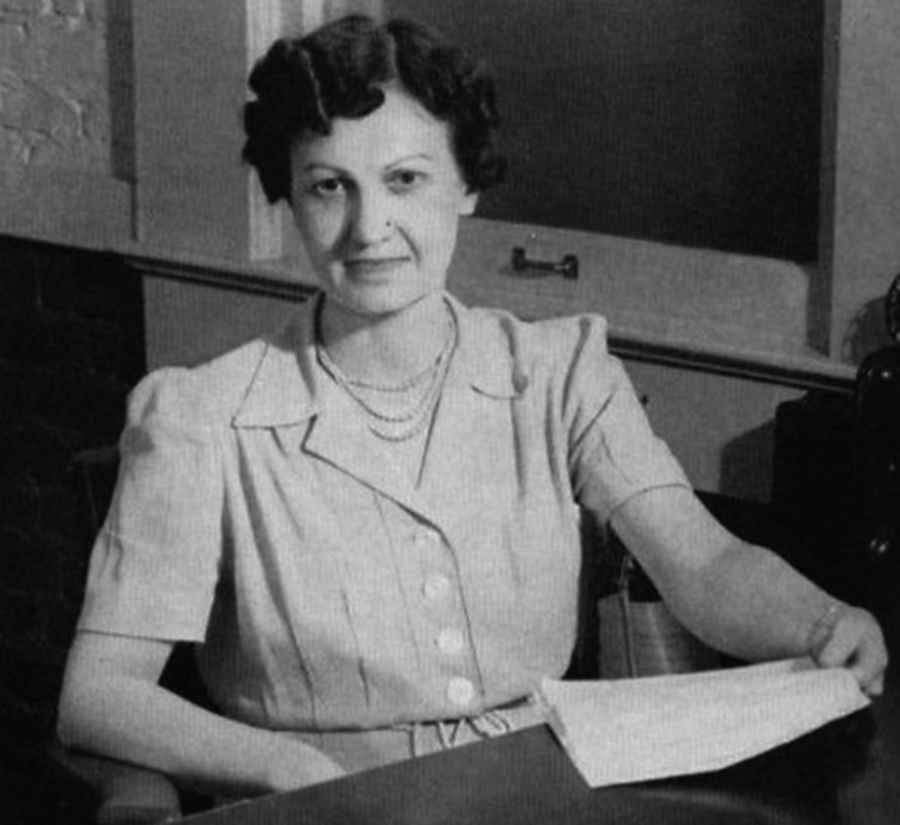
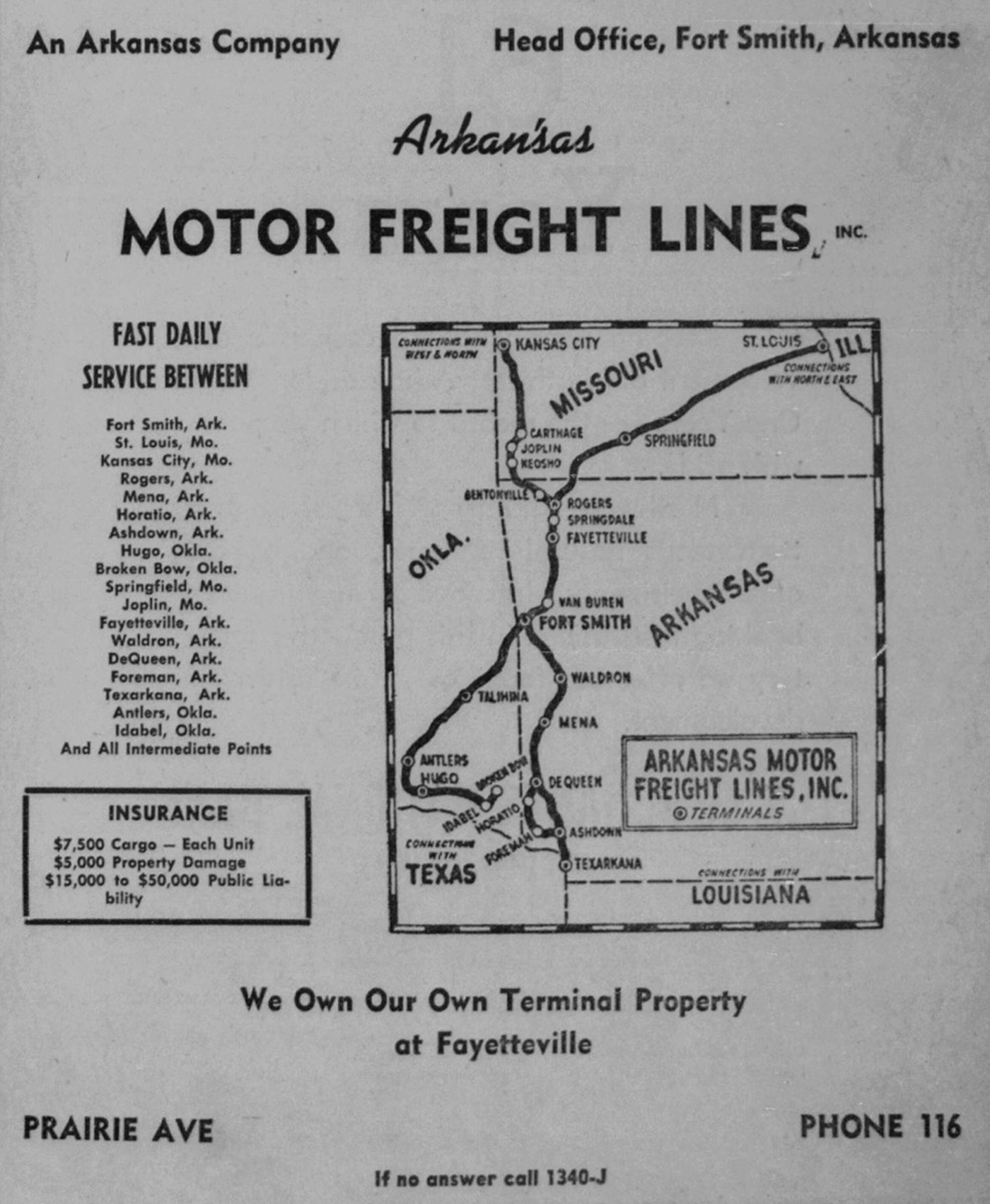
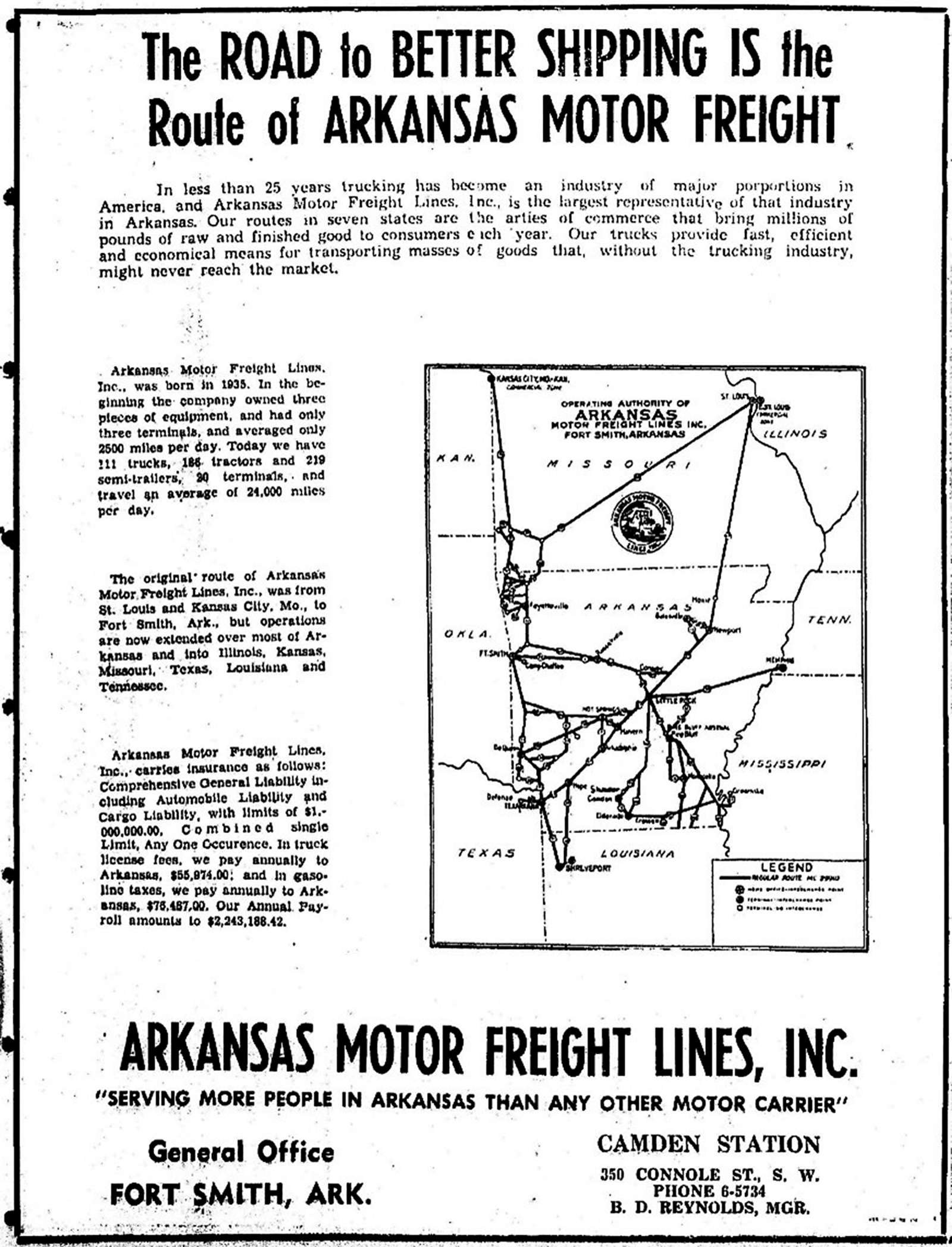
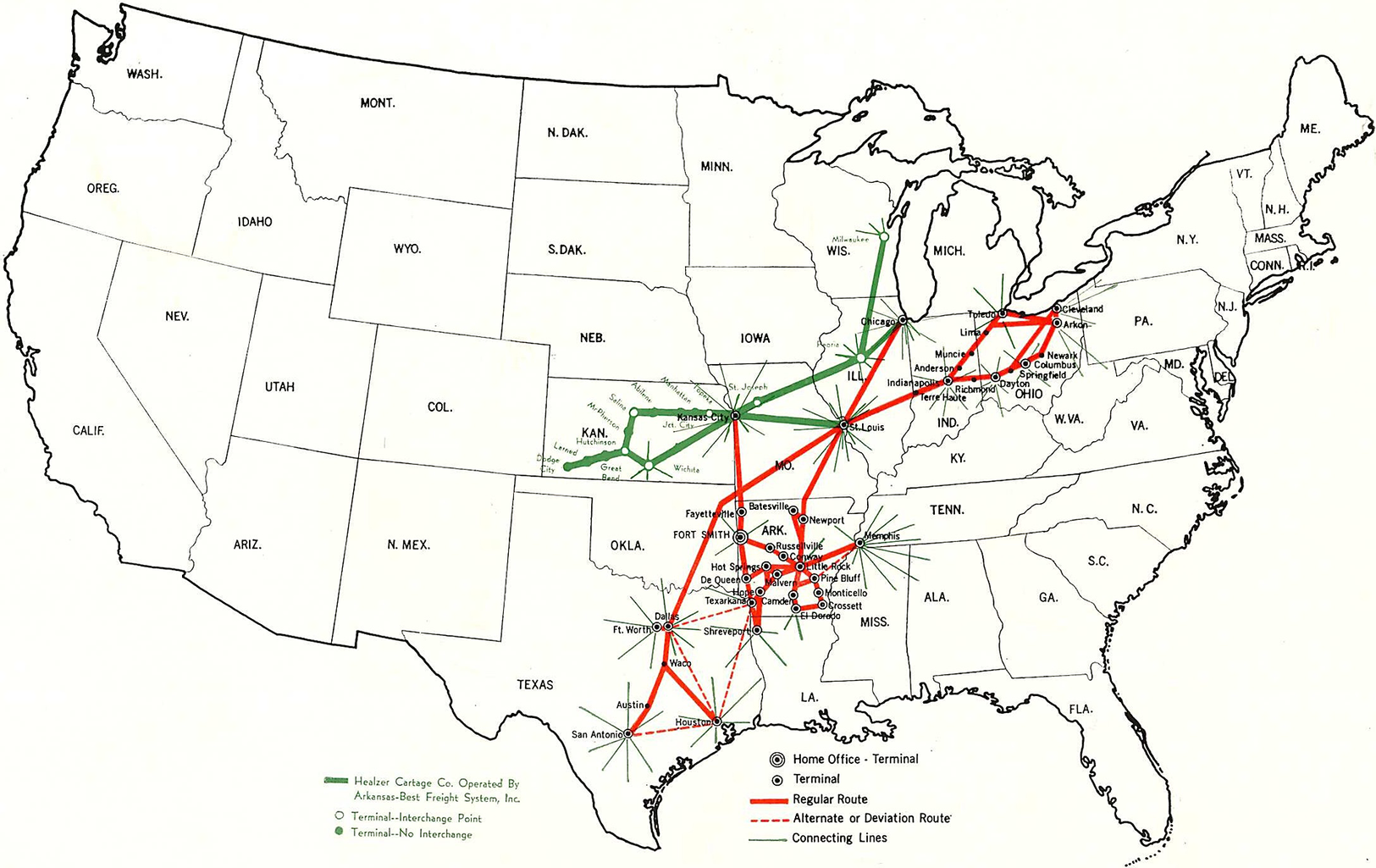
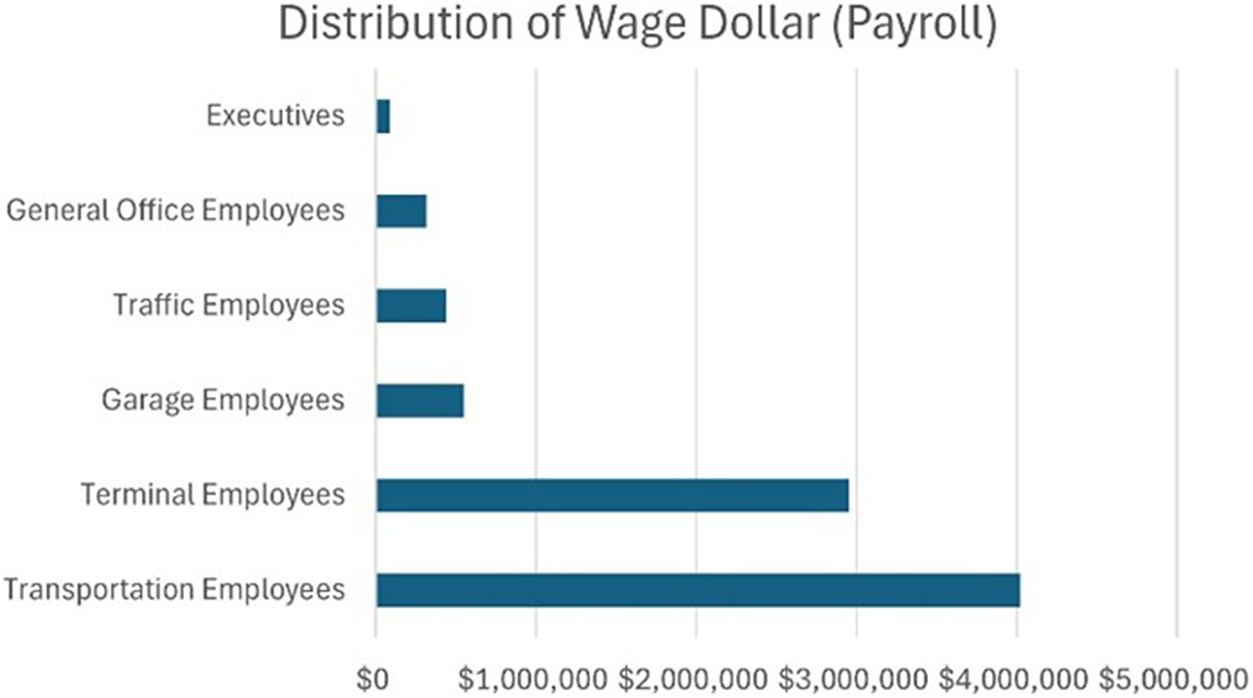
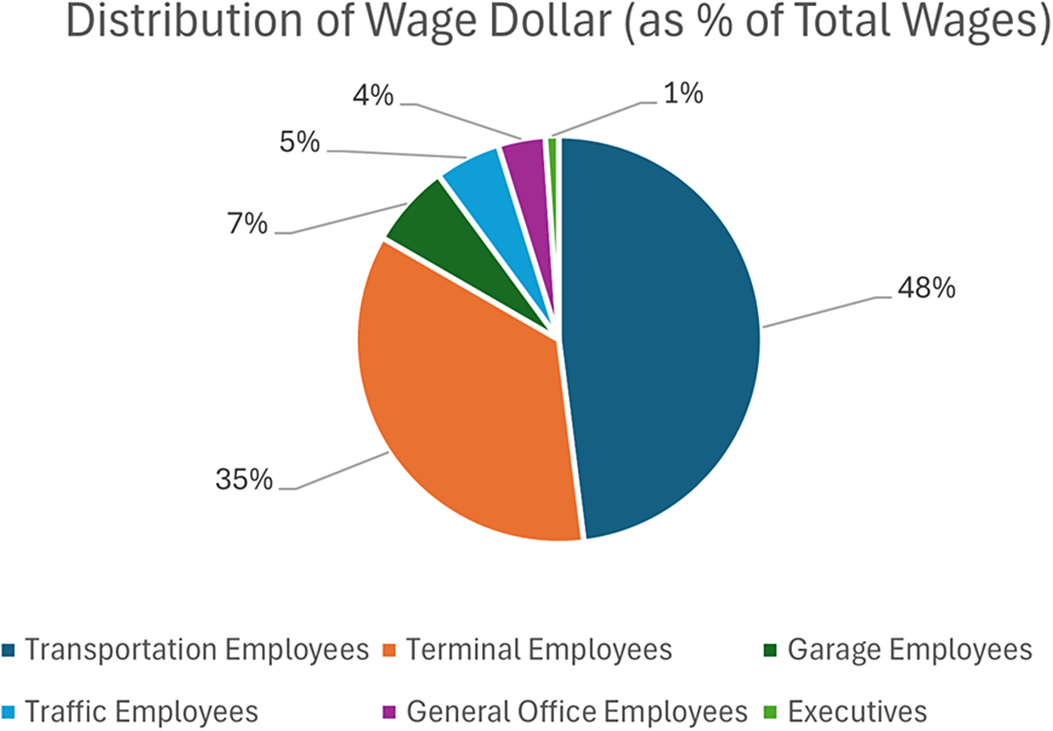
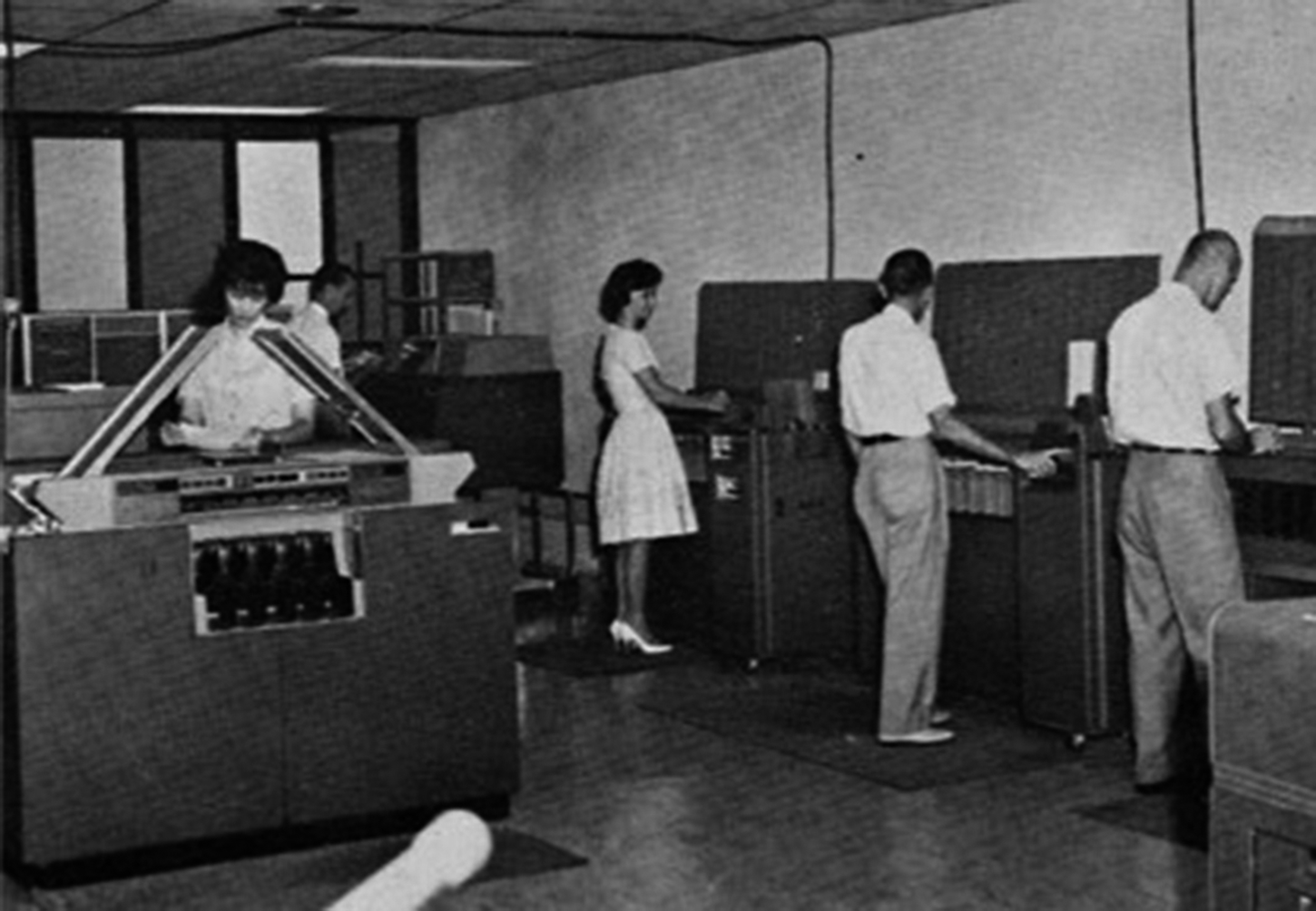

 Open access

