





Impact statement
This research highlights the importance of religious identity to Muslim mental health. We demonstrate that faith-sensitive depression treatment is more effective than standard treatments in this population, which constitutes the second-largest faith group globally. Our three trials introduced inclusive policy and practice approaches within involved mental health services and staff trained in BA-M continue to use the intervention. BA-M training has also been delivered to 10 NHS therapy teams in the UK and to psychology practitioners in the UK, Pakistan, Turkey, Indonesia and the UAE. University modules have been developed to teach future psychologists in the UK, Pakistan and Indonesia and further work is being planned in Qatar and the United Arab Emirates. The UK course for clinical psychologists will be delivered online and globally accessible to therapists wishing to deliver BA-M. BA-M was effectively delivered by non-specialists in the UK, providing evidence that it can increase capacity among healthcare staff to deliver depression treatment. The intervention also provides a model for faith-sensitive treatments in other religious groups, as the systematic review that informed our development of BA-M included faith-sensitive interventions for a wide range of religious populations. A PhD study is currently being conducted at the University of Leeds to adapt the self-help booklet for Hindus with depression in the UK. This contribution to evidence about effective treatments can potentially support the development of governmental policies globally for faith-sensitive interventions delivered at scale to reduce the burden of depression. Such a change in policy and practice should significantly improve the quality of life for those who consider religion a significant aspect of their identity and subsequently impact education, employment and trust in mental health services. Our results are likely to influence thinking about the most appropriate intervention for treating depression in Muslim and other faith groups and we make recommendations for future policy, practice and research development.
Introduction
Depression affects 4.4% of the global population, with a far higher burden in low- and middle-income countries (World Health Organization, 2021). In England, one in six people lives with moderate to severe depressive symptoms (Office for National Statistics, 2022). Poor access to therapy and low rates of recovery compared to the general population have been found among Muslims in the UK, the second largest faith group, who make up around 3.4 million of the population (The Lantern Initiative CIC et al., Reference Shaikh and Chowdhury2021; Baker and Kirk-Wade, Reference Baker and Kirk-Wade2024; Choudhry and Mir, Reference Choudhry and Mir2022). The prevalence of depression in Pakistan, the second largest Muslim majority country in the world (Hafeez, Reference Hafeez2023), is estimated at around 10% of the population – approximately 20 million people (Nisar et al., Reference Nisar, Mohammad, Fatima, Shaikh and Rehman2019) – and higher estimates up to 36% have been found among women in the postnatal period (Husain et al., Reference Husain, Bevc, Husain, Chaudry, Atif and Rahman2006) and in a large urban settlement in Karachi (Altaf et al., Reference Altaf, Khan, Shah, Fatima, Tunio, Hussain, Khan, Shaikh and Arshad2015). In Turkey, a prevalence rate of 4.4% (around 3.3 million people) has been reported for depression (World Health Organization, 2021).
Culturally adapted therapies are more effective for many populations than Western treatment models (Anik et al., Reference Anik, West, Cardno and Mir2021), and there is evidence that people from minority backgrounds living in Western contexts may identify with a cultural or religious background that is not acknowledged in such treatment (Islam et al., Reference Islam, Rabiee and Singh2015; Wallace et al., Reference Wallace, Nazroo and Bécasres2016). Western secular norms have been found to influence dominant knowledge in the field of mental health treatment internationally and to routinely undermine religious identity (Hansdak and Paulraj, Reference Hansdak and Paulraj2013). Individuals accessing psychotherapy in the global South may thus be faced with similar issues because psychologists are trained in and use Western therapy models (Altaf et al., Reference Altaf, Khan, Shah, Fatima, Tunio, Hussain, Khan, Shaikh and Arshad2015). There is growing recognition that equitable access and outcomes to mental health support involve decolonising global mental health systems, that is, removing systemic oppression and discrimination by challenging dominant norms that reflect Eurocentric systems of knowledge and power and perpetuate inequitable outcomes (Fay, Reference Fay2018; Rivera-Segarra et al., Reference Rivera-Segarra, Mascayano, Alnasser, van der Ven, Martínez-Alés, Durand-Arias, Moro, Karam, Hernández-Torres, Alarcón, Ramos-Pibernus, Alvarado and Susser2022).
Behavioural activation (BA) has been successfully adapted for specific cultural communities such as Latino patients in America (Kanter et al., Reference Kanter, Santiago-Rivera, Santos, Nagy, López, Hurtado and West2015) and can be delivered by non-specialist healthcare professionals (Ekers et al., Reference Ekers, Richards, McMillan, Bland and Gilbody2011). BA is an evidence-based treatment with comparable efficacy to cognitive behavioural therapy (CBT) (Richards et al., Reference Richards, Ekers, McMillan, Taylor, Byford, Warren, Barrett, Farrand, Gilbody, Kuyken, O’Mahen, Watkins, Wright, Hollon, Reed, Rhodes, Fletcher and Finning2016). Component techniques of BA include activity scheduling and monitoring, which are linked to an assessment of life goals explicitly linked to core values; skills training; contingency management and procedures targeting avoidance (Kanter et al., Reference Kanter, Manos, Bowe, Baruch, Busch and Rusch2010).
Drawing on a previous adaptation of BA (Kanter et al., Reference Kanter, Santiago-Rivera, Santos, Nagy, López, Hurtado and West2015), we developed a culturally adapted BA therapy for Muslims with depression (BA-M). The cultural adaptation is offered to patients who identify religion as a core value and incorporates: conceptualisations of depression that differ from Western psychiatric frameworks; attention to religious identity as a resource for health and as a trigger for discrimination; an understanding of cultural and religious influences on social relationships; and awareness of the availability of community resources within Muslim populations.
A pilot study on the intervention in the North of England provided evidence that BA-M was acceptable to both service users and therapists and feasible in practice within UK clinical settings (Mir et al., Reference Mir, Meer, Cottrell, McMillan, House and Kanter2015). A subsequent feasibility study in Turkey explored the acceptability and feasibility of the intervention in that context (Anik, Reference Anik2022). Two further RCTs in Pakistan (Dawood et al., Reference Dawood, Mir and West2023) and the UK (Mir et al., Reference Mir, West, Meer, Rabbee and Song2023) compared the efficacy of BA-M to the usual treatment of Cognitive Behavioural Therapy (TAU) in a Muslim majority and Muslim minority context. The UK trial also evaluated whether BA-M could be delivered by non-specialist voluntary sector staff trained in BA and BA-M.
In this paper, we present results across all three studies and a meta-analysis on the effectiveness of the BA-M therapy compared to TAU. Our results provide evidence of the effectiveness of BA-M in settings where Muslims are the majority population (Pakistan and Turkey) as well as where they constitute a minority group (UK).
Methods
Study designs
A cluster randomised controlled feasibility trial was conducted in Istanbul, Turkey (Anik, Reference Anik2022). Therapists were recruited via social media advertisements promoted by two renowned CBT experts, a clinician and a university academic. Therapists then recruited participants via their usual caseload. A non-blinded randomised controlled trial was conducted in Lahore, Pakistan. Participants were recruited from, or self-referred to, outpatient departments of two hospitals and the Centre for Clinical Psychology at the University of Punjab (Dawood et al., Reference Dawood, Mir and West2023). In the UK, a non-blinded randomised controlled trial was conducted in Bradford. Recruitment was via NHS primary care mental health services and three voluntary sector mental health organisations (Mir et al., Reference Mir, West, Meer, Rabbee and Song2023).
Each trial was assessed for bias by at least three authors, using the Revised Cochrane Risk-of-Bias Tool for Randomised Trials (Higgins et al., Reference Higgins, Savović, Page, Elbers and Sterne2019).
Participants
All studies recruited adult participants who self-identified as Muslim, aged 16 years and over (over 17 in Turkey), residing within recruitment sites. Eligibility was determined through screening for depression using a combination of clinical interview and routinely used depression measures in each context: the Symptom Checklist-90 (Revised) Questionnaire (SCL-90-R) in Turkey; PHQ-9 in the UK, and both measures in Pakistan (Dawood et al., Reference Dawood, Mir and West2023; Mir et al., Reference Mir, West, Meer, Rabbee and Song2023). A co-morbid diagnosis of primary psychological disorder for which empirically supported treatments exist (e.g. PTSD or bipolar depression) was an exclusion criterion in all trials. Translated information sheets, consent forms and questionnaire measures were available in relevant languages. For participants with limited literacy skills, staff provided verbal explanations in a relevant language with support to provide informed consent and complete questionnaire measures. Written or verbal informed consent was recorded either at recruitment or before the first therapy session.
Demographic data on gender and age were collected for patients in each trial. In the UK, details of postcode were also collected, using routine categories collected for NHS primary care data. Participant details collected for the Pakistan study also included education, marital status, employment, socio-economic status and family system (nuclear/joint) (Dawood et al., Reference Dawood, Mir and West2023).
Therapist recruitment was through study sites involved in the Pakistan and UK trials and through social media advertisements in Turkey. Psychologists in all three settings had at least 1 year of training in psychological therapies and received 2 days of training on how to deliver BA-M.
In the UK trial, the intervention was also delivered by non-specialist staff with graduate-level education working in community mental health organisations (VSOs). All VSO staff in the intervention arm received a 5-day training course on BA delivered by a skilled academic who also assessed participant competency in BA prior to their receiving the BA-M training. The competency assessment involved a roleplay exercise used for a previously published trial of BA delivery by non-specialist providers (Ekers et al., Reference Ekers, Richards, McMillan, Bland and Gilbody2011). Fidelity to the BA-M intervention was assessed through clinical supervision, provided to VSO providers for 2 hours each month by psychotherapists trained as clinical supervisors.
Monthly 1-hour peer support sessions were also offered to all BA-M therapists in the UK and Turkey trials to provide additional support and further monitor fidelity to the intervention. Discussions focused on practice experiences without naming specific clients and practitioner queries about implementing BA-M. Clinical supervisors attended the BA-M training and peer support sessions to further support fidelity during implementation. A statistical evaluation of the first 25 PHQ-9 measures collected at VSO sites was conducted in the UK to assess the safety of therapy delivery in VSO settings. Therapists in the control groups for the Pakistan and UK trials did not receive BA-M or BA training. In Turkey, control group therapists attended BA training and had bi-monthly meetings to support engagement with the study.
Patients and therapists in the BA-M arm were interviewed in all contexts to provide further insights into delivery and organisational issues; in the UK, therapy supervisors and organisation managers were also interviewed. Qualitative interviews explored the experience of the intervention in terms of: barriers and facilitators to access, acceptability, impact, reach, contextual and other influences on delivery/impact, mechanisms of impact and unanticipated effects. Separate consent was taken from clients in the BA-M arm at the recruitment stage to participate in the qualitative evaluation. Verbal informed consent was obtained if it was technically difficult to obtain written consent because of limited literacy. Interview data were translated, if necessary, transcribed and coded using NVivo software and analysed using framework analysis to identify key themes (Ritchie et al., Reference Ritchie, Spencer, O’Connor, Richie and Lewis2003).
Randomisation and masking
Randomisation in Turkey was at the therapist level. Nine therapists were randomly allocated by RW through a random number generator to either CBT as TAU or BA-M using a 1:2 ratio. In addition, to avoid contamination, three therapists who were unable to attend the BA-M training were directly allocated to TAU and two therapists who took part in translating BA-M materials to Turkish were allocated to the BA-M group.
In Pakistan, a blinded assessor screened patients for depression using the Urdu version of the PHQ-9 and a symptom checklist (SCL-90-R). Participants were recruited in pairs based on intention to treat and allocated to receive either the intervention or TAU using a random number generator (block randomisation). Randomisation to BA-M or TAU could not be concealed from patients or therapists.
In the UK trial, a blinded assessor screened patients for depression and patients were recruited based on intention to treat. Participants were then allocated to receive BA-M or TAU in blocks of 2.
In all three trials, blinding of therapists, patients and researchers was not possible for treatment or analysis.
Procedures
Participants received either Behavioural Activation for Muslims therapy (BA-M) or TAU. BA-M consisted of 6–12 sessions of culturally adapted BA therapy, delivered by therapists trained in the intervention. A Values Assessment was used to identify the importance of religion and patients for whom this was an important value were offered the opportunity to use a self-help booklet to support their recovery. The booklet uses Islamic religious teachings to promote therapeutic goals and “positive religious coping” that is, an internalised understanding of religion that provides meaning, resilience, hope and self-esteem as a therapeutic mechanism for recovery from depression (Pargament, Reference Pargament1997; Pargament et al., Reference Pargament, Koenig and Perez2000; Mir et al., Reference Mir, Meer, Cottrell, McMillan, House and Kanter2015).
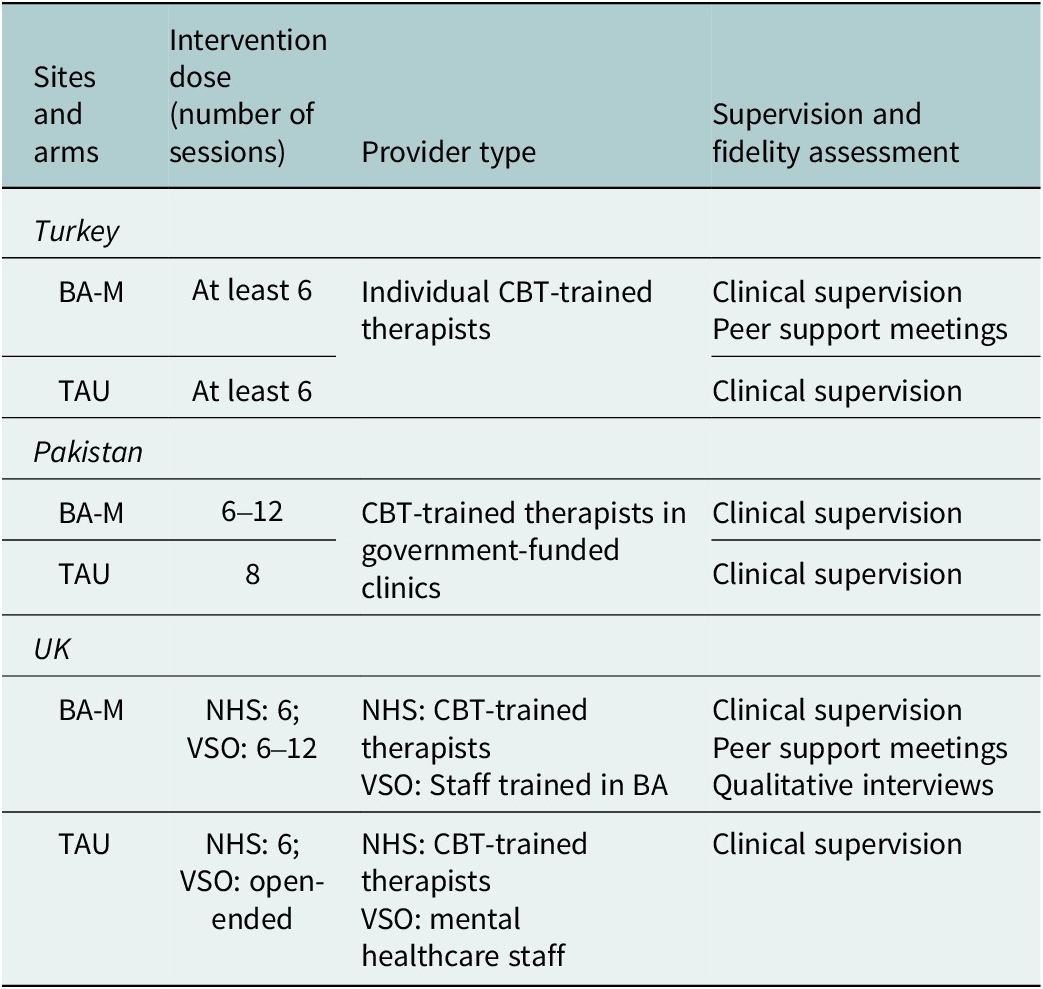
TAU was primarily CBT with some differences across the three sites. In Pakistan, TAU consisted of eight sessions of CBT and in Turkey, at least six sessions. In the UK, TAU was either six sessions of CBT in NHS primary care settings or an open-ended social intervention in community-based voluntary sector services. Adherence to the therapy manual was assessed through regular peer support meetings between researchers and therapists in the UK and Turkey and process evaluations in all contexts (Table 1).
Intervention details by site
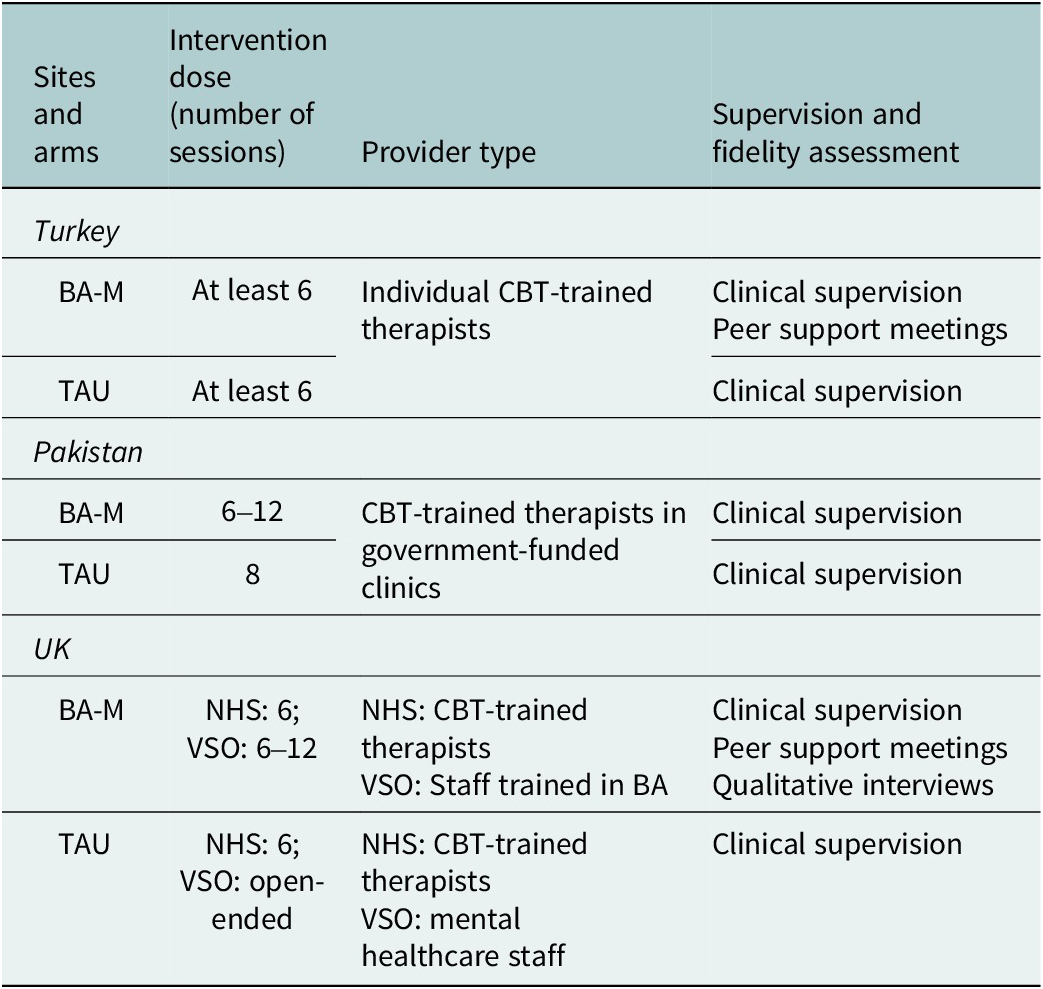
Table 1. Long description
The table is organized into four columns: Sites and arms, Intervention dose (number of sessions), Provider type, and Supervision and fidelity assessment.
* Turkey:
- B A - M: At least 6 sessions; Individual C B T-trained therapists; Clinical supervision and Peer support meetings.
- T A U: At least 6 sessions; Individual C B T-trained therapists; Clinical supervision.
* Pakistan:
- B A - M: 6 to 12 sessions; C B T-trained therapists in government-funded clinics; Clinical supervision.
- T A U: 8 sessions; C B T-trained therapists in government-funded clinics; Clinical supervision.
* U K:
- B A - M: N H S: 6 sessions, V S O: 6 to 12 sessions; N H S: C B T-trained therapists, V S O: Staff trained in B A; Clinical supervision, Peer support meetings, and Qualitative interviews.
- T A U: N H S: 6 sessions, V S O: open-ended; N H S: C B T-trained therapists, V S O: mental healthcare staff; Clinical supervision.
Outcomes
Routinely used measures for screening and outcome were used in each context to align with usual practice; however, all sites used PHQ-9 as a common outcome measure. The primary outcome in both RCTs was the final PHQ-9 score, with scores recorded at every session in all trials. PHQ-9 score was a secondary outcome in the Turkey feasibility trial, with the primary outcome being recruitment and retention of therapists and patients (Anik, Reference Anik2022).
In Pakistan, several secondary measures included activation, measured by the BADS-SF depression scale, and quality of life measured by SCL-90-R (Dawood et al., Reference Dawood, Mir and West2023). In the UK, secondary outcomes included anxiety measured by the GAD-7 and PHQ-9 scores at each session (Mir et al., Reference Mir, West, Meer, Rabbee and Song2023). Outcomes were collected in the UK by someone independent from the research and therapy delivery teams.
Assessment of safety and adverse events
Routine reporting and supervision procedures were used at each participating site for assessment of safety and adverse events. Within the UK and Pakistan trials, this involved formal institutional supervision of therapists and reporting of adverse events. All therapists in these trials were regularly supervised by experienced clinical leads to discuss issues arising in therapy. Therapists could also contact supervisors to report concerns between supervision sessions. Patient feedback was continuously monitored by participating organisations, and a Project Steering Group was established for each study to address any adverse events or concerns about safety. In Turkey, therapists worked in the private sector and were asked to report concerns through contact with the lead researcher (EA) or at meetings with research team members.
Adverse events were defined as any unfavourable and unintended symptom or disease, including psychological, emotional or physical harm, occurring during the course of the trials. Incidence was monitored through clinical supervision sessions with therapists and, in the UK, early statistical evaluation of VSO depression measures to ensure that participants were not exposed to unexpected worsening of symptoms or harm from the intervention (Mir et al., Reference Mir, West, Meer, Rabbee and Song2023).
Statistical analysis
The sample size for both RCTs was informed by previous research and consideration of potential drop-out. In Pakistan, 59 patients were required in each therapy arm to identify a minimal clinically important difference in PHQ-9 scores of 2 units with 80% power (Dawood et al., Reference Dawood, Mir and West2023). In the UK, with 5% (two-sided t-test) significance, a difference of 3 units could be detected with 90% power with 60 patients (Mir et al., Reference Mir, West, Meer, Rabbee and Song2023). The feasibility study in Turkey did not have a formal power calculation and was included to increase the total number of patients in the overall sample.
The observations from the two trials, together with the feasibility study, were combined and analysed together; thus, a one-stage patient-level meta-analysis was undertaken. Unlike a pooled regression, this involved patients from different populations rather than the same population (Stewart and Tierney, Reference Stewart and Tierney2002; Riley et al., Reference Riley, Lambert and Abo-Zaid2010). The primary outcome was taken as the final PHQ-9 measurement taken in the last attended therapy session. The main analysis was a regression of the final PHQ-9 score upon the baseline PHQ-9 score as well as therapy arm (TAU or BA-M) with a separate intercept for each study (Pakistan, UK and Turkey). That is, an ANalysis of COVAriance (ANCOVA) was performed to allow for different severity of depression in participants at baseline. No account for clustering within therapists was made, since such a clustering effect had been seen to be negligible in the Turkey and UK trials (Anik, Reference Anik2022; Mir et al., Reference Mir, West, Meer, Rabbee and Song2023). The therapists’ details were not available from Pakistan. Observations where baseline PHQ-9 score data were missing were replaced with the first available PHQ-9 score. Observations where the final PHQ-9 score was missing were replaced with the score from the last available session.
A descriptive table was also produced to assess clinically meaningful change, which was defined as a 5-point or 20% reduction in PHQ-9 score (Löwe et al., Reference Löwe, Unützer, Callahan, Perkins and Kroenke2004a; Kounali et al., Reference Kounali, Button, Lewis, Gilbody, Kessler, Araya, Duffy, Lanham, Peters, Wiles and Lewis2022; National Collaborating Centre for Mental Health, 2024).
Since there were differences in how TAU was defined between organisations that delivered therapy within the UK study, a sensitivity analysis was conducted for this study, adjusting for the effect of organisation on therapy undertaken. Results showed that adjusting for the organisation had only a minimal impact on therapy effect (Supplementary Tables E and F show final PHQ-9 scores adjusted for baseline PHQ-9 and therapy group).
An interaction term between therapy type and study was added to test whether the effect of therapy differed between studies. There was little evidence of such an interaction, so this was dropped from the analysis. A Poisson regression was undertaken as further analysis, to assess retention rate by therapy arm and study, regressing the number of sessions attended upon the trial and the therapy type.
Data collection and analysis were monitored by a Steering Group of involved stakeholders (NHS and third sector service providers, health service commissioners and academics) for the UK trial and by the research teams for the Pakistan and Turkey studies. Both RCTs were registered with the UK’s Clinical Study Registry (see Data Availability statement).
Results
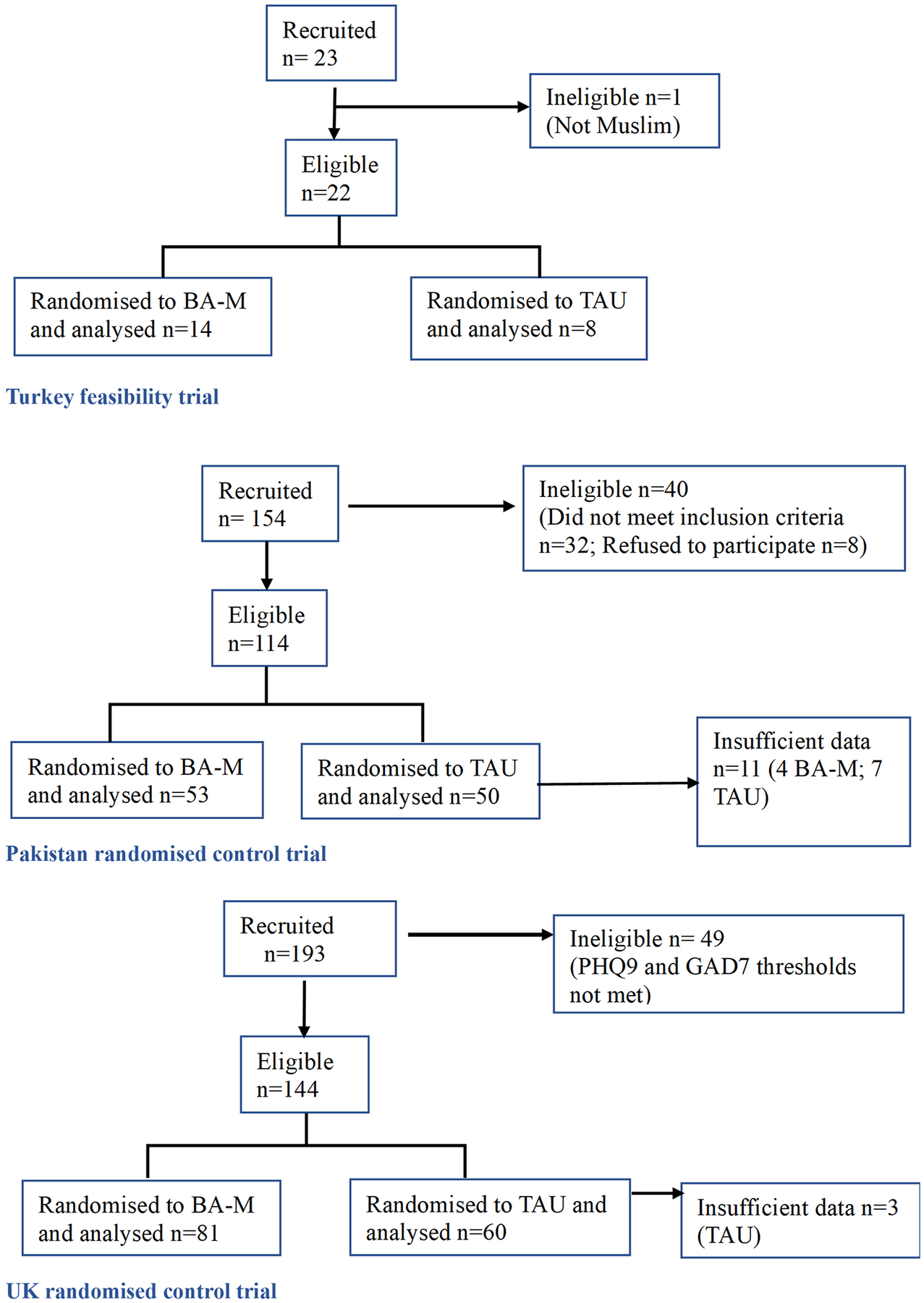
Altogether 266 patients were randomised to receive either BA-M or usual treatment (TAU) across the three trials (Turkey: 22; Pakistan: 103; UK: 141) between 4 January 2019 and 31 March 2023. Findings from each study are reported below, along with a meta-analysis of the effectiveness of BA-M compared to TAU across all three trials.
Turkey
Fourteen therapists were recruited between 4 January 2019 and 31 January 2020. Eight were randomised to offer BA-M and six to offer TAU. Of 23 patients recruited, 14 received BA-M and eight received TAU. One patient did not meet the eligibility criteria of identifying as Muslim and was removed from analysis (Anik, Reference Anik2022).
Pakistan
Recruitment took place from 1 March 2020 to 31 August 2021. Altogether 154 patients were assessed for eligibility, 114 participants were randomised (57 in each group), and the final sample consisted of 103 participants (53 BA-M; 50 TAU). Both groups reported participants who dropped out before follow-up measures could be collected (4 BA-M; 7 TAU) (Dawood et al., Reference Dawood, Mir and West2023).
UK
193 patients were recruited from October 2021 to March 2023, 141 participants were included in analysis after screening: 81 randomised to BA-M and 60 to TAU (Mir et al., Reference Mir, West, Meer, Rabbee and Song2023).
Participant flow diagrams below draw on the published study reports and Consolidated Standards of Reporting Trials statement (Hopewell et al., Reference Hopewell, Chan, Collins, Hróbjartsson, Moher, Schulz, Tunn, Aggarwal and Berkwits2025) (Figure 1).
Consort flow diagrams for each trial.
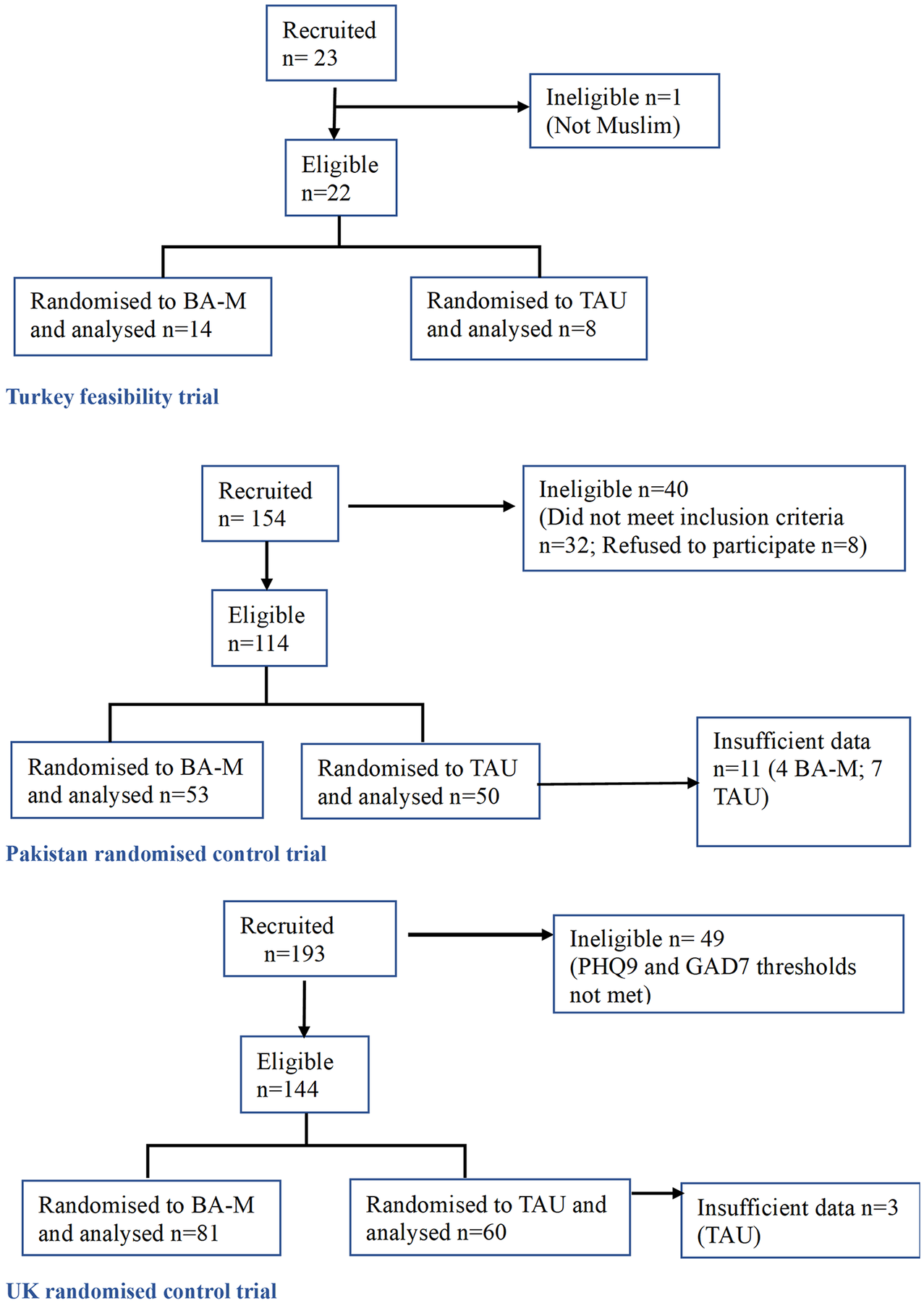
Figure 1. Long description
The image consists of three vertical panels, each representing a C O N S O R T flow diagram.
Top Panel: Turkey feasibility trial.
- Recruited n equals 23.
- An arrow points right to Ineligible n equals 1 (Not Muslim).
- An arrow points down to Eligible n equals 22.
- The flow splits into two groups: Randomised to B A dash M and analysed n equals 14, and Randomised to T A U and analysed n equals 8.
Middle Panel: Pakistan randomised control trial.
- Recruited n equals 154.
- An arrow points right to Ineligible n equals 40 (Did not meet inclusion criteria n equals 32; Refused to participate n equals 8).
- An arrow points down to Eligible n equals 114.
- The flow splits into two groups: Randomised to B A dash M and analysed n equals 53, and Randomised to T A U and analysed n equals 50.
- An arrow from the T A U group points right to Insufficient data n equals 11 (4 B A dash M; 7 T A U).
Bottom Panel: U K randomised control trial.
- Recruited n equals 193.
- An arrow points right to Ineligible n equals 49 (P H Q 9 and G A D 7 thresholds not met).
- An arrow points down to Eligible n equals 144.
- The flow splits into two groups: Randomised to B A dash M and analysed n equals 81, and Randomised to T A U and analysed n equals 60.
- An arrow from the T A U group points right to Insufficient data n equals 3 (T A U).
Participant characteristics
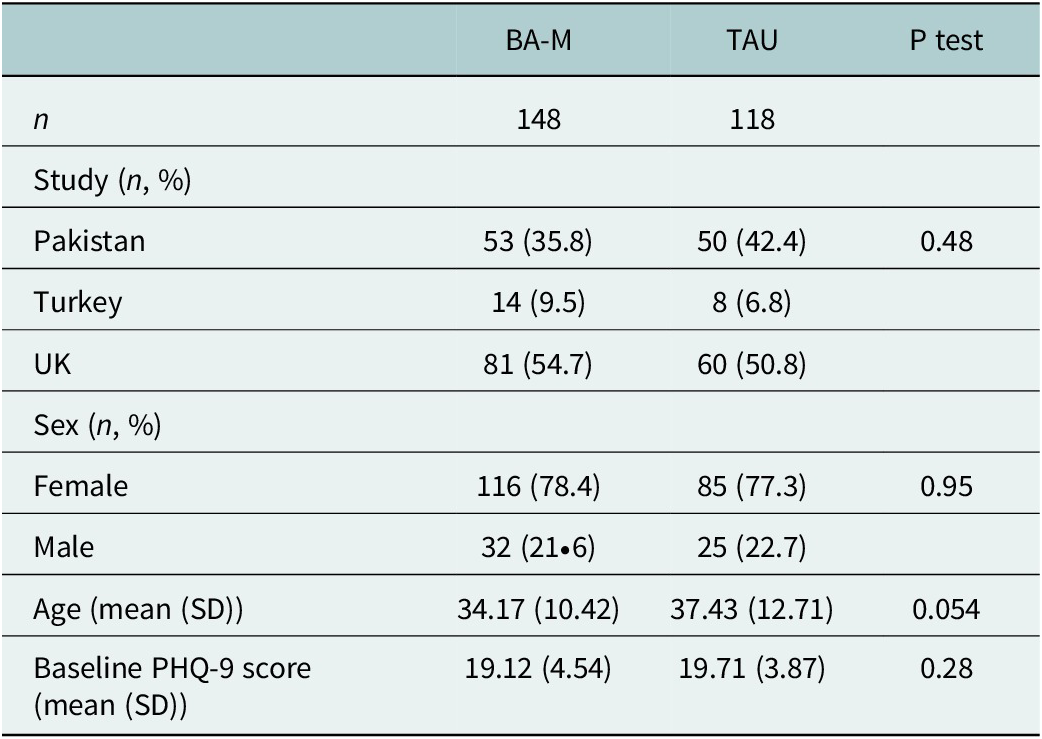
Table 2 shows there were no significant differences between comparison groups in participants’ baseline characteristics across the three trials. More female participants were recruited in all three trials compared to male participants, but this was not significantly different between the BA-M and TAU groups. Patient age and baseline PHQ-9 scores in each trial were also not significantly different between the two groups.
Baseline characteristics by therapy group
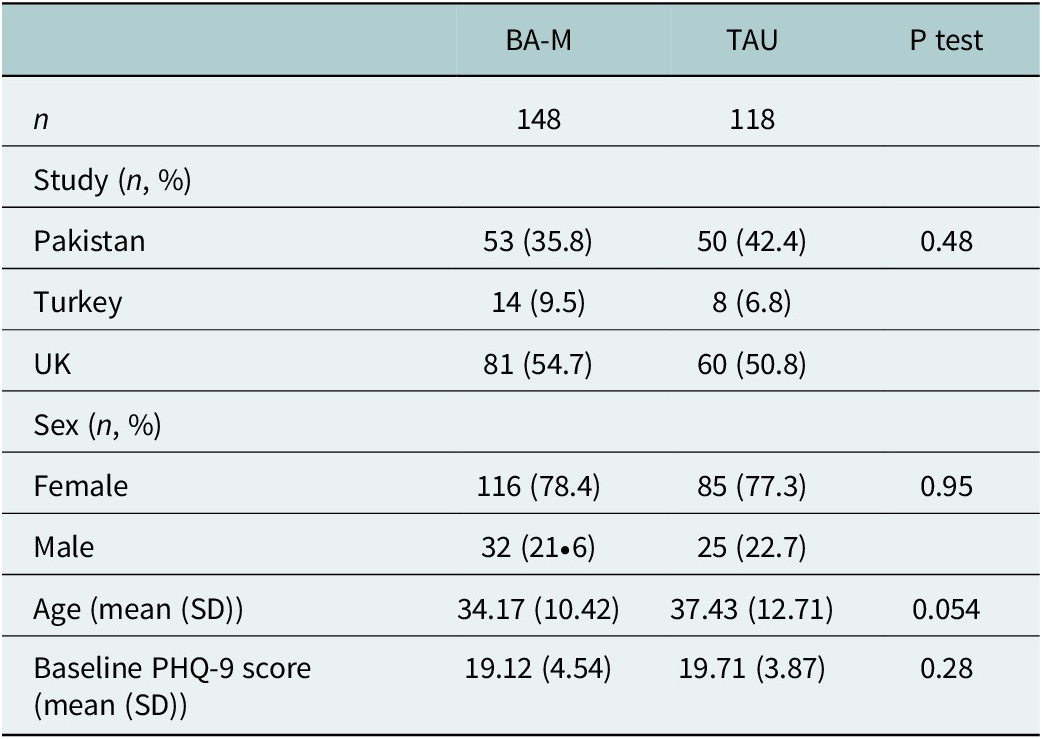
Table 2. Long description
The table consists of four columns: Characteristic, B A minus M (n equals 148), T A U (n equals 118), and P test value.
* Study distribution (n, percentage):
- Pakistan: B A minus M is 53 (35.8); T A U is 50 (42.4); P equals 0.48.
- Turkey: B A minus M is 14 (9.5); T A U is 8 (6.8).
- U K: B A minus M is 81 (54.7); T A U is 60 (50.8).
* Sex (n, percentage):
- Female: B A minus M is 116 (78.4); T A U is 85 (77.3); P equals 0.95.
- Male: B A minus M is 32 (21.6); T A U is 25 (22.7).
* Age (mean (S D)):
- B A minus M is 34.17 (10.42); T A U is 37.43 (12.71); P equals 0.054.
* Baseline P H Q minus 9 score (mean (S D)):
- B A minus M is 19.12 (4.54); T A U is 19.71 (3.87); P equals 0.28.
Ethnic group data were collected in the UK trial and showed that the sample was mostly from Asian or Asian British backgrounds. Ethnicity was not, however, significantly different between the two groups at baseline (p = 0.48). Baseline scores for an additional measure for anxiety (GAD-7) also found no significant difference between the two groups (p = 0.68). Deprivation status was not collected for all UK participants, but all of those for whom data were available (n = 33) were from deprived areas.
In Pakistan, a BA-specific measure (BAD-SF) did show a significant difference between the comparison groups at baseline (p = 0.001), with higher activity scores reported in the BA-M group, despite similar depression scores to TAU participants (Dawood et al., Reference Dawood, Mir and West2023).
Findings for the primary outcome
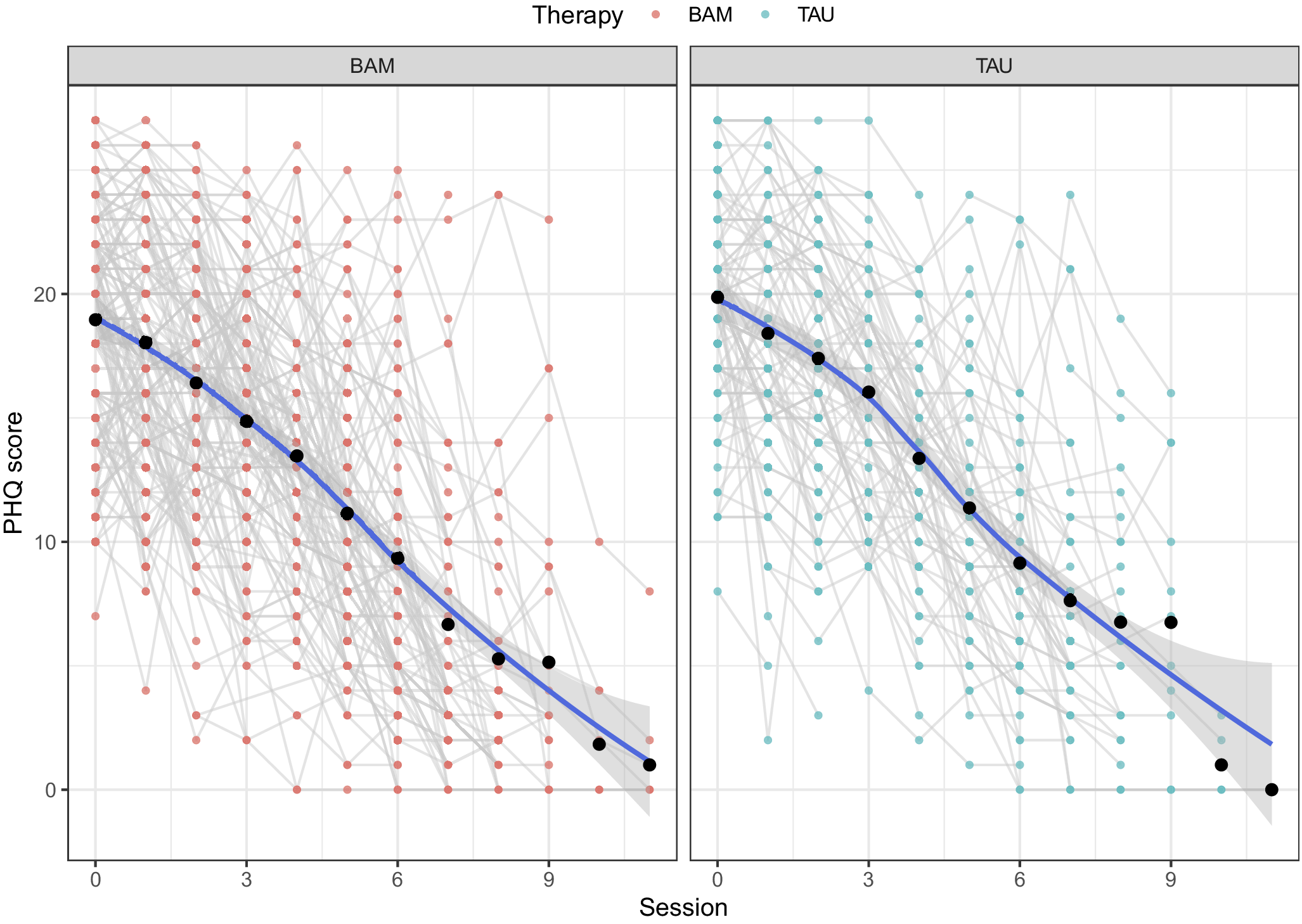
Figure 2 presents differences in depression scores for each type of therapy. Across the three trials, the mean PHQ-9 score at the final session was 9.6 (SD = 7.16) for patients in the BA-M group compared to 11.95 (SD = 7.15) for the patients in the TAU group. BA-M group patients were also more likely to have more sessions (M = 6.63 (SD = 3.17) compared to TAU patients (M = 5.31 (SD = 4.45).
Trajectories of depression symptoms.
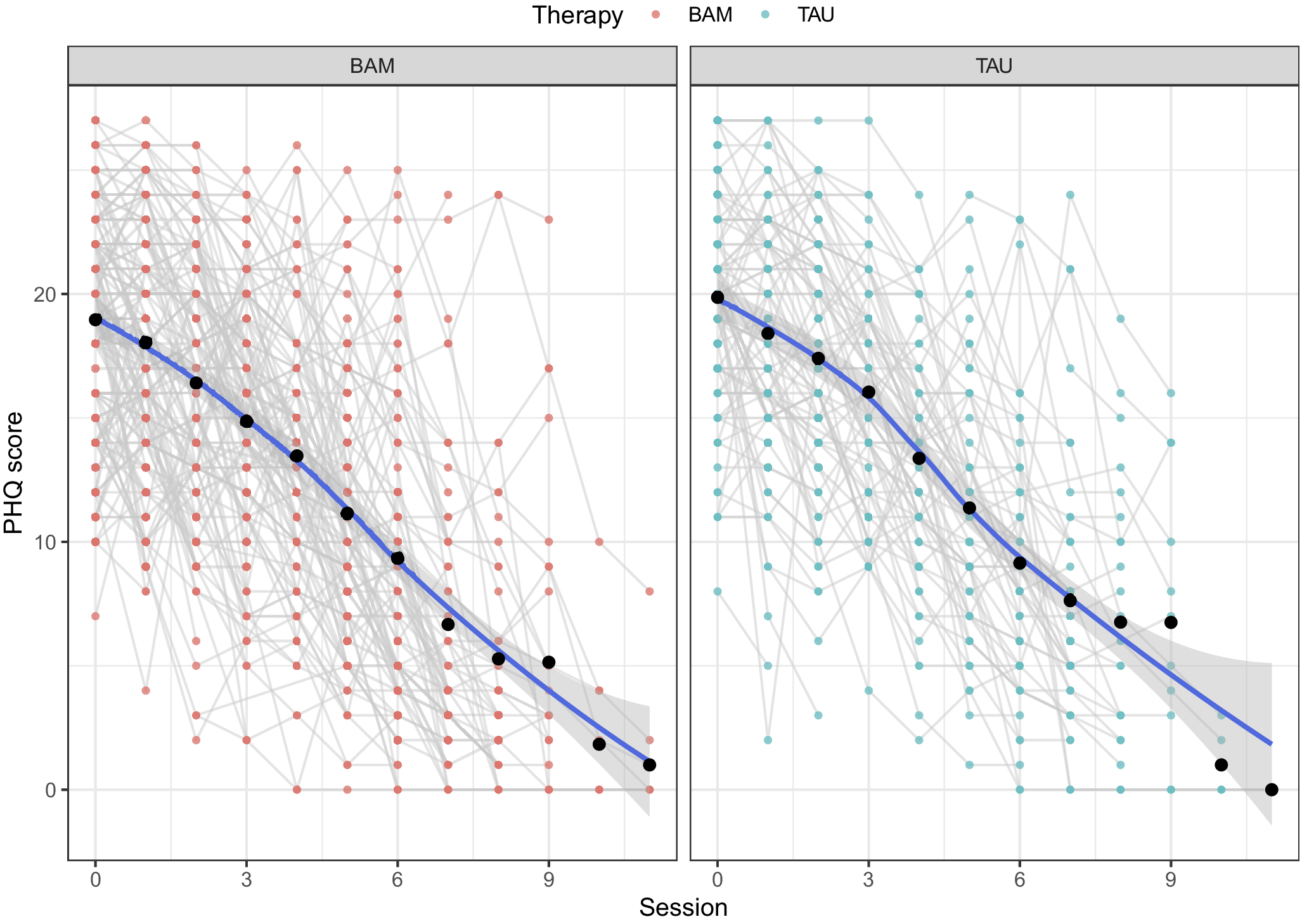
Figure 2. Long description
The graph consists of two side-by-side panels. The Y-axis is labeled P H Q score, ranging from 0 to over 20. The X-axis is labeled Session, ranging from 0 to 11.
Left Panel (B A M): Individual patient trajectories are shown as light gray lines with red dots. The data points are densely clustered between scores of 10 and 25 at session 0. A thick blue regression line with black circular markers shows a steady linear decrease from a P H Q score of approximately 19 at session 0 to approximately 1 at session 11. A gray shaded area around the blue line at the end of the timeline indicates the confidence interval.
Right Panel (T A U): Individual patient trajectories are shown as light gray lines with teal dots. Similar to the first panel, there is a high density of starting scores. The thick blue regression line with black circular markers shows a similar downward trajectory, starting at a P H Q score of 20 at session 0 and ending near 2 at session 11. The slope appears slightly steeper in the middle sessions compared to the B A M group.
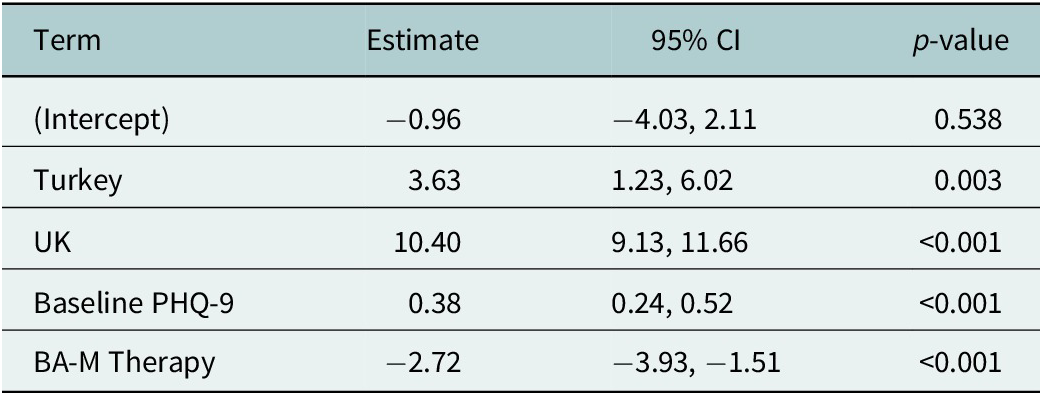
Regression results from the ANCOVA model in Table 3 show statistically and clinically significant differences in the final PHQ-9 reported by the study. Table 3 shows that after controlling baseline scores and study site, participants receiving BA-M therapy had significantly lower post-treatment PHQ-9 scores compared to the TAU – that is, a 2.72 points reduction (β: −2.72, 95% CI [−3.93,−1.51]).
Coefficients from ANCOVA model used to regress final PHQ-9 scores on study, baseline PHQ-9 and the therapy group
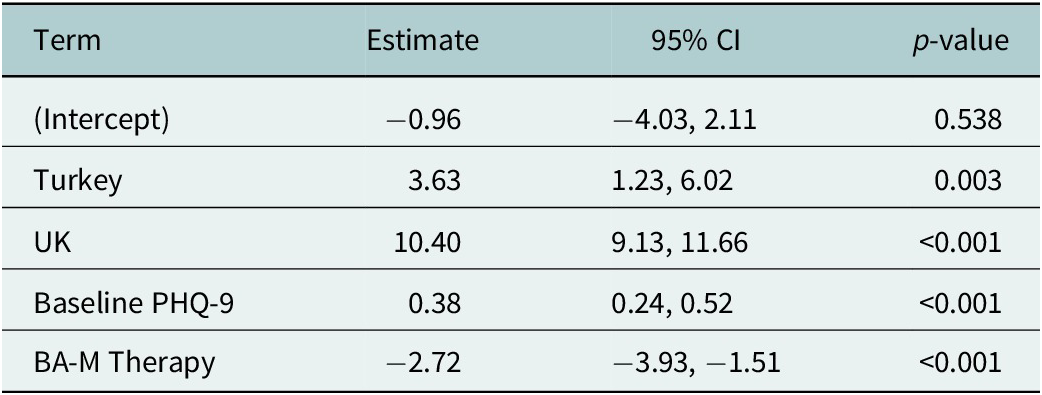
Table 3. Long description
The table contains four columns: Term, Estimate, 95% C I (Confidence Interval), and p-value.
* Intercept: Estimate -0.96, 95% C I -4.03 to 2.11, p-value 0.538.
* Turkey: Estimate 3.63, 95% C I 1.23 to 6.02, p-value 0.003.
* U K: Estimate 10.40, 95% C I 9.13 to 11.66, p-value less than 0.001.
* Baseline P H Q 9: Estimate 0.38, 95% C I 0.24 to 0.52, p-value less than 0.001.
* B A M Therapy: Estimate -2.72, 95% C I -3.93 to -1.51, p-value less than 0.001.
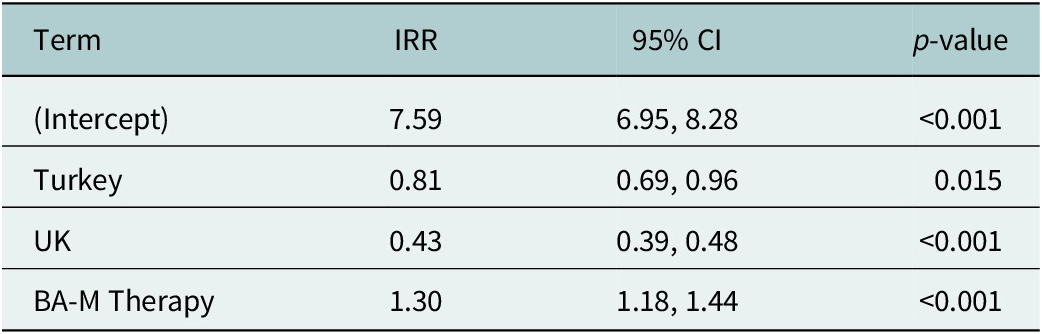
Retention of patients was better with BA-M than with TAU, with an average of 6.6 sessions under BA-M and 5.3 for TAU. The Poisson regression results in Table 4 show statistically significant differences. Participants receiving BA-M had a 30% higher session attendance rate compared with TAU (IRR:1.30, 95% CI [1.18, 1.44]).
Incidence rate ratios (IRR) from Poisson regression predicting the number of sessions attended by the study and therapy group
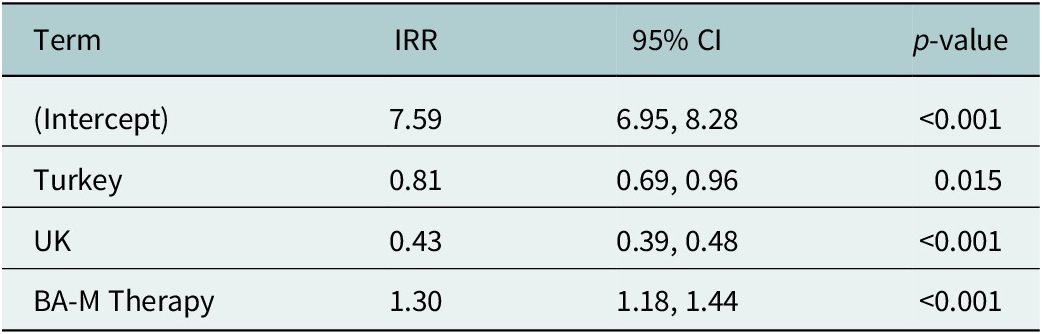
Table 4. Long description
The table consists of four columns: Term, I R R, 95 percent C I, and p-value.
* The Intercept row shows an I R R of 7.59, a 95 percent C I of 6.95 to 8.28, and a p-value less than 0.001.
* The Turkey row shows an I R R of 0.81, a 95 percent C I of 0.69 to 0.96, and a p-value of 0.015.
* The U K row shows an I R R of 0.43, a 95 percent C I of 0.39 to 0.48, and a p-value less than 0.001.
* The B A - M Therapy row shows an I R R of 1.30, a 95 percent C I of 1.18 to 1.44, and a p-value less than 0.001.
Secondary outcomes varied across the Pakistan and UK studies and also showed significant differences. In the UK trial, anxiety, as measured by GAD-7 scores, was significantly lower (p = 0.001) for BA-M participants (M = 12.81) compared to TAU (M = 15.21) (Mir et al., Reference Mir, West, Meer, Rabbee and Song2023). In the Pakistan trial, “activation,” measured using the BA-specific BADS-SF scale, showed mean scores post-therapy were significantly different between the two groups with BA-M at 34.34 vs. TAU at 27.90 (p < 0.001) (Dawood et al., Reference Dawood, Mir and West2023).
The Pakistan trial also reported that patients were retained at a better rate in the BA-M group, compared to TAU. Patients who received BA-M were found to attend a mean of 9.0 sessions compared to 8.25 sessions in the TAU group (p = 0.013) (Dawood et al., Reference Dawood, Mir and West2023). In the UK, the mean number of sessions was much lower but still far better for BA-M (n = 3.83) than TAU (n = 1.5) (Mir et al., Reference Mir, West, Meer, Rabbee and Song2023). More than half of clients in the UK (51.7%) attended only one session of TAU compared to 13.6% for BA-M (Supplementary Table A).
Of the total 266 clients, 173 had a reduction of five or more points on PHQ-9 and 60.1% of these received BA-M. A similar percentage of the 182 clients who had > = 20% decrease in their PHQ-9 scores were treated by BA-M (59.9%; Supplementary Tables B and C).
Although heterogeneity was observed between studies, driven primarily by differences in baseline PHQ-9 scores, this variability was explicitly accounted for in the analysis. Despite these differences, all studies favoured the BA-M intervention, suggesting that the observed heterogeneity enhances rather than undermines the evidence for the consistent effectiveness of BA-M across populations with varying baseline symptom severity. A sensitivity analysis excluding the Turkey study, because of its limited power, indicated minimal effect on the results and did not affect the results of our meta-analysis (Supplementary Table D).
Risk of bias assessment
The three included trials demonstrated some concerns about formal risk of bias assessment, consistent with real-world trial designs. These are primarily related to a lack of blinding for outcome assessors, which has been associated with an exaggerated effect estimate report (Juul et al., Reference Juul, Gluud, Simonsen, Frandsen, Kirsch and Jakobsen2021). A self-reported measure for the primary outcome was also used, in line with common practice for the type of intervention. Despite these unavoidable limitations, the trials adhered closely to best practice standards and were free from high-risk sources of bias.
Process evaluation
Qualitative data on the views and experiences of BA-M were collected from participants across the three sites. In Turkey (n = 18), eight BA-M clients, seven BA-M and three CBT therapists were interviewed. In Pakistan (n = 14), 12 BA-M clients and two BA-M therapists were interviewed; in the UK (n = 34), interviews in the treatment arm were conducted for 18 service users (15 who completed therapy; 3 who dropped out) and 9 BA-M therapists (4 NHS, 5 VSO). In addition, seven managers or supervisors (3 NHS, 4 VSO) were interviewed.
Data on intervention fidelity, gathered through formal supervision, peer support meetings and/or qualitative interviews (see Table 1), indicated that most therapists understood the essential elements of BA-M and gained confidence in delivery as they developed practice experience. Support to answer questions and discuss cases helped address misconceptions and the sharing of practical experiences in delivery (Anik, Reference Anik2022; Mir et al., Reference Mir, West, Meer, Rabbee and Song2023).
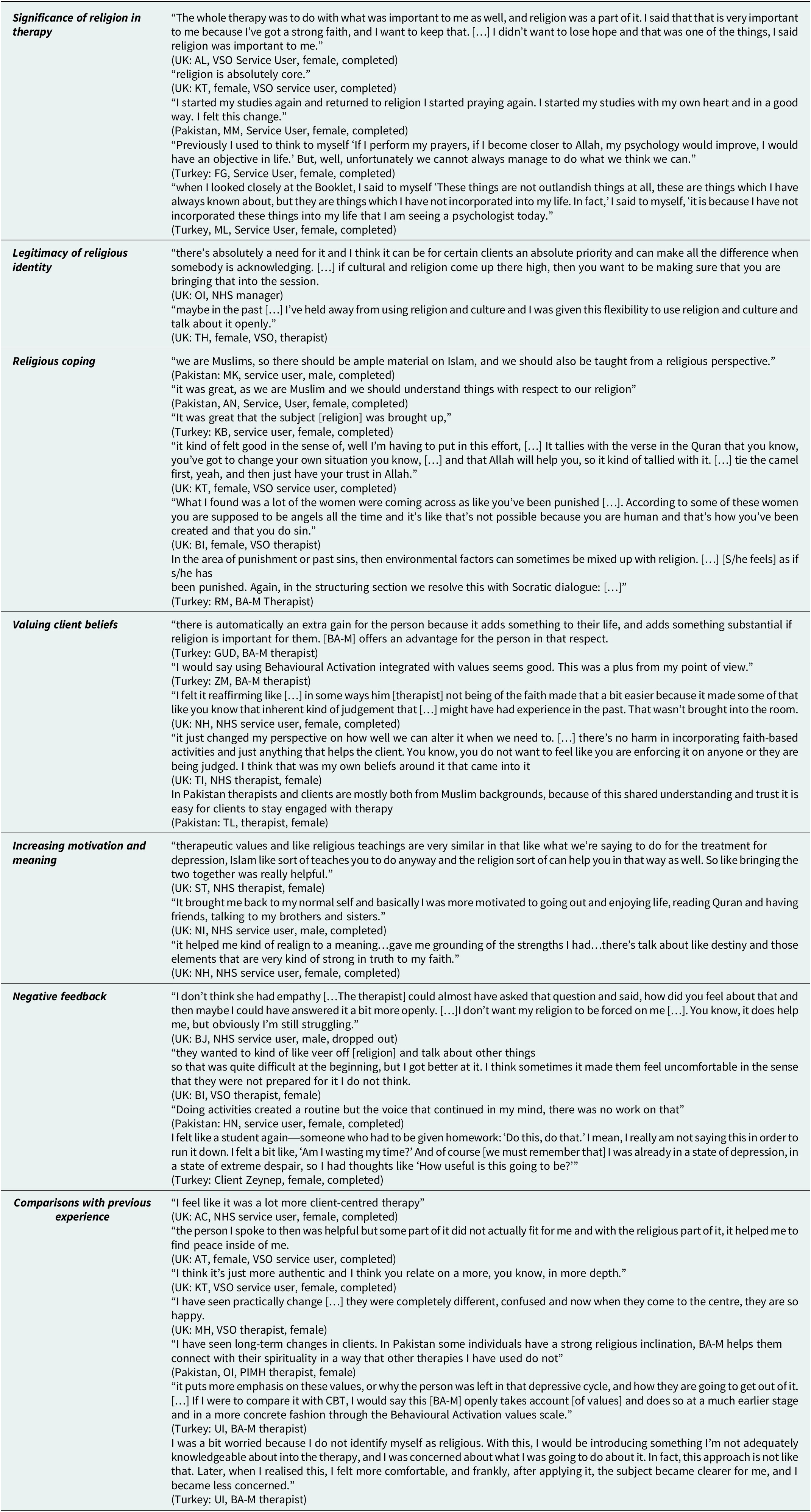
Qualitative data helped explain our quantitative findings on the greater engagement of patients with BA-M than TAU (Table 5). For many patients, religion was a central feature of their identity and support to engage with religious teachings to develop positive religious coping during therapy was a key factor in their improved engagement. This approach helped them reconnect with religion as a resource for health, providing affirmation of their values, motivation, meaning, comfort, resilience and hope of recovery. Service users confirmed they needed support to be able to draw on their beliefs in this way and some felt BA-M was more “client-centred” and “authentic” than their previous experiences of mental health support.
Qualitative findings
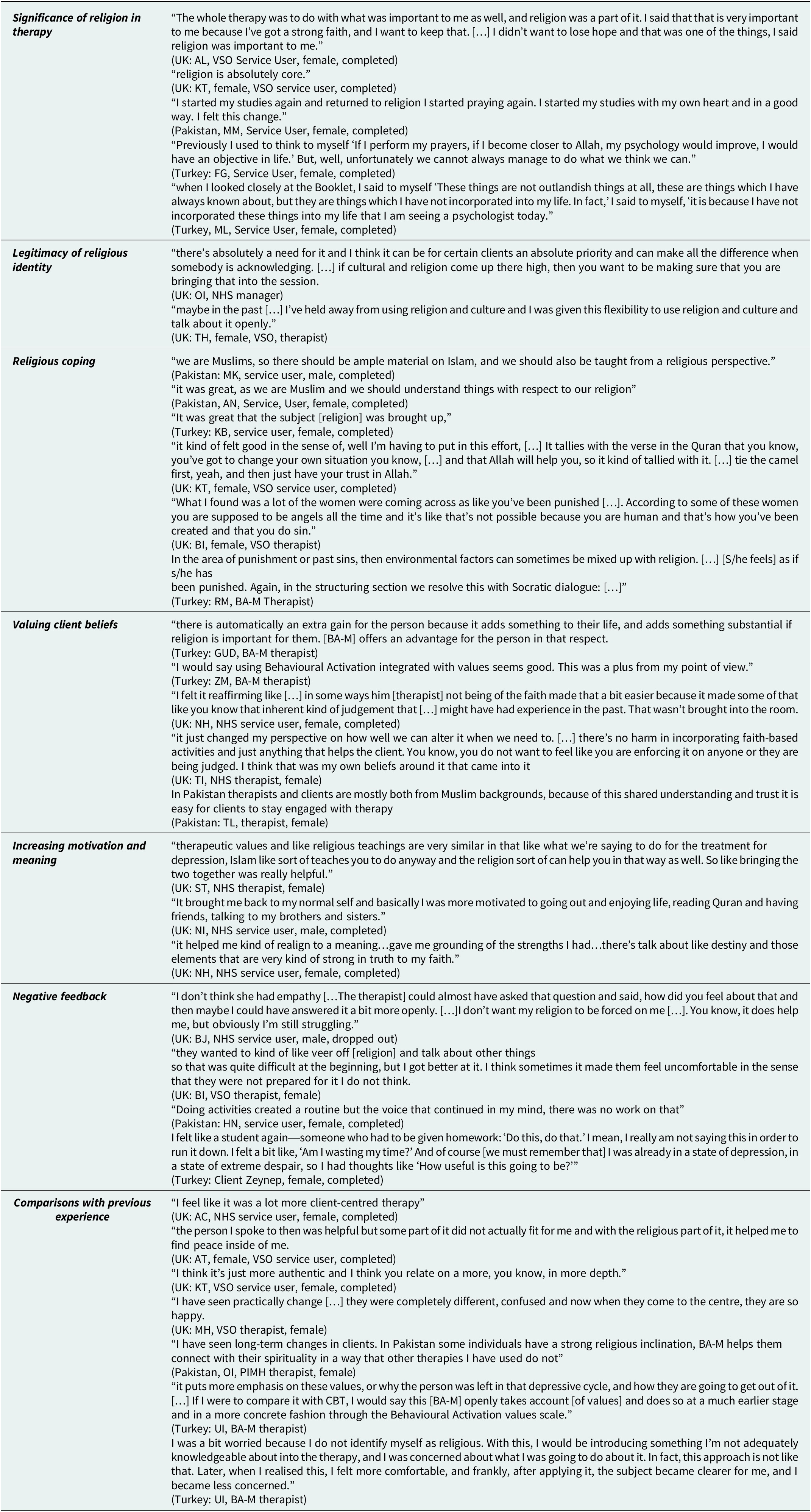
Table 5. Long description
The table consists of seven thematic rows.
1. Significance of religion in therapy: Quotes from U K, Pakistan, and Turkey emphasize that religion is core to identity and hope. One participant from Turkey notes that not incorporating religious values led to the need for a psychologist.
2. Legitimacy of religious identity: U K managers and therapists discuss the need to acknowledge religion as a priority and the flexibility to talk about it openly.
3. Religious coping: Participants from Pakistan and the U K express that therapy should include Islamic materials. A U K service user references the Quranic principle of changing one’s own situation while trusting Allah. A Turkish therapist mentions using Socratic dialogue to resolve feelings of being punished for sins.
4. Valuing client beliefs: Therapists in Turkey and Pakistan note that shared Muslim backgrounds or integrating values adds substantial gain. A U K service user felt reaffirmed when a non-faith therapist avoided inherent judgment.
5. Increasing motivation and meaning: U K participants describe how Islamic teachings and therapeutic values align to help treat depression and provide grounding.
6. Negative feedback: Some U K service users felt religion was forced or made them uncomfortable. A Turkish client felt like a student being given homework and questioned the utility of the activities during deep despair.
7. Comparisons with previous experience: Participants describe B A-M (Behavioral Activation) as more authentic and client-centered than previous therapies. A Turkish therapist compares it to C B T, noting that B A-M takes values into account earlier and more concretely.
Data on a minority of negative experiences or views (Table 5) supported the need for fidelity to the BA-M protocol on client-centred engagement: two UK clients dropped out of therapy because their therapist made assumptions about their religious values rather than exploring these through a Values Assessment in line with the protocol. A small number of therapists and clients expressed doubts about the behavioural focus, which could seem prescriptive and not relevant to reducing unhelpful thoughts.
Qualitative data (Table 5) also revealed the mechanisms through which BA-M improved therapy outcomes, many of which overlapped with the reasons for improved engagement. Therapists pointed to the significance of religion as a core value to patients they had treated and how the approach could promote positive religious coping while challenging negative interpretations of religious teachings that contributed to depression, such as feelings of being punished. Engagement with religious identity could thus reveal contributory beliefs that might not be apparent to practitioners who did not recognise the impact of religious values. Therapists felt that having permission to recognise religion as a legitimate value and engage with this aspect of patients’ identity provided substantial benefits to service users and themselves. Patients pointed to the improved relationship with their therapists, compared to previous experiences. This was reflected in feedback from therapists, who felt they had changed their misconceptions about engaging with religion through using BA-M. For therapists in Pakistan, the shared religious background of therapists and clients was felt to contribute to increased engagement. An integrative summary of key findings from quantitative and qualitative analysis is provided in Supplementary Table G.
Adverse events
No adverse events were reported by any site involved in the studies.
Discussion
Our trial results show the greater effectiveness of BA-M compared to standard CBT and social interventions and confirm growing evidence that culturally adapted therapies are more effective than standard approaches (Anik et al., Reference Anik, West, Cardno and Mir2021). Effect sizes of PHQ-9 change scores are clinically significant at the population level (Löwe et al., Reference Löwe, Kroenke, Herzog and Gräfe2004b) and, for most participants, at the individual level (Kounali et al., Reference Kounali, Button, Lewis, Gilbody, Kessler, Araya, Duffy, Lanham, Peters, Wiles and Lewis2022). BA-M therapy reduced depression symptoms more than TAU by around 3 points on PHQ-9, and this appears to be because it motivates patients to continue engagement with an effective treatment.
Subgroup analyses to account for some variations across studies indicated that these had little impact on results. All studies included CBT as TAU; however, in the UK, TAU also included social interventions in community-based voluntary sector services. Our findings indicated minimal effect of variation due to TAU on the results. Therapist allocation to avoid contamination in the Turkey study might be considered to raise a potential risk of bias. A multilevel intercept model that accounted for therapist-level clustering, however, indicated that variance due to the therapists was low (Anik, Reference Anik2022).
In the Pakistan trial, the difference between baseline activation scores in the treatment and control group could potentially have affected outcomes, as it is possible that the BA-M group was more inclined to be active. A study using BADS-SF in young people, however, found that changes in activation relative to one’s own baseline were clinically meaningful rather than between-person changes (Fisher et al., Reference Fisher, Jaffe, Rahimi-Eichi, Forbes, Pizzagalli, Baker and Webb2025).
The notable difference in retention rates in the Pakistan and UK trials may be related to contextual differences between the two samples and sites. In Pakistan, 72% of retained patients were classified as from higher socioeconomic backgrounds (Dawood et al., Reference Dawood, Mir and West2023), whereas available socioeconomic data for UK patients showed all were from deprived areas and, therefore, likely to have less capacity to engage with treatment. UK-wide data show that only a third of patients from deprived areas complete treatment for depression and anxiety (Baker and Kirk-Wade, Reference Baker and Kirk-Wade2024).
The Pakistan trial was also conducted at the beginning of the COVID-19 lockdown period (Dawood et al., Reference Dawood, Mir and West2023), during which limited mental healthcare services were available, possibly increasing client motivation to continue engagement. Furthermore, in terms of cultural context, all therapists in Pakistan shared the same religious background as patients, which can contribute to increased levels of trust (Mir et al., Reference Mir, Meer, Cottrell, McMillan, House and Kanter2015). In the UK, there was more diversity among therapists and this may also have contributed to lower engagement; there is some evidence that culturally adapted treatments have more impact in contexts where the adaptation is for the majority population than for a minority group (Anik et al., Reference Anik, West, Cardno and Mir2021).
Qualitative findings indicate that BA-M can support mental healthcare services and practitioners to change their perspectives and recognise religious identity as a social factor that can influence mental health. The improved engagement described by patients and practitioners for BA-M appears to be a key mechanism for improved outcomes; our findings indicate the importance within this of therapist support for patients to develop “positive religious coping” (Pargament, Reference Pargament1997; Pargament et al., Reference Pargament, Koenig and Perez2000) that provides meaning, resilience and hope. This engagement with patients’ religious identity also enables therapists to challenge “negative religious coping,” that is, feelings of despair or of being abandoned or punished, that can hinder positive religious coping (Pargament, Reference Pargament1997). These dynamics are unlikely to be apparent to therapists who do not engage with religious beliefs (Mir et al., Reference Mir, Ghani, Meer and Hussain2019).
These findings on the mechanism of positive religious coping confirm that congruence between patient values and their meaning-making related to stressful events can help reduce depressive symptoms (Marco et al., Reference Marco, Alonso and Baños2021). BA-M outcomes also align with self-determination theory, in which better therapy outcomes are predicted when individuals experience their goals as freely chosen and personally meaningful (Zuroff et al., Reference Zuroff, McBride, Ravitz, Koestner, Moskowitz and Bagby2017).
The evidence from our trials, based on robust quantitative and qualitative methods, has important implications for global mental health in terms of practice and policy engagement with religious identity. This study provides multi-country randomised evidence that faith-sensitive, culturally adapted BA significantly improved depression outcomes and engagement among three diverse Muslim populations. Further research could usefully explore the effectiveness of BA-M across additional geographical contexts. The intervention was designed to be applicable across diverse Muslim sects (Mir et al., Reference Mir, Meer, Cottrell, McMillan, House and Kanter2015); however, further research on its acceptability and effectiveness within specific Muslim sects would also be helpful.
Given the importance of religious identity to most people at the global level (Pew Research Centre, 2025), its recognition as a factor affecting mental health appears to be overdue. Attention to religion is also currently either absent or marginal within international mental health policy and guidance, which may conceptualise this determinant of health only in terms of potential partnerships between healthcare providers and religious organisations, rather than a factor influencing treatment interventions (World Health Organization, 2021, 2025).
Although “culturally appropriate care” is promoted by the World Health Organisation, the significance of patients’ religious identity as a resource for mental health is not specifically acknowledged within current guidance. BA-M therapy has the potential to supplement and enhance this predominantly secular view of mental healthcare, providing a practical framework through which recovery from depression can be supported for those who view religion as a significant aspect of their identity.
There is considerable current evidence of “monumental levels of lost human capabilities and avoidable suffering” caused by failure to address social determinants of mental health, and providers have been urged to “enthusiastically embrace” interventions that engage with these in order to “leave no one behind” (Patel et al., Reference Patel, Saxena, Lund, Thornicroft, Baingana, Bolton, Chisholm, Collins, Cooper, Eaton, Herrman, Herzallah, Huang, Jordans, Kleinman, Medina-Mora, Morgan, Niaz, Omigbodun, Prince, Rahman, Saraceno, Sarkar, De Silva, Singh, Stein, Sunkelat and UnÜtzer2018). The recognition of Islam as a legitimate and valued identity within BA-M also goes some way to addressing the Islamophobia that is known to adversely influence Muslim mental health in the UK (Younis and Jadhav, Reference Younis and Jadhav2020; The Lantern Initiative CIC et al., Reference Shaikh and Chowdhury2021) and other contexts in which Muslims are minorities (Rehman and Hanley, Reference Rehman and Hanley2023). There is strong evidence that minority religious and ethnic populations experience cumulative exposure to racism that is recognised as an established determinant of mental health and is an additional barrier to recovery from depression (Wallace et al., Reference Wallace, Nazroo and Bécasres2016; Mir et al., Reference Mir, Durrani, Julian, Kimei, Mashreky and Doan2024).
Through promoting the majority global population’s worldview on religion as an important value (Pew Research Center, 2025), BA-M may be seen to contribute to inclusive and antiracist practice in mental healthcare and research. In this respect, BA-M builds on existing conceptual frameworks for cultural adaptation that systematically modify interventions to ensure compatibility with the cultural patterns, meanings and values of specific client groups. These can include faith-sensitive approaches, but do not directly address the social context of epistemic power and privilege in terms of racism or the assumption that core elements and principles of existing interventions are universally applicable (Anik et al., Reference Anik, West, Cardno and Mir2021; Mishu et al., Reference Mishu, Tindall, Kerrigan and Gega2023). In contrast, “decolonial adaptations centre equity, contextual resonance and community self-determination.” Such adaptations value indigenous knowledge and promote epistemic justice, directly addressing the colonial legacies that inform racism (Agudelo-Hernández et al., Reference Agudelo-Hernández, Cuadrado and Delgado-Reyes2025).
Muslims constitute the second-largest faith group globally (Pew Research Center, 2025). As a therapy that has been adapted to meet the specific needs of this population, BA-M responds to significant and widespread concerns about how health inequalities are created and maintained (Mir et al., Reference Mir, Durrani, Julian, Kimei, Mashreky and Doan2024). It does this through decolonising knowledge about appropriate treatment for depression and transforming interactions between therapists and service users, as well as between healthcare providers and the Muslim populations they serve. Furthermore, our evidence that this approach can be delivered by non-specialist mental health practitioners in third sector organisations has important implications for widening the pool of therapy providers globally. As such, it addresses a key concern to increase the innovative use of trained non-specialist practitioners (Patel et al., Reference Patel, Saxena, Lund, Thornicroft, Baingana, Bolton, Chisholm, Collins, Cooper, Eaton, Herrman, Herzallah, Huang, Jordans, Kleinman, Medina-Mora, Morgan, Niaz, Omigbodun, Prince, Rahman, Saraceno, Sarkar, De Silva, Singh, Stein, Sunkelat and UnÜtzer2018), who are also more likely to engage with the religious identity of service users than mainstream services (Mir and Sheikh, Reference Mir and Sheikh2010).
Limitations
The Pakistan trial demonstrated a significant imbalance in baseline activation scores between intervention and control groups, although depression levels were similar. This could have introduced a bias in relation to the intervention; further research could usefully evaluate BA-M in more closely matched groups in Pakistan. Variability in TAU between the UK and other studies and non-random therapist allocation to avoid contamination in the Turkey study may also be seen as potential sources of bias.
We were able to detect a treatment effect despite the small sample size in Turkey; however, as a feasibility trial, the study did not include a formal power calculation.
Due to a lack of resources, qualitative interviews and peer support sessions explored fidelity for BA-M but not for the TAU arm. This lack of monitoring in the TAU may have resulted in variability in how usual care was delivered, adversely affecting internal validity.
Conclusion
Religious identity currently receives insufficient attention in global mental health policy and guidance. This study advances global mental health scholarship by providing multi-country randomised evidence that BA-M significantly improved depression outcomes and engagement among Muslim populations compared to CBT or social interventions. Key therapeutic mechanisms involve positive religious coping and anti-racist practice. Improved outcomes reduce health inequalities experienced by Muslim populations and promote changes to practice that involve decolonising current knowledge about depression treatment.
BA-M can be delivered by non-specialists, increasing the capacity of healthcare staff to deliver depression treatment. These findings indicate a need to scale up delivery of BA-M in Muslim majority and minority contexts and provide a model for faith-sensitive depression treatment in other faith groups.
Open peer review
To view the open peer review materials for this article, please visit http://doi.org/10.1017/gmh.2026.10245.
Supplementary material
The supplementary material for this article can be found at http://doi.org/10.1017/gmh.2026.10245.
Acknowledgements
We thank all trial participants and sites for their involvement in the studies. We are also grateful to funders for their support for this work.
Author contributions
GM wrote the second, subsequent and final draft of the paper and contributed to qualitative analysis of the UK data.
SM wrote the first draft, collected primary qualitative data in the UK and conducted the qualitative analysis of the UK data.
EA conducted the quantitative data analysis, added qualitative data, and wrote the analysis methods.
RW conducted the quantitative data analysis and checked the analysis conducted by EA.
SD and NH added details and qualitative data from the Pakistan study.
All authors contributed to the revision and approved the final manuscript.
Declaration of interest
The authors declare that they have no known competing financial interests or personal relationships that could have appeared to influence the work reported in this paper.
Data availability statement
Trial data are available for the Turkey trial (Anik, Reference Anik2022), Pakistan trial (Dawood et al., Reference Dawood, Mir and West2023 and https://doi.org/10.1186/ISRCTN35418604) and UK trial (Mir et al., Reference Mir, West, Meer, Rabbee and Song2023 and https://www.isrctn.com/ISRCTN54894017).
Ethics and approvals
Ethical approval was received from the Faculty of Medicine and Health Ethics Committee, University of Leeds, for the studies in Pakistan (No. MERC-19-034) and Turkey (MREC17–098) and from the Sheffield Research Ethics Committee for the UK study (IRAS Project ID: 295105). Additional approvals were obtained from the National Bioethics Committee for the study in Pakistan (No. NBC-459/20/726) and from Istanbul Sehir University Ethics Committee for the study in Turkey.
Funding statement
The study in Turkey was funded by the Turkish Ministry of Education for EA’s PhD study (Anik, Reference Anik2022). The trial in Pakistan was funded by the University of the Punjab Centre for Clinical Psychology; Bradford Integrated Care Board funded the UK study. Funders did not have a role in study design, data collection, analysis or interpretation, or in writing of the report. Study designs were developed in collaboration with participating sites.


 Open access


Comments
Professor Judy Bass and
Professor Dixon Chibanda
Editors-in-Chief
Cambridge Prisms: Global Mental Health
24th November 2025
Dear Professors Chibanda and Bass,
<b>Treating depression in Muslim communities: meta-analysis of three trials of culturally adapted Behavioural Activation for Muslims (BA-M).
</b>
We write to submit an original meta-analysis of three trials of the above intervention conducted in Pakistan, Turkey and the UK. We believe that this is an important contribution to existing research on the need for global health interventions that: are trusted, accessible and user focused (1); draw on indigenous resources and knowledge from within communities (2); and improve outcomes for people with depression through attention to cultural values and reducing stigma (3).
Our research provides evidence to support a much-needed new approach in relation to culturally adapted treatments for Muslims, who constitute the world’s second largest religious population. The research builds on our previous publications on developing and piloting this intervention (4), conducting two systematic reviews and a meta-analysis (5,6), about the impact of culturally adapted interventions for treatment of depression in culturally diverse populations. We would very much like to see our work published in Cambridge Prisms: Global Mental Health as a well respected journal that would add to the impact and global reach of BA-M.
We confirm that this work is original and has not been published elsewhere and is not under consideration for publication in other journals.
We hope you will feel the manuscript is suitable for publication and look forward to hearing from you.
Yours sincerely
Ghazala Mir
Professor of Health Equity and Inclusion
University of Leeds
on behalf of the authors
<b>References</b>
1 Kruk ME, Gage AD, Arsenault C, Jordan K, Leslie HH, Roder-DeWan S, Adeyi O, Barker P, Daelmans B, Doubova SV, English M. High-quality health systems in the Sustainable Development Goals era: time for a revolution. The Lancet global health. 2018 Nov 1;6(11):e1196-252.
2 Patel V, Saxena S, Lund C, Kohrt B, Kieling C, Sunkel C, Kola L, Chang O, Charlson F, O’Neill K, Herrman H. Transforming mental health systems globally: principles and policy recommendations. The Lancet. 2023 Aug 19;402(10402):656-66.
3 Patel V, Saxena S, Lund C, Thornicroft G, Baingana F, Bolton P, Chisholm D, Collins PY, Cooper JL, Eaton J, Herrman H. The Lancet Commission on global mental health and sustainable development. The Lancet. 2018 Oct 27;392(10157):1553-98.
4 Mir, G., Meer, S., Cottrell, D., McMillan, D., House, A., & Kanter, J. W. (2015). Adapted behavioural activation for the treatment of depression in Muslims. Journal of Affective Disorders, 180, 190-199.
5 Anik, E, West, R.M, Cardno, A.G. and Mir, G. (2020). Culturally Adapted Psychotherapies for Depressed Adults: A Systematic Review and Meta-Analysis. Journal of Affective Disorders 278, 296-310
6 Walpole S, McMillan D, House A, Cottrell D, Mir G (2013) “Interventions for treating depression in Muslim patients: a systematic review” Journal of Affective Disorders 145, 11–20