




Introduction
Climate change significantly affects global agricultural production, including Europe and the Czech Republic. Adaptation methods are necessary to reduce the impacts of climate change, as it poses a substantial threat to agriculture (Zhu et al., Reference Zhu, Burney, Chang, Jin, Mueller, Xin and Ciais2022; Grados et al., Reference Grados, Kraus, Haas, Butterbach-Bahl, Olesen and Abalos2024; Kamalova et al., Reference Kamalova, Bogdan, Belan, Tuktarova, Firstov, Vildanov and Saifullin2024). Furthermore, it is predicted that in the future, global temperatures will rise by about 2.5–3°C, and precipitation patterns and rates will vary on the location (Pielke et al., Reference Pielke, Burgess and Ritchie2022; IPCC, 2023). Efficient crop management practices can be developed by analysing how crop growth interacts with weather conditions and agricultural practices (Müller et al., Reference Müller, Waha, Bondeau and Heinke2014). Rising temperatures are being documented globally, including in the Czech Republic (Zahradníček et al., Reference Zahradníček, Brázdil, Štěpánek and Trnka2021; World Bank, Climate Change Knowledge Portal, Czech Republic, 2024), Poland (Kundzewicz and Matczak, Reference Kundzewicz and Matczak2012), Germany (Hemmerle and Bayer, Reference Hemmerle and Bayer2020), Austria (Benz et al., Reference Benz, Bayer, Winkler and Blum2018), France (Ribes et al., Reference Ribes, Corre, Gibelin and Dubuisson2016), United Kingdom (Wreford and Topp, Reference Wreford and Topp2020), Europe (Twardosz et al., Reference Twardosz, Walanus and Guzik2021) and in Russia (Kamalova et al., Reference Kamalova, Bogdan, Belan, Tuktarova, Firstov, Vildanov and Saifullin2024).
Two key factors that significantly influence wheat yield are weather changes (temperature and precipitation) and fertilization. However, properly managing other factors (insects, diseases, water, etc.) also contributes to wheat yield. In recent years, particularly since 2005, temperatures have notably risen worldwide (Wójcik-Gront and Gozdowski, Reference Wójcik-Gront and Gozdowski2023). Recently, Donmez et al. (Reference Donmez, Sahingoz, Paul, Cilek, Hoffmann, Berberoglu and Helming2024) found a significant correlation between temperature, precipitation and net agricultural productivity, which could affect agricultural yield by affecting photosynthesis and respiration. Average annual temperatures have shown a significant upward trend across all European sub-regions. The observed trend indicates a notable decline in winter rainfall, recorded at 1.3 mm in Eastern Europe. At the same time, in Northern Europe, there has been a significant increase of 1.5 mm per year in winter precipitation (Lopes, Reference Lopes2022). Increasing temperature has been documented as a crucial factor contributing to yield reduction. The average temperature annually increased by 0.05°C in the Caslav region of the Czech Republic (Hlisnikovský et al., Reference Hlisnikovský, Menšík and Kunzová2023b). We can conclude that temperature and precipitation are essential factors in crop yield formation when evaluating the effects of climatic conditions.
In the Czech Republic, wheat is the primary cereal crop, covering approximately 32% of the total growing area between 2000 and 2022 and accounting for 57% of the total cereal cultivation area (Hlisnikovský et al., Reference Hlisnikovský, Menšík and Kunzová2023b). Wheat yield is affected in different ways, such as tillage (Peng et al., Reference Peng, Wang, Xie, Li, Coulter, Zhang and Whitbread2020), variety selection (Morgounov et al., Reference Morgounov, Abugalieva and Martynov2014) and mainly fertilization and weather (Hlisnikovský et al., Reference Hlisnikovský, Menšík and Kunzová2023b). High temperatures can adversely impact photosynthesis efficiency, irrigation practices and plant respiration. The temperature increases observed in Eastern Europe have notably contributed to the rise in wheat yield (Lopes, Reference Lopes2022). In contrast, Asseng et al. (Reference Asseng, Ewert, Martre, Rötter, Lobell, Cammarano and Zhu2015) analysed data from 30 wheat crop models from 1981 to 2010. They discovered that warming influences wheat yield in most growing areas, projecting a 6% decrease for each degree Celsius. Additionally, Moore and Lobell (Reference Moore and Lobell2015) demonstrated that climate patterns could account for 10% of the deceleration in wheat and barley production in Europe, with changes in agriculture and environmental policies possibly responsible for the remainder. Furthermore, May and July temperatures have been linked to wheat yield in Northern Europe (−0.30 t/ha °C), barley in Southern Europe (−0.14 t/ha °C), and maize in Western and Southern Europe (−0.42 and −0.39 t/ha °C), respectively. As temperatures rise, it becomes imperative to extensively study how varietal response, crop rotation and sustainable fertilizer practices interact to enhance wheat yield in the Czech Republic and Europe.
The dynamic and interrelated effects of genotype, weather and management present obstacles to formulating practical agronomic guidelines. Potential alternates to this approach are to deal with management practices, such as yield stability (Lollato et al., Reference Lollato, Ochsner, Arnall, Griffin and Edwards2019), long-term experiment (LTE) outputs (Assefa et al., Reference Assefa, Vara Prasad, Carter, Hinds, Bhalla, Schon and Ciampitti2016; Wójcik-Gront, Reference Wójcik-Gront2018; Lollato et al., Reference Lollato, Ochsner, Arnall, Griffin and Edwards2019) or varietal response (Mourtzinis et al., Reference Mourtzinis, Kaur, Orlowski, Shapiro, Lee, Wortmann and Conley2018; Wójcik-Gront, Reference Wójcik-Gront2018). LTE studies demonstrate that integrated nutrient management is critical for sustaining crop yield. This approach offers the chance to observe prolonged fluctuations in crop yield and related factors (Donmez et al., Reference Donmez, Sahingoz, Paul, Cilek, Hoffmann, Berberoglu and Helming2024; Walia et al., Reference Walia, Dhaliwal, Gill, Kaur, Kaur, Randhawa and Hossain2024). Additionally, Liang et al. (Reference Liang, Sun, Meersmans, Longdoz, Colinet, Xu and Wu2024) predicted that wheat yield would increase by 5.8–13.5% with fertilizer treatments under future climate scenarios. Among the primary nutrients for wheat and other crops, nitrogen plays a crucial role. There has been a global increase in awareness regarding the necessity to boost crop production while mitigating environmental concerns linked to nitrogen fertilizer (Dai et al., Reference Dai, Gui, Shen, Liu, Bai, Yang and Siddique2023). The global use of nitrogen fertilizer has significantly increased, rising from 112.5 million tons in 2015 to approximately 118.2 million tons by 2019 (Sharma and Bali, Reference Sharma and Bali2017). Nitrate leaching and water pollution pose significant environmental challenges worldwide in Europe, the USA, China and other rainforest areas. These issues primarily result from the excessive application of nitrogen fertilizer (Zhu and Chen, Reference Zhu and Chen2002; Yang et al., Reference Yang, Malhi, Song, Xiong, Yue, Lu and Guo2006; Hangs et al., Reference Hangs, Schoenau and Lafond2013). LTEs are conducted across approximately 700–800 locations worldwide, following Liebig's (1840–1845) formulation of the ‘law of the minimum’ and the principles of mineral nutrition (Rusu et al., Reference Rusu, Mihai, Tritean, Mihai, Moldovan, Ceclan and Toader2024). The LTEs on tillage, fertilizer and crop rotations have been conducted worldwide under uniform conditions to understand site-specific impacts. Climate change is anticipated to modify these conditions, leading to increased temperatures, more frequent droughts and intensified weather events that cause a risk to ecosystems and their functions. In light of climate change, it is crucial to know the effect of weather patterns on cropping systems and facilitate the formulation of adaptation strategies to safeguard future productivity (Donmez et al., Reference Donmez, Sahingoz, Paul, Cilek, Hoffmann, Berberoglu and Helming2024).
One approach to mitigate the impact of weather-induced variations in crop yield from year to year is through fertilization. Mineral fertilizer nutrients are readily available, exhibit uniformity and possess a well-defined composition, facilitating precise dosing. Implementing intensive fertilizer-based cultivation methods for wheat, especially during and after the Green Revolution, has been crucial in increasing yield levels and ensuring food security (Kardes and Gunes, Reference Kardes and Gunes2024). Nevertheless, there needs to be more understanding of the effects of temperature and rainfall variations throughout the crop growth period on historical yield progress in Europe. It is imperative to evaluate yield progress periodically, typically every 10–20 years, to identify emerging techniques and policies beyond the decline in yield. The goal of this research was to analyse the following: (a) weather developments in the LTE region (H0: there are no significant trends in temperature and precipitation; HA: there are significant trends in temperature and precipitation), (b) the relationships between weather parameters and wheat yield (H0: there is no relationship between weather parameters and winter wheat grain yield; HA: the weather has an impact on winter wheat grain yield), (c) the effect of NPK fertilization on winter wheat grain yield (H0: NPK fertilization has no significant effect on grain yield; HA: NPK fertilization significantly affects grain yield), and (d) the optimal nitrogen dose for wheat cultivated under specific soil and climate conditions.
Materials and methods
Experiment layout
The LTE was located on the southern edge of Caslav city in the Czech Republic, Central Europe (49°53.67547′N, 15°23.73552′), and established in 1956. According to the Köppen–Geiger climate classification, the area belonged to the Cfb/Dfb zone (Tolasz et al., Reference Tolasz, Míková, Valeriánová and Voženílek2007; Beck et al., Reference Beck, Zimmermann, McVicar, Vergopolan, Berg and Wood2018). The soil type was Greyic Phaeozem (Schad, Reference Schad2016). The long-term mean, minimal, maximal temperatures and precipitation were 9.1, 2.4, 15.8°C and 517 mm, respectively (Chotusice meteorological station, approximately 5 km away). The elevation is 263 m above sea level. In the LTE, there were four fields. Each field was divided into 48 plots, where 12 different fertilizer treatments with four replications were continuously analysed in a completely randomized design (12 × 4 = 48 plots). The size of an individual plot was 9 × 9 m. Together 15 seasons were evaluated in this paper: 1980, 1981, 1982, 2003, 2004, 2005, 2006, 2011, 2012, 2013, 2014, 2019, 2020, 2021 and 2022. In these years, alfalfa was the preceding crop of winter wheat.
In this study, we evaluated a total of five out of 12 fertilization treatments: (1) control (unfertilized since 1956), (2) application of mineral phosphorus (P) and potassium (K) – PK treatment, (3) application of mineral nitrogen (N), P and K (NPK1), (4) NPK2, and (5) NPK3. The rates of mineral N in NPK1, NPK2 and NPK3 treatments were 40, 80 and 120 kg/ha between 1980 and 2014 (11 seasons). In 2018, along with introducing a new wheat variety (Julie), the methodology of the long-term trial was modified, and N rates were increased to 60, 100 and 140 kg/ha in NPK1, NPK2 and NPK3 treatments, respectively. The doses of mineral forms of P and K were adjusted during the experiment based on soil analyses. All treatments consistently received the same doses of mineral P and K fertilizers, with the variation between treatments lying in the different doses of mineral N. Mineral N was applied as lime ammonium nitrate, mineral P as granulated superphosphate and K as potassium chloride. The mineral P and K nutrients were applied during the autumn. Mineral N was applied during different stages of wheat cultivation. Before sowing the wheat in autumn, 40 kg/ha of N was applied as part of the NPK1, NPK2 and NPK3 treatments. At the beginning of spring, for regeneration purposes (BBCH 21-29), an additional 40 kg/ha of N was applied as part of the NPK2 and NPK3 treatments. Finally, 40 kg/ha of N was applied to support grain production in May, specifically as part of the NPK3 treatment (BBCH 49-51). For the most recent evaluation period (4 seasons, 2019–2022), during which mineral N rates were increased, the distribution was as follows: 60 kg/ha N in autumn (NPK1, NPK2 and NPK3 treatments), 40 kg/ha N in spring (regeneration, NPK2 and NPK3 treatments) and 40 kg/ha N (NPK3 treatment). Spring applications were made at the same developmental stages as the previous fertilizer rates. Wheat was usually planted in October at a depth of 3–4 cm and a row spacing of 12.5 cm. The sowing rate was generally 400 seeds/m2. Pesticides were applied during the trial as needed, while growth regulators were not used.
Statistical analyses
Trends in weather patterns (temperature and precipitation) were assessed using the Mann–Kendall trend test (Mann, Reference Mann1945; Kendall, Reference Kendall1975), supplemented by Sen's slope estimation (Sen, Reference Sen1968). The homogeneity of the weather data was assessed using the Pettitt's test (Pettitt, Reference Pettitt1979). The relationship between weather and yield was analysed using correlation. Wheat yield data were analysed using the Shapiro–Wilk (Shapiro and Wilk, Reference Shapiro and Wilk1965) and Anderson–Darling (Anderson and Darling, Reference Anderson and Darling1954) tests for assessing the data distribution, followed by classical ANOVA (with Games–Howell post hoc test [Games and Howell, Reference Games and Howell1976]), or Kruskal–Wallis one-way ANOVA. A linear plateau response model was used for N optimization. The analyses and figures were performed using the Statistica 14.0 (Tibco Software, Palo Alto, CA, USA), SigmaPlot 14.5 (Systat Software Inc., San Jose, CA, USA) and XLStat software (Lumivero, Burlington, MA, USA).
Results
Climate changes
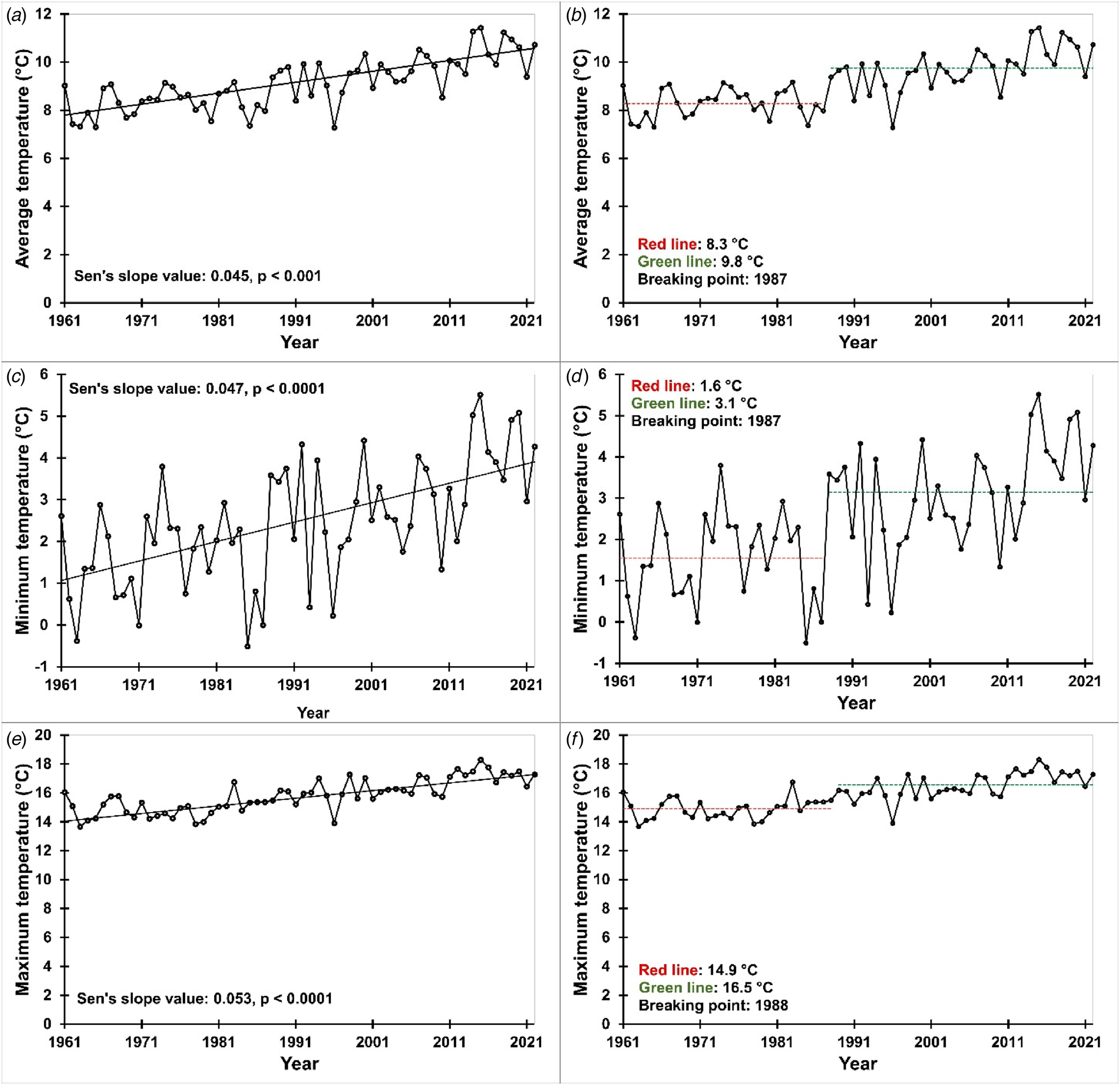
At the site of the LTE in Caslav, we observed an increasing trend in average, minimal and maximal temperatures from 1961 to 2022. All three trends are statistically significant. The average temperature increases by 0.045°C per year (Fig. 1(a)), and based on the homogeneity test, the year 1987 was identified as the breaking point (Fig. 1(b)). The minimal temperature increases by 0.047°C annually (Fig. 1(c)), with the breaking point occurring in 1987 (Fig. 1(d)). The maximal temperature increases by 0.053°C annually (Fig. 1(e)), and the breaking point occurred in 1988 (Fig. 1(f)). On the other hand, the total annual precipitation decreases slightly by 0.247 mm, but the trend is insignificant. Based on the results of the climate analysis, we can conclude that crops in Caslav are experiencing higher temperatures since 1987–1988. At the same time, they have a limited capacity to compensate for the impact of warmer air with precipitation that is more or less the same as in the past.
Development of the (a) average, (c) minimum and (e) maximum temperatures (°C) in Caslav between 1961 and 2022. Breaking points in (b) average, (d) minimum and (f) maximum temperatures are based on Pettitt's test. Red lines indicate temperatures before the breaking point, and green lines after the breaking point. Sen's slope is a non-parametric estimate of the slope of a trend.
Correlation between climate and wheat yield
According to the correlation analysis, only two out of 60 relationships between climate parameters and winter wheat grain yield were statistically significant. These were: (a) the average temperature in November (moderate and positive relationship, r = 0.6, Fig. 2(a)), and (b) the sum of precipitation in July (moderate and negative relationship, r = −0.6, Fig. 2(b)).
The relationships between wheat yield (t/ha), N dose (kg/ha) and (a) average temperature in November (°C), and (b) sum of precipitation (mm) in July. The colour scales (right corners) represent winter wheat's yield rate (t/ha).
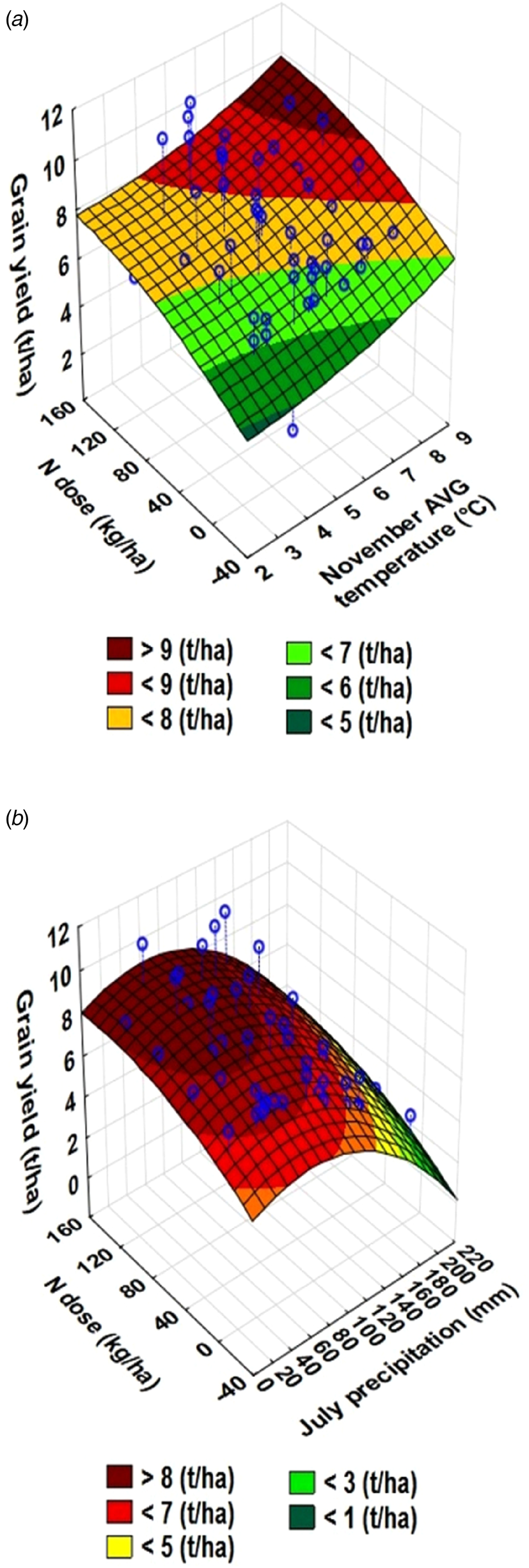
The relationship between the average temperature in November and wheat grain yield is positive. Higher average temperatures increase wheat yield, particularly when high mineral N inputs are applied. The development of average temperatures in November (1961–2022) shows an increasing and statistically significant trend (Fig. 3(a)). Moreover, the average temperatures in November are gradually rising, which currently acts and will continue to act as a beneficial weather factor, positively affecting wheat grain yield in Caslav.
The development of (a) the average temperature (°C) in November and (b) the sum of precipitation (mm) in July at the Caslav trial station between 1961 and 2022.
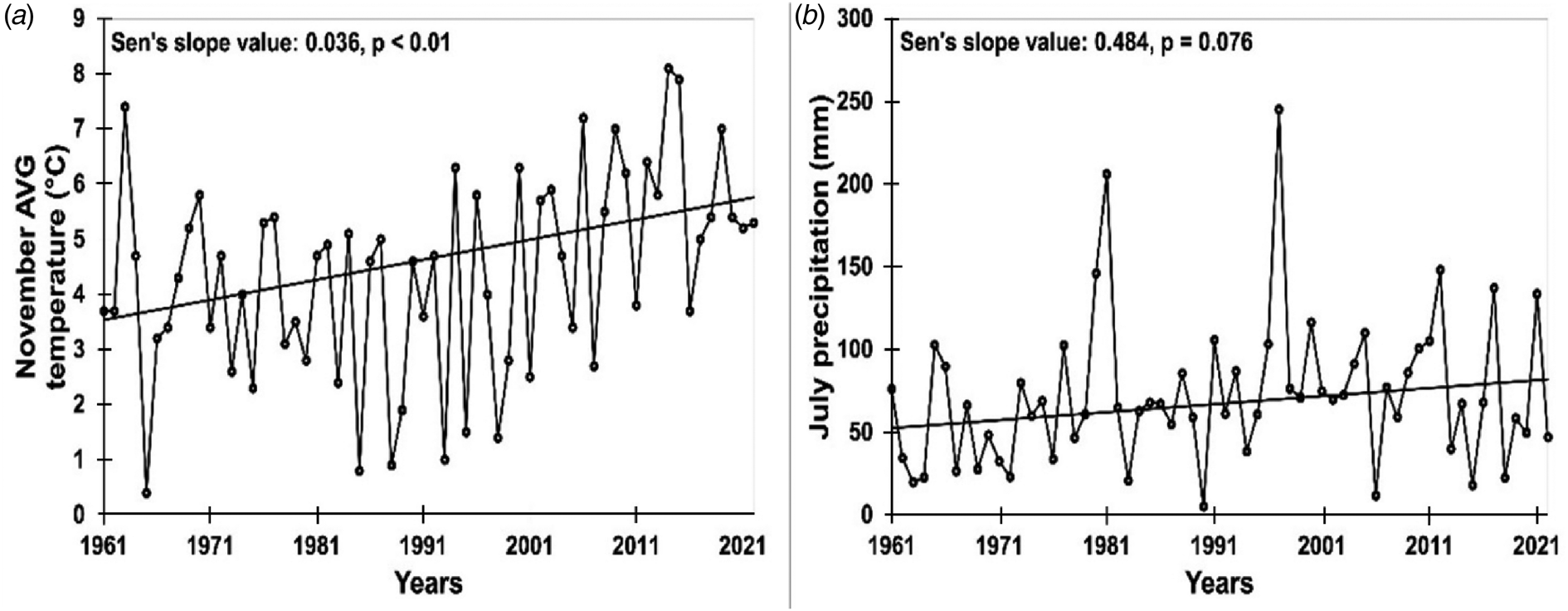
A negative relationship between wheat yield and the sum of precipitation in July indicates that higher July rainfall significantly reduces wheat grain yield. High harvest can be expected if July rainfall ranges between zero and 120 mm, with the peak at 60 mm (Fig. 2(b)). This rainfall is close to the long-term average of 72 mm (1961–2022). The trend of July precipitation is slightly increasing and at the very limit of statistical significance (P = 0.076, Fig. 3(b)). Based on the data, July precipitation affects grain yield negatively, but only in years with exceptionally high rainfall. Such heavy rainfalls, exceeding 120 mm, only occurred in six out of 62 years (1961–2022).
Fertilization and grain yield
The grain yield of winter wheat, following alfalfa in the crop rotation, has gradually increased in all analysed fertilization treatments since 1980 (Fig. 4). The average inter-annual grain yield increase was lowest in the PK treatment (80.3 kg/ha), followed by control (82.8 kg/ha), NPK1 (96.3 kg/ha), NPK3 (103.0 kg/ha) and NPK2 (105.6 kg/ha). The results show that wheat cultivation is sustainable even without applying mineral fertilizers if wheat follows alfalfa cultivation.
The effect of wheat varieties and fertilization treatment on wheat grain yield (t/ha) in Caslav between 1980 and 2022 (n = 15 seasons). Similar letters are not statistically significantly different (α < 0.05).
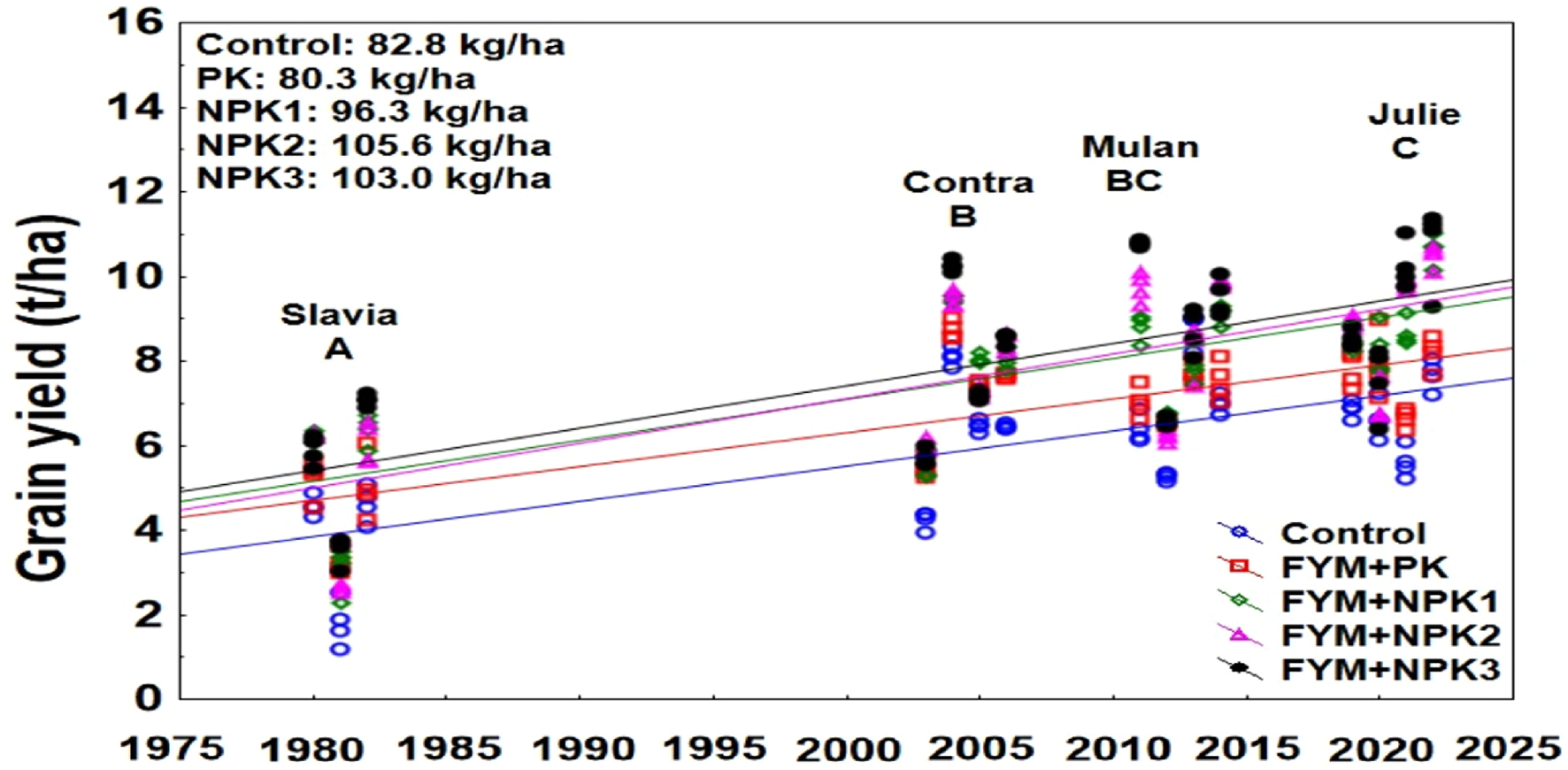
The main reason for the increasing yield trends is the utilization of new wheat varieties. The lowest average grain yield was provided by Slavia (4.8 t/ha), followed by Contra (7.4 t/ha), Mulan (7.9 t/ha) and Julie (8.3 t/ha). As mentioned in the ‘Materials and methods’ section, along with the introduction of the Julie variety, mineral N rates were also increased by 20 kg/ha in all treatments. Therefore, the Julie variety's average yield was higher than Contra due to increased N doses. However, comparing yield from the unfertilized control treatment helps eliminate the effect of fertilization. As a result, all the latest wheat varieties (Contra, Mulan, Julie) yielded statistically comparable results (Table 1).
Wheat grain yield (t/ha) as affected by the wheat variety in the unfertilized control treatment in Caslav between 1980 and 2022 (n = 15 seasons)
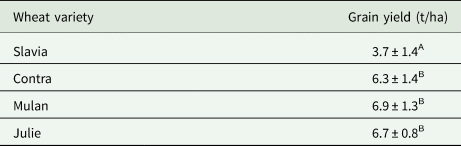
Note: The average grain yield (±standard deviation), followed by the same letter, are not statistically significantly different (α < 0.05). The comparison was made using the Kruskal–Wallis method, followed by the Conover–Iman procedure.
The effect of each fertilization treatment was divided into two parts. The period from 1980 to 2014 (n = 11 seasons) was evaluated in the first part. In this period, 40, 80 and 120 t/ha N were applied to wheat in treatments NPK1, NPK2 and NPK3, respectively. According to the ANOVA results, the fertilizer treatment significantly affected grain yield (P < 0.05). The results are shown in Table 2.
Effect of fertilizer treatment on wheat grain yield (t/ha) in Caslav
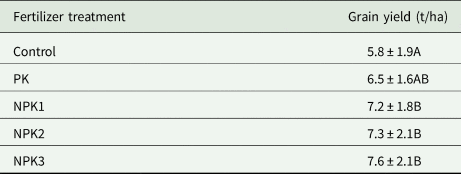
Results from 11 seasons between 1980 and 2014.
Note: The average grain yield (±standard deviation), followed by the same letter, is not statistically significantly different (α < 0.05). ANOVA was done using the Kruskal–Wallis method, followed by the Conover–Iman procedure.
The lowest average grain yield was recorded in the unfertilized control treatment, which provided statistically similar results to the PK treatment. Although this control treatment has not received fertilization since the experiment was established in 1956, the yield was relatively high. This high yield is attributed to a suitable preceding crop, alfalfa, which can fix airborne N and supply this essential nutrient to the following crop. The PK treatment provided a statistically comparable yield to all NPK treatments. High yield in this treatment results from the preceding crop combined with an adequate supply of other essential macronutrients (P and K). Applying mineral N resulted in a significantly higher yield than the control, but there were insignificant differences between the NPK treatments. When comparing the impact of years and fertilizer treatments on wheat grain yield, it was found that the year factor had a dominant effect (74%), whereas the effect of the fertilizer treatment was marginal (25%). Applying mineral N thus gave the wheat a sufficient supply of this essential nutrient to support its yield potential. However, the wheat varieties have reached their maximum yield potential under the current soil and climatic conditions.
In 2018, the LTE was modified. Mineral N rates were increased because the initial rates seemed to limit achieving higher yields that modern wheat varieties can produce. Thus, each treatment increased the mineral N rate by 20 kg/ha. Also, a modern and high-yielding wheat variety (var. Julie) was sown in 2018. The results are shown in Table 3.
Effect of fertilizer treatment on grain yield (t/ha) of Julie variety in Caslav
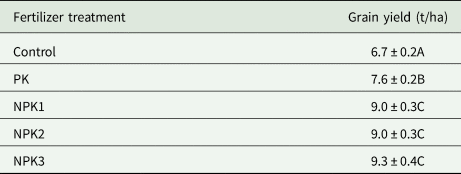
Results from four seasons (2019–2022).
Note: The average grain yield (±standard error), followed by similar letters, are not statistically significantly different (α < 0.05). Results are based on ANOVA results, followed by the Games–Howell post hoc test.
During the modified period (2019–2022), the wheat grain yield was significantly influenced by the fertilizer treatment (by 52%), the year (by 40%) and their interaction (by 8%). Compared with the previous methodology (1980–2014), the impact of fertilizer treatment increased. The control treatment yielded the lowest grain yield, significantly lower than all other treatments. However, yield in the control treatment was exceptionally high compared to the average grain yield in the Czech Republic (5.9 t/ha, 2018–2022). A distinct position was held by the PK treatment, which resulted in yield between those of the unfertilized control and the NPK treatments. Finally, the highest yield was achieved by NPK treatments. No differences were recorded among individual NPK treatments as in the previous evaluation.
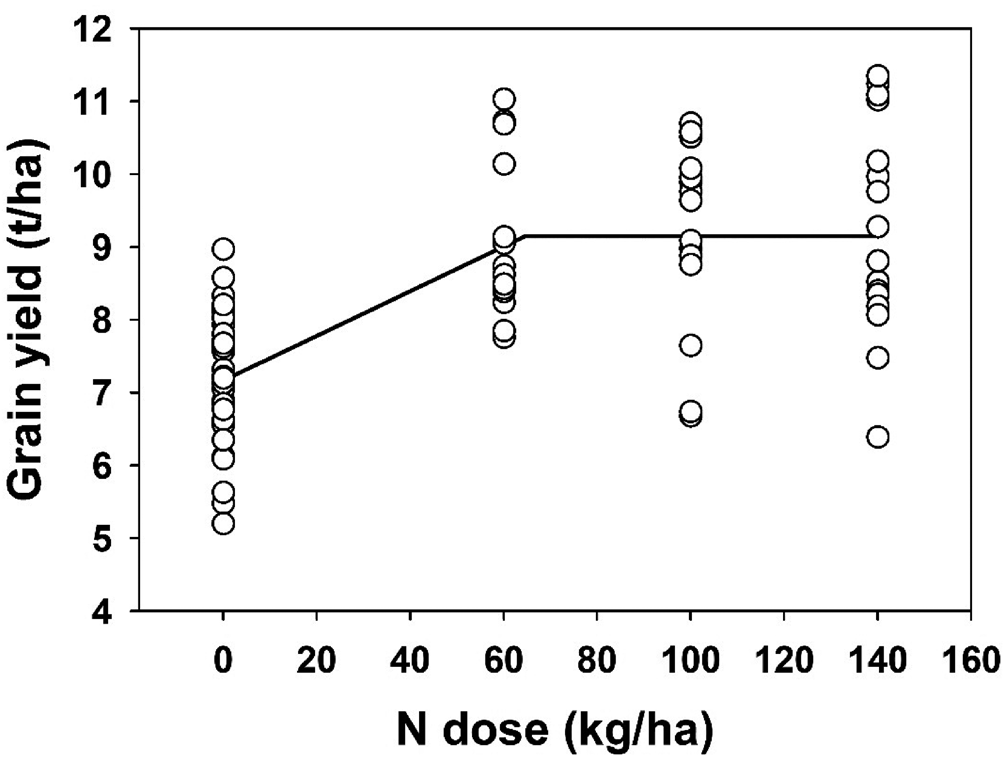
Wheat (Julie variety) was used in the trial from 2019 to 2022. It is a modern and utilized variety known for its high yield in various soil and climatic conditions. This variety can maintain a high yield even after cereal crops and exhibits stable baking quality parameters and excellent hardiness. Thanks to its high protein content, this grain falls into the highest category for bakery use (class E). Given that it is an actively utilized variety, we used the trial results to determine the optimal dosage of mineral N considering the specific soil and climatic conditions. For this, we used a non-linear response model called the linear plateau model. According to the model, the optimal N dosage was determined at 65 kg t/ha N, corresponding with the average yield of 9.1 t/ha (Fig. 5).
The response of wheat variety Julie (grain yield, t/ha, black circles) to increasing application of mineral N in Caslav between 2019 and 2022 (four seasons). The data are presented in a linear plateau response model (black line).
Discussion
Climate change
Climate warming profoundly impacts agroclimatic resources and agricultural production. Recently, Kamalova et al. (Reference Kamalova, Bogdan, Belan, Tuktarova, Firstov, Vildanov and Saifullin2024) found that temperature and precipitation during the growing cycles significantly affect cereal production. Further, Zhang et al. (Reference Zhang, Tang, Chandio, Sargani and Ankrah Twumasi2022) highlighted that climate change aspects, such as rainfall and additional inputs, positively impact wheat production. The findings of this study suggest that the patterns of minimum, mean and maximum temperatures are statistically significant and show a clear upward trend (Fig. 1). Based on our data analysis, the temperature has been gradually increasing. The mean temperature increases by 0.045°C per year. In another research, statistically significant increases in mean, minimum and maximum temperatures have been found in the Czech Republic since 1961 (Zahradníček et al., Reference Zahradníček, Brázdil, Štěpánek and Trnka2021; Brázdil et al., Reference Brázdil, Zahradníček, Dobrovolný, Řehoř, Trnka, Lhotka and Štěpánek2022), which is aligned with our findings. The current study indicates that the mean annual temperature ranges from 8 to 10°C, and the average annual precipitation fluctuates between 550 and 1050 mm across Germany, the Czech Republic and Slovakia (Mozny et al., Reference Mozny, Trnka, Vlach, Zalud, Cejka, Hajkova, Potopova, Semenov, Semeradova and Büntgen2023). Further, an increase in mean annual temperature (1.5°C) between 1961 and 2000 was observed in the Moravian region of Czech Republic (Dolák et al., Reference Dolák, Řehoř, Láska, Štěpánek and Zahradníček2023). These findings are aligned with findings in the Calsav region, which shows that the temperature is increasing in the Czech Republic. Still, the increase in the Calsav region (0.045°C) is lower than in other regions of the Czech Republic.
In our study, precipitation slightly decreased (insignificant linear trend), which is similar to other experiments conducted in the Czech Republic (Lhotka et al., Reference Lhotka, Kyselý and Farda2018; Hlisnikovský et al., Reference Hlisnikovský, Menšík, Barłóg and Kunzová2023a, Reference Hlisnikovský, Menšík, Roman and Kunzová2024), Serbia (Gocic and Trajkovic, Reference Gocic and Trajkovic2013) and Slovakia (Repel et al., Reference Repel, Zeleňáková, Jothiprakash, Hlavatá, Blišťan, Gargar and Purcz2021). Extreme climate events are becoming more frequent in the Czech Republic and Europe (Lhotka et al., Reference Lhotka, Kyselý and Farda2018; Grillakis, Reference Grillakis2019). An extreme situation happened in 2012 when a severe drought led to historically low yield in the South Moravian Region of the Czech Republic (Hlisnikovský et al., Reference Hlisnikovský, Menšík, Barłóg and Kunzová2023a). Extreme climate events are rising in the Czech Republic and Europe (Ahmad et al., Reference Ahmad, Cho, Kim, Lee, Adelodun and Choi2021). In general, warming tends to intensify with altitude.
In contrast, the impact of altitude on changes in precipitation is comparatively minimal (Pernicová et al., Reference Pernicová, Urban, Čáslavský, Kolář, Rybníček, Sochová and Trnka2024), which can also be observed from our study where temperature significantly increased but precipitation did not decrease significantly. While the trend in precipitation is minor and shows a slight decrease in Caslav, other researchers' findings underscore the fluctuating distribution of precipitation throughout the year within the climate change framework (Brázdil et al., Reference Brázdil, Zahradníček, Dobrovolný, Štěpánek and Trnka2021). Rising temperatures result in elevated evapotranspiration rates (i.e. evaporation losses), which lead to soil moisture depletion, reduced yield due to water scarcity and heightened crop water requirements (Kirkegaard et al., Reference Kirkegaard, Lilley, Howe and Graham2007).
Climate and wheat yield
Globally, wheat is the second most-produced cereal crop (Kardes and Gunes, Reference Kardes and Gunes2024). It is important to know how we can overcome the effects of changing climate to optimize wheat yield. The ideal average temperature for optimum wheat yield ranges between 12 and 13°C in May and 16 and 17°C in June, the South Moravian Region, Czech Republic (Hlisnikovský et al., Reference Hlisnikovský, Menšík, Barłóg and Kunzová2023a). Another study forecasted that the ongoing weather trend in the Czech Republic will positively affect wheat yield (Zahradníček et al., Reference Zahradníček, Brázdil, Štěpánek and Trnka2021). According to our results, the average temperatures in November are gradually rising, positively affecting wheat grain yield in the Caslav region. Similarly, Hlisnikovský et al. (Reference Hlisnikovský, Menšík, Barłóg and Kunzová2023a) found that the average temperature in November is increasing, and there is a notable increase in wheat yield. Moreover, temperature increases significantly contribute to increasing wheat yield, mostly likely due to better temperatures for photosynthesis and crop development. From this perspective, these weather conditions appear advantageous for wheat cultivation. Moreover, LTE conducted in Prague also revealed a consistent correlation between November temperatures and winter wheat grain yield, which is aligned with our findings (Addy et al., Reference Addy, Ellis, Macdonald, Semenov and Mead2020; Vanongeval and Gobin, Reference Vanongeval and Gobin2023; Hlisnikovský et al., Reference Hlisnikovský, Menšík and Kunzová2023b).
Our data showed that July precipitation negatively affects grain yield, but only in years with exceptionally high rainfall. Such heavy rainfalls, exceeding 120 mm, only occurred in six out of 62 years (1961–2022). The trend of July precipitation is slightly increasing and at the very limit of statistical significance (P = 0.076, Fig. 3(b)). High yield can be expected if July rainfall ranges between 0 and 120 mm, with the peak at 60 mm (Fig. 2(b)). In Sweden, De Toro et al. (Reference De Toro, Eckersten, Nkurunziza and Von Rosen2015) found that rainy harvesting period was sometimes connected with reduced yield of cereals, which is aligned with our findings. In another study, a negative correlation between July rainfall and grain yield was also recorded in the evaluation of Rothamsted LTE (Addy et al., Reference Addy, Ellis, Macdonald, Semenov and Mead2020).
Precipitation is positively correlated with the yield of most crops. However, changes in precipitation distribution may lead to reduced crop yield due to water shortages during the vegetation period, impacting plant growth and development (Wójcik-Gront and Gozdowski, Reference Wójcik-Gront and Gozdowski2023). Excessively wet harvest periods prevent the timely entry of harvesting equipment into the field, promote root and wind lodging of the plants and promote the development of pathogenic organisms, ultimately reducing grain yield per hectare.
Wheat varieties and N fertilization
European wheat varieties have shown the incapacity of current uniform cultivars to endure climate changes (Kahiluoto et al., Reference Kahiluoto, Kaseva, Balek, Olesen, Ruiz-Ramos, Gobin and Trnka2019). Hence, there is a need to establish sustainable systems capable of ensuring food security by stabilizing agricultural production (Frison et al., Reference Frison, Cherfas and Hodgkin2011). Fertilizer application and the development of varieties are ways to deal with climate effects (Van Frank et al., Reference Van Frank, Rivière, Pin, Baltassat, Berthellot, Caizergues and Goldringer2020). The rise in wheat production after the Green Revolution has been primarily attributed to advancements in management techniques, including nitrogen fertilization and the introduction of new cultivars (Wang and Frei, Reference Wang and Frei2011; Holman et al., Reference Holman, Riche, Michalski, Castle, Wooster and Hawkesford2016). Despite evidence of genetic advancements in recent decades, Europe still lacks a comprehensive understanding of genotype, environment and management condition interactions with the physiological characteristics behind genotypic adaptation (Senapati and Semenov, Reference Senapati and Semenov2020). The significance of this issue cannot be overstated, particularly as climate change rapidly transforms global environmental conditions (Blanco et al., Reference Blanco, Ramos, Van Doorslaer, Martínez, Fumagalli, Ceglar and Fernández2017; Agovino et al., Reference Agovino, Casaccia, Ciommi, Ferrara and Marchesano2019).
In our study, the yield variation of different wheat varieties can be noted within a period. Wheat yield increased with time and also varied with different varieties. The effect of nitrogen treatments was also significant (Table 1). However, the difference between the control and the maximum yielding treatment NPK3 was only 1.8 t/ha (Table 2). It is attributed to the cultivation of alfalfa, which was a preceding crop in the crop rotation. Moreover, preceding crops can affect yield more (1995–1998) than different wheat varieties (Hlisnikovský et al., Reference Hlisnikovský, Menšík, Barłóg and Kunzová2023a). Some other reasons may also affect yield, but with LTE analysis, we can get more evidence of the inadequate difference between the control and different N treatments. Legumes like alfalfa can fix atmospheric N when adequate soil N is unavailable. The fixation of atmospheric nitrogen (N2) by legumes per season ranges from 24 to 250 kg/ha N, with the highest rate observed in Alfalfa (Medicago sativa L.) (Epstein and Bloom, Reference Epstein and Bloom1853). Alfalfa is a superior rotation crop with deep roots that can absorb residual soil N from deeper soil layers and increase N availability to subsequent shallow-rooted crops. Ultimately, alfalfa can reduce farmer's economic expenses by reducing N fertilizer and minimizing environmental pollution. With evidence from our results, various studies have found that alfalfa cultivation can reduce N application for the following crops from 40 to 80 kg/ha (Thiessen Martens et al., Reference Thiessen Martens, Entz and Hoeppner2005; Ballesta and Lloveras, Reference Ballesta and Lloveras2010; N'Dayegamiye et al., Reference N'Dayegamiye, Whalen, Tremblay, Nyiraneza, Grenier, Drapeau and Bipfubusa2015). Sometimes, N fertilization can be omitted altogether (Yost et al., Reference Yost, Pound, Creech, Cardon, Pace, Kitchen and Russell2021). As a preceding crop, alfalfa also explains why wheat yield is statistically comparable in all fertilizer treatments. The crop rotation and proper fertilizer applications can be attributed to sustainable wheat production, even with low N applications, ultimately minimizing farmers' expenses. Further, in this experiment, different wheat varieties were also evaluated in different periods. The latest wheat variety (Julie) was analysed to recommend the current N dose for farmers in the Caslav region. According to the model, the optimal N dosage was determined at 65 kg/ha N, corresponding with the average yield of 9.1 t/ha at the Caslav region, when wheat follows alfalfa in the crop rotation.
Conclusion
The study analyses the relation between winter wheat yield, weather changes and the role of alfalfa in minimizing N fertilizer applications. Alfalfa as a preceding crop reduces the need of N fertilization and contributes to sustainable conventional agriculture. Further, higher grain yield is associated with warmer November and July precipitation. Modern wheat varieties showed an upward yield trend even in the unfertilized control variant, indicating that wheat cultivation is sustainable even without applying fertilizers. Taking into account the above findings, it could be suggested that the farmers’ community will be encouraged to utilize timely climate information issued from National Meteorological Departments for farm-level decision to enhance their crop production.
Data
Data will be made available on request.
Author contributions
Conceptualization, M. R. and L. H.; methodology, E. K.; validation, M. R., L. H. and E. K.; formal analysis, M. R., L. H. and E. K.; investigation, M. R. and V. Z.; resources, L. M. and E. K.; data curation, E. K.; writing original draft preparation, M. R., L. H. and V. Z.; writing review and edit, M. R. and L. H.; visualization, L. H.; supervision, E. K.; project administration, L. M. and E. K.; funding acquisition, L. M. and E. K. All authors have read and agreed to the published version of the manuscript.
Funding statement
This work was supported by the Ministry of Agriculture of the Czech Republic (grant numbers RO0423, QL24020149, QK22010251, QK23020056) and UJEP-SGS-2024-44-003-3.
Competing interests
The authors declare that they have no known competing financial interests or personal relationships that could have appeared to influence the work reported in this paper.
Ethical standards and consent to participate
Not applicable.


 Open access

