

The global food industry has experienced a significant shift towards health-conscious consumption over the past few decades (Mylan et al., Reference Mylan, Andrews and Maye2023). This shift is driven by increased consumer awareness, evolving dietary guidelines and the rising prevalence of lifestyle-related diseases such as obesity, diabetes and cardiovascular disorders (Mohammadi-Sartang et al., Reference Mohammadi-Sartang, Bellissimo, de Zepetnek Jo, Brett, Mazloomi, Fararouie, Bedeltavana, Famouri and Mazloom2018). Among various strategies to enhance dietary quality, the incorporation of dietary fibre into everyday food items, particularly yoghurt, has emerged as a promising approach. Fruit peels, often discarded as waste, are rich in nutrients, antioxidants and dietary fibres, offering an opportunity to improve public health while promoting sustainability (Dwyer et al., Reference Dwyer, Wiemer, Dary, Keen, King, Miller, Philbert, Tarasuk, Taylor, Gaine and Jarvis2015; Sofi et al., Reference Sofi, Singh, Rafiq and Rashid2017). This review investigates the potential of fruit peels as functional ingredients in yoghurt, with a specific focus on their nutritional contributions, technological roles and impacts on sensory attributes. To ensure a comprehensive and balanced analysis, this review was conducted by identifying peer-reviewed articles published in English between 2015 and 2025 using databases such as Scopus, PubMed and Web of Science. Keywords included ‘fruit peel’, ‘yogurt fortification, ‘dietary fibre’, ‘bioactive compounds’ and ‘functional foods’. Studies were selected based on relevance to nutritional, technological and sensory aspects of fruit peel incorporation into yoghurt. Authors have taken steps to reduce bias by including both positive and negative findings and by critically evaluating methodological quality where applicable. Inclusion criteria focused on original research and reviews that provided quantitative or qualitative data on health impacts, processing methods and consumer acceptance. Exclusion criteria included non-peer-reviewed sources, studies lacking methodological transparency and those unrelated to dairy or fruit peel applications. Authors have taken deliberate steps to minimise bias and confounding by including positive and negative findings, such as antinutritional factors and sensory drawbacks and critically evaluating the methodological quality of the studies. Data were extracted manually and organised thematically to ensure consistency and clarity. To enhance transparency, we referred to elements of the PRISMA framework to guide our literature selection and structure. PRISMA framework helped us define the population, interventions, comparators, outcomes, timing and settings relevant to the topic, thereby improving the objectivity and reproducibility of the review.
Yoghurt, a fermented milk product produced by lactic acid bacteria like Lactobacillus bulgaricus and Streptococcus thermophiles, which are also known as ‘technical flora’, has seen a notable increase in production due to its health benefits (Cifelli et al., Reference Cifelli, Agarwal and Fulgoni2020). Recognising the evolving consumer landscape, the food industry has adopted innovative approaches, incorporated additional ingredients and leveraged advanced processing technologies to create diverse yoghurt products. Among these innovations, the integration of fruit peels into yoghurt stands out, aligning with Codex Alimentarius’ definition of food fortification (Tomic et al., Reference Tomic, Dojnov, Miocinovic, Tomasevic, Smigic, Djekic and Vujcic2017; Mattar et al., Reference Mattar, Ameera, Joseph, Monserrat and Franscesc2022; Hassani et al., Reference Hassani, Kumar, Kumar and Mehra2023).
Fruit peels, classified as dietary fibre, resist hydrolysis by endogenous enzymes in the small intestine and offer significant health benefits (Tomic et al., Reference Tomic, Dojnov, Miocinovic, Tomasevic, Smigic, Djekic and Vujcic2017; Torres et al., Reference Torres, Avila-Nava, Medina-Vera and Tovar2020; Torbica et al., Reference Torbica, Radosavljević, Belović, Djukić and Marković2022). The World Health Organization (WHO) recommends adults consume at least 25 g of dietary fibre daily, coupled with 400 g of fruits and vegetables (Adegbaju et al., Reference Adegbaju, Otunola and Afolayan2022). Despite these guidelines, global intake of dietary fibre remains low, prompting the U.S. Dietary Guidelines Advisory Committee to classify it as a nutrient of concern (Zafar et al., Reference Zafar, Hameed, Amjad, Javed, Afzaal, Umer, Al-Serwi, Batool Qaisarani, Imran, Hussain, Anwar, Siddique, Suleman and E2023). Beyond nutritional advantages, incorporating fruit peels into yoghurt enhances texture, reduces syneresis and improves properties such as water-holding capacity and viscosity (Dabija et al., Reference Dabija, G, M and Rusu2018; Rehman et al., Reference Rehman, Iqbal, Tahir, Quddoos, Ullah, Fatima, Qadeer, Batool, Chaudhary and Naureen2023). Technological advancements have facilitated the fortification of fruit peel-enriched yoghurt, ensuring the addition does not compromise sensory qualities.
This review aims to identify the health benefits of fruit peel-enriched yoghurt and emphasise its significance for modern consumers leading hectic lifestyles. Additionally, it highlights the broader impact on food properties, showcasing how fruit peel fortification positively influences yoghurt texture, reduces syneresis and manipulates fibre properties. By evaluating current research, this review underscores the practicality of incorporating fruit peel-enriched yoghurt into the diet as a convenient and beneficial option for individuals seeking improved health. The review also examines technological advancements that have made fruit peel fortification feasible without compromising sensory attributes, ensuring acceptance among a wide consumer base. Through this comprehensive analysis, the review demonstrates the pivotal role of fruit peel-enriched yoghurt in contemporary dietary habits and its potential to contribute to better health outcomes.
The role of probiotics and prebiotics in yoghurt
Yoghurt, a versatile dairy product, is appreciated for its diverse textures, fat contents and flavours (Nguyen et al., Reference Nguyen, Kravchuk, Bhandari and Prakash2017; Fazilah et al., Reference Fazilah, Arbakariya, Khayat, Rios-Solis and Halim2018). Traditionally, yoghurt is produced through lactic acid fermentation of milk, involving steps such as milk treatment, standardisation, homogenisation, heat treatment, fermentation, cooling and packing (Gahruie et al., Reference Gahruie, Eskandari, Mesbahi and Hanifpour2015; Cerdá-Bernad et al., Reference Cerdá-Bernad, Valero-Cases, Pastor and Frutos2023). Various ingredients like milk derivatives, sugars and stabilisers are added to enhance its texture and flavour, catering to consumer preferences (Laiho et al., Reference Laiho, Williams, Poelman, Appelqvist and Logan2017; Fazilah et al., Reference Fazilah, Arbakariya, Khayat, Rios-Solis and Halim2018).
Today, yoghurt comes in various forms, including the set type and strains yoghurt, as well as the increasingly popular frozen and drinking yoghurts (Fazilah et al., Reference Fazilah, Arbakariya, Khayat, Rios-Solis and Halim2018; Hadjimbei et al., Reference Hadjimbei, Botsaris and Chrysostomou2022). It is broadly categorised into standard culture and probiotic types (Nguyen et al., Reference Nguyen, Kravchuk, Bhandari and Prakash2017; Fazilah et al., Reference Fazilah, Arbakariya, Khayat, Rios-Solis and Halim2018). Probiotics are live microorganisms that confer health benefits, such as supporting digestive health and maintaining a balanced microbiome (Table 1). Common probiotic strains in yoghurt include Lactobacillus spp., Bifidobacterium spp., Streptococcus thermophilus and Saccharomyces boulardii (Sarwar et al., Reference Sarwar, Aziz, Al-Dalali, Zhao, Zhang, Ud Din, Chen, Cao and Yang2019; Renye et al., Reference Renye, White and Hotchkiss2021). Prebiotics are non-digestible food ingredients that stimulate the growth and activity of beneficial gut bacteria (Table 1). In yoghurt, prebiotics like inulin, oligofructose and resistant starches serve as substrates for probiotics, enhancing their survival and promoting gut health (Nguyen et al., Reference Nguyen, Kravchuk, Bhandari and Prakash2017; Dabija et al., Reference Dabija, G, M and Rusu2018; Fazilah et al., Reference Fazilah, Arbakariya, Khayat, Rios-Solis and Halim2018). However, it is essential to note that not all lactic acid bacteria strains in yoghurt possess probiotic properties (Nyanzie et al., Reference Nyanzi, Jooste and Buys2021; Dan et al., Reference Dan, Hu, Tian, He, Tai and He2023). Yoghurt can be classified as ‘bioyogurt’ or ‘biogurt’ when specific probiotic strains, such as Lactobacillus acidophilus or Bifidobacterium spp. are added in sufficient, viable amounts (Lee, Reference Lee2015).
Probiotic strains and prebiotics in yoghurt

Synbiotics, combinations of probiotics and prebiotics, synergistically enhance gut health by improving probiotic survival and exerting antimicrobial, anticancer, anti-allergic and immune-stimulating effects (Patel et al., Reference Patel, Shah, Sharma, Agarwal, Patel and Miller2020; Guan et al., Reference Guan, Yu and Feng2021). Incorporating synbiotics into yoghurt not only enhances its nutritional profile but also offers consumers a functional food that supports digestive health, boosts immune function and potentially reduces disease risks naturally (Simon et al., Reference Simon, F, Mitrea and Vodnar2021). This makes synbiotic yoghurt a beneficial dietary choice for improving overall health and well-being. Fig. 1 summarises the components, descriptions, benefits and mechanisms related to probiotics, prebiotics and synbiotics in yoghurt, providing a clear overview of their roles in enhancing gut health and overall well-being.
The synergistic action of probiotics and prebiotics in fibre-fortified yoghurt promotes improved digestive health.

Nutritional and health benefits associated with incorporation of yoghurt with fruit peels
The food industry generates substantial amounts of fruit waste annually, including peels, seeds and other leftovers, which are often improperly disposed of, posing environmental and health risks (Ganesh et al., Reference Ganesh, Sridhar and Vishali2022; Kumar Gupta et al., Reference Kumar Gupta, Ali, E, Mecheal Daood, Sabry, Karunanithi and Prakash Srivastav2024). Addressing this issue is crucial to minimise environmental impact and maximising resource utilisation. Fruit peels, in particular, offer a wealth of nutrients such as carbohydrates, proteins, vitamins and minerals (Hussain et al., Reference Hussain, Kalhoro and Yin2023; Gupta et al., Reference Gupta, Mishra, Mishra, Singh and Sheikh2023). Surprisingly, these nutritional profiles can sometimes exceed those found in the fruit pulp (Ijioma et al., Reference Ijioma, Osuji, Okafor, Agunwa, Ofoedu, Onyeka and Adikaibe2017). As a result, there is growing interest in utilising fruit peels across various sectors, including food ingredient production, agricultural composting, biofuel generation and citric acid extraction (Ijioma et al., Reference Ijioma, Osuji, Okafor, Agunwa, Ofoedu, Onyeka and Adikaibe2017; Suri et al., Reference Suri, Singh and Nema2022). This multifaceted approach not only addresses waste management challenges but also harnesses the nutritional richness of fruit peels, contributing to sustainable practices in both industry and agriculture (Ritika et al., Reference Ritika, Shukla, Sondhi, Tripathi, Lee, Patel and Agarwal2024; Hajam et al., Reference Hajam, Kumar and Kumar2023; Hasan et al., Reference Hasan, Islam, Haque, Kabir, Khushe and Hasan2024).
Nutritional profile of fruit peels
Incorporating fruit peels into yoghurt enhances its nutritional profile with added carbohydrate, protein, fat, vitamins and minerals (Table 2). In a study conducted by Kumar et al. (Reference Kumar, Mythily and Chandraju2016), the carbohydrate composition of sweet orange peel (Citrus sinensis L.) was investigated to assess its potential as a raw material. Through extraction and analysis using LC/MS and thin layer chromatography, the researchers identified several key carbohydrates present in orange peels, including fructose, galactose, glucose, arabinose and xylose. Additionally, Maniyan et al. (Reference Maniyan, John and Mathew2015) reported on the chemical composition of sundried and finely ground fruit peels, conducting various analysis to estimate the quantities of these components. Their findings indicated that guava exhibited the highest carbohydrate content at 75 mg/mL, followed by pomegranate (55.2 mg/mL), apple (37.15 mg/mL) and banana (32.64 mg/mL). These research insights underscore the richness of fruit peels in diverse carbohydrates, suggesting their suitability for a range of applications beyond traditional uses. Fruit peels hold promise in industries such as food processing, pharmaceuticals and agriculture, owing to their nutritional composition and potential economic value. For instance, Joy et al. (Reference Joy, Sunday, Remilekun and Olusegun2022) highlighted that banana peels were particularly rich in both soluble and insoluble dietary fibre, enhancing prebiotic functionality, while citrus peels contained higher proportions of pectin, conferring gelling properties beneficial for yoghurt texture.
Effects of fortification of yoghurt with fruit peel on comprehensive quality attributes and probiotic activity

In a study conducted by Romelle et al. (Reference Romelle, Rani and Manohar2016), the protein content of eight fresh fruit peels—orange, watermelon, apple, pomegranate, pawpaw, banana, pineapple and mango—was analysed, revealing a range from 2.80 ± 0.17 to 18.96 ± 0.92%. The lowest protein content was found in apple peel, while pawpaw peels exhibited the highest protein levels. Maniyan et al. (Reference Maniyan, John and Mathew2015) reported on the protein concentrations in various fruit peels, highlighting Musk melon as having the highest content at 1.6 mg/mL, followed by passion fruit, sapota and mango. Conversely, grapes and guava showed the lowest protein concentrations. Amino acid compositions in different fruit peel varieties were analysed by Hussain et al. (Reference Hussain, Kalhoro and Yin2023), demonstrating significant variability. For instance, apple varieties exhibited high levels of leucine and aspartic acid + asparagine. Pomegranate varieties showed peak values of arginine, glutamic acid and glutamine, respectively. Guava varieties also displayed notable amino acid profiles, with glycine being particularly high in Surhai and Gola varieties. These findings underscore the substantial protein and amino acid contents in fruit peels, suggesting their potential for economical utilisation in various products. Proper recycling of fruit peels could lead to the development of protein-rich commodities, contributing to both economic and environmental sustainability.
Research conducted by Romelle et al. (Reference Romelle, Rani and Manohar2016) and Joy et al. (Reference Joy, Sunday, Remilekun and Olusegun2022) reveals significant variability in the lipid content of fruit peels. Romelle, Rani and Manohar found that lipid content ranged from 3.36 ± 0.37% to 12.61 ± 0.63%, with pomegranate peels exhibiting the lowest levels and watermelon peels the highest, suggesting differences in their energy contribution and applicability in low-fat yoghurt formulations. On the other hand, Joy et al. (Reference Joy, Sunday, Remilekun and Olusegun2022) reported crude fat content across different fruit peels, noting that watermelon peels contained the least crude fat at 0.13 ± 0.00%, while banana peels contained the highest at 5.93 ± 0.31%. These variations underscore the diverse lipid compositions present in fruit peels, suggesting their potential for utilisation in various industries. Understanding these nutritional profiles can inform sustainable practices for fruit waste management and facilitate the development of value-added products in sectors ranging from food and pharmaceuticals to biofuels and cosmetics.
Fruit peels are rich sources of essential minerals, offering diverse nutritional benefits. Calcium content varies significantly among fruit peels, with orange peels standing out with a high concentration of 162.03 mg/kg−1, crucial for bone strength and nerve function (Romelle et al., Reference Romelle, Rani and Manohar2016; Oyebola et al., Reference Oyebola, Agboola, Olabode and Ayoola2017; Joy et al., Reference Joy, Sunday, Remilekun and Olusegun2022). Iron levels range from 15.15 mg/kg−1 in banana peels to 45.58 mg/kg−1 in watermelon peels, supporting oxygen transport and metabolism (Romelle et al., Reference Romelle, Rani and Manohar2016). Magnesium, vital for muscle function and energy production, is notably higher in pineapple (45.58 mg/kg−1) and banana peels (44.50 mg/kg−1) compared to watermelon (1.48 mg/kg−1) (Joy et al., Reference Joy, Sunday, Remilekun and Olusegun2022). Zinc content ranges from 0.033 mg/kg−1 in banana peels to 14.04 mg/kg−1 in orange peels, essential for immune function and growth. Potassium-rich orange peels (1500 mg/kg−1) and phosphorus-rich banana peels (211.30 mg/kg−1) highlight their roles in nerve function and bone health (Oyebola et al., Reference Oyebola, Agboola, Olabode and Ayoola2017). Copper and manganese contents vary widely, with orange peels containing significant amounts (47.25 mg/kg−1 and 9.05 mg/kg−1, respectively), essential for enzymatic processes and antioxidant defence (Oyebola et al., Reference Oyebola, Agboola, Olabode and Ayoola2017; Joy et al., Reference Joy, Sunday, Remilekun and Olusegun2022).
Fruit peels are not only rich in minerals but also contain a spectrum of vitamins essential for health. Vitamin C, predominantly found in citrus fruit peels like oranges and lemons, serves as a potent antioxidant that supports immune function and collagen synthesis (Oyebola et al., Reference Oyebola, Agboola, Olabode and Ayoola2017; Joy et al., Reference Joy, Sunday, Remilekun and Olusegun2022). Orange peels, for instance, are noted for their high vitamin C content, complementing their mineral richness (Hussain et al., Reference Hussain, Kalhoro and Yin2023). Vitamin A, crucial for vision and skin health, is present in varying amounts across different fruit peels such as mango and papaya (Lebaka et al., Reference Lebaka, Wee, Ye and Korivi2021). B vitamins, including thiamine (B1), riboflavin (B2), niacin (B3) and folate (B9), contribute to energy metabolism and nervous system function. Papaya peels, for example, contain notable levels of vitamin B6, which supports brain health and red blood cell formation (Chatterjee, Reference Chatterjee2014; Akintunde et al., Reference Akintunde, Kolu, Akintunde, Adewole, Akinboye, Afodu, Ndubuisi-Ogbonna and Shobo2022). Vitamin E, found in pomegranate and kiwi peels, acts as an antioxidant that protects cells from oxidative damage (Fiorentino et al., Reference Fiorentino, Mastellone, D'Abrosca, Pacifico, Scognamiglio, Cefarelli, Caputo and Monaco2009; Jafari et al., Reference Jafari, Fallah, Reyhanian and Sarmast2020).
Anti-nutrients in fruit peels
Fruit peels, while rich in nutrients, also contain various antinutritional factors that can impact their nutritional value and potential health effects (Maniyan et al., Reference Maniyan, John and Mathew2015). Oxalates, found in significant quantities in banana and pomegranate peels, can bind with calcium, potentially reducing its bioavailability and affecting normal physiological functions. High levels of oxalates in some peels, such as those of bananas, can pose concerns for individuals susceptible to kidney stones or those needing to monitor calcium intake (Hussain et al., Reference Hussain, Kalhoro and Yin2023). Hydrogen cyanide, present in notable amounts in watermelon and banana peels, is a toxic compound that can interfere with cellular respiration and, in large doses, be fatal. However, the levels found in fruit peels typically fall below safety thresholds, making them generally safe for consumption when properly processed or cooked (Romelle et al., Reference Romelle, Rani and Manohar2016). Alkaloids, although present in lower concentrations compared to some plant sources like potatoes, are still found in notable amounts in pineapple peels, potentially affecting taste and safety if consumed in large quantities. Phytic acid, found predominantly in banana peels among the fruits studied, can bind to essential minerals like calcium, magnesium, iron and zinc, reducing their absorption in the digestive tract (Maniyan et al., Reference Maniyan, John and Mathew2015; Joy et al., Reference Joy, Sunday, Remilekun and Olusegun2022). Lastly, phenolic compounds, while beneficial for their antioxidant properties, can also exhibit antinutritional effects in high concentrations, affecting nutrient absorption or causing gastrointestinal discomfort in sensitive individuals (Romelle et al., Reference Romelle, Rani and Manohar2016). Balancing the consumption of fruit peels with awareness of these antinutritional factors is crucial for optimising their health benefits.
Bioactive compound in fruit peels
Fruit peels are an abundant source of bioactive compounds known for their medicinal qualities, including anti-inflammatory, antibacterial, antioxidant and anticancer properties (Joy et al., Reference Joy, Sunday, Remilekun and Olusegun2022; Hussain et al., Reference Hussain, Kalhoro and Yin2023). These compounds play a critical role in preventing various chronic illnesses and serve as innovative therapeutic agents with significant direct and indirect impacts on human health (Junger, Reference Junger2019; Tomas et al., Reference Tomas, Capanoglu, Bahrami, Hosseini, Akbari-Alavijeh, Shaddel, Rehman, Rezaei, Rashidinejad, Garavand, Goudarzi and Jafari2021; Narayanankutty et al., Reference Narayanankutty, Famurewa and Oprea2024).
Among the diverse bioactive compounds in fruit peels, phenolic compounds and carotenoids stand out. Banana peels, for example, are exceptionally high in phenolic compounds, ranking second among fruit peels such as melon, watermelon, avocado, pineapple, papaya and passion fruit (Maniyan et al., Reference Maniyan, John and Mathew2015). The total phenolic content in banana peels ranges from 0.90 to 3.0 g/100 g of dry weight. Studies have shown that banana peels contain more phenolic substances compared to the pulp, exhibiting strong radical scavenging activity and reducing ability (Fatemeh et al., Reference Fatemeh, Saifullah, Abbas and Azhar2012; Hussain et al., Reference Hussain, Kalhoro and Yin2023).
Pomegranate peels are another rich source of bioactive compounds, containing 48 identified polyphenolic chemicals. Thereby, Maniyan et al. (Reference Maniyan, John and Mathew2015) demonstrated that banana peels had significantly higher phenolic content compared to apple or guava peels, correlating with stronger antioxidant activity. In contrast, pomegranate peels are reported to contain up to 48 distinct polyphenolic compounds, which may contribute more directly to anticancer and antimicrobial effects (Munir et al., Reference Munir, Anwar, Sarfraz, Qin and Boran2022). These findings indicate that the choice of peel source can determine not only the nutritional enrichment but also the techno-functional impacts on yoghurt quality. Further, research has demonstrated their substantial anticancer, antitumor, antiviral and antioxidant properties (Maniyan et al., Reference Maniyan, John and Mathew2015; Lebaka et al., Reference Lebaka, Wee, Ye and Korivi2021; Munir, Reference Munir, Anwar, Sarfraz, Qin and Boran2022). Similar to citrus peels, pomegranate peels are packed with phenolic substances (Kumar et al., Reference Kumar, Mythily and Chandraju2016; Jafari et al., Reference Jafari, Fallah, Reyhanian and Sarmast2020; Hussain et al., Reference Hussain, Kalhoro and Yin2023).
Carotenoids are another group of bioactive compounds in fruit peels, known for their antioxidant qualities and positive effects on the human body (Joy et al., Reference Joy, Sunday, Remilekun and Olusegun2022; Hussain et al., Reference Hussain, Kalhoro and Yin2023). Banana peels contain alpha-carotene, beta-carotene and lutein, with lutein being a major pigment and a member of the xanthophyll family (Maniyan et al., Reference Maniyan, John and Mathew2015).
In citrus peels, bioactive compounds like caffeic acid (minor) and ferulic acid (major) are present, while pomegranate peels contain a variety of phenolic substances, including hydroxybenzoic acid, hydrocinnamic acids, anthocyanins, hydrolyzable tannins and gallotannin (Joy et al., Reference Joy, Sunday, Remilekun and Olusegun2022). These compounds contribute to the wide range of health benefits attributed to fruit peels, making them valuable for therapeutic and preventive health applications (Qian et al., Reference Qian, Liu, Zhao, Cai and Jing2017; Monteiro Espíndola et al., Reference Monteiro Espíndola, Ferreira, Mosquera Narvaez, Rocha Silva Rosario, Machado Da Silva, Bispo Silva, Oliveira Vieira and Chagas Monteiro2019; Bar-Ya'akov et al., Reference Bar-Ya'akov, Tian, Amir and Holland2019).
Fruit peels as a rich source of dietary fibre
Fruit peels are an excellent source of dietary fibre, essential for maintaining a healthy digestive system. The fibre can be classified into soluble and insoluble types, each providing unique benefits (Nguyen et al., Reference Nguyen, Kravchuk, Bhandari and Prakash2017; Dabija et al., Reference Dabija, G, M and Rusu2018; Fazilah et al., Reference Fazilah, Arbakariya, Khayat, Rios-Solis and Halim2018). For instance, banana peels are rich in both types of fibre (Lebaka et al., Reference Lebaka, Wee, Ye and Korivi2021; Joy et al., Reference Joy, Sunday, Remilekun and Olusegun2022) and soluble fibre like pectin are significant components in citrus peels (Kumar et al., Reference Kumar, Mythily and Chandraju2016).
In the fruit processing industry, apple pomace is often discarded as waste after juice extraction, despite its high fibre content. Apple peel contains higher amounts of dietary fibre than the pulp, with apple pomace comprising approximately 15% soluble and 36% insoluble dietary fibre (Popiolek-Kalisz and Glibowski, Reference Popiolek-Kalisz and Glibowski2023). Dietary fibre from various berries, including blackcurrant, red currant, gooseberry, rowanberry and chokeberry, are mainly carbohydrate-based polymers such as lignin, pectin, cellulose and hemicellulose. The fibre content in berry pomace varies blackcurrant contains 3.9% soluble and 5.6% insoluble fibre, red currant has 7% soluble and 5.2% insoluble fibre, gooseberry holds 7% soluble and 4.9% insoluble fibre, rowanberry contains 7.7% soluble and 5.9% insoluble fibre and chokeberry has 7% soluble and 5.2% insoluble fibre (Gouw et al., Reference Gouw, Jung and Zhao2017; Reißner et al., Reference Reißner, Al-Hamimi, Quiles, Schmidt, Struck, Hernando, Turner and Rohm2019). Further, soursop peel exhibited approximately 50% higher total and insoluble dietary fibre than mango peel, along with elevated antioxidant activity and fermentability—producing mainly lactic and formic acids upon in vitro fermentation (Chiriboga et al., Reference Chiriboga, Zaldumbide, Raes, Elst, Camp and Ruales2023)
Grape pomace is another significant source of dietary fibre, with 61% insoluble and 4% soluble fibre, primarily composed of cellulose and hemicellulose (Bender et al., Reference Bender, Speroni, Moro, Morisso, Dos Santos, Da Silva and Penna2020). Mango peels contain around 23% soluble and 28–50% insoluble dietary fibre, with total sugar content in the soluble dietary fibre ranging from 66 to 74% and in the insoluble dietary fibre between 73–82% (Ajila and Rao, Reference Ajila and Rao2013). Additionally, orange peels from the ‘Liucheng’ variety contain 57% total dietary fibre, with 47.6% insoluble and 9% soluble, primarily comprising cellulose and pectic polysaccharides. These findings highlight the potential of fruit peels as a valuable source of dietary fibre, which can be utilised to enhance nutritional content in various food products and support digestive health.
Health benefits associated with incorporation of yoghurt with fruit peels
Incorporating fruit peel into yoghurt can profoundly impact gut microbiota composition and function, primarily through its interaction with the technical flora that commonly act as probiotic cultures in yoghurt, Lactobacillus bulgaricus and Streptococcus thermophilus (Das et al., Reference Das, Choudhary and Thompson-Witrick2019; Cifelli et al., Reference Cifelli, Agarwal and Fulgoni2020). For instance, Zahid et al. (Reference Zahid, Ali, Legione, Ranadheera, Fang, Dunshea and Ajlouni2023) investigated the health-promoting effects and prebiotic functions of mango peel powder both as a plain ingredient and when incorporated into yoghurt during simulated digestion and fermentation. The results showed that mango peel powder reduced the pH and increased the counts of beneficial bacteria, including lactic acid bacteria and Bifidobacteria. The presence of mango peel powder significantly altered the profiles of short-chain fatty acids (SCFAs) and enhanced gut microbial diversity, indicating its potential as a functional food ingredient to improve gut health. As depicted in Fig. 1, these probiotics play a crucial role in maintaining gut health by modulating the gut microbiota and influencing various physiological processes.
Probiotic cultures have indeed demonstrated effectiveness in alleviating symptoms of gastrointestinal disorders such as constipation and diarrhoea (Arora and Patel, Reference Arora and Patel2015). Lactobacilli, a common probiotic taxon, contributes to regulating bowel movements by enhancing gut motility and promoting mucus secretion, which helps lubricate the intestinal lining and facilitates smoother passage of stool (Dimidi et al., Reference Dimidi, Christodoulides, Scott and Whelan2017). Additionally, probiotics play a role in restoring microbial balance in the gut, which can be disrupted during episodes of diarrhoea. Fortified fibre yoghurt, enriched with fruit peel dietary fibre, may assist in lactose digestion in humans, potentially offering relief to individuals with lactose intolerance. This beneficial effect is attributed to the presence of probiotic cultures like Lactobacillus bulgaricus and Streptococcus thermophilus in yoghurt, as well as the prebiotic fibre that serves as nourishment for these beneficial bacteria (Gahruie et al., Reference Gahruie, Eskandari, Mesbahi and Hanifpour2015).
Dietary fibre present in fruit peels serves as a crucial fuel source for beneficial gut bacteria, promoting their growth and activity. This prebiotic effect plays a pivotal role in modulating immune responses by influencing the composition and function of the gut microbiota. Research indicates that prebiotics enhance the production of SCFAs by gut bacteria, which in turn regulate immune cell function and inflammation (Sarwar et al., Reference Sarwar, Aziz, Al-Dalali, Zhao, Zhang, Ud Din, Chen, Cao and Yang2019; Yadav et al., Reference Yadav, Dwivedi, Tripathi and Tripathi2022). By fostering the growth of beneficial bacteria, prebiotics strengthen the gut barrier and help prevent the colonisation of harmful pathogens, thereby reducing the risk of infections caused by bacteria, viruses and fungi (Olaimat et al., Reference Olaimat, Aolymat, Al-Holy, Ayyash, Ghoush, Anas, Osaili, Apostolopoulos, Liu and Shah2020). Additionally, prebiotics may stimulate the production of antimicrobial peptides by gut bacteria, further enhancing immune defences against infections (Zong et al., Reference Zong, Fu, Xu, Wang and Jin2020). Studies suggest that prebiotics also have potential in reducing the risk of inflammatory conditions such as inflammatory bowel disease, allergic disorders and autoimmune diseases by promoting a balanced immune response and reducing inflammation both locally in the gut and systemically in the body (Eslami et al., Reference Eslami, Bahar, Keikha, Karbalaei, Kobyliak and Yousefi2020). Furthermore, probiotic bacteria found in fortified fibre yoghurt are known to possess anti-inflammatory properties. By modulating immune responses and reducing inflammation, probiotics may contribute to alleviating skin conditions characterised by inflammation, such as acne and eczema (Mottin and Suyenaga, Reference Mottin and Suyenaga2018). This dual action of prebiotics and probiotics underscores their potential in promoting immune health and managing inflammatory conditions across various body systems.
By promoting the growth of beneficial bacteria in the gut, prebiotics facilitate the absorption of essential nutrients such as calcium and magnesium, which are vital for overall health and well-being (Gahruie et al., Reference Gahruie, Eskandari, Mesbahi and Hanifpour2015; Fazilah et al., Reference Fazilah, Arbakariya, Khayat, Rios-Solis and Halim2018). Enhanced absorption can improve overall nutrient status and reduce the risk of deficiencies. Furthermore, fortified fruit peel-enriched yoghurt offers potential benefits for bone health through various mechanisms, including enhanced calcium absorption and modulation of gut microbiota composition (Fernandez and Marette, Reference Fernandez and Marette2017; Whisner and Castillo, Reference Whisner and Castillo2017; Yan et al., Reference Yan, Cai and Guo2022). Prebiotic fibre found in fruit peel, such as inulin and fructooligosaccharides, has been shown to enhance calcium absorption in the gut (Fazilah et al., Reference Fazilah, Arbakariya, Khayat, Rios-Solis and Halim2018; Wilson and Whelan, Reference Wilson and Whelan2017). These fibres are fermented by beneficial bacteria, resulting in the production of SCFAs that can increase calcium solubility and improve its absorption in the intestine (De Sire et al., Reference De Sire, de Sire, Curci, Castiglione and Wahli2022; Yadav et al., Reference Yadav, Dwivedi, Tripathi and Tripathi2022).
Recent research has highlighted the potential role of prebiotics and phytochemicals in fruit peels in reducing the risk of chronic diseases, including metabolic syndrome associated with obesity (Mohammadi-Sartang et al., Reference Mohammadi-Sartang, Bellissimo, de Zepetnek Jo, Brett, Mazloomi, Fararouie, Bedeltavana, Famouri and Mazloom2018). Emerging evidence suggests that prebiotics and phytochemicals in fruit peels may offer promising benefits in mitigating the risk factors associated with these conditions. Popiolek-Kalisz and Glibowski (Reference Popiolek-Kalisz and Glibowski2023) reported that supplementation with apple peels, a rich source of antioxidants and fibre, could potentially support the prevention of metabolic syndrome. Their study noted that in vitro and animal model studies indicate the positive effects of apple peel supplementation on various components of metabolic syndrome, including obesity, elevated blood pressure, atherogenic dyslipidaemia and elevated glucose levels due to insulin resistance. However, these benefits have yet to be clinically confirmed in human studies. Conducting large-scale human studies is essential to definitively clarify the role of apple peel supplementation in preventing metabolic syndrome. Furthermore, as a rich source of dietary fibre, fruit peel-enriched yoghurt offers the potential to improve the quality of life and reduce complications and mortality associated with diabetes. Through supplements or enriched foods, dietary fibre contributes significantly to the control of several markers, such as HbA1c, blood glucose, triglycerides, LDL cholesterol and body weight (Nitzke et al., Reference Nitzke, Czermainski, Rosa, Coghetto, Fernandes and Carteri2024). Dietary fibre has also been found to reduce the risk of hyperlipidaemia, thereby lowering the risk of developing cardiovascular diseases (Arora and Patel, Reference Arora and Patel2015).
Researchers have reported that aqueous extracts of banana, pomegranate, orange and lemon peels can act as protective agents against cancer or enhance the efficacy of cancer chemotherapy due to their high antioxidant capacity (Banna et al., Reference Banna, Torino, Marletta, Santagati, Salemi, Cannarozzo, Falzone, Ferraù and Libra2017). These peel extracts contain significant amounts of important pharmaceutical compounds, including alkaloids, tannins, saponins, steroids, glycosidic cyanides, phytates, phenolics and flavonoids (Naguib and Tantawy, Reference Naguib and Tantawy2019). Additionally, prebiotics in fruit peels may play a role in cancer prevention by modulating gut microbiota composition and activity (Arora and Patel, Reference Arora and Patel2015). Dysbiosis, or an imbalance in gut microbiota, has been implicated in the development of certain types of cancer, including colorectal cancer (Gagnière et al., Reference Gagnière, Raisch, Veziant, Barnich, Bonnet, Buc, Bringer, Pezet and Bonnet2016). More studies are needed to investigate the anticancer mechanisms of these fruit peel-enriched yoghurt to enhance their anticancer activity.
Chronic low-grade inflammation and oxidative stress are significant contributors to the development of ageing and associated chronic diseases, such as metabolic syndrome, cardiovascular disease and cancer. Yoghurt fortified with fruit peel may play a crucial role in preventing and managing oxidative stress and ageing in humans due to its rich content of probiotic cultures and prebiotic fibre, which exerts antioxidant and anti-ageing effects (Dabija et al., Reference Dabija, G, M and Rusu2018). Fruit peels themselves contain a variety of antioxidant compounds, including polyphenols and pigments. For example, Annona crassiflora fruit peel is rich in polyphenols, which have demonstrated high antioxidant capacity and have been shown to improve the glutathione system and reduce oxidative damage in hyperlipidaemic mice, suggesting potential cardioprotective antioxidant benefits of this plant extract (Komino et al., Reference Komino, Ramos, de Souza, Caixeta, Bittar, Borges, Botelho, Espindola and Justino2023). Additionally, probiotic cultures found in yoghurt produce various antioxidants, such as vitamins C and E, glutathione and superoxide dismutase (SOD). These antioxidants help scavenge free radicals and reduce oxidative stress, contributing to the overall antioxidant defence system in the body (Wang et al., Reference Wang, Wu, Wang, Xu, Mei and Yu2017).
Consumption of fruit peel and yoghurt can indeed contribute to brain health and the management of dementia in humans, primarily due to their probiotic cultures and prebiotic fibre, which is associated with cognitive benefits. Yoghurt intake has been positively linked with cognitive executive functions in older adults, as observed in studies such as the Canadian Longitudinal Study on Ageing (Tessier et al., Reference Tessier, Presse, Rahme, Ferland, Bherer and Chevalier2021). The gut microbiota, crucial in the bidirectional communication between the gut and the brain (known as the microbiota-gut-brain axis), plays a pivotal role in these cognitive benefits (Bistoletti et al., Reference Bistoletti, Bosi, Banfi, Giaroni and Baj2020). Probiotic bacteria in yoghurt produce neurotransmitters like gamma-aminobutyric acid and serotonin, essential for mood regulation and cognitive function (Yong et al., Reference Yong, Tong, Chew and Lim2020). When combined with antioxidant-rich fruit peels, this combination enhances yoghurt's nutraceutical properties offering antioxidative, anti-inflammatory, neuroprotective, anti-apoptotic, anti-cancer, anti-fungal, anti-bacterial, immunomodulatory and hypocholesterolaemic effects (Hussain et al., Reference Hussain, Mamadalieva, Hussain, Hassan, Rabnawaz, Ahmed and Green2022; Papadopoulou et al., Reference Papadopoulou, Chrysikopoulou, Rampaouni, Tsoupras, Papadopoulou, Chrysikopoulou, Rampaouni and Tsoupras2024). These properties have been associated with the successful management of Alzheimer's disease and other neurodegenerative conditions (Kumar et al., Reference Kumar, Azizi, Yeap, Abdullah, Khalid, Omar, Osman, Leow, Mortadza and Alitheen2022). Additionally, studies on long-term consumption of fermented milk, including traditional Tibetan varieties, demonstrate improvements in cognitive function through beneficial changes in gut flora, further supporting the cognitive advantages of fruit peel-enriched yoghurt (Liu et al., Reference Liu, Yu, Li, Liu, Jin, Ge, Tang and Cui2020; Kumar et al., Reference Kumar, Azizi, Yeap, Abdullah, Khalid, Omar, Osman, Leow, Mortadza and Alitheen2022; Anderson and Alpass, Reference Anderson and Alpass2024). Moreover, phytochemicals present in fruit peel have demonstrated therapeutic effects against anxiety, depression and memory impairment, possibly through their antioxidant mechanisms (Samad et al., Reference Samad, Muneer, Zaman, Ayaz and Ahmad2017). Additionally, prebiotic fibre in fruit peels supports the growth of beneficial bacteria that produce SCFAs, which have been linked to enhanced cognitive function and a reduced risk of neurodegenerative diseases (Yadav et al., Reference Yadav, Dwivedi, Tripathi and Tripathi2022). While direct clinical evidence specifically on fruit peel-enriched yoghurt is limited, studies on yoghurt consumption and brain-related outcomes provide valuable insights into the potential benefits of incorporating fruit peel extracts into yoghurt for cognitive health.
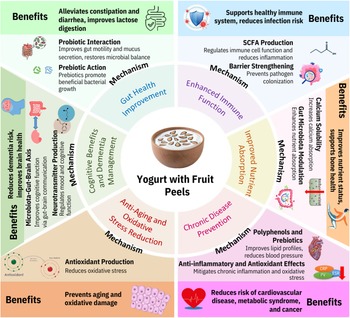
Figure 2 provides a visual representation of the health benefits and mechanisms associated with the incorporation of fruit peels into yoghurt.
Health benefits and mechanisms of fruit peel-fortified yoghurt.

Impact on yoghurt quality and sensory properties due to incorporation of fruit peels
Incorporating fruit peel powder into yoghurt significantly enhances its nutritional profile by increasing fibre, ash and vitamin contents compared to regular yoghurt (Shabong et al., Reference Shabong, Singh, Hossain and Emika2021). The specific impact on fat, protein and carbohydrate content varies depending on the type of fruit peel used: yoghurt with red dragon fruit peel shows reduced fat and crude protein, while yoghurt with freeze-dried mango peel or banana peel powder exhibits higher fat, protein and sugar levels compared to regular yoghurt (Zahid et al., Reference Zahid, Ranadheera, Fang and Ajlouni2022; Yeasmin et al., Reference Yeasmin, Sarker, Begum, Al Mamun, Rahman, Hossen, Motalab and Sathee2023). Additionally, the incorporation of fruit peel fibre contributes to reducing milk fat and added sugar, thus enhancing the overall health benefits of yoghurt formulations (Dias et al., Reference Dias, Sajiwanie and Rathnayaka2020).
The incorporation of fruit peel powders such as banana and mango significantly enhance bioactive compounds like total phenolic and flavonoid content, alongside functional properties such as antioxidant activity. For example, Zahid et al. (Reference Zahid, Ranadheera, Fang and Ajlouni2022) found that rehydrated freeze-dried yoghurt enriched with banana peel powder reached 2.27 mg gallic acid equivalents per gram in total phenolic content, while mango peel powder-enriched yoghurt reached 2.73 mg gallic acid equivalents per gram, compared to 0.31 mg gallic acid equivalents per gram in the control. Studies by Shabong et al. (Reference Shabong, Singh, Hossain and Emika2021) and A (Reference A2022) showed that incorporating passion fruit peel and lemon peel into yoghurt significantly increased vitamin C content, thereby enhancing antioxidant activity. Furthermore, yoghurt fortified with banana peel extract exhibited significantly higher α-glucosidase inhibitory activity, suggesting potential antidiabetic benefits by regulating glucose release and managing blood sugar levels (Kabir et al., Reference Kabir, Hasan, Islam, Haque and Hasan2021). Moreover, the antimutagenic activity of probiotic yoghurt fortified with pineapple peel powder is likely due to its high antioxidant content, enzyme inhibition properties, antimicrobial effects and potential prebiotic activity (Sah et al., Reference Sah, Vasiljevic, McKechnie and Donkor2015).
Adding fruit peel fibre to yoghurt extends shelf-life by reducing lipid oxidation, as shown in studies such as by Kabir et al. (Reference Kabir, Hasan, Islam, Haque and Hasan2021). The insoluble dietary fibre in fruit peels helps maintain a favourable pH for probiotic survival during storage, enhancing sensory qualities and preserving antioxidant activity, as observed in research by Li et al. (Reference Li, Niu, Guo, Shi, Deng, Liu and Xiao2022). Fermentation by lactic acid bacteria converts insoluble dietary fibre into soluble forms with potent antioxidant capacities. Yoghurt also inherently contains antioxidant enzymes like SOD, glutathione peroxidase and catalase (Huang et al., Reference Huang, Mei and Hu2017; Kim et al., Reference Kim, Lee, Kim and Paik2021), while extracellular polysaccharides from lactic acid bacteria contribute further to its antioxidant effects (Zhou et al., Reference Zhou, Zeng, Wu, Guo and Pan2023). Overall, these findings suggest that incorporating fruit peel fibre effectively improved the free radical scavenging ability of yoghurt and prolonged its shelf-life.
Adding fruit peel into yoghurt increases the probiotic count, enhancing the beneficial bacterial population and improving the overall health benefits of the yoghurt (Dias et al., Reference Dias, Sajiwanie and Rathnayaka2020; Zahid et al., Reference Zahid, Ranadheera, Fang and Ajlouni2022). Higher titratable acidity and lower pH values were also recorded in the fruit peel-enriched yoghurt (Do Espírito et al., Reference Do Espírito, Perego, Converti and Oliveira2012). The increase in titratable acidity and decrease in pH are indicators of effective fermentation by probiotic bacteria, signifying that the fruit peels are serving as prebiotic substrates (Perez-Chabela et al., Reference Perez-Chabela, Cebollón-Juárez, Bosquez-Molina and Totosaus2021). Titratable acidity is a measure of the total acidity present in the yoghurt, which includes both free hydrogen ions (contributing to pH) and bound acids. Prebiotic ingredients, like the dietary fibre in fruit peels, promote the growth and activity of beneficial probiotic bacteria such as Lactobacillus and Bifidobacterium. These bacteria ferment the fibre, producing organic acids such as lactic acid, acetic acid and other SCFAs as metabolic by-products (Dias et al., Reference Dias, Sajiwanie and Rathnayaka2020). The accumulation of these organic acids contributes to the overall titratable acidity of the yoghurt. A lower pH can inhibit the growth of spoilage organisms and pathogens, enhancing the yoghurt's safety and shelf-life (Kabir et al., Reference Kabir, Hasan, Islam, Haque and Hasan2021).
The type and concentration of fruit peel significantly influences sensory attributes such as flavour, colour, taste and texture in yoghurt. For instance, fruit peels are rich in dietary fibres, which can alter the texture and viscosity of yoghurt. The soluble fibre, such as pectin, present in citrus peels or apple pomace can lead to a thicker, creamier yoghurt (Joy et al., Reference Joy, Sunday, Remilekun and Olusegun2022). Pectin acts as a natural gelling agent, improving the consistency of the yoghurt and providing a more desirable mouthfeel (Wang et al., Reference Wang, Kristo and LaPointe2019). This enhancement in texture can be particularly beneficial in creating yoghurt varieties that are perceived as more indulgent or premium.
Fruit peel-enriched yoghurt enhances its colour profile, as demonstrated by Gavril et al. (Reference Gavril, M, D, Arsenoaia, Stoica, Stănciuc, Aprodu, Constantin and Râpeanu2024), who found that pumpkin peel powder improved the yellowish hue of yoghurts enriched with carotenoids. Studies also indicate that yoghurt fortified with fruit peel extracts can maintain similar shelf lives compared to control yoghurt at refrigerated conditions (4 ± 1°C), as observed with mango peel powder yoghurt by Wimanshinee et al. (Reference Wimanshinee, Shamika and Arampath2021). Furthermore, the addition of passion fruit peel flour alters yoghurt's colour, imparting yellow and red tones due to its carotenoid content, as reported by Vieira et al. (Reference Vieira, Silva, Martins, Souza, Lima, Placido and Caliari2015).
Incorporating fruit peel into yoghurt can lead to varied sensory experiences due to factors like the type and concentration of the peel used. For example, studies by Wimanshinee et al. (Reference Wimanshinee, Shamika and Arampath2021) noted that mangosteen peel powder caused an aftertaste, reducing acceptability compared to control yoghurt. Conversely, Dias et al. (Reference Dias, Sajiwanie and Rathnayaka2020) found consumer preference for the bitter notes of fruit peel powder yoghurt over the high acidity of control yoghurt. Similarly, Vieira et al. (Reference Vieira, Silva, Martins, Souza, Lima, Placido and Caliari2015) observed that higher concentrations of passion fruit peel flour reduced flavour preference despite improving texture in control yoghurt. Balancing these sensory aspects is critical in yoghurt formulations. Optimal incorporation levels should be determined through individual research studies, as small amounts can enhance flavour while excessive quantities may introduce bitterness or alter texture, affecting overall sensory qualities and yoghurt's taste and texture. Similarly, the incorporation of orange peel powder (OPP) into frozen yoghurt enhanced nutritional value and orange flavour, with 2.5% OPP achieving the highest sensory scores. Yet, when OPP was increased to 3.5%, panellists described the texture as chalky and less appealing (Adil et al., Reference Adil, Jana, Mehta, Bihola, Singh and Rajani2024). A comparable pattern was observed in fat- and sugar-free yoghurts fortified with composite fruit peel powder, where 0.5% inclusion reduced syneresis and maintained consumer acceptance comparable to the control, while higher levels negatively impacted texture and sensory perception (Dias et al., Reference Dias, Sajiwanie and Rathnayaka2020). These findings highlight that while fruit peels can enrich yoghurt with natural pigments, dietary fibre and bioactive compounds, careful optimisation of incorporation levels is essential to balance health benefits with sensory quality. Moderate inclusion levels enhance viscosity, flavour complexity and appearance, thereby supporting consumer acceptance and marketability.
Fruit peel fibre integration into yoghurt offers several benefits, including reducing syneresis, which is a common issue in yoghurt production (Safdari et al., Reference Safdari, Vazifedoost, Didar and Hajirostamloo2021). Studies by Dias et al. (Reference Dias, Sajiwanie and Rathnayaka2020) have shown that fruit peel fibre increases yoghurt firmness and decreases syneresis, particularly in fat and sugar-free yoghurt formulations. However, reducing fat content can sometimes lead to a fragile texture due to a weaker protein gel network (Do Espírito et al., Reference Do Espírito, Perego, Converti and Oliveira2012). Peel flour enhances yoghurt texture by improving water retention, thereby further reducing syneresis (Vieira et al., Reference Vieira, Silva, Martins, Souza, Lima, Placido and Caliari2015; Perez-Chabela et al., Reference Perez-Chabela, Cebollón-Juárez, Bosquez-Molina and Totosaus2021). Insoluble dietary fibre in fruit peel has high water-holding, oil-holding and bile salt-adsorption capacities, which, when combined with casein in yoghurt, improve rheological properties, texture and reduce pore network structure and whey precipitation (Tian et al., Reference Tian, Sheng, Wu and Wang2024). These fibres also enhance viscosity and gel-forming ability, contributing to the development of fibre-enriched yoghurt with improved texture and reduced syneresis (Dabija et al., Reference Dabija, G, M and Rusu2018). Moreover, the addition of inulin in skimmed yoghurt has been found to produce similar texture properties to full-fat yoghurt, as noted by Glibowski and Rybak (Reference Glibowski and Rybak2015).
In yoghurt production, incorporating fruit peel can accelerate milk gelation and shorten fermentation times through several mechanisms (Do Espírito et al., Reference Do Espírito, Perego, Converti and Oliveira2012). Fruit peels contain enzymes like pectinases and cellulases, which break down pectin and cellulose, aiding in the breakdown of milk proteins and promoting quicker gelation. This enzymatic action is particularly notable in fruit waste such as apple pomace, which retains natural acidity from its processing, accelerating the reduction in pH during fermentation and creating a conducive environment for milk protein coagulation (Wang et al., Reference Wang, Kristo and LaPointe2019). Moreover, fruit peels provide sugars, organic acids and nutrients that serve as substrates for lactic acid bacteria, enhancing their growth and metabolic activity (Joy et al., Reference Joy, Sunday, Remilekun and Olusegun2022). This supports faster fermentation as lactic acid bacteria convert these substrates into lactic acid and other beneficial compounds. The soluble fibre in fruit peels, such as pectin, contributes to yoghurt mix viscosity by absorbing water. This increased viscosity facilitates the even distribution of lactic acid bacteria throughout the mixture, further speeding up fermentation (Wang et al., Reference Wang, Kristo and LaPointe2019). Additionally, components in apple pomace and similar fruit peels may interact with lactic acid bacteria to enhance their enzymatic activity or mitigate inhibitory factors, further optimising fermentation and gelation processes (Sah et al., Reference Sah, Vasiljevic, McKechnie and Donkor2015). Collectively, the presence of enzymes, natural acidity, nutrients, fibres and beneficial microbial interactions in fruit peels contributes to the observed benefits of faster milk gelation and shorter fermentation times in yoghurt production.
Despite the benefits of fruit peel-enriched yoghurt, consumer perception and acceptance remain critical factors influencing the success of fruit peel-fortified yoghurt products in the market. Consumer awareness of the health benefits associated with fruit peel consumption has increased in recent years, driving demand for functional foods like fibre-fortified yoghurt (Cai, Reference Cai2019). However, consumer attitudes towards these products are influenced by various factors, including taste, texture, price and convenience. While some consumers prioritise health benefits over sensory attributes, others may be deterred by changes in taste or texture resulting from fruit peel fortification (Nagpal and Kumar, Reference Nagpal and Kumar2018). Therefore, understanding consumer preferences and addressing their concerns through product innovation and marketing strategies are essential for enhancing consumer acceptance of fibre-fortified yoghurt.
Advancing fruit peel fortification in yoghurt: from technological innovations to consumer acceptance
In recent years, significant strides have been made in the technological aspects of fruit peel fortification in yoghurt production (Gouda and Hamed, Reference Gouda and Hamed2020; Wang et al., Reference Wang, Wang, Wei, Xu, Cavender, Lin and Sun2024). Innovations in both fibre sources and fortification techniques have played a critical role in enhancing the nutritional and functional profile of yoghurt while maintaining its sensory attributes (Wang et al., Reference Wang, Wang, Wei, Xu, Cavender, Lin and Sun2024). Researchers have explored various fruit peel sources to fortify yoghurt with added health benefits (Zahid et al., Reference Zahid, Ranadheera, Fang and Ajlouni2022; Jany et al., Reference Jany, Nupur, Akash, Karmoker, Mazumder and Alim2024). Additionally, advancements in processing technologies have enabled the incorporation of fruit peels without compromising the texture, taste, or shelf-life of yoghurt (Bankole et al., Reference Bankole, Irondi, Awoyale and Ajani2023; Wang et al., Reference Wang, Wang, Wei, Xu, Cavender, Lin and Sun2024).
Recent research studies have explored fortifying yoghurt with dietary fibre from different sources to improve techno-functionality, altering texture, rheology and sensory attributes while enhancing nutritional value by promoting beneficial microorganism growth (Ahmad et al., Reference Ahmad, Hao, Li, Zhang, Ding and Lyu2022; Wang et al., Reference Wang, Wang, Wei, Xu, Cavender, Lin and Sun2024). Neutral polysaccharides like β-mannan from partially hydrolysed guar gum increase viscosity without protein interaction, while anionic polysaccharides such as pectin from orange peel fibre stabilise protein networks via bridging effects (Mary et al., Reference Mary, Mutturi and Kapoor2022). However, challenges arise from potential incompatibilities with milk proteins, affecting rheology and acidification kinetics, posing complexities in integrating diverse fibre sources into yoghurt.
Modern extraction and purification techniques enable the acquisition of high-purity, food-grade bioactive compounds from fruit peel, enhancing their suitability for various nutritional and functional food applications (Gavril et al., Reference Gavril, M, D, Arsenoaia, Stoica, Stănciuc, Aprodu, Constantin and Râpeanu2024). Citrus peel wastes, such as those from oranges and lemons, are particularly valuable for extracting fibre and food ingredients like pectin and mucilage. Advanced extraction methods include reflux distillation, ultrasound, supercritical fluid extraction and microwave hydro diffusion and gravity, which offer advantages such as reduced extraction times, lower solvent consumption and environmentally friendly operations (Mahato et al., Reference Mahato, Sinha, Sharma, Koteswararao and Cho2019).
Various methods including physical, chemical, enzymatic and microbial fermentation, are employed to enhance the dietary fibre properties of fruit peels, aiming to improve the sensory and nutritional attributes of yoghurt (Bankole et al., Reference Bankole, Irondi, Awoyale and Ajani2023). These methods modify fibre structure and composition, enhancing functionalities such as texture, viscosity and health benefits through increased bioavailability of bioactive compounds. Physical methods like grinding and extrusion alter particle size and surface area, while chemical methods involve the extraction and purification of fibre components (Qin et al., Reference Qin, Yang, Si, Chen, Xie, Tang, Dong, Cheng, Hu and Yu2023). Enzymatic and microbial fermentation modify fibre composition and functionality, promoting prebiotic effects and improving overall yoghurt quality. Integration of these methods offers a versatile approach to optimise yoghurt formulations with enhanced dietary fibre properties (Tian et al., Reference Tian, Sheng, Wu and Wang2024).
Superfine grinding is a fundamental method in the food industry for producing powdery products with enhanced properties. Research shows that superfine-ground powders have smaller particle sizes, improved surface propertie and increased solubility, making them ideal for food processing. (Zhang et al., Reference Zhang, Dong, Nisar, Fang, Wang and Guo2020). Recent research by Qin et al. (Reference Qin, Yang, Si, Chen, Xie, Tang, Dong, Cheng, Hu and Yu2023) explored the combined effects of superfine grinding and Lactobacillus paracasei fermentation on structural and functional properties of soluble dietary fibre derived from grapefruit peel. This approach resulted in a modified soluble dietary fibre with altered monosaccharide composition, enhanced thermal stability, reduced molecular weight and a rougher microstructure. Practical application in yoghurt formulations showed that these modified soluble dietary fibres significantly improved gel strength, hardness and reduced syneresis, indicating their potential as valuable ingredients in functional foods.
Freeze-drying (lyophilisation) has been widely recognised as one of the most effective methods to preserve phenolic compounds, flavonoids and vitamin C in fruit peels due to minimal thermal degradation. Ahmad et al. (Reference Ahmad, Hao, Li, Zhang, Ding and Lyu2022) reported that freeze-dried apple pomace and pomegranate peel powders retained significantly higher antioxidant activity compared to oven-dried counterparts, leading to yoghurts with enhanced phenolic content and radical scavenging capacity. Microfiltration and related membrane separation technologies are increasingly employed to extract and concentrate pectin, polyphenols and dietary fibre fractions from citrus and pomegranate peels. This process enables the removal of undesirable compounds (such as bitterness-inducing tannins) while preserving bioactive fractions. Studies by Mahato et al. (Reference Mahato, Sinha, Sharma, Koteswararao and Cho2019) demonstrated that membrane-assisted extraction provided citrus peel pectin with superior gelling and stabilising properties, enhancing yoghurt's rheology and water-holding capacity when incorporated.
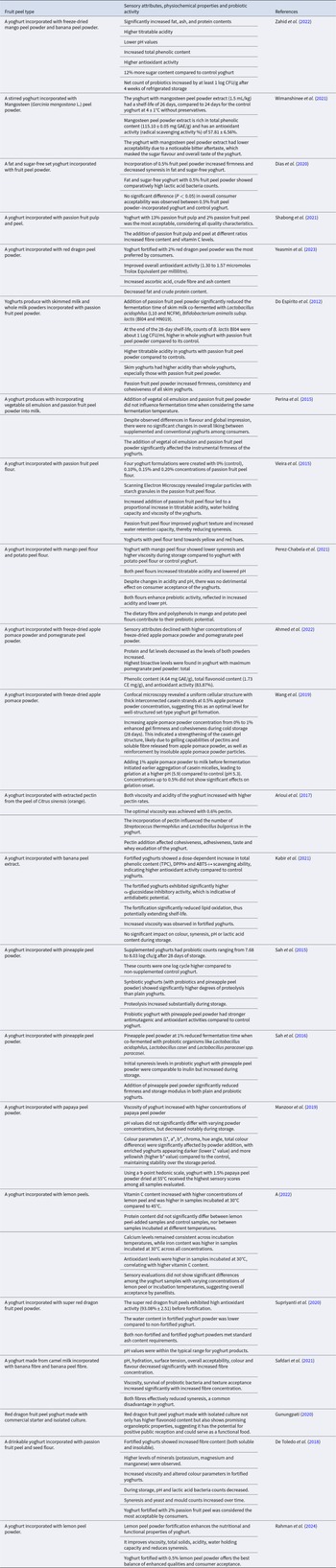
Nanotechnology is revolutionising food science, offering novel applications such as pomegranate and orange peel extract-based nanoparticles prepared through chemical complexation with silver nitrate, ideal for enhancing yoghurt products (Vinay et al., Reference Vinay, Goudanavar and Acharya2018). Encapsulation technologies further advance these innovations by shielding bioactive compounds like polyphenolic-rich apple peel extract, enhancing stability and bioavailability in yoghurt. Studies demonstrate that freeze-dried and ultrasonicated polyphenolic-rich apple peel extract microcapsules maintain polyphenol content without altering yoghurt's key sensory and physicochemical properties (El-Messery et al., Reference El-Messery, El-Said, Demircan and Ozçelik2019). Additionally, formulations with spray-dried microcapsules improve bioavailability of compounds like cyanidin-3-glucoside post-gastrointestinal digestion, highlighting their potential for creating high-value functional yoghurt products (Dos Santos et al., Reference Dos Santos, M, Romanini, Correa, Peralta, Da Costa, Junior, Visentainer, Reis and Madrona2022). Moreover, microencapsulation by spray drying preserves the bioactive compounds in rambutan peel, which is rich in phenolic compounds, tannins, vitamin C and minerals, offering numerous health benefits such as anti-inflammatory, antidiabetic, antioxidant, antiaging, antiobesity, antimicrobial and anticancer properties (Boyano-Orozco et al., Reference Boyano-Orozco, Gallardo-Velázquez, G and Osorio-Revilla2020). Studies have indicated that fortified yoghurts containing encapsulated compounds can potentially manage conditions like gut inflammation, anaemia, obesity and even certain types of cancer (Akgun et al., Reference Akgun, Gültekin-Ozguven, Yücetepe, Altin, Gibis, Weiss and Özçelik2020; Seregelj et al., Reference Seregelj, Pezo, Sovljanski, Levic, Nedovic, Markov, Tomic, Canadanovic-Brunet, Vulic, Saponjac and Cetkovic2021; Shishir et al., Reference Shishir, Saifullah, Hashim, Aalim, Bilal, Khan, Marappan, Tahir, Li, Zhai, Arslan, Taip, Cheng and Zou2024). Recent research suggests that synbiotic microcapsule-fortified yoghurts may offer additional advantages by synergistically maintaining a healthy gut microenvironment (Shishir et al., Reference Shishir, Saifullah, Hashim, Aalim, Bilal, Khan, Marappan, Tahir, Li, Zhai, Arslan, Taip, Cheng and Zou2024). These advancements underscore encapsulation's role in developing healthier and more effective food supplements. These technological innovations have opened new avenues for the development of fibre-rich yoghurt products that appeal to health-conscious consumers (Table 3).
Fruit peel ingredients for yoghurt: composition, processing and product impacts

Regulatory and sustainability considerations in fruit peel–fortified yoghurts
The incorporation of fruit peels into yoghurt formulations carries clear nutritional and technological benefits, but its broader adoption is dependent on sustainability and regulatory feasibility. From a sustainability standpoint, fruit peel utilisation aligns with global efforts to reduce food waste and close nutrient loops in food systems. According to recent life cycle assessments, valorising fruit by-products such as citrus and pomegranate peels can reduce greenhouse gas emissions and landfill burden by diverting high-volume organic waste into functional food ingredients (Hasan et al., Reference Hasan, Islam, Haque, Kabir, Khushe and Hasan2024). This contributes to the circular economy by lowering environmental impact and improving resource efficiency. However, scalability depends on developing standardised supply chains capable of collecting, processing and stabilising fruit peels at industrial scale without introducing quality variability.
From a regulatory perspective, the incorporation of fruit peel derivatives into foods falls under the jurisdiction of agencies such as the U.S. Food and Drug Administration and the European Food Safety Authority. Currently, fruit-derived powders and extracts must meet standards for ‘generally recognised as safe’ status or pass novel food approval in the EU. One of the main obstacles is the lack of harmonised compositional data and toxicological studies across different peel sources, which limits the ability to make health claims or secure broad approvals. For example, while citrus pectin and certain polyphenol extracts have long-standing approvals, whole peel powders may require additional safety validation to demonstrate that potentially harmful compounds (e.g., oxalates, cyanogenic glycosides) are present below regulatory thresholds. This creates a bottleneck for commercialisation despite promising laboratory results.
Food safety concerns are another major consideration, particularly with respect to pesticide residues, microbial contamination and heavy metals. Since fruit peels are the outermost layer, they are most likely to accumulate residues from agricultural sprays or environmental pollutants. Recent studies on citrus peels revealed detectable but variable levels of pesticide residues, raising the need for thorough decontamination protocols prior to use in food systems (Hussain et al., Reference Hussain, Kalhoro and Yin2023). Moreover, improper drying or storage can facilitate mycotoxin development, further complicating safety assurance. Advanced processing methods such as supercritical CO₂ extraction, membrane filtration and controlled freeze-drying can mitigate these risks by removing contaminants while preserving bioactive compounds. Establishing validated processing standards is therefore essential to ensure that fruit peel-enriched yoghurt meet global food safety regulations globally.
Overall, the environmental advantages of waste reduction and sustainability are clear, but commercial viability will depend on navigating regulatory approvals and ensuring stringent food safety compliance. By integrating life cycle sustainability assessments with toxicological and regulatory frameworks, fruit peel–fortified yoghurts can move from promising research concepts to widely accepted consumer products.
Advancing fruit peel fortification in yoghurt: bridging research gaps and future product development strategies
The fortification of yoghurt with fruit peel fibre represents a promising avenue for enhancing nutritional value while addressing sustainability concerns (Kennas and Amellal-Chibane Reference Kennas and Amellal-Chibane2019; Hasan et al., Reference Hasan, Islam, Haque, Kabir, Khushe and Hasan2024). Fruit peels, often discarded as waste, are rich in dietary fibre, vitamins and antioxidants, making them an excellent fortification candidate (Oliveira et al., Reference Oliveira, Caleja, Oliveira, Pereira and Barros2023; Nirmal et al., Reference Nirmal, Khanashyam, Mundanat, Shah, Babu, Thorakkattu, Al-Asmari and Pandiselvam2023). Despite their potential, several research gaps and challenges need to be addressed to fully integrate fruit peel fibre into yoghurt products effectively.
One significant research gap is the understanding of how different fruit peel fibre interacts with yoghurt's existing components, such as proteins and fats and their impact on gut health. While the general health benefits of dietary fibre are well-documented, the specific interactions between various types of fruit peel fibres and the gut microbiota require further investigation (Makki et al., Reference Makki, Deehan, Walter and Bäckhed2018: Cronin et al., Reference Cronin, Joyce, W and M2021). Studies should focus on how these fibres influence gut bacteria composition, fermentation processes and the production of SCFAs, which are beneficial for gut health (Nogal et al., Reference Nogal, Valdes and Menni2021; Portincasa et al., Reference Portincasa, Bonfrate, Vacca, De Angelis, Farella, Lanza, Khalil, Wang, Sperandio and Di Ciaula2022). Additionally, there is a need for more clinical studies to evaluate the long-term health effects of consuming yoghurt fortified with fruit peel fibre (El-Abbadi et al., Reference El-Abbadi, Dao and Meydani2014). These studies should target populations with specific health conditions such as obesity, diabetes, or inflammatory bowel diseases to understand the potential therapeutic benefits and any adverse effects. Establishing a robust body of clinical evidence will help substantiate health claims and inform regulatory guidelines for fibre-fortified yoghurt products (Ashwell et al., Reference Ashwell, Hickson, Stanner, Prentice and Williams2022).
Determining the optimal fortification levels of fruit peel fibre in yoghurt is another crucial area of research. Balancing the health benefits with sensory attributes like taste, texture and overall consumer acceptability is essential for successful product development (Khan and Rahman, Reference Khan and Rahman2021; Ruiz-Capillas and Herrero, Reference Ruiz-Capillas and Herrero2021). Comprehensive sensory evaluations and consumer preference studies are needed to identify the threshold at which fibre content begins to negatively impact the product's quality (Drake et al., Reference Drake, Watson and Liu2023). This research will guide manufacturers in developing formulations that maximise health benefits without compromising consumer satisfaction. Exploring novel fruit peel sources and fortification techniques also presents an exciting opportunity for innovation. While common sources like apple and citrus peels are well-studied, less common peels such as those from mangoes, bananas, or pomegranates could offer unique nutritional profiles and functional properties (Zahid et al., Reference Zahid, Ranadheera, Fang and Ajlouni2021; Hussain et al., Reference Hussain, Kalhoro and Yin2023). Innovative fortification techniques, such as microencapsulation or nano emulsions, could enhance the stability and bioavailability of fibre in yoghurt, ensuring that the nutrients are effectively absorbed by the body (Shishir et al., Reference Shishir, Saifullah, Hashim, Aalim, Bilal, Khan, Marappan, Tahir, Li, Zhai, Arslan, Taip, Cheng and Zou2024).
Future product development should also consider the sustainability and ethical sourcing of fruit peels. Utilising peels from fruits grown using sustainable agricultural practices and ensuring that the entire production process minimises waste will appeal to environmentally conscious consumers (Ariwaodo and Olaniyan, Reference Ariwaodo and Olaniyan2024; Wanapat et al., Reference Wanapat, Suriyapha, Dagaew, Prachumchai, Phupaboon, Sommai and Matra2024). Additionally, eco-friendly packaging solutions should be prioritised to further reduce the environmental impact of these products (Ayodeji et al., Reference Ayodeji, Oluwaseun, Ejike, Boma, Enoch, Andrew and Alexander2024). Consumer education is another critical aspect of advancing fruit peel fortification in yoghurt. Educating consumers about the health benefits of dietary fibre and the environmental advantages of using fruit peel by-products can drive market demand. Clear labelling and informative marketing campaigns can help dispel misconceptions and highlight the added value of fibre-fortified yoghurt (Asioli et al., Reference Asioli, Aschemann-Witzel, Caputo, Vecchio, Annunziata, Næs and Varela2017; Hau and Lange, Reference Hau and Lange2023).
Conclusions
Incorporating fruit peels into yoghurt is a promising strategy to enhance nutritional value and sustainability. Rich in antioxidants, dietary fibre and essential nutrients, fruit peels significantly improve the health benefits of yoghurt, aiding in digestive health, weight management and reducing the risk of chronic diseases. Technological advancements, such as microencapsulation and innovative blending techniques, ensure that these nutritional enhancements do not compromise yoghurt's sensory qualities. This approach also supports sustainability by reducing food waste and promoting resource efficiency. Despite the promising potential, challenges such as maintaining consistent quality, adhering to regulatory standards and ensuring consumer acceptance need to be addressed. Future research should focus on optimising processing methods, exploring additional types of fruit peels and assessing long-term health impacts. By overcoming these challenges, the food industry can offer healthier, sustainable yoghurt products that align with the growing health-conscious consumer base, ultimately contributing to better public health and environmental sustainability.
Disclosure statement
The author(s) of this article do not have any conflicts of interest related to the research, authorship, or publication of the work.
Author contributions
Every part of the manuscript was dictated by each author. All authors have read and approved the manuscript.




 Open access

