


Twins and higher order multiple births are high-risk pregnancies for both mothers and infants (e.g., Guo & Grummer-Strawn, Reference Guo and Grummer-Strawn1993), thus calling for increased societal and medical attention. Furthermore, twins are used as a specific investigative tool in biological, medical, and psychological research because they offer a unique opportunity to dissect the proportion of genetic and environmental influences on a diverse array of characteristics, including diseases and behavioral traits (Segal, Reference Segal2000; Reference Segal2012). However, the availability of basic data on twins, such as twinning rates, is relatively rare outside of North America and Western Europe (Polderman et al., Reference Polderman, Benyamin, De Leeuw, Sullivan, Van Bochoven, Visscher and Posthuma2015).
Worldwide changes in twinning rates have been observed during human history (e.g., Fellman & Eriksson, Reference Fellman and Eriksson2004; Madrigal, Reference Madrigal2013; Razzaque et al., Reference Razzaque, Ahmed and Wai1990) and especially over the last several decades (e.g., Pison & D'Addato, Reference Pison and D'Addato2006). In developed countries (e.g., Denmark, Germany, Switzerland, Sweden, Holland, Italy, England, France, Wales, and United States), twin birth rates increased notably since the 1980s. This can be partly due to the prospective mother's delaying pregnancy and/or seeking assisted reproduction technologies (ART; e.g., Astolfi et al., Reference Astolfi, Ulizzi and Zonta2003; Imaizumi, Reference Imaizumi1992; for a review, see Pison et al., Reference Pison, Monden and Smits2015). Studies conducted in England and France have shown that the growth in twinning rates was impressive, especially among women older than 35 years; for women of lower maternal age (< 20 years), the increase was less pronounced.
This trend can be also observed cross-culturally, although some exceptions are known. For example, in Taiwan, a negative relationship between maternal age and twinning rates was reported by Chen et al. (Reference Chen, Lee, Wang and Yu1992). Furthermore, in Japan, after the introduction of ART, the dizygotic (DZ) twinning rate rose until 2005, but decreased after that. In contrast, the monozygotic (MZ) twinning rate remained stable before and after the introduction of ART (Imaizumi & Hayakawa, Reference Imaizumi and Hayakawa2013). In the United States, the 2014 twinning rate was 33.9 per 1,000 births (‰),Footnote 1 which represented a new high. In contrast, the triplet and higher order multiple birth rate fell by 5% to 113.5 per 100,000 total births (Hamilton et al., Reference Hamilton, Martin, Osterman, Curtin and Mathews2015).
It is interesting to note that the rate of MZ twinning does not vary extensively around the world, whereas the DZ twinning rate shows considerable variation (e.g., Imaizumi, Reference Imaizumi1992). The mechanisms for MZ twinning are still being investigated, while more is known about the maternal factors that contribute to the higher frequency of DZ twins: for example, genetic history, advanced maternal age, increased parity, higher body stature, and higher body mass index (> 30; Hoekstra et al., Reference Hoekstra, Zhao, Lambalk, Willemsen, Martin, Boomsma and Montgomery2008).
Available information on the incidence of twinning in developed countries with good birth registration is considerable. However, data remain scarce for developing countries. Twinning across the developing world was recently examined, based on demographic and health surveys conducted between 1987 and 2010 in 75 low- and middle-income countries (Smits & Monden, Reference Smits and Monden2011), yielding an average of 13.1‰ or one twin birth in 76.3 births. Very low twinning rates are found in Asian and Latin American countries (6–9‰), in marked contrast with the very high twinning rates of African countries (above 18‰). The highest national twinning rate was reported in Benin, Africa (27.9‰), while the lowest DZ twinning rate was reported in India at approximately 7‰ (Satija et al., Reference Satija, Sharma, Soni, Sachar and Singh2008). Similarly, African-Americans show the highest twinning rates, 13–15‰ (Eriksson et al., Reference Eriksson, Abbott, Kostense and Fellman1995; Pollard, Reference Pollard1995), whereas Asian-Americans show the lowest twinning rates, at 7‰, and White Americans show a twinning rate that is intermediate, 10‰ (Pollard, Reference Pollard1995). Previous studies have provided intermediate twinning rates (10–20‰) in Europe and also in the United States (Pison & D'Addato, Reference Pison and D'Addato2006; Pison et al., Reference Pison, Couvert and Wasserman2004; Reynolds et al., Reference Reynolds, Schieve, Martin, Jeng and Macaluso2003).
Only a few studies have investigated the twinning rates in Brazil, showing highly divergent results,Footnote 2 that is, between 4.7 and 29.0‰ (Colletto, Reference Colletto2003; Colletto & Rosario, Reference Colletto and Rosário2004; Colletto et al., Reference Colletto, Segre and Beiguelman2001; Reference Colletto, Segre, Rielli and Rosário2003; Geraldo et al., Reference Geraldo, Garcias and Roth2008, for details see, Table 1). These studies were conducted in only a few hospitals in the cities of São Paulo and Pelotas (located in southeast and south of Brazil, respectively). Consistent with studies conducted in other world regions, maternal age was one of the significant factors positively influencing twinning rates. Additionally, the investigations showed that twinning rates were positively correlated with the socio-economic status of the mothers.
Description of Studies of Twin Delivery Rates Conducted in Brazil

aThe twinning rate percentage refers to minimum and maximum rates within studied years.
bSmits and Monden (Reference Smits and Monden2011) report individual twin births, not pairs as the other studies mentioned.
Considering that the previous Brazilian studies were limited to only a single or a few hospitals and areas of a city, it is of great importance to extend the number of hospitals in order to collect more representative and less biased data. São Paulo is the largest urban area in South America, and one of the biggest in the world, with living standards that range between moderate and high with large social inequality. Additionally, São Paulo is Brazil's melting pot, in that the population is highly ethnically diverse, with the majority of people being of mixed descent, mainly of European, African, native indigenous, Far and Middle Eastern origin. This population is, thus, relatively unique, and offers a rare opportunity to study a very large and heterogeneous sample of the population.
The main purpose of our study was to analyze the variation of singleton, twin, and higher order multiple birth rates and their relationship with maternal age in São Paulo, using the complete municipal database of individual live births from numerous hospitals. A second objective of the study was to analyze historical trends in birth rates during a time period of 12 years, between the years 2003 and 2014. Furthermore, we investigated the frequency of MZ and DZ twin births, and their association with maternal age and the specified time period. Based on the cited literature, we expected that twin births rates would increase with maternal age, and throughout the historical time interval. Furthermore, we hypothesized that the increase in twin birth rates would occur particularly among DZ twins, while MZ twin rates would show a more stable pattern across mothers’ age categories and time period.
Materials and Methods
Data on the singleton, twin, and higher order multiple births (live-born individuals) from mothers residing in one of the 32 districts of São Paulo between years 2003 and 2014, from all 140 hospitals (56 public and 84 private), were extracted from an online database (Sistema de Informações de Nascidos Vivos de São Paulo—SINASC: Live Births Information System of São Paulo). SINASC is a Brazilian Health Department database that provides information about hospitals, other health establishments, and home deliveries. This database does not include stillbirths. Since multiple births are at higher risk and lead to higher mortality than non-twin births (e.g., Guo & Grummer-Strawn, Reference Guo and Grummer-Strawn1993), our data might underestimate the rates of multiple births compared to other studies that included stillbirths (e.g., Colleto et al., Reference Colletto, Segre, Rielli and Rosário2003). By this method, we were able to obtain a large number of cases: 2,081,282 individual births of singletons, twins, and higher order multiples. We have not included 264 births with unknown type of gestation into the analyses.
The majority of mothers (81.5%) had 8 or more years of education. The majority of mothers of singletons (55.4%) and twins (47.2%) indicated 8–11 years of education, versus 24.5% of mothers of multiples, who mostly (62.5%) reported 12 or more years of education.
The public database includes data on the number of individuals born, but does not offer information about the sex composition of siblings within twin and multiple births. Thus, the frequency of DZ and MZ pairs could not be estimated based on these data. We then contacted SINASC, and after receiving agreement from the Human Research Ethics Committee at the Institute of Psychology, University of São Paulo (Protocol Number 1,418,827), we received a more detailed database that conveyed not only the total numbers of individual births, but also name of the mother, date and hour of the delivery, place of the delivery, and register number. Based on these new data, we were able to collect information about every single delivery that allowed us to determine the sex composition of twin and multiple births. With this information, we could estimate the frequency of DZ and MZ twin pairs. However, the final twin rates vary slightly from those yielded from the first database.
Statistical Analysis
To compute maternity rates per 1,000 (‰), individual twin births were divided by two, and individual higher order multiple births were divided by three, assuming that the majority of multiple births were triplets. These rates of singleton, twin, and multiple maternities were then entered into the following formula: delivery rate = (1,000 × maternities)/total births. In Table 1, we present a description of single studies of twinning rates conducted in Brazil, including the current study.
The variability in rates across time was measured by non-parametric correlations involving year per 1,000 births separately for singleton, twin, and higher order multiple births. Furthermore, the variable of mothers’ age was recoded into eight classes (< 15, 15–19, 20–24, 25–29, 30–34, 35–39, 40–44 and > 45 years). Rates on the different types of births were divided according to mothers’ age, and correlational analyses were performed separately for each age category.
A stepwise multiple regression analysis model was used to investigate the independent influence of maternal age and time period on twin and multiple births. The rate of twin and multiple deliveries was entered as a dependent variable, and maternal age and year as independent variables.
To estimate the relative frequency of DZ and MZ twin pairs, we applied Weinberg's differential method (e.g., Fellman & Eriksson, Reference Fellman and Eriksson2006) that uses sex distribution among twins, and the probability of being male or female in each population. Following this method, the rate of DZ twinning is twice the rate of twin maternities in which the twins are of opposite sex, while the MZ twinning rate is computed as a difference between the total twinning rate and the DZ twinning rate. The rule has been shown to be a generally robust and reliable indicator of MZ and DZ twin rates, in particular when large birth registry data are considered (Fellman & Eriksson, Reference Fellman and Eriksson2006; Hardin et al., Reference Hardin, Selvin, Carmichael and Shaw2009).
Results
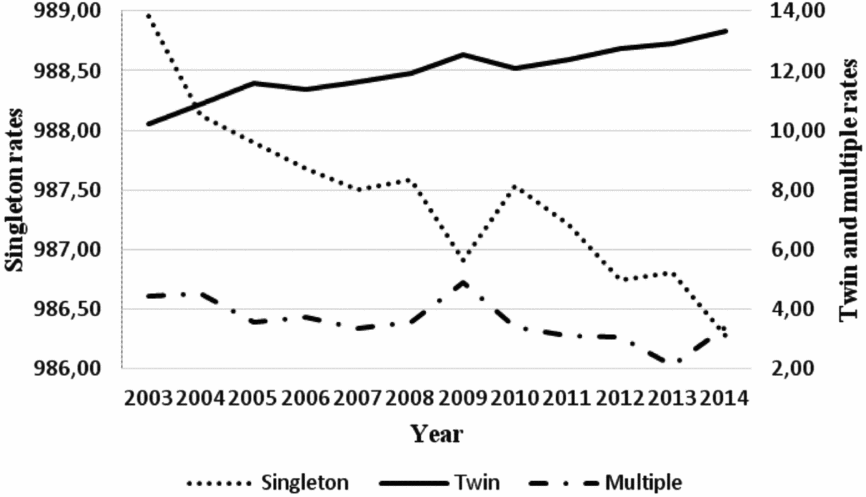
We found a positive correlation between the time period (2003–2014) and twinning rate percentage (Spearman's ρ = 0.972, N = 12, p < .001) and a negative correlation for both singleton rates (Spearman's ρ = -0.944, N = 12, p < .001) and higher order multiple rates (Spearman's ρ = -0.699, N = 12, p = .011). Figure 1 displays the temporal trends during the period of 2003–2014 for singleton and twin rates percentage, and higher order multiple deliveries per 10,000 births. The twin birth rate rose 30.8% from 2003 to 2014, increasing from 10.19‰ to 13.33‰ (see Table 2). The average rate of twin deliveries was 11.96‰, while the averages of singleton and multiple births were 987.42‰ and 0.36‰, respectively.
Temporal trends of singleton birth rates, twin birth rates, and multiple birth rates per 10,000 births in the city of São Paulo, Brazil.
Total Number Singleton, Twin, and Higher Order Multiple Births in São Paulo, 2003–2014
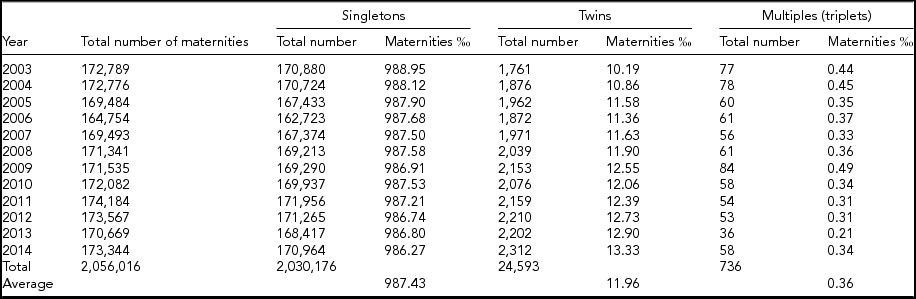
Maternities ‰ = rate per 1,000 maternities.
An upward trend over the years was noted in twinning rates according to mothers’ age among women of age 25 years or more (see Table 3). An opposite pattern appeared to characterize the singleton mothers.
Non-Parametric Spearman Correlations Between Time Period (Years 2003–2014) and Rate of Births Divided According to Mothers’ Age Categories

The coefficients refer to non-parametric Spearman ρ.
*p < .05, **p < .01.
The final stepwise regression model for twinning rates was highly significant (F = 80.36, df = 2.95, p < .001), explaining 63% of the total variation. Mothers’ age appeared to be the strongest positive predictor (B = 4.62, SE = 0.37, t = 12.49, p < .001), with the time period also positively, albeit weakly, predicting the twinning rates (B = 0.54, SE = 0.25, t = 2.19, p = .031). The model for higher order multiple rates was also significant (F = 31.63, df = 1.95, p < .001), explaining 25% of the total variation. Mothers’ age appeared to be the only positive predictor of the multiple birth rates (B = 0.54, SE = 0.10, t = 5.62, p < .001).
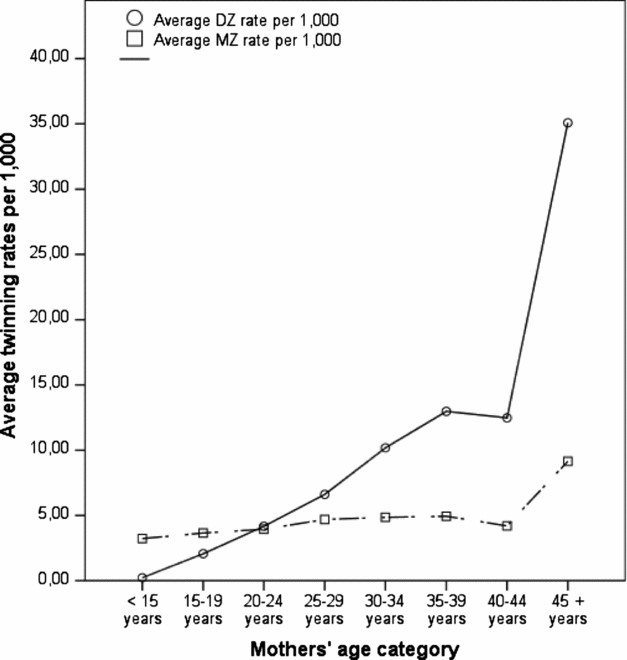
Further, using Weinberg's differential method, we estimated the average frequency of MZ and DZ twin rates to be 4.42‰ and 7.15‰, respectively. Spearman's correlations showed that the time period (2003–2014) positively and significantly correlated with both MZ (Spearman's ρ = 0.720, n = 12, p = .008) and DZ birth rates (Spearman's ρ = 0.839, n = 12, p = .001). Divided according to mothers’ age, the mothers’ age positively and significantly correlated with both MZ (Spearman's ρ = 0.857, n = 8, p = .007) and DZ birth rates (Spearman's ρ = 0.976, n = 8, p < .001).
The stepwise regression model for DZ twinning rates was highly significant (F = 73.55, df = 2.95, p < .001), explaining 61.3% of the total variation. Mothers’ age was the strongest positive predictor (B = 3.88, SE = 0.33, t = 11.95, p < .001), with the time period also positively, although weakly predicting the twinning rates (B = 0.45, SE = 0.22, t = 2.07, p = .042). The model for MZ twinning rates was also significant (F = 19.40, df = 1.95, p < .001), explaining 17.1% of the total variation. Mothers’ age was the only positive predictor of the MZ twinning rates (B = 0.56, SE = 0.13, t = 4.41, p < .001; see Figure 2).
Dizygotic (DZ) and monozygotic (MZ) twin rates per 1,000 births as a function of mother's age.
Discussion
The aim of this study was to investigate the effects of maternal age and time period (2003–2014) on singleton, twin, and higher order multiple birth rates on a complete live births registry from São Paulo, Brazil. The overall average rate of twin births per 1,000 maternities was 11.96 (the DZ rate was 7.15‰ and the MZ rate was 4.42‰), while the average rate of higher order multiple births was 0.36‰. As expected, twin and multiple birth rates increased with maternal age, and DZ twinning marginally increased throughout the historical time period. Singleton birth rates, however, decreased with maternal age, with no effect of the time period.
The overall average twin rate of 11.96‰ is higher than that found in an investigation by Smits and Monden (Reference Smits and Monden2011), focusing explicitly on developing countries, including Brazil. In that study, the 1996 twinning rate in Brazil was 8.8‰, a figure placing the country in the same category as Asian countries that are recognized as countries having the lowest twinning rates in the world. The discrepancy between Smits and Monden (Reference Smits and Monden2011) and our study may be partly attributed to different sample sizes (11,099 vs. 2,056,016 in the present study), different data collection methods (household interviews conducted as part of the USAID's Demographic and Health Survey vs. the Brazilian Health Department database of Live Births Information System of São Paulo SINASC in the present study), and the period of time sampled (1996 vs. 2003–2012). It should also be underlined that they report individual twin births, not pairs as we did.
Our data make evident that during the 12-year period from 2003 to 2014, the rate of twin births in the city of São Paulo rose by more than 30% from 10.19‰ to 13.33‰. This tendency may be partly linked to the general improvement in life quality and income of the citizens of São Paulo; for example, women with the financial means can seek assisted reproduction, if necessary. An investigation by Colletto et al. (Reference Colletto, Segre and Beiguelman2001) between 1995 and 1998, using only data from a private hospital in São Paulo (attended mostly by higher socio-economic status citizens), and providing very high twinning rates (18–29 twin births per thousand), generally confirms this view. In a recent review, Pison et al. (Reference Pison, Monden and Smits2015) model and discuss the role of ART in the increasing trend of twinning across a number of developed countries. The authors conclude that ART has had a strong impact on the increase in twinning during the last decades, although the relation is not straightforward and varies between countries. Of similar high importance would be studies that also consider underdeveloped countries or populations without access to ART, where other factors that influence twinning rates can be explored.
Further, results of our regression model clearly showed that the increase in twinning and multiple birth rates are substantially more influenced by mother's age than by the studied time period. In other words, the increased chance for twin maternity in older women is much stronger than, and independent of, the trend towards an increase in the twinning rate throughout the years. This can be due to age, per se, or any other factor correlated with age. For example, older women tend to seek ART more frequently than younger women, and, as a result, the higher twinning and higher order multiple births among older women can be attributed to this intervention (e.g., Reynolds et al., Reference Reynolds, Schieve, Martin, Jeng and Macaluso2003; for a review, see Pison et al., Reference Pison, Monden and Smits2015). However, in Brazil, assisted methods of fertilization are still restricted mostly to high social status women who represent a minority of the population (Corrêa & Loyola, Reference Corrêa and Loyola2015).
Given the foregoing, factors other than assisted methods of fertilization are influencing the increased twinning rates among older mothers, for example, genetic history, increased parity, higher body stature, or higher body mass index (BMI; Hoekstra et al., Reference Hoekstra, Zhao, Lambalk, Willemsen, Martin, Boomsma and Montgomery2008). Indeed, BMI in São Paulo has been increasing during the last 30 years (e.g., Cintra et al., Reference Cintra, Passos, Fisberg and Machado2007) and in women BMI is positively related to age and parity (Ferreira & Benicio, Reference Ferreira and Benicio2015). Thus, both BMI and parity can interact and contribute to age-related changes in twinning rates (see Sear et al., Reference Sear, Shanley, McGregor and Mace2001). Another factor playing a role in twinning rates might be the air pollution of São Paulo which is known for its high levels of pollutants in the air due to various industries and traffic (Miranda et al., Reference Miranda, Andrade, Fornaro, Astolfo, Andre and Saldiva2012). Lloyd et al. (Reference Lloyd, Lloyd, Williams and Lawson1988) and Obi-Osius et al. (Reference Obi-Osius, Misselwitz, Karmaus and Witten2004) have found increased twin rates in areas containing higher industrial and incinerator pollution in Scotland and Germany, respectively. Some of the pollutants’ compounds have estrogenic properties; interestingly, there has been an increased number of twins among cattle living close to the polluted areas (Lloyd et al., Reference Lloyd, Lloyd, Williams and Lawson1988).
Moreover, the same trend in increasing twinning rates as a function of maternal age has been documented in many traditional societies with natural reproduction, such as in Gambia (Sear et al., Reference Sear, Shanley, McGregor and Mace2001), agricultural areas of Costa Rica (Madrigal, Reference Madrigal2013), 18th-century Sweden (Fellman & Eriksson, Reference Fellman and Eriksson2004), and in 17th- to 18th-century French Canadian immigrants (Nonaka et al., Reference Nonaka, Desjardins, Charbonneau, Légaré and Miura1995). Therefore, our results, consistent with previous cross-cultural and historical research, support the existence of an age-dependent physiological mechanism that can lead to a strong increase in twinning and multiple births, but not singletons, among mothers of higher age categories. Thus, it seems that at least under some socio-ecological conditions, women near the end of their reproductive period tend to have more twins. Moreover, our data revealed that among older women there is an increased chance of both DZ and MZ twinning, although this effect is less pronounced for MZ twins. This might indicate that increasing multiple ovulations is not the only physiological mechanism by which older women could boost twinning maternities. Therefore, in a stable environment with basic nutrition, healthcare and relatively long life expectation, women near the end of the reproductive life might experience not only multiple ovulations, but also other physiological changes that tend to give rise to multiple gestations.
Thus, it has been suggested that the increase in DZ twinning may reflect more than just an age-related phenomenon. The association between advanced maternal age and increased twinning deserves additional attention from an evolutionary perspective. In diverse populations, such as in Europe, Africa, and America, it was found that despite its costs, twinning can increase mothers’ fitness (e.g., Gabler & Voland, Reference Gabler and Voland1994; Helle et al., Reference Helle, Lummaa and Jokela2004; Robson & Smith, Reference Robson and Smith2011; Sear et al., Reference Sear, Shanley, McGregor and Mace2001). Forbes (Reference Forbes1997) suggested that DZ twinning may represent an ‘adaptive trade-off’, such that successful pregnancies in older women may compensate for the increased risk of conceiving children with a genetic defect, such as trisomy 21. Furthermore, it was shown that mothers of twins have relatively higher phenotypic qualities, and can thus ‘afford’ a riskier but more advantageous reproductive strategy (e.g., Robson & Smith, Reference Robson and Smith2011).
Some limitations of the present study should be noted. The classification of the ethnicity or socio-economic status of the twins was not recorded in the São Paulo database. While this information would have presented a more detailed view of recent twinning trends, the results are consistent with findings from developed countries where advanced maternal age has affected twinning rates. Furthermore, São Paulo differs from other Brazilian regions with its relatively high human development index (HDI), high number of inhabitants, high levels of education, and the largest economy as reflected by its gross domestic product (GDP) in Latin America and southern hemisphere. We, thus, cannot generalize the results of the current study to the entire Brazilian population.
To conclude, in agreement with studies from developed countries, the twinning rate in São Paulo, Brazil, has been increasing during the last few decades. We also showed that higher maternal age is an even stronger predictor of increased twinning than the historical period. We suggest that this age- and historical time-related increase in the twinning rate may be partly caused by proximate factors, such as improved socio-economic status, health and nutrition, increasing weight, parity, air pollution, and the use of assisted reproduction among older mothers. From the ultimate perspective, twinning can lead to higher individual reproductive success near the end of the reproductive period of the mother.
Acknowledgments
The authors are grateful to Celso Gomes and to Fernando Leite Ribeiro for their comments on initial versions of the manuscript and to Eliana Bonilha and her team at SINASC for providing the complementary data. The authors are also grateful to the anonymous reviewers for their valuable comments and suggestions that improved the quality of the paper. This work was supported by the Conselho Nacional de Desenvolvimento Científico e Tecnológico (The Brazilian National Council for Scientific and Technological Development – CNPQ), Grant number 301241/2013-9; Programa Unificado de Bolsas de Estudos of Universidade de São Paulo, Grant number 83-1 Projeto 1311.
Conflict of Interest Statement
The authors declare that the research was conducted in the absence of any commercial or financial relationships that could be construed as a potential conflict of interest.
Ethics
The study was approved by the Human Research Ethics Committee at the Institute of Psychology, University of São Paulo, Brazil (Protocol Number 1,418,827).



