


Introduction
Vision is consistently ranked among the most valued aspects of health in the United States (US). In a nationwide survey, nearly 90% of adults across racial and ethnic groups reported that good eyesight is vital to overall well-being, and nearly half identified vision loss as the most feared health outcome, more concerning than losing hearing, speech, memory, or a limb [Reference Scott, Bressler, Ffolkes, Wittenborn and Jorkasky1]. Despite this shared prioritization, risk for vision loss increases with age [Reference Elam, Tseng and Rodriguez2], is associated with race, and is strongly shaped by structural and social determinants of health (SDoH) [3], including neighborhood context [Reference Elam, Tseng and Rodriguez2,Reference Hicks, Woodward and Newman-Casey4], educational attainment, income [Reference Chou, Selph and Blazina5–Reference Zhang, Cotch and Ryskulova7], and broader structural inequities documented in social determinants of blindness and vision impairment [Reference Rius, Lansingh, Valencia, Carter and Eckert8]. However, the US Preventive Services Task Force has found insufficient evidence to recommend routine screening for impaired visual acuity in older adults [Reference Mangione and Barry9].
Health outcomes from glaucoma, the leading cause of irreversible vision loss worldwide, exemplify these disparities. With the growing older population, prevalence is projected to exceed 111 million cases globally by 2040 [Reference Tham, Li, Wong, Quigley, Aung and Cheng10,Reference Ehrlich, Burke-Conte and Wittenborn11]. In the US, prevalence differs substantially across racial and ethnic groups, exceeding 3% in Black/African American adults compared with about 1.5% in Hispanic and 1.4% in White adults [Reference Ehrlich, Burke-Conte and Wittenborn11]. Onset also tends to occur earlier in African Americans, who are more likely to progress to blindness [Reference Racette, Liebmann and Girkin12,Reference Salowe, Salinas and Farbman13]. Socioeconomic status (SES) further shapes outcomes: across populations, lower SES is linked with more severe disease at presentation, particularly among older adults [Reference Buys and Jin14], and individuals with glaucoma report more adverse socioeconomic characteristics than those without the condition [Reference Shweikh and Ko15]. Lower educational attainment is associated with worse vision-related quality of life [Reference Mangione, Barry and Nicholson16] and both lower income and less education predict underutilization of preventive eye care [Reference Zhang, Cotch and Ryskulova7]. These patterns provide strong support for prioritizing glaucoma education and screening for lower-income individuals and those of African descent [Reference Buys and Jin14]. Despite this burden, the US Preventive Services Task Force recently concluded that evidence is insufficient to recommend for or against population-based screening for primary open-angle glaucoma, the most common form of glaucoma [Reference Mangione, Barry and Nicholson16].
Additional research is needed to clarify the complex interplay between SES, race, ethnicity, and vision loss, and to identify opportunities for system-level interventions that could improve vision screening, access to and utilization of eye care. Yet individuals at highest risk remain underrepresented in the literature [Reference Elam, Nwanyanwu and Scott17–Reference Lake, Browne, Rees and Speight21]. While recent studies have emphasized the urgency of addressing disparities in this space, few have directly engaged with at-risk communities to capture perspectives from those at highest risk [Reference Fairless and Nwanyanwu22–Reference Verma, Schulz and Quandt24].
Our study embeds research within a trusted community resource center and engages both African American and White residents. Using a community-based participatory research (CBPR) framework, we centered the perspectives of individuals most affected by vision health disparities. By creating space for community voices, CBPR enhances the relevance of research findings and strengthens their potential impact on clinical practice and care utilization [Reference Wallerstein and Duran25]. Our multidisciplinary team leveraged this approach to generate real-world insights into how adults in an underserved urban community value vision health, perceive barriers, and propose solutions.
Methods
First, we describe Phase 1, community partnership development, followed by Phase 2, study implementation. Phase 1 included two key strategies of community partnership. Our first step was to identify and engage with a community organizational partner. After establishing our partnership, we created a CAB to inform the development of Phase 2. Study procedures were approved by the Case Western Reserve University (CWRU) Institutional Review Board (STUDY20190147) and adhered to the tenets of the Declaration of Helsinki.
Study team positionality
The Study Team Principal Investigators (PIs) included three White-identifying female PhD scientists representing three disciplines (Health Behavior, Epidemiology, and Genetics). Study Team Staff included four women from diverse racial and ethnic backgrounds, including two who self-identified as White, one as African American, and one as Hispanic. Expertise of Study Team staff was broad: sociology, bioethics, public health, social work, and clinical research. Education levels ranged from bachelors and masters degrees to doctoral degrees. The PIs and other Study Team members interacted with University Settlement staff and CAB members; Study Team Staff members also conducted interviews. Study Team members did not have prior relationships with CAB members or interviewees. To mitigate power differentials, codevelopment of the interview guide with the CAB ensured appropriateness of questions. Additionally, all interviewers received training in qualitative methods that included appropriate prompting with non-judgmental statements. Analysis and interpretation were conducted by all members of the Study Team in addition to the CAB.
Phase 1: Community partnership development
University settlement as an organizational partner
After conducting a community scan, University Settlement emerged as a key organization to approach as a research partner for three compelling reasons. First, this community resource center serving the Broadway-Slavic Village community of Cleveland, Ohio, wherein there is significant racial, ethnic, and socioeconomic diversity. Broadway-Slavic Village is home to approximately 21,000 residents, 8.5% of whom are at least 65 years of age, with approximately 44% identifying as White and 51% identifying as African American, and with nearly 46% of residents living below the Federal poverty line [26,27]. Second, University Settlement is an organization trusted by residents, providing various social services that promote empowerment and improvement of quality of life with a multi-generational focus; activities included congregate meals, medical appointment transportation, and adult wellness classes, among others. Third, University Settlement was already familiar with community-academic research partnerships and had previously collaborated with other teams at CWRU. University Settlement representatives agreed that the topic of vision health aligned with their organizational goals and values. Further, embracing University Settlement’s guiding principle of “Nothing About Us Without Us” ensured our partnership was grounded in mutual respect and shared priorities.
Given their expertise in working with the community, University Settlement provided four key supports for executing the proposed project under a memorandum of understanding (MOU): (1) provide meeting space for research team meetings, Community Advisory Board (CAB) meetings, and participant interviews; (2) facilitate recruitment of potential CAB members; (3) facilitate recruitment of study participants; and (4) contribute to the design of the study and data collection tools. The MOU also outlined the obligations of the research team and specified roles and responsibilities for team members at CWRU and University Settlement. Together, the partnership was named All Eyes on Us.
CAB engagement
By establishing a CAB of local community members who utilize the services of University Settlement, we ensured that community input was central to every aspect of the research process. Our goal for CAB membership was to identify 5 individuals over the age of 40, including at least two self-identified African Americans and two self-identified White individuals to reflect the racial/ethnic composition of the community.
Upon establishing the CAB, monthly meetings were held from June to August 2019 at University Settlement. Meetings were scheduled for a 1.5 hour block and started at 6 pm with dinner provided. CAB members were provided with remuneration in the form of Visa gift cards at $25 per half hour of their time. In addition to CAB members, meeting attendees included University Settlement staff and the CWRU research team. Meetings were audio-recorded, and handwritten notes were taken by at least one research team member. In the first meeting, the agenda focused on relationship building and included assessment of communication styles, identification of personal values and team values, a discussion of CAB member and research team expectations and ended with a brief overview of the research goals. The second CAB meeting started with a review of the first meeting, a shared discussion of the value of vision and vision care, and a working session to review and revise a preliminary interview guide based on the National Eye Institute VFQ25 [28]; a consensus approach was applied to decisions pertinent to the interview guide. The third CAB meeting focused heavily on finalizing the interview guide and introduced a “jargon wall” where terms unfamiliar to the CAB were documented and revised in mutually agreed upon ways, and a “bike rack” where emerging ideas that were important but unrelated to the interview guide were documented. CAB meetings to discuss data analysis and dissemination were planned in accordance with the MOU. We maintained contact with CAB members about study progress via phone, text, mailed paper updates, or email, based upon their preference.
Phase 2: Study implementation
Study population
The study population consisted of adults aged 40 and older, 30 participants that identified as Black/African American race and 30 participants that self-identified as White/European American race resided in the Broadway-Slavic Village neighborhood and received services from University Settlement. The racial composition of the recruited groups reflected the demographics of the Broadway-Slavic Village neighborhood [26,27]. Additional eligibility criteria included the ability to provide consent, participate in an in-depth verbal interview, and agree to audio recording. Those under 40, unable to give consent, or unwilling to participate in the interview or recording process were excluded. The study aimed to recruit 60 participants, evenly split between 30 self-identified Black/African Americans and 30 self-identified White/European Americans.
Qualitative interview procedures
We conducted recruitment via word of mouth in coordination with the All Eyes on Us CAB and University Settlement program managers and via recruitment flyers shared at University Settlement and Broadway-Slavic Village Community events. Flyers included the phone number for the System of Care Manager at University Settlement. Contact information for potential participants who responded to the flyers by contacting University Settlement was sent to a CWRU All Eyes on Us study coordinator who scheduled interviews.
Participants were asked to complete a semi-structured, in-depth interview. The interview guide was collaboratively developed with the CAB. Interviews were conducted between October 2019 and February 2020 at University Settlement, utilizing the semi-structured interview guide developed in collaboration with CAB (Supplemental Materials). After obtaining informed consent, interviews were audio recorded on a secure device. Study participants received $25 Visa gift cards as remuneration for their participation. Research team members from CWRU trained in qualitative interview practices conducted semi-structured interviews with a note-taker present. Upon interview completion, participants were asked questions regarding gender, age category, race, ethnicity, and annual income level. Audio files were securely stored alongside scanned copies of demographic information cards using CWRU Box, a cloud-based storage service that enables secure file storage, access, and sharing at no cost. The audio recordings were transcribed using Temi [29], an audio-to-text transcription software (www.temi.com), and all files were reviewed by a team member to ensure transcript accuracy.
Data analysis
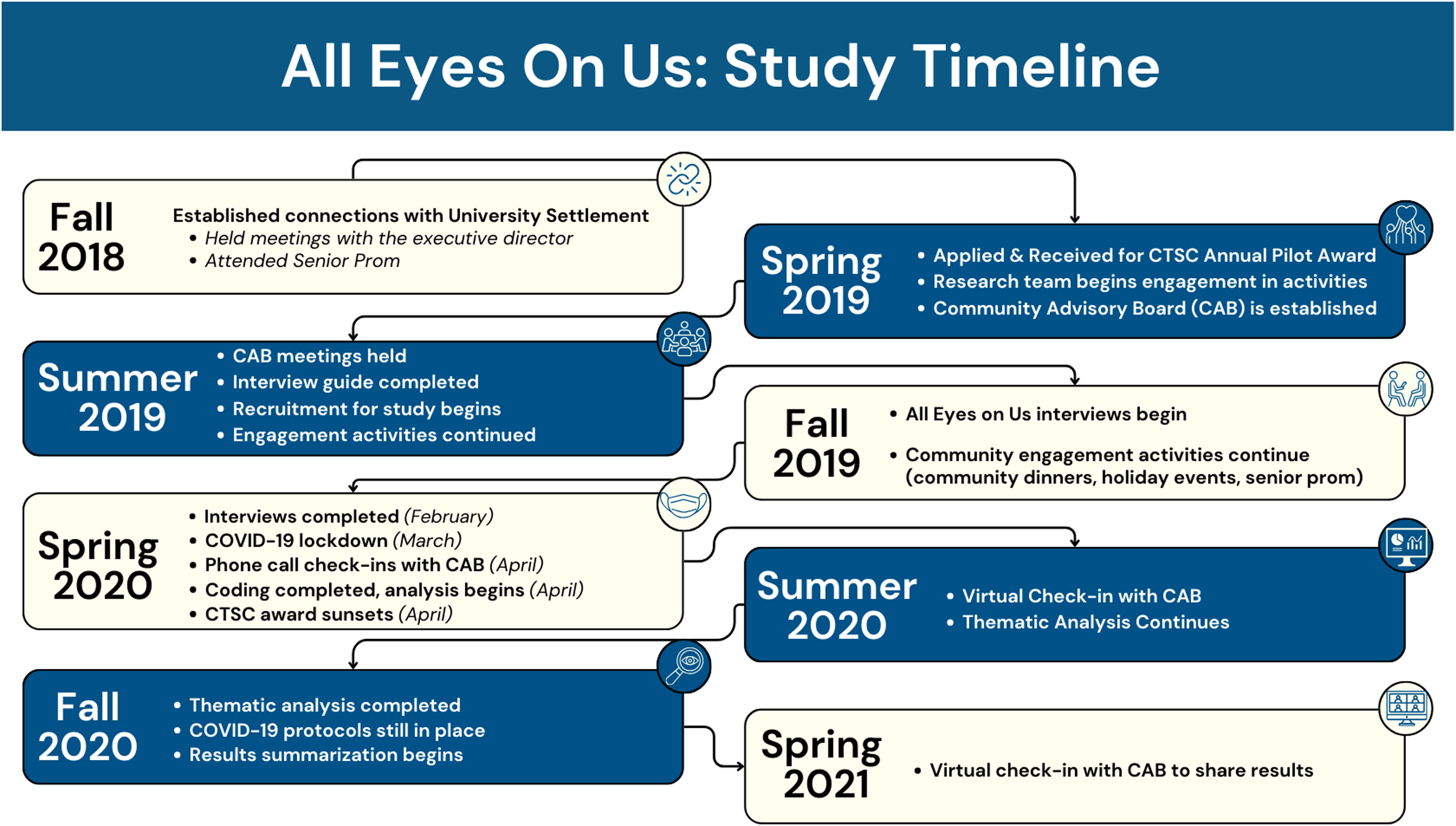
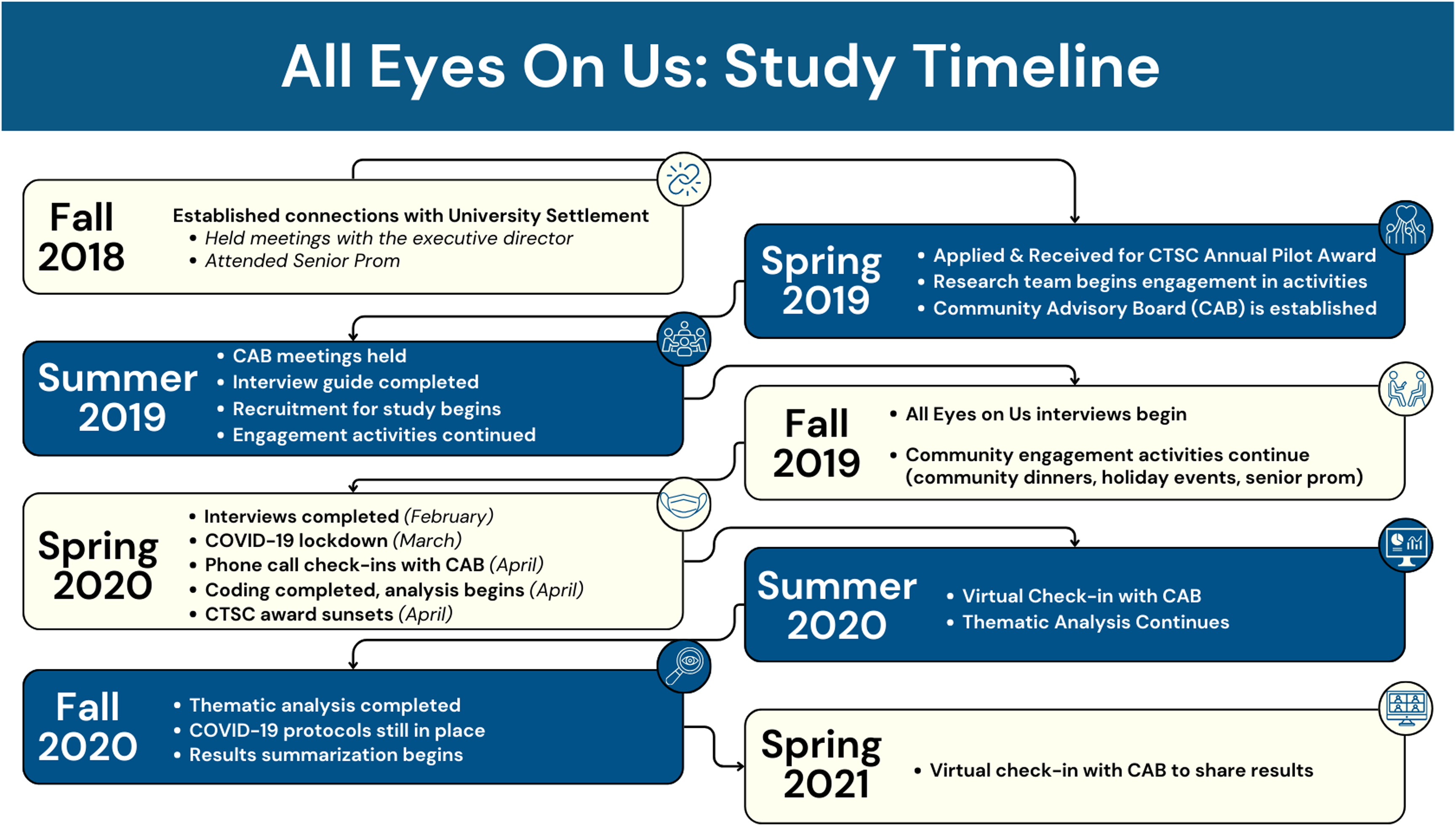
Interview transcripts were uploaded into a qualitative software package, NVivo 12 Plus. A preliminary codebook developed by the research team based on the interview guide and literature was used to code an initial set of transcripts. Two trained researchers each coded the same transcript and then discussed any coding discrepancies and emergent codes. Edits were made to the codebook based on these discussions. Two researchers coded a total of four transcripts continuing this iterative process. After four interviews, no additional codes were added, and no additional edits were made to the codebook. In total, 10 additional codes were added to the codebook. Utilizing a thematic analysis, the qualitative researchers developed summaries of themes based on the coded segments within each of the codes. Additionally, themes were examined across codes. Analytical themes and interpretations of findings were checked with the full research team and CAB members. Figure 1 shows the timeline of study activities. Demographic information collected during the interview was aggregated and summarized via basic descriptive statistics in Microsoft Excel.
Timeline of the All Eyes on Us study.
Results
We present our results in two sections. First, we highlight the results of our community engagement processes. Second, we present the results from our qualitative interviews.
Community engagement
To establish rapport and build relationships with University Settlement and the Broadway-Slavic Village community, research team members regularly attended senior community events beginning in October 2018 until in-person events were halted due to the COVID-19 pandemic. Events included: Senior Prom, Senior BBQ, produce giveaways, community meals, holiday events (i.e. Thanksgiving meal, Christmas giveaway), and Senior Yoga. At events held during the period in which interview participants were recruited (October 2019-February 2020), the research team was able to recruit over half of the target sample successfully.
The CAB included six individuals, five of whom identified as African American and one of whom identified as White. Of the six recruited, four CAB members were present for all three CAB meetings, while the other two could not attend all three meetings. In the first CAB meeting, attendees identified their shared team values as honesty, respect, commitment, knowledge, and teamwork; these were the values that guided future work of the CAB and research team. The second CAB meeting focused on the development of the interview guide. Following review of the draft interview guide, the question order was revised, and wording of questions was modified. During CAB meeting 3, the interview guide was further refined. CAB members advised us to add statements about why the interviewer was asking certain questions and identified additional questions to expand on content areas. Together, the study team and CAB developed the qualitative interview questions to illuminate (i) knowledge of eye health, (ii) perceptions of eye health, (iii) value of receiving vision care, (iv) barriers to obtaining vision care, and (v) feasibility of study participant recruitment for future research endeavors.
The last CAB meeting was held in August 2019 with the promise to reconvene after we had gathered interview data. We planned to complete data collection and reconvene the CAB in March 2020; however, our community engagement efforts were completely halted due to the COVID-19 pandemic. Early pandemic CAB meetings were not possible due to technological limitations, with multiple CAB members lacking access to internet, computers, and/or virtual meeting software. We were able to reconvene with CAB members via one-on-one phone conversations in January 2021. During this call, we shared a summary of the interview findings, and they offered thoughts on their interpretation of the findings and guidance on how to share study results through community dissemination channels. CAB members were positive about their experience during the study in the follow-up meetings after interviews were completed, with one member claiming they were “honored to be asked to participate in something of such importance,” and another feeling “enlightened” by the findings from the interviews.
Qualitative interviews
Participant demographics and characteristics
In total, 60 individuals were recruited to participate in semi-structured interviews; one individual was removed due to misalignment with recruitment. Thematic saturation was attained after the fourth interview, at which point no new themes emerged, no additional codes were added to the codebook, and no further revisions were made. In total, 10 additional codes were added to the codebook. All interviews were coded and nuances within those codes were explored. Every theme reported was mentioned by at least one participant from each self-identified race group.
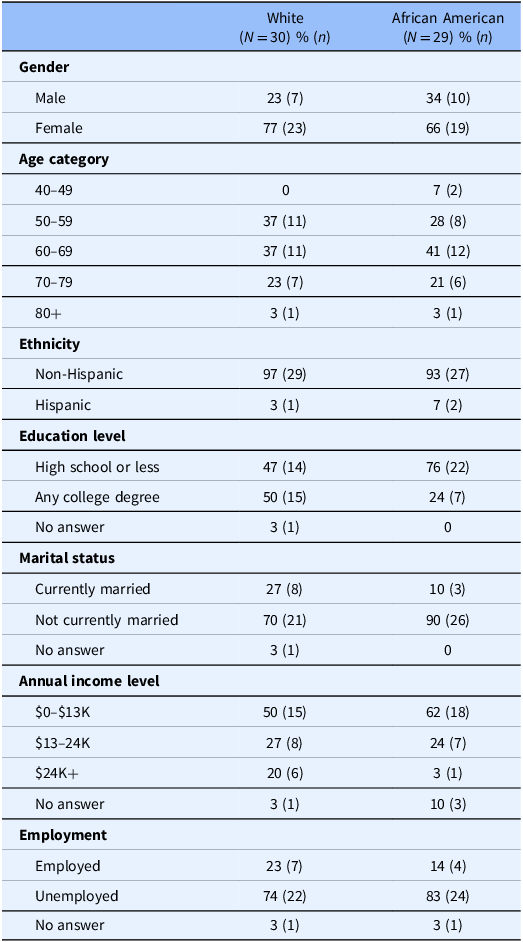
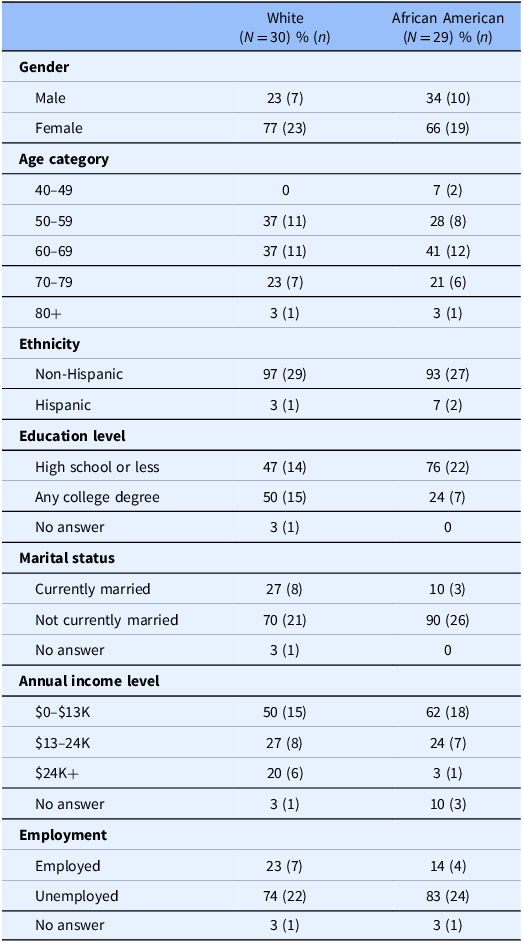
Table 1 summarizes the demographic characteristics of interview participants as recorded; counts and percentages are noted. Briefly, 30 self-reported as Caucasian or White race, 29 self-reported as African American race, 17 (29%) participants identified as male, and 42 (71%) participants identified as female. The largest concentrated age group was participants aged 60–69. Most participants reported being unemployed and most had an annual salary range of $0–$13K.
Demographic characteristics of AEOU participants (N = 59)
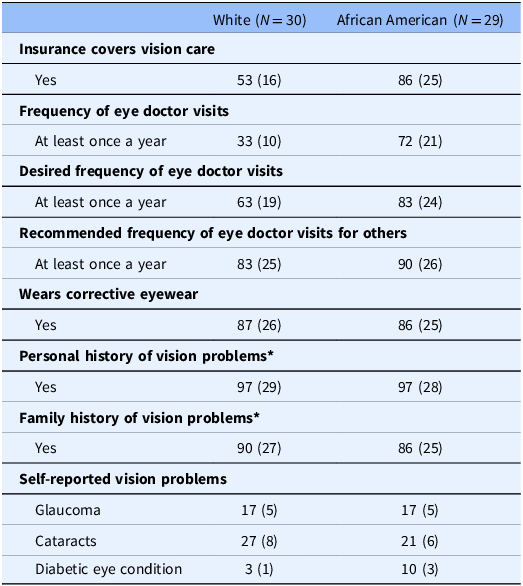
Participants also answered questions regarding their vision care utilization and personal ocular history (Table 2). Most participants had insurance that covered vision care (69%), and approximately half (53%) made at least annual visits to the eye doctor. Most (66%) of participants met the exam guidelines for low-risk individuals over 40. White participants were less likely to report that their insurance covers vision care and were less likely to have seen the eye doctor within the past year compared to African American participants. Interestingly, participants expressed a desire to see the eye doctor, as well as a recommendation for others to utilize eye doctor services, more frequently than they actually reported using the services themselves.
Vision care utilization and ocular history
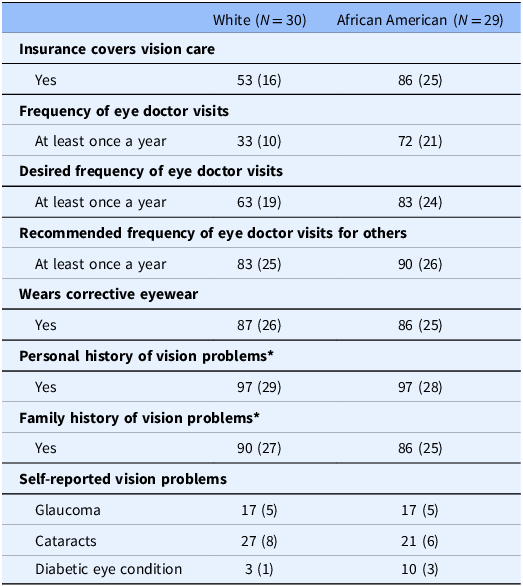
* Defined as glaucoma, cataracts, wearing corrective lenses, and eye trauma.
Most participants wore corrective eyewear (i.e. glasses or contact lenses, 86%) and had a personal history (97%) and a family history (88%) of vision problems. Vision problems were defined as cataracts, glaucoma, wearing corrective lenses, or having a history of ocular trauma. Responses were similar across White and African American participants. Approximately a quarter (24%) of participants self-reported having cataracts, while about a sixth (17%) reported having a previous glaucoma diagnosis. Three African American participants, compared to one White participant, reported a diabetic eye condition.
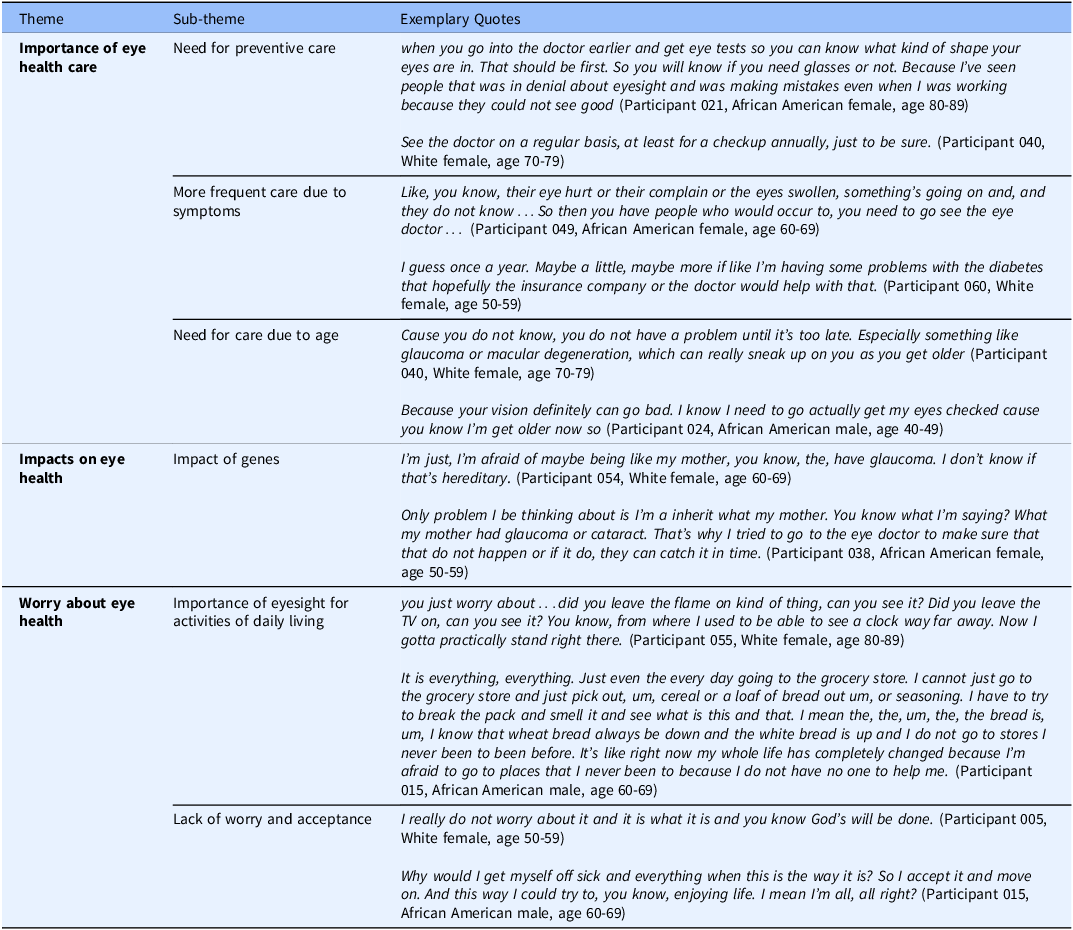
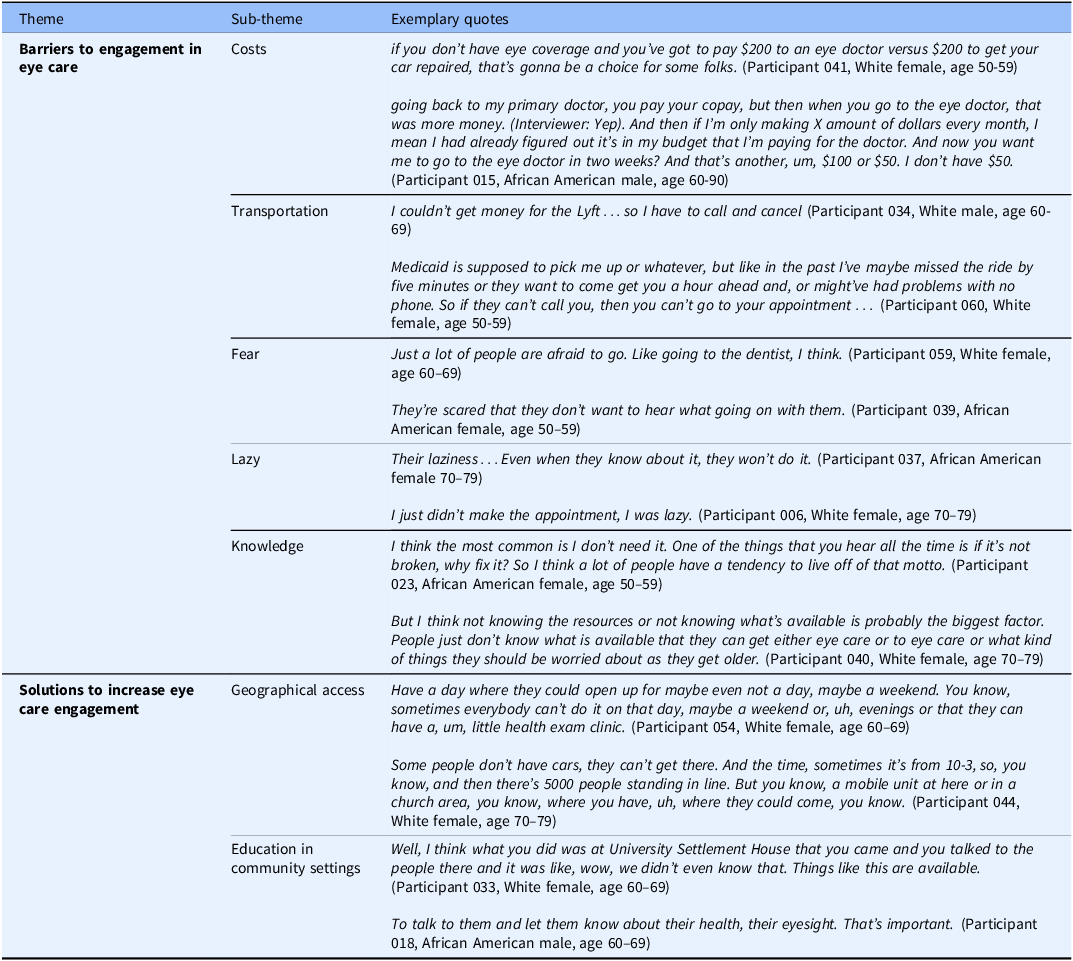
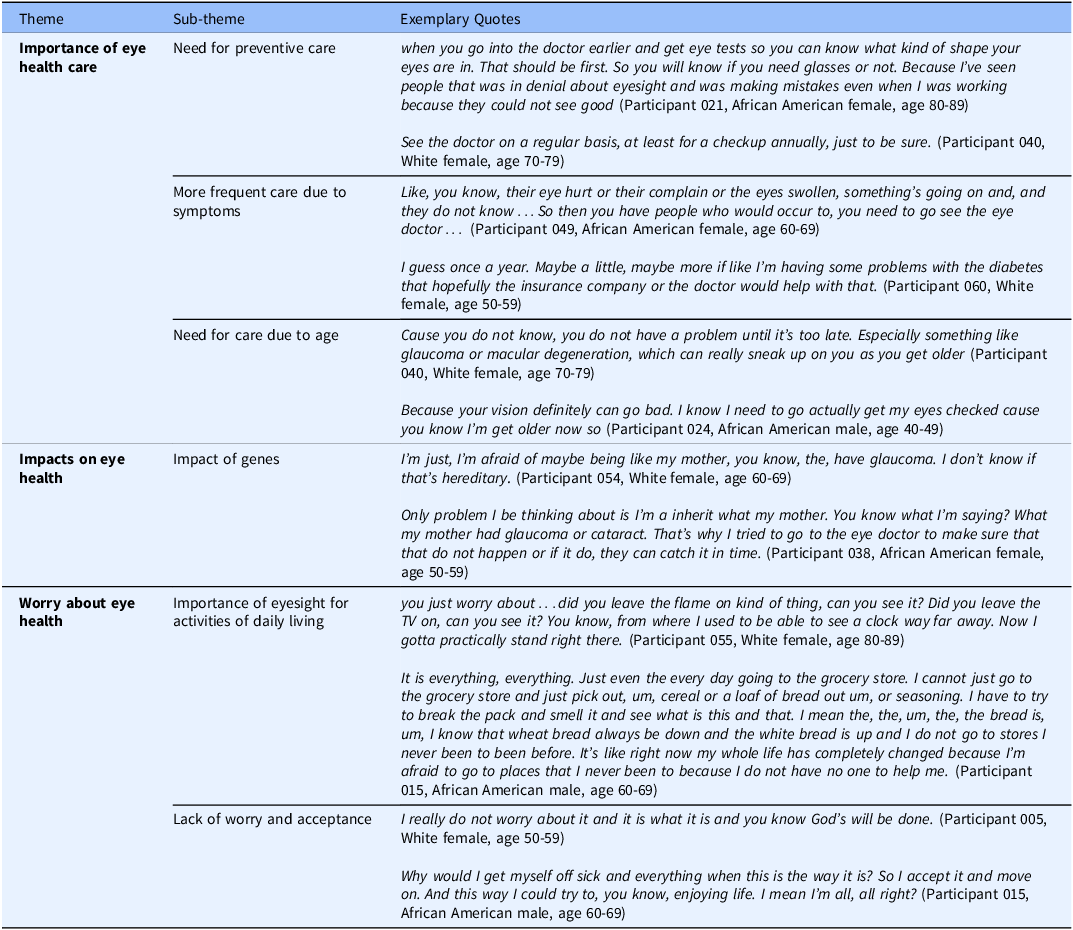
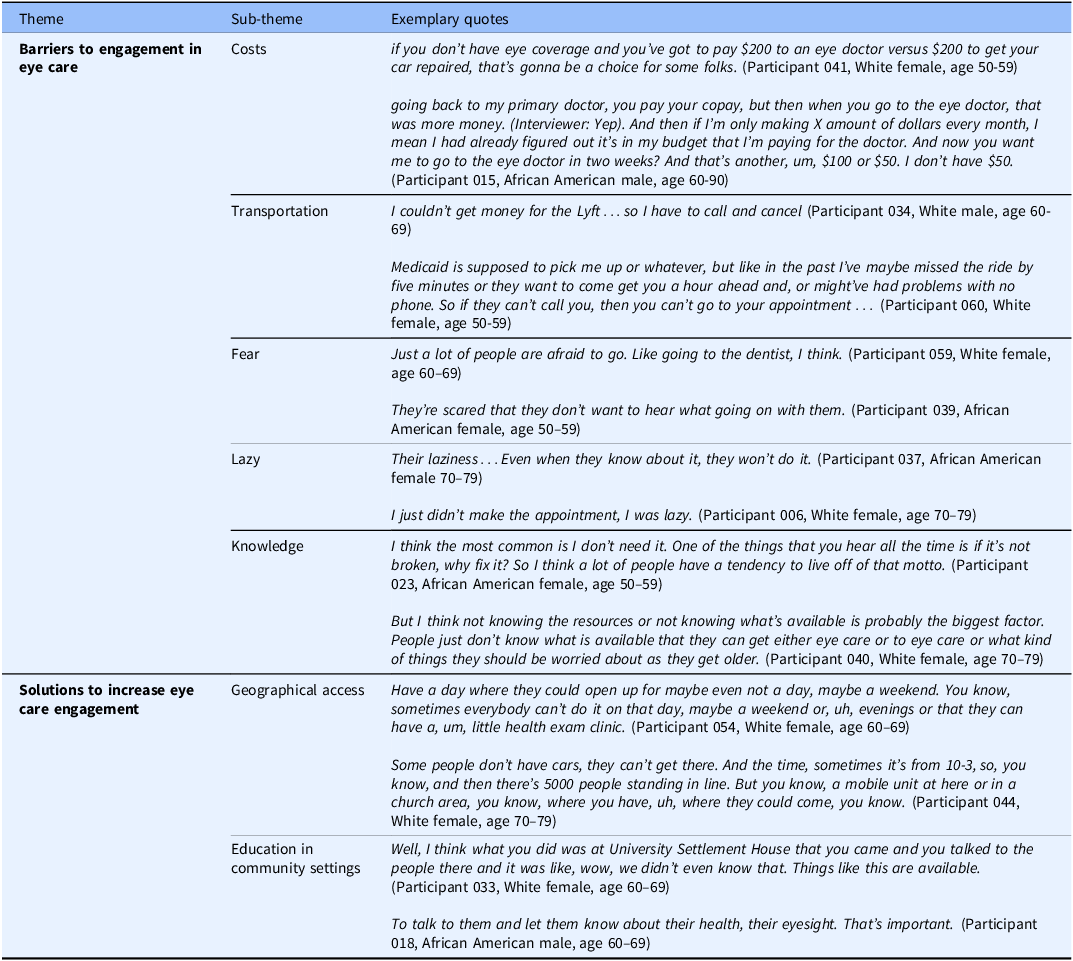
Overall, there were several themes around the value and perceptions of eye health and vision health care (Table 3), and barriers and facilitators to engagement in vision health care (Table 4). These themes were similar for both White and African American participants.
Themes around importance and perceptions of eye health and eye health care
Barriers and solutions to eye care
Values surrounding eye health and vision care
Eyesight was described by participants as very important, as it relates to all aspects of an individual’s life and subsequent abilities. In describing eye health and care, participants discussed the need for taking care of their eyes, including the value of vision care. Many participants described going to the eye doctor for preventative measures themselves. Additionally, in discussing the importance of preventative vision care, several indicated this was the best way to catch problems with eyes and eyesight proactively. Some participants explained that while going to the eye doctor annually is important, there may be times when they feel a need to go sooner or more frequently due to discomfort, pain, or other symptoms. Participants also stated that it is especially important to visit the eye doctor as one ages or develops additional health problems.
Perceived impact on eye health and worries
While participants perceived eye health and care as important, there was a discussion of the things that can impact and particularly hurt or impair eyesight or eye health and the related concerns of participants. Aspects that can impact eye health and eyesight included both modifiable and unmodifiable factors, such as personal activities and health choices, overall health—particularly diabetes—environmental exposures, age, and genetics. Age and genes were believed by participants to have uncontrollable negative effects on eye health. For those who had not yet faced declining eyesight or visual impairment, these beliefs led to anticipation of future changes in eye health. Losing eyesight and becoming blind was mentioned as a major worry, including fears of dependence on others and disruptions to daily activities. Many participants were already experiencing declines in vision quality and described how this affected their independence and routine functioning. However, some participants did not express any worries regarding their vision and eye health. Some participants seemed to be unconcerned about their eye health and accepted their current eye health status and future eye health outcomes.
Barriers to obtaining vision care services
Based on the vision care utilization responses summarized in Table 2, participants preferred to visit the eye doctor more frequently than they currently reported going. When asked about reasons why they and others do not go to the eye doctor, participants pointed to financial and transportation barriers, fear, limited concern, or self-described “laziness” as barriers. Many participants mentioned the cost of going to the eye doctor as a major deterrent to actively seeking eye care (Table 4). Participants also indicated that a lack of understanding of what their insurance may or may not cover, or the absence of vision insurance altogether could lead someone to choose not to go to the eye doctor.
Transportation emerged as a common barrier to going to an eye doctor. Those without personal access to transportation may rely on insurance for ride services, which limits the number of rides a person may take each year. Participants mentioned that ride services may also be difficult to schedule, unreliable, or not arrive on time.
Another barrier mentioned by participants was fear or anxiety of hearing what a doctor may say about their eye health, or what steps need to be taken to counteract progressive vision loss. A general lack of care for oneself was also mentioned as a reason for not going to the eye doctor. Self-described “laziness,” specifically, was mentioned multiple times by participants. Some pointed to a general lack of concern and knowledge around the subject, believing people would care more if they received proper information. Related is the perception that eye health and care is only needed when something is wrong as opposed to going for preventive reasons.
Solutions for increasing engagement in vision care services
Participants were also asked about what would help overcome barriers to vision care. Two common suggestions for increasing community uptake of vision care visits included increasing access to clinics in the neighborhood and increasing public education and awareness of eye health in the community.
Increasing access to eye care included both financial access as well as geographical access. Several participants suggested that to encourage regular eye doctor visits, the cost of eye exams should be lowered or made free. They emphasized the importance of accessibility and proposed using mobile units to provide exams and clinics in the neighborhood specifically targeting seniors.
Participants suggested educating others about the importance of vision care as they come to University Settlement or other places of congregation. Community members setting the example of proper eye health was also mentioned as a potential incentive.
Discussion
Our work is among the first to directly engage low-SES African American and White individuals to examine values, behaviors, and barriers related to eye care. We partnered with University Settlement, a trusted community resource center, and developed and engaged a CAB to explore how adults in the Broadway-Slavic Village community of Cleveland, Ohio conceptualize and value vision care, and the barriers they face in obtaining it. Our multidisciplinary research team strengthened conceptualization, design, and interpretation.
Complete qualitative interviews with 59 residents revealed that participants placed high importance on maintaining good vision and often recommended preventive eye care more frequently than they themselves accessed it. However, persistent barriers including cost, inadequate insurance coverage, transportation limitations, fear, and limited knowledge constrained care utilization. Insurance continuity has emerged as a key determinant of eye care access, as demonstrated in a statewide survey by Muhammad et al., where Ohio adults with gaps in health insurance coverage were nearly three times more likely to report unmet vision care needs compared with those with continuous private coverage [Reference Muhammad, Vang and Tumin18]. National leaders have also emphasized that eliminating vision health disparities requires attention to SDoH and authentic community engagement in eye care research [Reference Elam, Nwanyanwu and Scott17]. Building on these calls, Alexis et al. recently conducted qualitative interviews with Black adults in Detroit, highlighting barriers and facilitators to implementing a faith-based intervention to increase eye care utilization [Reference Alexis, Johnson, Williams, Newman-Casey, Piatt and Elam30]. However, quantitative surveys and single-site qualitative studies alone cannot illuminate how such structural barriers are experienced across diverse populations. All Eyes on Us participants named community-specific solutions, such as free or low-cost exams, mobile clinics, and targeted education campaigns, that they believed could improve access and engagement.
Our findings align with national survey data showing that vision health is a top priority across racial and ethnic groups, while actual utilization rates lag behind stated intentions [Reference Scott, Bressler, Ffolkes, Wittenborn and Jorkasky1,Reference Zhang, Cotch and Ryskulova7,Reference Brinson, Kumar, Wang, Varadaraj, Swenor and Scott31]. Prior studies have documented structural (e.g., transportation, cost) [Reference Goyal, Richards and Patel32] and psychosocial (e.g., fear, fatalism, shame) barriers to care among underserved populations [Reference Elam, Tseng and Rodriguez2,Reference Elam, Nwanyanwu and Scott17]. In All Eyes on Us, observed differences in insurance coverage and visit frequency between African American and White participants suggest that, even within similar socioeconomic strata, coverage type and perceived affordability shape utilization patterns.
The gap between valuing vision and engaging in preventive care reflects a “hierarchy of priorities” common in low-income settings, where immediate needs such as food, utilities, and safety take precedence over non-urgent health care [Reference Angier, Gregg, Gold, Crawford, Davis and DeVoe33,Reference Danis, Kotwani, Garrett, Rivera, Davies-Cole and Carter-Nolan34]. This is particularly relevant in eye health because many vision-threatening diseases, including glaucoma, progress silently and without pain. All Eyes on Us participants’ accounts illustrate how logistical barriers (e.g., unreliable ride services, limited clinic hours) interact with informational gaps (e.g., uncertainty about insurance coverage, limited awareness of preventive benefits) and emotional barriers (e.g., fear of bad news, intimidation by the clinical environment) to reduce care-seeking. These findings highlight how multiple domains of SDoH [35] converge to shape vision care behaviors.
This study addresses critical gaps identified by the National Academy of Medicine [36] and the National Eye Institute [Reference Chiang37], which call for community-engaged approaches to reduce vision health disparities. While programs such as MI-SIGHT [Reference Newman-Casey, Musch and Niziol38], the KRESS Vision Program [Reference Husain, Hwang, Ortiz, Smith, Chow and Sun39], STOP GLAUCOMA [Reference Varadaraj, Wahl and Gajwani40], and the Sight Outcome Research Collaboration (SOURCE) [Reference Bommakanti, Zhou and Ehrlich41] have emerged, few peer-reviewed studies describe the qualitative, community-based methods used to explore eye health perceptions among underserved populations [Reference Webber, Lu and Woodward42,Reference Del Risco, Zuccaro and Livingston43]. By situating data collection in a trusted community resource center, we were able to capture perspectives from individuals who may be absent from clinic-based research, which is often biased toward those already accessing care, and from online surveys, which can exclude the least-resourced individuals. This community-embedded approach provides novel insight into how structural and psychosocial barriers operate in the lived context of a low-income, racially diverse community. Our findings extend recent calls to action emphasizing the central role of social determinants and community engagement in advancing equity in eye care [Reference Elam, Tseng and Rodriguez2]. A recent systematic review of patients’ and providers’ experiences of accessing eye care found that structural barriers are pervasive across diverse health systems, from high-income countries with universal coverage to low- and middle-income countries [Reference Solomon, Shoge and Ervin44]. The review highlighted fragmented referral pathways, unclear provider roles, and logistical and socioeconomic constraints as common challenges. These findings echo All Eyes on Us participants’ accounts and reinforce that underutilization of eye care is rarely due to lack of motivation; rather, it reflects systemic barriers that make care difficult to access. Together with our community-based data, this evidence underscores the need for system-level solutions that streamline referral pathways and reduce the burden on individuals to navigate complex eye care systems.
From a translational perspective, the CBPR framework used in All Eyes on Us illustrates how community-embedded research can directly inform pragmatic intervention design. Although the CAB did not participate in formal coanalysis, their role in cointerpreting findings shaped how barriers were contextualized and how solutions were prioritized. Participants consistently expressed a desire to see the eye doctor – even recommending more frequent care than they themselves received – yet practical constraints such as location, transportation, insurance confusion, and fear limited follow-through. Translating these insights into action suggests multiple system-level levers: integrating mobile screening units or referral navigation within trusted spaces such as Federally Qualified Health Centers, senior centers, or local churches; aligning clinic hours with community schedules; and developing education or “call-to-action” materials that emphasize the specific reasons residents value eye care, including maintaining independence, preventing future disability, and protecting vision for daily functioning. Because these themes emerged across both African American and White residents living within the same neighborhood context, they highlight shared structural influences that can be addressed through community-engaged, health-system–integrated interventions. This model demonstrates how CBPR can move beyond engagement into guiding implementation planning, policy adaptation, and future community-led dissemination.
For Clinical and Translational Science audiences, this approach demonstrates how community-situated qualitative research can identify modifiable system-level targets – such as referral workflow redesign, colocated screening services, and communication strategies – that can be rapidly tested through pragmatic pilots. Embedding implementation planning within CBPR structures ensures that intervention strategies originate from community-articulated priorities rather than academic assumptions, enhancing feasibility, reach, and sustainability.
A major strength of this work was early, pre-funding engagement with University Settlement, formalized through an MOU and joint budget planning, which aligned research goals with community priorities. CAB input directly shaped culturally aligned interview questions, including moving sensitive demographic questions to later in the interview to prevent participant discomfort. The inclusion of both African American and White participants at comparable SES levels provided a unique opportunity to disentangle socioeconomic from racialized barriers to care.
Limitations include the study’s geographic specificity, which may limit generalizability to other settings; reliance on self-reported data, which may be influenced by recall or social desirability bias; and the decision not to distinguish between optometry and ophthalmology in interview prompts, as participants often used the general term “eye doctor.” While this reflects real-world language and decision-making, it may obscure provider-specific barriers relevant to intervention planning. The COVID-19 pandemic also curtailed in-person CAB engagement after interviews and delayed community dissemination. The qualitative themes we report herein include individuals’ reports of their own experiences as well as their interpretation of the experiences of their family and/or community members. Importantly, this study was not designed to capture prevalence of specific themes; however, it can serve as the foundation for a quantitative survey to capture prevalence that would be appropriately designed to quantify themes. Additionally, because the Latinx population in this community is very small, recruitment sufficient for meaningful qualitative comparison was not feasible.
Navigating the vision care system requires time, transportation, knowledge of coverage, and financial resources, assets often in short supply for those most at risk of preventable vision loss. Without an established care pathway, individuals who do not receive direct referrals from primary care providers may never enter the eye care system, even when they desire care. Addressing this gap requires shifting the burden from individuals to the healthcare system. Evidence from high-need regions shows that when vision screening and referral are embedded within existing healthcare infrastructure, e.g. Federally Qualified Health Centers, safety-net clinics, or trusted community-based programs, utilization increases and follow-up adherence improves [Reference Owsley, Rhodes and McGwin45–Reference Bai, Burt and Woodward49]. Models integrating screenings into clinical and non-clinical settings, strengthening referral pathways, and employing trained community health workers to navigate logistical and financial barriers can transform care access. For populations not already linked to chronic disease care pathways, these system-level interventions create new, feasible routes to prevention and treatment. Without such integrated approaches, the responsibility to seek care remains disproportionately on those least equipped to navigate a fragmented system, perpetuating disparities in vision health outcomes.
Conclusion
Our study illustrates the need to ground glaucoma and vision health disparities research in real-world experience. Through CBPR, we uncovered layers of behavioral, emotional, and structural barriers to eye care that are often overlooked in clinical or quantitative studies. If we are to move from describing disparities to eliminating them, we must prioritize lived experience. This research model offers a template for work where the community is not just the subject of study but a central partner in defining the problem and crafting the solution – an approach that can inform system-level interventions and translational policies to eliminate vision health disparities.
Supplementary material
The supplementary material for this article can be found at https://doi.org/10.1017/cts.2026.10698.
Acknowledgements
Crucial to this work was the funding provided by a Pilot Award (JNCB, EST, SKG) and KL2 Career Development Award (JNCB) from the Clinical and Translational Science Collaborative of Northern Ohio. The willingness of the CTSC to fund interdisciplinary work like ours made it possible to gather these data in a way that was authentically rooted in the community while maintaining rigorous research standards. Additionally key to this work was the multi-disciplinary collaboration between the Cleveland Institute for Computational Biology and the Prevention Research Center for Healthy Neighborhoods at CWRU, both of which allocated additional funds beyond the award to support both the effort of conceptualizing the project and conducting additional, unanticipated analyses. What cannot be quantitatively captured is the heart and soul of this project – the people. The intentional focus on doing work that was responsive to the research question while keeping the community at the forefront of focus. We are grateful to Jacqueline Dolata for connecting us with University Settlement and to Gabrielle Blackshire for helping us to complete the work. We are grateful to current and former University Settlement staff for their dedication to this study: Earl Pike (coauthor), Patricia Gullian, Allison Woods, Grace Wright, Karla Trammell, Frederick Knuckles, Jalene Pardon, Sara Amato, and Sandra Buckner. We are immensely grateful to the All Eyes on Us CAB members: Mary Johnson, Deborah Robinson, Jean Ezell, Jeff Miles, Marcia Boyd, and Brenda Lucas. The authors used ChatGPT (OpenAI, San Francisco, CA) to assist with rewording portions of the text. All content was reviewed and verified for accuracy and appropriateness by the authors.
Author contributions
Sarah Koopman Gonzalez: Conceptualization, Data curation, Formal analysis, Funding acquisition, Investigation, Methodology, Project administration, Supervision, Writing–original draft, Writing–review & editing; Sara Kennedy: Data curation, Formal analysis, Investigation, Project administration, Writing–original draft; Tyler A. West: Formal analysis, Writing–review & editing; Kendall R. Pixley: Project administration, Writing–review & editing; Andrea R. Waksmunski: Project administration, Visualization, Writing–original draft, Writing–review & editing; Kaitlyn L. Funk: Investigation, Writing–original draft; Leslie V. Castaneda: Data curation, Investigation, Writing–original draft; Leslie Richards: Investigation, Writing–original draft; Leah Cummings: Data curation, Project administration, Writing–original draft; Bridget Croniger Ockunzzi: Data curation, Writing–original draft; Renee A. Laux: Project administration, Supervision; Briana L. McIntosh: Project administration, Supervision, Writing–review & editing; Earl Pike: Conceptualization, Funding acquisition, Supervision; Erika S. Trapl: Conceptualization, Funding acquisition, Investigation, Methodology, Project administration, Resources, Supervision, Writing–original draft, Writing–review & editing; Jessica N. Cooke Bailey: Conceptualization, Funding acquisition, Investigation, Project administration, Resources, Supervision, Writing-original draft, Writing–review & editing.
Funding statement
This project was financially supported by the Clinical and Translational Science Collaborative of Northern Ohio which is funded by the National Center for Advancing Translational Sciences (NCATS) of the National Institutes of Health, UM1TR004528, via an Annual Pilot Award to JNCB, EST, and SKG and KL2TR000440 to JNCB. The content is solely the responsibility of the authors and does not necessarily represent the official views of the NIH. ARW was supported by the CWRU Visual Sciences Training Program (T32 EY 7157-19) and the CWRU Clinical and Translational Scientist Training Program (TL1 TR 002549-04). Funding was also provided by the Prevention Research Center for Healthy Neighborhoods and Cleveland Institute for Computational Biology, both in the Department of Population and Quantitative Health Sciences at Case Western Reserve University, as well as the Center for Health Disparities and Department of Pharmacology and Toxicology in the Brody School of Medicine at East Carolina University.
Competing interests
The authors declare no competing interests.


 Open access

