


1. Introduction
The increasing demand for alternative and sustainable solutions in private transport has intensified the focus on lightweight design and optimization strategies. With the transportation sector being a significant contributor to global greenhouse gas emissions, the shift towards alternative means of transport is crucial for achieving environmental targets. Lightweight design plays a pivotal role in reducing energy consumption and enhancing the efficiency of vehicles, leading to lower emissions and improved sustainability. By employing advanced materials and optimizing structural design, manufacturers can achieve substantial weight reductions without compromising safety or performance.
An example for such alternative micro-mobility solutions are so-called Cross Skates. Cross Skates are roller skates with two wheels that allow skating like in cross-country skiing. The Institute of Engineering Design (KTmfk) of the Friedrich-Alexander-Universität Erlangen-Nürnberg (FAU) has developed an innovative, electrified version of a Cross Skate (E-Cross Skate) (Reference Kramer, Wirsching, Wartzack and MiehlingKramer et al., 2023), see Sect. 4. Here, lightweight design plays a crucial role in enhancing the efficiency by reducing the energy consumption and in maximizing comfort when using the E-Cross Skate. It requires innovative design approaches as well as the strategic use of advanced materials, such as fiber-reinforced plastics (FRP). However, the anisotropic material properties of composite materials also lead to new challenges in the design and manufacturing process. Especially the curing of composite parts with complex laminates can lead to distortions and residual stresses. Additionally, parameters which are subject to deviations from their nominal values, e.g., ply angles and ply thicknesses, influence the manufacturing process as well as the structural behavior of a composite part.
This research paper explores an innovative lightweight design approach, aiming to overcome the described difficulties. The approach combines topology optimization and fiber orientation optimization, which is the basis for a laminate layout optimization. Continuous simulation of manufacturing and curing is required to enable the consideration of deviations that occur during these steps. To minimize the influence of laminate parameter deviations, a tolerance optimization approach is presented, defining tolerance values for the laminate design parameters, while ensuring quality and functionality of the composite structure. The presented techniques are then applied to the frame of the E-Cross Skate, which is substituted with a composite structure.
2. State of research
In this section, a design approach for the optimization of composite structures is presented first (Sect. 2.1). Then a brief overview of the manufacturing process is given (Sect. 2.2), explaining the difficulties and variations that occur, making manufacturing complex and highlighting the importance of variation management and process simulation.
2.1. Optimization of composite parts
The design approach that is used to define an optimized laminate layout for the composite structure was developed by Klein et al. (Reference Klein, Malezki and Wartzack2015) and Völkl et al. (Reference Völkl, Klein, Franz and Wartzack2018). It combines a topology optimization with a fiber orientation optimization to a concerted iterative method for the design of composite structures. Subsequently, a cluster algorithm is performed to generate a manufacturable patch structure of the optimized laminate layout (Reference Klein, Malezki and WartzackKlein et al., 2015).
The starting point of the design approach is a CAD shell model that represents the geometry of the part and contains all necessary boundary conditions like constraints and loads. A modified multi-layer Computer Aided Internal Optimization (CAIO) method is used to determine the fiber orientations and the number of layers that are needed in order to transfer the loads within the part. The CAIO method iteratively aligns the fibers in finite elements in the direction of the mean stress (Reference KriechbaumKriechbaum, 1992; Reference Mattheck and TesariMattheck and Tesari, 2000). Each finite element is a layered shell element, with layers modeled using through thickness integration points. First, the initial FE model is solved with isotropic material properties and the resulting stress tensors are used as an input for the next iteration. The mean stress directions are then calculated for each layer and the fibers are aligned accordingly. The modified FE model is solved again and the fiber orientations of the new model are compared to the orientations of the previous model. When a termination criterion is met, the algorithm stops, otherwise a new iteration begins. In the post-processing, layers with small absolute values of the mean stresses are deleted and layers with similar orientations are added up to a single layer.
The second part of the design approach is a simultaneous topology optimization based on the Soft Kill Option (SKO) algorithm (Reference Stegmann and LundStegmann and Lund, 2005; Reference Mattheck and TesariMattheck and Tesari, 2000). The original SKO algorithm compares the von Mises stress of each element with a reference value and increases the Young’s modulus of the element by the difference, while the modulus is limited to a maximum value. For anisotropic materials, however, the von Mises stress is inadequate because it combines the six stress components into a single value. Therefore, Pederse (Reference Pedersen2000) introduced an adapted SKO that modifies element stifness based on the strain energy density. The density difference is calculated by the ratio between the current strain energy density of the element and a threshold value, and the Young’s modulus of the element is again adjusted by this value. The optimization objective is to reach a specified volume fraction of the initial volume. Therefore, the threshold value for the strain energy density is calculated continuously so that the volume fraction is kept constant over all iterations (Reference Völkl, Klein, Franz and WartzackVölkl et al., 2018).
The result of the previous optimization steps is a number of layers as well as the fiber orientation for each single finite element individually. Both parameters can vary over the part and the resulting laminates are at this point not manufacturable. The target is to find areas with constant fiber orientation and to condense the finite elements in this area into a single cluster. Therefore, a starting element is selected and a new cluster is opened. All the neighboring elements are then identified and elements with fiber orientations within a given tolerance are added to the cluster. The iterative algorithm stops when each layer in each element of the model has been added to a cluster (Reference Völkl, Klein, Franz and WartzackKlein et al., 2015). The resulting clusters can now be used as help to define the patches manually, but still can not be used directly for manufacturing. This requires, e.g., the derivation of tape laying geometries from these clusters. Automated tape laying (ATL) is a process in which unidirectional tapes consisting of pre-impregnated fibers (prepregs) with a fixed width are successively placed on the mold (Reference Lengsfeld, Lacalle Muerza, Neumeyer, Altstädt and HanserLengsfeld et al., 2020). The algorithm separates the clusters into ATL tape segments of a pre-defined width considering the optimized local fiber orientations. These tape segments are aligned next to each other to obtain a continuous laying path (Reference Voelkl, Kießkalt and WartzackVoelkl et al., 2019). Further improvements to the algorithm are also required, such as the recognition of recurring patch shapes, the definition of a maximum number of patches or the derivation of simpler patch shapes for hand lay-up.
2.2. Manufacturing of composite parts
After designing the composite part and defining the laminate layout, manufacturing is the next step. Therefore, this section gives a short overview of the manufacturing process using the prepreg technology. Firstly, the prepreg must be cut into patches that were defined in the design phase, or cut to the desired length when using tapes. The prepreg pieces are then stacked on top of each other in the specified position and orientation, either directly onto the mold or the complete laminate is produced beforehand and then draped onto the mold. After draping all plies and patches, the laminate has to be cured. Curing is a complex thermo-mechanical process in which the uncured or partially cured material is transformed into a fully cured solid. Curing takes place according to a temperature-time curve specified by the manufacturer, usually with the additional application of pressure to prevent air and gas inclusions in the laminate. For lower quality requirements, the vacuum process can be used while for higher requirements, curing in an autoclave is preferred. An autoclave is a pressurized oven in which pressure is applied to the laminate, which minimizes fiber waviness and voids. During curing, the resin shrinks due to the rearrangement of the polymer molecules. In the case of unidirectional fibers, the shrinkage is higher in the transverse direction than in the longitudinal direction due to the different coefficients of thermal expansion (CTE) of fibers and matrix, which can lead to residual stresses in the component. (Reference MallickMallick, 2007) Another cause of residual stresses is the different CTE of the workpiece and mold, which results in shear stresses in the contact surface (Reference Twigg, Poursartip and FernlundTwigg et al., 2003). The undissipated residual stresses from the curing process lead to geometric deformations in the final component during demolding, which are classified as spring-in and warpage (Reference Albert and FernlundAlbert and Fernlund, 2002). Spring-in refers to the deflection of angles and tight curves on the component, which results in a reduction of the nominal angle. Warpage describes a concave deformation of originally flat sections due to process-related stresses or strains.
At every stage of the manufacturing process, there are unavoidable and ubiquitous variations, regardless of the manufacturing method chosen. This section provides a brief summary of the most common variations. The prepreg can be subject to variations in local thickness, which has an effect on the fiber volume fraction and thus, e.g., on the occurrence of voids (Reference PotterPotter, 2009). Fiber waviness or broken fibers occur due to defects in the material or production process of the prepreg (Reference Potter, Khan, Wisnom, Bell and StevensPotter et al., 2008). During cutting and placing, especially when done by hand, variations are more pronounced and occur more frequently, e.g., inaccurate contours, positioning or orientation errors, overlaps, misplacements or an incorrect stacking sequence (Reference Fernström, Lööf, Frampton, Brunnacker, Wärmefjord and SöderbergFernström et al., 2022). When draping prepregs onto curved molds, deviations of the fiber angles can occur. In contrast to the variations mentioned so far, draping deviations are not random and can be calculated to a certain extent with the help of a draping simulation (Reference Freitag, Goetz and WartzackFreitag et al., 2024). Finally, curing leads to deformations, e.g., spring-in and warpage, as mentioned before. These deformations can be even more pronounced if the orientation of the layers vary and then lead to asymmetrical laminates. Several research studies have shown that these variations can have a significant impact on the quality and performance of a composite part (Reference Parlevliet, Bersee and BeukersParlevliet et al., 2007; Reference Klein, Caballero and WartzackKlein et al., 2013), especially when using complex laminates with multiple patches (Reference Freitag, Goetz and WartzackFreitag et al., 2024; Reference Franz and WartzackFranz and Wartzack, 2022).
2.3. Research gap
In the last two sections, approaches for optimizing the design of composite structures were presented and an overview of the manufacturing process and variations that occur was given. It can be deduced that process simulations are essential to consider and predict the effects of variations in manufacturing. They are even more important when an optimized laminate layout is used, where many more design parameters can vary. There are currently approaches for design optimization of composite structures (Reference Ye, Dong, Yang, Wang and ChengYe et al., 2023) as well as strategies for considering variations of non-optimized structures (Reference Fernström, Lööf, Frampton, Brunnacker, Wärmefjord and SöderbergFernström et al., 2022; Reference Franz, Freitag and WartzackFranz et al., 2024). However, a framework combining all relevant optimization stages and a variation analysis is not yet available for composite structures. Thus, the aim of the present work is to provide a simulation strategy (Sect. 3) for linking design optimization with manufacturing process simulations, in which variations are also taken into account. With this approach, the design of a composite structure can be optimized and the effects of variations and curing on the optimized design can be analyzed directly.
3. Process simulations considering variations
The first step in the simulation strategy (Figure 1) is to design and model the pail geometry in CAD and to create a finite element mesh of the geometry. Since composite parts are mostly thin-walled structures, they should be modeled using quadratic shell elements. The initial laminate layout is then created in Ansys Mechanical Composite PrepPost (ACP) and used as input for the design optimization (Sect. 2.1) in Matlab. For this purpose, an interface was developed that enables reading and writing of Ansys input files in Matlab. The topology optimization is implemented in Matlab in order to optimize the topology and the fiber orientations simultaneously, which is not possible directly in Ansys. The result is an optimized laminate layout with the positions of the local reinforcement patches and their sizes and orientations. These information can then be exported back to Ansys by running an auto-generated script that creates the laminate in ACP. The laminate layout can then be manually reworked or refined if required.
Simulation strategy for the optimization of composite structures considering variations

The influence of deviations from the defined nominal values of the laminate parameters can be analyzed by performing a Design of Experiments (DoE). For this purpose, design points are generated by performing a Latin Hypercube Sampling (LHS) of the input parameters. Each input parameter of each design point then has a value that differs slightly from the nominal value and is within the specification limits (i.e. fiber angles between -15° and +15°). Sampling, tolerance analysis and tolerance optimization are carried out in Matlab. For this purpose, the laminate information can be imported directly to Matlab using the Hierarchical Data Format 5 (h5). It is also possible to skip the design optimization and start directly with a variation analysis or to use the optimization results directly without exporting the results back to Ansys first. For every design point an FEA is carried out to calculate the resulting output data. As this is the most time-consuming step, efficient sampling and fast FEA are crucial. Because these variations are inevitable, tolerances are used to define a range of acceptable variation. The tolerances guarantee the functionality of the composite structure, e.g. that certain angles of the component are maintained, deformations are not too large or failure criteria are not exceeded. For finding optimal tolerance values, a surrogate model based tolerance-cost optimization is used. Therefore, a surrogate model (e.g. neural network) is trained using the sampling data and the resulting output data from the FEA. The tolerance-cost optimization uses a genetic algorithm to minimize the costs, whereby a maximum scrap rate of 2700 parts per million (ppm) must be achieved. The scrap rate is calculated by performing a statistical tolerance analysis that uses the pre-trained surrogate model (Reference Franz, Schleich and WartzackFranz et al., 2021; Reference Hallmann, Schleich and WartzackHallmann et al., 2020; Reference Freitag, Goetz and WartzackFreitag et al., 2023). Surrogate modeling, variation analysis and tolerance optimization are fully integrated into a Matlab interface, which allows easy handling without manual intervention.
4. Application
The presented design optimization and simulation approach is now applied to the E-Cross Skate, an alternative micro-mobility developed at the Institute of Engineering Design (Reference Kramer, Wirsching, Wartzack and MiehlingKramer et al., 2023; Reference Rathert, Miehling, Kramer, Biehler, Duschl, Kuhn and WartzackRathert et al., 2022). The E-Cross Skate (Figure 2) is attached to the rider’s foot with a binding so that it can be used with normal road shoes. The binding is mounted on four strain gauge load cells, which enable the driving power of the electrically driven rear wheel to be controlled based on the inclination of the lower leg. The rear wheel is equipped with a disc brake, which is also controlled by the inclination of the lower leg. It is actuated when the lower leg shaft is tilted backwards, in particular beyond the extent that occurs during normal skating. The front wheel is steerable by a wheel hub steering system to improve cornering and handling. Two servomotors actuate the steering system depending on the inclination around the roll axis, which is measured by an inclination sensor.
Overview of the CAD model of the E-Cross Skate (Reference Kramer, Wirsching, Wartzack and MiehlingKramer et al., 2023)

In the original version, the structural frame consists of a topology-optimized, milled aluminium structure. To further reduce the weight, the metal structure is replaced by an composite structure made of endless carbon fiber-reinforced plastic (CFRP). In order to fully exploit the lightweight potential of CFRP, specially tailored structures are required. To achieve such a design, the presented design approach is used to optimize the frame structure in the following.
4.1. Initial design
The first step is to design a CAD model that is suitable for composite materials. This means that a surface model has to be derived from the solid model, e.g. by using the middle or outside faces (Franz et al., Reference Franz, Freitag and Wartzack2024). An FE mesh with quadratic, quadrilateral shell elements (SHELL281) and an initial laminate structure with layers covering the entire geometry are then created. Finally, the boundary constraints and load cases (LC) have to be defined. The connections between the wheel axles and the frame prevent rigid body motion and ensure that the distance remains constant. For the frame structure, two load cases are defined: driving and braking. It is assumed that the entire body weight can lie on one skate when driving, as the driver may use a skating technique as in cross-country skiing. The maximum weight of 120 kg is distributed over the four connection points between the foot binding and the frame, with 65% of the force (780 N) being applied to the rear section. In the second load case, the braking torque of 23.7 Nm is an additional load on the frame, whereby it is assumed that the body weight is evenly distributed over the two skates when braking.
The initial laminate design consists of 12 layers that cover the whole part ([0°/90°/45°/-45°/0°/90°] s ). The unidirectional prepreg (AS4/8552) layers have a thickness of 0.15 mm, resulting in a total laminate thickness of 1.8 mm and a weight of 288.84 g. The material data are taken from the Ansys material database. The original aluminium frame weighs 555 g. Finally, a solver input file is written, which is then imported into the Matlab application for the following steps.
4.2. Topology and laminate optimization
The target volume fraction for the topology optimization is set to 0.75. Convergence is reached when the relative change in strain energy is less than 0.01, which is the case after 11 iterations and demonstrates the fast convergence of the optimization approach. All elements with a relative density below the selected threshold value are deleted after the topology optimization (see Figure 3). The remaining elements are then clustered, resulting in a preliminary laminate layout that can be automatically exported back to the FE software. Here, the final laminate layout is created by manually post-processing the optimization results, e.g. by removing small holes in clusters, ensuring that the clusters have a minimum length and width, or by adding layers to the elements for which boundary conditions have been defined. In addition, two base layers ([0°/90°]) are added, which work as carrier for the patches and ensure a flat surface. This leads to a final laminate layout of 27 individual patches and the 2 base layers, which are all mirrored to create a symmetrical stack-up. Thus, the weight could be further reduced to 227.11 g.
Result of topology and fiber orientation optimization of the E-Cross Skate’s CFRP frame

4.3. Comparison of the optimized and non-optimized layout
To verify the optimization results, failure criteria and the deformation under load of the two different layouts are compared. The Tsai-Wu failure criterion tw and Puck’s action plane strength criterion pfm, which are widely used for orthotropic composites, are taken as failure criteria. The failure criteria indicate whether failure occurs (f ≥ 1) or not (f < 1), based on the occurring normal and shear stresses and the materials’ orthotropic stress limits. The initial layout leads to a maximum value of pfms ,0 = 0.77 when skating and pfmb, 0 = 0.49 while braking (Table 1), whereby the evaluation is done without considering the constrained areas. With the optimized layout, slightly lower values can be achieved: pfms, 1 = 0.53 when skating and pfmb, 1 = 0.46 when braking. None of the failure indices reach the value 1, which would theoretically indicate complete material utilization. This is the case because the topology optimization is only based on the stresses and secondly the target volume fraction was set to 0.75, which terminated the optimization before. Both the total deformation and the deformation in z direction at the connection points between the frame and the shoe binding are compared. The maximum deformation of the optimized laminate is generally slightly higher than the deformation of the initial design, see Table 1. It is shown that both designs are suitable for these load cases.
Comparison of the optimized and non-optimized layout

4.4. Simulation of curing
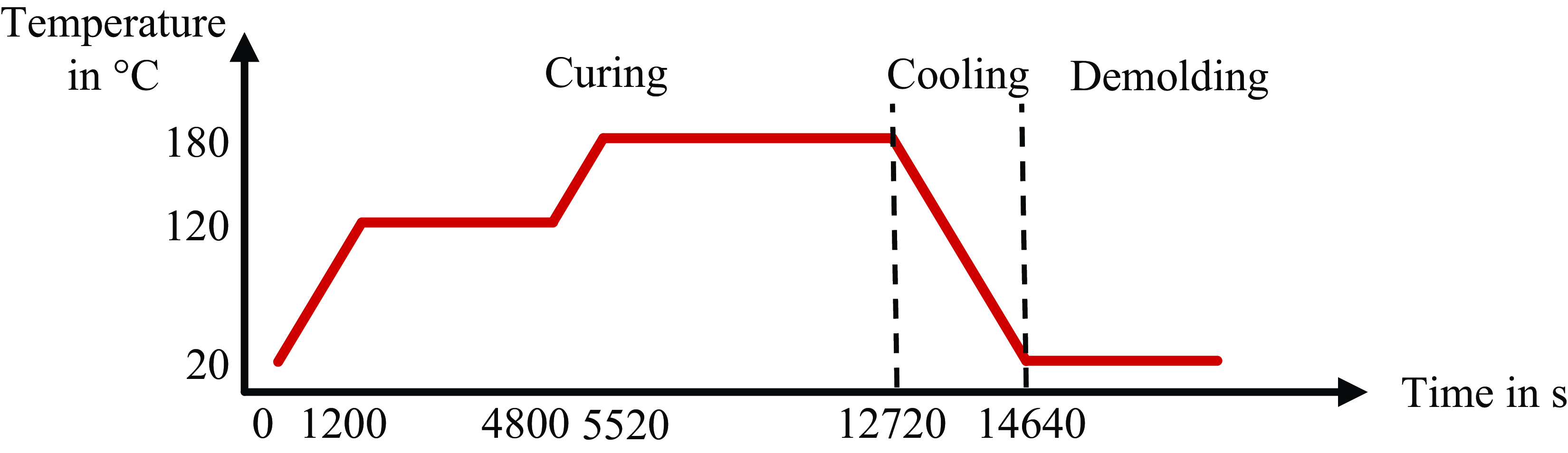
To predict deformations that occur during curing (Sect. 2.2), a curing simulation has to be carried out. The curing simulation can be performed in different levels of detail. For the most basic, but also the fastest simulation, isothermal conditions are assumed and only the cooling is simulated. For a more precise simulation of the thermal-chemical reactions, the Ansys Composite Cure Simulation (ACCS) software has to be used and a time-temperature cycle has to be defined (Figure 4).
Curing cycle of AS4/8552

A fast and a full option are available. While both options are suitable for thin laminates with thicknesses below 5 mm, the full option uses the most accurate formulas and should be used for thicker laminates. The disadvantage is that it requires a solid model and a prior transient thermal analysis in order to achieve the most reliable results. The part is constrained with an isostatic 3-2-1 locating principle, which restricts rigid body motion but allows deformation due to thermal strains. During curing and cooling, the surfaces in contact with the mold are additionally restricted in their normal direction. After cooling, this restriction is removed, which represents the demolding and finally the part deforms. Both side surfaces show a spring-in effect and bend inwards, while the flat surface on the top is curved and shows the warping effect (Figure 5).
Spring-in and warpage due to curing (Scaled by factor 8)

The maximum deformations and the computation times of the different curing simulation approaches are summarized in Table 2. The simulations were conducted in Ansys 2024 R2 on a machine equipped with an Intel Xeon E3-1245 processor (4(8) cores, 3.3 GHz), 32 GB of DDR3 RAM, and an NVIDIA Quadro P4000 GPU. All simulation approaches predict different deformations. It has to be noted that the full option is carried out without a prior transient thermal simulation in order to reduce the computing time.
Comparison of the optimized and non-optimized layout

In future research, it will be necessary to work out which approach is best suited for which application and how accurate the results of the full option are without a thermal simulation and solid models. In any case, the full option is not suitable for variation analyses and iterative algorithms due to the high computing times. It can also be observed that the layup and the number of layers only have a minor influence on the computation times. To highlight the importance of symmetrical laminates, an optimized layout without mirroring the layup was also investigated. The deformations are significantly higher than the deformations of the symmetrical layup.
The curing simulation can also be used to modify the nominal design and mold, so that after curing the desired final shape can be achieved. A variation or tolerance analysis is also helpful here, as variations in the laminate parameters can lead to asymmetrical layups and thus have a strong effect on the type and extent of deformation after curing, as shown previously.
4.5. Tolerance optimization
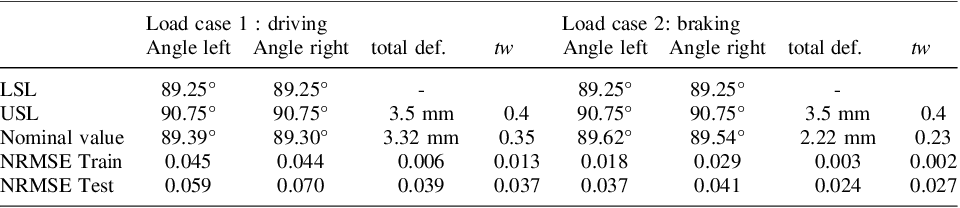
Finally, a tolerance optimization of the frame design is carried out. Itis used to define tolerance ranges for the laminate parameters while fulfilling the required key characteristics (KC). For the presented application, the maximum total deformation, the maximum value of the Tsai-Wu criterion and the angles between the top surface and the flanges on both sides were selected as KCs. A sampling-based tolerance optimization is best suited, as it is not generally possible to find explicit functional relationships between the varying input and output parameters. The aim of the optimization is to find tolerances that are as wide as possible to keep costs low, but as narrow as necessary to fulfill the functional requirements (Reference Hallmann, Schleich and WartzackHallmann et al., 2020). The optimization consists of two main components, a cost analysis and a statistical tolerance analysis. The total costs Ctot must be minimized and are calculated using tolerance-cost curves. Larger tolerances lead to lower costs, as it is assumed that wider tolerances are easier to satisfy during manufacturing, and vice versa. With the statistical tolerance analysis, the scrap rate for the given tolerance values is calculated, indicating how many parts lie within the lower specification limit (LSL) and the upper specification limit (USL). The scrap rate functions as optimization constraint, whereby 2700 ppm must not be exceeded. A Genetic Algorithm is used in the sampling-based tolerance cost optimization because it can effectively explore complex, high-dimensional design spaces with multiple conflicting objectives, making them ideal for finding globally optimal or near-optimal tolerance combinations (Reference Hallmann, Schleich and WartzackHallmann et al., 2020). Since a statistical tolerance analysis uses a large number of samples, which all would have to be solved by an FEA in each optimization iteration, the use of surrogate models is essential to reduce computation times. For the presented application, solving of a single FEA and processing of the results takes about 60 to 90 seconds using the specified hardware (see Sect. 4.4). Without surrogate models, statistical tolerance analyses would not be possible unless explicit functional relationships between inputs and outputs were known, in which case FEA would not be necessary. Therefore, before the start of the tolerance optimization, a surrogate model has to be trained. The first step is to sample the design parameters in the range of ±15°, which serve as training data for the surrogate model. Each design point is then solved by an FEA and the KCs are evaluated. The trained surrogate model can then predict the KC values based on the input data without solving a new FEA. For the present case study, a sample size of 500 design points was chosen for each load case and a Gaussian regression model (GPR) was chosen as surrogate model. The performance of the trained model is very good for the train data and acceptable for test data that was not used to train the model. To achieve more reliable results, it is recommended to use more design points or to use different surrogate models for each KC. To reduce the computational effort, the use of advanced surrogate modeling techniques, e.g. iteratively re-modeling with intermediate optimization results, show promising results (Roth et al., Reference Roth, Freitag, Franz, Goetz and Wartzack2024). Table 3 summarizes the specification limits for the KCs as well as the normalized root mean squared error (NRMSE) as indicator for the surrogate model’s performance.
The lower boundary for all fiber angle tolerances is ±0.1°, the upper boundary is ±10°. Both boundaries are chosen slightly smaller than the training range, as values close to the design space borders can have a lower prediction quality and the normal distribution leads to a small number of samples that lie outside the limits. For all variations, a normal distribution with a standard deviation of ±3 a is assumed. Within the statistical tolerance analysis, an LHS with a sample size of 10000 is used for scrap rate estimation. For the optimization a genetic algorithm with penalty approach is used, which is restricted to a maximum of 200 generations and utilizing a population size of 50. The resulting tolerance ranges needed for each layer to achieve the requirement of 2700 ppm are shown in Figure 6. For this setup, it can be seen that most of the tolerances are chosen near’ their upper limit, with some layers having a tolerance range of about ±7.5°. However, layer 1, which is furthest to the outside, has a very tight tolerance range of ±0.15°. Interestingly, layer 58 does not have a tight tolerance, although this layer is like layer 1 also the furthest out. This indicates that the optimization may have been terminated prematurely.
Summary of specification limits and surrogate model performance

It must also be noted that the variations of the angles only affect the fibers in the layer itself, it does not mean that the entire layer is rotated. To account for this, a more advanced approach must be used, as the FE model would have to be modified for each design point (Reference Freitag, Goetz and WartzackFreitag et al., 2024).
Resulting tolerances for each layer after tolerance optimization

5. Summary and outlook
In this contribution, an approach for linking design optimization techniques with manufacturing process simulations taking variations into account was presented. In addition, an outlook was given on how curing simulations can be integrated into the simulation process and what difficulties arise doing so. The approach was then applied on the frame structure of an innovative micro-mobility solution, an electrified Cross Skate. With the design optimization, the weight of the frame could be reduced from 555 g to 289 g by substituting the aluminium structure with an CFRP part. By applying the design optimization, the weight could be reduced further to 227 g, while still achieving the quality requirements. In the last step, a surrogate model based tolerance-cost optimization of the optimized laminate design was presented.
It was shown that composite materials have great potential, especially in terms of lightweight design. However, the number of design parameters increases significantly, making manufacturing more complex and prone to variations. The presented simulation approach can help to find an optimal design and overcome these shortcomings.
A future challenge will be to automatically derive a laminate layout from the design optimization without having to rework the layup by hand, e.g. by introducing a maximum number of patches, the use of simple shapes for the patches or the multiple use of the same patch shapes. An important challenge is also to reduce the computational effort of the FEA, especially when thermal analyses should be integrated in the tolerance optimization. Additionally, the presented approach is based on the assumption of uniform variations throughout each layer. This is a more conservative approach, nonetheless spatial variations can be a more realistic representation and should be investigated further.
Acknowledgments
This research was funded by the Deutsche Forschungsgemeinschaft (DFG, German Research Foundation) – project number 389616685 (WA 2913/29-2).







 Open access

