


Introduction
Globally, estimates suggest that 28.7 million (71%) trafficked persons are women and girls and 11.6 million (28.9%) are men and boys (International Labour Office, 2017). Human trafficking is a crime and a human rights violation that frequently involves numerous forms of physical or sexual violence and psychological coercion, which can have long-term health consequences (Kiss et al., Reference Kiss, Yun, Pocock and Zimmerman2015; Ottisova et al., Reference Ottisova, Hemmings, Howard, Zimmerman and Oram2016).
Human trafficking tends to be gender-specific (e.g., females including children tend to be exploited more often for sex work or domestic work, men for fishing or construction) (International Labour Office, 2017; Zimmerman and Kiss, Reference Zimmerman and Kiss2017) and survivors report experiencing multiple and heterogeneous acts of violence and coercion (Zimmerman et al., Reference Zimmerman, Hossain, Yun, Roche, Morison and Watts2006; Kiss et al., Reference Kiss, Yun, Pocock and Zimmerman2015). However, the extent of research on survivors of trafficking tends to operationalise violence and coercion in terms of severity or as a binary event (Ottisova et al., Reference Ottisova, Hemmings, Howard, Zimmerman and Oram2016). A greater understanding of the patterning of a range of violence and coercion acts could provide an empirical basis to understand its impact on the mental health of female and male survivors and inform well-targeted service provision.
A previous systematic review of interpersonal patterns of violence in non-trafficked populations reported differences by sex (O'Donnell et al., Reference O'Donnell, Schaefer, Varker, Kartal, Forbes, Bryant, Silove, Creamer, McFarlane, Malhi, Felmingham, Van Hoof, Hadzi-Pavlovic, Nickerson and Steel2017). Females were more likely to be defined by three classes that included sexual violence, emotional abuse and high exposure to multiple trauma types. Males were more likely to be in classes characterised by physical violence (O'Donnell et al., Reference O'Donnell, Schaefer, Varker, Kartal, Forbes, Bryant, Silove, Creamer, McFarlane, Malhi, Felmingham, Van Hoof, Hadzi-Pavlovic, Nickerson and Steel2017). While there is currently no research on survivors of trafficking that has assessed the patterning of violence and coercion using a latent class analysis (LCA) approach, research indicates a high prevalence of violence in females ranging from 60% in the Study on Trafficking, Exploitation and Abuse in the Mekong sub-region (STEAM) (Kiss et al., Reference Kiss, Yun, Pocock and Zimmerman2015) to 90% in a multi-country European survey (Zimmerman et al., Reference Zimmerman, Hossain, Yun, Gajdadziev, Guzun, Tchomarova, Ciarrocchi, Johansson, Kefurtova, Scodanibbio, Motus, Roche, Morison and Watts2008). In males, violence was reported by almost one-third of survivors in a UK case records study (Turner-Moss et al., Reference Turner-Moss, Zimmerman, Howard and Oram2014) and by almost half of men (49.3%) in STEAM (Kiss et al., Reference Kiss, Yun, Pocock and Zimmerman2015). The prevalence of coercion through personal and family threats among trafficked people is reported to be approximately 50% to 80%, irrespective of sex (Zimmerman et al., Reference Zimmerman, Hossain, Yun, Roche, Morison and Watts2006; Kiss et al., Reference Kiss, Yun, Pocock and Zimmerman2015). Our previous findings with the STEAM indicated that violence and coercion experiences during trafficking differ by sex and have important implications for mental health (Iglesias-Rios et al., Reference Iglesias-Rios, Harlow, Burgard, Kiss and Zimmerman2018).
In this study, we first model violence and coercion as a multi-dimensional experience and allow for the possibility of gender-specific patterning. Second, we examine the association of the emergent profiles of violence and coercion (i.e., latent classes) with each mental health outcome (anxiety, Post-traumatic stress disorder (PTSD) and depression) for females and males.
Methods
Data source, study design and study sample
We conducted a cross-sectional analysis using data from the STEAM (Kiss et al., Reference Kiss, Yun, Pocock and Zimmerman2015). The study included 1015 trafficked males, females, youth and children (age 10–17 years) who attended post-trafficking assistance services in Cambodia, Thailand and Vietnam. The details of the study methodology have been published elsewhere (Kiss et al., Reference Kiss, Yun, Pocock and Zimmerman2015).
Sample design
A two-stage sampling strategy was used to identify individuals using post-trafficking services. First, selected post-trafficking support services in Cambodia, Thailand and Vietnam were determined based on diversity of clientele (e.g., age, sex, sector of exploitation), service relationship with the International Office of Migration (IOM) country teams and agreements with government agencies (e.g., support, referral and service arrangements). Individuals in the sample were identified as trafficked by the local governmental and nongovernmental referral networks and post-trafficking service providers. Second, a consecutive sampling approach was used to invite all eligible individuals to participate in a structured interview after providing informed consent within 2 weeks of admission to the post-trafficking services between 2011 and 2013. Participants were recruited only if the on-site trained case or social worker determined that their participation would not cause harm to their well-being. The response rate for the baseline survey was 98%.
Data collection and survey questionnaire
Interviewers (caseworkers or social workers) from the agencies providing post-trafficking services received an intense 1-week training provided by one of the principal investigators of STEAM (LK) in collaboration with the International Organization for Migration partners in each country. Ethical provisions were emphasised to ensure that participation was voluntary and confidential. The survey questionnaire was developed based on an instrument used in a previous European study on health and sex trafficking (Zimmerman et al., Reference Zimmerman, Hossain, Yun, Roche, Morison and Watts2006). The questionnaire was adapted for the different study populations and the regions by the study team with input from the study interviewers. The survey included questions about sociodemographic characteristics, pre- and post-trafficking exposures and mental health outcomes. The instrument was translated into Khmer, Thai, Vietnamese and Lao in multiple steps: professional translation from English to other languages, group translation-discussion process with IOM counter-trafficking teams, pilot-testing and review after back-translation into English.
Ethics
Ethical approval for the STEAM was granted by the London School of Hygiene and Tropical Medicine and by the corresponding ethical entities in Cambodia, Vietnam and Thailand. The present study was approved by the University of Michigan Health Sciences and Behavioral Sciences Institutional Review Board, eResearch ID: HUM00097096.
Measures: anxiety, depression and PTSD measures
Anxiety and depression symptoms in the past week were measured by the symptom inventory Hopkins Symptom Checklist-25 (HSCL-25), a validated and widely used screening instrument (Derogatis et al., Reference Derogatis, Lipman, Rickels, Uhlenhuth and Covi1974; Mollica et al., Reference Mollica, Wyshak, de Marneffe, Khuon and Lavelle1987; Kleijn et al., Reference Kleijn, Hovens and Rodenburg2001). It consists of 25 items: ten items for anxiety symptoms and 15 items for depression symptoms. The scale for each question includes four categories of response (‘Not at all’, ‘A little’, ‘Quite a bit’ and ‘Extremely’, rated 1–4, respectively). Two scores are calculated: the anxiety score is the average of all ten anxiety items, while the depression score is the average of the 15 depression items. The depression score is correlated with major depression as defined by the Diagnostic and Statistical Manual of the American Psychiatric Association, IV Version (DSM-IV) in several populations (Mollica et al., Reference Mollica, Wyshak, de Marneffe, Khuon and Lavelle1987; Kleijn et al., Reference Kleijn, Hovens and Rodenburg2001). A cutoff of 1.625 instead of the established value of 1.7 was used to identify symptoms of depression, as item 12 in the questionnaire (i.e., loss of sexual interest or pleasure) was excluded, given the characteristics of the study population. For anxiety, we defined ‘symptomatic anxiety’ according to the conventional international cutoff score of 1.75 (Mollica et al., Reference Mollica, Wyshak, de Marneffe, Khuon and Lavelle1987).
PTSD symptoms in the past week were measured using the validated Harvard Trauma Questionnaire (HTQ) part IV, which includes 27 trauma symptoms (Mollica et al., Reference Mollica, Caspi-Yavin, Bollini, Truong, Tor and Lavelle1992, Reference Mollica, Caspi-Yavin, Lavelle, Tor, Yang, Chan, Pham, Ryan and De Marneffe1996). Each question has four response categories: ‘Not at all’, ‘A little’, ‘Quite a bit’ and ‘Extremely’, rated 1– 4, respectively. A total score was calculated by averaging the 27 items. A cutoff of 2.0 was used to assess symptoms of PTSD based on previous research on trafficked individuals accessing post-trafficking services (Zimmerman et al., Reference Zimmerman, Hossain, Yun, Gajdadziev, Guzun, Tchomarova, Ciarrocchi, Johansson, Kefurtova, Scodanibbio, Motus, Roche, Morison and Watts2008; Hossain et al., Reference Hossain, Zimmerman, Abas, Light and Watts2010). The HTQ has been used extensively in cross-cultural settings and among Southeast Asian populations exposed to trauma (Mollica et al., Reference Mollica, Caspi-Yavin, Bollini, Truong, Tor and Lavelle1992, Reference Mollica, Donelan, Tor, Lavelle, Elias, Frankel and Blendon1993, Reference Mollica, Caspi-Yavin, Lavelle, Tor, Yang, Chan, Pham, Ryan and De Marneffe1996; Kleijn et al., Reference Kleijn, Hovens and Rodenburg2001).
Violence and coercion measures and covariates
To assess physical and sexual violence, validated questions from the World Health Organization (WHO) International Study on Women's Health and Domestic Violence were used (Garcia-Moreno et al., Reference Garcia-Moreno, Jansen, Ellsberg, Heise and Watts2006). While these questions were not validated in the study population, they involved violent acts that are commonly reported by trafficked individuals in post-trafficking services and shelters (Hopper and Hidalgo, Reference Hopper and Hidalgo2006; Hossain et al., Reference Hossain, Zimmerman, Abas, Light and Watts2010; World Health Organization and Pan American Health Organization, 2012). Participants were asked if while being trafficked anyone committed any of the following acts against them (yes/no):
1. Slapped you or threw something at you that could hurt you
2. Pushed or shoved you
3. Hit you with a fist or with something else that could hurt you
4. Kicked, dragged or beat you up
5. Tied or chained you
6. Choked you on purpose
7. Burned you on purpose
8. Released a dog to bite or scratch you
9. Forced you to have sex
10. Threatened to use a gun, knife, or other weapon against you
11. Used a knife to cut you
12. Shot a gun at you
Two additional questions were used to assess coercion, a hallmark of the trafficking experience: (1) ‘While you were in this situation, did anyone threaten to hurt you’? (yes/no) and (2) ‘During this time did anyone threaten to hurt your family or someone you care about’? (yes/no). These questions are also frequently used in the studies of interpersonal violence (Zimmerman et al., Reference Zimmerman, Yun, Shvab, Watts, Trappolin, Treppete, Bimbi, Adams, Jiraporn, Beci, Albrecht, Bindel and Regan2003; Zimmerman et al., Reference Zimmerman, Hossain, Yun, Roche, Morison and Watts2006; Kelly and Johnson, Reference Kelly and Johnson2008).
Statistical analyses
All analyses accounted for the two-stage cluster sampling and the likely correlation of outcomes within a given sampled service using the variable post-trafficking service organisation as the cluster variable. We first examined frequency distributions and conducted bivariate analyses with cross-tabulations using Rao-Scott chi-square tests to assess associations between indicators of violence and coercion and indicators of anxiety, depression and PTSD status among females and males. We assessed the relationship of sex with each of the individual indicators of violence and coercion indicating different experiences of these acts in females and males, therefore we proceeded to conduct separate analyses by sex (Iglesias-Rios et al., Reference Iglesias-Rios, Harlow, Burgard, Kiss and Zimmerman2018).
We used a person-centred statistical framework, employing mixture modelling to identify latent (unobserved) population subgroups from our observed measures of violence and coercion (Muthén and Muthén, Reference Muthén and Muthén1998–2017; Muthén and Muthén, Reference Muthén and Muthén2000; Lanza and Cooper, Reference Lanza and Cooper2016). First, we used LCA modelling to identify latent classes of participants with distinct patterns of violence and coercion. The goal of the LCA was to identify the smallest number of latent classes that described meaningful patterns in the observed categorical indicators of violence and coercion. We examined 9 and 7 dichotomous indicators for females and males, respectively. We excluded indicator variables with small sample sizes (<30) to avoid convergence problems in the models. LCA parameters were estimated by maximum likelihood using an expectation-maximisation (EM) procedure. Missing data on the latent class indicators were handled by this procedure, with data assumed to be missing at random (Muthén and Muthén, Reference Muthén and Muthén1998–2017).
To fit the LCA model, we started with a one class model and proceeded to test models including up to four classes. The model goodness of fit was assessed using the following information criteria: (1) Akaike Information Criterion (AIC), (2) Schwarz's Bayesian Information Criterion (BIC), (3) the sample-size-adjusted (BIC) and (4) the consistent Akaike Information Criterion (CAIC). Further, we assessed the entropy of each model, which is used as an indicator of the quality of the class separation. Entropy generally reflects the overall ability of the model to correctly classify subjects (Berlin et al., Reference Berlin, Williams and Parra2014).
Model fit was also examined using the average posterior probability of class membership for respondents assigned to their most likely class. Item response plots were employed to assess the patterns of conditional violence and coercion item-response probabilities and determine which items differentiated the latent classes. The Vuong-Lo-Mendell-Rubin adjusted likelihood ratio test was used to compare the model with k latent classes to the k-1 class solution; statistical significance (p < 0.05) suggests that the k class model provides a better fit than the model with k-1 classes (Muthén and Muthén, Reference Muthén and Muthén1998–2017). Theory-driven information was considered in the interpretability and selection of the final latent class models for females and males. Models were examined for fit, parsimony, interpretability and separation of classes.
We used the multi-step mixture modelling approach of Bolck, Croon and Hagenaar, known as ‘BCH’ for categorical outcomes (Bolck et al., Reference Bolck, Croon and Hagenaars2004; Asparouhov and Muthen, Reference Asparouhov and Muthen2014), using separate models for females and males. The BCH statistical approach involves three main analytical steps. In the first step, the parameters of the LCA model are estimated without the distal outcomes. Second, the posterior probabilities of class membership based on this model are used to compute BCH weights for further analysis accounting for the uncertainty introduced by possible misclassification when estimating the model parameters providing a more robust model (Asparouhov and Bengt, Reference Asparouhov and Bengt2014). Third, the calculated BCH weights were used to regress the binary outcomes (anxiety, PTSD and depression symptoms) on latent class membership and compare the classes in terms of the probability of each outcome. Clustering in the data related to the sampling strategy was managed by correcting the standard errors and chi-square tests of model fit using the TYPE = COMPLEX analytical option and the CLUSTER option within the Mplus software version 8.0 (Muthén and Muthén, Reference Muthén and Muthén1998–2017). Robust standard errors were computed using the sandwich variance estimator.
Results
Sample characteristics of females and males
Table 1 presents the prevalence of violence and coercion experienced by survivors of trafficking by sex. A total of 569 (56.1%) females and 446 (43.9%) males participated in the study. Males were more likely to be exposed to various types of physical violence (e.g., slapped, dragged or beaten up). In contrast, females were more likely than males to suffer from sexual violence (35.0%). Coercion in the form of personal threats was more commonly reported by men and boys (46.2%) while receiving both personal and family threats was slightly more prevalent in females (14.6%).
Prevalence of violence and coercion of formerly trafficked individuals by sex: the Study on Trafficking, Exploitation and Abuse in the Mekong Sub-region (STEAM), n = 1015

a Column percentages.
b One missing for females.
c Two missing for females.
d Three missing for females and three missing for males.
e One missing for females.
f One missing for females.
Latent class models for females and males
Table 2 presents the fit indices for the two-class models selected for females and males. Even though fit indices were smaller for the three-class models, high entropy in females (0.94) and males (0.91), consideration of the Vuong-Lo-Mendell Rubin Likelihood Ratio test, item response plots and theory suggested that the more parsimonious two class models were more appropriate. Online supplementary Figs 1 and 2 display item-response plots to describe the model-based probability of a positive response to each of the indicators of violence and coercion, enabling discernment of which items differentiated the latent classes. For females, salient features of violence were sexual violence, coercion and physical violence. In contrast, physical violence and personal coercion were common in males.
Fit indices of a two latent class analysis models of violence and coercion among trafficking survivors female and males, n = 1015

a Akaike information criterion.
bBayesian information criterion.
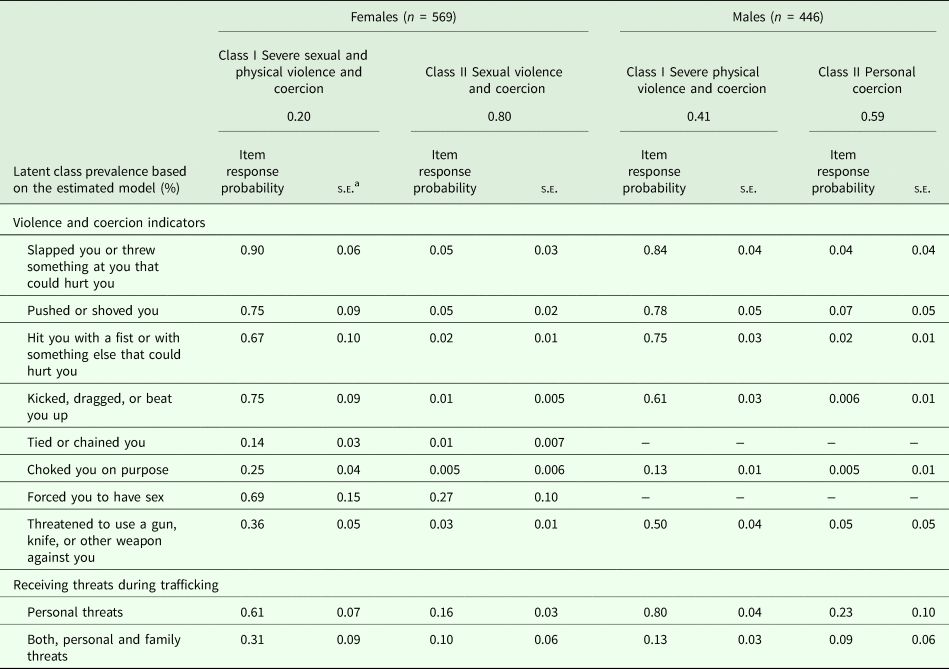
Table 3 displays conditional probabilities of violent acts and coercion within the given two latent classes with their standard errors, as well as latent class probabilities that show the prevalence of specific patterns of violence and coercion within the sampled population. For females, the two-class solution was informed by previous trafficking research and defined as ‘severe sexual and physical violence, and coercion (class I)’ and ‘sexual violence and coercion (class II)’ that characterised 20% and 80% of the sampled female population, respectively. Females in ‘class I’ experienced high probabilities (⩾60%) of exposure to a wide range of acts of physical violence, sexual violence (69%), threats with weapons (36%) and coercion (61% for personal threats and 31% for both personal and family threats). The pattern of ‘sexual violence and coercion (class II)’ was experienced by the vast majority of females (80%) with a relatively lower likelihood of sexual violence (27%) and coercion in the form of personal (16%) and both personal and family threats (10%).
Two-class model of violence and coercion of formerly trafficked females and males, n = 1015
a Standard error.
The patterns of violence that characterised the trafficked male population were defined by ‘severe physical violence and coercion (class I, 41%)’ and ‘personal coercion (class II, 59%)’. For men and boys classified as exposed to ‘severe physical violence and coercion (class I)’, more than 60% had a high likelihood of reporting severe acts of physical violence, threats with weapons (50%) and personal threats (80%). In contrast, only 10% of men and boys were classified as being ‘personally coerced (class II)’.
Test of prevalence equality for anxiety, PTSD and depression symptoms across latent classes in females and males using the BCH procedure
Figure 1 illustrates the mixture model of the associations of the latent class variable with the binary outcomes (anxiety, PTSD, depression). We inspected missing data patterns and determined they were missing at random, given the relatively low number of missing data (e.g., one female and one male were missing for anxiety, depression and PTSD) we allowed for listwise deletion in the analysis.
Finite mixture model diagram with binary latent class indicators of violence and coercion with binary outcomes: anxiety, post-traumatic stress disorder, and depressive symptoms. The arrow from C to Y (binary dependent variable) indicates that the intercept of Y varies across the classes of C. This corresponds to the logistic regression of Y on C classes.

Tests of prevalence equality for each of the distal outcomes and latent class membership for females and males are shown in Table 4. More than half of the sample of females in the ‘severe sexual and physical violence and coercion’ class had symptoms of anxiety (55%) and depression (79%). Similarly, 48% of women and girls in this class had PTSD symptoms. A majority of females classified as exposed to ‘sexual violence and coercion’ had symptoms of depression (61%) and about a third each had symptoms of anxiety (37%) and PTSD (31%). There were statistically significant differences in the prevalence of each of the three mental health outcomes between the two classes in females. Almost half of the males in the ‘severe physical violence and coercion’ class reported symptoms of anxiety (48%) and PTSD (46%), and more than half of males (59%) in this class had symptoms of depression. Among males classified as being exposed to ‘personal coercion’, approximately 45% had symptoms of anxiety, 39% had PTSD symptoms and 56% had symptoms of depression. However, there were no statistically significant differences between the classes and across each of the mental health outcomes in males.
Tests of prevalence equality for the distal mental health outcomes (anxiety, depression and post-traumatic stress disorder symptoms) across latent classes in females and males using the BCHa procedure, n = 1015

a Bolck, Croon, and Hagenaar.
b Post-traumatic stress disorder symptoms.
c Standard error.
Finite mixture gender-specific models
Table 5 displays estimates from the fitted mixture model for the gender-specific associations between latent class membership and each of the mental health symptoms. Females exposed to ‘severe violence (including physical and sexual violence) and coercion’ had a two-fold increase in the odds of anxiety (OR = 2.10; 95% CI: 1.57–2.81) and PTSD (OR = 2.07; 95% CI: 1.03–4.17) symptoms when compared with females exposed to ‘sexual violence and coercion (personal and family threats)’. Males exposed to ‘severe physical violence and coercion’ had higher odds of PTSD and depression symptoms relative to males exposed to ‘personal coercion’, but the associations were not statistically significant.
Estimated mixture logistic regression analyses of the latent classes and anxiety, post-traumatic stress disorder and depressive symptoms using a BCHa procedure, n = 1015

a Bolck, Croon and Hagenaar.
b Post-traumatic stress disorder symptoms.
Discussion
This is the first study on human trafficking survivors to use a LCA with a multi-step mixture modelling (BCH) approach to further understand the complex gender patterns of violence and coercion and its association with the mental health of trafficking survivors exploited in various labour sectors. Consistent with the scarce evidence from gender-specific studies of human trafficking, we found that both females and males experienced severe forms of violence and coercion. The results of the LCA revealed a more complex picture of what constitutes violence and coercion for female and male trafficking survivors, in contrast to previous studies using single (e.g., ‘sexual violence only’) or binary (yes/no) measures of violence (Ottisova et al., Reference Ottisova, Hemmings, Howard, Zimmerman and Oram2016).
Our results showed a substantially elevated prevalence of symptoms of depression in females who suffered from ‘severe sexual and physical violence and coercion (class I, 79%)’ and those exposed to ‘sexual violence and coercion (class II, 61%)’. The prevalence of anxiety and PTSD symptoms was also considerably higher for class I in females. We also observed differences between the latent classes (class I v. II) in females with particularly elevated prevalence of anxiety, PTSD and depressive symptoms among those exposed to multiple acts of violence and coercion (class I). For males, more than half of the sample exposed to ‘severe physical violence and coercion’ (class I, 59%) had depression and almost 50% of men and boys in ‘class I’ had anxiety and PTSD symptoms. For females and males, this considerably higher prevalence of anxiety, PTSD and depression were similar to that reported among war-refugees and torture survivors (Lindert et al., Reference Lindert, von Ehrenstein, Priebe, Mielck and Brähler2009; Bogic et al., Reference Bogic, Njoku and Priebe2015; Ibrahim and Hassan, Reference Ibrahim and Hassan2017).
We found a two-fold increase in the odds of anxiety and PTSD symptoms in females classified as being exposed to ‘severe sexual, and physical violence and coercion (threats with weapons, personal threats, and both personal and family threats)’ compared with females exposed to ‘sexual violence and coercion’. These findings are aligned with trauma research that reports that regardless of age, experiencing multiple or repeated exposures to traumatic events increases the risk of psychiatric morbidity, specifically anxiety, PTSD and depression (Suliman et al., Reference Suliman, Mkabile, Fincham, Ahmed, Stein and Seedat2009; Shalev et al., Reference Shalev, Liberzon and Marmar2017). Our finding that sexual violence and coercion was highly prevalent in females is not unexpected, as they are deeply intertwined with gender inequality and human
trafficking is known to be highly gendered (World Health Organization, 2002; Anderson, Reference Anderson2009; International Labour Office, 2017).
For males, the associations for PTSD and depression symptoms were elevated among those who were exposed to ‘severe physical violence and coercion’, but did not differ across classes. It is plausible that we failed to detect differences between classes or that the pattern of violence for males is indeed defined solely as ‘severe physical violence and coercion’. Further research with larger sample sizes is needed as we had to exclude some categorical ‘violent’ indicators (e.g., sexual violence) due to small sample sizes. Yet results showed that besides physical violence, being threatened with weapons and experiencing personal threats were prevalent among men and boys classified in the ‘severe violence and coercion’ class. Our findings also indicated differences in the patterns of coercion for females and males. Females experienced ‘personal threats’, both ‘personal and family threats’, and ‘threats with weapons’ while for males, ‘personal threats only’ and ‘threats with weapons’ were more characteristic of their trafficking experience.
The results of the study have important implications for policy, research and mental health treatments. Our results highlight the need for considering how different patterns of violence and coercion affect the mental health of female and male trafficking survivors. These findings have important implications for survivors since exposure to multiple types of violence is associated with psychiatric disorders and physical morbidity, which could be particularly harmful for developing children and adolescents (World Health Organization, 2002; Finkelhor et al., Reference Finkelhor, Turner, Hamby and Ormrod2011; Iglesias-Rios et al., Reference Iglesias-Rios, Harlow, Burgard, Kiss and Zimmerman2018). Our findings could be valuable to understand differences in treatment needs, to employ targeted mental health interventions and assess which interventions would be more beneficial for specific groups of the trafficked population.
Our results highlight the importance of developing more comprehensive measures to capture the complexity and the effects of multiple acts of violence and coercion in this population. Measures could include frequency and severity of violent acts, associated injuries, perpetrators' controlling behaviours, survivor relationship with perpetrator (e.g., stranger, family member) and survivor's perception of what constitutes violence and coercion.
Our study has some limitations. The study population is a sample of survivors of trafficking using post-trafficking services in several key world regions which limits the generalisability of the study results. We cannot establish the temporal relationship between violence and coercion with mental health due to the cross-sectional study design. Mental health symptoms were assessed with validated screening instruments and not diagnostic tools. Therefore, the overestimation of the prevalence of mental health outcomes is possible. It is also plausible that trafficked individuals under the most severe forms of slavery are the ones with worse mental health and may be less likely to be reached in post-trafficking services. In this case, our calculations of the prevalence ratio will be underestimated.
Future research is needed to assess if the latent classes observed in this study apply to other country settings with different social gender roles and norms. Longitudinal studies are needed to evaluate the course of the effects of these patterns of violence and coercion in relation to mental health over time to inform the provision of services and mental health treatment for survivors. For instance, delayed or late onset of PTSD tends to appear at least 6 months after a post-trauma adjustment period in which diagnostic criteria was initially absent (American Psychiatric Association, 2013). In conclusion, this study demonstrates the importance of considering the patterns of violence and coercion and their relationships with mental health when implementing health services for female and male trafficking survivors.
Supplementary material
The supplementary material for this article can be found at https://doi.org/10.1017/S2045796019000295
Availability of data and material
The datasets generated during and/or analysed during the current study are not publicly available due to safety concerns and the confidentiality agreement obligations with study participants. Data are available to qualifying researchers upon reasonable request from the Principal Investigator of STEAM (Dr Ligia Kiss).
Author ORCIDs
L. Iglesias-Rios, 0000-0001-6024-7775.
Acknowledgements
None.
Authors' contributions
All authors assisted with the study concept and design, critical review of the manuscript, editing, and approval of the final version of the manuscript. LIR conceptualized and wrote the first draft, reviewed the final draft, and conducted statistical analyses. SH reviewed statistical analyses and provide overall supervision of the research. SB was involved in revising the manuscript critically for important intellectual content. BW provided supervision and reviewed statistical analyses. CZ and LK collected the data and supervised the implementation of the STEAM study.
Financial support
This manuscript was developed without funding. The original STEAM study was funded by the Anesvad Foundation and the International Organization for Migration International Development Fund, with additional support from the Economic and Social Science Research Council, UK. The funders of the STEAM study had no role in the design and conduct of the study, collection, management, analysis and interpretation of the data, preparation, review, or approval of the manuscript, or decision to submit the manuscript for publication. Dr West's collaboration was supported by an NICHD center grant to the Population Studies Center at the University of Michigan (P2CHD041028).
Conflict of interest
None.
Ethical standards
Ethical approval for the study was granted by the London School of Hygiene and Tropical Medicine (LSHTM) and by the National Ethics Committee for Health Research in Cambodia, the Hanoi School of Public Health in Vietnam and by the Ministry of Social Development and Human Security in Thailand. A strict ethical and safety protocol was implemented based on the WHO Ethical and Safety Recommendations for Interviewing Trafficked Women (14). The secondary analysis has been approved by the University of Michigan Health Sciences and Behavioral Sciences Institutional Review Board, eResearch ID: HUM00097096.


 Open access

