


1. Introduction
By 2050, the global population of individuals aged 60 and older is projected to exceed 2.1 billion, reaching approximately 3.1 billion by 2100, making this demographic the fastest-growing age group worldwide (United Nation, 2017). . According to the World Health Organization, the average healthy life expectancy (Healthy Life Expectancy, HALE) for individuals over 60 is 13.7 years, leaving approximately 5.4 years in compromised health (Reference DelhiDelhi, 2024). As a result, ensuring both physical and emotional well-being in aging populations has become a critical societal concern. Aging is accompanied by cognitive and functional changes driven by physiological and neurological factors, including declines in physical strength, memory, reaction speed, sensory perception, and multitasking abilities (Reference Farage, Miller, Ajayi and HutchinsFarage et al., 2012). Additionally, older adults face significant socio-environmental challenges such as social isolation, heightened fall risks, chronic illnesses, financial insecurity, mobility restrictions, and age-related stigma (Reference ChenChen, 2020), Despite these challenges, research contradicts the stereotype that aging is inherently linked to emotional deterioration. Studies suggest that negative emotions decrease with age, likely due to increased emotional saliency and a stronger focus on overall well-being (Reference Ramirez-Ruiz, Quinn and FerreiraRamirez-Ruiz et al., 2020). Although certain cognitive functions may decline, older adults often refine their emotional regulation strategies and exhibit a greater tendency to focus on positive experiences (Reference Mannheim, Schwartz, Xi, Buttigieg, McDonnell-Naughton, Wouters and van ZaalenMannheim et al., 2019). Rather than a period of emotional decline, aging can be reframed as a stage of enhanced psychological resilience and emotional adaptability (Reference Park and KimPark & Kim, 2022). However, while older adults may prioritize emotional stability by focusing on positive emotions and avoiding distress, this tendency can inadvertently limit their engagement in new learning experiences and social interactions. Avoiding negative emotions may reduce opportunities for personal growth and enrichment, highlighting the need for design strategies that actively cultivate positive emotional experiences. Although significant progress has been made in elderly-centered design, much of the focus remains on functionality and risk management, often overlooking the emotional dimensions of aging. The lack of structured design methodologies incorporating emotion regulation strategies limits the potential for fostering long-term well-being in older adults.
This study explores the barriers designers face in addressing emotional regulation in aging populations and examines how Product-Service Systems (PSS) can enhance emotional experiences through leisure activities. By integrating emotion regulation principles into PSS-driven design solutions, this research aims to provide valuable insights that facilitate meaningful and emotionally fulfilling experiences for older adults, ultimately promoting their overall well-being.
1.1. Barriers to emotion regulation in elderly product design
Current elderly-focused product design mainly emphasizes usability, accessibility, and risk mitigation, often overlooking the emotional dimension of user experience. Overemphasizing functionality while ignoring emotional factors leads to product rejection among the elderly. Despite their functional benefits, many assistive products are rejected by older adults due to aesthetic concerns, social stigma, or a perceived lack of emotional relevance (Reference ChenChen, 2020). Many older adults reject products that explicitly signal “assistive devices” to avoid the stigma associated with aging or dependency.(Reference WhiteWhite, 2022)
While research has addressed usability challenges, it remains insufficient in fully integrating emotion regulation into product design.
Several factors hinder the effective incorporation of emotion regulation strategies into elderly product design. Aesthetic considerations and social perceptions often influence product adoption, as older adults may avoid devices that emphasize their aging status. Many assistive products also lack personalization, failing to accommodate users’ diverse emotional needs. Furthermore, existing design methodologies focus on minimizing discomfort rather than actively fostering positive emotional engagement.
PSS presents a valuable opportunity to merge tangible products with service-driven experiences, fostering functional and emotional well-being by embedding emotion regulation strategies, such as the savoring method, helps older adults by improving resilience, reducing depressive symptoms, and increasing happiness.(Reference Smith and HanniSmith & Hanni, 2019)
PSS-driven designs can offer sustained positive emotional experiences (Reference Bryant and VeroffBryant, F.B., & Veroff, 2017). This study examines how designers perceive emotion regulation in elderly-focused products, their challenges, and strategies to enhance emotional engagement.
1.2. Leisure and emotional well-being
Leisure activities extend beyond mere hobbies, serving as a vital means of promoting psychological and emotional stability, strengthening social networks, and fostering a positive outlook on life, thereby contributing to stress reduction among older adults (Reference Zhang, Qing and ZhangZhang et al., 2021). However, older adults frequently encounter physical limitations, cognitive decline, and accessibility constraints that prevent full participation in leisure activities. Although research highlights the benefits of meaningful leisure experiences, there remains a gap in systematically incorporating emotion regulation techniques into leisure-focused design solutions.
The design of leisure experiences for older adults must account for both physical and emotional engagement. Many older individuals struggle with mobility and memory challenges, hindering participation in traditional leisure activities. Additionally, current leisure-focused designs often prioritize functionality while neglecting emotionally enriching experiences. Personalized engagement and opportunities for social connection are essential for maximizing emotional well-being among aging populations.
PSS-driven leisure activities offer a way to create immersive and meaningful experiences that enhance positive emotions while reducing participation barriers. By integrating savoring techniques into leisure activity design, older adults can experience greater emotional enrichment, leading to an improved quality of life. A shift from merely mitigating negative experiences to actively fostering positive emotions in elderly-focused design is essential. Identifying and addressing design barriers will enable the development of emotionally engaging experiences that align with older adults’ evolving needs. Future research should explore how co-design methodologies can further refine these strategies to ensure long-term emotional well-being and engagement.
2. Method
This study seeks to bridge the gap between the perspectives of elderly users and design practitioners by examining the emotional factors involved in designing leisure activity products. The research was conducted in two sequential phases, employing both ideation and evaluation methodologies to gain comprehensive insights into user preferences and emotional engagement.
In the initial phase, the Fostering Effective Ideation (FEI) method facilitated divergent thinking and generated a broad spectrum of product concepts. Following the ideation phase, the generated concepts were assessed using the Novelty, Attractiveness, and Feasibility (NAF) evaluation framework. Elderly participants systematically evaluated each concept to determine its potential to enhance positive emotional experiences, ensuring the designs aligned with their preferences and expectations. Based on the findings from the NAF evaluation, in-depth qualitative interviews were conducted to gain a deeper understanding of the participants’ emotional responses to the proposed designs. This phase allowed for identifying key emotional drivers, potential barriers, and user-centered refinements necessary for developing more engaging and meaningful leisure activity products for older adults.
2.1. Phase 1: idea collection session
2.1.1. Participants
The study’s first phase engaged twelve experienced design practitioners specializing in product design, user experience (UX), and service design. Participants had over five years of professional experience in their respective fields and were actively employed in design-related roles. The participants, aged between 30 and 45, comprised four men and eight women. Participants were systematically divided into three teams to foster interdisciplinary collaboration and enhance the ideation process: one product designer, one service designer, and one UX designer. Each team was structured to maintain a balanced gender composition of one male and two female designers, ensuring a diverse range of perspectives. The Korea Design Association facilitated participant recruitment, and all individuals provided informed consent before participating in the study.
2.1.2. Material
A range of materials was provided during the workshop to stimulate creativity and facilitate the ideation process. These included brainstorming templates, drawing sheets, and writing tools to support free idea generation. Additionally, participants were given two sets of structured ideation aids: ten savoring method cards and thirty-six daily activity cards. The savoring method cards were based on Bryant’s Way of Savoring Checklist (Reference Jose, Kim and BryantWOSC)(Jose et al., 2018). They introduced ten techniques to enhance positive emotions, such as sharing experiences with others, memory building, and self-congratulation. The daily activity cards were derived from a report by the Korea Ministry of Health and Welfare (2018) and represented common leisure and daily activities among elderly individuals. These materials provided participants with a structured yet flexible framework to generate ideas tailored to emotional well-being in aging populations.
2.1.3. Product image selection
Three independent coders selected images corresponding to each technique to ensure consistency and reliability in interpreting the savoring methods. These images were curated to facilitate intuitive understanding and help designers visualize the application of savoring methods in product concepts. The use of visual aids aimed to simplify abstract concepts and enhance the efficiency of the ideation process, as suggested by previous research on visual facilitation in creativity (Reference Bryant and VeroffBryant, F.B., & Veroff, 2017)
thirty-six daily activity cards [left] and Ten savoring cards [right]

2.1.4. Research procedure
The study was conducted through two iterative workshops, each lasting approximately two hours. Participants were divided into two tables, with each team comprising a product designer, service designer, and UX designer. Before the workshop, a 20-minute research presentation was conducted to provide an overview of the study, its objectives, and the specific tasks involved.
The workshop progressed through multiple structured phases. First, a 30-minute individual ideation phase allowed each of the six participants per workshop to independently generate product ideas. Using provided cards, participants combined various savoring methods with elderly leisure activities. This was followed by a team discussion and idea development session, where teams of three collaborated to refine and expand their concepts.
After the initial 60-minute ideation process, participants showcased their ideas on a designated board, leading to a presentation phase, where each team introduced their refined concepts to the broader group. This facilitated a group idea evaluation and development discussion in which all six participants engaged in constructive critique, proposed modifications, and explored alternative solutions. This iterative exchange helped refine initial concepts, ensuring a more comprehensive development process. All discussions were recorded for later analysis to capture additional insights.
Following the workshops, all twelve participants were individually interviewed for approximately 20 minutes. These interviews aimed to identify challenges encountered during the ideation process, particularly in designing emotion-driven products, and to gather feedback for refining the methodology. The insights gained contributed to the enhancement of the experimental framework and the identification of key factors essential for effective emotion-focused product design.
This study was designed to facilitate the rapid generation of diverse ideas by incorporating experts from different specializations. Cross-disciplinary feedback played a crucial role in refining concepts, as professionals from varying fields offered unique perspectives, fostering more innovative and feasible solutions. By structuring teams with diverse expertise and integrating multiple evaluation stages, the process encouraged broader thinking and the development of high-quality, well-rounded concepts.
Research process

2.1.5. Result
The ideation session generated a diverse range of product concepts aimed at enhancing positive emotional experiences for elderly users. The concepts prioritized comfort, safety, ease of use, and emotional well-being. As a result, 95 product concepts were developed during the workshops, as illustrated in Figure 3, with 46 ideas emerging from the first team and 49 from the second. The ideation process produced concepts in varying formats, from detailed single-page descriptions to informal sketches with brief annotations, reflecting a diverse brainstorming approach. These initial ideas were further refined and expanded through two iterative discussion sessions, during which additional insights were incorporated as textual descriptions or visual representations. This process facilitated the integration of product and service concepts, emphasizing a UX-centered approach to enhance coherence and usability.
Example from 95 design ideation result and re-created translation

2.1.6. Idea analysis
A total of 95 initial design concepts were collected and subsequently evaluated by three experienced designers, each with a minimum of two years of professional experience. The evaluation was based on two primary criteria: (1) whether the proposed product was specifically designed for elderly users and (2) whether it incorporated an emotion regulation strategy. Concepts that failed to meet these criteria and were unanimously rejected by the designers were excluded, eliminating 31 ideas. For concepts where opinions varied, further discussions were conducted, leading to the removal of three additional ideas that primarily emphasized experiential aspects rather than product functionality. After this refinement process, 64 ideas remained.
To focus on product-driven emotional engagement, ideas heavily reliant on external environmental factors, such as family interactions or gifts for grandchildren, were excluded. The remaining ideas were then systematically categorized based on their alignment with emotion regulation strategies, aiming to identify mechanisms that promote positive emotional experiences among elderly users.
Two predominant categories emerged: “behavior expression” (11 ideas) and “memory building” (10 ideas). Behavior expression encompassed designs facilitating external emotional expression, whereas memory-building concepts emphasized preserving and recollecting meaningful experiences. Additional categories included “self-congratulation” (9 ideas) and “sharing with others” (8 ideas), both of which reinforced positive emotions through social interactions and personal achievements. Other notable categories aimed at enhancing savoring experiences, such as “absorption” (6 ideas), “comparison” (6 ideas), “sensory perception sharpening” (5 ideas), and “counting blessings” (5 ideas), all of which were designed to help elderly individuals prolong and deepen positive emotional states. Less frequently observed categories, such as “temporal awareness” (3 ideas) and “kill-joy thinking” (1 idea), highlighted the complexities of designing abstract emotional strategies.
2.1.7. Interview analysis result
After twelve one-on-one interviews, the recordings were transcribed into written scripts. Three designers with over two years of experience categorized these transcripts, gathered the data, and classified it, achieving consistent results that highlighted various constraints and challenges. The analysis uncovered several common challenges designers face, including ease of use, technical limitations, plagiarism issues, information ambiguity, and communication difficulties between designers from different fields. A major challenge identified was pinpointing emotional trigger points during product interaction—those specific moments that could evoke emotions such as joy or satisfaction. While designers recognized the potential for their products to elicit positive emotional responses, identifying the exact contexts and interactions that reliably triggered such responses proved difficult.
The analysis also emphasized the importance of sustained engagement with elderly users. Designers recognized that fully understanding their emotional needs required prolonged interaction and ongoing feedback. Techniques such as shadowing elderly individuals in their daily routines were suggested as effective approaches to gaining more nuanced insights into how products influence their emotional experiences.
Furthermore, the involvement of interdisciplinary expertise, particularly from fields such as psychology and gerontology, was identified as essential for enhancing the design process. These experts could offer a more comprehensive understanding of emotional regulation in elderly users, contributing to developing emotionally responsive products.
2.2. Phase 2: evaluation and in-depth interview
2.2.1. Participants
In the study’s second phase, five elderly participants were recruited from a local senior center. The participants, ranging in age from 65 to 75, had a mean age of 65.4 years and consisted of four women and one man, all of whom held bachelor’s degrees. Selection criteria ensured that all individuals were physically healthy, financially stable, and free from psychological medication that could influence their product evaluations. Depressed elderly individuals tend to participate in leisure activities less frequently (Reference WangWang, 2024).
During the interviews, participants reported no negative experiences in recent week and engaged in the subjective happiness scale with an average score of 4.2. Their responses indicated the absence of significant negative emotions. The selection process specifically targeted individuals with no health-related concerns, allowing for an unbiased evaluation of leisure activities. While their primary leisure activities included watching television and browsing the internet, they also had prior experience engaging in golf, gourmet dining, tea ceremonies, and reading.
Elderly participant’s details

2.2.2. NAF method
The NAF evaluation framework enables a comprehensive and pragmatic assessment of design concepts, identifying their innovative potential and practical applicability. NAF methodology measures the ideas in three key criteria: novelty (uniqueness of the idea), attractiveness (its potential to solve user problems or enhance experiences), and feasibility (practical implementation). The elderly participants evaluated the ideas using a Likert scale from 1 to 5, with a score of 4 or higher indicating the idea has value. The evaluation process involved presenting elderly participants with product sketches and explanations before they provided their ratings.
Following the NAF evaluation, in-depth interviews were conducted with participants to explore the reasons behind their preferences. The elderly users’ ratings enabled the categorization of ideas, with 12 concepts receiving high scores. Additionally, participants were asked to recall any particularly memorable ideas beyond those highly rated, allowing for deeper insights into their preferences. This approach ensured a comprehensive understanding of the factors influencing elderly users’ product perceptions, including explicitly rated and implicitly memorable ideas.
2.2.3. Interview with elderly participants
The in-depth interviews were designed to investigate the reasons behind the elderly participants’ preferences and emotional responses to the product concepts. The interviews were structured around the participants’ experiences with the products, exploring their thoughts and feelings before, during, and after product use. Each participant evaluated a total of 64 ideas, with a focus on identifying memorable products and understanding where positive emotions were triggered. The interviews lasted approximately 30 minutes each and were conducted one-on-one to foster open and candid discussions. Participants were encouraged to reflect on the products they rated highly, and the reasons for their preferences were explored in depth. The interviews revealed a strong preference for products that supported passive leisure activities, particularly those that aligned with activities the participants had historically enjoyed. For example, one participant strongly preferred products that assisted with reading despite their presbyopia, highlighting the importance of features that support and ease of use in daily leisure activities.
2.2.4. Data analysis
The qualitative data from audio recordings were transcribed verbatim and organized in Excel by the first author, who then analysed the data using a grounded theory approach through thematic analysis. In-depth interviews were transcribed and coded using thematic analysis(Schroeder et al. 2023). This process followed five key steps: first, familiarization with the data through repeated reading to grasp initial patterns; second, coding of meaningful data segments to identify recurring themes; third, grouping of these codes into themes cantered on emotional and functional needs; fourth, theme review and refinement with the help of two additional designers to ensure accuracy and clarity; and finally, summarizing the insights to address the emotional needs of elderly users in design solutions. This method highlighted critical emotional triggers and challenges designers face when creating products that evoke positive emotional responses in the elderly.
3. Result
3.1. Product elderly preferred
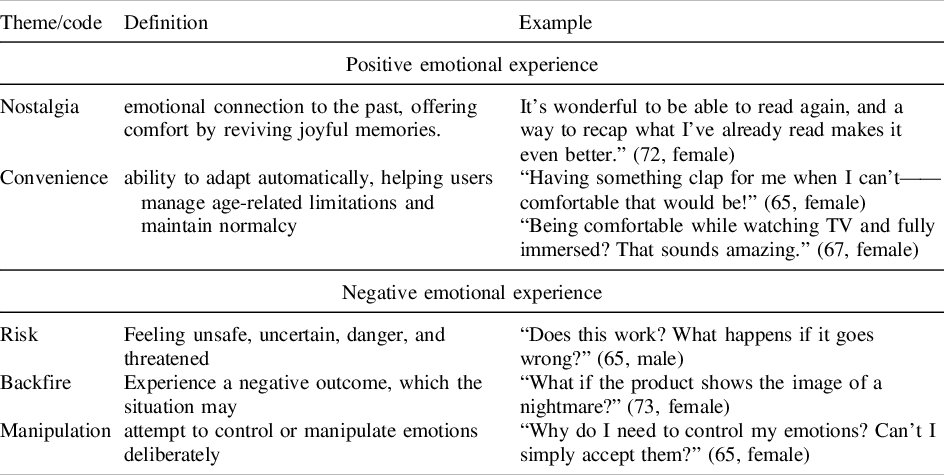
Based on the evaluation of 64 product ideas by elderly participants and an in-depth analysis of interviews concerning their preferences for 12 selected products, it was found that elderly users experienced positive emotional engagement across various factors. Key product attributes contributing to these positive leisure experiences include nostalgia and convenience. Although other design elements were explored during the study, they were deemed less relevant to the research focus and thus omitted from the discussion.
Two main themes emerged related to the emotional experiences of the elderly: the provision of positive experiences and the occurrence of negative experiences. These themes reflect the dual nature of emotional responses elicited by product interactions, highlighting the importance of designing for both emotional satisfaction and mitigating negative emotional triggers.
Elderly participant’s details

3.2. Positive emotional experience
Conducted interviews with elderly participants based on products that received high ratings in the NAF method. The feedback from these interviews, which focused on 12 preferred products among the elderly, revealed several key factors influencing their preferences. These factors included safety, ease of use, convenience, accessibility for all users, multifunctionality, minimal physical effort, accessibility and usability, and the influence of past experiences.
Two key insights emerged from the notable findings. First, many elderly participants found joy in products that allowed them to re-engage in leisure activities they had given up due to aging, facilitated by the product’s assistance in recalling memories. Second, the convenience desired by elderly users was highlighted, wherein products provided comfort by automatically accommodating their physical limitations without requiring conscious effort or thought. Examples of such products included a device that clapped in response to humorous moments while watching TV, expressing the user’s enjoyment on their behalf, and a chair that automatically adjusted to an optimal position for comfortable watching TV as soon as the user sat down.
3.3. Negative emotional experience
Elderly users, much like their experience with positive emotions, demonstrated a clear awareness of negative emotions during their interactions with cognitively stimulating products. Four participants expressed anxiety about safety concerns when engaging with such products, questioning the potential consequences of errors (“What if something goes wrong?”). Negative emotions, anxiety, and worry can significantly impact cognitive responses to technology use, often resulting in adverse effects. These negative emotional responses, particularly related to the functional reliability of products, hinder the potential for a positive user experience among elderly individuals. Consequently, such emotions may act as a barrier to product adoption, even when the products could offer substantial benefits. Safety, especially regarding data processing and privacy concerns, was crucial for elderly users. Despite products being defined as “safe” by designers, elderly users often felt more secure when such products provided anonymity in their interactions with others.
The elderly were also quick to identify negative responses to certain product designs. For instance, a design concept that visualized dreams through brainwave interaction— to evoke positive emotions—elicited negative feedback from three elderly participants, who noted that visualizing nightmares might amplify negative feelings. This sensitivity to negative emotions underscores the importance of elderly users’ awareness of a product’s functionality when purchasing. It suggests that elderly users are more attuned to the potential for negative impacts than designers.
Moreover, when elderly users perceived attempts to control their emotions, their experiences were predominantly negative. Products designed to regulate emotional states in a way that overly managed or constrained positive experiences were viewed unfavorably. This was particularly evident in products that imposed direction, lacked contextual appropriateness, or displayed “kill-joy thinking” characteristics where positive experiences were interrupted or suppressed. Elderly users expressed a desire to experience positive emotions without manipulation, and any forced redirection of these emotions detracted from their overall experience. Thus, the emotional regulation methods employed by these products were seen as incompatible with the preferences of elderly users.
4. Discussion
4.1. Gap between designer’s goals and elderly user’s emotional needs
Design practitioners frequently incorporate established psychological theories, such as Socioemotional Selectivity Theory (SST) and Positive Design Principles, when conceptualizing emotional regulation among older adults. These theories emphasize that individuals’ emotional priorities shift towards more meaningful experiences as they age. Based on this understanding, designers have explored the application of savoring techniques—rooted in Bryant’s savoring methodology—to leisure products. This approach aims to enhance emotional support functions by evoking nostalgia, fostering social bonds, and promoting positive emotional engagement.
However, a significant discrepancy exists between designers’ intentions and user expectations. While designers strive to develop creative and effective methodologies—partly to avoid issues related to imitation or plagiarism—older users prefer autonomy in emotional regulation. Rather than seeking products that directly modulate their emotions, they favor those that enable them to manage their emotional experiences independently. For instance, products that explicitly attempt to regulate users’ emotions may evoke resistance, whereas those designed to facilitate natural emotional expression and ensure emotional autonomy tend to yield higher user satisfaction.
Consequently, a more structured approach to emotional regulation within Product-Service Systems (PSS) is necessary to address emotional and practical needs simultaneously. Such an approach would contribute to developing an integrated design process centered on emotional experience, ultimately enhancing designed products’ overall effectiveness and user acceptance.
4.2. Challenges in designing emotionally supportive products for older adults
Despite efforts to embed emotion-sensitive features, designers encountered several challenges in creating products that effectively support emotion regulation for older users. One significant challenge was identifying the specific emotional needs and triggers influencing elderly users’ engagement with products. While designers hypothesized emotionally significant interactions, they struggled to pinpoint which features or moments within a product experience reliably evoked joy, nostalgia, or comfort. This often resulted in designs prioritizing usability and accessibility at the expense of deeper emotional engagement. Another major challenge stemmed from elderly users’ resistance to explicit emotion-regulating features, as many participants expressed discomfort with products that attempted to manage or direct their emotions. Instead, older adults preferred designs facilitating organic, emotional expression rather than prescribing emotional responses.
Additionally, the short duration of the design process limited the ability to assess the long-term emotional impact of the proposed products. Emotion regulation is a dynamic, evolving process, yet designers were constrained by short-term evaluations that did not account for how users’ emotional experiences with products might change over time. Furthermore, small sample sizes and a lack of real-world testing restricted the iterative refinement of design solutions, making it difficult to personalize product interactions effectively. Addressing these challenges requires a more prolonged, iterative, and participatory design approach, where elderly users are actively involved in multiple testing phases to ensure that products evolve in response to their emotional needs.
4.3. Enablers for emotionally enriching product-service systems
Designing Product-Service Systems (PSS) for aging populations requires moving beyond stereotypes that portray older adults as passive users. A key strategy is co-design, actively involving elderly users in product development to ensure their emotional needs, preferences, and experiences shape the design. This reduces misalignment between designers’ assumptions and user expectations, fostering functional and emotionally meaningful solutions.
Experience re-engagement is another crucial enabler, helping older users reconnect with past hobbies despite physical, cognitive, or social constraints. Products that support familiar activities, such as reading, music appreciation, or social games, enhance emotional well-being and social inclusion. Effective designs should prioritize seamless, intuitive interactions that acknowledge personal memories and emotions, reducing participation barriers.
Emotional autonomy in product interactions is also essential, as older adults prefer products that subtly support emotion regulation rather than impose predefined emotional experiences. Future designs should empower users to manage their emotional engagement independently, ensuring a more personalized and fulfilling interaction.
Additionally, reward mechanisms are vital in sustaining motivation and long-term engagement. Since reward processing remains relatively stable with age, incorporating social recognition, positive feedback, and achievement-based incentives can enhance user satisfaction. However, to maximize effectiveness, these mechanisms must be immediate, cognitively accessible, and tailored to individual preferences. By integrating co-design, fostering experience re-engagement, supporting emotional autonomy, and implementing well-balanced reward mechanisms, PSS can better promote emotional well-being, usability, and deeper engagement, ultimately enhancing older adults’ quality of life.
5. Conclusion
This study examined the integration of emotion regulation strategies in Product-Service Systems (PSS) aimed at older adults, identifying barriers and enablers for creating emotionally enriching experiences. Conducted in two phases, the first involved twelve design practitioners generating 64 ideas and identifying challenges like recognizing emotional triggers and the need for interdisciplinary collaboration. In the second phase, elderly participants evaluated designs using the Novelty, Attractiveness, and Feasibility (NAF) framework, showing a preference for products that evoke nostalgia and offer convenience while resisting explicit emotion regulation features. Concerns about safety and emotional manipulation highlighted the challenges in developing supportive products.
A limitation of the study is its small sample size (n=5) and the homogeneity of participants, suggesting a need for more inclusive research to improve findings’ applicability. The study emphasizes a shift toward user-centered design, advocating for co-design methodologies and emotional autonomy. Future research should incorporate longitudinal strategies to assess emotional responses and foster interdisciplinary collaboration, ultimately enhancing product experiences that improve older adults’ well-being and quality of life. Further study is needed.




 Open access

