




Introduction
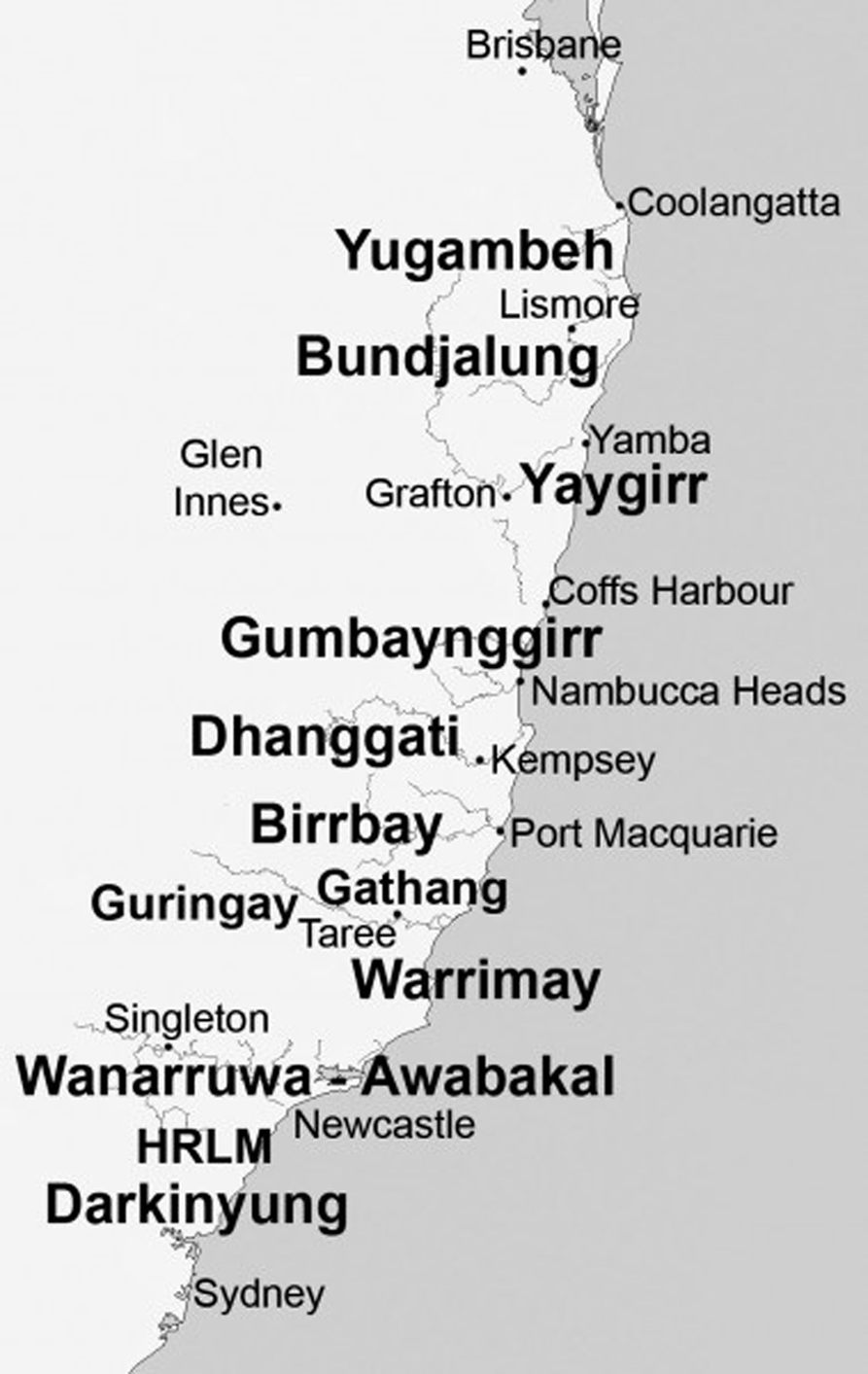
The authors acknowledge the homelands of the Gumbaynggirr people, the traditional custodians of the land on which our activities took place, and pay our respects to their Elders past, present, and emerging. The Gumbaynggirr people have occupied this land for thousands of years, forming one of the largest coastal Aboriginal Nations in New South Wales. The Gumbaynggirr Nation stretches from the Nambucca Valley in the south to the Clarence River in the north and to the Eastern Highlands in the west. Gumbaynggirr people are known as the “sharing people” due to the richness of the land, rivers and ocean, and their generosity towards people from the surrounding Indigenous Aboriginal NationsFootnote 1 . The authors live and work on Gumbaynggir country (Fig. 1), located on the Mid-North Coast, NSW. Mark Werner is a proud Torres Strait First Nations man, a Dauareb and Ulag Clan member of the Zagareb Tribe of Mer. At times he has chosen to write in first person narrative. This is intended and signifies personal reflections.
Gumbaynggir Country (Image courtesy of Edmund Rice Ccentre).
Dawkins Park Reserve, Macksville is located 3.4 kms south of Nambucca Heads, NSW, Australia. The reserve was originally a wetland area and a source of water for humans, animals and plants. Over time and as population growth increased due to white settler colonisation during the 1800s, man-made landfills, filtration and canal systems were established in and around the reserve. Fast forward to the 21st C, there has been significant concern about the reserve’s capacity to support animal and plant life. Nambucca Valley Council have been implementing intervention strategies to counter the local environmental effects of extreme weather patterns that have affected the water quality. Today, the reserve provides a significant teaching, learning and research opportunity to deepen students’ understanding of Climate Change in a place-based setting and to nurture their capacity to envision “sustainable” future landscapes locally.
Our research proposed two key goals. They were:
-
1. To enhance teacher and student understandings concerning the risks and effects of Climate Change through engagement with Aboriginal cultural and scientific knowledges on Country and,
-
2. To design a multidisciplinary teaching and learning programme suitable for Stage 3
(Year 5/6) that links learning about Climate Change to studying, water quality, biodiversity, ecological and technological processes in outdoor environmental learning settings.
Background to the study and literature review
Epistemic foundations of the study: Responding to country
The study was grounded through Technacy theory, a discipline and novel epistemic foundation. The question of whether there is a shared co-constructed reality or multiple context-specific realities arises from the nature of technology, one of the characteristics inherent to human praxis (Seemann, Reference Seemann2010). These epistemic foundations acknowledge and celebrate Indigenous cultural diversity, and their ecological insight underpinned through a holistic consciousness that is values-laden and culturally contextualised for their relevance. This is evidenced through local and traditional ways of knowing, doing and being, and has been the core mode of learning in traditional Indigenous Australian communities.
Technacy evolved during the early 1980s from work undertaken with remote Aboriginal communities through the Centre for Appropriate Technology in Alice Springs, Northern Territory, Australia. This frontier work in cross-cultural technology research, while not targeting technology education directly, did reveal technology choice; design and systems are values laden and contextual for their measure of relevance…transferred technologies are linked to culture and resources (Turner, Reference Turner2012).
As such, socially and ecologically “just” approaches to learning about our ecology in primary and secondary schooling can learn much from Indigenous cultural, technological and scientific knowledge. Further, the research design was guided by epistemologies responsive to Country and by relational ontologies that unmake rational/scientific, post-Enlightenment knowledge constructs between “nature” and “agency,” and the conundrum between the “regimes of extractivism and consumerism” (Fettes & Blenkinsop, Reference Fettes and Blenkinsop2023; Turner & Wilks, Reference Turner and Wilks2022). The study embodied an ecological understanding based on complexity and holistic perception, celebrating local culture and diversity and integrating systems guided through ecological insights. Indigenous onto-epistemology is not separate from ontology — knowing as being and being is knowing — it is not possible to abstract knowledge “from the ways of life from which it emerges” because Indigenous knowledge is “emplaced and situated” (Gatt, Reference Gatt2023, p. 1). Furthermore, in Indigenous onto-epistemology ways of being, knowing, and doing enact an ethic of biocentric relationality …[positioning] humans as part of and reliant upon, rather than superior to and detached from, our local and global worlds(s) (Ritchie, Reference Ritchie2013, p. 395/396). Indigenous people embrace a worldview that all things, plants, animals, and people, are alive with energy and have spiritual rather than material value. This is in stark contrast to capitalism and ecocide, in which nature is reduced to a commodity existing for human exploitation (Redvers et al., Reference Redvers, Poelina, Schultz, Kobei, Githaiga and Perdrisat2020).
Country expresses its agency and highlights its more-than-human nature; however, many educators are not familiar with the term “agency” nor that “nature has agency.” More importantly, humans share agency with Earth as dependent on their survival hence our argument unites “agency” as “practice” in teaching and learning (Jickling et al., Reference Jickling, Blenkinsop, Morse and Jensen2018). How humans respond to Country’s teachings, messages and “call” can make the difference that is needed in society globally, and within education specifically (Suchet-Pearson et al., Reference Suchet-Pearson, Wright, Lloyd, Tofa, Sweeney and Burarrwanga2019).
For an extensive period of time our school community has collaborated closely with our local Aboriginal Community, and we value our respectful relationships. Accordingly, in my teaching, I have come to know that opportunities exist in abundance to do things differently — some I have had to chase while others have been presented to me. Each requires a willingness to commit to undergoing a change process which may terrify some yet invigorate others. Over the period of the research, I witnessed a critical mass of teachers who welcomed change and embraced the uncertainty and excitement that change has the potential to bring.
During the development of this project ongoing cultural advice was received from a local Gumbaynggirr Elder and three knowledge holders, two of whom worked in the local schools involved in this project as Aboriginal Education Officers. In consultation with Elders and other representatives of the local Aboriginal community, cultural stories, language and art were incorporated into the project.
Climate change education
As I have said repeatedly before, the world before me and many others was a piece of cake. Unfortunately for future generations, we ate it (Dator, Reference Dator1996, p. 558)
Climate Change is urgent. Climate Change education is urgent. The planet is experiencing a modern catastrophe caused by a combination of imperialism and population growth, compounded with an “extractive relationship” between humanity and nature that has resulted in Climate Crisis, biodiversity loss, disease, and pollution on our planet (Fettes & Blenkinsop, Reference Fettes and Blenkinsop2023; Fletcher et al., Reference Fletcher, Ripple, Newsome, Barnard, Beamer and Behl2024). As a result, Earth’s ecological imbalance and the fragility of the critical zone humans and more-than-humans inhabit, are in deep peril and present an imminent threat to humanity with ecological systems breaking down one after another. The increasing imbalance, both in lived reality and socio-scientific thought between “natural” and “human” systems, has produced unprecedented, existential challenges in what is referred to as the “Anthropocene” (Cutter-Mackenzie-Knowles et al., Reference Cutter-Mackenzie-Knowles, Lasczik, Wilks, Logan, Turner, Boyd, Cutter-Mackenzie-Knowles, Lasczik, Wilks, Logan, Turner and Boyd2020; Fletcher et al., Reference Fletcher, Ripple, Newsome, Barnard, Beamer and Behl2024; Haraway, Reference Haraway2015). Today’s students face a far more unpredictable and unstable world compared to previous generations, with constant and swift changes happening around them. Many are worried about the environment and what lies ahead (Savage, Reference Savage, Reid and Price2018).
Traditional, western methods of education pose a constant risk of reinforcing the idea that humans are separate from the natural world and assume the natural world is passive. Today, more than ever, ecological insight and Aboriginal cultural perspectives need to be embedded into educational frameworks, particularly when teaching multifaceted systemic contexts (Fettes & Blenkinsop, Reference Fettes and Blenkinsop2023; Turner & Wilks, Reference Turner and Wilks2022; Wilks et al., Reference Wilks, Turner, Shipway, Cutter-Mackenzie-Knowles, Lasczik, Wilks, Logan, Turner and Boyd2020). Masters (Reference Masters2020) argued that value-laden “futures” capabilities should be prioritised in NSW school curriculums where global, local and social competence, intercultural understanding, and ethical conduct are supported. Moreover, a pedagogical shift involving holistic approaches to understanding the interplay between humans, technology, ecology and agency in collaborative learning contexts is needed (Koskela & Riikka, Reference Koskela and Riikka2022). In this way students are assisted to conceptualise through different perspectives what their preferred future might look like, and are encouraged to “ask questions, think critically about the past, challenge the status quo, and envision tomorrow on a variety of time scales” (Warren et al., p. 7). Jickling et al. (Reference Jickling, Blenkinsop, Morse and Jensen2018) put forward that “wild pedagogies are explicitly and deliberately about enabling change,” and in this study purposeful steps were taken towards the achievement of pedagogical change in the form of teaching and learning that nurtured and centred students’ understanding about environmental sustainability.
As the third author of this article, and a Geography teacher for 10 years, I have observed changes in student responses as they conceptualised the implications of climate-related investigations. Although Climate Change is by no means a dominant feature of the syllabus, student inquiry based on the concepts of Geography and human praxis over time alludes to its significance. In my teaching I have observed that as students utilise the concepts of space, place, interconnection, change, environment, scale and sustainability framework to conduct inquiries they are often surprised at their findings, particularly throughout the Stage 4 topic Water in the World (NSW Education Standards Authority [NESA], 2020). During the period the study was undertaken, myself and a collegiate of teachers at my high school formed a learning “HUB” to not only bridge the transitioning of students from Year 6 primary school to Year 7 high school but to also team teach across multiple disciplines. Year 7 teachers from the English, Mathematics, Science and Human Society and Its Environment faculties worked directly with each other to deliver content (Werner et al., Reference Werner, Wilks and Turner2024). This collaboration of enthusiastic teachers and the folding together of related content across all key learning areas aimed to enhance the students’ understanding about local environmental issues and the role of Climate Change. Collaborative tasks were designed to provide teachers with the scope to incorporate cross-disciplinary knowledge and skills.
Gumbaynggirr Jagun/cultural narratives in teaching and learning
Baynes (Reference Baynes2015) argues that different ways of “knowing and doing” can present teachers with epistemological challenges in the classroom due to the different epistemologies that underlie these differences. For example, one way of viewing traditional Western views of science is through Cartesian-Newtonian theory — an epistemology heavily reliant on empirical research where knowledge and practice exist independently. In comparison, Australian Aboriginal knowledge systems assign a holistic/naturalistic cosmology entangled through praxis — a unique techno-epistemology where knowledge and practice cannot be separated. In this study guidance was sought from Aboriginal Elders to guide both its design and the participating teachers and students through principles that have long enabled Australian Aboriginal people to initiate and inhabit sustainable lifestyles in rural and remote areas. Burgess & Thorpe (Reference Burgess and Thorpe2024) also observed that although learning from/on/with Country has been practised in Australia for thousands of years it is a relatively new phenomenon as an applied learning framework in curriculum:
Aboriginal content in the Australian Curriculum is limited, and while the NSW curriculum is currently improving on this across all K-10 syllabi, there is still no coherent, scoped and sequenced Aboriginal curriculum narrative across the Key Learning Areas and Stages compared to “mainstream” subjects (paragraph 6-7, 2024).
In outdoor settings local Aboriginal Knowledge holders shared their knowledges about technologies, ecosystems, species, atmospheric and oceanic processes, and the relative ease with which our Aboriginal Cultural Knowledge holders delivered curriculum content demonstrated their unbroken connectivity to the cultural practice of on Country Learning. Long the core mode of learning in traditional communities, local and traditional ways of knowing, doing and being, are increasingly inspiring educators to apply culturally sustaining pedagogies and socially and ecologically just approaches through teaching and learning on Country (Manathunga et al., Reference Manathunga, Davidow, Williams, Gilbey, Bunda, Raciti and Stanton2020). Fundamental to this is the acknowledgement that for Australian First Nations People, the spiritual and cultural fibre of social organisation and the connection between people, land and sustainable technology applications is critical for successful sustainability understandings (Turner et al., Reference Turner, Wilson and Wilks2017). Jackson-Barrett and Lee-Hammond (Reference Jickling, Blenkinsop, Morse and Jensen2018) express this vital and fundamental connection:
Each Country is imbued with stories, song lines and “kartijin” (knowledge) and it is these stories, songlines and knowledge that give rise to understanding ourselves, our worldview and our ways of being … Elders all across this vast terrain have utilised the environment to teach generations of Aboriginal children skills and competencies through play and tradition in the preparedness to survive, and for the continuance of cultural obligations, responsibilities and stories (p. 91).
Many people are looking for more respectful and immersive ways to live with the natural environment, including all living forms and systems that are co-dependent (Fettes & Blenkinsop, Reference Fettes and Blenkinsop2023; Gumbaynggirr JagunFootnote 2 Aboriginal Corporation, n.d). Accordingly, the study sought to embed Australian Aboriginal scientific and cultural knowledge into teaching and learning through Gumbaynggirr/Jagun narratives as “embodied acts of inter-textualised, transgenerational law and life spoken across and through time and place” (Phillips & Bunda, Reference Phillips and Bunda2018, p. 8). This prioritisation of cultural protocols and processes is non-negotiable when collaborating with local Aboriginal Community. Extensive planning and engaging in respectful cultural dialogues surrounding the selection of the most appropriate Aboriginal representatives is key to Learning on Country and was the first of many organisational processes undertaken in the setting up of the study. Below the project’s methodology is described in full.
Methodology
This collaborative project was undertaken between 2020–2022 and included eight primary and high school teachers, three Aboriginal Education Officers, three local Aboriginal knowledge holders, one Aboriginal and one non-Aboriginal outdoor education specialists from the regional Environmental Education Centre, two University researchers and a local council environmental officer. At the commencement of the project, a smoking ceremony took place at the reserve to both cleanse the homelands and participants — Cultural Knowledge Holders welcomed everyone to Country. They offered their knowledge and cultural information that does not appear in education-based textbooks, “the ancient knowledge that we all come from the Earth, from Country” (Spillman et al., 2022 p. 103). On Country collaborative learning experiences highlighted the vulnerabilities, risks, and adaptation strategies related to Climate Change, affecting both the local community and various regions in New South Wales, Australia. These experiences focused on sustainability, exploring the interactions between ecological landscapes and how water influences animal behaviour and bird migration patterns. Technologies past and present were discussed and observed.
At the conclusion of the project, a Stage 3/Year 6, place-based unit of workFootnote 3 was developed between the teachers and Southern Cross University post-project conclusion — transferable across primary schools specifically, regardless of location in NSW, but diverse enough to be adaptable to suit years 7–10. In the first instance, the teachers worked from the NSW syllabi from which they would typically teach during a semester:
1. Science and Technology K-6
2. Human Society and its Environment K-6 [History and Geography]
3. Mathematics (K-6 and 7-10)
4. Geography 7-10
5. Technological and Applied Studies (K-10)
This multi-disciplinary unit of work incorporated science, technology, engineering, art, and mathematics. This approach delved more deeply into comparing the intricate dynamics between Australian Aboriginal sustainable ways and also modern technologies to examine water, soil, and drainage issues within the reserve. By engaging with these critical topics, learners were equipped to understand real-world environmental challenges in the reserve.
The research received ethics approval through the Southern Cross University Human Research Ethics Committee 2021/013, and the NSW State Education Research Applications Process (2021085). Cultural protocols to recognise, respect and incorporate local Aboriginal community members and knowledge were observed during the design phase and throughout the project. The participation of local Indigenous knowledge holders involved prior informed consultation and consent, ensuring their ownership and control of their cultural and intellectual property (stories, languages and art), including interpretation and integrity (Turner & Wilks, Reference Turner and Wilks2022).
Data collection and analysis
Employing a Naturalistic Inquiry provided scope for the social and human elements to be identified more clearly and while multiple realities (ontology) were constructed, they also diverged (Lincoln & Guba, Reference Lincoln and Guba1985, p. 37). In this paper, key findings of the focus group discussions of those students and teachers who took part in the project are presented. One hundred and seventy-four students in all took part in the project and ten focus group discussions were held. These took place in both face to face and online mode due to the changing COVID protocols at the time. The questions posed during these discussions aimed to identify participant understandings and knowledge about Climate Change, including students’ level of enjoyment about learning outdoors and the activities they engaged in. An inductive approach was employed to analyse the focus group transcripts. Broad conceptual categories for coding were allocated systematically to identify key themes rather than individual codes for the focus groups given the large volume of students. Therefore, only descriptive theme codes were assigned which are presented in the following findings.
Findings
Theme 1: Fieldwork learning
The proximity of the site to the schools was beneficial for most participating schools, and the site was within walking distance for two schools. Outdoor education specialists ensured students were the ones participating in the activities and not watching staff members undertake the tasks from the sidelines. Collecting water and soil samples required students to contribute, cooperate and collaborate throughout the learning process, and at various points Gumbaynggirr Knowledge Holders shared cultural stories with the students. The students appreciated being able to “see and do,” as one student put it, helped them to like, actually get it. Additionally, they said they appreciated doing the stuff and not just sitting there and writing…when we did the nets and we were able to walk around…It’s more fun and I don’t know how to say it but you feel more free, if that makes sense.
Students were asked if they enjoyed learning outside, and how it made them feel. While a couple of students expressed that sometimes it can be noisy and harder to hear … it can be hard to write things down…it’s not really designed to be used as a learning space…It smelled awful, actually, it really smells bad…overall the great majority of students said they enjoyed learning through their senses — listening; seeing; touching and feeling; and smelling…that what connects them to nature is just sitting there in peace, relaxing and hearing the birds…I liked going to the park because we go to experiment rather than being in the classroom…I hate being in here. Classrooms are boring. We don’t really get strong excursions anymore.
They reflected on their learning in and through nature, and they felt better about themselves as learners: You get lifted in a better way. They were certain that there were fewer distractions to their learning in outdoor settings compared to a classroom, that it is peaceful, and that they can focus and remember things better. They liked outdoor learning because it felt real and it crystalised their learning. They are learning in an environment in which they feel they absorb information better, ultimately rationalising this knowledge into their lifelong learning. Furthermore, when they are learning outside, they get more air and feel freer, that it kind of feels like home; just being in the sun feels good and, you can just stop and chill. I like the good feeling afterwards. Once you go there and you kind of know what’s happening and that if you start making a difference now, how it will impact on the future.
As a result, the students felt the opportunity to move about outside, to learn through the senses, learn in different places and see different things improved their focus and their learning compared to being confined inside a classroom.
Theme 2: Environmental stewardship
In the focus groups students were asked about their understanding of “stewardship.” The students at the Catholic primary school said they had heard about stewardship in the context of their religious studies, and offered the following interpretations as this range of responses demonstrates:
Stewardship means taking care of a land…stewardship means helping God’s creation, and caring for it, and looking after it, and the animals as well…I remember doing this thing in religion, where it was a guardian of the land and taking care of it… it’s kind of like taking care of the land or environment… I think it means when you care so much, and your religion… is that to look after the earth and want everyone around you to do the same … So I think stewardship is, you take care of the land, like a shepherd takes care of its sheep.
Theme 3: On country custodian understandings
Students were also asked what they understood by the term “custodianship.” Below is a range of responses:
Custodianship is we pay respects to the people that used to be on the land…Isn’t it about the land and welcoming people?…Custodians are the people who own the land…Oh, old [Indigenous] people that used to…old people that ruled the land…the original caretakers…
Custodians of the land are like the Elders…is it about the Elders and they live in that land?…Like people in the country or people bonding in the country or working…People that care for the land?…The acknowledgement of country…we would like to respect the custodians of the land…I do not know what custodianship is, but I’m guessing that it’s got something to do with taking care of the land and not just your environment …
I think custodianship is basically the same as stewardship, except it has a lot more culture to embrace about it.
Theme 4: Climate change
When back in the classroom it quickly became apparent to teachers that their students had developed a better ability to connect what they knew about global climate change to what was happening in their local area. One teacher reported that whilst conducting a comparative analysis with less fortunate regions, their students developed a deep appreciation of the effects of Climate Change on the precious resource of water, and the impacts of this upon places and communities. Through reflective activities, they were able to articulate their concerns about the future of these places and communities if immediate restorative measures were not actioned. Other teachers noticed that in the conversations with their students that what they had done at the park had opened up their thinking beyond their small world to what’s happening around them and, how that impacts everybody else in the world…You can see that they are starting to have those bigger thoughts beyond themselves. In focus group discussions students related that they were shocked to see the state of the water brown, green and mossy with a bunch of plastic in it…the dead trees…nothing growing…the birds [Ibis] and the effects of the bird droppings…; I learnt a lot of new things like the weeds were taking all the oxygen out of the river and were killing it.
Students’ responses indicated that they understood the fragility of natural ecosystems and the role and importance of all creatures in an ecosystem, and even if they thought the park was “stinky” due to the large numbers of ibis. One student demonstrated their understanding that everything in an ecosystem is connected, and every creature has its place thus: Some animals are dirty and nasty, but they have a life like we do, and they deserve a life. Even if they’re like ibis and no one really likes it, there’s no reason to kill it, because it’s still part of our nature and our world. If we get rid of them we get rid of all the rare animals as well, and then we’re going to only see like pigeons and all that flying around.
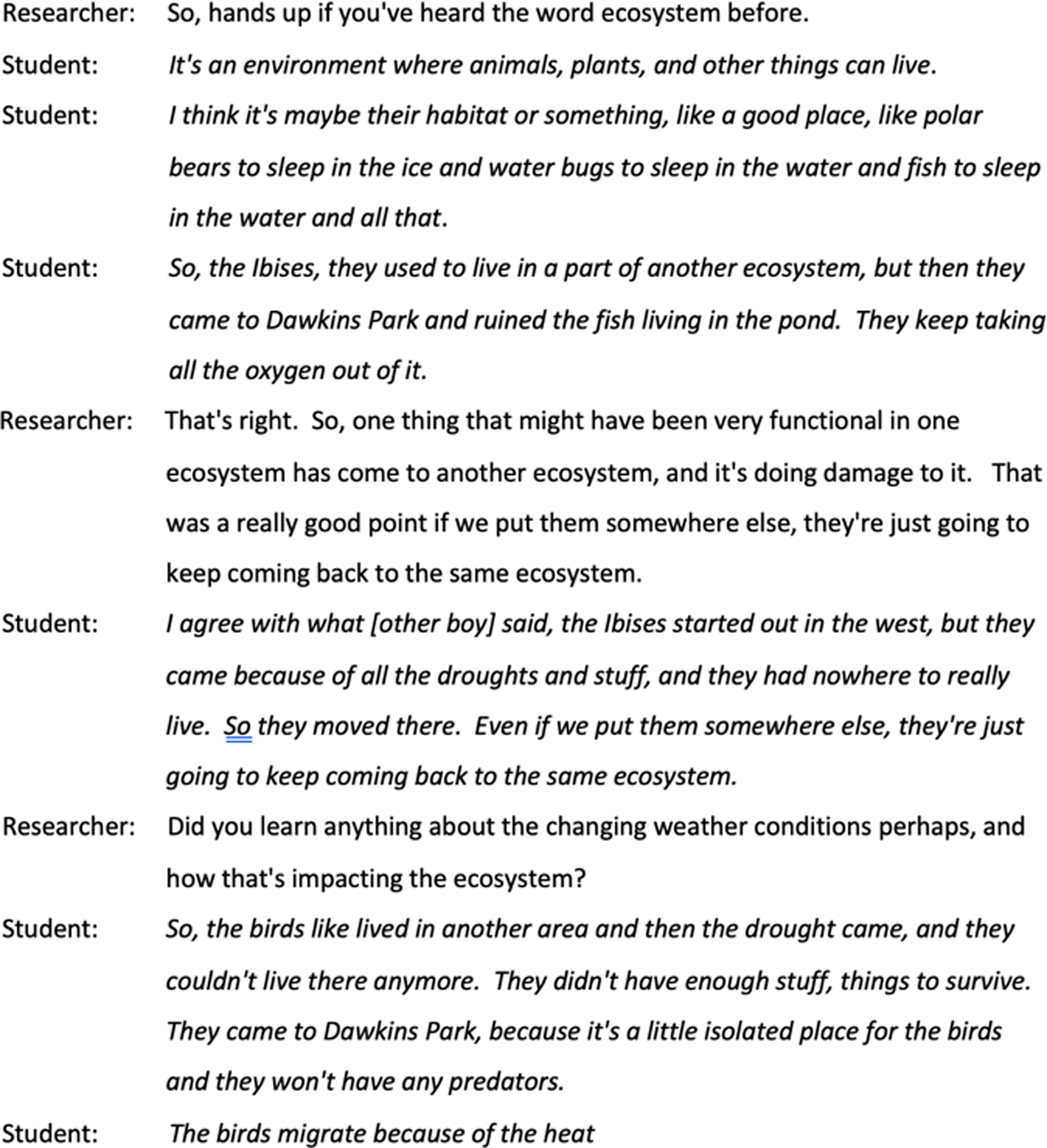
The students heard how Aboriginal culture, and stories regard the ibis and egret’s long-term presence in Australian landscapes as sacred because they are an indicator for environmental wellbeing. These birds however are dependent on the health of inland wetlands, which in turn is contingent upon the quality and amount of water, and the timing of flooding and the availability of food. The students learnt that the proliferation of ibis at the park was a key indicator of Climate Change. The Department of Environment & Climate Change NSW (2007) put forward that the white ibis in particular have not been transient between inland and coastal ecosystems since 2007, largely due to the decreasing quality and long-term changes of inland ecosystems across NSW. They add that this is evidence of a long-term climatic cycle event. The students witnessed the damage the ibis are doing to the ecosystem in terms of the putrefaction of the water and the destruction of vegetation at the park. One student observed: I didn’t really notice how bad Climate Change has been until I went there. The following discussion with the students in Fig. 2 highlights their developing understanding of the tension between the damage the ibis are doing and the Climate Change-driven forces that have led to their proliferation:
How a focus group discussion with students about ecosystems unfolded.
Theme 5: Envisioning and designing preferred futures
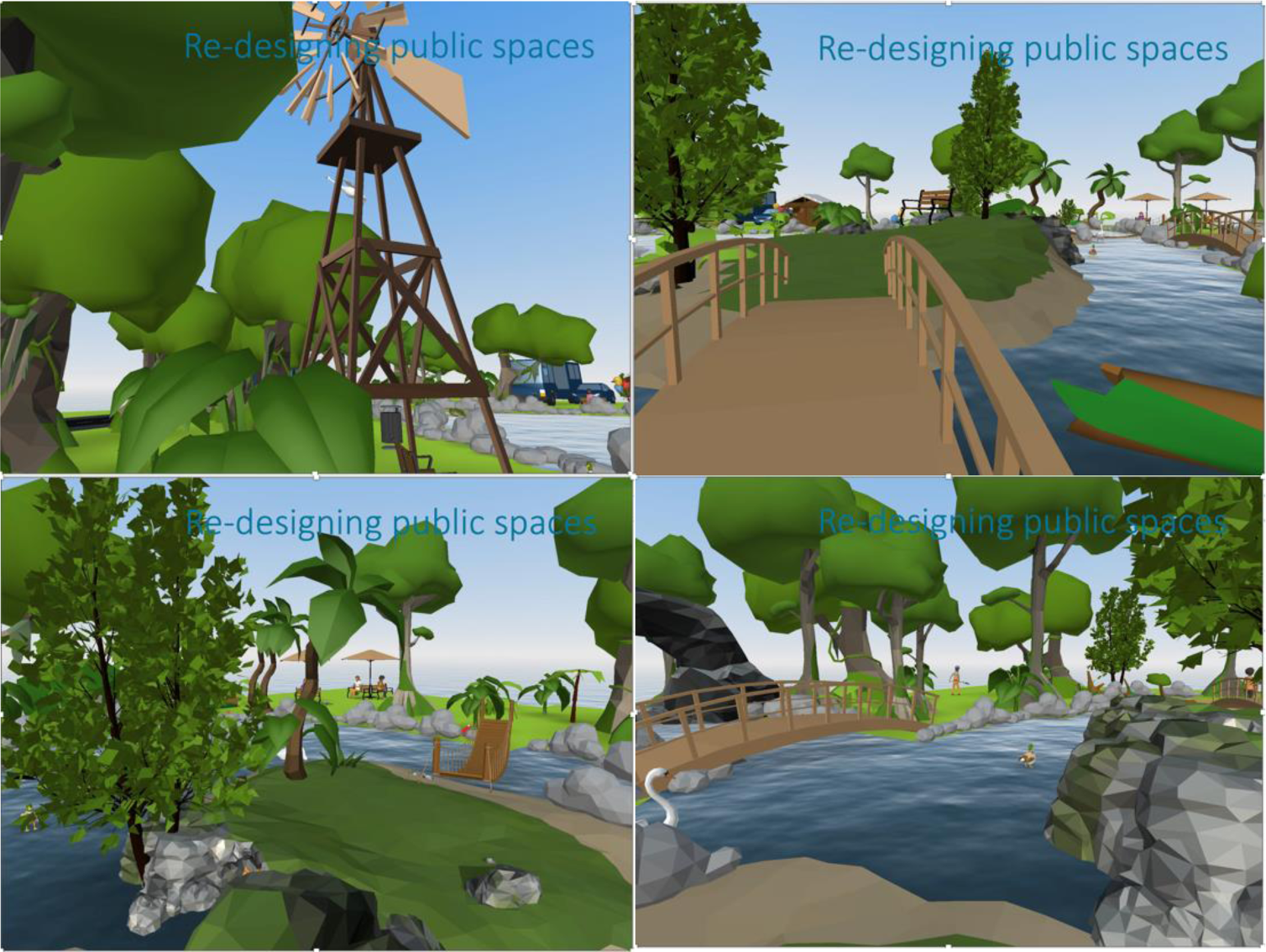
All participating schools were given an aerial picture of Dawkins Park for the students to design environmental improvements for the reserve. For example, surveys were undertaken for bird habitat and migration patterns based on what students saw and through the analysis of bird beaks. A water quality survey for Year 7 science was compiled to identify water stratification levels, turbidity and Ph levels. For Year 6 students, a medicinal garden Design Challenge was undertaken while at another school, CoSpaces was a design platform used by year 6 students to design their preferred future regarding the park aesthetics (Fig. 3). During the time the school students attended outdoor learning classes at the park, they also watched the construction of a windmill, which fed into lessons about alternative energy sources across all schools.
Preferred futures for Dawkins Park Reserve.
Discussion of findings
Our research findings reinforce the importance of truly listening to our children when they say they feel better when they’re learning outside, that they not only feel better in and of themselves, but they are more interested in learning because they feel more empowered about themselves as learners. In the focus group discussions many communicated that they understood more when they were observing and learning about “living things” in their local, natural environment and as a result, they understood Climate Change better in both its local and global manifestations.
As a teacher and third author of this paper my experience has been that the deep connection between the Gumbaynggirr people and the environment, involving stewardship/citizenship and custodianship practices over many thousands of years, is not something that can be taught inside a classroom. The children described the richness of the cultural narratives of the Gumbaynggirr knowledge holders. For example, respecting the land and the inhabitants’ sacred relationships on which they are dependant, which provided more depth of meaning to their learning. This is an important aspect about the learning process, namely the link between becoming familiar with a place and understanding its story. Learning on Country however is about being in a space where children can experience “the freedom of exploration and where risk-taking is encouraged” (Jackson-Barrett & Lee-Hammond, Reference Jackson-Barrett and Lee-Hammond2018, p. 91), leading them towards understandings impossible to fully realise inside a classroom.
Rousell & Cutter-Mackenzie (Reference Rousell, Cutter-Mackenzie, Cutter-Mackenzie, Malone and Hacking2018) observed every child’s life involves interactions with nature, unrepeatable, uncommon moments, and that by their very nature, these interactions and experiences are unique and relational. Yet herein lies the paradox — if students feel so enriched by a deep relationality with nature, why are educational systems making it increasingly difficult for learning to occur in environmental settings? What factors have led to the development of this risk-averse outlook of schools? Why is it that over recent decades less and less learning and teaching has been enacted outside the classroom? (Paulsen et al., Reference Paulsen, jagodzinski, Hawke, Paulsen, Jagodzinski and Hawke2022). Part of the answer to such questions relates to the concern of educational systems’ increasing litigation should harm come to a student on an excursion. Accordingly, teachers are burdened with layers of paperwork, risk assessment protocols, policies and procedures, creating a path to the further disembodiment of learning in the natural environment (Wilks et al., Reference Wilks, Turner, Shipway, Cutter-Mackenzie-Knowles, Lasczik, Wilks, Logan, Turner and Boyd2020).
As a teacher, my experience has been that the easiest and safest answer to a variation of routine requests involving taking students off-campus is “no,” and there is no criticism intended. Top-down decision-making affects schools and executive leadership teams given the often overwhelming and inherent challenges within individual schools that may not align nor support innovation in environmental education. “No” is the easiest and safest answer. “No,” however also comes with a far greater risk, the risk of not only further disenfranchising our students through eroding their agency, but the continued disembodiment of learning/learners from the natural environment.
Savage et al. (Reference Savage, Reid and Price2018) furthers that having to work in an environment of accountability and compliance has resulted in some teachers feeling that their autonomy, expertise, and professional judgment were being systematically undermined. Rethinking the entire “Western” education system is necessary if schools are to remain effective in producing students who are multifaceted, creative and critical thinkers who can apply ideas into unfamiliar settings, break boundaries, problem solve and conceptualise as a part of a team (Jickling et al., Reference Jickling, Blenkinsop, Morse and Jensen2018). A huge undertaking indeed, but Paulsen et al. (Reference Paulsen, jagodzinski, Hawke, Paulsen, Jagodzinski and Hawke2022) reminds us, such transformations in education have the potential to change the face of earth for the better. And the alternative is bleak. Are we, collectively as educators willing to stand by and continue to witness the long-term and wide-ranging consequences of the disempowerment of students from taking the reins in their own learning? And is not the greatest risk to their social and emotional development the planning of “all risk” out of their lives? (Wilks et al., Reference Wilks, Turner, Shipway, Cutter-Mackenzie-Knowles, Lasczik, Wilks, Logan, Turner and Boyd2020). Achieving fundamental change in education requires a pedagogical shift toward outdoor, real-world interactive learning experiences, where creativity is promoted and bold experimentation supported (Jickling et al., Reference Jickling, Blenkinsop, Morse and Jensen2018). Moreover, “re-wilding pedagogy” would initiate educators to rethink their “practice” through a critical lens and question system barriers that appear to be holding them back.
As the third author of this article and a practising secondary teacher, I look at it this way — the harsh reality is that only a small amount of your working day is spent with your class. A great deal more time is spent behind the scenes preparing and dealing with the aftermath. For example, every behaviour serves a purpose and if students are disengaged, they will misbehave. The consequences of these negative behaviour infractions require teachers to employ well-being and behavioural policy documents and processes. Although important, these processes are very time consuming. As an informed educator, I would like the autonomy to choose where I spend my time. For me, I have always adopted the iceberg model of preparedness. In this project I worked with an exceptional team to deliver on Country cultural immersive learning events. We went the extra mile and provided students with exceptional learning experiences. Like all reoccurring activities, you develop routines and efficiencies that streamline your processes and reduce the administrative burden.
A common feature that teachers just starting out on their great outdoors adventures often report back to me is that they developed a much stronger relationship across the student cohort as well as the parents and community throughout the entire process. This newly developed rapport can see a significant reduction in negative behaviour infractions and improved educational outcomes. I also accept that for some staff who have no interest in taking students outside of the classroom is largely due to disrupting their usual routine. I have a saying with my students that if they are unable to demonstrate the expected behaviour in the classroom then we are not ready to go outside of the classroom and on Country. The students see the value of utilising geographical skills-based applications taught in the outdoors within their personal pursuits. For example, many have described the significance of these applications to their activities outside of school which have involved interpreting accurate weather information, applying navigational charts for boating and fishing, and/or mapping terrain for mountain bike riding. Other studies have made similar findings. Spillman et al. (Reference Spillman, Wilson, Nixon and McKinnin2023) reported that the teachers in their research “Country as Teacher” although initially nervous about taking students out in-Country, were surprised and amazed at “the length of time most young children were able to be still and look and listen in-Country,” and how “refreshing and peaceful and calming” their students found it (p.111).
I find on Country immersive learning integral in supporting students understanding of local Aboriginal Cultures and histories, and observing the students engage, learn and recall the information very satisfying. On Country, immersive learning is powerful, and yes, on Country immersive learning comes with its own challenges and additional workloads and if you speak to any educators who embark on this journey, they will tell you that it’s worth it. (for others see Burgess & Thorpe, Reference Burgess and Thorpe2024; Spillman et al. Reference Spillman, Wilson, Nixon and McKinnin2023). Students demonstrated an impressive ability to articulate how being outside had enhanced their learning, with their responses especially focussing on the hands-on aspects and seeing for themselves the things they were learning about.
Cultural Knowledge Holders offered an alternative perspective to Western land management practices as students navigated the extensive and often complex research surrounding Climate Change. Our students visited the site of Dreaming Narratives and were presented with evidence in the form of oral traditions of Climate Change and sea level rise. Did we succeed in providing our students with an in-depth knowledge and understanding of Climate Change? This is still a work in progress, but we did start the conversation at a local level.
Ritchie (Reference Ritchie2013) refers to as “an embodied, sensorial response-ability” in terms of how children engage with the “more-than-human world” (p. 396), ultimately helping them to develop “hope in this era of the anthropogenic climate crisis” (p. 395), and this was evident in the students’ feedback. They related that until they went to the park, Climate Change was a faraway concept, and that they didn’t really notice how bad Climate Change was. However, by being there, they could connect to it because they saw for themselves its impacts, and they were prompted to start thinking about making a difference and how this will impact on the future, because as one student put it: just knowing about it makes you feel more involved in it.
Conclusion
These young people were articulate, confident and passionate when recounting their learning experiences about Climate Change at Dawkins Park Reserve. They knew that learning in nature about nature didn’t just make them more knowledgeable, it actually changed them as learners. Learning felt better and they felt better about themselves as learners, because with nature as co-teacher, they had deepened their connection with and their understanding of the living, more-than-human world. Through participating in local site visits and listening to the shared cultural stories and creation narratives on Country by Gumbaynggirr knowledge holders, the students developed a strong sense of connection, and of being able to make connections. Through their first-hand investigations they developed a deep appreciation of the scale, nature, and interconnectedness of the impacts of Climate Change at a local and global level. Finally, despite the immense challenges of Climate Change ahead these young people demonstrated hope and agency, and a belief that they could do something about it.
Acknowledgements
We wish to acknowledge the Gumbaynggirr people (past) and knowledge holders (present) who offered guidance throughout this project.
Financial support
This work was supported by Local Government NSW Increasing Resilience to Climate Change — Round 2 for the project titled: Learning about Climate Change through public spaces ($95,000.00).
Competing interests
The authors are reporting on their process of creating the water[shed] education resource.
Ethical standards
The research received ethics approval to be conducted in two stages and was conducted in accordance with the Southern Cross University’s Human Research Ethics Approval (HREC) No: 2021/013 and also the NSW State Education Research Applications Process (SERAP), Approval No: 2021085.
Author Biographies
Judith Wilks is Adjunct Associate Professor at Southern Cross University, Faculty of Education, and Adjunct Associate Professor at the Nulungu Research Institute, University of Notre Dame Australia. She is an experienced educator with a significant research, teaching and community engagement track record in regional education services delivery in both the higher education and schooling sectors.
Angela Turner is Adjunct Senior Lecturer in the Faculty of Education, Southern Cross University. Her research promotes university-school community engagement with rural primary and secondary education, advancing teaching, learning and assessment as an ongoing educational enterprise. She is a curriculum advisor for the NSW Education Standards Authority curriculum reform for Technological and Applied Studies 7-10.
Mark Werner is Daureb and part of the Ulag Clan which is a clan of the Zagareb Tribe of Mer in the Torres Strait., A high school teacher with a Masters Degree in Indigenous Languages, he is passionate about creating On Country immersive learning experiences. He lives and works on the Mid North Coast of NSW.


 Open access

