

Introduction
As Europe navigates an era of ‘polycrisis’, it must strengthen its collective resilience, particularly in research and innovation (European Commission 2024). The European Commission’s expert group on the economic and societal impact of research and innovation (ESIR) recently underscored the need for Europe to leverage its technological capabilities and secure first-mover advantages to dominate global markets (Expert Group on the Economic and Societal Impact of Research and Innovation 2024: 7–11). This calls for an urgent focus on attracting and retaining top talent in science and technology, since this is central to Europe’s future (e.g., CESAER 2018, 2020, 2022, 2023).
Letta (2024: 21) notes that ‘Retaining talents is critical for Europe’s economic resilience, innovation capacity, strategic independence and societal welfare and should be one of the most urgent priorities’. Despite efforts, Europe faces a concerning outflow of researchers, particularly in high-demand fields, threatening its global leadership and strategic ambitions. Draghi (Reference Draghi2024: Part B, 252) stresses the need for ‘a new EU framework for private funding to enable public universities and research centres to design more competitive compensation policies for top talents and to provide additional support for research’. To accomplish this, Europe must offer stable, attractive research careers and foster an environment that acts as a magnet for global talent. A critical element in overcoming these challenges is the ability to harness and nurture talent (Teichler Reference Teichler2015). As highlighted in a 2024 study by the Migration Partnership Facility, bottlenecks such as insufficient investments and difficulties in attracting and retaining talent need to be addressed to fully exploit Europe’s research and innovation potential (Murgia and Poggio Reference Murgia and Poggio2018; International Centre for Migration Policy Development 2024: 4-6; Iversen Reference Iversen2023; Nigitsch et al. Reference Nigitsch, Weigle and Frongia2023). The competition for talent is intensifying globally, and Europe must act swiftly to secure its future in science and technology (Khan Reference Khan2021; Fuest et al. Reference Fuest, Gros, Mengel, Presidente and Tirole2024).
Europe is facing a unique opportunity to turn the European brain drain of the last decades into a brain gain. As Heitor (Reference Heitor2024: 25, 76) explains, Europe lost many of its young brightest minds, particularly to the US, with Europe’s competitiveness suffering significantly with talented and well-educated early-career and young people leaving the continent (Heitor Reference Heitor2024: 25, 76–77; Draghi Reference Draghi2024: Part B, 240–241). But analysis has shown that the brain drain can only be disrupted if Europe adopts a strategic policy shift to foster high-quality careers, especially for early-career and young researchers (Fenby-Hulse Reference Fenby-Hulse2019; Heitor Reference Heitor2024: 77).
We refer to the need for an integrated and holistic policy action to address research careers and the future of work in academia and scientific institutions, including for support staff and technicians to work together with researchers. By integrated and holistic, we mean that researchers are not an isolated entity, but usually come with family and other commitments, including the significance of labour market and welfare support systems. For example, opportunities for partners and children are of great importance to attract and retain. They include free language courses, affordable childcare, affordability of housing, (paid) parental leave and the larger labour market that allows career opportunities for companions. While some topics can be dealt with at the institutional level (e.g., integration of companions, language courses, etc.), others are better dealt with at the national level (childcare, health care, policies affecting the labour market). But, in general, this requires institutional practices and research career assessment methods evolving towards monitoring the stability of the immediate environment that surrounds researchers.
The following section briefly summarizes the research context based on the evolution of brain drain trends for EU member states and across the world for two periods: 2001–2010 and 2011–2020. The next section briefly describes our research method, including a survey data analysis and selected case studies. The subsequent sections present sample results and discuss the evolving context, deriving the main policy implications of our research. The final section briefly presents our main conclusions.
Research Context
The landscape of research careers in Europe is undergoing profound changes. The transformation of higher education, combined with increasing pressures on universities to meet productivity targets, has led to greater competition and instability in research careers. Public investment in research has not increased at the pace it should have (Heitor Reference Heitor2024: 76–77), forcing institutions to rely more on external and short-term funding sources, which further exacerbates the precariousness of research careers.
According to Eurostat (2023), in 2022 Europe hosted over 2 million researchers, including 670,000 doctoral candidates. This represents a 45% increase since 2012 (Eurostat 2023). They represent 1% of the European labour force. The number of full-time equivalent (FTE) researchers more than doubled in Poland, Sweden and Greece between 2012 and 2022 (Eurostat 2023). Most researchers (57%) are employed in the business sector, about one third of them (32%) in the academic sector and 10% in the government sector (Eurostat 2023). In comparison, in 2021, South Korea had the largest number of scientists and researchers with 17.3 people working in research or science fields per 1,000 FTEs. Sweden was second, with 16.6. The European average was 9.4 (Heitor Reference Heitor2024: 77).
However, it should be noted that the increase in the number of researchers in Europe coincides with an explosive brain drain from Europe. This is because the growth in the number of researchers in Europe has not been matched by an increase in the number of quality research jobs. Many European countries have experienced a net outflow of researchers, contributing to a persistent brain drain. This phenomenon is particularly pronounced in large countries in the south and the east, where the loss of talent to the United States poses a significant challenge to the sustainability of the EU’s research and innovation sector.
The need to address the precarity many researchers now face was explicitly addressed in the European Council conclusions of May 2021 (Council of the EU 2021a) on research careers and in the ‘Pact for Research and Innovation’ agreed in November 2021 (Council of the EU 2021b). The Manifesto on early research careers, published in September 2022 by the Initiative for Science in Europe, also calls for urgent action (Initiative for Science in Europe 2022). In addition, two research projects and consortia funded by the European Commission provide evidence on the evolving situation in Europe (Research Infrastructure for Science, technology and Innovation Policy Studies 2023; Sustainable Careers for Researcher Empowerment 2023), underlining the need for better data and for monitoring the quality of research careers.
It should be noted that almost ten years ago, an analysis by Science Europe showed that Europe relies on an unacceptable coupling between ‘project duration’ and ‘contractual schemes’, exacerbating precarity for young researchers and leading to diffuse (or even lack of) responsibility, at individual and institutional levels (Science Europe 2016: 76–86). The primary challenge today does no longer lies in attracting talented people to become researchers, but in retaining them in a research career by offering appealing career opportunities. While the issue of attracting researchers has been successfully addressed over the past two decades, as demonstrated by the increasing total number of researchers in Europe, effective talent retention strategies have yet to be fully and broadly implemented.
A key part of this challenge is that many researchers in Europe depart from the continent 2–3 years after completing their PhDs, and that the influx of researchers to Europe is much lower than the outflux, thus resulting in a net brain drain for Europe (Heitor Reference Heitor2024). Today, we recognize that all those reports and actions were not enough. Europe at large needs a better understanding of the issue because it requires complex and ‘whole-of-government’ strategic policy changes that will make Europe stronger, by enhancing the attractiveness of research careers within Europe. While researcher mobility can be beneficial, it is crucial to ensure that Europe offers competitive wages, cutting-edge infrastructures and fair recruitment and promotion processes to retain its talents.
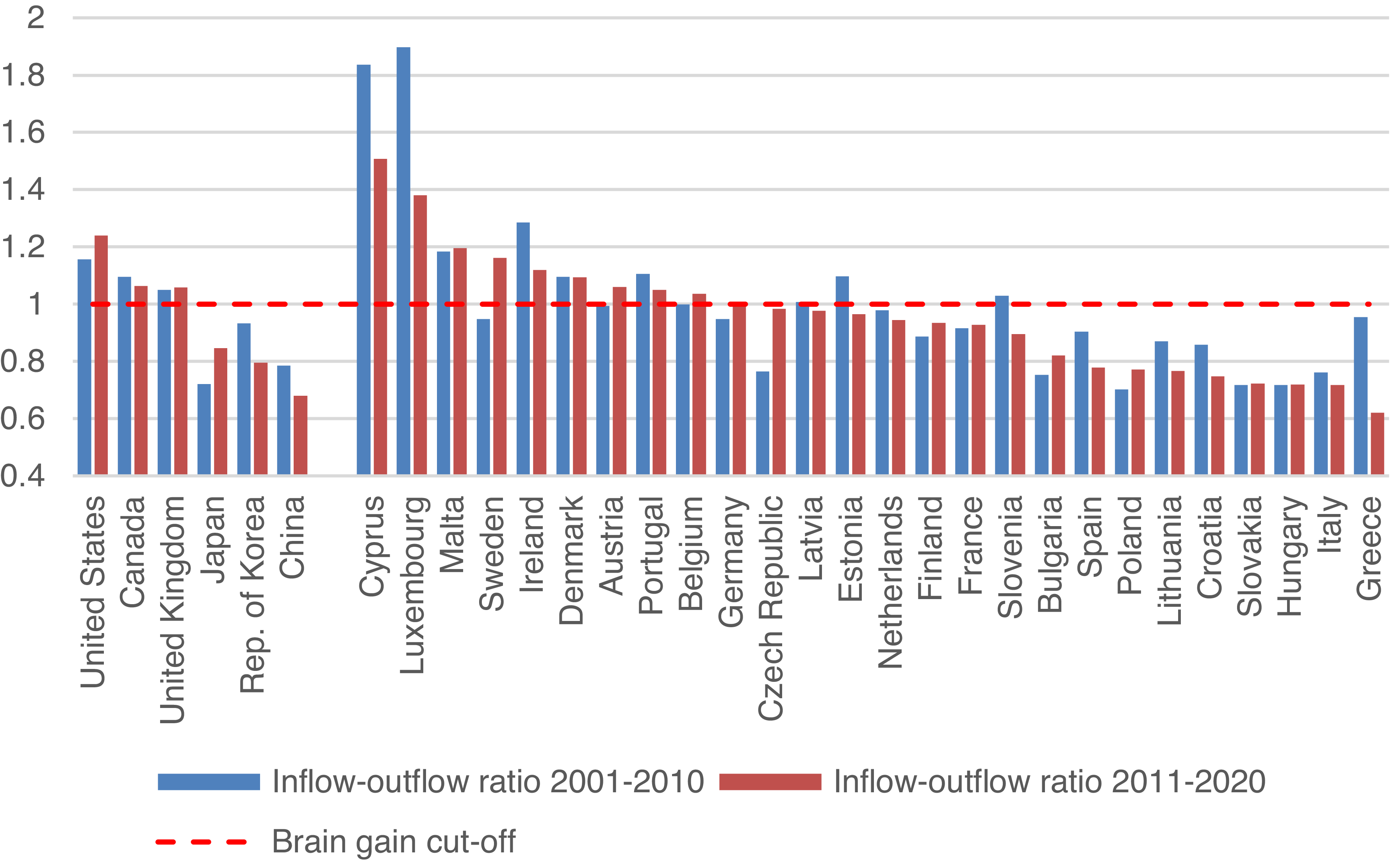
Figure 1 illustrates brain drain trends for EU member states and globally, while Figure 2 complements that information and presents a map depicting the inflow and outflow ratios of researchers from 2001 to 2020, broken down by country. We recognize that intra-European brain circulation is a crucial issue, and various instruments have been trialled at the European level to address it. As Heitor elaborates, some of these approaches have proven highly effective and should be strengthened going forward (Heitor Reference Heitor2024: 39).
Evolution of brain drain trends for EU member states and across the world for two periods: 2001–2010 and 2011–2020 (European Commission 2022). The figure was created by the Chief Economist Unit in the European Commission’s Research and Innovation Directorate-General based on ScienceMetrix data using the Scopus database (Heitor Reference Heitor2024: 78; (European Commission: Directorate-General for Research and Innovation SRIP 2024: 201).

Brain drain trends for EU member states, 2022 (European Commission 2022).

In the CESAER Research Careers Report, we build on previous efforts related to intra-European brain circulation by adopting a European-wide perspective. This aligns with recent initiatives by Letta (2024) and Draghi (Reference Draghi2024), which have highlighted the urgent need for a coordinated European approach to enhance competitiveness. While global mobility and career advancement should remain standard for researchers, Europe must improve its ability to attract top talent to balance or even reverse the current net outflow of talent from the continent.
Research Method
A dual approach, including a survey data analysis and selected case studies, has been used to frame the CESAER Research Careers Survey described in this article. It was conducted over a period of about one year, during 2024, and provided evidence of the need for new observation methods and monitoring initiatives at an institutional level in Europe and worldwide (CESAER 2024b). The CESAER survey builds on the experience and results of a Science Europe report (2016), but its distinct feature is an institutional perspective, which concentrates on examining the quality of research jobs within a chosen set of volunteer university institutions.
While the research career survey focuses solely on the career development of researchers with R2, R3, or R4 profiles,Footnote a or a combination thereof, the case studies showcase best practices for the career development of researchers with R1 to R4 profiles. Therefore, we expand the analysis of Science Europe (2016), which is concentrated on public funding schemes in Europe, covering 109 different schemes for the period 2012–2014. Although that analysis is still valid, we concentrate on institutional practices in 2024 to expand the existing understanding of conditions for attractive research careers in which researchers can thrive in Europe.
Survey Data
The CESAER survey aimed to counterbalance the lack of adequate data available about the type and quality of research jobs. It does not aim to give an exhaustive description of research careers in all European universities. Instead, it serves as an example of the current status of research careers at 23 CESAER universities across Europe, and at one non-CESAER university. It clearly shows the need for observation initiatives that collect data from institutions that can improve our understanding of the quality of research positions in Europe, going beyond the traditional enquiries about numbers of researchers and support staff. The survey design and methodological details are available at CESAER (2024b). It focused on three parts:
-
(a) Balance between temporary and permanent contracts for researchers:
-
• Percentage of R2–R4 researchers that were employed under temporary contracts;
-
• Typical length of temporary contracts (0–1, 2–4, 5–7 or 7+ years).
-
-
(b) Universities’ assessment of the current balance between temporary and permanent contracts, recent trends and current trajectory.
-
(c) Number of employed researchers at each level, and recent evolution between 2019 and 2024.
A majority of the respondents (17) have a technical focus, while a minority of seven respondents are comprehensive universities with a strong science and technology profile. Universities in the analysis are anonymized, but the numbering is consistent throughout.
Selected Case Studies
Three in-depth case studies were elaborated under the scope of our research: IST Lisbon (Portugal), the University of Twente (the Netherlands) and the University of Bergen (Norway). These case studies are intended to lead to substantive policy discussions at both national and EU levels, including the development of new and targeted funding instruments that enhance the careers of early-career researchers. Their development followed Eisenhardt (Reference Eisenhardt1989), including hypothesis-testing research for validation purposes, as well as case-oriented processes.
In addition, the choice of case studies as one of the methodological approaches, follows similar studies in the literature (see, for example, Dao Reference Dao2014 and Dakowska Reference Dakowska2014). As a case study representing an empirical enquiry into a complex, social phenomenon that is contemporary, situated in a real-life setting, several sources of information were used to sustain an analytically meaningful case (Yin Reference Yin2003). The data sources were complemented with international comparative studies, fieldwork and interviews conducted over three months. On-site visits and many discussions with researchers, managers and staff were carried out to address challenges for career development with special emphasis on the selected institutions analysed.
Sample Results
Survey Data
The survey data show growth in all researcher categories from 2019 to 2024. The R2 category grew by 8%, the R3 category by 9% and the R4 category by 12%, reflecting an overall expansion in the research workforce, with a notable increase in senior-level positions. While the data reflect the institutional view of the 24 universities analysed, another critically important perspective is the researchers’ perspective. Fisher has shown that postdocs, who fall into the R2 researcher category, experience many challenges globally (Fisher Reference Fisher2024: 321–332), with a clear need to improve their working conditions. Postdocs have described their situation as ‘trapped in a treadmill of short-term or temporary contracts’, leading to job insecurity, stress and mental health issues. Postdocs report that the necessity for them to move around for new jobs is detrimental to their personal life. In addition, it has become more difficult for them to get a permanent contract, as the budget cuts in many universities lead to fewer permanent contracts being available.
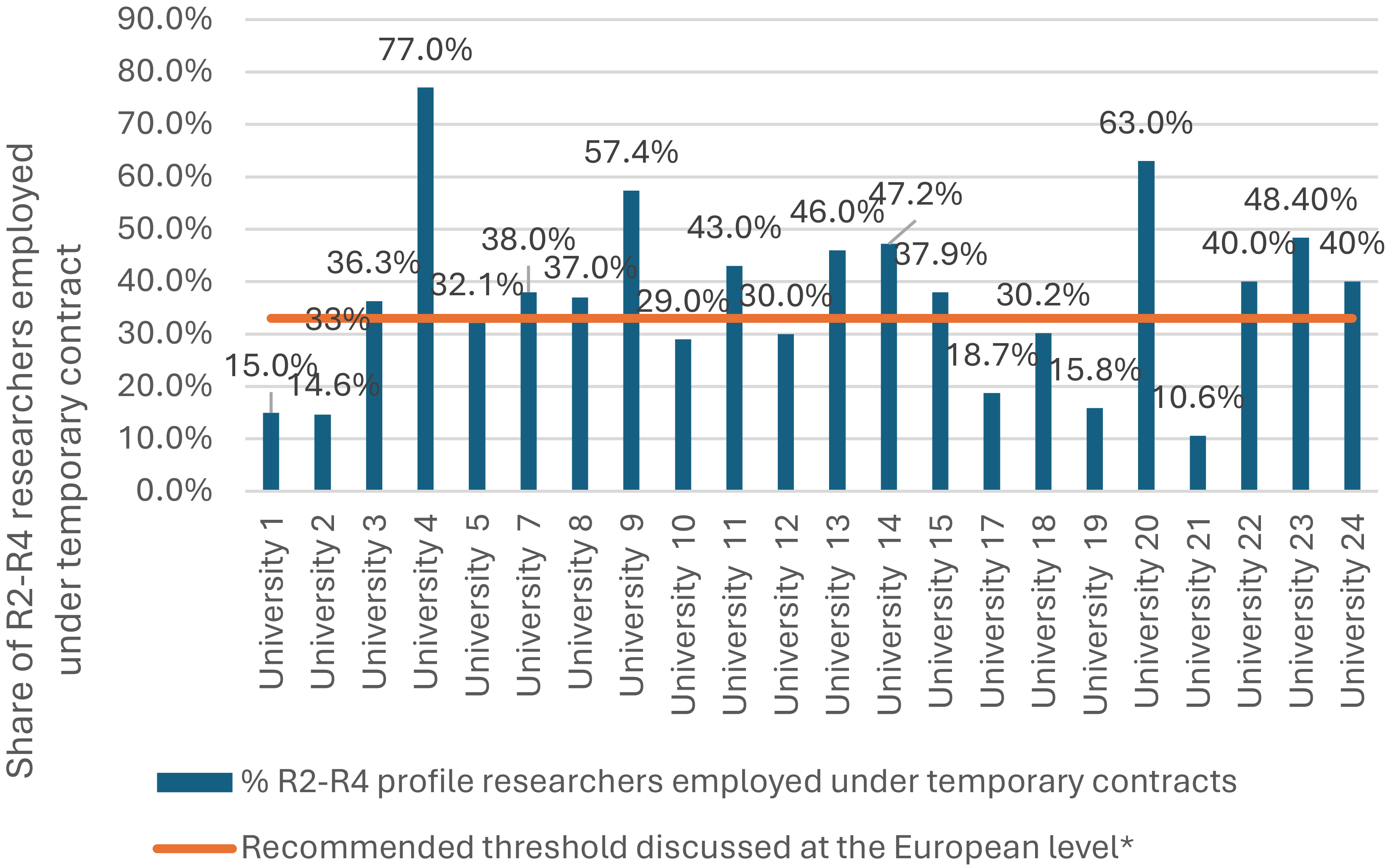
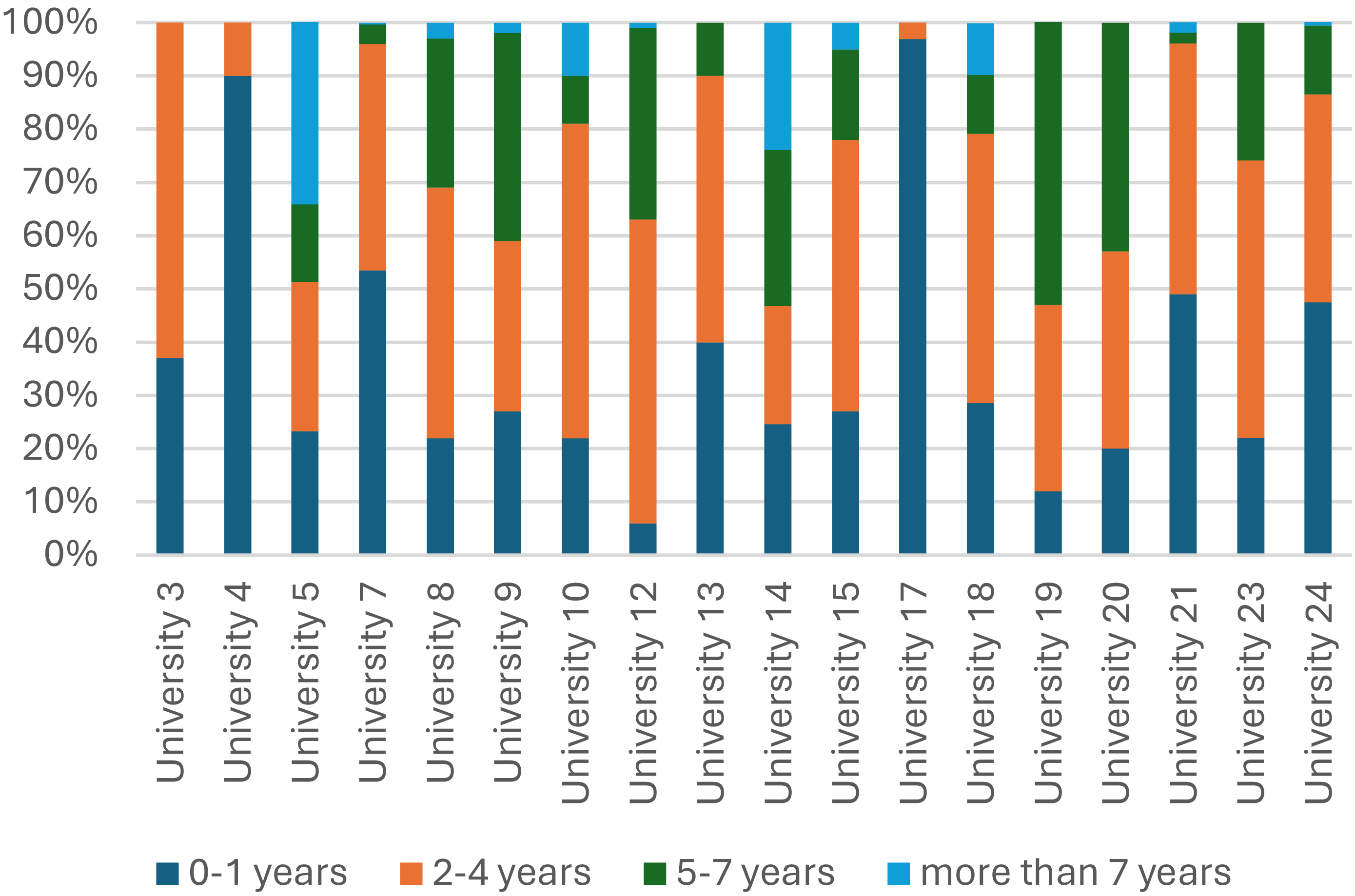
The survey data presented in Figures 3 and 4 show the following two key points about the employment of R2–R4 researchers across universities:
-
• There is significant variation among universities in the proportion of R2–R4 researchers on temporary contracts. While some universities keep the proportion of temporary contracts low, others have considerably higher rates, potentially indicating a reliance on short-term hiring practices. Nearly all university respondents only employed a minority (less than 50%) of R2–R4 profile researchers under temporary contracts, ranging from 11% to 47%. Only three universities stand out with temporary contract rates above 50%, respectively 77%, 57% and 63%. This means that most of the respondents employed their R2–R4 researchers under permanent contracts. During recent policy debates (Council of the EU 2023), it was suggested that temporary contracts should not exceed one-third of the total. It is relevant to note that this threshold is exceeded in many universities.Footnote b
-
• Temporary contract durations vary widely. The majority are either 0–1 years or 2–4 years, with longer durations (5–7 years) being less common and contracts exceeding 7 years being rare. Legal restrictions in countries such as Germany limit the duration of temporary contracts, influencing the prevalence of short-term contracts there. It is important to highlight that the share of researchers employed under temporary or permanent contracts varies significantly depending on the category of employment (R2 to R4). It is also important to note that our data do not include R1 contracts, which are typically temporary. Overall, we note that some institutions rely heavily on short-term contracts, which typically reflect funding uncertainties. Meanwhile, other universities offer longer contract durations, providing more job stability even for temporary staff.
Fraction of R2–R4 profile researchers employed under temporary contracts in January 2024. The threshold indicated by the red line was discussed during negotiations of Council Recommendation COM/2023/436 final.

Breakdown of temporary contract duration.

Most respondents indicated that the current balance between temporary and permanent contracts for R2–R4 researchers seems appropriate, some responded that there are too many temporary contracts, and one responded that there are too few. In the survey, the main factors identified driving the use of temporary contracts are the lack of longer-term funding and, in some cases, legislative frameworks, which are seen as significant influences on hiring practices. In most European countries, university employment follows normal public employment rules and labour regulations, which are not necessarily adequate to research activities. Most respondents note that in the last five years (2019–2024), either the situation of R2–R4 researchers being employed under temporary contracts has stayed the same (52%) or has decreased (31%). This reflects earlier trends (2012–2016) as well, as the average share of permanent contracts increased, and the share of temporary contracts decreased during this period (PPMI, IDEA Consult and WIFO 2021: 84). Currently, most of the researchers in the EU28 countries either have a permanent or open-ended contract (PPMI, IDEA Consult and WIFO 2021: 84).
Data from our survey show that a majority of respondents (60%) thought that there were two main external drivers for unwanted deployment of temporary contracts: (1) the type of funding available, which is the most-mentioned external driver; and (2) the legislative frameworks such as employment regulations. It is noted that the respondents highlighted three main issues:
-
• Many projects are funded temporarily, leading to unstable staff positions and complications with employment;
-
• Regulatory constraints in national labour legislation, as many national laws limit temporary staff tenure to around a maximum of eight years, causing dissatisfaction and frequent staff changes;
-
• Limited university longer-term funding from public funding agencies covers only higher-level positions, leaving lower-level staff to self-finance and placing a heavy workload on the few permanent, higher-level staff.
Figure 5 illustrates the share of researchers in each category (R2 to R4) over the period 2019–2024. Overall, the R2 category across respondents grew from 10,950 to 12,113, reflecting a 9.6% increase. This indicates a moderate expansion in early-career researchers. The R3 category across respondents increased from 9,757 to 10,661, showing an 8.5% increase, signifying steady recruitment or advancement in mid-career researchers. The R4 category saw the largest percentage growth across respondents, increasing from 5,685 to 6,464, representing a 12% rise, emphasizing a strong focus on expanding senior leadership roles within institutions. Additionally, the data have revealed that, in engineering faculties, there is a higher proportion of researchers in the R2 category, with financial resources often tied to specific projects, particularly when third-party funding is involved. This highlights the reliance on project-specific funding common for early-stage researchers in technical fields.
Relative share of categories, R2–R4; top: 2019; bottom: 2024.

Selected Case Studies
Instituto Superior Técnico, Lisbon: Recruitment and Career Development
IST Lisbon actively promoted research careers in the last decade and this case study reports a portfolio of four different initiatives making use of a diversified set of instruments and funding mechanisms, which could be expanded and further leveraged if additional funds (national and European) are provided to address the complex task of promoting research careers in Europe. The use of IST’s own internal financial resources was used to promote the IST Strategic Recruitment and Career Development Programme, representing about 3% of the total annual financial execution of the school for Human Resources. The programme was launched in 2014 and it allowed for a total of 218 faculty openings and career progressions in the period 2016–2023. Different departments leveraged this programme in quite diversified ways to accelerate growth in strategic areas, with particular relevance for bioengineering, informatics and chemical engineering.
The use of competitive public funds (i.e., national funds and European structural funds) since 2017 has allowed the implementation of the IST’s Deployment of the National Programme on Scientific Employment. It has facilitated new research contracts in affiliated research institutions (private non-profit) allocated to specific research centres following a national competitive process. A total of 124 new recruitments and 202 career progressions were effectively implemented in the period 2016–2023, with most of the impact on researchers between 30 and 40 years old. Annual figures represent about 6% of the total number of permanent researchers at IST.
IST’s funds are used to enable merit-based promotion following the review of the Portuguese legal system in terms of decoupling recruitments and career progression and adopting best international practices for both recruitment (i.e., through an international competitive process) and career progression (i.e., internal to each institution and under their autonomous status). This has allowed a better balance of categories along career progression paths and enabled gender balance at the top-level categories at IST.
The use of competitive public funds (i.e., national funds, European structural funds and European Recovery funds) has facilitated the co-creation of nine new collaborative research institutions with industry since 2018, with industry co-funding. It has facilitated the creation of nearly 200 new quality jobs, including about 60 doctorate researchers in the period 2019–2024, in private non-profit institutions, independent of IST but in close collaboration between IST and industry.
University of Twente: Researcher Development and Career Progression
For this case study, the University of Twente (UT) collected data for the 2022 calendar year, categorizing researchers from R1 to R4 in FTE terms. The data reveal that R1 is the largest category with 1052.7 FTE, followed by R2 with 554.9 FTE, R4 with 362.7 FTE and R3 with 168.4 FTE. Notably, at the technical-oriented faculties (EEMCS, ET, ITC and S&T), the number of researchers in category R2 declines by more than half compared with R1. At the Faculty of Behavioural, Management and Social Sciences (BMS), however, R2 exceeds R1, which contrasts with other faculties.
Across all faculties at UT, there are relatively few researchers in category R3 compared with higher numbers in R4. This reflects a highly dynamic academic job market where staff frequently advance to senior roles, or move to positions at other institutions or outside academia. Research indicates that 40% of new assistant and associate professors appointed are coming from outside the University of Twente. Consequently, career paths in Dutch academia do not always follow a straightforward progression from R1 to R4 through R2 and R3. The UT is committed to enhancing the recruitment and development of young researchers through various initiatives overseen by its Human Resources department and faculty-driven ideas. These practices are organized into three main areas: Attract, Develop and Lead.
-
• In the ‘Attract’ category, one example is the start-up packages provided to new assistant professors. These packages offer financial support for establishing their research lines, although future availability may be uncertain owing to potential budget constraints;
-
• For the ‘Develop’ category, one example is the use of the Talent Motivation Analysis (TMA) tool. This tool assists young academics in identifying their talents and career development opportunities through a structured assessment process. There are recent concerns about unclear expectations under the new reward and recognition system, emphasizing the need for improved training for younger staff to be fully aware and part of these new career movements;
-
• In the ‘Lead’ category, one example is the Leadership Framework, which defines expectations for leaders to create a supportive environment and promote talent development. This includes specific training for new supervisors and academic leaders to ensure effective leadership and career progression for young researchers.
University of Bergen: Strategic Support of an Inverted Pyramid
Many activities and programmes have been established at the University of Bergen (UiB) to provide support to researchers at different career stages and for different career paths. In addition to providing information on types of research positions at UiB and development in ratio between types of position over the last decade, this case study gives a brief overview of the range of activities aimed at supporting researchers’ career development at UiB, and details selected best practice examples, including:
-
• The Trond Mohn Research Foundation (TMF) Starting Grant and the TMF-UiB Career Programme: This is an example of long-term collaboration and co-funding between the university and a private foundation, aimed at recruiting and retaining excellent young researchers at UiB. These instruments give opportunities to talented early career researchers to develop their careers through leading a four-year research project and following a career development programme, and thus to qualify for a permanent position within the university;
-
• The Momentum Career Development Programme: This is an example of an institution-wide programme funded by the university to support early career researchers to become positioned to pursue academic careers at UiB or at other academic institutions;
-
• The inverted pyramid of permanent positions: Permanent combined positions, with both research and teaching responsibilities, form the core of the European university tradition, and likewise form the core of the University of Bergen. This position structure with an emphasis on senior, high-quality academic positions, makes the university an attractive employer and allows researchers to engage in excellent research and research-based teaching. The latter, in turn, benefits students and prepares them for a career in research. The development at UiB over the last decade indicates that the combination of strategic investment in research career support, training and positions, together with changes in national legislation, have led to a positive development in the position structure. Positions at UiB do not follow the traditional pyramid pattern (with most employees at the most junior, typically temporary, level). Instead, a large proportion of the academic staff are employed in permanent positions that combine research and teaching in the two highest categories, R3 and R4.
We note the following main highlights from the development in research careers at UiB:
-
• UiB increased its relative share of highly qualified, permanent academic positions over the past 10 years. The researcher career structure developed from R1 : R2 : R3 : R4 = 1.00 : 0.52 : 0.71 : 0.89 in 2014, to R1 : R2 : R3 : R4 = 1.00 : 0.55 : 0.84 : 0.97 in 2023;
-
• The administrative and technical support of researchers also increased in the same time period; from 0.64 support positions per 1.00 researcher position in 2014, to 0.68 in 2023;
-
• Targeted programmes at UiB in support of research careers have aided this positive development:
-
○ TMF Starting Grant: Of 37 grantees that have completed the programme, 100% are in permanent academic positions, of which 78% are at UiB;
-
○ Momentum Programme: Of 60 ‘delegates’ that completed the programme between 2019 and 2022, 100% have permanent positions in jobs relevant to their research, of which 92% are in academia.
-
Discussion and Policy Implications
The Evolving Context
Over the last decades, the OECD and the European Commission’s Policy Support Facility attempted to assist EU member states, among other countries, to develop, implement and evaluate reforms in their research and innovation systems. However, a critical need still exists for comprehensive data collection on ‘good jobs’ and the quality of research jobs, in particular, which would enable institutions to shift towards more sustainable employment models (European Commission 2023).Footnote c Progress in policy initiatives and assessment has indeed been hampered by the lack of comprehensive data on research careers.
For example, Janger et al. argue that large differences exist between male and female researchers, with male researchers more frequently employed on permanent contracts compared with female researchers in most EU countries (Janger et al. Reference Janger, Charos, Reschenhofer, Strauss-Kollin, Unterlass and Weingärtner2022: 57). Exceptions to this trend include Slovakia, Sweden and Latvia. In Italy, Bulgaria and in the Czech Republic, the gender difference is minimal. In non-widening countries, the disparity is generally more pronounced, with Austria, Denmark, Belgium, the Netherlands and Germany exhibiting particularly large differences, ranging from approximately 15 to over 25 percentage points. The EU average in difference in percentage points between male and female contracts in share of permanent contracts in the academic sector was 10%.
Additionally, Janger et al. (Reference Janger, Charos, Reschenhofer, Strauss-Kollin, Unterlass and Weingärtner2022) show that there are significant variations between countries in the proportion of permanent versus fixed-term contracts among researchers in PhD-granting higher education institutions. Consistent with earlier data, widening countries generally have a higher share of permanent contracts compared with non-widening countries, with exceptions such as Latvia, Lithuania and Slovakia. This disparity may be due to differing career structures within higher-education systems and varying job markets for researchers, with more junior researchers often involved in research projects in non-widening countries.
The anticipated establishment of the Research and Innovation Careers Observatory, ReICO (2024), with data envisioned to be available before the end of 2026 (several years after the European Council conclusions of May 2021; Council of the EU 2021a), in collaboration with the OECD and the European Commission, aims to address this gap. However, the slow progress of this initiative (likely due to concerns about the originally presented methodology) has left a significant void in the evidence necessary for effective policymaking, impeding advancements in research careers. Two EU-funded research projects over the last years attempted to shed light on the evolving landscape of research careers in Europe (Research Infrastructure for Science, Technology and Innovation Policy Studies 2023; Sustainable Careers for Researcher Empowerment 2023). While these efforts provide some insight, they underscore the need for a more systematic approach to data collection and monitoring to ensure a robust evidence base for future policies.
In addition, Europe has made considerable strides in supporting research careers through flagship programmes such as the Marie Skłodowska-Curie Actions (MSCA) and the European Research Council (ERC), which have been instrumental in promoting mobility and excellence among researchers. These initiatives have set a foundation for enhancing institutional frameworks to support modern research excellence and need to be substantially expanded to improve the way the emerging issues of research careers in Europe are addressed.
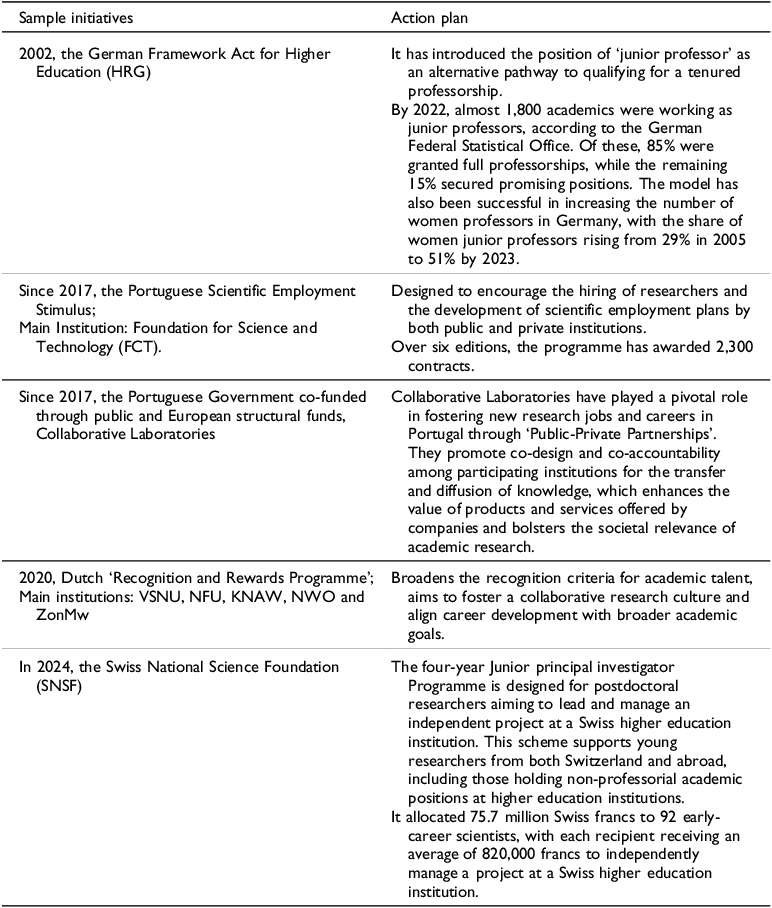
It is also clear that Member states play an essential role in creating an environment that attracts and retains top research talent, which is crucial for Europe’s competitive edge in science and technology. However, the current landscape presents significant challenges, particularly in co-funding mechanisms, securing visas and ensuring affordable living conditions for researchers. National initiatives, such as those listed in Table 1, highlight the importance of modernizing research assessment and career development in Europe. They demonstrate the potential for national programmes to drive effective changes that reflect career objectives and working conditions, ultimately leading to new funding opportunities. Such approaches could be more impactful.
Sample national initiatives and attempts in Europe to foster research careers

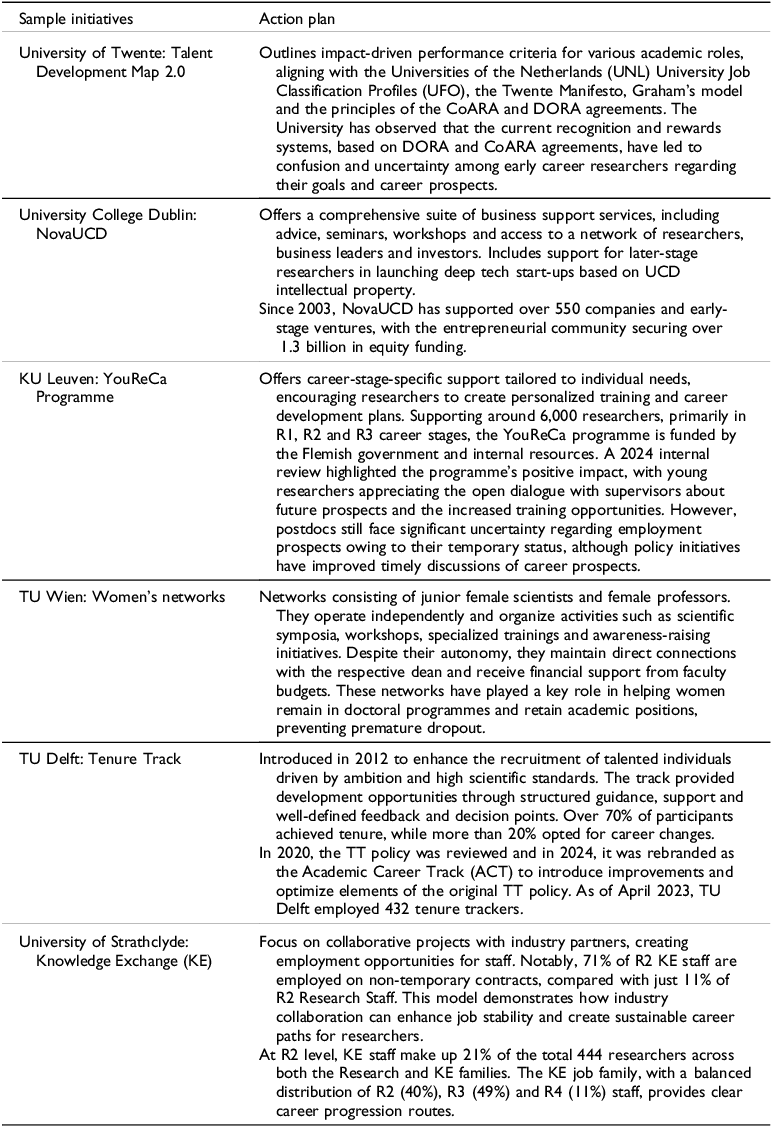
Complementing the national attempts, Table 2 provides sample initiatives at institutional level as conducted by specific universities and research-performing organizations (RPOs) or research and technology organizations (RTOs), which are at the forefront of efforts to reverse Europe’s brain drain by creating environments that attract and retain top research talent.
Sample institutional initiatives by universities and RTOs in Europe to foster research careers

Key Policy Implications: The Future of Work in Academia and Research Institutions
Potential policy implications of the data reported in previous paragraphs include reducing the European divide. For example, Figure 1 points to several European countries that would deserve of more detailed analysis. For instance, Sweden, Portugal and the Czech Republic managed to generate significant brain gain, or halt brain drain during the last decade. Figure 2, in turn, highlights some of the positive examples, such as Ireland, Switzerland and part of Scandinavia, probably linked to a strong labour market associated with country-specific tax policies and access to talent, amongst other factors (leading them to host headquarters and R&D departments of many multinational companies in R&D-intensive industries), while the Scandinavian countries may be explained by the concept of a ‘social contract’ amongst its citizens, and between citizens and government.
These factors return to the issue introduced earlier regarding the importance of dealing with research careers holistically, including the significance of labour market and welfare support systems (e.g., Starchan Reference Starchan2024). For the remainder of this article we focus on the evolving context concerning the future of work in academia and research institutions. Although data available in the CESAER Researcher Career Survey are limited, our analysis points to an evolving scenario that should have strong institutional implications in the coming years. This is because the CESAER Research Careers Survey 2024 has clearly provided an alert for the future of academic research careers and the need to understand emerging trends better, including four main characteristics identified by Kovalainen and Poutanen (Reference Kovalainen, Poutanen and Starchan2024):
-
• Precarity: Research careers are becoming more precarious, with a trend towards short-term contracts and ‘gig science’ that prioritizes project-based work over long-term stability. The precarity of research careers also undermines attempts to increase diversity in academia. Only those from privileged backgrounds can afford prolonged precarity. Women are disproportionately affected, especially in the transition from early to midcareer, when they are also considering having children (OECD 2021);
-
• Rise of entrepreneurialism: Universities are demanding more flexible and marketable skills from researchers, fostering an entrepreneurial culture that includes ‘brand-building’ and adaptability;
-
• Shift to managerial and market-driven models: Funding models are increasingly tied to external sources and industry, leading to a managerial governance style in academia that emphasizes quantifiable outputs and performance metrics;
-
• Growing demand for diverse skills: Researchers are expected to be not only experts in their field but also ‘team players,’ adaptable to new projects, and entrepreneurial, highlighting a need for skills beyond traditional research.
Precarity in research careers is not a new issue but it is one that has been raising increasing concerns and policy attention in recent years (see, for example, OECD 2021). Efforts are underway to reform research evaluation systems to be more transparent, inclusive and supportive of the kind of transformative research needed for future societal challenges, and the work described in this paper must be understood as a step in related advocacy towards setting a target to ensure that in a period of up to ten years (i.e., by 2035), Europe and European institutions provide adequate research career pathways and improved evidence of brain circulation.
Currently, young researchers must navigate a system increasingly focused on quantifiable output and managerial governance (e.g., Krauss et al. Reference Krauss, Danús and Sales-Pardo2023), requiring more entrepreneurial and team-oriented skills beyond traditional research expertise. Ultimately, the quality of the science produced is at stake, in a culture of ‘publish or perish’ that values quantity over quality, where risk aversion hinders novel research, and research integrity is under threat from excessive competition (OECD 2021). Most of the interviews conducted during the survey described in this article have not identified career development paths and speed as priorities for most of the university governance systems considered. On the other hand, there is a concurrent push for reformed research evaluation systems to support more open, inclusive and transdisciplinary research, aligning with the need for research to address societal challenges.
Our analysis also shows a large and traditional resistance to change, with embedded practices within academia, funding bodies and publishing making it difficult to implement reforms and shift investment toward crucial research areas and modern career paths. Overall, most academic and scientific promotion committees keep using ‘opaque’ evaluation metrics, which can compromise the autonomy and adaptability of the research community.
Our New Evidence Towards ‘Choose Europe’
There is a widespread consensus on the need to draw and keep the best researchers in Europe, which requires improving working conditions, providing targeted funding and ensuring sustainable, clear career pathways. The concept of diversified career paths is being emphasized to include various roles beyond the traditional academic track, such as in the private sector, third sector and specialized research functions such as data scientists and research managers.
A significant challenge is the precarity faced by early-career researchers, with efforts to provide more secure and long-term contracts and sustainable career opportunities. There is also a recognized need to reform how research and researchers are assessed and rewarded, moving beyond narrow leadership-focused advancement and incorporating diverse contributions and competencies. In addition, initiatives are underway to stimulate balanced talent circulation within Europe and to make the continent a more attractive destination for researchers.
Research career policy is currently fragmented, being largely determined at national, regional and university levels. In addition, universities need to find ways to balance the competitive nature of academic careers with the need for collegiality and a supportive environment. It should be clear that securing long-term funding for permanent research positions is a complex issue, and universities are often reluctant to make long-term commitments due to funding limitations.
It is in this context that the 2024 CESAER survey presented in this article underscores three strategic innovations necessary for Europe to attract and retain research talent:
-
• Research careers observatory: Europe must monitor research careers and researcher mobility better. Data collection should differentiate between temporary and non-temporary contracts and between long-term and short-term funding sources. The current methodologies (e.g., from EU and OECD) fall short in some of these respects. To address the issue of research careers in an adequate manner, we need to develop an observatory on research career development on a European level, with adequate data;
-
• Research assessment methodologies: Future assessments must balance research output quality with job quality, emphasizing non-temporary roles for early-career researchers. Simplified processes and access to stable funding are critical;
-
• Improved funding mechanisms: Reforms should focus on stabilizing researcher careers in public and private sectors. An improved balance between temporary and non-temporary contracts, especially for early-career researchers and professionals, will help retain talent and increase the resilience of Europe’s research ecosystem.
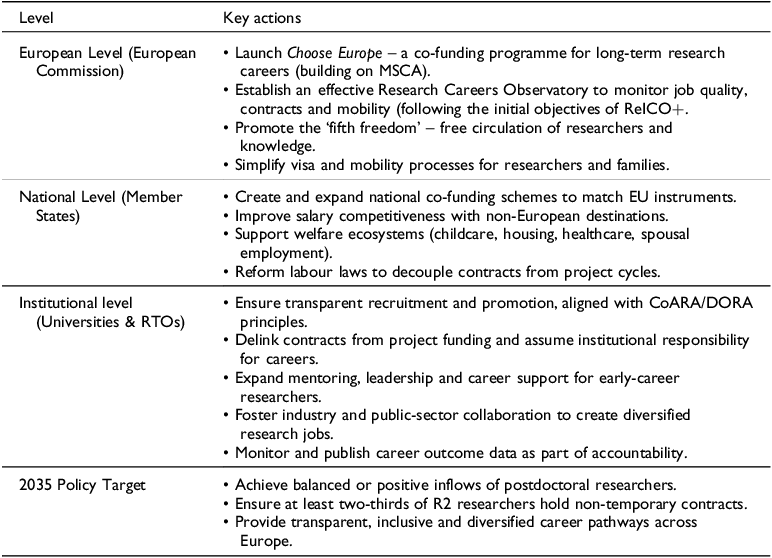
Table 3 highlights coordinated actions needed at European, national and institutional levels, and sets a measurable 2035 target. Together, these steps form the basis of a ‘Choose Europe’ framework designed to transform brain drain into brain circulation and strengthen Europe’s global competitiveness in research and innovation.
Policy summary for a Choose Europe framework: coordinated actions at European, national and institutional levels, with a 2035 target for reversing brain drain and achieving brain circulation

Based on the research careers survey documented in this article, we follow Heitor (Reference Heitor2024) and argue that the European Commission must take the lead in creating a conducive environment for research excellence, leveraging EU-wide initiatives such as the Marie Skłodowska-Curie Actions (MSCA) and boost its capacities to attract and retain top researchers (CESAER 2024a). To address this, it is crucial for the European Commission to launch a new co-funding instrument, for example in relation to the MSCA, involving substantial co-funding and cross-level collaboration with national and institutional bodies. This collective issue requires coordinated efforts and shared responsibility across European, national and institutional levels. See, for example, for international comparison, the recently published analysis of the National Academies (2024).
Conclusions
The future of Europe’s research landscape depends on our collective ability to act decisively and coherently. Reversing the brain drain and transforming it into brain gain and circulation must become a shared priority, with 2035 as the horizon for measurable progress. Achieving this will require bold actions by the European Commission, national governments and research institutions alike, working together to secure Europe’s position as a global leader in science and technology.
Our research shows that stable and rewarding research careers for Europe require multi-dimensional policy actions across European, national and institutional levels. In particular, we call for a co-funding mechanism at the European level that mobilizes matching national and institutional contributions, ensuring shared responsibility for creating attractive, long-term career opportunities. This requires a commitment to modernizing career structures, embracing inclusivity, and providing supportive environments in which early-career researchers can thrive. We propose that such a framework be launched under the banner of Choose Europe.
Researchers are the backbone of Europe’s knowledge economy. Yet too often their careers are marked by instability and uncertainty. Addressing these challenges is essential not only for individuals but for Europe’s broader competitiveness and resilience. By improving working conditions, providing targeted funding instruments and ensuring clear and sustainable career pathways, Europe can empower its next generation of researchers. In doing so, it can move beyond brain drain, achieve genuine brain circulation and secure its future as a magnet for the brightest minds worldwide.
Manuel Heitor, Professor, Center for Innovation, Tech. and Policy Research, IST Lisbon, University of Lisbon; Former Minister and Secretary of State of Science, Technology and Higher Education, Portugal (2005–2011; 2015–2022); Chair of the European Commission’s High-Level Expert Group for the interim evaluation of Horizon Europe, Manuel Heitor served as lead author of the report Align, Act, Accelerate (the ‘Heitor Report’), October 2024.
Sophie Ratcliff is a public affairs and policy professional with a Master’s degree in Political Science and International Relations from the Geneva Graduate Institute. She currently works at EPFL as a Public Affairs Analyst in the President and Provost’s Office, and previously served as Advisor for Higher Education at CESAER.
Mattias Björnmalm is an experienced scientist and policy professional. He serves as Secretary General of CESAER.
Vivil Haraldsen is a senior EU adviser at the University of Bergen’s Division of Research and Innovation. She has previously held a position at the Norwegian Ministry of Education and Research.
Yves Aubert, is a senior advisor at the University of Bergen’s Division of Research and Innovation and serves as innovation lead for the university.
Tanya Bondarouk is Professor of Human Resource Management and Technology and the Dean of the Faculty of Behavioural, Management and Social Science at the University of Twente.



 Open access

