





Impact statement
Existing research has primarily examined the mental and physical health outcomes of refugees as individuals. This research demonstrates that post-traumatic stress disorder (PTSD) and self-rated general health not only affect refugees as individuals but have an interdependent effect within refugee couple dyads. In our study, refugees with PTSD were not only more likely to report poorer physical health, but their partners were also more likely to report greater PTSD symptoms and rate their own health as worse. These findings highlight the importance of considering familial and psychosocial contexts when shaping health promotion policies, clinical practice and support services for resettled refugees as well as incorporating a dyadic framework clinically in assessment and treatment. Approaches focus solely on individuals’ risk overlooking the role of the family and couple systems which may influence physical health and well-being. Future research should build upon these findings and investigate the mechanisms and bidirectionality of this relationship as well as explore whether community-based social support and/or physical health programs may improve refugee health outcomes at both the individual and couple levels.
Introduction
At the end of 2024, the number of forcibly displaced individuals worldwide reached a record high of 123.2 million people, of which 42.7 million are refugees (UNHCR, 2025). Refugees are individuals who have been forcibly displaced from their homelands due to conflict, persecution and/or human rights violations. Since the end of World War II, Australia has settled over 750,000 refugees, with the government granting 16,750 offshore resettlement visas in 2023–2024, which still represents a small proportion of the total number of people currently seeking asylum worldwide (Hugo, Reference Hugo2014; Affairs, 2024).
Individuals from refugee backgrounds are likely to have experienced one or more post-displacement stressors (e.g. unemployment and racial discrimination) which have been associated with poorer mental health (e.g. PTSD, depression and anxiety) and self-rated physical health outcomes (Schweitzer et al., Reference Schweitzer, Brough, Vromans and Asic-Kobe2011; James et al., Reference James, Iyer and Webb2019). Alarmingly, studies set in Australia have also shown that the burden of poor mental and physical health often persists for several years following resettlement (Dowling et al., Reference Dowling, Enticott, Kunin and Russell2019; Nguyen et al., Reference Nguyen, Slewa-Younan and Rioseco2023).
Miller and Rasmussen’s ecological model of refugee distress provides a framework for understanding why individuals from refugee backgrounds may be more susceptible to poorer mental and physical health outcomes (Miller and Rasmussen, Reference Miller and Rasmussen2017). The theory posits that distress experienced by refugees is shaped by not only pre-displacement traumas but also ongoing post-displacement stressors which occur across multiple levels of the social ecology including the family, community and macrosystem (Miller and Rasmussen, Reference Miller and Rasmussen2017). The continuous exposure to these various economic and social integration stressors has been shown to cause negative physical and psychological outcomes (Miller and Rasmussen, Reference Miller and Rasmussen2010). Moreover, these stressors are pervasive and thus likely to be experienced by families and specifically, couples of refugee backgrounds collectively. Given the majority of refugees resettled in Australia over the last decade come from collectivist cultural backgrounds, it is also important to recognise that their trauma appraisals are more likely to consider the effects of the trauma experienced on their role within their family or community over themselves (Engelbrecht and Jobson, Reference Engelbrecht and Jobson2016). In light of this, it is important that ongoing PTSD research in refugee populations acknowledges the role of the family system in the experience of individual trauma and post-displacement stressors.
Dyadic research looking at forcibly displaced couples has shown that PTSD symptoms in an individual may be associated with increased psychopathology reported by their partner (Mahmood et al., Reference Mahmood, Ibrahim, Ismail and Neuner2022; Khalil et al., Reference Khalil, George, Templin, Jenuwine and Javanbakht2023). One study sampled 101 Syrian and Iraqi couples from refugee backgrounds resettled in the US and found significant cross-associations between PTSD and depression/anxiety symptoms for both members of the couple dyad (Khalil et al., Reference Khalil, George, Templin, Jenuwine and Javanbakht2023). Another study sampled 687 Iraqi and Syrian refugee and internally displaced couples living in the Kurdistan Region of Iraq, and found traumatic experiences were positively associated with their own as well as their spouse’s PTSD symptoms (Mahmood et al., Reference Mahmood, Ibrahim, Ismail and Neuner2022).
While prior research has shown the interdependence of PTSD with other psychopathology in forcibly displaced couples, no research to date has examined whether PTSD may be associated with poor physical health in forcibly displaced couples, despite strong evidence suggesting that PTSD is associated with dysregulated neurobiological stress pathways, chronic pain and poor cardiovascular health (Sareen et al., Reference Sareen, Cox, Stein, Afifi, Fleet and Asmundson2007; Pacella et al., Reference Pacella, Hruska and Delahanty2013). For individuals from collectivist cultures, trauma is predominantly appraised as a physical stressor, with somatisation being a common feature of their post-traumatic stress (Engelbrecht and Jobson, Reference Engelbrecht and Jobson2016). When looking at research in individuals from refugee backgrounds specifically, one study showed better self-rated physical health was significantly associated with a lower number of PTEs while another study found PTSD symptoms moderate the inverse relationship between perceived adversity and perceived health (Nesterko et al., Reference Nesterko, Jäckle, Friedrich, Holzapfel and Glaesmer2020; Javanbakht et al., Reference Javanbakht, Grasser, Kim, Arfken and Nugent2022). However, it is important to note that these studies were set in Germany and the US, respectively, where physical and mental health supports for people of refugee backgrounds differ to Australia (Javanbakht et al., Reference Javanbakht, Grasser, Kim, Arfken and Nugent2022).
Given these current gaps in the literature, this study uses the Actor–Partner Interdependence Model (APIM) to examine the associations between PTSD and self-rated general health in couples from refugee backgrounds who have resettled in Australia. Drawing on prior research, we hypothesised that partners of individuals from refugee backgrounds who reported PTSD symptoms would be more likely to report symptoms of PTSD themselves. Additionally, we hypothesised that partners of individuals from refugee backgrounds with PTSD symptoms would be more likely to report lower self-rated general health.
Methods
Participants and procedure
Data for this study were sourced from Wave 1 (October 2013 to March 2014) of the Building a New Life in Australia (BNLA) longitudinal study. The BNLA study aimed to understand the early resettlement outcomes of humanitarian migrants over the first five years of living in Australia and included those who arrived in Australia or were granted a permanent visa between May and December 2013. Extensive scoping work, including consultations with key stakeholders (e.g. settlement service providers and former humanitarian migrants), was undertaken to inform the content, design and methodology of the study (Studies, 2024). The study’s surveys were also piloted with trained interviewers to assess for cultural sensitivity and understanding of the study materials (Studies, 2024). An overview of all outcomes assessed has been described in further detail previously (De Maio et al., Reference De Maio, Silbert, Jenkinson and Smart2014).
Participants who were potentially eligible for the study were randomly selected from one of 11 pre-identified study sites across Australia which included major cities and regional centres with high numbers of newly resettled humanitarian migrants. Principal applicants (PAs) were identified as either an individual or a representative of their family (87% male) and were sent a translated letter and brochure regarding the BNLA study. All PAs gave written informed consent to partake in the BNLA study before other family members, including spouses, were invited to participate. For the present study, heterosexual couples (married and de facto) from refugee backgrounds aged 18 years or older who completed Wave 1 of the BNLA study were included (434 couples, n = 868 individuals).
Measures
Questionnaires and participant materials were translated into 14 languages by a professional translating company and were administered by trained bilingual interviewers. Professional interpreters were available for participants who spoke other languages.
PTSD was measured through the PTSD-8 which is an eight-item scale derived from the Harvard Trauma Questionnaire Part IV. The PTSD-8 assesses for the occurrence of PTSD symptoms across the three main symptom clusters (i.e. hypervigilance, intrusion and avoidance) over the past week using a 4-point Likert scale (not at all, rarely, sometimes and most of the time). It demonstrates strong psychometric properties and has also been validated in various populations, including humanitarian migrants (Hansen et al., Reference Hansen, Andersen, Armour, Elklit, Palic and Mackrill2010). For all Wave 1 participants, the PTSD-8 had a Cronbach’s alpha of 0.92. Item 1 (‘Overall, how would you rate your health during the past 4 weeks?’) of the 8-Item Short Form Survey Instrument (SF-8) was used to measure self-rated general health. This item was scored on a 6-point Likert scale from Excellent to Very Poor (Ware et al., Reference Ware, Kosinski and Keller1995). The SF-36 has been shown to demonstrate strong reliability and validity as a general measure of health status in various populations, including conflict-affected groups (Roberts et al., Reference Roberts, Browne, Ocaka, Oyok and Sondorp2008; Lang et al., Reference Lang, Zhang, Zhang, Li, Bian and Guo2018).
Participants were asked about a range of different socio-demographic characteristics (e.g. age, sex, country of birth, level of education and current location), economic (English proficiency, economic stressors) and social integration factors (belonging, community support, loneliness). English proficiency was coded as ‘no proficiency’, ‘low proficiency’ and ‘higher proficiency’ based on the sum score of the participants’ self-assessed proficiency in understanding, speaking, reading and writing (from ‘not well’ to ‘very well’ for each item). Participants were asked whether loneliness was a source of stress in the last 12 months and sense of belonging was assessed with the question ‘Do you feel part of the Australian community’ with response options ranging from 1 ‘always’ to 5 ‘never’. Responses were reversed and used as a continuous variable in the analysis, with higher values indicating higher sense of belonging. Finally, financial hardship was assessed with the question ‘In the last 12 months, has any of the following happened to you because you did not have enough money?’ Six financial hardship items were collected and summed (e.g. not being able to pay bills on time, not being able to pay rent/mortgage on time and going without meals).
Data analysis
To understand the role of own PTSD symptomatology and spouse’s PTSD symptomatology on self-rated general health, we used the APIM (Kashy and Kenny, Reference Kashy and Kenny2000). A key assumption of most analytical approaches is the independence of observations, which is violated in the study of couples. The APIM is a conceptual framework used to study relationships between dyads or groups, accounting for the lack of independence between group members (McCabe, Reference McCabe, Zeigler-Hill and Shackelford2020).
This analytical approach allows for dyadic relationships to be modelled. That is, the responses or outcomes for each individual within the dyad are modelled in the analysis accounting for the fact that they are not independent from each other (Cook and Kenny, Reference Cook and Kenny2005). We applied the APIM approach using a multi-level framework with two levels, where individuals (lower level) are nested within couples (upper level) and a random effect for each dyad is included in the model.
First, we performed a descriptive analysis of the distribution of PTSD and self-rated general health within couples, cross-tabulated by their spouse’s PTSD and self-rated general health status. We then conducted multi-level random effects logistic regressions for binary outcomes to identify associations of own PTSD and spouse’s PTSD with own self-rated general health (very good/excellent versus good/fair/poor/very poor self-rated general health). That is, own PTSD and spouse’s PTSD are both independent variables in the model, with a random effect for each dyad accounting for the interdependence within couples. The models were constructed in steps in order to identify changes in regression coefficients as socio-demographic, economic and social integration factors were included in the model. First, we fitted an unadjusted model, including only own PTSD and spouse’s PTSD. Then, socio-demographic characteristics were included in the model. As a third step, economic factors were added. Finally, social integration factors were included in the final model.
Ethics approval
The BNLA study was approved by the Australian Institute of Family Studies Human Research Ethics Committee (protocol 13/03). Approval was gained from the Department of Social Services to access the BNLA study dataset.
Results
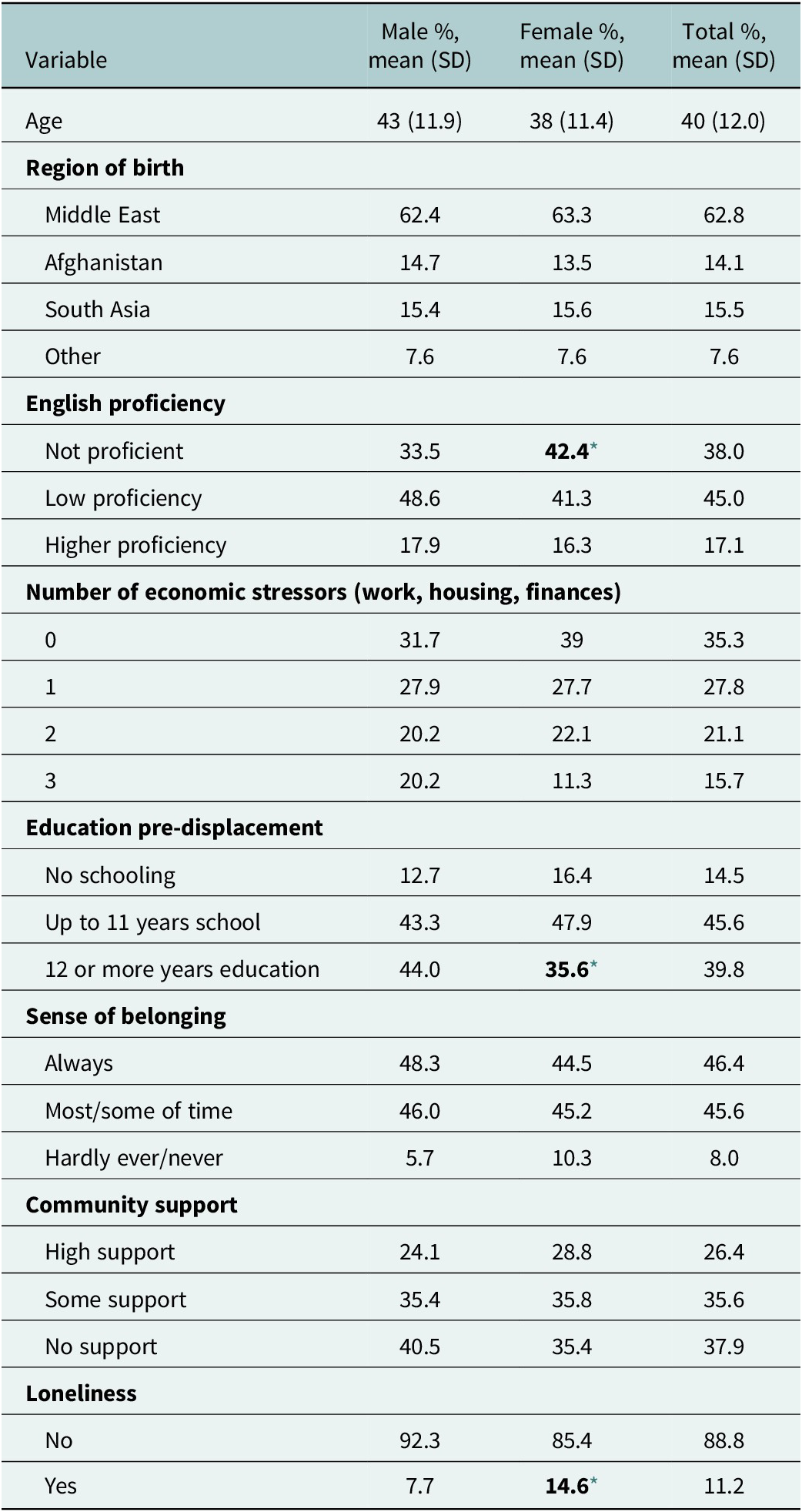
The sample consisted of 436 couples from refugee backgrounds who had recently resettled in Australia. The main socio-demographic characteristics for the study sample are further described in Table 1. Only 25% of participants reported ‘excellent’ or ‘very good’ health (27% male, 23% female) with no differences by sex. A large proportion of participants reported likely PTSD (40% total, 39% male, 41% female) with no differences by sex either.
Socio-demographic characteristics
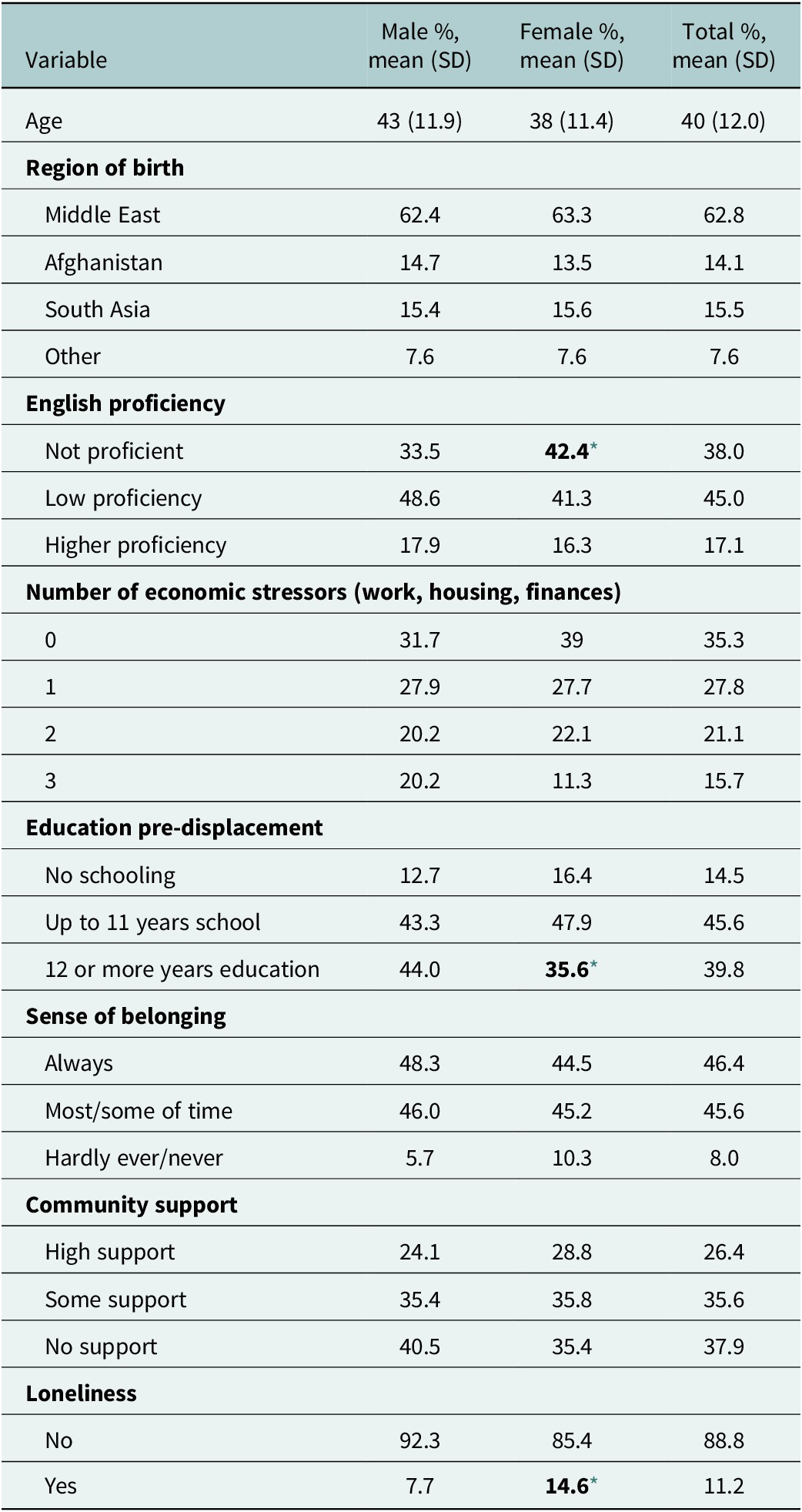
Note:
* indicates a statistically significant difference by sex p < 0.05.
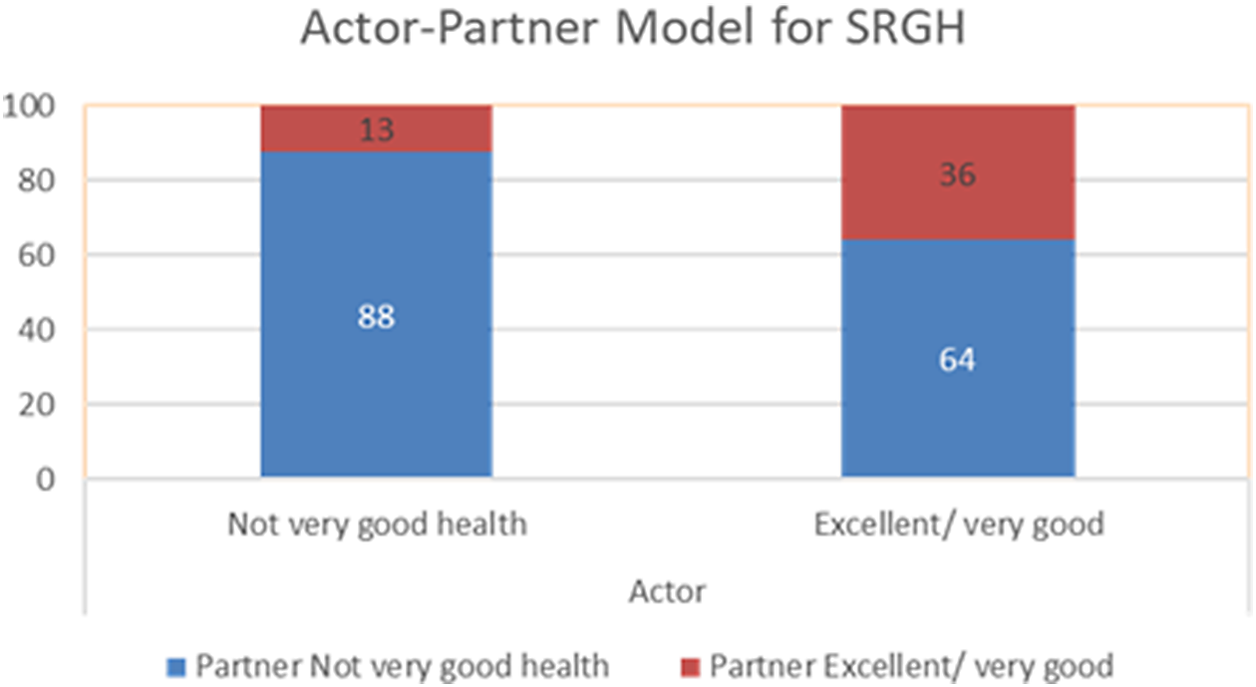
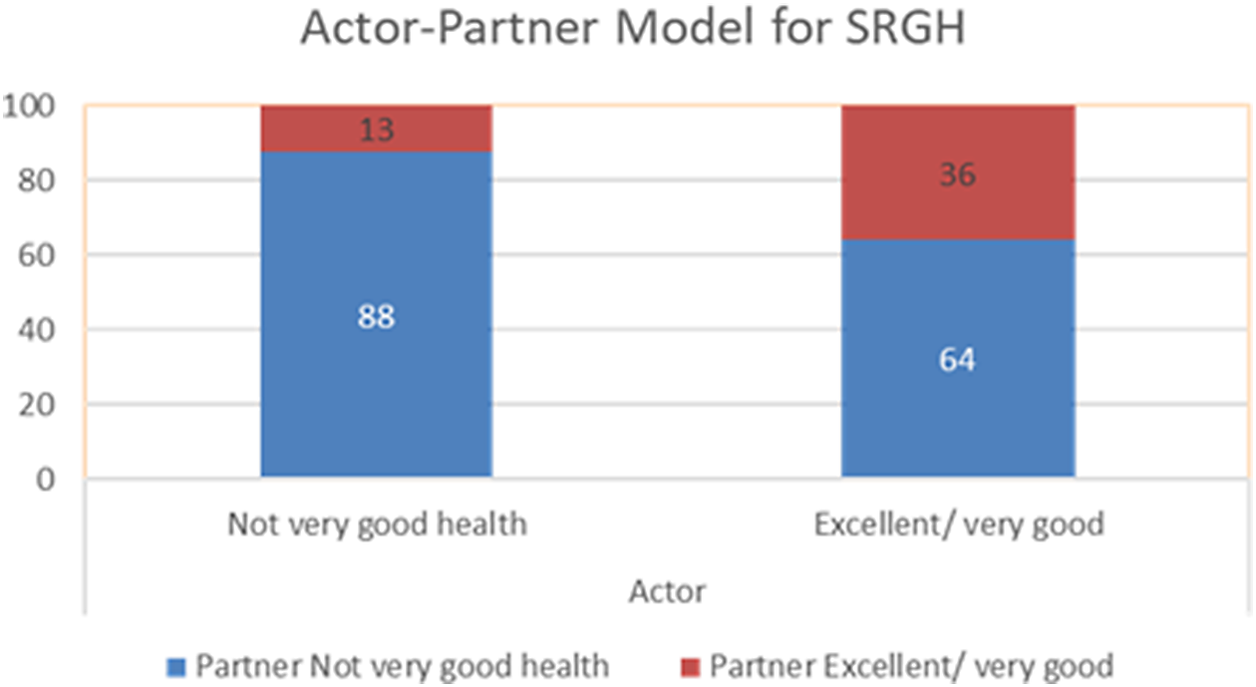
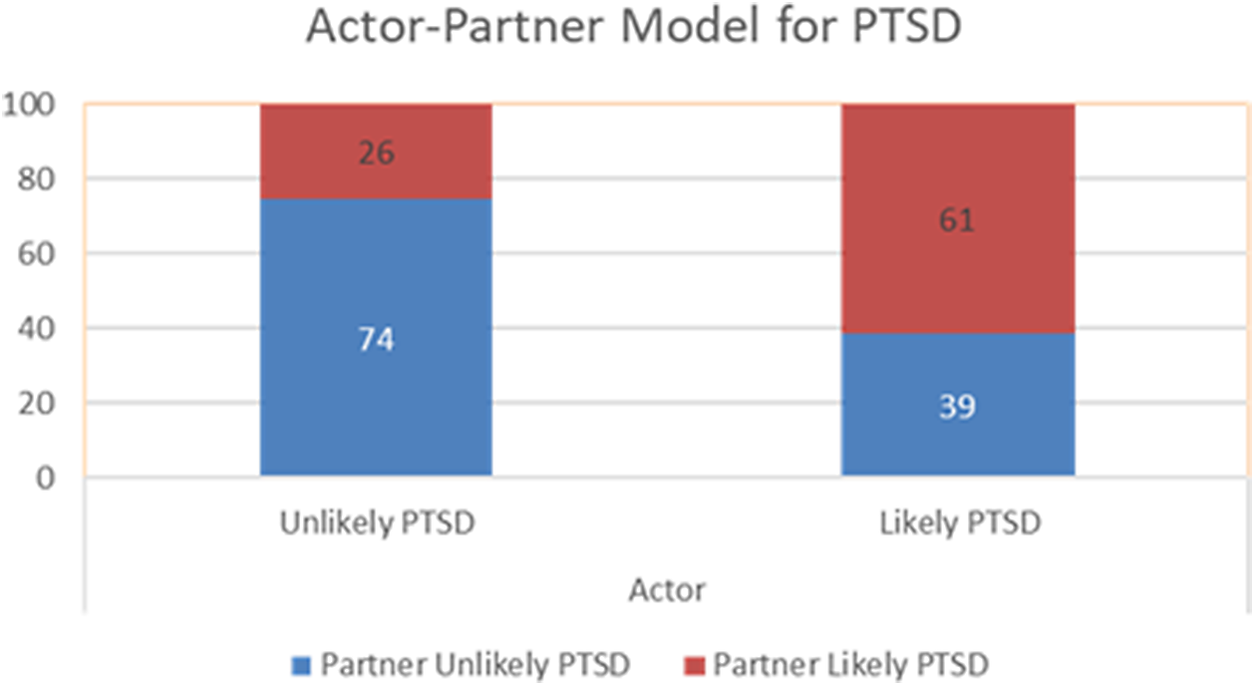
Among individuals from refugee backgrounds who reported having ‘excellent’ or ‘very good’ health, 36% had partners who also reported ‘excellent’ or ‘very good’ health. By contrast, only 13% of those reporting ‘not very good’ health had partners who reported having similarly high self-rated health. This association becomes even more pronounced when examining PTSD. Among individuals classified as having likely PTSD, 61% had partners who were also classified as likely PTSD, whereas only 26% of partners of individual classified as unlikely to have PTSD reported likely PTSD. These results are depicted in Figures 1 and 2.
Actor–partner interdependence model for self-rated general health.
Actor–partner interdependence model for PTSD.
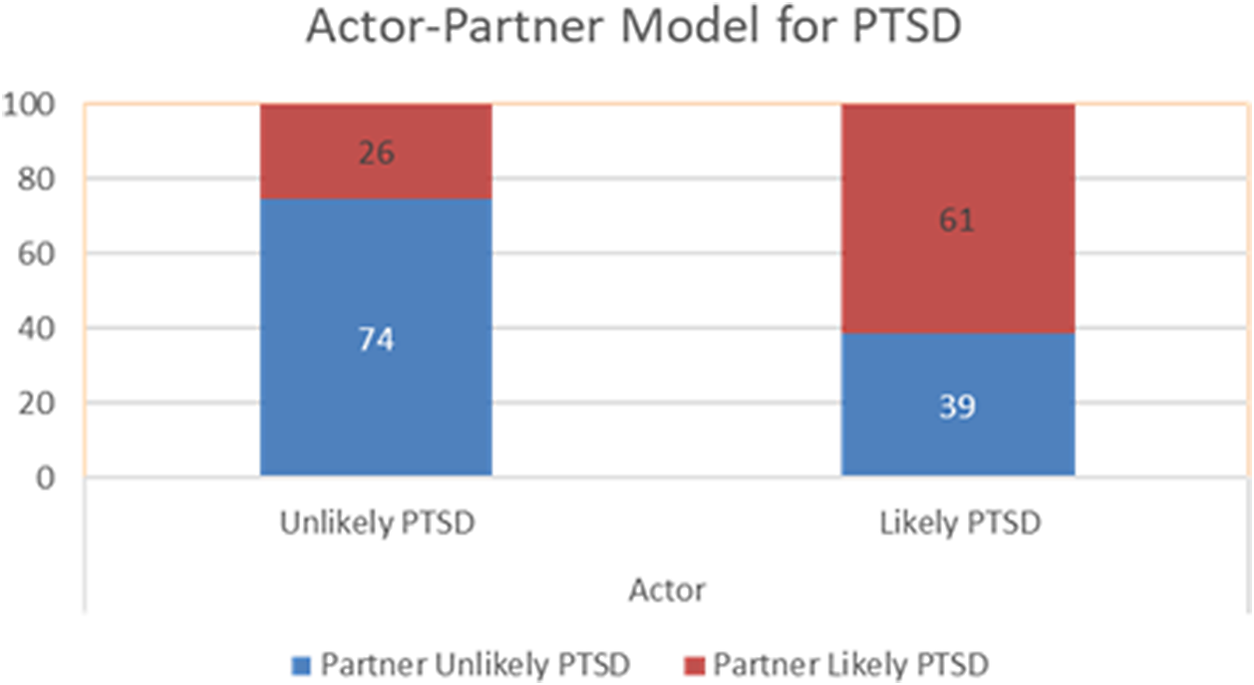
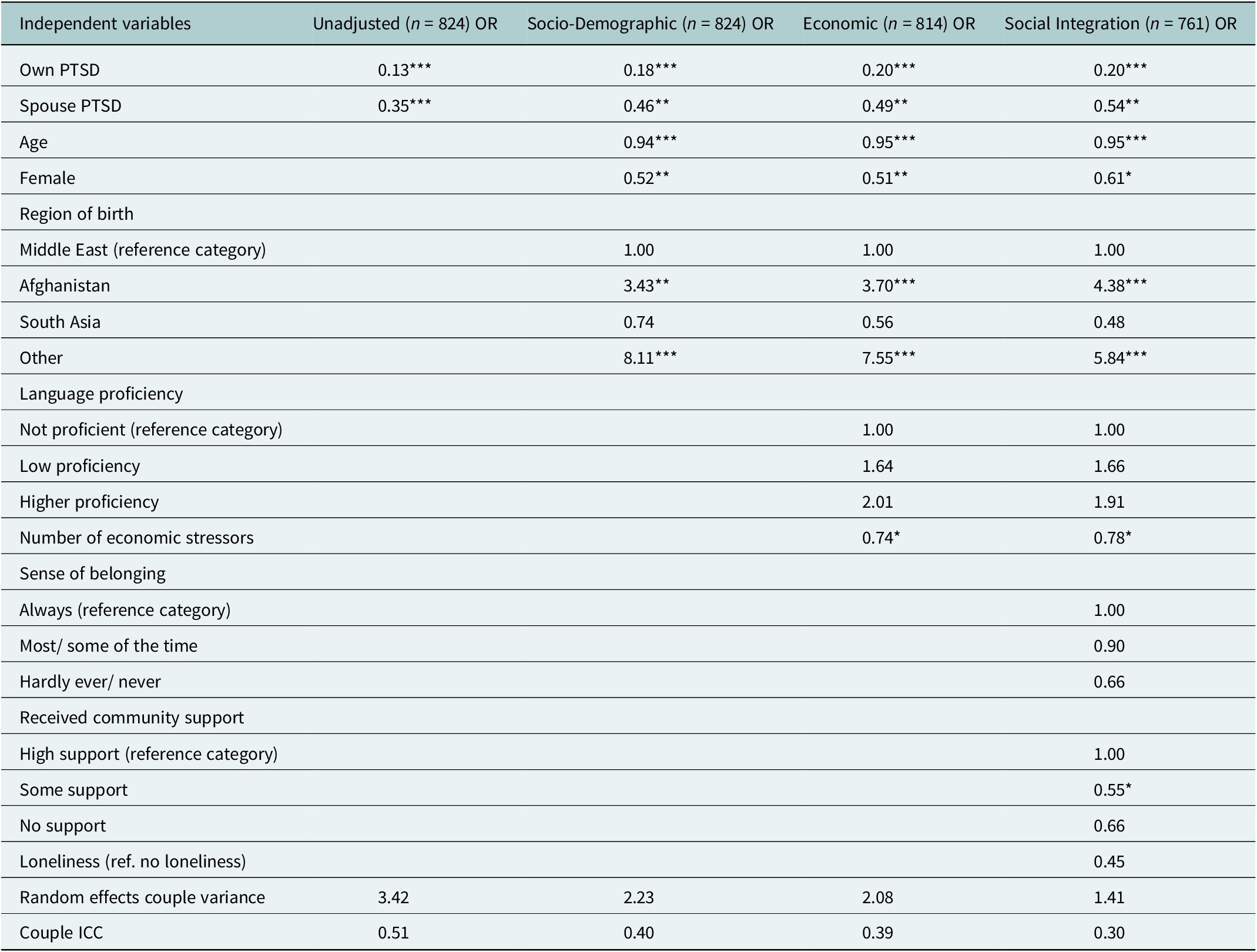
Table 2 shows the mixed-effects logistic regression models for those reporting ‘excellent’ or ‘very good’ health unadjusted and adjusted for socio-demographic, economic and social integration factors. Respondents’ own PTSD and spouses’ PTSD were significantly associated with respondents’ own self-rated general health in the unadjusted model, as well as in the models including socio-demographic, economic and social integration factors. In the full model, the effect size for the association of own PTSD with self-rated general health (OR = 0.2) was equivalent to a fivefold increase in the odds of having poorer self-rated general health, compared with respondents without PTSD. The association for spouse’s PTSD (OR = 0.54) in the full model was equivalent to a 1.8-fold increase in the odds of the individual having poorer self-rated general health, compared with respondents whose spouses did not meet criteria for PTSD.
Mixed-effects logistic regression models
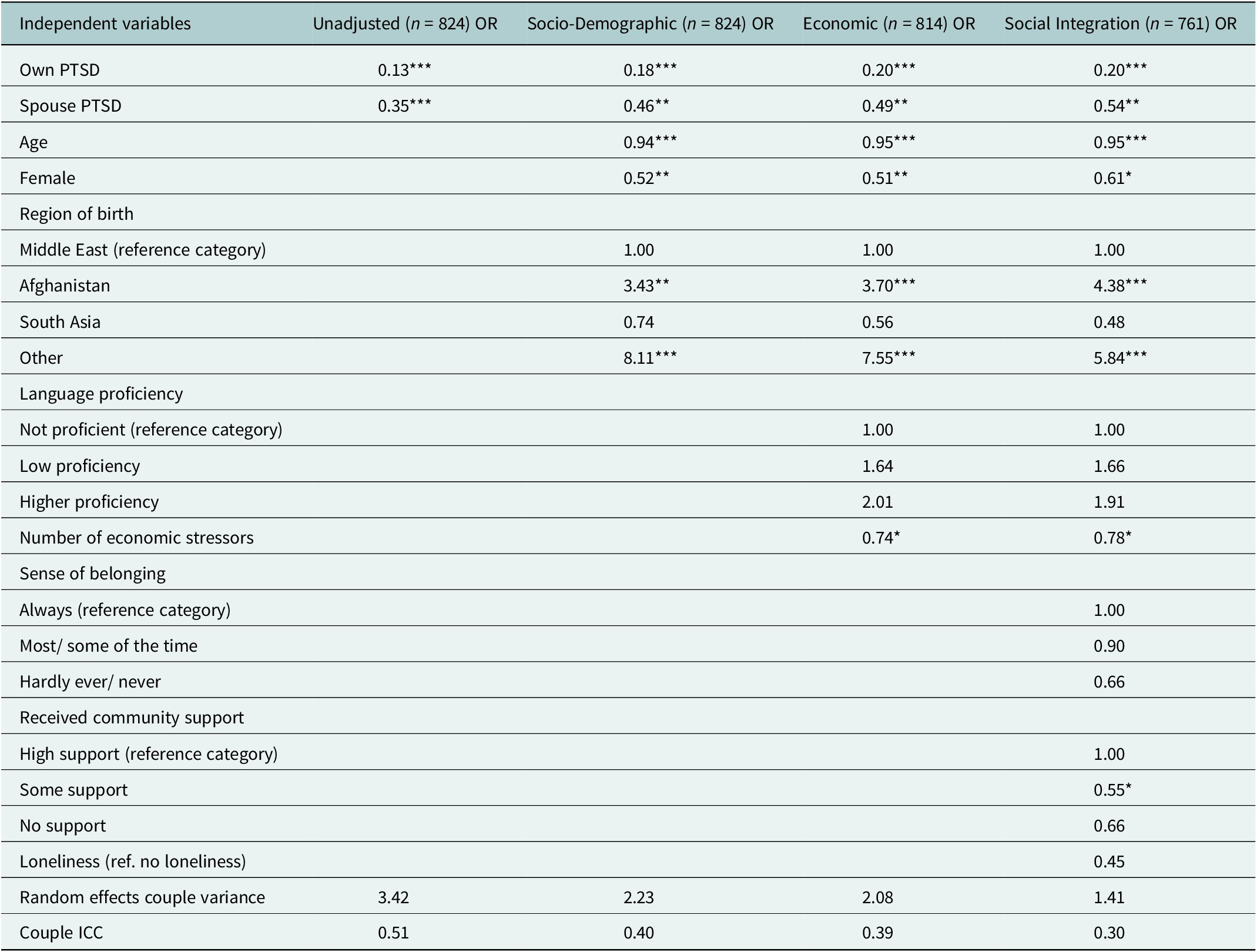
Note: ICC, intraclass correlation; OR, odds ratio. *p < 0.05, **p < 0.01, ***p < 0.001.
In terms of socio-demographic characteristics of the respondent, age (older respondents were less likely to report ‘excellent’ or ‘very good’ health compared with younger respondents), sex (females were less likely to report ‘excellent’ or ‘very good’ health compared with males) and region of birth (respondents born in Afghanistan and ‘other’ countries were more likely to report good/excellent health compared with those born in the Middle East) were significantly associated with own self-rated general health, with little variation when additional factors were included in the model. In terms of economic factors, respondents with a larger number of economic stressors were less likely to report good/excellent self-rated general health (OR = 0.78). Those who received some community support compared to high community support were also less likely to report ‘excellent’ or ‘very good’ health (OR = 0.55).
The intraclass correlation in the multi-level models decreased from 0.51 in the unadjusted model to 0.30 in the fully adjusted model. That is, the proportion of the variance in self-rated general health accounted for by the couple decreased as additional factors were included in the model, showing that the shared variance within couples was partially explained by socio-demographic, economic and social integration factors controlled for in the models. An interaction effect was included in the final model between spouse’s PTSD and respondent’s gender. The interaction term was not significant indicating that gender does not moderate the effect of spouse’s PTSD on own self-rated general health (p-value = 0.660).
Discussion
This paper sought to understand the relationship between the PTSD symptomatology and self-rated general health among couples from refugee backgrounds who were recently resettled in Australia. We found a high level of interdependence of PTSD symptoms within couples from refugee backgrounds. Moreover, to our knowledge, this is the first study to demonstrate an interdependent relationship between PTSD and self-rated general health within couple dyads from refugee backgrounds.
Our findings showed a high predominance of PTSD symptoms in individuals from refugee backgrounds whose partners also displayed symptoms of PTSD¸ which aligns with findings from previous research conducted in refugee populations (Mahmood et al., Reference Mahmood, Ibrahim, Ismail and Neuner2022; Khalil et al., Reference Khalil, George, Templin, Jenuwine and Javanbakht2023). For individuals from refugee backgrounds, these findings suggest that the presence of PTSD symptoms in one partner may increase the vulnerability of PTSD symptoms in the other; however, the directionality of this relationship remains unclear. The ecological model of refugee distress highlights several post-displacement stressors at different levels of the social ecology, some of which may affect couples more saliently such as family separation, housing instability and financial insecurity (Miller and Rasmussen, Reference Miller and Rasmussen2017). These may be exacerbated by trauma appraisals in which individuals may consider the impact of trauma on their partner or their perceived role within the relationship, rather than on themselves. Further research exploring the mechanisms underlying the intra-couple relationship of PTSD symptoms may wish to specifically examine the role of post-displacement stressors and differing trauma appraisals.
We also found that individuals from refugee backgrounds with greater PTSD symptoms reported poorer self-rated general health, extending upon previous research showing that self-rated physical health declines as the number of PTEs experienced increases. Moreover, our study is the first to show that PTSD and self-rated physical health may be interdependently related within the couple dyad for individuals from refugee backgrounds. These findings may reflect trauma appraisals that are more common among refugee groups from collectivistic cultures whereby a partner’s PTSD symptoms may be perceived as disruptive to the family unit and exacerbate one’s own physical health complaints. Future research should examine the directionality of this association and whether poorer self-rated physical health may be secondary to the somatisation of trauma-related symptoms.
With respect to specific demographic factors, our findings that older age, being female, those born in the Middle East, those reporting more economic stressors and those reporting less community support were groups that were more likely to report poor self-rated general health align with previously published cross-sectional and longitudinal research (Dowling et al., Reference Dowling, Enticott, Kunin and Russell2019; Haj-Younes et al., Reference Haj-Younes, Strømme, Igland, Kumar, Abildsnes, Hasha and Diaz2020; Ambrosetti et al., Reference Ambrosetti, Dietrich, Kosyakova and Patzina2021). Longitudinal studies have shown that while there are static risk factors that may predict poor self-rated general health long-term (e.g. female, older age), there are more dynamic predictors which may be modifiable such as economic stressors and social support (Dowling et al., Reference Dowling, Enticott, Kunin and Russell2019; Haj-Younes et al., Reference Haj-Younes, Strømme, Igland, Kumar, Abildsnes, Hasha and Diaz2020). Future research should thus endeavour to evaluate the effect of community-based social support and/or physical health programs that target these modifiable risk factors and understand whether they may help improve self-rated general health in forcibly displaced populations. Designing community-based, scalable interventions that are culturally safe are especially important given the paucity of preventative public health care services in many low- and middle-income countries that have been decimated by years of conflict.
This study has a few limitations that should be noted. First, the cross-sectional design of this study precludes any assertions of causal associations between PTSD and self-rated general health. While most primary respondents in our study were male, gender imbalances are unfortunately a common issue in studies with forcibly displaced populations and thus, future studies of this scale should attempt to address these sampling biases. Second, the use of a self-report, non-diagnostic tool to measure PTSD may have resulted in an overestimation of the prevalence of PTSD within our sample. However, it is important to note that the PTSD-8 scale was chosen in consideration of reducing the significant burden of other questionnaires used in the study. Moreover, no information on pre-displacement physical health conditions or trajectories in health status pre- and peri-displacement were collected which limits our ability to control for the impact of pre-displacement experiences on the association between general health and PTSD. Lastly, the use of a single-item measure for self-rated general health limits a broader and more holistic understanding of the overall physical health of our sample but was partly chosen due to its strong reliability and validity especially when considering its brevity. Notwithstanding these limitations, our study has several strengths. These include the use of a nationally representative and large sample size of humanitarian migrants from diverse backgrounds as well as the use of regression modelling to control for multiple variables along with the use of APIM to perform couple-level analyses. Our study is also the first of its kind to explore the relationship between PTSD, socio-economic status and self-rated general health within couples from refugee backgrounds resettled in a high-income country.
Conclusions
Our study highlights the interdependent effect of PTSD and self-rated general health within couples from refugee backgrounds who have newly resettled in Australia. Economic and social integration stressors were also found to be important determinants of self-rated general health. Our findings further reinforce the growing recognition that supporting these communities requires a collectivist approach, with health promotion and psychological treatment strategies that consider couples, families, the wider community and their broader psychosocial contexts. Clinically, our findings underscore the importance of assessing PTSD and physical health within a dyadic framework, given a partner’s symptoms may influence other’s symptomology. Our findings further suggest the potential values of couples-based interventions for improving physical and mental health outcomes in individuals from refugee backgrounds. Future research should examine the underlying mechanisms and directional pathways underlying these associations, with particular attention to collectivistic trauma appraisals and post-displacement stressors.
Open peer review
To view the open peer review materials for this article, please visit http://doi.org/10.1017/gmh.2026.10187.
Data availability statement
The BNLA dataset used in the present study is publicly available to researchers who have obtained permission from the Australian Government Department of Social Services.
Acknowledgements
This paper uses unit record data from the Building a New Life in Australia study conducted by the Australian Institute of Family Studies for the Australian Government Department of Social Services (DSS) (Department of Social & Australian Institute of Family, 2019). The findings and views reported in this paper are those of the authors and should not be attributed to the Australian Government, DSS or any DSS contractors or partners.
Author contribution
PR and ST conceived the study and conducted the formal analysis. TPN and PR wrote the original draft. All authors reviewed and edited the manuscript prior to submission.
Financial support
No funding was obtained for this study.
Competing interests
The authors declare none.
Ethics statement
The BNLA study was approved by the Australian Institute of Family Studies Human Research Ethics Committee (protocol 13/03). Approval was gained from the Department of Social Services to access the BNLA study dataset.

 Open access


Comments
24th September 2025
Editorial Board
Cambridge Prisms: Global Mental Health,
Dear Professor Judy Bass and Professor Dixon Chibanda,
On behalf of my co-authors, I am pleased to submit our research article entitled ‘Self-rated health, socio-economic status and post-traumatic stress disorder among refugee couples: findings from the Building a New Life in Australia study’ for consideration of publication in Cambridge Prisms: Global Mental Health. The manuscript contains 3166 words (excluding references), 2 tables and 2 figures.
As of June 2024, the number of refugees worldwide has reached a record high of over 32 million people. It is well known that the prevalence of mental disorders is far higher in the refugee community in comparison to the general population, with post-traumatic stress disorder (PTSD) being one of the most prominent and disabling conditions that disproportionately affect refugees. Refugees are also more likely to report concerns with their physical health, of which self-rated health has been shown to be associated with morbidity and mortality outcomes.
Our study draws on data from the Building a New Life in Australia (BNLA) longitudinal study, the largest longitudinal study looking at resettlement outcomes of refugees who have newly arrived in Australia. We used the actor partner interdependence model to model dyadic relationships to analyse the interdependence of PTSD symptoms and self-rated health within refugee couples. We also used mixed-effects logistic regression to determine factors associated with poorer self-rated health.
We found that there was a high level of interdependence of PTSD symptoms within refugee couples and that partners who were likely to have PTSD were also less likely to rate good self-rated health. We also found that refugees who were of older age, female, born in the Middle East, reported lower levels of social support or had experienced more socio-economic stressors were at greater risk of poorer self-rated health.
We believe this paper would be of interest to the readership of Cambridge Prisms: Global Mental Health’s as it highlights the importance of incorporating family context, physical health and social determinants into clinical care for refugees. Our findings may also inform future global mental health research aimed at developing community-based and scalable interventions, particularly in settings where preventative public health services may remain limited.
Should this paper be accepted, we will gladly transfer copyright to Cambridge Prisms: Global Mental Health. This paper is an original piece of work and does not plagiarise any other published work. I can also confirm that all authors have approved the manuscript for submission.
We currently own the copyright to this paper and declare no competing interests for this research. We are also empowered to make any agreements relating to the work. This paper has not been previously published or is under consideration elsewhere. The paper does not contain any abusive, defamatory, libellous, obscene, or fraudulent material.
Thank you for considering our submission. We look forward to your feedback.
Yours Sincerely,
Dr Thomas Nguyen
School of Medicine | Western Sydney University
Conjoint Associate Lecturer, Mental Health, School of Medicine, Western Sydney University, Sydney, Australia
Psychiatry Registrar, Austin Health, Melbourne, Australia
Research Associate, Murdoch Children’s Research Institute, Melbourne, Australia