

Introduction
The intricate phenomenon of the ‘Superorganism’ or ‘Second Brain’, exemplified by prokaryotes residing in the human intestinal lumen, has posed a longstanding puzzle for researchers. Only in recent decades has a comprehensive understanding of this concept begun to take shape within the scientific, medical, industrial and consumer communities (Doré et al., Reference Doré, Multon, Behier, Affagard, Andremont, Barthélémy, Batitsa, Bonneville, Bonny, Boyaval and Chamaillard2017; Glendinning and Free, Reference Glendinning and Free2014). The gut microbiome, comprising bacteria, viruses, Archaea, fungi and protozoa, collectively numbering around 101⁴ cells – approximately equivalent to the human body’s cell count – holds considerable sway over intestinal eco-events, regulation, homeostasis and function, exerting systemic implications for human health (Lerner et al., Reference Lerner, Neidhöfer and Matthias2017b). Microbes, appearing on Earth approximately 3.8 billion years ago, significantly precede the emergence of the Homo genus by 2.5 million years. This protracted evolutionary timeline allowed microorganisms to develop survival strategies in diverse environments (Harari, Reference Harari2014).
The credit for expanding the definition of probiotics to encompass ‘live microorganisms which, when administered in sufficient quantity, impart a health benefit to the host’ goes to Louis Pasteur and E. Metchnikoff. Subsequently, a substantial body of research has surfaced, delving into the benefits of probiotic consumption across various dimensions of human health, including physical ailments, diseases, psychological states, behavioural patterns and performance (Villena and Kitazawa, Reference Villena and Kitazawa2017; Tegegne and Kebede, Reference Tegegne and Kebede2022). Five conditions – necrotizing enterocolitis, severe infectious diarrhoea, acute airway infections, antibiotic-associated diarrhoea and infant colic – emerge as compelling evidence in favour of probiotics (Liu et al., Reference Liu, Tran and Rhoads2018). While dietary and nutritional probiotics and starter cultures employed in the industry were traditionally considered safe for many years, recent apprehensions regarding their safety have surged.
The International Scientific Association for Probiotics and Prebiotics (ISAPP) provides widely accepted definitions for probiotics and postbiotics, ensuring clarity in their distinction and application. According to ISAPP, probiotics are defined as ‘live microorganisms which, when administered in adequate amounts, confer a health benefit on the host’ (Hill et al., Reference Hill, Guarner, Reid, Gibson, Merenstein, Pot, Morelli, Canani, Flint, Salminen and Calder2014). This definition emphasizes that probiotic strains must remain viable during administration and demonstrate proven health benefits through scientific validation.
Recent advancements have also highlighted the role of postbiotics as an emerging area of research with potential health benefits. ISAPP defines postbiotics as ‘a preparation of inanimate microorganisms and/or their components that confers a health benefit on the host’ (Salminen et al., Reference Salminen, Collado, Endo, Hill, Lebeer, Quigley, Sanders, Shamir, Swann, Szajewska and Vinderola2021). Unlike probiotics, which are live microorganisms that must remain viable to exert their effects, postbiotics include bioactive metabolites, cell wall fragments, proteins and short-chain fatty acids (SCFAs) that can modulate host physiology without requiring microbial viability. This distinction is critical in understanding their mechanism of action, safety profile and potential applications, particularly in cases where live probiotics may pose risks, such as in immunocompromised individuals (Al-Habsi et al., Reference Al-Habsi, Al-Khalili, Haque, Elias, Olqi and Uraimi2024; Obayomi et al., Reference Obayomi, Olaniran, Olawoyin, Falade, Osemwegie and Owa2024).
Although this manuscript primarily focuses on probiotics, it also explores postbiotics as complementary components that mediate probiotic-induced health benefits. By critically examining the advantages and limitations of probiotics, this review highlights the mechanistic role of postbiotics in microbial-based health interventions. Integrating insights from recent research, including (MdS et al., Reference MdS, Lee, Hsu, Suk, Sayem, Ullah, Lee and Park2023), we provide a comprehensive perspective on their translational potential in medicine.
Health benefits of probiotics
Live microorganisms employed as probiotics are increasingly gaining recognition for their pivotal role in promoting both human and animal health. Currently, approximately one-third of the global human diet comprises various fermented foods and beverages. Probiotics are incorporated into a diverse range of food products, including cereals, biscuits, bread, sauces, yogurts, cheeses and fermented milk beverages, with recommended daily intake levels ranging from 2 to 20 g (Borresen et al., Reference Borresen, Henderson, Kumar, Weir and Ryan2012).
The successful commercialization of an effective probiotic product relies upon several critical factors, such as the genetic composition of the microbial strain, the concentration of probiotics within the formulation, the intended health benefits and the product’s stability throughout its shelf life. The selection of an appropriate probiotic strain is guided by stringent criteria that account for its mode of production, expected physiological impact and potential health benefits. These parameters are crucial in ensuring the efficacy and viability of probiotics for market applications (Ghishan and Kiela, Reference Ghishan and Kiela2011).
Lactic acid bacteria (LAB) play a crucial role in fermenting a broad spectrum of food substrates, including milk and dairy products, fruits, vegetables and cereals. The LAB group includes species from the genera Lactobacillus, Streptococcus, Enterococcus, Leuconostoc and Pediococcus. Additionally, Bifidobacterium species, though not classified as LAB, are extensively used as probiotics for their beneficial effects on gut microbiota and overall health Table 1.
List of bacterial species used in probiotics along with their benefits

The fermentation process enhances the flavour and nutritional profile of foods while generating bioactive compounds that exhibit anti-inflammatory, immunomodulatory, glycemic-regulating and fatigue-reducing properties. Historically, the health benefits of probiotics were first recognized over a century ago when observations linked the longevity of Russian and Bulgarian populations to their regular consumption of soured milk containing beneficial microorganisms (Barros et al., Reference Barros, Esmerino, Melo and da Cruz2023). Probiotics are now widely acknowledged for their therapeutic and preventive roles in managing metabolic syndrome, which encompasses conditions like diabetes, cardiovascular diseases and obesity, also addressing allergies, liver disorders and gastrointestinal complications (Eslami et al., Reference Eslami, Yousefi, Kokhaei, Hemati, Nejad, Arabkari and Namdar2019) (Fig. 1). LAB strains, along with Escherichia coli, have demonstrated the ability to modulate immune responses by facilitating cytokine transfer to target sites within the host, contributing to the treatment of bowel inflammation, colorectal cancer and constipation (Behnsen et al., Reference Behnsen, Deriu, Sassone-Corsi and Raffatellu2013; Śliżewska et al., Reference Śliżewska, Markowiak-Kopeć and Śliżewska2020). Recent studies have indicated that specific probiotic strains such as Escherichia coli K-12, Lactobacillus rhamnosus and Bifidobacterium lactis have exhibited anti-carcinogenic properties by inhibiting apoptosis in non-pathogenic carcinoma cells, thereby reducing the proliferation of colon cancer cells, including HGC-27, Caco-2, DLD-1 and HT-29 lines (Altonsy et al., Reference Altonsy, Andrews and Tuohy2010). Furthermore, LAB strains in cheese have been shown to significantly reduce the population of mutants streptococci in saliva, thereby contributing to oral health by inhibiting dental plaque formation and preventing enamel demineralization. However, the extent of these benefits varies across studies, and comprehensive clinical evidence on probiotics’ effects on dental caries remains inconclusive (Twetman and Keller, Reference Twetman and Keller2012).
Benefits of probiotics.

Overall, the maintenance of a balanced and diverse gut microbiome is critical for sustaining optimal health. Symbiotic bacteria play a key role in modulating immune responses, protecting the host from pathogenic infections and promoting intestinal homeostasis. Conversely, pathogenic microorganisms can trigger inflammation and disrupt microbiome equilibrium, leading to a range of acute and chronic health conditions. Continued research into probiotics and their mechanisms of action will be essential for fully elucidating their therapeutic potential and optimizing their applications in human health.
Effects of probiotics on health and diseases
The benefits of probiotics extend beyond their nutritional values and contribution to food fermentation. Their ability to influence gut microbiota composition and function has sparked significant interest in their therapeutic potential. While probiotics are widely recognized for their role in improved digestion and gut health, emerging research highlights their broader impact on various physiological systems. The following section delves deeper into the specific effects of probiotics on human health and their potential in disease prevention and treatment.
Probiotics have been extensively studied for their beneficial impacts on human health, demonstrating potential in disease prevention and therapeutic applications. The impact of probiotics on various physiological and pathological conditions is mediated through multiple mechanisms, such as modulation of the gut microbiota, enhancement of the mucosal barrier, regulation of immune responses and production of bioactive metabolites. This section comprehensively discusses the effects of probiotics on different health conditions and diseases.
The gut–brain axis is a critical pathway through which probiotics exert effects on mental health. Psychobiotic strains like Lactobacillus helveticus and Bifidobacterium longum have been shown to reduce symptoms of depression and anxiety by modulating neurotransmitter levels, such as serotonin and gamma-aminobutyric acid (GABA). Probiotics also have neuroprotective effects in neurodegenerative disorders like Alzheimer’s and Parkinson’s disease, potentially reducing neuroinflammation and enhancing cognitive function.
Probiotics contribute to cardiovascular health by influencing blood pressure regulation and lipid metabolism. Certain Lactobacillus and Bifidobacterium strains exhibit antihypertensive effects by modulating nitric oxide levels and reducing vascular inflammation. Additionally, probiotics can lower systemic inflammation and improve endothelial function, which plays a crucial role in reducing the risk of atherosclerosis and other cardiovascular diseases (De Souza et al., Reference de Souza, de Brito Alves and Fusco2022).
The potential anticancer effects of probiotics have gained attention in recent years. They may help in colorectal cancer prevention by producing SCFAs like butyrate, which inhibit tumour growth and promote apoptosis in colorectal cancer cells. Some experimental models suggest that probiotics could modulate oestrogen metabolism and hepatic detoxification pathways and reduce the risk of hormone-dependent and liver cancer.
Probiotics also play an essential role in women's health by maintaining vaginal microbiota balance and preventing urogenital infections. Lactobacillus crispatus and Lactobacillus reuteri help restore vaginal microbiota homeostasis, reducing the risk of bacterial vaginosis and candidiasis. Additionally, probiotic therapy has been linked to a lower recurrence of urinary tract infections by preventing pathogenic bacterial adhesion to the urothelium.
The effects of probiotics on health and diseases are diverse and depend on strain-specific properties, host physiology and environmental factors. While significant evidences support their role in promoting gastrointestinal, metabolic, immune and neurological health. However, further clinical trials are required to establish standardized guidelines for their therapeutic uses (Quintieri et al., Reference Quintieri, Fanelli, Monaci and Fusco2024). The increasing recognition of probiotics as functional agents underscores their potential in preventive medicine and integrative health management.
The global market for probiotics
The global market for probiotics is surging. Probiotics were reportedly used unknowingly some 10,000 years ago, but they became widely popular as milk that was fermented in earlier ages, mostly in Europe, where the fermented yogurt in the Balkans was thought to be responsible for the Balkan region’s long-life expectancy and good lifestyle. Compared to sales of sachets, capsules in order or other medicinal preparations, their use in food witnessed an earlier and greater expansion (Saxelin, Reference Saxelin2008). Given the sudden increase in direct personal consumption, the acceptance of self-care, holistic healthcare, non-profit organizations and aggressive media advertising, it appears that the general pattern is changing (Reid et al., Reference Reid, Kort, Alvarez, Bourdet-Sicard, Benoit, Cunningham, DM, van Hylckama Vlieg, Verstraelen and Sybesma2018). Recently, researchers for the worldwide manufacturing sector anticipated that the probiotic market would surpass 300 million US dollars. The market for lactobacilli strains was estimated to be worth a total of 1.2 billion US dollars in the year 2017. By 2024, it is predicted that the market for Bifidobacterium will grow by almost 6%, and the market for bacillus strains could reach more than the amount of 180 million US dollars (Khoruts et al., Reference Khoruts, Hoffmann and Britton2020). The estimate of product creation and revenue is that they will reach 50 billion US dollars throughout the next 5 years, according to a seminar group at the ISAPP convention in 2017 (Reid et al., Reference Reid, Kort, Alvarez, Bourdet-Sicard, Benoit, Cunningham, DM, van Hylckama Vlieg, Verstraelen and Sybesma2018). With a compound annual growth rate (CAGR) of 9.3%, the worldwide probiotics market jumped from 66.9 billion dollars in 2022 to 73.14 billion dollars in 2023. At least temporarily, the conflict between Russia and Ukraine has hampered the world economy's ability to recover from the COVID-19 pandemic. At a CAGR of 8.6%, the probiotics industry is projected to reach 101.89 billion dollars in 2027 (Probiotics Market Size, 2023). Probiotics are now classified in three different categories: (i) foods (fermented foods), with claimed GRAS (generally recognized as safe) status for Lactobacillus, Bifidobacterium and Lactococcus; (ii) dietary supplements, which are frequently sold as over-the-counter supplements; and (iii) drugs (pharmaceuticals) (Biesterbos et al., Reference Biesterbos, Sijm, van Dam and Mol2019). Probiotic manufacturers and recommended uses are important factors in categorization, but it also relies on what different regulatory agencies expect. In order to prevent any health risks, the safety of foods and drugs meant for people to consume, including probiotics, is crucial aspect. According to certain clinical investigations, probiotics are safe since they have not been hazardous to a variety of populations, which include (i) competent adult volunteers (Mangalat et al., Reference Mangalat, Liu, Fatheree, Ferris, Van Arsdall, Chen and Rhoads2012); (ii) pregnant women in their third trimester of pregnancy and subsequent newborns (Allen et al., Reference Allen, Jordan, Storey, Thornton, Gravenor, Garaiova, Plummer, Wang and Morgan2010); and (iii) infants between the ages of 0 and 2 years (Dekker et al., Reference Dekker, Wickens, Black, Stanley, Mitchell, Fitzharris, Tannock, Purdie and Crane2009), and kids (Olivares et al., Reference Olivares, Castillejo, Varea and Sanz2014); (iv) young generation who are institutionalized (Manley et al., Reference Manley, Fraenkel, Mayall and Power2007); (v) teenagers who are critically ill; and (vi) patients who have weakened immune systems (Srinivasan et al., Reference Srinivasan, Meyer, Padmanabhan and Britto2006). While probiotics are generally considered nonpathogenic and widely used in foods and unprescribed medications, certain strains may pose risks in specific conditions. For instance, Lactobacillus rhamnosus and Lactobacillus casei have been linked to bacteraemia in immunocompromised patients (Salminen et al., Reference Salminen, Rautelin, Tynkkynen, Poussa, Saxelin, Valtonen and Jarvinen2003), Saccharomyces boulardii has been associated with fungaemia in critically ill individuals, and Bifidobacterium species have shown the potential for translocation in neonates with underdeveloped gut barriers (Vinayagamoorthy et al., Reference Vinayagamoorthy, Pentapati and Prakash2023). These risks highlight the need for careful strain selection and risk assessment to ensure probiotics’ safe application in human health.
Probiotic strains have to satisfy certain criteria and requirements
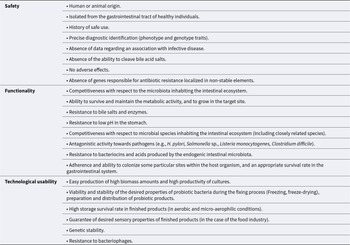
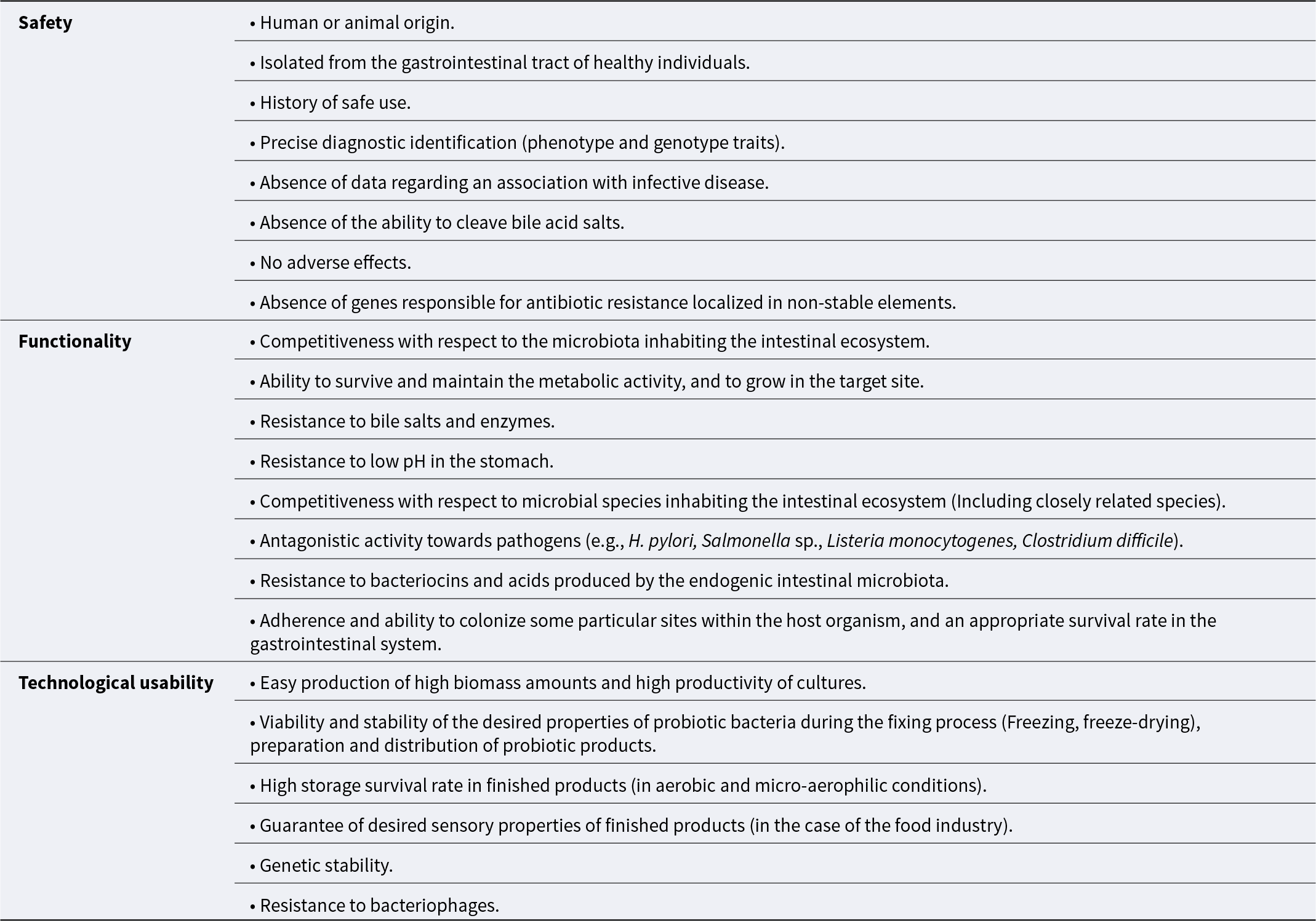
The World Health Organization, Food and Agriculture Organization and the European Food Safety Authority advocate for the stringent adherence to safety, functional and technological criteria in the selection of probiotic strains, as delineated in Table 2. It is noteworthy that probiotic traits are not inherently linked to the genus or species of a bacterium; rather, they are specific to carefully chosen strains within a species (Hill et al., Reference Hill, Guarner, Reid, Gibson, Merenstein, Pot, Morelli, Canani, Flint, Salminen and Calder2014). Safety considerations encompass the strain’s origin, its lack of association with pathogenic cultures, and its antibiotic resistance profile. Functional factors, such as survivability in the gastrointestinal tract and immunomodulatory effects, define the strain’s efficacy. Conformance to technological standards during distribution and storage processes is imperative for probiotic strains to maintain their characteristics (Lee, Reference Lee, YK and S2009).
Criteria for choosing probiotic strains (Joint FAO, 2002; Binda et al., Reference Binda, Hill, Johansen, Obis, Pot, Sanders, Tremblay and Ouwehand2020)
Probiotics must substantiate their health benefits per the strain’s characteristics when incorporated into marketed products. It is explicitly prohibited to extrapolate scientific findings from studies or review articles on one strain to endorse another strain as a probiotic. Furthermore, it is crucial to recognize that studies delineating the probiotic qualities of a specific strain at a defined dosage do not inherently imply the persistence of these qualities at alternative dosages of the same strain. The choice of carrier or matrix is also of paramount importance, as it can impact a strain’s viability and potentially alter the characteristics of the final products (Mazziotta et al., Reference Mazziotta, Tognon, Martini, Torreggiani and Rotondo2023; Jagielski et al., Reference Jagielski, Bolesławska, Wybrańska, Przysławski and Łuszczki2023).
Probiotic pathogenicity investigations and clinical reports
There have been studies and clinical cases from the 1990s to the present day that describe invasive fungal infections linked to Saccharomyces cerevisiae and Saccharomyces boulardii. Although Saccharomyces cerevisiae and Saccharomyces boulardii were found to be the only effective and reliable probiotics for managing symptoms of antibiotic-associated diarrhoea, patients with compromised immune systems and those who are critically ill ought to use extra caution. There have also been incidences of local infections reported in addition to systemic illnesses (Fadhel et al., Reference Fadhel, Patel, Liu, Levitt and Asif2019). In particular, pneumonia caused by Lactobacillus is seen regardless of clinical settings, that is, under the strict supervision of medical specialists. Older age, hepatobiliary disease, diabetes mellitus, individuals with previous histories of malignant diseases and transplantations were assumed as responsible risk factors for the emergence of probiotic-induced infections (LeDoux et al., Reference LeDoux, LaBombardi and Karter2006; Haghighat and Crum-Cianflone, Reference Haghighat and Crum-Cianflone2016; Kulkarni et al., Reference Kulkarni, Majarikar, Deshmukh, Ananthan, Balasubramanian, Keil and Patole2022). Patients with immunosuppressed conditions, those with cardiac conditions (with or without prosthetic material) and those with bacteraemia and endocarditis are sometimes prescribed probiotics containing Lactobacillus species. However, Lactobacillus species, particularly Lactobacillus rhamnosus and Lactobacillus casei, have been implicated in endocarditis due to their ability to adhere to damaged heart valves and prosthetic material, forming biofilms that resist immune clearance. Their translocation from the gut into the bloodstream, particularly in individuals with compromised gut barriers, can facilitate systemic infections, highlighting the need for caution in high-risk patients (Campagne et al., Reference Campagne, Guichard, Moulhade, Kawski and Maurier2020). Since endocarditis caused by Lactobacillus is associated with a 23% mortality rate, it is important to rule out probiotic supplementation as the cause of endocarditis, even though infections caused by Lactobacilli are extremely rare. Therefore, medical practitioners should closely monitor the use of Lactobacillus species, such as L. rhamnosus, L. casei, L. acidophilus, L. jensenii, L. plantarum and L. paracasei, in immunocompromised patients (Cannon et al., Reference Cannon, Lee, Bolanos and Danziger2005; Angrup et al., Reference Angrup, Sood, Ray and Bala2022). This literature targets the contradictory findings addressing the benefits and drawbacks of probiotics for human health and disease, as mentioned earlier. For instance, one study discovered that there was no connection between probiotic consumption and any detrimental pancreatitis scenario. On the other hand, the ‘PROPATRIA’ trial concluded that probiotic intake caused death and harmful effects in patients with pancreatitis owing to intestinal ischemia. There was a higher mortality rate from intestinal ischemia in the probiotic-taking group compared to the controls. This difference – 16% vs 6% – was substantial when talking about probiotic-induced pathogenicity. Following a high load of six probiotic strains in the subjects, it hypothesized that the postulated mechanism of intestinal ischemia results in an increased need for oxygen. Local inflammation and blood flow were already modest; probiotics thus made the clinical picture worse and led to higher mortality as when compared with the control group. It is obvious why it is vitally important, but does not to overlook the dose–response connection in probiotic combinations since individual toxic responses may be unpredictable. The toxicity of a probiotic strain per se should not be prioritized over the total dose of the probiotic (Besselink et al., Reference Besselink, van Santvoort, Buskens, Boermeester, van Goor, Timmerman, Nieuwenhuijs, Bollen, van Ramshorst, Witteman and Rosman2008; Žuntar et al., Reference Žuntar, Petric, Bursać Kovačević and Putnik2020).
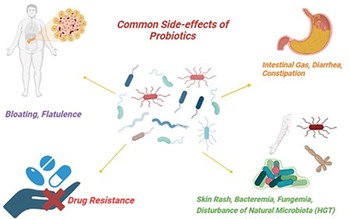
Side effects of probiotics on human health.

The adverse effects of probiotics are often dose-dependent, and improper administration can exacerbate health risks, particularly in vulnerable populations. While probiotics are generally considered safe, studies indicate that excessively high doses, typically exceeding 10⁹–1012 CFU per day, may lead to adverse outcomes such as metabolic disturbances, excessive immune stimulation and increased infection risks, particularly in immunocompromised individuals (Kothari et al., Reference Kothari, Patel and Kim2018). The PROPATRIA trial demonstrated that an uncontrolled probiotic dose could contribute to severe complications like intestinal ischemia, highlighting the need for careful dose selection in clinical applications. In addition to dosage, the mode of probiotic delivery plays a crucial role in determining its safety and efficacy. Probiotics administered in capsule or tablet form may be vulnerable to degradation by gastric acid and bile salts, potentially reducing bacterial viability before reaching the intestines. In contrast, probiotic-rich fermented foods (e.g., yogurt, kefir and cheese) often provide a protective matrix that enhances bacterial survival and bioavailability. However, these food-based probiotics also introduce variability in bacterial load and may contain additional components that influence their effects. The impact of dose and delivery method underscores the importance of personalized probiotic administration, ensuring optimal benefits while mitigating potential risks. Given these findings, future research should focus on establishing standardized dosing guidelines and evaluating the influence of different application methods to enhance probiotic safety in both clinical and dietary settings.
Probiotics comprising Lactobacillus were previously thought to be contraindicated in people who had a history of lactose and milk-related sensitivities, according to certain older data sources (Williams, Reference Williams2010). Recent evidence, meanwhile, supports the opposite findings since there are Lactobacillus strains that help those who are lactose intolerant (Pakdaman et al., Reference Pakdaman, Udani, Molina and Shahani2015). Probiotic bacteria can be introduced to non-fermented milk and dairy products, but their benefits are limited since, while it is true that most fermented dairy products normally do not contain quantities of lactose high enough to cause intolerance reactions in sensitive people. Application is thus restricted by diets that demand a cholesterol restriction or by intolerance to lactose, milk protein allergies, etc. Because the probiotics are healthful and advantageous for all consumer groups (including vegans and vegetarians), fruit juices and beverages are seen as alternatives in this context (Pereira and Rodrigues, Reference Pereira and Rodrigues2018). As such, they could be a decent nutritional replacement for typical dairy products that include probiotics (Fig. 2).
Consequences of horizontal gene transfer
The lateral transfer of mobile genetic components between unicellular or multicellular organisms is known as horizontal gene transfer (HGT). It makes it possible for genes to be transferred even between distant species. This is usually accomplished through transformation, transduction, conjugal transfer or the use of certain gene transfer methods (Arnold et al., Reference Arnold, Huang and Hanage2022). Recently, a summary of the subject of HGT in the human stomach and the transmission of pathogenic genes to the endogenous microbiota was published. A warmer area for HGT, the human gastrointestinal tract, is a perfect environment (Lerner et al., Reference Lerner, Matthias and Aminov2017a). The probiotics are the key ingredient for the fermentation industry and the industry that supplies the production of processed foods. The resistance arises in the use of probiotics in the scenario of HGT, which creates an imbalance in the human microbiome.
Many studies have asserted this question and raised a point of concern towards this aspect. Such example of antibiotic-resistant genes, which have received the greatest attention, was discovered in several dietary supplements (Wong et al., Reference Wong, Ngu, Dan, Ooi and Lim2015). Because of how pervasive the issue is, those dietary supplements must incorporate risk assessment measures. More specifically, the HGT of pathogenic mobile genetic material from probiotics to the intestinal commensal communities is of concern (van Reenen and Dicks, Reference van Reenen and Dicks2011). HGT between probiotic strains has been documented for several probiotics, including Lactobacillus paracasei (Mercanti et al., Reference Mercanti, Rousseau, Capra, Quiberoni, Tremblay, Labrie and Moineau2016), Lactobacillus rhamnosus, Lactobacillus reuteri, Lactobacillus gasseri and Lactobacillus plantarum (Egervärn et al., Reference Egervärn, Roos and Lindmark2009). In general, it has been proposed that several antibiotics are involved in the gene transfer of antibiotic-resistant genes from gram-positive cocci to gram-negative bacteria (Baugher et al., Reference Baugher, Durmaz and Klaenhammer2014). Although the consumption of probiotics has little effect on the microbial composition of the faeces, there is HGT between the ingested probiotic and the endogenous inhabitants. The cumulative danger of the probiotic impact of lateral genetic transfer of pathogenic factors is still a matter of question (Egervärn et al., Reference Egervärn, Lindmark, Olsson and Roos2010). Remarkable research was carried out by Rosander et al. (Reference Rosander, Connolly and Roos2008), who published a rare article on the excision of antibiotic resistance gene-carrying plasmids from Lactobacillus reuteri ATCC 55730, which is not frequently done in probiotic research. However, the transfer of antibiotic genes was simply used as an example and is only one element of pathogenic genes. The LAB of aquatic origin intended for use as probiotics in aquaculture showed gelatinase and hemolytic activity as well as several enzymes such as peptidases, acid phosphatases, phosphohydrolases, α + β- galactosidases and N-acetyl-glucosaminidase. Subsequently, it was discovered that microbial transglutaminase (Muñoz-Atienza et al., Reference Muñoz-Atienza, Gómez-Sala, Araújo, Campanero, Del Campo, Hernández and Cintas2013), a prokaryotic survival factor that is frequently eaten by the industrial processed food sector, possessed virulent properties, one of which was anti-phagocytic (Yu et al., Reference Yu, Pian, Ge, Guo, Zheng, Jiang, Hao, Yuan, Jiang and Yang2015). It is important to note that probiotics also produce the enzyme that has been identified as a novel potential environmental component in the development of celiac disease. Microbial transglutaminase can be viewed as a secreted toxin with functioning capabilities even in pathogenic microorganisms. When the microbial transglutaminase cross-links gliadin, it forms a complex that is immunogenic in celiac patients and has several negative impacts on human health. The holobiont repertoire in intestinal niches may be affected by lateral gene transfer, which could have a detrimental effect on the genetic stability and evolutionarily conserved processes, compromising human health (Sitaraman, Reference Sitaraman2018).
Drug resistance
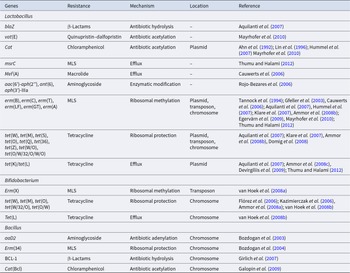
Drug metabolism can be impacted by the gut microbiota in both direct and indirect ways, which can have an impact both in terms of efficacy and toxicity (Wilson and Nicholson, Reference Wilson and Nicholson2017). In rats administered the azo drugs prontosil or neoprontosil, studies dating back to the early 1970s demonstrated that microbial azoreductase activity plays a crucial role in drug metabolism. Specifically, when these rats were treated with antibiotics, the urinary excretion of total sulphanilamide was significantly reduced, indicating that drug activation is microbiota-dependent (Gingell and Bridges, Reference Gingell and Bridges1971; Carmody and Turnbaugh, Reference Carmody and Turnbaugh2014). There are plenty of other significant microbiota-driven drug metabolisms (Subramaniam et al., Reference Subramaniam, Velu, Palaniappan and Jackson2023; Klaassen and Cui, Reference Klaassen and Cui2015; Pant et al., Reference Pant, Maiti, Mahajan and Das2022) that have been identified, including decarboxylation (l-dopa) (Maini Rekdal et al., Reference Maini Rekdal, Bess, Bisanz, Turnbaugh and Balskus2019), sulfation (acetaminophen), dehydroxylation (caffeic acid and l-dopa), demethylation (methamphetamine) (Klaassen and Cui, Reference Klaassen and Cui2015), dehalogenation (Dünnwald et al., Reference Dünnwald, Gatterer, Faulhaber, Arvandi and Schobersberger2019) and acetylation/diacylation (salicylic acid to create aspirin) (Klaassen and Cui, Reference Klaassen and Cui2015) as elaborated in Table 3. The microbial community can help lessen the harmful effects of drugs. The conjugate hydrolysis reaction known as glucuronidation (Klaassen and Cui, Reference Klaassen and Cui2015), which converts glucuronic acid into hydrophilic and negatively charged glucuronides through the activity of UDP-glucuronosyltransferase, is an established instance (Yang et al., Reference Yang, Ge, Singh, Basu, Shatzer, Zen, Liu, Tu, Zhang, Wei and Shi2017).
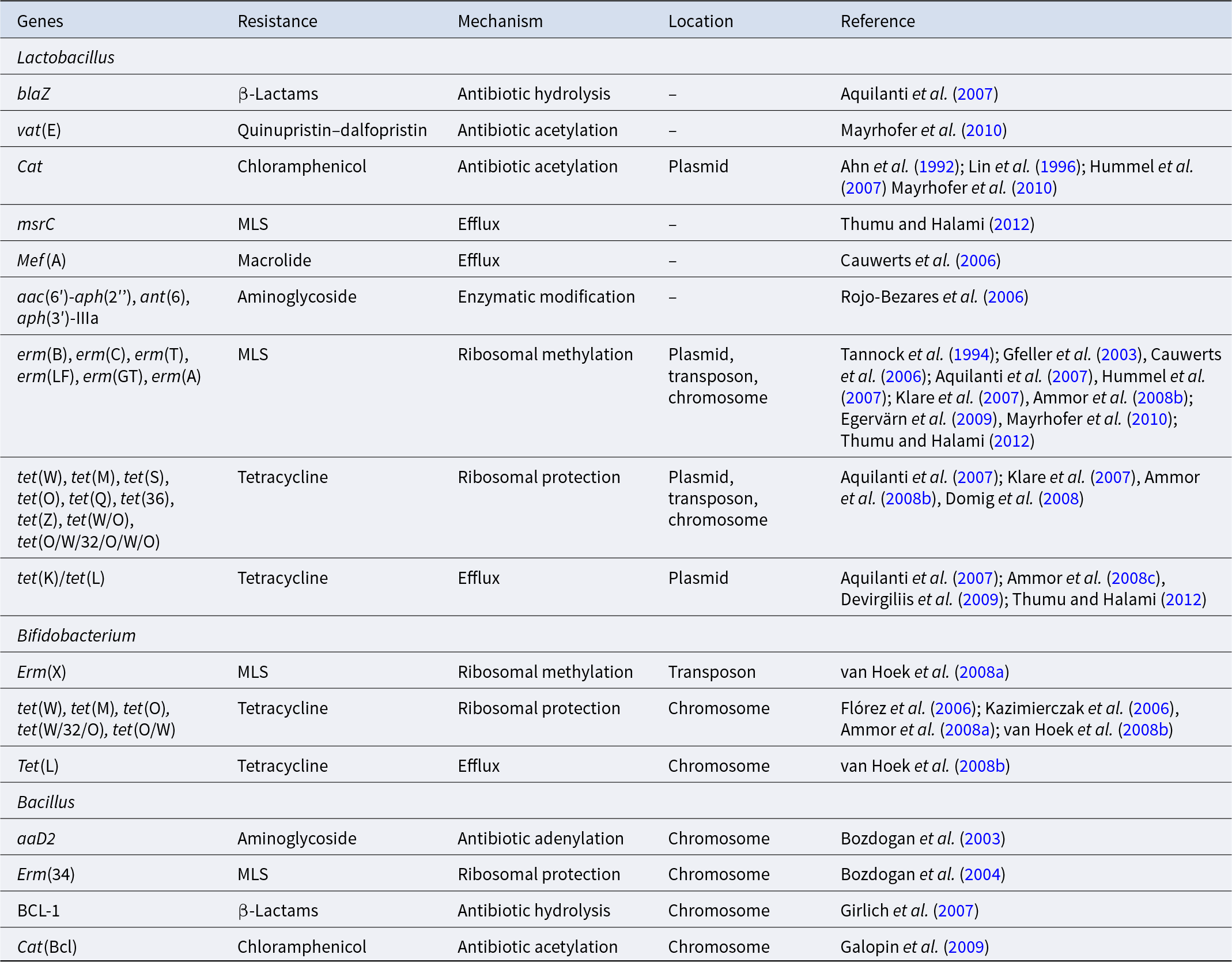
List of antibiotic-resistant genes characterized in probiotic strains of lactobacillus, bifidobacterium and bacillus
Numerous anaerobic bacteria can produce glucuronidases, an enzyme that can break down xenobiotics and endogenous substances that have previously undergone glucuronidation-based detoxification. The production of local carcinogens, as well as enterohepatic recirculation of toxins, hormones and other medications, can be facilitated by this deconjugation. Therefore, the development of colon cancer may be made more likely by high levels of glucuronidases. To ensure enterohepatic recirculation of vital substances like vitamin D, thyroid hormone or estrogen, a specific level of beta-glucuronidase activity is necessary. Probiotics’ potential to affect how drugs work may have safety repercussions. The interactions between the microbiota and xenobiotic substances are studied by the relatively new field of toxicomicrobiomics or pharmacomicrobiomics (Abdelsalam et al., Reference Abdelsalam, Ramadan, ElRakaiby and Aziz2020; Dikeocha et al., Reference Dikeocha, Al-Kabsi, Miftahussurur and Alshawsh2022).
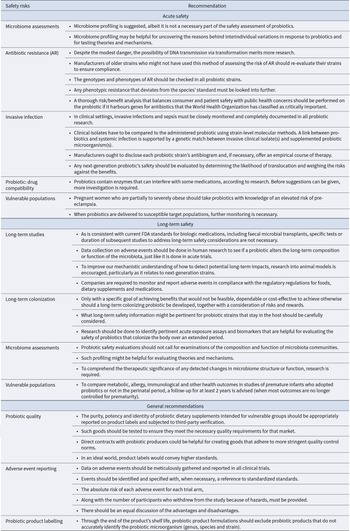
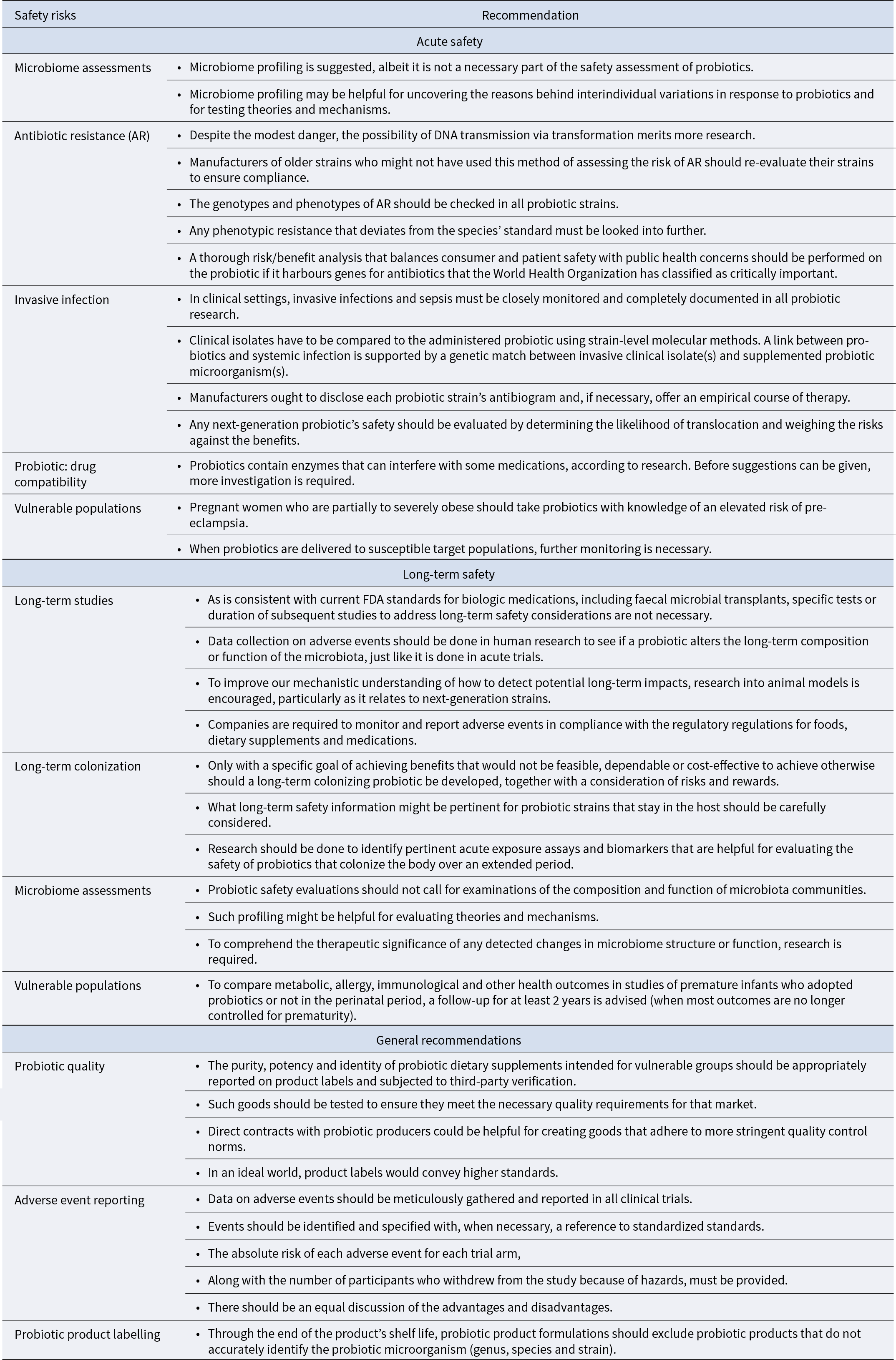
According to Dikeocha et al. (Reference Dikeocha, Al-Kabsi, Miftahussurur and Alshawsh2022), it may be crucial to comprehend the interactions between food, drug disposition and response, as well as how this may affect future personalized treatment (Candeliere et al., Reference Candeliere, Raimondi, Ranieri, Musmeci, Zambon, Amaretti and Rossi2022; Doestzada et al., Reference Doestzada, Vila, Zhernakova, Koonen, Weersma, Touw, Kuipers, Wijmenga and Fu2018; Hassan et al., Reference Hassan, Awan, Naz, deAndrés-Galiana, Alvarez, Cernea, Fernández-Brillet, JL and Kloczkowski2022). To find drug-modifying enzymes and verify their applicability in vivo, research is required. Even though these enzymes are found in probiotics and have demonstrated in vitro functioning, this does not imply that the host will engage in these behaviours. Evidence that these enzymes work in a way that would impair medication efficacy before the drug is absorbed is also required. It may be too soon to offer precise advice, given how new this research is. This topic might advance if research concentrated on creating screens for the existence of enzymes capable of metabolically influencing particular medications and databases identifying the linked genomic sequences (Merenstein et al., Reference Merenstein, Pot, Leyer, Ouwehand, Preidis, Elkins and Sanders2023). To provide probiotic-drug compatibility advice, the ultimate goal is to identify bacteria that encode problematic enzymes. Important considerations regarding probiotics’ short-term and long-term safety issues, including antibiotic resistance, are summarized in Table 4
Important suggestions with relation to probiotics’ short-term and long-term safety issues and antibiotic resistance (Merenstein et al., Reference Merenstein, Pot, Leyer, Ouwehand, Preidis, Elkins and Sanders2023)
Infectious diseases caused by probiotic microorganisms
Probiotics can partially translocate outside of the digestive tract, which can lead to invasive illness. A thorough analysis of sepsis, bacteraemia and fungaemia linked to probiotic delivery in kids between 1995 and 2021 was carried out. Sepsis was the most frequent of the 49 invasive illnesses that were reported. The majority of children who met the criteria for sepsis were younger than 2 years old and had a risk factor, such as prematurity or an intravenous catheter in place (Merenstein et al., Reference Merenstein, Pot, Leyer, Ouwehand, Preidis, Elkins and Sanders2023). It is challenging to estimate the true prevalence of invasive infections linked to probiotics for a variety of reasons. Most published case reports were carried outside of scientific studies, so it is unclear how many individuals received probiotics without experiencing any side effects. The hazard reporting in probiotic trials is sometimes insufficient, yet not all clinical laboratories reliably culture and detect probiotic organisms from blood cultures (Freedman et al., Reference Freedman, Schnadower and Tarr2020). However, the majority of trials that give probiotics to preterm neonates’ study culture-proven invasive infection as a primary or secondary outcome, and network meta-analyses imply that probiotic treatment does not raise sepsis rates in this susceptible population. The actual incidence of probiotic-associated sepsis is still unknown (Morgan et al., Reference Morgan, Preidis, Kashyap, Weizman, Sadeghirad, Chang and Zeraatkar2020). In their conclusion, Hempel et al. (Reference Hempel, Newberry, Ruelaz, Wang, Miles, Suttorp, Johnsen, Shanman, Slusser, Fu and Smith2011) noted that there was ‘no indication across studies that critically ill and high-risk participants taking probiotics were more likely to experience AEs than control participants with the same health status’. Therefore, we conclude that sepsis and invasive infections need to be carefully monitored in clinical settings and thoroughly disclosed in all probiotic trials. Clinical isolates need to be evaluated to the administered probiotic using strain-level molecular methods. A link between probiotics and systemic infection is supported by a genetic match between invasive clinical isolate(s) and supplemented probiotic microorganism(s). Each commercially available probiotic strain’s antibiogram should be identified and made public by the manufacturers, who should also offer an empirical course of therapy if necessary. Any next-generation probiotic’s safety should be evaluated, with the potential risk of translocation being considered along with the benefits.
Bacteraemia
A clinical study conducted between 1990 and 2000 analysed risk factors associated with Lactobacillus bacteraemia. Among the examined Lactobacillus strains, Lactobacillus rhamnosus was most frequently implicated in bacteraemia cases. Notably, blood samples from two patients – a baby receiving probiotics via gastrostomy tubes and a 6-year-old child – tested positive for Lactobacillus rhamnosus (Salminen et al., Reference Salminen, Tynkkynen, Rautelin, Saxelin, Vaara, Ruutu, Sarna, Valtonen and Järvinen2002; Land et al., Reference Land, Rouster-Stevens, Woods, Cannon, Cnota and Shetty2005). One proposed mechanism for this adverse effect is the ability of probiotics to adhere to the intestinal mucosa, potentially leading to translocation into the bloodstream, particularly in individuals with a compromised gut barrier (Honeycutt et al., Reference Honeycutt, El Khashab, Wardrop, McNeal-Trice, Honeycutt, Christy, Mistry, Harris, Meliones and Kocis2007).
The interaction between probiotics and pathogens in the gut microbiota may also contribute to infection risks. When probiotics fully occupy available niches, pathogenic bacteria may be excluded. However, if certain niches remain unoccupied, opportunistic pathogens may proliferate, leading to infection. Additionally, probiotics exert antimicrobial effects through the production of bacteriocins, organic acids that lower pH and oxidative stress induction, which may alter microbial homeostasis (Vandenplas et al., Reference Vandenplas, Huys and Daube2015).
Several studies have linked bacteraemia cases to Lactobacillus acidophilus, Lactobacillus casei and Lactobacillus GG (Splichalova et al., Reference Splichalova, Jenistova, Splichalova and Splichal2019; Stroupe et al., Reference Stroupe, Pendley, Isang and Helms2017). Other probiotics, including Saccharomyces boulardii, Bacillus subtilis and Bifidobacterium breve, have been associated with sepsis, particularly in critically ill patients (Ohishi et al., Reference Ohishi, Takahashi, Ito, Ohishi, Tsukamoto, Nanba and Nakamura2010; Salari et al., Reference Salari, Nikfar and Abdollahi2012). Case reports in both adults (Jain et al., Reference Jain, McNaught, Anderson, MacFie and Mitchell2004) and children (Honeycutt et al., Reference Honeycutt, El Khashab, Wardrop, McNeal-Trice, Honeycutt, Christy, Mistry, Harris, Meliones and Kocis2007) suggest that probiotic administration may sometimes exacerbate undiagnosed infections. These findings underscore the importance of careful strain selection, appropriate dosage and consideration of patient health status to minimize the risk of probiotic-associated infections.
Fungaemia
Some probiotics, including Saccharomyces boulardii or Saccharomyces cerevisiae, have been discovered in patient blood cultures, and fungaemia has been described as a side effect of probiotic consumption. As indicated in a few case reports, Saccharomyces boulardii fungaemia resulted in death (Kara et al., Reference Kara, Yıldırım, Özgen, Erganiş, Aydoğdu, Dizbay, Gürsel and Kalkanci2018). Some severely ill individuals who adopted probiotics like Saccharomyces boulardii to treat diarrhoea caused by antibiotic dependence developed funagemia (Merenstein et al., Reference Merenstein, Pot, Leyer, Ouwehand, Preidis, Elkins and Sanders2023; Vinayagamoorthy et al., Reference Vinayagamoorthy, Pentapati and Prakash2023). The gastrointestinal (constipation/diarrhoea, bloating, gastrointestinal ischemia, thirst or taste alterations), skin (rash, acne), excessive immune activation and metabolic issues (such as obesity, d-lactic acidosis or metabolic acidosis) are the side effects of probiotics that are most frequently described. Numerous incidences of fungaemia induced by Saccharomyces spp. in immunocompromised people have been recorded. Probiotics have also been linked to instances of endocarditis, meningitis, endometritis, peritonitis and pneumonia. Recent data from a 5-year study involving more than 2,000 critically ill patients were published by Israeli and American experts. They concluded that the risk of probiotic-associated bacteraemia and fungaemia was higher in ICU patients (Onofrei et al., Reference Onofrei, Ghiciuc, Luca, Postolache, Sapaniuc, Enache Leonte and Rosu2023).
Possible alternatives for probiotics
According to research findings, probiotic strains demonstrate the capacity to modulate intestinal microbiota and exhibit therapeutic potential in managing inflammatory conditions such as ulcerative colitis. Despite the generally recognized safety profile of LAB species, the use of live probiotic strains entails certain inherent risks, including the potential for opportunistic infections, bacteraemia and dissemination of antibiotic-resistant genes (Obayomi et al., Reference Obayomi, Olaniran and Owa2024b). Additionally, challenges arise in ensuring adequate viability throughout the processing and storage of probiotic dietary supplements or food formulations (Chandhni et al., Reference Chandhni, Pradhan, Sowmya, Gupta, Kadyan, Choudhary, Gupta, Gulati, Mallappa, Kaushik and Grover2021). These challenges have prompted probiotic researchers to explore alternatives to full live probiotic cultures, such as utilizing specific components or fractions of probiotic bacterial cells.
Postbiotics
Probiotics are widely recognized for their health benefits; on the other hand, postbiotics represent a complementary approach, offering stability and safety advantages. According to the ISAPP, postbiotics are defined as ‘a preparation of inanimate microorganisms and/or their components that confers a health benefit on the host’ (Salminen et al., Reference Salminen, Collado, Endo, Hill, Lebeer, Quigley, Sanders, Shamir, Swann, Szajewska and Vinderola2021). Unlike probiotics, which require viability to exert their beneficial effects, postbiotics include bioactive molecules such as bacteriocins, exopolysaccharides, peptides and SCFAs, which modulate gut microbiota composition, enhance mucosal immunity and provide anti-inflammatory effects. However, it is important to emphasize that postbiotics do not replace probiotics but rather serve as an alternative source in specific applications where live bacterial viability is challenging.
The maintenance of gut homeostasis is a pivotal determinant of overall host well-being, crucial in both human and animal physiology, as dysbiosis often underlies various ailments or diseases (Zhou et al., Reference Zhou, Xu, Zhang, Liu, Zhou, Bi, Han, Tan, Yuan and Yang2024). Postbiotics emerge as promising interventions to modulate gut health, illuminating novel avenues of host health research. Components derived from postbiotics have exhibited favourable effects in numerous studies, predominantly through mechanisms involving pathogen inhibition, reinforcement of gut barrier integrity and immune regulation (Deokar et al., Reference Deokar, Kshirsagar, Shinde, Pathak and Nirmal2025). Ample evidence suggests that probiotics largely exert their beneficial effects through interactions with the host’s cell surface structures, particularly via microbe-associated molecular patterns binding to pattern recognition receptors on host cells. These interactions initiate signalling cascades that lead to protective responses in various diseased states, including inflammatory conditions (Bisht et al., Reference Bisht, Singh, Choudhary, Kumar, Grover, Mohanty, Pande and Kaushik2018).
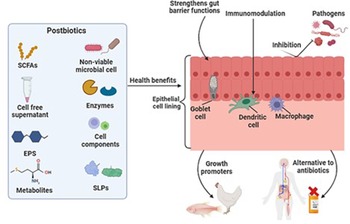
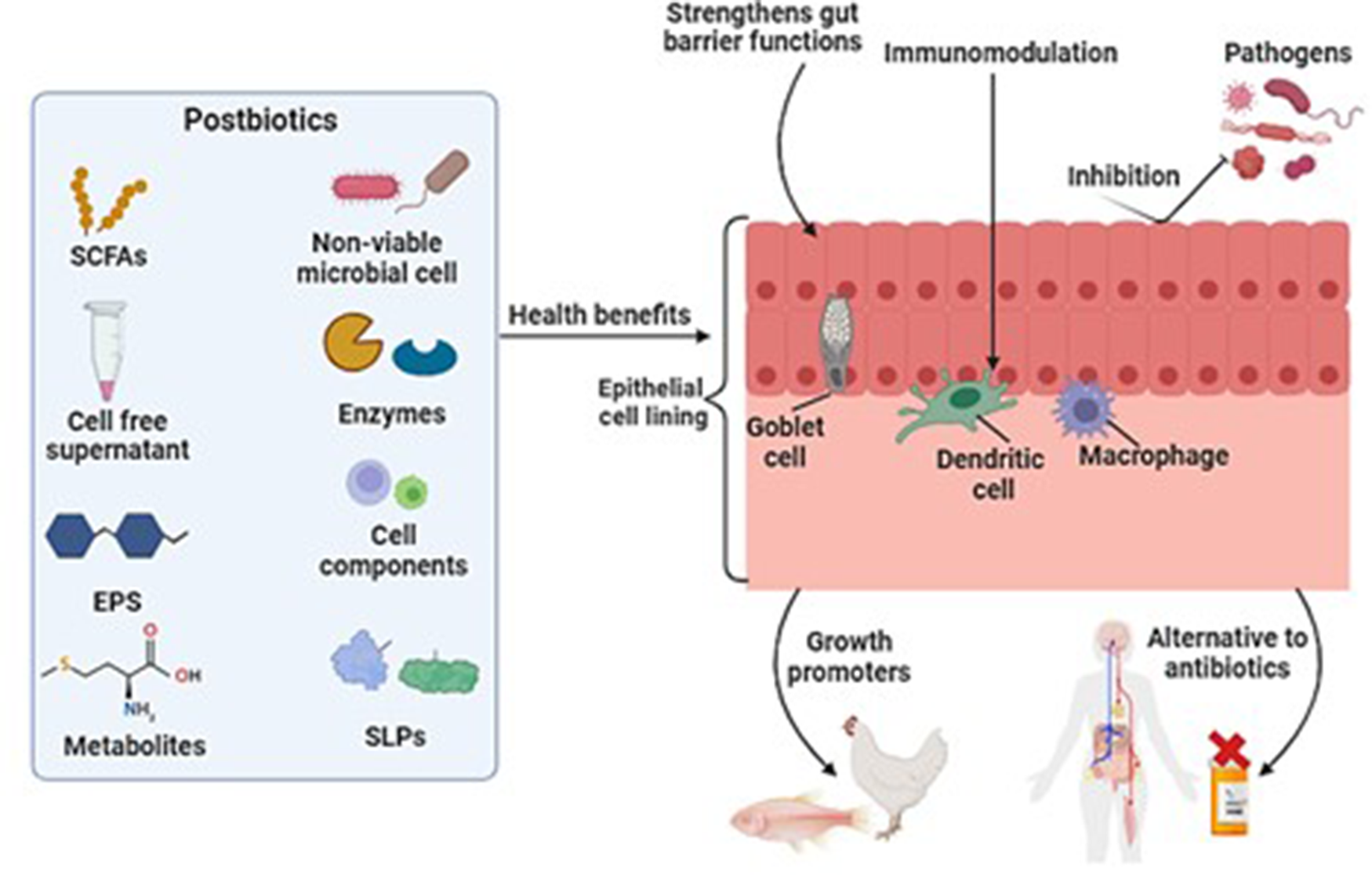
Given these mechanisms, utilizing non-viable postbiotic components derived from specific probiotic strains holds significant promise as a safer alternative to address challenges associated with probiotics. Postbiotics offer particular advantages in clinical applications where live probiotics pose safety concerns, such as in immunocompromised individuals or environments where maintaining microbial viability is difficult. However, postbiotics should be regarded as a supplementary concept rather than a replacement for probiotics. The following sections will further delineate the traits of postbiotics, their primary chemical constituents and their potential applications in health and disease (Fig. 3).
Health benefits associated with postbiotics.
Surface proteins
The majority of postbiotic constituents encompass heat-inactivated probiotic bacterial cells, along with cell wall components such as wall teichoic acid, lipid teichoic acid and peptidoglycan. Additionally, these components encompass metabolites such as SCFAs, bacteriocins, vitamins, bioactive peptides and cell surface proteins including surface layer proteins (SLPs), mucus-binding protein (MUB) and fibronectin-binding protein (FnBP) (Nataraj et al., Reference Nataraj, Ali, Behare and Yadav2020; Wang et al., Reference Wang, Wang, Wang, Li, Yip and Chen2024). Notably, a compelling subgroup among postbiotic components comprises cell surface proteins isolated from probiotic bacteria, such as SLPs, MUB and FnBP, which exhibit specific binding affinities to molecules like mannose and collagen (Singh et al., Reference Singh, Choudhary, Bisht, Grover, Kumar, Mohanty and Kaushik2017). These cell surface proteins exert diverse effects crucial for probiotic function, including adhesion to host cells, reinforcement of gut barrier integrity, exclusion of pathogens, stimulation of host mucosal immune responses leading to enhanced mucus production and secretion of defence molecules like defensins (Yeşilyurt et al., Reference Yeşilyurt, Yılmaz, Ağagündüz and Capasso2021).
Moreover, surface proteins of probiotic lactobacilli, particularly SLPs, have been demonstrated to exert protective immunomodulatory effects by transmitting signals to intestinal epithelial cells, thereby mitigating colitis (Chandhni et al., Reference Chandhni, Pradhan, Sowmya, Gupta, Kadyan, Choudhary, Gupta, Gulati, Mallappa, Kaushik and Grover2021). Consequently, the utilization of metabolites, surface proteins or microbial fragments, collectively termed ‘postbiotics’, represents a promising therapeutic and preventive strategy in modern medicine (Choudhary et al., Reference Choudhary, Singh, Bisht, Kumar, Mohanty, Grover and Kaushik2023). Postbiotics exert pleiotropic effects, encompassing immunomodulation, anti-inflammatory, antioxidant and anticancer properties, some of which have been utilized in clinical settings. However, in certain studies, the delineation between probiotics and postbiotics is blurred, as their independent effects on conclusive outcomes are not always thoroughly investigated.
Short chain fatty acids
During the microbial breakdown of vegetable polysaccharides in the gut, SCFAs are synthesized, consisting of carbon-based anions with chain lengths of one to six carbons. Dietary fibre, which remains undigested in the upper gastrointestinal tract, serves as a primary energy substrate for glycolytic microbes in the large intestine. The fermentation of dietary fibre by these gut microorganisms leads to the production of SCFAs, predominantly acetate (C2), propionate (C3) and butyrate (C4), in an approximate ratio 60:20:20. SCFAs play a critical role in maintaining intestinal homeostasis by modulating gut pH, supporting epithelial barrier integrity and exhibiting immunomodulatory properties. Additionally, SCFAs foster the proliferation of beneficial gut bacteria, including both probiotic and commensal species, without necessitating the presence of live probiotic cells. This highlights the functional overlap between probiotic and postbiotics, wherein postbiotic metabolites, such as SCFAs, contribute to gut health independently of viable microbial cells (Prajapati et al., Reference Prajapati, Patel, Singh, Yadav, Joshi, Patani, Prajapati, Sahoo and Patel2023). By exerting anti-inflammatory effects, regulating appetite and potentially mitigating metabolic disorders, SCFAs exemplify the therapeutic potential of postbiotics as stable, bioactive alternatives to live probiotics, particularly in case where microbial viability poses safety concerns.
Each type of SCFA exhibits distinctive characteristics:
Butyric Acid: Considered a significant energy source for colonocytes, butyric acid displays immunomodulatory and anti-inflammatory effects, while also regulating cell proliferation and differentiation (Park et al., Reference Park, Joung, Park, Ha and Park2022). It modulates gene expression by inhibiting histone deacetylases, and its therapeutic potential in gastrointestinal disorders has been long recognized. Notably, individuals with colorectal cancer supplemented with butyric acid exhibit reduced colonic inflammation compared to those receiving a placebo.
Propionic Acid: Functions as a key substrate in gluconeogenesis, the process of glucose synthesis in the liver. By impeding energy absorption, propionic acid mitigates prolonged weight gain and enhances physical performance in animals. Gao et al. (Reference Gao, Fang, Lei, Ju, Jin, Loor, Liang, Shi, Shen, Yu and Chen2021) reported that propionic acid protects hepatocytes from palmitic acid-induced lipotoxicity in calves. Lipotoxicity serves as a precursor to nonalcoholic steatohepatitis, leading to hepatocyte damage and activation of hepatic stellate and immune cells.
Extracellular polymeric substances
Bacterial polysaccharides are synthesized both intracellularly and extracellularly. extracellular polymeric substances (EPSs) comprise a slimy layer that may be either secreted into the external environment or loosely attached to the cell surface, alongside a capsule that is covalently bonded to the cellular surface. Due to their structural diversity, EPSs can be classified based on various factors, with the most common categorization being into homopolysaccharides, consisting of a single type of polysaccharide, and heteropolysaccharides, composed of two or more different types of polysaccharides. Bacterial EPSs are readily degradable and recoverable, demonstrating a wide range of physical properties dictated by the types and structural characteristics of the constituent sugars. Consequently, EPSs find applications across numerous industrial sectors as stabilizers, emulsifiers and coagulants (Park et al., Reference Park, Joung, Park, Ha and Park2022). In addition to their industrial applications, EPSs derived from LAB exhibit significant bioactive properties that contribute to human health. These include immunomodulatory effects, where EPSs interact with host immune cells to regulate inflammatory responses, as well as antioxidant activity, which helps mitigate oxidative stress and cellular damage. Furthermore, EPSs play a role in modulating intestinal microbiota by promoting the growth of beneficial bacteria while inhibiting pathogenic species, thereby supporting gut homeostasis. Several studies have also demonstrated the antitumor potential of LAB-derived EPSs, suggesting their ability to induce apoptosis in cancer cells and inhibit tumour progression. Additionally, EPSs contribute to cholesterol metabolism by reducing serum cholesterol levels and potentially lowering the risk of cardiovascular diseases. Given these multifunctional properties, EPSs not only serve as structural and functional biomolecules but also present a viable alternative to probiotics, holding promise as postbiotic agents with diverse therapeutic applications.
Enzymes and vitamins
In all biological entities, enzymatic proteins, termed enzymes, actively participate in catalysing a myriad of biochemical processes. To enhance human digestive processes, augment nutrient bioavailability, modulate food sensory attributes and modify fatty acid profiles, microbial enzymes facilitate the breakdown of complex substrates such as carbohydrates, proteins and lipids into constituent monomers. Consequently, a diverse array of microorganisms, encompassing both gram-positive and gram-negative bacteria, as well as eukaryotic organisms like yeast and moulds, have evolved to harbour commercially valuable enzyme systems. LAB, owing to their capacity to produce a spectrum of enzymes, including lactases, proteases, peptidases, fructanases, amylases, bile salt hydrolases, phytases and esterases, have garnered considerable scientific interest.
Vitamins, essential nutrients vital for cellular metabolic functions, are predominantly acquired exogenously as they cannot be endogenously synthesized by humans. Primary dietary sources encompass dairy and grain products, fruits and vegetables. Probiotics and commensal gut microbiota play pivotal roles in the endogenous synthesis of certain vitamins, notably vitamins K and B. Riboflavin and niacin represent the most frequently synthesized vitamins by human gut microbes. Riboflavin, crucial for the maintenance of neurological, endocrine, cardiovascular and immunological homeostasis, underscores the significance of adequate dietary intake, with insufficiency potentially predisposing individuals to anaemia, as reported by Aljaadi et al. B vitamins serve as indispensable cofactors and coenzymes in numerous metabolic pathways, crucial for sustaining immune system equilibrium. Interactions among dietary constituents, gut flora and B vitamins intricately modulate host immune activity. Notably, vitamins synthesized by gut bacteria exhibit enhanced bioavailability and a diminished likelihood of adverse effects compared to their chemically synthesized counterparts (Aljaadi et al., Reference Aljaadi, How, Loh, Hunt, Karakochuk, Barr, McAnena, Ward, McNulty, Khor and Devlin2019). Thus, the selective extraction of enzymes and vitamins from bacterial sources, dissociated from live microbial entities, presents a promising avenue for postbiotic interventions, preserving health benefits while mitigating potential adverse effects associated with probiotic administration.
Conclusions
This review highlights the potential adverse implications of probiotics, emphasizing their prokaryotic nature and their ability to survive in challenging environments. While probiotics offer significant health benefits, their capacity to induce both localized and systemic adverse effects necessitates careful evaluation. Assigning exclusively positive outcomes to probiotics in human health is untenable, particularly for strains with inherent pathogenic potential. Ensuring the absence of virulence factors, implementing stringent safety assessments and establishing standardized regulatory frameworks are essential to mitigate risks.
The increasing shift towards microbiota-focused research is promising, offering deeper insights into the role of probiotics as prophylactic and therapeutic agents. However, significant challenges remain, including variations in individual microbiomes influenced by genetics, age and lifestyle, as well as inconsistencies in study designs, treatment durations and follow-up assessments. Further research is needed to define optimal probiotic parameters, including dosage, administration routes and long-term safety. Moreover, as concerns regarding probiotic-associated risks grow, postbiotics are emerging as a safer alternative, providing similar health benefits without the risks linked to live microbial supplementation. Future research should explore the clinical efficacy and potential of postbiotics to complement or replace probiotics in specific health applications. While probiotics play a crucial role in promoting gut health and preventing diseases in healthy individuals, however, their administration in immunocompromised patients or those with active infections requires careful consideration. Although generally regarded as safe, probiotics may pose risks such as systemic infections, excessive immune stimulation or metabolic disturbances in vulnerable populations. Therefore, a personalized and clinically guided approach is essential to ensure their benefits outweigh potential risks, reinforcing the need for targeted probiotic applications based on individual health status.
Acknowledgements
We sincerely thank Indrashil University for the support.
Funding statement
No funding was received.
Competing interests
The authors have no conflict of interest to declare.