





1. Introduction
In a warming climate, snowlines retreat earlier in the season and to higher elevations (Oerlemans, Reference Oerlemans2001). As a result, more bare-ice is becoming exposed at the glacier surface and for longer periods of time (Box and others, Reference Box, Fettweis, Stroeve, Tedesco, Hall and Steffen2012, Di Mauro and Fugazza, Reference Di Mauro and Fugazza2022). This growing exposure has implications for the surface energy balance and melting rates (Hartl and others, Reference Hartl, Felbauer, Schwaizer and Fischer2020, Di Mauro and Fugazza, Reference Di Mauro and Fugazza2022, Gunnarsson and Gardarsson, Reference Gunnarsson and Gardarsson2023). Radiative transfers control the surface energy balance (Greuell and Smeets, Reference Greuell and Smeets2001, Klok and Oerlemans, Reference Klok and Oerlemans2002) and, among these transfers, short-wave radiation is usually the dominant energy source for extra-tropical glaciers (Braithwaite, Reference Braithwaite1995, Oerlemans, Reference Oerlemans2001, Marshall, Reference Marshall2014). The albedo of the exposed snow, firn and ice modulates the absorption of short-wave radiation, resulting in distinct albedo zones on glaciers. The variability of bare-ice albedo critically impacts the extent and amount of surface melt in ablation areas, where the net mass loss occurs (Hall and others, Reference Hall, Ormsby, Bindschadler and Siddalingaiah1987, Hartl and others, Reference Hartl, Felbauer, Schwaizer and Fischer2020). Conversely, bare-ice albedo is influenced by radiative transfers, as the net energy budget alters the ice surface properties, on which albedo relies. Such feedback mechanisms generate self-feeding melt cycles and explain the amplified response of glaciers to atmospheric changes (Johnson and Rupper, Reference Johnson and Rupper2020). Rising temperatures play a key role in these melt cycles, as higher air temperatures enhance the energy input to the surface energy budget of ablation areas by modulating long-wave radiation and sensible heat fluxes. On bare-ice, this contributes to warmer ice, larger grain sizes and meltwater presence on the ice—all of which decrease the bare-ice albedo of glaciers (Azzoni and others, Reference Azzoni, Senese, Zerboni, Maugeri, Smiraglia and Diolaiuti2016, Fugazza and others, Reference Fugazza, Senese, Azzoni, Maugeri and Diolaiuti2016, Tedstone and others, Reference Tedstone, Cook, Williamson, Hofer, McCutcheon, Irvine-Fynn, Gribbin and Tranter2020). Therefore, with the increased and prolonged exposure of bare ice to rising temperatures, the influence of bare-ice albedo variability on glacier surface energy balance and melting rates is expected to grow.
Multiple studies have investigated glacier-wide albedo (Brock and others, Reference Brock, Willis, Sharp and Arnold2000b, Jonsell and others, Reference Jonsell, Hock and Holmgren2003, Gascoin and others, Reference Gascoin, Gudmundsson, Adalgeirsdóttir, Pálsson, Schmidt, Berthier and Björnsson2017, Marshall and Miller, Reference Marshall and Miller2020, Gunnarsson and others, Reference Gunnarsson, Gardarsson, Pálsson, Jóhannesson and Sveinsson2021, Di Mauro and Fugazza, Reference Di Mauro and Fugazza2022). The temporal variability of glacier-wide albedo provides valuable information on the snow-free and snow-covered fractions of glaciers (Davaze and others, Reference Davaze, Rabatel, Arnaud, Sirguey, Six, Letreguilly and Dumont2018). Therefore, the annual minimum albedo averaged over the glacier can be used to derive the annual equilibrium line altitude (Brun and others, Reference Brun, Dumont, Wagnon, Berthier, Azam, Shea, Sirguey, Rabatel and Ramanathan2015, Shaw and others, Reference Shaw, Ulloa, Farías-Barahona, Fernandez, Lattus and McPhee2021). However, the temporal variability of glacier-wide albedo does not capture the variability of albedo of the bare-ice that remains exposed during ablation season. This variability significantly impacts glacier melt, as Naegeli and Huss Reference Naegeli and Huss(2017) found an average decrease of  $-0.14~\mathrm{m~w.e.~a}^{-1}$ in the mass balance of 12 Swiss glaciers for every 0.1 reduction of bare-ice albedo. A similar sensitivity of mass balance to bare-ice albedo variability has been found for glaciers in the Chilean Andes (Barandun and others, Reference Barandun, Bravo, Grobety, Jenk, Fang, Naegeli, Rivera, Cisternas, Münster and Schwikowski2022). Yet, few studies have investigated this variability (Cutler and Munro, Reference Cutler and Munro1996, Jonsell and others, Reference Jonsell, Hock and Holmgren2003, Dumont and others, Reference Dumont, Gardelle, Sirguey, Guillot, Six, Rabatel and Arnaud2012, Naegeli and Huss, Reference Naegeli and Huss2017, Naegeli and others, Reference Naegeli, Huss and Hoelzle2019, Hartl and others, Reference Hartl, Felbauer, Schwaizer and Fischer2020, Tedstone and others, Reference Tedstone, Cook, Williamson, Hofer, McCutcheon, Irvine-Fynn, Gribbin and Tranter2020, Barandun and others, Reference Barandun, Bravo, Grobety, Jenk, Fang, Naegeli, Rivera, Cisternas, Münster and Schwikowski2022, Rossini and others, Reference Rossini, Garzonio, Panigada, Tagliabue, Bramati, Vezzoli, Cogliati, Colombo and Di Mauro2023) and bare-ice albedo is often assumed to be constant in space and time in mass balance modelling (Klok and Oerlemans, Reference Klok and Oerlemans2002, Machguth and others, Reference Machguth, Purves, Oerlemans, Hoelzle and Paul2008). A growing body of research is exploring the potential of remote sensing, in situ measurement and unmanned aerial system technology to monitor albedo and linked glacier surface properties (Naegeli and others, Reference Naegeli, Huss and Hoelzle2019, Hartl and others, Reference Hartl, Felbauer, Schwaizer and Fischer2020, Tedstone and others, Reference Tedstone, Cook, Williamson, Hofer, McCutcheon, Irvine-Fynn, Gribbin and Tranter2020, Barandun and others, Reference Barandun, Bravo, Grobety, Jenk, Fang, Naegeli, Rivera, Cisternas, Münster and Schwikowski2022, Gunnarsson and Gardarsson, Reference Gunnarsson and Gardarsson2023, Gunnarsson and others, Reference Gunnarsson, Gardarsson and Pálsson2023, Rossini and others, Reference Rossini, Garzonio, Panigada, Tagliabue, Bramati, Vezzoli, Cogliati, Colombo and Di Mauro2023). Mass balance models have been shown to improve when using the output of such monitoring efforts to replace constant albedo values with satellite-based spatially distributed albedo in Barandun and others Reference Barandun, Bravo, Grobety, Jenk, Fang, Naegeli, Rivera, Cisternas, Münster and Schwikowski(2022) and Naegeli and others Reference Naegeli, Damm, Huss, Schaepman and Hoelzle(2015). Still, to date, the spatio-temporal variability of bare-ice albedo has not been incorporated into such models.
A better understanding of the sub-seasonal and interannual spatio-temporal variability of bare-ice albedo is key to effectively integrate temporal and spatial albedo distributions into glaciological models. With this in mind, the present study aims to gain insights into the spatio-temporal variability of bare-ice albedo, along with its drivers and its influence on glacier melt. We focus on the bare-ice albedo of Abramov Glacier in Central Asia. The region has warmed by 0.37–0.43 $^\circ\text{C}$ per decade over the period 1979–2011 (Hu and others, Reference Hu, Zhang, Hu and Tian2014). The number of summer days (days with daily maximum temperature $ \gt 35^\circ\text{C}$) has increased by more than 10 days per year between 1999–2019 compared to 1950–79, while icing days (days with daily maximum temperature below $0^\circ\text{C}$) have decreased by 15 days per year (Fallah and others, Reference Fallah, Didovets, Rostami and Hamidi2024). Simultaneously, snow melted earlier in the season in the Amu Darya River Basin from 1985 to 2008 (Zhou and others, Reference Zhou, Aizen and Aizen2017). Snow depth has also decreased by 20% in Central Asia over the past 70 years, associated with a warming of $1.2^\circ\text{C}$ (Fallah and others, Reference Fallah, Didovets, Rostami and Hamidi2024). As a result of those changes, the bare ice of Central Asian glaciers is exposed to solar radiation, impurity deposition and rising temperatures for longer periods of time (Schmale and others, Reference Schmale, Flanner, Kang, Sprenger, Zhang, Guo, Li, Schwikowski and Farinotti2017, Zhang and others, Reference Zhang, Gao, Kang, Sprenger, Tao, Du, Yang, Wang and Meng2020). Data are scarce for glaciers of Central Asia, but Abramov benefits from extensive meteorological and mass balance records (Hoelzle and others, Reference Hoelzle, Azisov, Barandun, Huss, Farinotti, Gafurov, Hagg, Kenzhebaev, Kronenberg and Machguth2017). Here, we explore bare-ice albedo variability using a time series of albedo scenes over the ablation area acquired during melt season (July–September) from 1999 to 2022. We investigate (1) the sub-seasonal temporal and spatial variability of bare-ice albedo of Abramov, (2) the interannual variability of bare-ice albedo under the changing conditions for the period from 1999 to 2022, (3) the role of air temperature in modulating bare-ice albedo and (4) the influence of bare-ice albedo on variations of melting rates.
2. Study site
Abramov Glacier ( $39.50^\circ\,\text{N}, 71.55^\circ\,\text{E}$) is located in the Pamir-Alay range in Kyrgyzstan, Central Asia, and feeds the Koksu river, a tributary of the Amu Darya (Denzinger and others, Reference Denzinger, Machguth, Barandun, Berthier, Girod, Kronenberg, Usubaliev and Hoelzle2021). This is a north-facing valley glacier, with longitudinal supra-glacial medial moraines and a significant load of debris and impurities, such as light-absorbing particles and dust, on the lower tongue (Fig. 1). The glacier extends over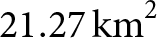 $21.27\,\text{km}^2$ (Mattea and others, Reference Mattea, Machguth, Berthier and Hoelzle2023) between 3650 and 5000 m a.s.l. Mass balance measurements started already in the 1960s, but the collapse of the Soviet Union brought the measurement campaigns to an end in 1999 (Suslov and Krenke, Reference Suslov and Krenke1980, Glazyrin and others, Reference Glazyrin, Kamnyansky and Pertziger1993, Pertziger, Reference Pertziger1996, Hoelzle and others, Reference Hoelzle, Azisov, Barandun, Huss, Farinotti, Gafurov, Hagg, Kenzhebaev, Kronenberg and Machguth2017, Kronenberg and others, Reference Kronenberg, Machguth, Eichler, Schwikowski and Hoelzle2021). The monitoring was re-initiated in 2011 (Hoelzle and others, Reference Hoelzle, Azisov, Barandun, Huss, Farinotti, Gafurov, Hagg, Kenzhebaev, Kronenberg and Machguth2017). An automatic weather station (AWS) and an automatic terrestrial camera (Mobotix M25) were installed at 4100 m a.s.l. about 1.5 km from the glacier terminus (Fig. 1a) (Schöne and others, Reference Schöne, Zech, Unger-Shayesteh, Rudenko, Thoss, Wetzel, Gafurov, Illigner and Zubovich2013, Barandun and others, Reference Barandun, Huss, Usubaliev, Azisov, Berthier, Kääb, Bolch and Hoelzle2018). The mean air temperatures measured at the station from 2011 to 2022 are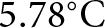 $5.78^\circ\text{C}$ in July,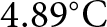 $4.89^\circ\text{C}$ in August and $1.89^\circ\text{C}$ in September.
Abramov has lost mass in recent decades. Kronenberg and others Reference Kronenberg, van Pelt, Machguth, Fiddes, Hoelzle and Pertziger(2022) calculated a mass balance of  $-0.27~\mathrm{m~w.e.~a}^{-1}$ for the period 1968/69–2019/20. Concurrent with this mass loss, Kronenberg and others Reference Kronenberg, Machguth, Eichler, Schwikowski and Hoelzle(2021) estimated that net accumulation had increased simultaneously to ablation over the last 60 years. The glacier has experienced occasional surge behaviour, such as between 1972 and 1975 (Emeljyanov and others, Reference Emeljyanov, Nozdryuhin and Suslov1974, Suslov and Krenke, Reference Suslov and Krenke1980, Glazyrin and others, Reference Glazyrin, Kamnyansky and Pertziger1993) and possibly in 2018 (Mattea and others, Reference Mattea, Machguth, Berthier and Hoelzle2023, Reference Mattea, Berthier, Dehecq, Bolch, Bhattacharya, Ghuffar, Barandun and Hoelzle2024). Our study area is the lower third of the glacier, covering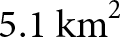 $5.1~\text{km}^2$ between 3626 and 4071 m a.s.l. In this area, bare ice is exposed for most of summer and remains unaffected by the variations in surface types in the transition region between ablation and accumulation area.

Figure 1. Right panel: Map showing the glaciated areas (dark blue) in Central Asia. Left panel: Overview of Abramov glacier, on a section of a Sentinel-2 scene (20 August 2019) overlaid with elevation data from Shuttle Radar Topography Mission (SRTM) imagery. The study area is outlined (light blue), using the Global Land Ice Measurements from Space (GLIMS) dataset, modified to reflect the 2020 glacier terminus as delineated by Enrico Mattea in Mattea and others Reference Mattea, Berthier, Dehecq, Bolch, Bhattacharya, Ghuffar, Barandun and Hoelzle(2024). The automatic weather station (AWS) location and the manually delineated supra-glacial medial moraines are also indicated.
3. Data
3.1. Broadband albedo products
We updated the broadband albedo products derived by Barandun and others Reference Barandun, Pohl, Naegeli, McNabb, Huss, Berthier, Saks and Hoelzle(2021) from Landsat Collection 1 and 2 Level-2 surface reflectance data from the US Geological Survey. The derivation process includes a semi-automatic classification method using the Spectral Angle Mapper (Kruse and others, Reference Kruse, Lefkoff, Boardman, Heidebrecht, Shapiro, Barloon and Goetz1993) for cloud delineation and relies on Liang’s narrow-to-broadband conversion (Liang, Reference Liang2001) to derive broadband albedo from surface reflectance data. For more details on the broadband albedo derivation, please refer to Naegeli and others Reference Naegeli, Huss and Hoelzle(2019) and Barandun and others Reference Barandun, Pohl, Naegeli, McNabb, Huss, Berthier, Saks and Hoelzle(2021). A total of 338 scenes, with a spatial resolution of 30 m, were collected for the months of July, August and September from 1999 to 2022 and were cropped to the outlines of Abramov. The outline from the Global Land Ice Measurements from Space (GLIMS) dataset was modified to the 2020 terminus delineated by Enrico Mattea in Mattea and others Reference Mattea, Berthier, Dehecq, Bolch, Bhattacharya, Ghuffar, Barandun and Hoelzle(2024).
3.2. AWS data
Time series of air temperature, incoming short-wave radiation and barometric pressure were downloaded from the open-access Sensor Data Storage System of the AWS network provided by the Central Asia Institute of Applied Geosciences (CAIAG) and the Deutsches GeoForschungsZentrum (GFZ) Potsdam. These meteorological data were obtained for the dates on which the albedo scenes were taken and for the days preceding those dates. The time series cover the period from 20 August 2012 to 24 July 2022; a period slightly shorter than that covered by the satellite data due to the later installation of the AWS (Section 2) and partly limited by data gaps. For more information on the AWS setup, please refer to Schöne and others Reference Schöne, Zech, Unger-Shayesteh, Rudenko, Thoss, Wetzel, Gafurov, Illigner and Zubovich(2013).
3.3. Glacier melt and mass balance data
Time series of modelled cumulative daily surface melt and mass balance for 1999–2011 were provided in Barandun and others Reference Barandun, Huss, Sold, Farinotti, Azisov, Salzmann, Usubaliev, Merkushkin and Hoelzle(2015), calibrated with glaciological observations and validated with snowline observations. Time series of observation-based annual surface melt and mass balance for 2012–22 were extrapolated from point to glacier-wide mass balance following a similar approach than in Barandun and others Reference Barandun, Huss, Sold, Farinotti, Azisov, Salzmann, Usubaliev, Merkushkin and Hoelzle(2015). The same model-based approach as in Barandun and others Reference Barandun, Huss, Sold, Farinotti, Azisov, Salzmann, Usubaliev, Merkushkin and Hoelzle(2015) was used to derive daily mass balance and melt rates from annual observations.
3.4. Camera images
Images from the terrestrial camera (Section 2) were reviewed for the days preceding the acquisition dates of albedo scenes from 2011 to 2022. However, the series of images is discontinuous. Available images were used as qualitative control for pre-processing, such as identifying residual artefacts (sample camera imagery is provided in Appendix 1, Fig. A1).
4. Methods
4.1. Pre-processing
We filtered the albedo scenes for bare-ice albedo (0.05–0.39) using literature-derived values adjusted with visual inspections (Paterson, Reference Paterson1994, Oerlemans and Knap, Reference Oerlemans and Knap1998, Cuffey and Paterson, Reference Cuffey and Paterson2010). We then validated this filtering using camera images (see Appendix 1, Fig. A1), barometric pressure data and incoming short-wave radiation to detect the presence of clouds and snow on the glacier. To avoid the influence of snow and firn on the ice transitions, we focused strictly on the tongue area in the lower third of the glacier (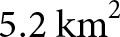 $5.2~\text{km}^2$). We used elevation information from the Shuttle Radar Topography Mission (SRTM) digital elevation model (Jarvis and others, Reference Jarvis, Reuter, Nelson and Guevara2008) to delineate this area. After the pre-processing, we produced two datasets: dataset 1, for a pixel-by-pixel-based analysis, included all scenes with a minimum of 20% coverage over the tongue (120 scenes); dataset 2 was specifically intended for calculation of the mean bare-ice albedo over the tongue and included all scenes with a minimum of 60% coverage over the tongue (78 scenes) (for the temporal distribution of the satellite scenes during July–August–September over the study period (1999–2022) in dataset 1 and 2, see Appendix 1, Fig. A2.
4.2. Analysis of sub-seasonal variability
For the pixel-by-pixel-based analysis, we calculated the arithmetic mean and standard deviation of bare-ice albedo for each pixel during July, August and September using dataset 1. Based on the same dataset, we averaged the difference in bare-ice albedo between July/August and August/September for each pixel. For the tongue-wide analysis, we averaged bare-ice albedo over the entire study area for each scene of dataset 2 from 1999 to 2022 and calculated the arithmetic mean for the summer (July to September) and for each individual month (July, August and September).
4.3. Analysis of interannual variability
We used non-parametric Mann–Kendall tests (Mann, Reference Mann1945, Kendall, Reference Kendall1975) to detect pixel trends in the summer, July, August and September albedo time series (dataset 1). We used three confidence levels (75%, 85% and 95%) to provide a comprehensive overview of changes in bare-ice albedo while maintaining robust results. We assessed the rate of albedo change using the Theil–Sen slope estimator (Theil, Reference Theil1950) for pixels with trends at 85% confidence level. In addition, we calculated the mean difference in bare-ice albedo for each pixel during July, August and September (dataset 1) of two sub-periods: 1999–2010 and 2011–22.

Figure 2. (a) Time series of Abramov’s average bare-ice albedo for all years with a minimum of three scenes between 1999 and 2022. (b) Spatial distribution of 1999–2022 average bare-ice albedo for July, August and September. (c) Spatial distribution of 1999–2022 average bare-ice albedo difference between July/August and August/September.
4.4. Correlations of air temperature variables and bare-ice albedo
We calculated the following parameters from air temperature data for several time windows (6 h, 12 h, 24 h, 60 h, 72 h, 120 h) prior to the acquisition time of the albedo scenes: arithmetic means, nighttime minima, number of negative degree hours and number of sign changes in air temperature. We assessed the temporal relationship between the aforementioned parameters and the mean bare-ice albedo over the tongue (dataset 2) using the Kendall’s tau correlation coefficients (τ) (Schaeffer and Levitt, Reference Schaeffer and Levitt1956) and associated p-value.
4.5. Correlations of melt variables and bare-ice albedo
We calculated τ coefficients and p-values between the summer, monthly and daily melt, as well as mass balance, and the mean bare-ice albedo from 1999 to 2016 (dataset 2). For the seasonal analysis, we calculated the τ and p-values between the summer surface melt, mass balance, and both the average summer albedo and the lowest mean tongue albedo. For the monthly analysis, we calculated the τ and p-values between the July, August and September surface melt and mass balance—derived from the cumulative daily data—and the corresponding average monthly albedo. For the daily analysis, we calculated the τ and p-values between the mean bare-ice albedo of each scene and the corresponding daily surface melt and mass balance—derived from cumulative daily data.
5. Results
5.1. The sub-seasonal cycle of bare-ice albedo
Average bare-ice albedo at Abramov decreases from July to August and increases from August to September (Fig. 2a). The magnitude of seasonal changes in bare-ice albedo depends on elevation and presence of debris and impurities on the ice (Fig. 2b, c). From July to August, both the variability and the values of bare-ice albedo decrease significantly ( $\leqslant -0.06$) at high elevation (between 3950 and 4071 m a.s.l.) on the tongue. However, bare-ice albedo remains constantly low at low elevation (between 3650 and 3850 m a.s.l.) between July and August (Fig. 2c). From August to September, the albedo of debris-free ice increases more significantly (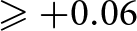 $\geqslant +0.06$) than that of the ice in the area of the medial moraines (between +0.01 and +0.05; Fig. 2c).

Figure 3. (a) Spatial distribution of all significant bare-ice albedo trends (75%, 85% and 95% confidence level) in the 1999–2022 time series of average pixel-by-pixel summer bare-ice albedo. Bare-ice albedo time series of a pixel displaying a decreasing (b) and increasing (c) trend. For both (b) and (c), the time series include all scenes, which are in chronological but non-uniform time spacing.

Figure 4. The rate of change of bare-ice albedo from 1999 to 2017 for pixels showing trends at the 85% confidence level for (a) July, (b) August and (c) September.
5.2. Interannual variations of bare-ice albedo
Between 1999 and 2022, the bare-ice albedo decreased within the range of −0.001 to −0.01 per year over an area of  $0.97~\mathrm{km}^{2}$ at the 95% confidence level and over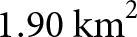 $1.90~\mathrm{km}^{2}$ at the 75% confidence level, as shown in Fig. 3a. This slight decrease was gradual for most of the area between 1999 and 2022. However, the albedo along the eastern sides of the medial moraines decreased abruptly in 2018 and remained low afterwards, as illustrated in Fig. 3b. Conversely, the albedo along the western sides of the medial moraines increased abruptly in 2018 within the range of 0.002–0.006 over an area of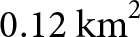 $0.12~\mathrm{km}^{2}$ at the 95% confidence level and of $0.39~\mathrm{km}^{2}$ at the 75% confidence level, as shown in Fig. 3a, c. These small but sudden shifts in bare-ice albedo values along the eastern and western margins of the medial moraines indicate a lateral ice displacement towards the east (Fig. 3a). The bare-ice albedo also decreased in July, August and September between 1999 and 2017, before the sudden shifts in bare-ice albedo values in 2018. Bare-ice albedo slightly decreased within the range of −0.002 to −0.005 per year over an area of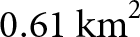 $0.61~\mathrm{km}^{2}$ at the 85% confidence level in July from 1999 to 2017 and by a similar degree over an area up to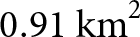 $0.91~\mathrm{km}^{2}$ at the 85% confidence level in August (Fig. 4). Bare-ice albedo decreased over an area of $1.6~\mathrm{km}^{2}$ of the tongue at the 85% confidence level in September from 1999 to 2017. In September, most of the decrease in bare-ice albedo occurred at higher elevations than in July and August, where it decreased by more than −0.01 per year. Despite the overall negative trends, bare-ice albedo exhibits periods of increase in consecutive years: for example, bare-ice albedo rises in August between 2013 and 2017 within the range of 0.01–0.06 per year over an area of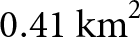 $0.41~\mathrm{km}^{2}$ of the tongue at the 95% confidence level and of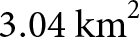 $3.04~\mathrm{km}^{2}$ at the 75% confidence level.
5.3. Air temperature impact on bare-ice albedo
We detected significant correlations between all assessed air temperature parameters and mean bare-ice albedo (Table 1). Some of these correlations are illustrated by scatter plots in Appendix 1, Fig. A3. Moderate negative correlations can be observed between mean bare-ice albedo and mean air temperature of the 6 h, 12 h, 24 h, 48 h, 60 h and 72 h time windows prior to albedo acquisition; the correlations are strongest with the average air temperature of the 48 h and 60 h time windows ( $\tau = -0.44$). Moderate negative correlations are also present between albedo and night minimum air temperature ( $\tau = -0.36$). Positive moderate correlations are apparent between bare-ice albedo and the sum of negative degree hours prior to albedo acquisition; the correlation is strongest with the sum of negative hours in the 48 h time window (τ = 0.45) and in the 120 h time window (τ = 0.47). Also, positive moderate correlations exist between bare-ice albedo and the sum of sign changes of air temperature (freezing/non-freezing conditions) during the time prior to albedo acquisition; the correlation is strongest with the sum of sign changes of air temperature in the 48 h time window prior to albedo acquisition (τ = 0.48).
Table 1. Kendall τ derived between Abramov average bare-ice albedo and the following parameters: average air temperature ( ${}^\circ\mathrm{C}$), nighttime minimum temperature ( ${}^\circ\mathrm{C}$), the sum of negative degree hours and the sum of sign changes of air temperature for various time intervals prior to albedo acquisition. All relationships are statistically significant at the 99% confidence level with p-values < 0.01

Figure 5 illustrates that high temperatures coincide with low bare-ice albedo (Fig. 5a, b, c, d), whereas low temperatures, negative degree hours and sign changes of air temperature correspond to high average bare-ice albedo (Fig. 5a, b, c, d). For example, the highest mean bare-ice albedo occurs on 23 September 2020 after 60 h of negative temperatures occurring in the last 5 days and four sign changes of air temperature in the past 48 h (Fig. 2d1).

Figure 5. Average bare-ice albedo over the tongue for each scene (orange line) of (a) 2014, (b) 2018, (c) 2019 and (d) 2020. Average albedo of the tongue, including albedo values above 0.39 for each scene (light orange area) and average air temperature of the 48 h prior to albedo acquisition (dark blue) and sum of negative hours in the 120 h prior to albedo acquisition (light blue) for the 4 years (a–d). Spatial distribution of bare-ice albedo after cold conditions in a1 (15 September 2014) and d1 (23 September 2020) and after warm conditions in b1 (9 August 2018) and c1 (12 August 2019).
5.4. Bare-ice albedo impact on glacier melt
We detected a negative correlation between the mean summer bare-ice albedo and summer melt ( $\tau = -0.40$) and a moderate negative correlation between the summer minimum mean bare-ice albedo and summer melt ( $\tau = -0.53$) from 1999 to 2022 (see Table 2). We also found a strong negative correlation between the summer minimum mean bare-ice albedo and summer melt ( $\tau = -0.71$) from 2012 to 2022, the period during which melt was measured in situ. Figure 6 illustrates that most years with low melt correspond to years with high minimum summer mean bare-ice albedo and vice versa. The direction and the rate of changes in melt rates is mirrored in the minimum summer mean bare-ice albedo (Fig. 6). A negative moderate correlation is also apparent between the mean bare-ice albedo of July, August and September and the respective melt within each month ( $\tau = -0.40$). Similarly, a negative moderate correlation is present between the mean bare-ice albedo of individual scenes and daily surface melt ( $\tau = -0.43$). These relationships between bare-ice albedo and melt rates across various timescales are illustrated in Appendix 1, Fig. A4, and the correlation values between bare-ice albedo and mass balance are provided in Appendix 1, Table A1. Appendix 1, Fig. A5 depicts the relationship between minimum summer mean bare-ice albedo and glacier-wide annual mass balance. Most years with a positive mass balance correspond to years with high minimum summer mean bare-ice albedo and vice versa (see Appendix 1, Fig. A5).
Table 2. Kendall τ between 1999 and 2022 summer melt and mean summer bare-ice albedo over the tongue and summer minimum mean bare-ice albedo over the tongue, between monthly (July, August, September) surface melt and monthly bare-ice albedo over the tongue, between daily surface melt (albedo acquisition dates) and the average bare-ice tongue albedo per scene. Kendall τ between 2012 and 2022 summer melt and summer minimum mean bare-ice albedo over the tongue, corresponding to the in situ melt measurement period. All relationships are statistically significant at the 99% confidence level with p-values < 0.01

6. Discussion
The bare-ice albedo on Abramov shows a sub-seasonal cycle which reaches its lowest values and variability in August compared with those in July and September. The reduction of albedo between July and August is pronounced at high elevation on the Abramov’s tongue, while albedo remains consistently low at the snout. Our results reveal an inverse relationship between seasonal temperature and bare-ice albedo. Yet, a time lag exists between the peak insolation in July, the warmest period from mid-July to mid-August, and the minimum bare-ice albedo at high elevation on the tongue in August. The time lag is likely attributed to elevation-dependent refreezing events in July, which maintain a high and fluctuating albedo at higher elevation. In August, the rise in air temperature along the altitudinal gradient reduces refreezing, leading to decreased albedo values and variability over the entire tongue. The decrease of albedo between July and August can also be related to prolonged exposure of ice to impurity deposition (Azzoni and others, Reference Azzoni, Senese, Zerboni, Maugeri, Smiraglia and Diolaiuti2016) and to a decrease in ‘washing-out’ of impurities by rainfall (Azzoni and others, Reference Azzoni, Senese, Zerboni, Maugeri, Smiraglia and Diolaiuti2016, Fugazza and others, Reference Fugazza, Senese, Azzoni, Maugeri and Diolaiuti2016). Azzoni and others Reference Azzoni, Senese, Zerboni, Maugeri, Smiraglia and Diolaiuti(2016) also observed a disconnection between peak of insolation and the Forni glacier’s most intense darkening. The authors relate the phenomena to persisting snow when insolation is strongest. Whereas snow often persists in ogives and crevasses at higher elevation (between 3950 and 4071 m a.s.l.) on Abramov’s tongue in July, snow cover changes cannot explain the delay between temperature, insolation and darkening. However, the role of snow in washing-out impurities might contribute to maintain a higher albedo in July. At lower elevation (between 3650 and 3850 m a.s.l.), the tongue of Abramov is preserved from refreezing events and is exposed to warm conditions as early as July, contributing to low and consistent albedo at the snout. This exposure enhances energy inputs to the surface and raises the ice temperature to melting point. The meltwater coating and ponds darken the ice and render it vulnerable to accelerated darkening through the albedo feedback (Paul and others, Reference Paul, Machguth and Kääb2005, Senese and others, Reference Senese, Diolaiuti, Mihalcea and Smiraglia2012, Azzoni and others, Reference Azzoni, Senese, Zerboni, Maugeri, Smiraglia and Diolaiuti2016).
In September, the rise of bare-ice albedo coincides with reduced sunlight, lower temperature and more negative degree hours. The impact of meltwater on the reflectivity of the ice is reduced, and recurrent refreezing of residual meltwater and weathering crust formation can generate high-reflective ice surfaces (Marshall and Miller, Reference Marshall and Miller2020, Tedstone and others, Reference Tedstone, Cook, Williamson, Hofer, McCutcheon, Irvine-Fynn, Gribbin and Tranter2020, Barandun and others, Reference Barandun, Bravo, Grobety, Jenk, Fang, Naegeli, Rivera, Cisternas, Münster and Schwikowski2022). Additionally, the extensive meltwater in August can have washed-out the impurities on the ice and thus increased the albedo for September. The brightening in September is more pronounced on clean ice than on dirty ice because of the reflective properties of clean ice, which quickly generate the necessary conditions for refreezing (Marshall and Miller, Reference Marshall and Miller2020).
The trends of bare-ice albedo around the medial moraines reveal a dynamic shift towards the east. This shift is likely the result of changing ice dynamics related to a possible surge initiation in 2018 (Mattea and others, Reference Mattea, Machguth, Berthier and Hoelzle2023). Lateral displacement and foliations of medial moraines, such as the one on Abramov, have been observed on other surging glaciers (Post, Reference Post1972, Wilson and others, Reference Wilson, Carrión and Rivera2016, Lovell and Fleming, Reference Lovell and Fleming2023). The significant trends between 1999 and 2017, unaffected by the glacier dynamics, reveal a widespread darkening of the ice in July, August and September. This darkening is likely related to the atmospheric warming recorded for Central Asia (Parry, Reference Parry2007), which increases the frequency of melting events, maintains water-coating on the ice for extended periods and suppresses the occurrence of freezing events (Cutler and Munro, Reference Cutler and Munro1996, Naegeli and others, Reference Naegeli, Huss and Hoelzle2019). The darkening of the glacier tongue in July can also be attributed to the earlier onset of melting of the snow cover in the Pamir-Alay (Zhou and others, Reference Zhou, Aizen and Aizen2017). This onset results in bare ice exposed to insolation, warm conditions and impurity deposition earlier in the season and for an extended period. The darkening observed at high elevation in September may be related to the gradual delay in the elevation-dependent refreezing events descending over the tongue (Peng and others, Reference Peng, Zhou, Zhang and Zou2019).
The detection of potential brightening and darkening of the ice over the full study period remains challenging due to short-term trends and processes that alter the glacier surface. These changes include processes such as the movement of morainic material or the displacement of meltwater streams on the ice. These short-term trends illustrate the importance of observing bare-ice albedo over extended time periods, as underlying darkening of the ice might otherwise be missed.
The progressive darkening of the tongue has critical implications for the melt. The sensitivity of the mass balance to bare-ice albedo variability stems from the crucial role that bare-ice albedo plays in the surface energy budget, triggering melting, thus mass loss and, vice versa, refreezing events that retain mass. These events lead to darkening or brightening phenomena on the ice and contribute to amplified feedback loops of mass loss or gain. The consistency of the correlation between bare-ice albedo and melt over the different time scales highlights that the relationship between the two variables is robust, which indicates that even short-term variability of bare-ice albedo can significantly impact glacier mass loss. Therefore, monitoring bare-ice albedo variability shows potential to provide valuable insights into the response of glaciers to climate change.

Figure 6. Summer minimum mean bare-ice albedo over the tongue (dark red) and summer melt (orange) from 1999 to 2022.
6.1. Uncertainties
Our results are subject to uncertainties related to the satellite sensor capabilities, the (pre-)processing and the temporal and spatial resolution of the albedo scenes. The Landsat surface reflectance products are reliable for bare-ice albedo analysis on glacier tongues (Naegeli and Huss, Reference Naegeli and Huss2017, Naegeli and others, Reference Naegeli, Huss and Hoelzle2019, Hartl and others, Reference Hartl, Felbauer, Schwaizer and Fischer2020, Shaw and others, Reference Shaw, Ulloa, Farías-Barahona, Fernandez, Lattus and McPhee2021, Barandun and others, Reference Barandun, Bravo, Grobety, Jenk, Fang, Naegeli, Rivera, Cisternas, Münster and Schwikowski2022). The pre-processing steps applied to the products offer good performance in Naegeli and Huss Reference Naegeli and Huss(2017), who reports strong correlations (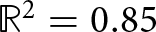 $\mathbb{R}^{2} = 0.85$) and an absolute average deviation of 0.07 when comparing satellite-retrieved albedo values with in situ measurements. Hartl and others Reference Hartl, Felbauer, Schwaizer and Fischer(2020) also found moderate positive correlations in the range of 0.53–0.62 between the reflectance measured in situ and the reflectance values from the different Landsat bands on bare ice. The change from Landsat 7 to Landsat 8 might incorporate slight variations in intensity, contrast and coverage between the scenes taken by the two different satellite sensors. However, Barandun and others Reference Barandun, Bravo, Grobety, Jenk, Fang, Naegeli, Rivera, Cisternas, Münster and Schwikowski(2022) showed that, despite strong variations over snow albedo, the difference in bare-ice albedo from different Landsat sensors remain very small. The use of scenes from Landsat 7 introduces striping artefacts into the findings in relation to the scan line corrector failure (Scaramuzza and others, Reference Scaramuzza, Micijevic and Chander2004). The temporal resolution (16 days) of Landsat products provides good coverage for Abramov, but clouds and shadows render multiple scenes unusable, thus limiting the dataset. The temporal distribution of the scenes is uneven, with a strong under-representation of scenes in the initial years of the study period (1999–2012), especially for July and September (see Appendix 1, Fig. A2), and an under-representation of pixels in the upper section of the glacier tongue. These issues may have introduced bias in the results of the present study, but their effects were always considered in the interpretation of the analyses.
Filtering of pixels using a definite threshold can lead to mis-classification of surface properties. Naegeli and others Reference Naegeli, Huss and Hoelzle(2019) report the critical range (0.25–0.55) of albedo values for Landsat products in which investigation is necessary to distinguish snow from ice. We considered camera images and AWS data to identify the snow influence. Moreover, we opted for a conservative approach on the threshold choice and on the filtering procedure. Still, overlap between the albedo of snow and ice occurs. This overlap likely explains why the relationship between temperature and bare-ice albedo is less pronounced for certain dates, such as 16 July 2018 (Fig. 5b). These dates coincide with the presence of snow on the study area (Fig. 5b, c; light orange area), which maintains the mean bare-ice albedo of the tongue in a moderate range, despite high temperatures and despite large areas of very low bare-ice albedo visible on the tongue. The influence of snow cannot be avoided in the analysis despite our conservative bare-ice albedo threshold. This issue is also related to the spatial resolution of optical satellite images. The roughness of the ice surface favours the accumulation of debris and high reflective snow in troughs, thereby influencing pixel-wide albedo values. These small-scale topographic effects cannot be fully avoided in an analysis of moderate resolution optical satellite imagery.
7. Conclusion
The bare-ice albedo of Abramov exhibits sub-seasonal and interannual spatio-temporal variability. Changes in air temperature control the temporal variability of bare-ice albedo during the ablation season. We observe inverse correlations between short-term average air temperature and the average bare-ice albedo on the tongue. Recurrent refreezing at high altitude on the tongue of Abramov is believed to generate the lag between the highest temperatures in July and the lowest average bare-ice albedo in August. Concentrations of impurities, debris and water on the ice dictate the spatial variability of bare-ice albedo during the ablation season. Our results indicate that the albedo of debris-free ice experiences a more pronounced increase than that of the ice in the vicinity of the medial moraines when temperatures and insolation drop from August to September. Bare-ice albedo decreased on Abramov in July and August from 1999 to 2017. These trends are likely related to higher air temperatures and the extension of the snow-free period, both of which can contribute to more frequent and widespread meltwater presence at the glacier surface. Changes in ice dynamics have also occurred on the glacier in the last decade. A lateral displacement of moraines in 2018 suggests that Abramov entered a dynamic phase related to surging activity (Mattea and others, Reference Mattea, Machguth, Berthier and Hoelzle2023), which is indeed reflected in the albedo values and trends.
Simplified versions of the spatio-temporal variability of bare-ice albedo have been used so far in glaciological modelling (Brock and others, Reference Brock, Willis and Sharp2000a). Yet, the significant correlations between variations of bare-ice albedo and glacier melt demonstrate the sensitivity of Abramov Glacier to changes of bare-ice albedo. Further research on the drivers of bare-ice albedo variations and the impact of those variations on glacier mass balance are required. With such inputs, bare-ice albedo variations could be integrated effectively into glaciological models to reduce uncertainties in melt modelling and its resulting contribution to river runoff.
Acknowledgements
We thank the Swiss Agency for Development and Cooperation and the University of Fribourg and the Institute for Snow and Avalanche Research coordinating the project Cryospheric Observation and Modelling for Improved Adaptation in Central Asia (CROMO-ADAPT, contract no. 81072443, the Swiss Polar Institute with the SPI Flagship Initiative with the project PAMIR (Grant Number: SPI-FLAG-2021-001) and the GEF/UNDP/UNESCO project (contract no. 4500484501). This study is supported by Snowline4DailyWater. The project Snowline4DailyWater has received funding from the Autonomous Province of Bozen/Bolzano—Department for Innovation, Research and University in the frame of the Seal of Excellence Programme. We thank A. Rodriguez Crespo for the proof reading. KN is supported by the ESA PRODEX Trishna T-SEC project (PEA C4000133711). Two anonymous reviewers are acknowledged for their constructive comments and suggestions.
Data availability statement
The dataset used in this study is available at Zenodo: https://doi.org/10.5281/zenodo.15048037.
Author contribution
Kathrin Naegeli and Martina Barandun authors contributed equally to this work.
Appendix 1. Additional figures and tables

Figure A1. Examples of images from terrestrial camera 2 at Abramov used for qualitative control and cloud identification are shown in (a) for 12 September 2016 and (c) for 21 September 2022. The corresponding bare-ice albedo distributions for these dates are presented in (b) and (d), respectively.

Figure A2. Temporal distribution of satellite scenes acquired during July–August–September (JAS) over the study period (1999–2022).

Figure A3. Relationship between the tongue average bare-ice albedo and (a) the mean air temperature over 48 h pre-acquisition time, (b) the minimum nighttime air temperature, (c) the sum of negative hours over 120 h pre-acquisition time, (d) the sign changes of air temperature over 48 h pre-acquisition time.

Figure A4. Relationship between 1999–2022 melt (mm w.e.) and bare-ice albedo. In (a) summer melt and mean summer bare-ice albedo, (b) summer melt and minimum summer bare-ice albedo, (c) monthly (J,A,S) surface melt and monthly (J,A,S) bare-ice albedo and (d) daily surface melt and average bare-ice albedo per scene.
Table A1. Kendall τ between 1999 and 2022 annual mass balance and mean summer bare-ice albedo over the tongue and minimum summer bare-ice albedo over the tongue, between monthly (July, August, September) surface mass balance and monthly bare-ice albedo over the tongue, between daily surface mass balance (albedo acquisition dates) and the average bare-ice tongue albedo per scene. All relationships are statistically significant at the 95% confidence level with p-values < 0.05


Figure A5. Minimum summer bare-ice albedo over the tongue (dark red) and glacier-wide annual mass balance (orange) from 1999 to 2022.


 Open access

