

Introduction
As the leading journal for studies of Roman Britain for over 50 years, Britannia has become established as an output for papers on many topics and has expanded its remit well beyond the publication of excavation reports. Since 2019, it has provided a lot of material online. A review of the preceding 50 years of Britannia by the then Editor Hella Eckardt acknowledged how well the journal had shaped and reflected Roman archaeology in the UK and elsewhere but renewed a commitment to expanding the remit of contributors,Footnote 1having revealed a somewhat uneven gender split of authors.Footnote 2An earlier survey and report by Ellen Swift usefully provides more specific context to the volume of artefact-focused papers in Britannia between 1981 and 2001, with the conclusion that there were ‘relatively few’ and further noting that these tended to be site or project reports, rather than synthetic or research-driven papers.Footnote 3Swift’s study also showed that in the period covered the majority of pottery publications were by men, as compared with other classes of artefact such as glass, or leather, for example.Footnote 4Further studies in archaeological publishing have also revealed a persistent bias in favour of male authors.Footnote 5Since then, the Britannia Editorial Committee has collated statistics on contributors and reviewers.Footnote 6What has been clear in the last few years is the success of papers in Britannia that have arisen from the UK development-led sector, widely referred to as contracting archaeology.Footnote 7As reported on the journal homepage, the most read article over the previous 30 days in May 2023 was Wiseman, Neil and Mazzilli,Footnote 8the collated reports of three excavations conducted through the developer-funded system. This level of interest in published materials from developer-funded projects should encourage the sector to submit more papers to Britannia, but it should also encourage Britannia and other influential journals to seek to lead developments towards inclusivity in the publishing traditions of the sector, which are discussed further below and require major revision.
The relevance of gendered practice and discrimination (whether direct or indirect) has been a concern for Romanists, at least since Eleanor Scott spoke and wrote about her own experiences in the proceedings of the 1997 Theoretical Roman Archaeology Conference,Footnote 9and Swift’s work showed the persistence of these issues.Footnote 10Significant progress has been slow, and the stated need for data that expanded beyond the anecdotal or reported ‘lived experience’Footnote 11has held further generations back from opportunities in publishing Roman studies. This is not necessarily the fault of the publishing houses and journal editorial boards themselves. It can also be partly attributed to the conventional ways of acknowledging authorship and contributions, much of which stems from persistent practice within the contracting sector. Due to the recent popularity of articles presenting results from developer-funded projects in Britannia to a diverse readership encompassing academia, knowledgeable amateurs, the wider interested public and our contracting colleagues, we chose to examine this matter more closely. By looking at key publications for London, Cambridgeshire and Roman pottery in Britain, this paper aims to evaluate these embedded publication traditions and suggest practical actions that could help to move forward our discipline and beyond the gender and power-role imbalance. This evaluation confirms the difficulties of undertaking an intersectional approach and proposes ways to tackle them.
This paper does not tackle embedded issues with a lack of inclusive tone and content of publications originating from contracting organisations, which is being studied by the Council for British Archaeology in their 2024 ‘Trowel and Error’ project. This CBA study has consulted members of the wider public to assess the relevance, usefulness and accessibility of standard outputs from the archaeological sector and will provide a set of recommendations for those of us who commission and generate archaeological outputs.Footnote 12
Positioning ourselves in this debate
As authors, before we embark on our main discussion, we should first acknowledge our own positions within the profession and society at large and the indirect biases that come with them. We identify as white women of Western European descent and are cisgendered. Our feminism is trans-inclusive. We have benefited from further education in the UK before the introduction of (high-price) tuition fees. All these aspects of our lives naturally have an impact on our work and situate our analyses and intellectual frameworks in particular ways. We are actively involved in research projects and publications, which is not always the case for people working in developer-funded archaeology, although much of this work is conducted outside the funding streams from commercial projects, and involves a degree of voluntary labour of our own volition. Archaeology is now acknowledged as a highly subjective field, and we are products of our background and upbringing, which is why we note this here. Developer-funded archaeology remains a low-paid occupation, with the lack of financial stability and reward restricting entrants and ensuring a lack of retention of skilled people. This is also highly intersectional, as those with the financial capability to persist in the profession tend to be those from middle-class and white backgrounds.
Positioning the developer-funded profession within this debate
Archaeological work conducted prior to building development operates within the UK planning systems, with slight variations in the devolved nations but largely following the principle of ‘polluter pays’,Footnote 13monitored by a local curatorial service. London and Cambridgeshire, two case studies in this paper, have reasonably well-resourced curatorial services, which is sadly not the case elsewhere.Footnote 14The sector as a whole employs 74% of UK archaeologists (around 5,000 people) and contributes £218 million to local economies.Footnote 15There have been semi-regular research reports into the sector and its profileFootnote 16and we now have a good understanding of who works in this specific area of the wider heritage sector. Those who identify as female now form the majority of the younger workforce in commercial archaeologyFootnote 17and have done since 2007Footnote 18 , yet the legacy of older men in managerial positions still persists. The reasons why this remains the case have been expounded by many, in particular, Anne Teather and Rachel Pope (collectively researching as the voluntary activist group British Women Archaeologists).Footnote 19This has been further supported by research into the sector by Prospect Union.Footnote 20The implications of an older, male managerial class are clear for this paper: they are the ones who have historically set the authorship traditions and perhaps have seen little impetus to amend this status quo. These traditions are so embedded in our daily practice that even when women do reach senior levels within organisations they cannot (nor should they be expected to) change the system single-handedly. This should be considered along with the tiny number of women in senior leadership roles in contracting archaeology in 2023.Footnote 21
Compounding this issue is the fact that developer-funded archaeology in the UK and across Europe remains terribly culturally undiverse; 97% of the UK workforce identified as white in 2020 in opposition to the general population, where the percentage is 87%.Footnote 22This has the clear result of maintaining predominantly white archaeologists as the ‘gatekeepers of … knowledge’Footnote 23and, without specific attempts to amend this situation, it is their interpretations that will persist.
Intellectual property
It is not within the scope of this paper to provide a full discussion over the legal boundaries of intellectual property (hereafter IP), but a short outline is useful. Typically, if materials are created during the course of employment, the IP belongs to the employer, and generally employees within the developer-funded archaeology profession, in common with other occupations, will cede control over their contributions to outputs published through their employing organisation. Contracts will often state this, but even if not, the clarification is that the material is created through the use of the employers’ resources, for example the job site, the datasets, or the equipment. Monographs and other outputs directly published by the employer will be clearly identified as such. However, there is a grey area whereby journal articles and other outputs not published directly by the employer are not ‘badged’ by the organisation, rendering the precise ownership of the intellectual property of the content unclear.
We focus here instead on the recognition of IP for authorship of publications, and the need to acknowledge expertise required on the part of individuals (whether directly employed or otherwise). In specialist professions such as archaeology, this IP can be held by a small number of individuals within an organisation and they will take it with them when they move between organisations. Professional reputations are made on the strength of research expertise in academic settings, particularly when the cycle of Research Excellence Framework (REF) reporting requires high standard publications, and we argue that the same standard of acknowledgement should apply in the developer-funded sector.
The challenge of small numbers, and acknowledging intersectionality
Any intersectional approaches to the study of authorship in Romano-British studies are hindered by the lack of diversity across British archaeology as a whole.Footnote 24Even the large sector-wide survey ‘Profiling the Profession’ acknowledges that separating out such data would risk making individuals identifiable.Footnote 25The latest data show 97% of archaeologists in the UK are white, 82% heterosexual; 47% are female, 53% male (only binary gender given).Footnote 26Although the proportion of women entering the profession has increased, they are predominantly still white, cisgender women. In the case studies below, binary gender has been assigned based on the names provided in the publications. We understand that it can be problematic and potentially further the masking of specific identities. In her work on authorship in the US, Laura Heath-Stout conducted extensive interviews with authors to reduce this problem and found that there was a correlation between so-called ‘prestige’ publicationsFootnote 27and an over-representation of senior, white men.Footnote 28The proposals we suggest in this paper are intended to confront these issues as a whole, and not focus exclusively on gender, which is in itself problematic given the wide spectrum of self-identification.Footnote 29In her paper for the Theoretical Roman Archaeology Conference (TRAC), Zena Kamash was also challenged by a small dataset, so she used first names where possible and ‘unknown’ as a category where it was unclear or not provided.Footnote 30
The lack of published evidence of diversity does not necessarily fully represent the reality, with small (but steadily growing) numbers of people of colour in UK archaeology.Footnote 31There are practical ways in which the current white-dominated profession can make space for progress and encourage change; one of the most relevant to the publishing field is that of mentoring, in both directions, to encourage learning by senior colleagues of ongoing challenges and ways to provide support.Footnote 32
Methodology and datasets
The bulk of the data on publications of Roman archaeology within this paper was recorded in early 2022 in advance of a presentation given by Francesca Mazzilli and Sadie Watson at the online TRAC workshop ‘Ethical Challenges in Roman Archaeology’ held on 29 June 2022. The geographical foci of London and Cambridge were chosen as these were the areas within which the two authors worked and published as part of their careers in the development-led sector.Footnote 33The last decade of key publications for these two areas (from 2011 to 2021/2) were examined. They were, for London, the Transactions of the London and Middlesex Archaeological Society (LAMAS) journal and monographs published by key contracting organisations operating in Greater London, and for Cambridgeshire, the Proceedings of the Cambridge Antiquarian Society (PCAS) and monographs published by East Anglian Archaeology (EAA). Analysis recorded the following categorisation: gender (male/female binary categories only as noted above); number of named authors; job role of named authors (as far as could be ascertained and primary role only); the major topic of papers (excavation report, artefact specific, landscape study, osteology) and period covered (Roman only, prehistoric into Roman, Roman into early medieval). There is scope within these broad categories for error, but part of the rationale for choosing known geographical areas is that we would be largely familiar with the majority of authors, and therefore, there would be less opportunity for serious errors within the dataset. Some aspects have been simplified to enable analysis. For example, the job role category refers to the commonly held job titles of ‘field team supervisors’, ‘project officers’ and ‘project managers’ all as ‘Stratigraphic’ authors, as processing and analysing field records is the specialist input they would have in publication production. Similarly, the ‘Pottery’ and ‘Finds’ specialist categories refer to colleagues with specific expertise in artefacts of the Roman period. However, they may well (and often do) have other additional areas of specialism.
These two case study areas were supplemented here by a study of specialist Roman pottery reports by Kayt Hawkins, initially part of a wider study undertaken in 2021 in advance of the 50th anniversary of the Study Group for Roman Pottery. Within this study, a similar approach to recognising patterns in binary gender categories of authors across the peer-reviewed Journal of Roman Pottery Studies was undertaken and compared to the same distinctions recorded across specialist roles and salaries.Footnote 34The tabulated data supporting the paper have been provided as Supplementary Information.
Issues in data collection
A common issue raised during the data collection from the three case studies was that much of the information we required in order to undertake the analysis was missing. The majority of the publications chosen do not provide correspondence email, address, or institution of the authors.Footnote 35Exceptions are LAMAS articles, where authors’ emails are provided, although in a couple of examples the email address provided was that of a project manager rather than of the author, presumably as they submitted the paper for publication. Although usually expected to be provided in any monographs, short biographies of the author were also excluded from EAA monographs and in the MOLA or Pre-Construct Archaeology (PCA) monographs. Occasionally, the name of the archaeological company that oversaw the project was mentioned in EAA volumes or articles; this was generally the case in LAMAS as their template allows for that to be covered in the Introduction section.
Nevertheless, information about the organisations’ staff, and in particular their field staff, is often patchy on their webpages, and in fact the lack of staff biography on many websites was considered to be a major issue in perpetuating the assumed (but not always accurate) lack of diversity. This had repercussions on the accuracy of data based on online research, heavily relying on the personal LinkedIn pages of the authors, where only their most current position is, nevertheless, available and their prior employment is not often mentioned. It was even more difficult to search for authors from earlier publications, as they might have changed companies or occupations and no information about them and their job roles was available online. A further complication has been highlighted by Alice Cattermole, in her review of specialist reporting: namely the concerns raised by those both producing and reviewing reports, that specialists were regularly not being credited for their specialist contributions.Footnote 36Notably, contra data presented by Swift,Footnote 37there were very few museum-based archaeologists in these datasets, an indication perhaps of the dearth of those roles since the significant drop in public funding for museums seen during the 2010s and after.
Issues in analysis: roles and titles
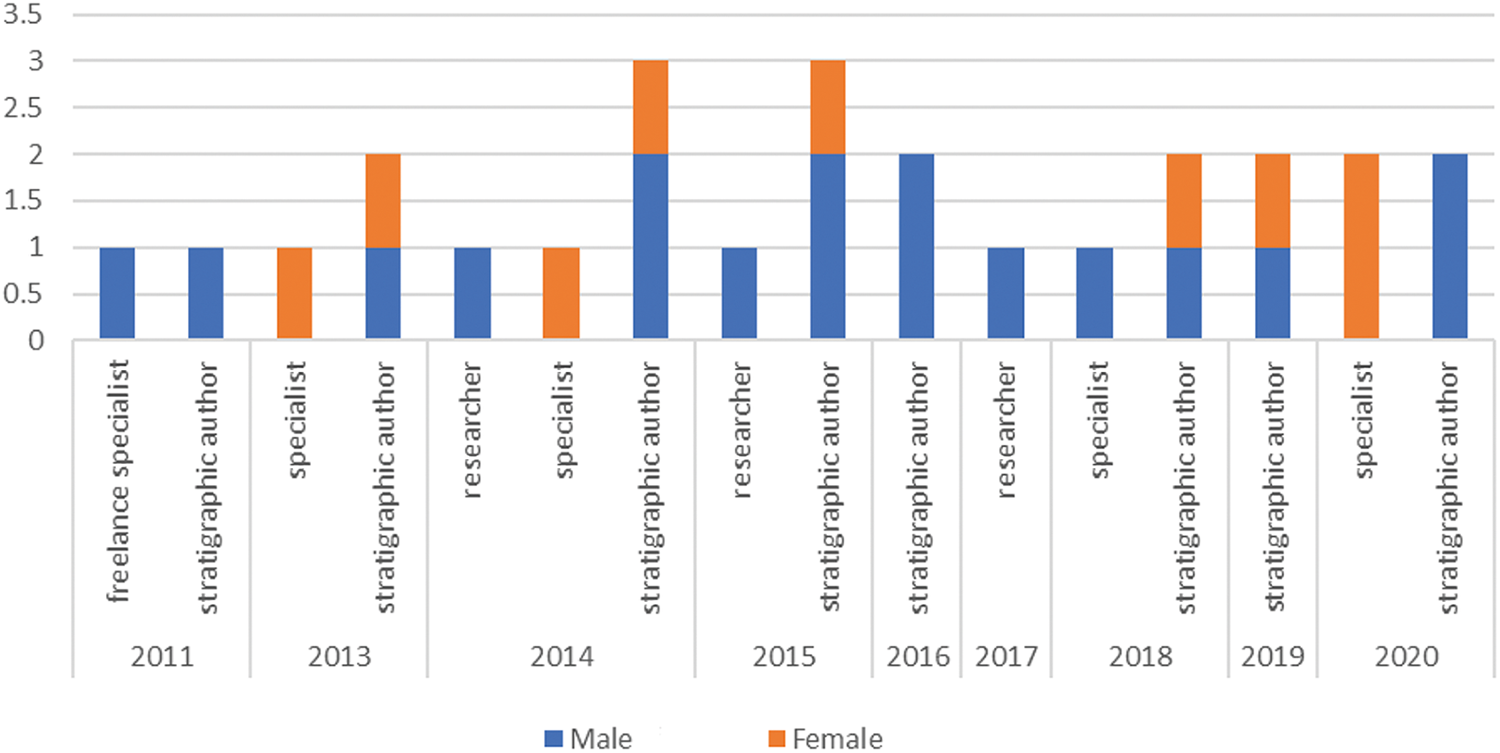
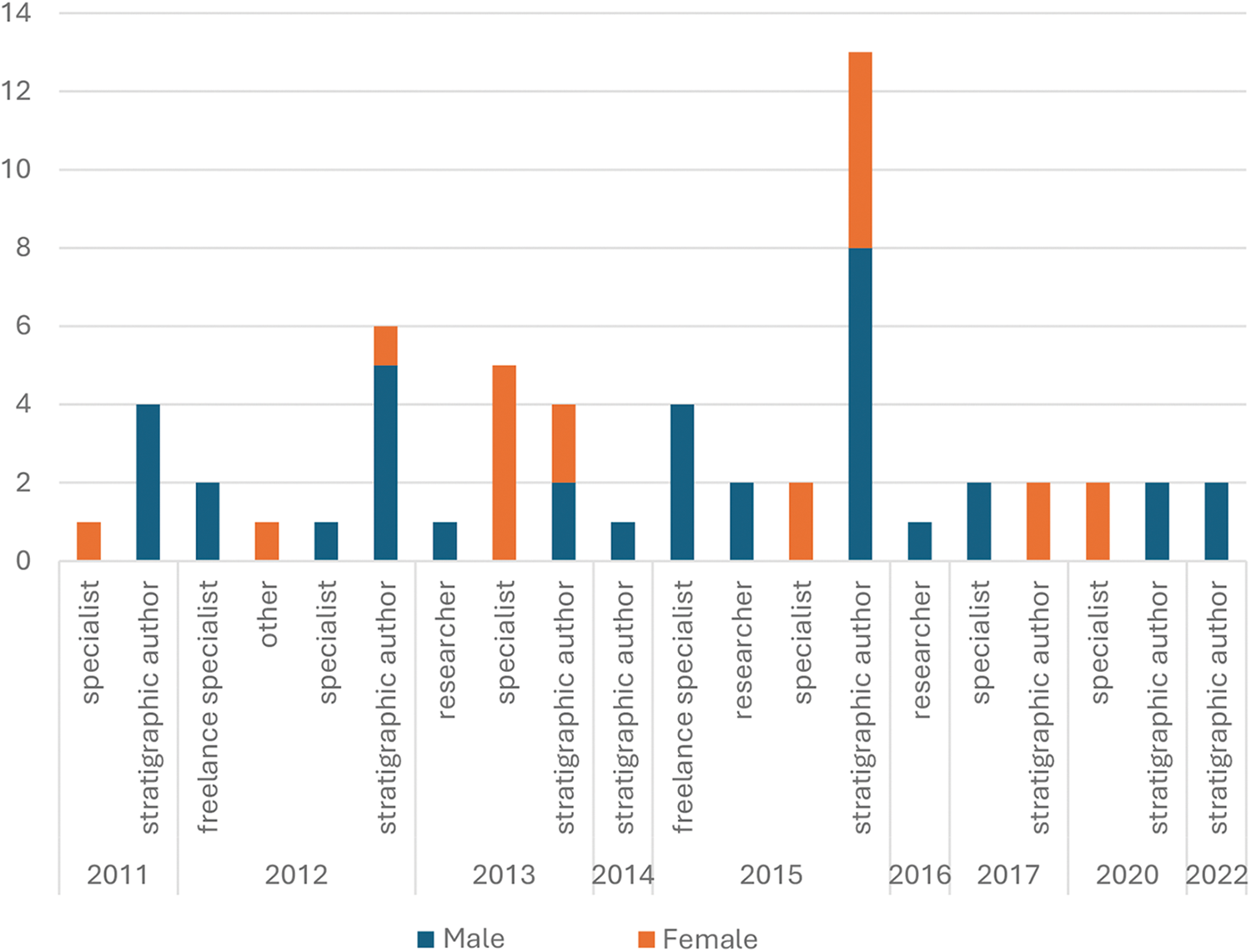
The complicated structure of roles within the contracting sector became apparent during analysis. For ease of interpretation, we have allocated the role of ‘stratigraphic author’ to the various titles of senior field team staff, including project managers, project officers, senior archaeologists, field supervisors, site supervisors and others. In this list, city council archaeologists or individuals whose job role was broadly defined as archaeologists were included, although they were not necessarily associated with a specific company. The larger field units such as the CAU and MOLA have permanent staff working in the field, office and laboratory within various specialist roles: ceramics of all periods, registered (special, small) artefacts of all periods, archaeobotany, (human and faunal) osteology, geoarchaeology and others. In other organisations, these roles would be undertaken by external, often self-employed people. We have distinguished whether these are external or internal within the tables and have expanded on this in the text accompanying the raw data. There is a correlation between an internal appointment and authorship credits, with external specialists often excluded from authorship. There are exceptions, with external documentary researchers being contracted (see Fig. 2) and external specialists recorded as contributors (see Figs 1 and 4) although all these occurrences were by male contributors.
Gendered (binary) authorship and job roles of authors of articles published by LAMAS (Supplementary Information, Table 1).

It should also be noted that as both CAU and MOLA do host permanent specialist teams, this has a knock-on effect on internal workplace structures that are rendered visible in the publication data. Where larger organisations such as these have permanent staff, there is likely to be less cross-over in daily tasks, whereas within smaller companies, staff can do everything from desk assessments to fieldwork and post-excavation, with less hierarchy therefore than seen in the larger companies. Often here the stratigraphic author will be responsible for compiling and editing the publication text, drawing on material submitted by specialist teams. The constant churn of work in this sector means that the programme for publication will often be extremely drawn-out, and compiling could take place over many months or years. Staff will leave during the production of a text, and even the principal author will commonly not be sent final pre-submission versions for comment.
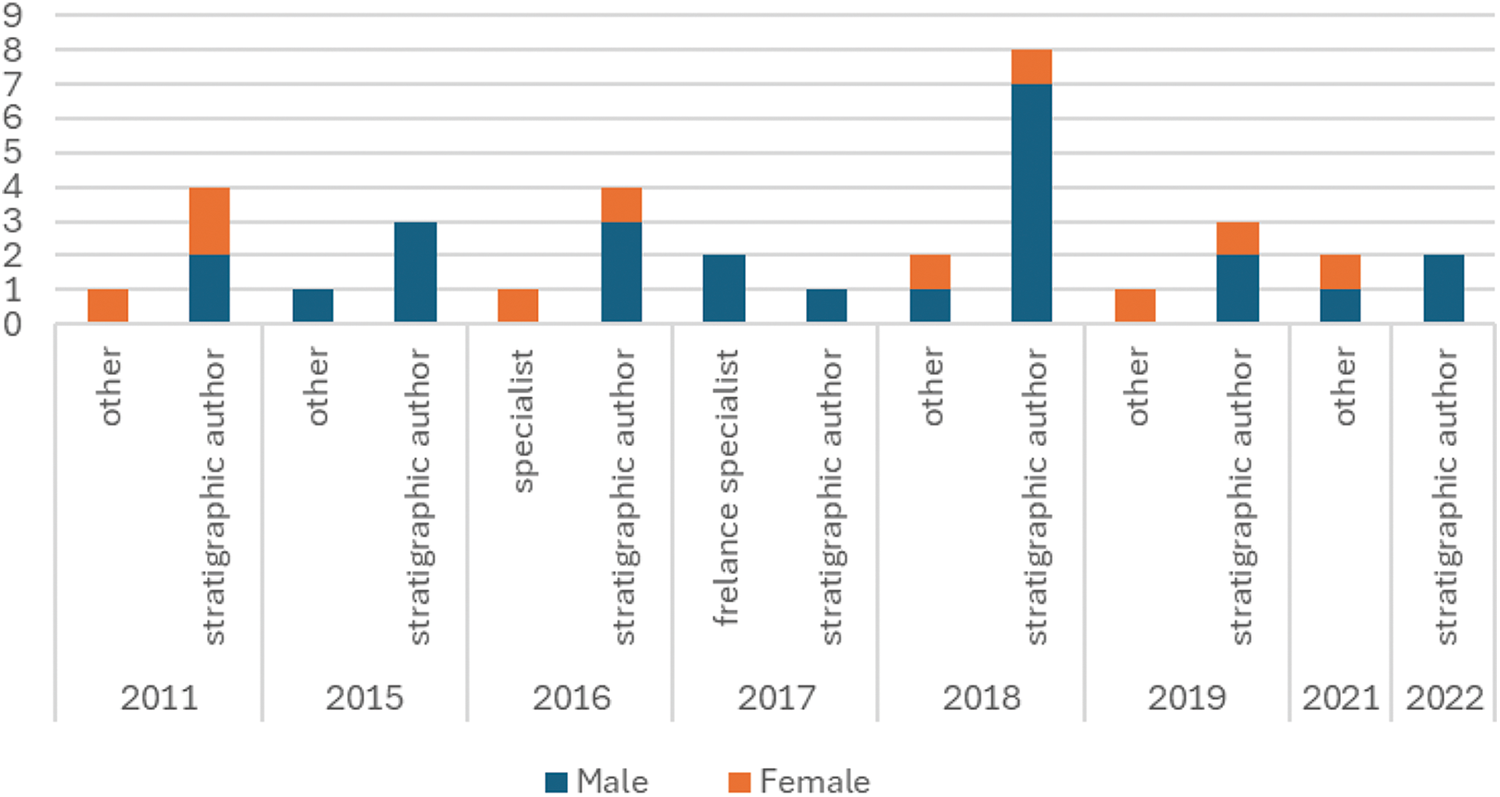
The group ‘specialists’ encompassed any archaeologists who specialised in the analysis of specific material culture or ecofacts. What is concerning when trying to pinpoint their specialisation is that the authors of publications were mostly freelancers or in-house pottery specialists, with the exception of a zooarchaeologist and an archaeobotanist respectively in an article from 2016 and 2018 in Proceedings of the Cambridge Antiquarian Society (PCAS) (see Fig. 3). The London data for specialist authorship is limited to several instances of human osteology and pottery. No archaeobotanists are named on the London Monographs dataset, although there is one instance of a geoarchaeologist named in 2017 (see Fig. 2). There is more variety in the job roles within the journal datasets for both areas (see Figs 1 and 3).
Gendered (binary) authorship and job roles of authors of monographs published by London-based contracting organisations (Supplementary Information, Table 2).

Gendered (binary) authorship and job roles of authors of PCAS articles (Supplementary Information, Table 3).

The question that arises is to discern if the invisibility of archaeobotanists or zooarchaeologists was the result of their exclusions in authorship or change in the field of archaeology where archaeological investigations were heavily or solely reliant on stratigraphy, pottery, and occasionally small finds.
Publications in London
Data
The situation in London was reviewed through an examination of two key publication outputs for development-led archaeology: the last decade of the LAMAS journal, and monographs published by key contracting organisations operating in Greater London: MOLA and PCA. Other organisations do undertake fieldwork, but have not published monographs on major projects during this period.Footnote 38For context, LAMAS has been the leading archaeological society for Greater London since its foundation in 1860 and has published 78 volumes of papers. They also have a series of Special Papers, presenting collections of essays or extended reports of synthetic material in monographs. These were not examined for this paper, as the most recent Special Paper was in 2013, and most fell beyond the chronological scope of this study (i.e. 2011–2022). MOLA and PCA are both large organisations operating across the City of London and the Greater London area, employing large field reporting and publication teams and in-house specialists.
Analysis
The number of publications in both the LAMAS articles and the monographs categories has ranged dramatically over the years, largely due to fluctuations in work programmes and availability of specialists rather than a specific attempt on the part of the relevant organisations to focus on publications in any given year. By way of example, there is generally a healthy number of publications after a series of busy years of the construction cycle, followed by a fallow few after periods of economic collapse that inevitably result in shrinkage in archaeological work, and potentially also redundancies. Other reasons for a reduction in output can be major projects that require significant resources for long periods of time; for example, infrastructure projects set up by Acts of Parliament such as CrossrailFootnote 39that had a time-limited period for funding, meaning that MOLA had to complete the analysis and publication work before the delivery authority was wound up and the finances ceased to be available. This inevitably calls upon a vast number of internal staff and calls a halt to other projects in the meantime. Nevertheless, the projects represented in these publications are complex, requiring much management time.
The LAMAS articles were 14 in total (Fig. 1), and within that was a sub-total of 11 reporting on excavations on Roman material, or as part of a multi-phase report, with a further three detailing artefact-specific analyses. Eight of the total had only one author, of these five were male, and four were stratigraphic authors. The lone female sole author was also a stratigraphic author. The rest had two or three named joint authors, who represented various roles within standard contracting organisations: site (field) supervisors, artefact specialists or bioarchaeologists. Two included a documentary researcher as a named author and one paper was by a PhD candidate, labelled as academic in the dataset; one was by a freelance specialist (Supplementary Information, Table 1). There appeared to be no discernible pattern to the order in which the named authors appeared; alphabetical may have played a role in one, but the others showed no obvious rationale. Perhaps the volume of work undertaken was the primary factor, but this was not obvious from the credit or the acknowledgements within the articles themselves. The vast majority of authors in all roles represented were permanent employees of an organisation; notably the main exception to this, the external ‘documentary researcher’ role, would obviously not generally apply to Romano-British studies, but was part of a multi-phase publication of a particular site so does not make a major contribution to the arguments within this paper.
The monographs were analysed using the same criteria (Fig. 2; Supplementary Information, Table 2). There were 22 in total, eight of which had sole authors. Of these, three were female. The remainder had between two and six authors, with three or four the most common number of authors. Of the job roles specified, the most common was stratigraphic author, which shows the domination of field team roles in this process. This is not unexpected; publication of site sequences remains the only way that senior field team members can gain external recognition for their role on sites. Other specialist input tends to be acknowledged as ‘contributors’, listed inside the volume. Of the other named principal authors, there is a clear correlation between specific artefact or ecofact types and the degree to which those specialists are principal authors. Obviously, for a cemetery project, the osteologist will be a central member of the team and will contribute to both the technical reporting and the interpretative discussion sections. There is no indication why some monographs have a Roman pottery or finds specialist named, as the level of their input may not have been significantly different. Other monographs are purely credited to stratigraphic authors,Footnote 40which may be partly due to their role in editing and collating the publication (no small task it must be said), rather than the level of their word count.
Over time, the gender split has not changed significantly in either publication format, with the numbers on monographs seeing a slight rise in female authors due to jointly published books rather than female-only volumes. Notably, though, for the monographs there were more female authors with roles described as stratigraphic authors, although there were many more male authors in that category overall. The numbers were equal for the LAMAS papers, but this is perhaps an indication of the higher number of women in senior supervisory roles in London, which is discussed further below. The degree to which specialists are credited as authors is highly dependent upon the output, with the monographs published by London-based organisations more restrictive in their authorship and the journals showing a wider range of authors (Figs 1 and 2).
Publications in Cambridgeshire
Data
Two key publication outputs for development-led archaeology in Cambridgeshire and East Anglia are the Proceedings of the Cambridge Antiquarian Society (PCAS) and the monographs published by East Anglian Archaeology (EAA). Both have been prolific, with 110 volumes and 177 volumes respectively. PCAS has a long history, starting in 1859, whereas East Anglian Archaeology monographs have been published since 2012. Considering their publications from 2011 to 2022, 46 articles from PCAS and 19 issues from EAA included a discussion of a Roman phase.
Analysis
By exploring the binary male-female category from this dataset, it is possible to see the predominance of male authors throughout the last ten years for EAA monographs and articles from PCAS, who were mainly stratigraphic authors. Specialists, instead, represent a small percentage of authors who are mainly female. They are only in-house specialists in the case of authors from PCAS.
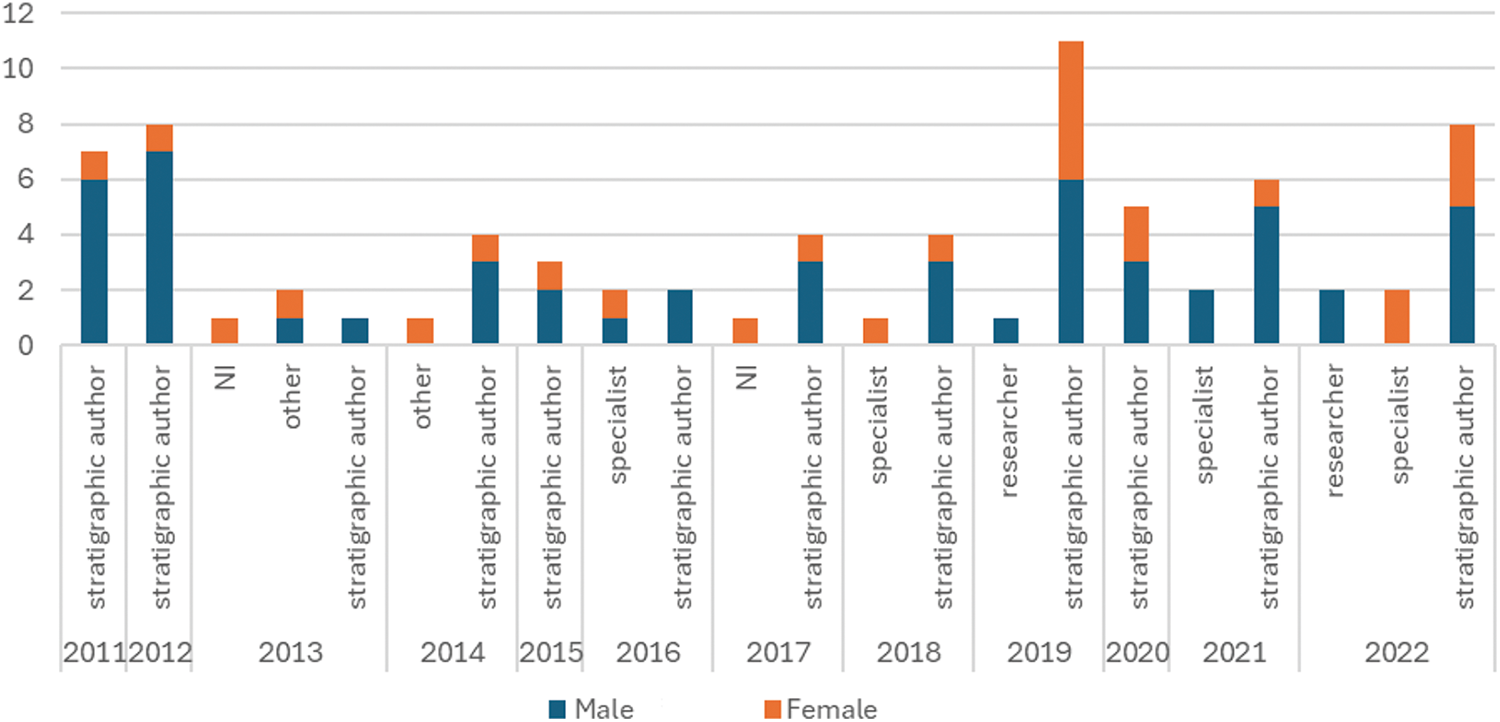
Specialists are rarely the principal authors of EAA monographs; they appear in one or two instances in 2016 and 2017. They are male freelance specialists (in two instances) and one female in-house specialist. The exceptional case of having freelance specialists as main authors is because the monograph is on a major Roman pottery industry (The Horningsea Roman Pottery Industry in Context) (Fig. 4). It is important to say that in East Anglia pottery specialists are also often project officers or managers, so they are also authors of articles and monographs, like Alice Lyons, Katie Anderson, Matt Brudenell and Andrew Peachey. They are employed by companies to work on site-based publications, and for this reason, they have been classified as stratigraphic authors in our analysis.
Gendered (binary) authorship and job roles of authors of EAA monographs (Supplementary Information, Table 4).

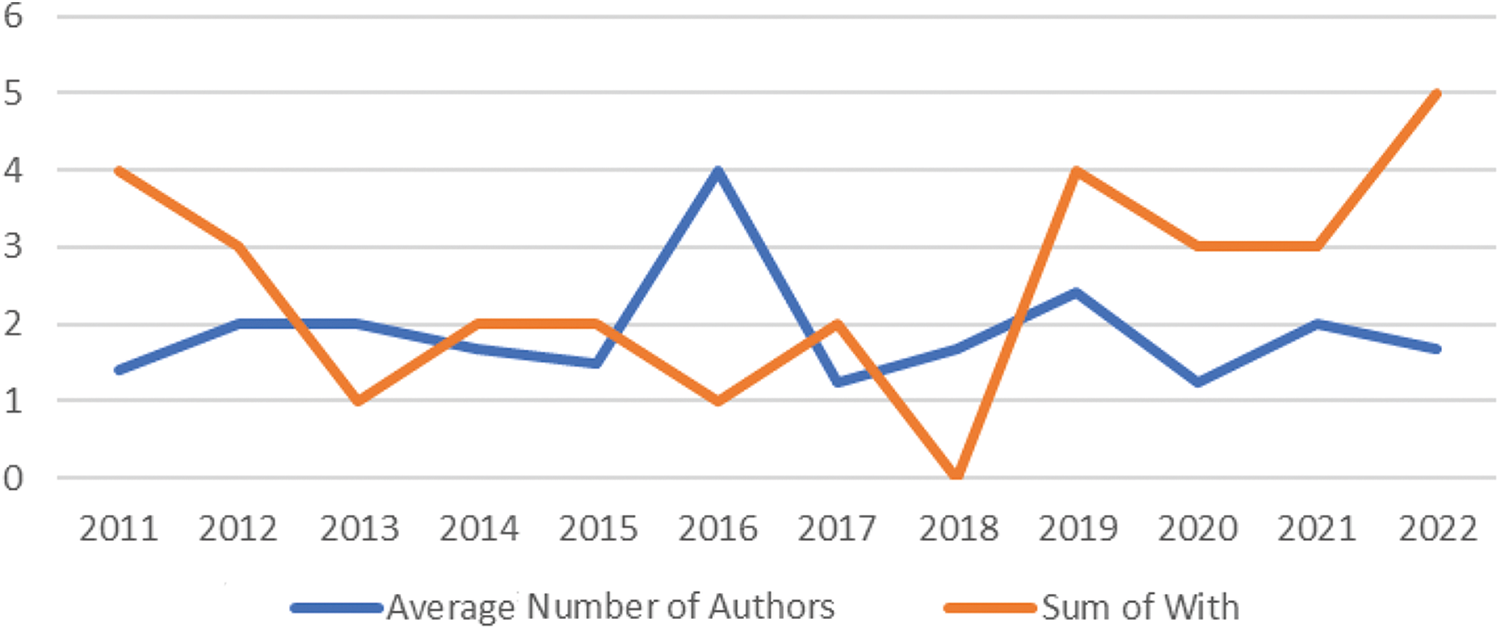
Although there has been a promising increase in the number of female authors in the last few years of PCAS’s articles, they are most likely stratigraphic authors and male authors still outnumber them (Fig. 3). Nevertheless, it is interesting that the Archaeology Data Service (ADS) website, which offers a comprehensive range of open-access publications and raw data on British Archaeology, including PCAS publications, provides a longer list of authors than the ones provided by their articles. ADS opted to show the complete list of the contributors to the data analysis of the excavation mentioned in the publication, even if they do not appear as authors in the actual article. Their names appear in brackets after the authors’ names are placed on the article’s first page. This was a deliberate choice of the article’s authors (Fig. 5).Footnote 41It appears to have dropped only in 2016 and 2018. In 2016, we had the highest average number of authors, with a total of four, whereas the average number of authors per article was one to two (Fig. 5). In the contributors’ list, the number varies from one to 19, suggesting the arbitrary nature of including all the archaeologists with different research specialisms who collaborated with the post-excavation and, ultimately, the publication. These are often pottery specialists, archaeobotanists, geoarchaeologists and zooarchaeologists, to name a few. In this secondary list, field archaeologists although they excavated the site daily are sadly excluded, although they are often, but not always, mentioned in the acknowledgements.
The range of the average number of authors for PCAS articles per year in contrast with the average number of contributions in brackets (Supplementary Information, Table 3).

Most EAA monographs are usually single-authored or co-authored and rarely consist of three authors, suggesting the need for teamwork and recognition on the cover page of an edited book. Nevertheless, they follow the standard for edited books where contributions by collaborators are cited in chapters, and there is a leading or a couple of leading figures per monograph.
Publications by Roman pottery specialists
Data
The Study Group for Roman Pottery (SGRP) was established over 50 years ago as a forum for all those researching Romano-British pottery and since 1986 has regularly published the Journal for Roman Pottery Studies (JRPS). The Journal provides a space for peer-reviewed specialist pottery articles on material from both the UK and increasingly from across the wider Roman Empire. Volumes often include papers from the SGRP annual conference alongside general interest pieces and increasingly reports from commercial excavations, for example detailed kiln excavations perhaps deemed too ‘specialist’ for more general or county-based publications. A survey of the SGRP membership by Kayt HawkinsFootnote 42was circulated to all SGRP members by email and promoted within the SGRP newsletter between 11 May and 1 June 2021. In total 95 responses were received, out of a membership at the time of 158, equating to a 60% response rate. The survey comprised 19 questions, relating to group demographics, employment, qualifications, outreach and publication. The analysis below provides a summary of the findings relating specifically to publications, with the full report being published in JRPS volume 20. This survey went some way to provide comparative data for, but did not replicate exactly, the earlier survey conducted by Swift.Footnote 43
Analysis
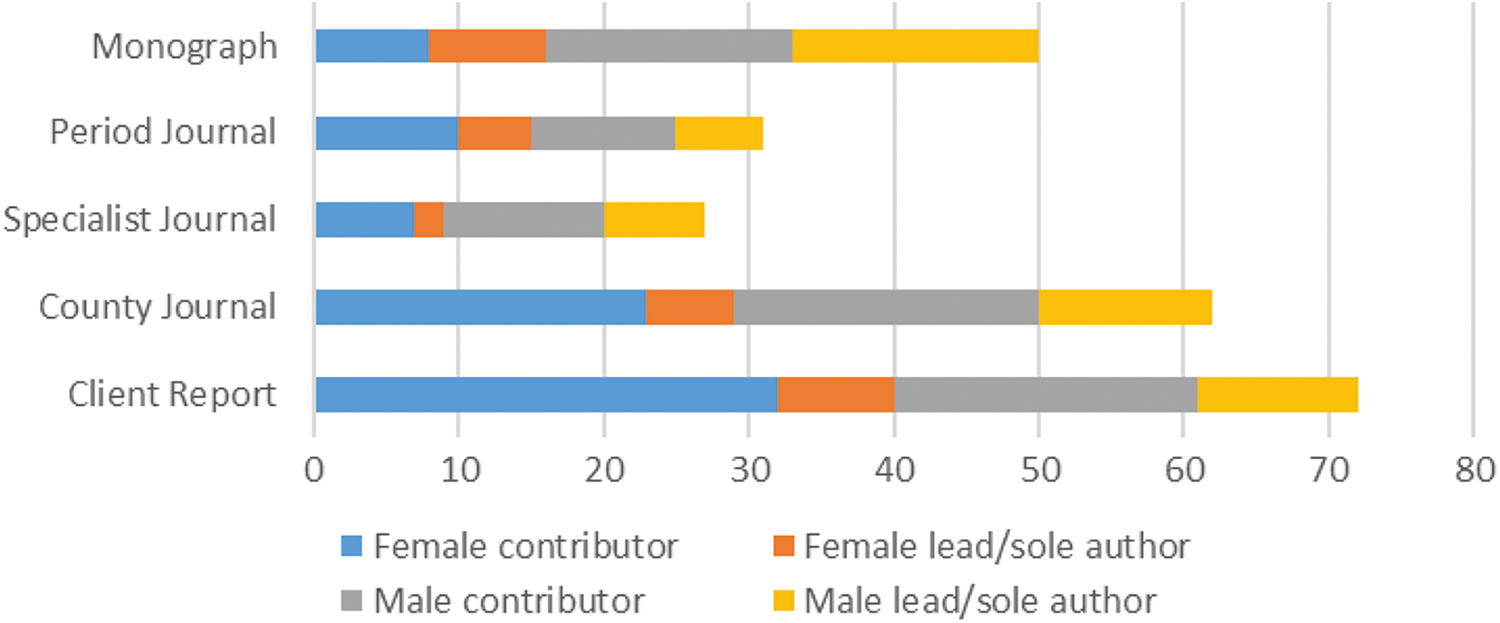
Although recent surveys have emphasised binary gender parity in much of commercial fieldwork through a steady increase of women entering the profession, what is not made explicit is the demographic split between binary gender across roles within the workforce. ‘Profiling the Profession’Footnote 44revealed 47% of respondents identifying as female, 53% as male, yet an earlier survey of archaeological specialistsFootnote 45showed the reverse trend with 54% of respondents identifying as female, 46% as male. Within the UK-based Roman specialist finds groups this dichotomy certainly holds true with estimated figures from the Roman Finds Group membership at 57% female, 43% male,Footnote 46and figures from the survey of the SGRP membership showing a binary gender split of 51% to 48% female to male (1% of respondents preferred not to answer). Within the SGRP data, and pertinent in regard to this paper, just under two-thirds of those female respondents held in-house or freelance specialist roles: when asked about publication contributions, female specialists were more likely to contribute to (unpublished) client reports (78%) than any other type of publication (Fig. 6), yet only 17% had been primary authors of such reports: in terms of primary authorship, male respondents scored more highly in all categories except one, that of no primary authorship.
Percentage of SGRP membership survey respondents contributions to publications as either contributor or lead/sole author by gender.

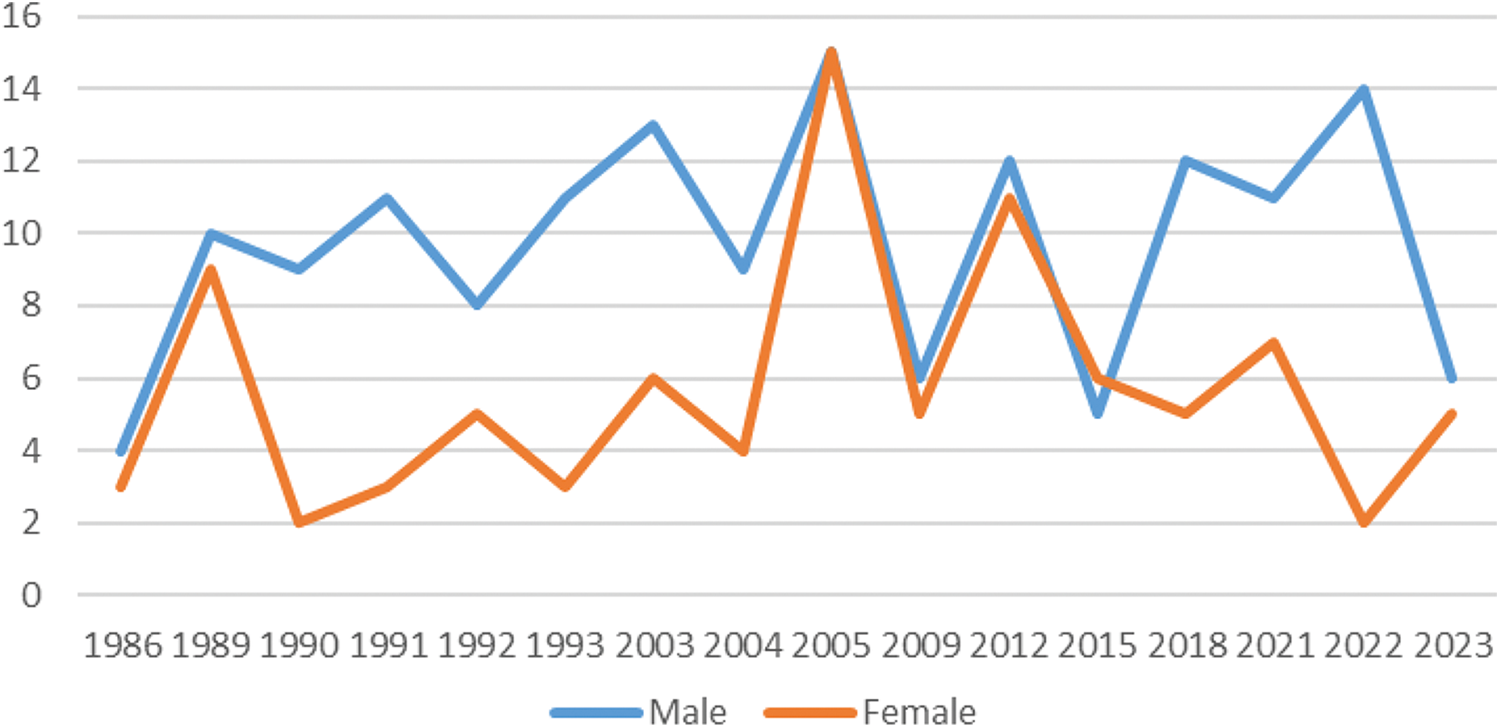
Turning attention towards specialist journals, within the Journal of Roman Pottery Studies, a count of papers by a binary gender author split (male, female) was undertaken across all volumes, excluding individually authored site- or material-specific volumes (Fig. 7). This approach differs to that originally undertakenFootnote 47where the count of authors was based on male only, female only and jointly authored papers. The decision to revisit these data for publication here was made in order to ensure better comparability with other published datasets and to include the latest JRPS volume. Taking into account the most recently published journal, across all volumes men contribute to 58% of papers, women 33.5% of papers, with 8% of authors unidentified by name. Parity by gender occurred in volume 12 (2005), which comprises papers in honour of Kay Hartley and includes several pages listing her publications on mortaria from 1954 to 2004 (Kay Hartley was still publishing up to the time of her death in 2025). Volume 13 (2007) was entirely focused on mortaria in Britain and stands as testament to the amount of specialist knowledge that can be and is being produced, and its importance to wider Romano-British studies. It is worth noting, as Swift reminds us, that specific types of pottery that can be particularly useful in aiding chronological analysis (i.e. stamped and decorated forms) might see more detailed publication in support of site, or project, reports.Footnote 48Post 2000, the picture is somewhat varied, with good representation in volume 15 (2012), but then a steady decline in the proportion of female authors until the most recently published volume 20 (2023).
Article contributions to volumes of the Journal of Roman Pottery Studies (by year of publication) by author gender.

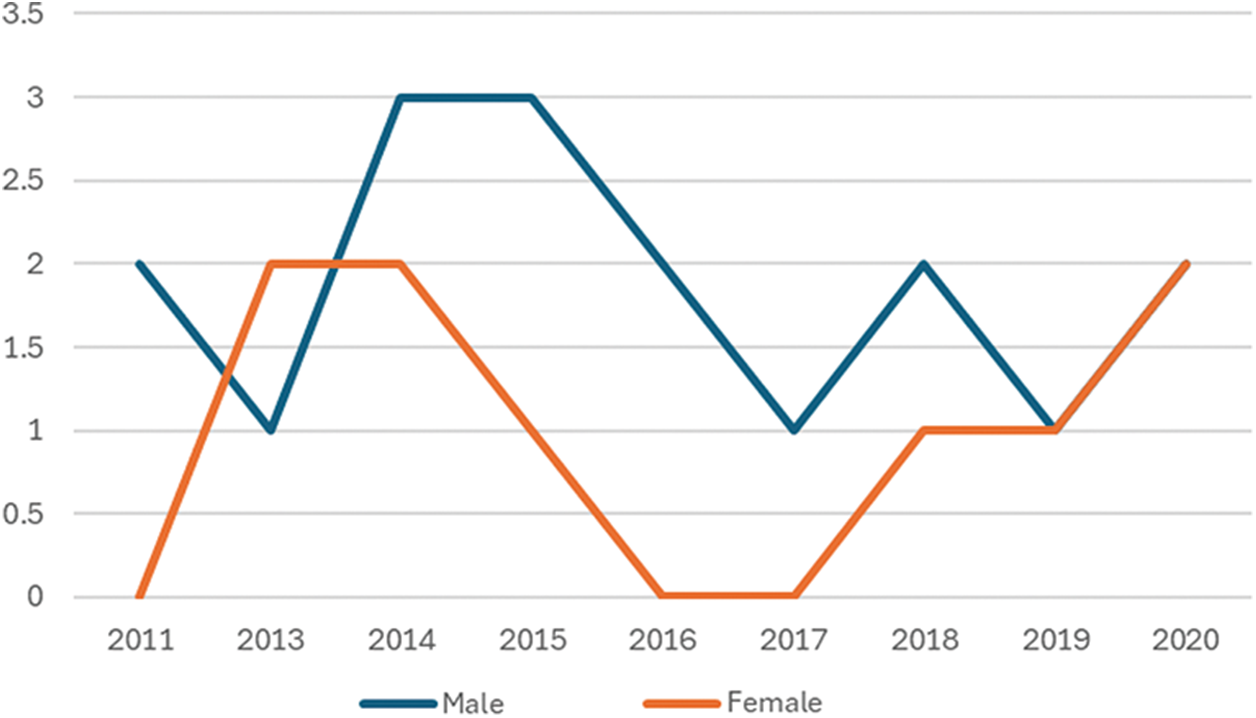
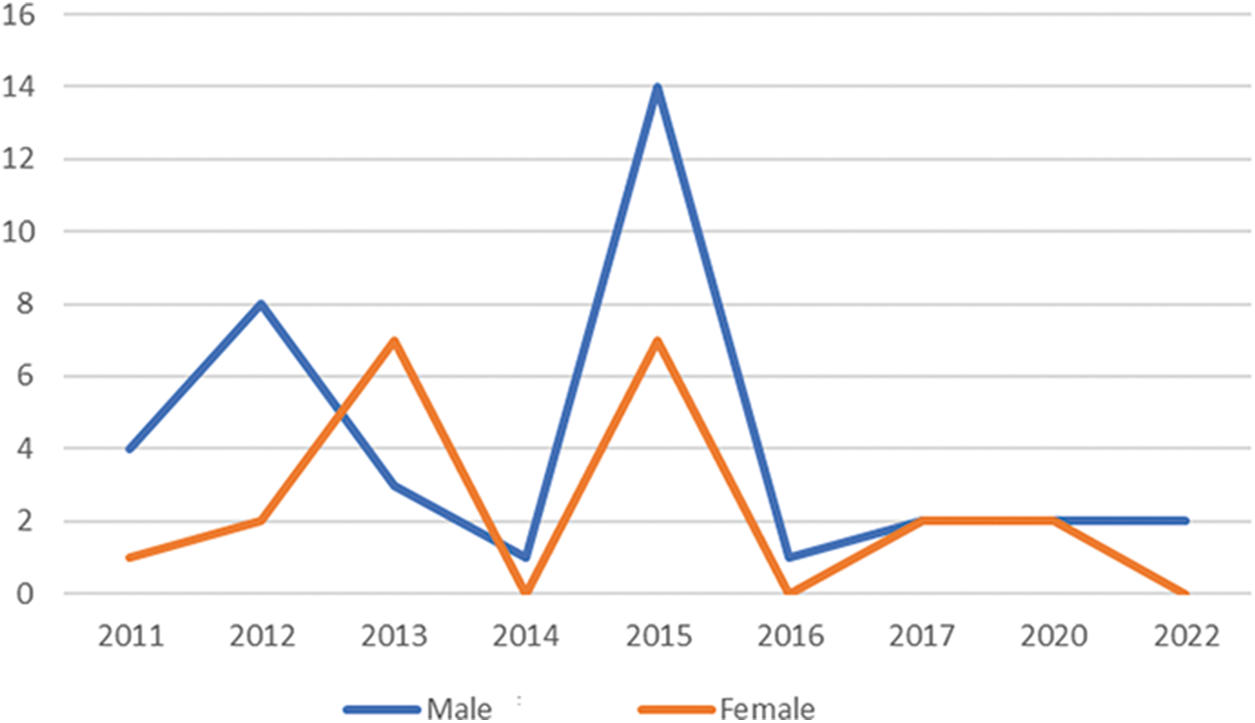
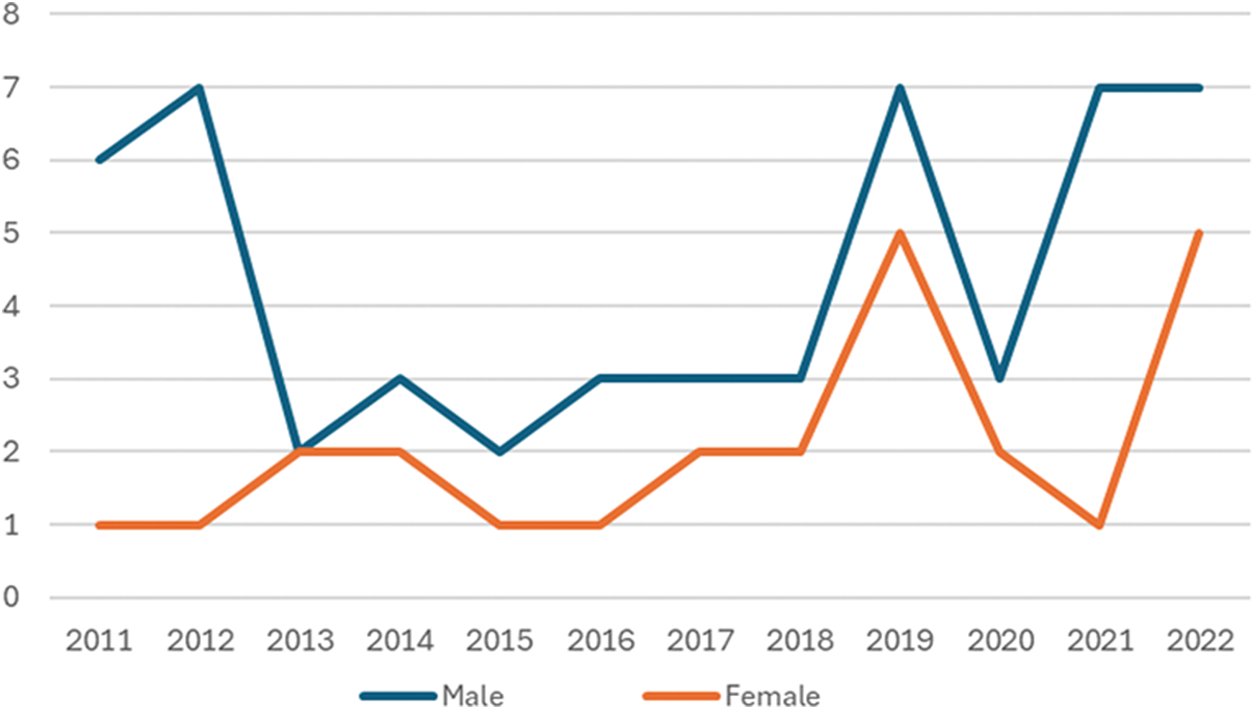
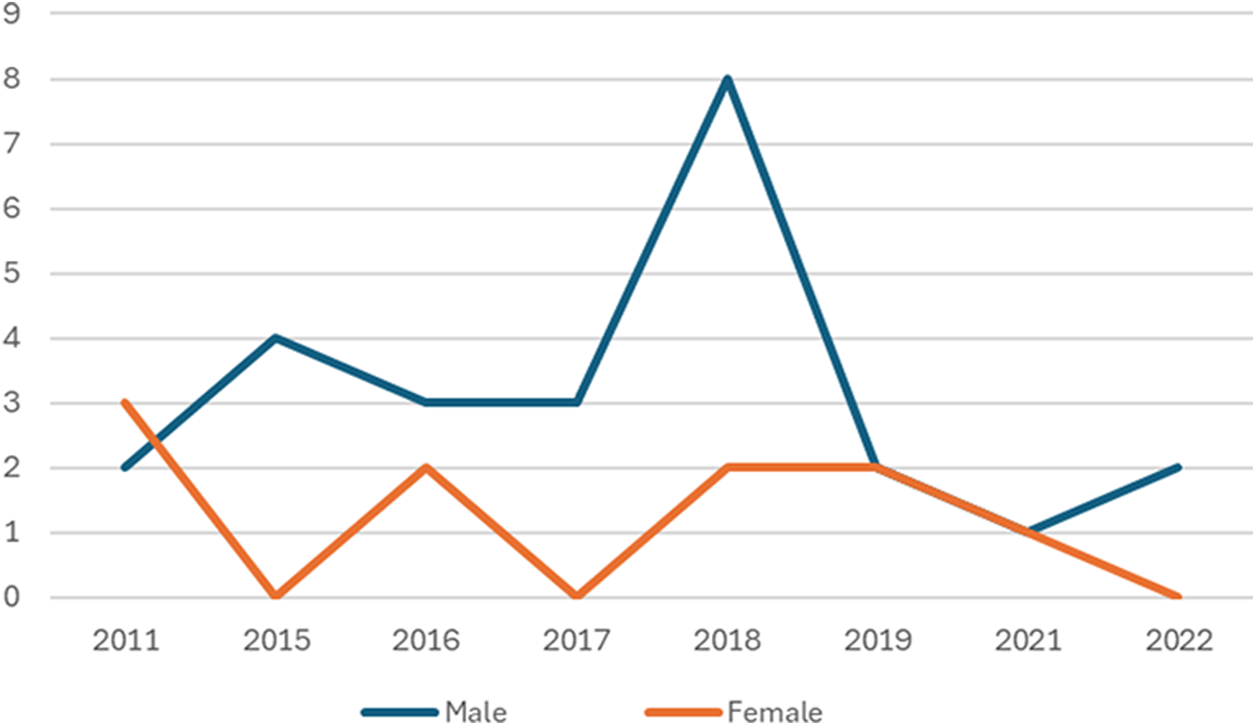
If we compare the data with the binary gender recorded for contributors to articles and monographs published in both London and East Anglia, we can see that there is a clear bias in favour of male authors in all the examples (Figs 8, 9, 10, 11). While the gap has been slowly closing, and there have been occasional examples of years with a female majority, this does not alter the continuing overall trend of domination by male authors.
Total number of male and female authors in articles published by LAMAS (Supplementary Information, Table 1).

Total number of male and female authors in monographs published by London-based contracting organisations (Supplementary Information, Table 2).

Total number of male and female authors in monographs published by PCAS (Supplementary Information, Table 3).

Total number of male and female authors in monographs published by EAA (Supplementary Information, Table 4).

The longstandingFootnote 49gender bias seen with Romano-British pottery (and other finds) specialisms has created a situation where women are responsible for producing a disproportionate amount of specialist knowledge in the form of technical reporting, yet due to structural processes within contracting archaeology, their contributions remain largely invisible. This situation is not unique to the UK, with a similar pattern identified within North American archaeology.Footnote 50In the UK, however, there is also a wider issue identified, that of specialists not being routinely credited for their contributions: Alice Cattermole, in the survey of standards in specialist reporting, noted that 12% of specialist reports within her sample from the Archaeology Data Service could not be contributed to a specific specialist.Footnote 51To add to the situation further, historically there has been no mechanism to index specialist reports on OASIS (beyond datasets). However, recent updates to the process should now enable all contributors to be cited.Footnote 52
The SGRP survey showed that not only are more women employed in pottery studies; a significant proportion work flexibly,Footnote 53and a survey by the Chartered Institute of Archaeologists Finds Specialist Interest Group also highlighted higher than average number of specialists working part-time compared to the wider profession, with 47% working part time or flexible hoursFootnote 54compared to 26% of the general archaeological workforce.Footnote 55Publishing in peer-reviewed format is time- and cost-heavy for those working part-time, and in a commercial rather than academic setting, there is perhaps less requirement and less support available to write more synthetic analyses for peer-reviewed ‘prestige’Footnote 56publications which can be viewed as being largely outside the basic job description, which is to provide the required client service.
Conclusions and recommendations
The survey of the last decade’s articles on Roman Britain from regional publications (three journals and two monograph series) has shown that their authors were often male project officers and managers (stratigraphic authors), perpetuating the patterns observed by Swift.Footnote 57Even within a sub-discipline with strong female representation, such as Roman pottery studies, the majority of publications outside of client report contributions are also by white men. In terms of intersectionality, if white women in Romano-British pottery studies are struggling within the system to have their voices heard and contributions seen,Footnote 58then the situation will be compounded even further for colleagues from marginalised backgrounds. This latter issue has been detailed by Kamash in the context of Roman studies generally, taking note of the lack of diversity both within contributions to the field and the narrow geographical focus of study.Footnote 59
In the London and Cambridgeshire examples there is a strong tradition of senior field team members (stratigraphic authors) being attributed, and the gender imbalance here is a reflection of the imbalance in those senior field team roles. Traditionally, and slightly unusually for the UK sector as a whole, the London organisations have maintained women in senior field roles throughout their careers.Footnote 60This remains rare in relation to areas of the country where archaeologists are expected to work away from their home bases more, as it naturally restricts the potential for maternity, flexible working and other aspects of traditional family and caring roles that overwhelmingly fall to women, at least in heterosexual relationships.Footnote 61These persistently gendered issues were identified as specific barriers in a sectoral report produced for the Chartered Institute for Archaeologists, with lack of flexibility and an assumption of remote working proving prohibitive for many.Footnote 62The majority of female authors in the London data are in specialist roles and the overall level of authorship of specialists among the London and Cambridgeshire examples is also perhaps slightly against the standard model, given that these larger organisations hold in-house teams. Still, there are nonetheless also external specialists credited as authors, as shown in this study.
The geographical focus of journals is worthy of note in relation to the fact that often these outputs are dominated by a small number of major contractors. Therefore the gender of the teams within these organisations will inform the authorship, and the visibility of the people involved often perpetuates the status quo. There may be a role here for these regional journals to instigate guidance for these organisations, in terms of widening authorship, encouraging early career input and requiring specialists (such as archaeobotanists) to be more obviously credited.
Alongside recent studies reviewing gender imbalance in academic journals,Footnote 63the surveys reported on within this paper are the first studies to address gender imbalance along with job role disparity in the authorship in the UK developer-led archaeological sector by considering five specific regional but important publications for Roman archaeology in Britain. More surveys across the UK need to be undertaken to assess how widely representative these findings are, particularly when regional variations in terms of specialist provision are taken into account; preliminary studies in Sussex have revealed a similar trend to that presented here.Footnote 64
Furthermore, this study has revealed that there are some methodologies that, if implemented, would quickly start to address the gendered imbalance of authors within the existing profession. It is perhaps useful to separate out what the publications can do, from our proposals aimed at the contracting sector; our employers.
Firstly, editorial boards and committees could encourage a more diverse range of developer-funded archaeologists, especially those who are not just stratigraphic authors, to submit publications. This has been suggested specifically with reference to Review sections, to give postgraduates and progressing professionals the opportunity to write relatively short-form for a journal. This is a rapid method of increasing diversity espoused by colleagues,Footnote 65that has yet to be widely taken up but is incumbent on us all. This is of particular note for regional journals; as already noted above, they tend to be dominated by major organisations contracting in their area. Undertaking a review can be daunting, and of course is another example of unpaid labour, but a short-form piece such as a review can be an excellent way of building confidence in compiling synthetic narrative, working within the journal editorial process, and also assists significantly in the building of networks, publication records, and acknowledgement of expertise that can be so difficult to build at an early career stage.
Secondly, publications should move away from the bald ‘surname and initial’ model of authorship. They should, instead, provide full names as suggested by Zena KamashFootnote 66and implemented in TRAJ.Footnote 67Publications could also show the author in more context, perhaps including a short biography, a common practice in monographs or edited volumes. Email addresses of authors should be provided as they appear in most publications, for example, a correspondence address or email contact for at least one author. Adding links to the authors’ professional web pages would be a useful addition to knowing which company they work for.
Editorial boards should have clearer rules about authorship, for example, not accepting the mention of contributors to the article in brackets rather than co-authors of the publications. The consistent adoption of an ORCiD on publications (including those that are published by contractors and therefore often without a DOI) would also be a hugely significant step towards wider crediting of work, as it provides a free, unique and persistent identifier for individuals to acknowledge and collate their published outputs.
The contracting organisations should also adopt these more equitable methods of credit and acknowledgement. The majority of the publications examined for this paper originated from large organisations, which employ specialists in various aspects of Romano-British studies and therefore could adopt a more inclusive authorship method fairly easily in collaboration with their own teams. When it comes to grey literature, the full list of authors (contributors) has been surprisingly provided when the report is deposited with the Archaeology Data Service (ADS), to ensure that the contributors receive the full credit and can reference their own work digitally. However, this should also be reflected in the paper and pdf copies. The contracting organisations should also include information about their in-house and external authors in their monographs. This could be extended to all contributors named, to enable their professional profiles to be made available and their research to be accessible in the event of them not being specifically included on their employing organisation’s website, as is commonly the case.
There are also new ways of crediting contributions to publications that draw in the roles that may not have contributed to the text or analysis in technical ways, but nevertheless have undertaken significant parts of a project. One example already in use within some journals is the CRediT system (Contributor Roles Taxonomy), whereby a selection of categories are responded to, showing how each author (and sometimes others not credited with writing the text) has contributed to specific aspects of a publication. Examples can be seen in Elsevier publications, where the authors are credited for aspects such as conceptualisation, methodology, software design, provision and supply of resources, supervision and the various stages of text production.Footnote 68The adoption of such a procedure for archaeological publications would enable acknowledgement of teams that often get missed off, for example Geomatics, IT, and the wider field teams themselves, who collate the data used in the analysis. The presumption that wider teams should be credited is well known in scientific publications, and the CRediT model is followed by journals under the Science umbrella,Footnote 69who also provide a service that will amend authors’ names (in the event of gender identity or marital status changes). A long list of contributors provided within the text, or worse, in the acknowledgements, is more common in the humanities fields, but this is only due to tradition rather than to any reasoned argument in its favour. Some journals are keen to provide extensive authorship credits, Antiquity being one of the few exceptions to this general rule in our field.
We understand that this is one more dataset from two specific geographic areas (East Anglia and London) integrated with data from one specialism (Roman pottery studies), conducted on publications from the last decade. We would welcome more comparative datasets from across geographical areas, from more specialist areas of study, and with a longer time depth — usefully we could compare Swift’s resultsFootnote 70to provide data illuminating the prior situation. How does this compare with publications from the north-west of the UK or Devon, for example, and are there specialists in other forms of Roman material or environmental cultures working in this area? We have further data forthcoming from Sussex,Footnote 71but would welcome other datasets.
Finally, we want to acknowledge that archaeology of the Roman period is not alone in suffering from, and having difficulty emerging out of, the gendered structures that bound our work in ways we have outlined here. We have had some difficulty sourcing similar datasets for prehistoric studies, although Pope and Davies have provided us with a detailed background to how this situation arose and why it persists.Footnote 72Johnson has produced analysis of papers published illustrating a similar pattern in computational archaeology.Footnote 73Díaz-Guardamino suggests the lack of submissions by women may be due to an over-emphasis on men on editorial boards, with the online journal Internet Archaeology having the most equal gender split amongst her study group with 9 women to 9 men.Footnote 74The vast volumes of Romano-British archaeology, and ceramics in particular, excavated and subsequently published as a result of the developer-funded system in the UK may skew our opinions of the relative scale of the problem with our specific period specialism, but Dempsey provides a very useful summary of similar challenges with the medieval period, and the later medieval period in particular, emphasising that castle research has been a problematic area in terms of the uneven scholarly gender split resulting in skewed interpretations.Footnote 75
We are all products of and constrained by the system in which we work — which has led to these historical models of who, how and where we publish; however, by taking some relatively simple steps, we can individually and collectively create a more equitable system to the benefit of all.
Acknowledgements
We would like to thank two anonymous peer reviewers for their extremely helpful comments during the editorial process, and the Editor of Britannia for accepting this paper so swiftly. We are grateful to the Editors of PCAS and LAMAS for responding to our queries regarding their authorship credit traditions, and we are also grateful to the TRAC Committee for the opportunity to present early versions of this at their collegiate and welcoming 2022 online Conference.
Supplementary material
The supplementary material for this article can be found at https://doi.org/10.1017/S0068113X25100378.


 Open access

