





Mental health conditions constitute a leading cause of disability worldwide. Reference Patel, Saxena, Lund, Thornicroft, Baingana and Bolton1 The World Health Organization 2 defines the term ‘mental disorders’ as describing a range of mental and behavioural conditions that fall within the ICD-11. Reference Stein, Szatmari, Gaebel, Berk, Vieta and Maj3 These include disorders that cause a high burden of disease such as depression, bipolar affective disorder, schizophrenia, anxiety disorders, dementia, intellectual disabilities, and developmental and behavioural disorders with onset usually occurring in childhood and adolescence (e.g. autism spectrum condition (ASC)). 2,Reference Stein, Szatmari, Gaebel, Berk, Vieta and Maj3 The need to develop and test new interventions to improve outcomes and quality of life related to these conditions is widely acknowledged. 4–7
Animal-assisted interventions for mental health and neurodevelopmental conditions
Animal-assisted interventions (AAIs) have been receiving increasing interest as (complementary) interventions to improve health-related outcomes, especially those focused on mental health, across various age groups. Reference Jones, Rice and Cotton8–Reference Nieforth, Schwichtenberg and O’Haire11 In a health-focused context, AAIs intentionally include animals in health, education and social services contexts for therapeutic or other ameliorative purposes. Health-focused AAIs include animal-assisted therapy, which is goal-orientated, structured, documented and delivered by trained professionals; and animal-assisted activities, which are also goal-orientated but typically based on spontaneous interaction and delivered usually by volunteers and non-specialist trained animals. Although a variety of species (e.g. dogs, horses, small mammals, farm animals) can be involved in AAIs in research and practice, dog-assisted interventions (DAIs) are the most commonly provided and researched type of AAI. Reference Nimer and Lundahl12
Research suggests that DAIs might improve a range of mental health and behavioural outcomes such as anxiety, agitation, and feelings of depression and loneliness, while enhancing positive social interaction. Reference Schuck, Emmerson, Fine and Lakes13–Reference Parra, Manuel Hernández Garre and Echevarría Pérez16 Although overall poorly understood, mechanisms underlying these effects have been hypothesised to be related to, for example, the calming and motivating effects of the dog’s presence, which in turn might catalyse participants’ engagement with therapy. Reference Fine17 Recently, there has been much enthusiasm for and a rapid increase in the provision of DAIs for a wide range of mental health and neurodevelopmental conditions in practice, Reference Chen, Hung, Lee, Tseng, Chen and Chen14,Reference Schuck, Emmerson, Abdullah, Fine, Stehli and Lakes15,Reference Briones, Pardo-Garcia and Escribano-Sotos18–Reference Wijker, Leontjevas, Spek and Enders-Slegers21 with DAIs being increasingly offered by third-sector organisations or by teams affiliated with health and social care or educational settings.
Current limitations in animal-assisted intervention research
However, DAIs are currently not based on robust evidence. Although findings from generally small randomised controlled trials (RCTs) have been reported, Reference Schuck, Emmerson, Abdullah, Fine, Stehli and Lakes15,Reference Stefanini, Martino, Allori, Galeotti and Tani22–Reference Allen, Shenk, Dreschel, Wang, Bucher and Desir24 evidence synthesis has unanimously highlighted common methodological problems and a lack of rigour in study design. Reference Jones, Rice and Cotton8,Reference Zafra-Tanaka, Pacheco-Barrios, Tellez and Taype-Rondan25–Reference Shoesmith, Surr and Ratschen27 Key issues include small sample sizes and consequently a lack of statistical power, as well as an absence of manualised intervention protocols and well-designed control conditions. Reference Jones, Rice and Cotton8,Reference Santaniello, Dicé, Claudia Carratú, Amato, Fioretti and Menna28,Reference Santaniello, Garzillo, Cristiano, Fioretti and Menna29 Design issues are further compounded by limited intervention reporting, restricting the opportunity for reproducibility and comparability. Reference Santaniello, Dicé, Claudia Carratú, Amato, Fioretti and Menna28,Reference Fine, Beck and Ng30 The complex nature of DAIs in health-related contexts, involving inter-species interactions between several actors including a dog and a vulnerable patient, also requires consideration of welfare and safety for the participants, dog and handler that exceeds current design and reporting practice in the field. Reference Santaniello, Garzillo, Cristiano, Fioretti and Menna29,Reference Serpell, McCune, Gee and Griffin31 Notably, common terminological and conceptual confusion with regard to the definition of DAIs and their application in practice and research contexts has been identified, further compounding transparency. Reference Binder, Parish-Plass, Kirby, Winkle, Skwerer and Ackerman32
Several evidence syntheses have been conducted to explore the impact of DAIs in populations with mental health and neurodevelopmental conditions, Reference Zafra-Tanaka, Pacheco-Barrios, Tellez and Taype-Rondan25,Reference Santaniello, Garzillo, Cristiano, Fioretti and Menna29,Reference Jain, Syed, Hafford-Letchfield and O’Farrell-Pearce33,Reference Dimolareva and Dunn34 with wide variation in review focus (e.g. on specific diagnostic groups, settings or age groups), methodological quality and terminology used. No existing systematic review has formally evaluated the reporting quality of RCTs delivering DAIs by assessing adherence to gold standard reporting guidelines such as CONSORT Reference Altman, Schulz, Moher, Egger, Davidoff and Elbourne35 or evaluated the quality and completeness of reporting DAIs, for example, by assessing intervention reporting in accordance with the Template for Intervention Description and Replication (TIDieR) guide. Reference Hoffmann, Glasziou, Boutron, Milne, Perera and Moher36 Likewise, no existing systematic review has examined how these interventions are described, practised and reported. Thus, the research aims for this review were:
-
(a) to examine the use of terminology and definitions chosen to classify DAIs in the included RCTs;
-
(b) to determine the effectiveness of mental-health-focused DAIs for populations with mental health and neurodevelopmental conditions in clinical and community (including educational) settings;
-
(c) to assess how well RCTs delivering DAIs to people with mental health and neurodevelopmental conditions are reported based on internationally recognised gold standard reporting guidelines (CONSORT and TIDieR).
Methods
We report methodology in accordance with the Preferred Reporting Items for Systematic Reviews and Meta-analyses guidelines, Reference Moher, Tetzlaff and Altman37 following a preregistered International Prospective Register of Systematic Reviews protocol (CRD42024526375). An amendment to the protocol was made to add the first review question. We believed this was an important addition owing to the ambiguity and inconsistent terminology for DAIs used across this research area.
Inclusion criteria
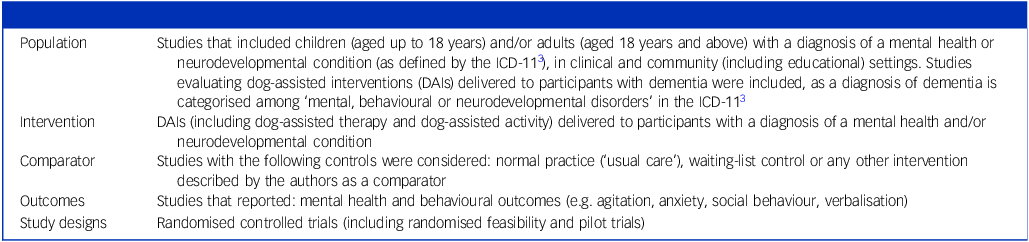
Studies were assessed for inclusion based on the population, intervention, comparator, outcome and study design (Table 1). Reference Saaiq and Ashraf38
Inclusion criteria based on population, intervention, comparator, outcome and study design

Exclusion criteria
Studies were excluded if: (a) they described or evaluated the impact of living with pet dogs or assistance dogs; (b) the DAIs were primarily education interventions with educational outcomes (e.g. reading), as DAIs were only included if they were delivered for health-related and/or therapeutic purposes; (c) interventions involved species other than dogs; (d) interventions involved robotic dogs; (e) they did not assess the impact on outcomes for people with a mental health or neurodevelopmental condition; or (f) they were systematic reviews, theses, dissertations or not original research.
Search strategy
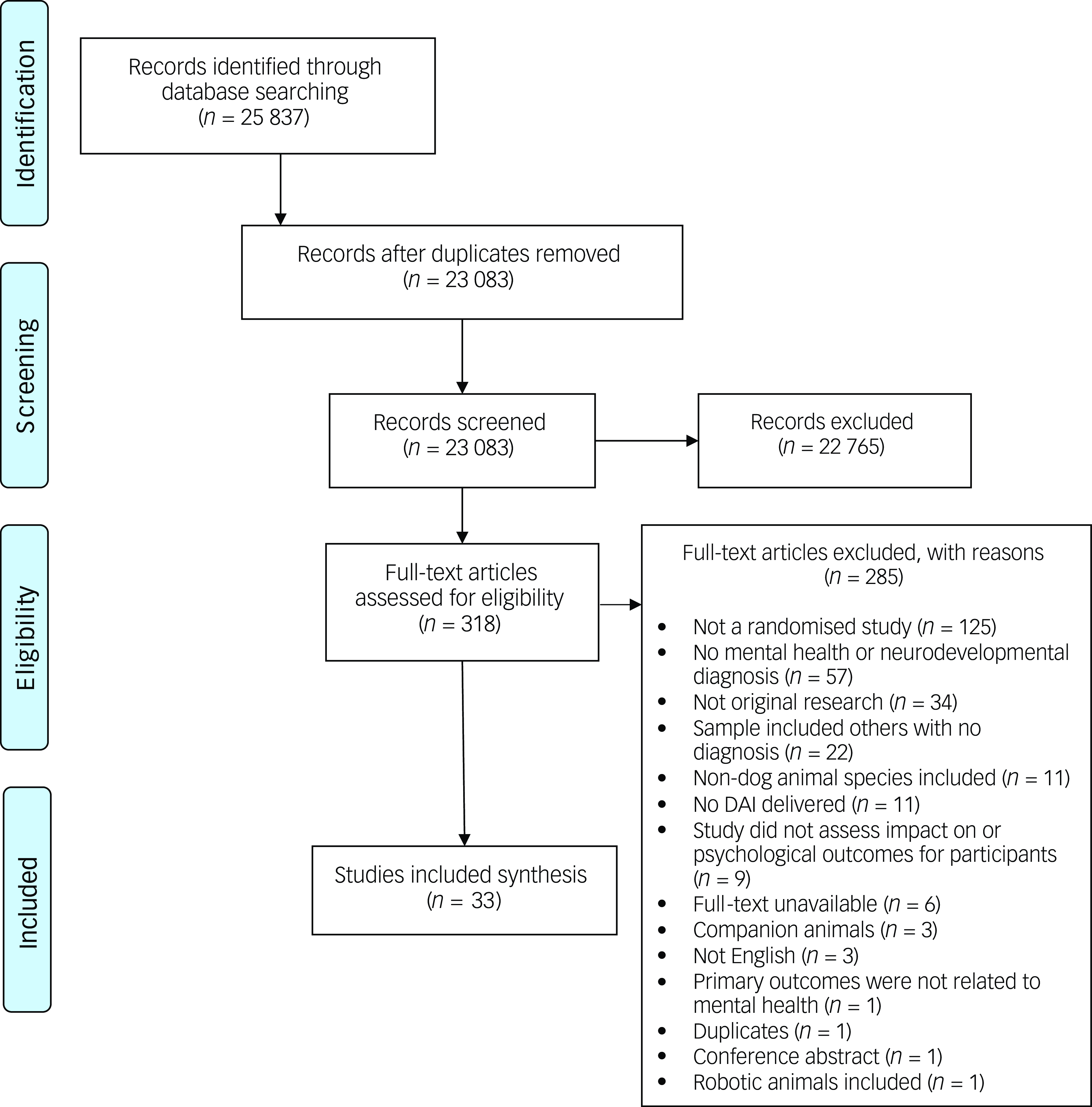
Embase, PsycINFO, PubMed, CINAHL, Web of Science and the Cochrane Library were searched up to 30 April 2024. A comprehensive search strategy was developed using subject headings and words related to DAIs (e.g. dog-assisted therapy, dog-assisted activities, dog-assisted interventions, animal-assisted interventions, therapy dogs, therapy animals) and mental health or neurodevelopmental conditions in children and adult populations. Searches were limited to studies published in English. The search strategy for Embase is provided in Supplementary Material 1 available at https://doi.org/10.1192/bjp.2025.8 and was adapted for the other included databases. Reference lists of included papers and systematic reviews of DAIs for mental health and neurodevelopmental conditions were manually screened to identify potential further studies. Covidence was used to record publications at all stages of the selection process (Fig. 1). Titles and abstracts were screened independently by two authors (E.S. and J.P.). If there was a disagreement, studies were included in the full-text review. Full-text screening was undertaken independently by two authors (E.S. and J.P.), and any disagreements were resolved with a third author (E.R.).
PRISMA diagram of paper selection process. DAI, dog-assisted intervention.

Data extraction
Using a predefined data extraction worksheet in Microsoft Excel, relevant data were extracted by one author (E.S.). Information included research methodology; sample size; follow-up periods; type and content of the intervention and control groups; mode of delivery; frequency and duration; participant details including diagnosis; diagnostic criteria; role of animal handlers; aspects related to selection, training and safety of the animals involved; and outcomes of the intervention. A complete list of data extracted is provided in Supplementary Material 2. Data extraction commenced on 12 May 2024.
Risk of bias assessment
Two authors (E.S. and J.P.) independently assessed the risk of bias of each RCT using the Cochrane risk of bias tool. Reference Higgins, Altman, Gøtzsche, Jüni, Moher and Oxman39 Consensus was reached through discussion between the two authors. Data from the risk of bias assessment were entered into Review Manager 5.3 40 to generate a summary figure. Risk of bias was used for critique of the research evidence and not as an exclusion criterion. The risk of bias for all domains was summarised to produce an overall risk of bias for each RCT. RCTs were classified as having an overall high risk of bias if they scored ‘unclear’ or ‘high’ in any bias domain other than performance bias, as the nature of DAIs made blinding of participants and personnel difficult.
Data synthesis
As per the protocol, a meta-analysis was planned, given low heterogeneity as assessed using the I 2 statistic. However, owing to clinical and methodological heterogeneity, we determined that a statistical meta-analysis would have been inappropriate; therefore, a narrative synthesis was performed to summarise the effectiveness of DAIs. Trials were grouped by commonly reported mental health and behavioural outcomes, and findings were described narratively, using forest plots to report standardised mean difference (SMD) plus 95% confidence interval without a pooled estimate. SMD is the mean difference in outcome scores between the intervention and control group divided by the pooled standard deviation at follow-up, resulting in a unit-free effect size. By convention, SMD effect sizes of 0.2, 0.5 and 0.8 are considered to indicate small, medium and large intervention effects, respectively. Reference Higgins and Green41 The direction of effect was assessed based on the effects reported by authors of the included studies and the forest plots produced. The direction of effect (or lack of a difference between intervention and control) was used to determine the effectiveness of DAIs. Findings are presented for three categories: mental health conditions, neurodevelopmental conditions and dementia. Although a diagnosis of dementia is categorised in ‘mental, behavioural or neurodevelopmental disorders’ in the ICD-11, Reference Stein, Szatmari, Gaebel, Berk, Vieta and Maj3 studies involving adults with dementia are presented separately to those with other mental health conditions owing to the distinct aetiology of the condition.
The CONSORT statement Reference Schulz, Altman and Moher42 was used to assess the quality of reporting of RCTs. Two authors (E.S. and H.S.) individually assessed each paper, and each item was scored ‘yes’ if adequately reported or ‘no’ if inadequately, inconsistently or not at all reported. Reporting of an item in supplementary material was considered to be acceptable only if this was clearly cited in the main text. In addition, the TIDieR checklist Reference Hoffmann, Glasziou, Boutron, Milne, Perera and Moher36 was used for appraisal of quality and completeness of reporting intervention details. Data in each of the papers and any supplementary material cited within the papers were used. Two authors (E.S. and J.P.) individually assessed each study, and each item was scored ‘yes’ if adequately reported or ‘no’ if inadequately or inconsistently reported, or not applicable. Cohen’s kappa (κ) was calculated to assess the agreement between reviewers for both appraisals using the CONSORT statement and the TIDieR checklist. Interpretation of the coefficient was as follows: ‘none’ 0–0.20; ‘minimal’ 0.21–0.39; ‘weak’ 0.40–0.59; ‘moderate’ 0.60–0.79’; ‘strong’ 0.80–0.90; and ‘almost perfect’ ≥0.90. Reference McHugh43 Data were analysed in IBM SPSS version 28. 44
Terminology used by authors to classify DAIs as ‘dog-assisted therapy’ or ‘dog-assisted activity’ was extracted for each study and assessed for suitability of use by two authors (E.S. and H.S.) based on the intervention content described, using internationally recognised definitions from the International Association of Human-Animal Interaction Organisations Reference Fine45 and Animal-Assisted Intervention International. 46 We did not use the new terminology proposed in early 2024, Reference Binder, Parish-Plass, Kirby, Winkle, Skwerer and Ackerman32 as this would not have corresponded to terminology and classifications used in the studies, all of which were conducted before the 2024 recommendations were published. We assessed alignment between study terminology and conceptual definitions using three categories: (a) clear alignment of content and terminology, (b) unclear alignment of content and terminology (e.g. owing to limited information in the manuscript) and (c) misalignment of content and terminology (e.g. a DAI was described as therapy, but the content description clearly depicted activity).
Results
Description of studies
Database searches yielded a total of 25 837 records. After removal of duplicates and screening of titles, abstracts and full-text papers, 33 papers were included in the review (Fig. 1), reporting a total of 29 studies. The independent screening of titles and abstracts and full-text papers both yielded a Cohen’s kappa of 0.77. Two papers evaluating a DAI delivered to adults with ASC referred to the same RCT, Reference Wijker, Leontjevas, Spek and Enders-Slegers21,Reference Wijker, Kupper, Leontjevas, Spek and Enders-Slegers23 two papers delivered to adults with schizophrenia referred to the same RCT, Reference Chen, Hung, Lee, Tseng, Chen and Chen14,Reference Chen, Hsieh, Chen, Tseng, Hung and Chen47 and three papers delivered to children with attention-deficit hyperactivity disorder (ADHD) referred to the same RCT. Reference Schuck, Emmerson, Abdullah, Fine, Stehli and Lakes15,Reference Schuck, Johnson, Abdullah, Stehli, Fine and Lakes48,Reference Nieforth, Guerin, Stehli, Schuck, Yi and O’Haire49 All of these papers were included, as they assessed different relevant outcomes. A list of all included papers is provided in Supplementary Material 3. Thirty-three papers described 29 small-scale RCTs (intervention sample size range: 5–186; control sample size range: 4–185). Study follow-up ranged from immediately post-intervention Reference Chen, Hung, Lee, Tseng, Chen and Chen14,Reference Parra, Manuel Hernández Garre and Echevarría Pérez16,Reference Briones, Pardo-Garcia and Escribano-Sotos18,Reference Hill, Ziviani, Driscoll, Teoh, Chua and Cawdell-Smith19,Reference Allen, Shenk, Dreschel, Wang, Bucher and Desir24,Reference Chen, Hsieh, Chen, Tseng, Hung and Chen47,Reference Calvo, Fortuny, Guzmán, Macías, Bowen and García50–Reference Travers, Perkins, Rand, Bartlett and Morton63 to 3 months. Reference Stefanini, Martino, Bacci and Tani20,Reference Olsen, Pedersen, Bergland, Enders-Slegers and Ihlebak64–Reference Shih and Yang67
DAIs were delivered to a variety of study populations, including individuals with dementia (n = 11), schizophrenia (n = 5), ASC (n = 3), ADHD (n = 2), any acute psychiatric diagnosis (n = 2), fetal alcohol spectrum disorder (n = 2), intellectual disabilities (n = 1), anxiety or depression (n = 1), post-traumatic stress disorder (n = 1) or mixed diagnoses (e.g. ASC, ADHD, intellectual disabilities) (n = 1). DAIs were delivered to a variety of age groups, including children (4–12 years; n = 5), children and adolescents (6–17 years; n = 5), adults (18–65 years; n = 8) and older adults (65+ years; n = 11). For those including children, all participants were diagnosed with a neurodevelopmental condition (ASC or ADHD), and for those including older adults, all participants were diagnosed with dementia.
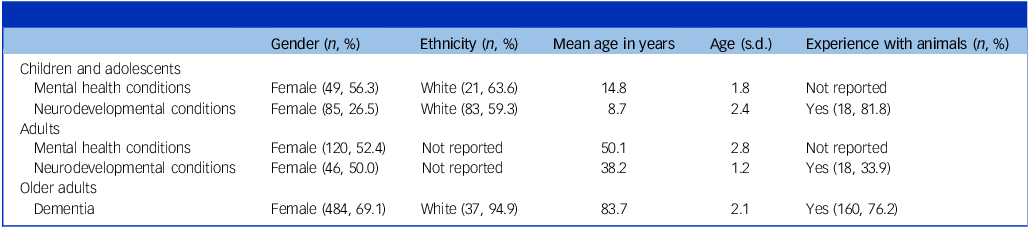
In 28 studies (96.6%), just over half of all participants were female (n = 784, 54.9%). One study did not report participant gender. Reference Chu, Liu, Sun and Lin68 Only five studies (17.2%) reported ethnicity, Reference Schuck, Emmerson, Fine and Lakes13,Reference Schuck, Emmerson, Abdullah, Fine, Stehli and Lakes15,Reference Allen, Shenk, Dreschel, Wang, Bucher and Desir24,Reference Schuck, Johnson, Abdullah, Stehli, Fine and Lakes48,Reference Nieforth, Guerin, Stehli, Schuck, Yi and O’Haire49,Reference Friedmann, Galik, Thomas, Hall, Chung and McCune59 and in these studies, two-thirds of participants were White Caucasians (n = 141, 66.5%). In 25 studies (86.2%) reporting participant age, the mean age was 42.7 years (s.d. = 32.8). Four studies (13.8%) did not provide information on participant age. Reference Wolynczyk-Gmaj, Ziolkowska, Rogala, Scigala, Bryla and Gmaj52,Reference Menna, Santaniello, Gerardi, Sansone, Di Maggio and Di Palma61,Reference Parra, Garre and Perez62,Reference Chu, Liu, Sun and Lin68 For those reporting diagnosis severity at baseline data collection (n = 13, 44.8%), participants with dementia Reference Parra, Manuel Hernández Garre and Echevarría Pérez16,Reference Baek, Lee and Sohng57–Reference Olsen, Pedersen, Bergland, Enders-Slegers, Patil and Ihlebaek65,Reference Briones, Pardo-Garcia and Escribano-Sotos69 were most commonly diagnosed with mild, moderate or mild–moderate dementia (n = 678, 96.9%), and participants with schizophrenia Reference Chen, Hsieh, Chen, Tseng, Hung and Chen47,Reference Calvo, Fortuny, Guzmán, Macías, Bowen and García50 were most commonly considered to be ‘mildly ill’ according to Positive and Negative Syndrome Scale scores (n = 64, 100%). Six studies (20.7%) reported participant characteristics related to animal ownership. Reference Hill, Ziviani, Driscoll, Teoh, Chua and Cawdell-Smith19,Reference Baek, Lee and Sohng57,Reference Travers, Perkins, Rand, Bartlett and Morton63–Reference Olsen, Pedersen, Bergland, Enders-Slegers, Patil and Ihlebaek65,Reference Wijker, Leontjevas, Spek and Enders-Slegers70 Of the participants in these studies, 196 (68.7%) reported they were current or previous animal owners or enjoyed interaction with animals. Table 2 presents demographics reported by the studies.
Participant demographics available in included studies, separated by age group

The majority of studies were conducted in Europe (n = 17; 58.6%), followed by Asia (n = 5; 17.2%), the USA (n = 4; 13.8%), Australia (n = 2; 6.9%) and the UK (n = 1; 3.5%). Study settings varied substantially and included hospitals (n = 11) and care facilities (e.g. nursing homes, care homes; n = 10). Supplementary Material 4 provides an overview of study characteristics.
Intervention characteristics
Interventions varied by type (therapy or activity), content, role of intervention providers, group size, and frequency and duration (Supplementary Material 5). Of the 29 studies, DAIs included were described by authors as therapy (n = 23; 79.3%) and activities (n = 6; 20.7%). Studies used various controls, including the same therapy or activity without the presence of a dog, Reference Schuck, Emmerson, Fine and Lakes13,Reference Schuck, Emmerson, Abdullah, Fine, Stehli and Lakes15,Reference Allen, Shenk, Dreschel, Wang, Bucher and Desir24,Reference Schuck, Johnson, Abdullah, Stehli, Fine and Lakes48,Reference Nieforth, Guerin, Stehli, Schuck, Yi and O’Haire49,Reference Villalta-Gil, Roca, Gonzalez, Domenec and Cuca51–Reference Fung and Leung53,Reference Scorzato, Zaninotto, Romano, Menardi, Cavedon and Pegoraro55,Reference Menna, Santaniello, Gerardi, Sansone, Di Maggio and Di Palma61,Reference Travers, Perkins, Rand, Bartlett and Morton63 usual care activities or treatment, Reference Chen, Hung, Lee, Tseng, Chen and Chen14,Reference Parra, Manuel Hernández Garre and Echevarría Pérez16,Reference Briones, Pardo-Garcia and Escribano-Sotos18–Reference Stefanini, Martino, Bacci and Tani20,Reference Stefanini, Martino, Allori, Galeotti and Tani22,Reference Chen, Hsieh, Chen, Tseng, Hung and Chen47,Reference Calvo, Fortuny, Guzmán, Macías, Bowen and García50,Reference Majic, Gutzmann, Heinz, Lang and Rapp60,Reference Parra, Garre and Perez62,Reference Olsen, Pedersen, Bergland, Enders-Slegers and Ihlebak64,Reference Olsen, Pedersen, Bergland, Enders-Slegers, Patil and Ihlebaek65,Reference Chu, Liu, Sun and Lin68,Reference Vidal, Vidal, Ristol, Domenec, Segu and Vico71 waiting-list control groups, Reference Wijker, Leontjevas, Spek and Enders-Slegers21,Reference Wijker, Kupper, Leontjevas, Spek and Enders-Slegers23 relaxation or reminiscing interventions, Reference Meints, Brelsford, Dimolareva, Marechal, Pennington and Rowan54,Reference Vidal, Vidal, Lugo, Ristol, Domenec and Casas56,Reference Friedmann, Galik, Thomas, Hall, Chung and McCune59 and a discussion group about animals. Reference Shih and Yang67 Two studies did not provide detailed information regarding the control group content. Reference Baek, Lee and Sohng57,Reference Bono, Benvenuti, Buzzi, Ciatti, Chiarelli and Chiambretto58
Risk of bias assessment
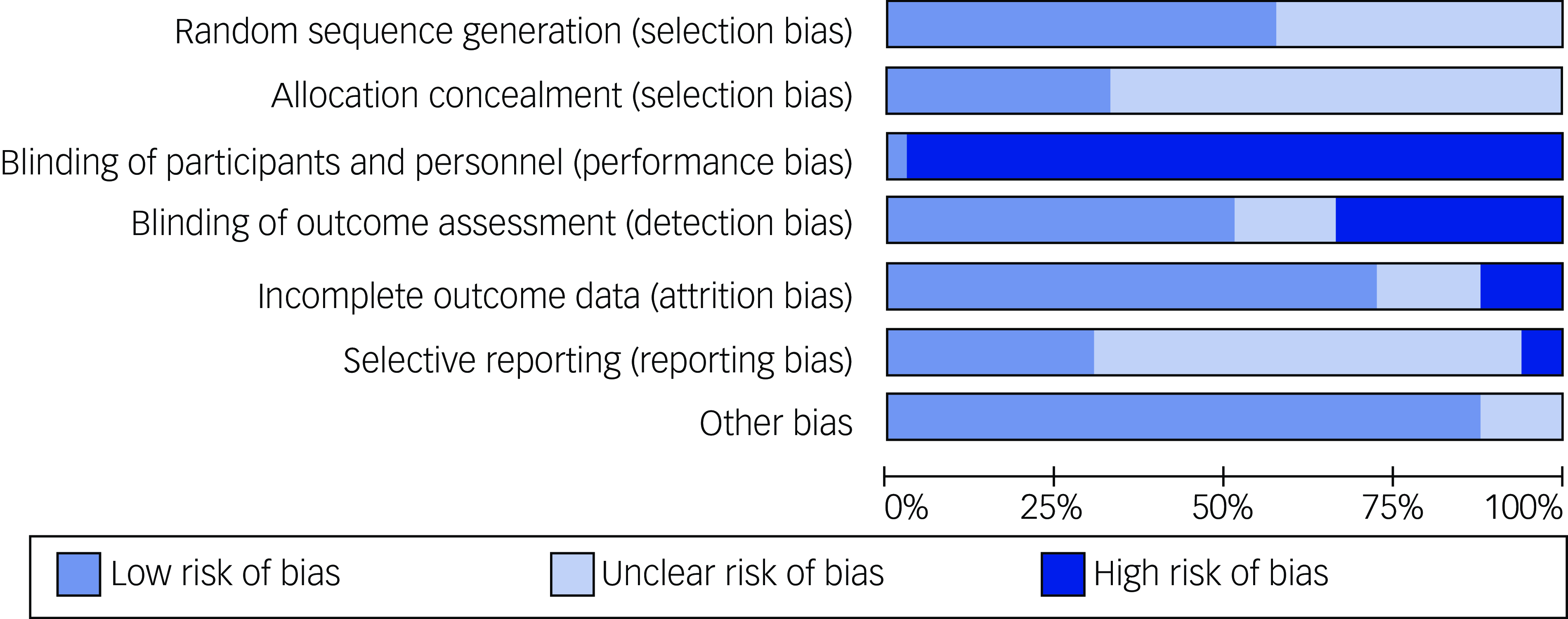
Risk of bias results are presented in Fig. 2. Thirteen studies (44.8%) were judged to show unclear risk of bias for random sequence generation owing to insufficient information regarding the method of randomisation (dementia, n = 5; neurodevelopmental, n = 4; mental health, n = 4). The remaining studies reported that participants were allocated using various methods (e.g. computer randomisation, coin-flip method) and were judged as being at low risk of bias. Twenty studies (69.0%) did not provide a statement regarding allocation concealment so were judged as having an unclear risk of bias (dementia, n = 10; mental health, n = 6; neurodevelopmental, n = 4). Twenty-eight studies (96.6%) reported in 33 papers were judged to show high risk of bias for blinding of participants and personnel owing to the inability to blind individuals to the presence of a dog. Only one study (3.5%) was judged to be of low risk of bias as both participants and personnel were blinded. Psychiatric rehabilitation institutions were randomised, and in those randomised to the control group, participants watched animal documentaries. Reference Shih and Yang67 No information was provided regarding whether the participants were debriefed about the blinding and their group allocation once participation had concluded. Reference Shih and Yang67
Risk of bias graph: review authors’ judgements about each risk of bias item presented as percentages across all included studies.

Just over half of the studies (n = 15; 51.7%) reported blinding outcome assessments and so were judged as having low risk of bias. However, nine studies (31.0%; reported in 12 papers focusing on different outcomes) did not blind outcome assessors and were judged as showing high risk of bias (mental health, n = 4; neurodevelopmental, n = 3; dementia, n = 2). Six of these reported that blinding was impossible owing to the nature of the intervention or limited resources, Reference Chen, Hung, Lee, Tseng, Chen and Chen14,Reference Hill, Ziviani, Driscoll, Teoh, Chua and Cawdell-Smith19,Reference Chen, Hsieh, Chen, Tseng, Hung and Chen47,Reference Calvo, Fortuny, Guzmán, Macías, Bowen and García50,Reference Olsen, Pedersen, Bergland, Enders-Slegers and Ihlebak64,Reference Olsen, Pedersen, Bergland, Enders-Slegers, Patil and Ihlebaek65 and four involved self-report or the child’s parents completing the outcome measures, so blinding could not be used. Reference Schuck, Emmerson, Fine and Lakes13,Reference Schuck, Emmerson, Abdullah, Fine, Stehli and Lakes15,Reference Schuck, Johnson, Abdullah, Stehli, Fine and Lakes48,Reference Wolynczyk-Gmaj, Ziolkowska, Rogala, Scigala, Bryla and Gmaj52 Five studies (17.2%) were judged as having unclear risk of bias owing to insufficient information related to blinding of outcome assessments (dementia, n = 4; neurodevelopmental, n = 1).
Most studies (n = 21; 72.4%) were judged as having low risk of bias for incomplete outcome data as more than 85% of participants completed the study. Four studies (13.8%) were judged as showing high risk of bias owing to withdrawals and exclusions that may have imbalanced groups and a lack of an intention-to-treat analysis and/or use of a per protocol analysis (mental health, n = 2; neurodevelopmental, n = 1; dementia, n = 1). Reference Briones, Pardo-Garcia and Escribano-Sotos18,Reference Calvo, Fortuny, Guzmán, Macías, Bowen and García50,Reference Meints, Brelsford, Dimolareva, Marechal, Pennington and Rowan54,Reference Chu, Liu, Sun and Lin68 The remaining four studies (13.8%) were judged as having unclear risk of bias owing to insufficient information (dementia, n = 2; mental health, n = 2).
Eighteen studies (62.1%; reported in 20 papers) were judged to have unclear bias regarding selective outcome reporting owing to the absence of a pre-published registration or protocol explicitly stating the primary outcomes and assessment time points (dementia, n = 9; neurodevelopmental, n = 6, mental health, n = 3). Two studies (6.9%) were judged to have high risk of bias for selective outcome reporting. One study reported an aim of investigating physiological and psychological aspects of schizophrenia, but no physiological measures were reported. Reference Chu, Liu, Sun and Lin68 One study reported that depression was measured pre- and post-intervention for participants with anxiety or mixed anxiety–depression disorders, but depression scores were not available. Reference Wolynczyk-Gmaj, Ziolkowska, Rogala, Scigala, Bryla and Gmaj52 The remaining nine studies (31.0%; reported in 12 papers) were judged as showing low risk of bias as they cited a pre-published registration and/or protocol clearly stating the primary outcomes and assessment time points (neurodevelopmental, n = 6; mental health, n = 4; dementia, n = 2). Risk of bias across individual studies is presented in Supplementary Material 6.
What terminology and definitions are used to classify DAIs in the included RCTs?
For the 23 studies (79.3%) evaluating dog-assisted therapy, 20 (69.0%) were assessed as showing clear alignment of content and terminology (mental health, n = 5; neurodevelopmental, n = 9; dementia, n = 6) based on internationally accepted definitions. Reference Fine45,46 One study (3.4%) delivered to adults with schizophrenia was assessed as misaligned, as a member of the research team delivered the sessions, no goals were reported and the sessions were described as ‘activities’. Reference Calvo, Fortuny, Guzmán, Macías, Bowen and García50 Last, two studies (6.9%) delivered to participants with dementia were assessed as having unclear alignment, as limited information was reported on the training or experience of the dog-handler team and on how content was developed to meet goals. Reference Bono, Benvenuti, Buzzi, Ciatti, Chiarelli and Chiambretto58,Reference Menna, Santaniello, Gerardi, Sansone, Di Maggio and Di Palma61 All six of the studies reporting dog-assisted activities (100%) were classed as showing clear alignment (mental health, n = 2; neurodevelopmental, n = 1; dementia, n = 3). Supplementary Material 7 presents content from studies that describes details related to goals and/or content and the dog-handler team, and whether the study was assessed as having clear alignment, unclear alignment or misalignment.
What is the effectiveness of DAIs for populations with mental health and neurodevelopmental conditions?
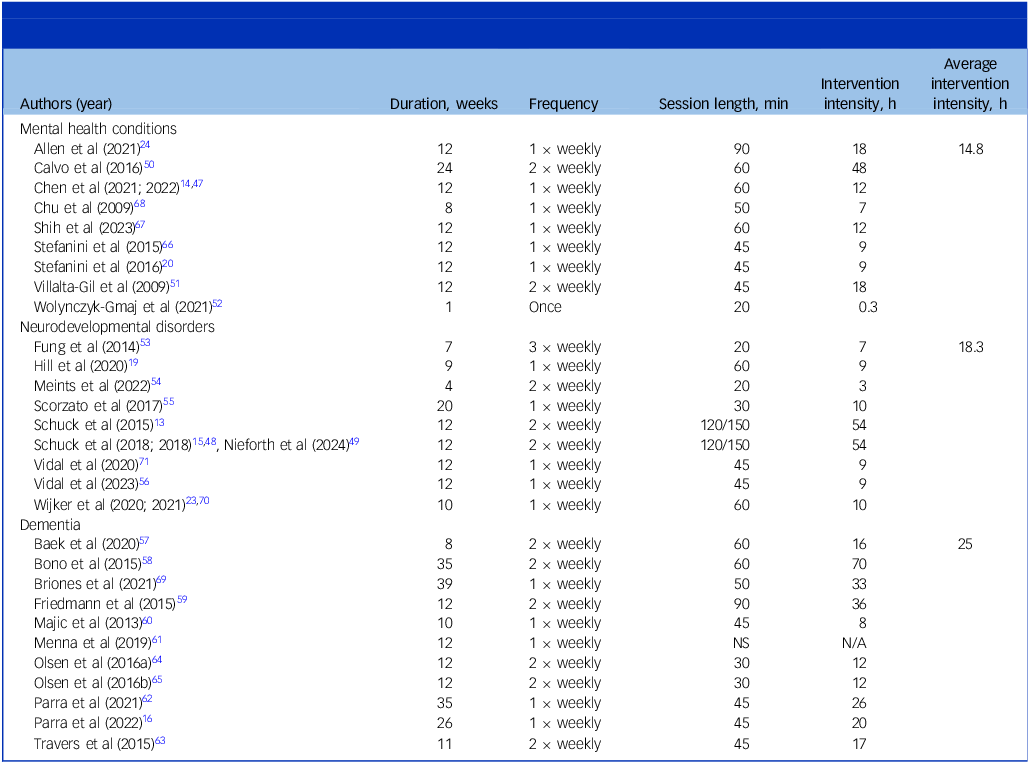
Studies included a wide range of mental health and behavioural outcome measures (Supplementary Material 4), most commonly evaluating depression (n = 14; 48.3%), social skills (n = 14; 48.3%), symptom frequency and/or severity (n = 10; 34.5%) and agitation (n = 6; 20.7%). For all of the commonly reported outcomes, findings were mixed. Although this is likely to have been due to the small sample sizes, it may also be attributable to the diverse range of DAIs delivered, as they varied considerably by type (therapy or activity), characteristics of provision (such as group size, frequency and duration) and intervention content (Supplementary Material 5). There was also substantial variation in intervention intensity (Table 3), with total intervention intensity ranging from 0.3 to 48 h for participants with mental health conditions, 3 to 54 h for participants with neurodevelopmental conditions, and 8 to 70 h for participants with dementia.
Intervention frequency, duration and intensity for each study, and average intervention intensity for dementia, neurodevelopmental conditions and mental health conditions

NS, not specified; N/A, not applicable.
Depression
Fourteen studies (48.3%) reported depression as an outcome (dementia, n = 10; mental health, n = 3; neurodevelopmental, n = 1). The measures used to assess depression varied (Supplementary Material 4), but for participants with dementia, depression was most commonly evaluated using the Cornell Scale for Depression in Dementia (n = 5) or the Geriatric Depression Scale (n = 3).
Six studies showed a positive impact on depression compared with the control group (dementia, n = 5; mental health, n = 1). Reference Parra, Manuel Hernández Garre and Echevarría Pérez16,Reference Stefanini, Martino, Bacci and Tani20,Reference Bono, Benvenuti, Buzzi, Ciatti, Chiarelli and Chiambretto58,Reference Menna, Santaniello, Gerardi, Sansone, Di Maggio and Di Palma61,Reference Parra, Garre and Perez62,Reference Olsen, Pedersen, Bergland, Enders-Slegers, Patil and Ihlebaek65 Of these, five evaluated individual or group dog-assisted therapy delivered by a professionally trained animal handler, but in only was the handler accompanied by an experienced therapist. Reference Parra, Manuel Hernández Garre and Echevarría Pérez16 The remaining study evaluated group dog-assisted activities delivered by a professionally trained animal handler. Reference Olsen, Pedersen, Bergland, Enders-Slegers, Patil and Ihlebaek65 Seven studies showed no benefits of DAIs in terms of depression scores compared with the control group (dementia, n = 4; mental health, n = 2; neurodevelopmental, n = 1). Reference Allen, Shenk, Dreschel, Wang, Bucher and Desir24,Reference Chen, Hsieh, Chen, Tseng, Hung and Chen47,Reference Baek, Lee and Sohng57,Reference Friedmann, Galik, Thomas, Hall, Chung and McCune59,Reference Majic, Gutzmann, Heinz, Lang and Rapp60,Reference Travers, Perkins, Rand, Bartlett and Morton63,Reference Vidal, Vidal, Ristol, Domenec, Segu and Vico71 Of these, six evaluated group or individual dog-assisted therapy delivered by an experienced therapist and professional animal handler, Reference Chen, Hsieh, Chen, Tseng, Hung and Chen47,Reference Travers, Perkins, Rand, Bartlett and Morton63,Reference Vidal, Vidal, Ristol, Domenec, Segu and Vico71 a professional animal handler alone, Reference Baek, Lee and Sohng57,Reference Majic, Gutzmann, Heinz, Lang and Rapp60 or an experienced clinician trained by an animal handler. Reference Allen, Shenk, Dreschel, Wang, Bucher and Desir24 One evaluated group dog-assisted activities delivered by a staff nurse. Reference Friedmann, Galik, Thomas, Hall, Chung and McCune59 Last, one study aimed to evaluate depression, but post-intervention depression scores were not reported. Reference Wolynczyk-Gmaj, Ziolkowska, Rogala, Scigala, Bryla and Gmaj52
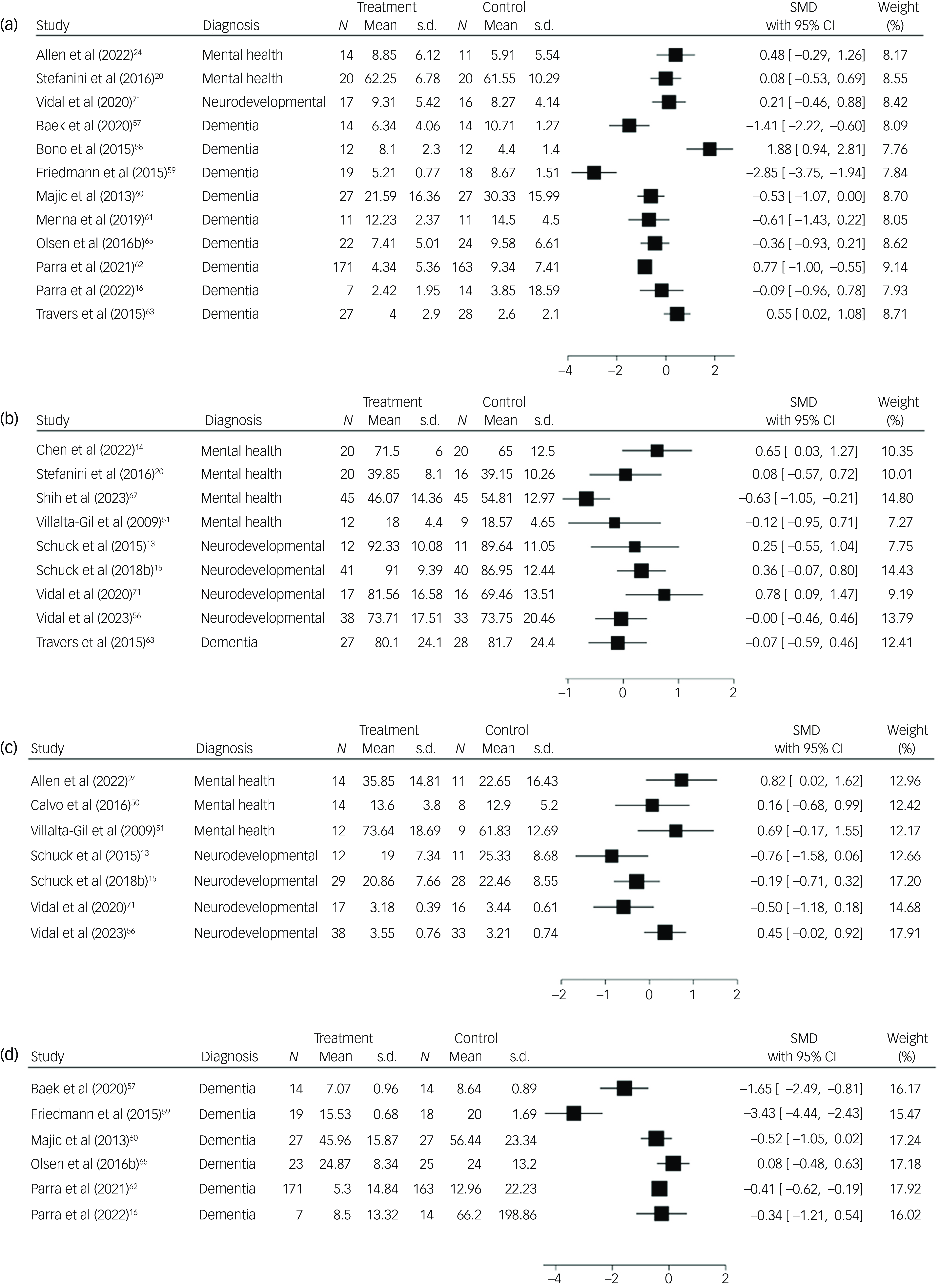
A forest plot showing a comparison of depression at longest follow-up is presented in Fig. 3(a). As improvement in depressive symptoms was associated with lower scores on all outcome measures, SMDs less than zero indicate improvements for the intervention arm. Of the 14 studies evaluating this outcome, two trials were excluded, as one did not report mean values or standard deviations, Reference Chen, Hsieh, Chen, Tseng, Hung and Chen47 and the other did not provide post-intervention depression scores. Reference Wolynczyk-Gmaj, Ziolkowska, Rogala, Scigala, Bryla and Gmaj52
Forest plots for comparison of depression (a), social skills and/or behaviour (b), symptom frequency and/or severity (c) and agitation (d) at longest follow-up. SMD, standardised mean difference.

Social skills and/or behaviour
Fourteen studies (48.3%) evaluated the impact of DAIs on social skills and/or behaviour using various measures (Supplementary Material 4). Of these, eight studies showed a positive impact of group dog-assisted therapy on social skills and/or behaviour compared with the control group (neurodevelopmental, n = 6; mental health, n = 2). Reference Schuck, Emmerson, Fine and Lakes13–Reference Schuck, Emmerson, Abdullah, Fine, Stehli and Lakes15,Reference Nieforth, Guerin, Stehli, Schuck, Yi and O’Haire49,Reference Scorzato, Zaninotto, Romano, Menardi, Cavedon and Pegoraro55,Reference Vidal, Vidal, Lugo, Ristol, Domenec and Casas56,Reference Shih and Yang67,Reference Vidal, Vidal, Ristol, Domenec, Segu and Vico71 Interventions in all eight studies were delivered by a professional animal handler, and in three, the handler was accompanied by an experienced therapist or psychologist. Reference Chen, Hung, Lee, Tseng, Chen and Chen14,Reference Vidal, Vidal, Lugo, Ristol, Domenec and Casas56,Reference Vidal, Vidal, Ristol, Domenec, Segu and Vico71
Six studies showed no benefits of group or individual dog-assisted therapy with respect to social skills and/or behaviour compared with the control group (mental health, n = 3; neurodevelopmental, n = 2; dementia, n = 1). Reference Stefanini, Martino, Bacci and Tani20,Reference Wijker, Leontjevas, Spek and Enders-Slegers21,Reference Villalta-Gil, Roca, Gonzalez, Domenec and Cuca51,Reference Fung and Leung53,Reference Travers, Perkins, Rand, Bartlett and Morton63,Reference Stefanini, Martino, Allori, Galeotti and Tani66 Of these, four involved interventions delivered by a professional animal handler. Reference Stefanini, Martino, Bacci and Tani20,Reference Villalta-Gil, Roca, Gonzalez, Domenec and Cuca51,Reference Fung and Leung53,Reference Stefanini, Martino, Allori, Galeotti and Tani66 In one, the handler was accompanied by an experienced psychologist, Reference Villalta-Gil, Roca, Gonzalez, Domenec and Cuca51 and two were delivered by a therapist who had been trained in dog behaviour and welfare, working with either their own accredited dogs Reference Travers, Perkins, Rand, Bartlett and Morton63 or dogs provided by a service dog foundation. Reference Wijker, Leontjevas, Spek and Enders-Slegers21
A forest plot showing a comparison of social skills and/or behaviours at longest follow-up is presented in Fig. 3(b). As improvement in social skills and/or behaviour was associated with higher scores on all outcome measures, SMDs greater than zero indicate improvements for the intervention arm. Of the 14 studies evaluating this outcome, five trials were excluded, as post-intervention means and standard deviations were not reported. Reference Wijker, Leontjevas, Spek and Enders-Slegers21,Reference Nieforth, Guerin, Stehli, Schuck, Yi and O’Haire49,Reference Fung and Leung53,Reference Scorzato, Zaninotto, Romano, Menardi, Cavedon and Pegoraro55,Reference Stefanini, Martino, Allori, Galeotti and Tani66
Symptom frequency and/or severity
Ten studies (34.5%) measured changes in symptom frequency and/or severity. Measures varied by diagnosis (Supplementary Material 4); however, all those involving interventions delivered to participants with schizophrenia evaluated symptomology using the Positive and Negative Syndrome Scale, and those involving participants with ADHD used the ADHD Rating Scale. Five studies showed a positive impact of DAIs on symptom frequency and/or severity compared with the control group (neurodevelopmental, n = 3; mental health, n = 2). Reference Schuck, Emmerson, Fine and Lakes13,Reference Schuck, Emmerson, Abdullah, Fine, Stehli and Lakes15,Reference Chen, Hsieh, Chen, Tseng, Hung and Chen47,Reference Chu, Liu, Sun and Lin68,Reference Vidal, Vidal, Ristol, Domenec, Segu and Vico71 Of these, four studies evaluated group dog-assisted therapy delivered by a professional animal handler and an experienced therapist or psychologist Reference Chen, Hsieh, Chen, Tseng, Hung and Chen47,Reference Vidal, Vidal, Ristol, Domenec, Segu and Vico71 or a professional animal handler alone. Reference Schuck, Emmerson, Fine and Lakes13,Reference Schuck, Emmerson, Abdullah, Fine, Stehli and Lakes15 The remaining study evaluated group dog-assisted activities delivered by a member of the research team. Reference Chu, Liu, Sun and Lin68
Five studies showed no benefits of dog-assisted therapy in terms of symptom frequency and/or severity compared with the control group (mental health, n = 3; neurodevelopmental, n = 2). Reference Allen, Shenk, Dreschel, Wang, Bucher and Desir24,Reference Calvo, Fortuny, Guzmán, Macías, Bowen and García50,Reference Villalta-Gil, Roca, Gonzalez, Domenec and Cuca51,Reference Vidal, Vidal, Lugo, Ristol, Domenec and Casas56,Reference Wijker, Leontjevas, Spek and Enders-Slegers70 Of these, one intervention was delivered on an individual basis by experienced therapists who had completed advanced courses in dog behaviour and welfare, Reference Wijker, Leontjevas, Spek and Enders-Slegers21 one was group-based and delivered by a professional animal handler, Reference Calvo, Fortuny, Guzmán, Macías, Bowen and García50 one was delivered to groups and on an individual basis by a professional animal handler and psychologist, Reference Vidal, Vidal, Lugo, Ristol, Domenec and Casas56 and two were delivered by experienced clinicians trained by an animal handler to a group or on an individual basis, respectively. Reference Allen, Shenk, Dreschel, Wang, Bucher and Desir24,Reference Villalta-Gil, Roca, Gonzalez, Domenec and Cuca51
A forest plot showing a comparison of symptom frequency and/or severity at longest follow-up is presented in Fig. 3(c). As improvement in symptom frequency and/or severity was associated with lower scores on all outcome measures, SMDs less than zero indicate improvements for the intervention arm. Of the ten studies evaluating this outcome, three trials were excluded from the forest plot, as means and standard deviations were not reported. Reference Wijker, Leontjevas, Spek and Enders-Slegers21,Reference Chen, Hsieh, Chen, Tseng, Hung and Chen47,Reference Chu, Liu, Sun and Lin68
Agitation
Six studies (20.7%) of participants with dementia evaluated the impact of DAIs on agitation using various measures (Supplementary Material 4). Two studies showed a positive impact of dog-assisted therapy compared with the control group, Reference Parra, Manuel Hernández Garre and Echevarría Pérez16,Reference Parra, Garre and Perez62 and in both, interventions were delivered by a professional animal handler and experienced therapist. However, four studies showed no benefits of DAIs with respect to agitation compared with the control group. Reference Baek, Lee and Sohng57,Reference Friedmann, Galik, Thomas, Hall, Chung and McCune59,Reference Majic, Gutzmann, Heinz, Lang and Rapp60,Reference Olsen, Pedersen, Bergland, Enders-Slegers, Patil and Ihlebaek65 Of these, two evaluated group dog-assisted activities delivered by a professional animal handler Reference Olsen, Pedersen, Bergland, Enders-Slegers, Patil and Ihlebaek65 or a nurse practitioner. Reference Friedmann, Galik, Thomas, Hall, Chung and McCune59 Two evaluated dog-assisted therapy delivered by a professional animal handler only; in one of these, the therapy was delivered on a group basis, Reference Baek, Lee and Sohng57 and the other did not specify whether the sessions were group-based or on a one-to-one basis. Reference Majic, Gutzmann, Heinz, Lang and Rapp60
A forest plot showing a comparison of agitation at longest follow-up is presented in Fig. 3(d). As improvement in agitation was associated with lower scores on all outcome measures, SMDs less than zero indicate improvements for the intervention arm.
How well reported are RCTs delivering DAIs to people with mental health and neurodevelopmental conditions?
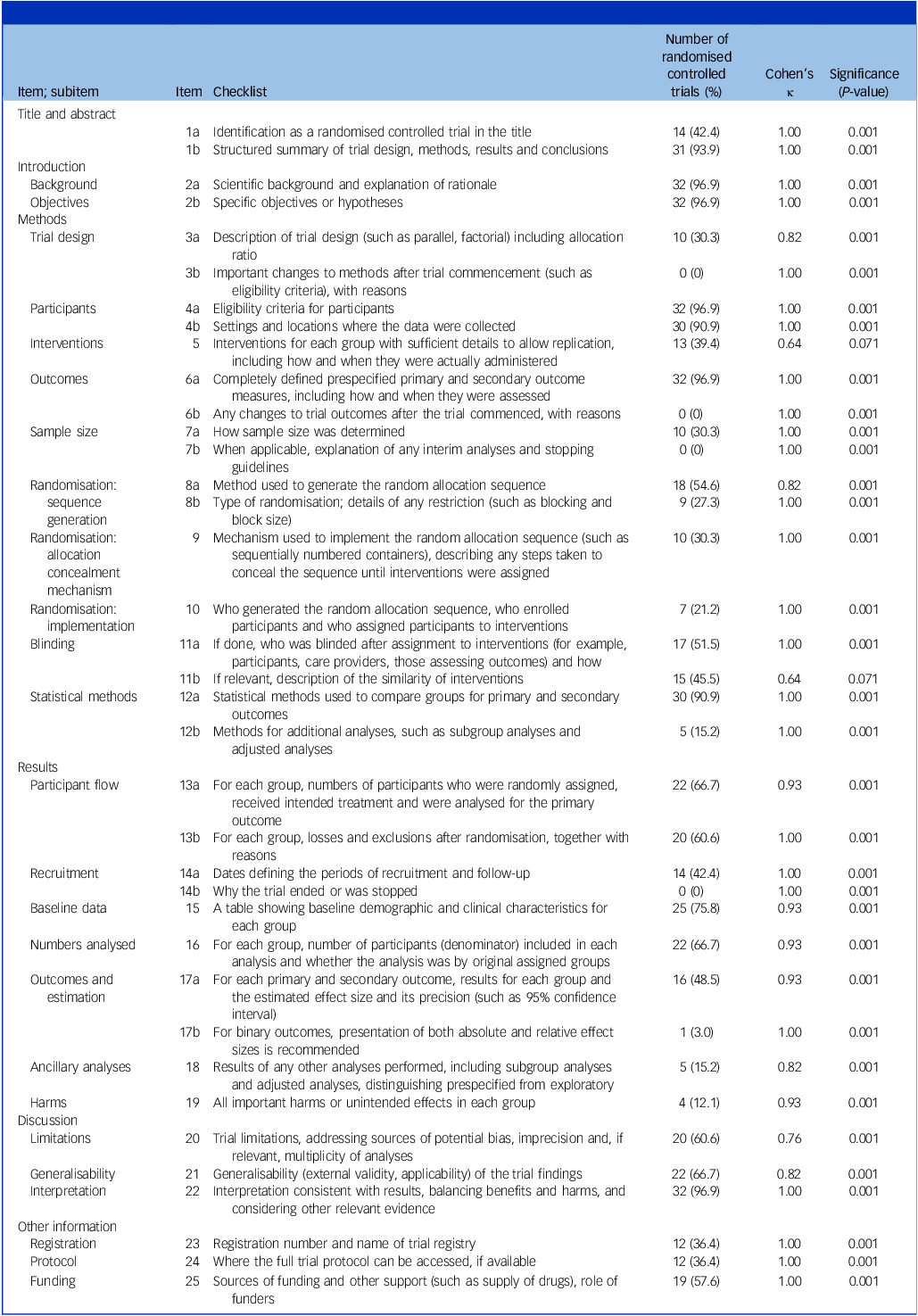
The mean proportion of adherence to the CONSORT statement was calculated to be 48.6% with a standard deviation of 13.4% (minimum and maximum adherence proportions were 13.51% and 75.7%, respectively). Only nine items were reported in more than 75% of the included RCTs. Notably, 17 papers (51.5%) were published across 13 journals that did not explicitly require authors to follow the CONSORT statement.
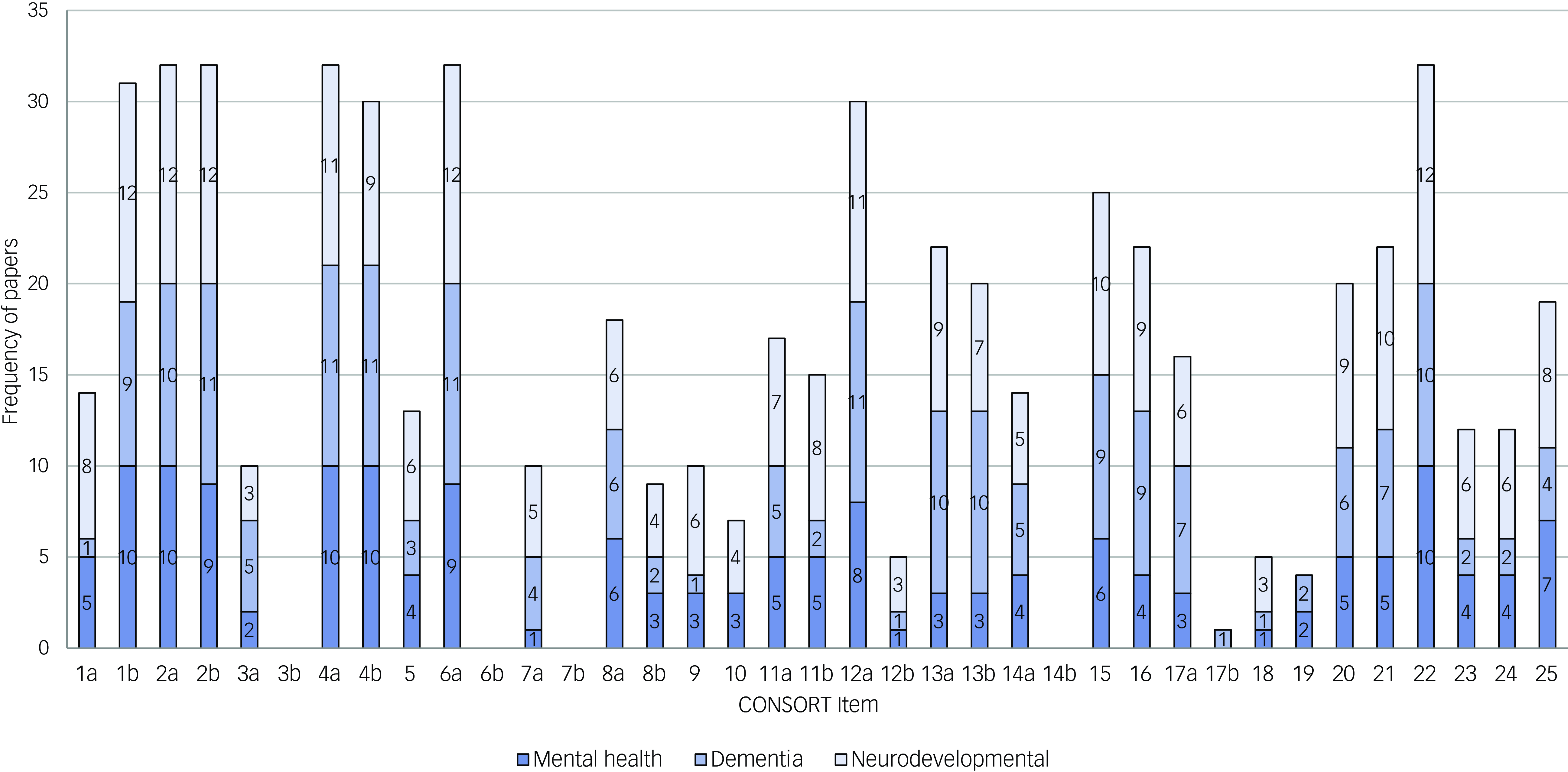
Compliance per CONSORT item is presented in Table 4 and Fig. 4. Overall, Cohen’s kappa indicated a statistically significant ‘strong’ level of agreement (κ = 0.88 (95% CI = 0.53–1.23, P < 0.001). Cohen’s kappa was also calculated to assess the agreement by CONSORT item (Table 4). Four items were assessed as ‘no’, as they were not applicable to the included RCTs. These included changes to methods after trial commencement, changes to trial outcomes after the trial commenced, explanation of any interim analyses and stopping guidelines, and why the trial ended or was stopped. In addition, many of the RCTs did not report binary outcomes, so item 17b (presentation of effect sizes for binary outcomes) was not applicable to the majority of the studies (n = 23). The lowest scoring item was ‘important harms or unintended effects’ (item 19; n = 4, 12.1%).
Assessment of the quality of reporting of randomised controlled trials using the CONSORT statement

Graphical presentation of CONSORT compliance per item and by diagnosis category.

For studies that reported important harms or unintended effects, three (10.3%) reported adverse events related to the DAI. These included treatment-disrupting events due to the dog, Reference Allen, Shenk, Dreschel, Wang, Bucher and Desir24 participants exhibiting behaviours that threatened to compromise the welfare of the dog Reference Calvo, Fortuny, Guzmán, Macías, Bowen and García50 and participants presenting fearful reactions to the dog. Reference Majic, Gutzmann, Heinz, Lang and Rapp60 One study reported an adverse event unrelated to the DAI, indicating that an infectious outbreak may have negatively influenced outcomes. Reference Travers, Perkins, Rand, Bartlett and Morton63 Although adverse events related to DAIs were reported in only three studies (10.3%), selection criteria for the dogs were reported in 20 studies (69.0%; e.g. free of veterinary infectious diseases, certified in accordance with a national standard, completion of vaccinations, previous participation in DAIs, and appropriate ratings on aptitude and temperament tests). Ten studies (34.5%) specifically reported information about training, in varying detail. Eight reported only that dogs were trained to work with people, Reference Allen, Shenk, Dreschel, Wang, Bucher and Desir24,Reference Calvo, Fortuny, Guzmán, Macías, Bowen and García50,Reference Bono, Benvenuti, Buzzi, Ciatti, Chiarelli and Chiambretto58,Reference Majic, Gutzmann, Heinz, Lang and Rapp60,Reference Olsen, Pedersen, Bergland, Enders-Slegers and Ihlebak64,Reference Chu, Liu, Sun and Lin68,Reference Wijker, Leontjevas, Spek and Enders-Slegers70,Reference Vidal, Vidal, Ristol, Domenec, Segu and Vico71 whereas two reported information about the dog being trained on specific exercises of the intervention. Reference Hill, Ziviani, Driscoll, Teoh, Chua and Cawdell-Smith19,Reference Parra, Garre and Perez62 Information on dog safety and welfare was most commonly reported in studies delivering interventions to participants with neurodevelopmental conditions. These studies reported that the dogs’ working time was limited per day, Reference Wijker, Kupper, Leontjevas, Spek and Enders-Slegers23,Reference Fung and Leung53,Reference Meints, Brelsford, Dimolareva, Marechal, Pennington and Rowan54,Reference Wijker, Leontjevas, Spek and Enders-Slegers70 and/or dog welfare and stress behaviours were documented or monitored. Reference Wijker, Kupper, Leontjevas, Spek and Enders-Slegers23,Reference Meints, Brelsford, Dimolareva, Marechal, Pennington and Rowan54,Reference Scorzato, Zaninotto, Romano, Menardi, Cavedon and Pegoraro55,Reference Wijker, Leontjevas, Spek and Enders-Slegers70
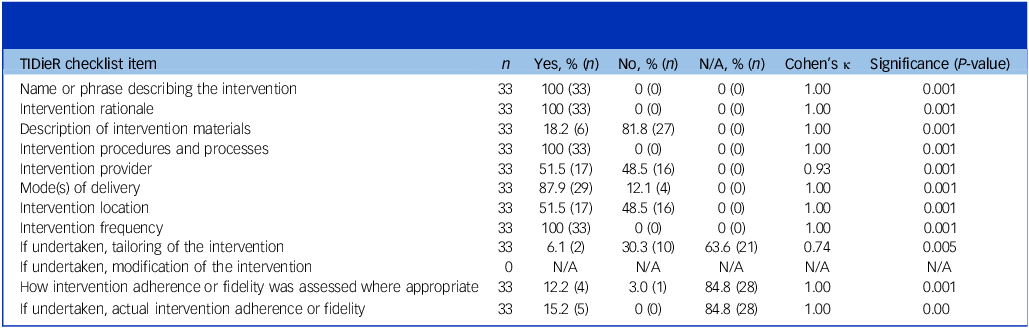
Fewer than half of the RCTs (n = 13, 39.4%) adequately reported details relating to the intervention according to the CONSORT statement, and further assessment using the TIDieR checklist indicated considerable variability in intervention reporting (Table 5). Only one of the 33 papers reported all of the information expected. Reference Hill, Ziviani, Driscoll, Teoh, Chua and Cawdell-Smith19 Items most likely to achieve a ‘yes’ agreement included intervention name (100%), rationale (100%), procedures and processes (100%) and frequency (100%). Those least likely to achieve a ‘yes’ agreement included items relating to the description of the intervention provider (51.5%), location (51.5%) and materials (18.2%).
Frequency of papers achieving ‘yes’, ‘no’ or ‘N/A’ agreement for each Template for Intervention Description and Replication (TIDieR) checklist item

N/A, not applicable.
Overall, Cohen’s kappa indicated a statistically significant ‘almost perfect’ level of agreement (κ = 0.99 (95% CI = 0.97–1.01, P < 0.001). Cohen’s kappa was also calculated to assess agreement by TIDieR checklist item (Table 5).
Discussion
The aims of this review were to synthesise findings of published research to determine whether DAIs are effective for people with mental health or neurodevelopmental conditions and to formally assess the quality of reporting and use of terminology in RCTs for the first time. Findings for the effectiveness of DAIs across outcome categories were mixed, as determined using direction of effect and forest plots. However, they clearly signalled promise and indicated opportunities to improve future research in this area (e.g. through the development of guidelines for clear terminology and reporting standards, and through rigorous RCTs with larger sample sizes to ensure studies are adequately powered). Owing to small sample sizes, heterogeneity of study quality and outcome measures, and variation in the types of DAI provided (in terms of content and delivery), it was challenging or impossible to interpret results in terms of the potential benefits of DAIs for a specific population. However, taking into consideration the three core outcome groups (depression, social skills and agitation, recognising that symptom frequency and/or severity is not symptom specific), 57% (8/14) of the studies reported positive outcomes of DAI for social skills, whereas 43% (6/14) reported positive outcomes for depression and 33% (2/6) for agitation. Of 14 studies evaluating social skills, only two were rated as overall high quality; Reference Vidal, Vidal, Lugo, Ristol, Domenec and Casas56,Reference Vidal, Vidal, Ristol, Domenec, Segu and Vico71 both of these reported positive outcomes. Of the 14 studies evaluating depression, only one study was rated as overall high quality, Reference Allen, Shenk, Dreschel, Wang, Bucher and Desir24 and no benefits of the DAI were reported. No studies evaluating agitation were rated as overall high quality.
Without further investigation of potential mechanistic pathways, which would be beyond the scope of this review, we therefore tentatively propose that DAIs show particular promise for conditions that might benefit from social skill support. Future research should investigate potential mechanisms of action of DAIs (and AAIs in general) in greater detail, so these can be closely linked to specific outcome measures and populations, including hypotheses involving longer-term impact beyond intervention completion. It will be important to justify any hypotheses more rigorously according to which symptoms of mood disorders (e.g. depression or anxiety) would still be improved 6 months post-intervention, considering any mediating or ‘catalysing’ factors such as improved engagement and rapport-building facilitated by the DAI compared with standard care.
Methodological considerations
Whereas some RCTs found improvements for depression, social skills and/or behaviour, symptom frequency and/or severity, and agitation, other trials did not find benefits of DAIs with respect to these outcomes. Although the quality of the evidence base is improving, there is largely an absence of the rigorous methodology that would enable demonstration of the potential effectiveness of DAIs. For example, the studies frequently included small or very small sample sizes, rendering studies inadequately powered to detect potential differences in effect sizes between study groups and probably undermining the internal and external validity of the studies. Reference Faber and Fonseca72 Other examples of limited rigour include generally short follow-up periods, or no follow-up, for assessing outcomes and an overall high risk of bias for the majority of included studies (n = 25).
In addition, there were several limitations in relation to generalisability to our study population groups. First, for children and adolescents with neurodevelopmental conditions, females were notably underrepresented (n = 85, 26.5%). This could have been because males are more likely to be diagnosed with ASC or ADHD than females; Reference Martin73,Reference Gould74 future research should aim to include more female participants to adequately reflect the population of children and young people with neurodevelopmental conditions. Reference Rehn, Caruso and Kumar75 Second, only five studies reported information regarding participant ethnicity. Collection and reporting of ethnicity data are essential for understanding the generalisability of findings and the probable impact of an intervention for particular ethnic groups. Reference Gaias, Duong, Pullmann, Brewer, Smilansky and Halbert76 Likewise, information regarding the severity of a participant’s condition was only reported for those with dementia or schizophrenia. As severity is not consistently reported, it cannot be determined whether the effects of DAIs should be attributed to the intervention or the severity of the condition. Reference Becker, Rogers and Burrows77 This limitation has been highlighted in previous systematic reviews exploring AAIs for ASC Reference Rehn, Caruso and Kumar75 and schizophrenia. Reference Hawkins, Hawkins, Dennis, Williams and Lawrie78
Although our findings cannot offer definitive conclusions about the effectiveness of DAIs for our study population groups, they clearly signal the potential of DAIs to improve a variety of psychosocial outcomes, consistent with findings from previous observational studies. Reference Lutwack-Bloom, Wijewickrama and Smith79–Reference Signal, Taylor, Prentice, McDade and Burke82 Recent evidence syntheses also indicate the potential of DAIs to improve outcomes for a range of mental health and neurodevelopmental conditions, including schizophrenia, Reference Hawkins, Hawkins, Dennis, Williams and Lawrie78 mental health conditions, Reference Jones, Rice and Cotton8,Reference Hoagwood, Acri, Morrissey and Peth-Pierce83,Reference Yakimicki, Edwards, Richards and Beck84 post-traumatic stress disorder and trauma, Reference Hediger, Wagner, Künzi, Haefeli, Theis and Grob9,Reference Germain, Wilkie, Milbourne and Theule85 ASC Reference Nieforth, Schwichtenberg and O’Haire11,Reference Dimolareva and Dunn34 and ADHD. Reference Pérez-Gómez, Amigo-Gamero, Collado-Mateo, Barrios-Fernandez, Muñoz-Bermejo and Garcia-Gordillo86 Despite this, evidence syntheses have unanimously emphasised the need for more rigorous and sufficiently powered RCTs Reference Zafra-Tanaka, Pacheco-Barrios, Tellez and Taype-Rondan25,Reference Hawkins, Hawkins, Dennis, Williams and Lawrie78,Reference Batubara, Tonapa, Saragih, Mulyadi and Lee87,Reference Narvekar and Narvekar88 to determine the true impact of DAIs for these populations. However, the focus on determining effectiveness raises an important issue: reporting of RCTs of DAIs is often insufficiently accurate, comprehensive and transparent. For example, authors often have not reported data on intervention implementation (e.g. adaptation or tailoring of the intervention to specific groups or materials used to support intervention implementation). Inadequate reporting can make it challenging for researchers to replicate trials, for intervention developers to design effective interventions and for providers to implement interventions in practice. Reference Nosek, Alter, Banks, Borsboom, Bowman and Breckler89 A lack of sharing of protocols, outcome data and intervention materials may have limited the ability of human–animal interaction researchers to reproduce trial procedures, replicate trial results and effectively synthesise evidence on these interventions. Reference Rodriguez, Green, Binfet, Townsend and Gee90
The present review also found that many CONSORT items were poorly reported in the DAI literature. Such items included descriptions of trial design, information about how sample size was determined, randomisation information, and important harms or unintended effects in each group. Only 14 of 27 journals included referenced reporting guidelines in their instructions to authors. This inefficient use of resources for research has probably contributed to suboptimal dissemination of potentially effective interventions and overestimation of intervention efficacy. As in other areas of research, transparent, detailed and adequately subject-specific reporting of DAI RCTs is needed to minimise reporting biases and maximise the credibility and utility of this research evidence. Reference Cybulski, Mayo-Wilson and Grant91
Beyond effectiveness
It is important to extend this focus beyond ‘what works’ and consider ‘under what circumstances and how these interventions work’. Reference Booth, Noyes, Flemming, Moore, Tunçalp and Shakibazadeh92 The effect of complex DAIs (or AAIs generally), which involve poorly understood interspecies interactions between several actors including a dog, may depend on elements of difficult-to-control, dynamic systems in which they occur. Reference Sniehotta, Araújo-Soares, Brown, Kelly, Michie and West93 For example, aspects related to the physical environment in which interventions take place, which may vary greatly between or even within study settings but may have substantial effects on the dogs involved; considerations relating to ‘matching’ dogs and participants, and the role of all actors involved (participant, handler and/or therapist) would be important to investigate. To unlock the true potential of DAIs (and AAIs generally) in the future, it will be crucial to complement evidence from applied intervention research with findings from well-designed and well-conducted observational studies focused on exploring layers of AAIs/DAIs (such as mechanistic impact-outcome pathways; environmental aspects; the role of all actors, and interspecies reciprocity) Reference Leconstant and Spitz94 that have so far received little attention but will be fundamental in advancing this promising area. Future research needs to explore how and why these interventions work, for whom, and under what conditions. Reference Weiss, Bloom and Brock95 Interdisciplinary mixed-method research and process evaluations conducted alongside outcome evaluations could facilitate our understanding of how DAIs may work and highlight issues that may impact effectiveness in real-world settings.
Intervention terminology, practice and reporting
Despite expansion of practice, inconsistencies remain in how DAIs are described, practised, and reported upon within the evidence base. Reference Binder, Parish-Plass, Kirby, Winkle, Skwerer and Ackerman32 While most DAIs described in studies in this review were assessed as having clear alignment for content and terminology, improvement in reporting certain information was still required (e.g., training of the dog-handler team, measures used to assess dog aptitude, temperament and behaviour, access to intervention materials to identify how content was developed to align with goals, in the case of therapy). The absence of this detailed information makes it challenging to ascertain the preparation, training, and expectations of the handler and the dogs that work in different roles. Recent research has argued these difficulties may have hindered the development of the field in terms of establishing agreed standards of practice, qualifications and competencies, and adopting good animal welfare practices. Reference Binder, Parish-Plass, Kirby, Winkle, Skwerer and Ackerman32 As a result, new uniform terminology has been suggested to improve clarify for those involved in the delivery and receipt of DAIs. Reference Binder, Parish-Plass, Kirby, Winkle, Skwerer and Ackerman32 This review uses original terminology to be consistent with the taxonomy and definitions reported in the included RCTs. Seeing the extensive variety of intervention content, engagement and delivery modalities reported for DAIs (Supplementary Material 5), future work could usefully focus on efforts to classify further subtypes of DAIs, building on the classification by Binder et al, Reference Binder, Parish-Plass, Kirby, Winkle, Skwerer and Ackerman32 specifying the role of the dog and type of intervention content. This would allow future evidence syntheses to summarise study findings more specifically in relation to the effectiveness of ‘DAI types’ for specific populations and would further facilitate our understanding of what works for whom under what circumstances.
Limitations
First, the clinical and methodological heterogeneity did not allow for meta-analyses to definitively determine the benefits of DAIs for participants with mental health or neurodevelopmental conditions. Analyses to separate studies by those evaluating dog-assisted therapy and those evaluating dog-assisted activities were considered. However, owing to a number imbalance, this was not possible. For example, only two of the 14 studies evaluating depression involved dog-assisted activities (compared the 12 which involved therapy). For studies evaluating symptom frequency and/or severity, only one of ten studies evaluated dog-assisted activity, and all studies evaluating social skills delivered dog-assisted therapy only. Therefore, the effectiveness results should be interpreted with some caution. Second, although this review aimed to determine the effectiveness of DAIs for individuals with neurodevelopmental and mental health conditions across all age groups, a significant proportion of the studies included focused on older participants with dementia. Subsequently, the findings related to depression and agitation are not generalisable to populations of younger individuals with mental health or neurodevelopmental conditions. Future research targeting these subgroups is required to clarify the impact of DAIs across diverse age ranges and conditions. Last, only papers published in English were included; inclusion of non-English-language studies may have contributed to further understanding.
Future implications
The implementation of DAIs for a wide range of mental health and neurodevelopmental conditions has been rapidly increasing in practice. The existing body of evidence indicates that DAIs may have the potential to improve mental health and behavioural outcomes for these population groups, possibly specifically for conditions that benefit from improved social skills; however, there are considerable methodological concerns regarding the current literature. There remains significant room for improvement in relation to the design and reporting of DAI RCTs, with the potential to develop DAI (or AAI)-specific extensions to existing guidelines. Further rigorous interdisciplinary research is required to help advance research in this field.
Supplementary material
Supplementary material is available online at https://doi.org/10.1192/bjp.2025.8
Data availability
Data availability is not applicable to this article as no new data were created or analysed in this study.
Author contributions
Conceptualisation: E.S., S.H. and E.R.; methodology: E.S., S.H., A.S., H.S., J.P. and E.R.; software: E.S., J.P. and H.S.; formal analysis: E.S., J.P. and H.S.; investigation: E.S., J.P., H.S. and E.R.; resources: E.S., S.H., A.S., H.S., J.P., J.R., D. McMillan, D. Mills, C.C., Q.W., S.G. and E.R.; data curation: E.S., J.P., H.S., S.H. and E.R., writing – original draft preparation: E.S. writing – review and editing: E.S., S.H., A.S., H.S., J.P., J.R., D. McMillan, D. Mills, C.C., Q.W., S.G. and E.R.; visualisation: E.S., S.H., A.S., H.S., J.P., J.R., D. McMillan, D. Mills, C.C., Q.W., S.G. and E.R.; supervision: S.H., A.M., D. McMillan, D. Mills and E.R.; project administration: E.S., S.H., H.S., J.P. and E.R. All authors read and agreed to the published version of the manuscript.
Funding
This review was funded by the National Institute for Health Research (NIHR) Programme Development Grants (reference: NIHR205656). E.S., J.P., H.S., J.R., D. McMillan, Q.W. and E.R. are supported by the NIHR Yorkshire and Humber Applied Research Collaboration (https://www.arc-yh.nihr.ac.uk). The views expressed are those of the authors, and not necessarily those of the NIHR.
Declaration of interest
None.


 Open access


eLetters
No eLetters have been published for this article.