


The outbreak of an unusual and contagious pneumonia, severe acute respiratory syndrome (SARS), related to a novel coronavirus (Reference Peiris, Lai and PoonPeiris et al, 2003), caused considerable panic in the Far East because of its rapidity of transmission and high mortality rate. The places worst affected were China, Hong Kong, Singapore, Taiwan and Toronto. The disease appears to spread primarily by close person-to-person contact. Doctors and health workers are at particularly high risk because of the lack of forewarning that they might be seeing or contacting someone with SARS. The outbreak prompted public fear not only within the hospital but also in the community. To date, however, apart from a descriptive report (Reference Maunder, Hunter and VincentMaunder et al, 2003), there has been no systematic evaluation of the psychological impact of SARS on health workers and their mental health condition. This study attempted to assess the immediate stress and psychological impact of SARS on health workers in a tertiary hospital that was seriously affected by an outbreak of this disease in southern Taiwan.
METHOD
Background and study sample
In Taiwan, the first identified case of SARS was reported on 10 March 2003, but the outbreak did not really take hold until late April and early May, when there was a surge of cases, with a peak of 65 new infections recorded on 22 May. By 24 June there were 692 suspected and probable cases, and 84 deaths had occurred. Four-fifths of the cases were related to hospital situations; for example, a lapse in infection control in a hospital in Taipei resulted in a large number of new exposures, which then spread, as infected patients returned to the community or were relocated to other hospitals in Taiwan.
The Chang Gung Memorial Hospital, a tertiary hospital in southern Taiwan with 2300 beds and 3822 workers (including ancillary staff), admitted its first patient with SARS in late April. Cluster nosocomial infections developed a few days later, resulting in successive chain clusters of 79 infections and 19 deaths. Among the infected were 16 health workers (5 doctors, 9 nurses, 2 respiratory therapists) who were also kept in intensive care; unfortunately, one of them (a doctor) died on 16 May. In addition, a total of 237 health workers were subjected to mandatory quarantine in an isolated new dormitory for 14 days, having been in close contact with an infected person. From mid-May, stringent measures for the control of nosocomial infection were applied, with restriction of movement and activities in the hospital: closing all out-patient and emergency services as well as excluding any new admissions, and consequently reducing the number of staff on duty. Although partial services were resumed on 8 June, most activities remained restricted. At the time of our study there were fewer than 2500 medical workers (833-2438) on daily active duties.
Study design and measures
The study was a cross-sectional survey. All staff who were actually on service during the outbreak were invited to participate. The study covered a period of just over 6 weeks (from 12 May to 27 June), the time when the hospital was officially declared as having a serious nosocomial infection with SARS. Data were collected through an anonymous, self-rated questionnaire distributed to all work stations and over the internet (to which all hospital workers had free access). Written consent was obtained before the data collection. Only one response to the questionnaire per person was permitted. The questionnaire consisted of three parts: basic demographic data and SARS exposure experience, the Impact of Event scale and the Chinese Health Questionnaire.
Exposure to SARS
Information about exposure to SARS and working experiences was collected, including evaluation of the nature and place of work, and contact with and care of SARS patients. In addition, items regarding the perception of risk, adverse experience and coping were assessed on a five-point Likert scale (1, strongly disagree; 2, disagree; 3, not sure; 4, agree; 5, strongly agree).
Impact of Event Scale
The Impact of Event Scale (IES; Reference Horowitz, Wilner and AlverezHorowitz et al, 1979) is a self-report measure used to assess the frequency of intrusive and avoidant phenomena in response to a specific stressful life event. Each of the 15 items is rated on a four-point frequency scale (0, not at all; 1, rarely; 3, sometimes; 5, often) in relation to the past week. A higher score indicates a greater frequency of intrusive thoughts and attempts at avoidance. The IES has demonstrated extensive reliability and validity (Reference JosephJoseph, 2000), and is used frequently in trauma research. It has been translated into Chinese, and has shown satisfactory validity in a study of abuse in women (Reference HouHou, 2001); it has also been used to assess adolescent victims of earthquake in Taiwan (Reference Hsu, Chong and YangHsu et al, 2002).
Chinese Health Questionnaire
The Chinese Health Questionnaire (CHQ; Reference Cheng and WilliamsCheng & Williams, 1986) is a self-administered screening instrument used to assess psychiatric morbidity in the Chinese community. It was derived from the General Health Questionnaire (Reference GoldbergGoldberg, 1972), and has been validated with satisfactory construct validity and applied in the survey of psychiatric morbidity in the community (Reference Cheng and WilliamsCheng & Williams, 1986) and in hospital settings (Reference Chong and WilkinsonChong & Wilkinson, 1989). Four factors are included in the structure: somatic symptoms; anxiety and worrying; sleep problems; and depression and poor family relationships (Reference Cheng, Wu and ChongCheng et al, 1990). In this study, the 12-item version (CHQ-12) was used. The cut-off point of 2/3 was adopted for case/non-case, as used in the community study.
Debriefing
In addition to the questionnaire survey, senior psychiatrists along with their teams of residents, psychologists and social workers provided a total of 14 single debriefing sessions designed for stress management to health workers at different nursing stations. A total of 285 nursing staff and respiratory therapists voluntarily participated in at least one of the sessions. The procedure was semi-structured and supportive in nature, with catharsis, clarification, sharing of emotion, assurances and other techniques commonly employed during group psychotherapy. Stresses and psychological responses expressed during the debriefings were used as supplementary information for the study in addition to the quantitative data collected through the self-report questionnaire.
Statistical analysis
The study period was arbitrarily divided into two phases for analysis: the initial shock and reaction phase (12 May to 6 June), when the situation was chaotic and the number of patients infected with SARS was escalating; and the repair or reorientation phase (7 June to 27 June), when no new infections occurred and the situation was brought under control. June 7 was taken as the cut-off point because partial services were resumed after that day, but were restricted to emergency and chronic cases under new regulations requiring strict patient observation.
Experiences of exposure to SARS were first analysed, and then compared among health workers for psychiatric morbidity and between the two different phases by means of chi-squared tests. The prevalence of psychiatric morbidity was estimated, with 95% confidence intervals. Differences in IES scores for exposure to SARS were assessed with t-tests. Finally, significant variables were further analysed for the risk of psychiatric morbidity with multivariate analyses using logistic regressions (applying the likelihood ratio estimation).
RESULTS
Characteristics of respondents
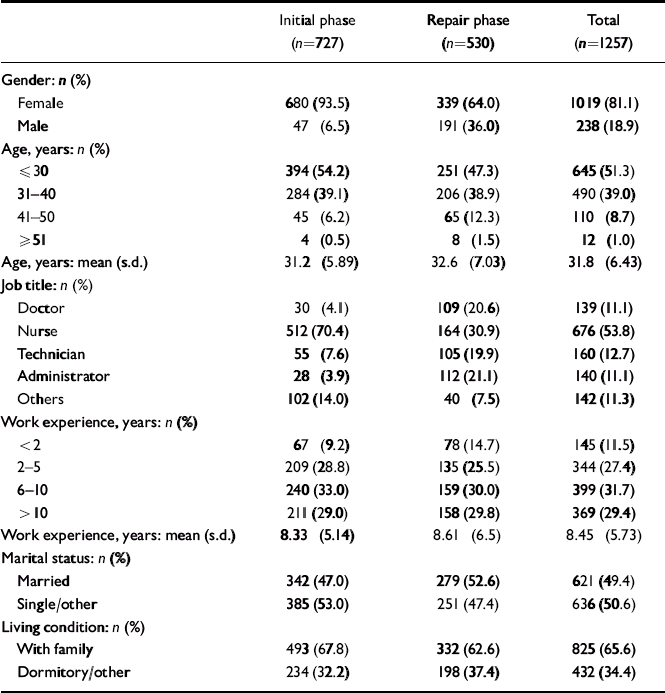
Of the 2500 workers eligible for the study, only 1310 completed the questionnaire. Fifty-three responses (4.0%) were excluded owing to incomplete answers. Of the 1257 successfully completed questionnaires, 731 (58.2%) were done using the pencil-and-paper method and 526 (41.8%) through the internet. The successful respondents comprised 1019 (81.1%) women and 238 (18.9%) men, with a mean age of 31.8 (s.d.=6.4) years (range 21-59 years). Most of the respondents were nurses (n=676; 54%); doctors (n=139) and health administrative workers (n=140) each represented about 11% of the sample, the rest were other professionals such as pharmacists, technicians and respiratory therapists. Their length of work experience varied from less than 2 years to more than 33 years, with an average of 8.5 (s.d.=5.7) years. Half of the respondents were single, and two-thirds were living with their families (Table 1).
Demographic characteristics of the study respondents
| Initial phase (n=727) | Repair phase (n=530) | Total (n=1257) | |
|---|---|---|---|
| Gender: n (%) | |||
| Female | 680 (93.5) | 339 (64.0) | 1019 (81.1) |
| Male | 47 (6.5) | 191 (36.0) | 238 (18.9) |
| Age, years: n (%) | |||
| ≤ 30 | 394 (54.2) | 251 (47.3) | 645 (51.3) |
| 31-40 | 284 (39.1) | 206 (38.9) | 490 (39.0) |
| 41-50 | 45 (6.2) | 65 (12.3) | 110 (8.7) |
| ≥ 51 | 4 (0.5) | 8 (1.5) | 12 (1.0) |
| Age, years: mean (s.d.) | 31.2 (5.89) | 32.6 (7.03) | 31.8 (6.43) |
| Job title: n (%) | |||
| Doctor | 30 (4.1) | 109 (20.6) | 139 (11.1) |
| Nurse | 512 (70.4) | 164 (30.9) | 676 (53.8) |
| Technician | 55 (7.6) | 105 (19.9) | 160 (12.7) |
| Administrator | 28 (3.9) | 112 (21.1) | 140 (11.1) |
| Others | 102 (14.0) | 40 (7.5) | 142 (11.3) |
| Work experience, years: n (%) | |||
| <2 | 67 (9.2) | 78 (14.7) | 145 (11.5) |
| 2-5 | 209 (28.8) | 135 (25.5) | 344 (27.4) |
| 6-10 | 240 (33.0) | 159 (30.0) | 399 (31.7) |
| > 10 | 211 (29.0) | 158 (29.8) | 369 (29.4) |
| Work experience, years: mean (s.d.) | 8.33 (5.14) | 8.61 (6.5) | 8.45 (5.73) |
| Marital status: n (%) | |||
| Married | 342 (47.0) | 279 (52.6) | 621 (49.4) |
| Single/other | 385 (53.0) | 251 (47.4) | 636 (50.6) |
| Living condition: n (%) | |||
| With family | 493 (67.8) | 332 (62.6) | 825 (65.6) |
| Dormitory/other | 234 (32.2) | 198 (37.4) | 432 (34.4) |
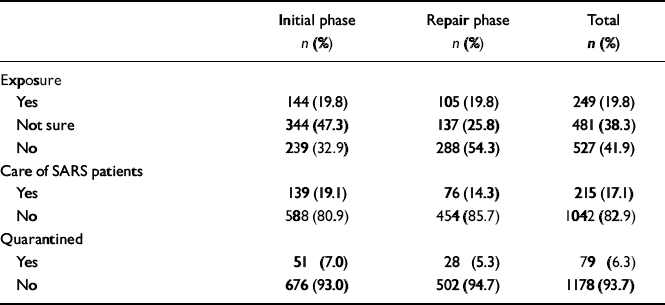
During the study period, about a fifth (n=249) of respondents had been in contact with the illness, while the rest were not sure (38.5%, n=481) or had not been exposed (42%, n=527). There was a decrease in the number of staff exposed to SARS in the repair phase compared with the initial phase (χ2=72.21, d.f.=2; P<0.001) (Table 2).
Respondents' exposure to severe acute respiratory syndrome (SARS)
| Initial phase n (%) | Repair phase n (%) | Total n (%) | |
|---|---|---|---|
| Exposure | |||
| Yes | 144 (19.8) | 105 (19.8) | 249 (19.8) |
| Not sure | 344 (47.3) | 137 (25.8) | 481 (38.3) |
| No | 239 (32.9) | 288 (54.3) | 527 (41.9) |
| Care of SARS patients | |||
| Yes | 139 (19.1) | 76 (14.3) | 215 (17.1) |
| No | 588 (80.9) | 454 (85.7) | 1042 (82.9) |
| Quarantined | |||
| Yes | 51 (7.0) | 28 (5.3) | 79 (6.3) |
| No | 676 (93.0) | 502 (94.7) | 1178 (93.7) |
Perception of threat
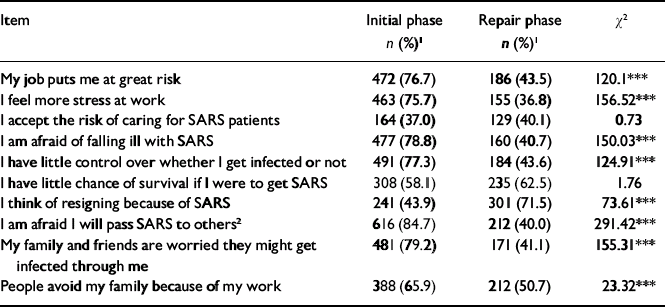
There were great differences in the reported perceptions and feelings about SARS between the two phases of the study. Health workers in the initial phase were significantly more likely to respond that their job put them at higher risk, compared with those in the repair phase; they also reported more stress at work, and a greater fear of falling ill. They had a greater tendency to fear being stigmatised and rejected by others, and were more afraid of passing SARS to their family, friends, colleagues or others (Table 3). The majority would not take the risk of caring for patients with SARS in either phase, and thought that they would have little chance of survival if they were to be infected by SARS. A higher proportion of workers, however, thought of resigning in the repair phase rather than in the initial phase.
Comparison of the perception of threat of severe acute respiratory syndrome (SARS) between the two study phases
| Item | Initial phase n (%)1 | Repair phase n (%)1 | χ2 |
|---|---|---|---|
| My job puts me at great risk | 472 (76.7) | 186 (43.5) | 120.1*** |
| I feel more stress at work | 463 (75.7) | 155 (36.8) | 156.52*** |
| I accept the risk of caring for SARS patients | 164 (37.0) | 129 (40.1) | 0.73 |
| I am afraid of falling ill with SARS | 477 (78.8) | 160 (40.7) | 150.03*** |
| I have little control over whether I get infected or not | 491 (77.3) | 184 (43.6) | 124.91*** |
| I have little chance of survival if I were to get SARS | 308 (58.1) | 235 (62.5) | 1.76 |
| I think of resigning because of SARS | 241 (43.9) | 301 (71.5) | 73.61*** |
| I am afraid I will pass SARS to others2 | 616 (84.7) | 212 (40.0) | 291.42*** |
| My family and friends are worried they might get infected through me | 481 (79.2) | 171 (41.1) | 155.31*** |
| People avoid my family because of my work | 388 (65.9) | 212 (50.7) | 23.32*** |
Exposure experience, impact of events and psychiatric morbidity
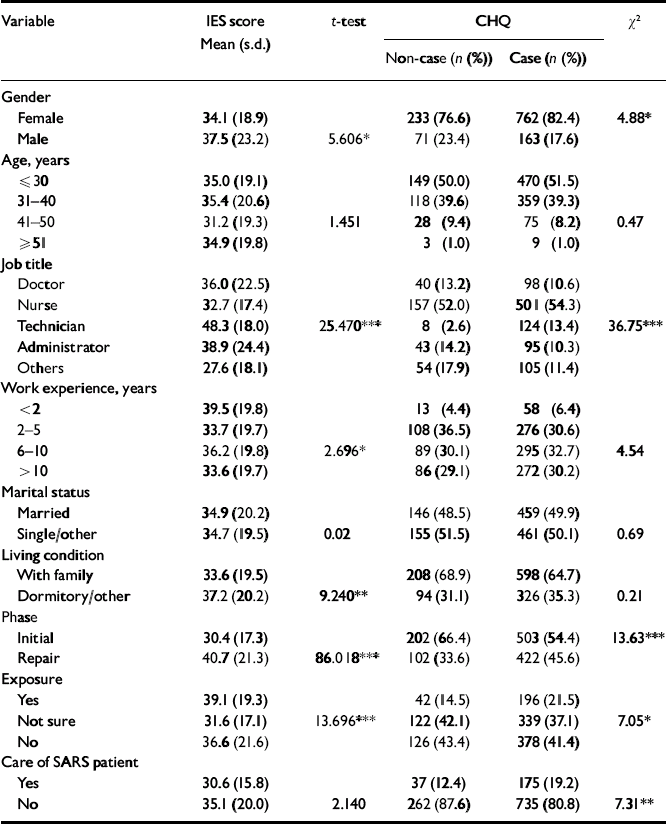
The average IES score in this sample was 34.8 (s.d.=19.7), with significantly higher scores in men, in technicians, in those with work experience of less than 2 years, during the repair phase, among those exposed to SARS and in those not living with their family (Table 4). No significant difference in IES score was found between marital status and different age groups.
Exposure experience, impact of events and psychiatric morbidity
| Variable | IES score Mean (s.d.) | t-test | CHQ | χ2 | |
|---|---|---|---|---|---|
| Non-case (n (%)) | Case (n (%)) | ||||
| Gender | |||||
| Female | 34.1 (18.9) | 233 (76.6) | 762 (82.4) | 4.88* | |
| Male | 37.5 (23.2) | 5.606* | 71 (23.4) | 163 (17.6) | |
| Age, years | |||||
| ≤ 30 | 35.0 (19.1) | 149 (50.0) | 470 (51.5) | ||
| 31-40 | 35.4 (20.6) | 118 (39.6) | 359 (39.3) | ||
| 41-50 | 31.2 (19.3) | 1.451 | 28 (9.4) | 75 (8.2) | 0.47 |
| ≥ 51 | 34.9 (19.8) | 3 (1.0) | 9 (1.0) | ||
| Job title | |||||
| Doctor | 36.0 (22.5) | 40 (13.2) | 98 (10.6) | ||
| Nurse | 32.7 (17.4) | 157 (52.0) | 501 (54.3) | ||
| Technician | 48.3 (18.0) | 25.470*** | 8 (2.6) | 124 (13.4) | 36.75*** |
| Administrator | 38.9 (24.4) | 43 (14.2) | 95 (10.3) | ||
| Others | 27.6 (18.1) | 54 (17.9) | 105 (11.4) | ||
| Work experience, years | |||||
| <2 | 39.5 (19.8) | 13 (4.4) | 58 (6.4) | ||
| 2-5 | 33.7 (19.7) | 108 (36.5) | 276 (30.6) | ||
| 6-10 | 36.2 (19.8) | 2.696* | 89 (30.1) | 295 (32.7) | 4.54 |
| > 10 | 33.6 (19.7) | 86 (29.1) | 272 (30.2) | ||
| Marital status | |||||
| Married | 34.9 (20.2) | 146 (48.5) | 459 (49.9) | ||
| Single/other | 34.7 (19.5) | 0.02 | 155 (51.5) | 461 (50.1) | 0.69 |
| Living condition | |||||
| With family | 33.6 (19.5) | 208 (68.9) | 598 (64.7) | ||
| Dormitory/other | 37.2 (20.2) | 9.240** | 94 (31.1) | 326 (35.3) | 0.21 |
| Phase | |||||
| Initial | 30.4 (17.3) | 202 (66.4) | 503 (54.4) | 13.63*** | |
| Repair | 40.7 (21.3) | 86.018*** | 102 (33.6) | 422 (45.6) | |
| Exposure | |||||
| Yes | 39.1 (19.3) | 42 (14.5) | 196 (21.5) | ||
| Not sure | 31.6 (17.1) | 13.696*** | 122 (42.1) | 339 (37.1) | 7.05* |
| No | 36.6 (21.6) | 126 (43.4) | 378 (41.4) | ||
| Care of SARS patient | |||||
| Yes | 30.6 (15.8) | 37 (12.4) | 175 (19.2) | ||
| No | 35.1 (20.0) | 2.140 | 262 (87.6) | 735 (80.8) | 7.31** |
Using the CHQ score as the case definition, the estimated prevalence of psychiatric morbidity in this sample was 75.3% (95% CI 72.9-77.7), and it was higher in the repair phase (80.6%, 95% CI 77.2-83.9) than in the initial phase (71.3%, 95% CI 68.0-74.5). Cases had significantly higher IES scores than non-cases: 41.4 (s.d.=17.6) v. 14.9 (s.d.=10.7); F=597.39, P<0.001. Those who were responsible for the care of SARS patients, and especially women, manifested higher rates of psychiatric morbidity. No statistically significant difference in psychiatric morbidity was found in relation to age, marital status or living conditions.
The manifestations of psychiatric symptoms in this sample varied, with 77.4% of respondents reporting anxiety and worrying, 74.2% depression and poor family relationships, 69.0% somatic symptoms and 52.3% sleep problems. Anxiety was more frequent in the initial phase than in the repair phase, whereas depression and poor family relationships, somatic symptoms and avoidance were significantly more frequent in the repair phase (Tables 5 and 6).
Manifestation of psychiatric symptoms
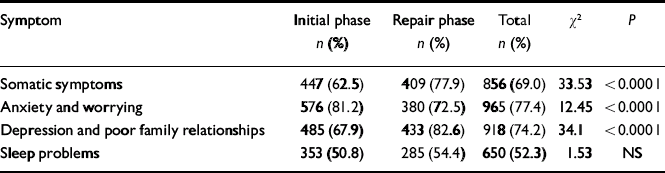
| Symptom | Initial phase n (%) | Repair phase n (%) | Total n (%) | χ2 | P |
|---|---|---|---|---|---|
| Somatic symptoms | 447 (62.5) | 409 (77.9) | 856 (69.0) | 33.53 | <0.0001 |
| Anxiety and worrying | 576 (81.2) | 380 (72.5) | 965 (77.4) | 12.45 | <0.0001 |
| Depression and poor family relationships | 485 (67.9) | 433 (82.6) | 918 (74.2) | 34.1 | <0.0001 |
| Sleep problems | 353 (50.8) | 285 (54.4) | 650 (52.3) | 1.53 | NS |
Impact of Event Scale scores

| Initial phase Mean (s.d.) | Repair phase Mean (s.d.) | Total Mean (s.d.) | t-test | P | |
|---|---|---|---|---|---|
| Intrusion | 16.4 (9.2) | 18.0 (10.2) | 17.0 (9.7) | 8.43 | <0.005 |
| Avoidance | 14.0 (10.0) | 22.7 (12.0) | 17.7 (11.7) | 187.65 | <0.001 |
Risk of psychiatric morbidity
When the above significant factors were analysed for the risk of psychiatric morbidity (with CHQ-12 as the dependent variable) using multiple regressions, it was found that exposure to SARS and the repair phase exerted significant independent effects (Table 7). Job title, work experience, having been in quarantine, and other socio-demographic factors had no effect in the joint analysis.
Risk of psychiatric morbidity: logistic regression analysis

| Variable | β | s.e. | Wald | d.f. | P | OR (95% CI) |
|---|---|---|---|---|---|---|
| Constant | − 1.171 | 0.199 | 34.622 | 1 | ||
| Repair phase | 0.479 | 0.192 | 6.187 | 1 | 0.013 | 1.61 (1.1-2.3) |
| Exposed | 0.484 | 0.203 | 5.681 | 1 | 0.017 | 1.62 (1.1-2.4) |
| Female | − 0.506 | 0.215 | 5.543 | 1 | 0.019 | 0.63 (0.4-0.9) |
| Job title | − 0.351 | 0.197 | 3.169 | 1 | 0.075 | 0.704 (0.4-1.0) |
DISCUSSION
The rapid and unexpected spread of SARS in a hospital could be regarded as an acute episode of a bio-disaster. Because of the dearth of similar experiences, any speculation about the psychosocial effects of SARS is based on extrapolations from the effects of natural disasters and other catastrophic traumatic events. As in any disaster, the impact and trauma caused by SARS may come in a form structured by complex feelings, thoughts and behaviours (Reference Ursano, McCaughey, Fuller, Ursano, McCaughey and FullertonUrsano et al, 1994).
In this outbreak, health workers exposed to SARS were often unaware of being infected, and thus became vectors of the disease, subsequently transmitting it to their patients and colleagues through contact. The possibility that health workers fighting this lethal illness might become victims themselves generated an over-whelming level of fear, fracturing the normal expectation of safety and trust in the hospital. This fear was transmitted within the hospital and also to the public, causing panic in the community.
Our study, a naturalistic, observational study with an unselected sample, was conducted in unusual circumstances, in that there were restrictions on most activities and movements, and person-to-person contacts were reduced to the minimum for fear of the spread of nosocomial infection. It was thus difficult to conduct interviews other than the debriefings (which involved only a minority of participants), hence the use of the internet survey. Although the sample size was relatively large, only about half of the health workers who were exposed to the threat responded. In trauma studies, a high response rate is important in order to avoid underestimating the prevalence rates of psychiatric morbidity (Reference WeisaethWeisaeth, 1989). Furthermore, because it was an anonymous survey, it was impossible to make comparisons between respondents and non-respondents.
The phases of the disaster were defined by the length of time since the disaster began. The division into the initial shock phase and the repair or reorientation phase was arbitrary with regard to the proximity of the danger, the reaction of the staff (coping and management of the situation), as well as the degree of alertness of the health authority. This division was suggested by epidemiologists and scientists during several discussions and seminars on SARS epidemics, with reference to the outbreak, containment and management of SARS. Consequently, in the initial phase when the threat was imminent and confusion was obvious, crisis management procedures were introduced, including the closing down of all emergency and out-patient services; during the repair phase, when the nosocomial infection was gradually brought under control, partial clinical services were allowed and the working through of problems began. These phases correspond with the process of psychological reactions experienced by individuals following a natural or human-induced major trauma (Reference RaphaelRaphael, 1986; Reference Alexander and KleinAlexander & Klein, 2003).
Initial phase
During the initial phase, people were shocked by the sudden disruption of normal work and life. Feelings of extreme vulnerability, helplessness, loss of control, uncertainty and threat to life were generally perceived. More than three-quarters of the respondents felt that their job put them at great risk of exposure to SARS, and perceived greater stress at work. Most of them anticipated the stress of upcoming work before it actually happened, and therefore began work with a substantial burden. In addition, a shortage of staff (especially in the respiratory and critical care units) was noted, as many of their colleagues were put in quarantine. Another serious perceived threat was the lack of safeguards, because of the inadequate protection provided by masks and gowns; this fear was especially evident among the technicians who were required to perform radiographic or laboratory examinations. Health workers felt that they had little control over whether they would become infected or not, owing to the uncertainty and the lack of experience in the treatment of SARS; their concerns were exacerbated by the news of the death from SARS of a fellow physician who was infected by a patient during the procedure of orotracheal intubation for respiratory failure.
The chaotic conditions resembled the first SARS outbreak in Mount Sinai Hospital, Toronto (Reference Maunder, Hunter and VincentMaunder et al, 2003). In that outbreak the hospital was swamped by information and misinformation, and the situation worsened by simultaneous intense media coverage around the clock of the outbreak and its effects. Although regular press briefings were later held by the hospital administration, damage had already been done to the image and confidence of the hospital as well as of the health workers.
One form of this damage was stigmatisation. Because of our fear of the unknown, we tend to stigmatise those who have been contaminated. Hospital health workers during this phase were being labelled as the ‘source of infection’, and their children were accordingly alienated during school and social activities. Stigmatisation frequently increased the isolation of the victims, in this case the health workers, their families and also patients who had been admitted to or treated at the hospital. Many of them blamed themselves for being at work or for having any form of relationship with the hospital. A high proportion of the workers were afraid that they would pass SARS to their family and friends, who in turn were afraid of the risk of being infected.
Repair and reorientation phase
In the second phase the nosocomial infection of SARS in Chang Gung Memorial Hospital gradually came under control, and patients with SARS were identified, contained and segregated under intensive care management on a separate floor of the hospital. Strict control of the movement of people in the hospital was still enforced, while new guidelines and effective measures of protection were introduced. Fewer respondents in this phase were uncertain about their exposure to SARS. However, the impact of the bio-disaster, manifested by intrusion, avoidance, depression and interpersonal difficulty, was evident, with higher IES scores and rates of psychiatric morbidity. It is noteworthy that depressive symptoms were more common than anxiety symptoms in this phase, unlike the initial phase, which was dominated by anxiety and worrying. Less anticipatory anxiety was felt because of the success in containing the outbreak, while recognising that SARS was preventable.
During this phase, the hospital and its staff faced considerable financial loss, as the hospital had been virtually closed since the start of the outbreak. More than 120 (8.4%) nurses submitted their resignations, and some doctors too considered leaving. Many of these resignations were decided by the health workers' families, which is typical of how major decisions are made in the context of Taiwanese or Chinese culture, especially for those who are married. Most of the reasons given for resigning were the high risk of infection in the job and the vulnerability of the environment. Although about half of those resigning were persuaded to stay on by the hospital managers, the resignations had already caused secondary trauma, revealing our own profound vulnerability to unexpected and unplanned-for events.
Psychiatric morbidity
The stresses perceived and anticipated by the hospital workers in this SARS outbreak were debilitating, and affected their working performance, behaviour and health. More than two-thirds of the study respondents manifested psychiatric symptoms of anxiety and worrying, depression and interpersonal difficulties, as well as somatic problems. The estimated rate of psychiatric morbidity in this specific population (75.3%) is three times higher than that of the general population (24%, 95% CI 22-27%) in Taiwan (Reference Cheng and WilliamsCheng & Williams, 1986), and twice that of patients admitted for general health screening (37%, 95% CI 32-41%; Reference Chong and WilkinsonChong & Wilkinson, 1989), using the same instrument of assessment (the CHQ). The variations could be accounted for by the acute impact of a bio-disaster that demonstrated an immediate overwhelming and life-threatening stress to the health workers in particular, whereas such threats were not found in the community or in the hospital setting for patients attending only for screening.
Contrary to our expectation, those who were kept in quarantine showed no significantly higher risk of psychiatric morbidity. The discrepancy might be due to effect of the ‘false perception of injury’ rather than the true injury itself, as many had expressed anxiety at the time they were quarantined. A temporary relief from the continuing threat was nevertheless felt, and without active duties these staff members were obliged to take full rest. They had no restriction in telecommunication, and material and psychological support was also provided. Like most people involved in this outbreak, they were excessively concerned about their bodily functions, especially any change in body temperature; fever was one of the primary symptoms of SARS, and thus compulsive checking of body temperature was generally observed during the outbreak among this population and the public in general.
The high psychiatric morbidity rate resulting from the bio-disaster of SARS can be compared with the consequences of bioterrorism (Reference Ursano, Fullerton and NorwoodUrsano et al, 2003). For example, in the terrorist attack involving the release of sarin in the Tokyo subway in March 1995, which killed 11 people and injured more than 5500 others, researchers estimated that 60% of those receiving hospital treatment had suffered from some post-incident symptoms suggesting a post-traumatic stress disorder (PTSD) (Reference Ohbu, Yamashina and TakasuOhbu et al, 1997). The consequences of these bio-disasters exceed our understanding. Despite the fact that the number of deaths due to SARS was far smaller than that due to other contagious diseases such as AIDS, tuberculosis or malaria, the response from the public and the impact on the regional economy were disproportionate. The losses are comparable to those following the plague outbreak in Surat in India in September 1994, which stirred a nationwide panic and caused a near-international isolation of the country (Reference RamalingaswaniRamalingaswani, 2001). Such a scenario following the exposure to a sudden threat of a biological or biochemical agent, either natural or by terrorist attack, has been labelled as ‘sociogenic illness’ (Reference Bartholomew and WesselyBartholomew & Wessely, 2002) and is a major challenge in the 21st century (Reference Alexander and KleinAlexander & Klein, 2003).
Limitations and implications of the study
It is sobering that a newly emergent infectious disease was capable of bringing a health care institution to a standstill, striking down nurses, doctors and other medical personnel. The response of the scientific community to this unexpected health threat was immediate (Reference Kamps and HoffmannKamps & Hoffmann, 2003), but there is still a lack of scientific reports on psychological reactions and psychiatric morbidity in the population during the SARS outbreak, including Taiwan. Unlike laboratory research into this disease, research into the psychosocial and traumatic effects of SARS in an affected community allows only limited control over variables. Limitations demonstrated in this study include the use of self-report measures instead of diagnostic interviews for assessing psychiatric morbidity. In addition, the original version of the IES was used rather than its revised version (IES-R; Reference Weiss, Marmar, Wilson and KeanneWeiss & Marmar, 1997), chiefly because the IES (unlike the IES-R) has been validated in the Taiwanese community. It can only be used as a measure of distress post-trauma since it only covers intrusion and avoidance, and not all symptoms of PTSD (such as hyperarousal) as in the IES-R. On the other hand, criteria to fulfil the diagnosis of PTSD require more than a month to have elapsed following the exposure to a traumatic event (American Psychiatric Association, 1994). It was thus appropriate to examine general psychological distress in this sample rather than artificially narrowing the investigation to only PTSD, which may follow trauma (Reference Rundell, Ursano and HollowayRundell et al, 1989; Reference HorowitzHorowitz, 1999).
Epidemiological studies have revealed that depressive disorders, substance use disorders, adjustment disorders, psychosomatic disorders, antisocial behaviour and PTSD are among the major psychiatric problems associated with trauma and disaster (Reference Rundell, Ursano and HollowayRundell et al, 1989; Reference McFarlaneMcFarlane, 2000). The relationship between traumatic events and the development of psychiatric disorder involves interactions among multiple factors, such as pre-existing psychological distress, symptoms and conditions, personality and other perpetuating factors, which were not measured in this study. Despite these limitations, a high rate of psychiatric morbidity was found in the aftermath of this SARS epidemic, manifested in profound psychological distress or symptoms. Health workers are as vulnerable as any other victim to psychological distress in the event of a bio-disaster.
Clinical Implications and Limitations
CLINICAL IMPLICATIONS
-
▪ The outbreak of severe acute respiratory syndrome in a hospital could be regarded as an acute episode of bio-disaster.
-
▪ Feelings of extreme vulnerability, uncertainty and threat to life were generally felt among the health workers, with significantly high psychiatric morbidity of acute stress syndrome.
-
▪ Anxiety was most common while the infection was rapidly spreading, whereas depression and avoidance were prominent when it was being brought under control.
LIMITATIONS
-
▪ Only about half of the health workers who were exposed to the threat responded in the study.
-
▪ No formal psychiatric diagnosis was made, because of the inability to conduct further interviews owing to chaotic conditions and the quarantine procedure.
-
▪ The self-reported questionnaire used in the study limited findings to the measurement of distress post-trauma, rather than diagnosing post-traumatic stress disorder.




eLetters
No eLetters have been published for this article.