


INTRODUCTION
Incidence/prevalence data have a key role in control strategies for HIV and sexually transmitted infections (STIs). Moreover, comprehensive baseline information on the epidemiology of STIs, the proportion of symptomatic and asymptomatic infections and other associated factors are essential for the design, implementation and monitoring of successful targeted interventions [1], which are important in reducing the incidence of HIV infection [Reference Wasserheit and Aral2].
In India, routine surveillance of these infections is not carried out and estimation of the total incidence/prevalence is quite difficult. Lack of laboratory diagnostic facilities, limited resources, poor recognition of reproductive tract infections (RTIs)/STIs by the medical profession as a major public health problem, stigma and discrimination associated with STIs and poor attendance of STI patients, especially women, in sexually transmitted disease (STD) clinics, are some of the main reasons for lack of RTI/STI data. Taking the above factors into consideration, it is meaningful to have comprehensive and reliable laboratory-based data on the incidence/prevalence of RTIs/STIs.
Studies on STI prevalence in India have so far focused on patients attending STD clinics in hospitals in big cities [Reference Ray3–Reference Chatterjee and Ramadasan6], whereas, the infection rate in women attending the small primary health centres, situated in the peripheral areas, away from big cities and catering to the community, has not received the same attention. A few community-level studies have been undertaken [7–Reference Garg10], but the data are relatively patchy and incomplete [Reference Hawkes and Santhya11]. Studies on STIs in asymptomatic women are almost non-existent.
The current study in rural and urban women was carried out with the following objectives: to determine (i) the socio-demographic profile of the study population as a whole, (ii) their STI burden by eliciting their past gynaecological and obstetric history and treatment-seeking behaviour, (iii) the proportion of women, rural and urban, with RTI/STI morbidity and (iv) laboratory-based prevalence of total RTI/STI and HIV infection in these women.
METHODS
The study was carried out in one urban and one rural government peripheral health centre in each of four zones of Delhi, during the period March 2002 to April 2004. Approval of the ethical committee of each hospital was obtained.
Selection of study area and population groups
Table 1 shows the different study groups and their sample size from rural and urban centres. A total of 2011 consecutive women from rural areas and 2079 from urban areas were included in the study and assigned into four study groups (groups I–IV) according to their history and clinical status. Group IV served as the control group.
Study groups with sample size
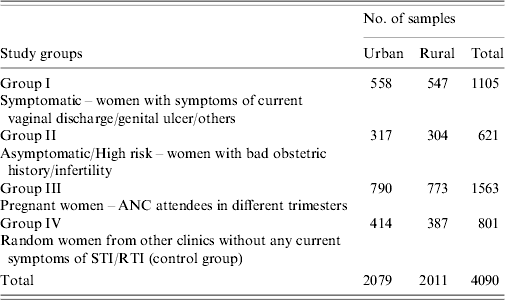
ANC, Antenatal clinic; STI, sexually transmitted infection; RTI, reproductive tract infection.
Interview and counselling
A trained female social worker interacted with consecutive patients in the above groups, attending each of the above-mentioned centres, to collect the data regarding the patients' sociodemographics and risk behaviour in a questionnaire schedule. Gynaecological and obstetric history was also collected. All the women were informed of the symptoms of STI and questioned about any similar experience in the past and also about their treatment-seeking behaviour. Pre-test counselling for HIV testing was imparted using conventional techniques and informed consent in writing was obtained from all for participation in the study for clinical examination, HIV and other laboratory testing. The study subjects were assured of anonymity.
Gynaecological examination
Detailed general, physical and internal examination including speculum examination of all the study subjects was carried out by the female medical officer, accompanying the team and the data were recorded in predesigned proformae. RTIs/STIs were diagnosed by clinical features. (The detailed data have been submitted for separate publication.)
Collection of specimens and their transport and laboratory techniques
Appropriate specimens such as cervical, vaginal and urethral swabs and blood samples (Table 2) were collected in transport media (wherever applicable) or directly inoculated on chocolate agar and saponin lysed blood agar with vancomycin, colistin, nystatin, and trimethoprim (VCNT) inhibitors and placed in a candle jar in a moist atmosphere immediately in the field for isolation of Neisseria gonorrhoeae and transported to the Regional STD Reference Laboratory under the Regional STD Teaching, Training and Research Centre, Vardhaman Mahaveer Medical College and Safdarjung Hospital, New Delhi and processed on the same/next day. Tests were carried out (Table 2) by standard laboratory techniques [Reference Van Dyck, Meheus and Piot12] for detection of classical and other agents of STIs, and also the agents of RTIs, e.g. Candida albicans and species, and bacterial vaginosis (BV).
Laboratory diagnostic methodology and criteria for diagnosis of STI/RTI
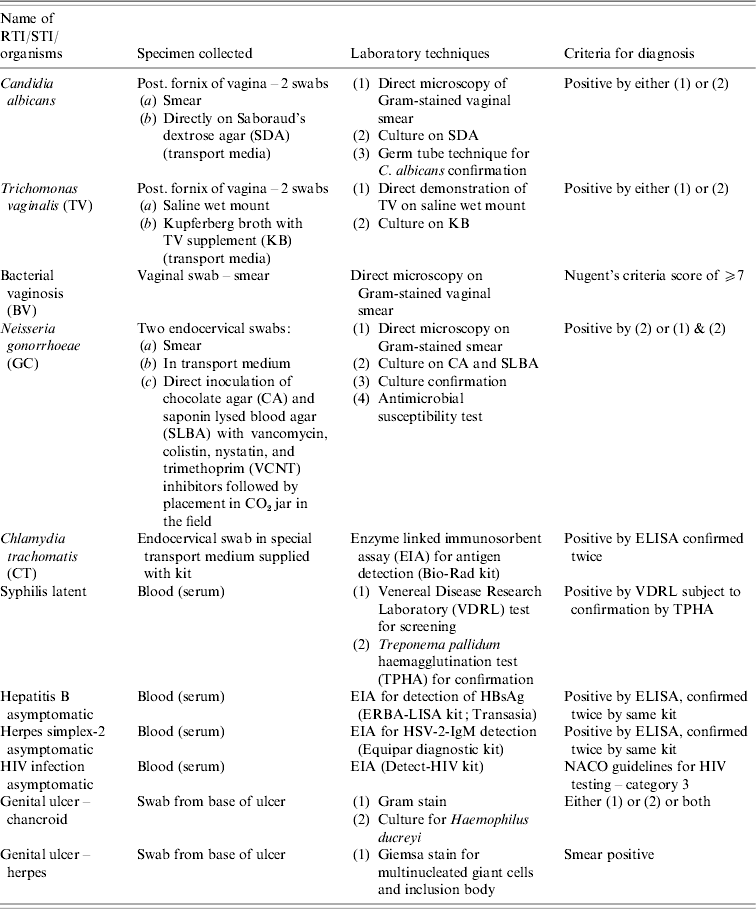
STI, sexually transmitted infection; RTI, reproductive tract infection.
Statistical analysis
Epi-Info version 6.04d software (CDC, Atlanta, GA, USA) was used for data entry and analysis. The χ2 test was applied to compare proportions and P values were calculated.
RESULTS
Sociodemographic profile of the study population
Table 3 shows the sociodemographic parameters and contraceptive use in rural and urban women in the study population.
Sociodemographic profile and contraceptive use of the study population
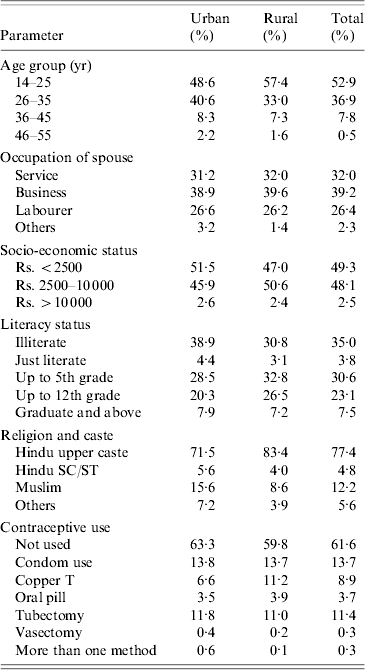
SC/ST, Schedule caste/schedule tribe.
Age group
Most of the women, in all the areas, belonged to the reproductive age group, the most predominant age group being 14–25 years.
Occupation of the women
A total of 93% of the women in the study groups were housewives, although a few women employed as labourers (3·4%), in service (2·6%) and in business (1·3%) were seen. No difference was noted between women from urban (U) and rural (R) areas.
Occupation of the spouses
The occupation of the spouses of the women varied considerably in the different zones, although no significant difference was noted between overall figures from urban and rural areas. Service-employed individuals, labourers and businessmen were commonly seen.
Socioeconomic status
About half of the study subjects were of low socioeconomic status, i.e. income level below Rs. 2500.
Literacy status
A total of 35% of the study population were illiterate. The different literacy status is shown in the Table 3.
Religion and caste
Most of the women (77·4%) belonged to Hindu upper caste. However, Hindu schedule caste (SC)/schedule tribe (ST) and Muslim women were also observed in small proportions.
Marital status
A total of 99·6% were married and the rest were either ‘single’ or ‘married, not living with spouse’. A total of 92·4% (95% U, 90% R) women were married for >1 year. About 31·4% (36·9% U, 25·2% R) women were married for >10 years.
Use of contraceptives
Overall, 61·6% of the women in the study groups did not use contraceptives (Table 3). There was no significant association between literacy status and use of contraceptives as a similar proportion of the illiterate women, as well as those with literacy status ‘just literate’, up to graduation, used some contraceptive.
Obstetric history
A total of 15·8% (14·3% U, 17·4% R) were without any children. Most of the women, i.e. 54·9% (52·8% U, 57·0% R) had 1–2 live births, whereas, 25·9% (28·9% U, 22·9% R) had 3–4 live births. A total of 32·5% of women (33·3% U, 31·5% R) gave a history of abortion and the type of abortion in 76·4% was spontaneous (79·2% U, 75% R), followed by medical termination of pregnancy in 18·8% cases (13·5% U, 21·5% R). The majority of the women had the last delivery within the past 5 years.
Past history of STI-related illness
Following an explanation of the symptoms, a total of 58·9% of the women (63·4% U and 54·4% R) confirmed that they had STI-like symptoms in the past. A major proportion (43·5% U, 52·1% R, respectively), suffered from STI for >1 year, whereas, the rest suffered for 15 days (11·3% U, 9·4% R), 6 months (23·1% U, 23·3% R), and 1 year (22·0% U, 14·5% R). The main complaints were white vaginal discharge and abdominal pain/low backache (35% U, 33·2% R). In both areas, the next two important combination of symptoms were abdominal pain and curd-like discharge (5·8% U, 8·7% R). About 5% of urban women also complained of redness and itching of the genital area, along with abdominal pain and curd-like discharge.
Treatment-seeking behaviour
The majority (65·0%) of the women who had some past experience of STIs (71·7% U, 56·9% R) first consulted their husband when the symptoms occurred. The mother-in-law was consulted by 25·3%, (20·2% U, 31·4% R). Relatives, friends, doctors, health workers, etc. were consulted first only by a small group of women in both the areas.
Overall, 54·5% (50·5% U, 59·3% R) women did not take any sort of treatment for their ‘illness’. A total of 33·9% (37·4% U, 29·7% R) attended government dispensaries and 11·6% (12·2% U, 11·0% R) attended private facilities. The majority (94·6%) consulted doctors in both areas. However, negligible numbers went to registered medical practitioners (1·4%), chemists (2·0%), health workers (0·2%) and traditional midwives (dais) (0·1%). An allopathic system of medicine was preferred by 94·5% (93·8% U, 95·4% R) women. Very few consulted Ayruvedic physicians (2·0%) and homeopaths (1·9%). Most of the women (>86%) took a complete course of treatment.
A total of 52·2% women, who received treatment, were completely relieved with treatment and 34·6% were partially relieved. The cost of private treatment was Rs. 250, as stated by 89·7% (83·9% U, 93·9% R). However, 5·4%, 2·9% and 1·8% spent Rs. 251–500, Rs. 501–1000 and Rs. >1000, respectively.
Self-reporting of symptoms
Overall, 65% of the subjects (65·5% U, 64·3% R) complained of some RTI/STI symptom, although none complained of genital ulcers or genital warts. Most of the women complained of vaginal discharge, either singly (11·2%) or in combination with other symptoms, e.g. abdominal pain, low backache, redness and itching of the vulva, dyspareunia, etc. (49·0%). Abdominal pain/low backache was sometimes the only symptom (3·7%). There was no difference in complaints for women from rural and urban areas. A total of 79·1% women, out of those with a history of STI in the past, compared to 44·2% with no past history of STI had complained of some STI-related illness during the study. The difference was statistically highly significant (P<0·001).
Clinical examination
Eighteen (0·9%) of the women were observed to have genital ulcers and were clinically diagnosed as chancroid (5) and herpes genitalis (13). Similarly, genital warty growths were present only in 18 (0·9%) women (7 U, 11 R). Vaginal discharge was mostly prevalent in the study subjects (66·7%). Women from rural areas were more affected (63·6% U vs. 69·9% R). On pelvic examination, lower abdominal tenderness was observed in 13·5% of women (8·1% U, 19·1% R). Cervical discharge, either singly (52·4% overall, 46·1% U, 58·9% R) or in combination with cervical growth/erosion/other findings (3·1% overall, 1·2% U, 5·1% R) was observed on speculum examination.
Laboratory studies
Prevalence of RTI/STI/HIV in women from rural and urban areas
Overall, the proportion of women infected was 32·1% (single 27·9%, multiple 4·2%). The difference observed in the infection rate in the women from urban (33·4%) and rural (30·9%) areas was found to be insignificant. However, in different groups, laboratory prevalence of RTI/STI varied (Table 4). Urban women in group I had highest prevalence, significantly higher than women in the other groups whereas, prevalence was highest in group II in rural women.
Prevalence of aetiological agents of RTI/STI in different study groups
Table 4 shows the prevalence of various aetiological agents in women belonging to the four study groups. Total prevalence of RTIs (24·3%) was higher (P<0·001) than that of STIs (12·5%). Overall, in both urban and rural areas, Candida infection (C. albicans and other species together) was predominant, followed by HSV-2 IgM, BV and trichomoniasis. Low rates of other STIs were also observed. Pregnant women were harbouring RTI/STI agents almost at the same level as the first two groups. The prevalence of both STI (9·9%) and RTI (15·2%) agents in the asymptomatic women in group IV, although lower than that observed in the other groups, was quite high.
Group-wise break up of prevalence of RTI/STI in study subjects
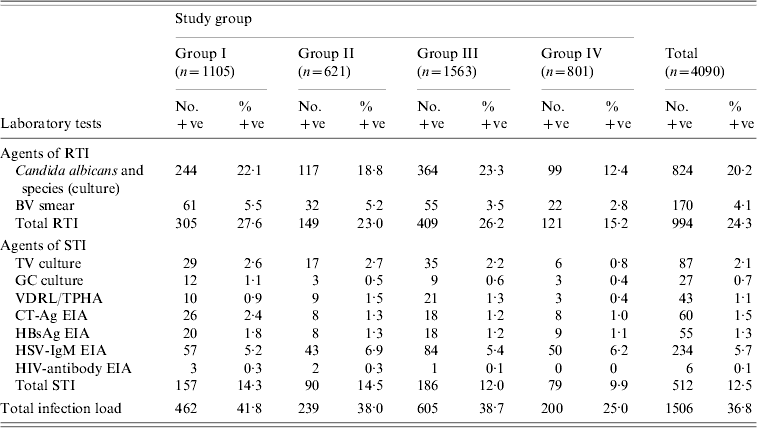
STI, sexually transmitted infection; RTI, reproductive tract infection; BV, bacterial vaginosis; TV, Trichomonas vaginalis; GC, Neisseria gonorrhoeae; VDRL/TPHA, Venereal Disease Research Laboratory/Treponema Pallidum haemagglutination test; CT, Chlamydia trachomatis; EIA, enzyme-linked immunosorbent assay.
Seroprevalence of HIV infection
Both the rural and urban women included in the study had low HIV prevalence (0·1%). Seroprevalence was 0·3% in groups I and III (Table 4).
Prevalence of multiple infections
Multiple infections were seen in a variety of combinations (Table 5). The highest combinations were observed with Candida infection, followed by that with BV. Multiple STIs were also observed. Multiple infections were more common in urban areas.
Varieties of multiple infections in rural and urban areas
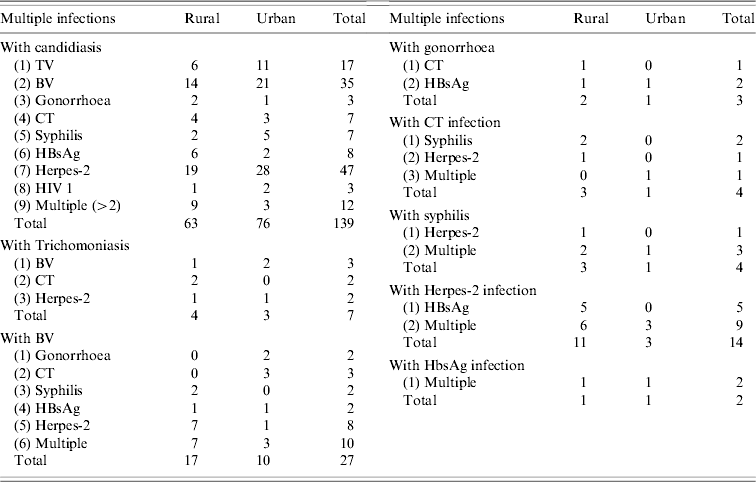
TV, Trichomonas vaginalis; BV, bacterial vaginosis; CT, Chlamydia trachomatis.
DISCUSSION
The World Health Organisation [13] estimates that about 340 million new cases of the four main curable STIs (gonorrhoea, chlamydial infection, syphilis and trichomoniasis) occur every year, the majority of them in developing countries. In a few countries, most of the epidemiological data have been obtained from prevalence studies carried out in selected populations [Reference Johnson, Coetzee and Dorrington14, Reference Nessa15].
In India, STIs and RTIs are important public health problems. However, systematic and comprehensive STI surveillance is almost non-existent. A nationwide community-based study performed by the National AIDS Control Organization (NACO) in 2001 to estimate the STD prevalence in urban and rural areas of India showed a prevalence of 5–6% STI/RTI in the adult population (A. Pandey, unpublished report of NACO, India). Based on this, it is estimated that 30 million people are infected with STI/RTI in India and half of them are likely to be symptomatic.
The high prevalence of RTI/STIs in women, mostly in the 14–25 years age group, in the present study, supports the current consensus that young adults should constitute a priority target group in the STI Control Programme. The physiological risk of increased susceptibility to infection among adolescent girls is due to the presence of greater cervical ectopy, making the cervix more susceptible to gonorrhoea, chlamydia and HPV. The present study population consisted mostly of illiterate women, of low socioeconomic status, with a history of low use of contraceptives and poor treatment-seeking behaviour. All these factors might have contributed to the high RTI/STI endemicity in the study areas. Moreover, concurrent treatment of the spouse is almost non-existent in the programme because of the gap in knowledge and also the lack of cooperation from husbands in Indian communities. Efforts need to be stepped up to target these groups under the Control Programme to decrease the STI burden in order to create a dent in the HIV epidemic. Fortunately, in spite of the high RTI/STI prevalence, HIV seroprevalence was very low in these women, providing a window of opportunity for the programme managers.
The present study offers an important insight into the burden and pattern of RTIs and STIs in women in the community in the capital city of India. The majority of women reported with vaginal discharge, the most perceivable symptom, confirming earlier studies [Reference Garg10] and other STI symptoms as well as syndromes, especially genital ulcers, were almost non-existent. On the other hand, laboratory prevalence of RTI/STIs was 36·8%, much lower than the self-reporting of morbidity, confirming a recent study in India [Reference Agarwal, Sharma and Sarin16], indicating either the non-specific nature of the latter or inappropriate, inadequate and indiscriminate antimicrobial use, rampant in the community, because of ‘over-the-counter’ availability of antimicrobials. Predominantly Candida infection (20·2%), followed by herpes (5·7%), BV (4·1%), Trichomonas vaginalis (TV) (2·1%), chlamydia (1·5%), HBsAg (1·3%), syphilis (1·1%), gonorrhoea (0·7%) and HIV infection (0·1%), were observed, the total STI prevalence being 12·5%. The data compare well with a previous study under AIDS Prevention and Control Project [7], jointly undertaken by Voluntary Health Services (VHS) and US Agency for International Development (USAID), in a community of urban and rural adult population of Tamilnadu, a HIV high prevalence state. The study revealed that the STI prevalence was 15·8% with the classical STDs being 9·7%. Genital discharge was most common (41·5%) in women, with TV, 5·1%, Chlamydia trachomatis (CT) 3·9% and N. gonorrhoeae (GC), 3·7%. In another study [Reference Garg10], 41·5% of the women had BV, 18·6% candidiasis, 4·3% TV and 28·7% CT. The high prevalence of BV in women reported from different parts of the country [Reference Agarwal, Sharma and Sarin16–Reference Tankhivale, Pathak and Mundhda18] including the present study, should be noted with concern as the presence of BV has a role in acquisition of HIV and thus requires prompt treatment [Reference Schmid19]. An earlier report [Reference Hawkes and Santhya11], summarizing the results of different surveys and studies of STI/HIV prevalence in India, observed that the prevalence of STIs in women in the community varied between 0·0% and 4·2% for GC, 0·5–28·7% for CT, 0·2–8·8% seropositivity for syphilis and 4·3–27·4% for TV.
Multiple infections were observed to be common in the study groups in all combinations, predominantly with candidiasis, highlighting the importance of laboratory studies for the undertaking of appropriate therapeutic strategy for individual cure and thereby the control of these infections.
The aetiological pattern of genital ulcer diseases (GUD) is changing [Reference O'Farrell20] and HSV-2 is emerging as an important aetiological agent [Reference Ray3]. HSV-2 infection has been shown to increase the rate of HIV transmission [Reference Mar Pujades21, Reference Reynolds22] There are no community-based studies on prevalence of HSV-2 infection. In the present study, although genital ulcers were observed in negligible numbers, 5·7% seroprevalence of HSV-2 IgM antibodies (the commonest STI), indicates that the presence of this infection in these women may be as an unapparent infection. A recent community study in India [Reference Panchanadeswaran23] found that women had a higher prevalence of HSV-2 than men, but were more likely than men to be asymptomatic. The present data suggest that it may be relevant to start interventions targeting HSV-2 transmission.
High STI/RTI prevalence in pregnant women (38·7%), reported in the present study, indicates their vulnerability and the risk of adverse consequences of STIs, e.g. syphilis, gonococcal and chlamydial infections to the unborn foetus. A review of several studies on prevalence of STIs [Reference Mullick24] has revealed the variation in prevalence of these infections and the adverse outcomes of individual STIs. These authors recommended mandatory screening of syphilis and HIV infection for antenatal women in developing countries and management of the syndromes, if present. The only screening facilities available in the RCH programme in India, so far, is syphilis screening, which is also not always followed everywhere. HIV screening under the parent-to-child transmission programme of NACO, India has been initiated in Goverment set-ups. The present study highlights the importance of routine RTI/STI screening of antenatal mothers, especially those with symptoms, when they report to the clinic during this period.
The asymptomatic nature of STIs is well known [Reference Garg10, Reference Nessa15] and aetiological agents of RTI/STIs were also found in healthy women in the present study with chances of future morbidity and transmission to their spouses. This was emphasized in a study in the red-light area in Surat, India [Reference Desai25], when the prevalence of laboratory-confirmed syphilis was 22·7%, GC 16·9%, genital CT 8·5%, TV 14·4%, and HIV 43·2%. However, it is not feasible to screen all asymptomatic women with the present infrastructure and facilities available in India, as it would not be cost-effective. Screening could probably be done after risk assessment of the women, targetting these subgroups for education and regular provision of STI diagnosis and treatment services. In addition, efforts should be made to develop an affordable, rapid, and effective diagnostic technique that will improve STD detection in resource-poor settings.
ACKNOWLEDGEMENTS
The authors are indebted to the Indian Council of Medical Research, New Delhi, for financial assistance in the form of a Project and to the Additional DG & Medical Superintendent, Safdarjung Hospital, for permission to carry out this study. The technical assistance provided by the staff of the Regional STD Teaching, Training and Research Centre is acknowledged. Thanks are due to Mr S. M. Gupta for statistical analysis.
DECLARATION OF INTEREST
None.



