


Most previous research on the geographies of health has been based on aggregated (‘compositional’) characteristics of people living in particular areas, rather than ‘contextual’ characteristics of places. The built environment cannot be equated with the socio-economic and demographic characteristics of individual residents, and includes housing form, roads and footpaths, parks and other public amenities. The effects of the built environment on social interaction (including crime) may be the most salient for health (Reference Freeman and FreemanFreeman, 1984; Reference Birtchnell, N and DeahlBirtchnell et al, 1988; Reference Perkins, Wandersman and RichPerkins et al, 1993; Reference HalpernHalpern, 1995; Reference Cohen, Spear and ScribnerCohen et al, 2000). Many previous studies have relied on residents' perceptions of their environment (Reference HalpernHalpern, 1995; Reference Dalgard and TambsDalgard & Tambs, 1997; Reference Kearns, Hiscock and EllawayKearns et al, 2000). Our aim was to test the hypothesis that, in an urban setting, higher rates of depression would be found where ‘social incivilities’ (particularly crime) were most likely to occur, after adjusting for individuals' socio-economic status and the characteristics of their dwellings. We hypothesised that depression would be most prevalent in areas characterised by derelict buildings and abundant graffiti, open public spaces and few ‘buffers’ between public and private spaces.
METHOD
A cross-sectional survey was carried out as part of an evaluation of an urban regeneration programme in an electoral ward in north London. A survey of adult residents and an architectural survey of the built environment were undertaken in two electoral wards (the intervention ward and a control). The urban regeneration programme began after completion of these surveys. The control ward was chosen because of its similarity to the intervention ward in socio-demographic composition and housing characteristics (Reference Wallace and DenhamWallace & Denham, 1996; Reference Glover, Robin and EmamiGlover et al, 1998), and because there was no similar regeneration programme in prospect at the time. Estimated populations of the intervention and control wards in 1999 were 6260 and 9549, respectively.
Individual respondents were selected in two stages using random probability sampling methods. The Postcode Address File (PAF) was used as the sampling frame for selecting about 1300 addresses within each ward. All addresses that were residential and occupied were eligible, and up to two adults (aged 16 years and over) were sampled at random within each household, without substitution, using a Kish grid technique (Reference KishKish, 1965).
Prevalence of depression
The prevalence of depression was assessed using the Center for Epidemiologic Studies Depression scale (CES—D; Reference RadloffRadloff, 1977; Reference Roberts and VernonRoberts & Vernon, 1983; Reference Beekman, Deeg and van LimbeekBeekman et al, 1997), which is a validated 20-item selfreport measure. Each item includes four response categories, scored from 0 to 3. Those scoring 16 or more were classified as ‘cases’ (Reference Frerichs, Aneshensel and ClarkFrerichset al, 1981; Reference Harlow, Cohen and OttoHarlowet al, 1999). Sensitivity analyses were conducted using the CES—D score as a continuous variable.
Socio-economic status and housing characteristics
Respondents were asked about their age, marital status, education, ethnicity and employment status. Household-level risk factors for depression included access to a car or van and the following characteristics of the dwelling: tenure, level (floor on which entrance located) and the presence of four ‘structural’ problems (damp, leaking roof, rot in woodwork and infestation). Respondents were asked how long they had lived in their current dwelling.
Built environment site survey
Prior to the household survey, both wards were subdivided into discrete ‘housing areas’ by one of the authors (E. B.), who is a trained architect/urban designer. A housing area was defined as a geographically bounded area in which the majority of the housing was homogeneous in form and character. Eighty-six housing areas were enumerated across the two wards.
The Built Environment Site Survey Checklist (BESSC)
The Built Environment Site Survey Checklist (BESSC) is a standardised, validated inventory for rating housing areas, developed for this study (Reference Weich, Burton and BlanchardWeich et al, 2001a ). Items include the predominant form, height and age of housing, number of dwellings and type of access, provision of gardens, use of public space, amount of derelict land, security and distances to local shops and amenities. The original version of the BESSC (available from authors upon request) comprised 31 items, of which 25 had fixed categorical responses. The remaining items required the researcher to rank features of the built environment according to the proportion of space used in particular ways, and to estimate the distance from the centre of the housing area to a range of amenities. A postgraduate student in urban design carried out ratings, independently of interviews with residents. Interrater reliability for BESSC items was good, with κ≥0.5 for 15 categorical items. The present study was restricted to these items, as shown in Table 2.
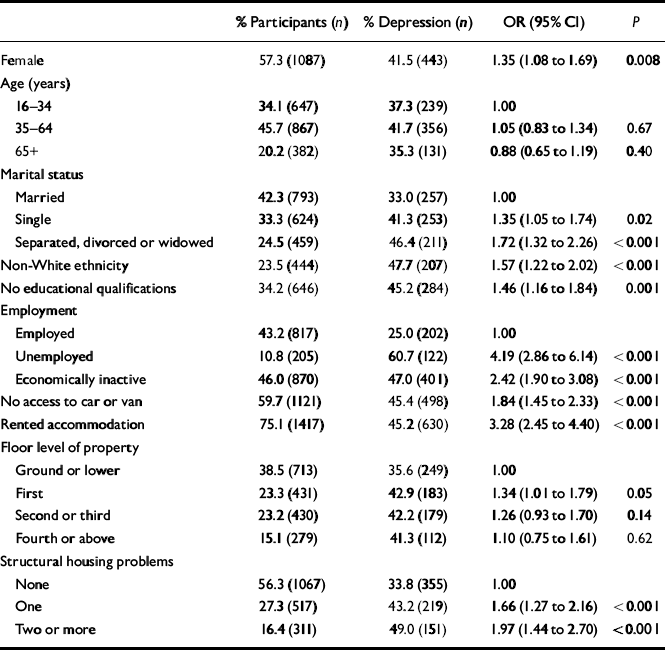
Socio-demographic characteristics of the study sample, showing proportion of study sample exposed (% participants), prevalence of depression (% depression) and unadjusted odds ratios (ORs; 95% CI) for association with the prevalence of depression
| % Participants (n) | % Depression (n) | OR (95% CI) | P | |
|---|---|---|---|---|
| Female | 57.3 (1087) | 41.5 (443) | 1.35 (1.08 to 1.69) | 0.008 |
| Age (years) | ||||
| 16-34 | 34.1 (647) | 37.3 (239) | 1.00 | |
| 35-64 | 45.7 (867) | 41.7 (356) | 1.05 (0.83 to 1.34) | 0.67 |
| 65+ | 20.2 (382) | 35.3 (131) | 0.88 (0.65 to 1.19) | 0.40 |
| Marital status | ||||
| Married | 42.3 (793) | 33.0 (257) | 1.00 | |
| Single | 33.3 (624) | 41.3 (253) | 1.35 (1.05 to 1.74) | 0.02 |
| Separated, divorced or widowed | 24.5 (459) | 46.4 (211) | 1.72 (1.32 to 2.26) | <0.001 |
| Non-White ethnicity | 23.5 (444) | 47.7 (207) | 1.57 (1.22 to 2.02) | <0.001 |
| No educational qualifications | 34.2 (646) | 45.2 (284) | 1.46 (1.16 to 1.84) | 0.001 |
| Employment | ||||
| Employed | 43.2 (817) | 25.0 (202) | 1.00 | |
| Unemployed | 10.8 (205) | 60.7 (122) | 4.19 (2.86 to 6.14) | <0.001 |
| Economically inactive | 46.0 (870) | 47.0 (401) | 2.42 (1.90 to 3.08) | <0.001 |
| No access to car or van | 59.7 (1121) | 45.4 (498) | 1.84 (1.45 to 2.33) | <0.001 |
| Rented accommodation | 75.1 (1417) | 45.2 (630) | 3.28 (2.45 to 4.40) | <0.001 |
| Floor level of property | ||||
| Ground or lower | 38.5 (713) | 35.6 (249) | 1.00 | |
| First | 23.3 (431) | 42.9 (183) | 1.34 (1.01 to 1.79) | 0.05 |
| Second or third | 23.2 (430) | 42.2 (179) | 1.26 (0.93 to 1.70) | 0.14 |
| Fourth or above | 15.1 (279) | 41.3 (112) | 1.10 (0.75 to 1.61) | 0.62 |
| Structural housing problems | ||||
| None | 56.3 (1067) | 33.8 (355) | 1.00 | |
| One | 27.3 (517) | 43.2 (219) | 1.66 (1.27 to 2.16) | <0.001 |
| Two or more | 16.4 (311) | 49.0 (151) | 1.97 (1.44 to 2.70) | <0.001 |
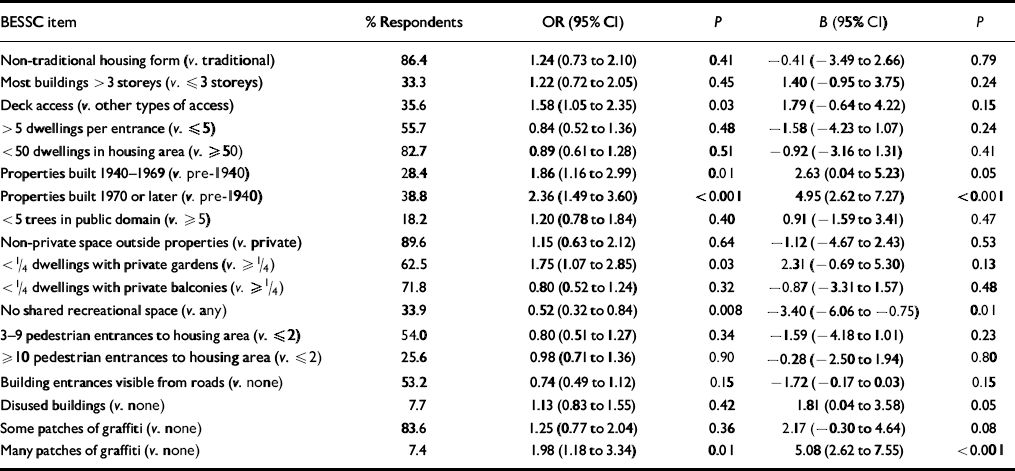
Proportion of respondents living in housing areas with specific Built Environment Site Survey Checklist (BESSC) characteristics, with unadjusted odds ratios (ORs; 95% CI) for depression and linear regression coefficients (B; 95% CI) for the Center for Epidemiologic Studies Depression scale (CES—D) score (among individuals), for BESSC items with κ⩾ 0.50
| BESSC item | % Respondents | OR (95% CI) | P | B (95% CI) | P |
|---|---|---|---|---|---|
| Non-traditional housing form (v.traditional) | 86.4 | 1.24 (0.73 to 2.10) | 0.41 | -0.41 (-3.49 to 2.66) | 0.79 |
| Most buildings > 3 storeys (v.≤ 3 storeys) | 33.3 | 1.22 (0.72 to 2.05) | 0.45 | 1.40 (-0.95 to 3.75) | 0.24 |
| Deck access (v.other types of access) | 35.6 | 1.58 (1.05 to 2.35) | 0.03 | 1.79 (-0.64 to 4.22) | 0.15 |
| > 5 dwellings per entrance (v. ≤5) | 55.7 | 0.84 (0.52 to 1.36) | 0.48 | -1.58 (-4.23 to 1.07) | 0.24 |
| < 50 dwellings in housing area (v. ≥ 50) | 82.7 | 0.89 (0.61 to 1.28) | 0.51 | -0.92 (-3.16 to 1.31) | 0.41 |
| Properties built 1940-1969 (v.pre-1940) | 28.4 | 1.86 (1.16 to 2.99) | 0.01 | 2.63 (0.04 to 5.23) | 0.05 |
| Properties built 1970 or later (v.pre-1940) | 38.8 | 2.36 (1.49 to 3.60) | <0.001 | 4.95 (2.62 to 7.27) | <0.001 |
| < 5 trees in public domain (v. ≥ 5) | 18.2 | 1.20 (0.78 to 1.84) | 0.40 | 0.91 (-1.59 to 3.41) | 0.47 |
| Non-private space outside properties (v.private) | 89.6 | 1.15 (0.63 to 2.12) | 0.64 | -1.12 (-4.67 to 2.43) | 0.53 |
| < ¼ dwellings with private gardens (v. ≥¼) | 62.5 | 1.75 (1.07 to 2.85) | 0.03 | 2.31 (-0.69 to 5.30) | 0.13 |
| < ¼ dwellings with private balconies (v. ≥¼) | 71.8 | 0.80 (0.52 to 1.24) | 0.32 | -0.87 (-3.31 to 1.57) | 0.48 |
| No shared recreational space (v.any) | 33.9 | 0.52 (0.32 to 0.84) | 0.008 | -3.40 (-6.06 to −0.75) | 0.01 |
| 3-9 pedestrian entrances to housing area (v.≤2) | 54.0 | 0.80 (0.51 to 1.27) | 0.34 | -1.59 (-4.18 to 1.01) | 0.23 |
| ≥ 10 pedestrian entrances to housing area (v. ≤2) | 25.6 | 0.98 (0.71 to 1.36) | 0.90 | -0.28 (-2.50 to 1.94) | 0.80 |
| Building entrances visible from roads (v.none) | 53.2 | 0.74 (0.49 to 1.12) | 0.15 | -1.72 (-0.17 to 0.03) | 0.15 |
| Disused buildings (v.none) | 7.7 | 1.13 (0.83 to 1.55) | 0.42 | 1.81 (0.04 to 3.58) | 0.05 |
| Some patches of graffiti (v.none) | 83.6 | 1.25 (0.77 to 2.04) | 0.36 | 2.17 (-0.30 to 4.64) | 0.08 |
| Many patches of graffiti (v.none) | 7.4 | 1.98 (1.18 to 3.34) | 0.01 | 5.08 (2.62 to 7.55) | <0.001 |
Statistical analysis
Analyses were undertaken using survey commands within Stata (Stata Corporation, 1999), which adjusts standard errors and χ2 statistics for clustering (autocorrelation) within housing areas and households (Reference HuberHuber, 1981). Data were weighted by household size, to adjust point estimates for the probability of selection. The outcome measure for our main analyses was caseness on the CES—D (score ≥16), as described above. Unadjusted and adjusted odds ratios with 95% confidence intervals and likelihood ratio tests (LRTs) to assess confounding were calculated using logistic regression. Sensitivity analyses were carried out using linear (least-squares) regression for the CES—D score as a continuous measure. These analyses were undertaken to evaluate associations between the CES—D score and characteristics of the built environment without the imposition of an arbitrary case threshold.
RESULTS
The household response rate was 61.3% and the individual response rate within participating households was 87.7%. In all, 1887 individuals took part, of whom 57.3% (n=1081) were women. Seventy-six housing areas were represented. The number of respondents per housing area ranged from 1 to 214, with a median of 66 and a mean of 78.7 (s.d.=60.5). The overall prevalence of depression using the CES—D was 38.9% (95% CI 36.7-41.1), a rate that did not vary to a statistically significant degree between intervention and control wards (χ2=0.5, d.f.=1, P=0.47). The majority of participants (75.1%) were living in rented accommodation, of whom 73.3% were renting from the local authority. Overall, 56.9% of respondents had lived at their current address for over 5 years and 13.5% for 1 year or less.
Characteristics of the study sample are shown in Table 1. The prevalence of depression was higher to a statistically significant extent among women, those not married, individuals of non-White ethnicity, those without educational qualifications and those not in employment. Statistically significant associations with depression also were found for three out of four household-level risk factors, namely lack of access to a car or van, living in rented accommodation and living in a dwelling with ‘structural’ problems (Table 1). No statistically significant associations were found between the duration that respondents had occupied their present dwelling and either the prevalence of depression or CES—D score.
Associations between the built environment and individual and household-level risk factors
Statistically significant associations were found between characteristics of the built environment and individuals' socio-economic status. Those living in rented accommodation were significantly more likely to live in housing areas with newer properties (χ2=18.8, P<0.0001), dwellings with deck access (χ2=7.7, P=0.007), few private gardens (χ2=15.5, P=0.002) and shared recreational space (χ2=23.9, P<0.0001), although not more abundant graffiti (χ2=1.8, P=0.18). Similar patterns of associations with the built environment were found for unemployment, lack of educational qualifications, non-White ethnicity and lack of regular access to a car or van.
Statistically significant associations also were found between characteristics of housing areas and those of respondents' dwellings. Individuals who reported structural problems were likely to be living in housing areas characterised by older (pre-1940) properties (χ2=3.4, P=0.02). Those living in dwellings situated above the ground floor were significantly more likely to be living in areas with properties of more recent (1940 onwards) construction (χ2=2.6, P<0.05), with few private gardens (χ2=38.7, P<0.0001) and more shared recreational spaces (χ2=8.5, P=0.0006). Individuals in areas with the oldest (i.e. pre-1940) dwellings were the least likely to live in areas with predominantly ‘deck access’ dwellings (χ2=4.49, P=0.04).
Respondents living in areas characterised by deck access homes (χ2=3.91, P=0.03), graffiti (χ2=3.93,P=0.03) and without shared recreational spaces (χ2=5.41, P=0.01) reported living in their present dwelling for longer than those in areas without these features.
Depression and the built environment
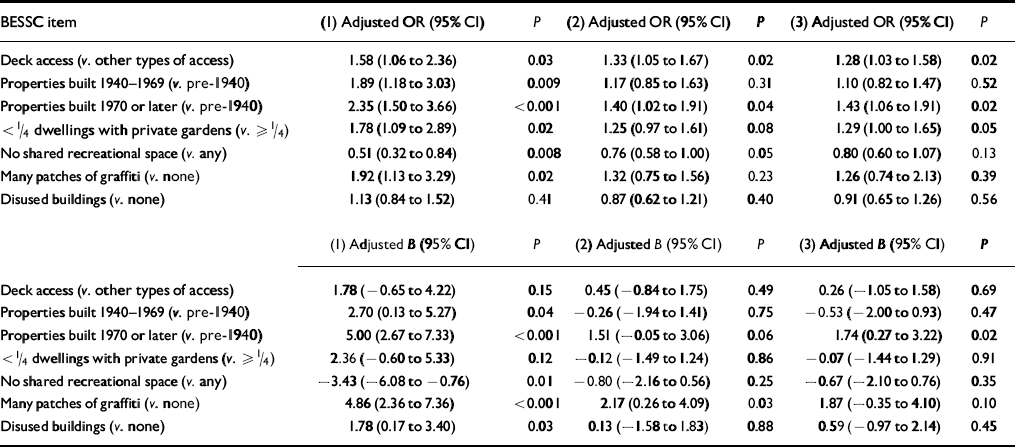
The prevalence of depression was higher to a statistically significant degree in housing areas characterised by dwellings with deck access, abundant graffiti, newer (1940 onwards) properties, public space(s) and few private gardens (Table 2). After further adjusting for individual and household-level risk factors for depression (including floor of residence and structural housing problems), statistically significant associations remained between the prevalence of depression and living in housing areas characterised by dwellings with predominantly deck access and those of most recent (post-1969) construction (Table 3). The association with the predominant age of properties in the housing area remained statistically significant after adjusting for predominant type of access to dwellings.
Odds ratios (ORs; 95% CI) for depression and linear regression coefficients (B, 95% CI) for Center for Epidemiologic Studies Depression scale (CES—D) score, by contextual measures of the built environment, adjusted for (1) age and gender, (2) age, gender and individual— and household-level risk factors for depression1 and (3) all of the preceding plus structural housing problems and floor of residence
| BESSC item | (1) Adjusted OR (95% Cl) | P | (2) Adjusted OR (95% Cl) | P | (3) Adjusted OR (95% Cl) | P |
|---|---|---|---|---|---|---|
| Deck access (v. other types of access) | 1.58 (1.06 to 2.36) | 0.03 | 1.33 (1.05 to 1.67) | 0.02 | 1.28 (1.03 to 1.58) | 0.02 |
| Properties built 1940-1969 (v. pre-1940) | 1.89 (1.18 to 3.03) | 0.009 | 1.17 (0.85 to 1.63) | 0.31 | 1.10 (0.82 to 1.47) | 0.52 |
| Properties built 1970 or later (v. pre-1940) | 2.35 (1.50 to 3.66) | < 0.001 | 1.40 (1.02 to 1.91) | 0.04 | 1.43 (1.06 to 1.91) | 0.02 |
| < ¼ dwellings with private gardens (v. ≥ ¼) | 1.78 (1.09 to 2.89) | 0.02 | 1.25 (0.97 to 1.61) | 0.08 | 1.29 (1.00 to 1.65) | 0.05 |
| No shared recreational space (v. any) | 0.51 (0.32 to 0.84) | 0.008 | 0.76 (0.58 to 1.00) | 0.05 | 0.80 (0.60 to 1.07) | 0.13 |
| Many patches of graffiti (v. none) | 1.92 (1.13 to 3.29) | 0.02 | 1.32 (0.75 to 1.56) | 0.23 | 1.26 (0.74 to 2.13) | 0.39 |
| Disused buildings (v. none) | 1.13 (0.84 to 1.52) | 0.41 | 0.87 (0.62 to 1.21) | 0.40 | 0.91 (0.65 to 1.26) | 0.56 |
| (1) Adjusted B(95% Cl) | P | (2) Adjusted B(95% Cl) | P | (3) Adjusted B(95% Cl) | P | |
| Deck access (v. other types of access) | 1.78 (-0.65 to 4.22) | 0.15 | 0.45 (-0.84 to 1.75) | 0.49 | 0.26 (-1.05 to 1.58) | 0.69 |
| Properties built 1940-1969 (v. pre-1940) | 2.70 (0.13 to 5.27) | 0.04 | -0.26 (-1.94 to 1.41) | 0.75 | -0.53 (-2.00 to 0.93) | 0.47 |
| Properties built 1970 or later (v. pre-1940) | 5.00 (2.67 to 7.33) | < 0.001 | 1.51 (-0.05 to 3.06) | 0.06 | 1.74 (0.27 to 3.22) | 0.02 |
| < ¼ dwellings with private gardens (v. ≥ ¼) | 2.36 (-0.60 to 5.33) | 0.12 | -0.12 (-1.49 to 1.24) | 0.86 | -0.07 (-1.44 to 1.29) | 0.91 |
| No shared recreational space (v. any) | -3.43 (-6.08 to −0.76) | 0.01 | -0.80 (-2.16 to 0.56) | 0.25 | -0.67 (-2.10 to 0.76) | 0.35 |
| Many patches of graffiti (v. none) | 4.86 (2.36 to 7.36) | < 0.001 | 2.17 (0.26 to 4.09) | 0.03 | 1.87 (-0.35 to 4.10) | 0.10 |
| Disused buildings (v. none) | 1.78 (0.17 to 3.40) | 0.03 | 0.13 (-1.58 to 1.83) | 0.88 | 0.59 (-0.97 to 2.14) | 0.45 |
Associations with depressive symptoms, using CES—D score as a continuous measure, differed from those found for ‘cases’ of depression (CES—D score ≥16) for three BESSC items (Tables 2 and 3). In contrast to findings for cases of depression, no statistically significant associations were found between CES—D score and living in housing areas with predominantly deck access dwellings or those in which fewer than one-quarter of dwellings had private gardens (Table 2). By contrast, a statistically significant association was found for living in a housing area with at least one disused (derelict) building, although this failed to reach statistical significance after adjusting for individual socio-economic status (Table 3).
DISCUSSION
Main findings
This was among the first studies to document an association between depression and characteristics of the built environment, using reliable, independently rated measures. In two inner-city electoral wards, individuals living in housing areas characterised by properties of recent (post-1969) construction and with predominantly deck access experienced significantly higher rates of depression. In contrast to similar findings from a study of married women on a London housing estate (Reference Birtchnell, N and DeahlBirtchnell et al, 1988), we demonstrated that these associations remained statistically significant after adjusting for individuals' socio-economic status and the internal characteristics of their dwellings. Although associations with areas characterised by public open spaces, abundant graffiti and few private gardens failed to reach statistical significance after these adjustments, these findings are consistent with our main hypothesis.
Rating the built environment
An important strength of this study was the rating of the built environment independently of the subjective judgements of local residents. Although architects' judgements, particularly in terms of aesthetics, differ from those of the general population (Reference Devlin and NasarDevlin & Nasar, 1989; Reference HalpernHalpern, 1995) our aim was to evaluate associations between ‘objective’ measures of the built environment and the prevalence of depression. Our built environment measure had the advantage of being relatively simple and quick to administer, which was likely to have enhanced its interrater reliability.
We were interested primarily in measuring the physical rather than the social environment. Although the latter may mediate the effects of the former, these should be measured independently. Although no operational definitions of ‘incivilities’ exist, these are believed to comprise physical incivilities (derelict buildings, graffiti, litter, vandalism and excessive traffic, urine and faeces) (Reference ColemanColeman, 1985) and social incivilities (particularly teenage gangs and crime) (Reference HalpernHalpern, 1995). The only direct ‘objective’ measure of incivilities in this paper concerned graffiti. Our original built environment site survey measure (the BESSC) required raters to assess vandalism, but this item was dropped because of low interrater reliability (Reference Weich, Burton and BlanchardWeichet al, 2001a ). Traffic, crime, teenage gangs and litter (and probably dog faeces) are more variable and harder to quantify reliably at this geographical level. Although crime may be an important risk factor for depression, the interrater reliability of observed criminal activity would probably be very low and would require longer periods of observation than were allowed for in this study. We therefore hypothesised that higher rates of depression would be found in areas where ‘social incivilities’ (particularly crime) were most likely to occur, and that such areas would be characterised by derelict buildings and abundant graffiti, open public spaces and few ‘buffers’ between public and private spaces.
Residents' definitions of the boundaries of their neighbourhood vary (Reference Cohen, Spear and ScribnerCohen et al, 2000) and there is no evidence concerning the area over which the effects of the built environment are likely to operate. By identifying areas of homogeneous housing type and form, the enumeration of ‘housing areas’ was likely to have resulted in ratings of the built environment that were more reliable and valid than studies considering much larger geographical areas (Reference Taylor, Shumaker and GottfredsonTaylor et al, 1985). One important consequence of this approach was that the population size of housing areas varied considerably. Although this may have limited the power of some of the analyses (as a result of small cell sizes), we do not believe that this affected our main findings because all standard errors were adjusted for the clustering of respondents within housing areas.
Depressive symptoms and depressive episodes
The study was limited by use of the CES—D rather than a standardised clinical interview. Although the inner-city setting was likely to have contributed to the high prevalence of depression, prevalence estimates are generally larger in studies using self-report case-finding instruments (Reference Blazer, Kessler and McGonagleBlazer et al, 1994; Reference Meltzer, Gill and PetticrewMeltzer et al, 1995). Because the CES—D enquires about experiences in the past week, ‘false positive’ cases might have included individuals with mild or transient psychological disturbance. Nevertheless, even these less severe forms of depression are of considerable public health importance. Depressive symptoms are distributed continuously in the general population (Reference Meltzer, Gill and PetticrewMeltzer et al, 1995) and are associated in a linear fashion with social impairment, physical morbidity and increased consultation rates in primary care.
Overall, the patterns of associations with the built environment were similar, irrespective of whether the outcome was treated as a continuous or dichotomous variable. However, for two BESSC items (deck access and proportion of homes with private gardens), statistically significant associations were found for ‘cases’ of depression but not with (continuous) CES—D score. Some features of the built environment, therefore, may be associated with moderate, rather than severe, depression. Finally, although use of the CES—D may have overestimated the prevalence of cases of depression, this could not have accounted for our main finding, namely that the associations between depression and measures of the built environment were little affected by adjusting for individual socio-economic status.
Other limitations of this study
Although this was a cross-sectional study, our findings could not have been due to recall bias on the part of respondents, because ratings of the built environment were made independently of the ascertainment of depression. Although reverse causality would seem improbable, social selection cannot be ruled out. Individuals with a predisposition to depression may have been placed selectively by the local authority in certain areas or in certain types of property, although this was unlikely to have accounted for our findings. Although those living in the least advantageous housing circumstances also have the lowest socio-economic status, associations between the built environment and depression were not explained by individual risk factors such as unemployment. Nor can these findings be explained by sampling artefact. Although there were a number of statistically significant differences between the socio-economic and demographic characteristics of the residents of the two wards, no such difference was found in the prevalence of depression or in the characteristics of housing areas in which respondents lived. Furthermore, all of the reported associations were adjusted for the clustering of respondents within housing areas. Finally, duration of residence was not associated with the prevalence of depression to a statistically significant degree. Those living in the least advantageous areas (characterised, for example, by graffiti and deck access dwellings) reported living in their homes for longer than those living in ‘better’ housing areas. Greater residential stability in less desirable areas probably reflects a difficulty in moving, because most individuals live in dwellings owned by the local authority and housing transfers are rare. Although these considerations do not undermine the validity of our findings, they can only truly be overcome by means of longitudinal studies, of which there have been few (Reference HalpernHalpern, 1995; Reference Dalgard and TambsDalgard & Tambs, 1997). The present findings represent the baseline phase of just such a study.
Another important consideration is selection bias arising from non-response. The household response rate was 61%, and 88% of eligible individuals in participating households were interviewed. These rates are similar to those found in other surveys in urban areas in the UK. However, selection bias may have affected the estimated prevalence of depression and estimates of exposure to the risk factors under study. For this to have significantly altered our estimates of associations between depression and characteristics of the built environment, non-participation would have to have been associated with both the prevalence of depression and the area of residence. For example, we would only have overestimated the associations of interest if non-respondents were more likely than respondents to have been depressed and living in housing areas characterised by homes of older (pre-1940) construction, with non-deck access, no graffiti and/or no shared recreational spaces.
The study was conducted in two electoral wards within one north London borough. Failure to find more statistically significant associations between the built environment and depression may have been due to the homogeneity of the built environment across the housing areas. These findings may not be generalisable elsewhere and require replication.
Depression and the built environment
The built environment cannot be equated with the socio-economic and demographic characteristics of individual residents. Our findings are consistent with the view that certain features of the built environment are associated with worse mental health. These findings also are in keeping with two prospective urban regeneration studies, which found associations between improvements in the built environment and lower levels of anxiety and depression (Reference HalpernHalpern, 1995; Reference Dalgard and TambsDalgard & Tambs, 1997).
Although our findings must be viewed as preliminary, they support the view that social and physical incivilities, such as graffiti, vandalism and crime, may be associated with worse mental health among residents (Reference Taylor, Shumaker and GottfredsonTaylor et al, 1985; Reference Perkins, Wandersman and RichPerkins et al, 1993; Reference Cohen, Spear and ScribnerCohen et al, 2000). It should be noted also that there were negative findings, including the failure to find statistically significant associations with disused buildings or with areas in which properties mainly opened directly onto public space.
Understanding the effects of place on health
The mechanisms underlying our positive findings have yet to be elucidated, and it remains unclear at what spatial level these and any other contextual effects might occur (Reference WilkinsonWilkinson, 2000; Reference Weich, Lewis and JenkinsWeich et al, 2001b ). At a neighbourhood or small area level, the built environment is likely to affect traffic, pollution, crime and residents' perceptions about their own safety (Reference Taylor, Shumaker and GottfredsonTayloret al, 1985; Reference Perkins, Wandersman and RichPerkinset al, 1993). There may also be effects on perceptions of community spirit and other forms of ‘social capital’ (Reference Birtchnell, N and DeahlBirtchnell et al, 1988; Reference Perkins, Wandersman and RichPerkins et al, 1993; Reference Sampson, Raudenbush and EarlsSampson et al, 1997; Reference Cohen, Spear and ScribnerCohen et al, 2000). It has also been suggested that the built environment modifies the effects of housing on health by affecting residents' perceptions of their own dwellings (Reference Kearns, Hiscock and EllawayKearns et al, 2000).
It is perhaps easier to interpret associations between higher rates of depression and residence in areas characterised by graffiti, open spaces, dwellings with deck access and few private gardens than with areas characterised by properties of more recent construction. Many of the individual, household-level and area-level risk factors were correlated and (for example) those living in areas with post-1940s dwellings were more likely to be renting, to be living above the ground floor and to be in areas characterised by ‘deck access’ dwellings. However, although ‘properties built after 1969’ might be viewed as a proxy for higher proportions of residents in rented and/or high-rise accommodation, the association with depression was not confounded to a statistically significant degree by individual socio-economic status or floor of residence. Moreover, this association remained statistically significant after adjusting for type of access to dwellings in the housing area.
Clinical Implications and Limitations
CLINICAL IMPLICATIONS
-
• ‘Objective’, independently rated features of the built environment were associated with depression, independently of individuals' socio-economic status and the characteristics of their dwellings.
-
• Depression was associated with living in areas characterised by dwellings with deck access and those of more recent (post-1969) construction.
-
• Efforts to reduce the prevalence of depression should extend beyond the amelioration of risk factors operating at the individual or household level, to the contexts in which people live.
LIMITATIONS
-
• This was a cross-sectional study.
-
• The study employed a self-report measure of depression.
-
• The measure of the built environment included few direct measures of ‘incivilities’, particularly those that reflect social interactions or crime.
Acknowledgements
This study was funded by the Wellcome Trust (grant number 054818). We would like to thank Ken Brodie and Juliet Matthews for collecting site survey data and Haroula Baladimou for collating these data. We are grateful also to David Walker, of the London Borough of Camden, for providing us with demographic data about the two study wards.




eLetters
No eLetters have been published for this article.