





INTRODUCTION
Ritual and funerary practices in megalithic monuments normally appear as complex palimpsests. The frequent use of these funerary spaces, in many cases over long periods of time, has created mortuary deposits characterized by masses of stratified, fragmented and mixed human bones and grave goods that appear piled on top of each other, overlapping in many occasions. The underlying assumption has traditionally been that this kind of bone assemblage was formed mainly as a result of primary depositions disturbed by later activities, mainly subsequent burials (Scarre Reference Scarre2007; Whittle et al. Reference Whittle, Healy and Bayliss2011; Díaz-Zorita Bonilla Reference Díaz-Zorita Bonilla2017; Aranda Jiménez et al. Reference Aranda Jiménez, Díaz-Zorita Bonilla, Hamilton, Milesi and Sánchez Romero2020).
Nevertheless, bone assemblages found in megalithic tombs could be the result of many factors that may interact in very complex ways (Knüsel and Robb Reference Knüsel and Robb2016; Robb Reference Robb2016). The deposition of human remains is the first step in assemblage formation. Skeletal remains can be deposited as articulated bodies (primary deposition) or as disarticulated bones which have already been previously buried or defleshed elsewhere (secondary deposition). Once the human remains are deposited inside megalithic tombs, they could be removed intentionally or by forces such as scavenging animals. Additionally, bone remains could also be destroyed in situ as a result of chemical dissolution by local ground conditions, damage caused by plant roots, bone fragmentation during subsequent depositional events, and/or mechanical compression from sediment pressure, among others.
In megalithic tombs these factors interact across multi-depositional events that usually occur during long periods spanning centuries of mortuary activity. Therefore, megalithic palimpsests are created through overlapping depositional events over variable periods of time with the variable erasing of previous material traces (Lucas Reference Lucas2005; Bailey Reference Bailey2007). The study of bone assemblage formation in megalithic tombs is a challenging task that has found additional constraints to be properly explored. For instance, undisturbed megalithic burials are extremely unusual. Due to the high visibility of these monuments within the landscape, looting activities are common which mean that most of the bone remains have been disturbed and lost in antiquity. Furthermore, dolmens have traditionally been the focus of old excavations that did not use systematic recording techniques of skeletal remains. As a general rule, many of these excavations were primarily concentrated in recovering the skulls and long bones (Schulting et al. Reference Schulting, Sebire and Robb2010; Robb Reference Robb2016).
The megalithic phenomenon in southeastern Iberia fits this scenario well. Most of the megalithic cemeteries of southeastern Iberia were excavated between the end of the 19th and the beginning of the 20th centuries (Siret Reference Siret1891 [2001], Reference Siret1893, Reference Siret1906–07; Leisner and Leisner Reference Leisner and Leisner1943). At those times, the excavation policy was mainly focused on the grave goods and not in the human remains, which were unevenly recorded. Moreover, the history of bone collections has also added further obstacles for modern research using these archives, and include such issues as mislabelling, the mixing of bones from different tombs, inadequate storage conditions, the splitting-up of specific remains for specialist study or exhibitions that never were reunified and so on (Maicas Ramos Reference Maicas Ramos2005, Reference Maicas Ramos2007; Lorrio Alvarado Reference Lorrio Alvarado2008, Reference Lorrio Alvarado2011; Peña Romo Reference Peña Romo2011). According to these constraints, bone assemblage formation and the ritual practices associated with them have only been approached from very general points of view.
The recent excavation of the megalithic cemetery of Panoría offers an excellent opportunity to avoid several of these restrictions because an undisturbed megalithic burial was found (Benavides López et al. Reference Benavides López, Aranda Jiménez, Sánchez Romero, Alarcón García, Fernández Martín, Lozano Medina and Esquivel Guerrero2016; Díaz-Zorita Bonilla et al. Reference Díaz-Zorita Bonilla, Aranda Jiménez, Robles Carrasco, Escudero Carrillo, Sánchez Romero and Lozano Medina2017; Aranda Jiménez et al. Reference Aranda Jiménez, Lozano Medina, Sánchez Romero, Díaz-Zorita Bonilla and Bocherens2018a, Reference Aranda Jiménez, Lozano Rodríguez and Pérez Valera2018b). The anthropological deposit of Tomb 10 showed a remarkable state of preservation without major post-ritual disturbances. Thanks to the careful recording techniques used during fieldwork including trained bioarchaeologist excavators and the systematic sieving of sediments, we are highly confident that 100% of the human bones forming the palimpsest were recovered. The formation of the bone assemblage in this tomb will be discussed in this paper and it will focus mainly on two different social actions—the deposition and the removal of skeletal remains. For this purpose, we explore a novel methodological strategy based on radiocarbon (14C) dating. In the following pages, the general background of the cemetery and especially of Tomb 10 will be considered; then the result of the new 14C series will be analyzed in a Bayesian framework and finally, the ritual and social implications of the palimpsest’s formation will be discussed.
ARCHAEOLOGICAL BACKGROUND: THE TOMB 10 AT PANORÍA CEMETERY
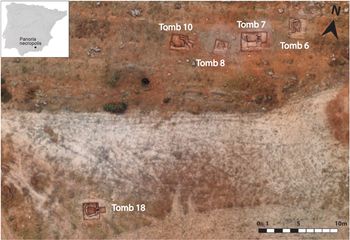
The megalithic cemetery of Panoría is located in the southeast of the Iberian Peninsula (Figure 1). Discovered in 2012, it is the latest addition to the known megalithic cemeteries spread across the Guadix Basin. This region stands out as one of the most important megalithic concentrations in Western Europe with more than 400 megalithic tombs (Leisner and Leisner Reference Leisner and Leisner1943). The Panoría necropolis occupies a strategic position overlooking most of the Guadix Basin. Intensive surveys have found 19 dolmens that consist of tombs with rectangular and trapezoidal chambers—normally between 1.10 and 1.60 m in length—and short passages. Five of these megalithic tombs were excavated between February and June 2015. According with the 14C chronology, the cemetery was in use during a long period that began in the Late Neolithic (3525–3195 cal BC), reaching the most intensive ritual activity during the Copper Age and ending in the Early Bronze Age (2125–1980 cal BC) (Aranda Jiménez et al. Reference Aranda Jiménez, Lozano Medina, Sánchez Romero, Díaz-Zorita Bonilla and Bocherens2018a).
Orthophotography with the location of the 5 excavated tombs at Panoría cemetery.

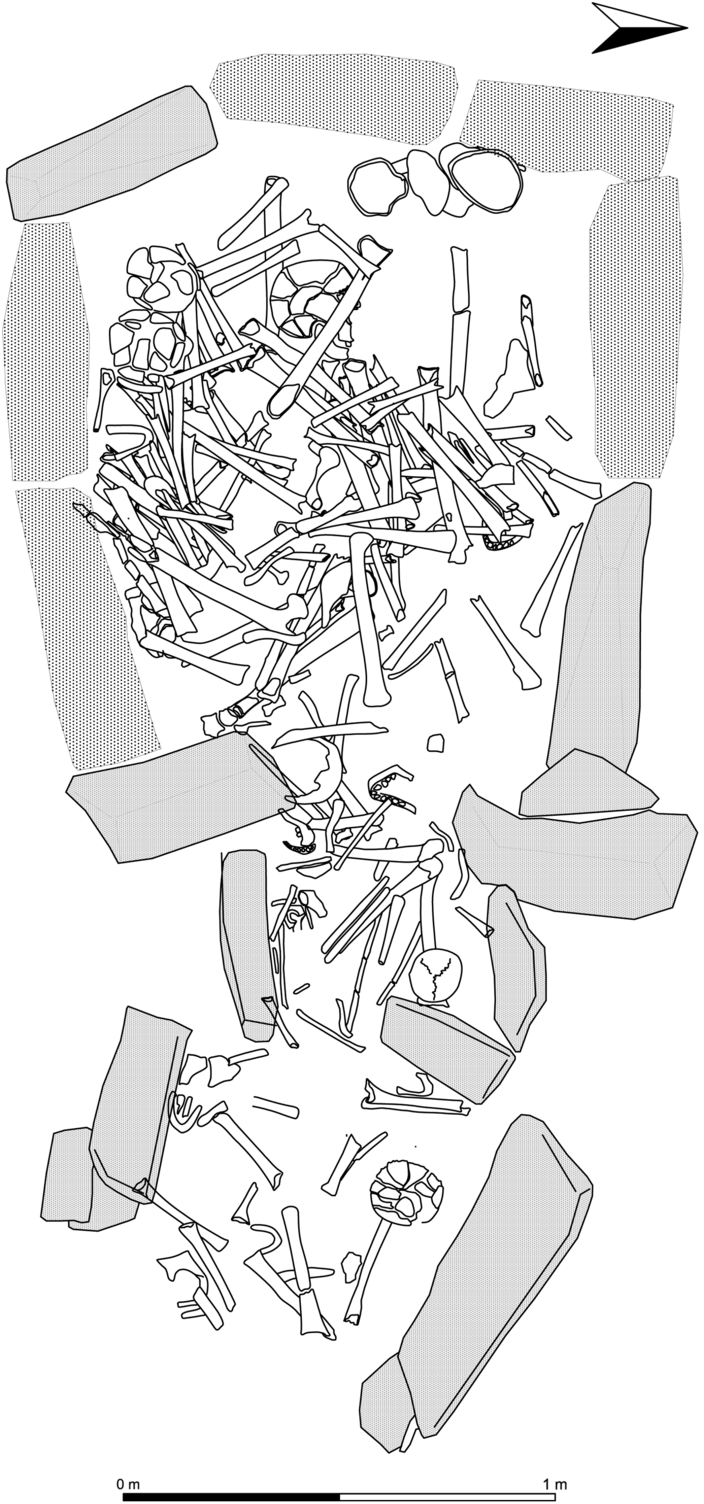
Of the five excavated tombs, four were at least partially affected by disturbance activities. Only at Tomb 10 were no explicit traces of later human interference detected. In this case, the mortuary remains were found in the chamber and passage (Figure 2). Different occupation phases were not distinguishable as human bones were found in one compact burial layer of fragmented and mixed skeletal remains that were discovered piled on top of each other. Although most of the bones were scattered, in several cases complete individuals or specific anatomical parts appeared in an articulated or semi-articulated position, which means the tomb was a place for primary depositions later disturbed by different factors. Despite the scattered and fragmented nature of the bone remains, primary depositions reach 10.5% of the entire bone assemblage (Díaz-Zorita Bonilla et al. Reference Díaz-Zorita Bonilla2017; Aranda Jiménez et al. Reference Aranda Jiménez, Lozano Medina, Sánchez Romero, Díaz-Zorita Bonilla and Bocherens2018a, Reference Aranda Jiménez, Lozano Rodríguez and Pérez Valera2018b).
Anthropological remains from Tomb 10 of the Panoría cemetery.
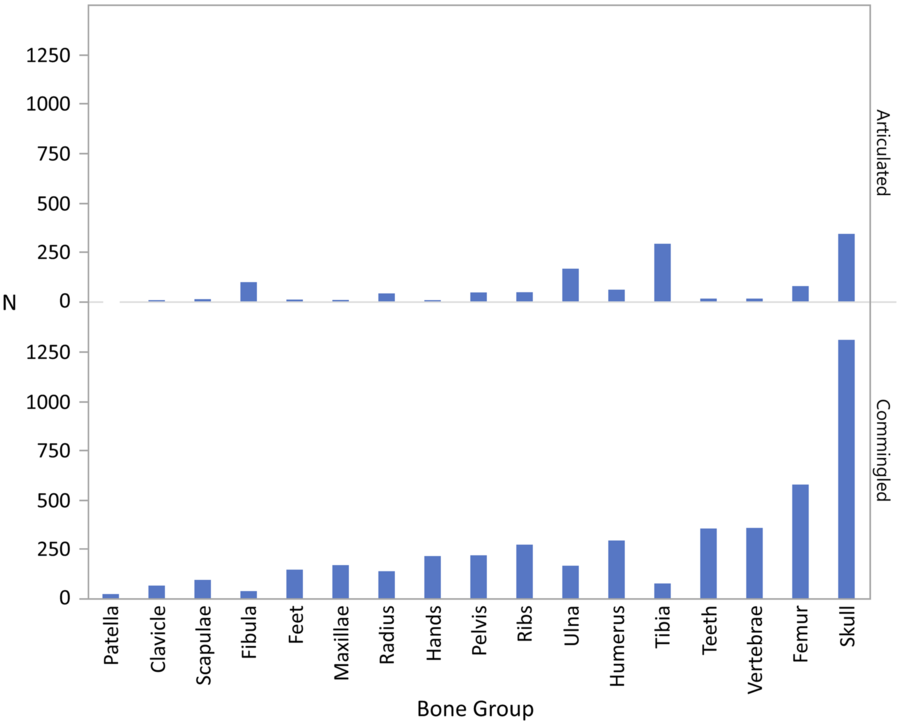
The whole collection totals 11,551 human bones and 368 teeth. The skeletal remains belong to male, female, and subadult individuals of all ages, although most of them fall into the adult range. All the anatomical parts are represented in the skeletal assemblage (Figure 3). The osteological profile of Tomb 10 shows a good representation of small and fragile bones such as hands, feet, teeth, vertebrae and ribs in the same level of magnitude as that of major bones such as humerus, radius, ulna and tibiaFootnote 1. The representation of small and fragile bones is consistent with funerary rituals based on primary depositions affected by selective removal of cranial and long bones. This osteological profile would reflect a partly residual assemblage, just the opposite as would be expected in mortuary rituals based on sequential primary inhumations and secondary burials characterized by the lack or the very low representation of fragile and small bones resulting from a differential preservation caused by in situ destruction and later mortuary depositions (Chambon Reference Chambon2003; Munoz et al. Reference Muñoz, Ghazal and Guy2012; Robb Reference Robb2016).
The osteological profile of Tomb 10 at the Panoría cemetery.
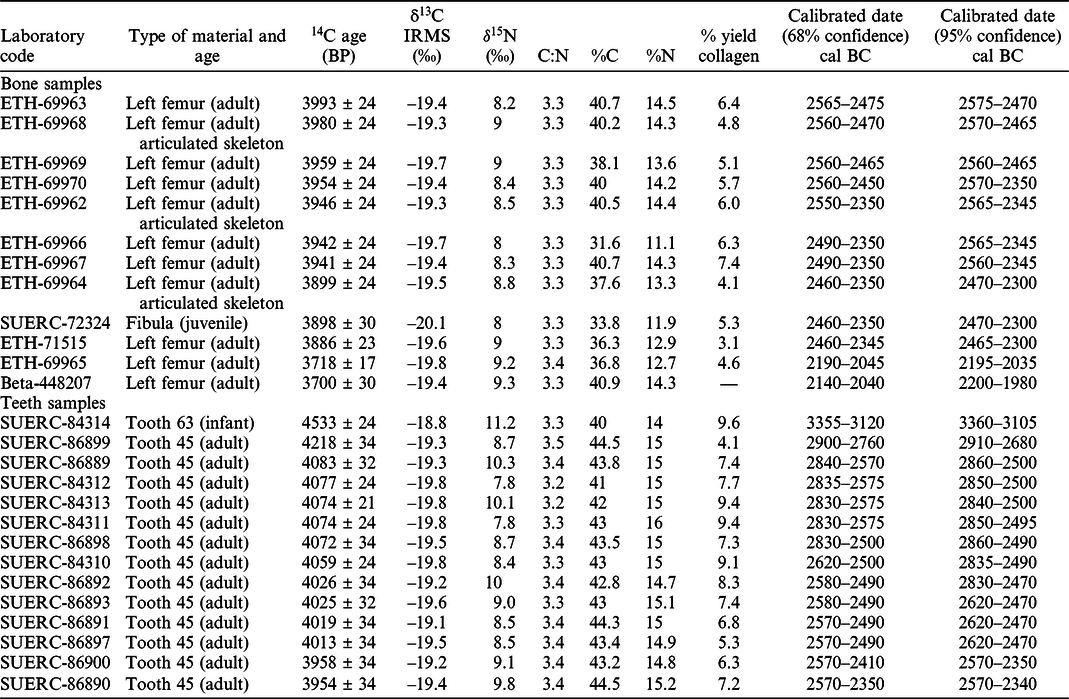
For exploring the chronology and temporality of this mortuary deposit we focused on bone samples in order to include the articulated individuals for the 14C dating. Articulated bone samples are especially suitable for dating, as they are reflective of being in their primary contexts, such that contemporaneity between the date obtained and the act of deposition can be guaranteed. Following the sampling strategy, successfully tested in our previous research (Aranda Jiménez and Lozano Medina Reference Aranda Jiménez and Lozano Medina2014; Aranda Jiménez et al. Reference Aranda Jiménez, Lozano Medina, Camalich Massieu, Martín Socas, Rodríguez Santos, Trujillo Mederos, Santana Cabrera, Nonza-Micaellie and Clop García2017, Reference Aranda Jiménez, Lozano Medina, Díaz-Zorita Bonilla, Sánchez Romero and Escudero Carrillo2018c, Reference Aranda Jiménez, Díaz-Zorita Bonilla, Hamilton, Milesi and Sánchez Romero2020; Lozano Medina and Aranda Jiménez Reference Lozano Medina and Aranda Jiménez2018), we also selected the MNI to be 14C dated because in commingled bone assemblages this is probably the best way of ensuring that no individual is dated twice. As a result, the MNI was 12, a figure calculated on the basis of 11 left femurs from adults and a fibula from a juvenile. Of the 12 samples three belong to skeletons still in anatomical connection and the remaining nine femurs were found in a disarticulated and scattered state (Table 1). The 12 samples were successfully dated, providing us a large 14C series that certainly captures the temporality of the multi-depositional skeletal remains found in the tomb (Aranda Jiménez et al. Reference Aranda Jiménez, Lozano Medina, Sánchez Romero, Díaz-Zorita Bonilla and Bocherens2018a).
14C series of the Tomb 10 at Panoría cemetery including the quality markers of the bone collagen and δ13C and δ 15N isotope values. Tooth 63 belongs to the upper left canine and tooth 45 to the lower right premolar 2.
According to the preferred Bayesian model of this 14C series discussed in depth elsewhere (Aranda Jiménez et al. Reference Aranda Jiménez, Lozano Medina, Sánchez Romero, Díaz-Zorita Bonilla and Bocherens2018a), we stated that in Tomb 10 two phases of mortuary activity can be identified according with the stratigraphic relationship between the samples. The early and main phase of ritual activity shows that the tomb was in use over a few decades at the beginning of the second half of the third millennium cal BC, for a period of between 1 and 40 years (68% probability). After a hiatus (210–380 years at 68% probability), the tomb was reused again during a very short period at the beginning of the Early Bronze Age. For the first time in southeastern Iberia, it was demonstrated that megalithic tombs were used at different temporal scales and intensities, ranging from a few decades to centuries. We concluded that Tomb 10 challenges the traditional assumption that the megalithic monuments remained in use over a span of centuries and contain long sequences of mortuary depositions (Aranda Jiménez et al. Reference Aranda Jiménez, Lozano Medina, Sánchez Romero, Díaz-Zorita Bonilla and Bocherens2018a).
Apparently, these conclusions seem to be robust because of the combination of several factors such as the undisturbed nature of the burial, the systematic recording methods used during the excavation, the fine-grained bioarchaeological analysis of the human remains and the large 14C series obtained. Nevertheless, we have moved on to explore if this 14C series really captures the complexity of the bone assemblage formation and the use-life of the tomb. In other words, were the depositional events of human remains concentrated in a short period of time? Can the in situ decomposition of bones explain the different rates of bone preservation? Could the removal of skeletal remains also influence the palimpsest’s formation and the period of use determined through the use of 14C dates? And, if this was the case, how can we approach these social actions?
To address these new research questions, we focussed our attention on the differences found between the MNI estimated in teeth and bones. Based on teeth, there was more than double the number of individuals buried in Tomb 10 (28 versus 12). Could these discrepancies be associated not only with the in situ bone decomposition but also with the removal of skeletal remains as the anatomical part representation suggests? Teeth have three main properties: small size, good preservation in different taphonomic conditions due to high mineral content and the fact they easily detach from mandibles and maxillae after the skeletal decomposition begins (Buikstra and Ubelaker Reference Buikstra and Ubelaker1994; Hillson Reference Hillson1996). Could these teeth represent lost evidence of human bone deposition episodes that were later subtracted from the tomb? Could the removal of skeletal remains explain, at least partially, the differences found in the human bone preservation? To answer these questions, we developed comparative 14C chronologies as an excellent pathway to explore how the bone assemblage was formed.
MATERIALS AND METHODS
Bearing in mind the above discussion, we decided to 14C date the teeth in order to explore if teeth and bone samples could belong to people that died at the same or different time. Two main alternative possibilities were expected: (1) the 14C dating would show previous depositions of human remains that went unnoticed when analyzing the 14C series from bone samples; or (2) 14C measurements would match with the existing dataset. The MNI from the teeth was 28, a figure based on the permanent tooth 45 for adults and on the deciduous tooth 63 for subadult individuals. Of the 28 potential samples we focused on loose teeth, meaning those teeth that remained in situ within a mandible or the maxillae were excluded. Also those teeth whose degree of preservation gave them low probabilities for successful 14C dating were also not considered. As a result, there were 15 possible samples for 14C dating. All of them were found mixed with bone remains in the same archaeological deposit. For cost efficiency reasons, in a first attempt only 5 samples were measured. After the evaluation, we expanded the dating to the other 10 samples, which meant that all 15 samples were submitted for dating (Table 1). While all 15 samples produced 14C results, GU-51331 had a low collagen yield that was just above the 1% minimum threshold with the total amount of collagen produced only suitable for a single small target. The measured result was approximately 1000 years earlier than the main series of dates. Since the sample was marginal in size, without enough material to separately check the %C, %N, and C:N through CF-IRMS, the result was subsequently withdrawn by the lab.
All samples were measured using accelerator mass spectrometry (AMS) in the Scottish Universities Environmental Research Centre (SUERC)Footnote 2. 14C dates were calibrated using the internationally agreed atmospheric curve, IntCal13 (Reimer et al. Reference Reimer, Bard, Bayliss, Beck, Blackwell, Bronk Ramsey, Grootes, Guilderson, Haflidason and Hajdas2013), and the OxCal v4.3 computer program (Bronk Ramsey Reference Bronk Ramsey2001, Reference Bronk Ramsey2009a). Calibrated ranges were obtained using the probability method (Stuiver and Reimer Reference Stuiver and Reimer1993) and the endpoints were rounded out by 10 years when the error was greater than or equal to 25 years and by 5 years when the error was less than 25 years (Stuiver and Polach Reference Stuiver and Polach1977; Millard Reference Millard2014). The quality of the bone collagen can be checked in Table 1. The new chronological series was modeled in a Bayesian framework using the OxCal program v4.3 (Bronk Ramsey Reference Bronk Ramsey2001, Reference Bronk Ramsey2009a).
When 14C dating anthropological remains it is very important to ensure that the carbon in the sampled bones was in equilibrium with the atmosphere, otherwise our interpretations will not be on solid foundations. Bone collagen from omnivores such as humans may derive from a diet based on marine and freshwater resources, which means that 14C measurements could be strongly influenced by the reservoir effect (Stuiver and Braziunas Reference Stuiver and Braziunas1993; Lanting and van der Plicht Reference Lanting and van der Plicht1998; Cook et al. Reference Cook, Bonsall, Hedges, Mcsweeney, Boroneanţ and Pettitt2001). In these cases, the carbon is not in equilibrium with the atmosphere, presenting an earlier date than any contemporaneous terrestrial organism. Although the distance of the Panoría necropolis from the sea (over 130 km) presumably precludes the consumption of significant amounts of marine resources, the appearance of seashells as grave goods suggests that seafood consumption cannot be ruled out. The consumption of appreciable quantities of freshwater fish and waterfowl also seems very unlikely, taking into account the absence of wetlands in the region and that most of the watercourses are highly seasonal. Nevertheless, to explore the potential dietary reservoir effect all the samples selected to be dated also separately underwent δ 13C and δ 15N stable isotope analysis.
RESULTS AND DISCUSSION
The δ 13C values for teeth of adult individuals range from −19.1 to −19.8‰ and the mean is −19.5‰ ± 0.26 (1σ). The δ 15N ratios range from +7.8 to +10.3‰ and the mean is +8.9‰ ± 0.8 (1σ)Footnote 3. These values match perfectly with the ratios of the bone samples, δ 13C −19.6‰ ± 0.25 (1σ) and δ 15N +8.9‰ ± 0.65 (1σ), that have been discussed in-depth elsewhere (Díaz-Zorita Bonilla et al. Reference Díaz-Zorita Bonilla, Aranda Jiménez, Bocherens, Escudero Carrillo, Sánchez Romero, Lozano Medina, Alarcón García and Milesi García2019). According to these isotopic results, the diet was based on C3 plants and terrestrial animalsFootnote 4, with no evidence of any relevant intake of marine or freshwater resources. Therefore, the 14C dates can be considered accurate estimations in equilibrium with the atmosphere. The carbon and nitrogen isotopic values of Panoría are consistent with the available paleodiet studies of southeastern megalithic societies carried out in cemeteries such as Los Millares (Waterman et al. Reference Waterman, Beck, Thomas and Tykot2017) and El Barranquete (Díaz-Zorita Bonilla et al. Reference Díaz-Zorita Bonilla, Aranda Jiménez, Bocherens, Escudero Carrillo, Sánchez Romero, Lozano Medina, Alarcón García and Milesi García2019).
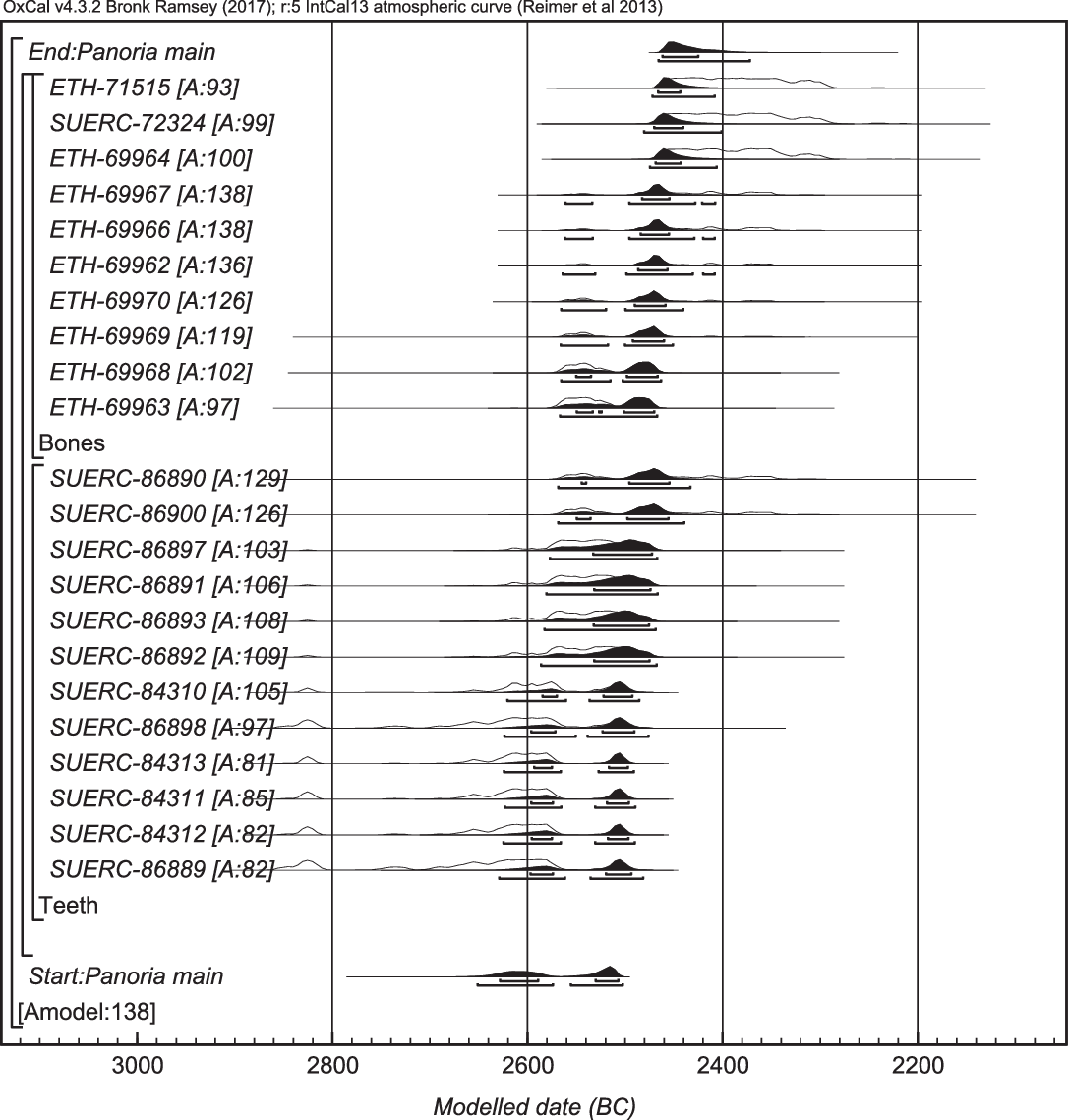
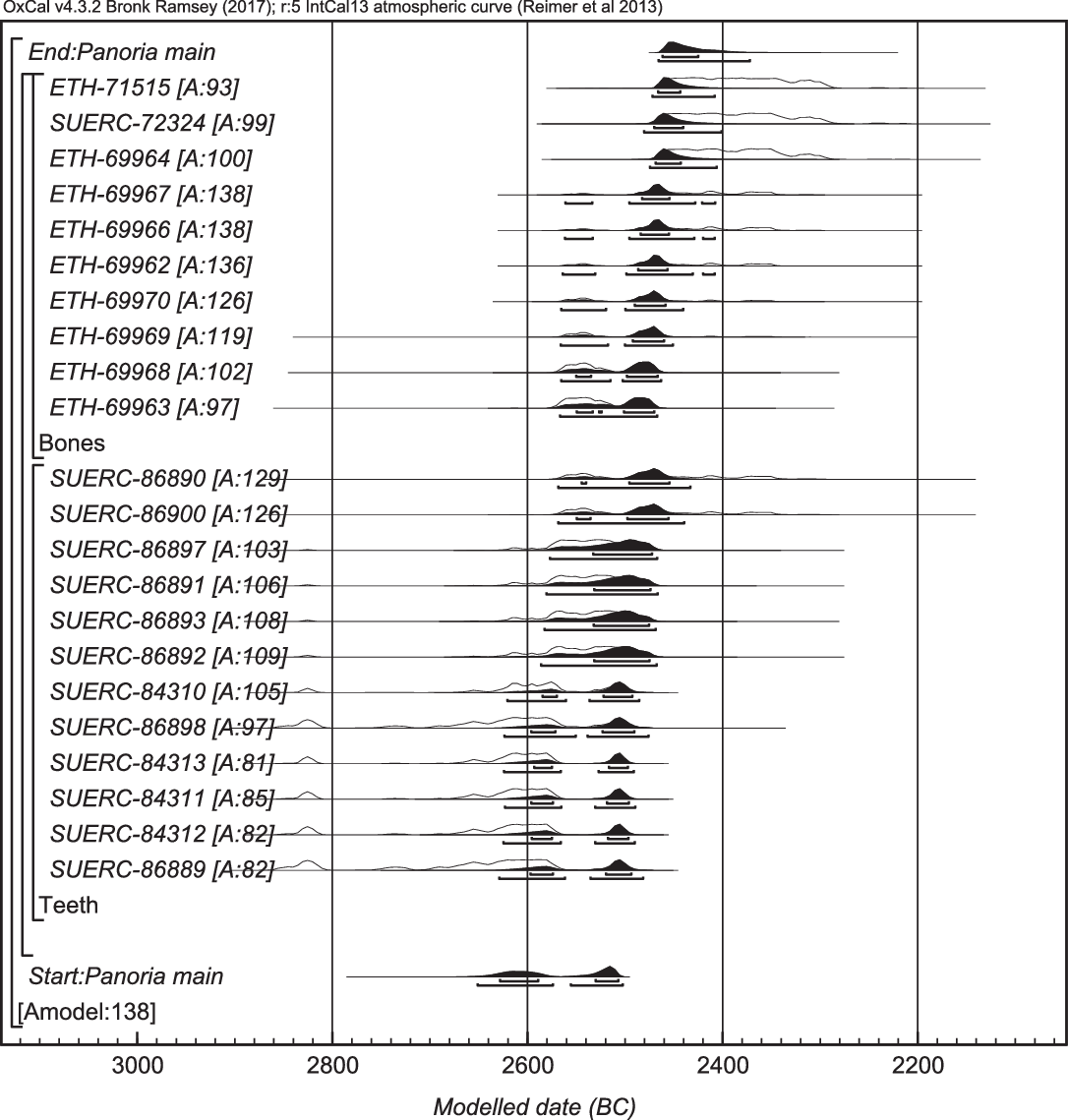
The 14C series of Tomb 10 at Panoría consists of 26 dates, 12 from bones and 14 from teeth samples. Of the 26 dates three belong to individuals still in anatomical connection, which means that 23 dates come from scattered, fragmented and disarticulated teeth and bones mixed in the same burial deposit. In a first Bayesian model we have considered the possibility for there to be statistical outliers. We built a model that included all the results from teeth and the earlier group of dates on bones, excluding the most recent (ETH-69965 and Beta-448207). These were modeled as a single phase of activity, and using the General outlier model (Bronk Ramsey Reference Bronk Ramsey2009b), each result was given a 5% prior probability of being an outlier. This model suggests SUERC-84314 and SUERC-86899 are both outliers (100% and 83% posterior probability). After removing these two outliers from the dataset, a model was rerun that included the remaining bone and teeth dates from the primary phase of use of the tomb. This model has good agreement (Amodel=138) (Figure 4). It estimates this phase of burial began in either 2655–2575 cal BC (54% probability; Figure 4; start: Panoría main) or 2560–2505 cal BC (41% probability), and probably in either 2630–2590 cal BC (37% probability) or 2530–2505 cal BC (31% probability). This phase of activity ended in 2465–2375 cal BC (95% probability; Figure 4; end: Panoría main), and probably in 2465–2425 cal BC (68% probability). When considering the earliest dated remains as outliers in the larger dataset—either relating to the earliest activity, reworked teeth, or purely as statistical outliers—the model for Tomb 10 still indicates a potentially long period of use in the main period of burial activity, perhaps around two centuries.
Probability distribution of dates from the Tomb 10 at the Panoría cemetery. Each date shows two distributions: light grey represents the 14C calibration and dark grey indicates the result of the Bayesian model (posterior density estimates). Distributions other than those relating to particular dates correspond to aspects of the model. The square brackets down the left-hand side and the OxCal keywords define the overall model exactly.
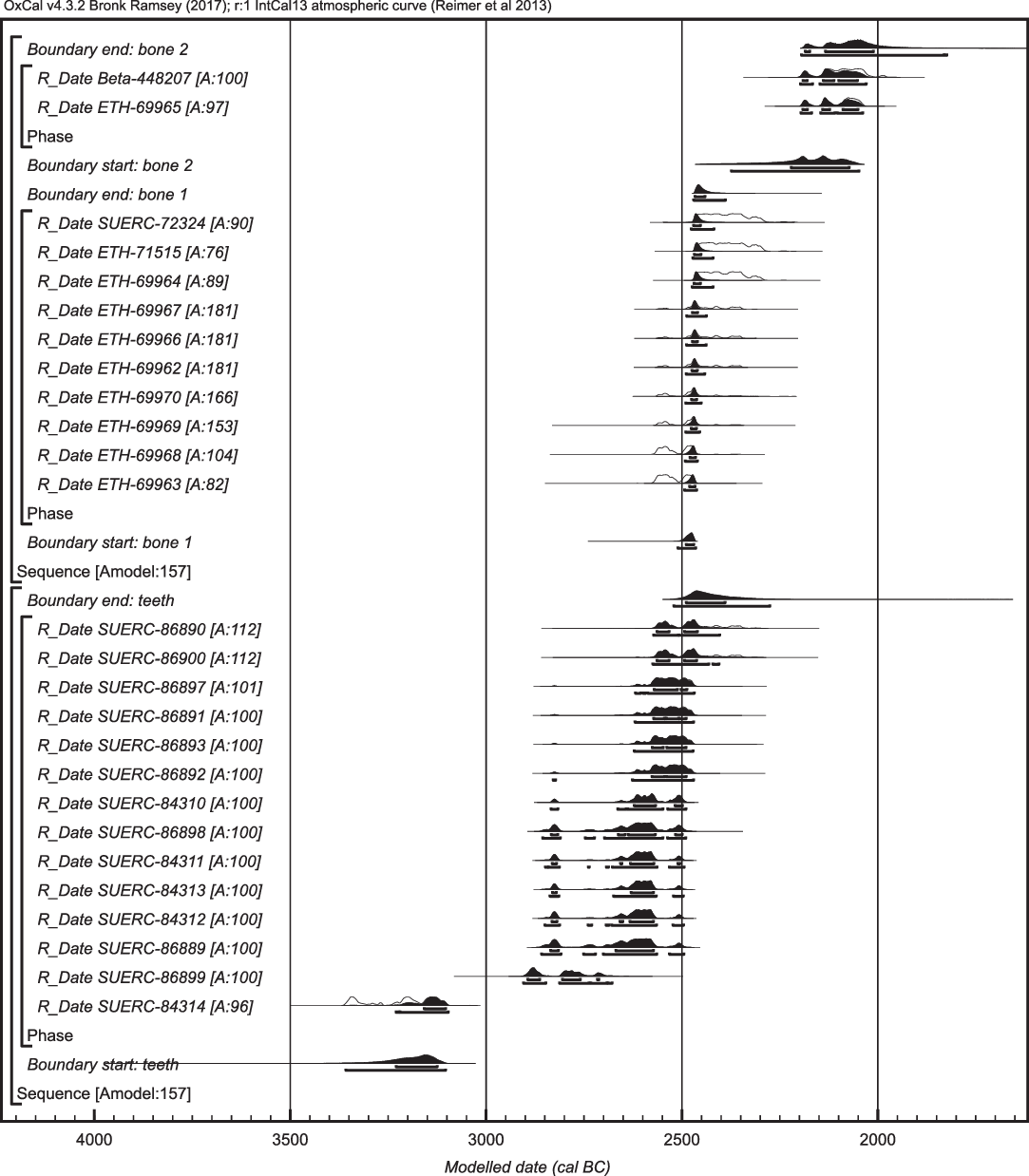
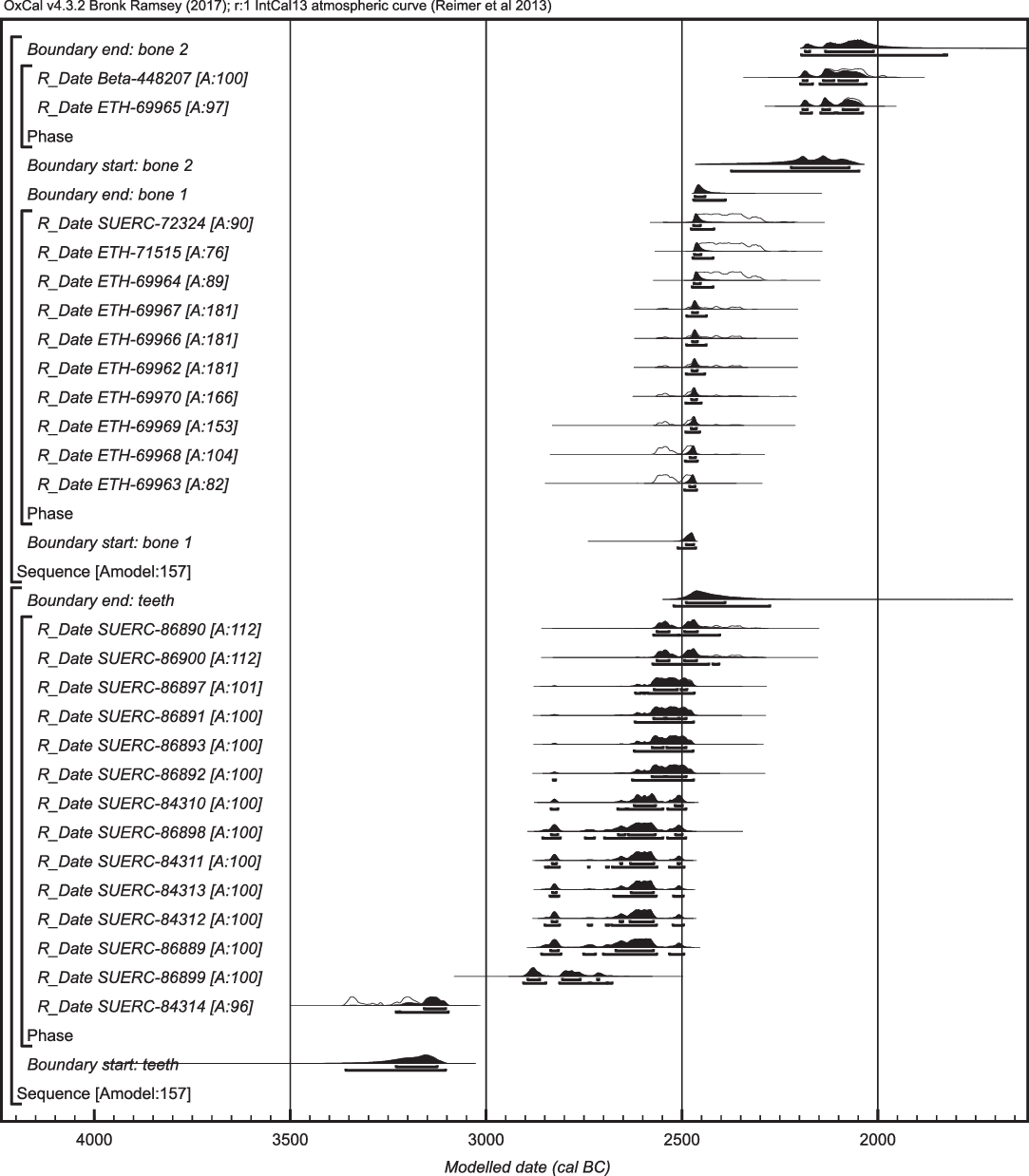
In a second Bayesian model all the 14C dates were modeled according to the type of dated sample for comparative purposes (Figure 5). All the teeth were clustered in one phase of continuous activity and the bone dates were arranged in two phases of mortuary activity according with their location and stratigraphic position (see Aranda Jiménez et al. Reference Aranda Jiménez, Lozano Medina, Sánchez Romero, Díaz-Zorita Bonilla and Bocherens2018a for the prior information discussion). Both phases—teeth and bones—present a good index of agreement (Amodel = 157%)Footnote 5, which indicates that the 14C dates conform to the archaeological information incorporated in the Bayesian analysis. According to this model (Figure 5), three main aspects can be highlighted:
1. The beginning of mortuary activity sharply contrasts between the 14C dates from the teeth and bone. In the first case, the earliest human remains were placed in the tomb in 3360–3100 cal BC (95% probability; Figure 5; start: teeth), probably in 3230–3125 cal BC (68% probability). In the second case, mortuary activity began in 2515–2465 cal BC (95% probability; Figure 5; start: bone), and probably between 2490–2470 cal BC (68% probability). In calendar years, these differences would imply that the new 14C series on teeth moves the start of funerary depositions earlier by about three-quarters of a millennium (between 605 and 895 years; 95% probability; Figure 5; calculated Difference between start: teeth and start: bone 1).
2. Although the earliest funerary deposition occurred in the third quarter of the fourth millennium (SUERC-84314; Figure 5; 3230–3095 cal BC; 95% probability), most of the interments based on teeth were concentrated in the first half of the third millennium cal BC. The end of this series (2525–2270 cal BC; 95% probability; Figure 5; end: teeth) is indistinguishable from either the beginning or end of the primary phase of human bone deposition (2515–2465 cal BC; 95% probability; Figure 5; start: bone 1) (2470–2385 cal BC; 95% probability; Figure 5; end: bone 1). The coexistence between the teeth and bone 14C series occurred during a period of up to 205 years (95% probability; Figure 5; calculated Difference between start: bone 1 and end: teeth), and probably less than 95 years (68% probability). Nevertheless, this period of coexistence could be even shorter if we consider that we can guarantee that separately bone and teeth samples belong to different individuals but not when they are considered as a whole, which means that in some cases the same individual could have been dated twice. Consequently, it is possible that the most recent teeth dates belong to the older individuals dated on the basis of bone. If this was the case, the coexistence period will be significantly reduced.
3. The period of use is another important difference between teeth and bone 14C series. In the first case, the 14C dates on teeth show a large timespan for deposition (620–1010 years; 95% probability; Figure 5; calculated Difference between start: teeth and end: teeth). The bone 14C series sharply contrasts with this scenario as the two phases of mortuary activity identified display very short periods of use. The earliest phase spans 1–120 years (95% probability; Figure 5; calculated Difference between start: bone 1 and end: bone 1), and probably no more than 40 years (68% probability), which means that no more than two generations would have been buried during this period. In the second phase, the dates clearly pass the test of contemporaneity (T’=0.3; T’(5%)=3.8) (Ward and Wilson Reference Ward and Wilson1978), although the limited number of measurements available prevents drawing any robust conclusion.
Probability distribution of dates from the Tomb 10 at the Panoría cemetery (second model). The format is identical to that in Figure 3.
It seems clear that the 14C series of teeth samples dramatically change our chronological understanding of Tomb 10. The mortuary activity likely began in the fourth millennium although most of the interments were concentrated in middle half of the third millennium when the tomb reached its greatest ritual intensity. This period of use ended in 2465–2425 cal BC (68% probability; Figure 4; end: Panoría main). Several centuries after this, the tomb was reused during a short period at the end of the third millennium. In contrast with what we noted in a previous paper (Aranda Jiménez et al. Reference Aranda Jiménez, Lozano Medina, Sánchez Romero, Díaz-Zorita Bonilla and Bocherens2018a), the temporality of the tomb was not reduced to a short period of funerary activity, just the opposite, its use-life spanned centuries and contained complex sequences of mortuary depositions.
Not only funerary depositions, but the removal of bone remains emerges as a key aspect in the bone assemblage formation. The 14C series based on teeth not only pushes back the beginning of mortuary activity by centuries but also suggests that teeth provide the evidentiary link to skeletal depositions subsequently removed from the tomb. Several reasons support this statement. The large 14C series based on articulated and disarticulated bone remains robustly captures the temporality of the multi-depositional mortuary events. On the other hand, the series based on teeth shows a previous long period of funerary activity not identified by the 14C-dated bone samples. It is very remarkable that most of the teeth belong to funerary activities older than those identified by the bone samples. These chronological differences between teeth and bones are also very consistent with the osteological profile of the tomb characterized by a comparable representation between small and fragile bones and long bones. This signature in the representation of anatomical parts would also support the selective removal of skeletal remains for another use elsewhere.
CONCLUSIONS
The formation of bone assemblages is a key aspect for better understanding the ritual and funerary practices of megalithic societies. The palimpsest nature of the megalithic tombs characterized by multi-depositional events produce complex assemblages that appear to archaeological observation as fragmented, mixed and piled up on top of each other. Natural forces and social actions interact in complex ways to create these palimpsests. How these different factors leave distinct and recognizable signatures should be a main concern if we really want to base our interpretation on robust foundations. We have explored a novel methodology to investigate bone assemblage formation based on the 14C chronology.
The 14C dating of bone and teeth has shown that the removal of bone remains, as the anatomical part representation also suggests, was a major aspect of the ritual actions performed in Tomb 10. The dates of teeth show a long period of funerary use before the deposition of the human bone remains. It seems very plausible that these teeth were the evidence of skeletal remains that were removed in one or several episodes from the tomb to be taken to other places. The small size of the teeth and the fact that they easily detach from mandibles and maxillae would have favored their persistence in the tomb. Additionally, teeth are among the skeletal remains with the best rate of preservation, which make them an excellent indicator for exploring the full timespan of mortuary practices.
The 14C series based on teeth show a long period of funerary activity whose end matches with the human bone deposition. Both kinds of samples seem to be chronologically sequenced with a short period of coexistence, probably less than 95 years (68% probability). It seems that the human bone remains found in the tomb were the last episode of intense mortuary depositions. This episode spans a short period, not more than a few decades. Therefore, what appeared to the archaeological observer during the excavation process were mainly the last funerary depositions and not the remains of the entire use-life of the tomb. This also has important implications for the chronological discussion of the megalithic phenomenon. Without a careful analysis of the bone assemblage formation, traditional assumptions such as the association of the earliest dates with the construction of the megalithic tomb should be ruled out.
The opportunity to explore the bone assemblage formation of an undisturbed burial monument at the Panoría cemetery has offered an excellent opportunity to show how the complex interactions between the deposition and removal of human bone remains may blur the complexity of ritual actions and produce misleading interpretations. The 14C chronology emerges as a useful pathway to explore assemblage formation through the temporality of the depositional events. Although this is a promising venue for untangling bone assemblage formation, further developments are needed if we really wish to understand megalithic monuments, one of the most widespread and long-lasting cultural manifestations of past societies.
ACKNOWLEDGMENTS
This work was supported by the Spanish Ministry of Economy and Competitiveness. Research project “Innovation, hybridisation and cultural resistance. The third and second millennia cal BC societies on the southern Iberian Peninsula” (HAR2017-82932-P). We would like to thank the editors and the anonymous reviewers whose suggestions helped to improve this paper.
Supplementary material
To view supplementary material for this article, please visit https://doi.org/10.1017/RDC.2020.67




 Open access

