

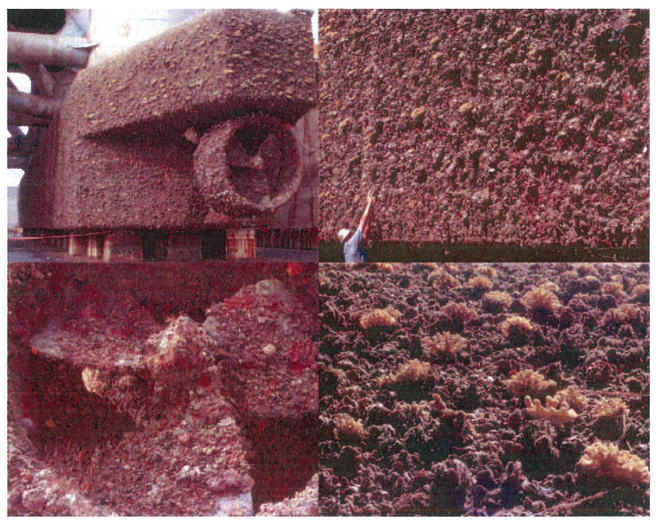
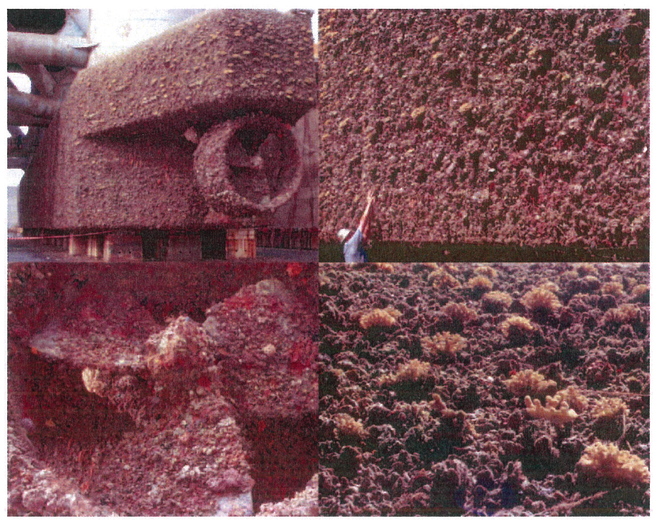
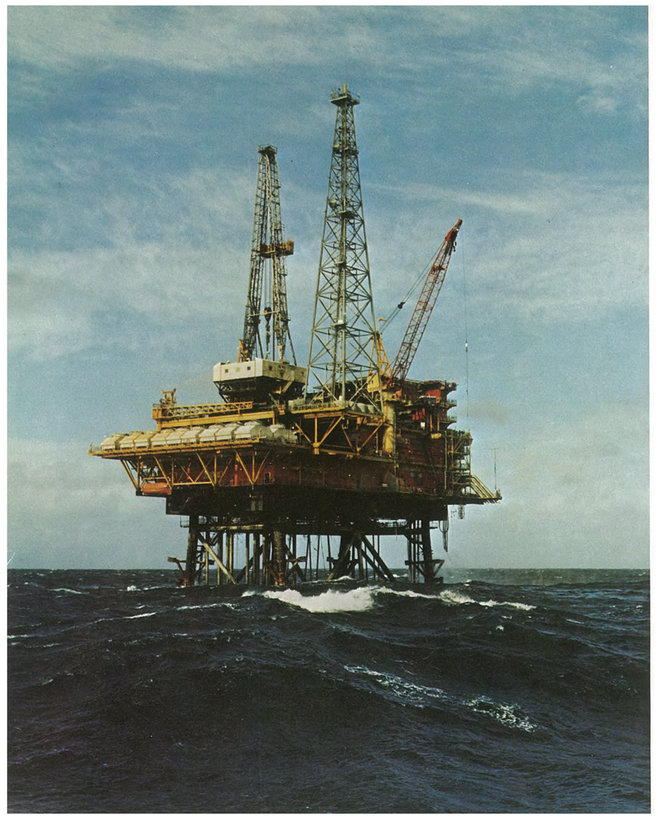
Artificial islands made from steel or concrete form artificial reef structures the moment they are submerged in the sea. On their underwater surfaces they can host complex ecosystems that travel with them during relocation. Similar to other artificial islands and oceangoing vessels, oil and gas platforms are subject to biofouling, which is the gradual accumulation of waterborne organisms on their surfaces. However, unlike mobile ships, these platforms often remain stationary at drill sites for extended periods, often years, or become permanently affixed to the seafloor. This more stationary nature allows their underwater ecosystems to grow and increase in complexity. In contrast, for example, container ships, designed for rapid transit, often exceed speeds of 30 km/h. Offshore oil platforms, lacking such capability, are towed at much slower speeds (often 2–11 km/h) during relocation, lessening the destructive impact on their ecosystems.Footnote 1 Fouling organisms that settle on the hard surfaces of steel or concrete create habitats for other species, thus enhancing the biofouling community. In many cases, these self-sustaining ecosystems have greater species abundance and diversity than ships but typically less than natural reefs. Marine bacteria, fungi, algae, barnacles, sponges, tube worms, bryozoans (or moss animals), hydrozoans, sea squirts, mussels, corals, oysters, and other species form mature fouling communities. These, in turn, support crabs, starfish, fish, and marine mammals (see Figure 9.1). For example, platforms with underwater heights of 40–60 meters, offering about 8,000–12,000 square meters (sometimes even more) of surface area for colonization by the fouling community, can attract 10,000–20,000 fish.Footnote 2 Security measures around offshore oil and gas drilling include safety distances from other vessels, including fishing trawlers. This effectively turns platforms into the equivalents of small marine protected areas, limiting interference with their submerged ecosystems. In the North Sea, for example, marine mammals such as harbor porpoises have been observed feeding around and likely follow platforms, demonstrating the complex food webs centered around these structures.Footnote 3
Submerged platform ecosystems can be valuable contributors to marine biodiversity, whose decline is a major concern in the oceanic Anthropocene. The oceanic Anthropocene is characterized not only by climate change and sea level rise but also by rapid biosphere degradation, evidenced by biodiversity loss through biomass reduction or extinctions, both locally and globally.Footnote 4 Previous chapters have already shown several impacts related to mariculture, capture fisheries, coastal industrialization, oil spills, and other topics. Human-mediated translocations of marine species through submerged platform ecosystems can lead to serious biosphere degradation in the form of bioinvasions. In such cases, a species multiplies exponentially in a new ecosystem, dominating it in terms of biomass or density. The history of bioinvasions and changes in biomass concentration during the oceanic Anthropocene has been shaped by new vectors (or pathways). These vectors have created what can be seen as a novel epoch of marine biological exchanges, originally driven by the offshore oil and gas industry’s globalization process. Slowly traveling underwater biofouling communities transformed platforms into the offshore oil and gas industry’s highest risk vector for bioinvasions. Without cleaning, these biofouling communities can persist for the duration of the platform’s lifespan, which may extend over two, three, or more decades. Ballast water, used to stabilize platforms or empty vessels, and sediments in ballast water tanks also act as vectors for species translocations, involving the intake and subsequent release of water and larvae in different locations. However, the ballast water issue has already seen national, international, and corporate risk reduction efforts.Footnote 5
In this chapter, I continue to focus on Earth’s amphibious transformation through multispecies interactions, which emerged with the offshore extension of the built environment, creating new habitat conditions. Similar to the previous chapter, dual-habitat built environments remain central to the analysis, but now with an emphasis on species translocations and their impacts on biosphere integrity. I address the questions of how and why artificial islands, particularly offshore oil and gas platforms, became new and important vectors for marine bioinvasions in the oceanic Anthropocene. Notably, oil platforms marked the first stage of ocean-to-land globalization, when reductions in communication and navigation costs turned marine regions into production centers. Previous chapters discussed Earth’s amphibious transformation through this extension of the built environment onto sea surfaces. They showed the marine application of the Age of Coal’s energy-intensive construction materials like steel and concrete, only becoming prevalent during the Age of Oil due to growing oil demand in many countries. The preceding chapter investigated intentional shifts in biomass through the unequal and turbulent expansion of mariculture practices. This chapter, however, focuses on the unintentional and undesirable impacts on biosphere integrity caused by artificial islands made of steel and concrete. From the mid-twentieth century until the early 1970s, virtually all platforms were constructed with their submerged parts made from steel.Footnote 6 This platform technology, aimed at adaptation to oceanic material conditions, extended the human habitat to sea surfaces but also inadvertently created submerged habitats for marine species. It, therefore, fostered conditions that facilitated the translocation of individual species or even entire ecosystems. The initial impetus for creating such submerged habitats was the globalization of the offshore oil industry beginning from the mid-twentieth century, later joined by platforms serving other forms of ocean industrialization. Artificial islands opened entirely new marine regions to marine bioinvasions and created novel material conditions for them. The use of steel and concrete to create new hard surface structures along coastlines or further offshore supplanted wooden coastal structures and their previous habitat conditions. Along coastlines, plastic structures, although not used for ocean-crossing platforms, also contributed to the formation of a new archipelago of hard surfaces. These artificial reef structures transformed marine regions where few or no reefs previously existed or increased the number of reefs, thus reducing distances between them or from them to the coastline. This transformation converged with the urbanization and industrialization of many coastlines during the second half of the twentieth century, adding more hard surfaces such as water intake tunnels, piping systems, and seawalls. The archipelagic nature of this assemblage of hard substrata and surrounding oceanic space increased the mobility of marine species, defining the new vector for their spread. In other words, while the material conditions of the hard substrata enabled marine species to establish multispecies habitats, the oceanic material conditions, such as currents and tides, enabled the spread of these species or their offspring between the surfaces of a rising number of offshore platforms, supply vessels, other ships, mariculture facilities, and coastal structures.
Human activities have led to the translocation of numerous species to new bioregions. A recent, comprehensive survey on aquatic nonindigenous species identified 2,209 first recordings in new ecosystems of 1,442 unique species and emphasized the huge gaps in our knowledge of many marine regions.Footnote 7 Another recent study, not limited to aquatic species, focused on translocation quantities and found that since 1500, when ocean crossings became more common, 16,926 species had successfully established themselves in one or more new bioregions, based on 45,813 first recordings.Footnote 8 Often these species did not become dominant in terms of density or biomass in their new environments. In some instances, the establishment and multiplication of species were the intentional result of human activities. For example, the introduction of farm animals (including freshwater fish) and crops served to replace previous ecosystems, at times a dimension of settler colonialism. Its usual justification by proponents through the Lockean agriculturalist argument that property rights are rooted in land cultivation and enclosure is deeply rooted in the utilization of specific plants and animals.
Mobile platforms, or technically mobile offshore drilling units like jack-up rigs and semi-submersibles, usually serve exploration and expoitation purposes. Seabed-fixed platforms and floating offshore installations, the latter used to develop oil fields in locations where depth and other oceanic conditions do not permit the use of the former, remain stationary after installation but must be transported at least once from their construction site to the production site. A mobile platform’s underwater habitat potentially combines long stationary periods with slow movement, allowing entire artificial reef ecosystems to evolve on its hard surfaces. Meanwhile, seabed-fixed platforms and floating offshore installations may translocate marine species once and subsequently may act as stepping stones for nonindigenous species that arrive through other vectors such as mobile platforms, ships, or marine litter. Beyond the offshore oil and gas industry, the offshore built environment with hard surfaces is rapidly growing, marking what I referred to as the second stage of ocean-to-land globalization.Footnote 9
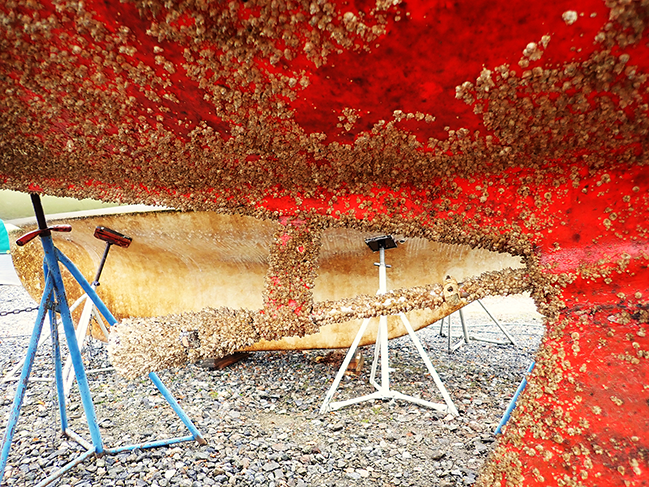
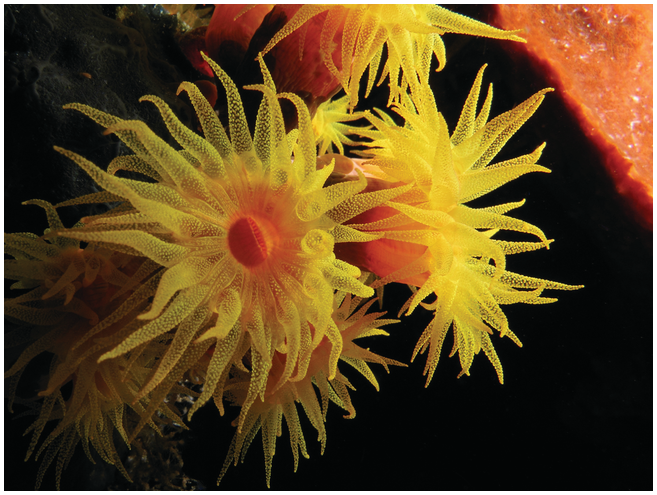
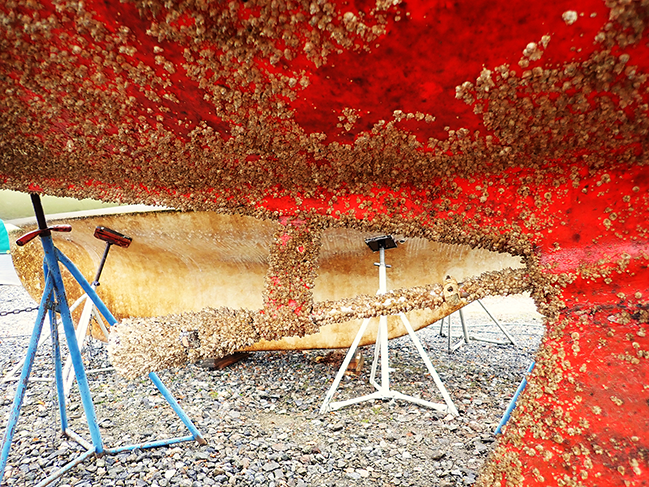
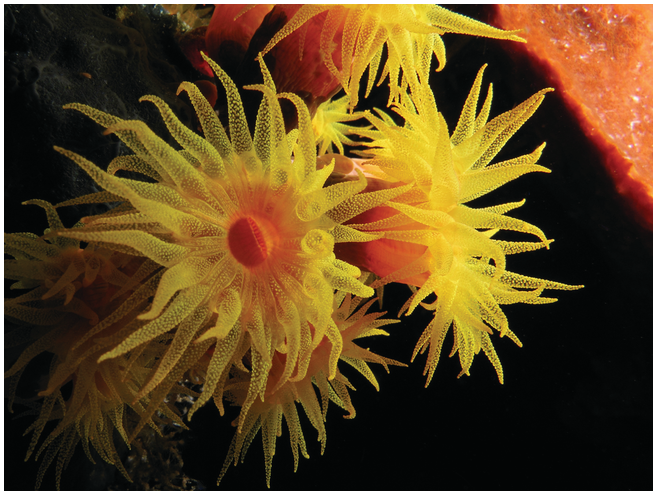
The chapter investigates offshore platforms as bioinvasion vectors through two cases of marine species translocations, bay barnacles (Amphibalanus improvisus) and sun corals (Tubastraea spp.), by oil platforms (see Figures 9.2 and 9.3). Bay barnacles, surviving a translocation from Japan to New Zealand, could not establish themselves in 1975. Conversely, the spread of sun corals along Brazil’s coastline since the late 1980s has caused a major ongoing threat to marine biosphere integrity and forms part of a larger bioinvasion in the North and South Atlantic.
A dense colonization of bay barnacles (Amphibalanus improvisus) on the hull of a boat during dry-dock maintenance. CC Share Alike 4.0 International licence.
Tubastraea coccinea, a species of sun coral also known as the orange cup coral, displaying fully extended tentacles. CC Share Alike 3.0 Unported.
Most sufficiently detailed historical data on platform-related marine species translocations comes from articles in the offshore oil industry’s news journals and from inspection reports compiled by marine scientists, published as part of their scientific journal articles. These sources provide data on abiotic (nonliving) factors influencing translocations, such as platform design, water salinity, and temperature. In some cases they also include data on biotic (living) factors such as the composition of a specific platform’s biofouling community. These data enable the establishment of analogies with the abiotic and biotic factors that shaped comparable platform ecosystems, the journeys of which could ideally also be reconstructed. Although historical sources on individual hull ecosystems are sparse, this limitation does not preclude drawing informed conclusions. As marine biologist James T. Carlton and others pointed out, the presence of a species in different bioregions implies that if it can be translocated, it needs to be considered that it was translocated.Footnote 10 While confirmed marine species translocations cannot always be traced back to individual platforms, they do illustrate the broader historical impact of a growing number of platform journeys. Collectively, these journeys have turned platforms into the oceanic Anthropocene’s new, major vector for marine bioinvasions.Footnote 11 Therefore, this chapter, like other studies concerned with marine bioinvasions, uses an argumentation system focused mainly on vectors and abiotic conditions of journeys. Case studies concerning biotic factors, like the few on known biofouling communities, demonstrate and evaluate the high bioinvasion risks associated with offshore platform journeys, based on generalizing these data for similar platforms where biofouling community compositions can be inferred.
The Columbian Exchange and the Oceanic Anthropocene
The chapter applies an oceanic-vertical perspective to exploring bioinvasions and their vectors, crucial yet understudied aspects of the oceanic Anthropocene. The perspective’s downward orientation in voluminous marine space again expands oceanic history into multispecies encounters. Since the 1950s, offshore platforms have emerged as novel vectors for marine species translocations, akin to the role of ocean-crossing ships during the post-1492 Columbian Exchange, which connected the “Old and New Worlds,” translocating marine species between previously unconnected source and recipient regions. Historian Alfred W. Crosby’s seminal study on the Columbian Exchange largely overlooked the role of vectors in favor of bioinvasion results, a trend persisting in subsequent studies.Footnote 12 From the mid-twentieth century onward, the number of mobile offshore platforms surged, fueled by the offshore oil industry’s global expansion. The upsurge, documented in this book, and the foreseeable growth in artificial island usage heralded a new era in species translocation, which could be termed the “artificial island age.” As an important part of the oceanic Anthropocene, this new era does not diminish the relevance of other vectors but draws attention to the emergence of a vector that operated in new marine regions and created novel material conditions, underlying the need for enhanced risk evaluation and management.Footnote 13
The number of oil and gas platforms increased strongly throughout the latter half of the twentieth century, albeit with fluctuations tied to oil and gas prices. No international organization compiles comprehensive data on these platforms, but Chapter 2 provided an overview mainly concerning Asia (see Table 2.2). A 2003 estimate suggested more than 6,500 platforms globally. Notably, several hundred were mobile, with a smaller portion of seabed-fixed platforms undertaking transoceanic journeys for installation.Footnote 14 Satellite image analysis from the mid-2010s estimated approximately 5,839 platforms in the Gulf of Mexico, the Persian Gulf, and the South China Sea, excluding other major offshore oil regions.Footnote 15 In comparison, the number of large ships (100 gross tons and above) reached almost 100,000 in 2021, quantitatively much higher than platforms.Footnote 16 However, as shipping companies prioritize rapid vessel movement, the corresponding destructive impact reduces biofouling and the likelihood of nonindigenous species surviving such journeys.Footnote 17
The qualitative distinction between platforms and ships is largely a result of human engineering. Beyond different travel speeds, corrosion protection is a key factor. The material conditions of saline water require corrosion protection for steel platforms, leading to increased biofouling compared to ships. Submerged steel structures become large anodes in seawater, attracting corrosion. Cathodic protection, applying a low-voltage direct current to the steel platform, converts the steel surface into a cathode, preventing corrosion but leading to the accumulation of a layer of calcium carbonate or, at higher voltages, primarily magnesium hydroxide. Calcium carbonate is the main substance of limestone. It is a construction material on its own and a central feedstock of cement. Moreover, calcium carbonate is the material used by shellfish and corals to “cement” themselves to hard surfaces and from which they grow their seashells and skeletons. The layer of calcium carbonate accumulating on steel surfaces therefore facilitates attachment of biofouling species. Owners of stationary or very infrequently moving offshore oil platforms have prioritized corrosion protection, deeming biofouling and related problems a secondary issue. Offshore oil companies’ application of cathodic protection emerged with offshore oil drilling’s expansion from the bayous to the Gulf of Mexico in the late 1930s.Footnote 18
Investigating the role of offshore platforms enhances our understanding of changing vectors in the history of marine species translocations and bioinvasions. While marine biologists, including Carlton, have made important contributions to this field, their focus has been largely on biological science and environmental history.Footnote 19 This chapter illustrates one of the many gaps in the histories of energy, infrastructure, socioeconomic development, and the ocean, both in colonial and noncolonial contexts. Many historians have paid almost no attention to marine species translocations, even though they were part of the historical events they addressed, resulting in a substantial research deficit in the context of biosphere degradation and the oceanic Anthropocene. For example, historian Valeska Huber’s important study on the construction of the Suez Canal (1859–1869) omits the subsequent translocation of marine species between the Red Sea and the Mediterranean. Historian On Barak, in his interesting book on coal’s role in the European colonization of the Middle East, in a few lines on one page addresses marine species translocations in steamship ballast water but does not explore them further, despite a chapter on animals, nor does he discuss hull biofouling. Similarly, energy scholar Daniel Yergin’s major histories of the oil and other energy industries overlook bioinvasions. Historian Franziska Torma’s thought-provoking introduction to an oceanic history publication addresses marine bioinvasions but excludes any artificial islands. These omissions indicate that oceanic history remains largely confined to a nineteenth-century box, which narrows the perspective to ships, fisheries, and unrealized science fiction concepts even if the twentieth or twenty-first century is concerned.Footnote 20 The chapter’s emphasis on a new, globally relevant, high-risk vector adds an important aspect to understanding the Age of Oil and the oceanic Anthropocene’s biological exchanges and marine biosphere degradation.Footnote 21
The chapter is also critical of texts that indiscriminately mix subjective and objective findings on bioinvasions. Some journalistic and humanities works downplay or deny the threat of bioinvasions to biosphere integrity. I am sure briefly highlighting the related problems will contribute to further investigations and debate. The “planetary boundaries” framework, first introduced in 2009 by Earth system and environmental scientists, now considers biosphere integrity, alongside other human-induced processes such as climate change, nitrogen and phosphorus releases, novel entities (or chemical pollutants), and land use change, as a very serious concern for keeping the Earth system supportive for human and nonhuman welfare.Footnote 22 Critique from humanities scholars over some bioinvasion terminology and the incorporation of military language (like invasion) into post-Darwinian biology is a subjective view but warrants consideration.Footnote 23 Nonetheless, terms like “invasion” find application in various contexts, from medicine to sports and gaming.
Studies that define “bioinvasion” according to subjective criteria like “minimum distance” translocated, or the “impacts” of “alien species” versus “native species,” indeed deserve critique. However, such personal evaluations by authors do not justify a general critique of invasion ecology as a biased endeavor, considering that invasion ecologists have proposed objective definitions. For example, as I have also used it here earlier, an invasive species refers to one becoming dominant in a novel ecosystem in terms of density or biomass by outcompeting or preying on other species while its numbers are growing rapidly, meaning exponentially. This definition, empirically measurable, encompasses cases where ecosystem changes, rather than species translocations, lead to bioinvasions.Footnote 24 In contrast, impact studies of bioinvasive species are subjective, based on stakeholder perspectives, yet they are vital for value-driven political debate and policymaking. Understandably, opinions vary among different stakeholders, with some groups even perceiving positive outcomes from bioinvasions.Footnote 25
Ethics-driven criticisms of invasion ecology often also operate in the subjective realm and can contribute to political discussions. However, problematic narratives emerge when such criticism seeks to delegitimize the entire field without distinguishing between research on objective biological processes and subjective impact assessments. For example, generalizations like “invasion ecology itself provided a large, invasive frame that informed the research and policies of conservation scientists for at least three decades” mix research methodology with policy. The same is true for claims that “the demonisation of ‘invasives’ is morally wrong.”Footnote 26 Such ethics-driven, normative claims completely conflate terminology, research methodology, and subjective viewpoints. More specifically, they aim to undermine trust in invasion ecology and portray the social acceptance of biosphere integrity maintenance as unethical. Yet, bioinvasion responses and management have received increasing support from intergovernmental and transnational organizations, such as the United Nations, the Intergovernmental Science-Policy Platform on Biodiversity and Ecosystem Services (IPBES), the Intergovernmental Panel on Climate Change (IPCC), and the International Union for Conservation of Nature (IUCN), demonstrating their validity.Footnote 27 Similarly, historian John R. McNeill’s review of a volume on mosquitoes, some classified as invasive species, wondered about the inconclusiveness of the normative claims therein not to kill animals that transfer dangerous, potentially deadly diseases: “I also found myself curious about whether or not those authors who recommend making peace with mosquitoes and welcoming them as fellow species would extend the same generosity to malarial plasmodia (the pathogens that provoke disease).”Footnote 28
This chapter acknowledges that most bioinvasions resulted from human-mediated species translocations, either intentional or unintentional, aligning with humanities criticism that other species should not be blamed.Footnote 29 However, human involvement cannot detract from the results of bioinvasions, and there is a broad, subjective, international consensus on the need to manage biosphere integrity. Analogously, no serious study blames actual carbon molecules in the atmosphere for climate change. Rather, we know that human activities, like emissions (or, analogously, species translocations), are responsible. There is also a very strong consensus among governments and the scientific community on the seriousness of these carbon emissions and the need for their reduction as well as the removal of some of the atmospheric carbon through natural or artificial sinks. Scientific research served as the foundation for this consensus on climate change, as, subjectively speaking, it should serve as the foundation for invasion ecology, allowing debates considering that living creatures are not the same as molecules but not encouraging rejection of the entire field’s relevance. The undermining of scientific consensus, as seen in the examples of the tobacco and fossil fuel industries regarding the health impacts of smoking and human-made climate change, should serve as a cautionary tale for humanities and social science scholars against negating bioinvasions’ negative impacts on biosphere integrity and portraying invasion ecology as a morally dubious representation of power imbalances between humans and other species.Footnote 30 Moreover, historian Julia A. Thomas and members of the Anthropocene Working Group, paleobiologist Mark Williams and geologist Jan Zalasiewicz, emphasized the risks of humanists and social scientists indiscriminately delegitimizing scientific practices as mere social constructs whose agendas and outcomes are defined by institutional networks and power hierarchies, making many people believe that scientific findings had no higher value than seemingly ignored or marginalized claims. The three authors highlighted that such denialism has slowed the social acceptance of crucial findings like human-caused climate change. Altogether, the “exponential growth of invasive species denialism,” as it was recently called, is another form of science denialism, undermining social consensus regarding the recognition and management of serious Earth system issues.Footnote 31
Intergovernmental organizations have multiple management options for maintaining biosphere integrity at their disposal, including control (reducing members of a species in number), eradication (complete elimination in a certain area), and prevention of species translocations. While eradication is sometimes unfeasible, minimizing harm and costs remains a priority. Consequently, the case studies in this chapter emphasize the critical need for marine bioinvasion prevention, highlighting the importance of recognizing key vectors like offshore built environments. Prioritizing prevention over eradication is a more effective strategy for mitigating biosphere degradation and addressing the array of (subjectively) negative consequences, such as economic and food security challenges, novel diseases and parasites creating health risks for humans and nonhumans, and the loss of environmental cultural heritage.
Japan and the Circulation of Bay Barnacles
In the following, I argue that the emergence and growth of the global offshore oil and gas network occurred through two distinct spatial layers. The first added new oil and gas regions in which fossil fuel exploration and export occurred, marking the first stage of ocean-to-land globalization. The second spatial layer simultaneously added new marine environments to the unintended export or import of marine species. These two layers converged through the material conditions of artificial islands and other built environments, characterized by hard surfaces. Therefore, offshore drilling generated a new maritime geography, important because it did not integrate into traditional sea lanes linking ports to each other, but rather developed parallel to them. The global offshore oil and gas network’s platforms, functioning as drilling tools and vectors, spatially connected its shipyards (as sites of construction and maintenance), exploration areas, and marine regions with operational offshore oil and gas fields. The expansion of exploration areas, connected by slow-moving, largely stationary dual-habitat artificial islands to the network’s other spatial expanses, substantially altered the spatial, temporal, and material conditions for species translocations. The emergence and growth of this new archipelago comprised of hard surface structures enabled marine lifeforms or their offspring to spread between platform surfaces, other vessels, and coastal infrastructures. The presence of offshore platforms, along with coastal industrialization and urbanization, therefore transformed both source and recipient environments.Footnote 32 As a result, the number of journeys and potentially compatible source and recipient environments expanded in tandem with the growth of the global offshore oil and gas network.
A brief focus on Japanese ports’ transformation into offshore oil hubs and platform exporters demonstrates the two-layer expansion of the global offshore oil network into the Asia-Pacific region. This case study illustrates the translocation capabilities of seabed-fixed platforms across vast distances. Depending on regional conditions, seabed-fixed platforms were constructed close to their site of operation or towed transoceanically. For example, as covered in Chapter 2, the Japanese-owned Arabian Oil Co. moved platforms between the Gulf of Mexico and the Persian Gulf. The following case study highlights the dual role of seabed-fixed platforms as mobile vectors and stationary stepping stones. Analogously, some components of offshore wind turbines and floating solar photovoltaics, not always manufactured near their installation sites, can become mobile vectors through wet towing in ocean water.Footnote 33
The Japanese government’s fossil fuel–based developmentalism and the country’s rising oil demand since the 1950s have been pivotal in the offshore oil exploration boom in Asian waters, including the Persian Gulf, as shown in Chapters 2 and 7. The emergence of regional offshore oil hubs and new exploration areas increased journeys and diversified source and recipient environments. Recognizing offshore oil as an important new business sector, the Japanese government, shipyards, and oil companies invested in shipyard enhancements and procurement of platform technology. The industry’s growth began with the launch of the jack-up rig Dai-1 Hakuryū in 1959 and culminated in the semi-submersible construction boom after the 1975 Okinawa ocean exposition, transforming Japanese waters into a platform construction hub. These developments represented the growth of the global offshore oil network and intensified nonindigenous species circulation as its second layer. Over subsequent decades, other Asian offshore oil hubs, such as shipyards and maintenance sites in Singapore, China, and South Korea, also rose in prominence, further integrating Asian waters into the global network and newly enabling species movement across bioregions previously unconnected.
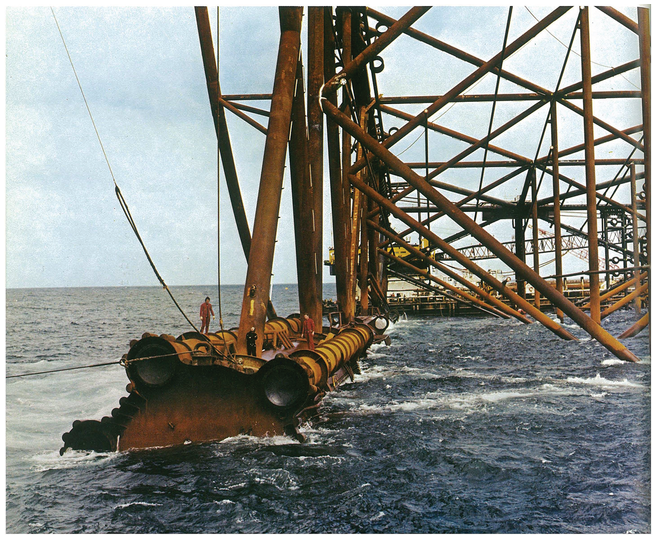
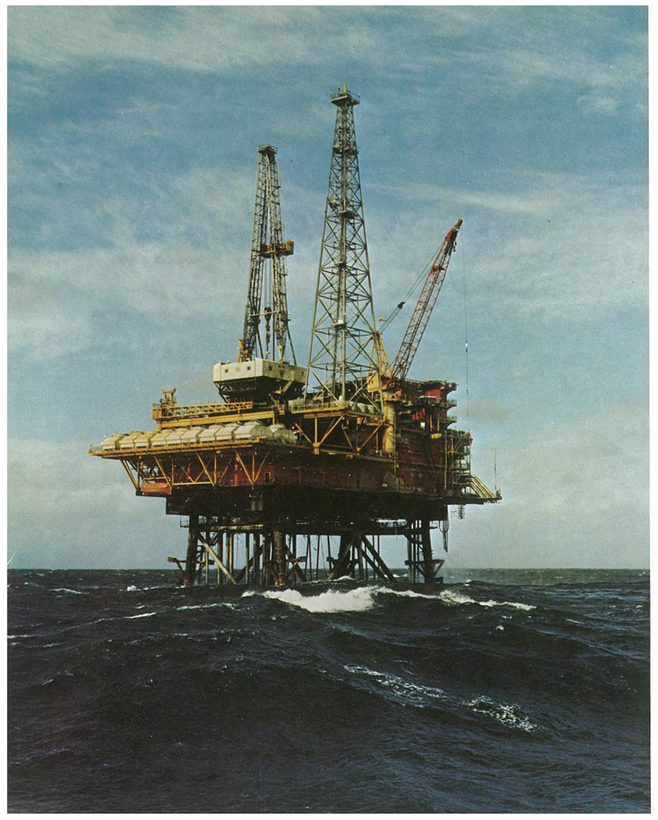
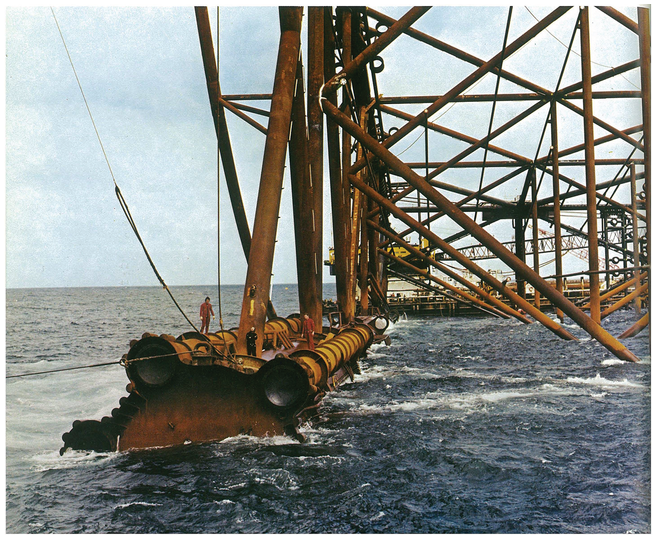
The towing of a seabed-fixed platform’s steel jacket from Japan to New Zealand in 1975 exemplifies how marine species utilized the platform archipelago’s hard substrata as habitats and were consequently translocated. In 1965, an oil consortium comprising international oil majors Shell and BP, along with local Todd Petroleum Mining, received one of New Zealand’s first offshore prospecting licenses. Following the discovery of the Maui gas field in 1969–1970 and extended negotiations with the government regarding gas purchases, the preparations for extraction commenced. From September to November 1975, the steel jacket of a fixed platform, named “Maui A,” was transported from its construction site at a Japanese shipyard in Tsu (Ise Bay) to New Zealand.Footnote 34 The approximately 130-meter-tall jacket was wet towed horizontally and therefore partially submerged. Flotation chambers in two of its legs rendered it self-floating (see Figure 9.4). Upon arrival at the South Island’s Golden Bay, the jacket underwent an inspection. This inspection included a biologist from the University of Auckland who later coauthored a taxonomic overview of his nonindigenous species findings. The disastrous impacts of earlier bioinvasions in New Zealand, similar to neighboring Australia, are a reason for the involvement of a biologist, which was usually not the case in other countries. Despite the nonindigenous species’ arrival, they did not establish themselves in New Zealand, certainly having been removed together with all other fouling organisms. The jacket then was relocated again and affixed to the seabed to develop the gas field situated in the Tasman Sea, approximately thirty-four kilometers off the North Island’s Taranaki coast. There the jacket supported the production and living quarter modules (see Figure 9.5). The jacket’s journey lasted 68 days, covering over 8,400 kilometers at slow speeds between 2.9 to 8.9 km/h, passing by the Mariana Islands, the Bismarck Archipelago, the Solomon Islands, and New Caledonia.Footnote 35 Its slow movement fostered the survival of its emerging biofouling community. The biologist observed that the anti-corrosion paint applied to parts of the jacket bolstered the survival of sessile species. Intriguingly, the constructors had not bothered to apply antifouling paint before the journey.Footnote 36 This was likely the case because the jacket was intended for only a single transoceanic journey before being permanently affixed to the seabed. Given that antifouling paints lost their effectiveness after one to two years, their application seemed unimportant compared to a fixed platform’s lifespan of two, three, or more decades.Footnote 37 Despite the poor condition of many individuals, the submerged parts of the jacket provided a habitat enabling crabs, fish, and twelve barnacle species from Japanese and Central Indo-Pacific waters to join and survive the southward journey.Footnote 38
Bay barnacles were one of six nonindigenous barnacle species that were first encountered in New Zealand. Their arrival is notable, as they were already bioinvasive in the northern hemisphere. This example illustrates the multidirectional species spread facilitated by the expanding global offshore oil network and its hard-surfaced platform archipelago. Likely originating from the Atlantic coast of North or South America, the species was classified as naturalized in several European countries’ waters. In Japan, the bioinvasion began about two decades earlier. Bay barnacles were first recorded in 1952 in Ago Bay, the center of pearl oyster mariculture, and were later spotted in nearby Ise Bay in 1959, where the jacket was constructed in 1975. Throughout the 1960s, they also appeared in the Seto Inland Sea, the East China Sea, and the Sea of Japan. Shipping was undoubtedly a reason for their expansion, and natural spread was another contributing factor. However, this decade, characterized by rapid coastal industrial development, also witnessed oil platforms exploring around Japan, suggesting another potential vector.Footnote 39 Decades later, in 1989, Chinese marine scientists investigated five seabed-fixed platforms operating in the Bohai Sea (built between 1966 and 1988) and discovered bay barnacles on three of them.Footnote 40 As part of the growing offshore oil network, bay barnacles may have been exported from Japan. During the 1970s and 1980s, Chinese authorities imported mobile exploration platforms from Japan, Singapore, the United States, and Norway. These platforms, several of which became active in the Bohai Sea, could have facilitated the spread of bay barnacles if they came into proximity with supply vessels, seabed-fixed platforms, or coastal infrastructures.Footnote 41 The journey of these platforms from Japan to China would have been less harmful to the bay barnacles than the one on the “Maui A” to New Zealand.
In Japan, the bay barnacle bioinvasion underlines the central role of the interplay between offshore and coastal industrially produced hard surface structures in their spread and associated fouling damage. The industrial combines built in Japan during the 1960s and 1970s, including industrial plants, expanded ports, and coastal protections like seawalls and the ubiquitous tetrapods, accelerated the industrialization and urbanization of coastlines. They altered the coevolution of humans and marine species, not only affecting capture fisheries and mariculture as discussed in the previous chapter but also facilitating bioinvasions. By the 1980s, about one-quarter of Japan’s coastline had been artificially hardened through such construction.Footnote 42 Concurrently, bay barnacles also highlighted an important aspect of Japan’s rampant industrial pollution during the 1960s, being better adapted to it than indigenous species.Footnote 43 Part of this pollution included marine pollution from coastal industrial combines, heavily criticized by Kikutake Kiyonori in Chapter 7, negatively impacting fisheries and mariculture. Other aspects were overfertilization through urban sewage. But bay barnacles also had high reproduction rates. Moreover, they were very resilient to strong salinity changes, caused by new concrete coastal pavements reducing seepage and instead, together with rivers, flushing huge amounts of stormwater into the bay during heavy rainfall.Footnote 44 The offshore oil and gas network’s second layer of species translocations thus meant that the bay barnacle bioinvasion became a problem among stakeholders involved in coastal industrialization and urban transformation.
The spread of bay barnacles in Japan, both in terms of their utilization of human-built structures and the damage they inflicted, bears striking similarities to the earlier shipworm or teredo spread in the United States, Venezuela, and other locations. This mix of Teredo navalis and other species was widely translocated between the 1860s and 1940s in parts of the Americas. In the United States, historian Derek L. Nelson illustrated that post–Civil War industrial capitalism caused an expansion of oceangoing commerce, leading to increased ship traffic and the proliferation of wooden coastal structures, such as piers. This rapid rise in potential shipworm habitats, some mobile (ships), facilitated the translocation of nonindigenous and indigenous invasive shipworm species along US and other American coastlines.Footnote 45 Oil industry journals from the 1920s and 1930s illustrate that the nascent offshore oil industry, initially hosting derricks on wooden piers in water bodies like in California and Venezuela’s Lake Maracaibo, began experiencing the detrimental effects of bioinvasive shipworms. These organisms digested and destabilized the derrick-hosting wooden piers that unintentionally created new ecosystems by expanding their habitat. The oil companies’ subsequent adoption of concrete solved the wooden pier problem.Footnote 46 However, the transformation of coastal and marine spaces during the Age of Oil, characterized by the transition toward concrete and steel as building materials, connects the end of the shipworm bioinvasion, providing relief to stakeholders whose marine structures were no longer digested, to unintentionally facilitating the bay barnacle bioinvasion. While the offshore oil industry was not the sole sector to welcome concrete or steel structures, its role in creating new source and recipient regions for species translocations was notably special. Wooden piers were historically located at coastlines, although offshore oil drilling resulted in their construction in new places sometimes far from major port facilities. The succeeding new steel or concrete platforms created artificial reef conditions much further offshore, extending potential bioinvasion pathways tens of kilometers and more from the coast over the following decades.
Focusing back to Japanese waters and considering the history of shipworm bioinvasions in US and other waters, the bay barnacle bioinvasion unsurprisingly resulted in multiple negative outcomes for local stakeholders. One problem for owners of Japanese coastal industrial and urban structures was that bay barnacles used seawater intake tunnels as habitats, forming very dense layers, accelerating corrosion, attracting additional fauna, and producing organic debris. In these ways, they inhibited or blocked water flow in essential cooling systems of, for example, coastal industry facilities and power plants, among others, noticed already in the late 1950s in Yokkaichi and Nagoya. Similarly, they obstructed or corroded seawater intake tunnels or pipes used in firefighting systems. In the context of plastic-made mariculture facilities along coastlines, bay barnacles posed concerns to owners due to their impacts on productivity and profitability. For example, their weight decreased the floatability of structures. They also blocked the meshes of net-cages, inhibiting water exchange and waste removal. Furthermore, they fouled directly on cultured mussels and oysters, competing with these cultured species for food.Footnote 47
Regarding damage to platforms and concerns within the offshore oil and gas industry, the biofouling community on the “Maui A” steel jacket’s submerged legs, although only a few months old, accumulated a biomass of more than one ton.Footnote 48 Biofouling’s additional load on platforms intensified the hydrodynamic forces exerted by waves and currents, thereby imposing additional stress on the structure, reducing its lifespan, and inflating construction and maintenance costs. The biofouling species used specific proteins to “cement” themselves to steel surfaces, facilitating corrosion – with patterns depending on species – and posing a potential risk to the platform. Complicating matters, a thick layer of biofouling hindered the detection of cracks and damaged elements.Footnote 49 Moreover, biofouling layers on platform and ship hulls increased frictional resistance during ocean travel, leading to higher fuel consumption – up to 40 percent – and, consequently, higher carbon emissions. Similar to coastal facilities, platforms utilizing seawater intake systems for cooling and ballast water purposes also faced blockages in their piping systems.Footnote 50 While such impacts were not exclusively caused by invasive species, certain fouling species – like bay barnacles – were categorized as “invasive” due to their particularly rapid reproduction and very dense settlement, which imposed an especially high load, accelerated corrosion, and displaced other species, thereby contributing to biosphere degradation.Footnote 51
Sun Coral Bioinvasions in Atlantic Waters
From the 1980s, the interaction between the global offshore oil network’s platform archipelago and shallow-water coral reefs emerged as the main vector for the spread of bioinvasive sun corals along more than 3,000 kilometers of Brazil’s coastline. In November 2019, the Brazilian Tourism Ministry, one of the stakeholders, proposed sinking about 1,200 decommissioned ships, trains, and airplanes, predominantly in marine protected areas, to create artificial reefs for diving and fishing tourism. However, this plan faced considerable opposition from Brazilian marine scientists, representing stakeholders who were concerned about the plan’s impact on marine bioinvasion management and biosphere integrity preservation.Footnote 52 The situation highlighted an economic conundrum: increasing hard substrata for tourism would, simultaneously, facilitate and accelerate the ongoing sun coral bioinvasion, adversely affecting artisanal fisheries and other sectors.
The following case study illustrates the role of mobile oil platforms in creating bioinvasion routes in the North and South Atlantic, including the offshore oil industry’s “golden triangle” (Gulf of Mexico, Brazil, West Africa). Simultaneously, the example shows the impact of creating artificial reef conditions in previously unindustrialized marine regions and the multiplication of bioinvasion pathways along Brazil’s coast.
Two sun coral species, Tubastraea coccinea and Tubastraea tagusensis, were first observed in the late 1980s on platforms operating off the coast of the state of Rio de Janeiro, an exploration area for the growing global offshore oil network. As historian Tyler Priest has shown, the Brazilian government, seeking domestic oil fields, founded the state-owned oil company Petrobras in 1953. Petrobras’s exploratory offshore drilling in the late 1960s and 1970s led to some initial discoveries. Major finds accumulated during the 1980s, causing increased deployment of oil platforms.Footnote 53 The sun corals’ naturally occurring range was the Indo-Pacific (T. coccinea) and East Pacific (T. tagusensis), drawing attention to Japanese and Singaporean waters as major offshore oil hubs. Since 1969, Singaporean shipyards have constructed and maintained platforms.Footnote 54 Petrobras became a customer of Japanese and Singaporean shipyards.Footnote 55 The journey from Singapore through the Indian Ocean, where sun corals could settle, and the South Atlantic took about 16,500 to 17,000 kilometers, and from Japan about 21,500 to 22,000 kilometers. This route was preferred for wet towed platforms due to the dangers of very rough waters along South America’s southern tip and the Panama Canal’s size limitations.Footnote 56 The incidental transportation of an Indo-Pacific damselfish species (Neopomacentrus cyanomos) by a platform, likely from Singapore to the Gulf of Mexico, where it began spreading, strongly suggests that the transit conditions also enabled other Indo-Pacific species like sun corals to survive journeys along southern Africa and its colder climate. Water temperatures near the Cape of Good Hope reach 20°C during summer and were distinctly warmer during El Niño years.Footnote 57 Other platform journeys discussed later also emphasize the nonlethal conditions on this route, especially if species were resilient to cold.
The movement of hard surface offshore structures illustrates that even a quite small number of platforms posed a substantially higher risk as bioinvasion vectors than numerous oceangoing merchant vessels. In Brazilian waters, sun corals spread between various hard substrata, encompassing the platform archipelago, other oil industry vessels, coastal structures, World War II shipwrecks, rocky shores, and obviously coral reefs. Sun corals were discovered on more than twenty platforms or support vessels operating off and using shipyards along the more than 3,000-kilometer-long coastline from Bahia in the north to Santa Catarina in the south. Joel C. Creed and other marine scientists demonstrated, for recent times, that specific platforms and support vessels, identified later as sun coral hosts, arrived before nearby places experienced sun coral colonization.Footnote 58
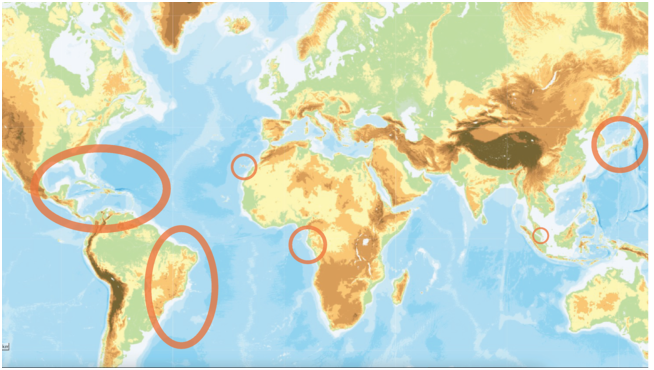
Pinpointing the initial bioinvasion to individual platforms and determining their origins is very difficult, but more importantly, evidence underscores platforms, collectively, as the central vector for sun corals’ introduction and secondary spread within Brazilian waters (see Figure 9.6). This difficulty is the result of studies about Brazilian coral reefs gaining momentum only during the 2000s, when new academic organizations were established, interest in conservation increased, and more local biologists received overseas training.Footnote 59 Sun corals were first spotted, without response from stakeholders, in the late 1980s on an unnamed platform in northern Rio de Janeiro State waters, possibly one of several built for Petrobras by Japanese firms in the early 1980s.Footnote 60 By 1980, more than thirty mobile platforms and drill ships were active in Brazilian waters, suggesting multiple potential, undetected vectors for sun corals dissemination.Footnote 61 For example, the semi-submersible floating production platform “P-27” (“Petrobras-27”) offers a brief case study with some available historical data on its submerged ecosystem, pointing to two potential introduction pathways. Marine scientists estimated the larger sun coral colonies on “P-27” to be at least fifteen years older than the platform’s 1998 return to Brazilian waters from Singapore, where it underwent conversion. Previously it was a semi-submersible drilling platform built in 1975 on the US Gulf Coast, later during the 1980s operating off the coast of Brazil. Therefore, the initial sun coral colony growth might have commenced either on the platform in the Gulf of Mexico, off Brazil, or, less likely, on parts used in Singapore for conversion. Regardless, the age of the colony indicates that it had survived the transoceanic journey between Singapore and Brazil or, more plausibly, a return trip from Brazil to Singapore. In 2013, Brazilian marine scientists during an examination also discovered sun corals on another platform, the semi-submersible “P-52” (“Petrobras-52”), whose lower hull was built in Singapore between 2004 and 2006. However, its thirty-five-day transit to Brazil was a dry tow on a heavy-lift vessel, hence out of the water, rendering survival much less likely but not impossible.Footnote 62
Potential pathways linked to Brazil’s Tubastraea spp. bioinvasion. Marked are offshore oil hubs and production areas in the Gulf of Mexico and the Caribbean, the Canary Islands, Gabon, Brazil, Singapore, and Japan. Platforms repeatedly moved between them.
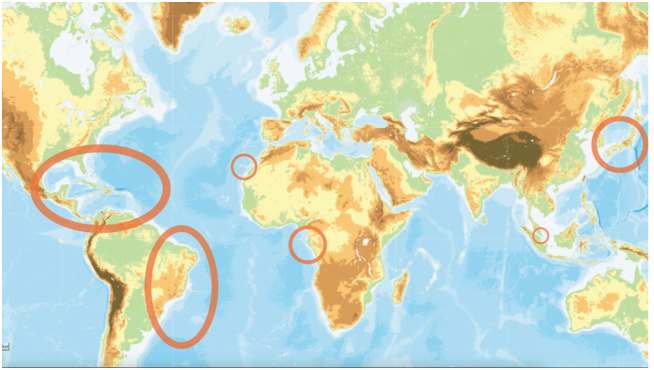
It is important to note that sun corals had already established themselves in the Caribbean by the late 1930s or 1940s, representing another potential introduction pathway. From the 1970s at latest, they spread in the southern and then northern Gulf of Mexico. By the 1990s, US marine scientists found sun corals on multiple oil platforms in the US Gulf, a pivotal region in the Age of Oil’s offshore oil development.Footnote 63 Platforms constructed on the US Gulf Coast or used in the Gulf or Caribbean, like those in Venezuela’s Lake Maracaibo, thus may have been additional vectors for the early translocation and dissemination of sun corals within Brazilian waters. In contrast, the Amazon’s outflow created a biogeographic barrier, strongly inhibiting the natural spread to waters south of it by sweeping larvae into the open Atlantic.
In the East Atlantic, the presence of offshore oil network locations further emphasized the role of platforms as vectors, adding more potential introduction pathways for recurrent translocations to Brazilian waters and showing the trans-Atlantic extent of sun coral spread. Sun corals recently established themselves in the Canary Islands, which became an offshore oil hub in 2011. Two of its ports began maintaining platforms operating in various Atlantic offshore oil areas. Local marine scientists observed that the platform-associated port facilities were the initial settling places for sun corals, which subsequently spread. These ports also started encountering other platform-translocated, nonindigenous species, such as fish. Additionally, in 2012, an international group of marine scientists, supported by the US National Geographic Society and the Wildlife Conservation Society, examined platforms off Gabon in the Gulf of Guinea in West Africa, another offshore oil drilling area. All ten platforms they inspected harbored sun corals.Footnote 64 The presences in the Canary Islands and off Gabon likely interacted with the bioinvasion in Brazilian waters and each other, contributing to the global connections of the offshore oil network that stretched from the Indo-Pacific to a growing number of source and recipient regions in the North and South Atlantic.
Sun corals have raised concerns among various stakeholder groups. One such concern, which I wish to discuss first, is epistemological and refers to the sun coral’s treatment in scientific literature. Sun corals have arguably become an “iconic” invasive species in regions where they rapidly multiplied, maybe akin to bay barnacles or, terrestrially, pathogen-carrying mosquitoes, which have been the subject of numerous research papers compared to many other translocated species. Consequently, these other translocated species have garnered less scientific and political attention, which potentially impeded political decision-making, inhibited biological management, and caused social injustices stemming from bioinvasion outcomes. One study showed that “only 39% of nonnative animals listed in the World Register of Introduced Marine Species appeared in the peer‐reviewed English literature. Of those, fewer than half were the subject of more than one study.”Footnote 65 Many of them are not invasive, though. Still, the greater availability of source materials and research literature on sun corals and bay barnacles than on other species also influenced my decision to concentrate on them in this chapter. Nevertheless, my focus on just two species was deliberate, aiming to scrutinize and highlight the role of the platform archipelago’s habitat conditions as a vector for species translocations, rather than researching the impacts of various species from different stakeholder viewpoints. A broader focus could have involved more species and stakeholder perspectives, as the literature in the chapter’s footnotes lists at least 200 marine species discovered in nonnative bioregions on the hard surface habitats of platforms, most likely responsible for their translocation. Many more species were probably translocated by platforms but have remained undiscovered or undocumented. While there is no scientific doubt that numerous species were translocated by platforms, what matters here are the reasons for their successful survival during journeys. I therefore do not view this chapter as affected by stakeholder concerns about certain species receiving a disproportionate amount of attention and research funding. In response to this concern, it is also beneficial to distinguish between different types of research on sun corals. Geographically, the more recent establishment of sun corals in waters like those off Brazil attracted considerably more research attention than regarding their area of origin, where they posed no bioinvasion concern. As the authors of one study stated, the quantitative disparity is an outcome of a shift toward problem-oriented bioinvasion management research, aiming to provide impact assessments for stakeholders and political decision-making.Footnote 66 Ultimately, concerns regarding disproportionate research attention being given to sun corals compared to most translocated species are a reiteration of the earlier discussed distinction between objective research, which explores the occurrence of a bioinvasion, and subjective studies, focusing on stakeholder-relevant consequences, more likely to influence policy.
Apart from these epistemological issues, stakeholder concerns related to the physical impacts of sun coral biofouling are comparable to those caused by bay barnacles, bringing the focus back to platforms and hard surfaces. Sun coral biofouling can significantly increase the weight of oil platforms and other offshore built environments, reducing their lifespan and escalating construction and maintenance costs. For ships and other mobile vessels, the additional weight and especially drag reduced speed and increased fuel consumption.Footnote 67
Brazilian marine scientists were primarily concerned that the establishment of sun corals in Brazilian coral reefs has led to the partial displacement of local corals and alterations in the reef ecosystems. As in the case of bay barnacles, the sun coral bioinvasion is not expected to convert the hard substrata of entire seascapes into areas settled solely by them. Associating sun coral settlement only with biosphere degradation oversimplifies the issue, as whether their establishment caused a bioinvasion depended on local circumstances, given that their presence stretches across multiple bioregions from the Gulf of Mexico and the Caribbean to Brazilian marine regions and those off West Africa. Research at Cascos Reef at Todos os Santos Bay, Bahia, has shown that sun corals can outcompete several local coral species for habitat space. Most Mussismilia hispida and Siderastrea stellata colonies (lacking well-known English names) were found with partial tissue damage on the side facing the sun corals. This damage, caused by sun corals, very likely explains the significantly lower coverage of these corals in the study area compared to areas without sun coral presence. The findings corroborated earlier hypotheses about the decline or local extinctions of Mussismilia hispida.Footnote 68 However, several coral and non-coral species showed resilience to competition from sun corals, thereby limiting their multiplication and reef coverage. For example, the spread of sun corals in Arraial do Cabo Bay, Rio de Janeiro State, proceeded much slower than in Ilha Grande Bay, Rio de Janeiro State, where sun corals showed rapid growth and high densities within a few years. The rate of growth and range also depended on local abiotic factors, such as colder water temperatures or natural barriers, which can inhibit or prevent their growth. Moreover, the two different sun coral species do not behave identically.Footnote 69 Mobile platforms as vectors therefore made it much more likely that the corals eventually arrived in areas with conditions conducive for a bioinvasion.
Another concern among marine scientists refers to sun coral impacts on larger reef ecosystems. Sun corals do not contribute to reef building, so their replacement of local reef-building corals could affect future reef development. This means that artificial reefs formed by oil platforms as bioinvasion vectors can contribute to a slow change in the abiotic conditions of natural reefs, not just species compositions. Impact assessments supported by Brazilian federal research institutions also registered a decrease in the feeding rate by various marine species in reef sections densely settled by sun corals. Consequently, the continued spread of the corals may increasingly negatively influence fish populations relying on coral reefs for feeding. Such reefs are among the most productive fishing grounds globally. Artisanal coral reef fisheries, encompassing non-elite stakeholders from fishers to a large consumer base, “may therefore be at stake,” as concluded by marine scientist Rodrigo Silva and others.Footnote 70
In response, control and eradication efforts have been implemented in several locations over the last decade through manual killing – literally, with divers breaking off sun corals using hammer and chisel. Studies indicate that this has reduced the proliferation and habitat coverage of sun corals.Footnote 71 One could now discuss whether killing sun corals in favor of indigenous corals is unethical. Alternatively, one could contemplate whether not killing sun corals constitutes a form of slow violence, as environmental humanist Rob Nixon termed slow-onset disasters and the corresponding environmental transformations that create a form of structural violence, leading to questions of social injustice and artisanal fisheries.Footnote 72 My focus here, however, remains on illustrating the role of oil platforms and other artificial islands, representing Earth’s amphibious transformation, as new and important bioinvasion vectors in the oceanic Anthropocene. The process of sun coral spread in the Atlantic Ocean showed platforms as key vectors, creating multiple introduction pathways. The brief analysis of several subjective stakeholder concerns post-bioinvasion served to underline that awareness of this new vector and the prevention of corresponding bioinvasions are crucial for maintaining biosphere integrity as well as for avoiding complex political and social problems.
The Oceanic Anthropocene, Climate Change, and Bioinvasion Futures
In the historical framework of the oceanic Anthropocene, the rise of the global offshore oil and gas network since the mid-twentieth century created environmental conditions that facilitated a new spatiotemporal epoch in marine species translocations. The discovery and exploitation of new offshore oil areas have made oil platforms the most numerous marine built environments of the first stage of ocean-to-land globalization as well as its first new global bioinvasion vector. The Age of Oil extended the use of energy-intensive construction materials, like steel and concrete from the Age of Coal, to marine environments, replacing wooden structures and creating new artificial reefs. This transformation, along with the corresponding new conditions for marine species translocations, resembles the early globalization process during the Columbian Exchange. Mobile platforms very slowly moved entire reef-like ecosystems over distances of more than 10,000 kilometers, distinguishing them from the previous translocation capabilities of modern ships. Obviously, oil and gas platforms and other artificial islands did not end the age of ships as vectors, as marine species could spread between the hard-surface habitats of platforms and ships. Moreover, platforms acted as stationary stepping stones for bioinvasions, enabling secondary spread after marine species arriving on mobile vectors established themselves. The platforms’ geography of operation, therefore, reconfigured introduction pathways by connecting new marine regions, often beyond conventional shipping lanes, with each other and with ports. This integration process is evident in the two case studies from the Asia-Pacific and the Atlantic Ocean. Thus, the mid-twentieth century and Earth’s amphibious transformation marked the beginning of the “artificial island age” in marine species translocations due to the quality of translocation capabilities and the expansion into new recipient regions, unlike ever before stretching from hardened coastlines to marine built environments installed far off on sea surfaces.
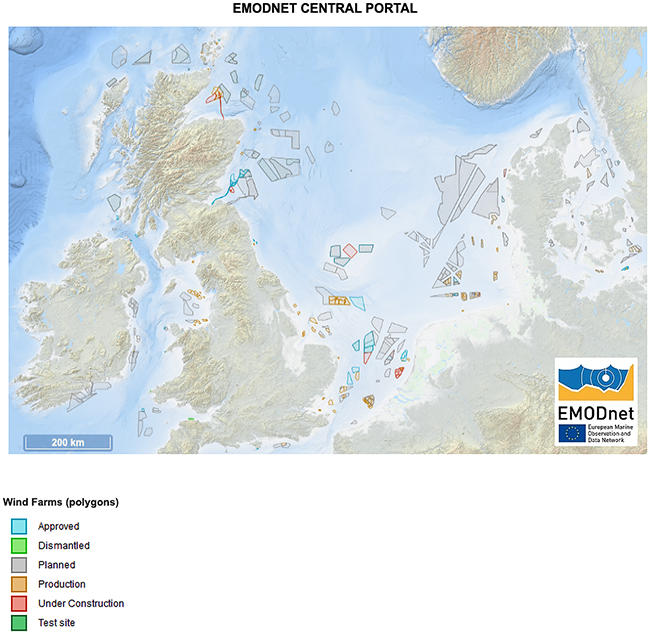
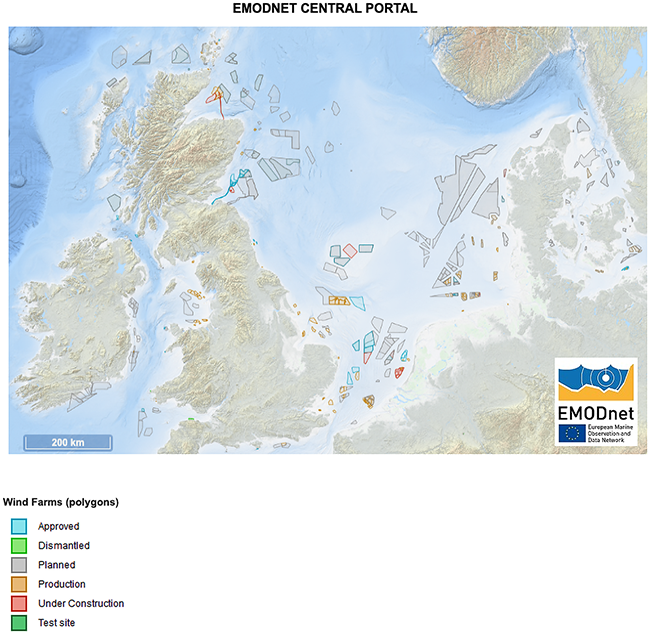
The risk of marine bioinvasions from artificial islands according to their type and in combination with other vectors still requires research. Research results can then inform bioinvasion prevention by informing policies on placement, inspection, cleaning schedules, decommissioning, and interaction with other vessels. Notably, this book emphasizes that while oil and gas platforms initially represented the growth of the global platform archipelago, the number of artificial islands continues to expand rapidly in the second stage of ocean-to-land globalization. Additional mobile or stationary artificial island vectors include mariculture facilities, sea level rise–resilient floating buildings and larger floating suburbs, and floating solar photovoltaics that simultaneously extend the human habitat to sea surfaces and may add to the complexity of marine bioinvasion corridors. The expansion of seabed-fixed and floating offshore wind turbines is particularly important, as their number in 2023 reached 13,000, outnumbering offshore oil and gas platforms. The eco-developmentalisms of multiple governments, aimed at carbon emission reductions, foresee a drastic upscaling of offshore wind energy generation (on the North and Baltic Seas, see Figure 9.7).Footnote 73 These projects thus continue the creation of artificial reef-like structures that serve as bioinvasion vectors. Spatially, offshore wind turbines even establish clusters of artificial reef structures, or small archipelagos, facilitating species spread among them. The clusters may eventually reach hundred and more kilometers off coastlines to avoid competition for space with other ocean industries and to draw on stronger offshore winds.Footnote 74 Whether or not this will happen, environmental impact studies on behalf of the US Department of Energy and European governments have emphasized the serious bioinvasion risk associated with offshore renewable energy generation.Footnote 75 This risk underscores the need for research as well as industrial and political awareness regarding bioinvasion prevention methods. Epistemically, the challenge follows that unlike previous bioinvasions, where research attention focused mainly on marine regions off North America, Europe, or Brazil to reconstruct processes and discuss responses, bioinvasion prevention would involve a global range of offshore environments experiencing socioeconomic development in the second stage of ocean-to-land globalization.
Location of offshore wind parks in the North Sea and the Baltic Sea (2024), showcasing various stages of development. Substantial expanses of the two seas are undergoing the extension of the built environment and the creation of artificial reefs. These submerged structures are habitats for marine species assemblages, which may harbor invasive species capable of spreading within and between wind turbine clusters.
The absence of binding International Maritime Organisation (IMO) regulations on hull fouling underlines this problem of prevention. The UN Convention on the Law of the Sea (UNCLOS), which came into force in 1994, made marine bioinvasion prevention a formal concern for the United Nations.Footnote 76 The 2001 IMO ban on certain strongly toxic antifouling paints, effective in 2008, helped cause a paradigm shift and turned marine bioinvasions into an agenda item.Footnote 77 However, I want to emphasize again that artificial islands were in a special position, as antifouling paints and coatings, losing their effect after only a few years, had a very limited impact on platforms remaining stationary for years or decades. The 2004 IMO Ballast Water Management Convention, which became binding only in 2017, further illustrates the bioinvasion risk perception shift among some stakeholders and the lengthy and complicated adoption of bioinvasion prevention measures. Ballast water is another pathway for species translocations, and the convention required ratification by at least thirty states representing 35 percent of the world’s merchant shipping tonnage.Footnote 78 The controversy surrounding hull or vessel fouling, including platforms, persists, and only nonbinding guidelines were released by the IMO, beginning in 2011 and replaced in 2023. Possibly, research on biomimetic hull textures that prevent marine organism settlement is an alternative to implementing regular cleaning schedules resulting in costly downtime.Footnote 79 For largely stationary structures, adding microhabitats to their hulls enables ecological engineering, as their shapes can be designed to encourage the settlement of specific species and inhibit that of high-risk bioinvasive ones, thus contributing to biodiversity.Footnote 80
Looking ahead, climate change–driven ocean warming and acidification will continue to create new source and recipient regions for marine species translocations, affecting the range and competitiveness of certain species. This warming will physically open new marine regions, particularly Arctic waters, to Earth’s amphibious transformation represented by offshore energy generation, possibly including nuclear, wind, oil, gas, or geothermal power. Like elsewhere, the associated artificial islands can translocate or, if stationary, serve as stepping stones for species arriving in new ecosystems sufficiently transformed by warming or acidification to cause a bioinvasion. These developments will amplify the importance of the platform archipelago of hard surfaces as new vectors in the oceanic Anthropocene, increasing the necessity for bioinvasion prevention to maintain biosphere integrity.

 Open access

