


Introduction
Puumala virus (PUUV) is a hantavirus (family Bunyaviridae) and the causative agent of the rodent-borne zoonosis known as hemorragic fever with renal syndrome (HFRS).The epidemiology of hantavirus infections is influenced by the distribution of their rodent hosts which is strictly related to their habitat [Reference Vaheri1, Reference Sane2]. In Europe, bank vole (Myodes glareolus) is the rodent reservoir for PUUV [Reference Vaheri1].
The clinical picture of PUUV infection ranges from asymptomatic to severe infection. Half of the HFRS cases are hospitalised for at least 7 days and ~5% of them need dialysis treatment or prolonged intensive-care [Reference Vaheri1]. PUUV infection is a notifiable disease in many European countries but the number of cases varies considerably; most infections, based on laboratory surveillance, are reported from Finland [Reference Vaheri1]. In Finland and Sweden, PUUV is endemic and infections constitute a public health problem, particularly in certain regions [Reference Sane2, Reference Makary3]. Seroprevalence studies based on different target populations have been conducted in Europe showing a wide range of estimates (from one to >10%) [Reference Olsson, Leirs and Henttonen4]. In Finland, the nationwide prevalence was previously estimated in 1992 suggesting a prevalence of 5% based on women entering Finnish maternity clinics and other selected populations [Reference Brummer-Korvenkontio5]. However, comparing prevalence across countries is challenging due to different methods used and populations studied.
We performed the first nationwide population-based seroepidemiological study of PUUV infection, which utilised specimens and data collected in a multidisciplinary cross-sectional health survey in order to increase the understanding of the true disease burden. The primary objective of our study was to estimate the seroprevalence of PUUV infection in a representative adult population sample. Furthermore, through the use of existing questionnaire data and linkages to national health registries on an individual level, we aimed to identify risk factors for PUUV- seropositivity and to assess the possible disease associations.
Materials and methods
Human serum specimens, questionnaire and register data
Health 2011 is a cross-sectional health examination that in addition to questionnaire data, includes sera, plasma and DNA collected from approximately 4200 Finnish male and female participants aged ⩾29 years living in Finland in 2011. The Health 2011 study used a stratified two-stage clustered sampling of 15 largest towns and 65 health districts in Finland covering all university hospital regions (n = 5). Full details of the Health 2011 study including sampling methodology have been described elsewhere [Reference Härkänen6]. A subset of 2000 sera was randomly selected for this study from the Health 2011 survey to be representative for the Finnish adult population. Simple random sampling from the base population allowed us to use predefined sampling weights in the statistical analyses. Together with sample collection, Health 2011 participants undertook health examinations and completed extensive questionnaires that comprised demographic characteristics and questions related to general health, functional capacity, behaviour and well-being. Demographic and other variables, including self-reported diseases, possibly related to PUUV infection were selected from the questionnaires, and data regarding diagnosis of specific diseases and cause of death (according to the ICD classification, Table S1) were obtained from the Hospital Discharge Register (National Institute for Health and Welfare) and from the Death Register (Statistics Finland) through linkage using the national personal identity code (already linked to survey data prior to our study). The selected diseases, both self-reported and obtained through register-linkage, included cardiovascular and pulmonary diseases, kidney failure or cancer.
Serological methods
The sera were tested for PUUV IgG using an in-house developed PUUV-specific indirect Immunofluorescence Assay (IFA) following a previously described protocol [Reference Hedman, Vaheri and Brummer-Korvenkontio7]. Briefly, slides for indirect IFA were prepared using PUUV Sotkamo strain propagated in Vero E6 cells as antigen substrate and non-infected Vero E6 cells as specificity controls. After dilution in PBS (1 : 20), the sera were incubated on the 10-well antigen-coated slide in a moist chamber at 37 °C for 30 min, subsequently washed with PBS and incubated with FITC conjugated anti-human IgG at 37 °C for 30 min. Following a final wash, the slides were air dried and controlled for a positive reaction at ×100 magnification. Sterile PBS, a human PUUV-negative and a human PUUV-positive serum were used as negative and positive controls, respectively. In case of the unclear result (e.g. weak reactivity or background fluorescence from control cells), the serum was tested again with IFA and, in addition with an enzyme immunoassay (PUUMALA IgG EIA, Reagena Oy Ltd, Toivala, Finland) based on recombinant PUUV nucleocapsid protein, following the manufacturer's instructions. Only sera showing clear positivity, or confirmed positive by the second IFA and enzyme immunoassay in case of unclear results were considered PUUV positive in this study.
Ethical approval
The Health 2011 Survey was approved by the Ethics Committee of the Hospital District of Helsinki and Uusimaa. All participants gave informed consent in the Health 2011 survey.
Data analysis and statistics
We performed statistical analysis adjusting for stratified cluster design and using sampling weights as defined in the Health 2011 study protocol. Weighted seroprevalence estimates were calculated for the whole country and the age-, sex- and region-specific (university hospital region) estimates were also computed. We estimated odds ratios (ORs) and 95% confidence intervals (CI) using logistic regression for variables potentially associated with PUUV- seropositivity. Variables with P-value ⩽0.20 in univariable analysis were selected for the multivariable model. In case of highly correlated variables, only one of the variables was selected for the model. A dose-response analysis was conducted for the smoking variable. The dose was defined as the number of cigarettes smoked daily. Statistical significance was considered at the 5% level. When analysing the association between PUUV infection and diseases, the effect of PUUV seropositivity was adjusted for known confounders present in the data. Data were analysed with Stata 14 (Statacorp, College Station, Texas, USA).
We estimated the mean total incidence of PUUV infection and the incidence ratio of notified/total incidence in the adult population (>29 years) using the formula p/(1 − p) = I × D and assuming that the population at risk and prevalence (p) was stationary [Reference Greenland and Rothman8], and the mean duration of PUUV-seropositivity (D) was equal to the estimated average residual lifetime of 32 years after the mean age (48 years) of acquiring PUUV infection [Reference Sane2]. The average incidence (I) of notified PUUV infections among ⩾29-year-olds persons obtained from the National Infectious Disease Register (NIDR) was 39 per 100 000 population in 1995–2014. Since 1995, all Finnish clinical microbiology laboratories have reported each serological test positive for PUUV to the NIDR. The surveillance system does not collect information on symptoms but it is assumed that cases sought health care due to symptoms related to PUUV infection.
Results
Seroprevalence and factors associated with PUUV-seropositivity
The median age of the study population was 56 years (range, 29–97), 55% of them were female. A total of 254 sera among 2000 tested were PUUV-IgG-positive resulting in a weighted seroprevalence of 12.5%, (95% CI 10.9–14.4). Factors associated with PUUV-seropositivity are shown in Table 1. Seroprevalence was higher in males (13.7%) than in females (11.5%) but the difference was not statistically significant. Seropositivity increased with age and number of persons included in the household, while it decreased with increasing level of education and it was most common among persons living in Eastern Finland (Table 1).Type of economic activity and profession were also analysed and being a pensioner, that naturally correlates with age, was significantly associated with PUUV-seropositivity only on the univariate level (data not included in Table 1). Age, region, level of education, household size (⩾6 persons) and smoking daily at least for a year remained associated to PUUV-seropositivity in the final multivariable model (Table 1). In addition, significant dose-response relations were found for the number of cigarettes smoked daily (OR 1.14; 95% CI 1.12–1.28; P = .03). The estimated annual incidence of total PUUV infections in the adult population based on the estimated weighted PUUV-seroprevalence was 446 cases per 100 000 population. Considering the average incidence of 39 per 1 00 000 population notified PUUV cases, the notified/total PUUV infection incidence ratio was 1 : 11.
Variables associated with seropositivity for Puumala virus, Finland, 2011
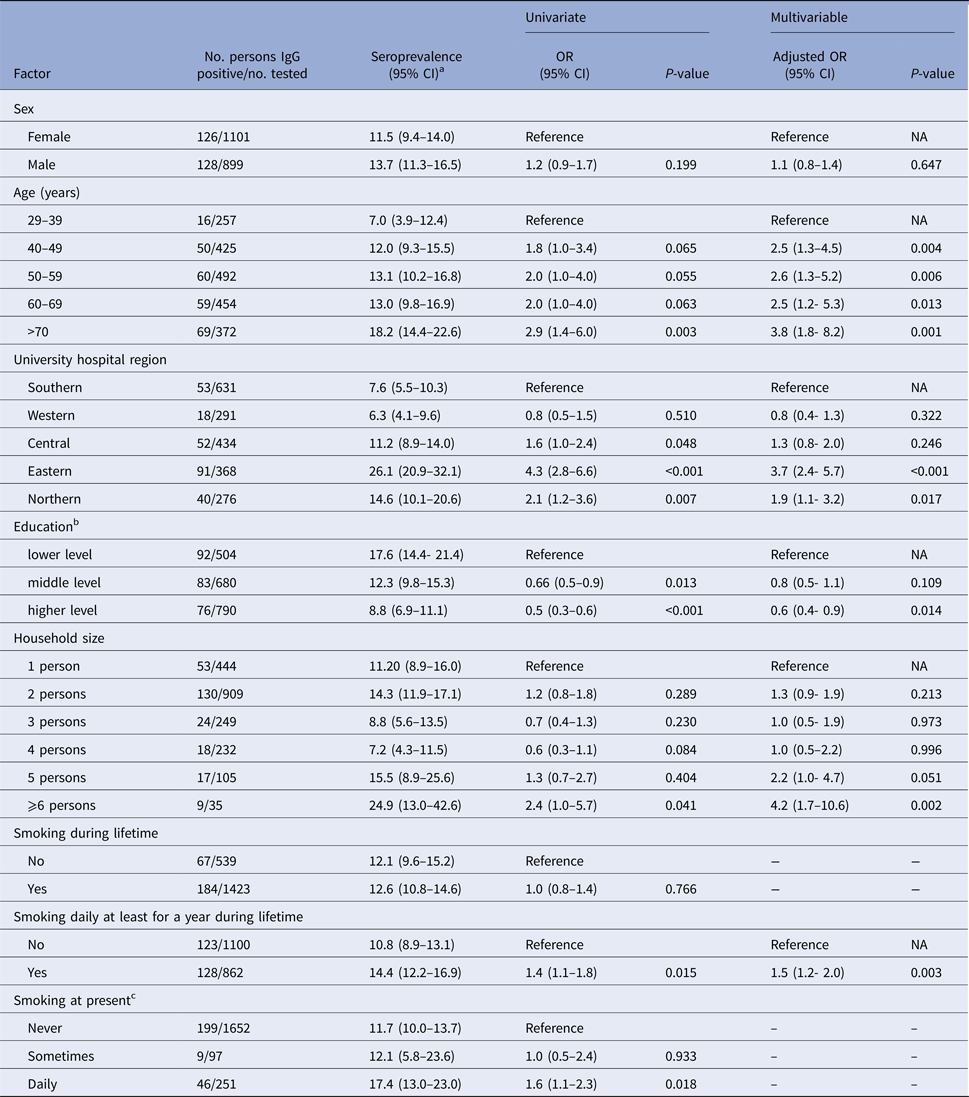
a Puumala virus seroprevalence is the weighted seroprevalence that takes into account the survey design (stratified two-stage cluster sampling).
b Lower level (primary, lower secondary education), middle level (upper secondary level education), higher level (any tertiary education).
c Not included in the final multivariable model due to high correlation to the variable on smoking daily at least for a year. The latter was selected to the multivariable model as it better reflects the exposure to smoking over time.
PUUV-seropositivity and disease associations
Out of the analysed diseases identified through the register-linkage (Table S2), chronic obstructory pulmonary disease (COPD) and hypertension/hypertonia (HIBP) were associated with PUUV-seropositivity (P < 0.20) in the initial analysis when adjusting for age and sex. When taking into account the other known risk factors (smoking, region) in the multivariable analysis COPD (adjusted OR 1.66; 95% CI 0.55–4.92; P = 0.37) and HIBP (adjusted OR 1.22; 95% CI 0.86–1.74; P = 0.27) were not significantly associated with PUUV-seropositivity.
Discussion
To our knowledge, this is the first nationwide population-based seroprevalence study of PUUV infection that used a random sample representative of the adult population in the country including extensive survey data and register-linkage. We report that the overall weighted PUUV seroprevalence was 12.5% and exhibits age- and region-specific variation with highest prevalences among older persons in eastern Finland. The seroprevalence was higher than previously estimated, although the comparison is challenging due to differences in underlying sampling populations and methodology and indicates that the great majority of the infections are not notified. Smoking was significantly associated with PUUV-seropositivity. Seropositivity did not show significant association to chronic diseases including cardiovascular, pulmonary, kidney diseases and cancer.
In agreement with previous studies, we found that PUUV-seropositivity increased with age reflecting longer lifetime exposure probability among elderly. As expected the seroprevalence was highest in eastern Finland, followed by northern and central regions, while the prevalence was lowest in southwestern Finland. These findings are similar to geographical variations in reported incidence [Reference Sane2, Reference Brummer-Korvenkontio5] reflecting the ecological factors and bank vole population abundance as well as regional features of human dwelling (in proximity to forests). Profession or type of economic activity was not significantly associated with PUUV-seropositivity. To note, seroprevalence among agricultural entrepreneurs was high (4/24, 19%) although the sample size was small. However, this finding is logical in terms of likelihood of PUUV exposure. Our estimation on total PUUV infection incidence indicated that most infections do not lead to illness severe enough to seek medical care and subsequent laboratory test, which is in line with the earlier study on PUUV-associated hospitalisation rates [Reference Makary3]. Seroprevalence was higher among males as in the recent Swedish study [Reference Bergstedt Oscarsson9], but the difference to females was not statistically significant. Incidence is consistently found to be higher among males but results from seroprevalence studies differ [Reference Vaheri1, Reference Olsson, Leirs and Henttonen4]. Whether women have more subclinical or mild infection than men, remain inconclusive.
Case-control studies have shown that smoking is a risk factor for PUUV infection (laboratory-confirmed cases) and clinical follow-up studies have demonstrated the association between smoking and severe kidney injury in HFRS patients [Reference Vapalahti10–Reference Van Loock14]. A recent seroepidemiological study from northern Sweden showed that smoking is associated with PUUV-seropositivity [Reference Bergstedt Oscarsson9]. Our study shows similar association in a larger study population covering the entire Finland. Dose-response relation for the number of cigarettes smoked was also observed. The rate of ten cigarettes smoked daily increased the odds of PUUV infection by 15% (calculated from the estimated odds ratio). The fact that smoking is associated with not only clinical illness but also exposure to PUUV (seroconversion) suggests that smoking habits, possibly together with an unknown confounding factor, increase the risk of infection. In addition, smoking can exacerbate the clinical outcome possibly through its effect on the respiratory tract (impaired barrier in the lungs) and general health status.
Previous studies from Sweden indicated that PUUV infection is associated with increased risk for lymphoma, acute myocardial infarction and stroke [Reference Connolly-Andersen15, Reference Klingstrom16]. A seroepidemiological study on Seoul virus, a virus related to PUUV, suggested an association with hypertensive renal disease [Reference Glass17]. Our analyses utilising extensive questionnaire data and register-linkage did not show any significant associations between PUUV-seropositivity and diagnoses identified from the Hospital Discharge Register. Similar conclusions were drawn from a seroprevalence study from Sweden [Reference Bergstedt Oscarsson9]. However, our study was a cross-sectional study in which the time of infection is not known. The studies on lymphoma and cardiovascular risks [Reference Connolly-Andersen15, Reference Klingstrom16] were self-controlled case series or register-based follow-up studies, which showed that the risks of these outcomes are present early after the diagnosis of PUUV infection. We found that PUUV-seropositive persons more often had physician-diagnosed high blood pressure than those who were never exposed to the virus, albeit the difference was not significantly different (Table S2). Notably, earlier clinical follow-up studies have suggested that PUUV–HFRS may predispose to the development of hypertension [Reference Vaheri1]. PUUV might play a role together with other factors in the development of cardiovascular diseases by interacting and modifying the integrity of epithelial and endothelial cells in the pulmonary and circulatory system. Further studies utilising inter-register linkage in Finland are planned to validate the findings from Sweden.
Our study did have certain limitations. The seroprevalence was based on adult population and thus, the total prevalence across all age-groups could not be determined. It is believed that the prevalence is low in younger age-groups based on surveillance data showing that the mean age of notified PUUV infection is 48 years. Exposure to PUUV may be limited in younger age-groups since known risk factors for PUUV infection including smoking, handling of firewood or making house repairs [Reference Vapalahti10, Reference Gherasim11] are less common activities in these groups. Self-reported questionnaire data including smoking habits may be subjected to reporting bias. In addition, the population-based sample utilised in the study was not powered for more detailed spatial analyses (municipality or hospital district-level) and unknown, residual confounders may have an effect on the results. At present, the Health 2011 survey data were not linked to NIDR when it comes to PUUV infection and therefore, we were not able to assess if and how many seropositive cases in the survey were notified.
In summary, we estimated the PUUV-seroprevalence in Finland and explored risk factors through the use of unique survey data with register-linkage. We showed that the seroprevalence has increased over time and greatly varies with age and regions. The results are important for disease burden assessments and considerations of target populations for interventions, including cost-effectiveness of possible vaccination campaigns in future. The identification of smoking as risk factor calls for increasing the awareness of harms of smoking when it comes to infection prevention.
Supplementary material
The supplementary material for this article can be found at https://doi.org/10.1017/S0950268817002904
Acknowledgements
We thank all participants in the Health 2011 survey and Aftab Jasir for useful comments.
Declaration of Interest
None declared.



