

The classic twin design compares trait similarities between monozygotic (MZ or identical) twin pairs who share 100% of their genes and dizygotic (DZ or fraternal) twin pairs who share 50% of their genes, on average, by descent. However, MZ twins reared apart from birth (MZA) offer a more powerful methodological tool, because co-twin resemblance yields a direct estimate of genetic influence (heritability). Numerous twin studies and several reared-apart twin investigations have informed understanding of factors affecting many medical, physical, and behavioural traits, including myopia and other visual measures (Plomin, Reference Segal and Montoya2018; Segal, Reference Morgan, Ohno-Matsui and Saw2012).
Twins Switched at Birth
Monozygotic twins who are accidentally switched at birth are exceptional, with just nine documented cases worldwide. These sets are unique in that the pair members are raised believing they are DZ twins, while they are best classified as ‘virtual twins’, that is, same-age unrelated siblings raised together since birth. These pairs offer direct estimates of environmental influence because they share no genes in common by descent (Segal et al., Reference Segal, Montoya and Becker2018).
The first occurrence of doubly exchanged MZ adult male twin pairs came to the attention of the second author in October 2014. The two original twin pairs were born one day apart in Colombia, South America, on December 21, 1988 (in Bogotá, the capital city) and on December 22, 1988 (in La Paz, a tiny farming region 150 miles north of Bogotá). One newborn twin from La Paz was very sickly so was transported at one day of age to the better equipped hospital in Bogotá where the other pair had been born. Shortly after arriving, he was inadvertently exchanged (switched at birth) with one twin in the other pair, such that each family received one of their own twin sons and an unrelated male infant. Both sets of unrelated brothers were raised as DZ twins. The error went undetected until the four twins turned age 25 and a chance encounter by one twins’ co-worker led to a case of mistaken identity (Segal & Montoya, Reference Segal and Montoya2018; Segal et al., Reference Segal, Montoya, Loke and Craig2017).
Twin Studies of Ophthalmological Measures: Genetic and Environmental Effects
Twin studies, both past and present, have reported genetic influence on a range of ophthalmological measures (Jablonski, Reference Jablonski1922; Sorsby, Reference Sorsby1970), including refractive errors and other ocular biometrics (Dirani et al., Reference Dirani, Chamberlain, Shekar, Islam, Garoufalis, Chen and Baird2006). Twin studies have also reported genetic effects on strabismus, although phoria appears more environmentally influenced (Wilmer & Backus, Reference Wilmer and Backus2009).
Visual conditions and symptoms were reported for 35 of the 121 pairs included in the early reared-apart twin studies. Within-pair similarity, demonstrating genetic effects, was highest for myopia, hypermetropia, and strabismus, and lowest for disorders associated with cataracts and infection (Farber, Reference Farber1981). The Minnesota Study of Twins Reared Apart (MISTRA), the only such study to conduct ophthalmological examinations across cases, reported genetic influence on refraction, cup-to-disc (C/D) ratios, and esotropia (Knobloch et al., Reference Knobloch, Leavenworth, Bouchard and Eckert1985). Later, MISTRA studies of vascular patterns and measures of optic disc structure also indicated genetic effects (Bitrian et al., Reference Bitrian, Armbrust, Wright, Grajewski, Caprioli, van Kuijk, Segal and Bouchard2014; Tokarev et al., Reference Tokarev, Bitrian, Zhou, Koozekanani, Van Kuijk, Segal and Bouchard2015).
Myopia
Myopia (nearsightedness) is a common eye disorder, estimated to affect 22% of individuals worldwide (Holden et al., Reference Holden, Sankaridurg, Smith, Aller, Jong and He2014), but as many as 80–95% of young adults in Asian countries (Rose et al., Reference Rose, Morgan, Smith, Burlutsky, Mitchell and Saw2008; World Society of Paediatric Ophthalmology and Strabismus, 2019). Complications associated with this disorder include retinal detachment, myopic maculopathy, and glaucoma (Baba et al., Reference Baba, Ohno-Matsui, Futagami, Yoshida, Yasuzumi, Kojima and Mochizuki2003; Saw, Reference Saw2006; Xu et al., Reference Xu, Wang, Wang, Wang and Jonas2007).
Multiple etiologies for myopia have been identified, namely genetic inheritance (He et al., Reference He, Hur, Zhang, Ding, Huang and Wang2008; Hornbeak & Young, Reference Hornbeak and Young2009) and sustained, up close effort associated with extensive reading and computer use, both of which increase with educational advancement (Zylbermann et al., Reference Zylbermann, Landau and Berson1993). In fact, the elevated frequency of myopia in Asian nations has been linked to increased academic pressures and lifestyle habits that reduce outdoor time (Morgan et al., Reference Morgan, Ohno-Matsui and Saw2012). However, associations between myopia and time spent reading and computing has not been confirmed by all studies (Saw et al., Reference Saw, Shankar, Tan, Taylor, Tan, Stone and Wong2006).
Prematurity has also been shown to increase the prevalence of myopia in children (Fielder et al., Reference Fielder, Wallace, Stahl, Reynolds, Chiang and Quinn2019; Fledelius, Reference Fledelius1996; Quinn et al., Reference Quinn, Dobson, Repka, Reynolds, Kivlin, Davis and Palmer1992). This association is stronger not only in cases of retinopathy of prematurity (ROP), but is also observed in children born prematurely, independently of ROP.
It is worth noting that birth weight had little effect on the prevalence of myopia in an Australian study of adult twins (Dirani et al., Reference Dirani, Islam and Baird2009). The failure to find a birth weight effect was explained by the use of young adult twins who are more likely to develop myopia than children, and the use of actual refractive measures rather than questionnaires, as in previous work. Adults are also exposed for longer periods to a wider range of relevant environmental influences, raising the possibility that birth weight effects were minimised.
Most recently, exposure to natural light has been emphasised as checking, or even preventing, the development and progression of myopia. Investigators found that the number of hours per week children spent in sports/outdoor activity was linked to myopia, although the degree of association varied with the number of affected parents of these children (Jones et al., Reference Jones, Sinnott, Mutti, Mitchell, Moeschberger and Zadnikm2007). In a longitudinal study, researchers observed that time spent outdoors was inversely predictive of myopia, independent of physical activity (Guggenheim et al., Reference Guggenheim, Northstone, McMahon, Ness, Deere, Mattocks and Williams2012). A beneficial effect of outdoor activity during class recess was also confirmed in an interventional study of 7–11-year-old Chinese elementary school students (Wu et al., Reference Wu, Tsai, Wu, Yang and Kuo2013). The protective effect of outdoor time may be most closely tied to total time outdoors, rather than to the pursuit of specific athletic activities (Morgan et al., Reference Morgan, Ohno-Matsui and Saw2012). Moreover, time spent outdoors appears to function independently in protecting against myopia, unrelated to a comparable reduction in close work (Rose et al., Reference Rose, Morgan, Smith, Burlutsky, Mitchell and Saw2008; Wojciechowski, Reference Wojciechowski2011).
Switched Twins: Environmental and Lifestyle Differences
During the course of the Bogotá Twins Project, it was observed that the two unrelated brothers raised in the city wore eyeglasses, while their respective MZ co-twins raised in the country did not. The fifth author’s (XK) recognition of this difference provided the impetus for an ophthalmological study of these twins. The four twins were 29-year old when the study took place. The members of the two reared-apart pairs have been designated G1E1–G1E2 and G2E1–G2E2, where G1 = Genotype 1, born in the city; G2 = Genotype 2, born in the country; E1 = city-raised; and E2 = country-raised.
It was predicted that the two young men raised in the country (G1,E2 and G2,E2) would show superior (i.e., more normal) vision, relative to the two young men raised in the city (G1,E1 and G2,E1) who were expected to show errors in refraction and related problems. The environmental and lifestyle differences between the two unrelated pairs (i.e., city vs. country) are significant in this respect.
The pair raised in the city (G1,E1 and G2,E1) lived in a standard brick home in a lower- to middle-class Bogotá neighborhood. Their home had a television, tape recorder, musical instruments, and refrigerator. The twins, their elder sister, and cousin played with manufactured toys and rode bicycles. Stores and other businesses could be reached by foot or bus. The brothers were enrolled in a local kindergarten class that lasted from 7:00 AM to 4:00 PM. They then attended elementary school and high school, with classes beginning at 6:30 AM and ending at noon. G1,E1 and G2,E1 spent several hours outdoors after school and on family vacations. At ages 13–18 years, G2,E1 played basketball outdoors for several hours on weekdays and weekends.
The brothers’ high school was the prestigious Colegio Restrepo Millan, Bogotá, Colombia, located in a redbrick structure with an open area for assembly and recreation. After graduating, both brothers attended colleges to which they travelled by public transportation. While attending college, both brothers worked in offices, G1,E1 designing gas and water lines for an engineering company, and G2,E1 working in finance and accounting, leaving less time for outdoor activities. Neither twin entered the military, variously due to health and family considerations.
In stark contrast, the brothers raised in the farming village of La Paz (G1,E2 and G2,E2) lived in a wooden home with lots of outdoor spaces and just three walls surrounding a kitchen area. There were no modern amenities, such as running water, electricity, or plumbing, and there were no paved roads. The brothers attended school from ages 7 to 11 years, as was typical for children from farming families. They were awake by 5:45 AM and after bathing and eating breakfast began the hour-long hike to school. School lasted from 8:00 AM until 2:00 PM, at which time they returned home along the same route taken in the morning. Upon arrival they engaged in various outdoor chores, such as tending crops, caring for farm animals, and chopping and carrying wood. Dinner was served at 5:00 PM or 6:00 PM, followed by bedtime at 7:30 PM. Their recreational activities included swimming in local ponds and streams. When the children wanted to watch football (soccer) on television, they walked for an hour to a relative’s home, and when the family went to town to sell crops or purchase supplies they walked at least 1 h both ways. As children, they went hunting and engaged in outdoor target practice.
After age 11 years, male children in La Paz typically gain experience through farming employment. Between the ages of 13 and 18 years, both G1,E2 and G2,E2 did this, working outside for 10–11 h each day. With the approach of late adolescence, G2,E2 especially enjoyed entertainment at local pool halls to which he walked both ways. Both brothers served in the army for several years beginning at about age 18 years, during which time they worked and lived largely outdoors and were first introduced to computers. G1,E2 moved to Bogotá at about age 19 years, where he obtained a general education certificate and sold arepas (Colombian food made from corn flour) on the street. G2,E2 worked as a communications technician in his home town before moving to Bogotá in his early twenties. He and G1,E2 eventually shared an apartment over the butcher shop where they both worked.
Methods and Materials
Participants
The G1 twins were born by caesarean section at 35-weeks gestation. Their birth weights were just slightly below average for male twins born at 34 weeks (G1,E1: 2040 g; G1E2: 2300 g), based on inspection of hospital records (Sankilampi et al., Reference Sankilampi, Hannila, Saari, Gissler and Dunkel2013). This was the second pregnancy of their 36-year-old mother. The G2 twins were also born by caesarean section, but at 28-weeks gestation. Their mother estimated their birth weights at ∼907 g each; hospital records were unavailable for the country-born twins. This was the seventh pregnancy of their 45-year-old mother.
Zygosity (twin type) was established for each twin pair by comparison of 21 short tandem repeat markers. DNA was extracted from blood rather than saliva because, a greater number of cells are available for study. An additional twin typing analysis that combined dermatoglyphics and body size measures was consistent with the monozygosity of the two twin pairs. Additional details about the twins’ birth and zygosity classification are available (Segal & Montoya, Reference Segal and Montoya2018).
Materials
Standard ophthalmological examinations were conducted by two experienced ophthalmologists (FYP and SB) in Bogotá, Colombia, in November and December 2018. Visual acuity (VA) was measured with a Snellen chart at 6 meters using a calibrated projector. Uncorrected visual acuity (UVA) was first measured in the right eye and then in the left eye. The objective refraction was measured using the Visuref 100 autorefractor (Carl Zeiss Meditec AG, Germany), and the subjective refraction was assessed with a Marco RT300 phoropter, providing the refraction that was recorded. Each twin also completed a visual life history questionnaire that addressed individual and familial visual difficulties and hours spent reading/computing. Informed consent letters were signed and witnessed for the twins.
The two physicians were unaware of the rearing status of the four brothers; nevertheless, for the purpose of this study, it was important to mitigate the possibility of bias. Therefore, the first author arranged to have each physician assess the two young men who were both genetically unrelated and raised in different families. Specifically, FYP examined G1,E1 and G2,E2, whereas SBV examined G1,E2 and G2,E1. The four twins were examined on different days.
Results
Eye Measurements
For the two unrelated country-raised brothers, UVA was normal in the left eye of G1,E2 and in both eyes of G2,E2; the right eye of G1,E2 was nearly normal. In comparison, the two unrelated city-raised brothers had poor UVA. Subjective refractive examination of their eyes also showed a striking (and similar) pattern, in that G2,E2 had no refractive error and G1,E2 showed just slight myopic errors. Again, in contrast, the city-raised twin G1,E1 had errors in each eye, and the unrelated brother G2,E1 raised with him had errors in both eyes. The best corrected visual acuity (CVA) achieved with eyeglasses restored the vision of one city-raised brother to normal (G2,E1) and the other brother’s CVA to near normal (G1,E1). Keratometric values were within the normal range for all four twins. Findings from these examinations are summarised in Table 1.
Eye characteristics for doubly exchanged MZ male twins
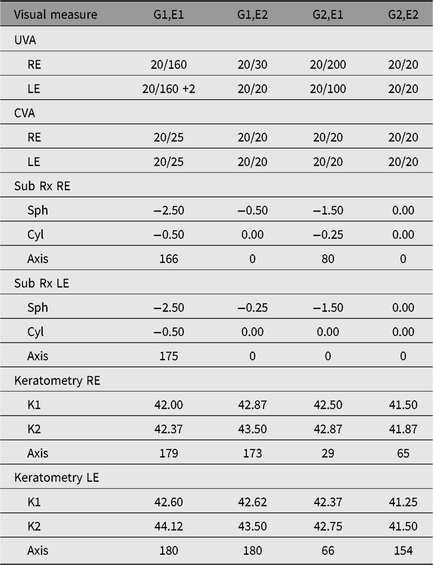
G1, genotype 1; G2, genotype 2; E1, city rearing; E2, country rearing; UC, Uncorrected (prior to subjective refraction); VA, visual acuity; RE, right eye; LE, left eye; UVA, uncorrected visual acuity; CVA, corrected visual acuity; Sub Rx, subjective refraction; Sph, sphere (refraction); Cyl, cylinder (refraction); K, keratometry.
Visual Health
Health-related visual measures, including intraocular pressure, were unremarkable across the four twins except for their cup-to-disk ratio (C/D). Ophthalmoscopic examination of the optic nerves in the fundus revealed C/D ratios that matched more closely within the MZ reared apart pairs than within the unrelated reared together pairs. These findings are summarised in Table 2.
Eye health measures for doubly exchanged MZ male twin pairs
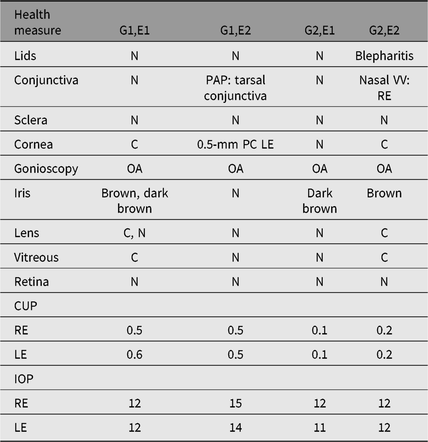
G1, genotype 1; G2, genotype 2; E1, city rearing; E2, country rearing; N, Normal; C, Clear; PC, Paracental; RE, right eye; LE, left eye; PAP, papillae; OA, open angle; VV, varicose vein; CUP, cup/disk ratio; IOP, intraocular pressure.
Visual Life History
Only one of the four twins (G2,E2) had experienced trauma to one eye, although he could not recall if it was the right or the left eye. Nevertheless, no signs of visual impairment that could be linked to this event were observed and, in fact, this twin showed the best UVA of the four participants. None had experienced visual problems during infancy or childhood, or reported a history of surgeries, familial blindness, or familial eye disorders. Presumably, all four twins had normal visual development during infancy and adolescence, although this was untested. However, both unrelated city-raised twins, G1,E1 and G2,E1, required eyeglasses at ages 23 and 17 years, respectively, and both currently wear eyeglasses for most activities. In contrast, eyeglasses were never needed by either of the unrelated country-raised twins, G1,E2 and G2,E2. Both of them joined the army at age 18 years, where their vision was screened and proved normal.
In one MZA pair, the city-raised twin read less than his country-raised brother but required eyeglasses, whereas the reverse was true for the other pair. The unrelated city-raised twins had been using a computer longer and more extensively than the one country-raised twin (G1,E2) who did. Based on their estimated date of first computer use, one city-raised twin (G1,E1) began wearing eyeglasses just 1 year afterwards, whereas his unrelated brother (G2,E1) began wearing eyeglasses 2 years prior. Findings from the twins’ visual life histories are summarised in Table 3.
Visual life history characteristics for doubly exchanged MZ male twin pairs
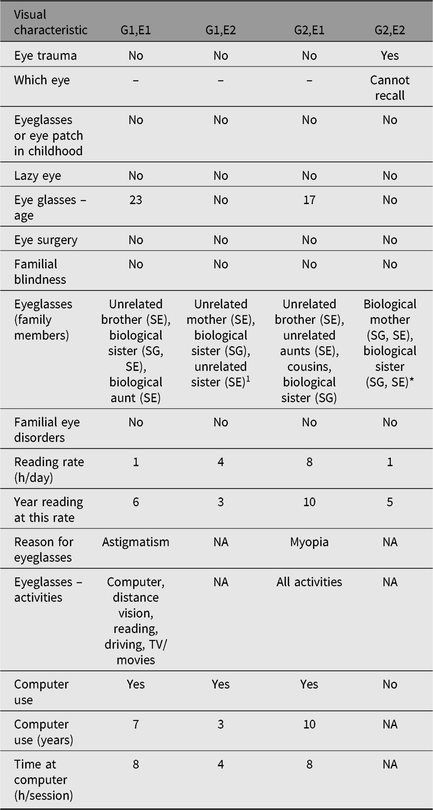
* This sister was living outside the brothers’ childhood home when they were born
G1, genotype 1; G2, genotype 2; E1, city rearing; E2, country rearing; CSG, shared genes; SE, shared environment; NA, not apply.
Discussion
The finding that increased exposure to natural light during childhood and adolescence prevents or reduces myopia is strongly supported by this unique study of doubly switched MZA male twins. In epidemiological studies, it is generally difficult to quantify time spent outdoors by individuals over long periods. In this exceptional case, the rearing environments differed dramatically with respect to time spent outdoors throughout childhood and adolescence. The fact that the rural dwelling had a kitchen open to the outdoors on one side, coupled with the absence of electricity (and, therefore, a television set), provided an outdoor lifestyle even at home; this situation contrasts sharply with that of the urban environment. This outdoor lifestyle was reinforced by the brothers’ necessity to walk 1 h each day to go to school. Thus, the unique value of this case is having a critical variable (time spent outdoors) naturally partitioned into two very distinct settings. Time spent outdoors and time devoted to childhood and adolescent education often compete for the same time allocation, so it is very difficult to disentangle these factors. Educational level is a relatively easy parameter to quantify, but the opposite is true for time spent outdoors over long periods. Although the observed co-twin differences might be explained solely by the twins’ contrasting educational experiences, what is striking in this case is how different the environments were with respect to natural light.
The association of low birth weight and/or prematurity with myopia cannot explain our results. Specifically, G2,E2, who was born at approximately 28-weeks gestation, weighed approximately 907 g at birth and was raised in the country, showed the best vision of the four participants. He showed no evidence of myopia at all. In contrast, his city-raised genetically identical twin brother G2,E1 (who had the same gestational age and birth weight) required eyeglasses at age 17 years of age, with a myopia of −1.5 diopters. The other reared-apart twins showed the same pattern, independent of their (higher) birth weights and (higher) gestational ages. Regarding the influence of near work, time spent reading did not affect the degree of myopia in the affected individuals. The two extremes – the most myopic (G1,E1) and the least myopic (G2,E2) – of the four individuals both read the least, that is, an hour per day for the last 5–6 years. Computer use also did not appear to play a role, as one city-raised twin acquired his eyeglasses just 1 year after beginning to work on computers, whereas the other acquired his eyeglasses 2 years prior. These two individuals who wore eyeglasses worked for longer sessions on their computers than the one country-raised twin who used computers (8 vs. 4 h). Although this might suggest an association between myopia and computer use, the twins’ timing of eyeglass prescription and initiation of computer use does not suggest causality.
In summary, while myopia is strongly associated with genetic factors, this case of doubly switched MZ twins demonstrates the effects of the rearing environment on vision. Time spent outdoors appears to be a significant factor in the development of myopia in the city-raised brothers, and its absence in the country-raised brothers. The fact that the twins in the city engaged in more visually demanding work than the twins in the country, due to their many years of schooling, may have also contributed to their inferior vision. In fact, educational level is a risk factor for myopia, which, in our study, cannot be fully separated from time spent outdoors. Years of education may be a proxy for close work, outdoor time, or both. Research on the impact of naturally lit classrooms in myopia development may clarify this point. Unfortunately, the use of projection screens in classrooms in developed nations points in the opposite direction.
A potential limitation of this study is that the results of eye examinations conducted during the twins’ childhood and adolescence were unavailable. However, it is likely that visual difficulties prompted the city-raised twins to consult an ophthalmologist or optometrist who prescribed corrective lenses. Comparable eye problems did not affect the country-raised twins, who did not require eyeglasses.
Another limitation is the absence of data for some refractive visual parameters, such as axial length, lens thickness, and anterior chamber depth. Along with keratometries, these would allow more precise measurement of the refractive state of each eye. It is also acknowledged that the medical and practical implications from a single case study involving four participants are limited, yet the findings are consistent with the emerging literature. They provide a compelling demonstration of the positive effects of outdoor activity on vision.
The classic twin method rests on the equal environment assumption (EEA), the premise that the environments of MZ and DZ twins are equivalent with respect to the trait(s) under study. Most studies that have assessed possible violations of this assumption have found them wanting (Segal, Reference Segal2012). Note that the EEA is only compromised when MZ twins are purposefully exposed to similar environments more often than DZ twins; for example, attending the same classroom or participating in the same activities. Thus, the EEA is satisfied if MZ co-twins themselves select more similar visually related experiences than DZ twins. It is worth noting that twin studies have reported similar prevalence of myopia in twin and nontwin populations (Hammond et al., Reference Hammond, Snieder, Gilbert and Spector2001). Furthermore, despite definitional differences, most twin studies report higher MZ than DZ twin concordance for myopia (Goldschmidt, Reference Goldschmidt2003); nevertheless, further examination of the EEA is warranted (Chen et al., Reference Chen, Wang, Han, Yan and He2016). Challenges to the EEA in the present study seem unlikely, given that the MZ co-twins’ rearing environments were both different and determined by chance, eliminating pressures towards similar treatment or experiences.
An additional finding was the difference in C/D ratios of the optic nerve observed during fundus examination. These measures were very similar among the related pairs, independent of rearing. Twin studies have found that optic disk excavation is strongly heritable (Hewitt et al., Reference Hewitt, Poulsen, Alward, Bennett, Budde, Cooper and Green2007), a finding confirmed by the present report. At the same time, while the horizontal C/D ratio correlates with axial length and refractive error (Tomlinson & Phillips, Reference Tomlinson and Phillips1969), we did not find this to be the case among our subjects. A large C/D ratio is a risk factor for glaucoma, so further evaluation is warranted.
Myopia and the C/D ratio have substantial genetic influence, as shown by twin studies, yet this study found genetic effects on the C/D ratio only. In the case of myopia, an environmental factor (i.e., time outdoors) appeared to outweigh the genetic predisposition. This factor is believed to be the main cause underlying the current myopia epidemic in East Asian nations. The unique participants and circumstances in this study allowed isolation of this factor from other environmental influences, highlighting its importance. This finding has widespread implications for paediatric ophthalmology, paediatrics, and public health. It also recognises the power of the reared-apart twin design for identifying genetic and environmental influences on human health and behaviour.
Acknowledgments
The first author (NLS) gratefully acknowledges the assistance of Juan David Leongómez, Universidad El Bosque, for contacting FYP with regard to conducting eye examinations on the four twins. California State University, Fullerton students, Franci Niculae and Jamie Nelson, helped gather relevant research literature.



