


Introduction
An estimated 37.5% of the global population (around 2 billion) has some form of disabilities, and 2–4% of them face significant functioning difficulties in their daily life (Inclusive City Maker, 2019). Social exclusion, stigma, and misconceptions surrounding disability make persons with disabilities vulnerable to different forms of violence and abuse (Addlakha et al., Reference Addlakha, Price and Heidari2017). Violence against persons with disabilities includes emotional abuse, physical or sexual violence in the form of forced or coerced sterilization and contraception, coerced psychiatric interventions, medical exploitation, violations of privacy, forced isolation, deprivation of liberty, denial of provision of essential care, humiliation/ harassment, calling out different bad names, humiliating titles, abusing verbally, and using slangs and bad words (Frohmader et al., Reference Frohmader, Dowse and Didi2015; Dowse et al., Reference Dowse, Soldatic, Didi, Frohmader and van Toorn2013). Globally, one in every three persons with disabilities is at risk of experiencing violence during their lifetime (Luana et al., Reference Luana, Diana and Urban2019). A meta-analysis of 26 studies with data for 21,557 persons with disabilities documented a 50% higher risk of experiencing violence in the last 12 months before the study than persons without disabilities (Hughes et al., Reference Hughes, Bellis, Jones, Wood and Bates2012). In the analysis of population-based surveys on disability and violence, the prevalence of lifetime abuse was 19% and 36%, respectively, among men and women in the USA (Hahn et al., Reference Hahn, McCormick, Silverman, Robinson and Koenen2014; Mitra and Mouradivan, Reference Mitra and Mouradian2014). Another study in the UK documented that persons with disabilities were significantly more likely (adjusted OR 2.33) to be exposed to violence in the past 12 months compared to their peers without disabilities (Emerson and Roulstone, Reference Emerson and Roulstone2014).
According to the World Health Organization (WHO) report in 2022, approximately 80% of the global population living with disabilities reside in lower- and middle-income countries (LMICs) (World Health Organization, 2023). A mixed-method research conducted by the programme, ‘What Works to Prevent Violence against Persons with Disabilities’, women living with disabilities are more likely to experience sexual and intimate partner violence (Hahn et al., Reference Hahn, McCormick, Silverman, Robinson and Koenen2014, Plummer and Findley, Reference Plummer and Findley2012). In contrast, men with disabilities are likelier to experience physical and non-domestic violence (Khalifeh et al., Reference Khalifeh, Howard, Osborn, Moran and Johnson2013). A study among 314 women with disabilities in India found that women and girls with disabilities face a high rate of sexual abuse, and 21% of them experienced abuse from someone other than their intimate partner (Human Rights Watch, 2018). A study in Nepal between 2009 and 2011 among 475 women with disabilities found 57.7% of them experienced at least one act of violence in their lifetime, including emotional (55.2%), physical (34%), and sexual abuse (21.5%) (Puri et al., Reference Puri, Misra and Hawkes2015). Decades of literature have documented that the prevalence of experiencing violence among women with disabilities is 19% compared to 12% of men in the global south (Puri et al., Reference Puri, Misra and Hawkes2015).
National Survey on Persons with Disabilities conducted by Bangladesh Bureau of Statistics in 2021 concluded that 7.14% of the population have at least one type of disability, according to the Washington Group on Disability Statistics module (BBS, 2021). Factors such as overpopulation, extreme poverty, illiteracy, early child marriage, malnutrition, and lack of adequate health care are responsible for high prevalence of disability in the country (Rahman and Islam, Reference Rahman and Islam2014). A cross-sectional study conducted among 226 women with disabilities in four districts of Bangladesh revealed that 84% of women with disabilities experienced at least one act of violence in their lifetime (Hasan et al., Reference Hasan, Muhaddes, Camellia, Selim and Rashid2014). Even though persons with disabilities in Bangladesh experience violence in their daily lives like any other LMICs, there is minimal research in the country documenting the actual scenario.
Although women are more vulnerable to experiencing different forms of violence, men with disabilities are no different. However, this remains unseen and unheard. It can be argued that researchers overlooked violence against men with disabilities as a topic, assuming they are not prone to abuse or violence. Gender is about power relations between men and women in relation to constructed male/female social identities and roles, so one must recognise that violence that is based on gender can potentially affect men as well (Ortoleva and Lewis, Reference Ortoleva and Lewis2012). Men with disabilities are vulnerable to experiencing violence in different forms due to their ‘reduced ability to function’. Recent evidence suggests that men and boys with disabilities can be harassed, beaten, raped, and killed as they do not fit the prevailing view of masculinity within their society (Dowse et al., Reference Dowse, Soldatic, Didi, Frohmader and van Toorn2013; Frohmader et al., Reference Frohmader, Dowse and Didi2015).
The stereotypical perception of persons with disabilities, considering them as asexual and presumed as virgins’ lures perpetrators and marks them as an easy target (Koistinen et al., Reference Koistinen, Mcclain-nhlapo, Arango and Gandini2019). The perpetrators of such violence range from strangers to family members, caregivers, intimate partners, former partners, neighbours, and relatives (Ortoleva and Lewis, Reference Ortoleva and Lewis2012; CREA, 2012). Married persons with disabilities, especially women and adolescents, are also at greatest risk of experiencing different acts of violence from their in-laws (Hasan et al., Reference Hasan, Muhaddes, Camellia, Selim and Rashid2014).
After Bangladesh ratified the United Nations Convention on the Rights of Persons with Disabilities in 2006, numerous policies and laws were introduced, including the ‘Rights and Protection of Persons with Disabilities Act 2013’ to ensure the rights of persons with disabilities. However, addressing violence against persons with disabilities was neglected in the mentioned acts (BLAST, 2015). Because of the neglect in policy and practice, there is a paucity of research and data related to the prevalence of emotional, physical, and sexual violence against persons with disabilities in Bangladesh. This study aims to fill this knowledge gap by providing national-level estimates of prevalence of violence experienced by persons with disabilities.
In this paper, we analysed primary data from nationwide mixed-method research among persons with disabilities in Bangladesh with the aim of determining the prevalence of emotional abuse, physical, and sexual violence against persons with disabilities; and exploring the experiences of different forms of violence against persons with disabilities along with their coping strategies.
Methodology
This study was part of a more extensive nationwide study that followed a mixed-method sequential design comprising qualitative and quantitative components. The methodology adopted for the nationwide study was discussed in detail in an earlier paper titled, ‘Influence of education on sexual and reproductive health service utilization for persons with disabilities in nationwide Bangladesh: an explanatory sequential mixed–methods study’ (Du et al., Reference Du, Mohosin, Amin and Hasan2022). A total of 5000 persons with all 12 types of disabilities were interviewed during the quantitative survey, and mini-ethnographic case studies were conducted with 51 purposively selected persons with disabilities.
To recruit the survey participants, the National Disability Database maintained by the Ministry of Social Welfare, Government of Bangladesh, was utilised. Basic information about persons with disabilities, including their names, parents’ names, contact addresses, and phone numbers, was collected from local social welfare offices to develop the sampling frame. A sampling frame was prepared for each of the 240 clusters. A multistage stratified-cluster sampling procedure was adopted to recruit the survey participants. In the first stage, 30 clusters (unions in rural areas and wards in urban areas) were randomly selected from each of the eight administrative divisions of Bangladesh. In the second stage, 24 persons with disabilities were systematically chosen from each cluster. The sample size for the study was calculated to ensure representation at both national and sub-national levels, resulting in a total of 5,000 persons with disabilities. The study population included female participants with disabilities aged 10–49 and male participants aged 10–59, aligning with reproductive age ranges. The survey questionnaire addressed demographic characteristics, type of disability, experiences of violence, reasons and perpetrators of violence, coping mechanisms, and service-seeking behaviour following experiences of violence. The main purpose of the survey was to generate quantitative estimates of the prevalence of violence, identify the perpetrators, and understand the coping strategies adopted by persons with disabilities. The survey was conducted between July and November 2019. For participants with severe sensory impairments, intellectual disabilities, or autism spectrum disorder, caregivers were interviewed in the presence of the participant to ensure accurate and comprehensive data collection.
For the qualitative component, 51 purposively selected persons with disabilities from the quantitative sample were interviewed. These participants were chosen based on specific sociodemographic characteristics, the type of disability, and their experiences of violence. The interviews adhered to an ethnographic approach, involving multiple visits to each participant. Each visit lasted around 50–60 minutes, allowing for a comprehensive exploration of their lived experiences and perspectives regarding disability and violence. The initial interview sessions focused on gathering information about the participants’ sociodemographic backgrounds, their daily lives, and general experiences with violence. Recognising the sensitivity of discussing violence, this topic was introduced gradually and addressed in the later sessions, once participants felt more comfortable and had established rapport with the interviewer. All interviews were conducted face-to-face. In cases where participants had difficulty communicating, such as those with speech and hearing impairments or neurodevelopmental disabilities, caregivers were present to assist. This approach ensured that the participants could fully express their experiences and perspectives. By employing a mini-ethnographic case study approach, the research provided a contextual understanding of the quantitative data. This method enhanced the validity of the findings by offering an informed understanding of the experiences of violence among persons with disabilities. It also sheds light on the perceived reasons behind such violence, the identities and motivations of the perpetrators, and the coping mechanisms adopted by the participants.
All the qualitative interview recordings and field notes were transcribed into Bangla and then translated into English for analysis. Qualitative data were analysed by coding in AtlasTi version-7 based on thematic analysis. Descriptive analyses were performed to summarise the demographic characteristics of survey participants. Chi-squared tests were performed to explore associations between participants’ demographic characteristics and experiences of violence. All the quantitative analyses were performed using Stata version- 17. Appropriate sampling weight was considered while conducting the statistical analysis.
This study was part of a more extensive study for which ethical approval was sought from the Institutional Review Board (IRB) of BRAC James P Grant School of Public Health, BRAC University (IRB References no: 2018-044-IR). Informed consent was taken from all adult participants who could provide consent. For minor participants and participants with intellectual disabilities, an ascent was obtained from a legal guardian. Participants who could not provide informed consent due to communication barriers were requested to provide verbal consent, and their caregivers were requested for written permission for the record. Caregivers were interviewed only if the participants had severe sensory impairments, intellectual disabilities, or autism spectrum disorder. Keeping gender sensitivity in mind, female participants were interviewed by well-trained female interviewers and vice versa. Anonymity and confidentiality of information were ensured by eliminating personal identification from the data immediately after data collection.
Definitions and Measures: One of the main challenges faced during the research was to develop clear definitions of different types and acts of violence. The ‘violence’ section of the structured survey questionnaire was designed following a long process of discussion and consultations with experts. This section of the questions was developed based on the ‘WHO Multi-country Study on Women’s Health and Domestic Violence against Women’ (WHO, 2005). To understand violence against persons with disabilities, they were asked about three types of violence – emotional, physical, and sexual. The primary outcomes were: (1) being a victim of any violence experienced in a lifetime and (2) being a victim of any violence experienced in the last 12 months prior to the survey period (Definition of outcomes is given in detail in Annex 1).
Findings
Sociodemographic characteristics of the study participants
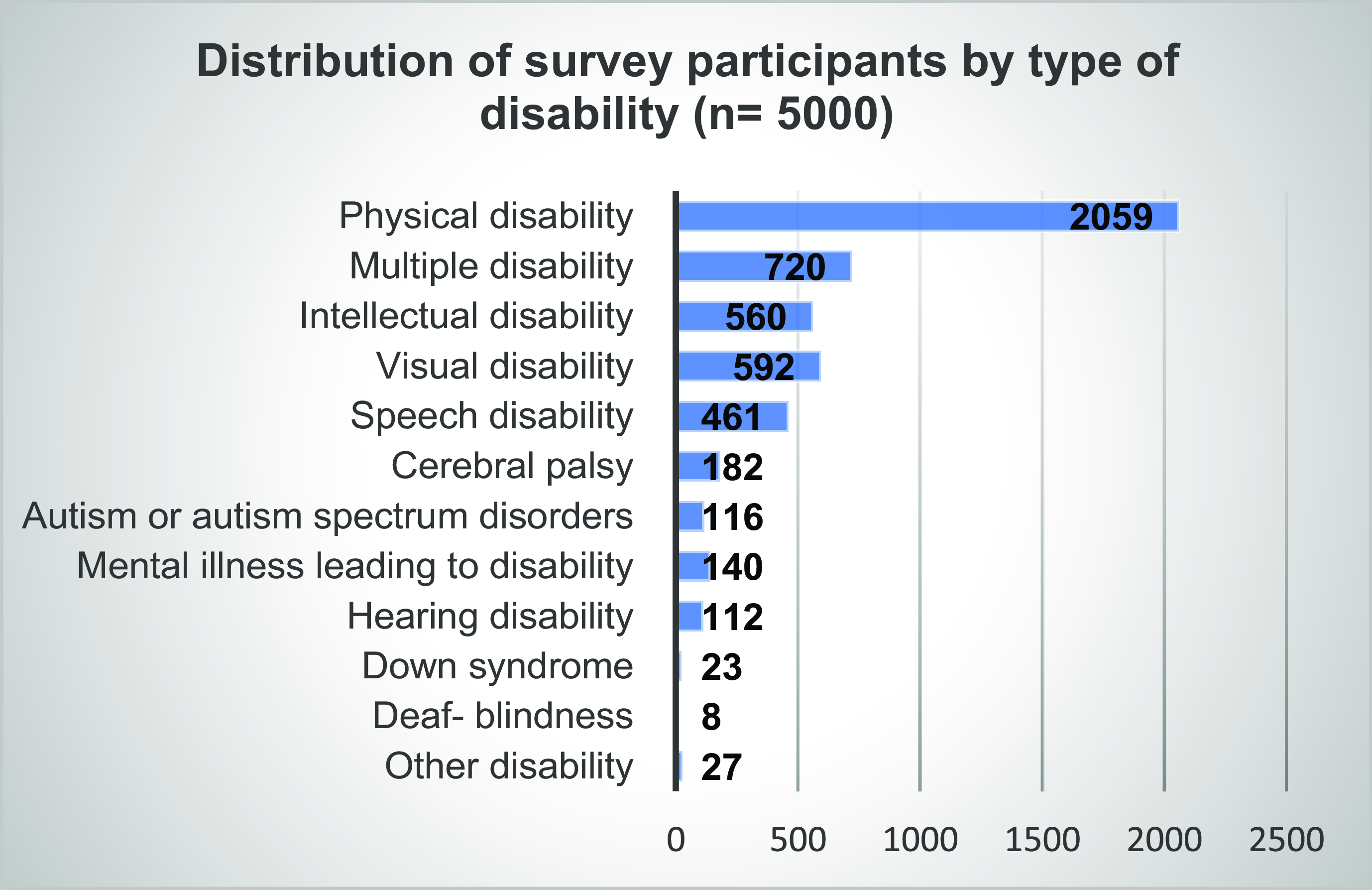
Survey participants: Out of 5,000 survey participants, most had a physical disability (40.2%), followed by multiple disabilities (14.6%), intellectual disability (12%), visual disability (11.6%), and speech disability (9.0%), respectively (Figure 1).
Distribution of Survey Participants by Type of Disability (n = 5000). The Figure Illustrates the Number of Participants Categorised by Different Types of Disabilities, Including Physical Disability, Intellectual Disability, Visual Disability, and Multiple Disabilities, Among Others.
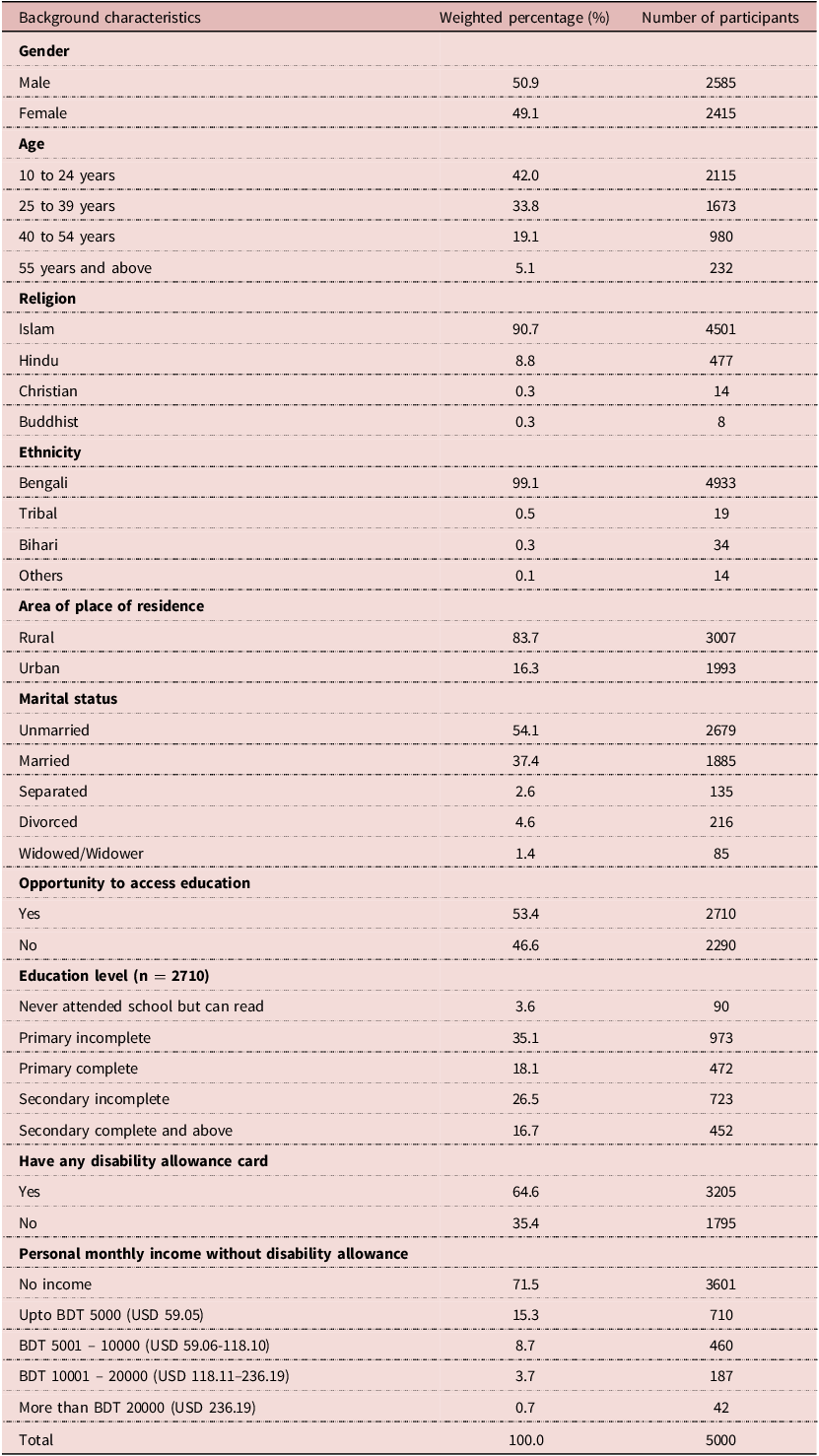
Demographic characteristics of the survey participants are presented in Table 1. More than half of the survey participants (50.9%) were male and 49.1% were female. Roughly 42% of the total survey participants were aged between 10 and 24 years, while one-third (33.8%) were between 25 and 39 years old. Majority of the participants (90.7%) were Muslims and lived in rural areas (83.7%). In total, 54.1% of the survey participants were unmarried, whereas 37.4% were married. Among 5,000 survey respondents, more than half of the participants (53.4%) had an opportunity to access education. Among 2,710 participants with access to education, 35.1% had not completed their primary education, and only 16.7% had graduated from secondary schools (and above). Out of 5,000 survey participants, mostly 72% had no personal income other than their disability allowance.
Sociodemographic Characteristics of the Survey Participants (n = 5000)
Qualitative participants: Out of 51 qualitative participants, 24 were males, and 27 were females aged between 10 and 59. To ensure regional diversity, participants were selected from rural and urban areas in the seven administrative divisions of Bangladesh. Among the 51 participants, 28 had a physical disability, 6 had a visual disability, and 3 had cerebral palsy. Others reported having multiple disabilities.
Prevalence, perpetrators, and experiences of violence against persons with disabilities
Emotional abuse
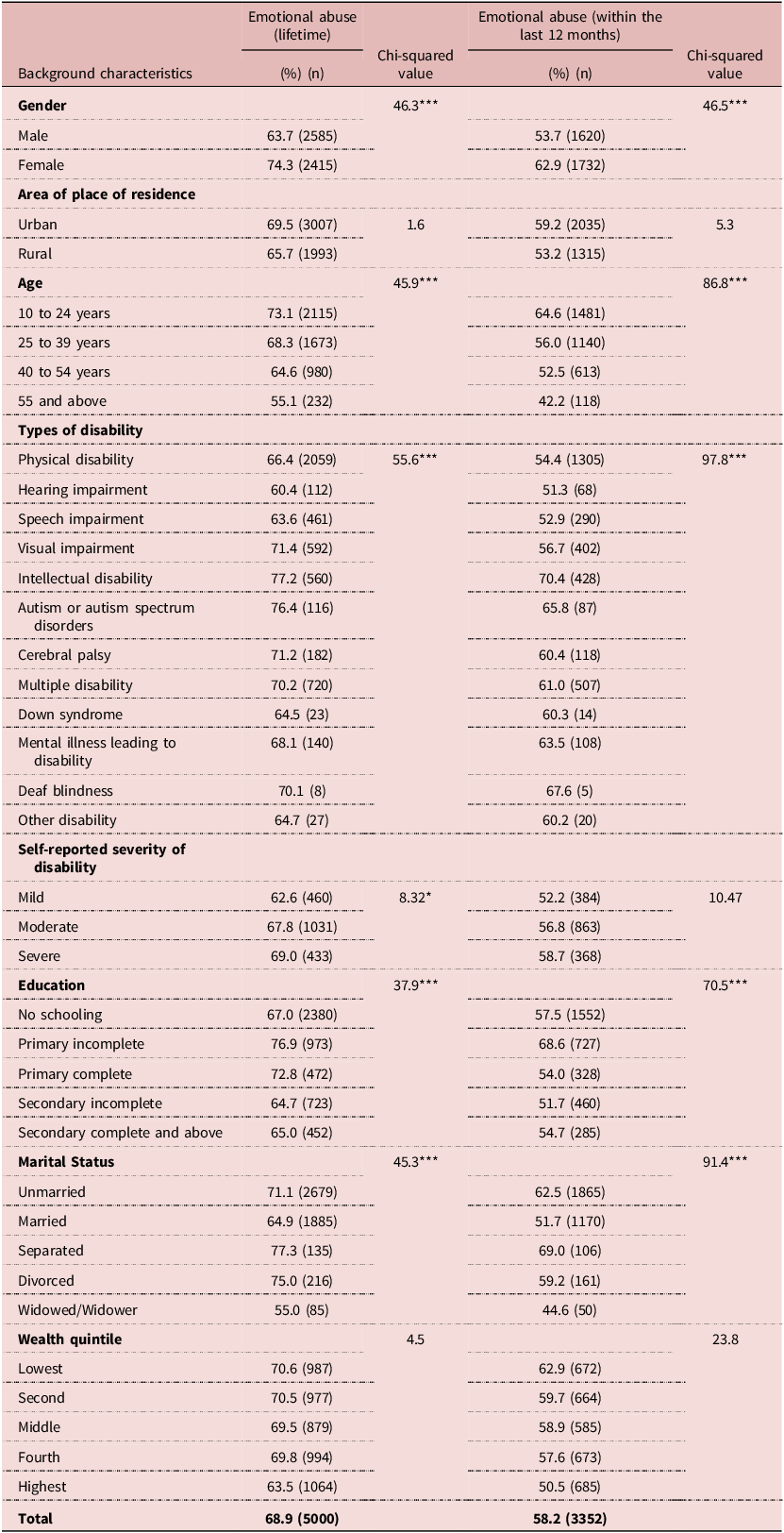
Prevalence: The prevalence of lifetime emotional abuse against the participants was 68.9% (95% CI: 67.1% to 70.7%), and 58.2% (95% CI: 56.3% to 60.1%) within the last 12 months prior to the survey (Table 2). Table 2 presents statistically significant associations between the lifetime and current (within the last 12 months prior to the survey) experience of emotional abuse with different demographic characteristics of survey participants (gender, age, types of disability, educational status, and marital status).
Percent Distribution of Lifetime Prevalence and Current Prevalence (within the Last 12 Months from Survey) of Emotional Abuse Experienced by the Study Participants
Significance level of the difference: * P < 0.05, ** P < 0.01, *** P < 0.001 (Pearson chi-square test)
Female participants were significantly more prone to experience emotional abuse compared to their male counterparts for both lifetime (male: 63.7%; female: 74.3%) and within the last 12 months prior to the survey (male: 53.7%; female: 62.9%) (Table 2). Participants with an intellectual disability experienced higher emotional abuse during their lifetime (77.2%) as well as in the last 12 months (70.4%) prior to the survey, followed by autism spectrum disorder (lifetime: 76.4%; current: 65.8%). Table 2 also reveals that persons with severe disabilities experience more emotional violence during their lifetime (69%) as well as in the last 12 months prior to the survey (58.7%). Participants who had not completed primary education had suffered a higher rate of lifetime and current emotional abuse compared to the other educational categories (lifetime: 76.9%; current: 68.6%). Around 70% of the participants from both the lowest and second wealth quintiles experienced at least one act of emotional abuse in their lifetime compared to the participants from the highest wealth quintile (63%).
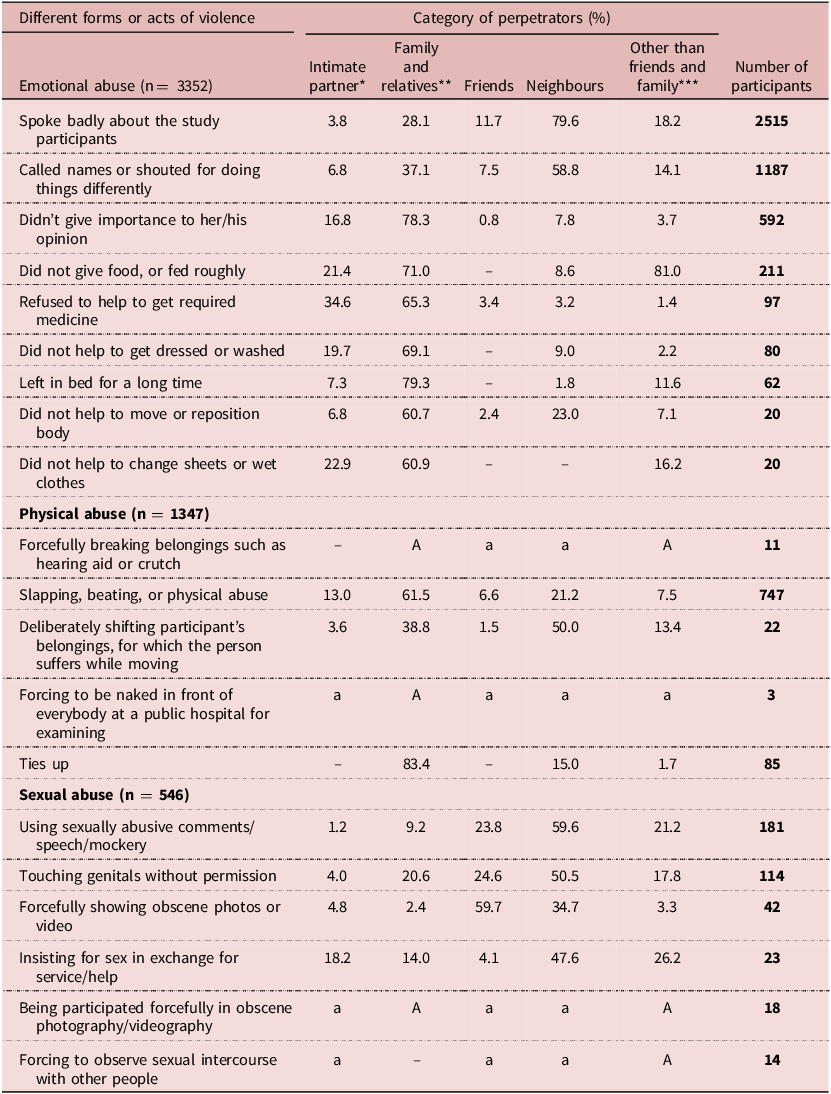
Perpetrators of emotional abuse: Responses from participants and caregivers were analysed to determine the perpetrators of different forms of emotional abuse (Table 3). Of the 3352 survey participants who experienced emotional abuse in the last 12 months preceding the survey, neighbours spoke badly about them in 80% of cases. Table 3 also shows that family and relatives refused to help to get the required medicine (65.3%), did not give importance to their opinion (78.3%), and left them in bed (79.3%).
Different Acts of Emotional Abuse, Physical Abuse, and Sexual Violence Against the Study Participants by Perpetrators (Within the Last 12 Months of the Survey)
*Husband, wife, romantic partner.
**Father, mother, brother, sister, father-in-law, mother-in-law, other relatives.
***Caregiver, teacher, boss/co-workers/business dealers/customers, transport workers, passers-by, and others.
a Percentage based on fewer than 20 participants suppressed.
# Multiple responses.
Qualitative analysis revealed that many participants experienced emotional abuse multiple times in their lifetime, especially people with sensory impairments, intellectual disability, autism spectrum disorder, those from rural areas, and from lower wealth quintiles, irrespective of their gender. Both men and women study participants with severe disabilities experienced emotional abuse than those with mild disabilities. However, men with mild disabilities and who were educated experienced less emotional abuse than other study participants. The different acts of emotional abuse started at the family level, where parents of these persons with disabilities constantly abused them emotionally. However, the parents perceived this to control them and make them listen to what they want.
Both men and women qualitative participants experiencing emotional abuse shared that their parents or siblings are the perpetrators who hurt them mentally with harsh words and blame them for being a burden and for their poverty. In addition to the family members, society perceives the behaviours of autism spectrum disorder, down syndrome, or persons with intellectual disabilities as ‘unacceptable’ or ‘unreasonable’, which angers them and leads to emotional abuse. They are called out with different derogatory names, such as ‘pagol’ (mad), ‘matha nosto’ (a problem in brain), and ‘Jin e dhora’ (possessed), which haunts them both emotionally and mentally. Often, their neighbours shout at them and restrain their children from mingling with them.
‘My daughter was friends with that pagol (an adolescent with an intellectual disability) before. As they grew up together, I understood she was a pagol. I immediately asked my daughter not to talk to her anymore. Who knows, it might contaminate my daughter as well…’ (A community resident).
Married persons with disabilities often experience emotional abuse from their in-laws and partners. For example, a 31-year-old married man with a physical disability recounted enduring emotional torment from his wife since their arranged marriage. Despite support from his in-laws and family, his wife was unhappy and continually mocked him for his disability, initially refusing to consummate the marriage and humiliating him at every opportunity. He shared,
‘I married my wife 5 years back. And the mental trauma I have been going through since then, I cannot even explain that. She used to shout at me for no reason, called me “lengra’ (disabled), and even misbehaved with my parents. I am a good person by heart. But how can I tolerate this?’
The emotional toll was evident as he tearfully recounted these experiences. He admitted that his anger led him to forcefully consummate their marriage and regularly coerced his wife into physical relations during the first few years, attempting to assert his masculinity. This behaviour highlights the complex dynamics of emotional abuse in relationships involving persons with disabilities, which are often exacerbated by societal expectations of an ‘ideal man’ who embodies physical strength and perfection. The pressure to conform to these standards can be particularly intense for men with disabilities, who may feel inadequate or less masculine due to their physical limitations.
Society’s narrow definitions of masculinity often equate being a ‘real man’ with physical prowess and sexual virility, which was also mentioned by almost all the male participants. For men with disabilities, these unrealistic standards can lead to significant emotional strain as they struggle to fit into these societal norms. In an attempt to prove themselves and gain acceptance, they may resort to aggressive or coercive behaviours, as seen in this case, where the man’s frustration and need to validate his masculinity led him to emotionally and sexually abuse his wife.
Physical abuse
Prevalence: Table 4 shows that the prevalence of lifetime physical abuse experienced by the participants was 26.6% (95% CI: 24.9% to 28.3%), and within the last 12 months, was 16.9% (95% CI: 15.4% to 18.4%). Female participants were significantly more likely to experience physical abuse than their male counterparts for both lifetime (male: 20.1% & female: 33.2%) and within the last 12 months prevalence preceding the survey (male: 12.5% & female: 21.5%). Participants with moderate disabilities were significantly more likely to experience physical abuse than those having mild or severe disabilities for both lifetime (26.1%) and within 12 months prior to the survey (14.7%). Participants who did not complete their primary education were more prone to experience physical abuse (29.7%) at least once in their lifetime and also in the last 12 months prior to the survey period (20.9%) than any other education category. Besides, persons with disabilities from the lowest wealth quintile experienced more physical abuse once in a lifetime (31%) than study participants from other wealth quintiles.
Percent Distribution of Lifetime Prevalence and Current Prevalence (Within Last 12 Months From Survey) of Physical Abuse Experienced by the Study Participants
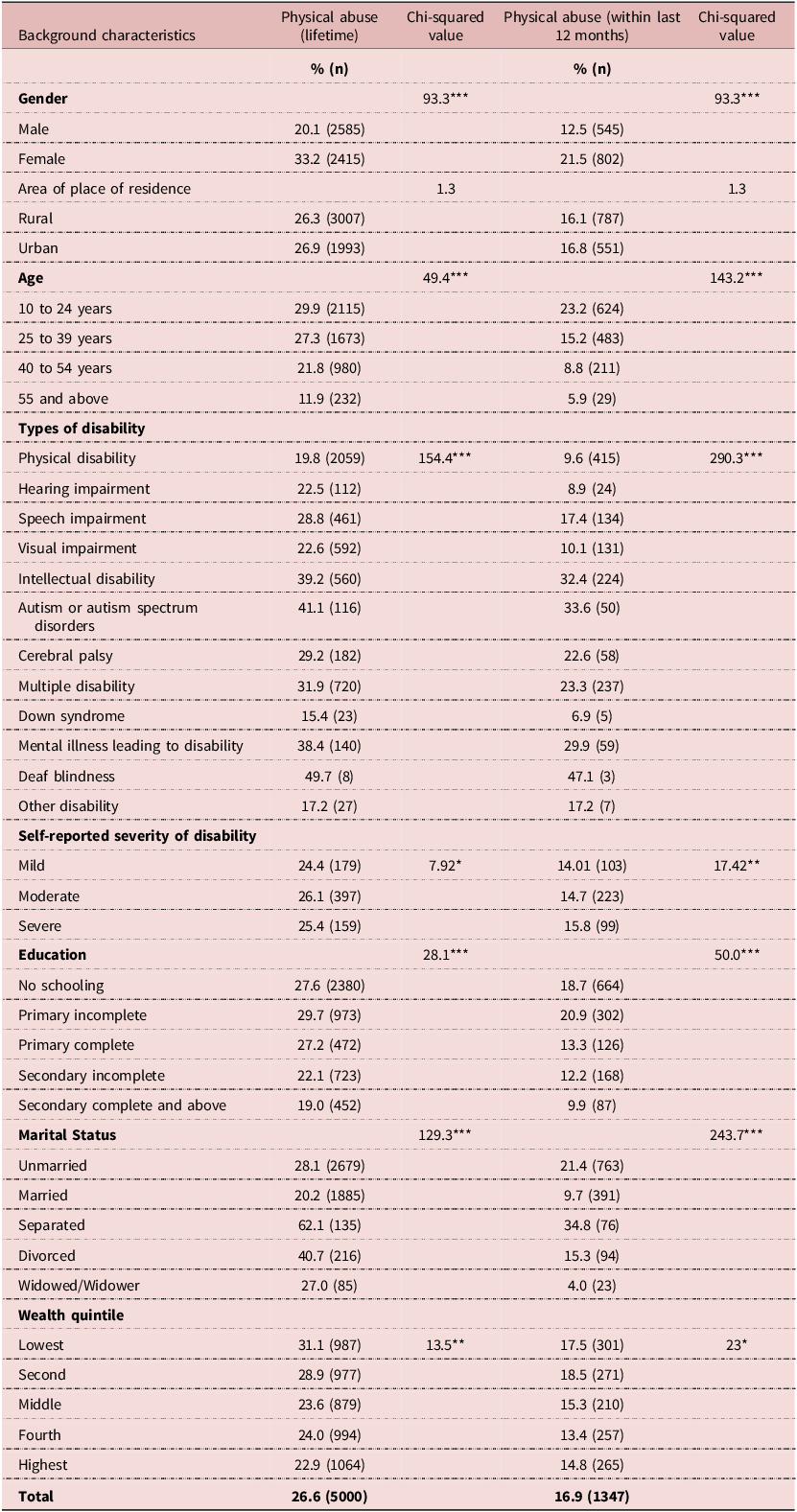
Significance level of the difference: * P < 0.05, ** P < 0.01, *** P < 0.001 (Pearson chi-square test).
Perpetrators of physical abuse: Of the 1347 participants who reported experiencing physical abuse in the last 12 months, in 61.5% of the cases, family and relatives used to slap, beat, or physically assault them. In 50% of the cases, neighbours deliberately shifted the participant’s belongings, which she/he suffered while moving. A good percentage of the participants (83.4%) also reported that family members sometimes tied them up with a rope (Table 3).
Qualitative findings revealed that majority of the participants with intellectual disability, autism spectrum disorder, and physical disability experienced more physical violence than others. Almost all the participants sharing experiences of physical violence were from rural areas, with lower educational attainment. Similar to the quantitative findings, women with disabilities, especially those who were younger, were physically abused more than their male counterparts. Like emotional abuse, physical violence against persons with disabilities often starts within the family, regardless of the type, severity, or age of the disability. All qualitative participants shared that parents often ‘slap’ or ‘push’ them if they cannot do something properly, viewing it as a rightful ‘normal response’.
Financial dependency significantly contributes to the violence for men with disabilities. Many men with disabilities rely on their families for financial support, which can lead to frustration and resentment from those who provide for them, as men are expected to provide financial support to their families by social norms and any exception leads to conflict. For example, one male participant with visual impairment recounted severe abuse from his brother, who was tired of financially supporting him. This dependency creates a power imbalance where the disabled individual is seen as a burden, justifying the abuser’s actions.
Eight study participants mentioned that family members sometimes pulled their hair and pinched them for fun, ignoring their protests and pain. This behaviour is often dismissed by caregivers as harmless, but it constitutes significant abuse. When two participants tried to protest, they were beaten instead, underscoring the lack of agency and respect afforded to men with disabilities. The financial dependency exacerbates the abuse as caregivers and family members feel entitled to vent their frustrations physically. This dynamic illustrates the broader societal issue where disabled individuals are devalued and subjected to violence due to their inability to contribute financially, perpetuating a cycle of abuse and neglect.
However, the scenario was different for married persons with disabilities; in this case, in-laws/ partners are the main perpetrators. In most cases, the husband assumes ‘it is okay to hit a wife’, and disability allows this assumption to prevail. When a man without disabilities marries a woman with a disability, he considers that this act alone is doing a ‘favor’ to her and gives him the right to do anything to his wife.
‘Of course, I have the right to beat my wife. It is her fortune that I married her, even if she is ‘boira’ (hearing impaired). What if I beat her at times? Everyone does that all the time’ (Husband of a woman with hearing impairment)
In some areas, social and cultural beliefs attributed ‘disability’ to be a consequence of ‘sinful acts of past life’ or ‘parents’ misdeed’ or the individual affected was ‘possessed by Djinn (evil spirit)’. Based on these superstitions, many families residing in rural Bangladesh seek help from spiritual healers (considered gifted with the power to capture or control Djinn) to cure their children. However, these informal healers also are perpetrators, and their treatment leads to abuse, by ‘slapping’, ‘beating with brooms or bamboo’, ‘making them inhale burnt chilies’, and so on, which is extremely painful for the person or child who is living with a disability. The healers also ask the parents to tie the disabled person to a tree, banana tree or tamarind tree), as it is believed to scare off the Djinn (evil spirit).
Sexual abuse
Prevalence: Table 5 shows that the lifetime prevalence of sexual abuse against the participants was 11.5% (95% CI: 10.3% to 12.9%), and current prevalence (within the last 12 months prior to the survey period) was 5.9% (95% CI: 4.9% to 6.9%). Male participants were more prone to experience sexual abuse than females for both lifetimes (male: 12.7% & female: 10.3%) and within the last 12 months prior to the survey (male: 6.6% & female: 5.1%). However, the difference in proportions was not statistically significant. Separated participants were prone to be sexually abused at least once in their lifetime (22.8%; Chi-square value: 34.7, P < 0.001) and also within the last 12 months prior to the survey period (10.0%; Chi-square value: 78.0, P < 0.001) than all other categories of marital status. Besides, 13% and 6.6% of participants of the study from middle wealth quintile experienced at least one act of sexual abuse in their lifetime and in last 12 months prior to the study, respectively.
Percent Distribution of Lifetime Prevalence and Current Prevalence (Within the Last 12 Months) of Sexual Abuse Experienced by the Study Participants
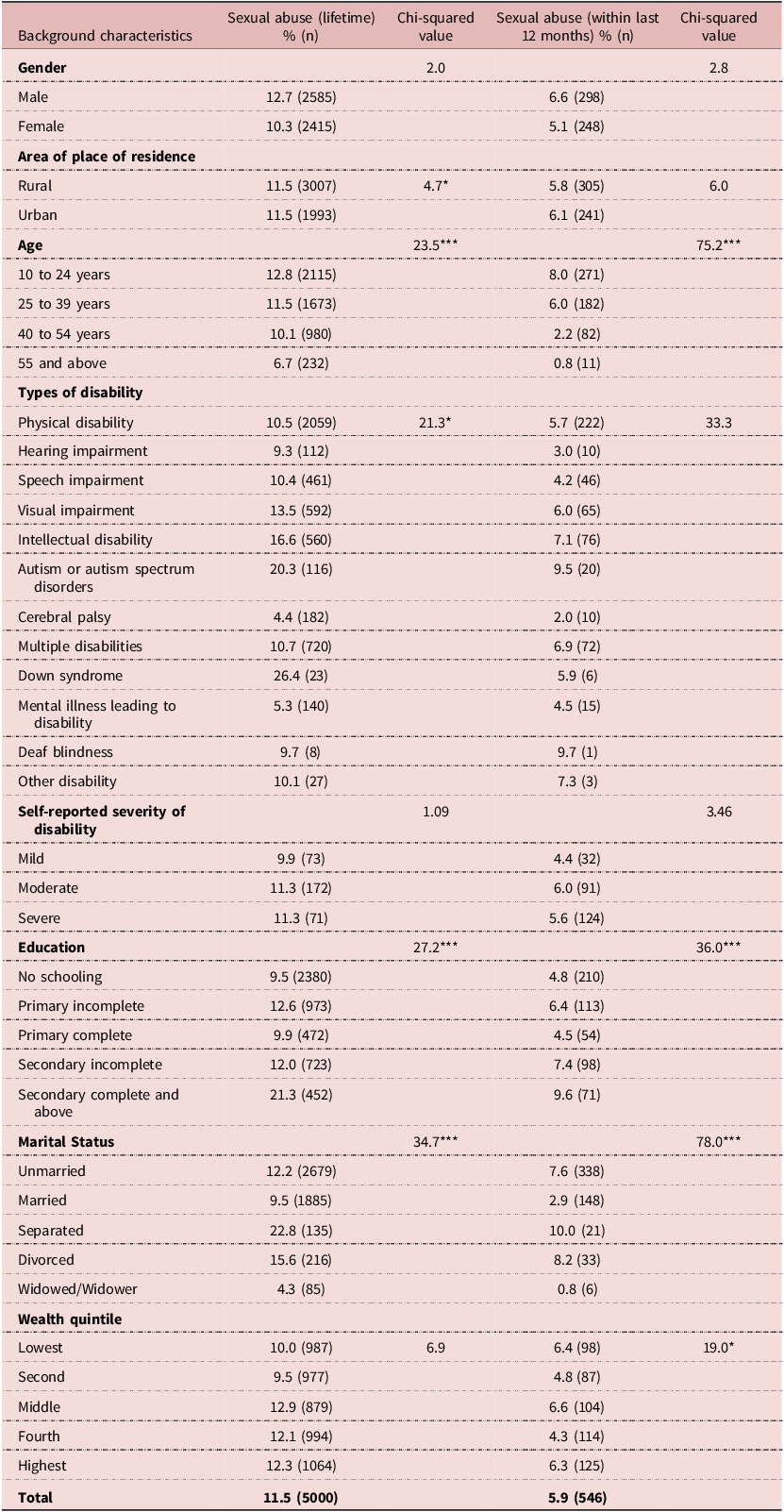
Significance level of the difference: * P < 0.05, ** P < 0.01, *** P < 0.001 (Pearson chi-square test).
Perpetrators of sexual abuse: Of the 546 participants who had experienced sexual abuse in the last 12 months preceding the survey, about two-thirds (60%) heard sexually abusive comments, hateful words, and/or were cruelly mocked by their neighbours. About half of the participants (50.5%) were touched on the genitals without their permission by neighbours (Table 3). Besides, more than half of the participants (59.7%) were forced to see obscene photos by their friends.
Contrary to emotional and physical abuse, it was very challenging to explore any acts or forms of sexual abuse from qualitative participants. Persons with intellectual disability have an inadequate understanding of different forms of sexual abuse. Even when they understand it somehow, their complaints to parents or other caregivers about the perpetrators are often neglected and overlooked. Contrary to the quantitative findings, sexual harassment, touching inappropriately, or forceful sexual intercourse were more commonly experienced by women with disabilities. In one case, a participant with visual impairment was harassed and exploited sexually several times by her male cousin despite being in her own home.
‘I complained to my mother multiple times that my cousin touches my chest…touches my genitalia. But every time she asked me to keep quiet and to protect myself. She blamed me for these acts’. (A 40-year woman with visual impairment)
Fear of exclusion, defamation, societal pressure, and humiliation often result in caregivers ignoring these complaints by the victims. The guardians often silenced or further scolded to save their family’s reputation. Other cases revealed caregivers ignored the crime if the perpetrator was a close family member (brother-in-law/cousin/ brother etc.). Often, the victims are pressured to ‘keep their mouth shut’ and ‘not to disclose the act to anyone’.
A 33-year participant with a physical disability shared the story of her despair. After years of sexual harassment, she was raped at her own house and by her brother, which still gives her awful nightmares and she continued to suffer mental trauma from this incident. She was further threatened when she found the courage to inform her parents.
‘When I told my parents, they were initially shocked but then changed their attitude towards me. They sent my brother to another house within a short distance but never punished him. As a result, he became emboldened and tried to exploit me again sexually’. (A 33-year woman with a physical disability)
One could argue that the importance of a son, sometimes financial dependency on sons when parents get older, and the fact that a woman with a disability is seen as lacking economic value but instead as a burden, makes it very difficult for justice to be served to perpetrators. In addition, fear of humiliation in society if community members discover this was also a factor behind the lack of support from parents.
Additionally, traditional healers sometimes exploit the desperation of families seeking cures for their disabled members. As a 24-year-old woman with an intellectual disability noted, a healer promised to cure her and her sister if they satisfied him sexually, highlighting the exploitation of vulnerable individuals under the guise of treatment. This case underscores the impact of societal beliefs and the lack of protective measures for individuals with disabilities.
Quantitative findings indicated that men with disabilities experience sexual violence more frequently than women with disabilities. However, during ethnographic interviews, men with disabilities were less willing to share their lived experiences of sexual violence. This reluctance may stem from societal perceptions of masculinity that often do not acknowledge male vulnerability, particularly for those with Down syndrome and intellectual disabilities. While discussing sexual violence, a few male participants shared that men with disabilities are often perceived as more vulnerable and less capable of defending themselves, which, along with the fear of humiliation, makes them easier targets for perpetrators – who are often friends or neighbours. Three of the participants with physical disability shared that their private parts were touched inappropriately by their neighbours when they were adolescents. Power dynamics play a significant role, with abusers exploiting the physical or cognitive limitations of these men to exert control or coerce them into non-consensual acts. One of the participants with visual impairment mentioned,
‘No one really cares about inappropriate sexual acts towards us (men with disabilities). They forget that we are also vulnerable and can experience scary acts by close ones. No one cares’. (A 27-year man with visual impairment)
Coping strategies adopted by the study participants
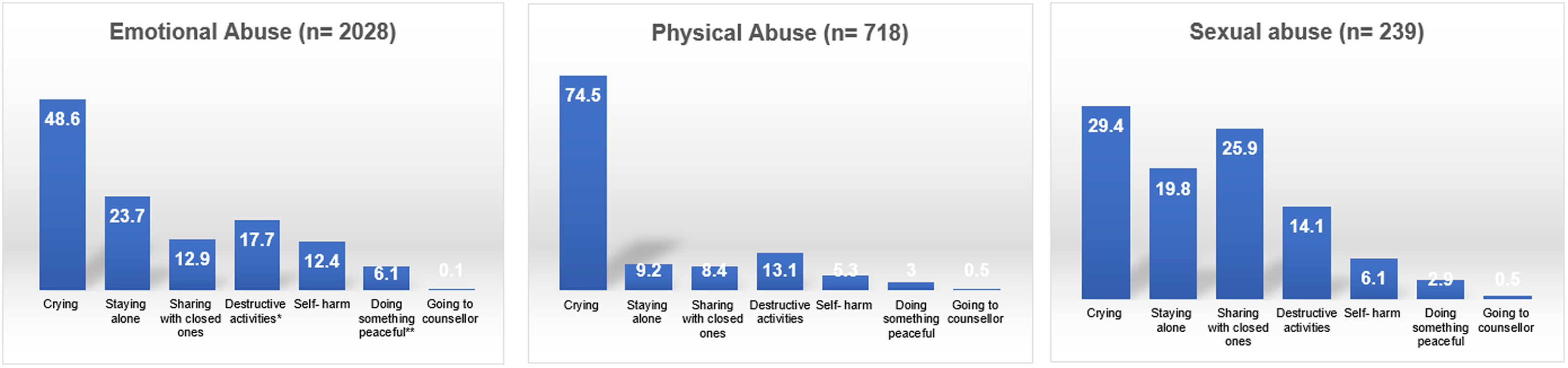
Among 5,000 individuals with disabilities, a significant proportion of 3,352 participants reported experiencing emotional abuse; a considerable number of 1,347 participants admitted experiencing physical abuse; and a notable proportion of 546 participants reported experiencing sexual abuse at least once in their lifetime. Of these 3,352 participants experiencing emotional abuse, 2,028 adopted different coping mechanisms to deal with the abuse. Figure 2 illustrates nearly half (48.6%) of the participants experiencing emotional abuse managed by crying. The figure also indicates that around one-fourth of the participants (23.7%) mentioned seeking solitude as a coping strategy after experiencing emotional abuse. Of those 1,347 participants experiencing physical abuse, 718 adopted various coping strategies. Figure 2 indicates that approximately three-fourths (74.5%) of persons with disabilities felt very much alone and used to cry alone to cope with the physical abuse against them. Among the 546 participants experiencing sexual violence, 239 individuals utilised various coping mechanisms. About 25.9% of the participants shared their experiences with close ones (family members or friends) to cope with the situation.
Coping Mechanisms Adopted by Persons with Disabilities Against Emotional, Physical, and Sexual Abuse. This Figure Presents the Various Strategies Employed by Individuals With Disabilities to Cope With Different Forms of Abuse, Highlighting the Prevalence of Specific Mechanisms Used for Emotional, Physical, and Sexual Abuse Resilience * Tearing Something, Fighting, Scolding, or Quarrelling With Others. ** Praying, Listening to Music. # Multiple Responses.
Qualitative analysis of the coping mechanism revealed differences based on gender and type of disability. Men with disabilities mentioned screaming or getting angry at someone to vent their frustration from abuse, breaking household belongings, and often leaving their homes to get some respite. Whereas women with disabilities mostly cried alone and shut their doors to isolate themselves. A few participants also mentioned that they just calmed down their inner turmoil and shock by listening to music, sharing, if they could, with close friends or siblings, etc., to cope.
However, participants experiencing sexual abuse shared that no coping mechanism could heal what had happened to them. Two of them who were raped mentioned that the only recourse, possibly in the future, was to commit suicide in the face of such torture and injustice.
‘I don’t know how to cope with this. I want to go far away from this house. My own brother raped me, and my parents didn’t say anything. Nothing can help me heal’. (A 24 years woman with physical disability)
Discussion
Previous research conducted in many countries has reported that persons with disabilities are at greater risk of experiencing different types of violence than persons without disabilities (Dammeyer and Chapman, Reference Dammeyer and Chapman2018), and the present study corresponds to that. The prevalence of violence found in this study (lifetime emotional 68.9%, physical 26.6%, and sexual 11.5%) is higher than the prevalence of any type of violence in a lifetime (62%) reported in ‘Current Status of Rights of Persons with Disabilities in Bangladesh: Legal and Grassroots Perspectives 2015’ (BLAST, 2015).
Current study suggests violence against women with disabilities in the country stands at emotional 74.3%, physical 33.2%, and sexual 10.3%. An earlier study conducted among 226 women with disabilities in Bangladesh documented prevalence of at least one act of emotional abuse, physical or sexual violence from their partner to be 84% (Hasan et al., Reference Hasan, Muhaddes, Camellia, Selim and Rashid2014), much higher than the findings from this current study. This might have resulted due to the focus only on women rather than the experience of violence, irrespective of gender. Findings from Women with Disabilities and Development data reported that 96% of women and girls with disabilities face violence in their lifetime (The Daily Star, 2021). However, this estimate was generated from non-legal support organisational data for women with disabilities leading to higher estimations. Bangladesh Legal Aid and Services Trust (BLAST) data revealed prevalence of any forms or acts of violence against women and girls with disabilities to be 78% (BLAST, 2015), which is very close to this current study’s findings, even though the target population varies in gender. This study focused on both males and females. It documented that 12.7% and 6.6% of men with disabilities experienced sexual abuse in their lifetime and in last 12 months, respectively, which is higher than women for the same. This might have been attributed to low reporting of women who fear reporting sexual harassment, abuse, or any other acts of forceful activities due to defamation and social humiliation. There is also a possibility of men experiencing more sexual violence than women due to greater scope and access to socialization and thus being identified as easy targets by the perpetrators.
An earlier study in Bangladesh suggests older women (more than 32 years) and separated groups experience intimate partner violence more than women from other age groups (Hasan et al., Reference Hasan, Muhaddes, Camellia, Selim and Rashid2014). This current study also found that separated participants were more prone to experience emotional violence at least once (77.3%) and within the last 12 months of the survey period (69%) than all other marital statuses. A nationally representative survey among 25,461 women and 21,545 men with disabilities documented that women with hearing impairment were most likely to experience violence, whereas men with physical disabilities were more often violence exposed (Olofsson et al., Reference Olofsson, Lindqvist and Danielsson2015). Current study suggests emotional violence is highest among persons with intellectual disabilities (77.2%), followed by physical abuse among persons with Deaf-blindness (49.7%), and sexual violence among persons with Down syndrome (26.4%).
The perpetrators of different acts of violence range from close family members and intimate partners to neighbours, friends, relatives, and strangers. The current study estimated a lifetime physical violence of 26.6% among persons with disabilities, and in the majority of the cases, the perpetrators were similar to sexual abuse (family members/ relatives and neighbours). ‘Violence against women living with disabilities in South East and Eastern Europe’ reported prevalence of violence by a partner is 75.3% (UNFPA, 2020). Contrary to this finding, the current study suggests that the main perpetrators of emotional, physical, and sexual violence are family members/relatives. This may have been caused due to easy access of the perpetrators within a family that is not unlikely for strangers. Even though women and girls with disabilities are at higher risk of experiencing gender-based and other forms of violence daily, at least some data are available in this area. On the contrary, violence against men with disabilities is scarce both in the country and in the regional context leading to a lack of comparison with the current study findings. This also indicates how men with disabilities are being sidelined from required research even after being equally important and at the risk of violence.
The current study also identified some coping mechanisms adopted by the victims of different acts of violence, mostly crying, staying alone, self-harm, etc. However, a negligible percentage (emotional 0.1%, physical and sexual 0.5%) of the study participants reported having consulted a counsellor to overcome their traumatic experiences and continue to suffer trauma.
Strengths and limitations of the study
This is the first study portraying the overall scenario of violence against persons with disabilities in Bangladesh, with a mixed-method approach, a large nationally representative sample, and a detailed analysis. However, the study has several limitations. Relying upon a government database as a sampling frame, researchers could not include persons with disabilities residing in extremely hard-to-reach areas. The presence of perpetrators of violence at home during a few interviews might have caused underreporting, though privacy was maintained with utmost priority. Getting data on sexual abuse was particularly tricky, and the researchers feel more research with cross-disability types analysis is required in this area for in-depth understanding.
Conclusion
Results from this current study indicate a high prevalence of emotional, physical, and sexual violence among persons with disabilities, irrespective of their demographic characteristics and types of disabilities. These prevalence have several impacts on future policy and research. Firstly, different acts and forms of violence need in-depth exploration, irrespective of the types of disabilities. Secondly, in addition to women and girls with disabilities, men with different types of disabilities need to be prioritised to understand their experiences of violence and the possible reasons behind it. Thirdly, perpetrators of most of the emotional abuses are victims’ close ones, primarily due to a lack of sensitisation around disability and its nature. Government ministries and development organisations working with disabilities should enhance their attention to increasing awareness regarding this. Fourthly, specialised services targeted towards persons with disabilities experiencing violence should be established and monitored with care to ensure easy access. This will help the victims seek support and heal from such traumatic experiences while reducing their suffering. Lastly, a coordinated and collaborative initiative with robust policy implementation is required at the earliest to reduce the prevalence of violence against this marginalised group.
Acknowledgements
The authors express their sincere gratitude to the Ministry of Social Welfare, the Directorate General of Health Services, and the Directorate General of Family Planning of Ministry of Health and Family Welfare for their valuable guidance and constant support during the study. The authors also acknowledge all the research team members and field research assistants for their dedication, commitment, and hard work in collecting data from different regions of Bangladesh for this research.
Funding statement
This study is part of a larger nationwide research that investigated the Sexual and Reproductive Health and Rights of Persons with Disabilities in Bangladesh. The study was funded by the Embassy of the Royal Kingdom of Netherlands in Bangladesh.
Competing interests
The authors declare none.
Ethical standards
This study was part of a more extensive study for which ethical approval was sought from the Institutional Review Board (IRB) of BRAC James P Grant School of Public Health, BRAC University (IRB References no: 2018-044-IR).
Annex 1: Definitions of outcomes
-
1. Violence or abuse: ‘Abuse’ was frequently used as a synonym for violence. Any act of emotional, physical, and sexual abuse (as defined in Table 2.1) perpetrated by an intimate partner (husband, wife; romantic partner), family and relatives (Father, mother, brother, sister, father-in-law, mother-in-law, children, and other relatives), friends, neighbours and other than friends and family (Caregiver, teacher, boss/co-workers/business dealers/customers, transport workers, passers-by, and others) were considered as ‘Violence’.
-
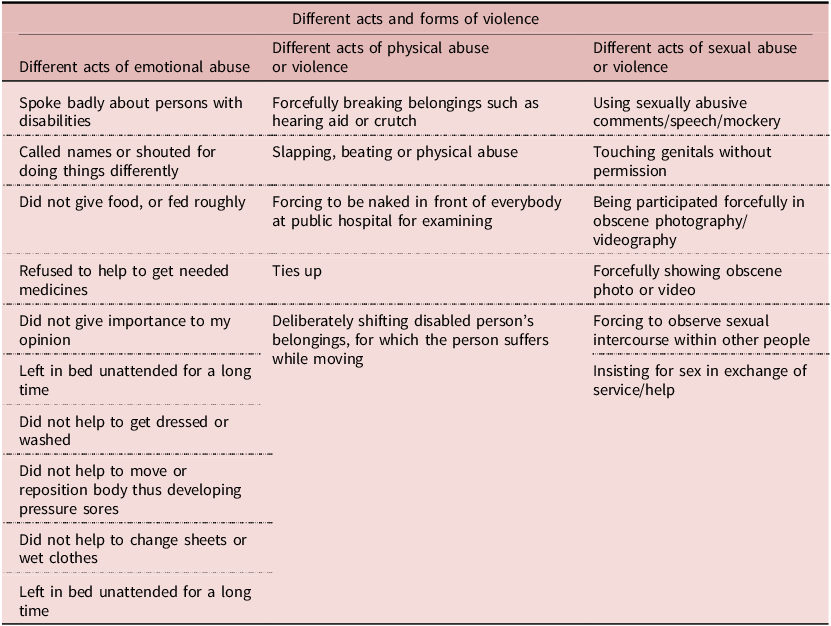
2. Acts and forms of violence/ abuse: The act was considered as emotional/physical or sexual abuse or violence if the perpetrator did any of the following:


 Open access

