


INTRODUCTION
Influenza virus infections are responsible for a substantial health and economic burden during the winter months, especially in high-risk groups [1, Reference Simonsen2]. The main method of preventing influenza-associated morbidity and mortality is considered to be vaccination [1]. In The Netherlands, annual influenza vaccination is recommended for high-risk groups that are indicated by the government on the basis of age and medical indications such as diabetes mellitus and chronic disease of the heart, lungs and kidneys. Since 1996, annual vaccination has been recommended for all people aged ⩾65 years [3]. Children are not routinely vaccinated in The Netherlands. Over the last decade, influenza vaccine uptake in The Netherlands has increased [Reference Tacken4–Reference Tacken6]. Assuming that the influenza vaccine is at least partly effective, it is conceivable that the increase in influenza vaccine uptake has led to a decline in influenza-associated morbidity. However, there are some doubts about the effectiveness of the influenza vaccine in the elderly. A recent meta-analysis showed that vaccination of the elderly living in the community, an important target group for influenza vaccination, was not significantly effective against influenza virus infection, influenza-like illness (ILI) and pneumonia [Reference Jefferson7]. This is at variance with the finding in the same study as well as a more recent meta-analysis which showed that well-matched vaccines significantly reduced hospital admission for influenza and pneumonia and all-cause mortality [Reference Nichol8]. It is, therefore, of interest to examine the long-time trend in influenza-associated morbidity in The Netherlands and the relationship with vaccine uptake particularly with regard to the elderly.
In addition to influenza vaccination, other determinants such as host and virological factors can play a role in trends in influenza-associated morbidity. Host factors include patient's age (the main risk groups are the elderly and children aged <1 year), degree of pre-existing immunity, comorbidity, immunosuppression and pregnancy, as these factors may influence the host immune response [Reference Nicholson, Wood and Zambon9].
Virological factors may also play a role in trends in influenza-associated morbidity. Influenza viruses are continuously subject to antigenic variation of their envelope glycoproteins, thereby evading immune recognition. Influenza virus virulence can be changed by this antigenic drift or by other processes such as exchanges of genetic material by re-assortment. Although data suggest that the H3N2 subtype of influenza virus A causes more severe illness than H1N1 or influenza virus B, factors contributing to the spread and the pathogenesis of influenza virus infections are still incompletely understood [Reference Nicholson, Wood and Zambon9].
There are few studies on trends in influenza-associated morbidity over a long period and little is known about the determinants of these time trends. Therefore, long time trends in ILI were analysed in relationship to age, virological aspects and vaccine uptake. The analysis used clinical and virological data from the Dutch sentinel stations of general practitioners (GPs) and data on vaccine uptake in The Netherlands.
The present study aimed to establish:
• whether there has been a change in ILI incidence in The Netherlands over the last two decades and whether this change is age related; and to quantify these
• whether there has been a change in the proportion of ILI patients positive for influenza virus;
• whether a possible trend in ILI incidence is related to the circulation of different influenza virus subtypes;
• how a possible trend in ILI incidence in people aged ⩾65 years is related to the trend in vaccine uptake in this age group over the last 15 years.
METHODS
Data sources
Various data sources were used including:
(1) Consultation data used to calculate weekly incidence of ILI were provided by the Continuous Morbidity Registration (CMR) of The Netherlands Institute of Health Service Research (NIVEL) which has a network of 45 general medical practitioners throughout The Netherlands (the sentinel stations). This network has been designed to cover about 1% of the Dutch population and to be representative with regard to age, sex, regional distribution, and degree of urbanization [Reference Donker10]. GPs were instructed to use the following definition of ILI: an illness with an acute onset (prodromal stage of ⩽4 days), fever (defined as a rise in rectal temperature to at least 38°C), and at least one of the following symptoms: cough, rhinitis, sore throat, frontal headache, retrosternal pain or myalgia.
(2) Virological data were obtained from respiratory specimens (nose and throat swabs) from randomly chosen ILI patients. These samples were sent weekly by sentinel practices to the RIVM laboratory for examination by means of viral culture and polymerase chain reaction (PCR) in order to determine the proportion of ILI patients positive for influenza virus and the dominant influenza virus subtype per season [Reference van Gageldonk-Lafeber11].
(3) Trends in influenza vaccine uptake were obtained from data provided by Statistics Netherlands (CBS) on the basis of the Permanent Survey on Living Conditions (POLS), an annual survey with a sample size of 10 000 persons [12–14].
GP consultations for ILI
Weekly incidences of ILI during the period 1986/1987 to 2006/2007 were calculated from consultation data from sentinel GPs. Data were broken down in 5-year age groups: the first age group was further divided into <1 year and 1–4 years, and the last age group was ⩾85 years. Incidence was calculated per 10 000 persons per week and per season (defined as the period from week 40 year N to week 39 year N+1) as the number of first ILI consultations divided by the patient population×10 000. The week with the highest ILI incidence in a season was designated the ILI peak week. The 0–4 and ⩾65 years age groups were calculated separately. For the ⩾65 years age group incidences were also calculated separately for each 5-year age group.
Influenza viruses detected in sentinel ILI patients
In the period 1992/1993 to 2006/2007, nose and throat swabs from sentinel ILI patients were tested for the presence of influenza virus type A and type B by means of viral culture and from October 2000 also by PCR. From these data, the proportion of patients sampled shown to be positive for influenza was calculated per season. The 0–4 and ⩾65 years age groups were calculated separately. Characteristics of the patients sampled were taken from the forms provided by the GPs.
The dominant virus (sub)type was determined on the basis of the ratio of number of isolates of the different influenza virus (sub)types obtained from the samples from the CMR sentinel stations of GPs, according to the guidelines of the European Influenza Surveillance Scheme (EISS) [Reference Meijer15].
Influenza vaccine uptake in the general population
Data on influenza vaccine uptake was derived from the POLS for the period 1991–2005. The data were provided for the total population (all people registered in The Netherlands except those living in institutions) aged ⩾16 years stratified in four age groups [12–14]. Because response to the survey was not completely representative, CBS standardized the data by age, sex, marital status, and urbanization. Vaccine uptake by people aged ⩾65 years was calculated as the mean vaccine uptake of the 65–74 and ⩾75 years age groups, standardized by population size for both age groups.
Statistical procedures
Linear regression analysis was used to estimate changes in ILI incidence. The relationship between vaccine uptake and seasonal ILI incidence in people aged ⩾65 years was estimated using Spearman's rank correlation. Furthermore, linear regression was used to estimate the relationship between vaccine uptake and seasonal ILI incidence in people aged ⩾65 years. Statistical analyses were performed using SAS software version 9.1 (SAS Institute, Cary, NC, USA).
RESULTS
Sentinel patient population
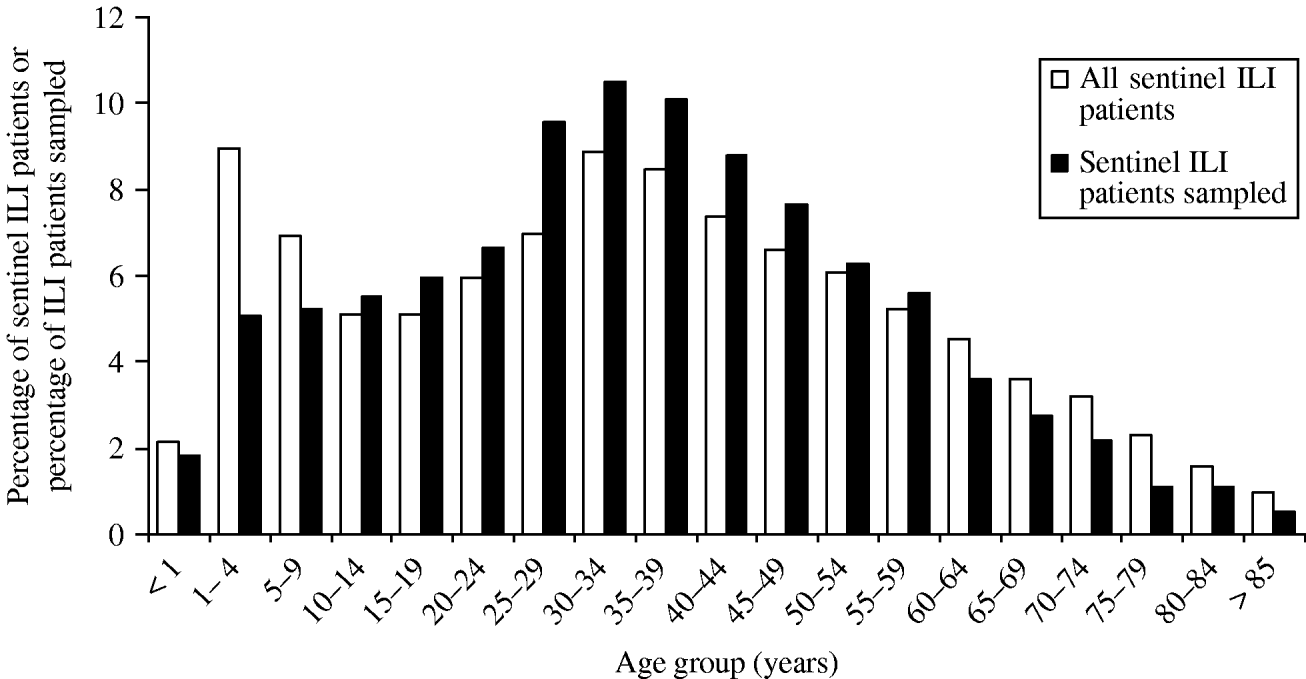
In the period 1986/1987 to 2006/2007, consultations for ILI were reported by a mean of 46 sentinel practices per season, covering a mean population of 128 674 patients (about 0·8% of the mean Dutch population). The age distribution covered by the sentinel network was similar to the population of The Netherlands over the whole period. A mean number of 224 sentinel ILI patients per season were sampled by nose and throat swabbing (range 57 in 2001/2002 to 371 in 1994/1995). The median age of the patients sampled increased slightly over the study period, with the lowest median age in 1993/1994 [31·4, interquartile range (IQR) 19·0–46·6] and the highest in 2003/2004 (40·9, IQR 29·1–55·9). The age distribution of the patients sampled was comparable to that of all sentinel ILI patients, although children aged between 1 and 10 years and people aged >60 years were underrepresented (Fig. 1). The most commonly recorded respiratory symptoms for ILI patients sampled were cough (78·3% of cases) and sore throat (69·1% of cases). The proportion of patients sampled aged ⩾65 years who received influenza vaccination increased from 18·2% in 1992/1993 to 100% in 2002/2003 and thereafter decreased to 68·0% in 2006/2007.
Age distribution of all sentinel influenza-like illness (ILI) patients and sampled sentinel ILI patients, over the seasons 1992/1993 to 2006/2007.
Trends in ILI incidence
The incidence of ILI consultations has declined slightly over the last two decades, for all age groups as a total and for people aged ⩾65 years and was most profound for children aged <5 years (Fig. 2).
Seasonal incidence of influenza-like illness (ILI) consultations per 10 000 persons in the seasons 1986/1987 to 2006/2007, with regression lines, for all age groups as a total, for people aged ⩾65 years and for children aged <5 years.
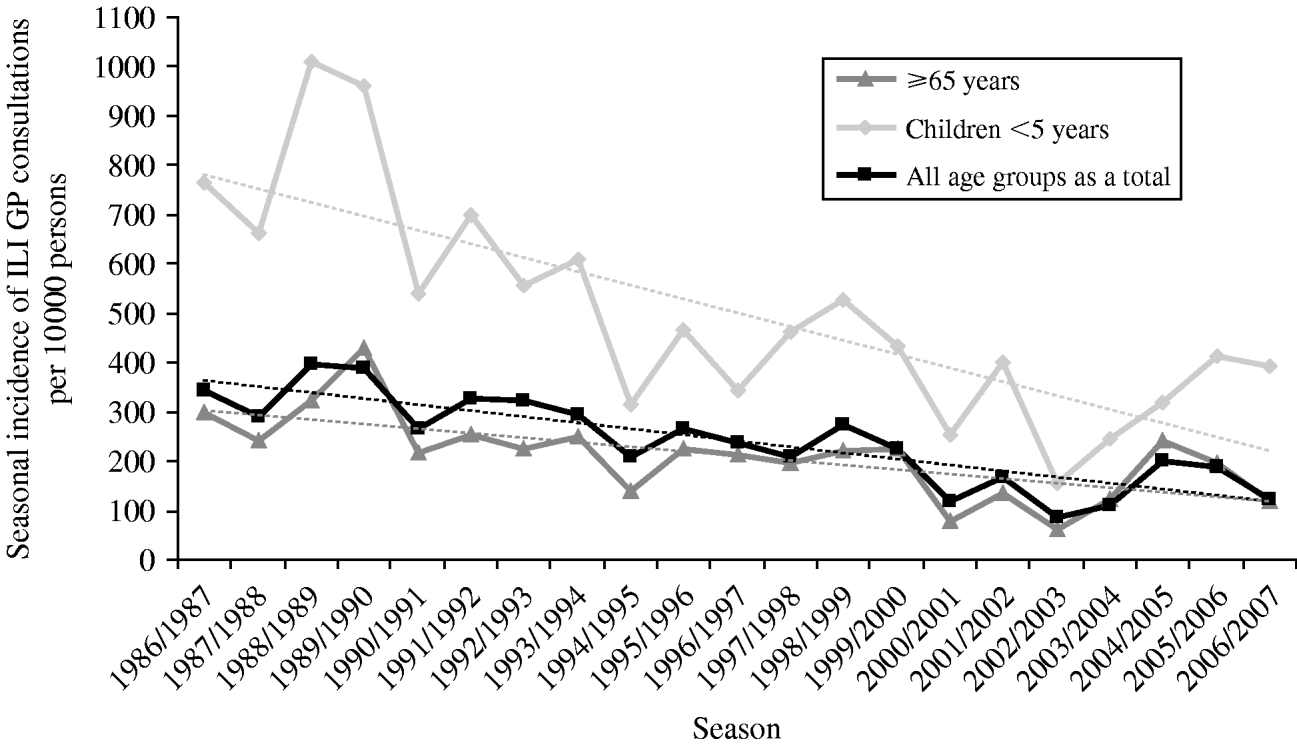
The total incidence per season for all age groups ranged from 112 (2003/2004) to 397/10 000 (1989/1990), and for children aged <5 years from 155 (2002/2003) to 1011/10 000 (1988/1989). Total weekly incidence of ILI consultations during the peak weeks for all age groups ranged from 6·6 (2002/2003) to 57/10 000 persons (1993/1994) and for children aged <5 years from 17 (2000/2001) to 143/10 000 persons (1989/1990). Weekly incidence of ILI consultations for those aged ⩾65 years per 5-year age group were comparable, although a decline in peak incidence over the last two decades for the 65–69 and 70–74 years age groups was observed, whereas the incidence pattern for the three oldest age groups was more or less stable.
Linear regression analysis showed that the seasonal incidence of ILI declined for all age groups as a total, for people aged ⩾65 years and for children aged <5 years by 12·2 (95% CI 8·6–15·9), 9·1 (95% CI 4·4–13·9), and 28·1/10 000 persons per season (95% CI 17·3–39·0), respectively. The total seasonal incidence during ILI peak weeks declined by 1·3/10 000 persons (95% CI 0·3–2·3).
Trends in the proportion of influenza virus-positive specimens and dominant (sub)types
During the seasons 1992/1993 to 2006/2007, the proportion of sentinel samples from ILI patients positive for influenza virus ranged from 15·6% to 57·9%, but did not systematically fall or rise (Fig. 3). There was no clear trend in the percentage influenza-positive samples over this period. The highest percentage of influenza-positive samples was found in 2001/2002.
Percentage sentinel samples from influenza-like illness patients positive for influenza virus by diagnostic method per season. PCR for the detection of influenza viruses started in 2000/2001.

In most seasons, influenza virus A/H3N2 was the most prevalent (sub)type of influenza virus in sentinel ILI patients (Table 1). The seasonal incidence of ILI varied considerably, but no relationship was found between the dominant (sub)type and ILI incidence in that season.
Percentages influenza virus (sub)types detected by isolation and PCR in samples positive for influenza virus from sentinel influenza-like illness (ILI) patients per season (source: RIVM/LIS) and ILI incidences per 10 000 persons per season
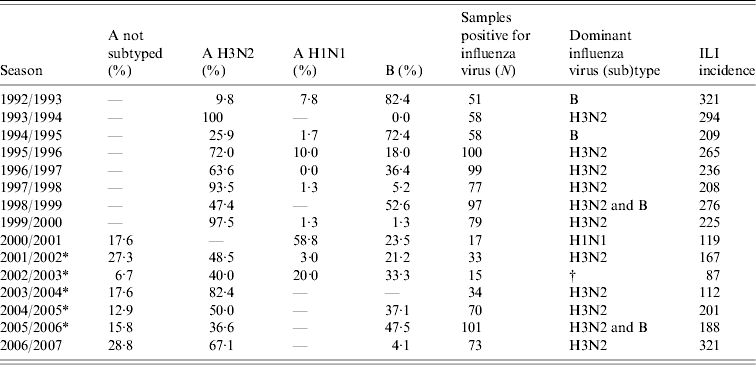
* Influenza A-positive samples in these seasons were only H-subtyped.
† Insufficient influenza-positive samples to determine dominant influenza (sub)type.
Trends in influenza vaccine uptake in the population
Data from Statistics Netherlands showed that the vaccine uptake in the total population aged ⩾16 years increased from 6·5% in 1991 to 22·3% in 2005. The vaccine uptake in people ⩾65 years increased from 28·1% in 1991 to 67·1% in 1997, and from 1998 to 2005 the vaccine uptake of this age group was >70%, remaining more or less stable thereafter (Fig. 4).
Vaccine uptake in people aged ⩾65 years (source: Statistics Netherlands) and seasonal influenza-like illness (ILI) incidence in people aged ⩾65 years (source: CMR sentinel stations).

Trends in ILI in relation to influenza vaccine uptake
The relationship between ILI incidence and vaccine uptake in people aged ⩾65 years is shown in Figures 4 and 5. Linear regression of ILI incidence per season with vaccine uptake in people aged ⩾65 years as a dependent variable showed that ILI incidence declined by 1·7/10 000 persons per percentage vaccine uptake in this age group (95% CI −0·01 to 3·3, P=0·05) per 10 000 persons. The Spearman correlation coefficient was −0·62 (P=0·01).
Scatter plot of influenza-like illness (ILI) incidence per season and influenza vaccine uptake in people aged ⩾65 years.

DISCUSSION
We observed a declining trend in ILI incidence in The Netherlands over the last two decades, a trend most profound in young children. As children in The Netherlands are not routinely vaccinated against influenza, this decline may be virologically driven. Our data are consistent with a similar declining trend in ILI incidence rate observed in the United Kingdom [Reference Elliot and Fleming16]. Such a development is not unexpected in an inter-pandemic period [Reference Elliot and Fleming16]. A declining trend in ILI incidence over the last 20 years was also seen in the elderly. In the period 1991–1997, there was a marked increase in vaccine uptake in this group.
Recently, doubts have been raised about the effect of influenza vaccination on overall mortality [Reference Simonsen17, Reference Rizzo18]. However, a recent study in The Netherlands has shown annual vaccination of the elderly in residential homes to be associated with a reduction in all-cause mortality [Reference Voordouw19]. This raised the question whether there was an association between ILI incidence and vaccine uptake in this group. The ecological analysis presented in this paper suggests ILI incidence to be partly associated with vaccine uptake by people aged ⩾65 years, and to decline by 1·7/10 000 persons per percentage vaccine uptake, which bordered on significance. The decline in ILI incidence was not accompanied by a decline in the proportion of sentinel ILI samples positive for influenza virus. Our ILI incidence data may reflect a tendency of GPs to discourage consultations for acute upper respiratory tract infections in immunocompetent patients not at increased risk for complications of influenza [Reference van Gageldonk-Lafeber11], consistent with Dutch GP guidelines. However, a decline in ILI incidence was also observed in young children, an age group for which there is a more liberal consultation policy. Therefore, the decline in ILI incidence could possibly be attributed partly to changing in influenza viruses. Possibly, antigenic changes occurred in the influenza A/H3N2 virus that was the dominant circulation subtype in most seasons. This process of antigenic drift – forced on the virus by the immune pressure in the human population – enabled the virus to trigger epidemics almost every year, but may have been achieved at the expense of the ‘fitness’ of the virus, the ability of the virus to spread and grow in the human host.
Our study is unique in that it combines clinical, virological and vaccination data in an epidemiological perspective over a long time period. Although we do not know to what extent the participating GPs adhered to the given case definition, throughout the years this has been consistent and thus unlikely to have introduced substantial bias. On the other hand, improvements in diagnostic testing may have resulted in a higher sensitivity of the ILI virological diagnosis in more recent years. Furthermore, in interpreting the results, account should be taken of the original estimates of vaccine coverage as the incidences come from surveys and have confidence intervals around them. This imprecision of estimates may have contributed to the large variation in incidence, even in years of high vaccination coverage. Direct data about vaccine effectiveness per year or a measure of the match between vaccine and circulating strains were not used for this study. The vaccine uptake data used as a proxy assumes consistent vaccine effectiveness, which is unlikely to reflect reality, if only because the match between vaccine and circulating strains varied between seasons. For more detailed analyses of the association between ILI and vaccination, vaccine effectiveness needs to be estimated. Data on ILI and vaccination status of individuals would be helpful in this respect.
The present study analysed the occurrence of influenza and ILI in the general population. For people living in institutions, such as nursing homes, ILI incidence and associated determinants are probably different. Although the elderly in nursing homes are a key risk group for influenza virus infections and its complications, little information is available about this risk group. Establishing a sentinel surveillance system for ILI and influenza in nursing homes would provide the data needed to assess ILI incidence and the associated determinants in this risk group.
In conclusion, data from the long-term sentinel surveillance system in The Netherlands has shown a decline in ILI incidence in the last two decades. Increased vaccine uptake may have contributed to this decline, although other potentially contributing factors not assessed in this analysis cannot be excluded, such as diminished fitness of the influenza viruses as a consequence of antigenic drift in recent years, or changes in consulting behaviour. The high ILI incidence in children suggests vaccination of children at increased risk for complications should be considered more often. Despite the decline in ILI incidence over the last two decades, alertness to epidemiological and virological changes in ILI should continue, especially for the emergence of new influenza virus strains.
ACKNOWLEDGEMENTS
We thank all sentinel GPs and their patients for participating in the study, and the NIVEL and the RIVM Departments EPI/CIE and LIS for their numerous contributions to this study over the years.
DECLARATION OF INTEREST
None.



