

Introduction
In the last two decades, Colombia has witnessed strong mobilizations opposing sexual and reproductive rights and the rights of the LGBTIQ+ population, driven by what is known as “anti-gender activism” (Kuhar and Paternotte Reference Kuhar and Paternotte2017). While these efforts have failed to reverse the major legal advances achieved by feminist and LGBTIQ+ movements in favor of rights such as abortion and equal marriage, their persistence reveals that this is not a passing backlash. Anti-gender activism in Colombia and other countries in Latin America has demonstrated a significant capacity for adaptation and renewal, evidenced in the expansion and consolidation of its bases (Gianella Reference Gianella, Bergallo, Jaramillo Sierra and Vaggione2018; Gil Hernández Reference Gil Hernández2020), the addition of new targets and demands to its agenda (Corrêa Reference Corrêa2022; Tabbush and Caminotti Reference Tabbush and Caminotti2020), and the evolution of its discursive repertoires (Moragas Reference Moragas and Corrêa2020; Vaggione Reference Vaggione2022). The transformations in its mobilization structures, demands, and collective action frames have been instrumental in sustaining anti-gender mobilization to the present day.
This article analyzes the discursive dimension of this transformation in Colombia. While major anti-gender campaigns in the 2000s and 2010s largely organized around discourses such as “culture of death” and “gender ideology,” both originally articulated within the upper hierarchy of the Catholic Church (Corredor Reference Corredor2019; Gil Hernández Reference Gil Hernández2020; González Vélez and Castro Reference González Vélez, Castro, González Vélez, Castro, Burneo Salazar, Motta and Amat y León2018; Serrano Amaya Reference Serrano Amaya2019; Vaggione Reference Vaggione2012), our analysis reveals a recent shift in their discursive repertoires. This shift is reflected in the emergence of two new collective action frames aimed at targeting feminist and LGBTIQ+ agendas and activists: anti-woke and anti-progre. Anti-wokeism originated in US right-wing circles as a rhetorical strategy to challenge a broad range of progressive demands, including those related to racial justice, gender equality, LGBTIQ+ rights, and environmental policies addressing climate change. Over the past five years, this frame has spread to several countries beyond the United States (Cammaerts Reference Cammaerts2022; Silva Reference Silva2024; Paternotte and Deleixhe Reference Paternotte and Deleixhe2024; Paternotte et al. Reference Paternotte, Ana, Datta and Gustin2024), including Colombia, where, we show it has become a salient tool for contesting gender equality and LGBTIQ+ rights. In contrast to anti-woke’s foreign origins, the anti-progressive discourse is more deeply rooted in Latin American political culture (Restrepo Reference Restrepo2024; Stefanoni Reference Stefanoni2023). Despite their distinct origins, both frames are currently being employed to mobilize opposition against gender equality and sexuality policies.
The rise of anti-woke and anti-progre as new rhetorical strategies among anti-gender activists highlights the dynamic nature of the interpretive work in which social movements engage. As the literature on framing processes has shown, social movements actively work on the production, maintenance, and diffusion of collective action frames—defined by Benford and Snow (Reference Benford and Snow2000, 614) as “action-oriented sets of beliefs and meanings that inspire and legitimate the activities and campaigns of a social movement organization.” Furthermore, as these authors point out, framing is an inherently dynamic process, as collective action frames are continually being formulated, transformed, and replaced by social movements themselves. In Colombia, although anti-woke and anti-progre frames have not displaced previous ones—or at least not so far—their growing presence in public discourse shows an ongoing transformation in the framing work of anti-gender activism.
In this article we focus on the appropriation of anti-woke and anti-progre frames by anti-gender activists and the tactics that have contributed to their diffusion in Colombia. To examine this process of appropriation and diffusion, we analyze content produced and circulated in digital spaces—including social media platforms and websites—by a group of 128 social, political, and religious actors who have participated in anti-gender efforts in Colombia in recent years. Based on a qualitative analysis of the discourses and repertoires employed by these actors, we propose the existence of two pivotal tactics for the diffusion of anti-woke and anti-progre frames. The first is social media platforms, like X (formerly Twitter), Instagram, and Facebook. In these digital spaces, and particularly on X, we identify a subset of influential actors who are actively using the anti-woke and anti-progre frames to spread content against feminist and LGBTIQ+ movements, and to mobilize their followers to oppose the rights and policy reforms advocated by them.
In addition to social media, a second key tactic for propagating these discourses are the educational programs coordinated by some actors, which include formal and informal courses, online conferences, workshops, and book clubs. Through this “training infrastructure” (Paternotte et al. Reference Paternotte, Ana, Datta and Gustin2024), these actors seek to socialize participants into a wide variety of anti-gender content, among which anti-wokeism and anti-progressivism are central. These programs promote narratives portraying woke as “the enemy to be defeated” and equip participants with arguments and rhetorical tools intended to advance a “cultural battle” against progressivism and its pro-gender and pro-LGBTIQ+ rights agenda. Furthermore, we show that these programs have strong potential to expand anti-gender activism by promoting training opportunities and the formation of transnational networks.
This article contributes to the literature on anti-gender mobilization and particularly to research interested in tracing both continuities and changes within this mobilization. From the early anti-gender campaigns of the 2000s to the present, anti-gender activism has undergone significant changes that have allowed it to maintain its relevance. In this article we show that one such transformation involves the updating of its discursive repertoires, notably through the adoption of anti-woke and anti-progre framings. Our study sheds light on this ongoing transformation by examining the actors and two key tactics that have driven the appropriation and diffusion of these discourses. We focus on two critical arenas—digital and educational—that hold great potential for fueling mobilization efforts in contemporary Latin America. We show that these mobilization networks are varied, and that their frames but also their composition is changing. Earlier stages of anti-gender mobilization in Colombia had religious actors as pivotal forces. Religious adjacent actors continue to be important, but new, more secular forces with significant digital clout are vital nodes—both within their own online spaces and through their involvement in educational initiatives and other mobilization repertoires.
We also make an empirical contribution by mapping and describing the digital network and the new and old actors interweaved in anti-gender mobilization efforts in Colombia on X. An extensive literature has studied anti-gender backlash and mobilization in Colombia and Latin America, but focusing mostly on protest, legal mobilization, and other physical mobilization repertoires. Ours is a first step in what should be bigger efforts to study and understand the digital anti-gender ecosystem.
Discursive Transformations in Anti-gender Mobilizations
The discursive strategies of anti-gender activism have been a central focus in the literature on this topic. Existing research shows that anti-gender actors have constantly renewed and adapted their discursive repertoires to new times and social contexts through a variety of tactics, including the “strategic secularism” (Vaggione Reference Vaggione2022) or “aggiornamento” (Gil Hernández Reference Gil Hernández2020) of their narratives, and the use of “rights framejacking” (Payne Reference Payne, Payne, Zulver and Escoffier2023) to appropriate the human rights language long employed by progressive movements.
A significant portion of this research has paid particular attention to the efforts of these actors to develop and propagate collective action frames. One of the most widely studied frames is that of gender ideology (Bárcenas Barajas Reference Bárcenas Barajas2022; Corrêa Reference Corrêa2022; Corrêa et al. Reference Corrêa, Paternotte, House, Aggleton, Cover, Logie, Newman and Parker2024; Kuhar and Paternotte Reference Kuhar and Paternotte2017; Vaggione Reference Vaggione2022). Studies on gender ideology demonstrate that this discourse, initially developed within the Catholic Church in the 1990s, spread to various regions worldwide in subsequent decades, becoming an important rhetorical strategy to challenge “emancipatory conceptions of gender, sex, and sexuality” (Corredor Reference Corredor2019, 617), as well as the rights-based demands of feminist and LGBTIQ+ movements. Scholars have argued that part of its effectiveness lies in its capacity to function as a “symbolic glue” (Kováts and Põim Reference Kováts and Põim2015) able to connect issues that are “not easily linkable” (Moragas Reference Moragas and Corrêa2020, 168), such as abortion, same-sex marriage, and sex education. Furthermore, as a symbolic glue, this frame also allows a wide range of religious, political, and social actors to unite under the anti-gender cause despite their differences (Corrêa et al. Reference Corrêa, Paternotte, House, Aggleton, Cover, Logie, Newman and Parker2024; Serrano Amaya Reference Serrano Amaya2019).
More recently, some studies have begun to trace the emergence of new rhetorical strategies aimed at opposing gender and sexuality policies. A portion of this research has focused on the rise and diffusion of anti-woke discourse (Cammaerts Reference Cammaerts2022; Paternotte and Deleixhe Reference Paternotte and Deleixhe2024). These studies show that the term woke, originally coined by the US Black movement in its struggle against racial discrimination, was strategically repurposed by right-wing groups to derogatorily refer not only to claims for racial justice but to nearly any progressive demand for social justice, including those related to gender equality and LGBTIQ+ rights. Studies have already documented the diffusion and appropriation of this rhetorical strategy beyond the United States, in countries such as Brazil (Silva Reference Silva2024), France (Laquièze Reference Laquiezè2024), and Belgium (Dhoest and Paulussen Reference Dhoest and Paulussen2024; Paternotte et al. Reference Paternotte, Ana, Datta and Gustin2024), showing that social media platforms like X and Telegram have played a crucial role in its rapid spread. This research suggests that the rise of anti-woke discourse across different regions is linked to far-right forces ground globally.
In a similar vein, another key rhetorical strategy that scholars—particularly those studying the contemporary Latin American right—are beginning to document is anti-progressivism (Restrepo Reference Restrepo2024; Saferstein Reference Saferstein2024; Stefanoni Reference Stefanoni2023). This research emphasizes that anti-progressive discourse is largely promoted by far-right and reactionary libertarian groups. While most do not explicitly link the anti-progre rhetoric with anti-woke discourse, their findings reveal significant similarities: like anti-woke discourse, anti-progressivism is deployed to delegitimize causes associated with social justice, including policies promoting gender equality and LGBTIQ+ rights.
The prominent role of these new discourses in conflicts surrounding gender and sexuality policies suggests a renewal of discursive strategies within anti-gender activism that warrants further attention. While the actors behind these new discourses, the strategies used to propagate them, and their potential effects may share similarities with the gender ideology phenomenon, there are also important differences that need to be better understood. Particularly in Latin America, scholarship on this topic remains scarce. Indeed, while there is a vast body of research on the appropriation, circulation, and impacts of the gender ideology frame, the growing prominence of anti-woke and anti-progre discourses in the region—especially within anti-gender activism—remains largely unexplored. This article aims to address this gap by examining the dynamics behind their rise in Colombia.
We build on the social movement literature on cultural framings—also known as the framing process approach (McAdam et al. Reference McAdam, McCarthy and Zald1996)—to examine shifts in the discursive repertoires of anti-gender activism. Within the field of gender and sexuality studies, research on Latin America has employed this theoretical approach to examine how feminist and LGBTIQ+ movements, as well as anti-gender mobilizations, frame their claims and how these frames shape mobilization strategies and outcomes. Many of these studies demonstrate that frames are dynamic, evolving over time in response to factors such as political opportunities (Franceschet Reference Franceschet2004; Noonan Reference Noonan1995), cultural opportunities (Borland Reference Borland2004), and the specific goals pursued (Corrales Reference Corrales, Bosia, McEvoy and Rahman2019).
While much of this scholarship emphasizes contextual or external factors, the work of Sutton and Borland (Reference Sutton and Borland2013) suggests that framing processes are also shaped by the internal diversity of social movements. Their study of the collective action frames articulated by women’s organizations in Argentina to advocate for abortion rights demonstrates the deployment of multiple frames—some more radical than others—which complement and compete with one another, reflecting the activists’ “distinct political sensibilities, analyses, and interests” (p. 196).
We follow this line of inquiry, stressing the importance of examining the relationship between framing processes and mobilization structures. While a substantial body of work already shows that “[f]raming and opportunities are tightly intertwined,” as Borland (Reference Borland2004) puts it, less attention has been paid to how movement composition influences the articulation and transformation of collective action frames. We address this relationship by focusing on three aspects identified in the framing literature as relevant for understanding the functioning and influence of frames.
First, we focus on relevant features of the frames deployed within anti-gender activism. Specifically, we analyze the content of the frames themselves to examine how they identify problems and assign responsibility, their level of flexibility and inclusivity (or rigidity and exclusivity) in articulating themes and ideas, and their interpretive scope (Benford and Snow Reference Benford and Snow2000).
Second, we focus on the individuals and groups who act as frame articulators. Building on the well-established idea that social movements comprise diverse actors with varying backgrounds, values, and ideological orientations (McAdam et al. Reference McAdam, McCarthy and Zald1996, Reference McAdam, Tarro and Tilly2001), we identify key actors within anti-gender activism who are instrumental in shaping emergent discourses. Equally important is the credibility of actors functioning as frame articulators. As scholars have argued, frames are more likely to resonate and persuade when their proponents possess high status, are perceived as trustworthy, or are regarded as experts on the relevant issues (Benford and Snow Reference Benford and Snow2000; Jaramillo Sierra and Alfonso Sierra Reference Jaramillo Sierra and Alfonso Sierra2008). In this article, we assess the credibility of these actors by analyzing their influence within the digital sphere—particularly on X, a platform that has become pivotal for the rapid and widespread diffusion of discourse.
And third, we examine the channels and tools that have facilitated the circulation of these emerging discourses. Prior research on the gender ideology frame showed that its diffusion in Colombia and other Latin American countries occurred through a variety of avenues, including religious institutions and doctrinal texts, protest events, institutional statements, and public policies (Bárcenas Barajas Reference Bárcenas Barajas2022; Corredor Reference Corredor2019; López Pacheco Reference López Pacheco2021). More recently, scholars have highlighted the crucial role of digital platforms and social media in amplifying gender ideology (Gil Hernández Reference Gil Hernández2020; Morán Faúndes and Vaggione Reference Morán Faúndes, Vaggione and Bárcenas Barajas2022). Building on this body of work, this article explores the diffusion of anti-woke and anti-progre frames by focusing on two tactics that have received comparatively less scholarly attention in the Colombian context: social media and the educational programs promoted by anti-gender actors.
Methodology Footnote 1
We analyze the discursive repertoires of anti-gender mobilization in Colombia through a case study of a set of social, political, and religious actors who lead or participate in anti-gender campaigns. Our starting point for mapping relevant actors was the Right-against-Rights database (RARs database 2025), Footnote 2 which identifies right-wing actors mobilizing in Colombia against the rights of different marginalized and excluded groups, such as women, LGBTIQ+ people, indigenous groups, racial minorities, and migrants. This database identifies 114 RARs actors, active between 2023 and 2024, and classifies them into seven categories: formal and informal NGOs, religious leaders and groups, politicians, digital news portals, social media influencers, academic actors and institutions, and service organizations. The database shows that the vast majority of RARs actors (112 in total) have engaged in promoting anti-gender content, activities, or campaigns. We focus on these 112 RARs actors to examine their discursive repertoires and their strategies to diffuse them.
In order to address their framing work, we examined the anti-gender content produced and circulated by these actors in online spaces between 2019 and 2025. Specifically, we focused on three major social media platforms where these actors are particularly active: X, Facebook, and Instagram. Additionally, for the 62 actors who maintained their own websites, we reviewed these sites as well. The collected content was analyzed to identify the narratives and collective action frames promoted by these actors. Through this process, we identified a range of discursive repertoires. Given our interest in tracing the discursive transformations shaping anti-gender activism, our analysis paid particular attention to those frames and narratives that appeared to be novel. In particular, we focused on the deployment of anti-woke and anti-progre frames and the narratives associated with them.
In addition to examining the content of the frames employed, we conducted a network analysis to explore how RARs actors are interconnected. Given the critical role that relational ties play in diffusion processes (Soule and Roggeband Reference Soule, Roggeband, Snow, Soule, Kriesi and McCammon2018), network analysis offers a valuable method for uncovering patterns in the spread of anti-gender content among these actors. For this purpose, we focused on X, where we sought to identify “communicative linkages” (Tronina Reference Tronina2024) by examining interactions based on retweets—that is, instances in which one actor amplifies another’s content by reposting it.
The network analysis conducted in X involved the following steps. First, we identified the actors with active accounts on X. We found that 78 actors were active on X, with some of them having more than one account, resulting in a total of 96 accounts. Second, we reviewed each account and recorded retweets originating from other RARs actors. Given our interest in anti-gender discourse, we only recorded retweets containing such content. The time frame for this review was one year: from October 17, 2023 to October 17, 2024. We conducted this review manually since by the end of 2024 (when we began collecting data) X had implemented changes to its usage policies that included blocking free access for academic purposes to its Application Programming Interface. Footnote 3
Third, we broadened the scope of our review to assess whether RARs actors retweeted anti-gender content originating from actors not originally registered in the RARs database. Specifically, we included retweets coming from non-RARs actors who met one of the following two criteria: i) being state actors (e.g., congress members, deputies, councilors, and government officials), or ii) being influencers on X, which we defined as users with 10,000 or more followers at the time of the review. This expanded review allowed us to build a more comprehensive, egocentric network Footnote 4 of actors involved in the diffusion of anti-gender content on X: 110 actors with 128 accounts on X.
Finally, with the collected data on actors and retweets we used UCINET software to conduct network analysis and examine the structure of communicative linkages among actors, the strength of these connections, and the most influential actors in the network. Additionally, we used the collected retweets to supplement our analysis on the discourses propagated by anti-gender actors. Together, this network and the content diffused by anti-gender actors on social media platforms and their own websites form the empirical basis for the analysis presented below.
Emerging Frames in Colombia’s Anti-gender Activism: New Narratives and Targets
Opposition to women’s rights and the rights of the LGBTIQ+ population has a long-standing history in Colombia. Several studies suggest that this opposition intensified during the first decade of the twenty-first century, driven by the ONGization of religious-conservatism activism, which led to the emergence of various pro-life and pro-family organizations (Vaggione Reference Vaggione2012), and strengthened their capacity to coordinate collective actions, including large-scale public demonstrations (Corredor Reference Corredor2019; Gil Hernández Reference Gil Hernández2020; González Vélez and Castro Reference González Vélez, Castro, González Vélez, Castro, Burneo Salazar, Motta and Amat y León2018; Lehoucq Reference Lehoucq2021; Morán Faúndes Reference Morán Faúndes2023; López Pacheco Reference López Pacheco2021; Ruibal Reference Ruibal2014). Following the notion of waves used by scholars such as Corrêa et al. (Reference Corrêa, Paternotte, House, Aggleton, Cover, Logie, Newman and Parker2024) and Morán Faúndes (Reference Morán Faúndes2023) to identify changes in anti-gender or neoconservative activism in Latin America, we suggest that three major waves of anti-gender mobilization have taken place in Colombia throughout this century, each marked by notable shifts in discursive strategies.
Beginning in the mid-2000s, the first wave of anti-gender activism centered on abortion as its primary target. While opposition to abortion was not new, it escalated following the Constitutional Court’s 2006 ruling (C-355/06) that liberalized abortion law (Ruibal Reference Ruibal2014). Studies such as Ospina’s (Reference Ospina Celis2025) on the crusade against abortion show that the “culture of death” discourse emerged as a key collective action frame during this period. Originally articulated by the Vatican in its 1995 Evangelium Vitae encyclical to denounce what it portrayed as a “culture against life” promoted by feminists and other groups advocating for reproductive rights and issues such as euthanasia, this frame was adopted in its two forms: “culture of death” and “culture of life” (Vaggione Reference Vaggione2012). In Colombia, as in other Latin American countries, religious and pro-life actors have relied heavily on this framing to mobilize opposition to abortion (Ospina Reference Ospina Celis2025; Vaggione Reference Vaggione2012).
By the mid-2010s, a second wave of anti-gender activism gained momentum, primarily targeting LGBTIQ+ rights. Although legal advances for LGBTIQ+ people had been underway since the late 1990s (Jaramillo Reference Jaramillo2024), it was during this period that an organized opposition mobilized against them on a large scale. As several scholars have argued, the “gender ideology” frame played a pivotal role in these mobilizations (Corredor Reference Corredor2019; Gil Hernández Reference Gil Hernández2020; González Vélez and Castro Reference González Vélez, Castro, González Vélez, Castro, Burneo Salazar, Motta and Amat y León2018; Serrano Amaya Reference Serrano Amaya2019). These studies show that Catholic leaders, Evangelical pastors, and politicians from both conservative and religious parties strategically deployed this frame to promote various anti-gender campaigns. These included a referendum initiative to ban adoption by LGBTIQ+ individuals (which the Constitutional Court permitted in 2015), and a campaign against a government program aimed at combating discrimination against LGBTIQ+ students. While the anti-gender campaigns of those years ultimately failed to reverse the significant rights gains achieved by LGBTIQ+ people, they were very successful in embedding the gender ideology narrative into the everyday vocabulary of public discourse (Gil Hernández Reference Gil Hernández2020).
Beginning roughly in 2020, we identify the emergence of a third wave of anti-gender activism. At the regional level, the third wave is characterized by the involvement of actors who self-identify with or closely align with right-wing and libertarian agendas (Morán Faúndes Reference Morán Faúndes2023). This is also true in Colombia, where this third wave is also a response to deeper legal reforms and legislative initiatives supporting LGBTIQ+ and reproductive rights. For example, anti-gender mobilizations emerged in response to a new Constitutional Court ruling (C-055 of 2022) that further liberalized abortion de-criminalizing it up to the 24th week, as well as a subsequent government directive for its implementation. Anti-gender actors also mobilized against bills seeking to expand sex education, ban conversion therapy for LGBTIQ+ minors, and guarantee trans people—particularly minors—access to gender-affirming medical care. In terms of discursive repertoires, while earlier frames of the culture of death and gender ideology remain relevant during this third wave, our analysis reveals a new shift in discourse marked by the rise of anti-woke and anti-progre frames.
This article shows that these emerging frames have gained prominence in recent campaigns and online spaces targeting both women’s and LGBTIQ+ rights. Actors who articulate these new frames often reproduce many of the ideas and arguments previously employed by anti-gender activists. For example, much like the concept of gender ideology, wokeism and progressivism are portrayed as ideological threats to the family, children, the “natural” gender order, and, more broadly, to the traditional values of Western society. While there are clear continuities between previous discourses and the emerging anti-woke and anti-progre frames, we argue that these are not merely new labels to attack the same old things. On the contrary, these emerging frames introduce novel elements into anti-gender activism that may carry significant implications for the rights of women and LGBTIQ+ populations. Here, we focus on the new narratives and targets introduced by these discourses. Next, we will examine the actors and strategies behind their rise.
In terms of emerging narratives, the anti-woke and anti-progre frames have introduced new themes into anti-gender mobilizations. Two that have gained significant traction in public discourse are “cultural battle” and “Agenda 2030.” The former, originally rooted in the US context to describe ideological conflicts dividing its population on complex moral issues, has been appropriated in Colombia to serve a similar diagnostic function. Anti-gender actors have strategically employed the cultural battle theme to frame an ideological confrontation between two opposing camps: on one side, those who defend the family, life, Christianity, and “common sense”; on the other, those perceived as threatening these values, including feminists, LGBTIQ+ activists, progressives, and the political Left. Furthermore, this theme serves a function that, following Benford and Snow (Reference Benford and Snow2000, 617), could be described as motivational insofar “as it provides a ‘call to arms’ or rationale for engaging in ameliorative collective action.” Indeed, anti-gender actors often resort to expressions such as waging the cultural war or let’s fight the cultural war together to urgently call for social mobilization.
The “2030 Agenda,” which refers to the United Nations General Assembly’s action plan to promote sustainable development worldwide, has emerged as another central theme within anti-woke and anti-progre discourses. To be clear, the United Nations and other international organizations, such as the Organization of American States, have long been targeted by anti-gender actors, as demonstrated in previous studies (Moragas Reference Moragas and Corrêa2020; Morán Faúndes Reference Morán Faúndes2023). What is new is the articulation of this opposition through the notion of Agenda 2030, which shifts the focus from the institutions to the policies it promotes on issues that include, but go beyond, gender equality and sexual and gender minorities. Within this narrative, the 2030 Agenda is portrayed as an extensive indoctrinating program that aims to impose progressive ideology worldwide through policies promoting gender ideology, abortion, and—in the words of the think tank Conciudadanos (Fellow citizens)—‘radical environmentalism” (@Cconciudadanos, March 5, 2025). From this perspective, both the agenda and its perceived promoters—i.e. UN agencies, feminists, LGBTIQ+ activists, environmentalists and the political Left—are seen as existential threats to the social order. For instance, the Instituto de Investigación Social Solidaridad (Institute for Social Research Solidarity), a conservative, pro-Catholic academic center, describes the 2030 Agenda on its website as the “17 goals to dominate us all” (https://socialinvestigation.org). Through this framing, anti-gender actors associate the promotion of LGBTIQ+ rights and sexual and reproductive rights with a colonizing project that seeks to arbitrarily impose itself in different countries. At the same time, it becomes a key rhetorical device in the service of the anti-globalism promoted by the far-right.
The anti-woke and anti-progre frames have also broadened the scope of anti-gender activism by targeting new issues. As previously mentioned, anti-gender activism in Colombia primarily used the culture of death and gender ideology frames to challenge abortion and LGBTIQ+ rights. The anti-woke and anti-progre frames, however, seek to expand this agenda by introducing new targets that were previously overlooked or not explicitly articulated. Among these are several legal gains achieved by the women’s movement in recent decades. For example, anti-woke and anti-progre rhetoric is being used to challenge gender mainstreaming policies aimed at promoting greater equality between men and women. Consequently, various affirmative action policies such as quota laws, diversity, equity and inclusion initiatives, and legislation strengthening the prosecution of gender-based violence (e.g., the so-called feminicidio laws), are being framed as part of a woke/progre agenda.
A clear example of this can be found in a series of articles published by opinion writer Luis G. Vélez Cabrera. Vélez Cabrera characterizes these policies, along with others aimed at racial minorities and LGBTIQ+ individuals, as symptoms of the “woke virus,” from which “Colombia has not been immune” (La Silla Vacía 2024a). Drawing on arguments commonly advanced by anti-woke articulators, he portrays these policies as “arbitrary” and “extravagant” (La Silla Vacía 2025), claiming that they are discriminatory, violate the principle of equality, foster a victimhood mentality, and promote mediocrity by prioritizing identity categories over merit in hiring processes. As this example illustrates, the anti-woke and anti-progre frames are being used not only to politicize and contest the same old issues—such as LGBTIQ+ and reproductive rights—but also to challenge new ones, including affirmative action policies that have enjoyed support in Colombian society, even across the political spectrum.
Actors and Tactics Behind the Diffusion of Anti-Woke and Anti-Progre Frames
Anti-gender activism encompasses a diverse array of religious, political, and civil society actors. While these actors often collaborate and coordinate around anti-gender campaigns, social movement scholars have noticed that activists tend to prioritize certain repertoires and frames over others, depending on factors such as their preferences and resources (McAdam et al. Reference McAdam, Tarro and Tilly2001; Sutton and Borland Reference Sutton and Borland2013). As a result, not all actors employ the same repertoires and discourses. In this section, we illustrate this point. We show that, within anti-gender activism, there is a specific group of actors who are playing a proactive role in articulating and spreading anti-woke and anti-progre discourses: far-right politicians, online news portals, influencers, think tanks, and libertarian activists. We focus on two key tactics through which these actors advance their narratives: online activism on X and educational programs.
The Anti-Gender Digital Network on X
The RARs database reveals that social media platforms have become a central tool for mobilizing anti-rights discourses, promoting anti-gender campaigns, and circulating misinformation and offensive content targeting feminists and LGBTIQ+ activists. Among the various platforms used by these actors—including X, Facebook, Instagram, and TikTok—X stands out as the most politically relevant in the Colombian context. Government officials, candidates, government agencies, politicians, NGOs, journalists, and media are active on X, where they share information, post updates and content, and, crucially, where political debates and public conversations take place (Gamboa et al. Reference Gamboa, Botero and Zanotti2024). This political centrality positions X as a crucial space for the articulation and diffusion of frames within public debates.
In Figure 1 we illustrate the egocentric network Footnote 6 of anti-gender actors that have an active profile on X: 128 accounts in total. Each node in the network represents an actor-account and the edges between them illustrate a particular type of interaction: retweets of publications addressing issues related to gender, sexual and reproductive rights, and LGBTIQ+ rights. Isolated nodes (50 in total) are those that, during the observation period (between October 2023 and October 2024), did not interact with other network actors through retweets.

The network shows that a wide variety of anti-gender activists are active on X. These include pro-life and pro-family NGOs, as well as organizations promoting conservative, right-wing, or libertarian ideologies (44 actors, light blue nodes); politicians affiliated with various parties, predominantly conservative and religious ones such as the Conservador (Conservative), Centro Democrático (Democratic Center) and Colombia Justa y Libre (Fair and Free Colombia) (25 actors, red nodes); religious leaders and groups linked to both the Catholic Church and different Protestant or evangelical denominations (24 actors, yellow nodes); influencers, including several engaged in pro-life and pro-family activism (18 actors, green nodes); academic actors and think tanks with conservative or right-wing orientations (8 actors, pink nodes); service organizations focused on charity and social services (5 actors, dark blue nodes); and online news portals (4 actors, orange nodes).
Although the network comprises a heterogeneous set of actors, the lines connecting the nodes indicate that information circulates across different groups. The varying sizes of the nodes further illustrate that certain actors are likely to be more influential than others in spreading information within the network. Notably, actors such as the NGO Unidos por la vida, the influencer Jonathan Silva (discussed below as a promoter of anti-woke and anti-progre discourses), and the politician Luis M. López stand out for the broad reach of their posts on X.
When we look at the content shared by anti-gender actors on X, we find that they resort to a wide range of discourses, ideas, and arguments to advance their goals. Some actors tend to create posts with religious and biblical content, as is the case with 40 Días por la vida (40 Days for Life). In contrast, others such as politicians and think tanks frequently use discourses that rely more heavily on scientific and legal arguments. Within this diversity, anti-woke and anti-progre have emerged as relevant mobilizing frames. Interestingly, while previous research emphasized the central role of the Catholic Church, evangelical churches, and politicians affiliated with religious organizations as primary frame articulators (Gil Hernández Reference Gil Hernández2020; López Pacheco Reference López Pacheco2021), our findings reveal that the diffusion of anti-woke and anti-progre discourses is being led by actors of a more secular nature. As we demonstrate in the following sections, new, more secular actors—many of whom are aligned with right- and far-right groups—are playing a pivotal role in articulating and spreading these discourses online and offline through social media and educational initiatives.
The Diffusers of Anti-Woke and Anti-Progre Frames on X
Within the digital network of anti-gender activism, we identified five subgroups of actors playing a prominent role in the diffusion of anti-woke and anti-progre discourses on X. The first subgroup consists of political leaders aligned with contemporary far-right ideas. Although Colombia does not currently have an organized far-right party (Botero and Jaimes Prada Reference Botero and Jaimes Prada2023), there are political leaders who adopt elements and repertoires from that agenda. One of the most prominent leaders is María Fernanda Cabal, a congresswoman for the right-wing Centro Democrático party and one of its most media-visible figures. On X, Cabal has more than 685,000 followers, a number that far exceeds all other actors in the network. Footnote 7 While Cabal does not seem to occupy such an influential position in the digital network as others (see Figure 1), her number of followers guarantees her a wide audience and positions her as a key spreader.
Cabal reproduces many of the ideas and narratives that characterize anti-woke and anti-progre rhetoric. She equates progressivism with Marxism and communism, stigmatizes the UN 2030 Agenda, refers to the advancement of LGBTIQ+ rights as a threat to the family and children, denounces cancel culture, and presents herself as a standard-bearer of freedom and common sense. Moreover, while Cabal has long opposed certain LGBTIQ+ rights, such as equal marriage, her more recent closeness to far-right European and Latin American networks helps explain the hardening of her anti-gender agenda and the incorporation of new targets that were previously absent. For instance, in a 2025 post on X, Cabal expressed support for Argentine president Javier Milei’s proposal to eliminate the legal category of femicide “in the name of equality”:
There is nothing that goes more against justice and “equality” than special categories to treat citizens as if they were first or second class. Equality before the Law is a universal principle. (@MariaFdaCabal, January 29, 2025)
Interestingly, Cabal was one of the promoters of a femicide bill passed by Congress in 2015. Her X post, ten years later, suggests a significant shift in her framing of the issue, as she now portrays such legislation as a form of legal privilege for women that undermines the principle of equality before the law.
The second subgroup of actors consists of online news portals aligned with right-wing and far-right political agendas or affiliated with religious sectors. Among the former are La Hora de la Verdad (The Time for Truth) and Impacto 24/7 (24/7 Impact), which have over 163,000 and 73,000 followers, respectively. Of the two, Impacto 24/7, headquartered in Miami, seeks a broader international reach by frequently posting news on “Colombia and the World” (@Impacto24_7). On its X profile, Impacto 24/7 states that its mission is to “inform citizens worldwide without censorship about what other media portals, due to their submission to the interests of the 2030 Agenda, are unable to report” (@Impacto24_7). The portal also emphasizes the need to transcend the “ideological narratives” spread by radical leftist governments, presenting their work as one in which “facts [take precedence] over ‘political correctness” (from its X profile). In its posts, Impacto 24/7 often endorses initiatives by governments such as those of Trump and Milei aimed at combating the “woke era,” the “LGBTI lobby,” and the “gender perspective.”
Among the online news portals affiliated to religious sectors, Razón + Fe (Reason + Faith) is one of the most active in deploying anti-woke and anti-progre discourses. With over 15,200 followers, Razón + Fe describes itself as committed to “evangelization” and “at the service of the Catholic Church and other people who seek the truth” (@razonmasfe). It frequently refers to progressivism as a new religion or cult that seeks to impose itself to “replace and destroy the Christian foundations of the current social order” (X, March 25, 2024). Their posts often associate progressivism with the 2030 Agenda and with goals ranging from gender ideology and abortion to the fight against climate change, which they describe as “extreme environmentalism” (X, March 25, 2024). In some instances, Razón + Fe uses images reminiscent of the religious crusades of the Middle Ages to urge Catholics to fight progressivism (X, April 27, 2020). The portal’s multiple links to other actors in the network (as seen in Figure 1), especially pro-life organizations such as Unidos por la vida and 40 días por la vida, suggest that it may contribute to spreading anti-woke and anti-progre discourses within the pro-life movement.
Influencers are a third prominent subgroup spreading anti-woke and anti-progre discourses online. Some of them appear to have political aspirations and use these discourses both to show their affinity with far-right figures and to distance themselves from politicians and governments they perceive as left-wing or progressive. This is the case of influencers such as Mauricio Matri and Pierre Onzaga—with more than 20,000 followers each at the time of review. The latter, for example, campaigned for the presidency following the distinctive playbook of the US and Latin American far-right, which emphasizes freedom, reducing the size of the state, repealing affirmative action policies, and common sense. On his X account, Onzaga often shares content highlighting the efforts of far-right leaders such as Trump, Elon Musk, Javier Milei, and Santiago Abascal to combat globalism and the so-called woke agenda. As the following post illustrates, Onzaga usually presents himself as the person who will “eradicate that totalitarian woke virus”:
Impeccable, direct and forceful speech in Davos by President @JMilei against the Woke filth promoted by globalists and the World Economic Forum itself. Watch it all. At home again, breaking it! In Colombia we will be the ones to eradicate that totalitarian virus woke. http://sensatez.org (…) #VivaLaLibertadCarajo. (@pierreonzaga, January 23, 2025)
Other influencers, including Jonathan Silva, Carol Borda, and Rocío Infante, are part of or close to pro-life and pro-family activist circles, and frequently employ anti-woke and anti-progre discourses to oppose policies related to LGBTIQ+ rights and sexual and reproductive rights. Silva, particularly, has actively used these frames to promote mobilizations against various policies and bills in favor of trans people and sex education. Silva’s significant influence within the network—reflected in its more than 12,400 followers and, especially, his connections to a wide range of actors (see Figure 1)—positions him as a central propagator of discourse and information. For example, Silva was one of the promoters of the #ConLosNiñosNoTeMetas (Don’t Mess with Children) march, held in October 2024 to protest a national government guideline aimed at ensuring trans people’s access to gender-affirming care. On his social media, Silva referred to this guideline as part of “the progre agenda” and “woke ideas” that threaten to destroy childhood. He was also one of the spokespersons for the 2024 campaign against a bill seeking to ban conversion therapy. Silva referred to this bill as a manifestation of the “progre dictatorship” (@silvajonathan01, June 11, 2024) and framed it as a threat not only to children but also to religious institutions, as the following post shows:
Let’s not be fooled by those who say they are going to ban torture of LGBTIQ people. That is already banned and there is an anti-discrimination law, which is [law] 1482 of 2011. The progres in Colombia want to persecute the church and destroy our children. #ConLosNiñosNoTeMetas. (@silvajonathan01, June 12, 2024)
Anti-woke and anti-progre discourses have also been used by several influencers to stigmatize feminists and LGBTIQ+ activists. For instance, Infante, who is the producer of the US-based online news portal La Libertad Media (Freedom Media), presents herself as proudly “right-wing,” “anti-progre,” and “anti-feminist” on her profile on X. Her posts often include offensive content and memes that deny the existence of trans people and ridicule feminists and LGBTIQ+ activists. With over 41,000 followers on X, her posts reach a wide audience and are reposted and “liked” by hundreds and often thousands of users. As the following two examples show, posts by influencers can sometimes reach high levels of symbolic violence:
Get this into your head: ∼TRANS WOMEN DO NOT EXIST. ∼TRANS MEN DO NOT EXIST. ∼TRANS CHILDREN DO NOT EXIST. ∼CHILDREN ARE NOT TO BE TOUCHED AND ARE TO BE KEPT AWAY FROM PRO-LGBTQI PROGRE AGENDA PERVERTS. (@RocioInfantesb, March 13, 2025; caps in original)
[post accompanied by a photo showing an LGBTIQ+ flag going up in flames] On this account we DO NOT support the LGBTIQ+ Lobby’s agenda 2030, nor their indoctrination of children, nor their progre propaganda. How many are with me? (@mauriciomatri, November 28, 2024)
A fourth subgroup that actively contributes to the diffusion of anti-woke and anti-progre discourses consists of academics and think tanks. Among these are the Instituto de Investigación Social Solidaridad, an academic institution founded by activist Samuel Ángel, who has also promoted the creation of various pro-life and pro-family NGOs and campaigns such as Ejército Provida (Pro-life Army) and Movimiento Católico Solidaridad (Catholic Solidarity Movement); the think tank Conciudadanos, established by some members of the religious organization Lazos de Amor Mariano (Marian Bonds of Love) and focused on promoting Catholic doctrine in public policy; and the Fundación Escuela Libertad (Freedom School Foundation), which presents itself as a think tank defending freedom and opposing leftist ideology. These actors distinguish themselves for being more sophisticated in the use of anti-woke and anti-progre rhetoric when compared to others in the network. They often resort to philosophical, historical, and scientific sources to argue against progressivism and other currents that they consider related, such as Marxism, feminism, and queer theory. Moreover, they stand out for their active role in creating an educational infrastructure. As we will show in the next section, these actors, along with several others, have created schools and educational programs aimed not only at communicating their ideas but also at cultivating new social bases to actively support and defend their causes.
Finally, libertarian actors have also played a prominent role within this network of anti-woke and anti-progre diffusers. In recent years, their participation in anti-gender activism has become increasingly visible. For example, groups and individuals identifying as libertarian, such as Agenda Libertad (Freedom Agenda), Hispalibertario (Hispanic-libertarian) and Ola Libertaria (Libertarian Wave), have participated and supported recent mobilizations against abortion and trans rights. Their social media content often invokes topics such as wokeism, progressivism, cultural battle, Agenda 2030, and gender ideology in order to reject demands advanced by feminists and LGBTIQ+ activists. One example is the following post published by Hispalibertario—with over 9,800 followers—to promote an anti-abortion protest:
Today we raised our voices forcefully at the Pro-Life demonstration, defending both lives and countering progressivism and its false narratives. The Cultural Battle must be taken to all spaces to reverse the advance of this relativism that governs us. (@HispaLibertario, February 24, 2024)
The emergence of libertarian groups that simultaneously defend liberal ideas and promote causes associated with cultural conservatism reflects a broader trend that has gained traction across various countries in the region, including Argentina and Brazil (Morán Faúndes Reference Morán Faúndes2023; Saferstein, Reference Saferstein2024; Stefanoni, Reference Stefanoni2023). The rise of figures such as Javier Milei—a self-proclaimed libertarian—as well as the popularity of activist influencers like Ajustin Laje—author of The Cultural Battle: Critical Reflections for a New Right—have contributed to the expansion of libertarian thought in Colombia in its most reactionary and radical right-wing form.
Destroying Progressivism with Its Own Methods: The Educational Infrastructure of Anti-gender Activism
In recent years, the development of educational programs has become another key tactic within anti-gender activism. The RARs database reveals that numerous actors engaged in anti-gender campaigns have played an active role in the construction of an educational infrastructure. They have done so by establishing new academic centers and organizing diverse pedagogical initiatives such as workshops, conferences, courses, YouTube livestreams, and book presentations. In this final section, we show that educational initiatives constitute a powerful tool for propagating collective action frames. Furthermore, building an educational infrastructure creates strategic spaces for training new activists, as well as establishing transnational anti-gender networks.
The foray into educational activism has often been framed by anti-gender actors as a necessary countermeasure to the apparent monopoly that progressivism has over cultural institutions. For example, in a 2020 article titled “How to Respond to Progressivism,” the online news portal Razón + Fe (2020) asserted that universities, especially the faculties of humanities and social sciences, have become a “breeding ground for progressivism.” The article calls for contesting what it describes as the new “religion” of progressivism through the same tactics of “constant demagogy” and “recalcitrant activism” used by progres. For its author, “[i]t is necessary to destroy this religion on its own terrain and with its own methods: conferences, lectures, monologues, articles, and essays.”
For many of the anti-gender actors that we mapped, educational programs are crucial for promoting their ideas and spreading arguments against gender policies, LGBTIQ+ rights, abortion, and other issues associated with progressive ideology. One of the most prominent actors in this educational endeavor is the Instituto de Investigación Social Solidaridad (hereafter IISS), founded by Samuel Ángel, a renowned anti-gender Colombian activist. According to its website, the IISS has a presence in Bogotá, Lima, Mexico, and Miami. The IISS presents itself as “an academic response, generating arguments, to the problems that have arisen in the world as a result of 21st-century ideologies,” which range from feminism and queer theory to environmentalism, Marxism, and multiculturalism (https://socialinvestigation.org). In other spaces, including his personal YouTube channel, Ángel has described the IISS as “the world’s pioneering institute waging the cultural battle” (@samuelangela, October 28, 2024).
Since its founding in 2019, the IISS has offered a wide variety of programs, including short courses, longer programs commonly referred to in Colombia as diplomados, and online conferences. These programs vary in accessibility, with some offered for free and others priced from 80 to 400 USD. The titles of these programs themselves are very illustrative of their objectives and, in some cases, the far-right ideas that inspire them. Notable examples include the diplomados in “Pro-life Argumentation Against Feminism, Abortion and Biopolitics” and “Right-Wing, Anti-Globalization, and Freedom,” offered in 2021 and 2024, respectively. Short courses include “Globalism and Agenda 2030,” offered in 2021 and 2023, and “Theology of the Body for the Cultural Battle,” offered in 2021. There are also conferences addressing topics like “How to Put Together a Conservative Militancy: Academic and Practical Guidelines” and “2030 Agenda Against Christianity,” offered in 2021 and 2023 respectively. While some of IISS programs do not explicitly mention “woke” or “progre” in their titles, they incorporate content that, as we have shown, are associated, including cultural battle, feminism, globalism, and the 2030 Agenda (https://socialinvestigation.org).
Although lacking the institutional infrastructure of the IISS, a range of other actors—including politicians, NGOs, think tanks, and influencers—have pursued similar educational goals by organizing both in-person and online forums and conferences. For example, in 2024, Senator María F. Cabal co-organized a YouTube livestream on the topic of “Children in the Spotlight of the 2030 Agenda” with two well-known pro-life and pro-family activists. As shown below, Cabal used her X account to invite her followers to join the event:
Children in the spotlight of the 2030 Agenda! I will analyze the global threat to children, accompanied by Catalina Stubbe from Moms for Liberty and Jonathan Silva, promoter of the 223,000 signatures against the Inconvertibles bill. Sunday, July 21 7:00 p.m. (Colombia Time). Connect here (…). – (@MariaFdaCabal, July 21, 2024)
The think tank Escuela Libertad and the pro-life NGO Nazer have also organized training spaces aimed at contesting progressive ideologies and promoting pro-life and pro-family agendas. The former, through its YouTube program Por la Derecha (On the Right), has hosted talks and forums with titles such as “The Cultural Battle Against the Extreme Left” and “The Woke Ideology is the Enemy to Defeat.” Similar to Cabal, Escuela Libertad usually invites leading figures from regional far-right and anti-gender circles. The list of guest speakers includes Alejandro Peña (Venezuela), author of the 2021 book The São Paulo Forum’s Cultural Warfare, and Kariana Mariani (Argentina) co-author of The Wars You Lost While You Were Sleeping: How the Woke Ideology Invaded Your World Without Firing a Shot, published in 2025. Additionally, on its website, Escuela Libertad promoted a training school for parents under the name Los Defiendo Yo (I Defend Them), aimed at equipping parents with “tools to defend your children from the 2030 agenda, which seeks to instrumentalize and dehumanize them, through the promotion of abortion and gender ideology” (https://fundacionescuelalibertad.com.co).
Nazer also developed an educational program aimed at training “pro-life, family and freedom” candidates. Nazer’s training sessions are usually in-person and often take place in school settings. For example, on its Instagram profile, Nazer publicized trainings for teachers at a Christian school on “Abortion and Progressivism” (@nazercol). Other programs include workshops and book presentations organized by libertarian circles such as Hispalibertario and Agenda Libertad, courses offered by the think tank Conciudadanos through its virtual academy ESLA, and camps promoted by religious groups, such as the Centro Cultural Cruzada (Crusade Cultural Center).
In addition to spreading anti-gender discourses, this varied educational infrastructure is likely playing a strategic role in broadening and consolidating the anti-gender social base. Indeed, several of their educational programs are not limited to the mere socialization of ideas. Rather, they aim to generate lasting impacts among participants by offering them tools, arguments, and repertoires of action oriented to encourage more active engagement in anti-gender mobilization. Samuel Ángel, the founder of the IISS, explicitly articulated this objective, stating that the goal of his courses is that “what is learned by all our students and graduates does not stay there, but that we run an additional mile, turning knowledge into activism” (EsTuObligación.org). The titles of some programs, such as the aforementioned “How to Put Together a Conservative Militancy…,” also make explicit their goal of training supporters who will work to advance these agendas.
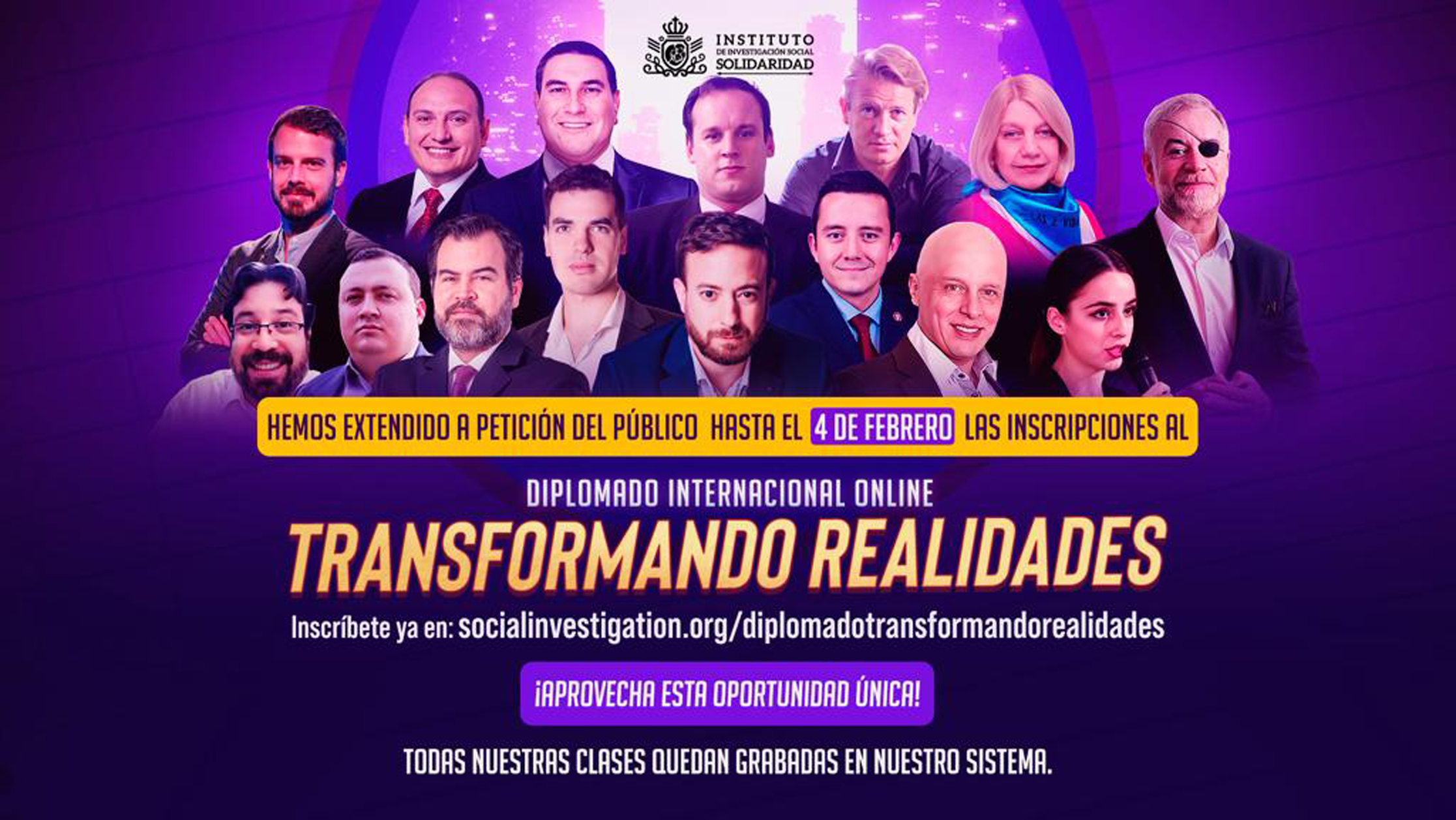
Lastly, educational programs also seem to be playing a key role in strengthening anti-gender activist networks at both regional and global levels. As illustrated by several of the aforementioned examples, many of the programs, courses, and conferences on anti-gender issues involve local participants as well as figures from other Latin American countries and regions, especially pro-life activists and conservative and far-right ideologues. The IISS has been particularly effective in recruiting international participants for its educational initiatives. Its programs feature renowned figures from the far-right, pro-life, and pro-family activism, including Brazilian self-declared ex-feminist Sara Winter, Argentine authors Agustín Laje and Nicolás Márquez, Peruvian political analysts Miklós Lukács and Javier Villamor from Spain. Figure 2 shows an example of one of the diplomados offered by IISS in collaboration with these and other international figures.
In sum, the educational infrastructure developed by anti-gender actors over time has become another central tool for their diffusion of ideas and discourses, while also serving to strengthen their social base and transnational networks.
Diplomado Offered by the Instituto de Investigación Social Solidaridad.
Source: Instituto de Investigación Social Solidaridad

Final Considerations
In this article we examined the diffusion of the anti-woke and anti-progre frames in Colombia and its strategic appropriation by anti-gender activists. Based on an extensive analysis of actors leading and participating in anti-gender campaigns, we showed that they have emerged as new collective action frames aimed at contesting gender and sexual diversity policies and targeting feminist and LGBTIQ+ activists. Importantly, their emergence does not imply the disappearance of earlier frames. Rather than displacement, we observe the coexistence of multiple frames, with different groups of activists embracing different frames. Anti-woke and anti-progre frames are primarily deployed by a subset of actors who tend to be more secular and adopt ideas and agendas that link them to, or bring them closer to, the far right.
Our results echo the call of scholars such as Sutton and Borland (Reference Sutton and Borland2013) to pay closer attention to internal diversity within social movements. Although this diversity has long been recognized, further research within the framing approach is needed to understand how mobilization structures shape the articulation of different frames and influence their differentiated impact in terms of resonance, mobilizing capacity, and ability to form consensus.
Although this study primarily focuses on the deployment of anti-woke and anti-progre frames in opposition to gender and sexuality-related policies, it is worth noticing that their scope extends well beyond these domains. Indeed, as Cammaerts (Reference Cammaerts2022) and Paternotte and Deleixhe (Reference Paternotte and Deleixhe2024) have shown for other countries, these frames are also being employed in Colombia to challenge broader social justice and equality demands by marginalized groups, including indigenous and Black people, as well as policies related to environmental protection (see La Silla Vacía 2024b). This flexibility and ability to encompass a wide array of issues suggests that anti-woke and anti-progre are not merely another anti-gender frame. Instead, they may function as what Benford and Snow (Reference Benford and Snow2000) describe as a master frame, namely a frame capable of resonating across diverse contexts and being appropriated by a variety of actors and movements. Further research is needed to assess the potentially broader implications of anti-wokeism and anti-progressivism, both in terms of the rights and policies under threat and in relation to its capacity to mobilize and bind together heterogeneous actors.
This work highlights the central role of social media in the diffusion of frames. While there is a growing literature demonstrating the importance of the Internet and social media for social movements and, in particular, for right-wing groups and anti-gender activism (Caiani and Kröll Reference Caiani and Kröll2014; Laquièze Reference Laquiezè2024; Righetti Reference Righetti2021; Tronina Reference Tronina2024), much of this work has focused on the United States and European countries, leaving the dynamics of other regions, including Latin America, less explored (some exceptions are Von Bülow and Dias Reference Von Bülow and Dias2019 and Silva Reference Silva2024). This study contributes to addressing this gap by examining digital activism and mapping the network of connections among a broad set of anti-gender actors in Colombia.
Our network analysis of Colombian anti-gender activism on X confirms what previous studies have shown about the significant connections that different social, political, and religious actors involved in anti-gender mobilizations have forged among themselves (Gil Hernández Reference Gil Hernández2020; González Vélez and Castro Reference González Vélez, Castro, González Vélez, Castro, Burneo Salazar, Motta and Amat y León2018; López Pacheco Reference López Pacheco2021). In addition, our analysis brings to light other connections within anti-gender activism that have gone more unnoticed in much of the literature, such as those linking conservative and right-wing politicians and pro-life NGOs with influencers, libertarian activists, and right-wing think tanks. Analyzing these links is key to identifying the channels through which anti-woke and anti-progre rhetoric circulates, as well as the actors who constitute themselves as their main propagators in the digital space.
Apart from digital activism on social media, we show that educational programs are also playing a significant role in the diffusion of ideas. By establishing new academic institutes and offering programs and lectures on topics related to wokeism and progressivism, anti-gender actors are engaging in work to spread their ideas, build consensus, and train new activists. Through these pedagogical initiatives, foreign terms and topics, such as woke and cultural battle, have crept into local debates taking on local flavor and meaning. While we do not assess the level of reception of these programs, as an in-depth evaluation of their impact is beyond the scope of this research, our work underscores the importance of paying closer attention to the repertoires deployed by anti-gender actors within cultural and educational fields. Clearly, these actors do not limit their mobilization to the political sphere, promoting or contesting bills, lawsuits, or public policies. Rather, they also engage in what Paternotte and Verloo (Reference Paternotte and Verloo2021, 567) describe as “politics of knowledge” to advance “alternative truths that better fit their political agenda.” Examining the dynamics of these politics of knowledge is critical.
In line with the above, this study echoes the call of various scholars to reconsider anti-gender activism beyond the idea of backlash (Corrêa et al. Reference Corrêa, Paternotte, House, Aggleton, Cover, Logie, Newman and Parker2024; Serrano Amaya Reference Serrano Amaya2019; Vaggione Reference Vaggione2022). While the progress of feminist and LGBTIQ+ movements certainly helps explain the surge of anti-gender campaigns across different contexts, it is increasingly evident that anti-gender activism is not merely a reactive response. Perhaps more than anything else, their work to develop an educational infrastructure is a clear proof of the “creative or productive dimension” (Corrêa et al. Reference Corrêa, Paternotte, House, Aggleton, Cover, Logie, Newman and Parker2024, 491) of this activism. This infrastructure—developed through academic institutions and educational programs, as well as through a publishing industry (Paternotte and Deleixhe Reference Paternotte and Deleixhe2024) and the organization of regional and global conferences (Morán Faúndes Reference Morán Faúndes2023)—suggests a strategic interest in advancing a more ambitious political project. All in all, our findings seem to corroborate the “extreme rightward drift” that scholars such as Morán Faúndes (Reference Morán Faúndes2023) have identified in the most recent wave of mobilizations against sexual and reproductive rights, and how these efforts connect to both institutional and non-institutional politics (Payne Reference Payne, Payne, Zulver and Escoffier2023). We need to move beyond the backlash framework to better understand the nature and implications of the political agendas being pursued.
Supplementary material
To view supplementary material for this article, please visit https://doi.org/10.1017/lap.2026.10052.
Acknowledgments
The authors are very grateful to RARs research team and anonymous reviewers for their useful comments on earlier drafts of this article.
Competing interests
The authors declare they have no competing interests.



 Open access

