



Introduction
By recent estimates, as many as 32% of women veterans in the US misuse alcohol (Hoggatt et al., Reference Hoggatt, Williams, Der-Martirosian, Yano and Washington2015). ‘Harmful drinking’ refers to a spectrum of drinking behavior ranging from drinking above low-risk limits set by the National Institute on Alcohol Abuse and Alcoholism (NIAAA) to meeting diagnostic criteria for an alcohol use disorder (AUD; American Psychiatric Association, 1995; National Institute on Alcohol Abuse and Alcoholism, 2010). It is associated with numerous negative physical and mental health outcomes among women veterans, including high rates of domestic violence, cirrhosis, depression, and posttraumatic stress disorder (Lembke et al., Reference Lembke, Bradley, Henderson, Moos and Harris2011; Chavez et al., Reference Chavez, Williams, Lapham and Bradley2012; Cucciare et al., Reference Cucciare, Coleman and Timko2013). Accurately identifying harmful drinking among women veterans is a critical first step in addressing this condition.
In 1997, the veterans Administration (VA) implemented mandatory screening for harmful drinking in primary care clinics (Bradley et al., Reference Bradley, Williams, Achtmeyer, Volpp, Collins and Kivlahan2006). Screening improved rates of detecting harmful drinking, but follow-up [eg, brief intervention (BI)] to a positive screen remained low (Burman et al., Reference Buchsbaum, Buchanan, Poses, Schnoll and Lawton2004). To improve rates of follow-up, the VA implemented a brief alcohol counseling performance measure in 2007 mandating that veterans screening positive for harmful drinking on the Alcohol Use Disorders Identification Test – consumption items (score of ⩾5) receive brief counseling consisting of NIAAA recommended drinking limits and education about the potential health effects of harmful drinking (Lapham et al., Reference Lapham, Achtmeyer, Williams, Hawkins, Kivlahan and Bradley2012). Veterans are then referred to more intensive substance use disorder care in response to screening scores indicating probable alcohol dependence (AUDIT-C score ⩾8), a failure to respond to a BI, and/or an inability to change drinking behavior without formal assistance (Veterans Affairs/Department of Defense, 2009).
Unfortunately, accurate detection of harmful drinking among veterans remains a challenge. Several factors, including the quality of the patient–provider relationship (eg, degree of trust on the part of the patient) and variation in provider screening processes, may negatively affect accurate detection of harmful drinking (Williams et al., Reference Williams, Achtmeyer, Thomas, Grossbard, Lapham, Chavez, Ludman, Berger and Bradley2015; Cucciare et al., Reference Cucciare, Simpson, Hoggatt, Gifford and Timko2016). Women veterans recruited as part of the present study reported concerns about being judged or labeled an ‘alcoholic,’ providers’ failing to question the patient about harmful drinking, and having residents in the exam room lowered the likelihood of honest discussions of harmful drinking between women veterans and their provider (Cucciare et al., Reference Cucciare, Simpson, Hoggatt, Gifford and Timko2016). These findings may help explain lower rates of provider identified harmful drinking in women when compared with men (Coulehan et al., Reference Coulehan, Zettler-Segal, Block, McClelland and Schulberg1987; Buchsbaum et al., Reference Burman, Kivlahan, Buchbinder, Broglio, Zhou, Merrill, McDonell, Fihn and Bradley1992).
Although research has examined factors that affect their willingness to discuss harmful drinking with a provider from the perspective of women veterans, no research has explored this phenomenon from a provider perspective. Addressing this important gap in the literature is the focus of the present study, which may lead to strategies for improving providers’ ability to detect this condition among women veterans.
Methods
Design and method descriptions
We wanted to elicit from primary care providers a full range of experiences and perspectives regarding barriers and facilitators to honest discussions and disclosure of alcohol use during a routine primary care visit. As this constituted exploratory research, we used an open-ended interview guide during individual interviews with primary care providers. As research shows that current screening efforts may not always be accurate (Williams et al., Reference Williams, Achtmeyer, Thomas, Grossbard, Lapham, Chavez, Ludman, Berger and Bradley2015; Cucciare et al., Reference Cucciare, Simpson, Hoggatt, Gifford and Timko2016), we did not limit providers’ perspectives to patients with a positive screen for harmful drinking.
Selection of participants
Providers were recruited from the VA Women’s Health primary care clinics at two separate VA medical facilities in California, United States. All primary care providers at both clinics were invited to participate. Excluding providers who were unavailable during the recruitment period (eg, for maternity leave), or who reported no or very limited clinical contact with women veterans, a total of 27 providers were contacted and 14 participated (52%). Participants reflected the full range of specialties and roles at both clinics, including: nurses involved in screening and referrals (n=2), primary care providers, including nurse practitioners, physicians’ assistants, and physicians (n=9), and co-located mental health providers (n=4). Almost all providers reported that women made up 90–100% of patients on their panels. Human subjects’ approval for this study was granted by Stanford University.
Qualitative interview
Three domains from the consolidated framework for implementation science (CFIR) guided the development of questions in the interview guide: (a) characteristics of providers involved in the patient–provider interaction, such as provider knowledge about alcohol use; (b) the outer setting, including patients’ social or economic characteristics that may affect a willingness to discuss alcohol use; and (c) the inner setting, such as physical and/or policy features of the clinic or healthcare system (Damschroder et al., Reference Damschroder, Aron, Keith, Kirsh, Alexander and Lowery2009). Interviews lasted ~30 min and were conducted by a qualitative researcher (E.L.). All but one interview was audio recorded and transcribed; as one participant declined to be recorded, the interviewer took detailed notes and wrote them up immediately following the interview. Providers were not compensated for participating.
Data analysis
First the lead analyst (T.A.) used template analysis (King et al., Reference King, Cassell and Symon2004) to deductively develop a basic template with three domains reflecting the goals of the study. Two qualitative researchers (T.A. and K.D.) reviewed the same two transcripts separately and identified themes, placing them in the appropriate domain for each of the interview templates. The analysts then compared the themes placed in each template domain and resolved any discrepancies via discussion. The researchers then analyzed the remaining 12 interviews separately, identifying themes and placing them in the appropriate domain on the template for each interview. When they had separately completed a template for all 14 participants, the lead analyst compared the findings, which she summarized into a final, combined template for each participant. The two researchers discussed the final templates, changing how themes were conceptualized when necessary until they resolved any discrepancies.
The researchers used the results of the template analysis phase for matrix analysis (Nadin and Cassell, Reference Nadin and Cassell2004). The lead analyst constructed matrices for barriers and facilitators, using three CFIR domains: (a) characteristics of providers, (b) the outer setting, and (c) the inner setting. She mapped the findings from the 14 final templates to the appropriate CFIR domain on each matrix, assembling two succinct summaries of themes. The researchers then resolved any remaining data interpretation discrepancies.
Results
Providers’ perceptions of barriers to disclosure of alcohol use
Providers described six factors that they perceived negatively affected the ability or willingness of women veterans to be honest about their alcohol use. These factors included: (1) stigma, shame, discomfort, and personal motivations for not wanting to discuss harmful drinking, (2) co-occurring mental health concerns, (3) screening fatigue, (4) patient’s self-appraisal of drinking behavior, (5) time constraints, and (6) selective, provider-specific disclosure concerning alcohol use (see Table 1).
Providers’ reported barriers: hierarchical matrix of themes
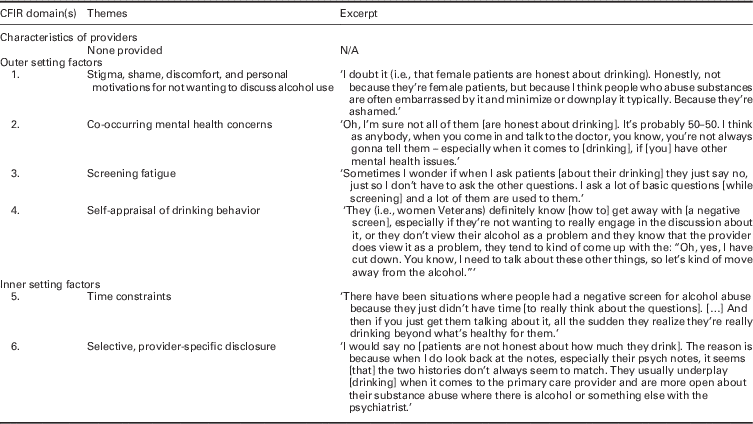
Stigma, shame, discomfort, and personal motivations
The most commonly perceived barriers were stigma, shame, discomfort, and personal motivations for not wanting to discuss alcohol use. When asked if she thought that her female patients were usually honest with her about their drinking, a primary care psychologist responded: ‘I doubt it. […] I think people who abuse substances are often embarrassed by it and minimize or downplay it typically. Because they’re ashamed.’ In the experience of another provider: ‘Those that do have a problem, they maybe aren’t comfortable with admitting that yet.’ Providers recognized that women veterans may experience uncomfortable emotions that can reduce their willingness to discuss their level of alcohol consumption.
Co-occurring mental health concerns
Having co-occurring mental health concerns was also a reason providers thought women might be unwilling to discuss alcohol use. A primary care psychiatrist observed that her patients with ‘hot psychiatric issues,’ such as post-traumatic stress disorder (PTSD), were less forthcoming during discussions about drinking, perhaps because for some patients, alcohol use was a lower priority than a comorbid mental health issue. Another provider cited both co-occurring mental health concerns and shame as interfering with accurate disclosure concerning alcohol use: ‘If people have co-occurring mental health issues like depression or PTSD where they’re easily ashamed,’ she noted, ‘I feel like they’re not as honest [about their alcohol use].’
Screening fatigue
Women might not be completely accurate about how much they drink when questions about alcohol consumption are asked along with multiple questions about their health during routine health screens. For example, one screening nurse found that women ‘may just say no’ to the alcohol screening items to speed up the completion of the screening process ‘so I don’t have to ask the other questions.’
Self-appraisal of drinking behavior
Another perception was that some women veterans may not be willing to discuss alcohol use if they know that their self-appraisal (or severity) of drinking differs from that of their provider. One provider noted that if women ‘don’t view their alcohol [use] as a problem’ but ‘know that the provider does view it as a problem’ she may avoid discussions about drinking during clinical encounters in primary care settings.
Time constraints in the clinic
Time constraints in the clinic may also make it difficult for women veterans to reflect upon how much they drink, inadvertently resulting in less accurate reports regarding alcohol consumed. In the experience of one primary care physician: ‘There have been situations where people had a negative screen for alcohol abuse because they just didn’t have time [to think about how much they drink].’
Selective, provider-specific disclosure
One participant reported that she often sees discrepancies between the medical notes taken by mental health providers and those of primary care physicians, indicating that some women veterans may be more forthcoming about how much they drink in specialty mental health contexts when compared with primary care. When asked if women were generally honest with her about their drinking, this participant responded that: ‘They usually underplay it when it comes to the primary care provider, and are more open about their substance abuse where there is alcohol or something else with the psychiatrist.’
Providers’ perceptions of facilitators to disclosure of alcohol use
Providers also described five factors that they perceived served as facilitators to either women veterans’ accuracy in disclosing alcohol use including: (1) using probes and digging deeper, (2) displaying sensitivity when discussing harmful drinking, (3) patient’s age, and (4) building strong therapeutic relationships. One subtheme arose from provider narratives about the role of strong therapeutic relationships in encouraging women to discuss alcohol use: (4a) length of patient–provider relationship. A fifth factor, having women-only clinics, was also reported as positively affecting this discussion (see Table 2).
Providers’ reported facilitators: hierarchical matrix of themes
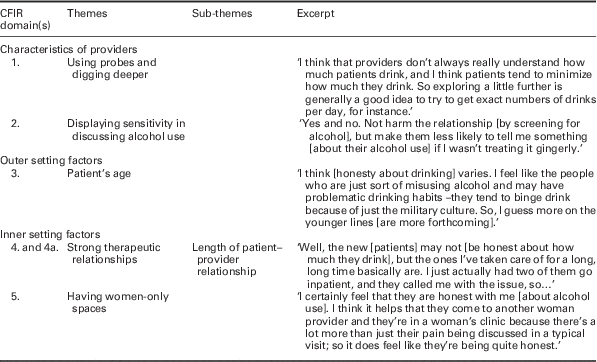
Using probes and digging deeper
One provider reported that using probes and digging deeper to get more details about women’s alcohol use increases the accuracy of screens. In her experience, women veterans tend to under-report how much they drink, and ‘explor[ing] a little further’ appeared to result in more accurate screens.
Displaying sensitivity
Another provider behavior that may help encourage women veterans’ to be honest about alcohol use with their provider is displaying sensitivity. When asked if she ever worried that asking women veterans about their problematic drinking might harm the therapeutic relationship, a general internist in primary care reported: ‘Not harm the relationship, but make them less likely to tell me something if I wasn’t treating it [the topic] gingerly.’
Patient’s age
Younger veterans might be more forthcoming about how much they drink compared with their older counterparts. Providers reported that younger veterans, and especially those who drink heavily ‘because of…military culture,’ may be more honest about ‘problematic drinking habits’ than older veterans during a primary care visit. Problematic drinking among younger women veterans might reflect normative patterns of heavy drinking common among military peers, which likely increases their comfort in talking about alcohol use in general.
Strong therapeutic relationships
A strong therapeutic relationship was also cited as encouraging women to openly discuss alcohol use in primary care settings. A longer relationship between the provider and her patient was recognized as important because it increased the comfort that both the patient and the provider had with discussing drinking. In one provider’s experience, new patients may not be honest about how much they drink, ‘but the ones I’ve taken care of for a long, long time basically are.’ Another provider related established relationships with ‘rapport,’ which she thought encourages accurate disclosure of alcohol use.
Women-only spaces
Some providers noted that having a clinic dedicated to women’s primary care helped foster a clinical environment where women are more forthcoming about alcohol use in general. One said that she felt that discussions of alcohol use were facilitated by women having access to a ‘women’s clinic’ and especially having a ‘woman provider.’ The provider also noted that these settings may provide women veterans with a comfortable environment to discuss multiple health concerns (‘…there’s a lot more than just their pain being discussed in a typical visit’), which may also help increase willingness to discuss alcohol use.
Discussion
Our analysis revealed both barriers and facilitators to accurate disclosure of alcohol use during a routine primary care visit. The barriers that providers perceived were more often outer setting factors (ie, social or economic characteristics) than inner setting factors (ie, physical and/or policy features of the clinic) or provider characteristics (ie, training). In noting factors that serve as facilitators, participants recognized inner setting factors (ie, physical or policy features of a clinic) and characteristics of providers more often than outer setting factors (ie, patient social characteristics).
Barriers
Consistent with findings in the literature about screening for harmful drinking among non-veteran patient populations, stigma, shame, discomfort, and personal motivations for not wanting to discuss alcohol use were the factors that VA providers cited most often as barriers to disclosure (Spear et al., Reference Spear, Shedlin, Gilberti, Fiellin and McNeely2016). Normalizing discussions about the harmful effects of drinking above low risk limits (Dawson Reference Dawson, Grant, Stinson and Zhou2011) during routine clinical visits in primary care (eg, presenting data on rates of harmful drinking among veterans) could foster an environment where women feel empowered to be forthcoming about how much alcohol they consume with providers, reducing barriers related to stigma, shame, and discomfort. This would be particularly beneficial for women who have been identified as engaging in problematic drinking.
Relatedly, co-occurring mental health concerns were cited by multiple providers as a perceived barrier to women’s willingness to discuss their drinking. Women veterans with harmful drinking have high rates of co-occurring mental health conditions, such as depression and PTSD, highlighting the importance of giving providers tools and strategies for addressing harmful drinking in the context of mental health concerns (Najt et al., Reference Najt, Fusar-Poli and Brambilla2011). These tools and strategies might include taking advantage of co-located mental health professionals, using readily available VA web materials on the potential effects of alcohol use on mental health conditions and vice versa, and consulting with mental health treatment staff on how to best counsel women who may be engaging in problematic drinking and who have mental health comorbidities. Treatments tailored to women with these comorbidities are available, and the best method of linkage to these treatments is an important area for future research (Cucciare et al., Reference Cucciare, Coleman and Timko2013; Reference Cucciare, Lewis, Hoggatt, Bean-Mayberry, Timko, Durazo, Jamison and Frayne2014).
Facilitators
The importance of a strong therapeutic relationship between women veterans and their provider was the most commonly reported facilitator that providers believed encouraged accurate disclosure of alcohol use. Enhancing the therapeutic relationship by ensuring continuity of care so women veterans see the same provider consistently might therefore encourage disclosure of drinking in primary care. The VA currently encourages longer visits and supports continuity of care with a specific provider in their Women’s Health Clinics (Bean-Mayberry et al., Reference Bean-Mayberry, Yano, Bayliss, Navratil, Weisman and Scholle2007).
Although considerable research has explored how therapeutic relationships affect treatment engagement and outcomes (Meier et al., Reference Meier, Barrowclough and Donmall2005; Cook et al., Reference Cook, Heather and McCambridge2015), we were unable to find research concerning how the patient–provider relationship affects willingness to engage in honest discussions about alcohol use with providers. This lack of research is surprising given the challenges primary care providers face identifying alcohol use disorders (Amodai et al., Reference Amodai, Williams, Scale and Alvarado1996). Additional research could determine which aspects of the therapeutic relationship are most likely to encourage accurate disclosure of alcohol use to support providers’ efforts to identify harmful drinking in this population. Finally, using probes and digging deeper to get more detailed responses during screens was noted as a facilitator. Providers’ perceptions that using probes (eg, asking how many drinks women consume during a typical drinking episode) may elicit more accurate information during alcohol screening may be helpful in addressing known challenges to screening for harmful drinking by women in general (Dawson et al., Reference Dawson2005).
Limitations of the study
A strength of this study is that these data represent a full range of perspectives from different providers (ie, nurses, physicians, and co-located mental health staff) who interact with women about alcohol use and misuse. Using an open-ended, conceptually driven interview guide permitted participants to discuss the barriers and facilitators that were most salient based on their experience, rather than limiting the discussion to a priori factors. As with all exploratory and qualitative research, these findings may not be generalizable. Our findings reflect the perspectives and experiences of providers at two VA Women’s Health Clinics in California, and not necessarily those of providers in other VA and non-VA clinics and locations. Additional research with a larger, more representative sample would help verify whether or not these findings are applicable to other VA (ie, rural) and non-VA health care settings. In addition, although willing to participant, most providers had limited time to devote to interviews. As a result, additional factors affecting disclosure may exist that were not discussed during the interviews.
Conclusions
In this study, we asked primary care providers to identify barriers and facilitators to women veterans’ disclosure of alcohol use during a routine primary care visit. This exploratory research reveals multiple opportunities for future research that could ultimately help support primary care providers’ discussions about alcohol use with their women patients. Our findings underscore the importance of the therapeutic relationship and mental health comorbidities that can affect women’s willingness to disclose alcohol use. Our findings have implications for helping providers detect harmful drinking among this patient population, and potentially improving women veterans’ willingness to discuss their alcohol use with a provider.
Acknowledgments
The authors thank our participants, co-investigators, Susan Frayne, MD, Katherine Hoggatt, PhD, Bevanne Bean-Mayberry, MD, and project managers Eva Durazo, PhD, and Andrea Jamison, PhD.
Financial Support
This research was supported by a Rapid Response Project (RRP 11-436) to Dr Cucciare by the Department of Veterans Affairs (VA) Substance Use Disorder Quality Enhancement Research Initiative (QUERI), a VA HSR&D Career Development Award–2 (CDA 08-004) to Dr Cucciare, and a Senior Research Career Scientist award (RCS 00-001) to Dr Timko. Dr Abraham was supported by the VA Office Advanced Fellowship in Health Services Research, The Center for Mental Healthcare & Outcomes Research (CeMHOR) at the Central Arkansas Veterans Healthcare System. The views expressed in this article are those of the authors and do not necessarily reflect the position or policy of the Department of Veterans Affairs or the United States government.
Conflicts of Interest
None.
Ethical Standards
The authors assert that all procedures contributing to this work comply with the ethical standards of the relevant national and institutional guidelines on human experimentation at Stanford University, CA (US) and with the Helsinki Declaration of 1975, as revised in 2008.



