





Impact statement
This study provides a crucial, evidence-based roadmap for accelerating the transition to net-zero emissions in emerging economies such as India, offering actionable insights for policymakers, industry leaders and international development partners. By employing a robust mixed-methods approach that triangulates survey data from nearly 1,000 respondents with an analysis of published interviews and objective metrics from government reports, the study moves beyond theory to identify the specific levers that most effectively translate policy into progress.
The primary impact of this study is the validation of a holistic model that demonstrates how to achieve net-zero goals in a resource-constrained environment. The study establishes that simply increasing the renewable energy supply or announcing policies is not enough. The true enablers of progress are the pathways that connect these actions to the real world. The findings provide a clear directive: to succeed, policies must simultaneously drive technological innovation and foster community participation.
For emerging economies, the usefulness of this study is threefold.
-
1. It provides a replicable and integrated framework. Many nations face the challenge of balancing economic development and climate commitments. The model offers a validated, holistic template that can be adapted to other national contexts to diagnose bottlenecks and identify high-impact policy areas in net-zero transitions.
-
2. This study offers a strategy for maximising the use of limited resources. It highlights the need to move away from siloed initiatives and instead focus on synergistic policies, such as promoting decentralised renewable energy, which can simultaneously advance both technological and social goals. This “double dividend” approach is essential for countries with significant fiscal and administrative constraints.
-
3. This justifies a strategic shift in the role of the government. By identifying economic and infrastructural constraints as key bottlenecks, this study provides a strong evidence base for governments to shift their role from being direct funders to strategic de-riskers of private investment. This focus on creating stable policy environments and using public funds to leverage private capital is a more sustainable and scalable model for financing energy transitions.
Ultimately, this study provides a clear and integrated strategy for emerging economies. By focusing on the critical interplay between technology, policy, community and finance, it offers a pathway to not only meet ambitious climate targets but also ensure that the transition is sustainable, equitable and aligned with national development priorities.
Introduction
Increasing emission levels and climate change have created substantial challenges for governments worldwide. One of the ongoing efforts in response to such challenges is an increased focus on achieving net-zero emissions (Maguire and Jiang, Reference Maguire and Jiang2015). The emerging nations struggle with the dual challenges of economic growth and environmental sustainability issues. The integration of renewable energy and supportive energy policies has emerged as a critical pathway towards carbon neutrality, which balances the amount of greenhouse gas emissions with an equivalent number of removals. This has become a significant aspect of global climate policies (Kumwenda, Reference Kumwenda2025).
India, the fourth largest and fastest growing economy and a significant emitter of carbon dioxide, occupies a significant position in the global net-zero discourse (Midha and Tomar, Reference Midha and Tomar2023). The ambitious commitment of countries across the globe to reach net-zero by 2070 highlights the need for robust, multi-dimensional strategies. These strategies should integrate economic, environmental and social aspects, which are essential for the transition through the integration of renewable energy sources, such as solar, wind and hydroelectric power (Ahluwalia and Patel, Reference Ahluwalia and Patel2024). This should be complemented by supportive energy policies that promote a just and inclusive transformation. However, the pathway towards net-zero emissions is complex and influenced by a range of technological, institutional, governance, policy-related and social aspects. These factors often interact dynamically, making it essential to adopt a holistic and analytical framework that can help policymakers achieve net-zero progress (Suardi et al., Reference Suardi, Cannarile, Guastone, Fidanzi, Millini and Testa2023).
Despite the growing literature on climate change mitigation and energy transitions, there remains a significant need to understand how renewable energy integration and energy policy support interact. It is also imperative to understand the mechanisms required to progress towards net-zero emissions in an emerging economy such as India.
This study aims to fill this gap by addressing the following research questions:
RQ1: How do renewable energy integration and energy policy support impact progress towards net-zero emissions in emerging economies?
RQ2: What are the key mediating and moderating enablers influencing progress towards net-zero emissions in emerging economies?
By answering these questions, this study has the potential to contribute to existing theories such as the Multi-Level Perspective (MLP) or Technological Innovation Systems (TIS) (Wang et al., Reference Wang, Lv, Cai, Xu and Wang2022; Mody, Reference Mody2024). This enhances our understanding of how transition pathways differ between emerging and developed contexts. Most existing studies have focused on developed economies, but the current study attempts to build a theory of how policy instruments work under the constraints and institutional dynamics of a developing economy. This indirectly contributes to systems and institutional theories (Kaine et al., Reference Kaine, Young, Lourey and Greenhalgh2017). This study advances theoretical understanding of the net-zero transition mechanism in emerging economies such as India and offers practical insights for policymakers and practitioners seeking to align renewable energy initiatives with broader sustainable development goals. Although this study focuses on India, the outcomes are relevant for other similar emerging economies that navigate structural and policy challenges in achieving progress towards carbon neutrality.
The subsequent part of the paper, including the current section, is organised as follows: the first section presents the introduction, the second section covers the literature review, the third outlines the conceptual model and hypotheses development, the fourth describes the methodology employed, the fifth reports the results, the sixth offers the discussion, the seventh highlights the implications and the last section concludes the study.
Literature review
The world is facing environmental vulnerability due to increasing emissions. There are many ongoing efforts to minimise emissions from the government, industries and households. However, the emission levels were not controlled. The global transition to net zero presents significant innovation challenges, such as a lack of technological solutions, such as hydrogen and electrification. Achieving net-zero emissions requires not only decarbonising energy technologies but also restructuring policies, technologies and infrastructure to promote an efficient energy transition (Lee, Reference Lee2021).
The acceptability of net-zero practices has also become a societal challenge (Pinkse et al., Reference Pinkse, Demirel and Marino2024). There is a need for solid policy frameworks to guide the net-zero transition, with a focus on various phases of development, including the development of low-carbon innovations (Markard and Rosenbloom, Reference Markard and Rosenbloom2022). Energy policies should guide carbon pricing, renewable portfolio standards and green subsidies (Bian and Guo, Reference Bian and Guo2022). Goyal et al. (Reference Goyal, Taeihagh and Howlett2022) highlighted that policy innovation is a fundamental aspect of implementing particular transformations, such as net-zero practices. Furthermore, international cooperation and proactive state involvement are essential to facilitate the transformation of multiple systems, including the reduction of emissions (Shahzad et al., Reference Shahzad, Faheem, Muqeet and Waseem2024).
Innovation is a predominant factor that drives the attainment of net-zero targets beyond traditional environmental, social and governance factors (Madden, Reference Madden2023). Innovation capabilities, such as collaborative, integrative, and socio-cognitive potential, are essential for overcoming barriers to attaining net-zero targets (Pinkse et al., Reference Pinkse, Demirel and Marino2024). The integration of advanced technologies, such as AI, blockchain, quantum computing, and digital twins, is pivotal for transforming energy practices and promoting efficient energy management (Ferdaus et al., Reference Ferdaus, Dam, Anavatti and Das2024). Governments can also implement virtual power plants to integrate renewable energy sources and enhance grid management (Ullah et al., Reference Ullah, Arshad and Nekahi2023). Furthermore, emerging clean energy technologies, such as green hydrogen and carbon capture and storage, are significantly modifying the landscape of energy systems. These technologies address the intermittency of renewable energy by storing excess energy and supplying energy during periods of low production (Hayati et al., Reference Hayati, Safari, Nazari-Heris, Oshnoei, Vahidinasab, Mohammadi-Ivatloo and Shiun Lim2024).
The modernisation of infrastructure is vital for the net-zero transition. This transition demands a large-scale transformation of energy systems, such as the deployment of solar power and wind energy, which consume large amounts of land and infrastructure-siting challenges (Williams et al., Reference Williams, Jones and Torn2021). The concept of urban infrastructure landscape highlights the non-strategic aspects of energy transitions, stressing the need for inclusive planning and policy recommendations (Castán Broto et al., Reference Castán Broto, Robin and Whitehead2023). Zero-carbon urban buildings form a significant pillar in attaining net zero, which essentially focuses on energy efficiency, renewable energy adoption and integration with modern urban energy systems (Iddrisu et al., Reference Iddrisu, Ofoeda and Abor2023).
Achieving a net-zero transition is not only a technological barrier but also a social one. Promoting public engagement to stimulate social transitions can bring about emission reductions more swiftly than depending on technological transformations (Nelson and Allwood, Reference Nelson and Allwood2021). Government policies must consider the socio-economic impacts and assist local communities that are most affected by the transition (Pacala et al., Reference Pacala, Cunliff, Deane-Ryan, Gallagher, Haggerty, Hendrickson, Jenkins, Johnson, Lieuwen, Loftness and Miller2021). Transition policies are needed to engage with multiple systems and facilitate everyday transformative change (Bloomfield and Steward, Reference Bloomfield and Steward2024).
Progress towards net-zero goals faces several challenges, such as the need for new standards, regulations, lack of skills and the complexity of changing policies (Markard and Rosenbloom, Reference Markard and Rosenbloom2022; Newman, Reference Newman2023; Malone et al., Reference Malone and Scullion2024). However, it also offers many opportunities for governments, industries and local communities (Leong et al., Reference Leong, Leong and San Leong2024). The integration of renewable energy practices, financial innovation and regulatory compliance is essential for ensuring successful progress towards net-zero goals (Zhang et al., Reference Zhang, Feng, Wang and Sui2024). Achieving net-zero emissions necessitates a scientific approach that integrates energy policy, innovation and infrastructure (Mahmood and Rauf, Reference Mahmood and Rauf2025).
While the existing literature highlights the significance of energy policy, technological innovation and infrastructure development in driving net-zero transitions, these elements are often examined in isolation. Studies have emphasised policy mechanisms such as carbon pricing, subsidies and regulatory frameworks, as well as technological advancements, including AI, green hydrogen and smart grids (Bian and Guo, Reference Bian and Guo2022; Markard and Rosenbloom, Reference Markard and Rosenbloom2022; Newman, Reference Newman2023; Malone et al., Reference Malone and Scullion2024; Pinkse et al., Reference Pinkse, Demirel and Marino2024). However, there is limited integrative research that holistically connects these dimensions into a unified model capable of simultaneously addressing systemic, infrastructural and socio-technical challenges. Moreover, despite the recognition of socio-political and community engagement barriers, few studies have explored the dynamic interplay between policy innovation, infrastructural modernisation and advanced technologies in facilitating an inclusive and context-sensitive net-zero transition. This fragmentation indicates a clear research gap in conceptualising and empirically validating a comprehensive model that unites energy policy, innovation ecosystems and infrastructure planning to effectively enable net-zero goals on a large scale.
Conceptual model and hypotheses development
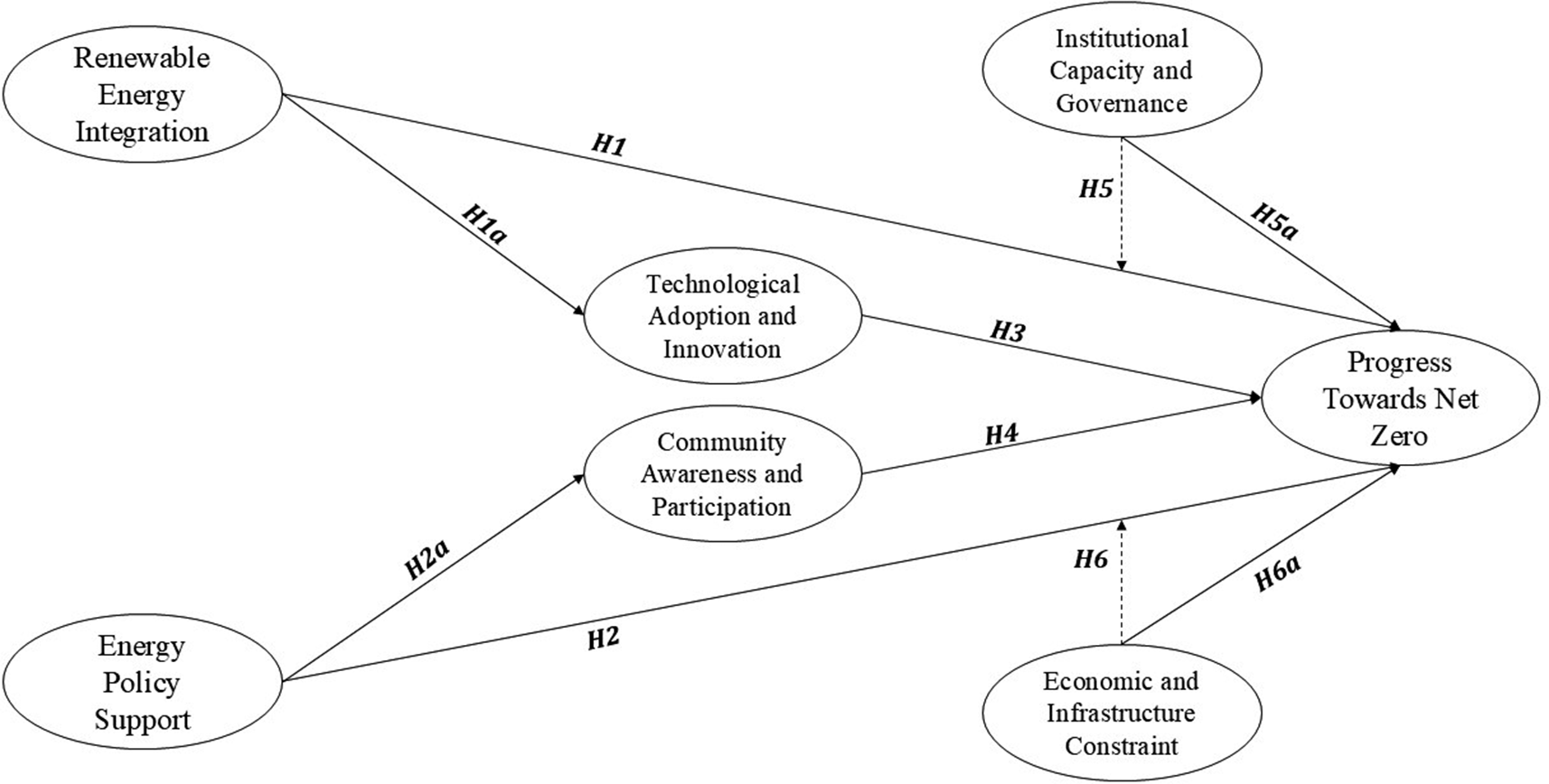
The primary purpose of this study is to examine the enablers that contribute to progress towards net-zero emissions. This study aims to analyse the multi-faceted enablers of attaining net-zero emissions. The proposed model is unique and integrates institutional, technological, economic, policy and social dimensions.
Renewable energy integration
Due to rapid industrialisation, increasing environmental vulnerability and the scarcity of energy resources have emerged as major challenges. Therefore, renewable energy integration plays a pivotal role in establishing sustainable energy systems (Munir et al., Reference Munir, Naqvi and Li2024, Appendix B). Furthermore, such systems eliminate dependency on fossil fuels. However, this requires technological innovation to promote net-zero emission practices (Akyüz and Coşgun, Reference Akyüz and Coşgun2023). Therefore, the following hypothesis is proposed:
H1: Renewable energy integration influences progress towards net-zero emission practices.
H1a: There is a strong relationship between renewable energy integration, technology adoption and innovation.
Energy policy support
Support from the government is essential for implementing sustainability initiatives (Mahmood and Rauf, Reference Mahmood and Rauf2025, Appenidx B). Supportive energy policies provide incentives, regulatory clarity and a long-term vision which are essential for innovation and community involvement (Shi and Zhou, Reference Shi and Zhou2024). Therefore, the following hypothesis is proposed:
H2: Energy policy support from the government influences net-zero practices.
H2a: Energy policy support influences community awareness and participation in net-zero practices.
Mediating roles of technological adoption and innovation and community awareness and participation
The transition towards net-zero progress requires both technological advancements and significant societal engagement, along with a supportive policy environment. This study proposes a twin-path model in which technological adoption, innovation, community awareness and participation act as crucial mediating variables in establishing the relationship between renewable energy integration and energy policy support to achieve net-zero progress.
Integrating renewable energy boosts the potential for adopting and innovating new technologies. According to the TIS framework, incorporating renewable energy enhances system functions such as knowledge development, resource mobilisation and market creation (Hekkert et al., Reference Hekkert, Suurs, Negro, Kuhlmann and Smits2007; Bergek et al., Reference Bergek, Jacobsson, Carlsson, Lindmark and Rickne2008). This concept supports Rogers’ Diffusion of Innovations Theory, which suggests that the adoption of innovations is influenced by perceived benefits, compatibility and the ability to experiment (Rogers et al., Reference Rogers, Singhal, Quinlan and Abingdon2014). Technological progress, including smart grids, storage solutions and energy management systems, facilitates the more effective use of renewables, serving as a mechanism that channels renewable integration into tangible advancements towards achieving net zero. Hence, the following hypothesis is proposed:
H1b: Technological Adoption and Innovation mediate the relationship between Renewable Energy Integration and Progress Towards Net Zero.
Community awareness and involvement are influenced by energy policies. According to the Theory of Planned Behaviour (TPB), policies impact individual attitudes, societal norms and perceived control over behaviour, which in turn affect participation in environmentally friendly activities (Ajzen, Reference Ajzen1991). Effective policies, through incentives, educational initiatives and inclusive decision-making processes, enhance the understanding of climate objectives and encourage citizens to engage in energy conservation and renewable energy projects (Sovacool & Griffiths, Reference Sovacool and Griffiths2020). This increased involvement acts as a social mechanism that converts policy goals into widespread behavioural shifts, thereby strengthening the drive towards achieving net-zero emissions. Hence, the following hypothesis is proposed:
H2b: Community Awareness and Participation mediate the relationship between Energy Policy Support and progress towards net zero.
Technological adoption and innovation
Policy reforms and the adoption of new practices in a country require technological advancements. Reducing emissions across various sectors of the economy requires technological advancements (Bibi et al., Reference Bibi, Khan, Fubing, Jianfeng, Hussain and Khan2024, Appendix B). The adoption of advanced technologies enables the efficiency and scalability of renewable energy practices. This also plays a vital role in promoting net-zero practices (Nie et al., Reference Nie, Cao, Li, Liu and Zhang2025). Hence, the following hypothesis is proposed:
H3: Technological Adoption and Innovation influence progress towards net-zero practices.
Community awareness and participative engagement
Community involvement is essential for achieving net-zero emissions goals. However, this requires communities to be well informed. Communities operate at the grassroots level, and their involvement is essential in creating momentum for change; informed communities are more likely to support and comply with emissions reduction policies (Appendix B). Furthermore, engaged communities contribute to local awareness and knowledge, innovative solutions, and promote behavioural changes that contribute to progress towards net-zero goals (Soni et al., Reference Soni, Singh, Mallick, Pandey, Tiwari, Mishra and Tiwari2024). Hence, the following hypothesis is proposed:
H4: Community Awareness and Participation influence progress towards net-zero goals.
Institutional capacity and governance
Institutional capacity and governance are essential for technological adoption and innovation and for promoting net-zero emission goals. Strong institutions that can allocate resources for undertaking research and development activities, establish and implement supportive policy frameworks and foster cross-sector collaboration play a crucial role in integrating renewable energy practices (Yang et al., Reference Yang, Gyimah, Nwigwe and Yao2025, Appendix B). Furthermore, the institution’s role is pivotal in implementing climate-related policies and monitoring emissions. Hence, the following hypothesis is proposed:
H5: Institutional capacity and governance positively influence progress towards net-zero goals.
H5a: Institutional capacity and governance modify the influence of renewable energy integration on progress towards net-zero goals.
Economic infrastructure and constraints
The country’s commitment to economic planning and infrastructure development is essential to attain net-zero emission goals (Ali, Reference Ali2024, Appendix B). The allocation of financial resources to renewable energy projects and sustainable technologies and the development of supporting infrastructure for decarbonisation improve energy efficiency across various sectors (Xu and Gallagher, Reference Xu and Gallagher2022; Obuseh et al., Reference Obuseh, Eyenubo, Alele, Okpare and Oghogho2025). However, economic constraints hinder the implementation of clean energy policies and can become a setback in attaining net-zero goals. Hence, the following hypothesis is proposed (Figures A1–3):
H6: Economic and infrastructure constraints influence progress towards net-zero goals.
Conceptual Model

Tested Model
Importance Performance Map

H6a: Economic and infrastructure constraints modify the influence of energy policy support on progress towards net-zero goals.
Methodology
This study employed a triangulation research technique to assess and evaluate the proposed research model. This approach combines survey (quantitative), qualitative analysis of published interviews (qualitative) and objective metrics analysis (quantitative thematic) tools to achieve the objectives of the study by examining the enablers of the net-zero transition. A quantitative approach was employed to address both research questions. Quantitative analysis was conducted with diverse respondents (see Table 1) associated with aspects of carbon emissions and knowledge of net-zero goals in India. Survey data were collected to assess constructs such as renewable energy integration, energy policy support, technological adoption and innovation, community awareness and participation, institutional capacity and governance, economic and infrastructure constraints and progress towards net-zero emissions, which were essential to the current research model. Statistical techniques, including structural equation modelling (SEM), were used to evaluate and test the hypothesised relationships.
Profile of the respondents

Source: Authors compiled.
Data-collection process and samples
The research was undertaken among the respondents listed in Table 1 across India. To ensure a diverse and representative sample, the study was partnered with a survey company that helped access professionals and officers from various departments. During the data-gathering stage (January 2025), an invitation through email highlighting the study’s purpose and a survey link were disseminated through the survey company’s national database. Initially, an eligibility screening questionnaire was sent to check the suitability of the respondents for the study. Those who met the criteria were allowed to complete the survey, which comprised structured, closed-ended questions framed to measure the respective construct in relation to the objectives of the study. The survey was administered online to ensure broad participation and efficiency of the process. In total, we gathered 935 responses (see Table 1).
Table 1 presents the profile of the respondents. The sample was predominantly male, with 653 males and 282 females. Stakeholder representation includes general citizens (17.91%), academics and experts (15.83%), government and policymakers (14.43%) and industry and infrastructure experts (22.13%). Notably, there was significant representation from local leaders and NGO workers (19.33%), highlighting the importance of grassroots involvement.
Measures
The study adopted measurement items from previous literature and deliberated with experts to ensure alignment with the theoretical framework of the study. Specifically, the study gathered measurement items such as renewable energy integration (Appendix A), energy policy support (Appendix A), technology adoption and innovation (Appendix A), community awareness and participation (Appendix A), institutional capacity and governance (Appendix A), economic and infrastructure constraints (Appendix A) and progress towards net zero (Appendix A). All elements were measured using a 5-point Likert scale ranging from 5 (“strongly agree”) to 1 (“strongly disagree”). A pilot test was conducted to assess the reliability and robustness of the measures. The pilot study was conducted in two steps. First, a panel of experts (n = 9) reviewed and commented on the relevance of the items to the research questions in the Indian context. Second, a pilot test was conducted with 30 respondents to review the reliability, comprehensiveness and internal consistency (Bujang et al., Reference Bujang, Omar, Foo and Hon2024). Considering the feedback, minor modifications in terms of sentences and wording were made to ensure the appropriateness of the instrument for the study. All constructs’ reliability scores were acceptable (Cronbach’s alpha >0.70) (Taber, Reference Taber2018).
Construct Reliability and Validity
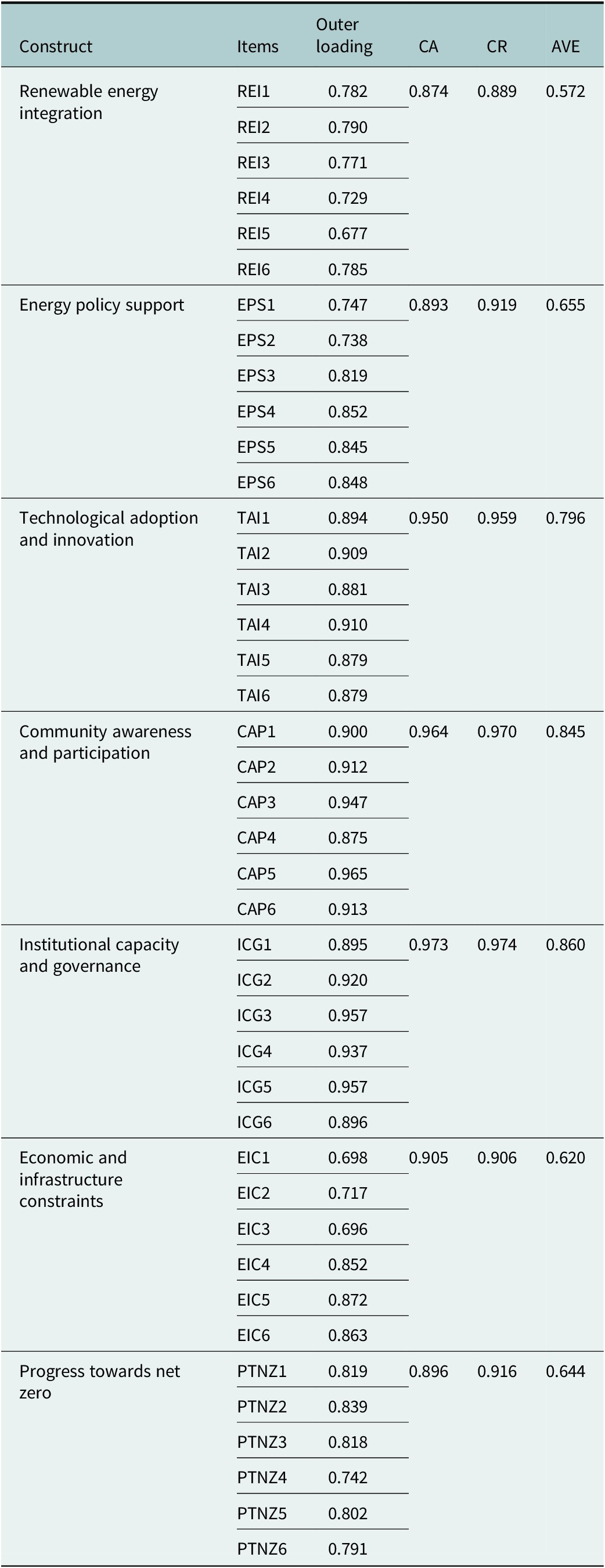
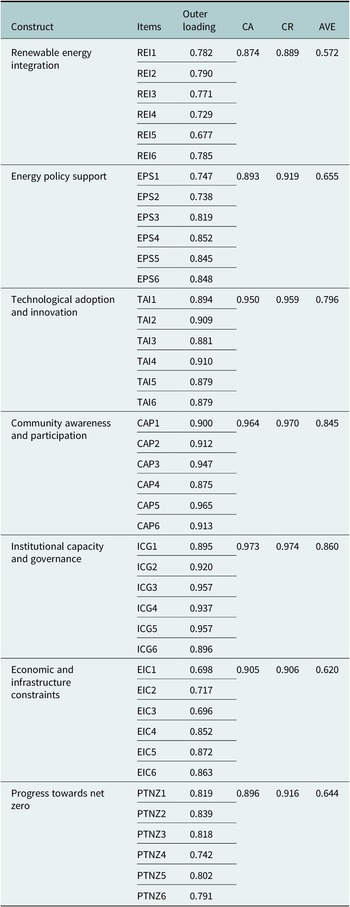
Table 2 presents the construct reliability and validity measures for the seven constructs related to renewable energy and sustainability in net-zero practices. All constructs demonstrated acceptable to excellent levels of reliability and convergent validity based on their Cronbach’s alpha (CA), composite reliability (CR) and average variance extracted (AVE) values. These measures indicated strong internal consistency and convergent validity across all seven constructs, supporting their use in further analysis. The outer loadings for most items were above the recommended threshold of 0.7, indicating good indicator reliability. A few items (REI5, EIC1, EIC2 and EIC3) had loadings slightly below 0.7 but were still acceptable. The CA and CR values for all constructs were well above the recommended 0.7 threshold, demonstrating high internal consistency reliability. The AVE values were all above the 0.5 threshold, confirming convergent validity for each construct (Santos et al., Reference dos Santos and Cirillo2023). The Institutional Capacity and Governance (ICG) construct showed the highest reliability and convergent validity, while Renewable Energy Integration (REI) had the lowest, although still acceptable, values. This suggests that the ICG items are the most closely related and consistent in measuring the intended construct.
Construct reliability and validity
Source: Calculated by the authors.
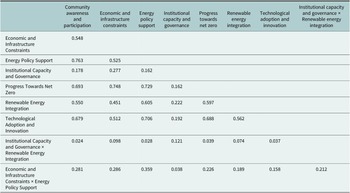
The discriminant validity presented in Table 3. reveals important relationships between the constructs in this study. Community Awareness and Participation strongly correlated with Energy Policy Support (0.763) and Progress Towards Net Zero (0.693). Economic and Infrastructure Constraints show a strong correlation with Progress Towards Net Zero (0.748). Energy Policy Support strongly correlates with Progress Towards Net Zero (0.729) and Technological Adoption and Innovation (0.706). REI demonstrated moderate correlations with most constructs (0.451 to 0.605). Technological Adoption and Innovation exhibit moderate to strong correlations with most constructs, except for ICG. ICG displayed weak correlations with most constructs (0.162 to 0.277). The interaction term (ICG x REI) shows very weak correlations with all constructs, potentially capturing unique variance. High correlations between some constructs (e.g. Community Awareness and Participation, Energy Policy Support and Progress Towards Net Zero) may indicate potential multi-collinearity issues. Most constructs demonstrated adequate discriminant validity, as the correlations between different constructs were generally lower than the square root of their AVE. However, some high correlations warrant further investigation to ensure discriminant validity of the factors. The weak correlations of the interaction term with other constructs suggest that it may capture unique effects that are not explained by the main constructs. These findings provide insights into the construct relationships and overall measurement validity.
Open discriminant validity

Source: Calculated by authors.
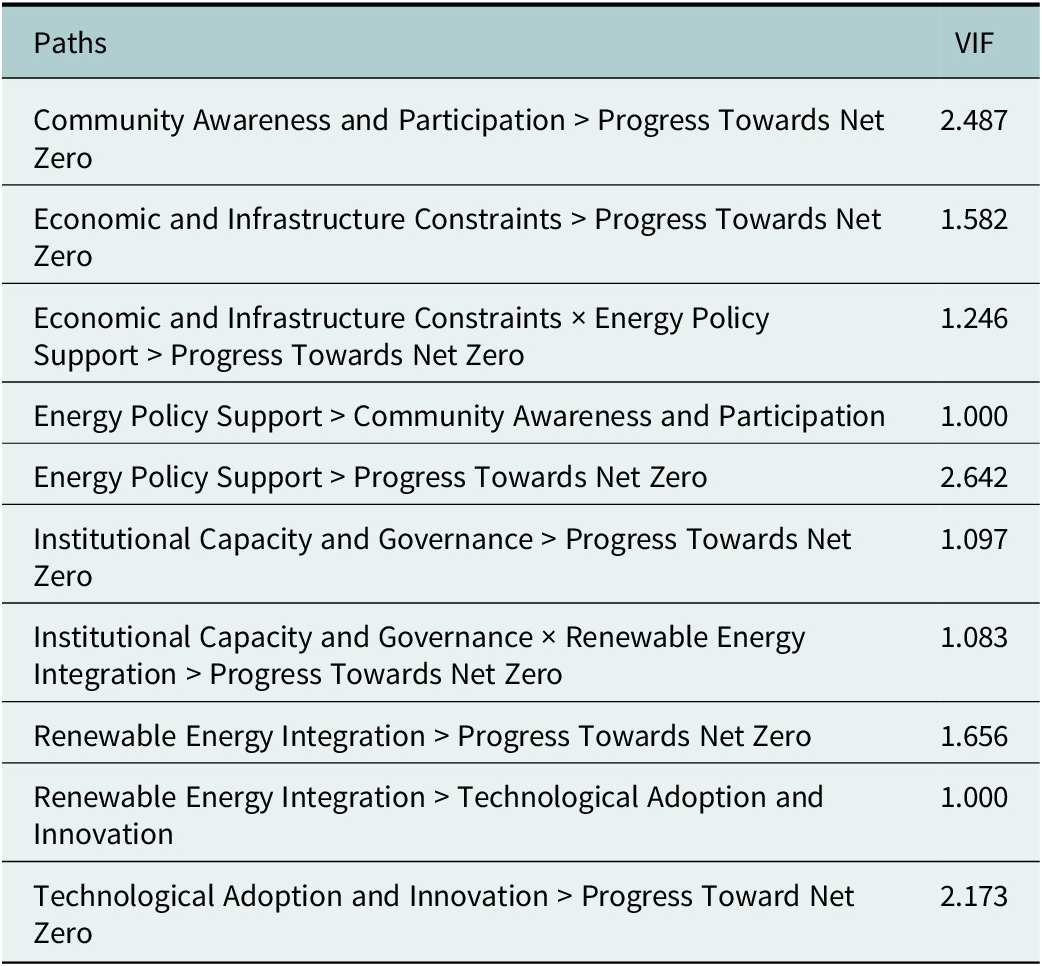
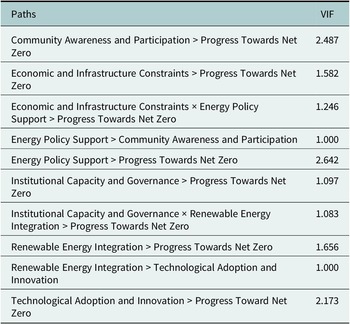
The Variance Inflation Factor (VIF) results presented in Table 4. suggest acceptable levels of multi-collinearity among the predictor variables in the model. All VIF values were below 5, indicating no severe multi-collinearity issues (Kalnins and Praitis, Reference Kalnins and Praitis Hill2025). The highest VIF (2.642) was observed for energy policy support → progress towards net zero, suggesting a moderate correlation with other predictors. Community Awareness and Participation and Technological Adoption and Innovation also showed moderate correlations (VIF > 2). The interaction terms had low VIF values, indicating minimal multi-collinearity. Institutional Capacity and Governance had the lowest VIF among the main effects, suggesting relative independence from other predictors. Two variables (Energy Policy Support → Community Awareness and Participation and REI → Technological Adoption and Innovation) have VIF = 1, indicating no correlation with other predictors in their respective relationships. These VIF values allow for reliable interpretation of the model results. Thus, the VIF results indicated acceptable multi-collinearity levels among the predictors, with all values below 5 and moderate correlations observed for some variables. The VIF values indicate that multi-collinearity is not a significant concern in the structural model. The VIF is commonly used to assess the degree to which a predictor variable is correlated with other predictors in a regression model. By extension, it also serves as a diagnostic tool for potential common method bias (CMB) in SEM (Kock, Reference Kock2015). A VIF value below the threshold of 3.3 is generally considered acceptable, suggesting the absence of multi-collinearity and consequently reducing the likelihood of CMB affecting the model (Hair, Reference Hair2014). Thus, the model maintains statistical integrity, and the structural path estimates are reliable and interpretable without significant deviation from multi-collinearity or CMB.
Collinearity statistics (VIF)
Source: Calculated by authors.
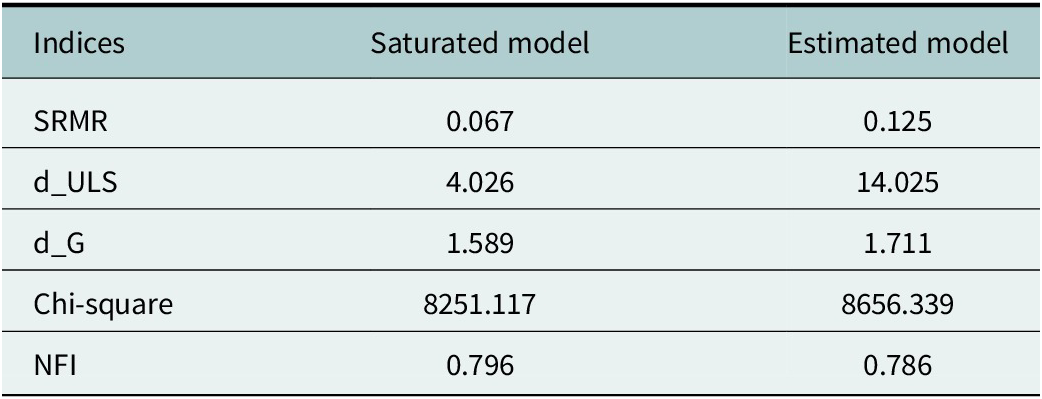
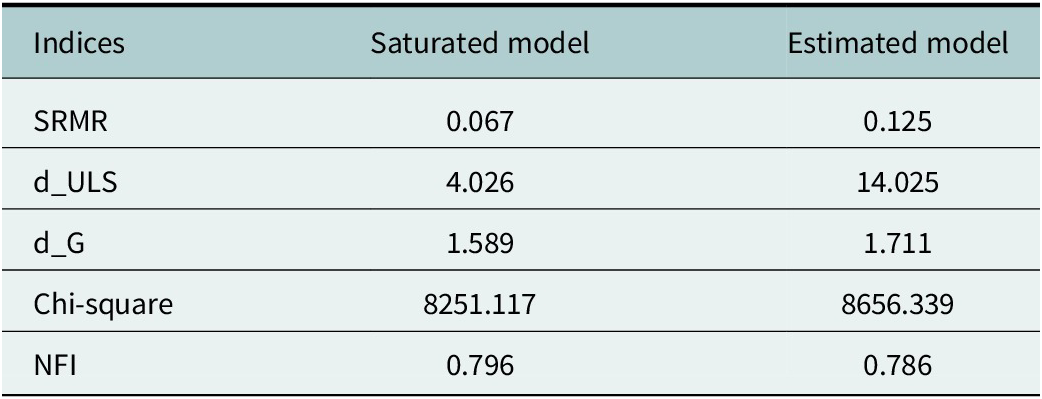
Table 5 shows Model fit indices in PLS-SEM, while available, are not central to model assessment because of their predictive nature, variance-based and prediction-oriented techniques. The reported indices for this study include SRMR(0.125), d_ULS(14.025), d_G(1.711), Chi-square(8656.339), and NFI(0.786), values not meeting conventional CB-SEM thresholds. This is common in cases where the model used in the study is complex. However, some scholars argue that these metrics are experimental in PLS-SEM, lacking universally accepted thresholds (Hair & Sarstedt, Reference Hair and Sarstedt2019; Hair et al., Reference Hair, Hult and Ringle2022; Alamer, Reference Alamer2022; Sparks & Alamer, Reference Sparks and Alamer2025). Instead of relying on fit indices, PLS-SEM evaluation should focus on predictive validity (Q2), explained variance (R2), effect sizes, convergent and discriminant validity and the significance and strength of path coefficients. Slight deviations in fit indices do not warrant model rejection, especially given this study’s predictive and explanatory focus (Hair et al., Reference Hair and Sarstedt2019; Hair, and Alamer, Reference Hair and Alamer2022). Furthermore, in confirmatory research, fit indices can be used cautiously, but in exploratory and predictive research, such as the current study with complex models, such indices cannot be recommended for model rejection. Therefore, although model fit indices were reported for transparency, they were not used as the basis for model rejection or acceptance in the study, as recommended by various scholars viz., (Alamer, Reference Alamer2022; Hair et al., Reference Hair, Hult and Ringle2022; Sparks & Alamer, Reference Sparks and Alamer2025; Hair, and Alamer, Reference Alamer2022). In addition, scholars such as Hair and Alamer (Reference Hair and Alamer2022) opined that fit indices are not essential to evaluate PLS-SEM and pointed out that such criteria are useful only for those studies which are entirely depend on confirmatory objectives within the PLS perspective.
Model fit indices
Source: PLS-SEM model outcome.
Tools
To analyse the gathered data and test the conceptual model, SEM was employed (Zhang et al., Reference Zhang, Chen and Sun2013). This study analysed the relationships among the constructs by employing mediation and moderation analyses. The purpose of employing SEM is to test complex conceptual models that possess multiple latent variables (see Appendix A) and observed indicators and to evaluate the relationship among such variables. SEM can also be employed to assess the validity and reliability of measurement scales and to assess goodness-of-fit of the proposed models (Hu Bentler, Reference Hu and Bentler1999; Kline, Reference Kline2023). SEM is a popular statistical method used in various domains such as psychology, education, marketing, business and so forth. In the current paper, PLS-SEM is employed to achieve the objectives of the study. In this study, PLS-SEM helped in examining the complex relationship between various independent, mediating and moderating variables influencing the progress towards net zero. Additionally, to evaluate the construct with the importance of its contribution to progress towards net-zero efforts, an importance-performance map was drawn to enhance the value of the results of the study.
Results
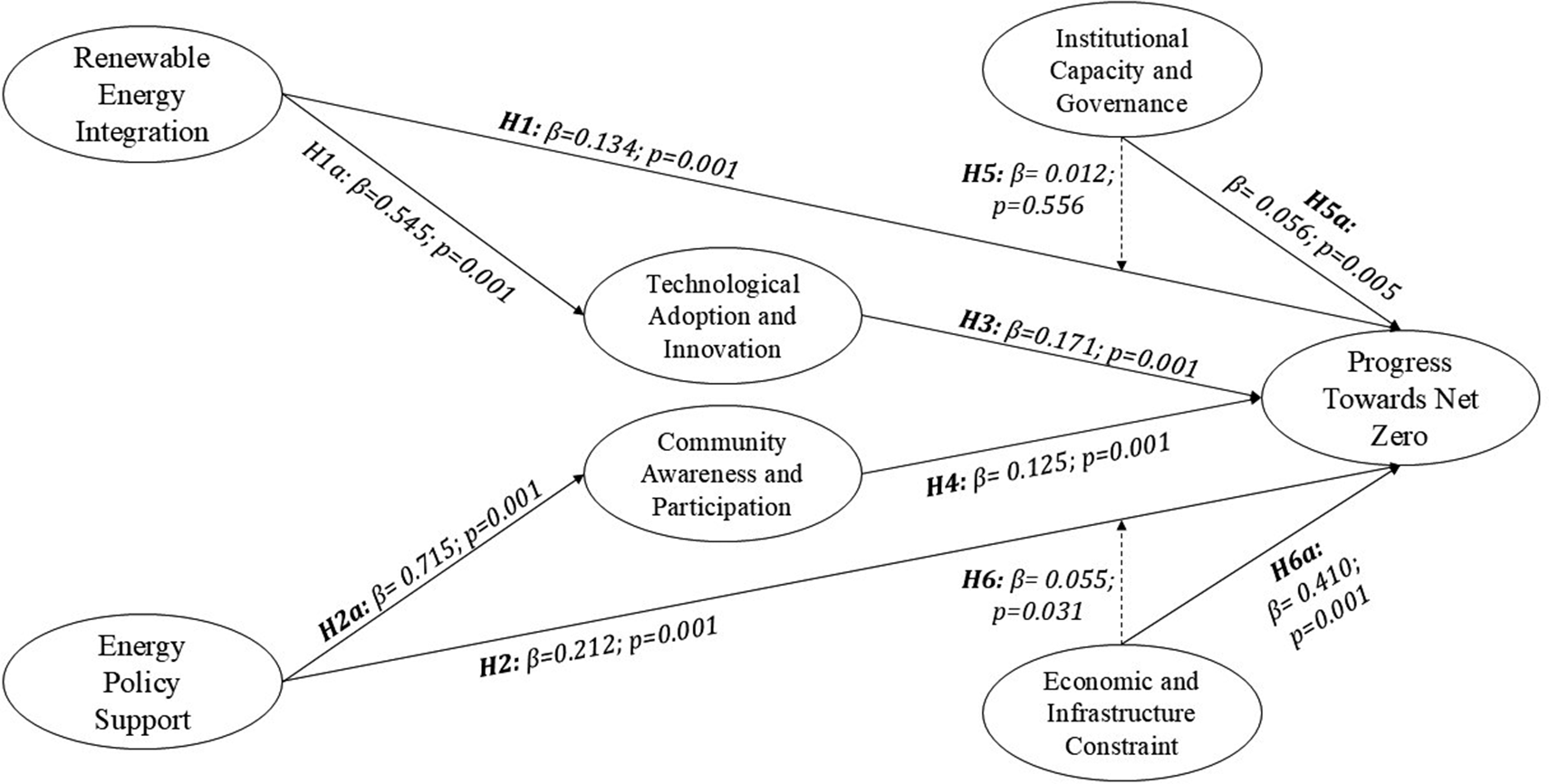
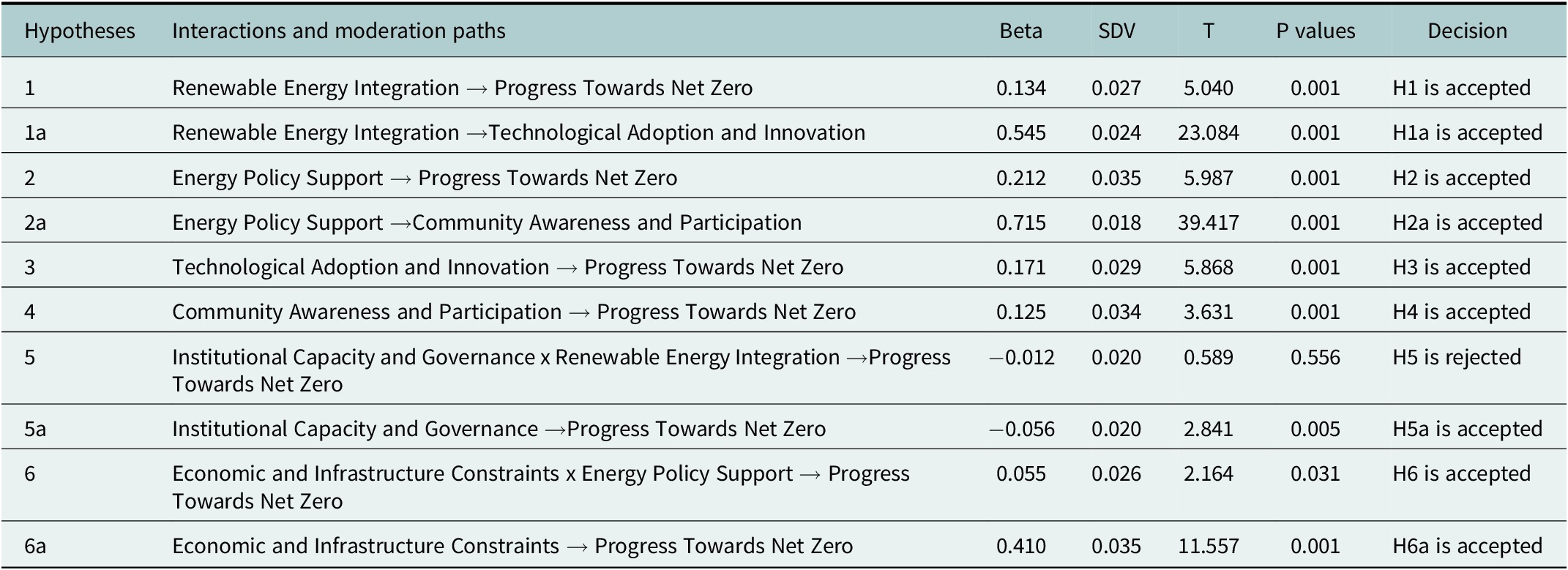
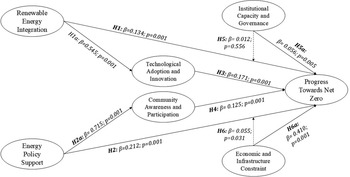
The path coefficients in Table 6 reveal several significant relationships among the variables. Economic and Infrastructure Constraints have the strongest positive impact on Progress Towards Net Zero (β = 0.410, p < 0.001), followed by Energy Policy Support (β = 0.212, p < 0.001). Technological Adoption and Innovation (β = 0.171, p < 0.001) and REI (β = 0.134, p < 0.001) also positively influenced Progress Towards Net Zero. Community Awareness and Participation showed a smaller but significant positive effect (β = 0.125, p < 0.001). Interestingly, ICG has a slight negative impact (β = −0.056, p = 0.005). The interaction between Economic and Infrastructure Constraints and Energy Policy Support has a small positive effect (β = 0.055, p = 0.031), while the interaction between ICG and REI is not significant (β = −0.012, p = 0.556). Energy Policy Support strongly influenced Community Awareness and Participation (β = 0.715, p < 0.001), and REI had a substantial positive effect on Technological Adoption and Innovation (β = 0.545, p < 0.001). These findings suggest that economic factors, policy support and technological advancements are key drivers of progress towards net-zero emissions.
Path coefficients
Source: Calculated by authors.
The findings presented in Table 7 reveal two significant pathways contributing to progress towards net-zero emissions. The technological pathway demonstrates that REI indirectly contributes to net-zero progress through technological adoption and innovation, with a positive indirect effect of 0.093 (t-statistic: 5.649, p-value: 0.000). The social pathway shows that Energy Policy Support indirectly contributes to net-zero progress through Community Awareness and Participation, with a positive indirect effect of 0.090 (t-statistic: 3.613, p-value: 0.000). Both pathways exhibited statistically significant indirect effects, with the technological pathway showing a slightly stronger effect. These results highlight the crucial roles of both technological and social factors in advancing net-zero targets, emphasising the importance of REI in driving innovation and energy policies to foster community engagement.
Specific indirect effects

Source: Calculated by authors.
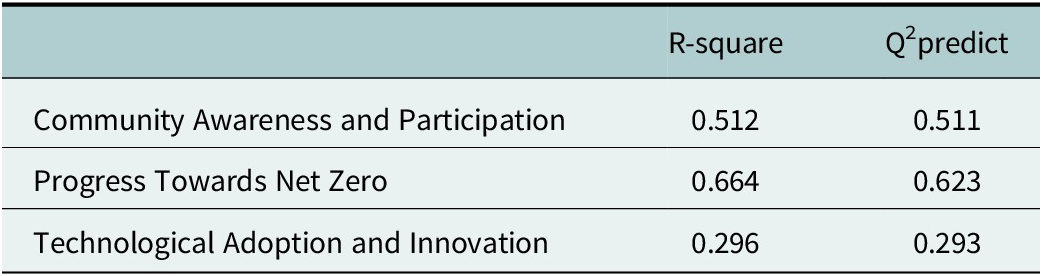
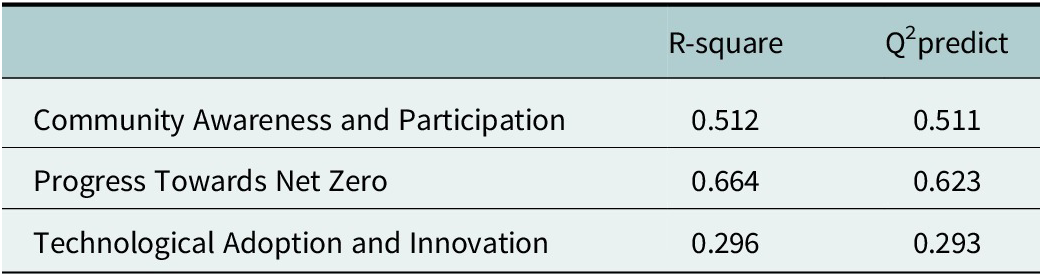
Table 8 presents the R-squared and Q2predict values for the three key areas. The R-squared values indicate the proportion of variance explained by the model, whereas Q2predict assesses the model’s predictive performance. Progress Towards Net Zero showed the highest R-squared and Q2predict values, suggesting a stronger model fit and predictive capability in this area compared to the others. Community Awareness and Participation demonstrate moderate values, whereas Technological Adoption and Innovation exhibit the lowest values among the three categories.
R-square – overview
Source: Calculated by authors.
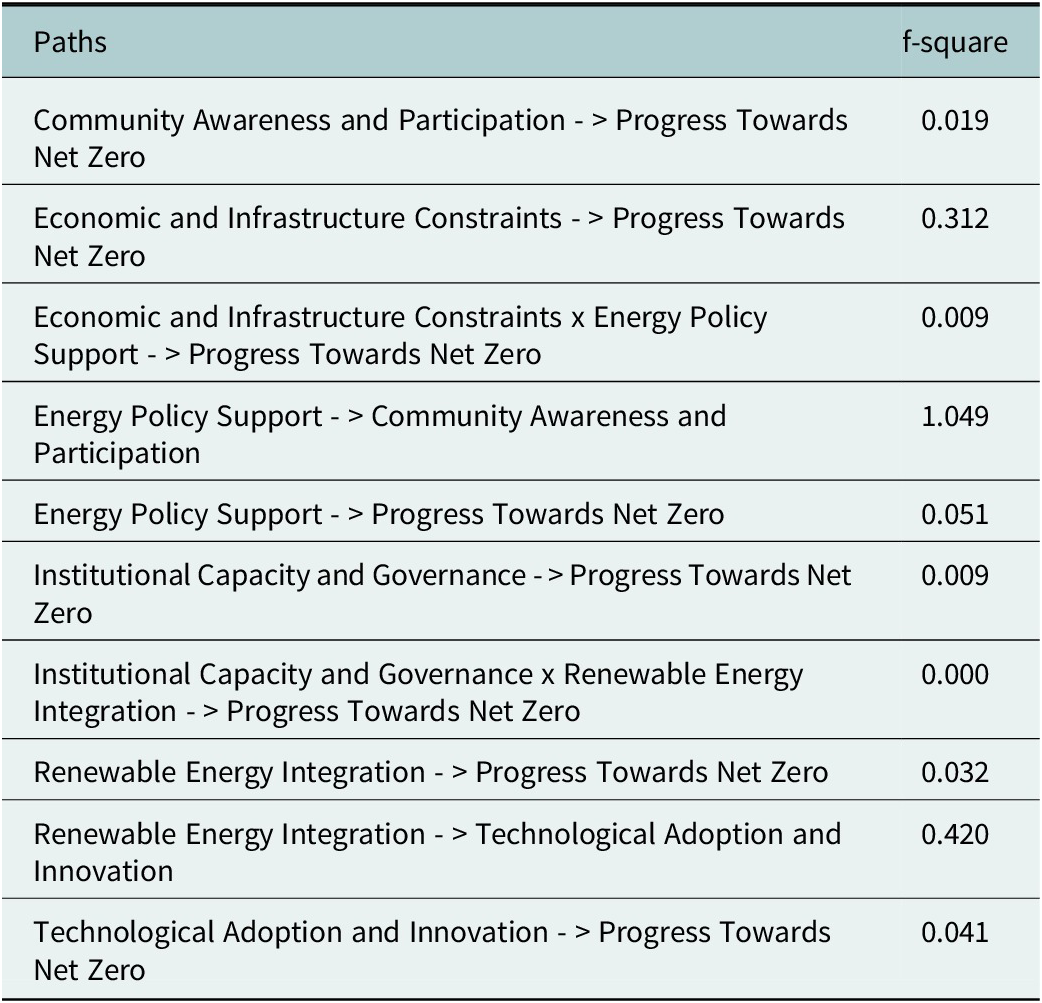
Interpreting the f-square values in Table 9 reveals varying effect sizes across the relationships in the study. Economic and Infrastructure Constraints demonstrated a medium effect (f-square = 0.312) on Progress Towards Net Zero, underscoring the significance of addressing these factors in advancing net-zero goals. Energy Policy Support exhibits a very large effect (f-square = 1.049) on Community Awareness and Participation, highlighting its crucial role in fostering community engagement.
-
▪ The other relationships show small or negligible effects on Progress Towards Net Zero:
-
▪ Energy Policy Support (f-square = 0.051)
-
▪ Community Awareness and Participation (f-square = 0.019)
-
▪ Economic and Infrastructure Constraints x Energy Policy Support (f-square = 0.009)
-
▪ Institutional Capacity and Governance (f-square = 0.009)
-
▪ Institutional Capacity and Governance x Renewable Energy Integration (f-square = 0.000)
-
▪ Renewable Energy Integration (value not provided)
f-square – list
Source: Calculated by authors.
These findings suggest complex interactions or indirect influences within the system, as most factors have minimal direct effects on the Progress Towards Net Zero. The results emphasise the importance of focusing on economic and infrastructure improvements to advance net-zero objectives. Additionally, the strong impact of Energy Policy Support on Community Awareness and Participation indicates its potential as a key driver for engaging communities in the transition to net-zero emissions.
Importance-performance map analysis (IPMA)
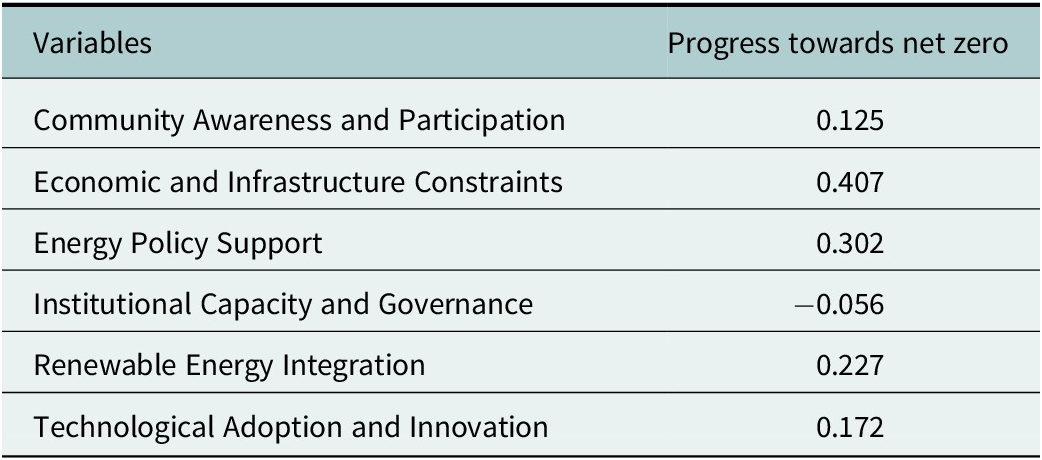
The total effects shown in Table 10 represent the combined direct and indirect influences of each factor on progress towards net-zero emissions. Economic and Infrastructure Constraints have the strongest positive effect (0.407), followed by Energy Policy Support (0.302) and REI (0.227). Technological Adoption and Innovation (0.172) and Community Awareness and Participation (0.125) also contributed positively. ICG showed a slight negative effect (−0.056), potentially hindering progress. These values indicate the relative importance of each factor in driving progress towards net-zero emissions. Focusing on improving economic and infrastructure conditions, strengthening energy policies and enhancing REI may yield the most significant advancements in achieving net-zero goals.
Construct total effects for [progress towards net zero]

Source: Calculated by authors.
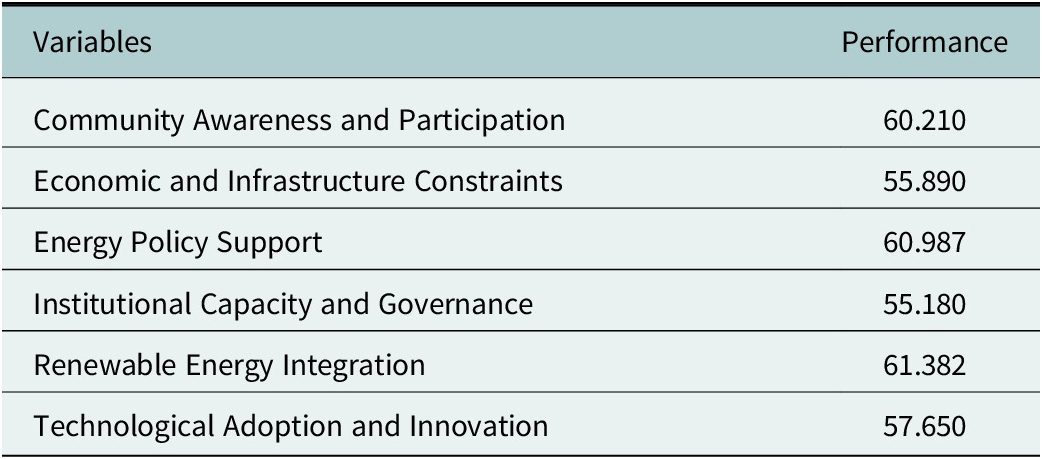
Table 11 shows the importance-performance map for progress towards net zero reveals varying levels of performance across the key constructs. REI (61.382) and Energy Policy Support (60.987) show the highest performance, indicating strong progress in these areas. This suggests the effective implementation of renewable energy technologies and supportive policy frameworks. Community Awareness and Participation (60.210) also demonstrated relatively high performance, implying the successful engagement of local communities in net-zero initiatives. Technological Adoption and Innovation (57.650) shows moderate performance, suggesting room for improvement in embracing and developing new technologies for emission reduction. Economic and Infrastructure Constraints (55.890) and ICG (55.180) exhibit the lowest performance scores. This indicates significant challenges in these areas, potentially hindering overall progress towards net-zero goals. Addressing these constraints and improving institutional frameworks may be crucial for accelerating India’s transition to a net-zero economy.
Importance-performance map [Progress Towards Net Zero] (constructs)

Source: Calculated by authors.
Study 2: Qualitative phase
This study attempted to enhance the validity of the findings of the quantitative analysis by adding a discourse analysis of 12 published interviews on the topic of the study. The study used many key words to identify relevant published interviews through various websites and found 17 interviews, of which 12 were selected for further analysis based on their relevance to the purpose of the study.
The study employed a qualitative research coding procedure with the help of NVivo by systematically identifying and counting the presence of predefined themes (nodes) within each interview. This approach provides a structured overview of how frequently and prominently each theme is discussed across expert perspectives, offering a quantitative dimension to the qualitative insights.
Qualitative analysis involved:
-
✓ Theme Definition: Identifying key themes (nodes) from published interviews and exploring any additional moderating variables that may play a vital role in enabling net-zero practices.
-
✓ Coding: The interview transcripts were systematically coded against these expanded themes.
-
✓ Quantification: Summarising the frequency of each theme across interviews.
-
✓ Visualisation: Generating visualisations to represent theme occurrences and their co-occurrences.
Coding themes (nodes)
With the help of Nvivo, the following themes were derived from the published interviews and used for coding the interview transcripts (Byrne, Reference Byrne2022). The themes identified in line with the study objective are listed below:
-
▪ Renewable Energy Integration (REI): The process of incorporating renewable energy sources into the energy mix to achieve net-zero targets.
-
▪ Technology Adoption and Innovation (TAI): The role of new technologies and innovative approaches in driving net-zero progress.
-
▪ Energy Policy Support (EPS): The influence of government policies, regulations, and support mechanisms.
-
▪ Community Awareness and Participation (CAP): Involvement of communities and stakeholders in the energy transition.
-
▪ Economic and Infrastructure Constraints (EIC): Economic and infrastructural barriers to achieving net-zero.
-
▪ Net-Zero Progress (NZP): Direct mentions and discussions of progress towards net-zero targets.
-
▪ Institutional Capacity (IC): The ability of institutions (governmental, nongovernmental and private sector) to effectively plan, implement and enforce policies and projects related to net-zero. This includes aspects such as regulatory frameworks, governance and administrative efficiency.
-
▪ Political Economy Factors (PEF): The interplay of political and economic forces that influence decision-making and resource allocation in the context of net-zero transitions. This includes political will, vested interests, power dynamics and geopolitical considerations.
-
▪ Access to Finance (AF): The availability and accessibility of financial resources (e.g. investments, loans and grants) for net-zero initiatives, particularly in emerging economies. This includes discussions on financial mechanisms, risk mitigation and international financial flows.
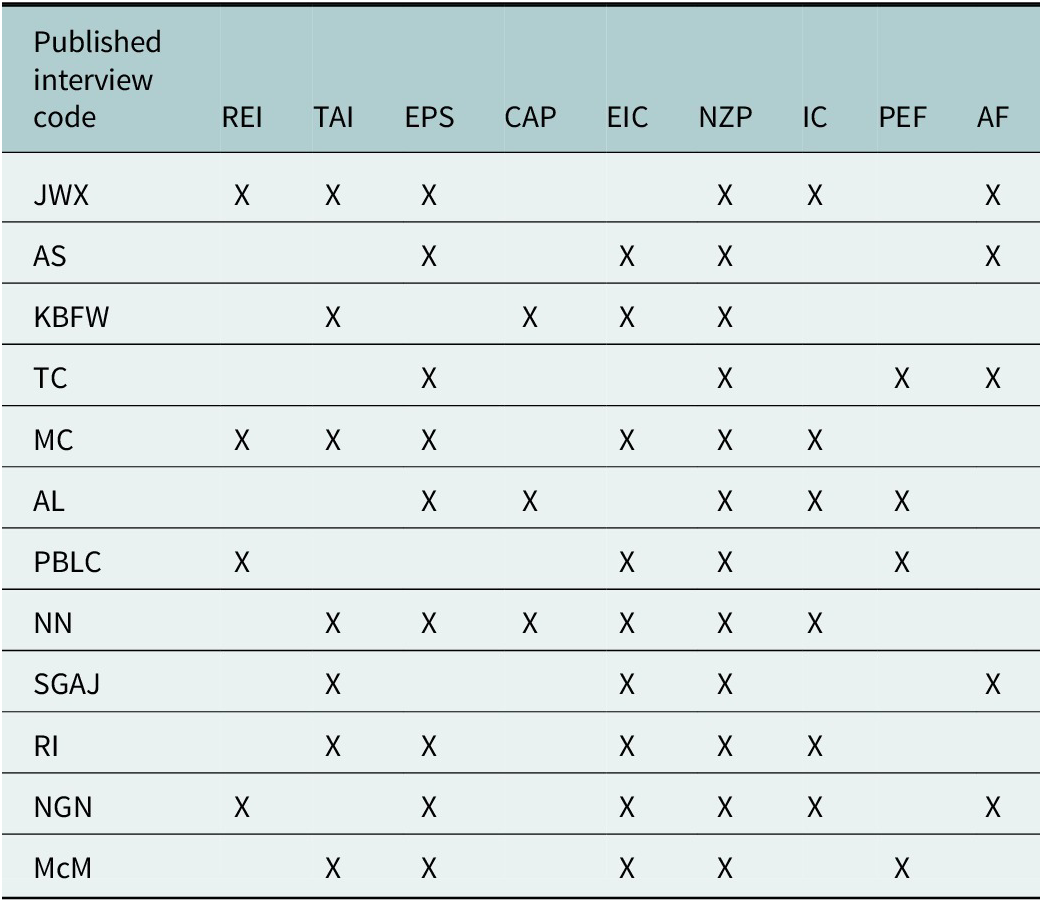
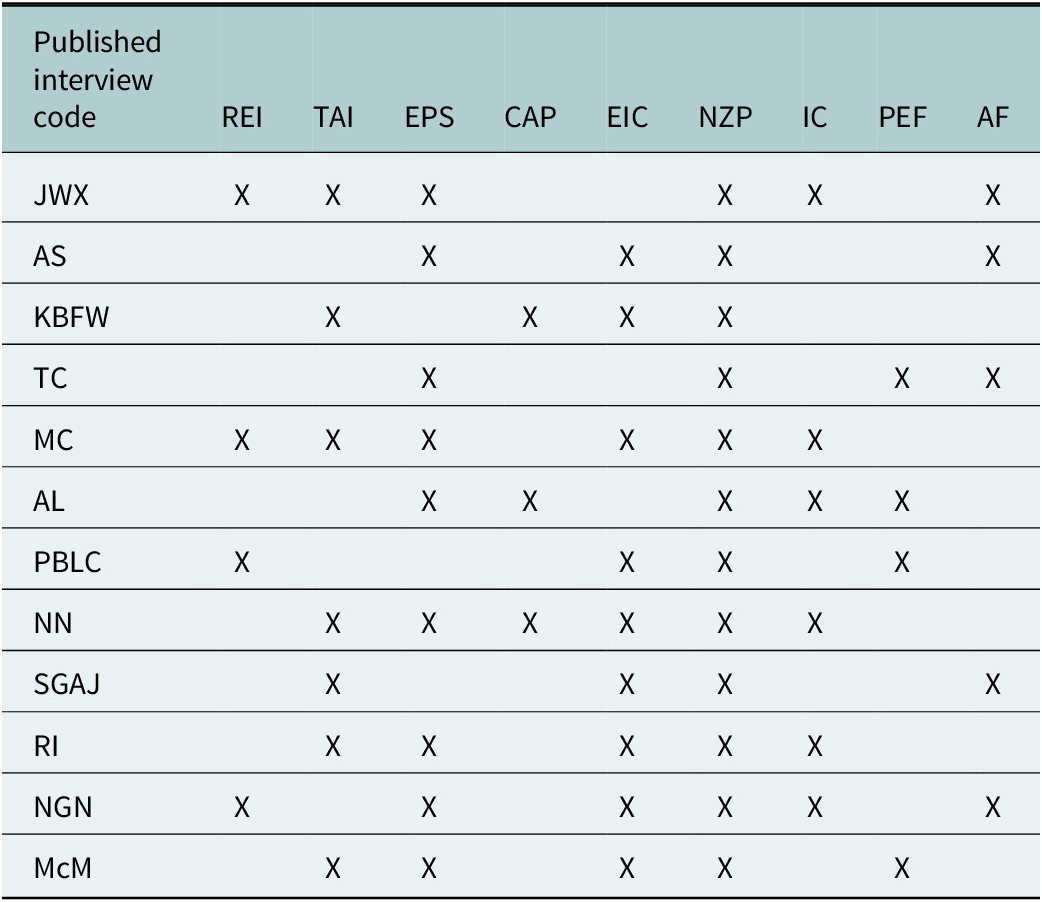
Tables 12 and 13 provide the matrix of themes occurrence and quantification of the same where net-zero progress remains a universal theme, discussed in all 12 interviews, reassuring its central importance. However, Energy Policy Support and Economic and Infrastructure Constraints continue to be the most frequently discussed themes, appearing in 75% of the interviews. This highlights their perceived significance in both enabling and hindering net-zero transitions. Another important aspect identified from the discourse is that Technology Adoption and Innovation is consistently significant, discussed in over half of the interviews (58.3%), highlighting its role in driving the transition.
Theme occurrence summary

Source: Published interviews.
Coding matrix of occurrence of themes in discourse analysis of published interviews
Source: Published interviews.
In the discourse analysis, Institutional Capacity emerged as a moderately discussed theme, present in 50% of the interviews. This highlights the importance of robust institutional frameworks for effective net-zero implementation. Interestingly, Access to Finance was discussed in 41.7% of the interviews, emphasising the ongoing challenges and importance of financial resources for net-zero initiatives, particularly in emerging economies. This can also be considered an additional moderating variable for net-zero progress, especially in emerging economies.
REI and Political Economy Factors were discussed in 33.3% of the interviews, suggesting their importance, but perhaps they attracted a more specific focus in the expert discussions. Notably, the Political Economy Factor can also become an additional moderating factor that enables net-zero transitions. In addition, Community Awareness and Participation remains the least frequently discussed theme (25.0%), which might suggest that it is either less central to the expert discussions or is implicitly covered within other broader themes.
Theme co-occurrence
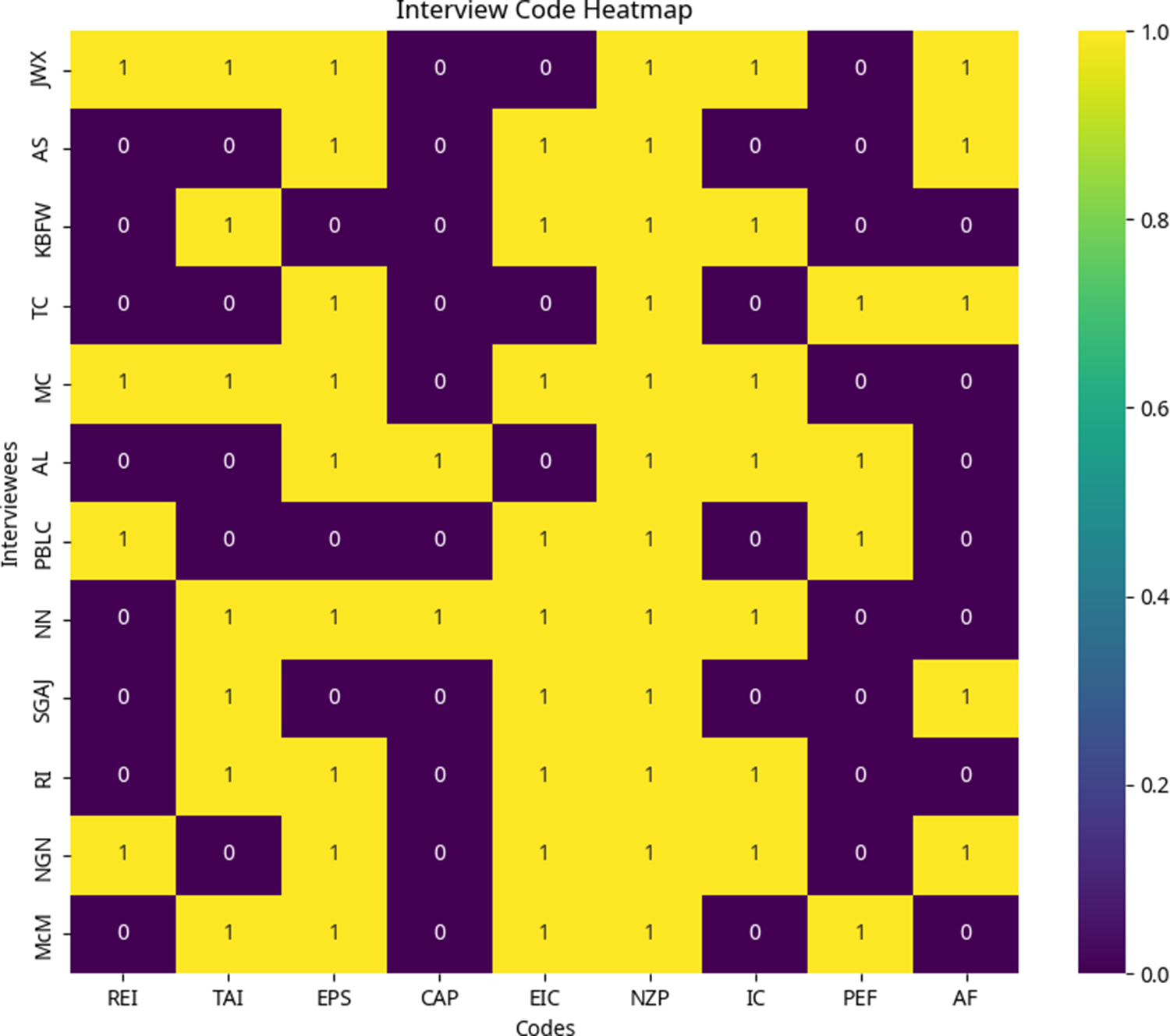
The heatmap shows the co-occurrence of themes, indicating how frequently different themes were discussed in the interviews (Figure 4). The strong co-occurrence between Energy Policy Support and Economic and Infrastructure Constraints (six interviews) persists, reinforcing their interconnectedness as critical factors. This aligns with survey findings that economic and infrastructure constraints moderate the relationship between energy policy support and net-zero progress.
Interview Code Heatmap.
Source: Discourse analysis of interviews.

Institutional Capacity shows notable co-occurrence with Energy Policy Support (five interviews) and Economic and Infrastructure Constraints (five interviews). This suggests that discussions on policy and economic challenges often involve considerations of the institutional frameworks required to address them. In contrast, Access to Finance co-occurs significantly with Economic and Infrastructure Constraints (four interviews) and Energy Policy Support (four interviews), which is logical given that financial resources are often a key constraint and policy plays a role in facilitating access to them. In addition, Political Economy Factors show some co-occurrence with Energy Policy Support (three interviews) and Economic and Infrastructure Constraints (three interviews), indicating that the broader political and economic landscape influences policy decisions and the feasibility of overcoming constraints. The co-occurrence patterns indicate the interconnected nature of these themes, where challenges and solutions in one theme often have implications for others in achieving net-zero progress in developing economies. This enhanced quantified analysis of the 12 expert published interviews provides a more comprehensive understanding of the factors influencing net-zero transitions, further identifying additional moderating variables such as institutional capacity, political economy factors, and access to finance. These findings reinforce the critical roles of energy policy, economic and infrastructural considerations and technological advancements. Furthermore, the analysis highlights the significant interrelationships between these factors, particularly how institutional capacity and access to finance are discussed in conjunction with policy and economic constraints. These outcomes provide valuable insights for policymakers and researchers aiming to accelerate progress towards net-zero emissions.
Study 3: Analysis of objective indicators for net-zero progress in India
This study also attempted to supplement the survey and discourse analysis of published interviews to enhance the validity of its findings in relation to net-zero progress with objective indicators from Indian government reports and international agencies.
Achieving net-zero emissions is a significant challenge for India, as it must balance economic growth with environmental sustainability. This analysis integrates objective indicators from official sources, such as the IRENA Renewable Capacity Statistics, 2024, MoEF&CC Annual Report, 2024–25 and MoSPI Energy Statistics India, 2025. These indicators validate the findings, assess policy effectiveness, provide benchmarks and contextualise India’s global energy transition efforts.
Renewable energy integration and its impact
India is strongly committed to the use of renewable energy. Official data show significant increases in renewable energy capacity and its contribution to the national energy mix. The total installed electricity generation capacity grew at a 5.42% CAGR over the last decade. The capacity of renewable energy sources (RESs) within the utility sector saw a remarkable 15.60% CAGR, far exceeding overall capacity growth. This surge from 34,988 MW in 2014 to 143,645 MW in 2024 demonstrates India’s dedication and progress in expanding its renewable energy infrastructure, with solar and wind power dominating its portfolio (MoSPI Energy Statistics India, 2025, Table 2.3 (A) & (B) [1]).
Policy implementation metrics and their impact
Effective policies are crucial for accelerating the net-zero transition. India’s policies have led to tangible outcomes, particularly in terms of grid integration and emissions mitigation. The grid-interactive renewable power capacity increased from 31,692 MW in 2014 to 134,690 MW in 2024, a 325.01% growth, showing successful grid integration policies (MoSPI Energy Statistics India, 2025, Chapter 2.5, Table 2.5 [1]). Off-grid/decentralized renewable energy systems also grew significantly by 410.55% from 2014 to 2024, promoting distributed generation (MoSPI Energy Statistics India, 2025, Chapter 2.6, Table 2.6) [1]. The MoEF&CC Annual Report, 2024–25 outlines policy initiatives aligned with India’s Nationally Determined Contributions (NDCs), aiming to reduce GDP emissions intensity by 45% by 2030 from 2005 levels. Furthermore, policies such as the Deen Dayal Upadhyaya Gram Jyothi Yojana (DDUGJY), Smart Meters National Program, Street Lighting National Programme and National Green Hydrogen Mission supported India’s energy transition by increasing 35-fold installed solar energy capacity from 2.63 GW in March 2014 to 92.12 GW in October 2024 (MoEFCC, 2024). Furthermore, India has attempted to implement the Perform, Achieve, and Trade scheme to promote energy efficiency in energy-intensive industries, which evolved through seven cycles spanning 13 sectors and resulted in significant cumulative energy savings (MoEFCC, 2024). In addition, an attempt has been made in India to transform the transport sector by shifting towards electromobility and biofuels, which is backed by the Faster Adoption and Manufacturing of (Hybrid and) Electric Vehicles (FAME) Scheme and Ethanol Blended Petrol Programme (EBP), where EBP has a target of achieving 20% ethanol blending in petrol by 2025–26 (MNRE, 2023; BEE, 2024; MoEFCC, 2024).
The path to net zero
India’s long-term low-carbon development strategy, submitted to the UNFCCC, outlines a comprehensive plan for achieving net-zero emissions by 2070. This strategy is built on the foundation of its updated NDCs, which include ambitious targets such as achieving approximately 50% cumulative electric power installed capacity from non-fossil fuel-based energy resources by 2030 and creating an additional carbon sink of 2.5 to 3 billion tonnes of CO2 equivalent through additional forest and tree cover by 2030. The nation’s approach underscores its commitment to sustainable development, ensuring that economic growth aligns with ecological integrity and contributes fairly to the global effort to combat climate change (MoEFCC, 2024).
Emission reduction metrics as an outcome of policy and infrastructure support
India is committed to achieving net-zero emissions by 2070 and has made significant strides in decoupling economic growth from greenhouse gas (GHG) emissions. Between 2005 and 2020, the emission intensity of India Gross Domestic Product (GDP) was reduced by 36%. This progress puts the country on track to achieve its updated Nationally Determined Contribution (NDC) target of a 45% reduction in emission intensity from 2005 levels by 2030 (MoEFCC, 2024).
Quantitative highlights of emission reduction
Total GHG emissions (2020): India’s total GHG emissions in 2020, excluding Land Use, Land-Use Change, and Forestry (LULUCF), were 2,959 million tonnes of CO2 equivalent (CO2e). When the LULUCF sector, which acts as a net sink, was included, the total emissions were 2,437 million tonnes of CO2e.
Renewable energy and mitigation actions
India has been actively promoting non-fossil fuel-based energy sources to align with its NDC goal of achieving approximately 50% cumulative electric power installed capacity from non-fossil fuel-based resources by 2030 (MoEFCC, 2024).
Installed capacity:
-
▪ As of October 2024, the share of non-fossil sources in India’s installed electricity generation capacity has reached 46.52%.
-
▪ The total installed capacity of renewable power, including large hydropower, was 203.22 GW.
-
▪ Solar energy capacity saw a remarkable 35-fold increase, surging from 2.63 GW in March 2014 to 92.12 GW by October 2024.
-
▪ Wind energy capacity more than doubled from 21.04 GW in March 2014 to 47.72 GW by October 2024.
In the 2023–24 period (up to December), renewable energy sources helped avoid 135.61 million tonnes of CO2 emissions. This includes 69.40 MtCO2 from solar, 57.47 MtCO2 from wind, 6.66 MtCO2 from small hydro and 2.09 MtCO2 from biomass (MoEFCC, 2024).
These quantitative metrics highlight India’s proactive stance on climate change and its steady progress towards net-zero and emission reduction targets through a combination of policy-driven mitigation actions and a significant expansion of its renewable energy portfolio. This reinforces and validates the major findings of the perception analysis involved in the study that policy support, REI and infrastructure support promote net-zero progress (Press Information Bureau, 2024; MoEFCC, 2024).
International benchmarking: India’s position in the global context
India’s net-zero progress is significant. The IRENA Renewable Capacity Statistics, 2024 confirms India as one of the fastest-growing renewable energy markets, especially in solar and wind energy. This aligns with domestic data, thereby validating India’s reporting. The share of renewable energy in electricity capacity rose from 37.7% in 2019 to 43.5% in 2021, positioning India favourably against global averages. India ranks among the top five countries globally in terms of absolute renewable energy capacity, showcasing consistent growth and scale compared to other major emerging economies(IRENA Renewable Capacity Statistics, 2024, extracted from india_irena_data.txt [2]).
Economic and infrastructure indicators: Enabling conditions for net-zero transition
The net-zero transition requires substantial economic and infrastructure development. The MoSPI Energy Statistics India, 2025 data show a strategic shift in India’s energy infrastructure towards clean energy, with renewable energy growth (15.60% CAGR) significantly outpacing conventional sources. This reflects billions of dollars in investments (estimated at $100–200 billion) and significant employment generation. The share of renewable energy in grid capacity increased from 12.75% to 30.48%, demonstrating India’s capability for large-scale REI. Targeted infrastructure development in states with high renewable energy potential further supports this regional economic growth.
These objective indicators reveal that policy and infrastructure support transformed the rapid adoption and growth of REI over the past decade. This reinforces the findings of this study that policy and infrastructure support are essential for net-zero progress.
Discussion and implication
The primary purpose of this study was to examine how REI and energy policy support contribute to progress towards net-zero emissions in emerging economies. The SEM through mediation and moderation analysis offers significant insights, both theoretically and practically, within the purview of sustainable energy transitions.
Renewable energy integration and energy policy support as direct enablers
Regarding the first research question, the findings from the analysis clearly establish the impact of REI (β = 0.134, p < 0.001) and energy policy support (β = 0.212, p < 0.001) on progress towards net-zero emission goals. These findings are in line with the energy transition theory (Araújo, Reference Araújo2014) and the policy feedback mechanism (Lockwood, Reference Lockwood2022), where strong energy policy frameworks accelerate the adoption of clean technologies and promote an environment for change. Interestingly, energy policy support showed a higher total impact (0.302) with a performance score (60.987), indicating that a strong and well-implemented policy is not only revolutionary but also relatively well executed from an emerging economy perspective.
These findings reinforce the argument that technical potential alone does not have an impact; targeted policy interventions are crucial to arrange renewable energy infrastructure and investments (Blumsack and Xu, Reference Blumsack and Xu2011; Li and Zhang, Reference Li and Zhang2025). Economic and infrastructure constraints show a lower performance score (55.89), which reveals the gap between policy intent and systematic preparedness, suggesting that emerging economies like India must simultaneously manage infrastructural bottlenecks to reap the benefits of energy transitions.
Technological and social pathways as mediating enablers
In relation to the second research question, a mediation analysis was performed, and the results revealed that technology adoption and innovation mediate the relationship between REI and net-zero progress (β = 0.093, p < 0.001). This shows that the technological pathway demonstrates the innovation spillover effect of REI, which is consistent with the diffusion of innovation theory, where initial infrastructure investments support broader technological adoption (Palm, Reference Palm2022; Wang et al., Reference Wang, Wen, Xu and Li2024).
Furthermore, the mediation results confirm that community engagement and social participation establish a significant relationship between energy policy support and net-zero progress (β = 0.090, p < 0.001). This social pathway highlights the significance of community engagement and social participation. This suggests that effective policies must be clearly understood, accepted and co-owned by the public to achieve actual progress in terms of net-zero emissions. These mediation effects align with the concept of economic modernisation, where technological advancement and stakeholder involvement are essential for sustainable net-zero progress.
Additionally, moderation analysis was performed in addition to the mediation analysis in relation to the second research question. The analysis revealed mixed results for the three countries. The interaction between economic and infrastructure constraints and energy policy support confirms a small but significant impact (β = 0.055, p = 0.031), indicating that infrastructural preparedness can amplify policy effectiveness. This suggests that investing in grid modernisation, logistics and institutional infrastructure can help overcome the implementation gaps that are often faced in emerging economies such as India (Amrutha et al., Reference Amrutha, Balachandra and Mathirajan2018; Patil et al., Reference Patil, Tiwari, Kavitkar, Makwana, Mukhopadhyay, Aggarwal, Betala and Sood2025).
Conversely, ICG not only revealed a non-significant moderating effect on the link between renewable integration and net-zero progress (β = −0.012, p = 0.556), but also had a slightly negative direct impact (β = −0.056, p = 0.005). This could highlight issues such as bureaucratic inefficiency, regulatory overlap or governance rigidity, even in the existence of favourable macro-level policies (Marquardt, Reference Marquardt2014; Ndubuisi et al., Reference Ndubuisi, Okere and Iheanacho2023; Hwang and Venter, Reference Hwang and Venter2025). The lowest performance score (55.180) in this aspect supports the argument that institutional reforms must precede or accompany energy transition reform (Berrich et al., Reference Berrich, Mafakheri and Dabbou2024).
The study also attempted to perform an importance-performance map analysis, which revealed that REI, energy policy support and economic and infrastructure aspects show the highest importance in driving progress towards the net-zero transition. However, their performance varies owing to the negative effects of infrastructure and governance. These findings suggest that policymakers should prioritise high-impact areas, such as infrastructure and governance, for reforms and investment. They also need to maintain significant momentum in REI and policy design, especially in terms of innovation and awareness building among the public.
The study’s focus on India as a single-country analysis offers significant advantages for exploring net-zero emissions dynamics in emerging economies. This approach aligns with established practices in social science research when investigating complex phenomena in real-world settings. Single-country case studies provide rich, context-specific accounts that are often unattainable through broader analyses. The interactions of REI, policy support, technology adoption, and socio-economic constraints within India’s development trajectory require such focused investigation. This approach revealed relationships that might not be clear in multi-context studies, enabling a deeper understanding of causal mechanisms within a representative emerging economy. India serves as a representative case for understanding net-zero transitions owing to its climate targets, diverse energy landscape and policy innovation (Prajapati et al., Reference Prajapati, Guo, Cai and Prasad2025). India’s status as a culturally diverse nation, with regional variations in socioeconomic conditions and governance structures, provides an ideal environment for studying policy implementation. This internal diversity allows for the observation of how factors influence net-zero progress across different sub-national settings, offering insights relevant to other emerging economies. This study captures these complexities, providing an empirical understanding of how developing nations can achieve net-zero emissions, reflecting patterns pertinent to the Global South. Although the study is rooted in the Indian context, its findings are significant for other emerging economies. This transferability is not about direct generalisability in a statistical sense but rather about the applicability of the insights and mechanisms identified in similar contexts, enabling informed decision-making and policy formulation elsewhere.
Implications and recommendations
The role of the private sector and public-private partnerships (PPPs)
The study’s findings highlight the significant need for technological advancement and infrastructural capabilities to promote net-zero progress. For this purpose, the scale of investment needed exceeds public sector capacity, making private sector participation essential for energy transition. Our research emphasises technology, innovation and infrastructure, where the private sector provides capital, R&D and operational efficiency. The private sector drives technological advancements for decarbonisation through renewable energy manufacturing, energy storage development and grid infrastructure financing. However, the high-risk nature of green projects can deter private investment, making public–private partnerships (PPPs) crucial. PPPs align private sector goals with public policy objectives, with the government mitigating risks and creating investment-enabling conditions. The public sector offers policy certainty, financial guarantees, streamlined permitting and energy offtake guarantees, creating stability for private investments in transmission, hydrogen hubs and energy storage. Well-structured PPPs can include community benefit-sharing agreements while maintaining regulatory oversight to ensure transparency and alignment with public interest.
Equity implications of net-zero transition pathways
A critical implication of our findings is that the pathways to net-zero are not uniformly equitable. The renewable energy transition creates winners and losers, requiring proactive policy interventions. Our model identifies two mediating pathways with significant equity implications for emerging economies, such as India. In the first pathway, where technology adoption mediates REI and net-zero progress, the risk of increasing inequalities is high. Urban and wealthy populations benefit from their capacity to adopt technologies such as rooftop solar and electric vehicles, while skilled labourers such as engineers gain from new green jobs. However, this approach marginalises low-income and rural households through high costs and lack of credit access. These groups bear transition costs through regressive energy tariffs and face workforce displacement in the fossil fuel sector. The second pathway, in which community participation mediates energy policy and net-zero progress, offers more equitable outcomes. Participatory models can empower local communities to shape energy projects, delivering benefits such as employment and improved energy security. This pathway provides a platform for marginalised voices to influence the decisions. However, inequity persists if engagement becomes tokenistic, allowing local elites to capture the process of participation. Green grabbing for renewable projects without fair compensation risks community displacement. To ensure a just transition, policies must include targeted subsidies for low-income adoption, transition funds for displaced workers and mandatory inclusive community participation frameworks.
Policy implications for fiscal and administrative constraints for achieving net-zero
This study offers practical recommendations for policymakers who need to achieve ambitious net-zero goals with limited fiscal and administrative capabilities in developing countries. The study found that tackling climate change with separate, disconnected policies is not the best approach to addressing the problem. Instead, a smarter strategy is needed that connects technology, community and government efforts to achieve the best results. Based on this, the study suggests the following recommendations for emerging economies like India:
-
✓ Policies must generate co-benefits across the mediating pathways. This study advocates the expansion of decentralised renewable energy solutions through national schemes. In India, PM-KUSUM links renewable energy with agricultural stakeholders, while community solar microgrids address energy access, yielding efficiency through technological adoption and awareness.
-
✓ Given the administrative capacity variations across India, this study proposes targeting “lighthouse” districts with high success potential. The Aspirational Districts Programme can identify regions with renewable resources and governance capacity for scalable implementation in the future.
-
✓ Furthermore, policies should devolve resources and authority to Panchayati Raj Institutions (PRIs). As local self-governance bodies, PRIs can manage community participation and oversee the DRE projects. Using this governance structure would reduce administrative burdens and enhance transition efficacy.
Theoretical implications
This study contributes to the net-zero and energy transition literature by developing a multi-faceted model that integrates technical, social, policy and institutional dimensions. It also empirically validates the dual mediation relationship that is technological and social mechanisms, which are essential in establishing net-zero transition framework.
Limitations and future avenues
While this study provides a validated model for net-zero transitions in an emerging economy, its limitations include the use of cross-sectional data and a single-country focus on India. This context specificity raises questions about scalability and transferability, particularly regarding community engagement. Community engagement success depends on the local sociopolitical context, including governance structure, social hierarchies, civil society strength and literacy levels. While specific engagement methods must be context-sensitive, core principles such as inclusivity, transparency and co-creation of local benefits remain universal. Scaling up local initiatives nationally requires standardisation, which may reduce effectiveness. A framework-based approach, in which national policy provides guidance while allowing local flexibility, could address this challenge. Future research should address these limitations through longitudinal studies that track pathway evolution and establish causality. Cross-country comparative research is essential to test the model’s external validity and understand how sociopolitical contexts influence the relationships between policy, community participation and net-zero progress. This would enable the development of a globally relevant typology of community engagement models. Further studies could explore sector-specific analyses and the role of local governments in accelerating net-zero progress.
Conclusion
The primary purpose of this study was to analyse the role of REI and energy policy support in promoting progress towards net-zero emissions in emerging economies. In addition, it aimed to assess the key mediating and moderating enablers influencing progress towards net-zero emissions in emerging economies. To achieve these purposes, the study gathered perceptions from a diverse population across India and analysed them by employing SEM, mediating, moderating, and performance mapping analysis. The results revealed a significant positive impact of REI and energy policy support on progress towards net-zero emission goals. Furthermore, the study revealed that technology adoption and innovation mediate the relationship between REI and net-zero progress. Additionally, the mediation results confirm that community engagement and social participation establish a significant relationship between energy policy support and net-zero progress. The study also attempted to analyse the performance-importance map for a net-zero transition. It was found that renewable energy, energy policy support and economic and infrastructure factors are very important. However, their effectiveness may differ because of the negative impacts of infrastructure and governance issues. This study contributes to the net-zero and energy transition literature by developing a comprehensive model that integrates technical, social, policy and institutional aspects. This validates the importance of technological and social mechanisms in establishing a net-zero transition framework. For policymakers, the research suggests adopting a holistic approach that addresses multiple aspects simultaneously, aligns renewable energy initiatives with community programs and prioritises infrastructure as an enabler. The study’s limitations include its cross-sectional nature and focus on India, which restricts the causal inference and generalisability of the findings. Future research could benefit from longitudinal studies, diverse economic contexts and sector-specific analyses to enhance our understanding of net-zero progress.
Open peer review
To view the open peer review materials for this article, please visit https://doi.org/10.1017/etr.2025.10007.
Data availability statement
Data will be made available on request.
Author contribution
AN: Conceptualisation, data curation, formal analysis, methodology. KKMN: Project administration, investigation, resources, software. SD: Conceptualisation, supervision, validation, drafting, methodology. MSD: Drafting, reviewing and editing, formal analysis, Methodology.
Financial support
There is no funding support for this work.
Competing interests
There is no conflict of interest among authors.
Ethics statement
All ethical aspects have been followed and approved by the institutional review board.
Appendix A
Item generation and sources

Note: Source: Authors own work.
Appendix B
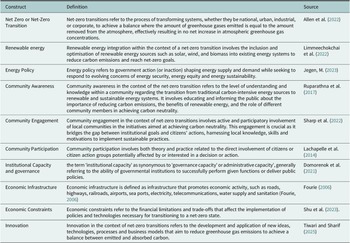
Definitions related to the constructs of the study

Note: Source: Authors compiled.








 Open access


Comments
No accompanying comment.