


Previous cross-sectional studies have shown that people in lower socio-economic groups have an increased prevalence of common mental disorders (Reference Holzer, Shea and SwansonHolzer et al, 1986; Reference Bijl, Van Zessen and RavelliBijl et al, 1998; Reference Davey Smith, Hart and HoleDavey Smith et al, 1998; Reference Lewis, Bebbington and BrughaLewis et al, 1998; Reference Muntaner, Eaton and DialaMuntaner et al, 1998; Reference Weich and LewisWeich & Lewis, 1998a ). Cross-sectional studies cannot distinguish whether low socio-economic position is associated with the development of new episodes of common mental disorders, with increased duration of episodes or both (Reference Muntaner, Eaton and MiechMuntaner et al, 2004). Psychiatric disorders often show a chronic course (Reference Sargeant, Bruce and FlorioSargeant et al, 1990) and it is likely that patients in the lower socio-economic groups might have a worse prognosis rather than an increased risk of a new episode of disorder (Reference Lewis, Bebbington and BrughaLewis et al, 1998). Previous longitudinal studies have generally supported this observation (Reference Weich and LewisWeich & Lewis, 1998b ) and a recent meta-analysis found stronger evidence in favour of an association with increased duration (Reference Lorant, Deliege and EatonLorant et al, 2003). However, other studies have found that low socio-economic position may be a risk factor for the development of a new episode (Reference Kaplan, Roberts and CamachoKaplan et al, 1987; Reference Bruce, Takeuchi and LeafBruce et al, 1991). These conflicting results may be explained by the different samples and method used, and the inability to adjust for a number of potential confounders. In particular, it is not clear whether all previous studies adjusted for baseline psychiatric symptoms, even though this variable shows a strong association with persistence of disorder (Reference Sargeant, Bruce and FlorioSargeant et al, 1990; Reference Spijker, Bijl and de GraafSpijker et al, 2001). Similarly, subthreshold symptoms may confound the association between low socio-economic position and development of a new episode of disorder. Clarifying whether low socio-economic position is associated with increased risk of a new episode of common mental disorder or with worse prognosis is critical from both an aetiological point of view and a public health perspective. The aim of our study was to investigate this issue in a longitudinal, general-population study in the UK. Based on the previous findings we predicted that participants of lower socio-economic position would be more likely to report an episode of a common mental disorder at follow-up and that this association would be stronger in those who were categorised as cases at baseline compared with non-cases.
METHOD
Data-set
The longitudinal study reported here was conducted in the UK by the Office for National Statistics (ONS). The 2000 Psychiatric Morbidity Survey aimed to estimate the prevalence of common mental disorders and the use of services of adults, aged 16-74 years, living in private households in Great Britain (Reference Singleton, Bumpstead and O'BrienSingleton et al, 2001). The sample was drawn from the small-user Postcode Address File using a two-stage approach. Initially, postcode sectors were stratified on the basis of socio-socio-economic status within region and 438 sectors selected with a probability proportional to size. Then, within each selected sector, 36 addresses were randomly selected for inclusion in the survey. Interviewers visited each address to identify private households with at least one person aged 16-74 years and then one person per household was randomly selected for interview. The main fieldwork took place between March and September 2000 and interviews were available for 8580 individuals (67% response rate).
Eighteen months later 3536 of the original respondents (all of those with a definite or sub-threshold psychiatric disorder and a 20% random sample of those without such disorder) were contacted for a follow-up interview and 2413 were successfully reinterviewed (68% response rate). Non-participants included 620 people who could not be traced or contacted (18%) and 503 who refused (14%). Non-participants were slightly more likely to be younger and of lower socio-economic status (Reference Singleton and LewisSingleton & Lewis, 2003). Owing to some incomplete interviews, the present study reports findings from the 2406 individuals for whom full data were obtained on both occasions. Ethical approval for the survey work was obtained from the Multi-Centre Research Ethics Committees in England. Further details of the survey method are available elsewhere (Reference Singleton and LewisSingleton & Lewis, 2003).
Measurement of psychiatric morbidity
Revised Clinical Interview Schedule
Psychiatric morbidity in the week preceding interview was assessed using the Revised Clinical Interview Schedule (CIS-R; Reference Lewis, Pelosi and ArayaLewis et al, 1992), a structured interview designed to be used by trained lay personnel. It can provide data on the prevalence of 14 symptoms, six ICD-10 disorders (depressive episode, phobias, generalised anxiety disorder, panic disorder, obsessive-compulsive disorder, mixed anxiety and depression disorder; World Health Organization, 1992) and the distribution of total CIS-R scores, which gives an indication of severity of symptoms in a dimensional way. The CIS-R was selected because it had been used in the first nationally representative general population survey of psychiatric morbidity in the UK made in 1993 by the Office for National Statistics (Reference Jenkins, Lewis and BebbingtonJenkins et al, 1997). It has been used in several other surveys around the world and is comparable to other structured interviews used in epidemiological surveys, such as the Composite International Diagnostic Interview (CIDI; Reference Robins, Wing and WittchenRobins et al, 1988). The reliability of the CIS-R has been studied in primary care samples and the kappa coefficient of reliability was reported to be 0.72 (95% CI 0.65-0.79) (Reference Lewis, Pelosi and ArayaLewis et al, 1992).
Diagnoses
Diagnoses of ICD-10 disorders were derived by applying specific algorithms that had been developed in a previous general population survey (Reference Jenkins, Lewis and BebbingtonJenkins et al, 1997) according to the ICD-10 diagnostic criteria for research (World Health Organization, 1992). All diagnoses refer to the 7 days before the interview. It should be noted that the diagnosis of ‘mixed anxiety and depression’ (ICD-10 code F41.2) refers to a clinically important disorder (not sub-threshold disorder) that does not meet criteria for another anxiety or depressive disorder. The ICD-10 does not include specific diagnostic criteria for this condition, but suggests that researchers should use their own depending upon the setting and the purpose of their study. For this reason we defined as cases of mixed anxiety and depression all those scoring 12 or more on the CIS-R who did not meet criteria for any other anxiety or depressive disorder. In order to avoid confusion with depressive disorder comorbid with anxiety disorders, in the tables we refer to this condition as ‘non-specific psychiatric morbidity’. The threshold of 12 or more was selected because it has been found to represent the level of clinically important symptoms in the UK (Reference Lewis, Pelosi and ArayaLewis et al, 1992). We included these patients in our analysis because previous psychiatric morbidity surveys had shown that mixed anxiety and depression was the most common disorder in the UK general population, with a weekly prevalence of approximately 9% (Reference Singleton, Bumpstead and O'BrienSingleton et al, 2001). In addition, there is increasing research interest in mild disorders, and a recent analysis of the National Comorbidity Survey in the USA underlined the clinical importance of milder forms of mental disorders (Reference Kessler, Merikangas and BerglundKessler et al, 2003).
Definition of common mental disorders
In our main analysis we combined all cases of participants meeting criteria for at least one definite ICD-10 disorder (of the six we assessed with the CIS-R) into the category of ‘common mental disorders’. Individuals with probable psychotic disorder at baseline were excluded from the analysis. Our two main reasons for combining cases of psychiatric disorder in this common category were, first, that previous research in the UK has shown that the psychiatric problems seen in the community or primary care settings are better described by one or two highly correlated dimensions of depression and anxiety (Reference Goldberg, Bridges and Duncan-JonesGoldberg et al, 1987; Reference Jacob, Everitt and PatelJacob et al, 1998), and second, that the power of the study was greatly improved by this categorisation. However, to make our results more clinically relevant, we also present analyses using separate ICD-10 diagnostic categories as the dependent variable. Three analyses are presented in this respect:
-
(a) cases of ICD-10 depressive episode;
-
(b) cases of any anxiety disorder;
-
(c) cases of non-specific psychiatric morbidity (i.e. all those meeting criteria for mixed anxiety and depression as defined previously).
Measurement of socio-economic position
Social class
Occupational social class was defined according to the UK Registrar General's classification and was based on the participant's current (or most recent) occupation. Participants were classified into four categories: professionals or intermediate occupations (I, II), non-manual skilled occupations (III non-manual), manual skilled occupations (III manual) and partly skilled occupations or unskilled occupations (IV, V). Social class was not determined if the person had never worked or was a full-time student, or if the occupation was inadequately described. For this reason, in the analysis we added a fifth category corresponding to the missing values of this variable.
Education
Educational qualifications (based on highest level attained) were classified in four groups: university degree, teaching or nursing qualifications, including honorary degrees; A-level qualifications; General Certificate of Secondary Education (GCSE) or equivalent; no qualification.
Standard of living
Three variables were selected a priori to provide an assessment of each participant's material standard of living: household gross income, housing tenure and ability to pay for everyday needs. Weekly household gross income was classified in three groups: £400 or more, less than £400 but £200 or more and less than £200. Housing tenure status was classified into three categories: owners, renters from the private sector and renters from the public sector. Finally, participants were asked a series of questions related to their ability to pay for their everyday needs in the year preceding interview. These included questions on whether they were seriously behind in paying bills, credit card debts, mortgage repayments and loans; whether they had been subjected to disconnection by a utility company or had used water, gas, electricity or the telephone less because they could not afford it; and whether they had borrowed money from unofficial sources in order to pay for their everyday needs. People who reported at least one difficulty in these areas were classified as having experienced financial difficulties.
To overcome the problem of colinearity between income and housing tenure status, we derived a composite index of material standard of living by adding these two indicators. We assigned numerical values to each group of income and tenure status and added the two variables. The score on the composite index ranged from 1 (wealthiest) to 6 (poorest) with a mean of 3.16 (s.d.=1.52) and a median of 3. We analysed the question about financial difficulties separately because of the more subjective nature of this measure and also because previous research has shown that it may be different in nature from the other two (Reference Weich and LewisWeich & Lewis, 1998b ).
Other variables
We used information on the following variables: age (in 10-year intervals); gender; marital status (in five categories: married, separated, single, divorced, widowed); type of family unit (in five categories: couple without children, couple with children, lone parent, one person only, adult with parents); employment status (in three categories: working full-time or part-time, unemployed, economically inactive).
Statistical analysis
We stratified the sample by case status at baseline and carried out separate logistic regression analyses for the two cohorts of non-cases and cases of common mental disorders. First, we examined the association between socio-economic position and meeting criteria at the follow-up assessment (time 2) for an episode of common mental disorder in the cohort of non-cases (n=1656). We then examined this association in the cohort of cases (n=750). These two analyses were our best approximations of the terms ‘onset’ and ‘persistence’ of common mental disorders as used by other papers in the past (Reference Weich and LewisWeich & Lewis, 1998b ; Reference Lorant, Deliege and EatonLorant et al, 2003). We consider the limitations of this approximation in the Discussion section below.
We present three types of odds ratios: crude odds ratios, odds ratios adjusted for all other socio-economic indicators and other socio-demographic variables, and odds ratios further adjusted for baseline CIS-R score. The svy commands in Stata version 7.0 for Windows were used for the analysis. Probability weights were used to take account of the stratified sampling procedure and non-response (Reference Singleton and LewisSingleton & Lewis, 2003).
RESULTS
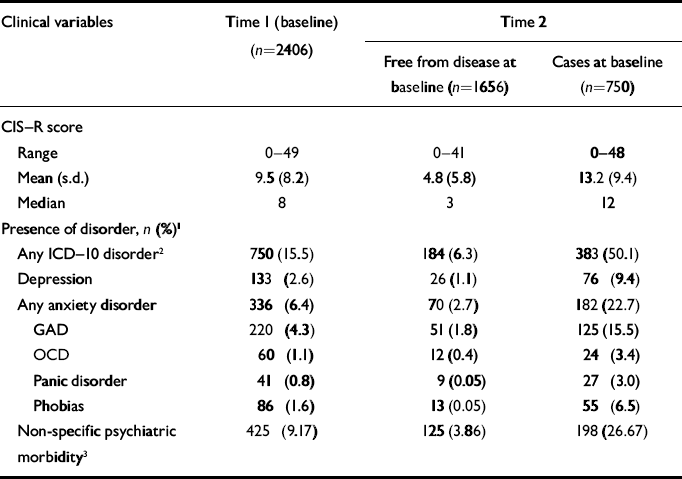
Baseline socio-demographic and socio-economic characteristics of the sample are presented in Table 1 and the sample's clinical characteristics are given in Table 2. The most significant predictor of a new episode of common mental disorder in participants free from disease at baseline (‘new onsets’) was the score on the CIS-R (Table 3). Social class was not associated with an increased risk of a new episode even in the crude analysis. Lower educational qualifications showed a trend for an increased risk of a new episode but this was not statistically significant. Participants with a lower material standard of living were more likely to develop a new episode of a common mental disorder in the crude analysis but this was no longer significant after adjustment for the other variables in the model. In contrast, those reporting financial difficulties at baseline had an increased risk of a new episode even after adjustment (model 1, Table 3). However, in the final model adjustment for baseline CIS-R score reduced the association, which became non-significant (model 2, Table 3).
Socio-demographic and socio-economic characteristics of the study sample

| Variable | Total (n=2406) | Free from disease at baseline (n=1656) | Cases at baseline (n=750) |
|---|---|---|---|
| Sociodemographic variables, n (%) 1 | |||
| Age, years | |||
| 16–24 | 218 (12.9) | 154 (12.5) | 64 (14.7) |
| 25–34 | 485 (20.5) | 327 (20.0) | 158 (23.4) |
| 35–44 | 526 (19.5) | 366 (19.4) | 160 (20.6) |
| 45–54 | 497 (20.3) | 321 (19.9) | 176 (22.0) |
| 55–64 | 376 (14.1) | 241 (14.1) | 135 (13.8) |
| 65–74 | 304 (12.6) | 247 (14.0) | 57 (5.4) |
| Gender | |||
| Male | 1020 (49.3) | 745 (50.8) | 275 (40.9) |
| Female | 1386 (50.7) | 911 (49.2) | 475 (59.1) |
| Employment status | |||
| Full-time/part-time | 1468 (66.5) | 1078 (68.1) | 390 (57.7) |
| Economically inactive | 845 (30.3) | 523 (28.9) | 322 (37.6) |
| Unemployed | 80 (2.9) | 49 (2.7) | 31 (4.1) |
| Missing data | 13 (0.3) | 6 (0.3) | 7 (0.6) |
| Socio-economic variables | |||
| Material standard of living score: mean (s.d.) 2 | 2.79 (0.04) | 2.70 (0.05) | 3.26 (0.07) |
| Any financial difficulties in past 12 months, n (%) | |||
| No | 1654 (78.4) | 1248 (82.6) | 406 (55.0) |
| Yes | 731 (21.1) | 399 (16.9) | 332 (43.9) |
| Missing data | 21 (0.5) | 9 (0.5) | 12 (1.1) |
| Educational qualifications, n (%) | |||
| Degree | 589 (25.8) | 424 (26.4) | 165 (22.5) |
| A-level | 315 (14.6) | 220 (14.5) | 95 (14.9) |
| GCSE or equivalent | 838 (35.5) | 586 (35.5) | 252 (35.5) |
| No qualifications | 650 (23.8) | 419 (23.3) | 231 (26.5) |
| Missing data | 14 (0.3) | 7 (0.3) | 7 (0.6) |
| Social class, n (%) | |||
| I/II | 879 (38.4) | 638 (39.6) | 241 (31.3) |
| III non-manual | 555 (23.3) | 380 (22.9) | 175 (25.1) |
| III manual | 429 (17.2) | 307 (17.3) | 122 (17.1) |
| IV/V | 472 (16.8) | 286 (15.7) | 186 (22.7) |
| Missing data | 71 (4.3) | 45 (4.5) | 26 (3.8) |
GCSE, General Certificate of Secondary Education
Clinical characteristics of the study sample
| Clinical variables | Time 1 (baseline) (n=2406) | Time 2 | ||
|---|---|---|---|---|
| Free from disease at baseline (n=1656) | Cases at baseline (n=750) | |||
| CIS–R score | ||||
| Range | 0–49 | 0–41 | 0–48 | |
| Mean (s.d.) | 9.5 (8.2) | 4.8 (5.8) | 13.2 (9.4) | |
| Median | 8 | 3 | 12 | |
| Presence of disorder, n (%) 1 | ||||
| Any ICD–10 disorder 2 | 750 (15.5) | 184 (6.3) | 383 (50.1) | |
| Depression | 133 (2.6) | 26 (1.1) | 76 (9.4) | |
| Any anxiety disorder | 336 (6.4) | 70 (2.7) | 182 (22.7) | |
| GAD | 220 (4.3) | 51 (1.8) | 125 (15.5) | |
| OCD | 60 (1.1) | 12 (0.4) | 24 (3.4) | |
| Panic disorder | 41 (0.8) | 9 (0.05) | 27 (3.0) | |
| Phobias | 86 (1.6) | 13 (0.05) | 55 (6.5) | |
| Non-specific psychiatric morbidity 3 | 425 (9.17) | 125 (3.86) | 198 (26.67) | |
CIS–R, Revised Clinical Interview Schedule; GAD, generalised anxiety disorder; OCD, obsessive – compulsive disorder. Phobias include agoraphobia, specific phobias and social phobia; participants who met criteria for both panic and agoraphobia were classified as having agoraphobia and not panic disorder in accordance with ICD–10 but not DSM–IV (American Psychiatric Association, 1994) criteria
Odds ratios for an episode of common mental disorder at the 18-month follow-up assessment in participants who were free from disease at baseline (n=1656) 1

| Variable | n/N (%) 2 | Crude ratios OR (95% CI) | Adjusted ratios | ||
|---|---|---|---|---|---|
| Model 1 3 OR (95% CI) | Model 2 4 OR (95% CI) | ||||
| Socio-demographic variables | |||||
| Age, years | |||||
| 16–24 | 16/154 (7.3) | 1.00 | 1.00 | 1.00 | |
| 25–34 | 45/327 (9.1) | 1.28 (0.56–2.88) | 1.57 (0.69–3.60) | 1.95 (0.83–4.59) | |
| 35–44 | 38/366 (6.1) | 0.83 (0.36–1.91) | 1.08 (0.43–2.70) | 1.29 (0.48–3.47) | |
| 45–54 | 43/321 (6.2) | 0.84 (0.39–1.80) | 1.15 (0.47-2.81) | 1.24 (0.46–3.32) | |
| 55–64 | 25/241 (4.7) | 0.63 (0.25–1.55) | 0.63 (0.23–1.74) | 0.73 (0.24–2.24) | |
| 65–74 | 17/247 (3.2) | 0.43 (0.16–1.14) | 0.26 (0.07-0.93) | 0.37 (0.09-1.47) | |
| Gender | |||||
| Male | 72/745 (5.7) | 1.00 | 1.00 | 1.00 | |
| Female | 112/911 (6.9) | 1.23 (0.80–1.89) | 1.22 (0.75–2.01) | 1.00 (0.59–1.67) | |
| Employment status | |||||
| Full-time/part-time | 113/1078 (5.8) | 1.00 | 1.00 | 1.00 | |
| Economically inactive | 66/523 (6.8) | 1.20 (0.77–1.87) | 1.89 (1.00–3.56) | 1.88 (0.92–3.87) | |
| Unemployed | 4/49 (13.7) | 2.60 (0.66–10.25) | 1.96 (0.52–7.43) | 2.70 (0.59–12.43) | |
| Baseline CIS–R score | 1.36 (1.27 – 1.44) | 1.34 (1.25 – 1.43) | |||
| Socio-economic position variables | |||||
| Material standard of living score | 1.27 (1.11–1.45) | 1.20 (0.96–1.49) | 1.13 (0.91–1.40) | ||
| Any financial difficulties | |||||
| No | 114/1248 (5.03) | 1.00 | 1.00 | 1.00 | |
| Yes | 68/399 (11.84) | 2.53 (1.59–4.04) | 1.98 (1.22–3.21) | 1.33 (0.79–2.23) | |
| Educational qualifications | |||||
| Degree | 38/424 (4.6) | 1.00 | 1.00 | 1.00 | |
| A-level | 24/220 (6.6) | 1.47 (0.69–3.15) | 1.49 (0.63–3.50) | 1.44 (0.59–3.54) | |
| GCSE or equivalent | 66/586 (6.7) | 1.49 (0.84–2.66) | 1.50 (0.75–3.00) | 1.49 (0.70–3.14) | |
| No qualification | 55/419 (7.5) | 1.70 (0.92–3.15) | 2.07 (0.96–4.48) | 1.90 (0.83–4.31) | |
| Social class | |||||
| I/II | 66/638 (5.7) | 1.00 | 1.00 | 1.00 | |
| III non-manual | 47/380 (6.3) | 1.12 (0.64–1.96) | 0.73 (0.37–1.42) | 0.78 (0.38–1.60) | |
| III manual | 31/307 (7.4) | 1.32 (0.71–2.45) | 0.88 (0.45–1.75) | 0.92 (0.44–1.94) | |
| IV/V | 34/286 (6.6) | 1.17 (0.64–2.15) | 0.59 (0.27–1.28) | 0.61 (0.27–1.40) | |
CIS–R, Revised Clinical Interview Schedule; GCSE, General Certificate of Secondary Education
1. Because of missing values the total N used in the analysis was 1644. Missing values for the social class variable were included in the analysis but odds ratios for this category are not shown
2. Actual number of participants with an episode of common mental disorder at follow-up; percentages in comparison are weighted to take into account the stratified sampling procedure and non-response
3. Odds ratios adjusted for age, gender, marital status, type of family unit, employment status and other socio-economic position variables
4. Model 1 plus adjustment for baseline CIS–R scores
1. Actual number of participants. Percentages in comparison were weighted to account for the stratified random sampling and non-response
2. All figures refer to 1-week prevalence of ICD–10 disorders
3. Defined as a score on the CIS–R greater or equal to 12 and not meeting criteria for any other anxiety or depressive disorder (this entity represents the ICD–10 concept of ‘mixed anxiety depression’)
1. Actual number of participants. Percentages in comparison were weighted to account for the stratified random sampling and non-response
2. Data were missing for 21 participants
Table 4 presents the results for the cohort of cases of common mental disorder at baseline. In the crude analysis, all socio-economic indicators were associated in the expected direction with an increased risk of a time 2 episode (‘persistent/recurrent’ cases). However, after adjustment for socio-demographic variables these associations were reduced and became non-significant. Only participants without educational qualifications showed an increased risk of a time 2 episode, but adjustment for baseline severity of symptoms further reduced the association.
Odds ratios for an episode of common mental disorder at the 18-month follow-up assessment in participants classified as cases at baseline (n=750) 1

| Variable | n/N (%) 2 | Crude ratios OR (95% CI) | Adjusted ratios | ||
|---|---|---|---|---|---|
| Model 1 3 OR (95% CI) | Model 2 4 OR (95% CI) | ||||
| Socio-demographic variables | |||||
| Age, years | |||||
| 16–24 | 33/64 (46.0) | 1.00 | 1.00 | 1.00 | |
| 25–34 | 75/158 (47.1) | 1.05 (0.53–2.08) | 1.08 (0.46–2.54) | 1.01 (0.41–2.44) | |
| 35–44 | 82/160 (50.5) | 1.20 (0.63–2.29) | 1.27 (0.54–2.99) | 1.14 (0.46–2.82) | |
| 45–54 | 95/176 (55.3) | 1.45 (0.76–2.78) | 1.66 (0.66–4.19) | 1.63 (0.63–4.23) | |
| 55–64 | 71/135 (51.4) | 1.24 (0.64–2.42) | 0.87 (0.33–2.31) | 0.89 (0.32–2.49) | |
| 65–74 | 27/57 (47.5) | 1.06 (0.48–2.37) | 0.56 (0.19–1.60) | 0.66 (0.22–1.96) | |
| Gender | |||||
| Male | 137/275 (49.1) | 1.00 | 1.00 | 1.00 | |
| Female | 246/475 (50.8) | 1.07 (0.75–1.53) | 1.20 (0.81–1.98) | 1.22 (0.82–1.83) | |
| Employment status | |||||
| Full-time/part-time | 163/390 (41.4) | 1.00 | 1.00 | 1.00 | |
| Economically inactive | 201/322 (64.1) | 2.53 (1.77–3.61) | 2.65 (1.65–4.27) | 2.45 (1.49–4.03) | |
| Unemployed | 16/31 (45.5) | 1.18 (0.50–2.80) | 0.87 (0.33–2.32) | 0.91 (0.33–2.52) | |
| Baseline CIS–R score | 1.10 (1.07 – 1.13) | 1.08 (1.05 – 1.12) | |||
| Socio-economic position variables | |||||
| Material standard of living score | 1.20 (1.08–1.34) | 1.05 (0.89–1.25) | 1.00 (0.84–1.19) | ||
| Any financial difficulties | |||||
| No | 185/406 (45.9) | 1.00 | 1.00 | 1.00 | |
| Yes | 191/332 (55.1) | 1.45 (1.03–2.04) | 1.25 (0.84–1.87) | 1.26 (0.83–1.91) | |
| Educational qualifications | |||||
| Degree | 65/165 (38.9) | 1.00 | 1.00 | 1.00 | |
| A-level | 46/95 (47.6) | 1.42 (0.74–2.72) | 1.47 (0.77–2.79) | 1.31 (0.66–2.58) | |
| GCSE or equivalent | 134/252 (51.7) | 1.68 (1.08–2.61) | 1.66 (0.99–2.77) | 1.56 (0.92–2.65) | |
| No qualification | 135/231 (59.0) | 2.26 (1.42–3.60) | 1.87 (1.02–3.40) | 1.70 (0.93–3.14) | |
| Social class | |||||
| I/II | 108/241 (44.4) | 1.00 | 1.00 | 1.00 | |
| III non-manual | 82/175 (45.0) | 1.02 (0.64–1.64) | 0.77 (0.45–1.30) | 0.82 (0.48–1.40) | |
| III manual | 71/122 (57.6) | 1.70 (1.06–2.74) | 1.08 (0.61–1.89) | 1.21 (0.67–2.20) | |
| IV/V | 109/186 (57.7) | 1.71 (1.11–2.62) | 0.87 (0.51–1.50) | 0.86 (0.50–1.49) | |
CIS–R, Revised Clinical Interview Schedule; GCSE, General Certificate of Secondary Education
1. Because of missing values the total N used in the analysis was 736. Missing values for the social class variable were included in the analysis but odds ratios for this category are not shown
2. Actual number of participants with an episode of common mental disorder at follow-up; percentages in comparison are weighted to take into account the stratified sampling procedure and non-response
3. Adjusted for age, gender, marital status, type of family unit, employment status and other socio-economic position variables
4. Model 1 plus adjustment for baseline CIS–R scores
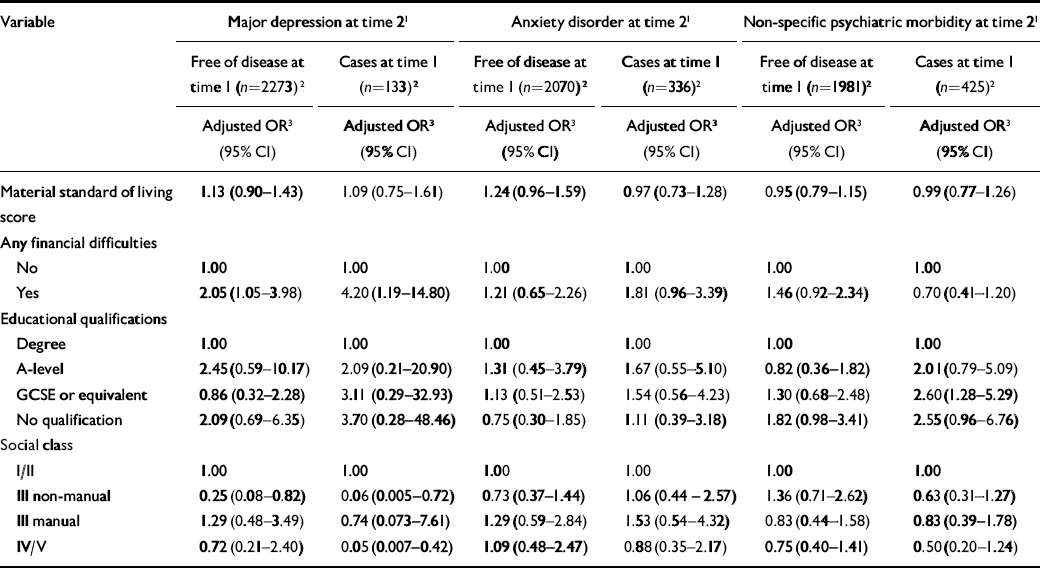
The analysis of the separate ICD-10 diagnostic categories is shown in Table 5. Generally the results are similar to the combined analysis with the exception of the financial difficulties variable. In depression, the reporting of financial difficulties at baseline was significantly associated with an increased risk of a time 2 episode for both cohorts but stronger for cases at baseline (persistent/recurrent cases).
Odds ratios for an episode of depression, anxiety disorder or non-specific psychiatric morbidity by socio-economic position variables and baseline disease status
| Variable | Major depression at time 2 1 | Anxiety disorder at time 2 1 | Non-specific psychiatric morbidity at time 2 1 | ||||||
|---|---|---|---|---|---|---|---|---|---|
| Free of disease at time 1 (n=2273) 2 | Cases at time 1 (n=133) 2 | Free of disease at time 1 (n=2070) 2 | Cases at time 1 (n=336) 2 | Free of disease at time 1 (n=1981) 2 | Cases at time 1 (n=425) 2 | ||||
| Adjusted OR 3 (95% CI) | Adjusted OR 3 (95% CI) | Adjusted OR 3 (95% CI) | Adjusted OR 3 (95% CI) | Adjusted OR 3 (95% CI) | Adjusted OR 3 (95% CI) | ||||
| Material standard of living score | 1.13 (0.90–1.43) | 1.09 (0.75–1.61) | 1.24 (0.96–1.59) | 0.97 (0.73–1.28) | 0.95 (0.79–1.15) | 0.99 (0.77–1.26) | |||
| Any financial difficulties | |||||||||
| No | 1.00 | 1.00 | 1.00 | 1.00 | 1.00 | 1.00 | |||
| Yes | 2.05 (1.05–3.98) | 4.20 (1.19–14.80) | 1.21 (0.65–2.26) | 1.81 (0.96–3.39) | 1.46 (0.92–2.34) | 0.70 (0.41–1.20) | |||
| Educational qualifications | |||||||||
| Degree | 1.00 | 1.00 | 1.00 | 1.00 | 1.00 | 1.00 | |||
| A-level | 2.45 (0.59–10.17) | 2.09 (0.21–20.90) | 1.31 (0.45–3.79) | 1.67 (0.55–5.10) | 0.82 (0.36–1.82) | 2.01 (0.79–5.09) | |||
| GCSE or equivalent | 0.86 (0.32–2.28) | 3.11 (0.29–32.93) | 1.13 (0.51–2.53) | 1.54 (0.56–4.23) | 1.30 (0.68–2.48) | 2.60 (1.28–5.29) | |||
| No qualification | 2.09 (0.69–6.35) | 3.70 (0.28–48.46) | 0.75 (0.30–1.85) | 1.11 (0.39–3.18) | 1.82 (0.98–3.41) | 2.55 (0.96–6.76) | |||
| Social class | |||||||||
| I/II | 1.00 | 1.00 | 1.00 | 1.00 | 1.00 | 1.00 | |||
| III non-manual | 0.25 (0.08–0.82) | 0.06 (0.005–0.72) | 0.73 (0.37–1.44) | 1.06 (0.44–2.57) | 1.36 (0.71–2.62) | 0.63 (0.31–1.27) | |||
| III manual | 1.29 (0.48–3.49) | 0.74 (0.073–7.61) | 1.29 (0.59–2.84) | 1.53 (0.54–4.32) | 0.83 (0.44–1.58) | 0.83 (0.39–1.78) | |||
| IV/V | 0.72 (0.21–2.40) | 0.05 (0.007–0.42) | 1.09 (0.48–2.47) | 0.88 (0.35–2.17) | 0.75 (0.40–1.41) | 0.50 (0.20–1.24) | |||
GCSE, General Certificate of Secondary Education
1. Diagnoses according to ICD–10 criteria; non-specific psychiatric morbidity is defined as a CIS–R socre ⩾12 and not meeting criteria for any other anxiety or depressive disorder (this entity represents the ICD–10 concept of ‘mixed anxiety depression’)
2. Owing to missing values the actual numbers of participants used in the analysis were 2252 and 119 for depression, 2051 and 318 for anxiety disorders, 1961 and 419 for non-specific morbidity for time 1 (baseline) and time 2 (18-month follow-up) respectively; missing values for the social class variable have been included in the analysis but the odds ratios for this category are not shown
3. Odds ratios adjusted for age, gender, marital status, type of family unit, employment status, baseline CIS–R score and other socio-economic position variables (model 2 of previous tables)
DISCUSSION
We found little evidence that objective measures of socio-economic position were associated with an episode of common mental disorder at follow-up, after adjustment for confounding variables. From the indicators studied, we found significant associations before adjusting for baseline psychiatric symptoms, with a more subjective question on past financial difficulties for the cohort of non-cases and lower educational qualifications for the cohort of cases. These associations were reduced after adjustment. Separate analyses for specific diagnoses showed that in depression, financial difficulties were associated with an increased risk for both cohorts (but stronger for cases at baseline), even after adjustment for baseline psychiatric symptoms. The latter was the most consistent predictor of a time 2 episode for both cohorts.
Limitations of the study
Some limitations of the study should be considered. Participants were only assessed at two time points 18 months apart and we do not have information concerning their mental health for the period between the two assessments. In addition, participants were not assessed for history of depression or anxiety disorders at baseline. For those who were not categorised as cases at baseline a new episode at follow-up could be either a first onset or a recurrence, depending on their psychiatric history and their status in the period between the two assessments. In addition, cases at baseline that were also cases at follow-up could be either chronic persistent cases (not recovered) or recurrences. It is also possible that some participants either developed or recovered from an episode during the 18-month period and then reverted to their original state by the end of the observation period. This imprecision will certainly introduce measurement bias and possibly selection bias if the duration of the episode is a confounding factor. These biases could influence the results in either direction. An alternative method would be to ask retrospectively about lifetime symptoms and symptoms during the 18-month follow-up period. However, retrospective reporting of psychiatric symptoms has been found to be unreliable and is also prone to recall bias (Reference Simon and GurejeSimon & Gureje, 1999). There are examples from the Epidemiologic Catchment Area (ECA) study suggesting that even the lifetime recall of psychiatric history is not very reliable for depression (Reference Thompson, Bogner and CoyneThompson et al, 2004) or anxiety disorders (Reference Nelson and RiceNelson & Rice, 1997). It should be noted that this limitation is also present in most of the previous epidemiological studies concerning this issue. Gilman (Reference Gilman2003) noted in his commentary on the meta-analysis by Lorant et al (Reference Lorant, Deliege and Eaton2003) that of the included longitudinal studies only two out of five were ‘true’ incident studies and only one in four studies was designed specifically to assess ‘persistence’ of common mental disorders. In our own study, in order to avoid confusion, we chose not to use the terms ‘onset’ or ‘persistence’, but rather to describe exactly what we measured - that is, occurrence of a time 2 episode in the two cohorts of non-cases and cases of common mental disorders at baseline.
Although the total sample size was large, our statistical power was still limited and might have also contributed to our null findings, especially in the analysis of the cohort of cases. Finally, loss to follow-up was greatest among those in the lowest socio-economic groups, and although we used weights to take into account non-response factors, our associations might have been biased towards the null value.
Comparison with other studies
There are a few longitudinal studies with which this one may be compared. The secondary analysis of the British Household Panel Survey (Reference Weich and LewisWeich & Lewis, 1998b ) was also conducted in the UK. That study found an association between an index of poverty and persistence, but not episode onset, at 12 months. It should be noted that the terms ‘persistence’ and ‘onset’ as used in that study were completely analogous to the analyses of the cohort of cases and non-cases presented here. That study also found that, independently of case status, participants not managing well financially at baseline (‘financial strain’) were more likely to report a new episode at follow-up. In our study we did not find a significant association between our index of material standard of living and an episode of common mental disorder at follow-up, but our finding regarding financial difficulties is quite similar. Reasons for this discrepancy in our findings may include the longer interval of the follow-up (18 months) and the more detailed assessment of common mental disorders, based on a structured clinical interview. The British Household Panel Survey used the 12-item General Health Questionnaire, a relatively simple self-reported instrument for the assessment of common mental disorders (Reference Weich and LewisWeich & Lewis, 1998a ). In the USA, longitudinal analyses of the Alameda County study for onset of depression (Reference Kaplan, Roberts and CamachoKaplan et al, 1987) and the ECA study for either onset (Reference Bruce, Takeuchi and LeafBruce et al, 1991; Reference Horwath, Johnson and KlermanHorwath et al, 1992; Reference Bruce and HoffBruce & Hoff, 1994; Reference Eaton, Muntaner and BovassoEaton et al, 2001) or persistence of common mental disorders (Reference Sargeant, Bruce and FlorioSargeant et al, 1990) are also of interest. Regarding onset, Horwath et al (Reference Horwath, Johnson and Klerman1992) and Eaton et al (Reference Eaton, Muntaner and Bovasso2001) using the ECA data-set were unable to show a significant relationship between measures of socio-economic status and onset of depression, after adjustment for confounders. In contrast, in the Alameda County study the authors reported significant associations for education, income and presence of ‘money problems’ at baseline (Reference Kaplan, Roberts and CamachoKaplan et al, 1987). An analysis from the New Haven ECA site (Reference Bruce, Takeuchi and LeafBruce et al, 1991) did find an association between poverty and major depression after adjustment for history of depression, but the results for other psychiatric disorders were not significant, even though the point estimates for the odds ratios were larger than 1.
When the analysis was restricted to first-onset depression (Reference Bruce and HoffBruce & Hoff, 1994) the authors reported a significant association between poverty and first-onset major depression, but they presented odds ratios adjusted for age and gender only. Regarding persistence of depression, Sargeant et al (Reference Sargeant, Bruce and Florio1990) using the ECA data-set did not find any significant association with socio-economic status score, lower education or persistence, after adjustment for baseline severity of symptoms. Data from the Stirling County study in Canada showed that there was a trend for low socio-economic status to be associated with both onset and persistence of depression or anxiety, but these findings were not significant after adjustment for age and gender (Reference Murphy, Olivier and MonsonMurphy et al, 1991). A meta-analysis of longitudinal studies found a significant association between socio-economic socio-economic indicators and both onset and persistence, although the effect for persistence was larger (Reference Lorant, Deliege and EatonLorant et al, 2003). However, it is worth noting that this meta-analysis was heavily influenced by the results of the British Household Panel Survey (Reference Weich and LewisWeich & Lewis, 1998b ), which had the largest weight on both onset and persistence. In addition, some of the papers included in the meta-analysis did not adjust for potential confounders that made an important difference in our own study. In our unadjusted analysis of the cohort of cases (the ‘persistence’ cohort) we found significant associations between all measures of socio-economic position and a time 2 episode of common mental disorder, but these disappeared when we adjusted for the other variables in the model.
In our main analysis we found significant associations with past financial difficulties (in the cohort of non-cases) and lower education (in the cohort of cases) only before adjustment for baseline CIS-R scores. However, it should be noted that if baseline psychiatric morbidity is on the causal pathway between low socio-economic position and onset or persistence of common mental disorders, this could constitute an example of overadjustment. This is the reason behind our choice of presenting the results before and after adjustment for CIS-R scores.
The question on financial difficulties is more subjective in nature and reflects the individuals' way of life. People in higher-income groups may, for example, experience financial difficulties owing to overspending or inappropriately raising their standard of living. In our main analysis there was evidence that participants categorised as non-cases at baseline experiencing financial difficulties had an increased risk of a time 2 episode, even though the association became non-significant after adjustment for CIS-R scores. Using depression as our dependent variable, the association was significant in the full model and it was also observed in the cohort of cases. These findings are consistent with research suggesting that subjective measures of material standard of living may be equally important in the relationship between socio-economic position and common mental disorders, compared with the more objective measures of income or wealth (Reference Kaplan, Roberts and CamachoKaplan et al, 1987; Reference Lewis, Bebbington and BrughaLewis et al, 1998).
Our data also show that those in the economically inactive category had a worse prognosis than those working full-time or part-time (see Table 4). This category included all those who reported that they were unable to work owing to long-term illness or disability. Most of these people were deriving income from state benefits (75% v. 11% of those working full- or part-time). Separating these from the other economically inactive participants (students, homemakers) increased further the association with persistence of common mental disorders (OR 4.43, 95% CI 2.54-7.70). Participants with long-term illness or disability were also more likely to report a new onset of disorder (OR=2.56, 95% CI 1.10-5.94). An analogous finding was reported by the ECA Baltimore follow-up study (Reference Eaton, Muntaner and BovassoEaton et al, 2001); in that analysis, although objective measures of socio-economic position were not associated with onset of depression, a higher psychological demand in the work environment and financial dependence on state aid were found to be independently associated.
Baseline CIS-R scores were strongly associated with a time 2 episode for both cohorts of cases and non-cases. This is consistent with previous research (Reference Sargeant, Bruce and FlorioSargeant et al, 1990; Reference Horwath, Johnson and KlermanHorwath et al, 1992) and presumably reflects the chronic nature of many common mental disorders. These findings emphasise the need to use methods for prevention and treatment of common mental disorders similar to those used in other chronic diseases such as diabetes or coronary heart disease (Reference Lloyd, Jenkins and MannLloyd et al, 1996).
Is there a link between low socio-economic position and common mental disorders? Pearlin et al (Reference Pearlin, Lieberman and Menaghan1981) have argued that low socio-economic status can be considered as an example of a chronic stressor that increases the exposure to acute stressors and limits the psychosocial resources for coping. Other possible mechanisms may include less perceived social support (Reference Wade and KendlerWade & Kendler, 2000), lower control over one's environment (Reference Baum, Cohen and HallBaum et al, 1993) and unfavourable social comparison with others (Reference Ahrens, Alloy, Brunk and GibbonsAhrens & Alloy, 1997). In addition to these indirect effects, low socio-economic position may have direct effects on mental health. Link & Phelan (Reference Link and Phelan2002) have proposed that low socio-economic status can be viewed as a ‘fundamental cause’ of disease, over and above its effect on mediating mechanisms. What this and other studies add is that the effects on mental health of objective measures of socio-economic position, such as income or occupational social class, may have been overestimated. Further research in more subjective measures of socio-economic position is needed in order to improve our understanding of the mechanisms by which socio-economic circumstances lead to depression and anxiety, if we are to devise effective ways of preventing and treating these disorders.
Acknowledgements
The data collection was funded by the Department of Health and the Scottish Executive Health Department. However, the views expressed in this report are those of the authors alone and not necessarily those of the Department of Health or Scottish Executive. We thank Dr Howard Meltzer for initial design work on the survey and other Office for National Statistics staff who were involved in the fieldwork and data preparation.




eLetters
No eLetters have been published for this article.