

Introduction
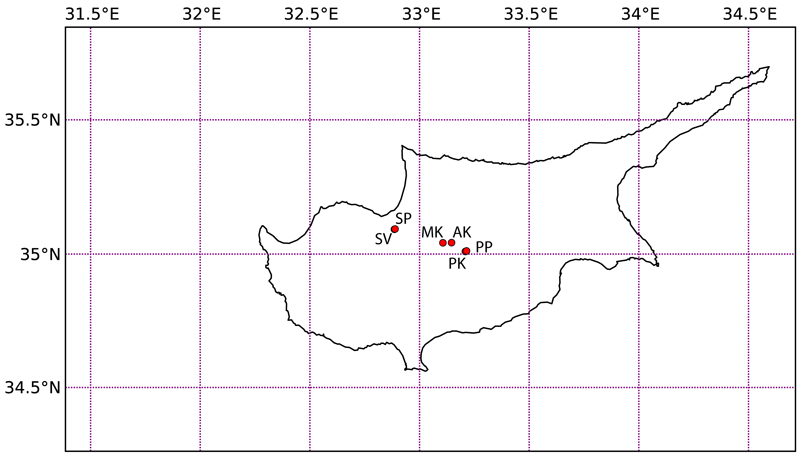
The ancient slag heaps of Cyprus contain the story of the island as a regional source of copper throughout the millennia. Located near the ore deposits, many of these heaps were destroyed by modern mining activities and some are still under immediate threat. Far from the more attractive settlements along the coasts, the slag heaps have only recently been systematically investigated and their dating is still problematic (Reference Kassianidou, Given and KnappKassianidou 2003, 2004). The current UC San Diego-University of Cyprus project focuses on two of the largest slag heaps of the island (Skouriotissa and Mitsero) as well as several smaller deposits, located in the northern foothills of the Troodos mountains and spanning the first millennia BC and AD (Figure 1). Clarifying the stratigraphy and chronology of these heaps together with comparative analysis of the archaeometallurgical material culture will provide solid anchors for the history of metallurgy on the island and a reference for understanding regional metal commerce and connections further afield. High resolution recording of these slag deposits, especially those threatened by development and modern mining, will help in conservation of one of the most important cultural heritage of the island.
Map of Cyprus showing the main slag heaps investigated in the current research project. AK=Agrokipia; MK=Mitsero Kokkinoyia; PK=Politiko Kokinorotsos; PP=Politiko Phorades; SV=Skouriotissa Vouppes; SP= Skouriotissa Phoenix.

Methods
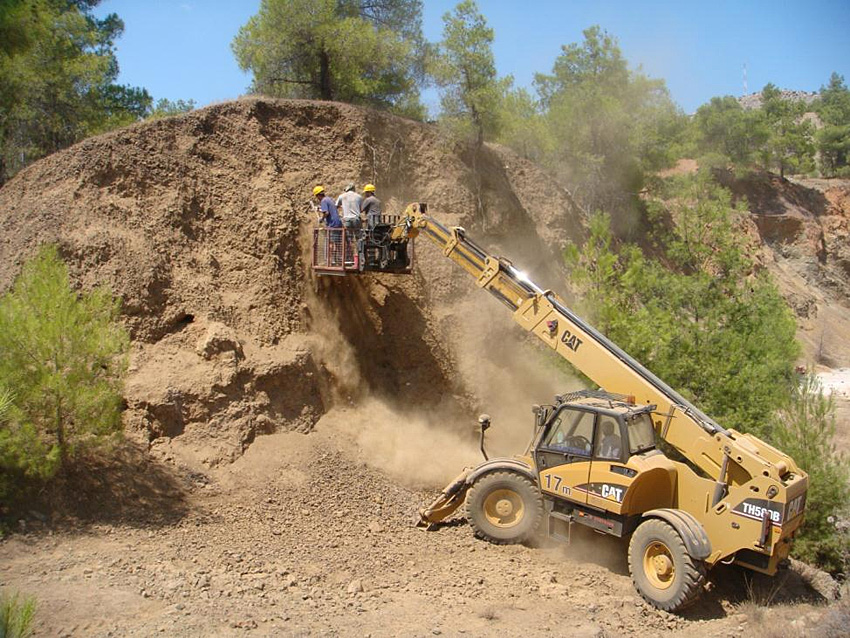
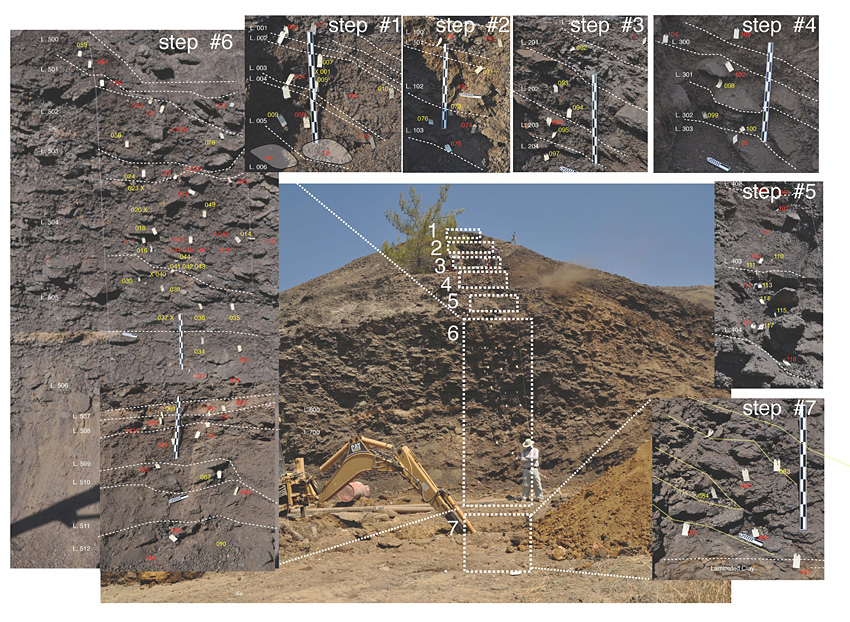
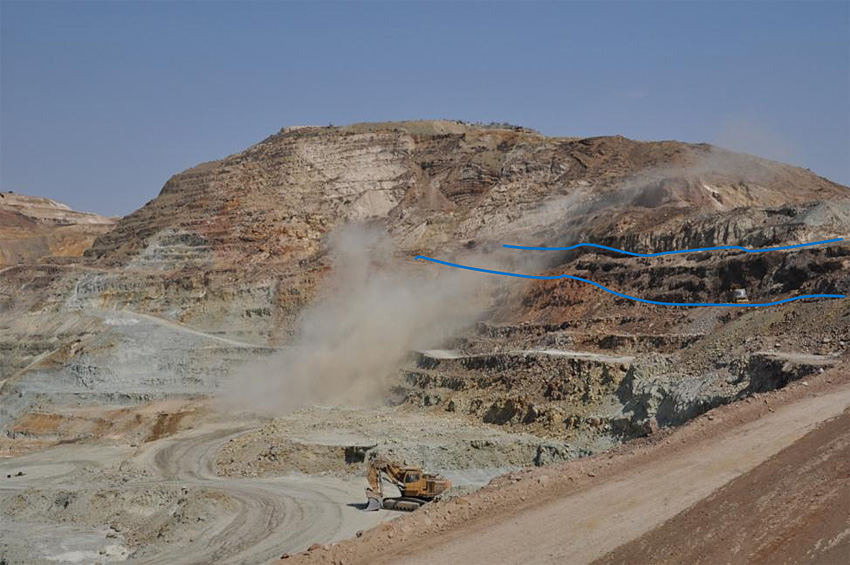
Most of the investigated slag heaps have been cut by modern roads or mining activities in the past, so that large scale excavations were not necessary in the current project. The exposed cross-sections, up to 25m high at Skouriotissa, were sampled using mechanical equipment (Figure 2) or by excavating narrow stepped trenches (Figure 3). The stratigraphy of the heaps and their environmental context were recorded by a LiDAR scanning instrument, a reflector-less total station and high resolution digital photography. The recording included several newly exposed slag deposits that are likely to be removed in the near future by modern mining activities (Figure 4).
Cleaning and sampling the slag heap at Mitsero Kokkinoyia. Previous study (Reference Kassianidou, Given and KnappKassianidou 2003) suggests production in the fifth–fourth centuries BC.

Slag deposits at Skouriotissa reaching 25m in height. Careful sampling, some of it by stepped trench (upper part of the heap), revealed about 45 stratigraphic horizons. More than 150 slag and 50 charcoal samples were collected for high resolution technological analysis, dating and archaeomagnetic study of the heap.

Newly exposed slag deposits in the modern mines of Skouriotissa (boundaries marked by blue lines). The massive layers are of an unknown date. LiDAR recording, digital photography and sample collection might be the only information retrieved before the removal of the deposits.

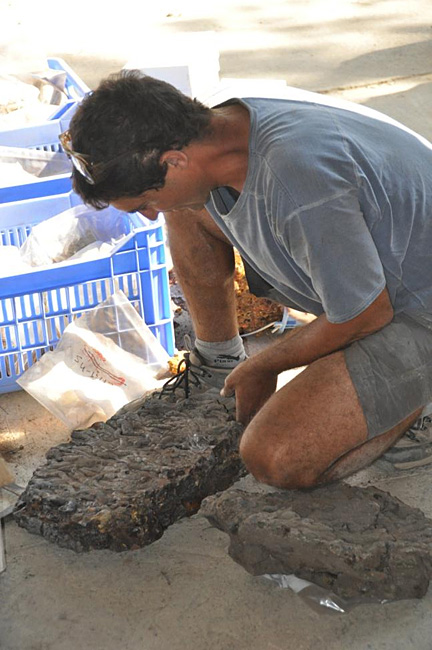
Late Roman slag 'cake' from the slag heap of Skouriotissa. Slag material contains magnetic minerals that hold information regarding the smelting technologies and the geomagnetic field.

The main contribution of the current research is the high-resolution dating and the magnetic investigation of the slag deposits. Dozens of charcoal samples were retrieved directly from each section and by floatation of soil samples. After archaeobotanical analysis, those samples will undergo AMS radiocarbon dating to establish age constraints and evaluate the intensity of ancient smelting activities and the rate of deposition of production debris. In order to refine the dating of the early slag deposits, the radiocarbon dating will be coupled with archaeomagnetic correlation to previously studied slag heaps in Israel and Jordan (Reference Shaar, Ben-Yosef, Ron and TauxeShaar et al. 2010a, Reference Shaar, Ron, Tauxe, Kessel and Agnon2010b).
Copper slag material contains abundant magnetic minerals that hold information regarding the ancient copper smelting technologies and the properties of the geomagnetic field at the time of their cooling (Ben-Yosef et al. 2008a, 2008b) (Figure 5). Magnetic investigation of slag samples from the entire stratigraphic sequence of the slag heaps studied here, together with chemical X-ray fluorescence (XRF), scanning electron microscope (SEM) and typological analysis, are key for reconstructing patterns of development of copper production technologies, as well as for establishing temporal correlations between slag deposits based on geomagnetic intensity variations.
Implications of the research
The collaboration between geophysicists and archaeologists provides an innovative perspective and a new source of data for studying the major copper source of the Eastern Mediterranean in antiquity.
The field recording resulted in dozens of well-defined stratigraphic horizons per slag heap, up to 45 in the major section of Skouriotissa (Figure 6). It is the most detailed recording of slag heaps available on the island to date, and thus constitutes an invaluable reference for the history of copper production in Cyprus. By applying different analytical tools, the project aims to reveal the various parameters that operated in the ancient copper industry, including technological development, efficiency, intensity, organisation of production and temporal distribution of the exploitation of different ore deposits. The high resolution dating is a base for tying with greater accuracy the industrial remains of copper exploitation on the island to its historical accounts (Reference RickardRickard 1930). In addition, the LiDAR recording helps with conserving the information from an endangered type of archaeological sites on Cyprus.
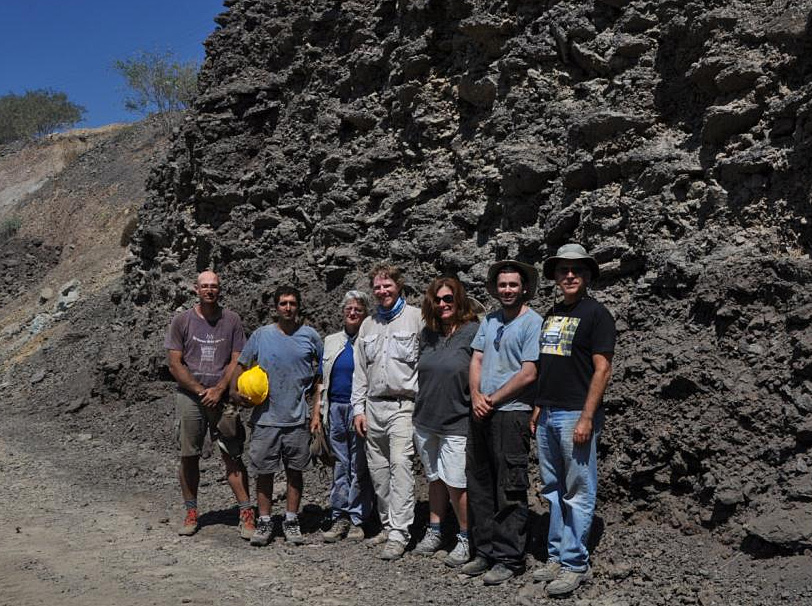
UC San Diego-University of Cyprus project staff stand at base of c. 25m-high slag heap dating primarily to the Late Roman period, Skouriotissa, Cyprus. The slag heaps here are the largest in the eastern Mediterranean region.

Acknowledgments
The UC San Diego-University of Cyprus Archaeomagnetic Project is funded by National Science Foundation Grant No. 0944137 awarded to Lisa Tauxe and Tom Levy. The authors would like to thank Mr Constantinos Xydas, the CEO of Hellenic Copper Mines Ltd, for his support of the project, Athos Agapiou for his LiDAR work, Matthew Vincent and Ashley Richter (Calit2/UCSD) for their help in the field, and the staff of the Archaeology Unit, Department of History and Archaeology, University of Cyprus for all their help and support.