


It is estimated that more than a third of adults in the USA are obese Reference Flegal, Carroll, Ogden and Curtin1 and the prevalence rate of obesity is still increasing. Reference Wang, McPherson, Marsh, Gortmaker and Brown2 Both obesity and major depression are associated with numerous medical diseases and higher all-cause mortality, Reference Farmer, Korszun, Owen, Craddock, Jones and Jones3,Reference Zhang, Rexrode, van Dam, Li and Hu4 however, the reasons for the association between obesity and depression found by most studies Reference de Wit, Luppino, van Straten, Penninx, Zitman and Cuijpers5 remain unclear. Cross-sectional studies cannot differentiate the causal relationship between obesity and depression. In addition, most previous studies have only examined the relationship between obesity and depressive symptoms. Although depressive symptoms could be predictors of subsequent depressive disorder, it would be preferable to examine the relationship between obesity and clinically significant major depression assessed by a standardised interview. Longitudinal studies provide some pointers on disentangling the direction of the associations and a systematic review and meta-analysis of such studies Reference Luppino, de Wit, Bouvy, Stijnen, Cuijpers and Penninx6 showed that obesity at baseline increased the risk of onset of depression in the follow-up period (odds ratio, 1.55). Further, the analysis found that the association was even stronger for depressive disorder than depressive symptoms. However, there were limitations. First, only 25% of studies included in the meta-analysis were rated as high quality by the authors. Second, only two studies assessed a clinical diagnosis of major depression rather than depressive symptoms only. Among longitudinal studies, one found that adolescent girls who are obese, but not boys, are more the likely to develop major depression 20 years later. Reference Anderson, Cohen, Naumova, Jacques and Must7 Another recruited people in late adulthood (mean age, 63) and found that obesity increased the risk of onset of depression. Reference Roberts, Deleger, Strawbridge and Kaplan8 However, since vascular factors plays a role in late-onset depression Reference Hickie, Scott, Naismith, Ward, Turner and Parker9 and as obesity increases the risk of cardiovascular disease, the increased incidence rate of late-onset depression may be confounded by this. The association between obesity and major depression might also be confounded by other unmeasured factors such as diet or exercise. Reference Beydoun and Wang10
Mendelian randomisation analysis has been suggested to clarify causal inference in observational studies Reference Sheehan, Didelez, Burton and Tobin11 and three studies to date have taken this approach to the body mass index (BMI)-depression association. Reference Jokela, Elovainio, Keltikangas-Jarvinen, Batty, Hintsanen and Seppala12-Reference Lawlor, Harbord, Tybjaerg-Hansen, Palmer, Zacho and Benn14 The underlying idea is that genetic variants that are reliably associated with BMI or obesity can be used as instrumental variables for investigating the causal effect of obesity on major depression. Recently the advance of genome-wide association studies (GWAS) has provide the opportunity to examine the relationship between obesity and major depression as numerous loci have been identified as risk genetic variants for BMI or obesity. Reference Speliotes, Willer, Berndt, Monda, Thorleifsson and Jackson15 Among them the fat mass and obesity-associated (FTO) gene has been repeatedly and consistently associated with BMI. However, FTO genotype alone is not ideal for Mendelian randomisation analysis because it only explains a limited amount of variance in BMI. Compared with a single genetic variant, a composite genetic risk score (GRS) based on multiple associated loci should be a better instrument to examine the relationship between polygenic traits such as obesity and major depression and should provide increased statistical power. Reference Palmer, Lawlor, Harbord, Sheehan, Tobias and Timpson16 We have previously found (C.-F.H., unpublished data) that a weighted GRS (wGRS), which was constructed from 32 single nucleotide polymorphisms (SNPs), weighted by their effect size, explained a modest but significant proportion of BMI (1.27%) and wGRS effectively improved the prediction ability of obesity. We therefore aimed to investigate whether higher BMI increases the risk of major depression using Mendelian randomisation analyses and selecting two instrumental variables, namely FTO genotype and wGRS.
Method
Participants and phenotypes
Individuals with major depressive disorder were recruited from RADIANT, an umbrella term for three studies comprising the Depression Network (DeNT) study, Reference Farmer, Breen, Brewster, Craddock, Gill and Korszun17 the Depression Case-Control (DeCC) study Reference Cohen-Woods, Gaysina, Craddock, Farmer, Gray and Gunasinghe18 and the Genome-Based Therapeutic Drugs for Depression (GENDEP) study. Reference Uher, Huezo-Diaz, Perroud, Smith, Rietschel and Mors19 The DeNT study is a family-based study that recruited sibling pairs affected with recurrent unipolar depression from eight clinical sites across Europe and one in the USA. The DeCC study is a case-control study that recruited unrelated patients from three sites in the UK. All participants in the DeNT and DeCC studies had experienced at least two episodes of major depression of at least moderate severity. The GENDEP study recruited individuals with one or more episodes of moderate to severe depression from nine European centres. People who had ever fulfilled criteria of intravenous substance dependence, substance-induced mood disorder, schizophrenia or bipolar disorder were excluded from all three studies. Diagnosis of major depression was ascertained using the Schedules for Clinical Assessment in Neuropsychiatry (SCAN) Reference Wing, Babor, Brugha, Burke, Cooper and Giel20 interview in all three studies. The controls were screened for lifetime absence of any psychiatric disorder using a modified version of the Past History Schedule. Reference McGuffin, Katz and Aldrich21 Participants were excluded if they, or a first-degree relative, ever fulfilled the criteria for depression, bipolar disorder or schizophrenia. Self-reported body weight and height were obtained from participants in the depression group via the SCAN interview and from the healthy control group via telephone interview. The reliability of self-report of height and weight was assessed in the GENDEP data-set (n = 811) where we also had measured height and weight. The correlations for measured v. self-reported height, weight and BMI were 0.97, 0.95 and 0.95 respectively. We defined BMI as weight in kilograms divided by height in metres squared (kg/m2). Obesity was defined as a BMI ⩾30 kg/m2 and normal weight was defined as a BMI between 18.5 and 25 kg/m2. All participants were of White European ancestry. The local ethics committee at each site approved the study and written informed consents were obtained from all participants before the start of the study.
Selection of SNPs, genotyping and quality-control procedure
All the participants were genotyped using the Illumina HumanHap610-Quad BeadChips (Illuminia Inc, San Diego, California, USA) by the Centre National de Genotypage as previously described. Reference Lewis, Ng, Butler, Cohen-Woods, Uher and Pirlo22 All DNA samples underwent stringent quality control including exclusion if the sample genotype missing rate was >1%, or if abnormal heterozygosity or unmatched gender assignment were observed. Single nucleotide polymorphisms with minor allele frequency <1% or showing departure from Hardy-Weinberg equilibrium (P<1×10⁻⁵) were excluded. The quality control has been detailed elsewhere. Reference Lewis, Ng, Butler, Cohen-Woods, Uher and Pirlo22 The risk alleles were defined as alleles associated with increased risk of BMI. We derived a 32-SNP additive GRS from the SNPs reported by Speliotes et al Reference Speliotes, Willer, Berndt, Monda, Thorleifsson and Jackson15 including rs3751812 of FTO gene. Of the 32 GRS SNPs, 14 were extracted from our GWAS data after applying the quality control and the other 13 were extracted using proxy SNPs. The remaining five SNPs, namely rs11847697, rs11083779, rs11165643, rs7640855 and rs1475219, were derived from the 1000 Genomes imputed data (online Table DS1). The quality measure of imputation for these SNPs was checked and all of them were above 0.8. The call rate for most SNPs was more than 96%, except one SNP, rs1475219, which was approximately 91%. Detailed information for all 32 SNPs is shown in Table DS1.
Construction of the wGRS
To evaluate the cumulative effects of these 32 SNPs on BMI, an additive model was used to construct the wGRS. The wGRS was calculated by multiplying the number of risk alleles at each locus (0, 1, 2) by the corresponding effect sizes, in kg/m2 per allele, reported by Speliotes et al Reference Speliotes, Willer, Berndt, Monda, Thorleifsson and Jackson15 and then summing the products. To reduce the bias caused by missing data, only the participants without any missing data were included in our Mendelian randomisation analysis when using wGRS as the instrument.
Statistical analysis
The observed increase in risk of major depression per 1 kg/m2 change in BMI was assessed by probit regression after controlling age, gender and principal components of ancestry. The association between FTO genotype/wGRS and BMI was analysed by linear regression, with adjustment of covariates as mentioned above. The predictor variable of FTO genotype was modelled in an additive model (i.e. 0, 1, 2 copies of risk alleles). We used F-statistics from the first-stage regression to evaluate the strength of the instrumental variable, with values greater than ten indicating a strong instrument suitable for instrumental variables regression. We then performed an instrumental variables regression analysis using the ivprobit command in Stata (version 12.1) on Linux to examine whether FTO genotype or wGRS was associated with major depression through their associations with BMI. To correct for the possible presence of population stratification, all analyses were adjusted for the first five principal components of ancestry, which were calculated with EIGENSOFT (Harvard University, School of Public Health, Boston, Massachusetts, USA, http://genepath.med.harvard.edu/~reich/EIGENSTRAT.htm; run on Linux). Reference Price, Patterson, Plenge, Weinblatt, Shadick and Reich23 The principal components analysis was performed on a subset of 80 304 SNPs selected from all genotyped SNPs, omitting regions of high linkage disequilibrium. Related or duplicate individuals within and across case and control samples were identified through identity-by-state sharing analysis on an linkage disequilibrium-pruned set of SNPs (∼18 K SNPs); for each pair related up to second-degree relationships, the individual with lower genotyping completeness was omitted. Individuals of non-European ancestry were identified by combining study genotypes with genotypes from HapMap data with the following population codes: CEU (Utah residents with Northern and Western European ancestry), YRI (Yoruba in Ibadan, Nigeria), CHB (Han Chinese in Beijing, China), JPT (Japanese in Tokyo, Japan) and GIH (Gujarati Indian from Houston, Texas). In total, 9 in the depression group and 12 in the control group were omitted. This has been described in more detail elsewhere. Reference Lewis, Ng, Butler, Cohen-Woods, Uher and Pirlo22 All the analyses were conducted using Stata version 12.1.
Results
A total of 3222 participants with complete BMI, age, gender and GWAS data were included in our study. Individuals with major depression were predominantly female, older and had a higher BMI compared with the healthy controls, but there was no difference in FTO genotype and wGRS between the depression group and the control group (Table 1). The distribution of BMI was slightly positively skewed, so BMI was natural log-transformed for further analyses. The call rate of FTO genotype (rs3751812) was 100%. The wGRS was obtained from 2521 participants (78.2%) who have complete 32 SNPs genotypes. There were no differences in demographic characteristics between people with and without complete 32 SNPs genotypes (all P>0.05). Both FTO genotype and wGRS were significantly associated with log-transformed BMI after adjusting for age, gender, affection status and principal components of ancestry (B = 0.048, P = 0.011 for one risk allele in FTO genotype; B = 0.062, P = 0.001 for two risk alleles in FTO genotype; and B = 0.114, P<0.001 for wGRS), suggesting both of them are valid instruments for adiposity indicators. A formal test for evidence against weak instruments (as discussed above) confirmed our findings (F value of FTO genotype was 11.32 and wGRS was 33.26 for BMI).
Demographic characteristics of participants
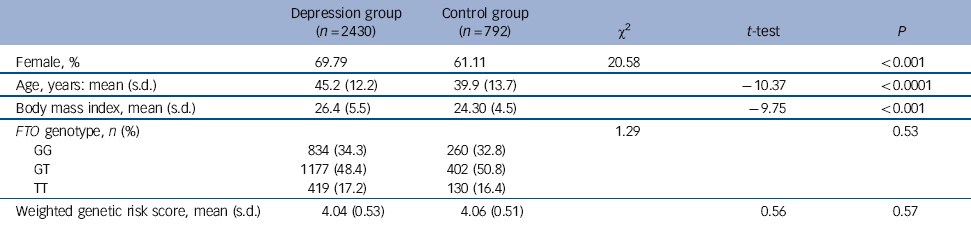
| Depression group (n = 2430) |
Control group (n = 792) |
χ2 | t-test | P | |
|---|---|---|---|---|---|
| Female, % | 69.79 | 61.11 | 20.58 | <0.001 | |
| Age, years: mean (s.d.) | 45.2 (12.2) | 39.9 (13.7) | −10.37 | <0.0001 | |
| Body mass index, mean (s.d.) | 26.4 (5.5) | 24.30 (4.5) | −9.75 | <0.001 | |
| FTO genotype, n (%) | 1.29 | 0.53 | |||
| GG | 834 (34.3) | 260 (32.8) | |||
| GT | 1177 (48.4) | 402 (50.8) | |||
| TT | 419 (17.2) | 130 (16.4) | |||
| Weighted genetic risk score, mean (s.d.) | 4.04 (0.53) | 4.06 (0.51) | 0.56 | 0.57 |
Body mass index was associated with major depression in the probit regression analysis (coefficient 0.05, 95% CI 0.04-0.06, P<0.001). The FTO genotype and wGRS was not directly associated with the relative risk of major depression when adjusting for covariates (one risk allele of FTO genotype: coefficient –0.06, 95% CI –0.17 to 0.05, P = 0.31; two risk allele of FTO genotype: coefficient –0.01, 95% CI –0.15 to 0.14, P = 0.93; wGRS: coefficient –0.03, 95% CI –0.14 to 0.07, P = 0.54). When using FTO genotype or wGRS as an instrumental variable for BMI, the change in BMI was not able to predict the risk of major depressive disorder (FTO genotype: coefficient –0.03, 95%, CI –0.18 to 0.13, P = 0.73; wGRS: coefficient –0.02, 95% CI –0.11 to 0.07, P = 0.62) (Table 2).
Comparison of conventional linear and instrumental variables regression models (with FTO genotype and weighted genetic risk score (wGRS) as instrument) of the association of body mass index and major depression

| Major depression | ||||||
|---|---|---|---|---|---|---|
| Probit regression | Instrument variable regression, FTO genotype | Instrument variable regression, wGRS | ||||
| Coefficient (95% CI) | P | Coefficient (95% CI) | P | Coefficient (95% CI) | P | |
| Body mass index | 0.05 (0.04 to 0.06) | <0.001 | −0.03 (−0.18 to 0.13) | 0.73 | −0.02 (−0.11 to 0.07) | 0.62 |
Discussion
Comparison with findings from other studies
Although a positive association between obesity and major depression was found in our conventional probit regression, our instrumental variable analysis did not support the hypothesis that obesity increases the risk of a clinical diagnosis of major depression using either FTO genotype or wGRS as the instrumental variable. Our results are not in line with the findings from other Mendelian randomisation studies. For example, the longitudinal Whitehall study Reference Kivimaki, Jokela, Hamer, Geddes, Ebmeier and Kumari13 suggested that long-term obesity is a risk factor for common mental disorders in men. Although that study met most requirements for Mendelian randomisation analysis, Reference Glymour, Tchetgen and Robins24 some important assumptions were not totally valid. First, the association between the instrumental variable, FTO genotype and obesity was significant only in males but not females, in contrast to evidence from GWAS of FTO genotype associations with BMI in both genders. Reference Speliotes, Willer, Berndt, Monda, Thorleifsson and Jackson15 Second, the instrumental variable used in the Whitehall study might be invalid under the assumption that net unmeasured confounding is positive. Reference Glymour, Tchetgen and Robins24 Third, the study did not assess common mental disorders directly but instead used a self-report general health questionnaire (GHQ), Reference Goldberg25 which is a screening tool for depression and anxiety with relative low specificity.
Another longitudinal cohort study Reference Jokela, Elovainio, Keltikangas-Jarvinen, Batty, Hintsanen and Seppala12 found that high BMI increased symptoms of depression using a GRS similar to the one we used (31 SNPs). However, the association between their instrumental variable and smoking violated the exclusion restriction assumption as smoking might be a confounding factor between BMI and depression because there is a bidirectional relationship between smoking and depression. Reference Chaiton, Cohen, O'Loughlin and Rehm26 In addition, depression symptoms were assessed by a modified version of Beck’s Depression Inventory (BDI), Reference Beck, Steer and Brown27 which is essentially an instrument for measuring symptom severity rather than for assigning a diagnosis.
Both Mendelian randomisation studies found that higher BMI (obesity) increased the risk of depressive symptoms in the follow-up period. In contrast, one cross-sectional study Reference Lawlor, Harbord, Tybjaerg-Hansen, Palmer, Zacho and Benn14 found that higher BMI was positively associated with psychological distress using conventional multivariable analysis but the result was reversed when using instrumental variable analysis. The authors suggested that greater adiposity exerts protective effects against psychological distress via biological mechanisms, whereas the stigmatisation of being overweight and low self-esteem might increase the risk of psychological distress. The study was also limited by its assessment of psychological distress, which was conducted by only four closed-ended questions, which at best have a modest relationship with the clinical diagnosis of major depressive disorder defined by DSM-IV. 28
Evaluation of the validity of our assumptions
Our study did not violate the assumptions of a Mendelian randomisation study Reference Glymour, Tchetgen and Robins24 that it was possible for us to examine. First, two instrumental variables used in our study, FTO genotype and wGRS, were reliably associated with BMI or obesity. The wGRS we used was based on 32 SNPs associated with BMI and explained approximately 1.27% of phenotypic variance of BMI in our study. Our result is in line with a previous study, Reference Speliotes, Willer, Berndt, Monda, Thorleifsson and Jackson15 using the same method to construct a GRS for BMI, in which 1.45% of the variance was explained by their wGRS.
Second, we did not find an association between our instrumental variable and age, gender and various obesity-related physical diseases such as diabetes, hypertension and myocardial infarction, which are known to be associated with major depression. Third, for the known exposure status (BMI or obesity) and known confounders, the instrumental variables are independent of the outcome (major depression). However, until the underlying mechanisms linking FTO genotype (or GRS) and major depression are comprehensively understood, it is impossible to exclude all possibility of violating the second and third assumptions.
Explanation for our findings
Our probit regression analysis showed higher BMI was associated with major depressive disorder but no association was found in instrumental variable analysis, suggesting either reverse causality or the existence of important unmeasured confounders not entered in our conventional regression analysis. Unfortunately, no replicated genome-wide significant SNPs have so far been identified in GWAS of major depression, Reference Wray, Pergadia, Blackwood, Penninx, Gordon and Nyholt29 preventing us from carrying out an Mendelian randomisation analysis to explore the reverse direction of causation where depressive disorder leads to obesity. The severity of major depression in our study was at least moderate so most participants had at some point taken anti-depressants or other psychotropic agents. A meta-analysis Reference Serretti and Mandelli30 suggested that some antidepressants might cause weight change during long-term treatment. In addition to antidepressant-induced weight change, diet and sedentary lifestyle in people with depression might result in them being more likely to be obese. Unfortunately, measures of important confounding factors such as smoking, alcohol consumption or socioeconomic status, which might influence the association between higher BMI and major depression, were not available in our study. Another possibility for explaining our negative result is the psychological impact of obesity on development of major depressive disorder. In Western society, obese people are more likely to be stigmatised and develop low self-esteem, resulting in the onset of depression. Reference Puhl and Heuer31 If this is the case, the association may be stronger in women compared with men and in younger compared with elderly people. However, our study did not support this explanation. Furthermore, the association between depression and obesity may involve not just psychological but also metabolic mechanisms, such as low-grade inflammation and hypothalamic-pituitary-adrenal axis dysregulation. Reference Penninx, Milaneschi, Lamer and Vogelzangs32
Limitations
Several limitations should be considered. First, only prospective cohort studies can provide clear temporal relationships between exposure and outcome, whereas ours is a cross-sectional study. Since the genetic factors can influence the phenotype of BMI throughout life, the choice of relevant period of exposure is important. However, since BMI is moderately correlated between adolescence and adulthood, Reference Srinivasan, Bao, Wattigney and Berenson33,Reference Guo, Huang, Maynard, Demerath, Towne and Chumlea34 BMI measured at interview might be suitable as a proxy for BMI before onset of depression. The same method has been applied to other Mendelian randomisation studies. Reference Lawlor, Harbord, Tybjaerg-Hansen, Palmer, Zacho and Benn14,Reference Mumby, Elks, Li, Sharp, Khaw and Luben35 Second, our results only pertain to the relationship between obesity and the risk of clinical depression of at least moderate severity. Therefore, we cannot rule out the possibility that obesity has a causal role in mild depression or subclinical depressive disorder. Third, our study was entirely based on White Europeans so our results might not generalise to other ethnicities. Fourth is the issue of power. Unfortunately, no formal methods currently exist that satisfactorily address the estimation of required sample size in Mendelian randomisation studies Reference Pierce, Ahsan and VanderWeele36 but our current sample is of a comparable or larger size than previous Mendelian randomisation studies that have suggested a causal relationship between high BMI and depression. Reference Kivimaki, Jokela, Hamer, Geddes, Ebmeier and Kumari13
Implications
Although our conventional multivariate regression analysis found that increased BMI was strongly associated with major depression, our genetic instrumental variable analysis did not support the hypothesis that increased BMI raises the risk of onset of major depression using either FTO genotype or wGRS as instrumental variables. The Mendelian randomisation study depends on several assumptions which are not possible to completely verify and there were some limitations to our study, but it seems likely that being overweight is not an important ‘cause’ of clinically significant depression.
Funding
This study was funded by the UK Medical Research Council and GlaxoSmithKline (G0701420). The GENDEP study was funded by a European Commission Framework 6 grant, EC Contract Ref.: LSHB-CT-2003-503428. K.J.A. holds an Alberta Centennial Addiction and Mental Health Research Chair funded by the Government of Alberta. O.S.P.D. was supported by a Sir Henry Wellcome Fellowship from the Wellcome Trust (WT088984). This work was funded in part by the National Institute for Health Research (NIHR) Biomedical Research Centre for Mental Health at South London and Maudsley NHS Foundation Trust and (Institute of Psychiatry) King's College London. This article/paper/report presents independent research in part funded by the NIHR. The views expressed are those of the author(s) and not necessarily those of the National Health Service, the NIHR or the Department of Health.
Acknowledgements
The authors would like to thank those who agreed to participate in the studies and the many colleagues who contributed to collection and phenotypic characterisation of the clinical samples, to genotyping and to statistical analyses.




eLetters
No eLetters have been published for this article.