





Introduction
Amyotrophic lateral sclerosis (ALS) is an incurable neurodegenerative disease affecting the motor neurons and leading to loss of physical functions. Cognitive and behavioral impairments are also present in up to 50% of the people with ALS (pwALS) (Phukan etal. Reference Phukan, Elamin and Bede2012). Because of its clinical severity and subsequent disability, pwALS need intensive and complex care, often provided by family members and friends throughout the course of the disease (Chiò etal. Reference Chiò, Gauthier and Vignola2006; Schischlevskij etal. Reference Schischlevskij, Cordts and Günther2021). Even though taking care of a pwALS redefines the caregiver’s meaning of life and might positively affect interpersonal relationships within the caregiving dyad (Palacio etal. Reference Palacio, Krikorian and Gómez-Romero2020), studies underline family caregivers’ multiple burdens such as anxiety and depression, work-life impairment, and decreased quality of life (Galvin etal. Reference Galvin, Corr and Madden2016; Schischlevskij etal. Reference Schischlevskij, Cordts and Günther2021).
The journey to diagnosis of ALS is often long with frequent delayed diagnosis confirmation. On average it takes slightly more than 1year from first symptoms until the final diagnosis of ALS (Richards etal. Reference Richards, Morren and Pioro2020; Sennfält etal. Reference Sennfält, Kläppe and Thams2022). Diagnosis delays are attributed to factors such as referrals to specialists, misdiagnosis, site of disease onset, age of onset, and presence of comorbidities (Richards etal. Reference Richards, Morren and Pioro2020). Such diagnostic delay increases costs to the individual, the family, and the health-care system (Galvin etal. Reference Galvin, Ryan and Maguire2017b). Also, caregivers of pwALS suffer from distress caused by delays in diagnosis (Galvin etal. Reference Galvin, Gaffney and Corr2017a; O’Brien etal. Reference O’Brien, Whitehead and Jack2011).
The inefficiency in diagnosing ALS is worrying since many decisions are dependent on this outcome. For example in Switzerland, the timing of diagnosis has an impacts pwALS’ eligibility to social health benefits (Poppe etal. Reference Poppe, Martani and Schweikert2022a). Furthermore, in the case of cancer, the experiences of patients and their family caregivers up to the moment of diagnosis play an important role in building trust in treatment recommendations and in the doctor–patient relationship (Schaepe Reference Schaepe2011). Since sharing such devastating news with the patient is a challenging task for medical professionals, communication models have been developed (Baile etal. Reference Baile, Buckman and Lenzi2000). Chiò and colleagues found the overall satisfaction with diagnosis communication in pwALS was rated higher by patients than caregivers, and half of the patients and caregivers felt discouraged by the way diagnosis was communicated (Chiò etal. Reference Chiò, Montuschi and Cammarosano2008).
After receiving the diagnosis information about their loved one, caregivers react and adjust to the new situation to cope with this unexpected, unknown, and potentially overstraining life event. Previous studies assessing coping have focused more on the pwALS, while studies on coping in informal caregivers of pwALS remain rather rare. A recent systematic review including 11 studies found that ALS caregivers most frequently used problem-focused and positive emotion-focused coping strategies (Caga etal. Reference Caga, Kiernan and Piguet2022).
In light of the intensive and complex care that must be provided to pwALS, caregivers’ role and needs also change throughout the course of the disease (Poppe etal. Reference Poppe, Koné and Iseli2020). For instance, right after receiving the diagnosis, caregivers need comprehensive information about the diagnosis (Abdulla etal. Reference Abdulla, Vielhaber and Machts2014) and physicians need to plan information provision accordingly (O’Connor etal. Reference O’Connor, Aoun and Breen2018). These are critical for the patient and their caregivers to feel prepared for the future. Furthermore, as the disease progresses, caregivers need, inter alia, formal support with care at home, emotional support (Galvin etal. Reference Galvin, Carney and Corr2018), education on assistive technology at the end of life (Baxter etal. Reference Baxter, Baird and Thompson2013), and early discussions on advanced care planning at later stages of disease (Poppe etal. Reference Poppe, Schweikert and Krones2022b).
Little is known about caregivers’ experiences accompanying pwALS during the diagnostic journey. Previous studies on this topic revealed that first symptoms of ALS were initially often unnoticed by patients, caregivers, and even medical professionals (O’Brien etal. Reference O’Brien, Whitehead and Jack2011). An Australian study concluded that family caregiver often “held a key to initiating the medical intervention” which leads to diagnosis (O’Connor etal. Reference O’Connor, Aoun and Breen2018). Experiences with medical professionals communicating the diagnosis are very mixed (Galvin etal. Reference Galvin, Gaffney and Corr2017a; O’Connor etal. Reference O’Connor, Aoun and Breen2018). Our study aims to provide insight into the adjustments, reactions as well as coping mechanisms of informal caregivers of ALS patients during the diagnostic journey to improve their involvement and support them in this process. Informal caregivers are family members or friends who supposed a person in need of care without payment.
Methods
The interviews used in this analysis were conducted in the framework of a study funded by the Swiss Academy of Medical Sciences (SAMS PC 21/17) where the goal was to explore the needs of informal caregivers for pwALS (Poppe etal. Reference Poppe, Koné and Iseli2020, Reference Poppe, Schweikert and Krones2022b, Reference Poppe, Verwey and Wangmo2022c). The cantonal research ethics committee (Ethikkommission Nordwest- und Zentralschweiz, EKNZ) reviewed the project (BASEC Nr. Req-2018-00629). The EKNZ issued a certificate of non-objection since our project does not qualify as research with human subjects under Swiss laws. We obtained written informed consent from each participant and stored the data separately in a de-identified manner.
Sample
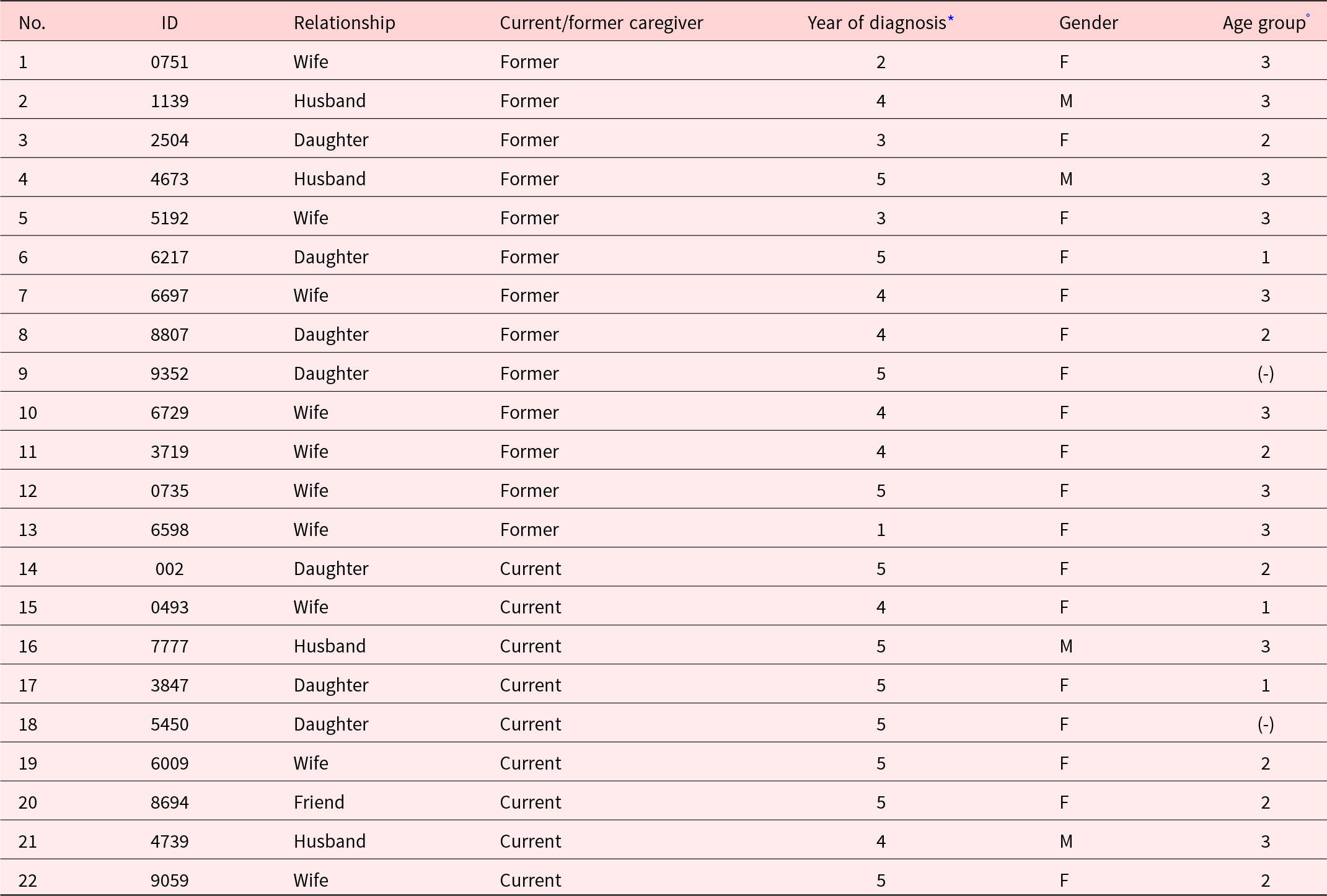
A purposive sampling through ALS centers in German-speaking parts of Switzerland, patient initiatives (Verein ALS Schweiz), peer contacts, and snowball sampling was used to recruit current and bereaved caregivers of pwALS. As this is a qualitative study, our aim is not to achieve a generalizable finding and therefore random sampling is not necessary. Furthermore, in light of challenges anticipated in recruiting this group of participants in Switzerland due to the rarity of the illness, purposive and snowball sampling was most suited. The participants received the interviewers’ contact data and contacted them via phone, mail, or email. Our sample consists of 9 current and 13 bereaved caregivers, most of them family members to the pwALS. The age ranged from 28 to 74years, 18 of the participants were female. In our sample, 14 were spouses of pwALS, 7 were children, and 1 participant was a friend of pwALS. Table 1 presents the demographic information of the study participants.
Demographic information

* Legend: 1=before 2000; 2=2000–2005; 3=2006–2010; 4=2011–2015; 5=2016–2020.
° Legend: 1=20–40years; 2=41–60years; 3=61–80years; (-)=missing.
Data collection
The interviews were conducted between 2018 and 2020 in Swiss German or German by the co-authors (CP and LI). CP is a clinical psychologist working in academic setting. LI is a physician, working in internal medicine. An interview guide was designed by the authors where the main aim was the evaluation of needs through the caregiving course. The first 4 interviews served as pilots and the interview guide was adjusted according to the experiences. The interviews were semi-structured and included prompting questions. The interviews mainly took place in person at the participants’ home, in the later course of the study they were also conducted via phone or skype due to pandemic restrictions. The interviews were between 30 and 120minutes in length.
Data analysis
The interviews were audio recorded and transcribed verbatim. The data were analyzed using thematic analysis (Braun and Clarke Reference Braun and Clarke2006; Guest etal. Reference Guest, MacQueen and Namey2011) as this paper was explorative in nature. LI coded the relevant dataset for this paper inductively after selecting information related to diagnosis journey and its aftermath from all the interviews. The initial coding was discussed between LI and TW, which resulted in creation of themes relevant for the goal of this paper. The results were first written in detail and discussed among all authors. The concise findings presented below represent all authors agreement on the interpretation of the themes.
Results
We identified 3 key themes pertaining to diagnosis, which begins with the involvement of informal caregivers in the “diagnosis journey.” Here we present their accounts of the changes in the person with ALS leading to seeking medical advice. The medical encounters result in the final diagnosis, where the main concern was how it was communicated, i.e., “diagnosis communication pitfalls.” Finally, we highlight their reactions and changes in their and family’s life within the theme “the aftermath of diagnosis.”
Diagnosis journey
The diagnosis journey was difficult for almost all study participants. Generally, they described the first symptoms of ALS and how they and the pwALS recognized the illness. In more than half of the cases it was the pwALS who first recognized that something has changed in their body. Often, the symptoms became evident in everyday tasks resulting in frustration on the part of the caregiver(Table 2, Quote 1, ID6697). In other cases, the caregivers first recognized the symptoms and asked the pwALS whether something was wrong(Table 2, Quote 2, ID3719). Also, a participant reported how she misinterpreted symptoms in her husband as a sign of ageing(Table 2, Quote 3, ID5192).
Diagnosis journey
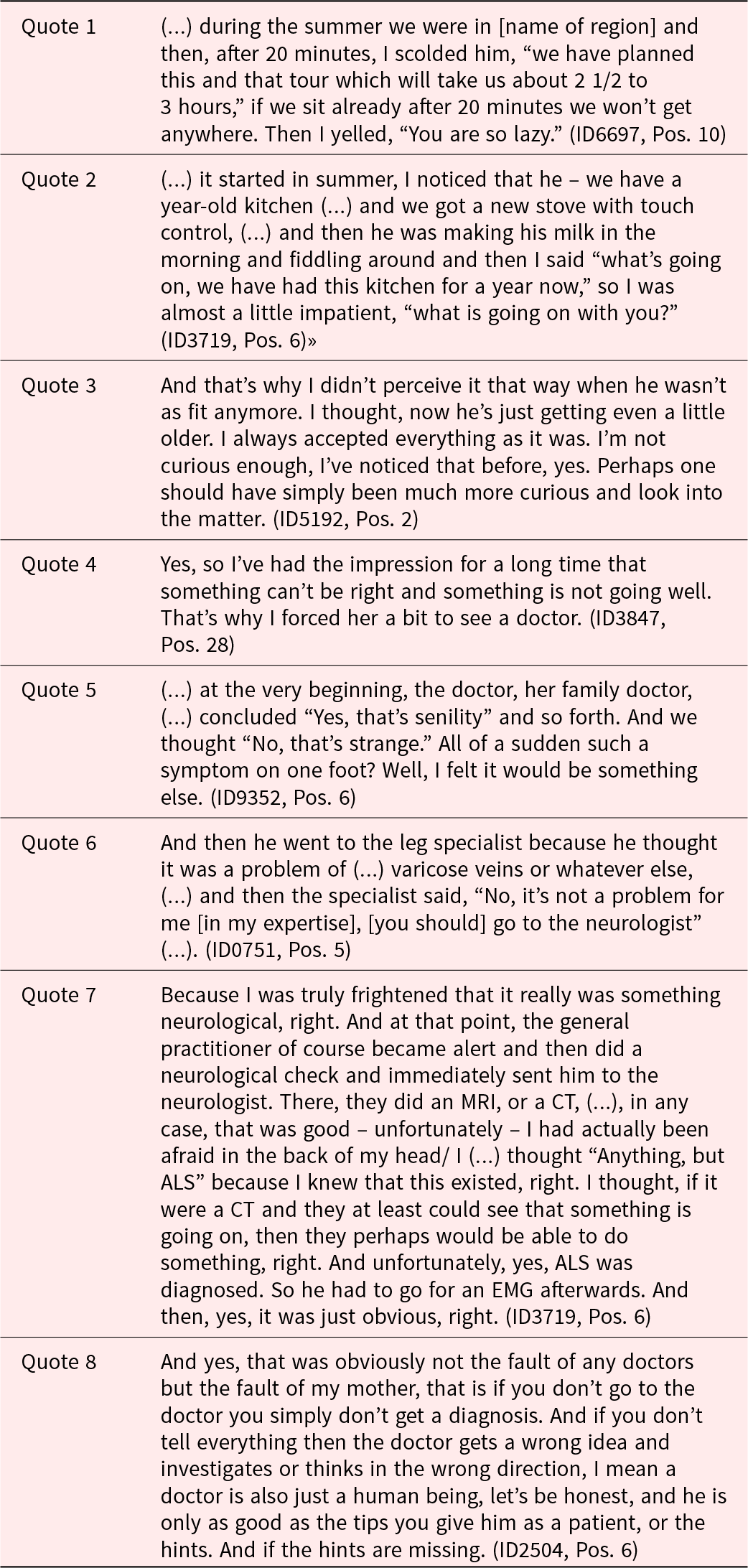
After the appearance of the first symptoms, caregivers underlined the challenges associated with the actual process of receiving the diagnosis. After recognizing the symptoms, a few caregivers felt that something was wrong and thereby sought to find information concerning the symptoms on the internet. It was the caregivers who often initiated a consultation with a medical professional. Nevertheless, in a few cases, study participants reported that the pwALS did not wish to seek medical advice, making it the caregiver’s task to persuade pwALS to seek medical consultation (Table 2, Quote 4, ID3847).
Some caregivers reported mixed experience when first consulting a medical professional. The first access point was often the general practitioners and, in a few cases, the symptoms were not adequately recognized as signs of ALS. Retrospectively, this was a disappointment for the caregivers. In one case, the advanced age of the pwALS overshadowed the diagnostic process and led to dismissal of symptoms(Table 2, Quote 5, ID9352).
If the symptoms have been assessed as a precursor of a possible neurological disease, pwALS were often referred to specialists such as neurologists. Others described first visits to a specialized physician who did not think that the symptoms of the pwALS required his expertise(Table 2, Quote 6, ID0751). Medical diagnostics and referrals followed for most of the participants. Some caregivers described the period as filled with uncertainty and expecting negative news(Table 2, Quote 7, ID3719). In a few cases, it took a long time (e.g., 1year) to receive the diagnosis. One participant talked about how her mother, the pwALS, impeded the process by holding back important information(Table 2, Quote 8, ID2504).
Diagnosis communication pitfalls
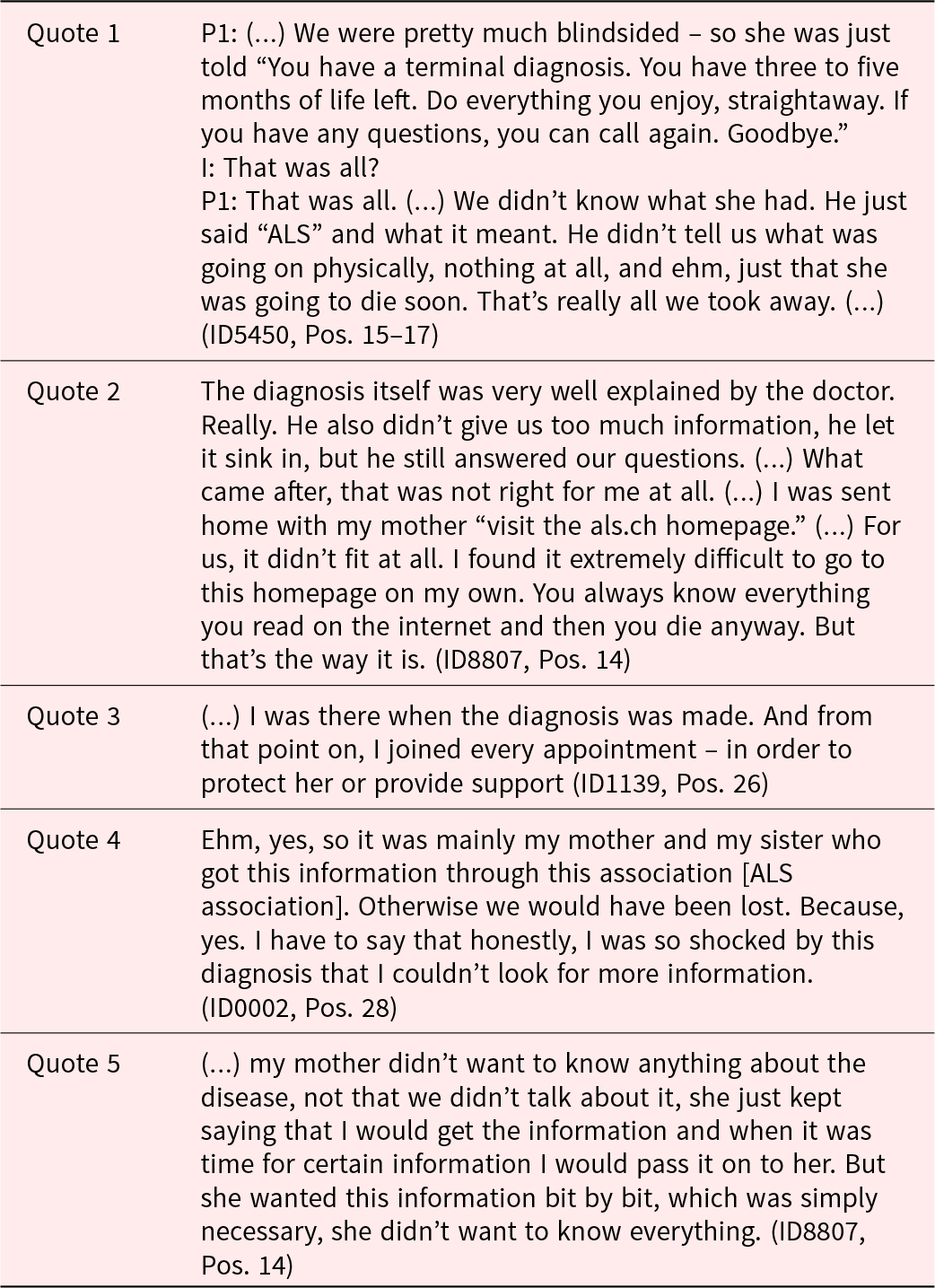
This theme focuses on the moment of medical diagnosis communication to the pwALS and the caregiver. In most cases, the diagnosis was communicated by a neurologist. When it comes to diagnosis communication, empathy in medical doctors was highlighted as a positive quality and associated with positive experience. In the medical context, the concept of empathy is understood as the ability to comprehend the patient, their point of view, concepts, and experiences (Hojat Reference Hojat2007). Some caregivers reported negative experience when doctors kept the consultation too short and did not elaborate on the actual meaning of the diagnosis, lacked empathy, or showed nihilism(Table 3, Quote 1, ID5450). In addition, a caregiver reported negative experiences with physicians, who beat around the bushes when communicating the diagnosis.
Diagnosis communication pitfalls

Also, several caregivers reported appreciating the right level of information about ALS, but also mentioned that they were overwhelmed with online information they were referred to(Table 3, Quote 2, ID8807).
At this stage, the caregivers saw their role in supporting or even protecting the pwALS from the information received at medical consultations(Table 3, Quote 3, ID1139). It is often the caregivers’ task to look for information and support. Some of them received it through the medical professional at the point of the diagnosis, some of them had to look at their own or with the help of patient organizations (Table 3, Quote 4, ID0002). A daughter described how she even had to hold back information because the pwALS did not want to know everything(Table 3, Quote 5, ID8807).
The aftermath of diagnosis
This theme focuses on the time right after receiving the diagnosis and highlights caregivers’ reaction to the news and what it meant to them. On the one hand, caregivers described the emotions they had when learning about their loved one having a terminal neurodegenerative illness. On the other hand, they elaborated how the diagnosis changed their relation to time and made them view their lives from a different perspective.
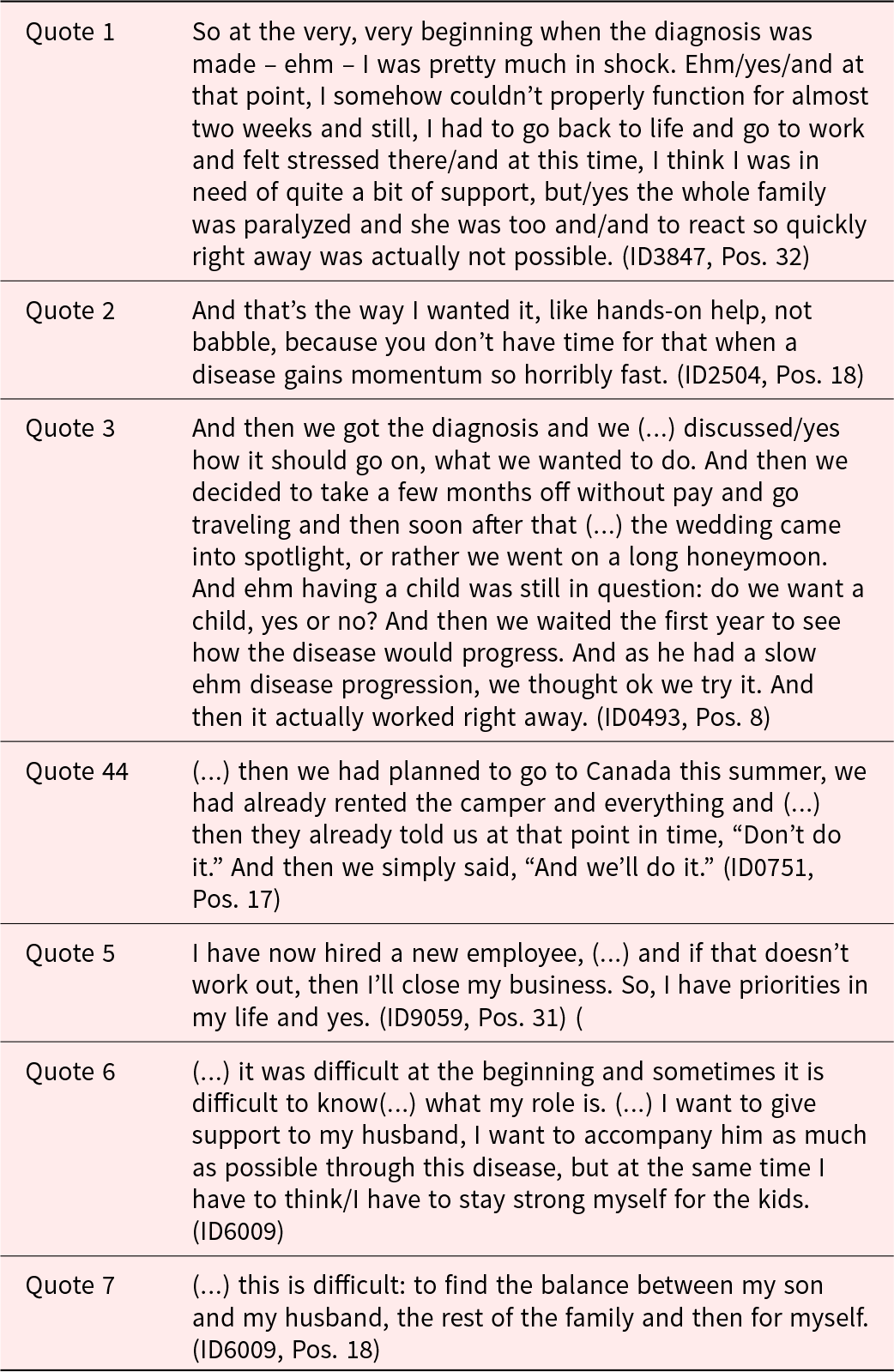
First, a few caregivers expressed their emotions following diagnosis communication. They mentioned the feeling of being shocked and not being capable of doing or organizing anything, even for months(Table 4, Quote 1, ID3847). They needed time to accept the truth or realize what was happening. Second, the loved one’s diagnosis with ALS changed the relation to time. Caregivers described the feeling of not having enough time left with the pwALS(Table 4, Quote 2, ID2504). For other caregivers, this feeling of not having much time left led to drastic changes in their life. That is, they reevaluated their overall life goals. A participant decided to marry her husband (pwALS) and become parents(Table 4, Quote 3, ID0493). Other participants, for example, set out for a journey with the pwALS, even if medical professionals advised against this plan (Table 4, Quote 4, ID0751).
The aftermath of diagnosis

Some caregivers also started to reorganize their lives with the awareness of the diagnosis. They reevaluated priorities in their lives and made adjustments for instance in their job situation (Table 4, Quote 5, ID9059). A few spoke about redefining their role in the family (Table 4, Quote 6, ID6009). This also included finding a new balance between the pwALS, other (sick) family members, and the caregiver themselves (Table 4, Quote 7, ID6009).
Discussion
From available literature, we know about the supportive needs of informal caregivers of pwALS (Abdulla etal. Reference Abdulla, Vielhaber and Machts2014; Baxter etal. Reference Baxter, Baird and Thompson2013; Galvin etal. Reference Galvin, Carney and Corr2018; Poppe etal. Reference Poppe, Koné and Iseli2020, Reference Poppe, Schweikert and Krones2022b). The diagnosis experience from the perspective of pwALS and their needs as they go through the disease process have been studied (Abdulla etal. Reference Abdulla, Vielhaber and Machts2014). In this qualitative interview study, we mapped the caregivers’ perceptions of diagnostic process, diagnosis communication, and adjustments made after their loved one was diagnosed with ALS. Thereby, we add more knowledge to this domain of ALS research that seeks to improve the lives of those with ALS and their family members.
Similar to previous study (O’Brien etal. Reference O’Brien, Whitehead and Jack2011), we find that family caregivers were the ones who first raised questions of physical changes in the pwALS. Although a few pwALS also recognized these first symptoms, it was however the task of caregivers to initiate medical care (Galvin etal. Reference Galvin, Gaffney and Corr2017a). The caregivers therefore play an important role to encourage their loved one to seek timely medical care, which is critical to address the symptoms that they are experiencing.
The further journey to diagnosis often involved different obstacles, resulting in delayed diagnosis. In our sample, the obstacles to diagnosis were misclassifications of symptoms and lack of competence of the physicians. Our study participants reported misinterpretation of ALS symptoms as a sign of ageing. This may not be surprising in light of the fact that most ALS diagnosis are made when an individual is around 55years old (ALS-Association 2023; Talbott etal. Reference Talbott, Malek, Lacomis, Aminoff, Boller and Swaab2016). This corresponds to studies showing that pwALS get often misdiagnosed with age-related diseases such as degenerative spine disease (Gwathmey etal. Reference Gwathmey, Corcia and McDermott2023).
In our results, we also see shortage of experience with ALS among a few general practitioners that the caregivers sought help from. This was problematic because they underestimated the severity of first symptoms. This deficiency of ALS symptoms appreciation could be due to the fact that they lack disease specific knowledge, as they may only see a very few ALS patients in the course of their career. In Switzerland, calculated with the median European incidence (Chiò etal. Reference Chiò, Logroscino and Traynor2013), there are around 470 people living with ALS. The incidence accordingly to the prevalence in Europe (Chiò etal. Reference Chiò, Logroscino and Traynor2013) is approximately around 180 cases per year. This situation highlights the need to educate general practitioners to recognize ALS symptoms.
Informal caregivers of pwALS accompany diagnosis communication (Maksymowicz etal. Reference Maksymowicz, Libura and Malarkiewicz2022), where their role included supporting and even protecting pwALS in this life-changing moment. In this role, they experienced lack of empathy in medical professional when diagnosis was given, resulting in dissatisfaction with health care. Similarly, previous research reported that satisfaction with diagnosis communication was significantly correlated to physicians’ sensitivity, maintenance of hope, and honesty (Chiò etal. Reference Chiò, Montuschi and Cammarosano2008). Also, caregivers felt disappointed that medical professionals communicated the terminal diagnosis in a rather casual or fatalistic way. Although communication about death and dying is challenging (Baile etal. Reference Baile, Lenzi and Parker2002), it is desirable that physicians caring for ALS patients receive training in communication skills. A communication model, SPIKES, provides a protocol to disclose bad new, suggests building further strategies, and next steps with the patient (Baile etal. Reference Baile, Buckman and Lenzi2000). In addition to communication training, it might also be useful to involve palliative care specialists who are particularly trained in such situations to ease the challenges other physicians face with discussions around serious and progressive diseases.
Palliative care specialists may also provide patients with much needed perspective and care. However, there are financial hurdles in Switzerland and neurology services seem to be more reluctant in referring patients to palliative care specialists compared to other countries (Oliver etal. Reference Oliver, Baker and Borasio2022).
Caregivers experience initial shock of knowing that their loved one has ALS (Aoun etal. Reference Aoun, O’Brien and Breen2018), and the diagnosis changes their relation to time as they become acutely aware of its finite life with the pwALS. They thus began to rethink their lives (e.g., marriage, family planning) and their role in the family, which was also described in an Italian qualitative study (Cipolletta and Amicucci Reference Cipolletta and Amicucci2015). In our study, adult children reported, for example, that they had to take responsibility for their sick parents. Their acceptance of this role was not reported as negative. Participants in the Italian study however equated the process of informal caregiving to being responsible for a baby.
Limitations
Our result has several limitations. As a qualitative study, the data is from a small number of participants who were purposely selected, and thus, the data are not generalizable. Also, our study should be understood in the Swiss context since informal caregiving is highly influenced by culture. The goal of the project, from which the data stems, was to explore the needs of ALS family caregivers (Poppe etal. Reference Poppe, Koné and Iseli2020, Reference Poppe, Schweikert and Krones2022b) and not to thoroughly understand the diagnosis journey. Therefore, our findings may be incomplete since we did not probe more into the different issues that the participants mentioned.
Conclusion
We conclude that informal caregivers accompany pwALS from first symptoms and throughout the diagnostic process. They are an important resource for pwALS when it comes to seeking medical care and advice. They must be viewed as integral part of the medical care process and included in the entire care process as partners supporting pwALS. Second, when communicating the diagnosis, physicians should use recommended protocols to break bad news. It is also important to evaluate caregivers’ and the pwALS’ need for information after communicating the diagnosis. They need a proper plan on next steps, which allows them to plan out the future with pwALS. Involving palliative care specialists at early stages of disease to provide a perspective on the impending future might be beneficial for all parties involved. Taking proper care of these initial step is the basis for a good patient–doctor relationship, a critical component of health care.
Acknowledgments
We sincerely thank our participants for their willingness to take part in our study. Our heartfelt appreciations to Martine Verwey, an informal ALS caregiver herself, who was instrumental in the completion of this project. The project was financially supported by the Swiss Academy of Medical Sciences (SAMS PC 21/17).
Funding
This work was supported by the Swiss Academy of Medical Sciences (SAMS PC 21/17).
Competing interests
The authors report there are no competing interests to declare.

 Open access

