

This paper is published in full in Antiquity 83 no. 321 September 2009. Here we publish an additional technical note on distinguishing and dating pigs at the Nagsabaran Excavations.
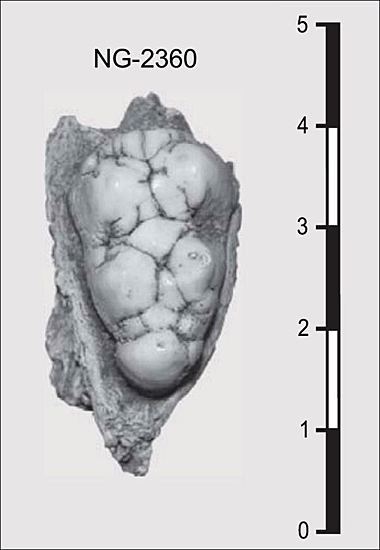
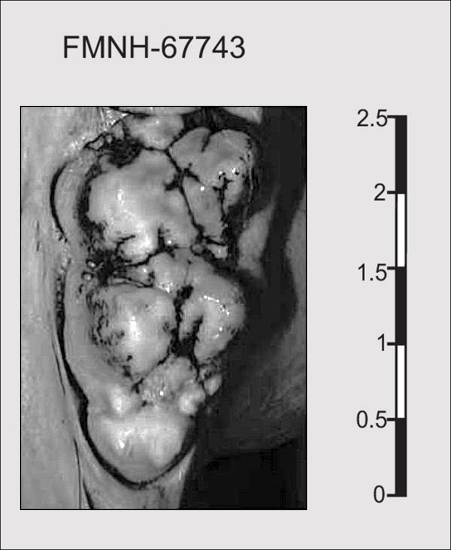
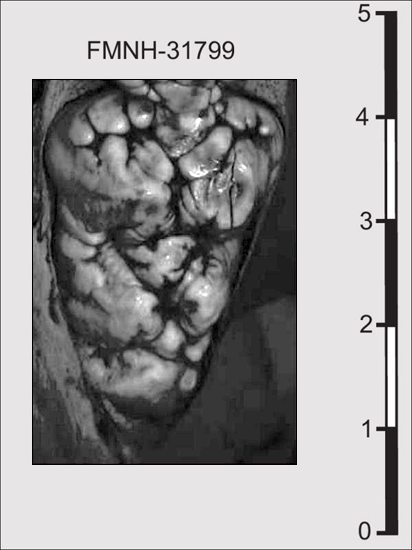
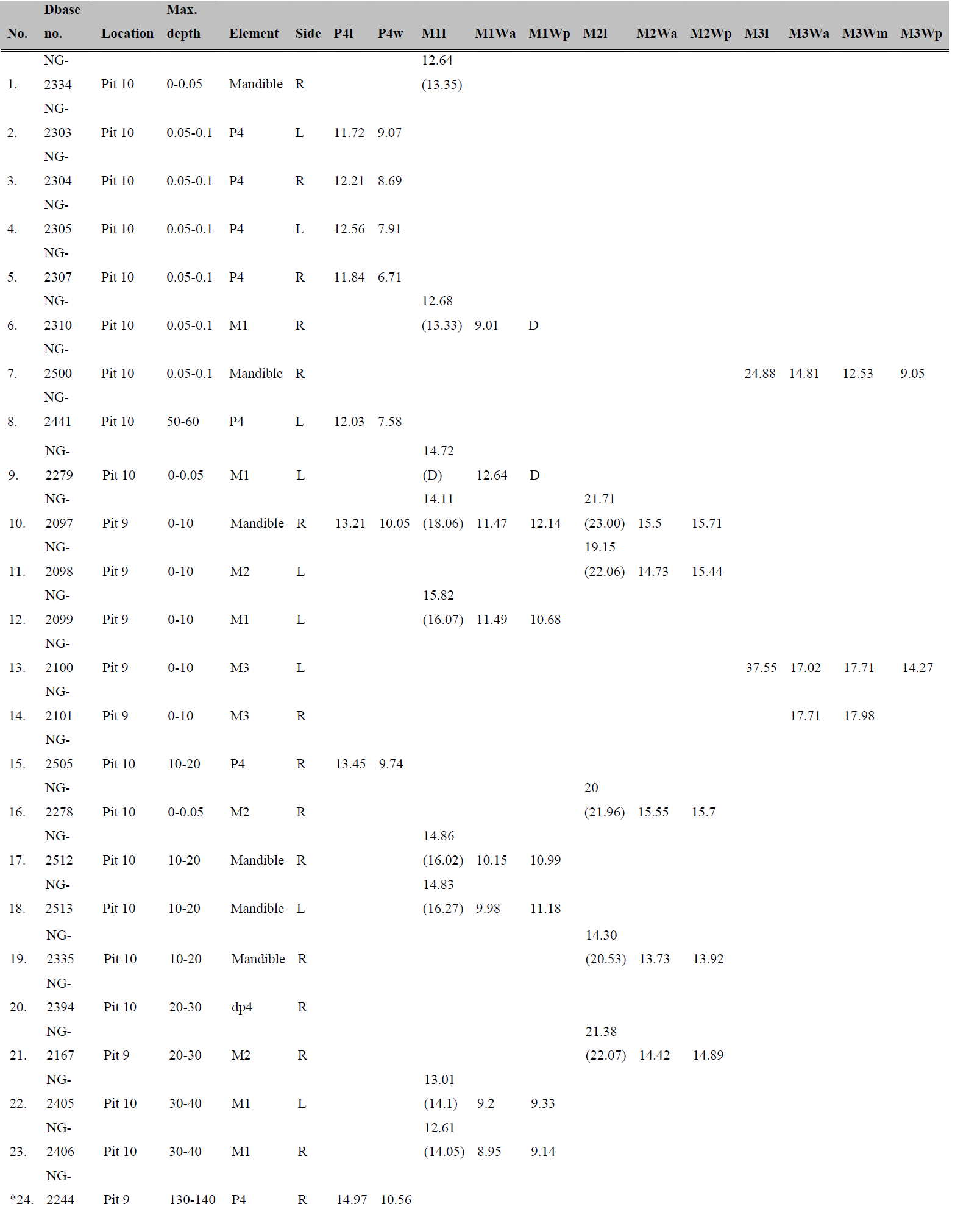
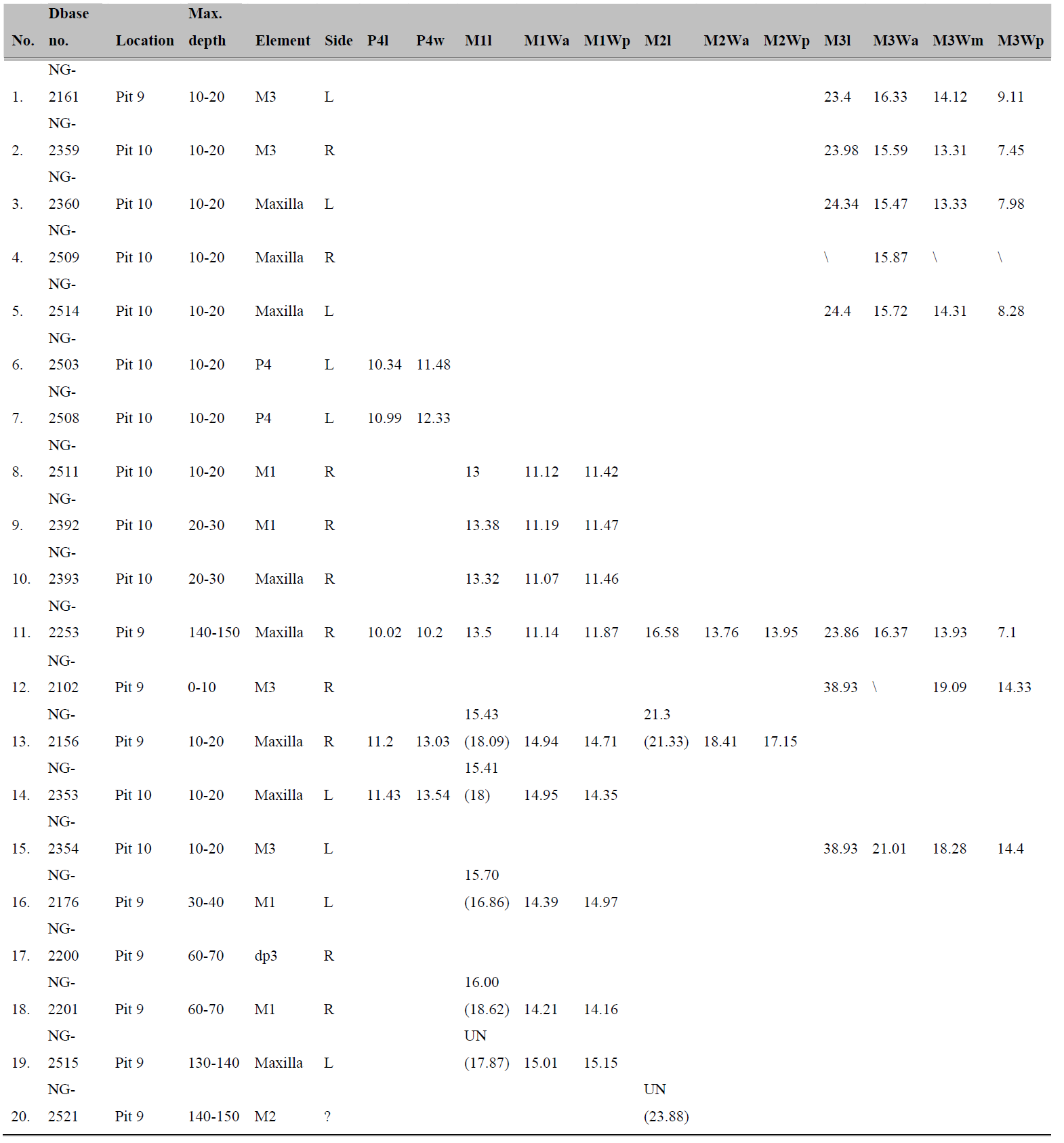
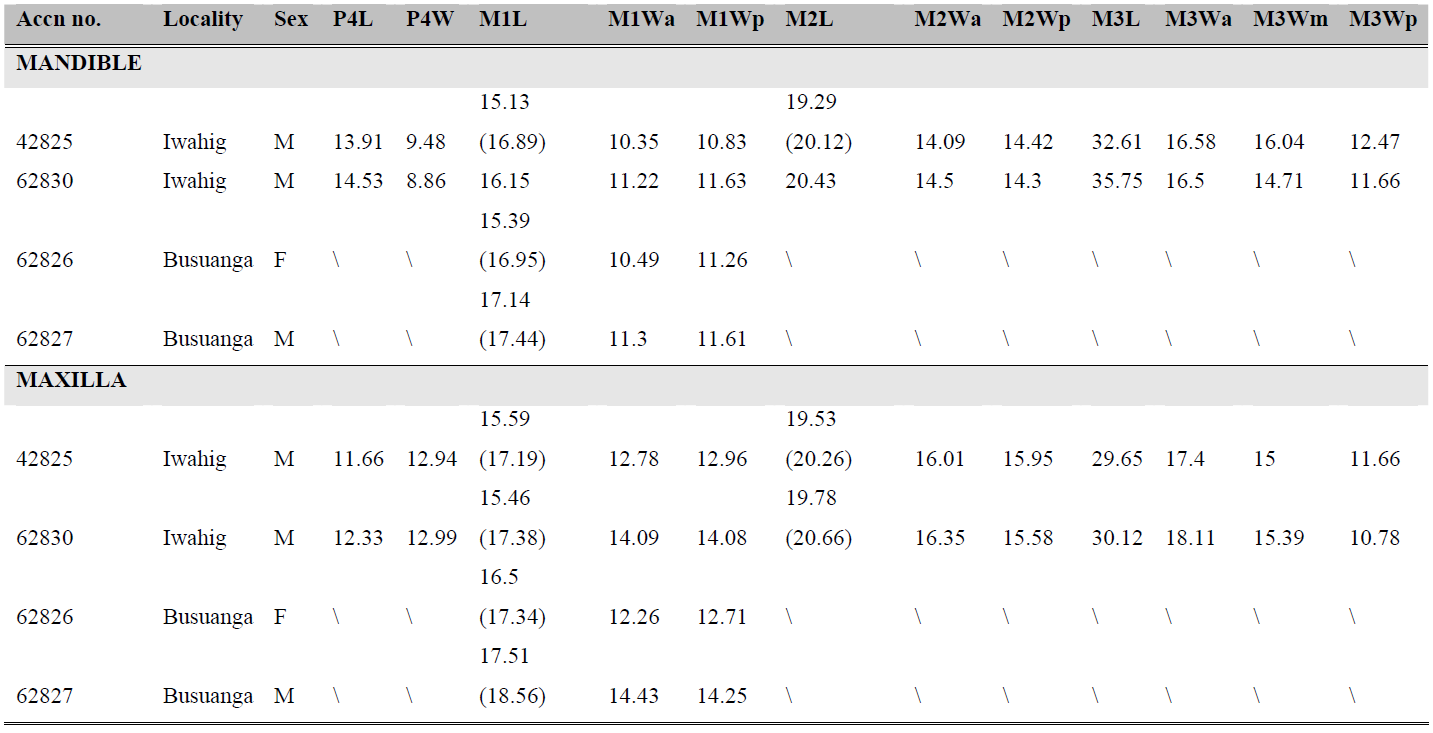
Although Dobney et al. (2008) and Cucchi et al. (in press) have drawn attention to the pitfalls of using teeth to distinguish pig taxa, the two examples at Nagsabaran are so vastly different that they could be easily separated on the size and morphology of molars and fourth premolar, but in particular the shape and size of the maxillary and mandibular third molar (Tables 1a & 1b). The Wallacean suids (e.g. Sus philippensis, S. cebifrons and S. celebensis) differ from the ISEA and mainland Southeast Asian species in that they have a very simplified globular talonid (Figures 1 and 3; Cucchi et al. in press). The endemic Philippine pigs (excluding those on Palawan) also have a small body size and this is reflected in the dimensions of the molars and premolars. The larger specimens from Nagsabaran are of a similar size to members of the S. scrofa clade resident in Borneo (S. barbatus) and the rest of ISEA (S. scrofa, S. verrucosus and S. barbatus) and mainland Southeast Asia and Taiwan (Figures 2 and 4; S. barbatus and S. scrofa; taxonomy follows Reference GrovesGroves 1997, 2007; Lucchini et al. 2005). The size range of the teeth in the archaeological specimens exceeds those of the Palawan bearded pig S. ahoenobarbus, eliminating it as the possible source of the introduced domestic pig population (Tables 3 and 4). If we consider that the dimensions of the dentition are a reflection of the overall size of an animal, then it would appear that there had been none or only limited reduction in body size from the ancestral wild boar associated with the process of domestication (see Dobney et al. 2007), prior to their introduction into the Philippines.
The upper left third molar of the endemic Philippine warty pig Sus philippensis recovered from Nagsabaran with measurements recorded as number 7 in Table 1b. (Scale in cm). Click to enlarge.

The upper left third molar of the introduced pig taxa recovered from Nagsabaran with measurements recorded as number 5 in Table 1b. (Scale in cm). Click to enlarge.

The upper left third molar of a modern Philippine warty pig Sus philippensis from Zamboanga in Mindanao held at the Field Museum of Natural History, Chicago. Measurements recorded in Table 2. (Scale in cm). Click to enlarge.

The upper left third molar of a modern Eurasian wild boar Sus scrofa from Laos held at the Field Museum of Natural History Chicago. The M3 is still in the process of eruption but has a minimum length of 32.8mm, a maximum anterior width of 23.8mm and central molar column width of 17.7mm. (Scale in cm). Click to enlarge.

The deepest and chronologically oldest fragment from the large-sized (introduced) pig taxon is a damaged upper second molar from Pit 9 (1.40-1.50m bmg) with a minimum length of 23.88mm (Table 1b, no. 20). A further permanent right lower fourth premolar (P4) was recovered from Pit 9 (1.30-1.40m bmg) whose dimensions also clearly placed it within the size range of the introduced domestic pigs (Table 1a, no. 24). With some ambiguity in the potential age of the pig remains from the silt horizons it was decided to date the latter specimen directly using AMS 14C, after several casts had been produced and deposited at the National Museum of the Philippines. The P4 returned a date of 3940±40BP (WK-23397) or 4500-4200 cal BP (OxCAL Version 3), supporting associated charcoal dates and the typological chronology established from the ceramics recovered from the site (Hung 2008).
Tables