

Hand hygiene is argued to be the most important intervention in preventing healthcare-associated infection. 1 Despite this, a recent systematic reviewReference Price, McLarrnon and Cuthbertson 2 identified that there is limited evidence to support hand hygiene techniques, and compliance with hand hygiene remains suboptimal. There is little point in getting the opportunity, or the “5 Moments,” 1 correct for hand hygiene if a technique effective in reducing the bacterial load on the hand thereafter is not evident.
There are 2 main techniques in international guidance on hand hygiene: the first of these is the World Health Organization 6-step technique, 1 which involves applying a palmful of alcohol-based handrub (ABHR) in a cupped hand, covering all surfaces, and rubbing 6 different aspects of the hands. This technique has a limited evidence base for use in clinical practice because it was developed as a standardized technique to test hand hygiene products in a laboratory setting.Reference Ayliffe, Babb and Quoraishi 3 Furthermore, this technique has no evidence of microbiologic effectiveness in clinical settings with ABHR. The second technique is the 3-step technique. This technique involves first, applying ABHR to the palm of one hand and rubbing hands together; second, covering all surfaces; third, continuing to rub until hands are dry.Reference Boyce and Pittet 4 There is some observational evidence baseReference Kampf, Reichel, Feil, Eggerstedt and Kaulfers 5 and 1 randomized controlled trial (RCT) to support this technique on the basis of shorter duration, although not for ABHR use specifically.Reference Chow, Arah and Chan 6 Given that most hand hygiene opportunities in developed countries uses ABHR and compliance is suboptimal, this study aimed to evaluate the microbiologic effectiveness of the 2 current techniques used internationally on residual bacterial load.
METHODS
Study Design
Our parallel group RCT used random allocation to either hand-rubbing with ABHR covering all hand surfaces (3-step technique) or hand-rubbing with ABHR using the 6-step technique. The aim was to compare the microbiologic effectiveness of the techniques on hand coverage and reduction of bacterial contamination on the hands of healthcare workers (HCWs) in a large university teaching hospital in the United Kingdom, where the 6-step technique was current practice. Ethics committee approval was granted from Glasgow Caledonian University (HLS13/03) and access and research approval permissions from NHS Greater Glasgow & Clyde Research & Development committee (GN13MI027).
Participants
Participants were eligible for inclusion if they were a nurse or doctor present on the ward, providing direct patient care not requiring the use of gloves or hand washing with chlorhexidine, and if they agreed to participate. There were no ineligible participants and 4 refusals. They were excluded if they had a self-declared active skin condition at the time of the study or had already taken part in the study, or if their hands became contaminated during the procedure thus requiring them to wash their hands.
All wards in the hospital were included and a random order was used to determine which wards to study on a particular day. Participants were informed about the study via email and posters in advance of data collection, and in person on the day by the researchers. Verbal consent was obtained from participants to protect their identity and anonymity.
Randomization and Masking
To avoid staff knowing in advance, randomization was not disclosed until the day of data collection. Sealed opaque envelopes were used to randomly allocate participants into hand hygiene protocols, either (1) 3-step or (2) 6-step technique. An infection control practitioner who was experienced in hand hygiene audit and a research nurse collected the data. A study number was assigned to each participant using pre-numbered data collection forms. The data collectors had no involvement in the analyses or writing. The specimens were processed and reported by a microbiologist (K.S.) who was masked to the group allocations. The microbiology interpretation and analyses were conducted by S.L. and C.R., respectively, who were both masked to the allocation of groups.
Procedures and Interventions
The data collectors were trained in the study protocol and to use glove juice technique.Reference Kampf, Ostermeyer, Heeg and Paulson 7 They observed the patient care activities in the ward and identified activities involving direct patient contact. Staff who had agreed to participate were then approached for data collection. To standardize the techniques, each participating HCW was shown a diagram on an instruction card demonstrating the allocated technique and 3 mL of ABHR (Softcare Med; Diversey), which contained a blend of isopropyl alcohol and n-propanol, was used via a pump dispenser.
After the patient interaction, a glove juice sampleReference Kampf, Ostermeyer, Heeg and Paulson 7 was taken by the data collector from the dominant hand of the participant. Participants then used the ABHR, with the respective allocated technique, after which a second glove juice sample was taken. One data collector recorded the duration of the technique with an electronic stop watch and collected the glove juice technique specimen.Reference Kampf, Ostermeyer, Heeg and Paulson 7 Hands were then rinsed and dried, and a handrub with a fluorescent dye (Spirigel; Ecolab) was applied to evaluate adherence to the allocated technique and hand coverage. Hand coverage was determined by observation of the hands for any areas not covered with fluorescent dye. To identify these areas hands were evaluated under ultraviolet light following application of the dye. The location and size of areas not covered by dye were documented on a standard hand drawing. The total area not covered for each participant was placed in one of 4 categories: 0%, up to 5%, 5%–15%, and greater than 15%, on the basis of the drawings.Reference Kampf, Reichel, Feil, Eggerstedt and Kaulfers 5 To standardize data collection one data collector observed and recorded whether each step of the technique was completed during application of the Spirigel and coverage of the hands.
Outcomes
The primary outcome measure was residual bacterial load on the hands of the HCW after using the hand hygiene technique. Secondary outcomes included compliance with the technique (%), hand coverage and sites missed, and duration (seconds). There were no adverse events recorded and the ABHR used was that of the study hospital, so no risk to safety was anticipated with the study.
Statistical Analysis
A sample of 120 clinical participants was required to detect differences, at 90% statistical power, with a mean bacterial load of at least 0.38 log10 colony-forming units (CFU).Reference Chow, Arah and Chan 6 Owing to the lower number of doctors available on the wards, it was anticipated that randomization would be performed in a manner to allow more nurses to be recruited, if required, but to maintain the 1:1 allocation of both nursing and medical participants in each arm of the trial. The data were analyzed by one of the authors (C.R.).
To rule out the influence from the prior hand hygiene practice, we used ratios of the post–hand hygiene bacterial colony counts over the prior hand hygiene counts. A linear regression model was fitted to identify significant difference in the ratios between these 2 hand hygiene techniques, using a log transformation. A quantile-quantile plot was produced to check the validity of the normal assumption and a Wilcoxon rank sum test was used if there was a significant deviation from normality. This test was used to examine the difference of the time taken for hand hygiene and the percentage of the hand area not covered between the techniques. Detailed hand part comparisons of coverage between the 2 techniques were performed using contingency tables. A χ2 test was applied to examine the difference in coverage and the Fisher exact test was applied if the counts in the table were small. The same procedure was applied to the observation data for duration of applying the ABHR. The 95% confidence limits for the medians were obtained from 10,000 boot strap samples. All analysis was conducted using R, version 3.0.3 (R Core Team).
RESULTS
A total of 120 participants were recruited into this study on weekdays (February 1 to March 31, 2014), inclusive of 78 nurses and 42 doctors from 15 acute wards, including intensive care units, and a range of medical and surgical specialities. For the 6-step technique, the median log10 bacterial colony counts before hand hygiene were 3.28 CFU/mL (95% CI, 3.11–3.38 CFU/mL), which reduced significantly to 2.58 CFU/mL (2.08–2.93 CFU/mL) (Table 1) after hand hygiene. For the 3-step technique, there was a smaller reduction, from 3.08 CFU/mL (95% CI, 2.97–3.27 CFU/mL) to 2.88 CFU/mL (2.58–3.15 CFU/mL). The ratios of the post-handrub bacterial counts over the pre-handrub counts were significantly lower (P=.02) for the 6-step technique; the median ratio of pre- to postcleaning bacterial load for those using the 6-step technique was approximately half the ratio for those using the 3-step (median post- to pre-ratios were 0.31 for 6-step and 0.65 for 3-step). For the 6-step, the time taken was generally longer, with a median value of 42.5 seconds (95% CI, 39.0–45.0 seconds) compared with 35.0 seconds (33.0–37.0 seconds) for the 3-step technique (Table 1). The regression results showed that the time taken was 15% (95% CI, 6%–24%) longer for the 6-step technique (P=.002).
Comparison Between the 3- and 6-Step Hand Hygiene Techniques
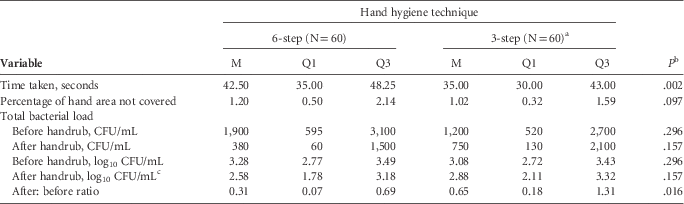
NOTE. Blood agar was used for culture. CFU, colony-forming units; M, median; Q1, lower quartile; Q3, upper quartile.
a There was one missing time in the 3-step group for time taken.
b By the Mann Whitney test.
c Some sites where there was 0% not fully covered are excluded for the plot.
Table 1 shows that for both techniques, the magnitude of the area covered during hand hygiene was not related to a greater reduction in bacterial loads. The detailed observation data for hand coverage are summarized in Figure 1; the 6-step technique generally covered more parts of the hands. Only 39 (65%) of 60 participants were fully compliant—that is, followed the instructions entirely for the 6-step technique. When the subgroup of those who performed the technique correctly was compared with those who had not, a significant difference was found in the reduction in bacterial load (P=.01), in favor of those who complied 100% with the technique. Among those fully compliant, the median bacterial load went from 3.18 (before) to 2.08 (after hand hygiene) log10 CFU/mL, compared with 3.36 (before) to 2.55 (after hand hygiene) log10 CFU/mL among those not fully compliant; the median ratio of post-handrubbing to pre-handrubbing bacterial load for those fully compliant was 0.31 times that of those who were partially compliant. There was no difference in time taken to perform technique (P=.51) or total surface coverage (P=.14) between these subgroups.
The percentage of participants in the 6-step (60 observations) and 3-step (59 observations) arms who were compliant with the specific components of the hand hygiene techniques. Numbers beside the bars are the P values from the χ2 test of association. Asterisk indicates no test was performed because there was 100% compliance in each arm. APHR, applied a palmful of hand rub; P2P, palm to palm; RPLD, right palm over left dorsum fingers interlaced; LPRD, left palm over right dorsum fingers interlaced; P2PF, palm to palm fingers interlaced; RBFL, right back of fingers in left palm; LBFR, left back of fingers in right palm; RTLP, right thumb in left palm; LTRP, left thumb in right palm; RFTL, right finger tips in left palm; LFTR, left finger tips in right palm.

The vast proportion of the colonies that constituted the total aerobic bacterial counts were phenotypically identified as staphylococci. With the exception of 1 sample, aerobic bacteria were recovered from all pre–hand hygiene samples and 103 (86%) of the 120 participants also had these organisms present after hand hygiene. There was no significant difference between technique used and aerobic bacteria being detected; 49 (82%) of 60 participants had detectable bacteria on the hand surface after the 6-step and 54 (90%) of 60 participants after the 3-step.
The percentage of the hand area covered by the ABHR did not differ on average between the 2 techniques. The detailed coverage data are summarized in Figure 2, which illustrates that the back of the hands and the fingers were generally less likely to be covered in full compared with the palm of the hands and the fingers for both techniques. The back of the hands, the back of the thumbs, and the back of the index fingers were most frequently missed regardless of the techniques used. There was no significant difference between the techniques for hand coverage, except with the 6-step technique, when there were significantly more participants with the back of the hands not fully covered (P=.002), but there were fewer participants with the back of the index (P=.01) and the middle finger (P=.002) of the right hand not fully covered (Figure 2) compared with the 3-step technique.
The percentage of participants in the 6-step (60 observations) and 3-step (59 observations) arms who did not fully cover the specified areas of the hands (LH, left hand; RH, right hand). Numbers beside the bars are the P values from the χ2 test of association (and Fisher exact test). TLB, thumb LH back; IFLB, index finger LH back; MFLB, middle finger LH back; RFLB, ring finger LH back; LFLB, little finger LH back; BHLB, back of hand LH back; TRB, thumb RH back; IFRB, index finger RH back; MFRB, middle finger RH back; RFRB, ring finger RH back; LFRB, little finger RH back; BHRB, back of hand RH back; TLP, thumb LH palm; PLP, palm LH palm; TRP, thumb RH palm; IFRP, index finger RH palm; PRP, palm RH palm.

There was no significant difference between participant groups (doctors vs nurses) in terms of changes in bacterial counts irrespective of technique used. The reduction in bacterial load was 55% (median [interquartile range] of 0.45 [0.19–1.00]) in doctors and 63% (median [interquartile range] of 0.37 [0.08–1.06]) in nurses—that is, nurses had a 14.1% (95% CI, −61% to 54.3%) greater reduction relative to doctors but this was not significant (P=.64). Doctors and nurses achieved a comparable level of hand coverage with similar areas of the hands not covered: a median of 1.2% for doctors and 1.1% for nurses.
DISCUSSION
This pragmatic RCT with 90% power evaluated the microbiologic effectiveness of 6-step versus 3-step ABHR hand hygiene technique in terms of residual microbial load, hand surface coverage, and duration of application. Our results demonstrate that, contrary to the findings from a systematic review,Reference Price, McLarrnon and Cuthbertson 2 the 6-step technique with ABHR was more effective than the 3-step hand hygiene technique in terms of residual bacterial load.
Contrary to earlier observational studies on hand washing,Reference Kampf, Reichel, Feil, Eggerstedt and Kaulfers 5 , Reference Taylor 8 – Reference Park, Kim and Lim 12 larger coverage area of the hand was not related to a larger reduction in bacterial loads. This may because the 6-step technique took a longer time owing to the greater number of maneuvers required compared with the 3-step technique. Other authorsReference Widmer, Conzelmann, Tomic, Frei and Stranden 9 have identified that a reduction in bacterial load can also be influenced by the amount of ABHR applied to the hands. However, in this study the amount used was the same for both techniques.
Nine (15%) of 59 participants performing the 3-step covered all areas of the hand as defined in the 6 steps. This indicates that specific site coverage, rather than overall coverage, was much less effective in 3-step. For the 6-step technique, the back of hands were more frequently missed, whereas the back of the index and the middle finger of the right hand were less frequently missed, compared with 3-step. Only one other studyReference Chow, Arah and Chan 6 has compared these 2 techniques to date, and this study examined hand washing with chlorhexidine rather than ABHR specifically and did not address sites missed, thus the evidence arising from this part of our study is novel. Other studies examining the 6-step technique compliance found dorsal and palmar aspects were most frequently missed (24% and 18%, respectively) as well as 3.5% of fingertips.Reference Widmer, Conzelmann, Tomic, Frei and Stranden 9 – Reference Tschudin-Sutter, Frei, Dangel and Widmer 10
Others have examined compliance with the World Health Organization 6-step technique specifically rather than compared with another approach.Reference Kampf, Reichel, Feil, Eggerstedt and Kaulfers 5 , Reference Taylor 8 – Reference Park, Kim and Lim 12 In these studies, compliance with the technique varied from 7.9%Reference Kampf, Reichel, Feil, Eggerstedt and Kaulfers 5 to 8.5%Reference Widmer and Tschudin-Sutter 13 to 31%Reference Sunkesula, Kundrapu, Macinga and Donskey 14 to 47%.Reference Park, Kim and Lim 12 Our study found that even during observation by 2 researchers and use of a printed instruction card demonstrating the technique, compliance with the 6-step technique was only 65%, compared with 100% compliance with 3-step technique. Those participants with 100% compliance with 6-step technique had a significantly greater log reduction in bacterial load with no additional time or difference in coverage compared with those with 65% compliance with 6-step technique (P=.01). This finding is reinforced by previous studies,Reference Widmer, Conzelmann, Tomic, Frei and Stranden 9 which have indicated that compliance, after training, with the 6-step technique rose from 31% to 74% in HCWs. Studies have indicated that this reduces over time, emphasizing the need for ongoing reinforcement, education, and training.Reference Szilágyi, Haidegger and Lehotsky 11 Unlike other studies to date,Reference Szilágyi, Haidegger and Lehotsky 11 we found no difference in compliance between doctors and nurses. Other studies have found higher compliance with technique amongst nurses compared with doctors.Reference Szilágyi, Haidegger and Lehotsky 11 Our result may have arisen by the use of an instruction card on the technique to minimize potential for confounding from variation in prior training in hand hygiene technique.
For the 6-step technique, the time taken for hand hygiene was longer compared with the 3-step technique. This finding is supported by previous work,Reference Chow, Arah and Chan 6 wherein the 3-step was found to be significantly quicker (26 vs 38.5 seconds; P=.04). Kampf et alReference Kampf, Reichel, Feil, Eggerstedt and Kaulfers 5 similarly demonstrated a median time of 25 seconds with the 3-step technique. Time taken for hand hygiene is an important consideration but microbiologic effectiveness is more important. Although both of the techniques reduce the bacterial load, it is not known whether the reduction with 3-step is sufficient to stop transmission of healthcare-associated infections. If it is, then efficiency in time taken may make this a preferable option.
Our study had several strengths. It was an RCT in a clinical setting.Reference Kampf, Reichel, Feil, Eggerstedt and Kaulfers 5 very few of which are seen in infection prevention and control studies.Reference Zingg, Holmes and Dettenkofer 15 It had a high recruitment rate with 120 (97%) of 124 agreeing to participate in the study. There were no withdrawals from the study. The hand sites missed as well as time taken and bacterial residue were measured; this is the first time all of these have been accounted for in an RCT in practice. We used the accepted gold standard in microbiology of glove juice technique,Reference Larson, Aiello and Bastyr 16 hence providing an accurate assessment of bacterial burden that can be transferred via hand contact. The masking of the microbiologist to the assigned protocols also strengthens our study because detection bias was minimized.
There were some limitations. The glove juice technique sampling potentially removed a large amount of the bacteria present on participants’ hands before ABHR application, thus overestimating the bacterial reduction. Compliance with the technique may have been influenced by the Hawthorne effect because hand hygiene was directly observed and assessed.Reference Srigley, Furness, Baker and Gardam 17 Despite this observation, compliance with the 6-step technique was only 65%. However, as stated earlier, compliance was higher than in other studies and probably higher than in routine practice because HCWs were given instructions on performing the hand hygiene techniques. Alternatively, 100% compliance with hand hygiene technique may be unachievable in practice. There were separate procedures for cleaning the hands and using the fluorescent dye; thus, we cannot be certain that participants did exactly the same technique in these 2 different procedures, limiting the attempt to correlate bacterial reduction with the hand surface coverage.
To our knowledge, this study provides the first evidence of applied research from an RCT that the 6-step technique is superior to the 3-step technique in reducing the residual bacterial load after ABHR hand hygiene. The reduction was not related to coverage, type of organism, or staff group. Duration was longer for the 6-step technique and areas missed differed for the 2 techniques. A potentially simpler, more time-efficient 3-step technique was neither better than nor equivalent to the 6-step technique in reducing bacterial load.
ACKNOWLEDGMENTS
Financial support. Chief Scientist Office via the Scottish Infection Research Network.
Potential conflicts of interest. All authors report no conflicts of interest relevant to this article.
Trial Registration: UK Clinical Research Network identifier: 16084. ClinicalTrials.gov identifier: NCT02396836.



