


Introduction
In organizational contexts, a paradox can be defined as a situation in which tensions and contradictions are evident among the interdependent elements faced by organizational actors (Smith et al., Reference Smith, Erez, Jarvenpaa, Lewis and Tracey2017; Pradies, Reference Pradies2023). Quinn and Cameron (Reference Quinn and Cameron1988, p. 2) suggested that paradoxes feature ‘the simultaneous presence of contradictory, even mutually exclusive elements’ with the ability to occur at different organizational levels (Smith et al., Reference Smith, Erez, Jarvenpaa, Lewis and Tracey2017). Research on paradoxes has gained burgeoning attention from a variety of disciplines, offering management implications, be it the paradox of generative artificial intelligence (Osadchaya et al., Reference Osadchaya, Marder, Yule, Yau, Lavertu, Stylos and Gao2024), paradox of artificial intelligence (Charlwood & Guenole, Reference Charlwood and Guenole2022), paradox of corporate governance (Qi & Ran, Reference Qi and Ran2024), ambidexterity paradox (Itani, Chaker, Aman, Bakeshloo & El Hajjar, Reference Itani, Chaker, Aman, Bakeshloo and El Hajjar2026; Zhang, Zhang & Law, Reference Zhang, Zhang and Law2021), or the leadership paradoxes in people management (Zhang, Waldman, Han & Li, Reference Zhang, Waldman, Han and Li2015).
Paradoxes are perceived by organizational actors as problems that must be solved. Indeed, when such paradoxes are seemingly irreconcilable, they may lead to paralyzing anxiety (Cunha et al., Reference Cunha, Rego, Berti and Simpson2023). In an extreme form, they take the form of organizational hypocrisy, in which context important values and practices in one domain are fundamentally contradicted in other domains (Pacheco-Ortiz, Escobar-Sierra & Suárez-Monsalve, Reference Pacheco-Ortiz, Escobar-Sierra and Suárez-Monsalve2024). Paradoxical tensions may also be nested at various levels, such as individuals who serve as members of teams, which in turn are embedded in larger organizational units such as divisions (Andriopoulos & Lewis, Reference Andriopoulos and Lewis2009). Nesting refers to levels or agglomerations that are present within hierarchical structures, which are, in turn, nested within another level, time, place, or agglomeration (Berti, Simpson, Cunha & Clegg, Reference Berti, Simpson, Cunha and Clegg2021). Paradoxes exist in clusters and are interconnected across various temporal, spatial, and organizational levels (Carmine & Smith, Reference Carmine and Smith2021). Nonetheless, these nested paradoxes are not merely abstract conceptualizations; they are grounded in organizational realities. Organizational leaders experience these interconnected paradoxes as simultaneous yet conflicting demands requiring continuous negotiation, sense-making, and prioritization. Thus, examining organizational leaders experiencing these multilevel paradoxes remains central to this study.
Previous paradox research has tended to focus on specific levels of analysis, for example, by exploring a given population (McDermott et al., Reference McDermott, Berry, Borgogna, Cheng, Wong, Browning and Carr2020), a situation at an inter-organizational level (Chung & Beamish, Reference Chung and Beamish2010), across various intra-organizational levels (Raisch & Tushman, Reference Raisch and Tushman2016), within teams (Gebert, Boerner & Kearney, Reference Gebert, Boerner and Kearney2010), and among individual actors, including senior leaders (Smith, Reference Smith2014) and middle managers (Lüscher & Lewis, Reference Lüscher and Lewis2008). Such a singular focus facilitates deep engagement with a particular paradox. Still, it may lead to treating that paradox as static rather than as a situation that is in a constant state of flux and emergence (Schad, Lewis, Raisch & Smith, Reference Schad, Lewis, Raisch and Smith2016). Moreover, this singular focus may be appropriate for exploring generic tensions such as exploration–exploitation, but it may not be useful in the context of efforts to explain how numerous paradoxical tensions arise simultaneously, become intertwined with one another, and thus require effective assessment (Sheep, Fairhurst & Khazanchi, Reference Sheep, Fairhurst and Khazanchi2017). However, focusing on individual tensions or single-level tensions has given rise to substantial ideas regarding a wide range of paradoxes. However, it has also prevented researchers from obtaining rich insights into how nested paradoxes function and coevolve (Berti et al., Reference Berti, Simpson, Cunha and Clegg2021; Putnam, Fairhurst & Banghart, Reference Putnam, Fairhurst and Banghart2016).
While the paradox literature has focused mainly on paradoxes that take the form of competing dualities, paradoxical tensions neither emerge in isolation nor are simple enough to be addressed in isolation (Gaim, Clegg, E Cunha & Berti, Reference Gaim, Clegg, E Cunha and Berti2022). Therefore, scholars should focus on the dynamics underlying nested paradoxes that may lead to tangled knots (Cunha & Putnam, Reference Cunha and Putnam2019) and recognize the complexity of efforts to manage such tensions, which may result in double binds and vicious cycles (Putnam et al., Reference Putnam, Fairhurst and Banghart2016). The lack of analysis of paradoxical tensions that are nested across multiple levels represents a significant limitation in this field, since organizational systems give rise to multiple tensions, which may become tangled with one another (Jarzabkowski & Lê, Reference Jarzabkowski and Lê2017; Smith & Lewis, Reference Smith and Lewis2011), by contradicting as well as intensifying one another, thus generating paradoxical complexity (Schad & Smith, Reference Schad and Smith2019). Extant literature also suggests that management paradoxes should not be considered isolated but need to be observed as intertwined with other paradoxes (Waldner, Schrage & Rasche, Reference Waldner, Schrage and Rasche2022). Henriksen, Nielsen, Vikkelsø, Bévort and Mogensen (Reference Henriksen, Nielsen, Vikkelsø, Bévort and Mogensen2021) emphasize the fact that despite significant advances suggested by burgeoning insights regarding the coexistence of multiple paradoxes, there is still little known about the detailed ways in which knotted paradoxes and multiple intertwined paradoxes relate to each other. Putnam et al. (Reference Putnam, Fairhurst and Banghart2016) suggest that conceptualizing paradoxical dynamics is important because ignoring tensions at multiple organizational levels could cause alternative perspectives and voices to be overlooked. Conversely, considering multiple perspectives and voices, as well as the interrelationships among them, can create opportunities for multiple voices to be heard. This includes collecting diverse perspectives from multiple organizational actors in light of their perceptions, interpretations, roles, responsibilities, and hierarchical positions.
This approach may help explain the ways in which multiple paradoxes work together (Jarzabkowski, Bednarek, Chalkias & Cacciatori, Reference Jarzabkowski, Bednarek, Chalkias and Cacciatori2022) as well as some of the dynamics associated with these multiple paradoxes (Schad et al., Reference Schad, Lewis, Raisch and Smith2016). Thus, it is critical to understand the dynamics by which paradoxes relate to one another and how they generate outcomes that shape various responses to such paradoxes (Jarzabkowski et al., Reference Jarzabkowski, Bednarek, Chalkias and Cacciatori2022; Jarzabkowski, Lê & Van de Ven, Reference Jarzabkowski, Lê and Van de Ven2013, p. 250).
Although Andriopoulos and Lewis (Reference Andriopoulos and Lewis2009) and Jarzabkowski et al. (Reference Jarzabkowski, Lê and Van de Ven2013) discussed the intertwined and multilevel nature of tensions and concluded that most of the examples that have been provided in this context have focused on single paradoxes; however, the reality of the situation is far from simple (Gaim et al., Reference Gaim, Clegg, E Cunha and Berti2022). This study takes a step forward by developing a model that explains how different types of paradoxes are nested within and across multiple levels, contextualizing the rapidly evolving Telecom sector.
To address this gap and calls for research on the interrelations among multiple nested paradoxes (Jarzabkowski et al., Reference Jarzabkowski, Bednarek, Chalkias and Cacciatori2022; Sheep et al., Reference Sheep, Fairhurst and Khazanchi2017; Sparr, Miron-Spektor, Lewis & Smith, Reference Sparr, Miron-Spektor, Lewis and Smith2022), we collected multisource data from 38 respondents consisting of corporate executives, team leaders, and managers working in the Pakistani telecommunications sector. Data were collected through semi-structured interviews, and interpretive phenomenological analysis was used to analyze the data. Analysis reveals different paradoxes interplaying at multiple levels. We identified four paradoxes across different levels, nesting within and exacerbating one another. Our identified paradoxes consisted of (1) the paradox of well-being, (2) profit versus ethics, (3) empowerment versus accountability, and (4) institutional versus individual interest. We found that micro-level paradoxes of task efficiency versus follower’s well-being and empowerment versus accountability nest within and across multiple levels. The paradox of ethics and profitability, basically, emerged at the macro level, cascades downward to the meso level within and across micro and macro levels. The paradox of individual interest versus institutional interest, which fundamentally emerged at the meso level, transcends to the micro-level paradox of empowerment and accountability. Lastly, we found that a single paradox consists of multiple underlying paradoxes, which we call a constellation of paradoxes. The paradox of individual and institutional interests encapsulates a constellation of interrelated tensions.
The study findings make several novel theoretical and practical contributions. First, at the theoretical level, by developing a nested model, we move paradoxes as a meta-theory toward divergence to prevent paradox theory from falling into the trap of early maturation, reductionism, and simplicity. Second, although the significance of paradox dynamism has been acknowledged in the literature and several studies have investigated this topic (Andriopoulos & Lewis, Reference Andriopoulos and Lewis2009; Jarzabkowski et al., Reference Jarzabkowski, Bednarek, Chalkias and Cacciatori2022; Sheep et al., Reference Sheep, Fairhurst and Khazanchi2017), we develop a multilevel nested paradox model, thus revealing that how exactly tensions at one level influence tensions at other levels; in turn, this finding affirms that conflicting tensions do not appear in a vacuum or in a sequential pattern but instead appear in recurring form in cyclical patterns (Smith & Lewis, Reference Smith and Lewis2011). Our nested approach represents a constellation of tensions that are embedded in a single paradox. Empirical investigations of the ways in which tensions are intertwined at different levels and how these tensions may subsequently result in tensions at other levels represent a useful starting point for research on multilevel paradoxes. Third, as part of this study, data are collected from several organizational actors who are embedded in different hierarchies, thus explaining how the same challenges and tensions are perceived differently by different organizational actors.
Background
Paradoxes can be present in at least three ways: intertemporally, horizontally, or vertically. An intertemporal paradox represents a significant change over time that appears to be inconsistent with or to contradict previously evident values or practices. An example of such a paradox pertains to the Danish energy company Ørsted, which transformed from a firm that focused on fossil fuels to a leading sustainable energy firm (Nørgaard, Reference Nørgaard2023). An example of a horizontal paradox lies in a situation in which an organization is characterized by contradictory values and operational activities in equivalent, albeit separate, operational areas. In one example of a vertical paradox, senior management may have fundamentally different expectations concerning ethical behavior than do individuals at lower levels of the same organization (Trevino, Thomas & Cullen, Reference Trevino, Thomas and Cullen2008).
Traditionally, organization scholars have suggested that the task of managing paradoxical dualities requires some type of contingency approach. These approaches have tended to emphasize solutions and control systems that can be used to ‘cope with’ (Handy, Reference Handy1994) or ‘work through’ (Lüscher and Lewis, Reference Lüscher and Lewis2008) such paradoxes. The paradox perspective views paradoxes differently – not as dualities in need of resolution but rather as persistent tensions that can benefit from adaptive and cyclical responses, which can ensure sustainability and peak performance (Smith & Lewis, Reference Smith and Lewis2011).
The presence of nested paradoxes in contexts involving multiple, overlapping, and even contradictory tensions requires a more complex appreciation of this phenomenon, as continuing to treat tensions individually may itself lead to further dysfunction and tension (Schad et al., Reference Schad, Lewis, Raisch and Smith2016).
By extending this focus to encompass multiple interacting tensions, the notion of paradox dynamism highlights the possibility that paradoxes are not static but rather unfold and shift over time as a result of changing situations, decisions, and interactions (Schad et al., Reference Schad, Lewis, Raisch and Smith2016). While paradoxes may evolve and the relationships among the elements involved in this context may shift over time, the interdependent nature of the elements in question establishes a foundation for ongoing paradoxical tensions.
More recent studies have emphasized the fact that paradoxes rarely exist in isolation but rather occur in the context of dynamic scenarios that are interconnected across different temporal, spatial, and organizational levels. An extension of the analysis of paradoxes across different levels, times, and spaces has the potential to improve our understanding of how the tensions created by one paradox may extend to another level and exacerbate other tensions either within that level or across different levels. This research explores the interconnections among paradoxes and their extension across different nested levels to improve our understanding of their dynamic properties and implications for organizational management. These challenges highlight important questions regarding how organizational members make sense of the multiple tensions that characterize the intersection among different levels and the interrelations among various paradoxical tensions (Sheep et al., Reference Sheep, Fairhurst and Khazanchi2017).
By recognizing that paradoxes may occur at different levels, we can distinguish between the same foundational paradox that occurs at different organizational levels and multiple paradoxes that occur at one level, recognizing that they may be nested in a single paradox at a higher organizational level. For example, a paradox about a strategy of customer responsiveness in an industry featuring high levels of regulations may be observed at the organizational level in terms of strategic choices made and key performance measures used at the team level, such as how sales teams and compliance teams are provided with resources, and at the micro level, such as in terms of rewards and recognition. This core paradox is evident throughout the organization and across various organizational levels. However, multiple paradoxes, such as those associated with situations in which employees are expected to complete conflicting tasks, exhibit innovation, and follow strict processes simultaneously, alongside other possible micro-level paradoxes, may be nested together at the team level. In this context, the manager must promote employee well-being with the goal of retaining skilled employees while simultaneously maximizing task efficiency with the aim of meeting specific performance targets. We focus on the latter case, such that the presence of multiple paradoxes may be nested within higher-level paradoxes; thus, we explore how different paradoxes may be nested and interact with one another to generate new higher-level paradoxes. As such, we propose the following research questions:
Research question 1: How are paradoxical tensions that are observed at one level nested within higher levels, thus generating other tensions?
Research question 2: How do paradoxical tensions that are observed at multiple levels interact across different organizational levels?
Method
We used a qualitative research design and relied upon an approach rooted in interpretive phenomenological analysis (Smith, Flowers & Larkin, Reference Smith, Flowers and Larkin2009).
Research context
The telecommunications sector in Pakistan was chosen as an appropriate research context for this exploration of nested paradoxes for several key reasons. The sector is undergoing a rapid transformation, and it thus represents an environment that is conducive to the emergence of organizational tensions and paradoxes. Within this context, organizations are required to adapt and learn continuously; however, they are simultaneously subject to considerable oversight in the form of regulatory controls, thus making this situation appropriate for our efforts to identify the ways in which organizations seek to manage contradictory demands. For this reason, previous paradox research has focused on this industry, as in the work of Jarzabkowski, Le and Van de Ven (Reference Jarzabkowski, Lê and Van de Ven2013), who investigated Telco, a telecommunications company that was undergoing a process of restructuring.
The telecommunications sector features a high level of organizational complexity as a result of the operations of local and multinational companies, each of which is associated with diverse internal and external stakeholders who span multiple levels of the hierarchy. Multiple paradoxical situations are particularly salient in the telecommunications sector as a result of rapid technological changes in this industry, which generate tensions between innovation and control; complex stakeholder trade-offs among owners, regulators, customers, and employees; cultural dynamics challenges about hierarchy and empowerment; pressures for both growth and compliance; and ongoing challenging issues regarding workforce management. Additionally, this sector faces complex leadership issues and cultural challenges, including a dynamically emerging set of challenges pertaining to leadership approaches, changes in the work culture, and employee performance management. For all of these reasons, this sector represents an ideal research context for this examination of paradoxical leadership and its impact on employee outcomes.
We collected data regarding organizations’ daily courses of action rather than about a specific paradoxical event. We reason that paradoxes do not await specific events but rather consistently emerge in the daily course of action (Miron-Spektor, Ingram, Keller, Smith & Lewis, Reference Miron-Spektor, Ingram, Keller, Smith and Lewis2018). Moreover, previous studies have revealed that paradoxes occur more frequently and intensively in ‘complex and uncertain organizational systems’ (Miron-Spektor et al., Reference Miron-Spektor, Ingram, Keller, Smith and Lewis2018; Smith & Lewis, Reference Smith and Lewis2011; Zhang et al., Reference Zhang, Waldman, Han and Li2015). Accordingly, we selected context-appropriate, uncertain, and growth-oriented organizations from the telecom sector.
Before the interviews, participants received comprehensive information about the study’s purpose, the voluntary nature of their involvement, and their right to withdraw at any time without any negative repercussions. They were informed about the research objectives, the types of questions to be asked, and how the data would be used for academic purposes. Informed consent was obtained, ensuring that participants understood their responses would remain anonymous and strictly confidential. To safeguard their identity, no personal identifiers were included in transcripts or reports, and demographic information was presented in aggregate form. Audio recordings and transcripts were securely stored and accessible only to the research team. The study fully complied with ethical guidelines for qualitative research, protecting participants’ privacy, autonomy, and well-being throughout the research process.
Data collection
Participant selection
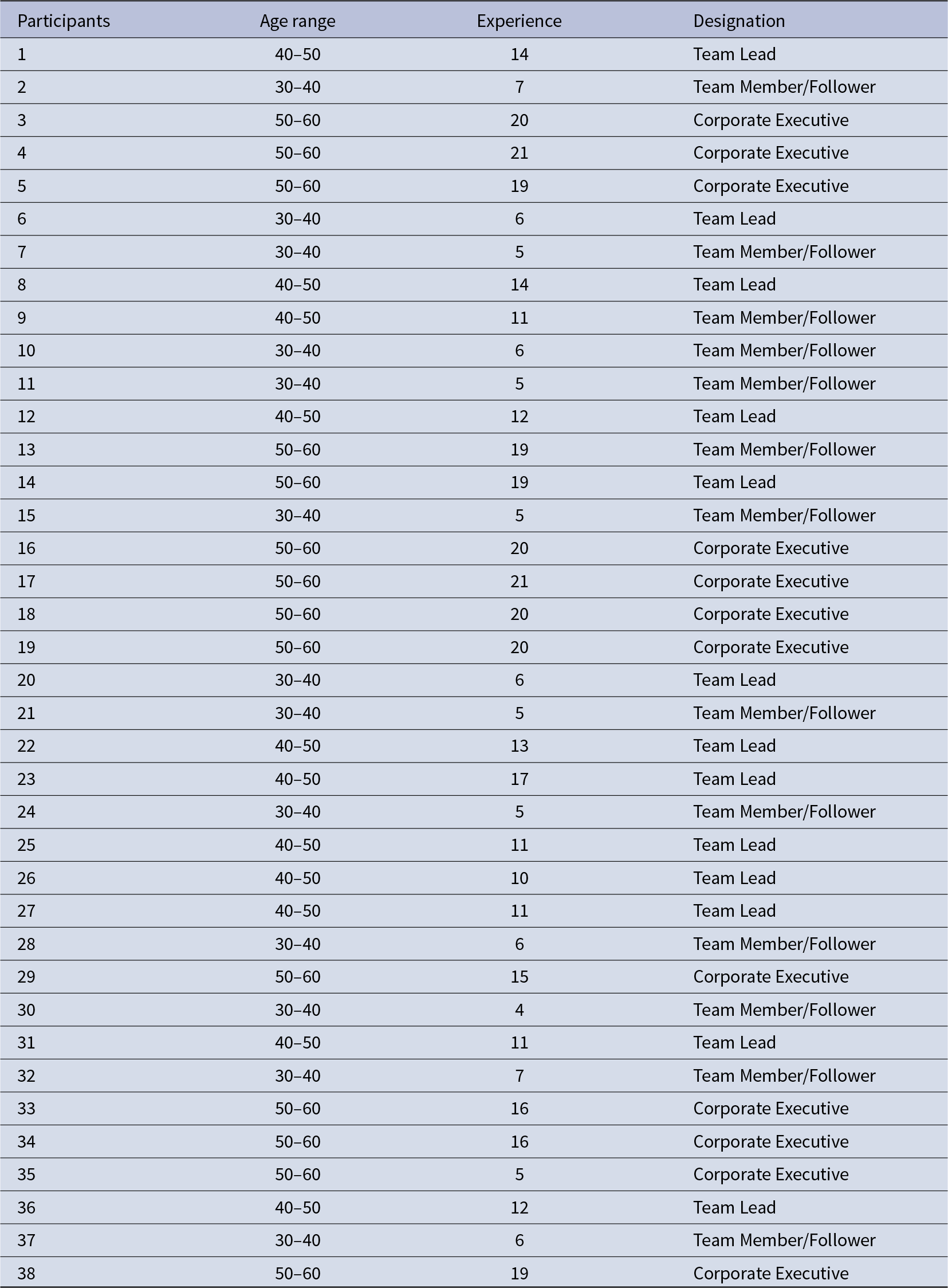
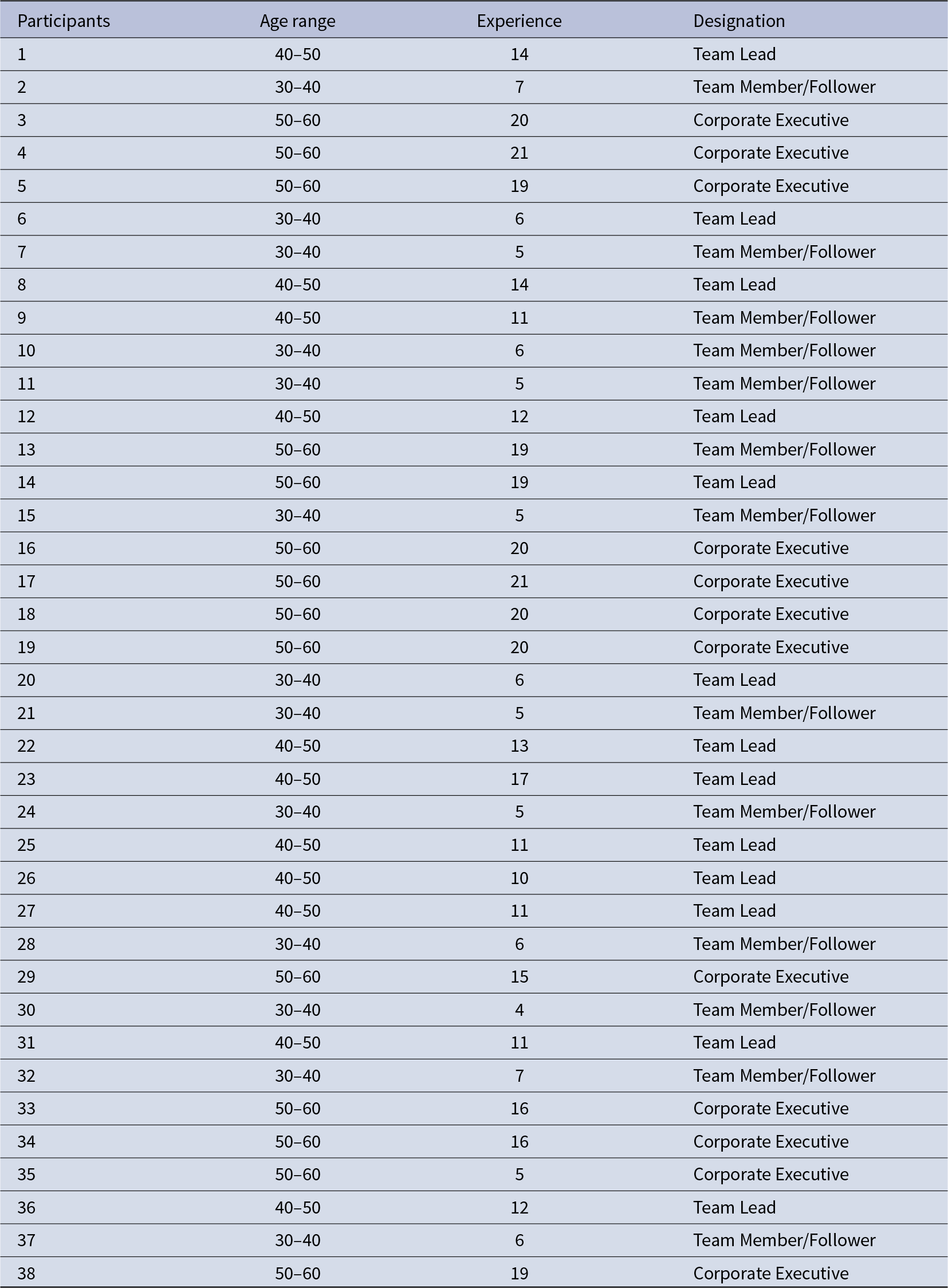
We collected data from multiple perspectives for a variety of reasons. First, it is important to recognize that organizational actors’ responses can vary depending on their specific conditions and experiences, which pertain to multiple tensions, voices, and levels. Understanding how organizational actors combine tensions and how paradoxes impact one another (Schad & Smith, Reference Schad and Smith2019) requires the collection of data from multiple sources – including corporate executives who are responsible for sales, marketing, product and service development, and customer services (see Table 1) and who serve as the head multiple teams, direct team leads, and followers working under those team leads. For example, senior management and lower-level managers may view a particular problem in different ways, given that senior managers experience tensions in a manner that is different from individuals who engage in close contact with customers. Since our research aims to explore the notions of paradox, dynamism, and nested paradoxes, we collected multiple perspectives from the same area of operation. The respondents were identified on the basis of multiple sources (e.g., LinkedIn and snowball sampling). We approached a total of 38 respondents, including executives, team leaders, and employees. The sample exclusively consisted of male participants; despite invitations, no women participated in the interviews.
Demographic details of study participants
The interview process
Semi-structured interviews were used to collect data in line with the focus of interpretive phenomenological analysis on capturing rich information related to individuals’ experiences. The interviews, ranging from 45 to 60 min each, were conducted at the participants’ workplace, were recorded, and subsequently transcribed. The participants were provided with a consent letter explaining the research purpose while assuring individual anonymity.
A semi-structured interview protocol was used to collect data from all of the respondents, followed by appropriate probing. The respondents were prompted to recall a recently experienced opposing situation by providing specific examples. Participants were asked to recall the opposing yet recurring elements that seemed crucial to deal with and couldn’t be overlooked. A sample question included, ‘How does that specific tension affect others?’ All the interviews were conducted in English, recorded, and transcribed verbatim. English is widely used as the primary professional language in the participating organizations. Given the organizational setting, English provided a natural medium for discussing professional practices and tensions. Nonetheless, the use of a non-native language may have influenced the subtlety and richness of some expressions.
Data analysis
In line with Smith et al. (Reference Smith, Flowers and Larkin2009), the data analysis process involved six key stages:
Immersion in data and initial notes
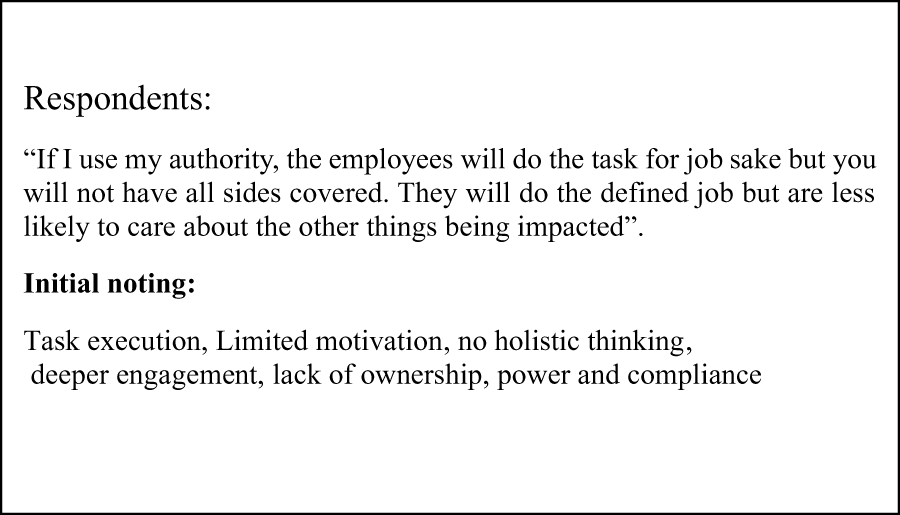
A case-by-case approach was employed, and each transcript was analyzed in detail before the researchers proceeded to the subsequent transcript. Data familiarization was achieved by repeatedly listening to audio recordings and reading transcripts. At this stage, the data were not divided into units nor were comments assigned (see Box 1).
Initial notes
The transformation of the initial notes into emergent themes
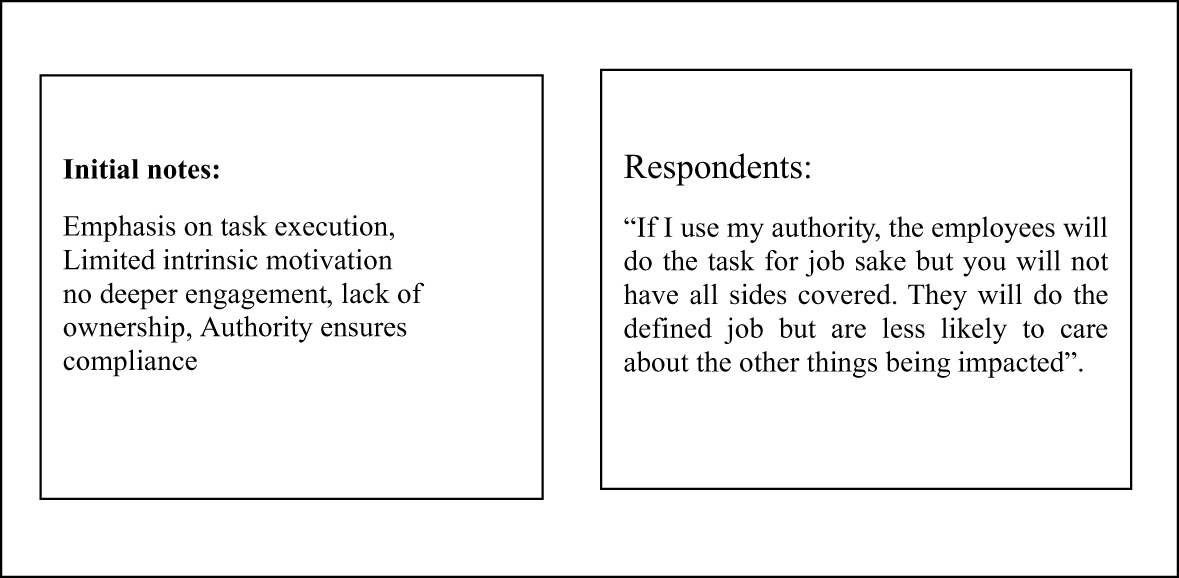
This stage involved identifying how respondents perceived and communicated paradoxes. Initial comments were recorded in the form of summaries, paraphrases, and observations of patterns, contradictions, repetitions, and tones. The notes were transformed into concise, explanatory phrases with the goal of progressing toward abstraction and conceptualization (see Box 2).
Transforming initial notes into emergent themes.
Connecting and clustering themes
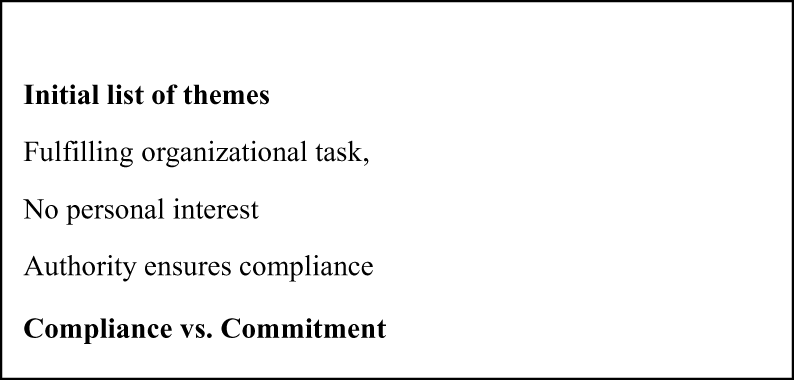
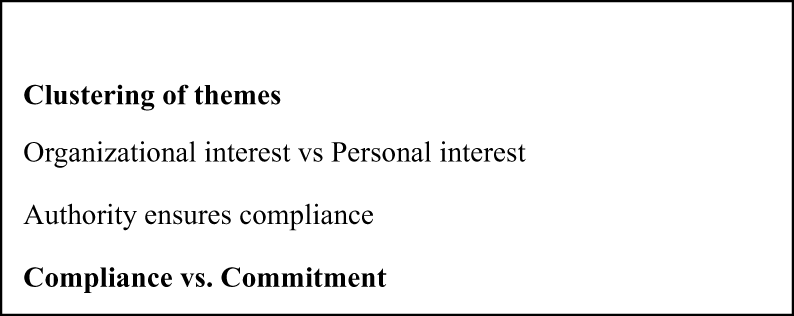
Emergent themes were listed, and the interconnections among them were explored with the goal of reducing the amount of data and establishing a theoretical order. The themes were clustered on the basis of patterns and interrelationships, in which context some themes formed superordinate themes. An example of this clustering process is presented in Box 3 and Box 4.
Connecting themes.
Theme tables
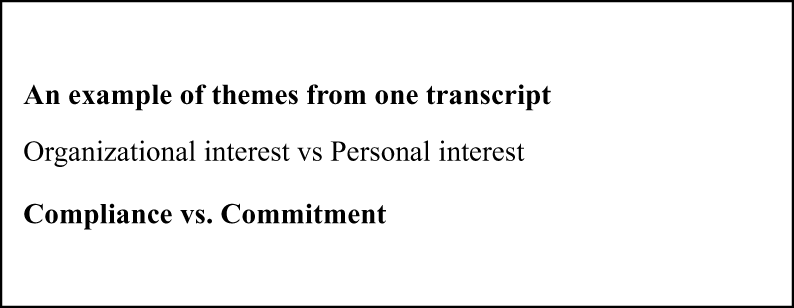
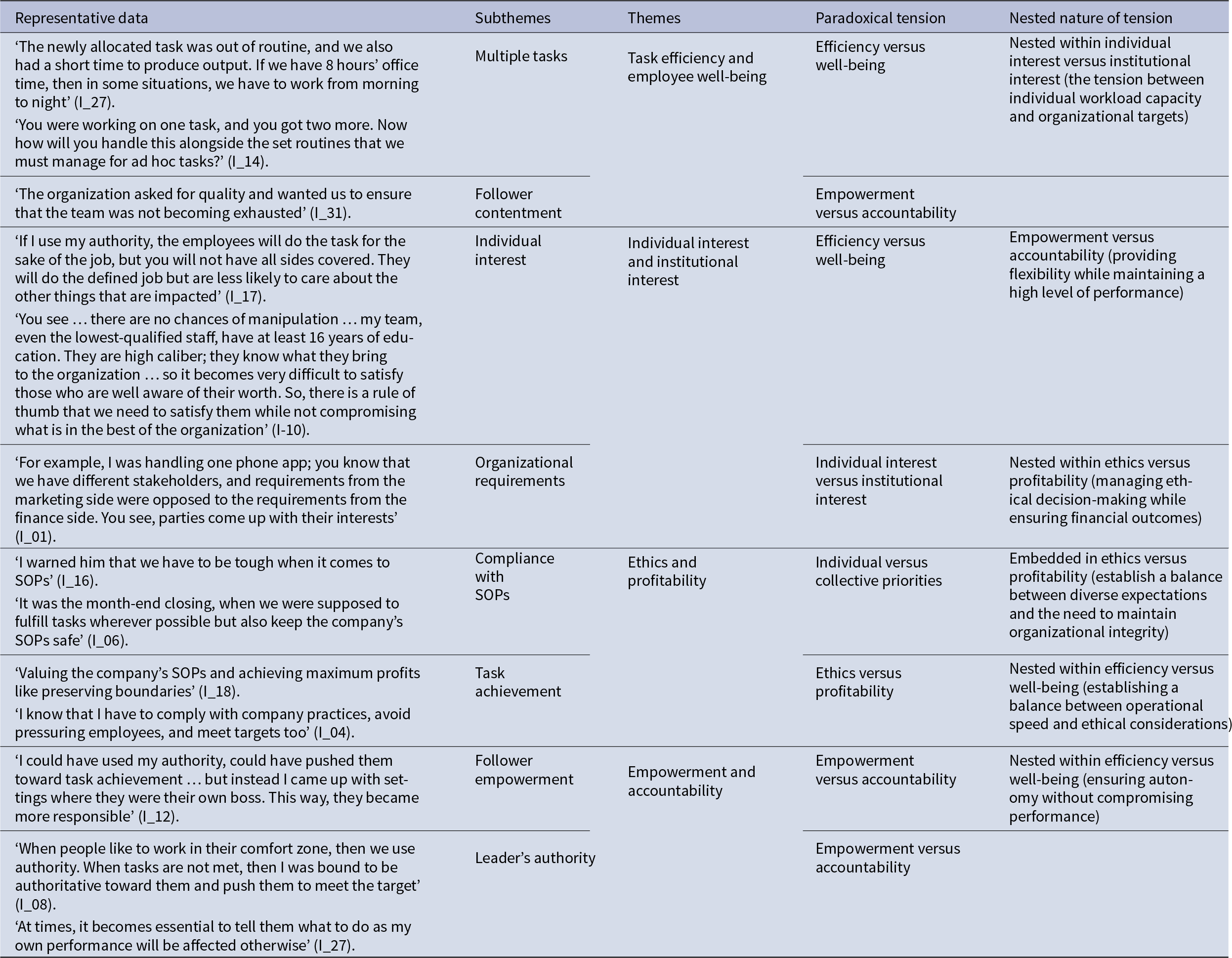
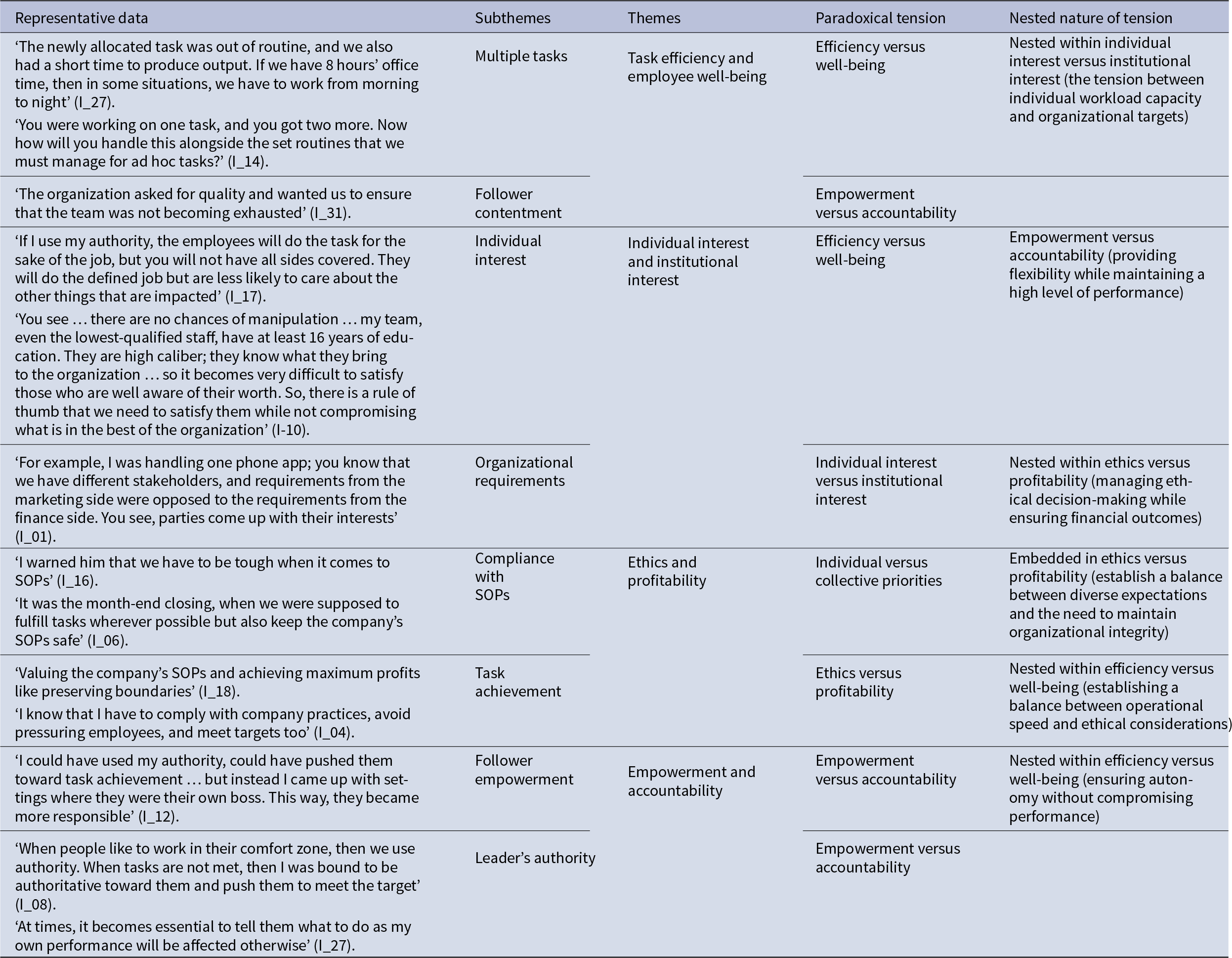
The themes were structured into coherent tables; in which context they were grouped under superordinate themes. Some themes were excluded as a result of misalignment or weak evidence. The final themes pertaining to an example case are presented in Box 5. Table 2 illustrates the exemplary data depicting themes and subthemes.
Connecting and clustering themes.
Exemplary final themes.
Exemplary data representing themes and subthemes
Continuing the analysis across different cases
Each transcript was analyzed independently with the goal of ensuring convergence and divergence. Superordinate themes emerged iteratively and were refined on the basis of a continuous review of previous transcripts. Patterns that were evident across cases were identified by linking similar subordinate themes to develop broader superordinate categories. This process involved relabeling and refining themes with the goal of capturing variations in perceptions of paradoxical leadership.
Write-up
The final themes were synthesized into narratives, which were supported by verbatim excerpts. An illustration of the transition from codes to themes is presented. The write-ups aimed to encapsulate the meanings embedded within participants’ experiences, thereby ensuring the coherence and depth of the findings.
Results
Analysis indicated that paradox occurrence is not limited to individual leaders or followers but also extends to team leads and executives.
Task efficiency and employee well-being
The paradoxical situation of efficient task performance versus followers’ well-being consisted of the subthemes of multiple tasks, unrealistic expectations, and followers’ contentment. Followers, already occupied with their regularly assigned complex tasks, were expected to perform ad hoc tasks as well. Leaders were considerate regarding the organization’s conflicting demands of ensuring that followers performed multiple tasks while simultaneously ensuring their well-being. One executive (I_15) asserted multiple tasks by suggesting that both ‘overstuffing’ and ‘keeping their sanity in mind’. ‘Overstuffing’ symbolizes the number of tasks that followers are required to perform, but the company highlighted the need to ensure followers’ contentment, despite the fact that these goals are inherently contradictory. ‘They say don’t overstuff them. This is where things become difficult, allocating more tasks, managing all of those tasks, and keeping their sanity in mind too’ (I_15).
Numerous irregular tasks requiring immediate attention arose in addition to the participants’ regular duties. The followers were occupied with their routine tasks, but the influx of ad hoc tasks distracted them from their set patterns as a result of the need to complete these core tasks. Echoing the thoughts of leaders, followers highlighted the complexity of their work, particularly regarding workloads that they experienced, which required them to be responsive to changing demands. ‘We confront a lot of ad-hocism along with routine errands like decision, analysis, and planning. Also, unforeseen tasks constantly arise, we have no choice but to manage both’ (I_15).
In contrast, ensuring followers’ job satisfaction, mental health, and work‒life balance was identified as an important driver of their well-being. These competing demands gave rise to a dilemma concerning whether the prioritization of followers’ well-being or the allocation of additional tasks to their existing roles should be emphasized. Organizations remain mindful of followers’ multiple tasks. The interviewees acknowledged that it becomes easier to manage the complexities embedded within the system when followers are psychologically well. ‘We have to ensure that everyone is fine. Things are already difficult to manage, but if they are satisfied, they can work better and be more productive’ (I_03).
Conflict emerged when leaders were expected to operate the system in such a way that staff were expected to engage in ad hoc tasks while simultaneously ensuring their followers’ well-being. The organization required leaders to avoid causing workload conflicts despite the simultaneous requirement for employees to perform multiple tasks. The followers were required to complete their assigned tasks without compromising the quality of their work; however, leaders were simultaneously advised to promote followers’ contentment and well-being. ‘They say that this needs to be done to the expected quality standards – but also make sure that the team is not getting exhausted’ (I-05).
In sum, stressing efficiency threatens the short-term well-being of employees. Simultaneously, long-term efficiency can be ensured by prioritizing employees’ well-being. Balancing efficiency and well-being remains a continuous effort, as a one-time solution is not sustainable and the opposing elements resurge.
Individual interest versus institutional interest
Another paradox appeared to maintain a balance between employees’ versus organizations’ interests. Followers performed their assigned tasks to the best of their ability; however, they were least interested in the organization’s agenda. Individual satisfaction is important; however, followers’ choices were not always in line with the organization’s vision. ‘It’s alarming that my team performs well but is a little concerned about the organization’s vision. My job is to balance both, aligning individual efforts to benefit the organization’ (I-12).
The theme manifested from the challenges associated with the need to maintain a focus on achieving overarching goals. Executives ensured that followers were in line with the organization’s overall goals. While monitoring individual contributions, they experienced a sense of disruption. Ignoring such unrest threatened the objectives of the broader organization. While the contentment of the team is important, it is equally important to ensure that this issue does not overshadow or detract from the organization’s primary goal. ‘I stay vigilant to individuals and frequently spot misalliances derailing broader goals. That’s highly unacceptable. While followers matter, the organization’s vision can’t be put at danger for their contentment, both must be balanced’ (I-31).
Executives’ responsibility was not limited to any specific department, extended across the entire business, whereas followers were associated with a specific department; therefore, they interpreted actions and choices from that specific perspective. Due to extended roles, executives struggled to ensure that the needs of their individual followers were met. It was challenging to understand and manage followers’ expectations while simultaneously driving the organization toward the achievement of overarching corporate goals. ‘With the growing role, challenges get bigger too. Managing 5 departments and a business portfolio means being responsible for 1,000 individuals’ work and delivering on behalf of them’ (I-19).
Respondent highlighted a dilemma regarding whether to keep pursuing organizational objectives or to put key human resources at potential risk. The situations wherein participants’ (I-19) definitive position relied on the principle that ‘we have to keep the company at the top’ shows their commitment to prioritizing organizational interests and the ability of this approach to generate tension when they also highlight the importance of retaining well-trained followers. Executives wanted to prioritize the organization’s objectives but recognized the potential impact of this approach on employees. The paradoxical thinking involved in this context was thus recognized. ‘The organization must be first. If anything proves risky, even a well-recognized asset, we may sacrifice him/her against the company’s bigger vision. There is no choice of one over the other – we have to achieve both’ (I-19).
The respondents identified followers’ well-being as a key imperative and noted that many followers were mindful of their worth in terms of skill sets. The respondents indicated that it was easier to ‘manipulate’ less thoughtful followers. High-performing individuals who were aware of their worth were difficult to satisfy. These individuals, having high expectations, made it difficult to ensure that they remained content within the organization. The respondents expressed a preference to avoid compromising either followers’ interests or the objectives of the overall organization. However, they were aware of the tension between such occasionally conflicting objectives and often struggled to navigate this challenge.
Individual and institutions having the contradictory interests of individuals and institutions represent a quite common point of interdependence. Institutions heavily rely on individuals’ contributions, and individuals depend on organizations for their identity and resources – the contract between the individual and institution keeps resurfacing now and then, be it a leadership decision or performance.
Ethics and profitability
The theme of ethics versus profitability includes the subthemes of compliance with standard operating procedures (SOPs), task achievement, and value preservation. Organizations’ emphasis on maximizing performance was observed to conflict with the need to preserve the organization’s SOPs, rules, and regulations. The respondents faced an unceasing dilemma concerning whether to focus on profit maximization or to prioritize the organization’s social mission.
A group director (I_33) recalled his experiences of tension between the finance team and the commercial team. Financing decisions were already a sensitive issue, and the organization’s emphasis on strict compliance added complexity to the choices made. He compared his role to that of a bridge, which establishes a balance between two ends of a continuum. Multiple uncontrollable factors affected product pricing decisions, such as the economic conditions of the country, government interventions, controls on pricing and profit margins, and customers’ budgets. All of these factors impacted the level of returns and ultimately the extent to which profit maximization could be pursued in full.
I work with sales and product people to attend to business clients. Sales want to sell without noticing margin, whereas the product department emphasizes revenue and profit goals. I work as a bridge among them, particularly in strategic accounts with the government, where we have to lower prices. But business KPIs don’t allow that. Hence, both sides need balance; suggesting sales to try for greater budgets and products to remain flexible, guaranteeing profit goals are met while guarding growing income. (I_33)
(1_13) offered evidence of his desperation to complete his tasks irrespective of whether doing so would compromise the company’s social mission. However, the company’s clear position on the significance of social missions prohibited followers from refraining from certain practices. The respondents made it clear that the need to achieve financial objectives came into conflict with the firm’s SOPs and social mission too frequently. ‘To run business and earn results, I may have to bypass certain SOPs or use off-limits strategies’ (1_13).
Tension was evident between performance and providing the space that followers needed to maintain their ethical and moral values, which is conducive to the integrity of the organization. The constant pressure to maximize profits and meet targets, alongside the need to remain compliant with company policies, led to distress and unfair situations with respect to the demands that this situation placed on managers. ‘This seems unfair at times, something that is difficult to make sense of. Valuing company SOPs and achieving maximum profits’ (I-13).
In sum, the stress involved in the task of establishing a balance between the business’s financial objectives and its social mission had a strong effect on the participants. Meeting targets with the goal of maximizing profitability often conflicts with the company’s claim that compliance with rules and regulations is expected.
Empowerment and accountability
The theme of empowerment and accountability was evident in the respondents’ claims that followers wanted to be empowered, whereas leaders focused heavily on holding them accountable. Leaders needed to establish a balance between providing their followers with significant autonomy and exerting extensive control. In the context of efforts to improve leader‒follower dynamics, one key issue was the need for better communication channels between management and employees. (I-06) asserted, ‘improving the people’ and ‘empowering employees’ suggest a commitment to enhancing the overall organizational environment and its dynamics.
The participants often sought independent judgments or resolutions (which were occasionally referenced as a ‘third umpire call’) when disagreements emerged with respect to various internal arrangements. Given the strong communication between the two parties, the participants highlighted their need for a high level of control; however, the participating leaders also observed that empowering followers entailed various conflicts. Providing such autonomy could help followers raise concerns and question managerial decisions; this approach also entailed the cost of conflicts within the organization.
When we are improving the people and communication channels between management and the employees, and we empower employees by informing them that they can also raise concerns, they can take a third umpire call, I don’t agree with your working style, so they have the authority to challenge themselves as well. But those who challenge are empowered by us; it sometimes gets difficult as well. (I-06)
Followers wanted to take control of both the assignment of tasks and the ways in which their assigned tasks were completed. Rather than imposing tasks on followers, participants allowed them to make decisions on their own, resulting in more responsible behavior on followers’ part. However, followers expressed a desire to be fully equipped with the necessary resources and freedom to allocate resources, less willing to accept the accountability that accompanied such authority. ‘Followers want full control over tasks. From given freedom and resources, sometimes they’ve improved, so I kept facilitating that. But when things go wrong, it has its cost. It’s a continuous tension of holding back and letting go’ (I-14).
Participants emphasized the continuous process by which they determine the extent to which they can comply with followers’ desire for control. Empowerment cannot occur until a certain level of confidence is established. One respondent explained that he had been assured of his followers’ capabilities and empowered them to drive relevant processes and allocate resources as needed; however, this level of autonomy significantly compromised the results of such processes. The note that such an event ‘does not happen in isolation’ clearly highlights the simultaneous nature of followers’ demands for empowerment and leaders’ need to provide oversight.
I know they expect more control, but according to my experience, full empowerment comes with issues. When responsibility is given with limited checks, we rarely get satisfactory results. So, I recognized empowerment, and control must go hand-in-hand; it’s an in-and-out process. (I_10)
Overall, participants experienced a continuous challenge in their efforts to maintain a balance between followers’ demands for empowerment and the leader’s requirement to exercise control. The followers wanted to perform their tasks with complete authority. In contrast, empowerment can entail the cost of disappointment when targets are not met, thus leading to the abandonment of such empowerment. In this continuous struggle, respondents encountered complex interactions between empowerment and accountability in the organizational setting, thus allowing them to recognize the benefits and potential challenges associated with this approach. Maintaining ethical standards often collides with the basic business purpose of maximizing profitability. Both the contradictory elements co-exist and persist, as maximizing profitability in the longer run using unethical practices puts organizational existence in danger. The contradiction between the two persists as long as the organization keeps running its business using ethical standards.
Toward a multilevel nested paradox model
Incorporating the study’s inductive findings with the related literature, we propose a model of multiple paradoxes consisting of (1) the paradox of well-being, (2) profit versus ethics, (3) empowerment versus accountability, and (4) institutional versus individual interest.
The model unveiled the paradox of task efficiency versus followers’ well-being. Findings indicated that the organization requires individual followers to manage additional tasks along with routine tasks and simultaneously demands team leads not to overburden followers. The organization stressed the significance of followers’ overall satisfaction on the basis of refraining from overloading them with work and empowering them in the manner in which tasks are completed. However, this pole of tension collided with the amount of workload respondents experienced and the addition of ad hoc tasks that often came in at the last minute. The requirement of efficiently executing multiple tasks collided with the contradictory demand of ensuring followers’ well-being. Likewise, the organization’s requirement to execute tasks efficiently contradicted its equally important demand to ensure followers’ well-being. High workload, multiple assignments, and tight deadlines, while not compromising on task efficiency, resulted in unsatisfied employees. Literature also states that increasing followers’ psychological well-being conflicts and even contradicts their overall performance (Loon, Otaye-Ebede & Stewart, Reference Loon, Otaye-Ebede and Stewart2019). Extant research shows that paradoxical leaders strive to ensure a balance between both followers and organizational demands (Fürstenberg, Alfes & Kearney, Reference Fürstenberg, Alfes and Kearney2021). However, findings identified a paradox of executing tasks efficiently while also ensuring followers’ well-being may create confusion as Fürstenberg, Booth and Alfes (Reference Fürstenberg, Booth and Alfes2024) recently found that followers might perceive a paradoxical leader’s behavior as unpredictable.
Proposition 1: At the micro level, the paradox of task efficiency versus followers’ well-being emerged.
The paradox of ethics versus profitability encapsulates the tensions organizational actors confront while adhering to the organization’s requirement of maintaining ethical principles and their simultaneous need to pursue profit maximization objectives. This paradox occurred at the interplay of the organizational level and the micro level. One pole of tension concerns followers’ interest in meeting targets contradicted the organization’s requirement to maximize profits while also preserving the policies, rules, regulations, and their social mission. Followers perceive organizations’ focus on strict compliance with SOPs as unnecessary. This was especially the case when SOPs collided with followers’ efforts to achieve their set task in an efficient manner (often under explicit or perceived pressure from leaders). Similarly, literature identifies that multiple properties of paradoxes, such as paradox intensity, paradox outcome, and paradox balance, were identified together, and an interplay between all these exists (Manzhynski & Biedenbach, Reference Manzhynski and Biedenbach2023).
Existing literature recognizes the competing demands organizations confront in terms of being financially successful as well as pursuing social goals (Gaim et al., Reference Gaim, Clegg, E Cunha and Berti2022). The relationship between a firm’s social and financial performance has been considered to be intricate and nuanced (Pava & Krausz, Reference Pava and Krausz1996). As our findings suggest, the firm’s struggle to maximize profitability collided with its equally emphasized phenomenon of preserving its social mission.
In a similar vein, Storm, Desvaux De Marigny and Thakhathi (Reference Storm, Desvaux De Marigny and Thakhathi2022) found the paradox of whether to prioritize profit or people. The organization’s attempt to enforce certain rules, regulations, and policies in the pursuit of task achievement created tensions for the organizational actors who were chasing targets set by leaders. Tensions affiliated with one pole – maximizing profit – contradicted with and created a disturbance in the achievement of the other pole – SOPs compliance. This resonates with Dodd and Favaro (Reference Dodd and Favaro2006, p. 62) statement that ‘it’s like squeezing a balloon in one place only to find that it expands elsewhere’. Such tension not only restricts the achievement of the social mission, but it also impacts the business activities of the organization, making it impossible to reframe business activities to protect both poles of this paradox (Pinkse, Hahn & Figge, Reference Pinkse, Hahn and Figge2019).
Proposition 2: The paradox of ethics versus profitability, primarily a macro-level paradox, nests within and across micro and macro levels.
At the followers’ level, the theme of empowering followers, but also holding them accountable, was found intertwined in the broader tension of ethics versus profitability. Followers, having lesser control over task achievement, were given tasks along with strict deadlines but also reminded not to overlook the SOPS in the vein of task achievement. Tensions between followers’ demand for empowerment contradicted the institutional requirement to hold them accountable and were found nested within the paradox of individual interest versus institutional interest.
Proposition 3: At the micro level, the paradox of empowerment and accountability is embedded within broader paradoxes of ethics–profitability and individual–institutional interests.
Though followers’ empowerment enhances their autonomy, it provides them the opportunity to align their interests with greater organization. However, organizations require executives to take control as followers may prioritize personal interests or even just fail to appreciate how certain tasks integrate with other aspects of the organization’s operations and thus the potential for the processing of tasks by followers’ conflict with organizational interests. Followers’ interests need to be recognized as part of staff retention and satisfaction, but executives were responsible for ensuring that followers’ actions contributed toward the overall interest of the institution rather than bypassing the institution’s vision. This finding is supported by literature (Zhang et al., Reference Zhang, Waldman, Han and Li2015), identifying the behavioral dimension of supervisors requiring control but also providing autonomy to followers regarding decision-making. Undoubtedly, in a few situations, the leader might need to exercise strict behavioral and decision control (Vroom & Jago, Reference Vroom and Jago2007). Other situations might require avoiding micro management and leaving space for autonomy (Srivastava, Bartol & Locke, Reference Srivastava, Bartol and Locke2006). Organizations require leaders to allocate tasks to followers; however, they must also recognize that individuals have diverse needs and will flexibly direct their activities in a manner that best suits them (Poole & Van de Van, Reference Poole and van de Ven1989).
Organizational actors occupy multiple roles across the organization and therefore present with different and often conflicting interests. Similarly, organizations are inherently paradoxical because of the diversity of goals and interests that they must at least satisfy, even if there is sometimes an assumption that organizations work toward a collective shared goal. In reality, organizations do not just maximize shareholder value but must also respond to the requirements of multiple stakeholders (Harrison, Phillips & Freeman, Reference Harrison, Phillips and Freeman2020), and compromising on one goal to deliver in respect of another goal will impact individuals and teams in different ways. Choices at the organizational level will result in there being ‘winners’ and ‘losers’ across teams and different teams. While followers tend to be more focused on achieving tasks and setting targets for personal reasons such as career growth and commission, the pursuit of these goals does not necessarily harmonize with the organization’s interests – even if they are potentially constrained by organizational choices concerning their goals. The study finds that individual followers’ interests varied from the overall organization’s interests in terms of the goals that they pursue. Through the process of multiple actors interacting and socializing with each other, the ‘organizations consist of embedded groups’ (Barton & Kahn, Reference Barton and Kahn2019, p. 16), and these embedded groups inevitably create contradictions and tensions between different areas of the organization (Silva et al., Reference Silva, Cunha, Clegg, Neves, Rego and Rodrigues2014). Numerous tensions arise in the workplace because different actors pursue a range of interests that inevitably collide with each other. This tension also extends across levels as the goals being pursued by individual actors and even teams may contradict the overall goals of the organization, irrespective of how much effort goes into generating ‘win–win’ situations (Hahn, Figge, Pinkse & Preuss, Reference Hahn, Figge, Pinkse and Preuss2010) – a challenge which sits at the heart of agency theory (Meckling & Jensen, Reference Meckling and Jensen1976).
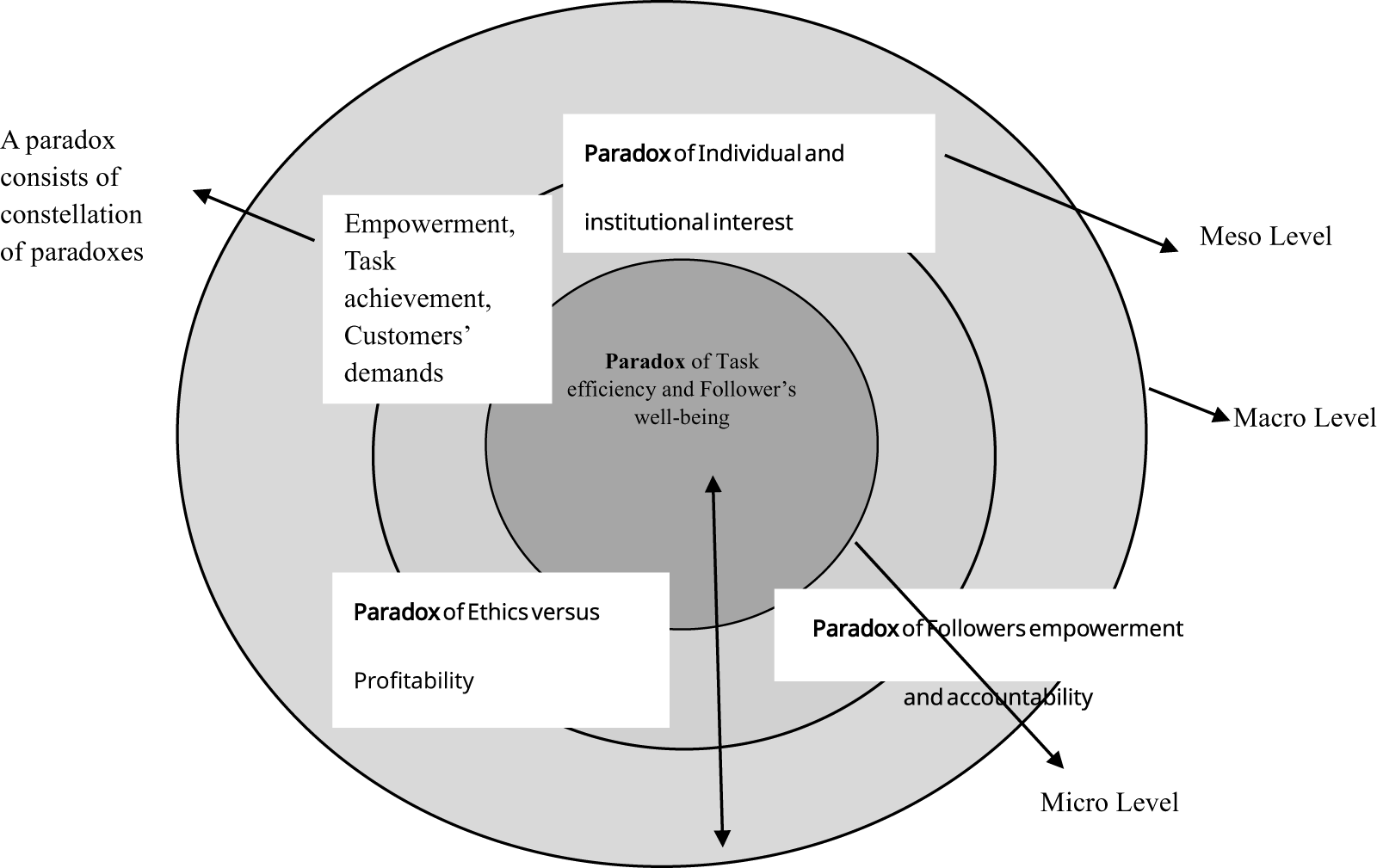
Restricting followers’ empowerment to ensure greater consistency of activities in line with organizational goals may well generate tension. Changes in one part of a system result in changes to other parts of the system (Stacey, Griffin & Shaw, Reference Stacey, Griffin and Shaw2000). Paradoxes emerge due to misalignment and differences in followers’ and organizations’ priorities – a common concern when recognizing that organizations need to meet the interests of multiple stakeholders (Berti, Reference Berti2021 #449). Apart from identified paradoxes, the study’s model shows that these multiple and multilevel tensions were nested within and across different levels. Thus, paradoxes are not two independent elements, originating from other things, but are the result of embedded, entangled, and nested elements of social life. As Fig. 1 shows, paradoxes are not experienced in isolation but rather as interrelated and at multiple levels (Gaim et al., Reference Gaim, Clegg, E Cunha and Berti2022). Tensions at one level evolved hypothetically within as well as between levels, co-existing at multiple levels.
Paradoxes at multiple levels.
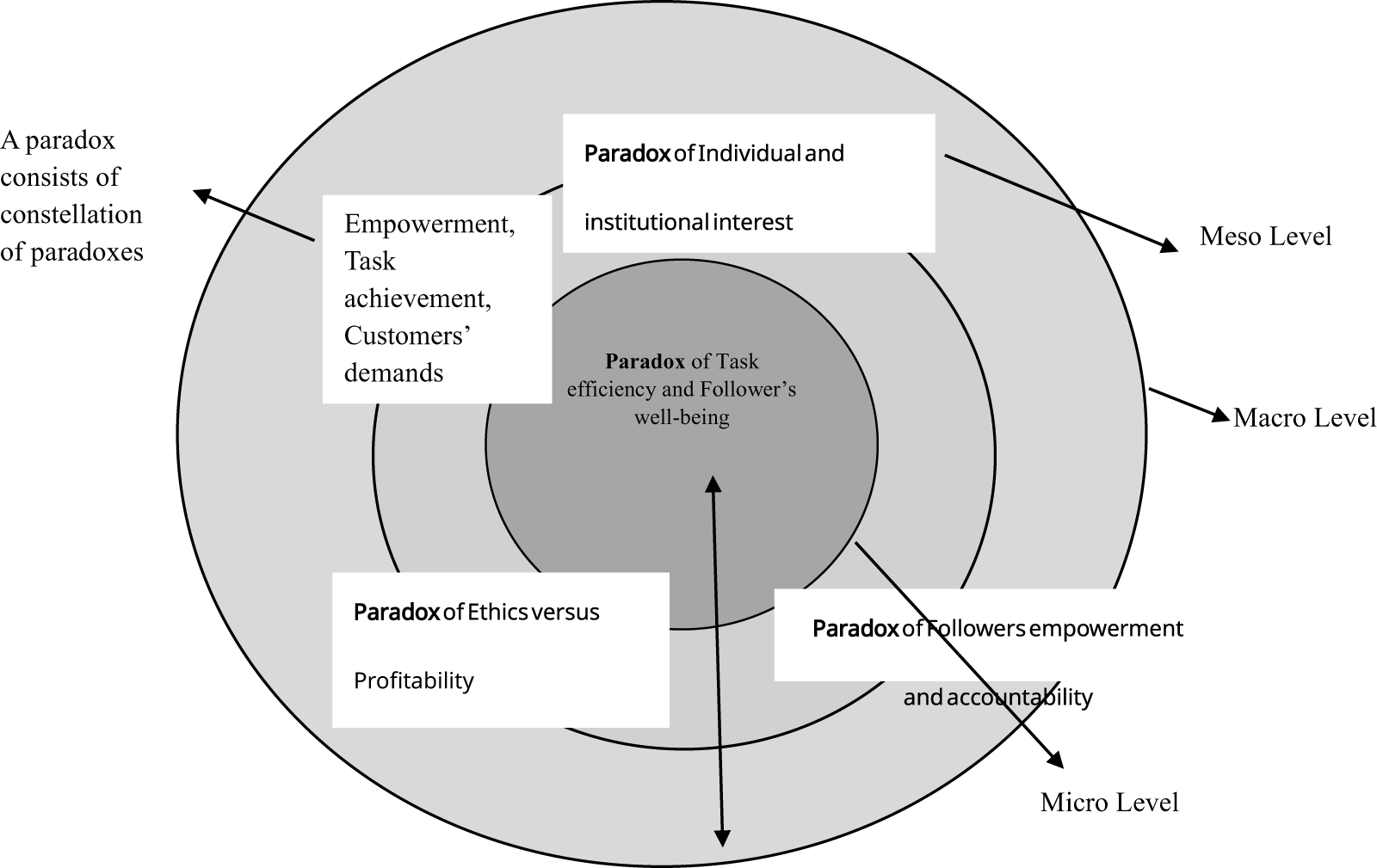
Multiple paradoxes represent how paradoxes were nested in a different tension, given the fact that tensions were already there, but latent, which became salient because of evolving social concerns (Berti et al., Reference Berti, Simpson, Cunha and Clegg2021). Upon becoming salient, they became harder to ignore (Tuckermann, Reference Tuckermann2019). For example, task efficiency and followers’ well-being were found to be nested in empowerment and accountability themes. That being said, followers burdened with multiple tasks rarely enjoyed the privilege of setting their tasks according to their priorities. Thus, these tensions at the individual follower level augmented the tensions at the organizational level.
Proposition 4: Paradoxes at the micro level intensify and reinforce paradoxes at macro levels.
Followers who have less autonomy were more concerned about organizations not being willing to entertain their interests and were not focused on the overarching organizational interests. For example, executives experiencing the paradox of ethics and profitability reflected that focus on preserving the organization’s social mission intensified tensions emerging from financial goals. Extant research supports our finding that tensions are nested and interwoven; tensions surfacing at one level not only inform the tensions at other levels (Andriopoulos & Lewis, Reference Andriopoulos and Lewis2009) but is also interwoven, whereby tensions at one level influence tensions at other levels (Lüscher & Lewis, Reference Lüscher and Lewis2008). Our model suggests that tensions were not merely nested and intertwined into different levels but also held the potential to exacerbate and stretch over others. Here, cascading refers to the downward transmission of tensions from higher to lower levels.
Proposition 5: Paradoxes hold the potential to exacerbate and stretch over other levels, such as a macro paradox of social mission versus financial performance, which cascades into the micro-level paradox of empowerment and accountability and the meso-level paradox of individual and institutional interests.
For example, organizations emphasize strict compliance on one pole of tension, that is, ethics, which exacerbates the other pole of tension, that is, profitability. Also, followers wanted to take control of the tasks being allocated, which contradicted the immediate team leaders’ desire to exercise control. The sense of being not authorized enough further exacerbated the tension of the followers’ interest being ignored. In such situations, solutions may bring new tensions to the fore, thereby forming a cycle of never-ending tension resolution – tension creation (Greiner, Reference Greiner1989). The tensions that unfolded from organizational actors seated at different hierarchies of the organization were found to be nested and intertwined within different levels.
Additionally, findings showed that tensions were not only draining for the executive level but also for team leads and followers, who equally confronted tensions situated at the interface of more than one level. However, organizational actors perceive such co-existence of tensions differently because organizational actors at different levels within the hierarchy play different roles and thus differ in terms of power dynamics (Berti & Simpson, Reference Berti and Simpson2021) as well as priorities and interests. Differences in perceptions of particular tensions were clear with the interpretation of different tensions amongst those in the upper echelons of organizations differing from the interpretations of the rank and file members (Gaim, Clegg & Cunha, Reference Gaim, Clegg and Cunha2021; Knight & Paroutis, Reference Knight and Paroutis2017).
Proposition 6: Organizational actors at different hierarchical levels perceive and interpret paradoxes differently, driven by variations in roles, power dynamics, and interests.
Interestingly, the model presents that a single paradox embodies a constellation of paradoxes (Berti et al., Reference Berti, Simpson, Cunha and Clegg2021). For example, the paradox of individual interest and institutional interest embodies multiple tensions, such as individual interests, the demand to be empowered, the desire to achieve tasks and targets, and the need to meet customer demands. All these desires collided with opposing tensions. One element of individual interest carries multiple opposing elements.
Proposition 7: A single paradox, such as the tension between individual and institutional interests, encapsulates a constellation of interrelated tensions, where multiple contradictory demands coexist and collide.
Discussion
We sought to understand the multiplicity of paradoxes that are nested both within and across multiple levels, based on the lived experiences of multiple organizational actors, including followers, team leaders, and executives in the telecom industry.
Findings indicate (a) a multiplicity of paradoxes consisting of (1) paradox of well-being, (2) profit versus ethics, (3) empowerment versus accountability, (4) and institutional versus individual interest; (b) that paradoxes are nested and intertwined both in and across multiple levels; (c) that paradoxes exacerbate and intensify tensions at other levels; and (d) the fact that a single paradox consists of a constellation of paradoxes. The analogy of nesting contributes to our understanding of paradoxes, as it shifts the focus of such research from isolated tensions to an interconnected and systemic perspective. As such, paradoxes are not viewed as discrete and self-contained but rather as intertwined challenges and opportunities that emerge across multiple levels (e.g., micro, meso, and macro levels or even across an entire industry), thus creating a web of tensions that influence and shape each other. This conceptualization offers significant implications for how organizational leaders are trained and supported because managing paradox moves beyond resolving isolated tensions to navigating cross-level demands. The amplification effect of nesting highlights the fact that tensions at one level can intensify paradoxes at another level, thus reinforcing the dynamic interactions among such paradoxes. When it comes to paradox management mechanisms, Smith and Lewis (Reference Smith and Lewis2011) suggest that paradox management involves continuously balancing, as well as ‘both/and’ responses to inconsistency, rather than a single, static, definitive resolution. In case of isolated tensions, prior research weighs splitting and integration as responses to isolated tensions. However, the study’s findings propose that such strategies cannot be understood in isolation. Because tensions are nested across micro, meso, and macro levels, a response enacted at one level may trigger, displace, or intensify tensions at another. Accordingly, nested tensions crossing micro, meso, and macro levels require integration to align responses and avoid possible yet unintentional spillover effects. Splitting strategy separates conflicting demands at the macro level and can reduce immediate conflict. However, such strategies often shift the burden to the micro level, increasing cognitive as well as emotional strain. In contrast, an integration strategy requires sustained cognitive effort, which becomes quite difficult in resource-depletion situations. Hence, managing nested tensions is not merely about choosing between splitting and integration. It involves sequencing and distributing these strategies across levels and over time. Effective paradox management increasingly revolves around sequencing, layering, and combining multiple coping strategies in ways that reflect the cyclical interdependencies in our model.
Findings offer numerous key implications for paradox scholarship by emphasizing the nested nature of paradoxes. Although the body of research on this topic remains scarce (Andriopoulos & Lewis, Reference Andriopoulos and Lewis2009; Lüscher & Lewis, Reference Lüscher and Lewis2008; Sheep et al., Reference Sheep, Fairhurst and Khazanchi2017), most relevant studies have merely acknowledged this phenomenon. By recognizing paradox theory as a meta-theory, the model shows the relationships among paradoxes that span different levels and paradox dynamics (Schad et al., Reference Schad, Lewis, Raisch and Smith2016). This study adapts a constitutive perspective on paradoxes, which accounts for the presence of multiples (i.e., levels, voices, and tensions) (Putnam et al., Reference Putnam, Fairhurst and Banghart2016).
Findings highlight that studying a paradox at a particular level may prevent researchers from understanding the complexity of the tension’s operative in this context. By providing insights into how sets of tensions interact and extend across different levels, our study challenges future scholars to understand the complexity of paradoxes more accurately (Schad et al., Reference Schad, Lewis, Raisch and Smith2016). The study revealed a multiplicity of paradoxes and how these paradoxes are nested and intertwined at different levels, in line with previous suggestions that paradox research would benefit from efforts to extend the focus of such research beyond a single level (Andriopoulos & Lewis, Reference Andriopoulos and Lewis2009; Berti et al., Reference Berti, Simpson, Cunha and Clegg2021; Jarzabkowski et al., Reference Jarzabkowski, Bednarek, Chalkias and Cacciatori2022; Sheep et al., Reference Sheep, Fairhurst and Khazanchi2017). This study challenges scholars to contemplate the multiplicity of paradoxes that exist within organizations and to progress beyond the idea that paradoxes exist in isolation and affect only one level. Instead, it reveals that tensions coexist and extend across multiple levels, reinforcing the notion that paradoxes are dynamic, recursive, and interdependent rather than static and bound to a single level (Schad et al., Reference Schad, Lewis, Raisch and Smith2016; Smith & Lewis, Reference Smith and Lewis2011).
We observed that the nested nature of paradoxes is particularly salient when multiple organizational actors interact. Organizational actors perceive tensions differently depending on their roles and positions within the organizational hierarchy – in line with the notion that paradoxes are socially constructed (Smith, Reference Smith2014). Furthermore, these multiple perceptions may highlight a shift in thinking from convergence toward divergence. Convergence often views tensions as isolated within a specific point in time, whereas divergence views tensions in their totality on the basis of the claim that organizations are filled with multiple and interrelated tensions (Fairhurst et al., Reference Fairhurst, Smith, Banghart, Lewis, Putnam, Raisch and Schad2016). Our study highlights the importance of progressing beyond approaches that simplify paradoxes by recognizing the interrelationships among paradoxes as well as their potential to extend across different levels.
Our framework lays a foundation for future studies that can move beyond the simplification of paradoxes or the investigation of paradoxes in isolation. This resonates with literature on paradox management, suggesting that paradox knots work as an underlying structure (Wei, Geiger & Vize, Reference Wei, Geiger and Vize2022).
Given that an understanding of the complexity inherent in multiple paradoxes emerges from an in-depth exploration of actors’ roles, interactions, knowledge, and experiences of intertwined and layered tensions (Putnam et al., Reference Putnam, Fairhurst and Banghart2016), we collected data from multiple organizational actors with the goal of understanding such nested paradoxes from multiple perspectives. Our adoption of multiple actors’ perspectives on the world has provided valuable insights into a diverse variety of paradoxes, thus reinforcing the importance of a multilevel, multiactor approach to paradox research.
Other studies on paradox theory have emphasized two key characteristics of organizations that are likely to lead to the emergence of paradoxes: complexity and the constantly changing nature of organizations (Lewis et al., Reference Lewis and Smith2014; Miron-Spektor et al., Reference Miron-Spektor, Ingram, Keller, Smith and Lewis2018). The context in which this study was performed represents a complex and constantly evolving industry setting. This status makes this context appropriate for such a study; however, future studies that can investigate the phenomenon of multiple interconnected paradoxes in different organizational settings will invariably introduce novel insights. By highlighting the dynamic and intertwined nature of paradoxes, our findings make a significant theoretical contribution to paradox theory and provide a foundation for future research that can be conducted to explore paradoxes beyond a single organizational level.
Limitations
The use of multilevel data represents one of the strengths of this study. However, the collection of data at a single point in time represents a significant limitation of this research. The collection of data at multiple time points would have enabled the researchers to differentiate more effectively between tensions that were embedded via structural, cultural, and institutional factors from those that may have been more transitory and thus reflected a particular challenge at a given point in time. Nevertheless, whether the tensions identified in this research were permanent or transitory, they were evident in the data collected for this research, thus highlighting the multiple paradoxes that were present at that particular point in time. The study’s sample exclusively consisted of male participants. Despite the invitation, the absence of female participants limits the ability to capture gendered experiences of paradox. Future research could explore how women leaders perceive and manage similar tensions.
The data only represent the telecom industry, while every industry exhibits certain idiosyncrasies; findings of this study may well be transferred to a variety of similar professional settings, such as high-technology manufacturing, software developers, and information technology startups. To provide insights into these paradoxes, this study focused on the paradoxical situations experienced by participants who were working in the fields of sales, marketing, and customer service. Other functional areas (e.g., logistics, research and development, and accounts) are likely to be associated with different and/or additional tensions. Observing the interactions among these tensions across additional functional areas as well as additional levels would provide further clarity regarding the complexity and multilayered nature of paradoxes in modern organizations.
Our study merely explains the fact that paradoxes can be nested at different levels, thus leaving space to explore the questions of how and why tensions are nested at different levels. Interestingly, we observed that tensions can influence and be influenced by tensions at different levels. Understanding how and under what situations tensions can strengthen or weaken the paradox experience is a potential area for future exploration. Future studies should focus on how paradoxes can be nested within levels between the organization and its environment, as well as at the systemic level. Paradoxes are not only experienced within an organization; external forces also influence organizational paradoxes. For example, the impacts of external forces such as economic conditions and market requirements should be studied in conjunction with organizational activities.
Practical contributions
An in-depth understanding of the apparent paradoxes and hidden interconnected issues that are evident in this context can enable practitioners to look beyond surface-level tensions and engage in mindful decision-making more effectively. Our findings reveal that single tensions are embedded at different levels; thus, the knowledge that multiple voices and perspectives contribute to such tensions can help practitioners and policymakers understand the value of recognizing diverse perspectives. Furthermore, as individual followers, team leaders, and executives perceive tensions and the intensity of various tensions differently, recognition of these differences has the potential to facilitate the adoption of alternative perspectives and enable relevant actors to foresee ‘unanticipated consequences’ more effectively. What may seem to one organizational actor to be a simple paradox may actually reflect a constellation of tensions and a situation in which paradoxes are multilayered, interconnected, and nested.
The study’s conceptualization of paradox as a nested ‘web of tensions’ moves leadership development away from isolated problem-solving while pushing it toward cultivating capabilities for continuing navigation of interdependent demands. To be specific, it warrants training that (1) emphasizes tolerance toward simultaneity instead of resolution, (2) develops multilevel sense-making across all levels, including micro-, meso-, and macro-level tensions, (3) empowers leaders to cope with cognitive as well as emotional resource depletion, and (4) offers tools for anticipating how tensions cascade across levels. As alternative perspectives on different tensions emerge, practitioners are likely to be more aware of how to influence tensions across different levels as well as the potential costs of neglecting tensions that may take different forms among various groups of organizational actors and across different levels.
Conclusion
This study demonstrates that organizational paradoxes are not isolated phenomena but are deeply interconnected and nested across multiple levels of the organizational hierarchy. By drawing on semi-structured interviews with 38 participants, including corporate executives, team leaders, and managers in the telecommunications sector, we examined how paradoxical tensions are experienced, interpreted, and managed in practice. The multilevel nested paradox model developed through interpretive phenomenological analysis highlights four core paradoxes. The findings underscore that paradoxes operate as dynamic, relational, and multilevel constructs, creating a constellation of interconnected challenges that require nuanced managerial attention.
Data availability statement
Data available on request.
Funding statement
Research received no funding.
Conflict of interest
There is no conflict of interest among authors.

 Open access

