

Introduction
The application of gender archaeology in Iberian late prehistory has grown significantly over the last two decades. Most of the available literature deals with three specific subjects: ‘maintenance activities’, rock art, and funerary practices (see for example Escoriza-Mateu, Reference Escoriza-Mateu2002; Montón-Subías & Sánchez-Romero, Reference Montón-Subías and Sánchez-Romero2008; Prados Torreira et al., Reference Prados Torreira, López Ruiz and Parra Camacho2012); moreover, most of these studies have a regional, local, or single site focus. In addition, a significant number of articles deal with the Bronze Age, a period for which more accurate demographic and funerary records are available. As far as the Neolithic is concerned, although very recent studies (for example Duboscq, Reference Duboscq2017) have made significant contributions, there is a dearth of substantive discussion on aspects such as the social status of women and gender inequalities. In general, no attempt has yet been made to overcome the limitations of regional or local approaches in order to generate broader sociological interpretations.
In this article, which derives from a doctoral thesis submitted to the University of Seville (Cintas-Peña, Reference Cintas-Peña2018), we propose an approach to the study of gender inequalities by means of a multi-proxy methodology. Although centred on the Iberian Neolithic, the methodology applied can, in essence, be extrapolated to any prehistoric or historical context. This approach, which aims to use the available evidence systematically, is innovative in that it places the emphasis on the issue of inequality (economic, social, and political) between men and women. Thus, our study connects with Second-Wave Feminism which brought about a ‘renewed’ (not ‘new’) interest (see Cohen, Reference Cohen2011 for an account) in explaining the causes and origins of male domination under the premise that gender is a socially constructed concept (De Beauvoir, Reference De Beauvoir2011).
The study of this subject has had widespread repercussions in the field of anthropology (e.g. Harris & Young, Reference Harris and Young1979; Leacock, Reference Leacock1983; Rubin, Reference Rubin1986). Anthropology, however, studies living societies; therefore, while its attempts to demonstrate the cross-cultural variability of gender relations were fruitful, the same could not be said for its endeavours to explain its early roots, which lie in prehistory. Gender studies published in archaeology in the 1980s and 1990s (Dahlberg, Reference Dahlberg1981; Arnold et al., Reference Arnold, Gilchrist, Graves and Taylor1988; Ehrenberg, Reference Ehrenberg1989; Gero & Conkey, Reference Gero and Conkey1991; Grauer & Stuart-Macadam, Reference Grauer and Stuart-Macadam1998), and later consolidated in the first two decades of the twenty-first century (see Alberti & Back Danielsson, Reference Alberti, Back Danielsson and Smith2014; Dommasnes, Reference Dommasnes and Smith2014; Montón-Subías, Reference Montón-Subías and Smith2014 for a review of the main publications), have rarely focused on the causes and forms of early gender dissymmetries. Although not strictly archaeological in its focus, Almudena Hernando Gonzalo's work (Reference Hernando Gonzalo and Sánchez Romero2005, Reference Hernando Gonzalo2012) has dealt with this issue from a more theoretical standpoint. Also, it is worth mentioning Marija Gimbutas’ classic research into Neolithic and Bronze Age Europe (Reference Gimbutas1974, Reference Gimbutas1993), where she proposed the transformation of ‘agricultural, matricentric, and matrilineal’ Neolithic societies (Gimbutas, Reference Gimbutas1993: 211) into the pastoralist, patrilineal, and patriarchal ones of the Bronze Age. However, the main contribution to this line of enquiry is Gerda Lerner's The Creation of Patriarchy (Reference Lerner1990), an ambitious study that dated the origin of ‘patriarchy’ to the ‘archaic state’ of the second millennium bc, following 2500 years of earlier development (Lerner, Reference Lerner1990: 310). According to Lerner's interpretation, the development of agriculture provided opportunities for men to control women's sexuality as well as for the exchange of women, who became another economic resource. The rise and consolidation of private property and the state would later lead to the consolidation of patriarchy. To date, no attempt has been made to examine Lerner's hypothesis against the available archaeological evidence. We believe that this is largely due to an emphasis on gendered patterns of behaviour in specific case studies rather than a more holistic analysis of early gender roles and inequalities within the Neolithic period as a whole.
Taking the above into consideration, we propose a specific multi-proxy methodology for analysing early gender inequalities within the context of Iberian Neolithic societies. By doing so, we take up the challenge posed by Gerda Lerner thirty years ago, and examine the question surrounding the origin of male domination in the Neolithic through a strictly archaeological approach.
Methodology and Empirical Record
Methodology
The multi-proxy approach we propose for the analysis of early gender inequality is structured around two groups of empirical indicators: demography and living conditions on the one hand and funerary practices on the other.
The first of these two groups of indicators collects six variables associated with the life of the individuals studied and are, therefore, ‘bioarchaeological’ (sensu Larsen, Reference Larsen2015): (i) sex ratios; (ii) diet; (iii) genetic characterization; (iv) mobility; (v) pathologies; and (vi) stress markers. These variables are linked to the individuals’ biology and biography; hence, the availability of bioarchaeological or anthropological reports was fundamental when selecting the sample included in this study. The second group of empirical indicators informs us about the social management of death, and—through applying an ‘isomorphic’ principle (sensu Binford, Reference Binford and Binford1972: 235)—the social structure itself. It includes seven variables: (i) type of funerary container or burial architecture; (ii) primary or secondary character of the deposit; (iii) individual vs collective burial (‘individuality marker’); (iv) spatial organization of the burials; (v) position and orientation of the body; (vi) grave goods; and (vii) burial ‘gestures’ (signs of bone defleshing or manipulation, pigmentations, and heat-induced alterations).
The variables of the first group of indicators directly reveal the living conditions of the individuals under study, while those of the second group only approximately reveal the social conditions of their existence since we do not know to what extent burial practices, as a highly ideological social production, are representative of social relationships. Therefore, the veracity of funerary practices as an indicator of early gender inequality needs to be corroborated by the variables from the first group of empirical indicators, which are intrinsic and inherent to the people under study.
The selection of our sample has been made according to three basic criteria: first, the chronology of the selected contexts must be clear; second, bioarchaeological data obtained under explicitly defined criteria must be available; third, data must be accessible for consultation. After collecting the data and storing them in a purpose-specific database, a qualitative and quantitative analysis of the described variables was carried out, examining the results by means of statistical significance tests (χ2) in order to verify or reject the null hypothesis—which in this case is, quite literally, that of no difference between the genders.
Empirical record
Although our knowledge of the Iberian Neolithic has advanced considerably in recent years, there is a high degree of variability in the quality and level of detail of the studies published. This has a direct bearing on our sampling: in total, twenty-one sites were selected (references to these sites can be found in the online Supplementary Material). Of these sites, six (Los Cascajos, Cueva de Chaves, La Lámpara, Paternanbidea, Cerro Virtud, and Castelo Belinho) are Early Neolithic (sixth and fifth millennia bc). This group of sites includes individual burials with few grave goods, either in caves or negative features, both isolated and grouped. The remaining fifteen sites (Bòbila Madurell, Azután, Camí de Can Grau, Costamar, Alberite, La Caserna de Sant Pau del Camp, Can Gambús, Algar do Bom Santo, Alto del Reinoso, La Sima, Minas de Gavá, Algar do Barrao, La Tarayuela, Cova de les Agulles, and Polideportivo de Martos) date to the Late Neolithic (fourth millennium bc). Within this group of sites, isolated burials are absent; collective burials prevail instead, either as cemeteries with discrete structures, or as caves or megaliths where the bones were mixed and the identity of the individual appears to have been subsumed into a concept of collectiveness. This may have happened either because bones were interred as secondary depositions, or because successive single primary inhumations became commingled after long periods of decay and repeated deposition, thus rendering individuals ‘anonymous’.
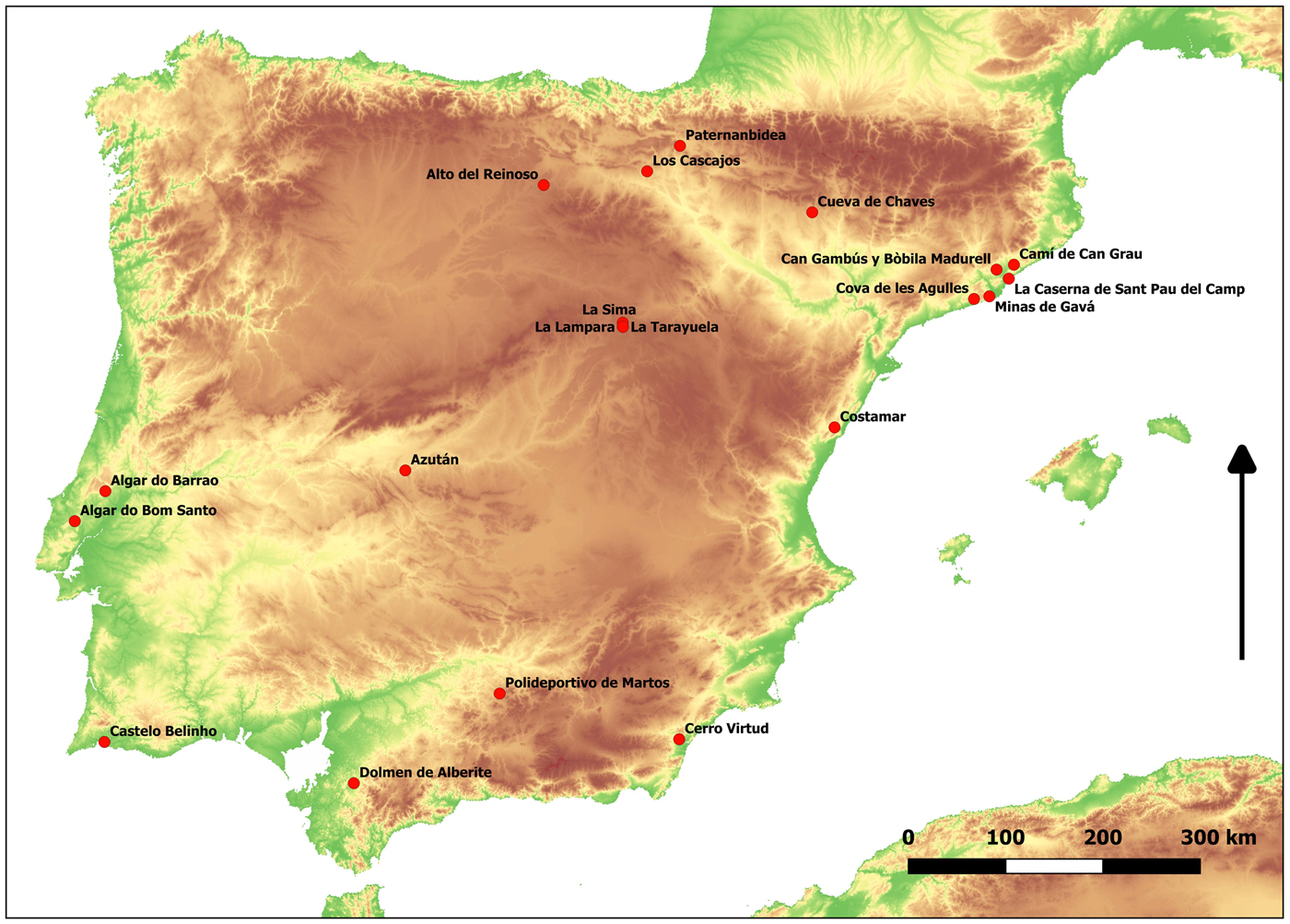
The geographical distribution of the selected sites shows a significant concentration in coastal regions, whereas central Iberia has fewer sites (Figure 1). The largest number of funerary sites, grouped in the so-called ‘pit burials’ culture, appear in the north-east. This geographical distribution also reveals the existence of some degree of regional variability: pit burials in the north-east, ‘lime-kiln’ tombs in the northern half of the Spanish central plateau, and collective burials in caves along the Lower Tagus river. These twenty-one sites comprise 515 individuals in total (Table 1). For reference, the estimated data for the Iberian Upper Palaeolithic and Mesolithic lead to a selection of fifty-one individuals for the former (according to Pérez Iglesias, Reference Pérez Iglesias2012–2013: 243) and 450 individuals for the latter (according to Arias Cabal, Reference Arias Cabal, Guerra Doce and Fernández Manzano2014: 71).
Location of sites with funerary contexts included in this study (drawn by Manuel Eleazar Costa Caramé).
Individuals by sex.
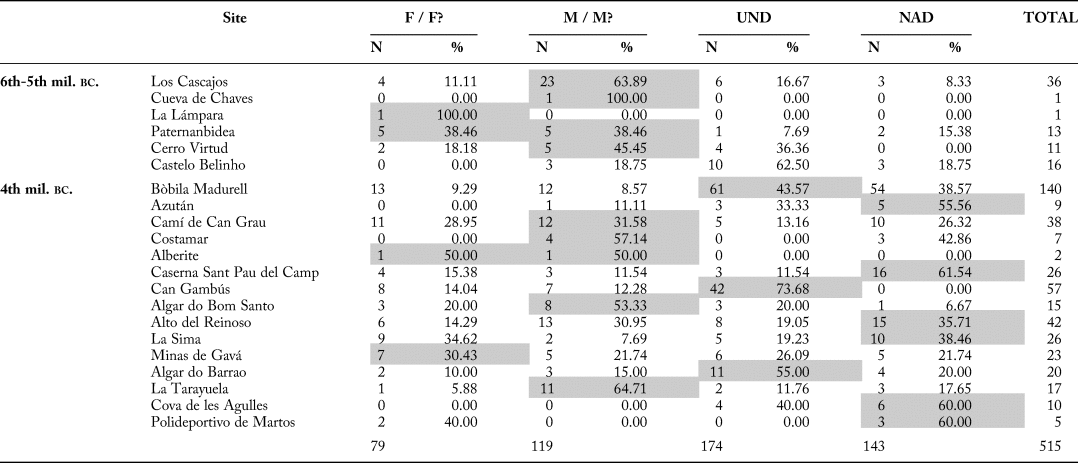
F/F?: female or probably female; M/M?: male or probably male; UND: adult of undetermined sex; NAD: non-adult of undetermined sex. In grey, group prevailing at the site.
Analysis
Demography
Published sexual identifications are only available for 198 individuals of the total sample of 515 compiled by us; but, in all cases studies, these were carried out after the 1980s and used modern scientific standards. Of those, 119 are males or likely to be male (23.11 per cent), and seventy-nine are female or probably female (15.34 per cent). This leaves 317 individuals undetermined. Therefore, among those individuals whose sex was identified or estimated, males greatly outnumber females by 151 per cent. Although the high number of individuals of undetermined sex demands caution when evaluating these data, this result is, by definition, inconsistent with what would be expected from the demographic structure of a normal population. Some specific sites, such as Los Cascajos, Costamar, and La Tarayuela, and, to a lesser extent, Cerro Virtud and Algar do Bom Santo (the minimum number of individuals (MNI) of fifteen at the latter site is not the site total, but the total from one area where it has been possible to individualize the remains to a degree), show a remarkable predominance of males, even if all the individuals of undetermined sex turned out to be female. Conversely, no site shows a majority of females on the same terms, except, perhaps, La Sima where a high number of undetermined individuals is found.
As for age, there are 340 adults (66 per cent), 153 non-adults (29.7 per cent), and twenty-two individuals of undetermined age (4.3 per cent) represented in our sample (for a discussion of this terminology, see Cintas-Peña et al., Reference Cintas-Peña, García Sanjuán, Díaz-Zorita Bonilla, Herrero Corral and Robles Carrasco2018). Bearing in mind that the overall estimations for demographically archaic (i.e. pre-modern) populations place child mortality between thirty and seventy per cent (Bocquet & Masset, Reference Bocquet and Masset1977) or between forty and fifty per cent (Rinne, Reference Rinne2001) but never below twenty per cent (Lohrke et al., Reference Lohrke, Wiedmann, Alt, Kunst and Rojo Guerra2002), the percentage non-adults in our sample is likely to represent a natural population in terms of age. The situation for each archaeological site (Table 2), however, varies greatly. No children were counted among the fifty-seven individuals identified at Can Gambús; whereas, at six other sites, the percentage of non-adults is twenty per cent or less. The remaining eleven sites show percentages of non-adult individuals greater than twenty per cent.
Individuals by age.
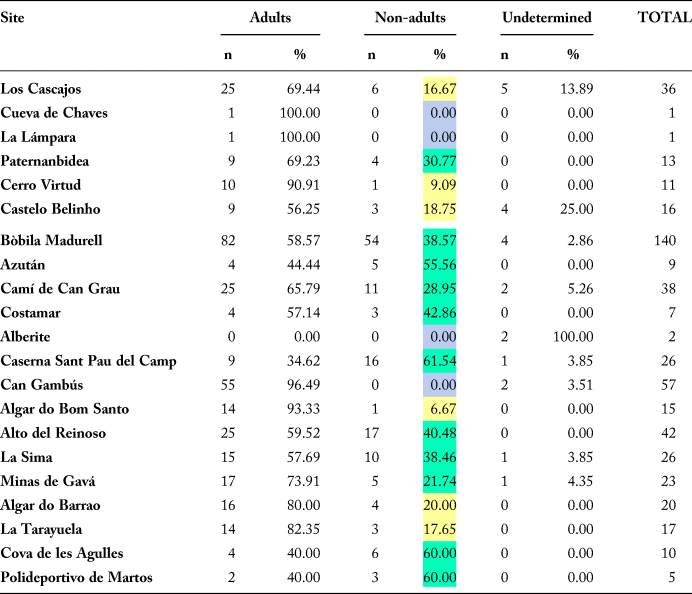
Blue: 0% non-adults; yellow: ≤20% non-adults; green: +20% non-adults.
The sex and age analysis suggests that, in Neolithic Iberia, there was a high degree of variability in how funerary deposits reflected the natural structure of the population, an aspect that is in line with recent observations made for the Copper Age (Cintas-Peña et al., Reference Cintas-Peña, García Sanjuán, Díaz-Zorita Bonilla, Herrero Corral and Robles Carrasco2018). At sites such as Los Cascajos, Cerro Virtud, and La Tarayuela, the buried population does not reflect a natural demographic structure. The fact that neither females nor non-adult individuals appear in the expected demographic ratios suggests that neither had the same probability of a formal burial as males. Thus, although in principle it would appear that at least in some communities there was a cultural bias against inhuming females, which, conversely, do not have any correlates where males are concerned, the significance testing results discussed below do not support the existence of statistically significant differences between males and females in terms of burial types. Although the Iberian Neolithic human bone record may be to some degree potentially representative of the population structure, caution is necessary when making sociological interpretations based on these data as demographic and funerary information appear to be to some extent contradictory.
In terms of pathologies, data are available for 108 individuals (21 per cent of all 515 individuals) including thirty-one females and forty-one males. The most frequent pathologies in this data set are dental (n = 86 individuals), followed by joint diseases (n = 53), metabolic (n = 16), and trauma (n = 12), while the remaining thirteen subjects were affected by conditions grouped as ‘miscellaneous’. There are no statistically significant differences in how these pathologies affected male and female individuals in the Neolithic, except for trauma, which appears in just one of the thirty-one females, but in ten of the forty-one males (Supplementary Material, Table 1). The χ2 test for trauma gives a result of 6.109, greater than the critical value of χ2 for 1 degree of freedom at 0.05 (3.8415), suggesting a statistically significant difference between the sexes. Recorded traumas include fractures to the skull, ribs, or arms (Martí et al., Reference Martí i Rosell, Pou and Carlus1997: 68, 72, 94; Alt et al., 2016), as well as deviation of nasal bones as a consequence of impact (Villalba, Reference Villalba Ibáñez1999: 49). They may have resulted from violence, although their characteristics also make them compatible with accidents and the available publications provide no grounds for regarding one possibility as more likely than the other. However, there are six cases of clear interpersonal violence, affecting four males, one female, and one individual of undetermined sex: an adult of undetermined sex from Bòbila Madurell (Allièse, Reference Allièse2016: 168), a male adult from Camí de Can Grau (Martí i Rosell et al., Reference Martí i Rosell, Pou and Carlus1997: 79), two male adults and one female adult from Minas de Gavá (Villalba Ibáñez, Reference Villalba Ibáñez1999: 49; Casas & Majó, Reference Casas, Majó, Bosch and Borrell2009: 218–19; Borrell Tena et al., Reference Borrell Tena, Bosch Argilagós and Majó2015: 83), and a probable male adult from Costamar (Polo Cerdá & García Prósper, Reference Polo Cerdá, García Prósper and Flors Ureña2009: 405). Despite there being more males than females affected by instances of violence, the small number of observations prevents statistically significant results from being obtained.
As with pathologies, the analysis of occupational stress markers is curtailed by the lack of sufficient individualized data. The existence of differences between men and women in relation to bone markers is referred to in some publications (Estebaranz et al., Reference Estebaranz, Fernández, Martínez, Gamba, Alrousan and Turbón2008); but, within our sample, individualized observations are available for only thirteen individuals (Supplementary Material, Table 2), including six females, six males, and one individual of undetermined sex—which does not provide good grounds for discussing differences between sexes.
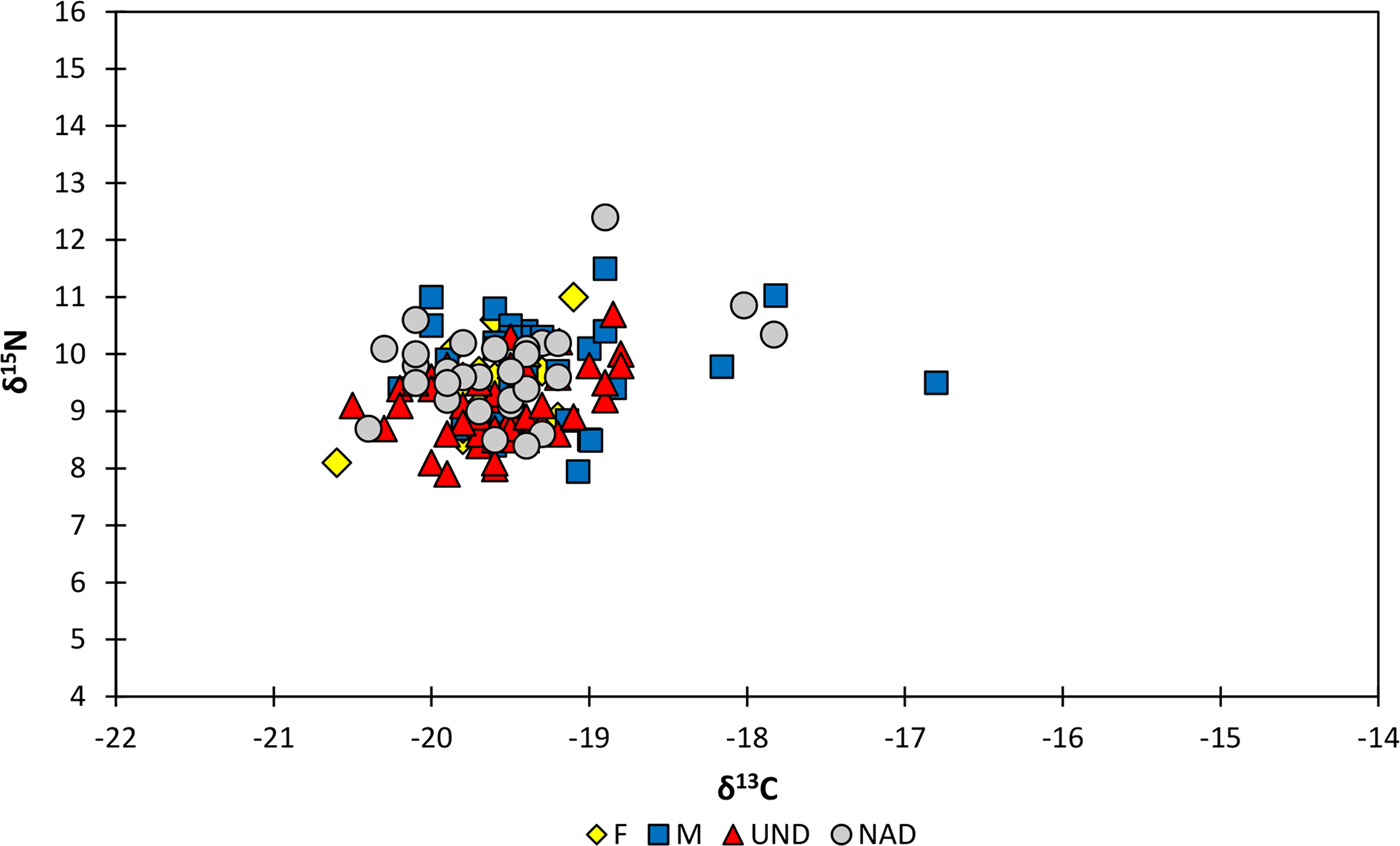
With respect to diet, a total of 147 results have been obtained from carbon and nitrogen stable isotope analysis (Figure 2 and Supplementary Material, Table 3), which correspond to 142 of the 515 individuals available. This dataset reveals a diet predominantly based on terrestrial resources with a low intake of marine resources by Iberian Neolithic populations. The averages for males and females from the different sites do not differ by more than one per cent; and those individuals not in keeping with the group include both females and males, individuals of undetermined sex, and non-adults. Fontanals-Coll et al. (Reference Fontanals-Coll, Subirà i de Galdàcano, Díaz-Zorita Bonilla, Duboscq and Gibaja Bao2015) detect greater values of δ13C and δ15N in some males from Can Gambús, but the review of the anthropological data on sex by Allièse (Reference Allièse2016) suggests that these results must be treated with caution.
Values of δ13C and δ15N for Iberian Neolithic people. F: female or probably female; M: male or probably male; UND: adult of undetermined sex; NAD: non-adult of undetermined sex.
Regarding mobility, strontium and oxygen stable isotope data were obtained for the sites of Algar do Bom Santo and Alto del Reinoso (Supplementary Material, Table 4). In both cases, there are no differences between males and females that may prompt speculation about residence patterns. The same goes for aDNA. In this case, analyses with individualized information are available for the sites of Los Cascajos, Paternanbidea, Algar do Bom Santo, and Alto del Reinoso, although there are other publications which include data from La Tarayuela, Cueva de Chaves, La Caserna de Sant Pau del Camp, and Camí de Can Grau (Supplementary Material, Table 5). The results do not warrant discussion on the distinction between males and females, and the variability or homogeneity of haplogroups affects both sexes equally.
Funerary practices
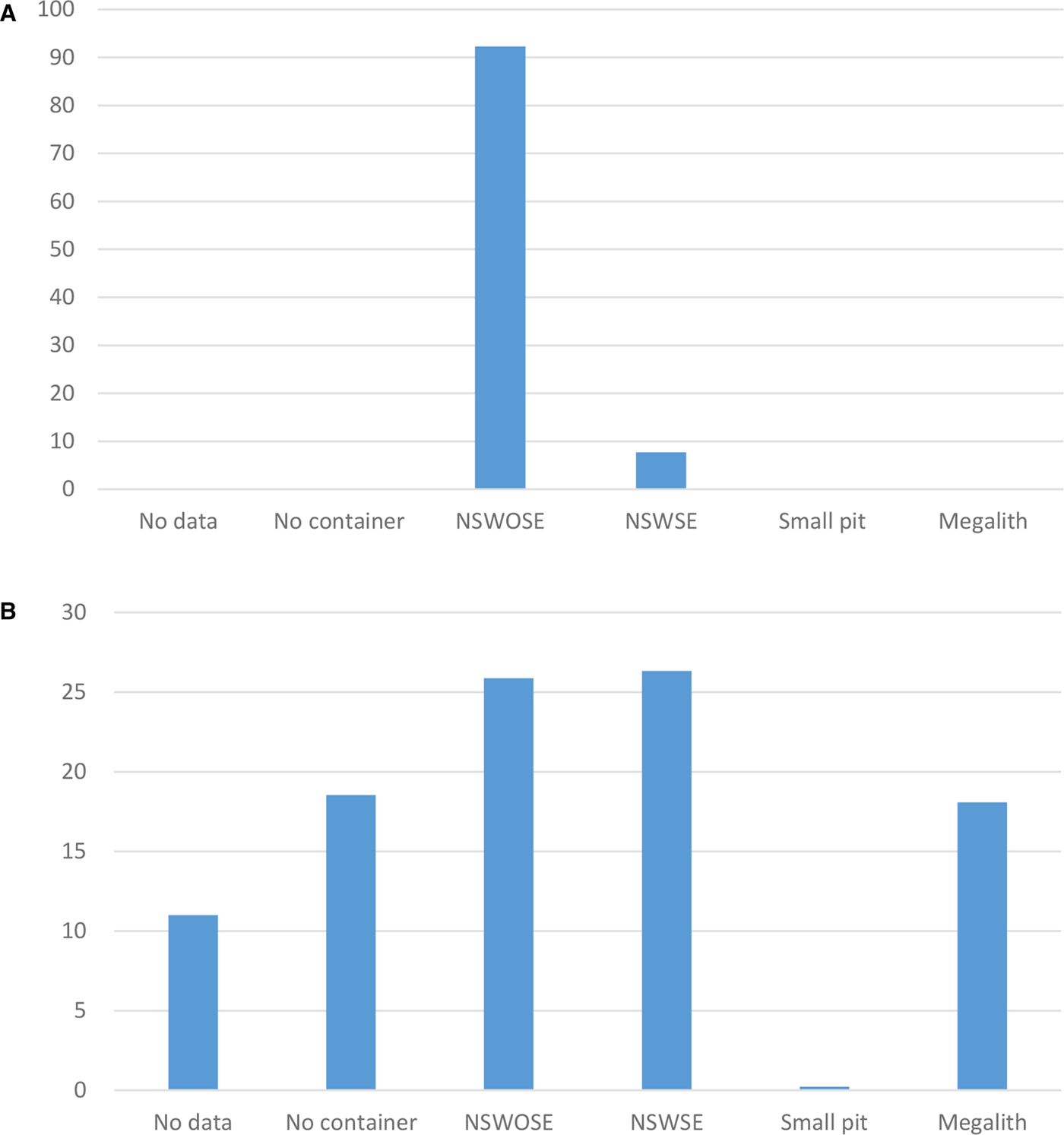
Megalithic monuments became widespread at the end of the fifth millennium and beginning of the fourth millennium bc, leading to a diversification of burial architecture (Figure 3 and Supplementary Material, Table 6). Females, males, individuals of undetermined sex, and non-adults were buried in different types of burials in a non-statistically different way, with none of the χ2 tests giving results allowing for a rejection of the null hypothesis (Supplementary Material, Table 7).
Classification of individuals by burial architecture. A: burial structures of the sixth–fifth millennia bc; B: burial structures of the fourth millennium bc. NSWSE: negative structure with stone elements; NSWOSE: negative structure without stone elements.
The spread of megalithic architecture is also relevant when addressing the primary or secondary character of the human remains and the distinction between individual and collective contexts. During the Early Neolithic (sixth and fifth millennia bc), the remains in primary position amounted to fifty-six per cent of the total whereas secondary deposits comprised twelve per cent. In the Late Neolithic (fourth millennium bc), however, primary deposition fell to forty-five per cent while those of secondary nature increased by 15 points, reaching twenty-seven per cent (Supplementary Material, Figures 1 and 2). This change is widely noted regardless of the sex of the buried individual.
Concerning the degree of individualization of the burial architecture, an increase in collective burials in the Late Neolithic is evident. In the Early Neolithic, people buried individually make up 58.97 per cent of the total; while, in the Late Neolithic, this figure drops to 42.79 per cent. Although individual burials did not disappear in the fourth millennium bc, there was a significant reduction in favour of collective burials, which gradually became more widespread. The trend towards collective burials continues until the end of the third millennium bc. There are no statistically significant differences between the numbers of males and females in individual and collective tombs.
The same can be said about the spatial organization of tombs and sex (the analysis of this variable only took into account sites with more than five burial structures). In some instances, however, there is a relationship with age. At Castelo Belinho and Bòbila Madurell, distinct burial areas for adults and non-adults were found. At Castelo Belinho, the three graves containing non-adults were found in the southern area, whereas the corresponding adult burials were slightly further north (Gomes, Reference Gomes, Gibaja Bao, Carvalho and Chambon2012: 121). At Bòbila Madurell, meanwhile, infant tombs make up thirty per cent of the total burials in the central area, although they represent seventy per cent of the individuals inhumed in the sector further south (Allièse, Reference Allièse2016: 151–52).
Overall, the most frequent body posture is the supine position (134 out of 515 individuals) with flexed lower and upper limbs, for adults and non-adults, males, females, and individuals of undetermined sex. Body posture does not differ according to sex or age either at a general Iberian level or within sites. This also applies to the orientation of the body. The most common orientation for the recorded subsample (with a total of eighty-two individuals) is with the head to the north-east and the feet to the south-west. Insofar as this pattern indicates that the head was pointing towards sunrise, it matches what is known for the easterly orientation of most Iberian megalithic monuments (Hoskin, Reference Hoskin2001).
Our analysis of the contents of the tombs includes three different variables: (i) artefact type; (ii) artefact function; and (iii) individuals who stand out for the quantity and quality of the items associated with them. Of course, not all recorded burials yielded artefacts; in addition, in those where objects were discovered, it was not always possible to establish a clear connection between an artefact and a person. In our sample of 515 individuals, 372 (72.23 per cent) were buried with material culture, whereas 143 (27.77 per cent) were not. Of those 372, we must disregard 158 individuals found in collective tombs where bones and artefacts were very mixed, meaning no clear association between objects and persons could be established. Thus, the number of individuals who were clearly associated with artefacts is 214, including, forty females, fifty-two males, seventy-three individuals of undetermined sex, and fifty non-adults. In all age and sex groups, there is a predominance of ‘technomic’ artefacts, as opposed to those considered ‘sociotechnical’ or ‘ideotechnical’, or, to put it slightly differently, a predominance of artefacts with a practical purpose, as opposed to artefacts thought to have a social or ideological significance; however, this only reveals a social or cultural preference applicable to all Iberian Neolithic societies and the (relatively low) degree of social complexity in this period.
The results of the χ2 tests do not reveal differences in the distribution of these grave goods by sex in any of the artefact categories. Only in one case must the null hypothesis be rejected, and only for Late Neolithic contexts, where women are associated with ceramic vessels with a significantly higher frequency than men (Table 3). On the other hand, at the site of Bòbila Madurell, male individuals were more frequently associated with arrowheads than females (Table 3). Although not directly relevant to the study of gender inequalities, it is worth adding that, overall, there is also a significantly higher association of objects made from bone or horn and faunal remains with non-adult individuals.
Distribution of grave goods in burials with positive results in χ2 tests.
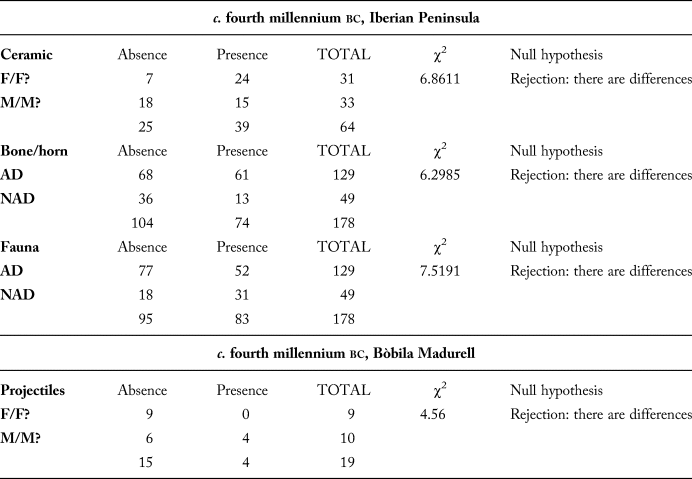
F/F?: female; M/M?: male; AD: adults; NAD: non-adults.
In order to address the sociological implications of the quality and quantity of grave good associations, we have selected individuals who stand out in comparison to others (Table 4). The small resulting sample (just eleven of the 515 individuals considered in this study) does not show any gender differentiation, since it comprises three women, three men, four adults of undetermined sex, and one non-adult (the latter only represented at Bòbila Madurell).
Selection of individuals with outstanding sets of grave goods.
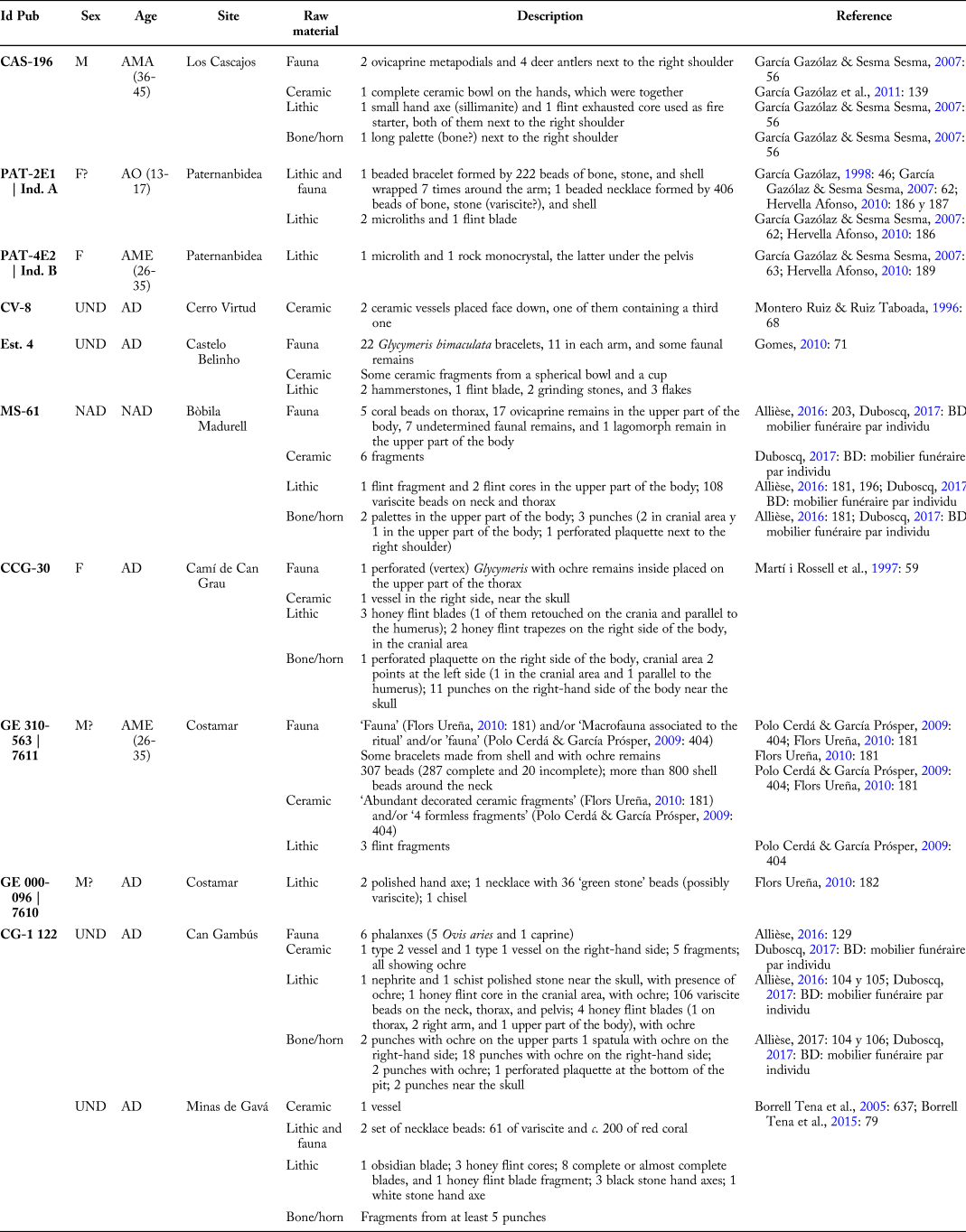
Sex categories: F/F?: female or probably female; M/M?: male or probably male; UND: undetermined; NAD: non-adult of undetermined sex. Age categories: NAD: non-adult; AO: adolescent/juvenile; AD: adult; AME: adult of middle age; AME: adult of mature age.
Finally, among the ‘funerary gestures’ of the 515 individuals, five cases of trepanation (Supplementary Material, Table 8) and seventeen cases of defleshing were documented, but their frequency does not differ by sex in a statistically significant way. Only adults show signs of trepanation (three males, one female, and one individual of undetermined sex), while traces of manipulation (at Algar do Bom Santo and Alberite) are not individualized with enough clarity to associate bone fragments with specific individuals. The presence of pigments (either ochre or cinnabar) (Supplementary Material, Table 9) confirmed for two females, three males, and nine individuals of undetermined sex does not indicate a preferential association by sex either. It does, however, seem to be associated with age, as there is no mention of the ritual use of ochre or cinnabar on the bodies of non-adults. Evidence of fire was found in the funerary contexts of Bòbila Madurell, Cueva de Chaves, La Tarayuela, La Sima, and Costamar. In the cases that can be individualized, they affected two male adults, one child, and two adults of undetermined sex, which would indicate that there are no differences regarding sex.
Discussion
The evidence presented above lays the foundations for an entirely new perspective on gender inequalities in the Iberian Neolithic. Our discussion will focus on four major areas: the rite of formal burial, living conditions, the appearance of specialized social roles, and the growing association of males with signs of violence.
In the sample used in this study, it appears that many more males (n = 119) than females (n = 79) were accorded a formal burial rite. Although it may be tempting to ask whether the large number of individuals of undetermined sex might be masking a balance between the sexes, in fact, on sites where there are no individuals of undetermined sex, males also predominate in the burial record. In the main, the imbalance between males and females in Neolithic funerary contexts is incompatible with a natural demographic structure and should, therefore, be explained by social and cultural factors.
Hints of this quantitative prevalence of males over females in the Neolithic Iberian funerary record were previously detected in a study of megalithic monuments of the Spanish Northern Plateau (Rojo Guerra et al., Reference Rojo Guerra, Garrido Pena, García Martínez de Lagrán, Morán Dauchez and Kunst2005: 62). This research included some sites also selected in the present study, such as La Tarayuela, as well others which were not selected, such as the dolmen at Las Arnillas (Delibes de Castro, Reference Delibes de Castro, Fábregas Valcarce, Pérez Losada, Fernández Ibáñez and Abásolo1995), as they did not meet the methodological criteria. Duboscq (Reference Duboscq2017: 464–65) also notes a statistical bias against females on sites located in north-eastern Iberia, within the groups she refers to as ‘Vallés-Litoral’ and ‘megalithic tombs’. Thus, male prevalence in Neolithic tombs is suggested on a specific level (at sites such as Los Cascajos), on a regional level (in megalithic constructions in the interior and north-east of the peninsula, as well as in ‘Vallés-Litoral’ sites), and on an Iberian-wide level if we consider the total number of sexed individuals in our sample. Therefore, a first finding from our study is that formal burial rites were largely restricted to males.
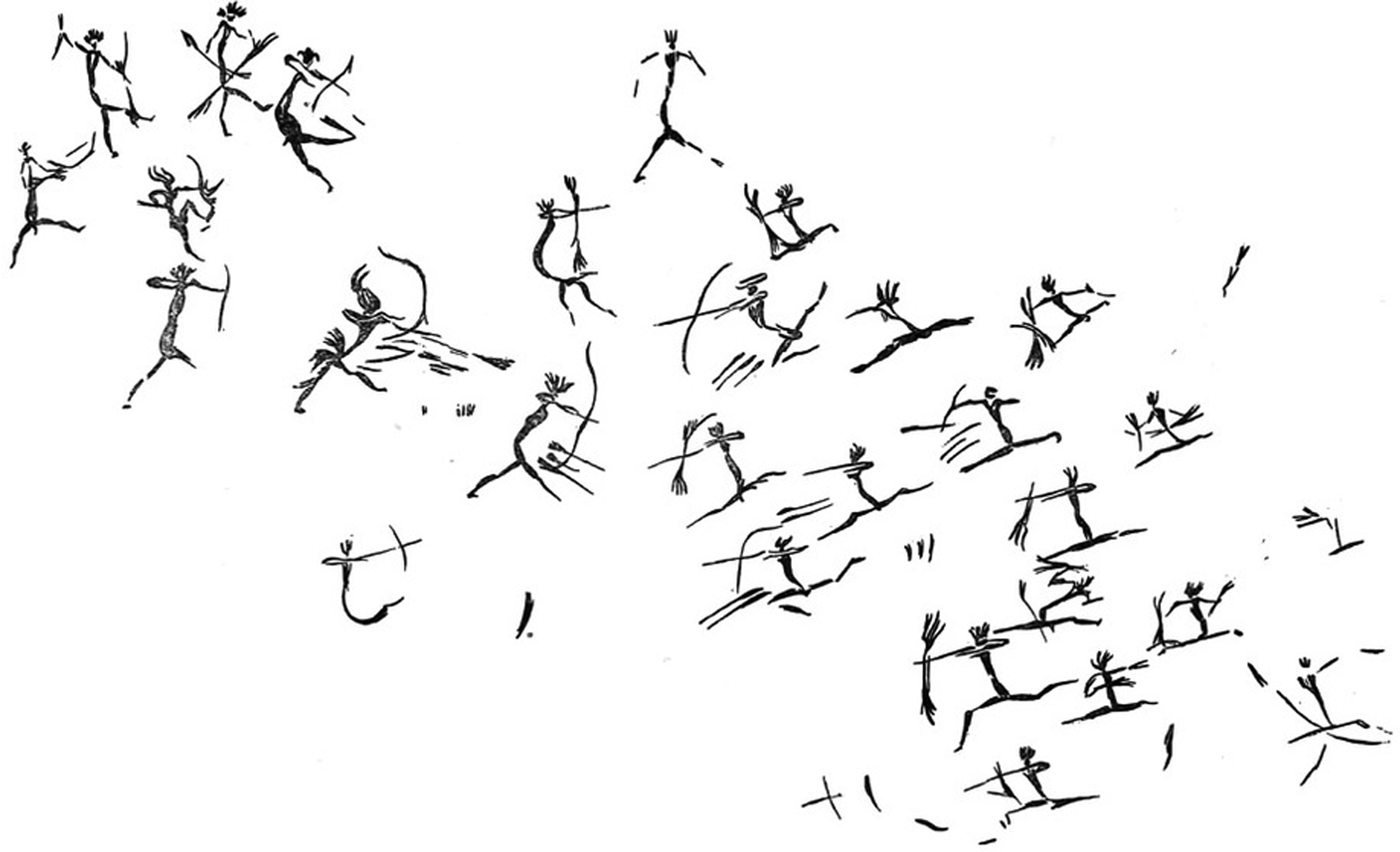
Interestingly, the eastern Spanish Levantine rock art also reveals a strong quantitative bias against females (Supplementary Material: Table 10). Early publications (for example Díaz-Andreu, Reference Díaz-Andreu1998) argued against the existence of a clear gender bias in Spanish Levantine rock art, suggesting that unsexed anthropomorphs should not be presumed to be masculine even if they show male markers (such as, for example, a bow). In a recent synthesis by M. Lillo Bernabéu (Reference Lillo Bernabeu2014: 277), however, 1073 out of 1315 human figures regarded as ‘male’ are interpreted as archers. Although not all of these figures have phalluses, some do, and, crucially, no female representation (figures with breasts) is ever associated with a bow. Female figures are never depicted in hunting or fighting scenes, with one single (but dubious) exception (López Montalvo, Reference López-Montalvo2015: 319). The empirical record of Neolithic Iberia does, therefore, unambiguously suggest the greater presence of males over females in two ideologically-charged domains: burial practices and graphic art.
Nevertheless, none of the tests carried out in this study revealed statistically significant differences between males and females in terms of diseases (except for traumas), occupational stress markers, or diet. In the case of Can Gambús, some males have greater δ15N values than females, perhaps indicating greater meat consumption (Fontanals-Collet et al., Reference Fontanals-Coll, Subirà i de Galdàcano, Díaz-Zorita Bonilla, Duboscq and Gibaja Bao2015: 166), but this data must be treated with caution, considering the anthropological review of the sex estimations undertaken by Allièse (Reference Allièse2016). Moreover, this evidence cannot be extrapolated to all Iberian Neolithic societies.
With respect to the possible appearance of specialized social roles, again most of the tests do not suggest statistically significant differences in the association of males and females with different types of material culture or technology. Nevertheless, some highly interesting exceptions can be noted. First, there is a statistically robust tendency whereby, overall, females are more frequently associated with ceramic vessels than male individuals in the Later Neolithic. Second, on various sites in north-eastern Iberia and especially at Bòbila Madurell, there is a statistically significant association between males and arrowheads (Table 3) (Gibaja Bao & Palomo, Reference Gibaja Bao and Palomo2004; Duboscq & Gibaja Bao, Reference Duboscq, Gibaja Bao, García-Piquer and Vila Mitjà2016; Duboscq, Reference Duboscq2017: 491). In the 156 funerary structures from twenty-one sites located in the north-east of the peninsula considered by Duboscq and Gibaja Bao, fifteen per cent of females, sixteen per cent of infants, and sixty-six per cent of males are associated with projectiles (Duboscq & Gibaja Bao, Reference Duboscq, Gibaja Bao, García-Piquer and Vila Mitjà2016: table 4). The relationship between males and arrows is not exclusive, although it is statistically significant. This relationship is also evident in the northern Pyrenees, on sites such as Balloy, where the association between males and projectiles has been interpreted in terms of ostentation (Chambon & Pétillon, Reference Chambon and Pétillon2009: 781). This, once again, is in keeping with the data on Spanish Levantine rock art, whereby only male figures appear with bows and arrows (Lillo Bernabéu, Reference Lillo Bernabeu2014: 277; López-Montalvo, Reference López-Montalvo2018: 13). This suggests that, during the Iberian Neolithic, there was a delimitation of social roles, with the bow and projectiles operating as markers of masculinity. Hunting and warfare, represented by holding a bow and arrow, appear as a masculine business (Figure 4). The presence of females, in hunting scenes as well as in the (only) fighting scene, is nominal; this is also in keeping with what has been observed in the physical anthropological record, as we will discuss later.
Spanish Levantine rock art from Les Dogues (Ares del Maestre, Castellón) showing a possible war scene (Porcar, Reference Porcar1953). Reproduced by permission of Museu de Prehistòria de València.
Bòbila Madurell and Can Gambús show other interesting patterns in relation to grinding stones and marine molluscs (Allièse, Reference Allièse2016: 253–54), as well as polished hand axes (Masclans Latorre, Reference Masclans Latorre2017: 411). The χ2 test reveals that grinding stones and marine shells are more frequently associated with males than with females. Only a quarter of the burials containing polished axes in Can Gambús are female, which leads the author of the study to contend that ‘only in special cases [were] women eligible of receiving a PBA [polished and bevelled artefact], being generally those women who had more chance of accumulating valuable goods’ (Masclans Latorre, Reference Masclans Latorre2017: 412). Use-wear analysis of polished hand axes from sites belonging to the pit burials culture suggests that the axes discovered in female tombs were used for tanning, while those deposited in male tombs were used for tasks such as the cutting of meat and/or woodworking (Masclans Latorre et al., Reference Masclans Latorre, Palomo Pérez, Gibaja Bao, Remolins Zamora and Gómez-Gras2016: 13; Masclans Latorre, Reference Masclans Latorre2017: 412). This would also suggest the existence of a sexual division of labour and emerging gender roles. Of course, an interesting future line of research would be to verify to what extent the presence of specialized gender roles at these sites can be extrapolated to Iberian Neolithic societies in general.
As stated above, the sample studied here does not reveal statistically significant differences in the distribution of males and females by burial type. Furthermore, within the small group that we could hypothetically describe as the social ‘elite’ of the Neolithic period—three females, three males, four adults of undetermined sex, and one non-adult buried in ‘special’ conditions—there are no significant gender differences. At certain sites, however, some subtle differences come to light. For example, in Can Gambús-1, there is a higher frequency of males in complex funerary structures (Duboscq, Reference Duboscq2017: 217); and on sites with a greater female presence, for example to the south of the Llobregat River, it is males who accumulate the more valuable grave goods, despite being in the minority (Duboscq, Reference Duboscq2017: 488). There is similar evidence at other sites not selected for this study (e.g. at La Peña de la Abuela female bone remains were found in an area with very few grave goods, outside the so-called the ‘noble area’: Rojo Guerra et al., Reference Rojo Guerra, Garrido Pena, García Martínez de Lagrán, Morán Dauchez and Kunst2005: 61).
This evidence, although not statistically significant, suggests that, in certain cases, burials (and especially megalithic monuments) may have been construed not only as spaces emphasizing the collective over the individual (in which emerging individual interests were hidden, removed, or denied: Rojo Guerra et al., Reference Rojo Guerra, Garrido Pena, García Martínez de Lagrán, Morán Dauchez and Kunst2005: 234), but also as places for reinforcing male status and excluding females and children, who would not have had access to the rite of formal burial (Garrido Pena et al., Reference Garrido Pena, Rojo Guerra, Tejedor Rodríguez, García Martínez de Lagrán, Rojo Guerra, Garrido Pena and García-Martínez de Lagrán2012: 170). Conversely, it is important to bear in mind that no situation has been recorded where females represent a similar clear quantitative majority or are the object of an equivalent qualitatively superior distinction.
Although the Iberian Neolithic record does not provide quantitatively incontrovertible evidence of severe gender inequalities, numerous indicators point to the existence of an increasing dissymmetry and differentiation of social roles. The social space where this is most visible includes hunting and warfare, activities in which a growing association of males with violence becomes evident. In recent years, the study of violence in prehistory has expanded significantly (Duboscq & Gibaja Bao, Reference Duboscq, Gibaja Bao, García-Piquer and Vila Mitjà2016; Risch & Meller, Reference Risch, Meller, Manolakakis, Schlanger and Coudart2017). However, with a few exceptions (for example Escoriza-Mateu, Reference Escoriza-Mateu2006; Schulting & Fibiger, Reference Schulting and Fibiger2012; Matic & Jensen, Reference Matic and Jensen2017), violence has rarely been analysed in terms of gender. This is in response, at least in part, to the misleading assimilation made on occasions between the terms ‘gender’ and ‘woman’, as remarked on by Cruz Berrocal (Reference Cruz Berrocal2009: 26), as well as the lack of interest in feminist and gender theory that part of the academic community continues to reflect. The results of our study highlight the importance of approaches that analyse the social construction of an image of masculinity based on the use and control of violence—a trend that becomes much clearer in the Bronze Age. In the Iberian Neolithic, there are statistically significant differences between the frequency of trauma identified on male and female remains, with the former showing more evidence of injury. At the same time, we also see males overwhelmingly represented in scenes of hunting and warfare (only males in the one instance of the latter) in the Levantine rock art of eastern Spain, in addition to the greater frequency of projectiles in male tombs at some sites.
Moreover, the anthropological record of several important sites suggests that in the Late Neolithic and Early Copper Age, more violent social conditions seem to have arisen: this is the case at San Juan Ante Portam Latinam (Vegas Aramburu et al., Reference Vegas Aramburu, Armendáriz and Ajamil2007) and the hypogeum of Longar (Armendáriz Martija et al., Reference Armendáriz Martija, Irigarai Soto and Etxeberria Gabilondo1994). At the former site, with a total MNI of 338, thirteen individuals suffered arrow wounds, all of whom were males (Etxeberria Gabilondo & Herrasti Erlogorri, Reference Etxeberria Gabilondo, Herrasti Erlogorri, Vegas Aramburu, Armendáriz and Ajamil2007: 220); at the latter site, with a MNI of 112, four individuals, all males, presented signs of impact and/or projectiles lodged in bones (Armendáriz Martija et al., Reference Armendáriz Martija, Irigarai Soto and Etxeberria Gabilondo1994: 215). Furthermore, at several Portuguese sites (including natural caves and megaliths), the incidence of traumatic head injuries is ascertained to be higher among males (Silva et al., Reference Silva, Boaventura, Ferreira, Marques, Schulting and Fibiger2012: 338).
This evidence of violence has been interpreted to be the result of processes of social change during the transition from Neolithic to Chalcolithic. Demographic pressure, territorial control, or confrontation over resources during a period of agricultural expansion and intensified livestock farming feature as explanations for the increase in social tensions leading to conflict and violence (Guilaine & Zammit, Reference Guilaine and Zammit2002). However, conflict is not only relevant in itself; it is also relevant insofar as it establishes a different social order whereby men became increasingly associated with the use and control of violence.
Conclusion
The study presented here has sought to contribute to a better understanding of the social transformations occurring in late prehistory. The creation of gender inequalities played an indisputable part in the appearance of social complexity, and it must be investigated and explained by prehistoric archaeology. In order to make such contribution, we have proposed an innovative analysis of gender relations in Neolithic Iberia by means of a holistic examination of the archaeological record. We contend that this analysis yields a reasonably promising and positive result, paving the way for a future robust understanding of gender inequalities in prehistoric Europe.
The analysis of the Iberian Neolithic archaeological record reveals four avenues to explore gender inequality as a social process: access to the rite of formal burial, the material conditions of existence, the appearance of specialized social roles, and a growing association of males with violence. Overall, the results of our study do not suggest the existence of widespread and/or acute gender inequalities in Neolithic society. There are, however, relatively clear signs of an increasing predominance of men over women. The quantitative prevalence of males in the funerary record points to a bias against females and children within the funerary ideology; males also overwhelmingly predominate in Spanish Levantine rock art, particularly in hunting and war scenes; males are more frequently associated with traumatic injuries and impacts by projectiles and, at some sites, they were buried with arrowheads far more frequently than females.
In Iberian Neolithic society we can observe the seeds of increasing social complexity and future gender inequalities. On the one hand, the communities do not seem to have experienced very advanced forms of social complexity, with highly hierarchical political systems. On the other hand, funerary practices suggest the existence of groups, collectives, and communities with more rights of access to material goods most likely associated with forms of leadership and power. Indeed, these forms of leadership are likely not ‘sacred monarchies’ such as have recently been proposed for the French Neolithic (Cassen et al., Reference Cassen, Boujot, Domínguez Bella, Guiavarc'h, Le Pennec, Prieto Martínez, Pétrequin, Errera, Cassen, Klassen and Sheridan2012; Jeunesse, Reference Jeunesse, Bickle, Cummings, Hofmann and Pollard2017). The appearance of prominent leaders in the burial record, only just emerging in the Neolithic and Early Copper Age, does not become a recurring and unmistakable reality until the Bronze Age, after a gradual process (Rojo Guerra et al., Reference Rojo Guerra, Garrido Pena, García Martínez de Lagrán, Morán Dauchez and Kunst2005: 234–35; García Sanjuán, Reference García Sanjuán, Díaz-del-Río and García Sanjuán2006). Our study suggests that the creation of differentiated gender roles and forms of gender inequality played a vital part in the emergence of social complexity, a factor which has not always been sufficiently understood.
Of all the variables considered in this study, those that show the clearest differences between males and females are related to violence: projectiles, trauma including impact by arrowheads, and graphic depictions of war and hunting. It is, in our view, difficult to attribute this to chance: rather, it shows the emergence of an ideology connecting males to the exertion of force. To what extent this ideology was linked to a process by which social status and the definition of leadership were beginning to be connected with warfare we cannot say. Our research has indeed failed to find evidence that ’high ranking’ individuals were consistently males. Nor is it a question of understanding this difference through an essentialism whereby women are naturally peaceful while men are violent. Violence and aggressiveness, similar to many other emotions or cognitive responses, are, to a great extent, social constructions adapted to the material conditions of existence. However, there are hints that, during the Neolithic, the accumulation of power by males was both reflected in and encouraged by an emerging ideology, attested by the over-representation of men in burials and rock art scenes. Although this supports Lerner's (Reference Lerner1990) study into the origin of the patriarchy, far more research along the lines presented here will be necessary to verify her hypothesis. Whether there ever was a ‘patriarchy’ in the third and second millennia in Iberia, like Lerner predicted for the Near East, remains to be established; but the Neolithic period seems to have laid the foundations for its emergence to take place.
Supplementary Material
To view supplementary material for this article, please visit https://doi.org/10.1017/eaa.2019.3.
Acknowledgements
We would like to thank Catherine Frieman and the two anonymous reviewers for their thorough revision of this text and their insightful suggestions regarding its contents.



