


From the First Wine to the First French Wine
When you sit with a glutton, eat when his greed has passed.
When you drink with a drunkard, take when his heart is content.
(Prisse papyrus, instructions to Kagemni fol.1, 18–21 (c. 2600 bce))
Our Paleolithic ancestors almost certainly complemented their diet with naturally-fermented fruits, including over-mature wild grapes, and possibly enjoyed the buzz that followed (Dudley Reference Dudley2014). After all, even monkeys do this and partial fermentation occurs spontaneously. But wine has been defined (Estreicher Reference Estreicher, Brodersen, Erskine and Hollander2019) as the result of the intentional fermentation of vitis vinifera grapes. ‘Intentional’ suggests a container such as a clay jar in which the fermentation can take place as well as cultivation, which guarantees a sufficient supply of grapes and grape juice to fill one or more jars. This definition of wine brings us to Neolithic times when clay jars first appeared and cultivation began. This led to the domestication of oats, rye, barley, lentils, peas, and of course v. vinifera.
The archaeological, ampelographic, genetic, and linguistic evidence of the origin of wine and viticulture points toward eastern Anatolia and Transcaucasia (Georgia, Azerbaijan, Armenia). The wild eastern v. vinifera sylvestris is native to this region (McGovern et al. Reference McGovern, Fleming and Katz2000; McGovern Reference McGovern2003; Myles et al. Reference Myles, Boyko, Owens, Brown, Grassi, Aradhya, Prins, Reynolds, Chia, Ware, Bustamante and Buckler2011; Estreicher Reference Estreicher2017). This dioecious grape was domesticated and evolved into the hermaphrodite v. vinifera. When viticulture was brought to Western Europe (mostly by the Phoenicians), the domesticated eastern v. vinifera vinifera probably crossed with the wild western v. vinifera sylvestris to produce many of Europe’s cultivars, which are distinct from those in Anatolia and Transcaucasia (from here on, v. vinifera will stand for v. vinifera vinifera).
The oldest pips of domesticated v. vinifera, dated c. 6000 bce, were found (McGovern Reference McGovern2003) in Anatolia (Çayönü), Georgia (Shulaveris-Gora), and Azerbaijan (Shomu-Tepe). The oldest proof (McGovern et al., Reference McGovern, Jalabadze, Batiuk, Callahan, Smith, Hall, Kvavadze, Maghradze, Rusishvili, Bouby, Failla, Cola, Mariani, Boaretto, Bacilieri, This, Wales and Lordkipanidze2017) of wine comes from the chemical analysis of the residue in a Georgian jar, also dated c. 6000 bce. The oldest evidence of wine-making in Europe, dated c. 4300 bce, was uncovered at Dikili Tash (Garnier and Valamoti Reference Garnier and Valamoti2016) in Macedonia. The oldest wine-making setup (Barnard et al. Reference Barnard, Dooley, Areshian, Gasparyan and Faull2011), Areni-1 in Armenia, was dated c. 4100 bce. Thus, wine substantially pre-dates the earliest citiesFootnote a as well as writing.
By the fourth millennium bce, wine and viticulture had spread throughout the Near East and Egypt (McGovern et al. Reference McGovern, Mirzoian and Hall2009). After 800 bce, the Phoenicians brought viticulture to Mediterranean islands, North Africa (e.g. Carthage), and southern Spain (e.g. Cádiz). The Etruscans (Tuscany, Umbria, Lazio) traded with the Phoenicians and produced (Brun Reference Brun2004) wine since at least the early eighth century bce. The Etruscans exported wine to southern Gaul in the late seventh century, including to Marseille in the first half of the sixth century. Etruscans amphorae found (Py Reference Py1993) throughout the region are the earliest evidence of wine in Gaul.
The founding story of France’s oldest city involves the daughter of king Nanus of the Segobrigii tribe. She chose a trader from the Greek settlement of Phocaea (western Anatolia) as her husband (Omrani Reference Omrani2017). He accepted and the couple founded Massilia (Marseilles) c. 600 bce. In 545 bce, the inhabitants of Phocaea were threatened by Cyrus the Great and fled. Some of them went to Massilia. This was the second, larger, wave of Greek settlers in Southern Gaul. Marseilles grew and established its own colonies in the region, such as Nikaia (Nice) and Antipolis (Antibes).
Around 590 bce (about the same time Massilia was founded), the Bituriges from central Gaul migrated (Rabanis Reference Rabanis1835) to Aquitania and established a settlement on the banks of the Garonne: Burdegala. It became the Roman Burdigala, today’s Bordeaux. But there is no proof of viticulture in that region until the first century ce (see below).
Since the Phocaeans already knew about viticulture for centuries, it is not surprising that Marseilles got involved in the wine trade. The heavy Etruscan amphora was soon replaced by the lighter Massaliote one (Py Reference Py1993; Olmer Reference Olmer2009). By the late sixth century, Massaliotes amphorae were widespread (Brun Reference Brun2004). Some were found in the tombs of wealthy Celts in northern Italy (Lomas Reference Lomas2018), suggesting that quality wine was produced in Massilia. In the fifth and fourth centuries, virtually all the amphorae in southern Gaul were Massaliote (McGovern et al. Reference McGovern, Fleming and Katz2000). Every indication is that wine was very popular and in big demand. Few remains of wine presses (Brun Reference Brun2004) dating back to these early days exist, most likely because any wooden levers and support beams have long since disappeared.
The Greeks occasionally traded with Celtic tribes as far as northern Gaul. The best-known example is the krater of Vix (Bioul Reference Bioul2002), the largest one ever found. It was discovered in the tomb of a princess or priestess buried c. 490 bce near Châtillon-sur-Seine, some 240 km south-east of Paris. A krater is a wine-mixing vase: it was partly filled with water before wine was added, and then everybody dipped their cup in the same mixture. The krater of Vix is 1.6 m high and 1.2 m wide. It has elaborate handles and its neck is carved with horses and Spartan-looking soldiers. Etruscan wine-serving jars and locally-made wine cups were also found in the tomb. The krater was probably manufactured in Taranto (a Spartan colony in southern Italy), transported to Vix in pieces, and then reassembled. There is no evidence that it was ever used or that any wine was produced in the region until Roman times. But Vix was an important trading centre, including tin from Cornwall. The coincidence of the burial date with that of the battle of Marathon suggests that the Greeks needed tin to make bronze for weapons and shields, in expectation of the next Persian invasion.
The oldest archaeological proof of wine-making in Gaul was found in Lattes (McGovern et al. Reference McGovern, Luley, Rovira, Mirzoian, Callahan, Smith, Hall, Davidson and Henkin2013), near Marseille. It is dated 425 bce. Archaeological excavations have produced a small wine press, vine pips and twigs, as well as local amphorae which had contained wine. Some of the amphorae were sealed with corks, a technique used by the Etruscans.Footnote b Few would be surprised if wine had been produced in Marseilles somewhat earlier, but the proof could be buried anywhere under the city. There is archaeological evidence of vineyards (Brun Reference Brun2004) near the ancient city. Thus, the earliest wine in today’s France was produced some 5500 years after wine was first made in Transcaucasia.
In the fourth century bce, Gallic tribes were established in Gaul and in the northern part of the Italian peninsula. The Romans referred to these regions as Gallia Transalpina and Cisalpina, respectively. These tribes frequently fought each other or formed fluid alliances. The Celtic tribes had cultural and linguistic links, but no centralized structure or leadership. Wine was a sought-after luxury, and viticulture quickly became the most important cash crop. The next major evolution in the history of wine in Gaul involves the Romans.
Roman Gaul
Young adults should take [wine] in moderation. But elderly persons may take as much as they can tolerate.
(Abū-ʿAlī al-Ḥusayn ibn-ʿAbdallāh Ibn-Sīnā a.k.a. Avicenna (970–1037), Canon 814)
Since the eighth century bce, wine was produced (Brun Reference Brun2004; Dodd Reference Dodd2020) in the Greek colonies in the south of Italy and in Etruria. As several of the Kings of Rome were Etruscans, viticulture appeared early on around the city. Since the mid-eighth century bce, Rome had been expanding by absorbing its neighbours (Lomas Reference Lomas2018; Southern Reference Southern2014). The Romans did not win all the battles they fought, but they stubbornly came back after a loss and, in the end, managed to impose their will. Rome grew.
Around 390 bce, Rome faced an aggressive tribe of marauding Gauls led by Brennus and suffered a humiliating defeat at the river Allia, near Rome. Brennus sacked Rome for several days before returning north. Only the better-defended Capitoline Hill was preserved. This attack on Rome was the start of a long-lasting resentment of the Gauls. There were many subsequent battles between the Romans and Gallic tribes in Italy. The turning point was the (second) battle of Lake Vadimo in 283 bce, a decisive Roman victory. Yet, G. Cisalpina would not be fully pacified and become a Roman province for another two centuries.
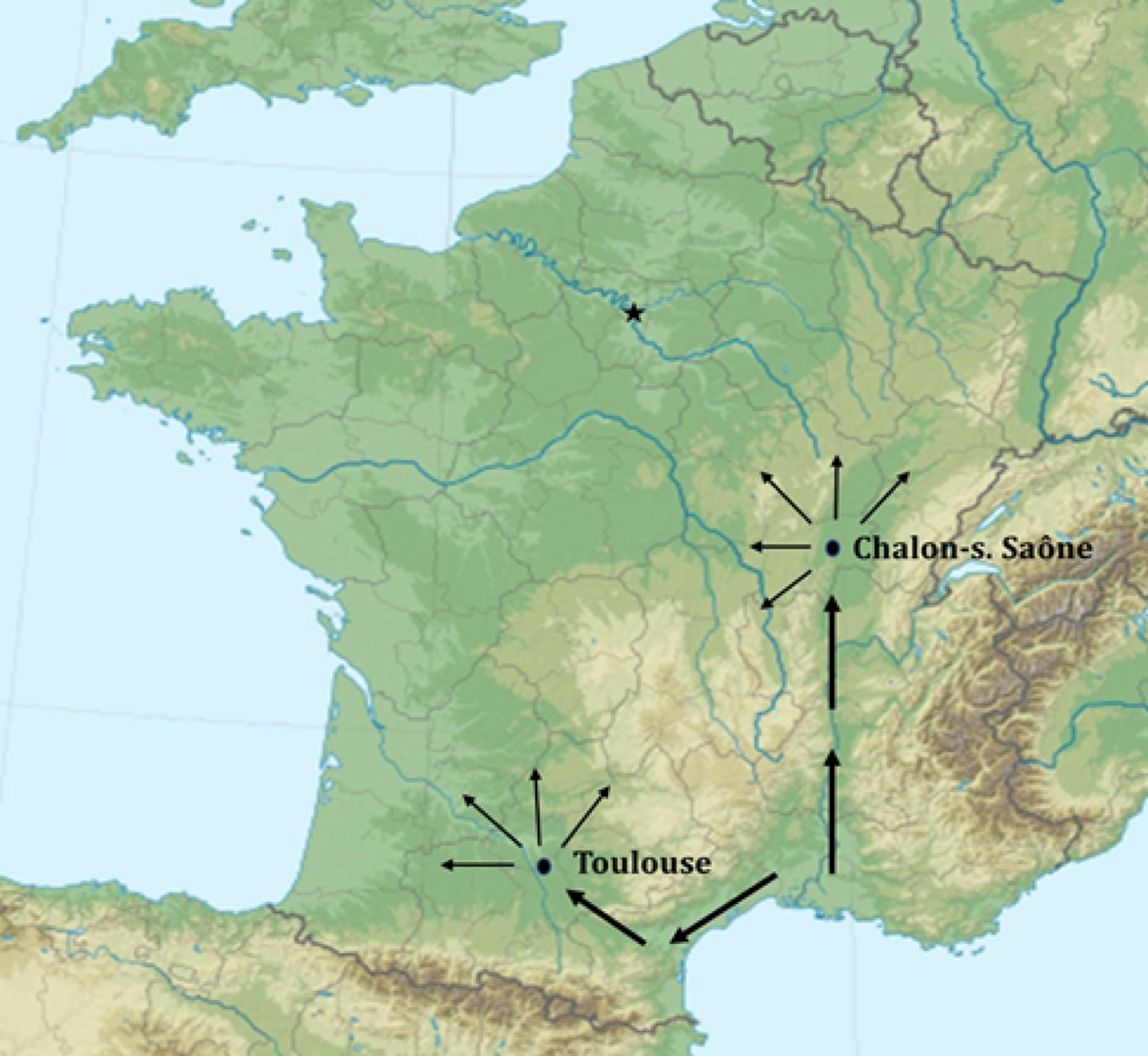
Wine production in southern Gaul was insufficient to satisfy the local demand. In the second century bce, the wine trade with Rome grew, with annual imports (Cunliffe Reference Cunliffe2008) reaching 10 million litres. One trade route (Lebecq Reference Lebecq, Webster and Brown1997) started in Marseilles (or Arles), then went north along the Rhône and the Saône up to Chalon-sur-Saône. The other started in Narbonne, then went along what would become the via Aquitania toward Toulouse and Bordeaux (Figure 1). Much of the wine was decanted from amphorae into barrels in Toulouse and Châlon-sur-Saône, respectively, for transport into Celtic Gaul. A few amphorae contained expensive wines, but most held cheap, mass-produced wine.
Two routes involved decanting wines from amphorae into barrels at Toulouse or Châlon-sur-Saône for transportation into Celtic Gaul. The trade routes themselves would soon be covered with vines.
The wine trade with Gaul was highly profitable to Rome. According to Diodorus Siculus (90–30 bce) (Diodorus Siculus): ‘The Gauls are exceedingly addicted to wine… drinking it unmixed and… without moderation… When they are drunk, they fall into a stupor or a state of madness… The traders… receive a slave for a jar of wine, getting a servant in return for a drink.’ The annual wine trade with Gaul reached two million gallons (Lebecq Reference Lebecq, Webster and Brown1997) and brought to Rome up to 15,000 slaves (Cunliffe Reference Cunliffe2008; Fleming Reference Fleming2001).
Wine being so desirable, theft by local tribes occurred with increasing frequency. This is one reason why the Roman Senate reacted favourably when Marseilles (a Roman ally during the second Punic war) requested assistance (Omrani Reference Omrani2017; Southern Reference Southern2014; Cunliffe Reference Cunliffe2008) against the Saluvii, a tribe centred at Aix-en-Provence. Beyond protecting its wine trade and helping an ally, Rome also wished to secure a land route to Spain.
In 125 bce, Rome sent two legions north of the Alps. They defeated the Saluvii, and Aix-en-Provence became a Roman fort. Saluvii survivors sought refuge with the Allobroges (east of the Rhône) and the Arverni (west of the Rhône). The war expanded. These tribes were finally defeated by consul Gnaeus Domitius Ahenobarbus. By 121 bce, Rome controlled southern Gaul from the western tip of the Alps to the eastern half of the Pyrenees, as well as a wide strip of land on both sides of the Rhône up to Geneva. Marseilles remained independent. Ahenobarbus ordered the construction of the via Domitia, a road connecting Italy to Spain. This territory became the Province of G. Transalpina in 81 bce, with its capital in Narbonne. It became Provincia in the days of Caesar (hence ‘Provence’) and G. Narbonensis in the days of Augustus.
Within a year of the establishment of Narbonne in 118 bce, the region was already planted (Dion Reference Dion2010) with olive trees and vines. In Rome, Cicero arguedFootnote c that the production of olives and wine by non-Romans created unwanted competition: the profits had to remain Roman! Within a few decades, Rome had monopolized the wine (and olive oil) production: only Roman citizens could be allowed to grow vines and make wine.
In 113 bce, the Germanic Cimbri and Teutones tribes migrated south-west across Gaul in search of loot and a better life. They were numerous, wild, and feared. Rome became concerned not just about looting but also about the possibility that these tribes might end up moving into Italy. Marius, first elected consul in 107, was sent to Gaul to stop them (Cunliffe Reference Cunliffe2008). He trained his legions to take on a much larger but disorganized force. He also introduced small fighting units, the cohorts.Footnote d Marius was unable to prevent the two tribes from entering Italy, but he convincingly defeated them there, despite being heavily outnumbered. The next major player in Gaul would be his nephew, Julius Caesar.
There were three ethnic and linguistic groups in Gaul, and no mention of viticulture by any of them. The largest group consisted of the Galli, a generic name for some 50 tribes. The territory of the Belgae (north-east of Paris up to the Rhine) included maybe two dozen Germanic tribes. Finally, there was Aquitania (from the Garonne and the Atlantic to the western half of the Pyrenees). In addition to Aquitani, this territory included groups of Vascones, a generic name for the Basque tribes, and probably people from further south in Spain (Collins Reference Collins1986).
Caesar’s invasion of Gaul started when the Helvetii migrated from Switzerland across Gaul. In 58 bce, he defeated them at Bibracte (Mont Beuvray) after a battle that lasted into the night. Then, he marched north to prevent the (Germanic) Suebi from crossing the Rhine into Gaul. And then, he took on one tribe at a time, killing, looting, and selling entire populations into slavery. By 53 bce, Caesar had conquered pretty much all of Gaul. In 52 bce, several Gallic tribes united under VercingetorixFootnote e (Jones Reference Jones2006), but he was defeated at Alesia (south of Clermont Ferrand).
Caesar left much of the surviving command structure in place with local chiefs in charge as long as they governed on behalf of Rome. Small rebellions were crushed, but Gaul was Roman and would remain so for nearly 500 years. Caesar left Gaul and crossed the Rubicon, starting a civil war in Rome. He ultimately became a dictator for life (in his case, just a few more years).
Marseilles, independent while Caesar was in Gaul, sided with Pompei during the civil war. Caesar took the city and confiscated all its territories. He also settled many veterans of his army throughout southern Gaul and along the Rhône (Omrani Reference Omrani2017; Salles Reference Salles2001). The Senate allowed them to plant vineyards and produce wine. Some of today’s Côtes-du-Rhône vineyards were planted during this period.
Gaul was divided into four provinces: G. Narbonensis, G. Lugdunensis, G. Belgica, and G. Aquitania. Roads and cities were built, education was introduced. Latin gradually replaced Celtic and a Gallo-Roman culture evolved. Over time, Gauls could achieve Roman citizenship and move up social ranks: Gnaeus Julius Agricola (ce 40–93), the general responsible for the Roman conquest of Britain, was born in Fréjus; Claudius and Caracalla were born in Lyons; the poet and teacher Decimius Ausonius (310–395), tutor of Gratian, prefect of Gaul, and consul in 379, was born and died in Bordeaux. He owned land in Naujac.
During the reign of Augustus, there was an active search for cultivars able to withstand the winters in central and northern Gaul. Wine growers crossed or grafted Roman vines with native wild species (Dion Reference Dion2010; Lachiver Reference Lachiver1988; Phillips Reference Phillips2016). The Allobroges produced a cross, the Allobrogica, a red grape that was widely planted in northern Côtes du Rhône. In the region of Bordeaux, the Biturica (or Balisca) thrived. This grape has been proposed to be an ancestor of the sauvignon family of grapes. This is quite plausible but not certain. A study (Myles et al. Reference Myles, Boyko, Owens, Brown, Grassi, Aradhya, Prins, Reynolds, Chia, Ware, Bustamante and Buckler2011) of some 1000 cultivars illustrates the complexity of establishing the ancestry of vines. For example, the central-European Traminer is a direct parent of the Pinot Noir (Burgundy), Verdelho (Madeira), Sauvignon Blanc (Bordeaux and other regions), and many others. Yet, there is no Traminer in Burgundy, Madeira, or Bordeaux. How and when the modern version of these grapes appeared is unclear. Establishing direct links between today’s and ancient cultivars is always speculative.
In ce 70, Pliny the Elder wrote (Pliny) that viticulture had spread to the territory of the Allobroges (Auvergne, Franche-Conté). There is archaeological evidence of Roman wine estates dating back to that time. The villa of St. Bézard (Mauné et al. Reference Mauné, Durand, Carrato and Bourgaut2010) was established in the first century and continued production until the fifth. It had vineyards, wine-presses, and amphora-manufacturing facilities. In the north, the remains of a first or second century Roman vineyard was found near Gevrey-Chambertin (Garcia et al. Reference Garcia, Chevrier, Dufraisse, Foucher and Steinmann2010). The vines had been planted with a geometrical distribution and characteristics precisely matching Pliny the Elder’s instructions: a large hole to plant the main trunk and a smaller hole next to it for a clone (provinage). It is the oldest proof of viticulture in Burgundy. The Roman villa ‘Mas des Tourelles’ (Omrani Reference Omrani2017) is located south-west of Avignon. A later proof of wine making in that region comes from the account of the visit of Constantine to Augustodunum in 312. Roman villas have also been found in the Graves region of Bordeaux (Podensac, Preignac, and Barsac).
Under Nero, more wine was shipped from Gaul to Italy than the other way around (Fleming Reference Fleming2001; Dion Reference Dion2010; Lachiver Reference Lachiver1988; Phillips Reference Phillips2016). The ce 79 eruption of the Vesuvius buried Pompeii and Herculaneum. It also destroyed vineyards and large stocks of wine, resulting in wine shortages. Imports of wine increased while fields that had been used for grain were planted with vines. Within a few years, this caused a wine surplus and a shortage of grain. Domitian’s ce 92 edict banned the planting of new vines and ordered half the vineyards in the provinces to be uprooted. The order was often ignored, and the uprooted vineyards were the worst and least productive ones. But most vineyards in Champagne were uprooted (Simon Reference Simon1906).
Few new vineyards were planted in Gaul for almost two centuries except in Bordeaux (from where wine was shipped to Roman troops in England and northern Gaul) and along the critical south-north corridor (Moselle, Autun, Trèves). The main wine regions were the Mediterranean coast, the Rhône valley, Bordeaux, parts of Burgundy, and the Rhine. There were vineyards along the Moselle, but large-scale viticulture in Alsace and Champagne started later (Dion Reference Dion2010).
Roman interest in the Bordeaux region started during the reign of Augustus. Until then, the region was a wine-trading centre but no wine was produced: it was either imported via Marseilles or Narbonne and transported overland to Toulouse, or shipped from GaillacFootnote f on the Tarn and the Garonne. Strabo (c. 63 bce–ce 24) reported to Augustus that there were no vines along the Tarn toward the Garonne into Burdigala. Yet, he wrote about the vineyards along the Rhône. But in ce 71, Pliny the Elder (ce 23–79) described vineyards near Bordeaux. Thus, it is likely that the earliest vineyards in Bordeaux and Cahors were planted mid-first century (Dion Reference Dion2010).
During the third century, wooden barrels replaced amphorae throughout Gaul (Twede Reference Twede2005). The barrel was likely a Celtic invention which the Romans adopted for the overland transport of wine and other goods. In his Natural History, Pliny wrote (Pliny): ‘In the vicinity of the Alps, they put their wines in wooden vessels hooped around […] In more temperate climates, they place their wines in dolia, which they bury in the earth.’
Around ce 100, Christianity arrived in Marseilles and gradually reached all of Gaul. As wine was required for mass, Christianity contributed to the expansion of viticulture wherever it established itself. There was a Christian community in Reims in the mid-third century and a bishop of Bordeaux attended the council of Arles in 314. The persecution of Christians started after the fire of Rome in 64, which Nero blamed on them, and peaked under Diocletian. But by the fourth century, Christianity had become the official religion of the empireFootnote g (Kulikowski Reference Kulikowski2016).
Domitian’s restrictions on new vineyards survived until 280, when Probus allowed all free men in Gaul to own vineyards and make wine. This boosted the economy in regions that had to import wine until then. A substantial expansion of vineyards occurred. Gibbon (Reference Gibbon1993) writes that Probus ‘exercised his legions in covering with rich vineyards the hills of Gaul’. Vines were planted in and around Paris. Julian, wintering in Paris in 358, noted (Gibbon Reference Gibbon1993) that ‘with some precautions […] the vine and fig tree were successfully cultivated’.
But Rome’s slow and inexorable decline was well under way. The huge empire required considerable resources. The army, stretched over vast distances, was involved in frequent wars. The men had to be paid, equipped, and fed. The government in Rome was hungry for resources. The heavily taxed provinces were expected to produce the needed goods (Cunliffe Reference Cunliffe2008). The system could be sustained as long as the economy was sound, the population healthy, and the birth rate high enough to satisfy the needs of the army, agriculture, and manufacture. The Romans also hoped that the Barbarians east of the Rhine and north of the Danube would be kind enough to remain there, or at least not to cross the border too frequently.
This structure was vulnerable. Eventually, everything went wrong. In order to increase the money supply, some emperors debased the currency. The percentage of silver in denarii dropped (Cunliffe Reference Cunliffe2008) from 97% (in 50) to 4% (in 270). By then, nobody used such coins anymore, and even taxes had to be paid in kind. It took considerable effort to re-instate a credible Roman coinage. And then, the population collapsed. This was due in small part to low birth rates and in large part to the Antonine plague (166–180) and the plague of Cyprian (249–262), both of which caused some 5 million deaths. The population of the Empire did not recover.
Starting around 250, barbarians penetrated the empire with increasing frequency. They were confederations of small Germanic tribes such as the Alemanni (Lebecq Reference Lebecq, Webster and Brown1997) (‘all people’), Vandals (‘wandal’ means wanderer, Jones Reference Jones2006), and Franks (not yet united). The first incursions were looting expeditions but, a few decades later, the barbarians returned with families and domestic animals looking for places to settle. In 274–275, the Franks and Alemanni overrun most of Gaul. Probus spent years fighting them, to the point that he called himself ‘Germanicus Maximus’. In response to the barbarian raids, many towns in Gaul built defensive walls. Bordeaux enclosed 34 hectares on the south side of the city (Cleary Reference Cleary, Brodersen, Erskine and Hollander2019).
Probus was the first to settle Germanic tribes in selected regions of the Empire in exchange for service with the Roman army. In 297, the Franks were allowed to settle in the territory of the Batavians (north-west of The Netherlands). Julian also settled Frankish tribes in exchange for military service. By the end of the fourth century, more than half the officers in the Roman army were of barbarian origin, some in senior positions (Pohl Reference Pohl, Webster and Brown1997): the half-Vandal Stilicho was general under Honorius; the Frank Merobaudes was consul twice and served as Master of the Infantry in the West from 375 to 388; the Suevi Ricimer ruled parts of the Western Empire from 461 to 472. Many of the tribes that had settled in the Western Roman Empire converted to Christianity, but often with Arian beliefs. They would eventually convert to Catholicism. Franks, Burgundians, Alamanni, Visigoths, and others all knew about wine and enjoyed it. They did not destroy vineyards and wine-making hardware, but often protected them (Phillips Reference Phillips2002, Reference Phillips2016).
After sacking Rome in 410, the Visigoths were settled in south-western Gaul (418), in return for military service. Their capital was Toulouse. They quickly conquered much of Southern Gaul, and later the Iberian Peninsula. Flavius Aëtius, a senior officer under Valentinian III, settled the Burgundians near Lyons in 443, again in return for military service. The Champagne region remained under Roman control for another 35 years but, by then, the western Roman empire was gone: its last emperor, Romulus Augustulus, had been deposed in 476. The population of the city of Rome had dropped by about three-quarters from its peak of about 1 million under Augustus. It further dropped to maybe 50,000 by the end of the sixth century (these numbers are estimates).
Martinus (c. 316–397), a Roman cavalry officer and the future St. Martin (patron saint of winemakers) must be mentioned here. He became famous for slicing his red cloak (Latin: capa) and giving half of it to a beggar in Amiens. The legend says that Jesus visited him the following night to give him his full capa back. A red capa, believed to be his, became a precious relic. Almost five centuries later, it was cared for by Charlemagne’s clerks of the Chapel (Riché Reference Riché1978). Hugues Capet (Charlemagne’s maternal grandson and founder of the Capetian dynasty) could have been named after this capa. After the beggar incident, Martin left the army and, around 360, became a hermit near Poitiers. He soon ruled a small community of hermits, which became the first ‘monastery’ in Gaul. In 372, the people of Tours asked him to become their (third) bishop. He is credited with many accomplishments, such as domesticating the wild grape in Touraine or planting the first Vouvray vineyard. His donkey is even said to have shown local winegrowers how to prune vines. Some of these stories may be true, but who knows which ones?
From the Fall of Rome to the Turn of the first Millennium
The church is near, but the road is icy. The bar is far, but we can walk carefully.
(Old Russian proverb)
In late fifth-century Gaul, there was no central state, law, or order. There were no large cities and the infrastructure was not maintained. International trade and the large-scale production of wine had stopped. Gregory of Tours (1974) mentions wines from ‘Gaza, Ahkelon, and Laodicea’, but these were rare. From Toulouse, the Visigoths controlled southern Gaul, including Aquitaine. The centre-west was occupied by the Burgundians, based in Lyon and Geneva. The north was controlled by the Franks (James Reference James1988), still a collection of semi-independent tribes at the time. Their territory extended from Belgium west to the edge of Brittany and north of the Loire. As usual, Brittany remained very independent. The Alemanni were in control east of the Rhine. For a long time, people’s priority was simply survival.
Merovingian Kings
The Salian Frank domination of Gaul began with Clovis (r. 481–511), grandson of Merovech (hence ‘Merovingian’). He defeated the Roman Syagrius at Soisson (486), moved against the Burgundians and married Clotilde (493), the Catholic daughter of the Burgundian Chilperic. Then, Clovis defeated the Alemanni and converted (probably from Arianism) to Catholicism. His baptism in Reims by bishop Remigius (later, St. Rémi) in December 496 marked the beginning of the intimate link between the Church and Merovingian (and later Carolingian) kings. The wealth and authority of the Church increased rapidly following Clovis’ conversion. He is said to have become royally drunk (Vizetelli Reference Vizetelli1882) on wines from vineyards planted by Remigius outside the city walls. Remigius possessed the earliest documented (Nouvion Reference Nouvion2018) vineyards in Champagne.
With Burgundian support, Clovis moved against the Visigoths in southern Gaul. In 507, he defeated them decisively at Vouillé (near Poitiers). Alaric II was killed during the battle, allegedly by Clovis himself. The Franks went on to plunder Toulouse and then took Bordeaux. Within a few years, the Visigoths permanently left Gaul for Spain. Clovis was the first Frankish king to try to establish a foothold in northern Spain. When that failed, he consolidated his power in Gaul. He accomplished this by killing those of his relatives who might have preferred to remain independent. Clovis eventually established himself in Paris, which remained the capital of Gaul (and then France) except during the reign of Charlemagne. By the end of his reign, Clovis had unified Gaul. His territory included most of France, Belgium, parts of the Netherlands, a wide track of western Germany, and Switzerland. But Burgundy, Brittany, Aquitaine, and the Mediterranean coast of France maintained some degree of independence.
Trouble started after Clovis’ death in 511. For the Franks, the kingdom was not the Roman res publica (‘public thing’) but the personal property of the king. Clotilde insisted that each of Clovis’ four sons got his part. This gave rise to four kingdoms: Austrasia (‘East Land’, German speaking, Ripuarian law) with major cities Reims and Metz; Neustria (‘New Land’, later ‘Francia’, Latin speaking, Salic law), with Paris and Soisson; Aquitania, with Toulouse, Bordeaux, and Poitiers; and Burgundy, with Lyon and Geneva. Divisions of kingdoms among all the male sons of a king became the Frankish norm. This worked as long as each son could conquer new (non-Frankish) territory to secure the wealth he needed to remain in power and give land to each of his sons upon his death. Clovis’ sons tried to conquer new land in Spain and Italy, without success. So they turned on each other (James Reference James1988).
Thus, the death of a Frankish king with more than one son was often followed by a civil war, as each son wanted supremacy over his brothers. Kingdoms were subdivided, occasionally merged, while those parts that were used to being more or less independent increasingly resisted subordination to one or the other king. The details are complicated (James Reference James1988) and poorly documented. There were 30 Merovingian kings, most of them in the ‘forgettable’ category. Clothar II briefly re-united the kingdom in 613. His son Dagobert was the last powerful Merovingian king. Following his death in 639, there was a succession of young kings who required a regent for guidance. Some of them died before being able to consolidate power. Since their own children or heirs were very young themselves, executive power permanently shifted from the king to the mayors of the palace, a title comparable to that of prime minister today. This title became hereditary and new kings could not even pick their own mayor. They no longer engaged in the extensive travel required to confirm their authority throughout their lands, resulting in greater local independence. The later Merovingian kings have been labelled rois fénéants (do-nothing kings). In truth, there was not much they could do.
In 732, the Austrasian mayor Charles Martel defeated a Muslim expeditionary force (moving north from Spain) between Poitiers and Tours. The battle established Charles as the de-facto ruler of the kingdom even though the Arabs maintained a strong presence in Southern Gaul for several more decades (Chebel Reference Chebel2011). Interestingly, the Spanish ‘Chronicle of 754’ refers to Martel’s army as consisting of ‘Europenses’, possibly the first use of this name. The battle of Poitiers revived the interest of the Franks in the now quasi-independent Aquitaine. Martel imposed his authority in the region, but died in 741. His son Pepin (later, ‘the short’) became mayor. In 751, Pepin asked Pope Zachary to recognize that the actual power was in the hands of the mayor and depose the last Merovingian, Childeric III. Zachary agreed and Pepin became the first Carolingian king. The same year, in Italy, the Lombards took Ravenna.
Kingdom, Monasticism, and Wine
Throughout the Merovingian period, Gaul experienced near-continuous warfare at one location or another. The population was mostly rural. Society was divided into laboratores (those who work, the overwhelming majority), with a few percent oratores (those who pray) and bellatores (those who fight: the nobility). The limited wine trade involved shipping on rivers. The roads, mostly the old Roman ones, were not maintained and brigandage was common. Travel was dangerous, especially while transporting saleable wares. The production of most goods, including wine, was intended for the local market. Wines, essential everyday food (Garrier Reference Garrier1995), were poured unfiltered into barrels within hours of being pressed. They contained some fruit matter and residual sugars. Such wines were low in alcohol (below 10%), more nutritious than they are today, but also more unstable. They turned sour within months: a one-year-old wine was probably undrinkable.
The Frankish kings used their own income to pay for the needs of their army. The soldiers themselves were not paid but were guaranteed basic supplies and a share of the loot. Some commanders received land (Pohl Reference Pohl, Webster and Brown1997). This resulted in an armed and landed aristocracy. Small landowners and peasants had to pay all sorts of taxes and fees to use the mill or wine press that belonged to the local lord, bishop, or abbot. There were tolls on services as well as bridges – including for navigating under them. Landowners also had to pay the tithe to the local bishop or abbot. The bishops, usually Gallo-Romans appointed by the king, were the local spiritual and temporal leaders. They collected taxes on behalf of the king and played the role of judges. The law was the local custom. The bishops also organized health care, provided hospitality, and sometimes ordered the construction or repair of defensive walls. If there was a count nearby, he and the bishop would split these tasks among themselves. The dukes, usually Franks, were military commanders in charge of a large territory.
Neither Clovis nor his Merovingian successors were crowned by a pope or bishop: they did not owe their crown to the Church. Instead, the king appointed bishops and abbots, and used the institutions of the Church for political purposes. In return, the bishops and abbots received protection, privileges, and donations of land, including vineyards. Thus, bishops and monasteries accumulated vineyards and wealth. In Bordeaux, the archbishop and the establishments associated with the Church were the principal owners of vineyards. They needed wine for communion which, until the thirteenth century, involved both bread and wine. They were also expected to take care of visitors, travellers, and the sick. All this involved large quantities of wine.
The Paris region was covered with vineyards, many of which were owned by the Abbeys of St. Germain-des-Prés (south of Paris) and St. Denis (north and within Paris, including the hill of Montmartre). The king owned vineyards on the ‘Ⓘle de la Cité’, but these disappeared in the mid-twelfth century as the city grew. Since the days of Dagobert, St. Denis had a famous fair on October 9, on time to sell the new wine. In the twelfth century, the nearby port-city of Rouen on the Seine became one of the largest wine-trading port in Western Europe.
Monasticism (Melville Reference Melville2016) began in the third century, as hermits in Egypt and Syria started to attract followers. This was a life of isolation, contemplation, and self-sacrifice. The early monastic communities in Gaul such as the one founded by St. Martin de Tours near Poitiers involved eremitical life. A rule for monastic communities by Augustine of Hippo (354–430) focused on chastity, poverty, obedience, and detachment from the world.
After the fall of the Western Roman Empire, monasticism provided some security. Food was available and someone would take care of you if you were sick. New monasteries emerged, including institutions for women, such as the Abbey of the Holy Cross founded by Queen Redegund (c. 520–587). A monastic revolution (Melville Reference Melville2016; Seward Reference Seward1979) began with Benedict of Nursia (c. 480–547) who led the monastery of Monte Cassino. Benedict’s Rule organized every aspect of monastic life based on chastity, poverty and obedience, with equal time for prayer, work and rest. The concept of working monks was new. Agricultural work included viticulture, as wine was required for Mass. Indeed, since 397, canon law forbade the use of apples or other fruits as substitutes for fermented grape juice: … nec amplius in sacrificiis offeratur quam de uvis et frumentis (Concilium Carthaginienses III, can. 24). After his death, Benedict and his Rule briefly faded from memory and Monte Cassino was destroyed by the Lombards in 577. Benedict and his accomplishments were revived by Gregory the Great (590–604). The Rule of St. Benedict was adopted by many monasteries in the seventh century.
The Rule (chapter 40) allowed moderate drinking (Seward Reference Seward1979): the daily ration was a hemina of wine. This is about half a pint, roughly the volume associated with the Roman hemina. The second-in-command at a Benedictine monastery was the cellarer described as ‘wise, of mature character, sober, not a great eater, not haughty, not excitable, not offensive, not slow, not wasteful, but a God-fearing man who may be like a father to the whole community’. He was in charge the ‘cellar’ – not a wine cellar but the colder location where food reserves were kept, including the wine barrels. During one of his expeditions in Italy, Charlemagne visited the (rebuilt) monastery of Monte Cassino and obtained a copy of the Rule. He and his son Louis tried to enforce strict adherence to it by all monasteries, with only partial success.
In Merovingian and Carolingian times, abbeys or monasteries (Melville Reference Melville2016; Seward Reference Seward1979) were established by the king or the nobility. Land and vineyards were given in exchange for prayers to facilitate whatever pesky negotiations with St. Peter might be required when the donor reached the Pearly Gates. The appointed Abbot would often be a close relative to the donor, without involvement from the pope or local bishop. The ‘royal’ monasteries received rich agricultural lands (with serfs attached to it) and benefited from the direct protection of the king. In exchange, they were expected to provide lodging and feed the king with his (usually huge) retinue when he was travelling. They also had to provide military support, often led by the local bishop or abbot in full armour. Monasteries also served as prisons. The king could get rid of an annoying competitor by forcibly shaving his head and locking him up in some distant monastery, never to be heard of again.
Among many examples of donations (Seward Reference Seward1979), Gontran of Burgundy gave land and vineyards in Dijon to the Abbey of St. Benignus in 587; Duke Amalgaire of Lower Burgundy founded the Abbey of St. Pierre and St. Paul in Bèze with vineyards at Gevrey, Vosne, and Beaune in 629; the Royal monastery of Lorsch, founded in 764 by Pepin the Short, received land and vineyards all over South Germany. These were not just vineyards and agricultural land, but also houses, woodlands, pastures, watermills, serfs, and entire villages. Monasteries sometimes paid the tithe to their bishop, but no other taxes, and often enjoyed free navigation. ‘Franche nef’ was first granted to St. Mesmin, a monastery endowed by Clovis. In 799, Charlemagne granted (Simon Reference Simon1906) free shipping in Rouen to the abbey of St.-Germain-des-Prés.
Small landowners were at a substantial disadvantage. They had to pay the tithe (the best 10% of the crop before harvest) and were the last in line to rent the wine press. They were not allowed to sell their wine until their lord’s wine was sold out. Transporting wines to a market involved fees and tolls. The vineyards owned by the nobility, bishops, or monasteries had no such issues. They had the best grapes and pressed them first. Their wines were better and often had good reputations.
Carolingian Kings, Vikings, and the Division of Europe
In November 753, Stephen II crossed the Alps to anoint Pepin (the Short) in St. Denis and request his help against the Lombards who threatened Rome. For the first time, the pope crowned a Frankish king, thus establishing the superiority of the Church over monarchs. In 755–756, Pepin led his army into Italy and defeated the Lombards. In Rome, he was presented with a forged document, the ‘donation of Constantine’ (Chamberlain Reference Chamberlin1993), which he approved (Charlemagne later confirmed it). It is not clear if Pepin knew how to read, much less recognize a fake, but his approval gave birth to the Papal States. The pope became a secular leader with a large tax base.
Pepin fully exerted his authority and strengthened his hold on power. He invaded Aquitaine in 763 and destroyed many vineyards. He did it again in 766, after which he received oaths of loyalty and hostages. Pepin died in 768, and his kingdom was divided between his two sons: Carloman and Charles (later, Charlemagne). Carloman conveniently died in 771 and Charlemagne (Riché Reference Riché1978; Chamberlain Reference Chamberlin1986) became the sole ruler. He would extend the Frankish kingdom into an empire.
Charlemagne went to war almost every spring. His soldiers were not paid: once in enemy territory, looting was profitable. If resistance was encountered, the soldiers would not hesitate to kill. Parts of Aquitaine, Brittany, and Saxony needed decades to recover from the destruction. Almost every year from 772 to 802, Charlemagne fought the Saxons and other pagan tribes east of the Rhine, finally conquering and forcefully Christianizing Germany all the way to the Elbe.
In 773–774, Charlemagne conquered the Lombards. In 778, he moved into Spain (without much success) where he suffered his only major defeat when his rearguard was massacred by the Basques at the Roncesvalles pass. His son Louis would ultimately conquer Barcelona from the Muslims in 801. In the east, Charlemagne defeated the Avars in 796 and returned to his capital Aachen with an enormous booty. In Rome, on Christmas Day 800, he was crowned Emperor by Leo III. By the end of his reign, Charlemagne’s empire included Germany, the Netherlands, Belgium, France, Switzerland, Austria, Northern Italy, and a part of northern Spain.
In the late eighth century, Rome had an estimated 20,000 inhabitants, but Paris only about 4,000. About 90% of the population of Gaul was rural. Just as in Merovingian days, the towns were ruled by a bishop appointed by Charlemagne. He also appointed abbots, usually among people close to him. His biographer, Einhard, became the head of six monasteries, which guaranteed him a substantial personal income. Monasteries and bishoprics played important roles as representatives of the king and repositories for food and wine. There was a constant fear of lack of supplies. Floods, droughts, or plagues were common, resulting in famines such as those in 793, 805, and 807. Monks provided medical care and refuge for travellers: the roads were not safe from brigands. Merchants carrying grain, salt, iron, and wine by water on the Seine, Loire, Rhine, and smaller rivers were charged numerous tolls along the way.
Charlemagne reformed the monasteries and tried to enforce the Rule of St. Benedict. He donated much land and vineyards to monasteries. The royal abbey of St. Ricarius in north-eastern France, founded by St. Ricarius in the seventh century, grew considerably when Angilbert, Charlemagne’s son-in-law, became its Abbot. Most famously, Charlemagne gave part of the hill of Corton to the Abbey of Saulieu in 775. The wine produced there became the famed Corton-Charlemagne. In 814, the Benedictine abbey of St. Germain des Prés near Paris owned (Dion Reference Dion2010; Phillips Reference Phillips2016; Seward Reference Seward1979) some 20,000 ha of land with 300 to 400 ha under vines, most of which was leased to tenants. St. Germain des Ores possessed over 30,000 ha; St. Bertin over 10,000; Fulda over 15,000.
Charlemagne encouraged wine production and drunk moderate amount of wine himself during meals, sometimes even sharing his goblet following the Frankish tradition (Dion Reference Dion2010; Riché Reference Riché1978). But he did not approve of excessive drinking in his presence. Yet, most people at the time drank heavily, including abbots and bishops. Theodulf, poet and bishop of Orleans, pointed out: ‘A bishop who keeps his gullet full of wine should not be permitted to forbid it to others. He ought not to preach sobriety who is drunk himself’ (Riché Reference Riché1978). Wine taverns could be found in many locations, sometimes within monasteries, some of which also had their own brewery. ‘Without a doubt, this was an age obsessed with wine’ (Riché Reference Riché1978). The wine accessible to the common people was probably not very good, but it was a safe drink (Garrier Reference Garrier1995). It was nutritious and an integral part of people’s diet. Wine was also used as a cure for all sorts of ailments. But the wine trade remained local, limited to towns accessible by rivers. Viticulture was the most important cash crop but was the privilege of the wealthy. Bishops, abbots, and princes all had carefully tended vineyards. Tenants did the work. They would typically be paid with half the harvest but had to pay taxes on it.
Charlemagne outlived all of his sons but one, Louis. In 813, Charlemagne crowned him co-emperor in Reims, the city where Clovis was baptized. The city would become the regular site of coronation of French kings. The banquets always included generous volumes of local wine. Thus, early on, the wines from Champagne were associated with royalty. Of course, in the days of Charlemagne, they did not resemble today’s sparkling champagne. The wines were praised, but we do not know what they were compared with.
By the late eighth century, the Viking (Chamberlain Reference Chamberlin1986; Ferguson Reference Ferguson2010) threat appeared. They attacked the monastery of Lindisfarne (Northumberland) in 793. They sacked the monastery of Iona (west coast of Scotland) in 795, 802, 806 and 807, after which the monastery was abandoned. In Carolingian territory, the Vikings attacked the monastery of Noirmoutier (on an island off of Nantes) in 799. Monasteries – wealthy and poorly defended – were obvious and easy targets. Gradually, the Vikings expanded their reach by navigating up rivers, stealing horses when needed, and attacking small towns, then cities. They wanted silver and slaves, but gladly took barrels of wine and other goods as well. Charlemagne was getting old and did not organize a major resistance against this threat. Viking raids continued almost every spring and summer, with increasing frequency. In the 830s and 840s, they established short-term winter settlements instead of returning home. In 841, the city of Rouen was sacked and the monastery of Jumièges burnt.
Charlemagne died in 814. Louis I (the Pious) tried to maintain the Empire, but he was no Charlemagne. He had three children by his first wife: Lothar, Pepin, and Louis (later: the Germanic). Hoping to avoid future inheritance fights, he declared early on how his Empire would be divided after his death: Lothar would get the Emperor title and the bulk of the land, Pepin and Louis would get Aquitaine and Bavaria, respectively. Only Lothar liked this division. The tension among the brothers came to a boil when Louis the Pious re-married and had a fourth son, Charles (later: the Bald). Charles’ territory now had to be carved out of lands already promised to his other three sons. When Pepin died in 838, Louis the Pious decided to give Aquitaine to Charles. But Pepin’s own son expected this inheritance for himself. The civil war exploded at Louis’ death in 840, while the Vikings were sacking many parts of the country.
After two years of war, Charles and Louis swore loyalty to each other in Strasbourg (842). The fighting ended with the Treaty of Verdun the following year. The Empire was divided into three parts: Charles the Bald took the west (later: France); Louis the Germanic the east (later: Germany); the imperial title and a thick slice of land between France and Germany went to Lothar. It extended from the Netherlands to Provence and about half of Italy. Dion (Reference Dion2010) claimed that Louis the German specified his ownership of some parcels of land on the west side of the Rhine propter vini copiam (for the culture of the vine), but no copy of the treaty of Verdun has survived.
This is the period when a community of Benedictine nuns was established at Château Chalon in the Jura (Lorch Reference Lorch2014). It was conceded to the Church in Besançon by Lothaire II in 869. At its prime, would-be novices had to demonstrate 16 degrees of nobility to be admitted. Since the early days of the abbey, the nuns produced wine. They are often credited for producing the first ‘vin jaune’ for which this region is so famous. However, it is not known if, when, or how these nuns created it. The community was permanently dissolved after the French Revolution (some ruins are still visible in the village).
In the meantime, the Vikings pillaged Nantes (843), attacked Toulouse (844), sacked Paris (845), and St. Germain des Prés (861). They repeatedly attacked Aquitaine, and Bordeaux was virtually abandoned mid-ninth century. Orléans was pillaged in 868. Charles the Bald could not respond fast enough to the multiple Viking raids in different locations. He asked his counts and dukes to maintain military forces and build fortresses against the Vikings. The counts and dukes then kept local taxes and tolls to cover the costs. By the late tenth century, they had become independent, had their own army and castles, considered their title to be hereditary, and appointed abbots and bishops themselves. The king had lost much of his power as well as most of his land and tax base.
In 845, Charles the Bald paid the Vikings a ransom of 7000 pounds of silver to lift the siege of Paris by drawing from Church treasures as much as fortune has bestowed upon them. The Vikings left. When Louis the Stammerer became king, the Vikings returned. In 885, they again besieged Paris which was heroically defended by Odo of Paris. When Charles the Fat came to the rescue, he did not fight the Vikings as expected but offered them another ransom instead. He was forced to abdicate in 888 and died the following year. Odo (an ancestor of the Capetian) was acclaimed king. After the Siege of Chartres in 911, his successor Charles III (the Simple, a Carolingian) offered to a group of Vikings the land between the mouth of the Seine and Rouen. In exchange, their leader Rollo agreed to end the brigandage, swear allegiance to the king, convert to Catholicism, and defend the Seine from further Viking raiders. Rollo became Count Roland and his land became Normandy (later, a duchy).
The Viking raids stopped in the 930s. By then, many monasteries had been abandoned after being sacked or destroyed, and the rights of ownership transferred back to the nobility. The old Merovingian and Carolingian monasteries, tools of the king or emperor, no longer existed. The first sign of an independent monasticism appeared in 863: Girard de Vienne founded a monastery on his land under the pope’s authority. The abbot was to be elected by the monks rather than appointed by him or the king. This was new. And then, in 910, William the Pious (duke of Aquitaine) installed monks on his land at Cluny in southern Burgundy and placed this abbey under the authority of the apostles Peter and Paul: it answered directly to the Pope. The last Carolingian of Francia, Louis V, died in 987. The Capetian dynasty took over as Hughes Capet (987–996) was crowned in Reims.
From the Year 1000 to the Renaissance
A barrel of wine can work more miracles than a church full of saints.
(Old Italian proverb)
By the year 1000, the climate had improved and would stay so for three centuries, a period referred to as the medieval warm epoch. The growing seasons became longer and catastrophic weather events less frequent. Better crops meant greater availability of food. The population grew. Market towns became cities. An increasingly wealthy merchant middle-class emerged, thirsty for higher-quality wines. Forests were cut, watermills and windmills constructed. Gothic cathedrals were built. New vineyards were planted near cities (close to markets) and along rivers (for easy access to markets). Large-scale viticulture was developed in Alsace. Universities were created in Bologna, Paris, Oxford, Cambridge, and other cities. The first crusade (1096–1099) established the kingdom of Jerusalem, but later crusades failed to preserve it. They had little impact on the history of wine except for donations of vineyards to monasteries by departing crusaders in exchange for much-needed prayers. Banking and credit became available. Marco Polo visited China. Dante Alighieri wrote the Divine Comedy.
The early Capetian kings had the support of the Church but little else: they only controlled the Ⓘle-de-France region around Paris, a very small tax base indeed. Dukes and counts often had more land and power than their king, in particular those of Aquitaine, Burgundy, and Normandy. William of Normandy (the Bastard, and then the Conqueror) invaded England in 1066 and became its king. Members of another Norman family, the Hauteville conquered Apulia, Calabria, and Sicily, and Roger II was crowned king of Sicily.
The Capetian kings gradually re-conquered French land from the English. The south was absorbed following the Albigensian Crusade. The concept of France emerged. Cistercian abbeys acquired many prestigious vineyards, especially in Burgundy. The papacy moved from Rome to Avignon. Clement V and then John XXII expanded the vineyards nearby. The Châteauneuf-du-Pape wine has been famous ever since. The centre of the all-important wine trade with England moved from Rouen to La Rochelle, and then to Bordeaux. By 1300, the populations of Paris, Rouen, and Bordeaux were about 200,000, 50,000, and 40,000, respectively, as compared with 45,000 for Rome.
The calamitous (Tuchman Reference Tuchman1978) fourteenth century began with the onset of the Little Ice Age (Behringer Reference Behringer2015). During the medieval warm epoch, the cereal crops were good-weather plants: wheat, barley, oats, and rye have tall stems and a heavy top. Strong rains and winds break the stems, leaving the cereals to rot on the ground. The Baltic sea froze in 1303–1304 and 1306–1307; the Venice lagoon froze in 1311 and 1323 (it would freeze 30 times until 1800); the vintage in Bordeaux was miserable in 1315; there was a vintage failure throughout France in 1316; 1322 was the coldest winter in memory. A famine of biblical proportions hit Western Europe from 1315 to 1322. And then, the Hundred-Years’ War caused misery in France, especially during the periods of peace, as ‘companies’ of unemployed soldiers pillaged the country. The Black Death (Benedictow Reference Benedictow2006) arrived in 1347. Within a couple of years, it killed more than a third of the population. The plague returned in 1361, and then again in 1369, 1373–1374, 1388–1390… albeit with smaller death rates.
Following the Black Death, the population of France dropped from ∼16 million in 1340 to ∼11 million in 1400. This resulted in wage increases as the demand for labour vastly exceeded the supply. Vineyard workers paid 8d (deniers) par day in 1345 received up to 20d in 1350 and 30d later that century. Urgent or difficult work could be paid as much as double that amount (Autrand Reference Autrand2001).
Many areas previously under cultivation (including vineyards) were now used to raise farm animals. Cultivation continued only in the most appropriate locations. In the 1400s, because of increased yields associated with better soils and the availability of manure, the cost of basic food items dropped. For a while, the general population had more available income and consumed greater amounts of expensive foods such as meat and higher-quality wine. By the 1500s, the populationFootnote h of France had rebounded to 16 million or so. It reached about 20 million in 1700 and 28 million by the Revolution of 1789.
In the mid-1400s, the Renaissance had begun in Florence under the Medici. It would spread throughout Europe and profoundly change the way people view the world. The availability of paper combined with Gutenberg’s invention of movable type allowed the rapid propagation of new ideas. The Ottoman Turks took Constantinople (1453), marking the end of the Eastern Roman Empire. Granada fell to Ferdinand of Aragon and Isabelle of Castille (1492), marking the end of Islamic Spain. Later that year, Columbus sailed to the New World, marking the beginning of new European wealth, viticulture in the New World, but also mass African slavery. Medieval Europe was history.
Eleanor and English rule in Bordeaux
At the age of 15, Eleanor (Seward Reference Seward1978; Markale Reference Markale1979) inherited the duchy of Aquitaine from her father, William X. Aquitaine was much larger than it is today, extending from the Loire to the Pyreneans. Eleanor’s guardian, Louis VI (the Fat) married her to his son Louis, and then promptly died. Thus, in 1137, Louis VII began his reign with a young, beautiful wife and a much-enlarged kingdom. But Eleanor, known for her feistiness, did not get along with Louis: she complained about having married a monk. In 1145, she travelled with him on his ill-fated crusade, where Louis justified one of his nicknames: the Incompetent. In March 1152, the marriage of Eleanor and Louis was dissolved on grounds of consanguinity. Two months later, she married Henry Plantagenet who would become Henry II, king of England, in 1154. All of a sudden, the territory of the French king had considerably shrunk while the English crown controlled the north and west of France: Henry II was count of Anjou, Touraine, and Maine, duke of Normandy and Aquitaine – all wine-producing regions. As for Louis VII, the best he ever did was to re-marry and father Philip II (Augustus), who would recover much of that territory.
Eleanor and Henry spend their first year together in Aquitaine (Gradis Reference Gradis1888). They ultimately had five daughters and four sons, two of whom would become kings: Richard I (Lionheart) and John (Softsword, a lesser nickname). Henry’s sons rebelled against him about power sharing. Eleanor supported them and ended up confined in various castles for 16 years. By then, France was led by Philip Augustus. Henry died in 1189 and Richard I released his mother from custody. Eleanor governed the Plantagenet empire while he was on crusade and then held for ransom. She later returned to Aquitaine where she died in 1204.
Richard I made Bordeaux the base of his French operations. He issued an ordinance that included severe punishments for the theft of a cluster of grapes: 5s (sous) (a substantial fine) or one ear (a painful loss). This suggests that stealing grapes was a significant problem at the time, and also that viticulture was a business worthy of special protection.
Few Bordeaux wines were exported to England at that time. Most French wines found in England came from Rouen (‘French’ meant produced in the Ⓘle-de-France, along the Seine, and the Marne) while Rhine wines came from Cologne. These wines were sold at the same price: £2 5s per tun (∼900-liter barrel). Light red and white wines from Anjou were shipped on the Loire and made their way to England as well as Paris. These wines were popular (Dion Reference Dion2010; Simon Reference Simon1906; Lavaud Reference Lavaud2010; Higounet et al. Reference Higounet, Etienne and Renouard1973) with Eleanor, Henry, and Richard. Yet, all of them did spend time in Bordeaux and knew its wines. After Richard’s death in 1199, the throne of England was taken by John. He imposed a maximum price on wines sold in England. His edict (Dion Reference Dion2010) listed Poitou, Anjou, as well as ‘French’ wines, but not the wines from Bordeaux or Gascony.
After Philip Augustus confiscated Normandy, Maine, Anjou, Touraine, and Poitou, John wasted considerable resources fighting back, without success. The battle of Bouvines (1214), a resounding victory of Philip over John and the Holy Roman Emperor Otto IV, secured the Capetian gains. England was left with just Aquitaine and Gascony. Rouen, until then the most important wine-shipping port to England, lost its tax privileges. The centre of the English wine trade moved to La Rochelle.
Having raised taxes and then exhausted the treasury while losing most of his father’s possessions in France, John was forced to put his seal on the Magna Carta in 1215. That same year, he ordered 120 tuns of Bordeaux wine for his personal use. That was probably the first large-scale order of Bordeaux wine. But John had little time left to enjoy them. In addition to a strong rebellion by the English nobility, he had to fight a French invasion led by Prince Louis. Few lamented his death in 1216.
In twelfth-century Bordeaux, the majority of the vineyards and the wine production were centred on the city itself. The vineyards covered just a small portion of today’s Graves.Footnote i Most of them were owned by the Church (especially the archbishop of Bordeaux) and a few wealthy families. The actual work was done by tenants under contract: they kept up to two-thirds of the harvest for their efforts but had pay the tithe on their share, often in wine. The grapes were sold to winemakers who dealt with coopers and merchants. In the end, most people in Bordeaux were directly or indirectly involved in the wine trade. A wealthy bourgeois middle-class emerged. These bourgeois were exempt from some taxes and enjoyed free navigation on the Garonne. Over time, they acquired nearby land and planted their own vineyards, in particular in the swampy but fertile ‘palus’ along the banks of the Garonne. These were drained and planted with vines.
A wine policy, the ‘police des vins’, was established: the wines produced in the ‘haut-pays’ (in practice, any vineyards not owned by the bourgeois or the diocese of Bordeaux) were not allowed within city limits before St. Martin’s day, November 11. After 1373, this date was pushed back to Christmas (Lavaud Reference Lavaud2010; Higounet et al. Reference Higounet, Etienne and Renouard1973). Thus, only local wines were sold in the fall following the harvest. The production from farther away could not reach the market until spring. This policy was ignored when the local harvest was insufficient to satisfy the demand. The ‘haut pays’ wines arriving in the fall were stored in warehouses along the river, outside the city: les Chartrons.
Three taxes (Trabut-Cussac Reference Trabut-Cussac1972) were levied per tun of wine: Grande Coutume (an export tax), Issac, and Petite Coutume. The first two were determined after each harvest: in 1302, 7s 6d for the Grande Coutume and 3s 9d for the Issac. They went up to 16s and 8s, respectively in 1304, but then dropped in 1305. In 1203, John exempted Bordeaux, Bayonne, and Dax from the Grande Coutume. The following year, La Rochelle was also granted this exemption. The Petite Coutume, fixed at 2d1o (obole), applied to wines from the ‘haut pays’: In addition to transport and storage costs, these wines were also charged more taxes. Not surprisingly, only 12 to 20% of the land was under vines in Barsac, Preignac, Sauternes, and other regions (Lavaud Reference Lavaud2010). This was enough for the local needs but not for commercial quantities of wine. Virtually none of Médoc was under vines.
In 1224, Louis VIII took La Rochelle, Saintonge, Limousin, Périgord, and part of the Bordelais. But Bordeaux resisted and the French army did not cross the Gironde. Since the wines from La Rochelle and Anjou were now French in the eyes of the English king, they could not reach the English market or were taxed at a very high rate. This is when Bordeaux became the most important wine-shipping port to England.
Philip IV (the Fair) took control of Bordeaux from 1294 to 1303. Following the Auld Alliance (1295), the wine merchants from Scotland, a French ally, were granted privileges. When Aquitaine returned to English rule, Bordeaux enjoyed a golden age in terms of wine trade with England. Edward II ordered 1000 tuns of Bordeaux wines for his coronation in 1307.
In 1308–1309, some 100,000 tuns of wine were shipped (Harris and Pépin Reference Harris and Pépin2015) to England, three-quarters of which came from Bordeaux. The wines were shipped to London, Bristol, Cork (Ireland), and Hull (Yorkshire). Bordeaux also shipped to the Baltic region, Spain, and Portugal (Phillips Reference Phillips2016). But only about 10,000 tuns were produced by the city’s bourgeois. The rest came from a growing list of towns such as Barsac, Langon, St. Macaire, Cahors, Moissac, Montauban, Dax, and Bayonne. The wines from the north bank of the Garonne (Bergerac, Fronsac, Saint Emilion, etc.) were shipped from Libourne, which exported some 11,000 tuns to London that year. The entire region was engulfed in the wine trade.
A dynastic dispute precipitated the Hundred-Years’ War (1337–1453). The last Capetian, Charles IV, died without a heir in 1328. Philip of Valois (a nephew of Philip IV) and Edward III (a grandson of Philip IV through his mother) claimed the throne. Edward had the stronger claim but with a fatal flaw: he was English. The French nobility argued that the throne cannot be inherited through a woman and chose Philip (VI, the Fortunate). He confiscated Aquitaine in 1337 and the war began. Thanks to a better military organization and technology (the longbow), England prevailed at the battle of Crécy (1346). In 1355–1356, the dreaded ‘chevauchées’ of the Black Prince (Edward’s eldest son, prince of Wales and Aquitaine) devastated the south-west of France: towns, granaries, mills, barns, and haystacks were burned, wine vats smashed, vines and fruit trees cut, bridges destroyed, women and children abused. He won the battle of Poitiers (1356) where he captured John II (the Good). The resulting treaty of Brétigny (1360) saw John II renounce his rights to Aquitaine and Edward III his rights to the crown of France.
Edward’s successor, Henry V, crushed a superior French force at Azincourt (1415) thanks again to the longbow and the lack of unified leadership on the French side. Tensions between the Bourguignons and Armagnacs escalated and Burgundy allied itself with England. The treaty of Troyes (1420) promised the crown of France to the son of Henry V: France almost became English. It took a young woman, Joan of Arc, to turn things around. In 1429, she relieved the siege of Orléans, won at Patay, and brought Charles VII to Reims to be formally crowned, reversing the treaty of Troy. Joan was then captured by the Burgundians, sold to the English, and burnt at the stake (1431).
Charles VII re-organized the French administration, established a formal system of taxation and a permanent army under the king’s control. He used canons (for the first time) to defeat the English at Formigny (1450) and Castillon (1453), ending the Hundred-Years’ War. England permanently lost its possessions in France, except for Calais (until 1558). Bordeaux lost its tax advantages with England, starting a long period of sluggish sales. England would soon be devastated by internal conflicts (the Wars of the Roses). The people of Aquitaine and Gascony, used to considerable independence since Clovis, found themselves under the authority of the king of France. The wine trade continued but on a much reduced scale. The next boost for Bordeaux wines came decades later and involved the Dutch.
The Cistercian Revolution and Burgundy
In the ninth and tenth centuries, many monasteries were sacked, destroyed, or abandoned (Melville Reference Melville2016). They later rebounded but, at the turn of the Millennium, monasteries had become quite different from what they were under the Merovingians and Carolingians. They were no longer an arm of the monarchy, funded by the crown and led by appointees of the king. Instead, they were under the supervision of local bishops and their abbots were often chosen by the monks themselves.
For some 500 years, almost all the monasteries had been Benedictines. But in the late eleventh century, the Carthusian (1086) and Cistercian (1098) orders were created, and then the military orders (Hospitallers and Templars) followed by friars (Franciscans and Dominicans). In the twelfth century, the Cistercians dominated the monastic landscape. As far as French wine is concerned, they played the most important role, especially in Burgundy and Champagne.
Their adventure began when some monks in the wealthy abbey of Molesme (Burgundy) decided on a more austere religious experience, away from comfort. They moved about 100 km south and, in 1098, established the abbey of Cîteaux (Williams Reference Williams1998, Leroux-Dhuys and Gaud Reference Leroux-Dhuys and Gaud1998). The name comes from ‘cistelle’, a reed common to the area. The habit of the new order was made of undyed wool, hence ‘white monks’. The monks spent about eight hours a day working, the rest was prayer and rest. They hired poor lay brothers to help with (and later do all) the hard work: construction, agriculture, and pastoralism (Leroux-Dhuys and Gaud Reference Leroux-Dhuys and Gaud1998). Their third abbot, Stephen Harding, finalized the constitution of the new order, based on a strict interpretation of the Rule of St. Benedict. In 1119, the charter was approved by Calixtus II, officially establishing the Order of Cîteaux: the Cistercians.
As their number increased, groups of at least 13 (in reference to Christ and his 12 disciples) would leave, find a new location, and start a daughter abbey: the first were La Ferté (1113), Pontigny (1114), Morimond (1115), and Clairvaux (1115). They generated more daughter abbeys. Each abbey was autonomous, financially independent, and had its own abbot, but was annually supervised by its mother abbey. The first abbot of Clairvaux, the very ascetic Bernard (later, St. Bernard), had enormous influence with kings and popes.
This was a time of strong religious feelings and the Cistercian model attracted many. New daughter-abbeys were built in or near Burgundy and then further out, from Portugal to Russia, from Sicily to Scotland. There were 322 abbeys by 1150, 531 by 1200, 651 by 1250, and 697 by 1300. Concurrently, 158 Cistercian nunneries were founded. This phenomenal growth slowed down with the onset of the Little Ice Age and stopped with the Black Death.
The Cistercians rarely cleared new land but acquired properties that were already cultivated (Hoffman Berman Reference Hoffman Berman1992). They enjoyed papal privileges such as immunity from local episcopal jurisdiction and exemptions from ecclesiastic tithes. They negotiated with local authorities permissions to travel and move goods toll-free. At a time when salt was a heavily-taxed royal monopoly, they received grants of salt, which is essential for preserving foods and in the diet of animals. Most abbeys had plenty of them: in 1316, Poblet (Catalonia) had 40 horses, 111 cattle, 2,215 sheep, 1,500 goats, 172 pigs… Their manure made fields very productive. The Cistercians acquired mills and wine presses. In 1143, Longpont received a wine press and 100 casks for their wine.
On the other hand, peasants had to pay tithes to the Church, which decided (just before harvest) which ten percent of the crop it wanted. The lord (who could be an abbot or bishop) had the droit de ban: the right to declare the earliest date for the grape harvest. This often was just after his own vineyards would be harvested. The peasants then had to pay a fee to use their lord’s wine press but they were the last in line to access it, therefore producing late and often oxidized wines. They were not allowed to sell any wine until their lord had sold his own. And then they were charged tolls to transport it. Competing with the Cistercians was daunting.
Many peasants and small landowners found it preferable to donate their land to an abbey and continue to work on it in exchange for guaranteed food and protection. Non-affiliated monasteries and hermitages also joined Cistercian abbeys, sometimes simply to benefit from their tax exemptions. The Cistercian holdings kept growing and growing. By the late thirteenth century, they had profitable ‘granges’. These were large agricultural units with buildings but no church. Clairvaux had eight granges, Morimond 15, Fontfroide over 20… The spectacular Clos de Vougeot itself was a grange.
The abbeys also received gifts of land and vineyards. The monks of the Abbey of Pontigny were the first to plant Chardonnay in Burgundy. In 1098, Cîteaux received part of the Meursault vineyard from the duke of Burgundy. Its monks also created the famous Clos de Vougeot. The Cistercians acquired vineyards at Meusault (e.g. Perrières), Beaune (e.g. Cent Vignes), etc. The Cistercian nuns (‘Bernardines’) of Notre-Dame de Tart made wine at Bonne-Mares (originally bonnes mères), Clos de Tart, Chambolle-Musigny, and so on.
By the mid-fourteenth century, the Cistercians owned hundreds of hectares of vineyards in Beaune, Pommard, Nuits, Corton, etc. In the late twelfth century, they were selling wine in bulk and shipping it on rivers using their own barges. By the mid-thirteenth century, wine was openly retailed in monastic precincts, even though no monk was directly involved in the financial transactions. The Cistercians became amazingly wealthy.
The biggest impact of the Cistercians was in Burgundy and Champagne, but they were also present (Seward Reference Seward1979) in Bordeaux (e.g. Château La Tour Ségur). In 1309, Grandselve (near Figeac) shipped 300 tuns of its wine down the Garonne for sale in Bordeaux. The Cistercians were present along the Loire (Clos de la Poussie is one example) and the Rhône (vineyards in Vacqueyras and Gigondas). They were also active in Switzerland, Germany, Italy, Spain, Portugal and other countries. Cistercian abbeys even produced wine in the north of Poland (Williams Reference Williams1998) albeit just enough for their own needs.
The Cistercians were not alone. By 1275, the Benedictines of Cluny owned all the vineyards around Gevrey, including the famous Clos de Bèze. Cluny became the biggest landowner in Burgundy. From 1232 to 1246, the wife of Odo II (Duke of Burgundy), donated several vineyards to the priory of Saint-Vivant (dependent of Cluny). This donation added up to a little more than 6 ha of the current Romanée St-Vivant. The priory also received the ‘Cloux (clos) des Cinq Journaux’, now Romanée-Conti. ‘Journaux’ (old French for journées) referred to the area one worker could till or prune in one day (in this case, Cinq Journaux was an area that required five man-days of work). The Carthusians had connections to wine throughout France, especially in Cahors and Châteauneuf-du-Pape. The famous Quai des Chartrons in Bordeaux, where much wine was stored, is named after a Carthusian charterhouse founded in 1383. The Templars had vineyards in Bordeaux (such as Clos les Templiers in Saint Émilion or Château de l’Eglise in Pomerol), along the Loire (Clos des Templiers), and in Champagne. The Carmelites of Beaune owned La Vigne de l’Enfant Jésus. The list goes on. Seward (Reference Seward1979) lists over 100 wine appellations of monastic origin in France.
The progress achieved by various monks in the art of viticulture and vinification has been poorly recorded (Williams Reference Williams1998, Hoffman Berman Reference Hoffman Bermann.d.), if at all. The Cistercians are often credited with establishing the concept of terroir, Footnote j possibly because Citeaux’s Clos-de-Vougeot was the first large vineyard to be surrounded by a stone enclosure (‘clos’) in 1212. Its grapes were probably vinified separately, producing a wine characteristic of this specific vineyard. But there is no Cistercian document discussing the concept of terroir. The Cistercians returned the marc (leftover in the wine press) to the vineyard as a fertilizer, but they were not the only ones doing it (Seward Reference Seward1979). They built vaulted cellars to store their wine barrels. These may well have been the first wine cellars. They learned to compensate for evaporation by topping off the wine in the barrels (ullage). But who first realized the importance of ullage is also not known.
The dominant red grape in Burgundy was the ‘Noirien’, also called ‘Morillon’ or ‘Auvergnat’. It became (Phillips Reference Phillips2016) Pinot Noir after 1395. The reason for the name-change is unclear, but ‘pinot’ refers to the shape of the clusters, which is reminiscent of a pine cone (Dion Reference Dion2010) (pomme de pin).
Following the plague of 1360, the local wine production was down by 75% relative to its 1350’s level (Berlow Reference Berlow1980). Wine growers planted Gamay, which yields three times as much as the Pinot Noir and matures a couple of weeks earlier. But Duke Philip the Bold did not like it. In 1395, he forbade (Berlow Reference Berlow1982) Gamay in Burgundy in favour of the Pinot Noir. He called the Gamay ‘a very bad and very disloyal plant […] very harmful to human beings’ (Berlow Reference Berlow1982). His order had mixed success, but there is little Gamay today in Burgundy. It is the cultivar further south, in Beaujolais. Note that Philip the Bold most likely referred to the prolific ‘gros Gamay’, less distinguished than the ‘Gamay fin’ in Beaujolais today. Philip the Bold’s grandson Philip the Good and then his son Charles the Bold also emphasized the quality over the quantity of Burgundy wines.
In 1443, Nicolas Rolin, chancellor of Philip the Good, and his wife Guigone de Salins founded the Hôtel Dieu (Hospices de Beaune) to be run by nuns, the ‘soeurs hospitalières’. The goal was to provide spiritual help to the poor and sick, of which there were many near the end of the Hundred-Years’ War. The first patient was welcomed in January 1452 and the Hospices rapidly filled up. In the large hall for the poor, two patients shared a bed. There were smaller halls offering better privacy to wealthy patients. The institution served the local population until the 1960s.
The Hospices received many donations: sometimes money, but also buildings, land, as well as vineyards. The first vineyard donation came from a Guillemette Levernier in 1457, and the Hospices still receive occasional gifts today. Over time, the Hospices acquired many prestigious vineyards and produced some of the best wines in Burgundy. Since 1859, they are sold in 288-liter barrels at an annual auction mid-November. The auction now includes 33 red and 17 white ‘cuvées’, each of which consists of a few up to several dozen barrels. The purchaser must bottle the wine in Burgundy bottles and the label must include the geographical appellation as well as the name of the benefactor, such as ‘Beaune 1er Cru, Cuvée Nicolas Rolin’. The Hospices de Nuits-Saint-George were established in 1633 by Guillaume Labye, legal counsel to Louis XIII and have a similar history. Their wine auction (18 cuvées) takes place on the second Sunday of March.
Languedoc and Châteauneuf-du-Pape
In the early 1200s, Languedoc was parcelled between the house of Barcelona-Aragon and two families: Saint Gilles (Raymond of Toulouse) and Trencavels. Allegiances were complicated. For example, the Count of Toulouse was the vassal of the Holy Roman Emperor as well as the Kings of France, England, and Aragon for different parts of his lands. Languedoc had been closely related to northern Spain, with many cultural and economic exchanges. Roussillon, part of Catalonia, was ceded to France in 1659. It is possible that this is the period when cultivars such as the Spanish Garnacha (Grenache) and Monastrell (Mourvèdre) arrived in southern France. They now play important roles, especially in Châteauneuf-du-Pape. Languedoc was spoken, a language related to Catalan and distinct from the Langue d’Oil (future French) spoken in northern France. The agriculture involved mostly grain: vineyards were only planted in soils too poor to grow cereals.
At least one-third of the population was not Catholic but dualist Cathar, with a major centre around the city of Albi. Raymond of Toulouse was tolerant about religion, but the papacy was not: Catharism was a challenge to the authority of the Church and a heresy to be eradicated.
In 1209, Innocent III initiated a crusade against the Cathars (O’Shea Reference O’Shea2000; Sumption Reference Sumption1978). Philip II, and later Louis VIII and Louis IX, saw this as an opportunity to grab valuable territory along the Mediterranean coast. The war was brutal. Following the treaty of Paris (1229), Languedoc and parts of Aquitaine became French, but the Albigensian Crusade lasted until 1244. By then, Pedro of Aragon was dead, many local people had been killed in war, burnt at the stake, imprisoned, or dispossessed. The Dominicans were in charge of the Inquisition, a Church tribunal created by Gregory XI in 1233 to deal with heresy. With the help of the Franciscans, they ruthlessly eradicated all traces of Catharism in the region by 1321. More importantly for our story, Languedoc was now French. It would become the largest wine-producing region of France.
In the thirteenth century, the popes did not feel safe in Rome. Some popes only spent a few months in the city, others shunned it altogether. There were violent feuds between local families, such as the Orsini and Colonna. Another problem was malaria in the summer and fall. Rome and the Papal States were often threatened by the armies of the Holy Roman Emperor. And then, Boniface VIII was kidnapped and roughed-up in Anagni (his birth town) by Guillaume de Nogaret, an adviser of Philip IV. Boniface died a short time later, in 1303. Now, the entire Italian peninsula felt insecure.
For 11 months following Boniface’s death, the cardinals were unable to agree on a new pope among themselves. They ended up selecting an outsider, Bertrand de Got, archbishop of Bordeaux (Clement V, 1305–1314). Upon his elevation to archbishop, his brother had given him a vineyard in Pessac. The wine produced there is still known as Château Pape Clément.
Clement V was painfully sick, probably with stomach cancer. He was resting in Poitiers when Philip IV arrested the Knights Templar on Friday, 13 October 1307. They were under the jurisdiction of the pope but Clement was too weak to stand up to the aggressive Philip. In 1309, Clement moved to the Dominican priory in Avignon, population ∼5000. This town was a reasonable choice, not too far from the various centres of power. Clement planted (Mullins Reference Mullins2011) a small vineyard next to the Avignon cathedral and another one on a hill near the fortified town of Châteauneuf-Calcernier, named for nearby limestone quarries (calcaire in French). The local castle had been given to the bishops of Avignon by Frederic Barbarossa in 1157. Philip IV died in 1314. So did Clement V.
The conclave lasted until 1316. It might still be going on today had not Philip V locked up the cardinals in a Dominican convent and gradually reduced their food rations until they elected a new pope. They chose the 72-years old Jacques Duèze, former bishop of Avignon (John XXII, 1316–1334). Nobody expected him to live until the age of 90. But John was energetic and healthy. He enjoyed the good life and good wines. He held banquets which fed thousands for days. As a bishop of Avignon (1310–1312), he had spent as much time as he could in Châteauneuf. As a pope, he expanded (Mullins Reference Mullins2011) the local vineyards and transformed the castle into a papal residence. He also enlarged and renovated the bishop’s palace in Avignon. John never contemplated returning to Rome. The cardinals, most of them French by then, had built themselves luxury residences in and near Avignon (across the Rhône). By the time John died in 1334, Avignon had become the centre of the Christian world with a population of about 25,000.
John was the last pope to fully appreciate Châteauneuf. Over time, the city became more famous for its wines than its limestone. For this reason, in 1892, the city council requested a name change from Châteauneuf-Calcernier to Châteauneuf-du-Pape or Châteauneuf-des-Papes, as both names were used to label the wines (Figure 2). In 1893, the name was officially changed by decree to Châteauneuf-du-Pape.
The wines produced at Châteauneuf-Calcernier were labelled either Châteauneuf-du-Pape or Châteauneuf-des-Papes until the name of the city was officially changed to Châteauneuf-du-Pape in 1893. This label, kindly provided by Pierre Pastre, was likely in use before that date.

John’s five successors were all French. Some of them spent considerably on the fun life and good wines. Forget poverty and chastity! Jacques Fournier (Benedict XII, 1334–1342) was a former Inquisitor. He started the transformation of the Bishop’s palace into a fortress: the Palace of the Popes. He also moved the papal archives from Anagni to Avignon: the popes were here to stay (Mullins Reference Mullins2011; Renouard Reference Renouard1994). The Hundred-Years’ War began during his papacy.
Benedict’s successor, Pierre Roger (Clement VI, 1342–1352), was a former chancellor of Philip V. He lived a sumptuous lifestyle. He appointed 25 cardinals, of whom 21 were French and at least 10 closely related to him. Avignon became a major banking centre with international merchants, and 11 brothels. The Black Plague hit France in 1348. In the overcrowded Avignon, the death rate was a staggering 75%. The overall death toll in Europe was so enormous that the entire medieval social structure collapsed. It became expensive to find labourers. Serfdom disappeared. Many vineyards were abandoned for lack of workforce.
The 1352 conclave elected Etienne Aubert (Innocent VI, 1352–1362), cardinal of Ostia. He was old, sick, sober, and fiscally responsible. The latter two qualities were rare among medieval popes. One of the problems he faced was the Hundred-Years’ War, especially the periods of peace when ‘companies’ of unemployed soldiers (under brutal leaders such as Captal de Buch, the Comte de Foix, Matthieu de Gournay, and especially Bertrand Du Guesclin) committed atrocities on the population of France. Many towns paid ransoms to avoid being looted. The companies sacked Burgundy, Normandy, Champagne, and Languedoc. Following the treaty of Brétigny (1360), one company besieged Avignon. Innocent paid them to go fight in Italy, and began the construction of a defensive walls around the city. The second wave of the plague arrived in 1361.
Guillaume de Grimoard (Urban V, 1362–1370) was a Benedictine monk used to an ascetic life. He eventually became a saint. To the dismay of the cardinals, there were no fantastic banquets or luxurious wines. The companies again threatened Avignon. In 1364, Urban issued two Bulls (Cogit Nos and Miserabilis Nonullorum) which excommunicated the companies and granted plenary indulgences to all who died fighting them. He finished the defensive walls around Avignon and taxed wine to pay for it. But Avignon no longer felt safe, while the situation in Rome and the Papal States had stabilized. He considered a return to Rome. His successor, Pierre Roger de Beaufort (Gregory XI, 1370–1376) did just that in 1376, and died there. By then, Avignon was a large city (for the time) with some 40,000 inhabitants (vs. ∼15,000 in Marseilles).
The papal court in Avignon consumed vast volumes of wine (Renouard Reference Renouard1952) and the cardinals had extensive cellars as well. The first pope, Clement V, drunk local wines. Starting with his successor John XXII, the papal cellars were stocked with wines from Beaune (typically one-third of the total wine expenses), Saint-Pourçain, local wines, and a few luxury wines from distant locations. The annual purchases from Burgundy increased from 10 barrelsFootnote j (∼8000 litres) in 1343 to 72 barrels in 1353. The popes sent special envoys to Burgundy to handle these wine purchases.
The cost of transportation was substantial. In the case of Burgundy, shipping on the Saône and then the Rhône added about 20% to the cost of wine. A typical ship carried 38 ‘queues’Footnote k and encountered 26 tolls, where the ships could be tied up for days. Wine bribes expedited the formalities. However, long-distance transport over land (Renouard Reference Renouard1952) could more than double the cost of the wine. For example, a delivery of twelve barrels from Saint-Pourçain to Avignon involved ∼175 km over land to Chalon-sur-Saône with ferries across the Allier, Loire, and Bourbince. Such a trip required 13 barrels, carts, horses, and drivers. The wine in the 13th barrel was needed to compensate for losses due to leaks in the other barrels and facilitate the transactions at numerous tolls and the ferries. One also needed a cooper to repair any damage to the barrels caused by bumps on the dirt roads, and a handful of armed guards to prevent theft. Once reaching the Saône, a house had to be rented to store the barrels while waiting for a ship to arrive for the last leg of the journey.
The Wine Trade with England
There is evidence (Brown et al. Reference Brown, Meadows, Turner and Mattingly2001) that the Romans planted numerous vineyards, mostly in the southern part of England, and some as far north as Northamptonshire. The tumultuous times that followed the departure of the Roman army from England in the early fifth century make it likely that many of them were abandoned. Indeed, in his Ecclesiastic History of the English People (Bede Reference McClure and Collins2008), the venerable Bede (?–735) mentions the existence of vineyards, but only in a few locations. Viticulture requires long-term investment and extended periods of peace, both of which were in short supply in early England. Small-scale viticulture re-emerged with the first monasteries (Simon Reference Simon1906) and some trade with France occurred in the days of Charlemagne. It involved deliveries of wine to these new monasteries and shipments of wine in exchange for wool and metals. The first indication of a sustained trade, an import tax on French wine, was recorded (Simon Reference Simon1906) in the late tenth century when Aethelred (the Unready) levied a toll of six shillings per ship. The wine trade picked up after 1066 with the arrival of William of Normandy.
In the mid-twelfth century, England imported French wines from Rouen, Loire wines from La Rochelle, and Rhine wines via Flanders. In 1175, Henry II of England granted (Simon Reference Simon1906) to the merchants of Rouen a shipping monopoly on the Seine. The wines arriving in Rouen were subject to the pontage (bridge duty), the moéson (tax per cask), and then had to be sold to local merchants who did the shipping. Rouen had a large fleet and was active in international shipping, far beyond the trade with England (Brumont Reference Brumont2018).
Rouen was not the only city to enjoy a monopoly (Dion Reference Dion2010). Every wine-producing region wanted to keep the market to itself. The wines produced by the bourgeois of Bordeaux were shipped to England every fall, while the wines produced outside Bordeaux proper (‘Haut Pays’) could not even be sold to Bordeaux merchants until late fall. In 1190, the bourgeois of Paris obtained from Philip II the exclusive right to sell and trade wine within the city. In Orléans, a royal decree stipulated that the city gates had to be closed during the vintage. Since the wine presses were inside the city, any outside producer had to pay a tax to reach them. In Burgundy, the import of wines from Côtes du Rhône was simply forbidden.
After 1224, Bordeaux dominated the wine trade with England, but did not have a substantial fleet (Brumont Reference Brumont2018). Merchant ships sailed from England in the fall and returned before Christmas with the new wine (‘wines of vintage’). They sailed again in the spring and returned before Easter with the wines produced away from Bordeaux the previous fall (‘wines of rack’: they were racked into new barrels for shipping). The latter wines were subject to the Petite Coutume if the producers were subjects of the king of England, but two or three times more if they were subjects of the king of France.
Life was considerably more difficult for wine-makers in regions without easy access to markets. Their wines required shipping along more than one river or, worse, considerable overland transport. Tolls and fees added to the cost, and some routes were altogether forbidden in order to protect the local production from competition. The wines had to be of exceptional quality in order to be competitive. Despite the fact that the wines from Beaune enjoyed a reputation of excellence, hardly any of them reached England: there were substantial overland transport costs from Burgundy to Flanders or Rouen, with multiple tolls along the way. Since the King of England imposed (Simon Reference Simon1906) a maximum retail sale price, the wines from Beaune were taxed beyond any profit. However, they did make it to Paris: overland to Cravant and then shipping on the Yonne. In 1337, they were taxed (Dion Reference Dion2010) 5s (sous) in Paris, versus 4s for wines from Bordeaux, 2s for those from Auxerre (called ‘Burgundy’ at the time), and 1.33s for ‘French’ wines. Transport costs were even higher for the Arbois wines (Jura). Yet, these were already of high-quality: Philip IV ordered 37 muidsFootnote k (Renouard Reference Renouard1952) of them, in part as a gesture of friendship toward the people of the region.
Upon arrival in England, the wines were charged import duties (Simon Reference Simon1906) and the King used (abused) a privilege called recta prisa: his choice of two tuns of wine from every wine-laden ship arriving at a port where royal officers had been appointed. In 1280, Edward I got 238 free tuns of wine (Simon Reference Simon1906). This rule, the taxes and fees, and the severe restrictions imposed on merchants arriving in London (where and how long they could stay, to whom they could sell, etc.) resulted in smuggling through smaller ports. But that wine had to be transported overland to its final destination.
Merchant ships were also targets for Breton or English pirates (Simon Reference Simon1906). England did not have an organized navy capable of protecting commercial shipping. Piracy grew worse during the Hundred-Years’ War. England reacted by ordering the nobility to provide ships with a crew, archers, and men of arms to attack pirate ships. In return, they could keep the recovered goods. To everyone’s surprise, these armed ships attacked pirates and merchants alike. In response, the merchants organized themselves in convoys. At the beginning of the fifteenth century, the situation became so dire that Henry IV had to send an armed fleet to Bordeaux to fetch wines.
The largest purchaser of wine in England was the King. He needed large stocks in each of his many residences (Westminster, Clarendon, Windsor, Kempton, Gloucester, Tewkesbury…) not just for himself but for his substantial retinue (hundreds, if not thousands, of people) as well as for the queen’s court, bishoprics, gifts, not to mention wine for his armies in the field. In France, the King was also the largest purchaser of wine (1.5 to 2.0 million litres a year) as he was expected to feed a large number of people, every day. The king’s largest expense was for wines from Beaune, then Saint-Pourçain, ‘Burgundy’, and ‘French’. The nobility also consumed vast volumes of wine. The Duke of Berry, nephew of Charles VI, often hosted several hundred guests. They would drink his wine (Clos de Vierzon) as well as wines from Beaune (12 livres per muidFootnote k ), Sancerre (8 livres), Saint Pourcain (4 livres), and ‘French’ (2 livres).
The Fine Rolls of Henry III (1207–1272) are full of wine-related issues. Most deal with the purchase of new and the sale of old ‘deteriorating’ wines (one-year old). The short lifetime of wines was due to a lack of understanding of the processes involved in fermentation, poor hygiene (poorly cleaned barrels), and the absence of precautions to prevent the early oxidation (ullage). It was also common to harvest the grapes early (often before full maturity) from fear that the onset of bad weather would ruin the crop. The King’s orders to sell were often accompanied by instructions not to permit the sale of any other wine in the area until all the King’s wines were sold. The growth, cru, vineyard, owner, or specific origin of the wines were not mentioned: the wines were from Gascony or Guyenne (medieval name for Gironde), Poitou, Rhine, and so on. Sometimes, the colour (red or white) was specified. In rare instances, the grape was mentioned (‘Muscadine wine’). In one roll, the king imposed a fine (one mark of gold) on a merchant for delivering a tun of bad wine. In another, he ordered the bailiffs of Canterbury to cause all wines found in the city to be arrested to the king’s use in preparation for his arrival. This must have been highly unpopular.
‘Claret’ was first used (Simon Reference Simon1906) in the mid-thirteenth century. In his Calendar of Close Rolls, Henry III ‘commands the keeper of his wines at York … to deliver … two casks of white wine to make gillyflower and one cask of red wine to make claret’ (Simon Reference Simon1906). Thus, in the mid-thirteenth century, claret had to be ‘made’ and referred to a light-colour blend red and choice white wines, both of which probably came from Bordeaux. The ‘claret’ style must have been popular: in 1295, the wines purchased for the enthroning of Archbishop Robert Wincheslee were: six casks of red (80s per cask, shillingFootnote l ), four casks of claret (73s4d), one cask of choice white (66s), one cask of white for cooking (60s), one butt of malvoisie (80s/pipe), one pipe of Ossey (60s), and 11 aulms of Rhine wine (26s/aulm). In the late-thirteenth century, claret no longer had to be made but was one of several types of wine readily available in casks. It was cheaper than red but more expensive than choice white, consistent with claret referring to a red/white blend. For reasons unknown to me, ‘claret’ later became exclusively associated with red Bordeaux wines. It still is today.
The French wine trade with England took a nose dive after the end of the Hundred-Years’ War. England entered a tumultuous period, the Wars of the Roses, during which Edward IV prohibited the import of wine from any French province that had once belonged to England. Wine merchants had to prove that their wine was, say, from Spain and not Bordeaux. This was near-impossible if the ship had made a stop in Bordeaux at any time. Some French wines were shipped to England via Cork in Ireland. Smuggling increased, especially through Bristol (Jones Reference Jones2012). This was done almost openly. The ‘searcher’ was the man charged with collecting import/export taxes, and preventing ships from being loaded or unloaded illegally. But he purchased his job from the Lord Treasurer of England, received very low wages, and had to pay deputies out of his own pocket to inspect the ships. The solution was to forget to inspect a ship from time to time, or undercount a cargo – for a bribe of course. Some searchers became very wealthy. In 1495, Henry VII restored the old privileges of English merchants in Bordeaux and the wine trade increased under Henry VIII.
From the Renaissance to Phylloxera
I could not live without Champagne. In victory I deserve it, in defeat I need it.
(Sir Winston Churchill (1874–1965))
The hopeful period known as the Renaissance brutally ended in May 1527 with the sack of Rome (Chamberlain Reference Chamberlin1979) by Spanish, Italian, and German troops of the Holy Roman Emperor Charles V (he was in Spain during these events). This Catholic-on-Catholic cruelty was just the beginning, as the Spanish Inquisition, Reformation, and Counter-Reformation brought religious violence to most of Europe. While the reasons for territorial, economic, or political wars disappear when the desired goal is achieved, the reason for religious wars always remains. In France, a long period of religious intolerance began with the 1562 massacre of the (Calvinist) Huguenots in Wassy by soldiers of the (Catholic) Duke of Guise. This was followed by the St. Bartholomew’s Day massacre (1572) of Huguenots throughout France, with an estimated 10,000 deaths. Many Huguenots fled. A few of them ended up in South Africa where they contributed to the country’s history of wine (Estreicher Reference Estreicher2014).
Henry III, the last Valois, died without a heir in 1589. Henry IV became the first Bourbon king. Famous for showing greater interest in earthly pleasures than theological exactitudes, he switched religious sides a few times and then reduced the religious tensions with the Edict of Nantes (1598). It restored some fundamental religious rights across France.
The Thirty Years’ War (1618–1648), one of the bloodiest conflicts in European history, started in Central Europe but later engulfed Sweden and France. In 1636, Spanish troops ravaged (Phillips Reference Phillips2016) most of Champagne, Alsace, and Burgundy: they drunk, killed, and destroyed vineyards and wine-making equipment. The war ended with the Treaty of Westphalia (1648), leaving much to be rebuilt and many vineyards to be replanted. But by then, the drinking habits in Germany had changed from mostly wine to mostly beer.
In 1685, the religiously intolerant Louis XIV (r. 1643–1715) revoked the Edict of Nantes, depriving the French Protestants of all religious and civil liberties. This resulted in economic problems as many Huguenots left France. Louis’ finance minister Colbert promoted mercantilism, encouraged the production of luxury goods, improved roads, and built canals.
France was at war for about 160 years between 1635 and 1815. The Franco-Spanish war (1635–1639), war of devolution (1668), Franco-Dutch war (1672–1678), and war of the Reunions (1683–1684) resulted in some territorial gains for France. The Nine Years’ War (1688–1697) was fought for precious nothing. The war of Spanish succession (1701–1715) began after the death of Charles II of Spain and resulted in the treaties of Utrecht and Rastatt: the Hapsburg Holy Roman Emperor, Leopold I, gained most of Spain’s European possessions while a Bourbon became king of Spain as Philip V. He kept Spain’s American colonies but renounced his rights to the French throne. Next came the wars of Polish (1733–1738) and Austrian (1740–1748) succession. These were again power struggles between Bourbons and Hapsburgs (and their allies). The Prussian invasion of Saxony triggered the Seven Years’ War (1756–1763). By its end, Britain confirmed its colonial and maritime supremacy while France lost nearly all its claims in North America and trading interests in India.
The impact of these conflicts on wine was a disrupted trade, confiscated wine stocks, and often considerable damage to vineyards and wine-making hardware. Who paid for all these wars? Until the French Revolution, almost all the wealth was in the hands of the tax-exempt higher nobility and clergy. All attempts to impose taxes on them failed. Thus, the enormous cost was passed on to the common people, including those barely able to survive off the land. Further, food supplies were often raided to feed the armies. The economy performed poorly and inflation – accelerated by the large influx of gold and silver from the Americas – caused prices to soar. Grain prices increased five-fold between 1520 and 1600. The hated ‘taille’ tax, levied on the land, primarily affected the peasantry. It increased about eight-fold during that period. The population (Phillips Reference Phillips2016) of France grew from ∼17 million in the early fifteenth century to ∼28 million at the end of the eighteenth century. Nearly 90% of the population was rural. The largest city, Paris, had grown to about 650,000 inhabitants.
Misery was everywhere, a fact duly noted by Jefferson (Gabler Reference Gabler1995; Jefferson Reference Jefferson1784) during his 1787 wine trips. He commented that the over-supply of cheap wine made it impossible for the producers of common wines to scrape a living. Only the famous vineyards were highly profitable: they served the wealthy and powerful. Jefferson predicted that serious social instability was in the making.
The 1789 Revolution exploded with the storming of the Bastille prison in Paris. This was followed by the Déclaration des Droits de l’Homme et du Citoyen, in part inspiredFootnote m by Jefferson’s Declaration of Independence (1776). Then came the Terror (1793–1794) during which any opposition to the Committee for Public Safety was eliminated: the right to life, liberty, and equality applied mostly to those who shared its views. Many thousands were guillotined, many more imprisoned, while others fled the country. Among the guillotined were Elie du Barry (owner of Margaux) and Nicolas Pierre de Pichard (owner of Lafite).
Among the legacies of the Revolution were the abolition of the nobility and its privileges, and the introduction of religious freedom. France became a secular state: cardinals, bishops, and abbots lost their political influence. Priests became salaried employees of the state. The state seized and sold the estates of the Church (the largest land-owner in France) and of the exiled nobility. This included enormous wine-related possessions, especially in Burgundy and Champagne. New inheritance laws (1793) stated that all children of a marriage should inherit equal shares upon the death of their parents. Over time, this resulted in a parcelling out of vineyards, especially in Burgundy. Today, Clos de Vougeot has about 80 owners. In Bordeaux, the owners set up a system of shareholders for their estates, thus bypassing the succession laws. Many Bordeaux estates remained undivided.
In 1768, the city-state of Genoa ceded Corsica to France (treaty of Versailles). The following year, Napoleon was born French. He joined the French army and was active during the wars triggered by the Revolution. And then he took power. He modernized the state finances, stopped inflation by introducing the gold Franc, and reformed the legal system. He also started a series of aggressive wars which redrew the political map of Europe. Peace returned after Waterloo (1815). But his wars had caused considerable and long-lasting political instability throughout Europe. Popular discontent led to a wave of revolutions throughout Europe in 1848. Yet, the 1815 to ∼1860 years were a golden age for French wines, especially Bordeaux, Burgundy, and Champagne. By the 1820s, France, the largest exporter of wine in the world, produced about five times more wine than Italy or Spain.
Napoleon III established the Second Empire in 1852. France accelerated its industrial development. Canals were opened and railroads built. They allowed wines from almost any region of France to compete in Paris, the administrative centre. The economic growth was shattered by the Prussians at the battle of Sedan (1870). The brief war with Prussia was followed by a rebellion known as the Commune (March to May 1871), which was brutally suppressed. At the treaty of Frankfurt (1871), France lost Alsace and part of Lorraine (recovered after the First World War) and had to pay enormous war reparations to Prussia. The excise tax on wine and spirits went up by 66%. The domestic sales of Cognac fell by half.
In addition to politics and wars, the climate played an important role. A wine crop can be ruined by droughts, strong hail (it destroys leaves and fruits), late spring freezes (young buds die and, in extreme cases, the sap freezes causing the vine to crack and die), cold summers (the fruits never mature), excessive rain at harvest time (watery berries, grey rot), various infestations (spiders, caterpillars, fungi, or viruses), and exceptionally cold winters. The Little Ice Age (Fagan Reference Fagan2000) had started in the early fourteenth century. It was characterized by large weather fluctuations and many exceedingly cold winters. The worst ones occurred from 1675 to 1715, during the Maunder Minimum (Behringer Reference Behringer2015), when very few sunspots were observed. The winter (Lachiver Reference Lachiver1988; Gráda Reference Gráda2009) of 1709 followed an already bad 1708 and was exceptionally brutal: ships were trapped by ice in rivers and harbours, rabbits froze solid in their dens, wine froze in cellars and cracked the barrels, and many vines died. Precious little wine was produced that year. The normal annual wine production (Lachiver Reference Lachiver1988) of the abbey of Saint-Denis near Paris was 130 muids. It produced 28 in 1708, 14 in 1709, and only 31 in 1710 because so many vines had died. The extreme weather affected other crops as well: grain was scarce and very expensive; wine, an important (Phillips Reference Phillips2016; Garrier Reference Garrier1995) part of people’s diet, was near-impossible to find. If found, it cost a fortune. People starved. After 1709, many old vineyards were replanted and new ones created, some with high-quality cultivars (such as the Muscadet in the region of Nantes) and others not (the Pinot Noir all but disappeared from the Paris region). A few years later, the production was so high that prices crashed, pushing many into poverty.
Bad weather hit France again in the late eighteenth century: many years saw excessive rain, heavy hail, or other problems. The ferocious winter of 1778–1779 caused bread riots and helped trigger the French Revolution. Following the 1815 eruption of Mount Tambora, 1816 became the ‘year without summer’. It affected the entire world. The industrial revolution, associated with the extensive burning of fossil fuels (charcoal, and then coke and coal) to produce wrought iron and then steel, initiated a period of global warming which continues to this day.
The period from 1500 to about 1850 was exceptionally rich for wine. Considerable progress was achieved in science and technology, from a better understanding of fermentation and the chemistry of wine to the distillation of wines, the birth of Cognac and Armagnac, and the invention of strong bottles which allowed wines to age gracefully (for the first time since Roman times). The first French noble-rot wines were made in Sauternes and Barsac, and the first modern Champagne was created. Individual wine estates and vineyards gained international recognition. The first classifications were made.
Scientific and Technological Developments
Following the interest in the arts, sciences, and study of nature brought on by the Renaissance, many practical aspects of winemaking were approached using the scientific method: observations and measurements, followed by experimentation and/or theoretical modelling, leading in turn to new observations and measurements. This led to a quantitative understanding of many aspects of viticulture and vinification, grape diseases and pests, alcoholic and malolactic fermentations, the aging of wine, and other issues. Questions requiring precise answers included which terroirFootnote j is the most appropriate for a specific cultivar? What are the optimum (grape- and location-specific) ways to prune the vine? How to prevent, heal, or control vine diseases, fungi, and pests? What is the nature of fermentation and how to control it? How long should the maceration last? How to clean empty casks so that they can be re-used? How to strengthen weak (low-alcohol) wines or ‘refresh’ wines that are too strong and heavy? How to properly transport and age wines? Scientific and technical contributions came from many scholars (Martin Reference Martin2009).
In the south of France, long, sunny, and warm growing seasons often produced excessively sweet must, resulting in strong (high-alcohol) wines which lacked finesse. This was partly corrected by the addition of plaster of Paris (gypsum or calcium sulphate CaSO4, a food additive). It enhances the colour, brightness, and acidity of the wine. Plaster powder was sprinkled on the grapes before pressing, or was added to the finished wine. This trick was already known in Roman times but became widely used in the mid-nineteenth century with the arrival of oïdium and then mildiou.
Olivier de Serres (1539–1619) objected to the use of plaster, especially for finished wines (de Serres Reference de Serres1600). It was commonly used until an 1891 law made it illegal to sell and deliver wines containing more than 2 grams of sulphates per litre. The barrels containing plastered wines had to be clearly marked using large letters. Later, wine makers used tartaric acidFootnote n to enhance the acidity of heavy wines. This is still done today.
Antoine Alexis Cadet de Vaux (1743–1828) co-authored (with Chaptal) L’art de faire le vin. This book contained practical advice on the selection of clusters, de-stemming, avoiding CO2 poisoning (released during fermentation), properly washing fermentation vats, etc.
Louis Augustin Guillaume Bosc (1759–1818) studied over 450 cultivars and their relation to the terroir. He advised that growers select the cultivars most suitable to their terroir rather than the most productive ones. He is considered to be a ‘father of ampelography’.
For centuries, it was common to grow a variety of cultivars in the same vineyard, and then harvest everything at the same time (field blend). In his Oenologie, Ou Discours Sur la Meilleure Méthode de Faire le Vin et de Cultiver la Vigne (1770), Edmé Beguillet (?–1786) argued that one should separate cultivars so that an entire vineyard matures at the same time. This would not be done until most vineyards had to be replanted following phylloxera.
Antoine Baumé (1728–1804) invented the aerometer to measure the density of liquids, thus allowing winemakers to determine the alcohol content of wine or spirits.
Pierre-Joseph Macquer (1718–1784) argued against chemical manipulations to hide the bad flavours of wines that begin to turn into vinegar, in particular the use of lead acetate or ‘sugar of lead’ Pb(C2H3O2)2. It imparts sweetness to wine and masks unwanted flavours, but it causes lead poisoning (Nriagu Reference Nriagu1983; Archibald Reference Archibald2020; Needleman Reference Needleman2004; Eisinger Reference Eisinger1982). Lead had been used as an additive for over 3000 years, especially in wines consumed by the wealthier classes. Lead affects the central nervous system (colica pictonum or colic of Poitou), which can be lethal. The link between leaded wine and the colic was already established by Eberhard Gockel in Ulm (Germany) in 1696. Duke Eberhard Louis of Würrtemberg (1676–1733) banned the use of lead in winemaking, imposing the death penalty for violators, but its use continued. Note that lead can also leak into wine from drinking cups (pewter, leaded crystal) or containers (leaded bottles or decanters). Lead was a component of wine capsules into the 1990s. Any white residue around the neck of an old bottle could be lead tartrate and should be wiped out.
The cooler climate in northern France (Champagne, Chablis) meant late springs and early falls. The grapes were often not fully mature at harvest time and contained too little sugar. Low sugar in the must results in wines with low alcohol content (7 or 8%) and excess acidity. They easily turn into vinegar. The remedy is to add sugar to the must. The Romans used honey, raisins, or boiled must (Fleming Reference Fleming2001). In 1776, Macquer started with low-quality grapes and achieved strong, low-acidity wines by adding a set amount of sugar during the fermentation. Any source of sugar worked: grape must, cane sugar, honey, etc. The process was quantified (Chaptal Reference Chaptal1807) by Jean-Antoine Chaptal (1756–1832) and is now called ‘chaptalization’. Chaptal also argued for separating cultivars in the field and planting them in rows rather than allowing the branches to root randomly.
It was obvious at that time that sugar plays a key role in fermentation. But how it becomes ethanol was not understood. Antoine Laurent de Lavoisier (1743–1794), a wealthy tax collector with a chemistry hobby, postulated that no element is created or destroyed: fermentation had to be a re-arrangement of the elements in a sugar molecule (glucose) into alcohol (ethanol) and carbonic gas. Louis-Joseph Gay-Lussac (1778–1850) established the famous equation: C6H12O6 → 2C2H5OH + 2CO2. But something had to trigger that reaction.
From 1854 to 1862, in Arbois, Louis Pasteur (1822–1895) studied the alcoholic and malolactic fermentations, the bacteria that transforms alcohol into vinegar, the legendary longevity of the vin jaune (Berthaud Reference Berthaud2011), and a number of wine ‘diseases’. He determined that the trigger of the alcoholic fermentation is a living organism: the yeastFootnote o saccharomyces cerevisiae. He also discovered that – as is the case for sherry – the ‘flor’ that develops on the surface of the vin jaune and protects it from the vinegar bacteria also involves yeasts.Footnote o The last word on fermentation belongs to a German chemist, Eduard Buchner (1860–1917). He discovered that it is not the yeast itself but an enzyme inside it that triggers the fermentation. For this, he won the 1907 Nobel Prize in chemistry and hopefully celebrated with properly fermented grape juice.
Glass is an ancient material, but the production of bottles thick and sturdy enough to allow the aging and transport of wine first occurred in England in the 1630s. This was related to the development of powerful furnaces during the industrial revolution. Sir Kenelm Digby is credited with making the first new bottles (Twede Reference Twede2012). They were made of dark (often green) glass and had a capacity of about 750 ml. The first bottles were onion-shaped with a broad base. They were designed to stand and were used to carry wine from a cask to the table. Within a few decades, the importance of laying wine bottles on their side for aging was recognized: this keeps the cork wet inside the bottle and prevents it from shrinking, thus maintaining a good seal. The bottles became cylindrical with a longer neck, similar to modern bottles (Figure 3). Most bottles were the property of the consumer and were personalized with a family seal or the initials of the owner who would get them filled from a barrel by a wine merchant.
The onion-shaped bottle (left) dates back to the late 1600s. The modern-shaped bottle (right) is from the early 1700s. Both have a capacity of about 0.75 l (photo SKE).
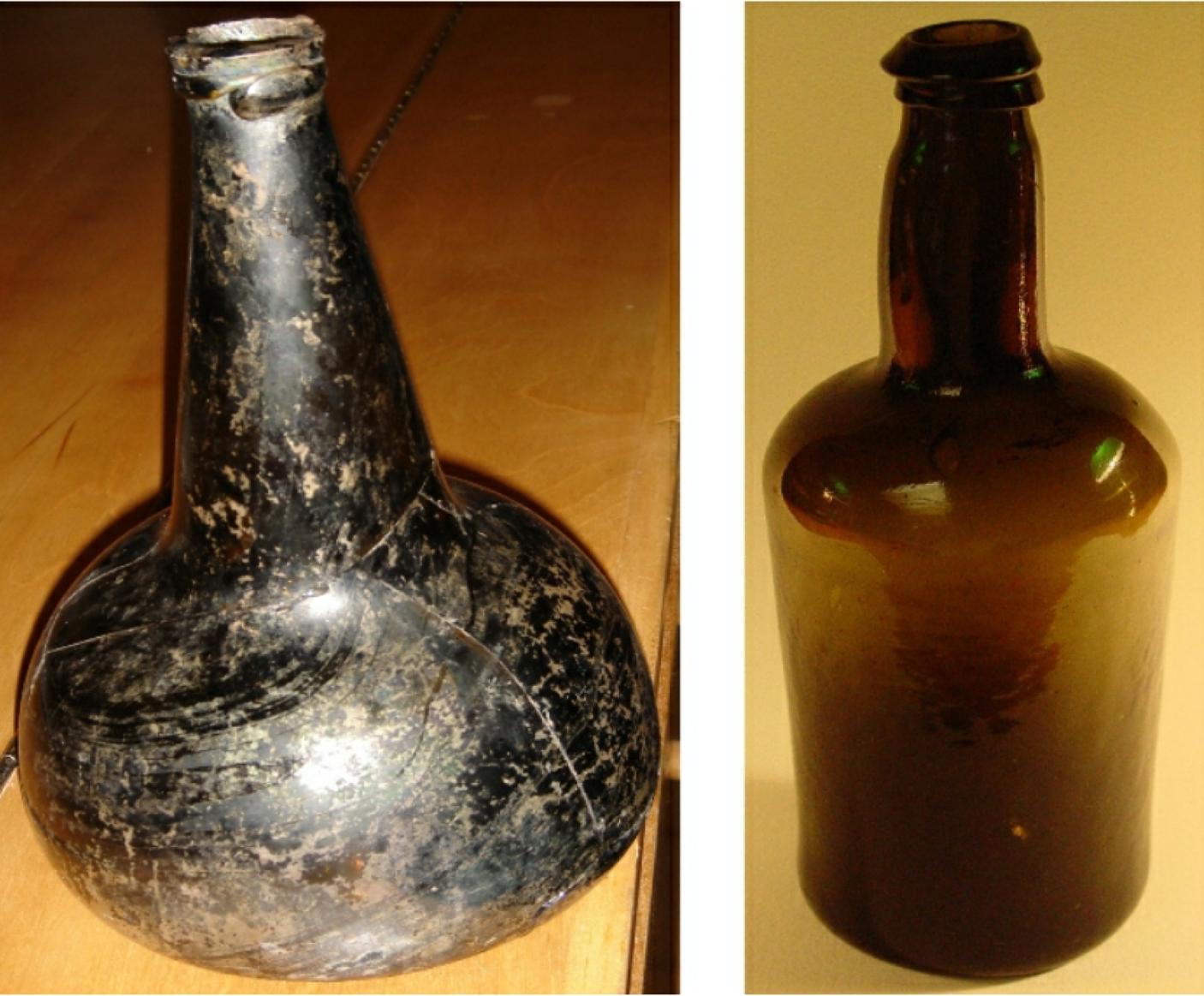
The early bottles were mouth-blown, a slow and expensive process, and then moulded. Whenever possible, empty bottles were collected and re-used. At first, cloth, leather, with or without wax were used to seal a bottle, but these were soon replaced with corks, a material used for sealing amphorae since Etruscan times. The corks were tapered in order to adjust to the variations in the opening bottles. Glass bottles were first used for ports, bubbly champagnes, and other specialty wines. Packaging had to be done carefully in order to minimize breakage. In addition to the cost of bottles, corks, labour, and packaging, the wine had to be free of impurities. This implied racking the barrels and fining the wine with egg whites, isinglass, or gelatin. Bottling properly fined wines allowed them to age gracefully. It also helped minimize counterfeiting and manipulations by merchants, who commonly blended wines from different vintage years, regions, and cultivars in order to ‘improve’ some wines and increase the volume of their best-selling wines. Wine labels were soon printed. But the overwhelming majority of wines were still sold by the barrel. For example, the first documented (Portes Reference Portes2014) sale of Châteauneuf-du-Pape wine in bottles involved just 150 bottles of Château La Nerthe in 1782, the equivalent of maybe half a barrel.
By the late eighteenth century, bottles had become cheaper and were increasingly used by wine producers. Around 1880, Claude Boucher invented a semi-automatic glass-blowing machine that used compressed air to produce thousands of bottles per day. The first fully automatic and large-scale bottle-making machine was invented by Michael J. Owens in the early 1900s. The ‘Owens machines’ sucked a precise amount of molten glass from a furnace into a mould. His ‘10-arms’ model (1910) produced (Twede Reference Twede2012) an amazing 23 pint bottles per minute and he designed a ‘15-arms’ machine in 1917. The price of bottles plummeted. Many local bottle producers went bankrupt.
Distillation and Distilled Wines
Distillation is a very ancient technique (Forbes Reference Forbes1948). It probably began by simply evaporating water to concentrate less volatile components (such as perfume). Starting in the mid-eighth century under the Abbasid caliphs in Baghdad (the famed House of Wisdom), scholars at Islamic centres of knowledge greatly enhanced our understanding of medicine, astronomy, mathematics, and chemistry – or rather its ancestor, alchemy – long before any hint of a European Renaissance. Their studies included distillation (Forbes Reference Forbes1948; Cockx et al. Reference Cockx, Meloni and Swinnen2020) as a tool to find ‘fundamental’ substances.
Arab and Persian scholars such as Ja’far Al Sâdiq (702–764), Zakariyyā Râzî (854–925), Al-Zahrawi (Albucassis, 936–1031), Ibn Sina (Avicenna, 980–1037), or Ibn Rushd (Averroes, 1126–1198) improved the art of distillation and designed alembics (al-anbiq). ‘Anbiq’ was the long tube in which vapours condense by cooling, but the word later referred to the entire apparatus: cucurbit (the pot containing the liquid to be distilled), cap (placed over the cucurbit to gather the vapours), and anbiq. These scholars distilled many liquids, from rose water to crude oil, sometimes performing several successive distillations to achieve higher purity. Originally, al-kohl referred to a fine powder and later to any substance reduced by distillation.
The distillation of wine or other fermented liquids requires separating a mix of ethanol (evaporates at 78oC) and water (evaporates at 100oC). If the temperature is maintained somewhere in-between, more ethanol than water evaporates. The vapours condensate in the anbiq, and that condensate contains a higher concentration of ethanol than the original liquid. The process can be repeated to achieve ever higher concentrations of ethanol. The maximum that can be achieved by distillation is about 96%.
Al-Kindi was the first (Cockx et al. Reference Cockx, Meloni and Swinnen2020) to discuss the distillation of (date-palm) wine in his Book of the Chemistry of Perfume and Distillations (ca. 866). He likely only produced very small amounts of alcohol as the cooling technology was in its infancy. Progress was achieved (Needham et al. Reference Needham, Ping-Yu, Gwei-Djen and Sivin1980; Plouvier Reference Plouvier2008) in Cordoba by Albucassis, who distilled larger volumes of (grape) wine.
The Arab and Persian writings on the topic were translated into Latin in the mid-twelfth century at the medical school in Salerno (southern Italy) by Matthaeus Platearius, Magister Salernus, and Bartholomew of Salerno. References to distilled alcohol are found in the writings of Salernus, who referred to it as aqua ardens. It was also called aqua vitae (water of life, eau-de-vie in French) because high-purity alcohol was the most powerful antiseptic known and its use to clean infected wounds saved many lives. It was later referred to as quintessence (the fifth element), something fundamental enough to rival earth, water, air, and fire.
The technology spread fast, and the distillation of (often red) wine was soon done by monks, pharmacists, vintners, and innkeepers in much of Europe. The production of ‘burnt wine’ (gebrannter wein, branwin, later brandewijn in Dutch hence ‘brandy’) was regulated in Nürnberg in the late thirteenth century. The production and medical use of alcohol further spread during the Black Plague, but the production was limited to the local demand. There was simply no market for large volumes of spirits. Further, one suspects that the spirits produced at the time contained too much methanol, making them unfit to drink.
The commercial distillation for human consumption began in the early sixteenth century. The first evidence of shipments of spirits in the Bordeaux notary registers involves one shipment to Picardie (1513) and a few to the Netherlands (1515) and Ireland (1517). Brumont (Reference Brumont2011, Reference Brumont2014) researched 4000 ship cargos between 1504 and 1570 and found that only six of the shipments included spirits, all in small quantities and most of them destined for Ireland. The first tolls paid for spirits at Øresund (the entrance to the Baltic) were recorded in 1562. Jehan Serazin is recorded as merchant and ‘faizeur d’eau-de-vie’ in the Charente region in 1571.
At the time, the commercial distillation of wine was promoted (Dion Reference Dion2010, Brumont Reference Brumont2011, Reference Brumont2014) by the Dutch. Unsold wines were distilled because spirits brought a higher profit than vinegar. They were shipped to northern Europe and Baltic countries. They were also used to strengthen weak wines which would then better survive transport by sea. Other fermented liquids were soon distilled as well, leading to the production of specialty spirits and liqueurs: Calvados, Benedictine, Chartreuse, and so on.
In the early seventeenth century, the demand for spirits, and therefore the production, increased. Around 1620, spirits were produced (Brumont Reference Brumont2014) in the Haut Pays in Bordeaux for the first time. While the wines from the Haut Pays could not be sold to Bordeaux merchants before late fall, spirits could reach the market at any time. Almost 90% of the shipments went to the Netherlands.Footnote p The Grande Coutume registers of Bayonne for the years 1628–1629 show 7307 tuns of wine and 15 pièces of spirits (the pièce was 240 litres at the time, but grew to 500 litres around 1660). In 1631, 46,000 tuns of wine and 2200 pièces of spirits were shipped from Nantes. That same year, 245 alembics were unloaded in Nantes, 235 of which came from the Netherlands. The production and the volume of exports grew fast. The Øresund toll at the entrance to the Baltic showed 800 barrels of spirits in 1650, 1400 in 1680, and 2700 in 1700. Similar increases were recorded in Ireland. Distilled spirits also made their way to Spain, England, Germany, and so on.
Most of the early distilleries were run by the Dutch and the Flemish. At first, only low-quality and unsold wines were distilled, but some regions began to specialize in distillation, such as Cognac (Faith Reference Faith2004; Jarrard Reference Jarrard2005), a city on the river Charente known for its salt trade. Starting around 1630, the price of ‘French brandies’ was already replaced by prices for spirits from specific regions: Nantes, Bordeaux, Cognac, etc. The first Cognac house, Augiers, was established in 1643. During the tumultuous internal conflicts known as the Fronde (1648–1653), Cognac sided with the young Louis XIV against the powerful La Rochefoucauld. This earned the city 20 years of tax exemption. It was also allowed to hold four fairs per year.
Further south, Armagnac produced wine, but the trade was difficult because of the costs associated with overland transport. The barrels had to get to the Garonne (to reach Bordeaux) or the Adour (to reach Bayonne). Distillation reduced the volume by up to 80%, greatly facilitating transport. The first purchases of boilers in Armagnac occurred around 1650. Later, Picpout or Picpoul (the local name for the Folle Blanche) was planted to provide wine for distillation.
Following the great frost of 1709, Cognac switched from producing table wines (red Pinot Noir and white Colombard) to more acidic, light white wines better suited for distillation (especially Folle Blanche). The region had extensive forests providing wood for the boilers. Many forests (bois) have since been replaced by vineyards, but today’s distinction between fins bois, bons bois, and bois ordinaires still refers to these old growths. The names of the best regions in Cognac (Grande- and Petite-Champagne) are related to the chalk content in the soil, reminiscent of that in Champagne. These ‘Grands Crus’ were introduced in the 1854 map of E. Lacroix.
The upscale Paris market gained importance. Around 1720, Cognac began to produce aged spirits (Cullen Reference Cullen1998): the first modern ‘cognac’. In 1724, Augiers sold mostly ‘white’ spirits (no ageing) but also produced some barrel-aged Cognac, called ‘rousse’ because of its reddish colour. A few decades later, Armagnac also began to age a small amount of its spirits.
In the late eighteenth century, competitions combined with scientific and technological breakthroughs further encouraged the production of quality spirits, at least for a while. But the barrel-aging of spirits was no longer done in Armagnac at the time of the French Revolution. The Napoleonic Wars generated a large demand of inexpensive (white) spirits for the troops. The production of high-quality, aged spirits resumed after Napoleon was sent into his final exile in Santa Helena. The massive eruption of Mount Tambora occurred the same year. It was followed by the ‘year without summer’ (1816) during which agricultural production plummeted all over the world. But then, the production of aged Cognac and Armagnac re-started and steadily grew for four decades. Cognac’s ‘golden age’ refers to that period. And then, in the mid-1850s, the first of many disasters struck the region: powdery mildew (oïdium), followed by downy mildew (mildiou) and phylloxera.
The first local bottle factory, established in 1860, made blown glass. The first bottle labels were printed at about that time (Martell has an 1848 bottle). By 1890, virtually all Cognac was shipped in bottles (Jarrard Reference Jarrard2005).
Bordeaux
Dutch and English Merchants
Following the end of the Hundred Years’ war (1453), the Bordeaux wines were as heavily taxed in England (their principal destination) as the other French wines. The result was a long period of slow sales, which lasted until the Dutch arrived. The NetherlandsFootnote p were created in 1581 as the seven northern provinces of the Low Countries gained independence from Spain. Having few natural resources, they aggressively turned to trade and developed a large and well organized fleet. They would become one of the world’s major players with the powerful Dutch East-India Company.
Along the Atlantic coast of Europe, they quickly dominated the wine trade. During the Thirty Years’ War (1618–1648), the Dutch were allied with the French and had open access to Bordeaux, replacing (Dion Reference Dion2010) many local English merchants. But the Dutch were interested in large volumes of inexpensive wines. They needed them to withstand sea travel without turning bad because the wines would be shipped all around the world. They wanted sweet white wines, e.g. from Barsac and Bergerac, which travel well. They also purchased large volumes of light, dry, and more acidic white wines (e.g. from Entre-Deux-Mers) for distillation. Distilled wines were sold as spirits or used to fortify weaker wines. Finally, they wanted deep, strong red wines of the type produced in the Palus or Cahors (‘black wines’) and inexpensive red wines such as those from Saint Emilion which sold at about 500 Francs per tun. In 1700, Bordeaux exported (Lachiver Reference Lachiver1988) some 52,000 tuns of wine, of which 33,200 went to the Netherlands and just 3200 to Scotland and Ireland for the English market.
The high-end red wines from Médoc and Graves cost well over 2000 Francs per tun. They were purchased by English merchants for sale in England. The English thirst for the top Bordeaux wines was insatiable. Neither war, nor piracy, nor taxes could quench it. In 1588, the English crown increased (Jones Reference Jones2012) the tax on wine by a factor of 18, but refused to raise the official retail price: an honest merchant would have to pay more for wine than he could get by selling it. Smuggling became the only option. From 1701 to 1714, France and England were on opposite sides during the War of Spanish Succession. The trade between the two countries officially halted and shipping in the English Channel became risky. Yet large quantities of expensive Bordeaux wines could be purchased at auction in England, possibly (Lachiver Reference Lachiver1988; Johnson Reference Johnson1989) with the help of privateers arranging the ‘theft’ of shipments of wine with producers in Bordeaux and/or English merchants. In the third edition of his Topographie (1832), Jullien (Reference Jullien1985) stated that Paris never saw any first-growth wines from Bordeaux, and rarely a second growth: all of them were shipped to England.
In the seventeenth century, the Dutch blended, fortified, added sugar, and/or flavoured wines on an unprecedented scale. This led to misrepresentations of the true origin of the wines they were selling (Phillips Reference Phillips2016). But they were by far the largest buyers of wines, and there was not much anybody could do about it. All the merchants purchased wines in barrels and blended them to their taste, often with wines from other regions or different vintage years. But the Dutch did this on a very large scale. During his wine travels, Thomas Jefferson always ordered his wines in bottles and directly from the producer (Gabler Reference Gabler1995; Jefferson Reference Jefferson1784): ‘The vigneron never adulterates his wine […] but once a wine has been in a merchant’s hands, it never comes out unmixed. This being the basis of their trade, no degree of honesty, of personal friendship, or of kindred prevents it’ (Gabler Reference Gabler1995; from Jefferson Reference Jefferson1784). In 1851, the journalist Cyrus Redding wrote (Phillips Reference Phillips2016) that Bordeaux exports exceeded the production by about a third, because merchants blended other wines into them.
At the end of the sixteenth century, the French requested help from the Dutch to drain the marches in the Médoc and the swampy areas around Bordeaux. Within a few years, Conrad Gaussen started draining the marshes. This involved building dikes, pumping water off the land, planting reeds to help the remaining water evaporate, and digging channels to improve drainage. By the mid 1630s, large areas were protected against tides and ready for viticulture. The vines were planted in rows rather than randomly, as was common at the time. The Dutch also built roads to help transport wine.
They promoted using sulphur to disinfect used wine barrels. Older barrels almost always contained traces of moulds and bacteria, which quickly spoiled the new wine. The use of sulphur for that purpose was allowed (Johnson Reference Johnson1989) in Prussia since 1487. At first, the process involved burning wood chips dipped in sulphur and later sulphur wicks (mèches soufrées, Figure 4). These were commonly used in the late eighteenth and nineteenth centuries.
A box of sulphur wicks (photo: SKE).

France went to war against the Dutch from 1672 to 1678, and then the trade resumed. But the 1685 Revocation of the Edict of Nantes marked the end of religious tolerance in France: the (protestant) Dutch were no longer welcome in (catholic) France.
In 1669, Colbert (Minister of State of Louis XIV) noted (Dion Reference Dion2010) that the total European merchant fleet consisted of about 20,000 ships, of which about 75% were Dutch, 20% English, and only 3% French. In response, Colbert comprehensively re-organized the way forests were administered. He was particularly interested in oak forests to provide the timber to expand the French navy. In 1670, he ordered the planting of acorns in the Tronçais (central France). These oak trees and those from the Limousin still provide oak for wine barrels today.
Estates and Châteaux
Since medieval times, the Bordeaux wines were lumped together as (red or white) ‘wine of Aquitaine’ or ‘clarets’. This began to change in the sixteenth century as the higher quality of wines from specific estates was recognized. The earliest mentions of Haut Brion (Haut-Brion) are found in the local departmental archives. In 1521, Jean de Monque had to deliver each year ‘four pipes of wine’ (∼1,800 litres) ‘… from the place known as Aubrion…’ in repayment of a loan. In 1526, Esclarmonde de Lagarde sold to Pierre Gassies and Pierre Mulle ‘two barrels of clairet or red wine from the vineyard of Haulbrion in Graves’. The earliest mention of this estate in England is in the cellar book of Charles II: ‘the Butler and the Cellar of the Lord King in the year of our Lord 1660–1661. Paid Joseph Batailhe for 169 Bls 1 parcel wine of Hobriono…’ Its price was about twice the cost of other wines from Graves. And then there is Samuel Pepys’ often quoted 1663 comment as he went to the ‘Royal Oak Tavern in Lumbard Street and there drank a sort of French wine called Ho Bryan, that hath a good and most particular taste that I never met with.’
The Pontac family owned Haut Brion since the mid-sixteenth century. Shortly after the 1666 London fire, Arnaud de Pontac (first president of the Parliament of Bordeaux) sent his son François-Auguste to London to open (Lachiver Reference Lachiver1988) Pontac’s Head (Arnaud’s portrait hang above the entrance), a tavern on Abchurch Lane that sold specialty foods and his wine. It became (Ludington Reference Ludington2013) the meeting place of the aristocracy. The Royal Society held dinners there until 1746. Pontac’s Head closed in 1780.
The recognition of Haut Brion was followed (Lachiver Reference Lachiver1988) by Margaux, Lafite, and Latour. During the war of Spanish Succession, smuggling was the only way to import Bordeaux wines into England, and seized barrels were advertised in the London Gazette for auction (Ludington Reference Ludington2013): ‘Margose’ (Margaux) was mentioned in 1705, Lafite and Latour in 1707. The wines were bottled in London and their vintage year first appeared on the labels in 1711. These first estate wines fetched amazingly high prices: Haut Brion reached a stunning 2200 pounds per tun in 1722, today: about half a million US dollars! This is when the less famous wines (d’Issan, Cantenac, etc.) are first mentioned. These Bordeaux estates planted high-quality cultivars: Cabernet Sauvignon, Cabernet Franc, Malbec, and Petit Verdot.
With so much money flowing in, winemakers invested in the latest winemaking technology to maximize the quality of their wines: selecting the grapes from old vines, separating red from white grapes to achieve deeper and stronger reds, disinfecting barrels with sulphur and then cleaning them with white wine, topping off barrels to compensate for evaporation, fining the wine in barrels with egg whites in the fall following the harvest (no wine was filtered until the nineteenth century), maturing the wine in new barrels for a couple of years, etc. By the late nineteenth century, a small fraction of wines was aged in bottles and their vintage year recorded (Lebeau Reference Lebeau2001). The name of the chateau and the vintage year were sometimes printed on the cork and the label. The wealthy owners also used their new money to build spectacular châteaux (Johnson Reference Johnson1989).
The Birth of Noble-Rot Wines in Sauternes
The noble rot, botritis cinerea (‘ash-grapes’), is a fungus (Olney Reference Olney1958) that attacks the skin of thick-skinned berries. At first, they develop brown dots, turn brown-reddish, then dark-red (Figure 5). Finally, they shrivel and appear to be covered with a thin layer of ashes. During that evolution, the juice in the berries loses about half its water and three-quarters of its tartaric acid. The secondary acids (malic and citric) are also reduced. A potential harvest of some 40 hl/ha may drop to 15 or less. Today, severe pruning reduces the yield to six to eight clusters of grapes per vine. At Yquem or Coutet, each vine produces just enough clusters to make one to three glasses of wine.
A (white) Sémillon cluster attacked by the noble rot, almost ready for picking (courtesy: Philippe Baly, Château Cloutet).
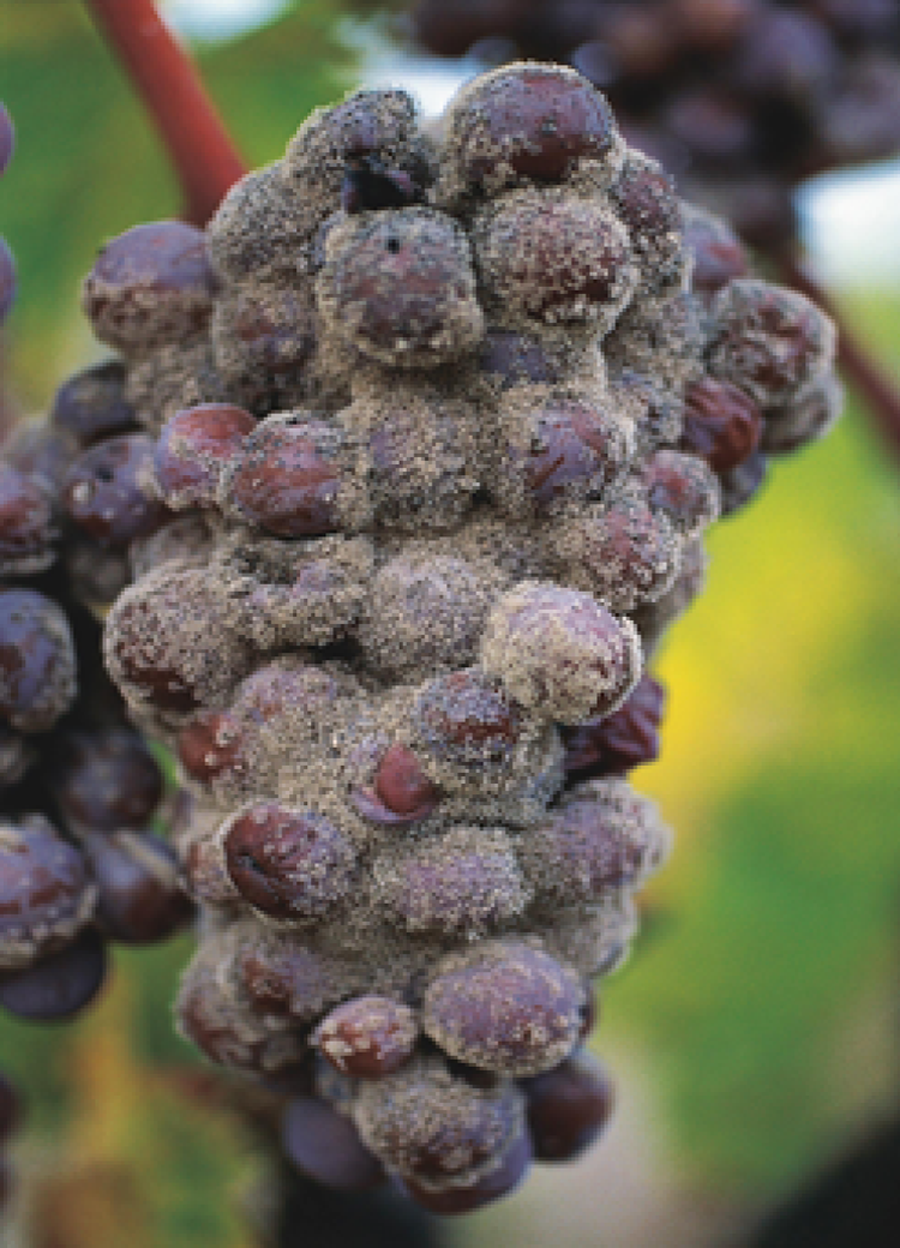
A special yeast, torulopsis bacillaris, is involved in the onset of the fermentation of noble-rot wines. Very mouldy grapes produce the antibiotic botryticin, which slows down the fermentation and can even kill the yeast. The higher the sugar concentration in the must, the higher the concentration of botryticin and the sooner the fermentation stops. Ironically, musts containing higher concentrations of sugar end up with lower levels of alcohol.
The noble-rot cultivars are the Sémillon (∼80% but sometimes 100%), Sauvignon Blanc (20% or less), and Muscadelle (5 to 0%). Botrytis cinerea easily attacks the Sémillon and Muscadelle, but the Sauvignon Blanc is more resistant to it. Under consistently rainy conditions, or when the same fungus attacks before the berries are mature, it becomes the grey rot and ruins the crop. The noble rot can grow on many cultivars: you need healthy white berries with a thick skin. In the region of Tokaj (eastern Hungary), the Furmint produces shrivelled grapes (aszú berries) used in the famous tokaji aszú. Tokaj and Bordeaux (Sauternes, Barsac, Cérons, Cadillac, Loupiac, Sainte-Croix-du-Mont) are the two wine regions where Botrytis cinerea is systematically used to produce noble-rot wines.
There are legends (in Sauternes as well as Tokaj) about some hero producing a fabulous wine after harvesting grapes accidentally left to rot in a vineyard. Soon after, everybody makes noble-rot wines and sings the praises of the hero. The reality involves years of controversy.
Throughout the middle-ages and until the seventeenth century, it was common to harvest grapes as soon as they were mature so that wine could be made and sold. Waiting for grapes to over-mature was done in Greek and Roman times but then forgotten. Why take a chance that bad weather will ruin the harvest or that birds or foxes will feed on the sweet berries? Further, leaving the clusters on the vine too long results in a smaller harvest and can even ruin it. In Bordeaux, most vineyard owners hired tenants to harvest, and they were paid with one-third to one-half of the wine produced. These tenants wanted to harvest as soon as the berries were ready in order to secure their share and maximize the volume of wine produced. Delaying the harvest was an unnecessary risk. Letting grapes rot in the field was unthinkable.
However, by the seventeenth century, the demand for expensive high-quality wines had grown, especially in England and Paris. The owners of high-end estates had an incentive to produce wines that would fetch high prices and increase their reputation. Somewhere in Sauternes, Barsac, or Bommes, someone tasted a few ‘rotten’ grapes in his vineyards and realized how exceptional they were. When and how this happened is not known.
What is known (Beauroy Reference Beauroy1976; Brumont Reference Brumont1999) is that, starting in the mid-1600s, a few tenants complained about land-owners intentionally delaying the grape harvest by several weeks (relative to neighbouring estates), thus threatening the entire harvest and their own livelihood. In some cases, neighbours became alarmed that a crop was rotting in the vineyard, threatening the reputation of the wines in the entire region. On 6 October 1657, such a complaint (Archives 1657) was made by Jean Douence, a merchant in Barsac, against Francois Raymond de la Roque who had yet to harvest, well past the expected date. Jean was supposed to get one-third of the harvest. On 14 October 1658, Jeanne de Galatheau complained (Archives 1658) that one of her tenants in Barsac harvested 9 or 10 days later than everyone else. On 4 October 1666, a similar complaint (Archives 1666) was made against Francois de Sauvage at Yquem. The tenants were concerned that further delaying the harvest would substantially reduce the volume of wine produced.
Until the end of the seventeenth century, such very late harvests occurred occasionally in selected properties. But in the early 1700s, the practice had become much more widespread in Sauternes. Further, successive harvests in the same vineyard (selections of perfect clusters or even grains, known as triage) were becoming the norm (Bidet Reference Bidet1759). In 1714, Chateau Filhot harvested in four ‘tries’. In 1716, Lamoignon de Courson (intendant de Guyenne) noted that ‘one selects individual clusters, picking only those that are near-rotten… harvest lasts sometimes until December’. In 1799, Filhot spread the vintage from 3 October to 15 November.
These late-harvest wines were known to greatly improve with age. In 1759, the agronome Nicolas Bidet noted: ‘ce vin, gardé 20 à 30 ans, devient égal ou superieur aux vins d’Espagne, de Canaries, et de Malaga, et on les appelles les vins de l’arrière-saison’. The luscious noble-rot wines fetched amazingly high prices. A tun (900-litre barrel) of the famous 1874 Yquem was purchased by the Grand Duke Konstantin (a grandson of tsar Nicolas I) for a staggering 20,000 gold francs, many times the price of a tun of high-quality Bordeaux wine.
Thus, the first noble-rot harvests in France took place in the mid-1600s, leading to a systematic triage process in the early 1700s. Note that in the region of Tokaj, the earliest mention (László Reference László2000) of noble-rot wines came from a will dated 1571, in which an aszú vineyard is mentioned without additional explanation, suggesting that people knew well what this was about at that time.
The 1855 Classification (Markham Reference Markham1998)
The earliest ‘classification’ in Bordeaux dates back to a 1647 document which lists wines by region for taxation purposes. The distinctions between individual estates appeared a few decades later. By the late seventeenth century, several brokerage houses (négociant) were active in Bordeaux: Beyerman, Lawton, Johnston, Cruse, Schÿler, Kressman, Barton, etc. They played an important role as intermediaries between producers and merchants. They constantly scouted the region, visited estates, tasted their wines year after year, kept detailed notes, and knew which wines were produced and at what price. They were in the best position to match the needs of a merchant with specific products.
Over the years, the brokers collected tasting notes and prices for all the estates in the region, commune by commune. One of them was Abraham Lawton. He came to Bordeaux from Cork with the goal of shipping wines to Ireland (and then England, bypassing the heavy English import taxes on French wines). He and (after 1742) his son Guillaume accumulated precious tasting notes with commentaries, and established their own ‘classification’ of the various estates. Other brokers maintained similar documentation. The top four red wines in everybody’s notes were Margaux, Lafite, Latour, and Haut Brion: the ‘1st growths’. Haut Brion was always listed last because it is in Graves, not Médoc. Below these four, the wines were arranged in groups, the best of which always included Mouton. For Lawton, about 65 wines were good enough to be ranked.
Information on wine production and prices was also sought by the intendant of Guyenne for taxation. A document produced in the 1740s by the Bordeaux chamber of commerce was entitled: ‘State of the parishes from which are made the wines of the district of Bordeaux and their different prices’. At a later date, the wines were grouped by communes and the word ‘cru’ (growth) was attached to various properties. A 1776 document was entitled ‘First known classification of the wines in Guienne, executed in 1776 according to the price they had then, on the orders of Mr. Dupre de Saint Maur, intendant at this epoch’. In 1786, a trade representative of the crown of England produced a classification of the high-end Bordeaux wines aimed at the English market.
When Jefferson (Gabler Reference Gabler1995) made his tour of French wine regions, rankings of the best Bordeaux wines existed for over a century. Jefferson was internationally known as a wine expert and his tasting notes prove that this reputation was deserved. He arrived in Bordeaux in his horse-drawn carriage on 25 May and left on 29 May 1787: he only spent three full days in Bordeaux. He visited Haut-Brion in Pessac, but did not have much time to visit other properties. Further, in three days, even the most dedicated drinker could only taste a small fraction of the hundreds of wines produced in the region, especially since Jefferson liked to compare different vintage years. It is most likely that some Bordeaux broker(s) and/or merchant(s) suggested (and provided) a selection of wines for him to taste. In the end, Jefferson produced his ranking of 16 red and a few white wines: his ‘first’ wines were Margau (Margaux), La Tour de Ségur (Latour), La Fîte (Lafite), and Hautbrion (Haut Brion); second were Rozan (Rausan-Ségla), Dabbadie or Lionville (Léoville-Las Cases, -Poyferré, -Barton), La Rose (Gruaud-Larose), Quirouen (Kirwan), and Dufort (Dufort-Vivens); and third were Calons (Calon-Ségur), Mouton (Mouton Rothschild), Gassie (Rauzan Gassie), Arboate (Lagrange), Pontette (Pontet Canet), de Terme (Marquis de Terme), and Candale (ch d’Issan). He also praised Yquem. Jefferson made no mention of St Émilion or Pomerol wines: they were shipped from Libourne, not Bordeaux.
In the first edition of his Topographie (1816), Jullien (Reference Jullien1985) published his own ranking: four ‘superior’ (clos de Lafitte, clos de Latour, clos de Château-Margaux, and clos de Haut-Brion) and seven ‘excellent’ red wines. Within a few years, other authors published unofficial classifications of some of the wines from the region: Henderson (1824), Frank (1824 and 1853), Paguierre (1828), as well as Exchaw in an Appendix to an 1883 report of the Chamber of Commerce of Bordeaux. The latter ranking was based on the average prices fetched by various wines over many years. The top four wines were always Margaux, Lafite, Latour, and Haut Brion. Thus, by the mid-nineteenth century, numerous informal rankings and classifications of the best Bordeaux wines had been around for a long time.
Following the 1851 International Exhibition at the Crystal Palace in London, Louis Napoleon decided that France should host an even bigger event to showcase the products France had to offer: the 1855 Universal Exposition in Paris. Since Champagne and Burgundy intended to exhibit some of their wines, the chamber of commerce of Bordeaux decided to do it as well. They needed a large map showing the location of the best wine estates, but it was not clear which ones to include. So, the chamber of commerce asked the union of brokers to spell this out, but with a very short deadline: two weeks. The Tasted & Lawton firm (and other brokers) had data for hundreds of properties, some of them going back to 1775. This was used to produce the requested document on 18 April 1855. There was no tasting, no estate visits, and no consultation with wine producers. Everybody assumed that this would be just one more informal classification. The 57 red wines listed were divided into five growths ranked by their average price per tun. The first growths (Lafite, Margaux, Latour, Haut Brion) fetched over 3000 francs per tun; the second growths (Mouton, Rauza, Leoville, etc.) 2100 to 2400; the third growths 1800 to 2100; and so on. The 21 white wines were divided into three growths, with Yquem in its own ‘first superior’ category, followed by nine ‘first’ and 11 ‘second’. However, not all the estates had a history dating back to 1775. Further, the prices fetched by some wines had seen recent upswings because of investments resulting in increases in quality. This was the case of Mouton, which had recently been selling at prices very close to those of Lafite. Simply averaging the prices over a long period of time did not reflect how dynamic the market really was.
The map and the classification made their way to Paris. By the end of the exposition, the classification had become much more authoritative than anyone initially expected: an official ranking. When the news reached the Bordeaux wine producers, there were numerous unhappy owners and several lawsuits. In September, Cantemerle was added to the list as a fifth growth. In 1869, a Bordeaux court ruled that ‘there is nothing official about the [1855] classification’. Yet, it remained authoritative in people’s imagination. Over time, some châteaux started to mention their 1855 ranking on their labels (Margaux in 1917, Haut Brion in 1926). In 1949, the French legislature regulated the ‘grands crus’ of Bordeaux with reference to the 1855 classification. Thus, what started as ‘just one more informal classification’ became an accepted fact.
One unhappy owner was Philippe de Rothschild (Littlewood Reference Littlewood1984) at Mouton. His great-grand-father Nathaniel had purchased the property in 1853 and Philippe became its manager in 1921. He fought to elevate Mouton into the first growth category. In 1959, he appealed to the Syndicat des Crus Classés (61 wine growers from Médoc) and won by two votes. Then, he argued his case in Paris at the Institut National des Appellations d’Origine (INAO): a committee of 80 French wine growers. In 1960, the INAO sent a revised classification to the minister of Agriculture: the only change was a new list of first growths: Lafite, Latour, Margaux, Mouton, and Haut Brion. The official decree was signed by Chirac in 1973. Baron Philippe celebrated with a Jeroboam of 1924 Mouton, and changed its motto from Premier ne puis, Second ne daigne, Mouton suis (First I cannot be, Second I do not deign, I am Mouton) to Premier je suis, Second je fus, Mouton ne change (First I am, Second I were, Mouton changes not).
Burgundy
The largest expansion of vineyards in Burgundy occurred during the twelfth-century monastic revolution. The nobility also increased its wine holdings. The quality of some of the wines produced in the region was soon recognized beyond its borders. These wines were favourites at the court of the popes in Avignon, despite their high cost. At that time, most of the wines were purchased directly from the producers by papal envoys. The Paris market was still small because the population of Paris was small.
In the early days, the land had to be cleared to plant new vineyards (Garcia Reference Garcia2009). This meant cutting trees from the forested hills of Burgundy. These hills would become some of the most precious viticultural land. After cutting the trees, many stones had to be removed as well. They were piled up at the edge of the property, not just to mark a boundary but also to make it more difficult for wild animals to venture into it. Further, these piles of stones helped prevent erosion: the soil that accumulated there after a rainfall would be regularly carried uphill back to the vineyard. Over time, the piles of stones became walls and the enclosed vineyard was called a ‘clos’, the first of which was the Clos de Vougeot. Each ‘clos’ became a terroir,Footnote j often enhanced by its specific strain of yeast. Indeed, wine makers often carried the residue from the wine press (marc) back to its original vineyard, thus causing the same strain of yeast to dominate. Over time, the best of these vineyards became recognized and the generic ‘wines of Beaune’ or of a particular abbey became the ‘wine of Vougeot’ or other specific vineyard. This is the origin of the ‘climats’ and the future classifications based on geographical areas rather than cultivars or producers.
In the seventeenth century, the wine trade had grown (especially in Paris). Just as in Bordeaux, brokers (négociants) started to play an important role (Brennan Reference Brennan1977). They knew the producers and the quality and price of wines from each climat; they knew the demand for specific wines; they knew the retailers. The brokers were ideally placed to take advantage of the market and occasionally became retailers themselves. This wine trade operated on credit: the brokers purchased wine on credit and sold it to retailers on credit. The brokers got paid after the merchant sold the wine, and only then would the producers receive their dues.
In order to get his share of the trade in taxes, the king appointed royal wine brokers (Phillips Reference Phillips2016) in Burgundy and Champagne and heavily fined the unofficial ones. Cities paid considerable amounts of money for the privilege of using their own brokers, which then had to pay a tax. Of the total wine tax collected through brokers, one can estimate the volume of wine traded by region in the late seventeenth century: the Loire paid about one-third, Bordeaux about one quarter, Burgundy about one-sixth, and the Paris region about one tenth. The rest came from Champagne, Côtes du Rhône, and Languedoc. The wines from Alsace were exported to Germany or Switzerland. The Jura was too isolated to compete with other French regions.
In the eighteenth century, many vineyards were individually recognized: Vougeot, Montrachet, Volnay, etc. These wines fetched higher prices, sometimes as much as five times higher than the lesser ones (Lachiver Reference Lachiver1988). The vineyards themselves became very expensive. The tiny (1.8 ha) vineyard known today as Romanée-Conti (Olney Reference Olney1991) was acquired through marriage by the Croonembourg family in the seventeenth century. They named it ‘La Romanée’. In 1760, André de Croonembourg sold it to Louis François I de Bourbon, Prince of Conti, for a staggering 92,400 livres. The prince never sold any of its wine: he kept it for his own use and for gifts.
In the late eighteenth century, the best Burgundy wines were systematically bottled and aged. Their labels often mentioned (Lachiver Reference Lachiver1988) ‘grand cru’ or ‘1er cru’, even though such appellations were not officially defined. In March 1787, Thomas Jefferson (Gabler Reference Gabler1995; Jefferson Reference Jefferson1784) skipped Chablis (its wines had yet to be recognized) but spent three days in Burgundy and visited its most famous vineyards: Chambertin, Vougeot, Romanée, Beaune, Pommard, Volnay, Meursault, Montrachet, and so on. He tasted a range of wines, often comparing different vintage years. His favourite reds were Chambertin and Vougeot. In white, it was Montrachet (today, several vineyards include this name). Jefferson duly noted the remarkable age of the vines themselves: many were over 100 years old. In these pre-phylloxera days, the vines were self-rooted and propagated by ‘provinage’: allow a branch of an old vine to grow roots, thus preserving the original plant. Today, the grapes are grafted on American rootstock and rarely live that long.
And then came the Revolution. The properties of the Church and nobility were confiscated and sold. The Abbey of Cîteaux alone owned more than 2000 ha of land, most of which consisted of well-known vineyards. The sales involved a complicated auction system (Lecat Reference Lecat2001). Some estates were subdivided and sold to dozens of winemakers. Others went to a single buyer. La Romanée, described as ‘the most excellent of all the vineyards of the French Republic’, was sold in 1794 to Nicolas Defer from Paris. He passed away shortly thereafter and the next owner renamed it Romanée-Conti.
In 1855, a classification of Burgundy wines was proposed by Lavalle (Lavalle Reference Lavalle1855). The top red wines were Romanée-Conti, Clos de Vougeot, Chambertin and Chambertin Clos de Bèze, Clos de Tart, Bonnes-Mares, Clos de Lambrays, Corton, Musigny, Richebourg, La Tâche, Romanée St-Vivant, and St-George. Extensive maceration produced deep-red wines (mostly from the Pinot Noir). The top white was Montrachet. The white wines (Chardonnay) were fermented dry, much as they are today (Lachiver Reference Lachiver1988).
Champagne
Throughout the Middle Ages, the wines from the Champagne region were referred to as ‘French’. Locally, a distinction was made between ‘river’ (white wines produced along the Marne around Aÿ) and ‘mountain’ (red wines from the Montagne de Reims). The earliest mention of ‘champagne wines’ dates back to 1493, when the wines produced around Paris were recommended (Lachiver Reference Lachiver1988) over those from Champagne. In Vinetum (1537), Charles Estienne also mentions champagne (rather than river or mountain) wines. But it is only in the early 1600s that ‘champagne wine’ became widely used.
The quality of the wines from Aÿ and the abbey of Hautvillers were recognized (Blin et al. Reference Blin, Clause and Glatre1997) early on. Famous statesmen owned vineyards in the region: Leo X (a Medici pope) in 1513, Thomas Wolsey (Lord Chancellor of Henry VIII of England) in 1518, or Henry IV of France. Until the sixteenth century, two cultivars dominated: the Gouais (red) in the mountain and the Fromenteau (white) along the river. They were gradually replaced (Blin et al. Reference Blin, Clause and Glatre1997) by cultivars imported from Burgundy: Pinot Noir, Pinot Meunier, and Chardonnay. Indeed, the wines from Beaune were transported (Dion Reference Dion2010; Lachiver Reference Lachiver1988) to Paris or Flanders via Epernay or Reims. As a result, there were stocks of Burgundy wines there. It was common for merchants to complement their Burgundy purchases with wines from Aÿ or Reims (and sometimes blend them). Thus, it is likely (Dion Reference Dion2010) that the Burgundy cultivars arrived in Champagne along this trade route.
Being located quite far north, Champagne often experienced late springs and early falls. As a result, the grapes matured late and, by harvest time, their sugar/acid ratio was less than in Burgundy. This meant more acidic wines with a lower alcohol content. Further, the red wines had a lighter colour than those from Burgundy. It was also common in the fall for temperatures to drop below 7oC before the fermentation was finished: the yeast would go dormant while the wine still contained unfermented sugars. In the spring, when the barrels of wine were shipped, rising temperatures caused the fermentation to restart, and the wines became ‘bubbly’ or ‘foamy’. This was already noted (Demouy Reference Demouy2001) in 1223 by the poet Henry des Andelys in the Bataille des vins. The CO2 gas produced by the secondary fermentation would eventually evaporate from the barrels (sealed bottles preserve the bubbles). The Pinot Noir wines were normally still, but the Chardonnay or ‘grey’ (whites made from Pinot Noir) wines had a tendency to foam. This was undesirable and generally considered to be a sign of low quality.
In England, until the Restoration, the wines from Champagne were lumped together with other ‘French’ wines. There were no direct links between English merchants and producers in Champagne. Soon after Charles II returned to England from his exile in France in 1600, the wines from Champagne were promoted (Simon Reference Simon1905) at his court by the French poet Charles de Saint-Évremond. He had criticized French policies, fled Paris, and was warmly welcomed at the English court. Saint-Évremond liked the accidentally-bubbly wines from Champagne and imported a few barrels, at considerable expense, through third parties in Paris. The barrels arrived around March in London and became bubbly. Within a few decades, Champagne wines were bottled by the merchants upon arrival. These first bubbly champagnes became highly popular among the wealthy elite, even though the wine was unfiltered and cloudy. At the time, bottling was only done for special (expensive) wines. The import of wine in bottles was illegal in England until an exception was made for Champagne in 1800 (the prohibition was fully lifted in 1867). By the end of the seventeenth century, sparkling champagne was widely known in London and drunk in specially-designed thin, elongated glasses (flûtes) to preserve as much bubble as possible. Following the Methuen treaty (1703), the English tax on Portuguese wines was lowered to £7/tun, while the French wines were charged £55. Sparkling champagne became a very expensive wine in England.
In Paris, the wines from Champagne were advertised (Dion Reference Dion2010; Lachiver Reference Lachiver1988) by Nicolas Brûlart (1547–1624), a few years after they became trendy in London. His father had acquired vineyards near Reims following his wedding to the Dame of Sillery. Nicolas Brûlart held various high-level government positions, rising to become Chancellor of France in 1607. He promoted the wines from Champagne (especially his own). This marked the beginning of an intense competition between Burgundy and Champagne as to which wines were healthier (De Salins Reference De Salins1702). Louis XIV drunk champagne until 1694, when his physician Fagon recommended aged Burgundies instead. But in the end, bubbly Champagne won.
Modern sparkling Champagne involves a secondary fermentation in bottles. One adds a carefully measured amount of sweet spirit (liqueur de tirage) to the wine, which initiates the secondary fermentation. This exact process was developed in England by the physician Christopher Merrett (Phillips Reference Phillips2016; Dodds Reference Dodds1954) a few decades before it was re-invented in Champagne. On 17 December 1662, Merrett presented a paper at the Royal Society in which he described how to make sparkling wine (Merret Reference Merret1669): ‘Our wine-coopers of latter times use vast quantities of sugar and melosses [molasses] to all sorts of wines [to make them] brisk and sparkling’. Merrett’s sparkling wines never achieved the international glamour and popularity of the French Champagne and there is no evidence that winemakers in Champagne were aware of this development.
Progress in the quality of Champagne wines and the basic processes that led to today’s champagne method must be credited to a Benedictine monk, Pierre Dom Pérignon (1638–1715, just like Louis XIV) (Dion Reference Dion2010; Lachiver Reference Lachiver1988; Blin et al. Reference Blin, Clause and Glatre1997; Faith Reference Faith1988). From 1668 until his death, he served as the cellarer of the abbey of Hautvillers, which is located across from Epernay on the right bank of the Marne. The abbey was already known for the quality of its wines, but Dom Pérignon went far beyond that. There are many stories and myths surrounding him, such as that he invented sparkling wine or that he was blind, which is unlikely (Bullock et al. Reference Bullock, Wang and Bullock1998).
Dom Pérignon did have a remarkable sense of smell and taste. It was said that, presented with clusters of Pinot Noir, he could tell which of the abbey’s vineyard each of them came from. He mastered the art of ‘assemblage’ – mixing the products of various vineyards, but he did it by mixing the grapes (before pressing) rather than by blending the finished wines as is done today. He preferred the Pinot Noir over other cultivars and used it to make red as well as white wines. The latter were called ‘grey’ rather than ‘white’, as a little colour from the skin always leaked into the wine.Footnote q Dom Pérignon pressed red grapes and removed the skins and stems as quickly as possible in order to minimize that leakage. He promoted picking only those clusters of grapes that were fully mature. Under his rule, multiple harvests in the same vineyard were common. He also kept the barrels clean, fined the wine in barrels, and siphoned wine from one barrel to another to remove excess impurities in the wine. His wines had a much longer lifetime (several years) than those of other winemakers.
Dom Pérignon’s white wines did not improve by aging in barrels. Therefore, as soon as glass-making factories appeared in the region (the local ‘flacons’ had a capacity of 0.93 litres), he bottled his wines, usually in March following the harvest. As the temperature increased, a secondary fermentation would take place in the bottle. He noted that this fermentation was stronger for wines with a lower alcohol content (they had more residual sugar). One problem soon emerged: breakage (the casse). The local glass bottles were not as strong as the English ones and sometimes exploded under the pressure of the CO2 gas generated by the secondary fermentation. Until the end of the seventeenth century, the bottles were stoppered with thin pieces of wood (broquelets). These were later replaced with corks tied first with strings, then with metallic wires. Corks arrived in Champagne with Spanish pilgrims via England (Demouy Reference Demouy2001; Berthet-Bondet Reference Berthet-Bondet2013). The bottles were sealed with wax and stamped to prevent later alterations.
Bottled wines were only sold at the abbey. All wines had to be shipped in barrels until 1728, when a royal decree allowed the transport of champagne wines in baskets of 50 and 100 bottles (Blin et al. Reference Blin, Clause and Glatre1997). But bottling was still rare and expensive, especially when the ‘casse’ was taken into account. It peaked at 80% of the bottles in some years! In Paris, a bottle of champagne was priced at about 60s (sous), twice the price of other high-end wines. By 1810, some 2.5 million bottles were produced, about three-quarters of which were exported, mostly to England via the Netherlands (to avoid the blockade). By 1850, the annual production of bottled wines reached 8 million. It is around 300 million today.
By the eighteenth century, sparkling champagne was popular in the highest classes of society. It was the wine associated with luxury and love. Madame de Pompadour, mistress of Louis XV, is quoted as saying that ‘champagne is the only wine that leaves a woman beautiful after drinking it.
Shortly before the Revolution, Thomas Jefferson commented (Gabler Reference Gabler1995; Jefferson Reference Jefferson1784) on champagne wines: ‘the mousseux or sparkling is dearest because much in demand for exportation but the non-mousseux is most esteemed by the real connoisseur […] They lose an abundance of bottles, from 1/10 to 1/3 […] The best red champagne is made by the Benedictines at Auvillier [Hautvillers]’. Jefferson preferred the red wine over the bubbly, and his comments confirm that the ‘casse’ was still a major issue.
The explosion of a champagne bottle is powerful. Flying glass can cause serious injuries and even kill. Workers wore protective equipment such as iron masks. In the mid-eighteenth century, stronger glass bottles helped reduced the ‘casse’ as did the digging of miles of underground caves where wines could ferment and mature at lower and constant temperatures. Progress was achieved with a better understanding of fermentation and, in 1836, with Jean-Baptiste François’ method to determine the amount of residual sugar in the wine before the secondary fermentation. This allowed winemakers to better estimate how much sugar to add in the liqueur de tirage (dosage). By the late nineteenth century, the ‘casse’ had dropped to just 8%.
The Revolution seriously (but temporarily) disrupted the production and trade of champagne. The vineyards belonging to the Church and the nobility were confiscated and sold. Many wine workers purchased small parcels, the origin of today’s multiplicity of small properties. But the new government liked champagne and so did the leaders of other European countries, even though many of them were at war with France. Champagne merchants and brokers established contacts in major European capitals, including Saint Petersburg. The Napoleonic Wars made it near impossible to export anything French to most of Europe. But after Waterloo (1815), the producers in Champagne started to export on a large scale. New vineyards were planted, new caves were dug, and processes became mechanized.
In 1796, Nicole Ponsardin married Philippe Clicquot. When he died in 1805, she took over the champagne house and is now remembered as the Widow (Veuve) Clicquot. She industrialized the processes and created the first vintage champagne. One of her workers, Aloÿs de Müller, invented the riddling desk (pupitre de remuage) in 1809. This allowed the unwanted deposit associated with the secondary fermentation to be moved to the neck of the bottle, from where it can be expelled. This made it possible to produce clear and impurity-free champagne. In June, 1814, the Veuve Clicquot (Mazzeo Reference Mazzeo2008) guessed that the demand for champagne would be considerable in Russia and took great risks in order to be the first to provide it. Since no shipping license could be obtained, she chartered a ship in Rouen to smuggle some 10,000 bottles of her best champagne – the 1811 vintage – to Königsberg (Kalinigrad). That champagne was much sweeter than can be purchased today, but it was what the Russians wanted. If her shipment were caught, it would be her ruin. But the shipment arrived, the news spread fast, and buyers lined up. Everything was sold in record time at 5.5 francs per bottle, higher than anticipated. She became famous. Her champagne was called ‘Klikolskoe’ in Russia and ‘The Widow’ in England.
She beat the competition, especially the well-connected Jean-Rémy Moët: Napoleon and Joséphine had visited his cellars. His list of visitors (Blin et al. Reference Blin, Clause and Glatre1997) in 1814 included Francis II (Emperor of Austria), Alexander I (Tsar of Russia), Frederick William III (King of Prussia), Prince Metternich, the Duke of Wellington, just to name a few. In 1830, Moët’s non-sparkling white ‘Sillery’ sold in Russia for 7.5 francs a bottle.
In 1858, Louise Pommery, widow of Alexandre-Louis Pommery, took over Pommery & Greno, a producer of still wine. This soon changed to sparkling champagne. Within a decade, she had expanded the winery into a huge 50 ha estate, with 18 km of underground galleries. She promoted wine tourism. In 1874, she created the first champagne with low residual sugar for the English market: the brut ‘Pommery Nature’. By 1885, she was selling champagne in Russia, Poland, Egypt, North and South America.
In 1816, Adelaïde (daughter of Jean-Remy Moët) married Pierre Gabriel Chandon, owner of the Abbaye of Hautvillers and its vineyards. In 1832, the business was renamed Moët & Chandon. Eugene Mercier, owner of the Mercier champagne house (Faith Reference Faith1988), invested in the promotion of his wines. For the 1889 universal exposition in Paris, he built a barrel with a capacity of 200,000 bottles. It was towed to Paris by 24 oxen (plus 18 horses when a slope required even more pulling strength). The three-week trip was a sensation, especially when an axle broke, blocking a Paris street for days. This barrel is exhibited at Mercier in Epernay. At the 1900 exposition, his tasting rooms were in the gondolas of hot-air balloons, anchored to the ground by cables long enough to rise above the Eiffel tower. On a windy day, a cable snapped, and a balloon took off with the gondola, bartender, and several customers. The story goes that it crashed in Austria and Mercier was fined for illegally importing Champagne across the border.
Other Wine Regions
Paris
Since medieval times, the Paris region provided everyday wines to the local population. Export possibilities existed via Rouen, but these ‘French’ wines were not highly regarded in England. Paris never became a producer of high-end wines, even though some vineyards belonging to the local nobility were planted with low-yield and high-quality cultivars such as Pinot Noir. The majority of the wines involved high-yield, low-quality cultivars: the production targeted the working class.
In the late 13th century, the population of Paris was estimated (Tapiero Reference Tapiero2001) at about 75,000, a fairly large city by the standards of the day, but there was a lot of room to grow. After the end of the Hundred-Years’ War, Charles VII abolished (Lachiver Reference Lachiver1988) the direct tax known as ‘taille’ in Paris in order to encourage people to move to the city. Its population increased rapidly, reaching some 450,000 in 1702. The increased demand for inexpensive wine led the producers to choose quantity over quality. The high-end (expensive) wines available in the capital were imported from Beaune (via Reims) and later Champagne.
In 1561 and, in principle, for just 6 years, Charles IX imposed (Dion Reference Dion2010) a 5s (sous) tax per muid of wine entering the city of Paris. This was a small amount for the high-end wines of Beaune, but a burden for the inexpensive wines produced near Paris. Temporary taxes have a way of becoming permanent. This tax not only survived but increased, a lot (Dion Reference Dion2010; Lachiver Reference Lachiver1988). In 1575, Henry III doubled it. In 1636, Louis XIII raised it to 3 livres (60s), more than some muids of wine were worth. He also placed stone markers to indicate the city limits. Local producers started to smuggle their wines into the city, sometimes at night.
In 1680, the wine import tax into Paris rose to 16 (coming over land) and 18 livres (shipped by river). Within a decade, the bars and restaurants located within Paris city limits were forbidden to purchase wine produced within ‘20 lieues’ (almost 90 km) from the city. They had to buy their wine from the Paris wine harbour, after taxes. Nearby wine producers used every trick imaginable to smuggle their wines into the city, but the more distant wineries could not afford the combined costs of transportation and smuggling. The ‘20 lieues’ rule was abolished by Louis XVI in 1776, but the damage was done: many vineyards and wineries in that zone had disappeared. In 1765, the wine import tax reached 48 (over land) and 52 (by river) livres. In 1783, the Marquis de Fortia (Portes Reference Portes2014) detailed the cost associated with the transport of one barrel of wine, priced at 120 livres, from Chateauneuf-du-Pape to Paris: the transport to Avignon added 30 livres, then to Paris another 120, and the import tax was 52: a buyer in Paris had to pay 322 livres for the barrel, a ridiculous sum.
In the late seventeenth century, tavern owners opened establishments just outside city limits, mostly north-east of Paris. These became known as ‘guinguettes’: people would walk there to eat and drink, first on weekends and then on weekdays as well. Simple foods and everyday wines were served at prices far below those in city. The number of guinguettes grew as fast as the import tax. In order to enforce the payment of the tax, the construction of a wall delimiting Paris, including the guinguettes, was planned in 1784. The chief tax collector, Lavoisier, was involved. Construction started but the wall was never finished because of the Revolution. In 1789, Paris had about 750,000 inhabitants and 4300 drinking establishments (Garrier Reference Garrier1995). The wine import tax was finally abolished in 1791.
However, by then the wine production around the city had decreased relative to seventeenth-century levels. The phylloxera crisis provided a major blow: replanting was often not worth the effort. The construction of a system of railways in the late nineteenth century was the final blow. It brought the competition of the inexpensive and good quality wines from the south of France. It is responsible for the end of large-scale viticulture in the Ⓘle-de-France. A revival of Parisian viticulture started in 1933 with the Clos de Montmartre. In 1983, 700 Pinot Noir vines were planted in a park near the rue des Morillons. More vineyards have appeared since then.
Loire
In the late sixteenth century and until 1672, the Dutch were very active on the Atlantic coast of France. They sailed to Nantes and along the Loire up to Saumur (Lachiver Reference Lachiver1988). In the region near Nantes, they encouraged the planting of the Folle Blanche, a cultivar which produces light and acidic wines ideally suited for distillation. The spirits were shipped to the Netherlands. After the disastrous 1709 winter, the vineyards were replanted with the Melon de Bourgogne (Muscadet). The wines – but not the spirits – produced upriver were charged very high taxes per barrel at Ingrandes (between Nantes and Angers). This led winemakers to grow higher-quality cultivars such as the Chinon (Vouvray) and the Cabernet Franc (or Breton). These wines sold for much higher prices and made it worth paying the taxes. Starting in the mid eighteenth century, the demand for red wines increased, leading to more planting of Cabernet Franc. Because of the growing popularity of champagne, some winemakers around Saumur started to produce sparkling wines using the champagne method.
Alsace
The wines produced in Alsace were rarely found in Paris or other French regions. In addition to the local consumption (Colmar, Strasbourg – where heavy taxes had to be paid), these wines were shipped north on the Rhine toward Flanders or reached markets in Germany and Switzerland. The cultivars included the Riesling, Muscat, and Traminer, were first mentioned (Encyclopedia 1994) in Hieronymus Bock’s Kreuterbuch (Strasbourg, 1546). The region was hard hit during the savage Thirty-Years’ War (1618–1648): year after year, wine stocks were stolen, winemaking equipment and many vineyards destroyed. After the war, the wine production slowly resumed, but the German, English, and Scandinavian markets were closed (Phillips Reference Phillips2016). Beer bars (Bierstub) competed (Lachiver Reference Lachiver1988) with wine bars (Winstub). Yet, some well-known wine houses were established at that time (such as Hugel or Trimbach). Over time, the area under vines increased, reaching (Encyclopedia 1994) some 30,000 ha in 1828, about double what it is today. Although the Pinot Gris (called Tokaj for many years), Traminer, Riesling, and other noble varietals were planted, many growers made common wine from the Knipperlé.
Jura
The Jura was part of the free county of Burgundy and, for a short time, of the Holy Roman Empire. The region was geographically isolated from France and its wines had to be transported overland which made them very expensive. Most Jura wines were sold locally or transported to Germany or Switzerland. But the Jura always produced high-quality wines, and this was recognized. Indeed, François I (1515–1547) ordered (Dion Reference Dion2010) 100 ‘pieces’ (barrels) of Arbois wine to be transported to Nice for his meeting with pope Clement VII. Henry IV (1589–1610) served Jura wines at his court (Seward Reference Seward1979). Louis XIV managed to absorb the region into France in 1678. Starting in the mid-eighteenth century and until the arrival of phylloxera, the amount of land under vines increased, reaching a peak of nearly 20,000 ha in the 1860s. The total wine production was just over 0.5 million hl, almost 90% of which was red (mostly Pinot Noir and Poulsard). The white wines were mostly Chardonnay, but the Savagnin was highly regarded and aged ‘vin jaunes’ and ‘vins de paille’ were produced (Jullien Reference Jullien1985; Redding Reference Redding1833).
The Rhône Valley and the South
Most of the wines produced along the Rhône were only known in the south of France: Burgundy did not like competition and refused to let them through (Phillips Reference Phillips2016). The only way was south but Languedoc was a big producer itself. Shipping around Gibraltar to the Atlantic was done by some Dutch merchants but this added much to the cost of the wine. Only the most expensive wines could generate a profit after taxes in Paris, such as the Hermitage and Condrieu from Côtes du Rhone or the muscat de Frontignan from Languedoc.
When Jefferson travelled along the Rhone and then across the South of France in March 1787, he purchased some Syrah from Côte Rotie at 12s (sous) per bottle. But transport to Paris added 8s for a total of one livre per bottle, making it a rather expensive wine. Jefferson praised the Viognier made by ‘Mme veuve Peyrouse’ (Perouse) at Château ‘Grillé’ (Grillet). At that time, part of the crop was left to overmature (Gabler Reference Gabler1995) producing a sweet dessert wine, and Jefferson definitely had a sweet tooth. But his ultimate favourite was the white Hermitage which he noted was ‘the best wine in the world without a single exception’. He purchased 500 bottles of it. Surprisingly, Jefferson said nothing about Châteauneuf du Pape. He may not have stopped there. On May 3, he discovered the ‘vin blanc de Rochegude’ (it no longer exists) and the sweet Muscat de Frontignan.
Canals and Railroads
In 1642, 38 years after construction had begun, the canal de Briare was opened. It connected the Loire (south of Paris) to the Seine valley and facilitated the access to Paris for wines from that part of the Loire, the Mâconnais (Chardonnay, Pinot Noir), and Beaujolais (Gamay). The trip took several weeks and the canal went dry at least two months a year, but it helped. Transportation further improved with its extension, the canal du Loing (1723). The opening of the canal du Midi in 1681 linked the Mediterranean at Sète to Toulouse, from where wines could reach Bordeaux and the Atlantic. This provided a much more affordable export route for the wines from Languedoc and Côtes du Rhône. In 1856, the canal Latéral à la Garonne (now: canal de Garonne) finished the link from Toulouse to the Garonne. The deep red wines from Roussillon made of Carignan, Grenache, and Matas were purchased (Gabler Reference Gabler1995) by Bordeaux winemakers in poor vintage years to strengthen their wines. Later, other canals connected other waterways: canal du Centre (1792), canal du Rhône au Rhin (1833), canal Latéral à la Loire (1838), canal de Roanne à Digoin (1838), canal du Nivernais (1841), and canal entre Champagne et Bourgogne (1907). All of them (Figure 6) facilitated the wine trade by lowering transportation costs thus allowing some producers to compete on the Paris market and beyond.
Approximate location of the canals discussed in the text, numbered in chronological order: (1) Briare, (2) Midi, (3) Loing, (4) Centre, (5) Rhône au Rhin, (6) Latéral à la Loire, (7) Roanne à Dijon, (8) Nivernais, (9) Garonne, and (10) Champagne et Bourgogne.
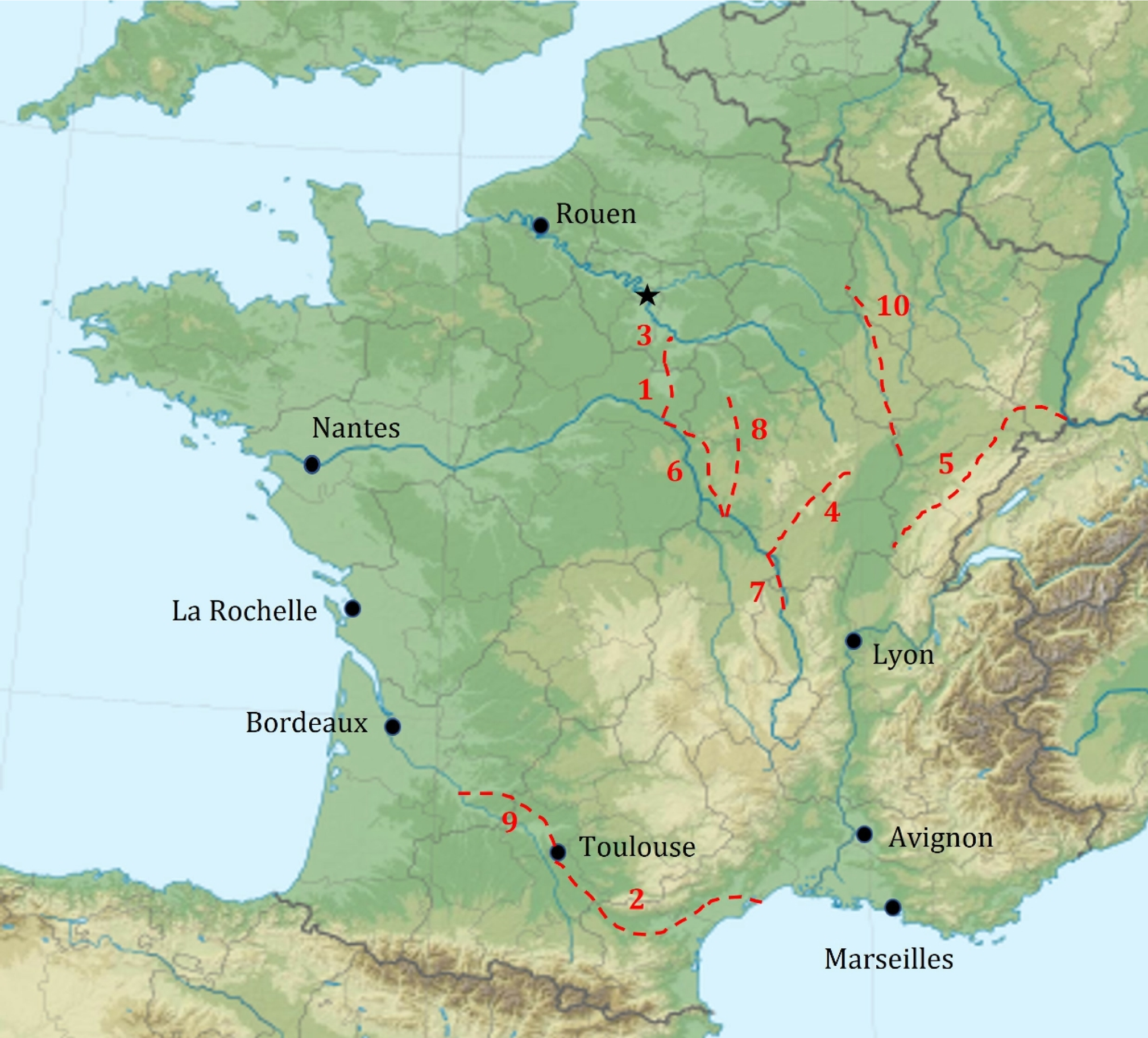
By the mid-nineteenth century, the Languedoc produced (Phillips Reference Phillips2016) about half the total volume of wine in France and a large volume of common-quality spirits as well. The railroad construction in the 1840s and 1850s allowed these inexpensive products to be transported around France, including Paris, first in barrels and later in specially-designed railway tanker wagons. The first French railroads were built by private companies (under some government supervision) in the second half of the nineteenth century, initially for the transport of coal. By 1842, the government started subsidizing the construction in order to link Paris to all the major cities in France. This was done by 1858. Under Napoleon III, construction increased substantially and soon exceeded 17,000 km of track. In 1880, some 6000 locomotives pulled trains carrying some 25,000 tons of freight and 50,000 passengers. This network allowed the wines produced almost anywhere in France to compete on the Paris market as transportation costs dropped by some 80%. The annual per capita consumption in the country increased (Lachiver Reference Lachiver1988) from about 50 to 80 litres from 1851 to 1881. The area under vines in Languedoc reached 463,000 ha in 1875 while yields were increasing as well.
A Century of Disasters and the Slow Recovery
When I read about the evils of drinking, I gave up reading.
(Henny Youngman, 1906–1998)
In his Topographie de tous les vignobles connus, André Jullien (1766–1832) compiled the vineyards of France and the world, from Portugal to Russia, Turkey to China, Japan, the Pacific and Atlantic Islands, Africa and the Americas (Jullien Reference Jullien1985). Only Australia was missing because the first colonies of English convicts had arrived there recently (1788) and little wine was produced. He discussed the terroir and gave tasting notes of their wines. His tasting-based classification of Bordeaux wines was remarkably similar to the ‘official’ one (1855). His studies gave us a clear idea of the status of the world’s viticulture before disasters struck.
The late eighteenth and much of the nineteenth centuries were periods of growth for viticulture and wine consumption in France. The total area under vines (Portes Reference Portes2014) increased from 1,346,000 ha in 1788 to about 2 million in 1849 and 2.5 million in 1867. Most of it would be destroyed in the coming decades. Problems started with the arrival from North America of several deadly threats to v. vinifera: powdery mildew (oïdium), downy mildew (mildiou), the black rot, and – the most devastating of all – phylloxera. The French winegrowers were used to problems associated with boring insects (e.g. pyrale) or moths (e.g. cochylis), but these infestations were new and some of them lethal. For a while, France switched from being the largest exporter to the largest importer of wine in the world, first from Spain and Italy, and later Algeria.
After phylloxera was finally brought under control, the wine production in France increased sharply. Imports from Spain and Italy could be reduced by increasing import taxes, but not the large imports from (French) Algeria or the production of cheap substitutes for wine. This resulted in large surpluses that caused prices to plunge. Social unrest followed. The government had to reduce the supply of wine, halt the manufacture of sub-standard wines, and find ways to enforce and guarantee quality. The First World War temporarily reduced the wine surplus. Regulations of the wine industry were slowly introduced, resulting in the establishment of the Appellation d’Origine Controlée (AOC) system in 1935.
And then man-made disasters greatly affected the wine markets: the First World War, the Russian Revolution, Prohibition, the Great Depression, and the Second World War. After 1945, the key elements were in place to rebuild French viticulture: the tools to fight fungi and phylloxera were known and a legal system was in place to prevent fraud and guarantee the quality of wines. A lot of labour and investment were required at a time when funds were needed for other priorities. The full recovery took decades.
France regained its status as the provider of the world’s best wines and the prices of the top ‘crus’ and châteaux increased, in some cases spectacularly. But other wine-producing countries were catching up. Some of them (such as Spain or Italy) had a long history of viticulture and others were relatively new (such as the Americas). A blind tasting in May 1976 pitted French and Californian white (Chardonnay) and red (Cabernet Sauvignon) wines. Even though the judges were French, California edged France in white and red. This generated anger and disbelief in France, but deeply affected winemaking around the world.
The top wines from Bordeaux, Burgundy, and Côtes du Rhône have since regained near-cult status (and price). The quality and diversity of medium-priced wines have increased. Today’s threat to viticulture is global warming.
Fungi Infestations and Phylloxera
Vitis vinifera is the only wine-producing vine native to Europe and the Near-East. There are at least a dozen native species in North America (such as v. labrusca, v. rupestris, or v. riparia) and Asia (such as v. amurensis). The diversity in North America could be an evolutionary response to local threats such as fungi or pests. Many American species have some degree of resistance to them, but the wines produced from their fruits do not taste anything like the wines made from v. vinifera grapesFootnote r (Redding Reference Redding1833). On the other hand, the v. vinifera cultivars make excellent wines but are vulnerable to fungal infestations and their roots have no defence against phylloxera. Because of the increased trans-Atlantic trade, which included agricultural products, and the desire of some French growers to experiment with American grapes, it was only a matter of time before the American threats to v. vinifera would arrive in Europe. And when they did, disaster struck: winemakers were totally unaware of what they were and how to fight them.
Oïdium is a fungus that attacks the foliage, flowers, shoots, and fruits. Left unchecked, it causes the berries to crack and dry, or fail to ripen, and contributes off flavours to the wine. Oïdium was first reported (Martin Reference Martin2009) near Canterbury in 1845. It arrived in Paris in 1848–1849. Within a couple of years, it was found all over France, from Champagne to Bordeaux. The total production dropped (Lachiver Reference Lachiver1988) from an average of 45 million hectolitres (Mhl) per year to 29 in 1852, and 11 in 1854. Some cultivars were more resistant than others. In Bordeaux, the most sensitive ones were the Cabernet Sauvignon, Cabernet Franc, Malbec and Sauvignon Blanc. The Semillon was the least susceptible. It overtook the Sauvignon Blanc in Sauternes and Barsac.
The remedy involves spraying the vineyards with sulphur-lime fungicides. Grape growers were slow to implement this treatment because of the cost of the chemicals and the practical difficulty of spraying them in large vineyards. Heavy hand-activated sprayers had to be designed and then carried across vineyards. They offered little protection to the workers using them. At first, it was also not widely known how to mix the chemicals, how much water to add, when and how often to spray. Over time, it was realized that sulphites are best applied as a preventive measure in the spring, early morning or late afternoon. Once a vineyard was infected, oïdium was much more difficult to eradicate. Depending on the weather conditions, more than one treatment was required, at a cost of 6 or 7 francs per hectare, plus labour. By the early 1860s, oïdium was mostly under control, but it became endemic. Hand spraying was still done in the 1960s. Later, straddle tractors and then helicopters were used.
Mildiou, another fungus, attacks the shoots, leaves, fruits, as well as the woody parts of the vine, and can kill it. It appeared (Olney Reference Olney1958) in the south of France in 1878 and in Bordeaux a few years later, at a time when over half the vineyards in France were also attacked by phylloxera. The experienced gained with oïdium was helpful, but sulphites do not kill an existing mildiou infection. The solution was found by accident: the vines growing near a pedestrian path at Ducru-Beaucaillou (Saint-Julien, Médoc) were sprayed with a blueish copper sulphate-lime blend to discourage passers-by from stealing clusters of grapes. These vines were not attacked by mildiou. The cure was developed by the mycologist Alexis Millardet and became known as the ‘bouillie Bordelaise’ (Bordeaux mixture). It is still used today.
The black rot arrived in 1886. This fungus attacks the leaves, which turn black and dry out, as well as the fruits. It is a serious problem, but early spraying with copper disulphate kills it.
Roses are highly sensitive to fungi. They are often planted at each end of a row of vines and serve as a ‘canary in the mine’: should they show signs of fungal infection, a light spraying of the vineyard with the appropriate anti-fungal chemical prevents damage.
Phylloxera, from the Greek ϕύλλον (leaf) and ξηρός (dry), was by far the most serious threat to viticulture. This tiny aphid feeds on the roots and sap of the vine, slowly starving it. It may take a couple of years from the time of the initial infestation to death. Phylloxera exhibits a ferocious appetite for (the wild and domesticated) v. vinifera. It often travels with the dirt attached to shoes or agricultural tools. Its life cycle is complex, part above and part below ground, which is where it does the most damage and is difficult to reach. Phylloxera devastated viticulture, first in France, and then in almost the entire world. Within three decades (Lachiver Reference Lachiver1988), 2 million hectares of French vines had been pulled and burnt, and some 10 billion scions of various v. vinifera cultivars grafted onto phylloxera-resistant American rootstock.
It started in the 1860s with a few dead vines along the Rhône. The botanist Jules-Émile Planchon found swarms of tiny insects in the roots of vines adjacent to the dead ones. He named them phylloxera vastatrix. The insects were soon found in Graves, Sauternes, and Cognac. Burgundy was affected in the mid-1870s and Champagne in the late 1880s. By the onset of the First World War, half of the vines in Champagne were gone. In Cognac, the area under vine dropped from 265,000 ha in 1875 to below 60,000 in 1889. The wine production in France dropped from 50 Mhl in 1870 to less than 30 in 1879. Phylloxera is much less active in soils that contain a high proportion of fine sand or a large concentration of metals. But this was not the case for the overwhelming majority of French vineyards.
Awards were offered for solutions to this devastation, and hundreds of (often strange) treatments were proposed. They ranged from burying a toad under each vine to urinating on the vines, or treating them with arsenic. In Pauillac, Anne-Francoise Averoux placed a statue of the Virgin Mary on top of a tower overlooking the vineyards at Château Haut-Bataillet, exchanged barrels of her wine for barrels of holy water from Lourdes, and sprinkled her vineyards with the blessed water. To her great disappointment, phylloxera survived.
Two treatments did reduce or delay phylloxera but were impractical. One involved flooding a vineyard for several weeks, at least once a year to drown the insect. This could of course only be done in flat terrain and in the vicinity of a considerable source of water. But even then, phylloxera returned. The other was to inject carbon disulphite below ground, near the roots. This toxic chemical kills phylloxera but can also kill the plant. Yet, this was done in some locations for several decades. Because of phylloxera, some viticultural areas disappeared altogether as the treatments ended up costing more than the value of the wine produced.
It was known that many American vines had roots that withstand the bite of phylloxera and thrive. Some wine producers experimented (Phillips Reference Phillips2016) with American vines or American–European hybrids, but the resulting wines were disappointing, to say the least. At the 1881 phylloxera congress in Bordeaux, it was proposed that the permanent solution was to graft v. vinifera scions onto phylloxera-resistant American rootstock (Figure 7). The idea was formally adopted in 1888 by the High Commission on phylloxera. Many growers feared that the unwanted flavours of native-American wines would make their way into the fruit, but this turned out not to be a problem: the genes responsible for the fruit are in the scion, not the roots. But grafting does impact the vine in other ways: non-vinifera roots affect the vigour of the vine, the times when buds appear, flowers and fruit develop. Further, the rootstock has to be compatible with the terroir and the specific cultivar. After much trial and error, the rootstocks of choice in most locations were v. rupestris, v. riparia, or their hybrids with European vines. Over time, almost all the v. vinifera vines in France and around the world were pulled, burnt, the soil cleaned, and the grafted roots planted. And then, it took several years before the first clusters of grapes were ready for harvest. The cost and labour were enormous, but it worked. The new vineyards were planted in rows instead of the old random fashion, which allowed for easier work and, later, mechanization. Most vineyards were also planted with a single cultivar, replacing the usual old mix of cultivars in the same field.
The tiny graft is barely visible at the top of the American rootstock. The colour-coded wax indicates which cultivar has been grafted (photo: SKE)

Finding the perfect rootstock was not always simple. In Cognac, the grafted vines died of chlorosis, an iron deficiency linked to the chalky, iron-poor, and high-pH soil. In 1887, Pierre Viala from Montpellier travelled to the east and south of the United States, looking for native vines growing in soil comparable to that in Cognac. In Denison, Texas, he met the horticulturist Thomas Munson who knew that v. berlandieri thrived in the chalky limestone beds of central Texas. It offered good resistance to phylloxera but was difficult to propagate by cuttings. The solution for Cognac was the chasselas-berlandieri hybrid. Munson was made a Chevalier du Mérite Agricole of the French Legion of Honor. Cognac and Denison became sister cities.
Pulling, burning, and grafting took a long time, and work was interrupted by wars. Some own-rooted vineyards were kept going as long as possible. For example, Yquem benefits from sandy soils and grafting was done over many years to replace the dead or dying vines. The 1900 vintage involved self-rooted vines, but the 1921 vintage almost fully grafted ones (Olney Reference Olney1958). In Burgundy, the pre-phylloxera vines at Romanée-Conti (Olney Reference Olney1991) were torn up in 1945 and grafted vines replanted in 1947 with cuttings from La Tâche. The first harvest of the grafted Pinot Noir took place in 1952.
By the turn of the twentieth century, two-thirds of the vines in France were grafted (Phillips Reference Phillips2016), but only half in Champagne. Grafting was completed only after the Second World War. In the end, the total area under vines had dropped to two-thirds of the pre-phylloxera area. Some of the land lost to viticulture was never reclaimed and sometimes different cultivars were planted. For example, the 1850 vineyards in the Jura (Lorch Reference Lorch2014) consisted of 4000 ha of Pinot Noir, 2000 each of Chardonnay and Poulsard, 1000 of Trousseau, 400 of Savagnin, and smaller areas with other cultivars. In 2010, there were 270 ha of Pinot Noir, 900 of Chardonnay, 290 of Poulsard, 170 of Trousseau, and 460 of Savagnin.
Today, almost all the vines in the world grow on American rootstock. The few exceptions include Bollinger’s Clos Chaudes Terres and Clos Saint-Jacques (near Epernay) where self-rooted Pinot Noir produces the ‘Vieilles Vignes Francaises’ blanc de noir champagne. In Touraine, Marionnet produces the white ‘Provignage’ from pre-phylloxera Romorantin vines. In Galicia, several Albariño vineyards in Rías Baixas are not grafted. Wine from ungrafted Portuguese grapes are made in Colares (north-west of Lisbon) and the famous Quinta do Noval ‘Nacional’ vintage port is also made from self-rooted vines. In addition, the vineyards of Chile as well as those on the island of Santorini are ungrafted: phylloxera does not thrive there.
Imported and Imitation Wines
Until oïdium arrived, France was the largest exporter of wine in the world. The typical production was in the range 50 to 60 Mhl per year, and the French consumed about 45 of it. Oïdium caused a drop in production (Meloni and Swinnen Reference Meloni and Swinnen2016) from 54 (in 1847) to 11 Mhl (in 1854), but spraying with sulphites led to a relatively fast recovery: the production was back to 54 Mhl in 1858. Because of mildiou and especially phylloxera, the production dropped again well below the level of consumption, but this time for many years: the production returned to pre-phylloxera levels only in 1910. In the late 1870s, France became the largest importer of wine in the world (Meloni and Swinnen Reference Meloni and Swinnen2016; Pinilla and Serrano Reference Pinilla and Serrano2008; Pinilla Reference Pinilla2014). It also produced ‘wine’ from dry raisins and grape marc.
After 1876, France imported wine from Spain (about two-thirds of imports) and Italy (about one-third). These imports grew from nothing in 1875 to 9 Mhl in 1883, about 12 Mhl a year from 1886 to 1893, dropped to 5 Mhl in 1894, and then oscillated between 4 and 8 Mhl until the 1920s. Controlling the volume of wine imports was achieved by (ruthlessly) manipulating the import tax (Pinilla Reference Pinilla2014). In 1877, the tax was lowered to 10% of the value of the wine. In 1893, it was up to 40%, reached 45%, then dropped to 10% again during the First World War. Then, it went up again to 40%, and peaked at 90% in 1933.
The impact on Spain was substantial. In 1850, wine accounted for 10% of Spain’s exported goods, but this grew to 40% in 1890. In Rioja, vineyards were planted and bodegas built at a remarkable pace. The railway connection from Logroño to Haro to Bilbao, from where the wine was shipped to France, was crucial. In Rioja, the first two bodegas, Marqués de Murrieta (est. 1852) and Marqués de Riscal (1858), pre-dated phylloxera. Then came López de Heredia (1877), CVNE (1879), Franco-Españolas (1890), La Rioja Alta (1890), Riojanas (1890), Bilbaínas (1901), etc. Several of these wineries now produce wines that compete with the best in the world. But, at first, the wines they produced were for the French market and were labelled with French-sounding names, such as Cepa Sauternes, Clarete Fino, Rioja Clarete, Coñac, Borgoña, and so on (Figure 8). The volume of exports varied with the tax rates imposed by Paris. When the tax rose in 1893, exports plummeted. Rioja itself was attacked by phylloxera in 1899.
A 1890 label of Borgoña (Burgundy) wine from the López de Heredia Bodega in Haro (courtesy María José López de Heredia).
France also encouraged viticulture in Algeria (a French colony from 1830 to 1962) and Tunisia (a French protectorate from 1881 to 1956). It was particularly successful in Algeria which started exporting wine to France in 1890. From 1900 to 1910, almost all the wine imported by France came from Algeria. Spain increased the volume of its wine exports to France to a level about equal to that of Algeria from 1915 to 1920, and then continued to export at a lower level until the onset of the Second World War. In 1930, Algeria produced about 22 Mhl.
The imported wines were mixed with French ones, some of which were made with hybrid cultivars (they became illegal in 1934). From 1876 to 1889, France also produced ‘raisin wines’ obtained by adding 100 kg of raisins to 300 litres of water and letting this ferment for a couple of weeks. The result (Phillips Reference Phillips2016) had only 10–11% alcohol and was strengthened with imported red wine. By 1885, some 2 Mhl of this raisin wine was produced in France. Some of the raisins were French, but most were imported from Greece. These imports grew from nothing in 1875 to a peak of 70,000 tons in 1889: raisins became 55% of the total Greek exports. This abruptly stopped after 1889 because a new French law (Loi Griffe) officially defined ‘wine’ as the result of the fermentation of fresh (not dried) grapes or of the juice of fresh grapes. The Greek economy almost collapsed.
Two other wine-like concoctions produced at the time involved grape-marc, the leftover of pressed grapes. ‘Sugar wine’ was obtained by adding water and sugar to the marc and fermenting it. A much weaker drink known as ‘piquette’ was obtained without sugar: simply add water to marc and let the mixture ferment. That was the cheapest wine-like substance on the market. It was not a novelty. The Romans made something very similar for their slaves. In France, piquette was explicitly mentioned (Portes Reference Portes2014) in a 1722 lease of land near Châteauneuf-du-Pape. The amount of sugar-wine produced reached 6 Mhl in 1888 and was down to 1 Mhl in 1902. As for piquette, it followed a similar curve, but then 3 to 4 Mhl continued to be consumed (mostly by soldiers) until the end of the First World War.
In the second half of the 1880s, raisin wines, sugar wines, and piquette accounted for as much as one-quarter of the ‘wine’ production in France. Much of the rest involved blends of French with Spanish, Italian, and/or Algerian wines. There were no laws or regulations regarding labelling and it was common to disguise a cheap blend by sticking a ‘château-something’ label on the bottle. Prices plummeted. This was an enormous problem for those still producing high-quality wines: how to convince a buyer that their wine was the real thing?
As grafting on American rootstock increased, the phylloxera crisis abated. It was no longer a major problem by 1900. By then, the French wine production had increased to near pre-phylloxera levels, well above the French consumption. Imports from Spain and Italy were reduced by increasing import taxes, but not from Algeria: these wines were technically French. From 1895 to 1915, Algeria exported (Meloni and Swinnen Reference Meloni and Swinnen2016) to France about 8 Mhl of wines per year. Further, sugar-wines and piquette were still produced on a large scale. The result was a considerable surplus (Phillips Reference Phillips2016) of common wines, a major problem in Languedoc-Roussillon, which produced some 40% of French wines. Prices dropped to a point where producers lost money on every barrel sold. There was no more room to stock wine and distillation was not a good option: the alcohol distilled from the sugar beet was cheaper. This led to major social unrest and tax revolts.
In Languedoc, where so many people were directly or indirectly involved in the wine business, protest rallies (Lachiver Reference Lachiver1988) were held on Sundays in various cities. People were angry at manipulated wines, imports, low prices, taxes, sugar beets, and politicians. The crowd of protesters reached 600,000 in Montpellier on June 9, 1907. Violence erupted, the army was called in to restore order. In the end, a new law was passed. It repeated the 1889 definition of ‘wine’, which prevented the piquette as well as raisin- and sugar-wines being called wines. It also required declarations of stock and harvest, and reduced the amount of sugar that could be added. It was a precursor of the first laws on the appellations of origin. This helped a little but did not solve the surplus problem. The First World War did.
From the First World War to the Second World War
The First World War began within a month of the assassination of Archduke Ferdinand in late June, 1914. It quickly involved most European countries on multiple fronts. In August 1914, German troops entered Reims and Epernay. They were promptly repelled by French forces, which sequestered German goods, including those of the Mumm champagne house (Blin et al. Reference Blin, Clause and Glatre1997). The western front soon turned into a static trench war between Germany and France (with its allies), punctuated by long and bloody battles: Marne, Verdun, Somme, etc. Champagne suffered by far the most from that war, with about 40% of its vineyards destroyed. Some vineyards were within range of German artillery, and casualties during the grape harvest were common. Yet, the war years included the excellent 1914 and 1917 vintages (Blin et al. Reference Blin, Clause and Glatre1997).
The war had an impact on viticulture throughout France. The men of fighting age were recruited for the army (over 8 million men were enlisted). The work in the vineyards and wineries had to be done by women and children. Wealthier estates located far from the front hired foreign workers. The army requisitioned horses, including those needed in the vineyards. Chemicals were also used for the war effort: it became nearly impossible to find fertilizers or the chemicals required to spray against oïdium and mildiou. Bottles, in short supply, were cleaned and re-used whenever possible. Transport was difficult (except for the army) and exports sharply declined.
But the soldiers needed to drink. Their daily rations (Lachiver Reference Lachiver1988; Phillips Reference Phillips2016) were 0.25 litres of wine per day in 1914. This increased to 0.5 litres in 1916, and 0.75 litres by the war’s end. Military purchases were done at a low, fixed price, but any sales were welcome. There were also (smaller) wine rations for civilians. The soldiers’ wine was of the most common type, including piquette, the arrival of which was always warmly welcomed at the front. These rations absorbed much of the existing wine surplus and resulted in the resumption of wine imports from Spain and Italy.
The First World War ended with all sides exhausted and financially broke, without a good explanation for all the suffering, destruction, and bloodshed of the past four years. Some 2 million French lives had been wasted, including ∼600,000 civilians. In a number of countries, alcoholism became a problem and governments took action to limit or halt the consumption of alcoholic beverages. Norway banned the sale of beers and spirits in 1916; Belgium banned distilled spirits in 1918; Finland banned the sale of beverages containing more than 2% alcohol in 1919, etc. In other countries, alcohol taxes reduced consumption. The most extreme measure was taken in the United States where the temperance movement had been active for several decades. The 18th Amendment to the US constitution was ratified on 16 January 1919 and went into effect one year later: ‘the manufacture, sale, or transportation of intoxicating liquors within, the importation thereof into, or the exportation thereof from the United States and all territory subject to the jurisdiction thereof for beverage purposes is hereby prohibited’. Exceptions for medical or religious purposes were provided, and the possession and consumption of alcohol remained legal. In addition to making criminals of most law-abiding US citizens, prohibition created organized crime. For France, it meant one more lost market, even though smuggling took place via the French islands of Saint-Pierre and Miquelon off Newfoundland. The federal prohibition in the US was repealed late 1933 by the 21st Amendment, but then a patchwork of state- and local-level prohibitions still restricted sales. Prohibition was never considered in France (Bohling Reference Bohling2018), but there was a strong push to decrease the consumption of cheap, common wines and enhance that of quality wines: ‘drink well, drink a little, in order to drink for a long time’.
In France, the re-planting of vineyards on American rootstock resumed. This involved planting the most appropriate cultivars, in straight rows. In Champagne, some vineyards had first to be cleared of unexploded shells or of the residues of chemical warfare. The wine production resumed, soon reaching pre-First World War levels. Champagne produced 25 million bottles in 1922, and 18 million of them were exported. Some champagne houses still ordered bottles of Spanish bubbly wine until at least 1925. Wine surpluses returned. Algeria (Meloni and Swinnen Reference Meloni and Swinnen2014) kept producing large quantities of wine, almost all of which was shipped to France: 12 Mhl in the mid-1920s, 22 Mhl in 1934 and 1936.
But the international market was shrinking. Starting in 1917, the Russian revolution killed the lucrative Russian market. Before the Revolution, it had accounted for some 10% of champagne exports. In Sauternes, Yquem had been a favourite at the court of the Tsars. Prohibition in some European countries and the United States considerably reduced these markets. Finally, the Great Depression ruined most of the remaining customers. It started with the Wall Street crash of October 1929 and lasted until the Second World War. Champagne exports dropped to just 6 million (Blin et al. Reference Blin, Clause and Glatre1997) bottles in the early 1930s. In 1936, there were some 150 million bottles of champagne in stock. Brokers stopped purchasing grapes. Prices collapsed. Some growers who used to sell their crop, chose instead to form cooperatives or even make their own champagne: they became the ‘récoltants-manipulants’. Today, they produce some of the very best champagnes in the region.
Among those who kept fighting (Blin et al. Reference Blin, Clause and Glatre1997) during these difficult years are two women: Camille Orly-Roederer who took over her husband’s champagne house in 1932 and created the now famous ‘Cristal’ champagne, and Lily Bollinger who also took charge at the death of her husband in 1941. Bollinger would become James Bond’s champagne.
In Bordeaux, Baron Philippe de Rothschild (Littlewood Reference Littlewood1984) was eager to prevent fraud on another front. Almost all the Bordeaux wines were sold in barrels to merchants who then bottled the wines in Holland or Belgium (Figure 9) – after some blending. This was totally out of the control of the property owners. Baron Philippe saw the need to bottle the wines at the property and sell bottles, not barrels, to the merchants. This would make it almost impossible for them to manipulate the wine. Thus, there would be only one Mouton Rothschild for each vintage year instead of a different one for each merchant.
Château Cheval Blanc bottled in Ostende (photo SKE, collection of Michel Baly).
In the early 1920s, Baron Philippe shared his thoughts with Haut-Brion, Margaux, and Latour (the latter had been bottling some of its wines since 1907). Convincing Lafite was more difficult as it belonged to a competing branch of the family. In the end, all agreed and formed the ‘association of five’ who would bottle their entire production at the property. Later, Bertrand de Lur Saluces, owner of Yquem, joined in. For Mouton Rothschild, the first ‘mise en bouteille au château’ took place in 1924, and the first of a long series of artist-decorated labels (Figure 10) was created by Jean Carlu for the 1927 vintage. In 1967, Château bottling became mandatory for all the classified growth in Bordeaux.
The 1987 Mouton label by Hans Erni features the likeness of Baron Philippe (photo SKE).

A winemaker union in Chablis used a seal on their barrels to prevent fraud and guarantee the origin of their wines (Lachiver Reference Lachiver1988). In 1934 in Burgundy, George Faiveley and Camille Rodier pushed to revive the old Ordre des Buveurs Libres de Bourgogne (founded in 1703) as the Confrérie des Chevaliers du Tastevin with its headquarters in the famous Clos de Vougeot. This added considerable ‘panache’ to the best wines from Burgundy. The goals of the Confrérie are to hold in high regard and promote Burgundian produce, particularly her great wines and regional cuisine; to maintain and revive the festivities, customs and traditions of Burgundian folklore, and to encourage (world-wide) tourism to Burgundy.
Following the disastrous Franco-Prussian war of 1870, Alsace (Lachiver Reference Lachiver1988; Phillips Reference Phillips2016) was attached to Germany. The region was recovering from oïdium but still at the early stages of the fight against mildiou and phylloxera. Replanting on American rootstock had not yet become the accepted solution. The German government imposed a more drastic solution: pull the vines, burn them, and then wait ten years before replanting. When replanting took place, it involved phylloxera-resistant hybrids. Even though the region returned to France after the First World War, it is only after the Second World War that Alsace replanted its best vineyards with high-quality cultivars grafted on American rootstock. The recognition of its best wines was delayed until the mid-1970s.
Appellations d’Origine Controlées (AOC)
At the state level, the government had been trying since before the First World War to eliminate the chronic surpluses of common wines, stabilize their price, and create a legal framework that would guarantee the origin and quality of France’s best wines. The law of 1905 aimed (Capus Reference Capus1947) at eliminating fraudulent labelling and the blending of wines from different origins. It was insufficient, as demonstrated by the 1907 riots in Languedoc. The 1907 law focused on reducing surpluses but failed to provide a long-term solution.
A decree in 1908 dealt with the delimitation of the champagne (Blin et al. Reference Blin, Clause and Glatre1997) region. It was followed by a law in 1911. The goal was to suppress fraudulent labelling and reduce the overproduction. The new law also stipulated that the appellation ‘champagne’ could only be used for wines produced in the Department of Marne as well as Reims, Epernay, Châlon, and a few others towns. This excluded the adjacent department of Aube, where winemakers had benefited from using the champagne label for a long time. In April, 1911, violent demonstrations took place in Aï, Damery, and other towns. Buildings were burnt, cellars sacked, thousands of hectolitres of wine spilled, and some vineyards destroyed. The army was called to re-establish order, but things got worse. Thousands of furious winemakers sacked the cities and set houses on fire, while the cavalry charged the rioters, swords drawn. A proposal to name the wines from Aube ‘champagne, 2nd zone’ reduced the tensions. The situation was resolved when another law (1927) extended the appellation ‘champagne’ to the Aube, provided that specific requirements were satisfied, including the use of Pinot Noir, Chardonnay, Pinot Gris, and Pinot Meunier.
The law of 1919 aimed at defining geographical areas, but failed to specify any criteria to guarantee the quality of the wines produced. Further, winemakers had to petition the courts to recognize an appellation. Most judges did not have the wine expertise to evaluate the requests, and granted them generously. The result was chaos and a flurry of similar-sounding appellations for very dissimilar wines. Another issue was that establishing strict geographical limitations for the best wines always excluded adjacent properties which had benefited from a desirable appellation. Further, simply delimiting geographical areas was insufficient, since low-quality wines could still be produced within a delimited area. It was necessary to define strict quality parameters for those wines allowed to bear the name of that privileged area. Not only would there be winners and losers, but the winemakers had to accept new regulations governing how they had to make wine. This took a lot of convincing at the local level and in-depth understanding of the issues at the legislative level.
Since 1884, the agricultural society at Châteauneuf-du-Pape, under the leadership of Joseph Ducos, was promoting the quality of the local wines and fighting fraud by providing certificates of authenticity for wines that satisfied a set of production rules. At that time, the wines of Châteauneuf-du-Pape were still used in Burgundy to strengthen local wines, which were then sold as ‘Burgundy’. There was not much that could be done to prevent the buyers from doing this.
Then came a lawyer named Baron Pierre Le Roy (1890–1967). He married the daughter of the owner of Château Fortia and thus became a winemaker as well. The local producers turned to him for legal help. In 1923, he obtained a judicial demarcation for the appellation Châteauneuf-du-Pape based on the characteristics of the soil and its use. He proposed to limit the allowed cultivars to 13, specify the type of pruning allowed, make it illegal to water the vineyards, impose a minimum 12.5% alcohol concentration for the wine, and define the maximum acidity and other characteristics of wines allowed to be called ‘Châteauneuf-du-Pape’. And then, he had to convince all the growers to obey by these rules. This was difficult, as the winemakers liked neither the new rules nor the oversight. Further, some vineyards lost the desirable Châteauneuf-du-Pape appellation. But Le Roy kept on fighting and, in January 1929, went to the tribunal with the rules and demarcation of boundaries. All the appeals were dismissed in 1933, and the decree recognizing the appellation was signed on 15 May 1936.
In Paris, the driving force was the former minister of agriculture Joseph Capus (1867–1947). He knew of Le Roy’s thoughts and strategy. In July 1935, Capus introduced a bill that contained all the elements outlined by Le Roy, and more: allowed cultivars, minimum alcohol content and maximum yield, cultivation and vinification practices, mandatory record-keeping, etc. These factors (and not the courts) decided which wines could reach the AOC level. The legislation (Gautier et al. Reference Gautier, Humbert and Wolikow2019) created an organization in charge of the AOCs, the Comité National des Appellations d’Origine, later renamed Institut National des Appellations d’Origine (INAO) in 1947. The law passed in 1936. Within a month, the first group of AOC was approved (Berthet-Bondet Reference Berthet-Bondet2013): Arbois (which had name protection since 1907), Châteauneuf-du-Pape, Château Chalon, Muscat de Frontignan, Tavel, and Saint Émilion. A number of additional AOCs were approved later the same year. In Cognac, the wine from the Folle Blanche, Saint Emilion, and Colombard (plus a few supporting grapes) had to be double-distilled over a naked flame up to a maximum of 72% alcohol per volume (reduced to 40–45% before sale).
In 1939, about 5% of the French wines belonged to an AOC category (Lachiver Reference Lachiver1988; Phillips Reference Phillips2016). Some AOCs covered a wide region such as ‘Burgundy’ within which smaller AOCs could be defined, all the way to single vineyards. These must obey stricter rules.
The Second World War began in September 1939 as Germany invaded Poland. In 1940, it invaded France and occupied much of the country: Alsace, Champagne, Burgundy, the Loire Valley and parts of Bordeaux. The properties of the Rothschild family were promptly confiscated. The puppet Vichy government under Pétain controlled part of Bordeaux, Roussillon, Languedoc, Provence, and the Rhône valley, until 1942 when Italy and Germany took over. Just like during the First World War, viticulture suffered from the lack of manpower and horses, while oïdium and mildiou thrived as many chemicals were used for the war. The German army confiscated as much wine as it could, while winemakers hid their best wines behind fake walls in their cellars (Kladstrup and Kladstrup Reference Kladstrup and Kladstrup2002). The Vichy government got involved with wine: it continued to name AOC regions (albeit only a handful during the war years), created (Blin et al. Reference Blin, Clause and Glatre1997) the Comité Interprofessionnel du vin de Champagne (in charge of all the aspects of the production) in 1941, and also defined the ‘premier cru’ category in Burgundy in 1943.
Shortly after D-day on the beaches of Normandy, thousands of US and French troops disembarked on the Mediterranean coast of France as part of Operation Anvil (Prial Reference Prial1994): the goal was to join with the troops coming from the north and move toward Berlin and Paris. The French general in charge of the southern part of this operation, Lucien de Montsabert, made sure that he and the French troops moved north along the Rhône and then Burgundy where the vineyards were located, while the US troops took a much less interesting eastern route. It was a tough job, but someone had to do it.
The Slow Recovery after the Second World War
In contrast to the end of the First World War, the end of the Second World War brought a combination of joy and hope. Despite the tremendous destruction, many were ready to get to work and rebuild. But most vineyards and wineries had been neglected for years and little investment funding was available. Money was needed for more urgent priorities: feed the population, rebuild the infrastructure, hospitals, critical factories, and so on. The recovery occurred faster for the high-end wines from Bordeaux, Burgundy, and Champagne. The less-wealthy wine regions recovered slowly. However, the key ingredients required for viticulture to succeed were in place. Oïdium, mildew, and the black rot could be controlled with known fungicides which were again available. Phylloxera could be overcome by grafting the desired v. vinifera cultivar on selected American rootstock, and much of that work had been done before the war began. The transportation infrastructure needed maintenance but was essentially in place. Finally, a legal framework existed to guarantee the origin of the best wines and the INAO insisted on increasing their quality. The latter issue was important. Indeed, the reputation of French wines had suffered for several decades because of fraud and the wide-scale production of sub-standard wines. Further, about one-quarter of the total area under vines (∼1.4 Mha) was still planted with undesirable hybrids. In Languedoc, large areas were also planted with Aramon, a high-yield (up to 200 hl/ha) v. vinifera cultivar that produces unremarkable light-red, low-alcohol wines. These wines were mixed with the strong red wines imported from Algeria.
Many positive developments help brighten the picture. The demand for French wines grew in North America, in part because American soldiers returned home having acquired wine-drinking habits. Further, many European countries were rebuilding their economies and started importing French wines. In France itself, there was little thirst for sub-standard sugar-wines, piquette, or blended wines of unknown origin. The hybrids and inferior cultivars were systematically replaced with low-yield, high-quality varietals. In Languedoc, these were the Grenache, Syrah, Mourvèdre, and Cinsault.
In 1949, the INAO created the VDQS category (Vin Délimité de Qualité Supérieure) to acknowledge local wines of good quality that had not yet achieved the reputation and high expectations associated with the AOC category. Many of these VDQS wines reached the AOC level within a couple of decades (the VDQS appellation was eliminated in 2011). In 1973, the INAO also created the Vin de Pays category, with less strict rules than the AOC. In Bordeaux, two new wines classifications were done, the first in Graves and the second in St. Émilion.
In 1953, acting on a request of the local union of wine-growers, the INAO appointed a jury of wine merchants and brokers to classify the wines of Graves (AOC: Pessac-Léognan). As was the case for the 1855 classification, a key criterion was the selling price of the wines over a long period of time. Sixteen chateaux were classified as ‘Cru Classé’, three of them for their white wines, seven for their red wines, and another six for both their red and white wines. Chateau Haut-Brion (red) became the only wine classified twice: in 1855 and 1953.
A classification in St. Émilion was done in 1955. The list included 12 ‘Premiers Grand Crus Classés’ (subdivided into A and B categories), followed by 63 ‘Grands Crus Classés’. Below those are many ‘St. Émilion Grand Cru’ wines. This classification was amended in 1958 and revised in 1969, 1986, 1996, and 2006. Legal disputes related to possible conflicts of interest for some members of the jury in the latter classification resulted in another revision in 2012. This classification was outsourced by the INAO to experts unrelated to St. Émilion, but there were still unresolved legal issues.
The winter of 1956 was exceptionally brutal (Lachiver Reference Lachiver1988; Phillips Reference Phillips2016), with February temperature dropping to 25oC below zero from Burgundy to Bordeaux. Such low temperatures killed many vines. Only those vineyards lucky enough to be covered with a thick layer of snow were spared. In Pomerol, many vines died and were replaced with Merlot.
The mechanization of viticulture and winemaking began in the mid or late 1950s. A major step forward was the introduction of the straddle tractor, which effectively replaced horses in the vineyards, except for steep hills. It could do the work much faster than horses and allowed growers to perform efficiently time-critical tasks such as spraying against mildiou. Later came the first harvesting and de-stemming machines. Concrete or stainless-steel temperature-controlled fermentation tanks replaced the old wooden casks, and other complex tools became available. But mechanization was slow because the new machines were too expensive for all but the wealthiest wine estates. In 1970, only 70 of the ∼6500 vine farmers had a tractor (Lachiver Reference Lachiver1988), but many small- and medium-sized producers organized themselves in cooperatives. These had existed in France since the 1930s, for example in the Côtes du Rhône region (Tavel), but after the Second World War, the number of cooperatives increased substantially in most wine regions. The members could share expensive equipment, knowledge, and do more efficient marketing. By 1980, there were well over 1000 wine cooperatives in France.
The Algerian war of independence (1954–1962) greatly affected its wine production. For some years, Algeria had become the largest exporter of wine in the world, most of it going to France. After independence, the wine shipments to France dropped, in great part because of pressure from French growers. By the late 1970s, the wine industry in Algeria had collapsed.
Within a few decades after the end of the Second World War, France had clearly regained its reputation for producing the best wines in the world. Not all the French wines were in that category of course, but the very best Pinot Noir and Chardonnay wines came from Burgundy, and some of them fetched very high prices. The only true champagne had to be French, the real Cognac and Armagnac as well. Similarly, there could be no match for a Premier Grand Cru classé of Bordeaux in the Cabernet Sauvignon category, including the common blends with Cabernet Franc, Merlot, and/or Malbec. Many other wine-producing countries were competing in the world market, but it was understood that they were trying to be, at best, almost as good as the French equivalent. Sometimes, they labelled their distilled wines ‘cognac’ or bubbly wines ‘champagne’. This generated many court fights and occasional trade agreements, such as the 1935 ‘crayfish agreement’ with South Africa.
And then Steven Spurrier had an idea. He was a former English wine trader who ran a wine shop and the first wine school in Paris, the Académie du Vin. He organized a wine tasting (Taber Reference Taber2005) pitting French and Californian wines in two categories. First, Chardonnay (vintage years 1972 to 1974), with six California wines competing against four of the top white Burgundies. Second, Cabernet Sauvignon (vintage years 1969 to 1973), with six wines from California competing against four of the best Bordeaux. For many years, California wines had suffered from a bad reputation, but since the 1960s, much progress had been achieved thanks to the relentless work of people such as Robert Mondavi. These wines were unknown in France, but Steven Spurrier knew them. The tasting took place at the Hotel Intercontinental in Paris, on 24 May 1976. The nine judges were well-known French wine experts: Claude Dubois–Millot (Directeur of “Le Nouveau Guide”), Aubert de Villaine (Domaine de la Romanée-Conti), Raymond Oliver (restaurant “Le Grand Véfour”), Jean-Claude Vrinat (restaurant “Le Taillevent”), Christian Vanneque (Chef Sommelier at “La Tour d’Argent”), Odette Kahn (director of the “Revue du Vin de France”), Pierre Tari (Château Giscours), Pierre Brejoux (inspector general of the INAO), and Michel Dovaz (Institut Oenologique de France). This panel of judges was definitely pro-French, but the tasting was blind.
The judges started with the white wines: they evaluated the colour, smelled the aroma, tasted, then focused on the after-taste of each wine. They took notes, assigned points, and dutifully ranked each wine. Their notes were then collected and the rankings compiled. The results for the Chardonnays was announced before they tasted the red wines. In first place came Chateau Montelena with 132 points (and six first-place votes), followed by Meursault-Charmes (126.5, no first-place vote), and Chalone vineyards (121, and three first-place votes). Then came Spring Mountain (104), Beaune-Clos des Mouches (101), Freemark Abbey (100), Bâtard Montrachet (94), Puligny Montrachet Les Pucelles (89), Veedercrest (88), and David Bruce (42). The judges were stunned. The winner was clearly from California, as was the third-place wine. These two California wines received all the ‘first-place’ rankings.
Then, the judges tasted the red wines. Their concentration was palpable. The rankings were compiled: in first place came Stag’s Leap Wine Cellars with 127.5 points, followed by Château Mouton Rothschild (126), Château Haut Brion (125.5), Château Montrose (122), Ridge Vineyards Monte Bello (103.5), Château Léoville-las-Cases (97), Mayacamas Vineyards (89.5), Clos du Val Winery (87.5), Heitz Cellars Martha’s Vineyard (84.5), and Freemark Abbey Winery (78). The French performed much better, with three wines in the top four. But the winning wine was again from California.
These results were greeted with disbelief among the panel and throughout France. And then, outright anger was directed at the judges, who were vilified and blamed. Outside of France, the wine world was shaken. The reputation of California wines changed virtually overnight and their prices went way up. Everybody wanted to taste, not just the new champions, but many other American wines. This excitement went beyond California. A winery in remote Lubbock (Texas) reported almost immediate popular excitement about their wines: the demand (and prices) went up there as well. Many wineries around the world took notice. As for the French winemakers, especially at the high end, this was a much-needed (albeit, one-time) warning about complacency. Competition is good: it keeps you on your toes.
But life continued and France kept producing a wide range of wines. The fame accumulated by some of them over the centuries continued to stimulate sales, in some cases at exorbitant prices. Three bottles of 1869 Lafite Rothschild sold at auction in Hong Kong for US$233,972 each (I am not sure if this includes Sotheby’s fee). Such a price suggests that some wines have reached status symbol, beyond just being collector’s items. This is an extreme example, but quite a few famous French wines often sell for thousands of dollars (euros) a bottle.
Starting at the end of the Second World War, wine consumption in France has been steadily declining, especially among the younger generations. One reason for this is the availability of a wide range of other drinks that were not in the French diet until the Second World War: carbonated drinks, craft beers, distilled drinks such as tequila, as well as good-tasting bottled water. Before the war, the French consumed some 170 litres of wine per person per year (Garrier Reference Garrier1995). This dropped to 110 litres in the late 1970s, 63 in the mid 1990s, 53 by 2005, and is now close to 40. Similar long-term declines are occurring in Italy and Spain. In France, the total area under vines dropped from 1.4 Mha at the end of the Second World War to about half that today. It is unclear if these trends will continue. The average quality of French wines has undoubtedly increased, and many of them are quite affordable.
Viticulture in France and around the world is now facing another major issue: global warming. The average temperatures have been slowly increasing since the beginning of the industrial revolution, but this has now accelerated. Glaciers are melting, sea levels are rising, the amplitude of temperature fluctuations is increasing, storms are becoming more frequent and more violent, and so on. It is well known that the quality of a wine depends a lot on the weather conditions in a given vintage year: late freezes, hail storms, a rainy summer or fall are just some of the obvious issues that affect the wine. Increasing temperatures are becoming a major factor as well (Ashenfelter and Storchmann Reference Ashenfelter and Storchmann2016). This can be beneficial in cooler climates (such as northern France or England) but is a major problem elsewhere.
Warmer springs and hotter summers cause grapes to mature quicker, sometimes before the important phenolic compounds have had a chance to emerge. Higher temperatures affect the production of anthocyanins or malic acid. They reduce (Ashenfelter and Storchmann Reference Ashenfelter and Storchmann2016) flavours, aromas, and pigments. If the must contains too much sugar, the wine ends up too strong and lacks finesse. It is no longer unusual to see wines with 14% or even 14.5% alcohol. Many believe that such concentrations are too high. Grape harvests take place earlier every year (van Leeuwen and Darriet Reference van Leeuwen and Darriet2016): in Alsace or Bordeaux, it is now two weeks earlier than it was in the 1980s, and four weeks earlier in Châteauneuf-du-Pape. Warmer climates also increase the activity of pests, fungi, and diseases.
Some cultivars are more sensitive to these issues than others (Ashenfelter and Storchmann Reference Ashenfelter and Storchmann2016): Pinot Gris or Gewürtztraminer prefer colder temperatures while Cabernet Sauvignon or Grenache perform well in warmer regions. The local microclimate is another important factor. But as our planet keeps warming, some of the traditional wine-growing areas will undoubtedly suffer. Winemakers in France and the rest of the world are keeping an eye on this problem and searching for the best solution(s) for their area.
Yet, we live in a privileged time. An exceptionally large number of interesting and high-quality wines can be found. There are around 10,000 v. vinifera cultivars in the world. About 250 of them are allowed in France, but 95% of the wine produced involves at most 40. There is a lot to explore.
Drinking wine should be easy, but the descriptions of wines have become complicated. I am not among the privileged few able to grasp the subtle differences between ‘muscular’, ‘pointed’, ‘dusty’, ‘rustic’, ‘plush’, ‘nervous’, ‘silky’ or ‘velvety’ tannins, between wines with ‘broad’ or ‘square’ shoulders, or between ‘crushed’, ‘pressed’, or ‘dried’ berry flavours. For sure, I am not familiar with the taste of the ubiquitous ‘wet forest floor’ or ‘scorched earth’. Today, the published flavour profiles of wines carefully avoid any mention of the grapes the wine is made of or the acids it contains. I do like the characteristic taste of a Cabernet Franc, the delicate aroma of an Assyrtiko, the softer tannins emerging from macerating the grapes with stems. I also believe that too much oak overwhelms these flavours and ruins the wine. The best Chardonnays I tastedFootnote j were fermented and matured in large clay jars, reminiscent of the Roman dolia: they had never been in contact with oak at all. You could taste the specific terroir as well as the fruit, the real crisp Chardonnay. I wish one could keep wine-drinking that simple.
Summary
I work for the people who love wine, not for those who make a lot of money.
(María José López de Heredia)
The earliest archaeological evidence of winemaking in Mediterranean France dates back to about 425 bce, but little else is known about it. Soon after the first Roman invasions, wine grapes flourished along the Mediterranean coast and the river Rhône. Viticulture became the most profitable agricultural product and was reserved for Roman citizens (and then, with permission). That monopoly survived until emperor Probus (280). The Romans established an active port and viticultural area in Bordeaux in the first century ce. By the end of Roman Gaul, vineyards could be found all over France, as far north as Paris and Champagne.
After the Romans left, various tribes moved in from the East and competed for land and power. Large markets disappeared, the Roman infrastructure slowly fell apart, and the rule of law only existed at the local level, if at all. For several centuries, viticulture continued on a small scale. The Franks took over. They chased the Visigoths out of southern France, and then fought among themselves. Any viticulture on a substantial scale was in the hands of the king, the high nobility, and the church. The troubled period of Viking invasions and civil war among the grandsons of Charlemagne ended with a western Frankish kingdom (later: France), an eastern one (later: Germany), and a middle slice that would be fought over for centuries.
A period of mass migrations started with the crusades. International trade was reborn and new forms of monasticism emerged. The Benedictines and Cistercians accumulated enormous wealth and influence. They dominated viticulture for centuries. Small landowners could hardly compete with them. By the end of the eleventh century, the large monastic orders owned substantial (and today: famous) vineyards in Burgundy. In 1395, the Duke of Burgundy outlawed the Gamay grape. In 1443 the Hospices de Beaune was born.
Most Avignon popes lived the big life, with large volumes of wines, many from Beaune and some from Chateauneuf-du-Pape. During the Avignon papacy, France struggled with the onset of the Little Ice Age, the Black Death, and much of the Hundred-Years’ War. After the popes returned to Rome, the market for Languedoc and Côtes du Rhône wines shrank substantially.
A few decades after Eleanor of Aquitaine attached her duchy to the crown of England by marrying the future Henry II (1152), the wine trade between Bordeaux and England took off. In 1215, King John ordered 120 tuns of Bordeaux wine, possibly the first large order of these wines. This trade never really stopped, despite difficult periods (often resolved by smuggling). The word ‘claret’ to characterize some Bordeaux wines was first used in the mid-thirteenth century in conjunction with a blend of white and red wines. English control of Bordeaux lasted until the end of the Hundred-Years’ War (1453), but the trade continued. The cellars of the great English Universities (Cambridge, Oxford, and others) are still full of first growths of Bordeaux and vintage ports, with relatively few wines from other regions.
Except for the wines from Bordeaux (shipped to London), the Loire (shipped to northern Europe), Beaune (highly valued in Paris), and later Champagne, most wine regions of France (Languedoc, Jura, Alsace, Côtes du Rhône, etc.) were facing the problem of transportation. This lasted until canals were dug and railroads built. Before that, only sea or river shipping were affordable, but many fees had to be paid along the way in addition to high taxes at the destination. Only the very best (and expensive) wines could travel and generate a profit.
The Renaissance, born in Florence, died too soon in Rome. But many had been touched by Curiosity. It was a time to discover new worlds, explore unknown phenomena, question authority and accepted knowledge. Curiosity had done its magic centuries earlier in Islamic lands (including Spain) but had barely trickled into the Christian world. Now it had arrived and there was no going back.
The art of distillation arrived in Western Europe in the early twelfth century, either from the Persia or Islamic Spain. The first spirits had only medical uses. Commercial distillation for human consumption (under the influence of the Dutch) began in the 1500s. The earliest record is a shipment from Bordeaux in 1513. In the 1600s, increasingly large volumes of spirits were shipped from Nantes, La Rochelle, and Bordeaux. Cognac and then Armagnac specialized in distilled wines. Barrel ageing began around 1720.
After a period of difficult business following the end of the Hundred-Years’ War, the sales of Bordeaux wines picked up with the arrival of the Dutch in the late 1500s. In contrast to English merchants who wanted the best and most expensive wines from Médoc and Graves, the Dutch bought cheaper reds wines, sweet white wines, and lower-quality dry white wines for distillation. They introduced the use of sulphur to clean used barrels and expanded the viticultural areas by draining marshes.
The earliest local mention of an individual wine estate in Bordeaux (Haut Brion) dates back to 1521. It is recorded in England in the 1660s. A few decades later, Margaux, Lafite, and Latour were also mentioned by name. These wines sold at much higher prices than the other Bordeaux wines. The substantial profits from these sales lead to investments and advances in wine-making technology, and also to the construction of superb ‘châteaux’.
In 1562, a small tax was imposed on every barrel of wine entering Paris. It had grown by a factor of 340 by 1680 and 1000 by 1765, making it near-impossible to sell wine at a profit in the city. This led to smuggling. Many ‘guinguettes’ opened their doors just outside city limits where mostly local wines were sold.
In the 1600s, the trade of Burgundy wines to Paris grew and involved brokers. Individual vineyards (‘climats’, such as Vougeot or Montrachet) were soon recognized. These wines fetched much higher prices than the generic wines from ‘Beaune’.
The first thick and sturdy glass bottles strong enough to age wines were made in England in the 1630s, but bottle-making spread fast. Bottles were first used in Champagne and Porto. But they were expensive and only a small fraction of the best wines were bottled. Dom Pérignon used them for his white wines. They became bubbly in the spring following the harvest because of residual unfermented sugars. Even though many bottles exploded as a result of this secondary fermentation, the process was here to stay. Bubbly wines became very popular among the wealthy elite. But most of the champagne wines were still (not bubbly) and sold in barrels. In the late 1800s, many Burgundy and Bordeaux wines were aged and sold in labelled bottles.
The earliest evidence of intentional late-harvests for the production of noble-rot wines in Bordeaux dates back to the mid-1600s. The process became systematic in the early 1700s and included multiple selective harvests in the same vineyard. The mid-seventeenth century is also when the earliest rankings of wine estates in Bordeaux occurred, for taxing purposes. The first canals were built, starting with the canal de Briare (1642) linking the Loire to the Seine. As additional canals were opened, more wine regions were able to transport their product at lower cost and compete in the Paris market.
In the 1700s and 1800s, substantial scientific and technological progress in viticulture and wine-making was achieved. The dangers associated with dubious additives (such as lead oxide) were exposed and fundamental processes such as fermentations studied. Macquer, Chaptal, and Pasteur were just some of the scientists involved.
The French Revolution in 1789 resulted in the confiscation of all the estates belonging to the Church and the nobility. They were promptly sold at auction. The subdivision of vineyards in Burgundy and Champagne originates from this period.
Following the end of the Napoleonic wars (1815), the substantial Russian market opened up, especially for champagne and some noble-rot wines. In 1855, Lavalle proposed a classification of the wines of Burgundy, and an informal classification of some Bordeaux wines accidentally became internationally recognized. In the second half of the nineteenth century railroad construction provided easy access to markets for nearly all the wine regions of France. The wines produced around Paris were no longer competitive.
Also in the second half of the nineteenth century, several deadly threats to v. vinifera arrived from the east coast of the United States. Powdery mildew (oïdium), a fungus, caused the total wine production in France to drop substantially, but only for a few years. It was controlled by spraying with sulphites. Downy mildew (mildiou) arrived next. The treatment required copper sulphates. But the most dramatic problem was a tiny aphid: phylloxera. It feeds on the roots and sap of the vine, killing it slowly. The only solution is to graft the desired v. vinifera onto a suitable native American vine such as v. rupestris, v. riparia, or some of their hybrids with v. vinifera cultivars. Very few vineyards survived phylloxera. Identifying the proper rootstock was sometimes difficult. Pulling the vines and replanting took decades. That work was interrupted by the First World War.
Because of phylloxera, France switched from being the largest wine-exporting to the largest wine-importing country in the world. Most of the imports came from Spain and Italy, and later (French) Algeria. These stronger wines (higher alcohol content) were mixed with French wines and sold under French labels. France also started to produce sub-standard wines from raisins and grape-marc. As the phylloxera crisis subsided, the local production increased. The combination of imports, raisin- and sugar-wines, and piquette resulted in huge surpluses. Prices collapsed and social unrest followed. The First World War temporarily reduced the problem, but surpluses, low-quality wines, and large imports from Algeria caused the same problems to return after 1918. The government was faced with eliminating the production of sub-standard wines and guaranteeing the quality and origin of proper wines in order to rebuild the reputation of French wines.
The result was the Appellation d’Origine Controlée (AOC) system in 1935. It involved strict geographical delimitations as well as well-defined quality criteria. The process created winners and losers. In the same period, exports were hampered by Prohibition and the Great Depression. And then came the Second World War, the German occupation of France, the confiscation of wine estates and the theft of many wines.
But by the end of this war, the systematic reconstruction of viticulture on a proper foundation could take place. This effort took decades in some regions and France regained its status as the producer of the best wines in the world. But viticulture in many other countries was making considerable progress. The 1976 blind wine tasting in Paris put California on the world wine map. In the past couple of decades, the world of wines has become more international and competitive than it had ever been. Yet, the top French wines are still most highly regarded and some of them sell for amazing prices.
The next major challenge appears to be the climate, as the impact of global warming affects the traditional viticultural areas. Grape harvest can be done a little earlier to compensate, but not a lot earlier. It is quite possible that the optimal latitudes for viticulture will be shifted in the coming decades. The main cities and viticultural areas discussed in this article are shown in Figure 11. The story of wine is far from finished, but this article is.
Some of the cities discussed in the paper and important wine-producing regions of France. (Map: Jo-Layne Skillman)
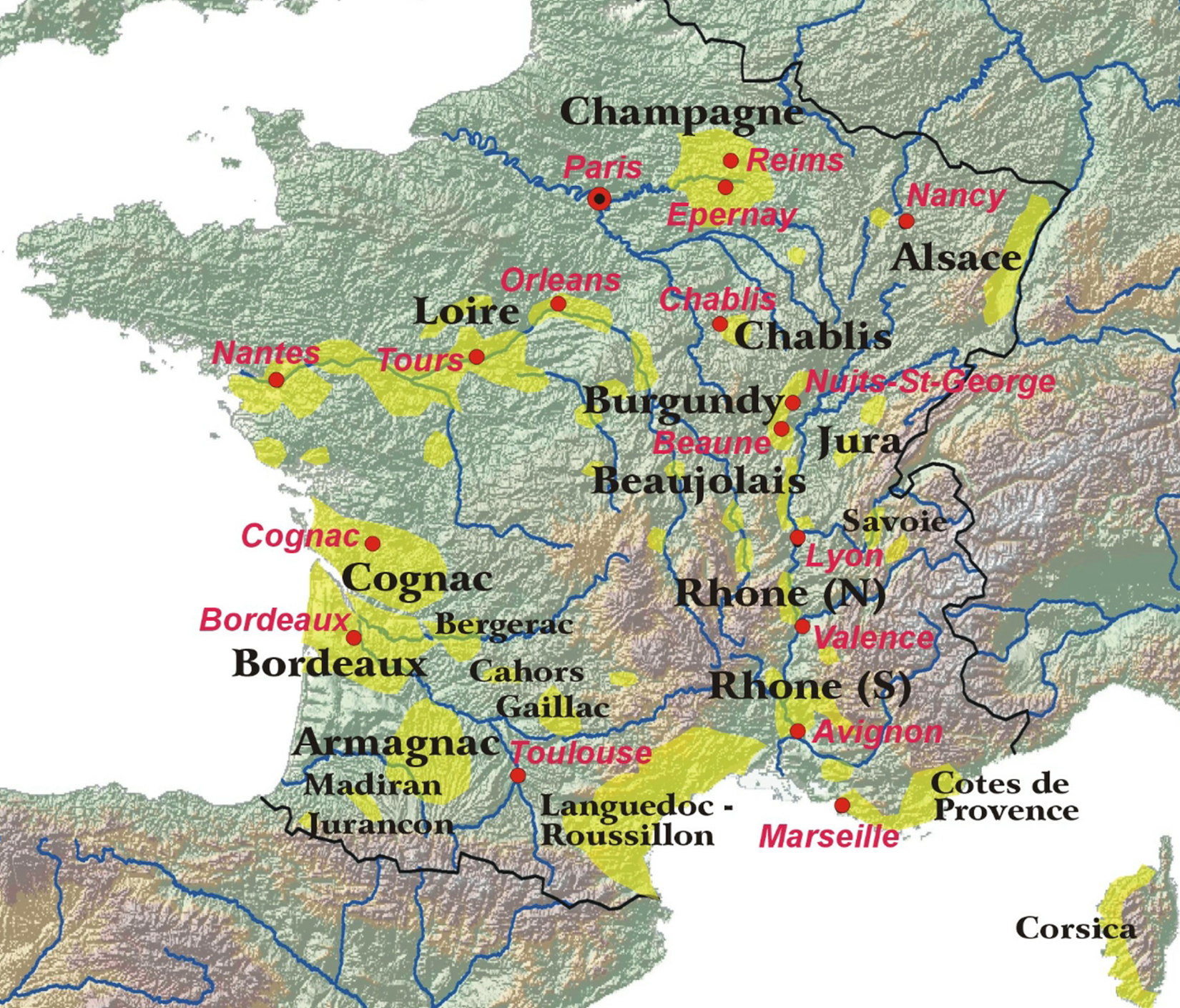
Acknowledgements
Many thanks to Francis Brumont for patiently commenting on my manuscript. Amanda Ramirez provided many useful comments. She and Jo-Layne Skillman produced the maps. Christine and Michel Baly, and the Diana Collection hotels, Pierre Pastre, María José López de Heredia and many others gave me valuable time, shared their knowledge, and often their best wines. There will always be interesting bottles waiting for you in my cellar.
About the Author
Stefan K. Estreicher earned his PhD in theoretical physics at the University of Zürich. He is now P.W. Horn Distinguished Professor of Physics Emeritus at Texas Tech University. He has published over 200 scientific papers and several articles dealing with the history of wine, such as ‘A brief history of wine in Spain’ (European Review 21, 209–239, 2013); A brief history of wine in South Africa (European Review 22, 504–537, 2014); ‘The beginning of wine and viticulture’ (Physica Status Solidi c 14, 1700008, 2017); and ‘Wine’ (The Encyclopedia of Ancient History).
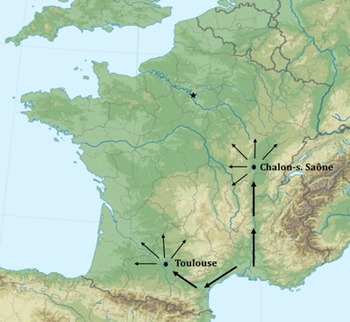
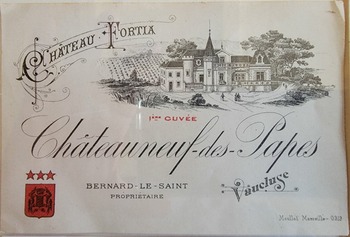
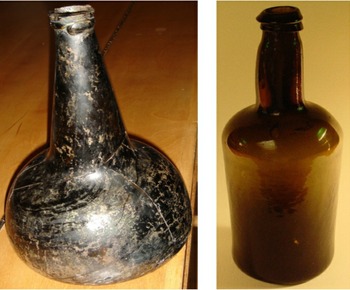
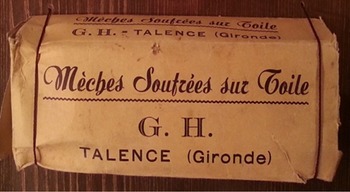
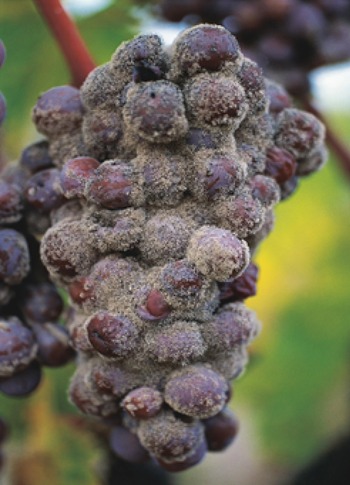
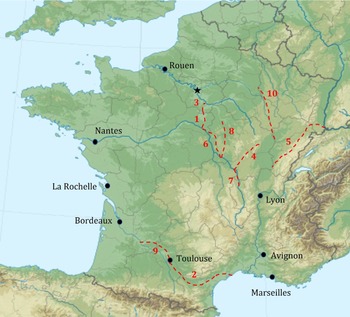
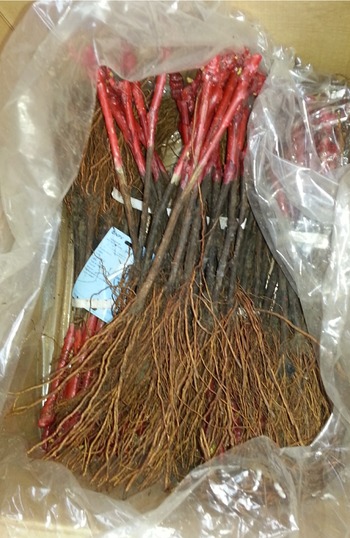
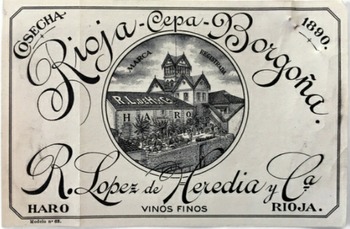
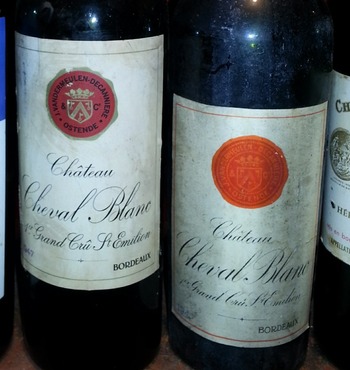
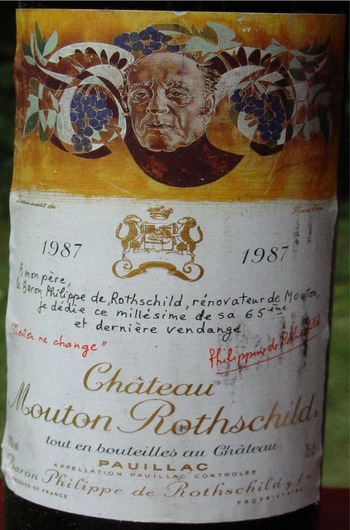
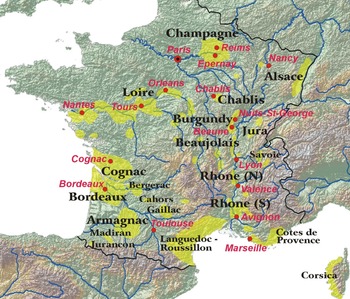

 Open access

