

1. Introduction
Reducing global greenhouse gas emissions is one of the central goals of our time (United Nations, 2015).
In Germany, CO2 emissions have also been reduced in recent years but are still far from the targets of the Paris Agreement in which Germany has committed itself to decrease its greenhouse gas emissions by 80-95% in the year 2050 compared to the levels of 1990 (Die Bundesregierung, 2016). To achieve this goal, companies must also act in a more ecological and sustainable manner, as the industry as a whole contributes substantially to these emissions and environmental problems through its products and processes (Reference FreiFrei, 1999). For companies in particular, a sustainable approach offers new opportunities for technological innovation and economic competitiveness (Die Bundesregierung, 2016). This requires the development of new or improved products, services, or product-service systems. Engineers play a crucial role in this transition, as decisions made during the product development process determine a product’s environmental impact throughout its life cycle (Reference OberenderOberender, 2006; Reference PigossoPigosso, 2012). As a result, environmental compatibility and sustainability should be integrated into the training programmes and curricula of future engineers (Reference Kunrath and RamanujanKunrath & Ramanujan, 2021).
The urgency of this issue is also reflected in a recent decision of the European Commission and the German Federal Council of 8 April 2022, according to which the teaching of environmental sustainability at universities and throughout the education system is to be integrated in the future in order to respond to the environmental crisis (Bundesrat, 2022; Europäische Kommission, 2005). Thus, educational institutions face new challenges and new educational concepts for future product developers and engineers have to be developed. Reference AllenbyAllenby (2009, p. 6) even stated that “the combination of […] unpredictability, complexity, and accelerating change, the interactions of emerging technologies with younger subpopulations, and the demands, however inchoate, of sustainability present a rapidly approaching and inadequately appreciated crisis in education”. In response, a comprehensive, modular course concept for sustainable product development was developed (Reference KattwinkelKattwinkel, 2023). The modular course concept is a set of recombinable, self-contained learning units with explicit outcomes, sequencing rules, and associated assessments that can be integrated into host courses or delivered as a coherent stand-alone course. Since its development this specific concept or parts of this concept have been implemented in 18 different courses across four higher education institutions. The aim of this paper is to systematically investigate how this originally developed course concept has been adopted in other courses and how this can foster the dissemination of sustainable design in the engineering education. For this purpose, the following research questions (RQ) will be investigated in this paper:
• RQ1: How is the modular course concept for sustainable product development implemented across different university courses and institutional contexts?
• RQ2: How can modular course concepts enhance the development of skills critical for sustainable product design practice?
• RQ3: How can a modular course concept, coupled with shared educational resources, facilitate the integration of complex topics like sustainability into the engineering curricula?
To answer these research questions (RQ1, RQ2 and RQ3), the basic terminology of sustainable product development (Section 2.1) and the current state of integration of this topic into higher education institutions in Germany (Section 2.2) as well as the previously developed course concept (Section 2.3) are described. Following this, the methodology including the case selection and description (Section 3.1) as well as the data collection (Section 3.2) and analysis (Section 3.3) are explained. Afterwards the results of the analysis of the different implementation cases are presented (Section 4) and discussed (Section 5). Finally, the key findings are summarised and prospects for further research opportunities are outlined (Section 6).
2. Theoretical background
2.1. Sustainable product design and related terms
Design for Sustainability (DfS) or sustainable product design generates solutions that provide a socially meaningful benefit, create added value for suppliers and consumers and avoid ecological damage or even have a positive impact on the natural environment (Reference Tischner and MoserTischner & Moser, 2015). A holistically sustainable development process requires the integral and equal consideration of the dimensions of economy, ecology and society as well as their interactions (Reference CoricCoric, 2016). Design for Environment (DfE), Life Cycle Design, Green Design, eco-effective product development, eco-design, Ecodesign, environmentally compatible product development and many others pursue the same basic goal - a reduction in the (unfavourable) environmental impact of products (with a focus on ecological and economical aspects) (Reference McAloone, Pigosso, Bender and GerickeMcAloone & Pigosso, 2021; Reference ZhaoZhao, 2013). In most cases, these are all systematic procedures in which ecological (and often social) aspects are integrated as early as possible in the product planning, development and design process in order to reduce the impacts of a product throughout its entire life cycle without compromising other essential criteria (Reference JohanssonJohansson, 2002) such as safety or manufacturability related aspects. It is estimated that 60% to 80% of a product’s environmental impact are determined in these initial phases (Reference PigossoPigosso, 2012). In the early phases of product development, the functions, operating principles, design and materials of a product are determined and thus the developers decide about the technical, economic and ecological product properties (Reference OberenderOberender, 2006). Every decision made influences the environmental impacts of a product, as every process in the product life cycle is associated with specific environmental impacts (Reference Birkhofer, Schulze, Zhao, Sarnes and RiegBirkhofer et al., 2018). Accordingly, developers must anticipate all possible processes and their effects in all product life cycle phases in advance and select, design, and optimise them to develop sustainable products. This poses major challenges for developers and engineers, as they have to design the products with regard to a variety of sometimes competing criteria and at the same time pursue a pragmatic approach to meet time and cost objectives (Reference Tischner and MoserTischner & Moser, 2015).
2.2. The State of sustainable design education in Germany
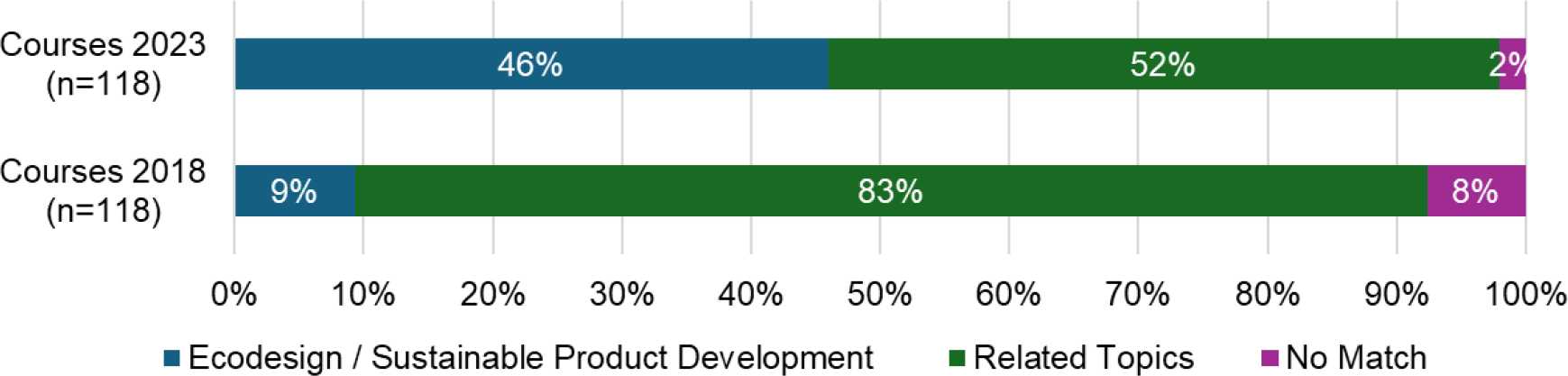
In the past, sustainable product development has been underrepresented in German engineering programmes (Reference Kattwinkel, Song and BenderKattwinkel et al., 2018). However, a recent analysis comparing curricular data from 118 German higher education institutions in 2018 and 2023 reveals a positive shift towards more sustainable content in engineering courses and curricula (Reference Kattwinkel, Bender, Gericke, Eckert, Singh and VenkataramanKattwinkel & Bender, 2026). The study found that the number of universities offering specific courses on Ecodesign and sustainable product development in the field of engineering increased significantly, from just 11 institutions (9%) in 2018 to 55 institutions (46%) by 2023 (see Figure 1). This included for example, the course “Resource-efficient Product Development” at the Technical University in Braunschweig.
Analysis of university courses in the years 2023 and 2018 (Reference Kattwinkel, Bender, Gericke, Eckert, Singh and VenkataramanKattwinkel & Bender, 2026)

This growth is also visible at the degree programme level, where the number of universities offering dedicated programmes in the field rose from two institutions (2%) to fifteen institutions (13%) in the same period. This included for example the “Sustainable Engineering and Management” (B. Sc.) programme at the Westphalian University of Applied Sciences (Westfälische Hochschule, 2024). The detailed analysis of 356 courses in 2018 and 595 courses in 2023 showed that within sustainability-related topics, the specific theme of “Ecodesign, Sustainable Product Development” grew from representing 3% of courses in 2018 to 11% in 2023. While this trend is encouraging, it also highlights the challenge for educators and institutions to rapidly develop and implement high-quality, effective teaching concepts to meet this growing demand.
2.3. Modular and scalable course concept for sustainable product development
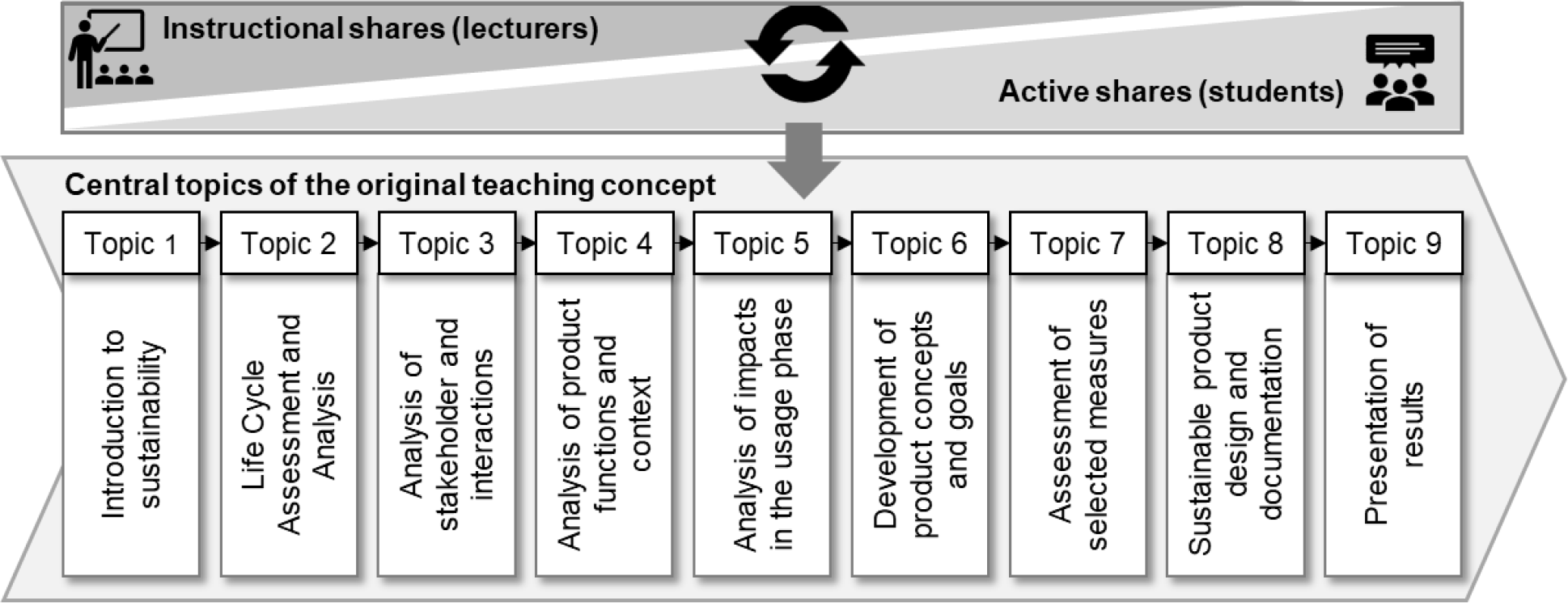
The modular course concept evaluated in this paper was systematically developed within a doctoral thesis in 2021 to address the identified gap in the engineering education (Reference KattwinkelKattwinkel, 2023). Its creation was necessitated by a comprehensive review of the state-of-the-art, which analysed existing procedural models for environmentally compatible and sustainable product development (e.g., Reference McAloone and BeyMcAloone & Bey, 2009; Reference OberenderOberender, 2006). The analysis concluded that no single existing framework was fully suitable for teaching this complex, interdisciplinary topic with a focus on the product usage phase in a way that was both methodologically sound and didactically effective. The development process was therefore grounded on the Decision-Oriented Instructional Design model (Reference Niegemann, Niegemann and WeinbergerNiegemann, 2019) as a guiding framework for its structure. The process began with an extensive analysis phase which involved synthesizing the procedural steps from twelve different models for sustainable product development into a set of nine central, sequential tasks (see Figure 2). These tasks, ranging from the analysis of environmental impacts across the product life cycle to the development and evaluation of improvement measures, form the structural and thematic backbone of the entire course concept. For the concept a student-centred approach and inquiry-based learning was selected. A key didactic element was a reality-based learning scenario in which students adopt the role of new employees in a fictional company. In this role, they are tasked to analyse and ecologically improve a real-world product (e.g., a vacuum cleaner, washing machine, or coffee maker). This narrative framework provides an authentic and motivating context for all learning activities. A core feature of the concept is its modularity. It comprises several building blocks, including fundamentals of sustainability, life cycle analysis methods and a catalogue of measures for environmental improvement (see Figure 2). This structure allows the concept to be scalable. Lecturers can select and combine modules to fit the specific constraints and objectives of their course. The concept comprises self-contained modules with stated learning outcomes, prerequisites, duration blocks (90-minute units), assessments, and artefacts (slides, assignments, cases). Scalability means instructors can deploy one or two units within a host course or deliver the full sequence as a stand-alone, semester-long course. All teaching materials, including lecture slides, case studies, and assignments, were developed to be easily shareable and modifiable, aligning with the principles of Open Educational Resources (OER). This is intended to facilitate dissemination and reduce the workload for other educators wishing to adopt the content (Reference KattwinkelKattwinkel, 2023).
Overview of central topics of the originally developed course concept

3. Methodology
To investigate the research questions, a qualitative multi-case study approach was employed. This methodology is well-suited for an in-depth, descriptive analysis of the implementation scenarios of the developed course concept for sustainable product development. Each of the 18 distinct course implementations of the modular course concept serves as an individual use case for the analysis.
3.1. Case selection and description
The 18 cases were selected through a process of sampling, based on the author’s knowledge of the concept’s application. A key inclusion criterion was that each case had to incorporate at least two full teaching units (equivalent to 180 minutes) of the modular concept’s content. Implementations consisting of only a single guest lecture were excluded to ensure a substantive level of engagement with the material. This applies, for example, to the lecture series “Sustainable product development” organised by the Scientific Society for Product Development (WiGeP), in which one lecture was based on the original concept for sustainable product development, while the other content for the course was developed by other lecturers. Overall, the selection process resulted in a heterogeneous sample, spanning four distinct German higher education institutions (three large universities and one university of applied sciences), courses from the bachelor’s to the master’s level, and both mandatory and optional subjects. This diversity allows for a robust analysis of the concept’s adaptability across a wide range of academic and institutional contexts.
3.2. Data collection
The data for the analysis of the 18 use cases was collected from various sources to ensure a comprehensive overview. The primary method was a document analysis, which included a review of official module handbooks, course schedules, and the examination information. This was supplemented by semi-structured interviews with the four lecturers overseeing the 18 implementations covering motivation for adoption, selected modules and depth, delivery mode, cohort size, assessment formats, integration constraints, perceived fit and continuation, and estimated student numbers. For the collected data regarding the number of students, only those students who participated in the final examination directly following the course were counted, thereby representing the group that completed the full learning and assessment cycle. Especially for the large courses and some of the still ongoing courses the lecturers estimated the number of participating students. In the other cases, the exact number of students was taken from the official lists for the examination office. In this publication, neither the students’ final grades nor their feedback concerning the content or the didactic methods were taken into account.
3.3. Data analysis
A descriptive, cross-case analysis was conducted to identify and compare patterns across the 18 implementations. The collected data for each use case was systematically categorised and analysed according to a set of predefined parameters derived from the research questions, which included the university, where the course took place, the year and semester, the name of the course, the technical level of the course, the number of students, the type of examination and information about the course level (Bachelor’s, Master’s or both), the attendance (digital, in-person or hybrid) and the specification if the course concept is realised as a stand-alone course or if the modules integrated into another course and what percentage of the content refers to the original course concept for sustainable product development.
4. Results of the analysis
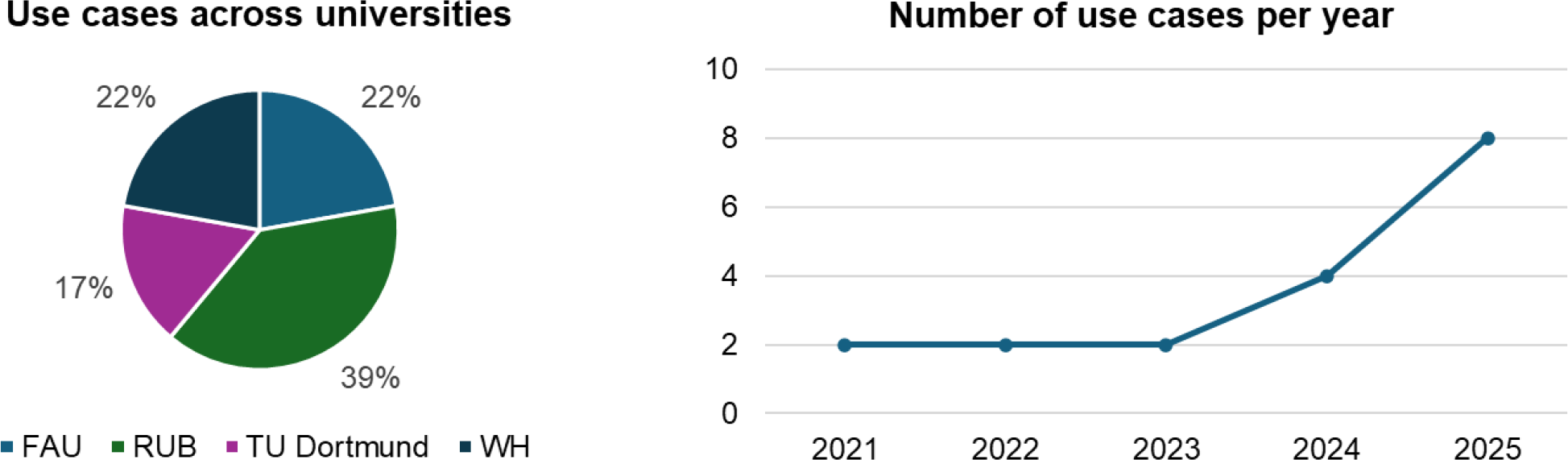
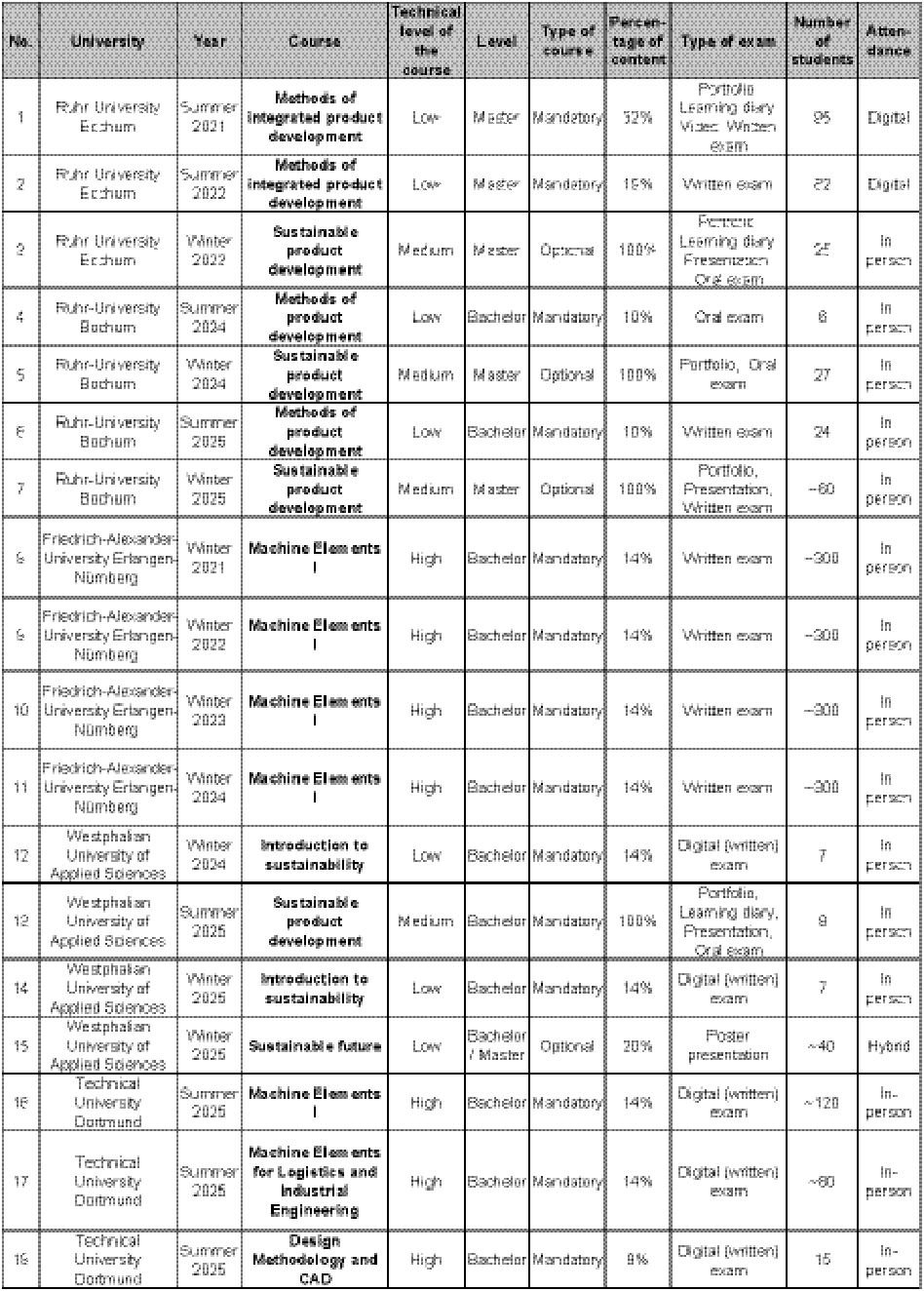
The cross-case analysis of the 18 implementations reveals a mixed application of the developed concept on sustainable product development across a diverse set of academic contexts. An overview of the complete results can be found in Table 1 in Appendix A. Overall, the concept has been successfully implemented at four different German higher education institutions (see Figure 3). Three of those are universities with a very high number of students: Ruhr-University Bochum (RUB), Friedrich-Alexander-University Erlangen-Nürnberg (FAU), Technical University Dortmund (TU Dortmund). The other one is Westphalian University of Applied Sciences (WH), a more practically oriented university. The first application of the course concept took place in the summer semester of 2021 at RUB as part of the course “Methods of integrated product development”. In the year 2025, parts of the course concept are integrated into eight different courses (see Figure 3). In courses where the concept had already been fully or partially integrated, the content on sustainable product development remained in subsequent semesters and years.
Distribution of use cases (n=18) across participating universities (left) and the number of integrations of the course concept per year (right)

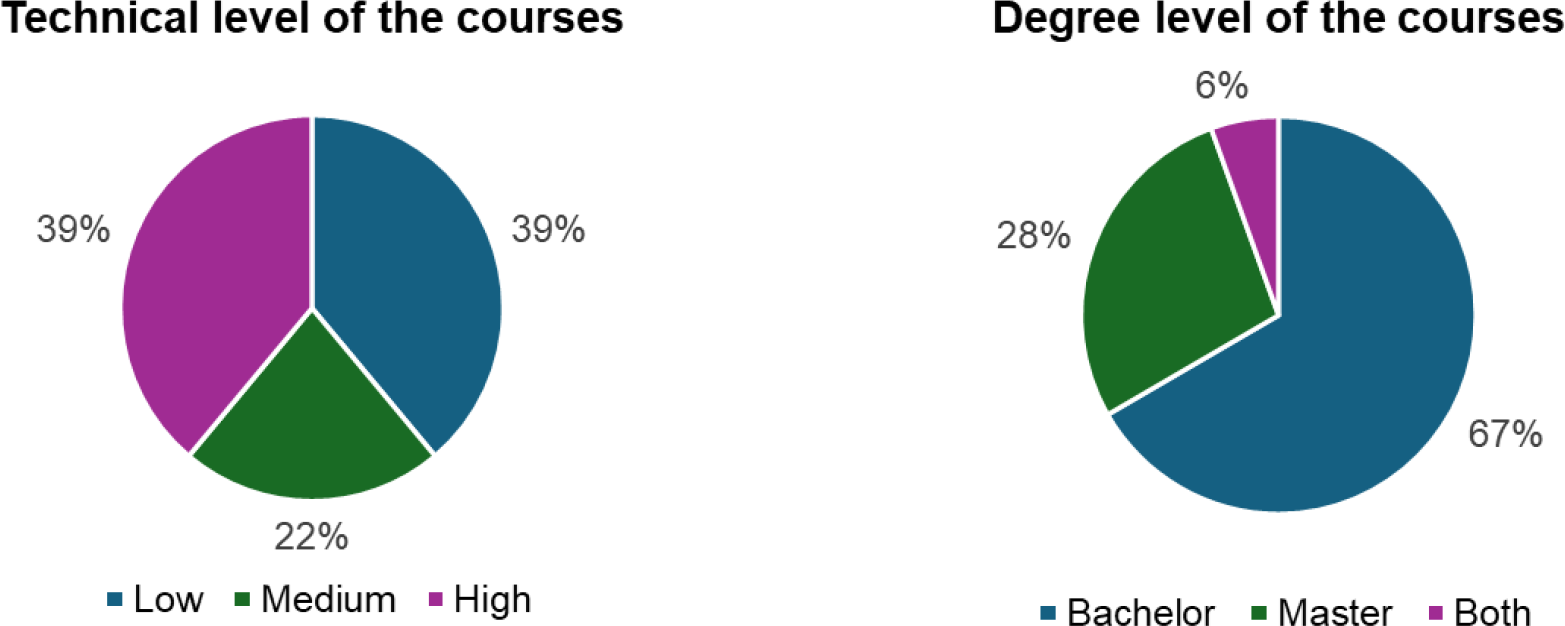
The application of the concept spans a wide variety of engineering courses, from method-oriented subjects like “Methods of product development”, to introductory courses like “Introduction to sustainability” with a low technicality, and, most notably, into core, high-technical-level courses such as “Machine Elements I”. The technical level (low, medium or high) of the courses as well as the type of degree of the course are depicted in Figure 4.
Distribution of the technical level of the courses (n=18) (left) and the degree level (right)

In this study, the percentage of content refers to the percentage of content from the original course concept that has been integrated into the courses (see Equation 1). For example, in “Methods of product development” in 2024, three 90-minute lectures represent 10% of the overall semester’s lecture time.

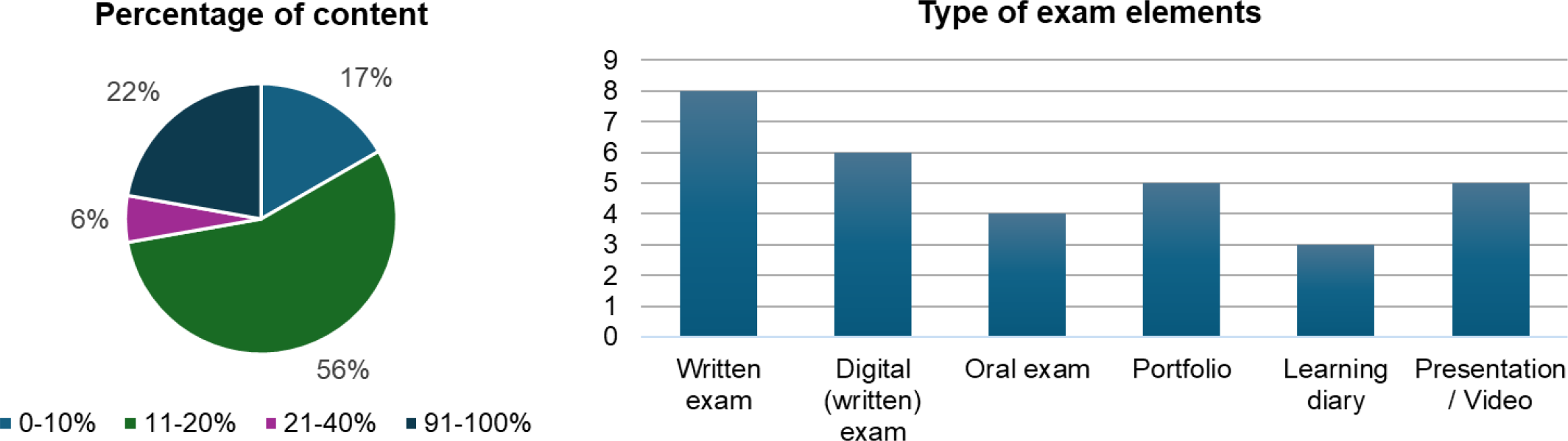
The percentage of content varies in the analysed courses from only small percentages (0-10%) to a full integration of the concept as a stand-alone course (91-100%). The majority (56%) of analysed courses had about 21-40% of their contents based on the course concept (see Figure 5). A wide variety of examination formats was utilised in the analysed use cases. Figure 5 shows these by number of applications. For some courses more than one type of exam element has been employed. In the course “Sustainable product development” in the summer semester 2025 at WH, the students participated in an oral exam and turned in a portfolio, kept a learning diary and held a presentation.
Distribution of the percentage of the integrated content that is based on the course concept (n=18) (left) and the total number of different exam elements for all courses (right)

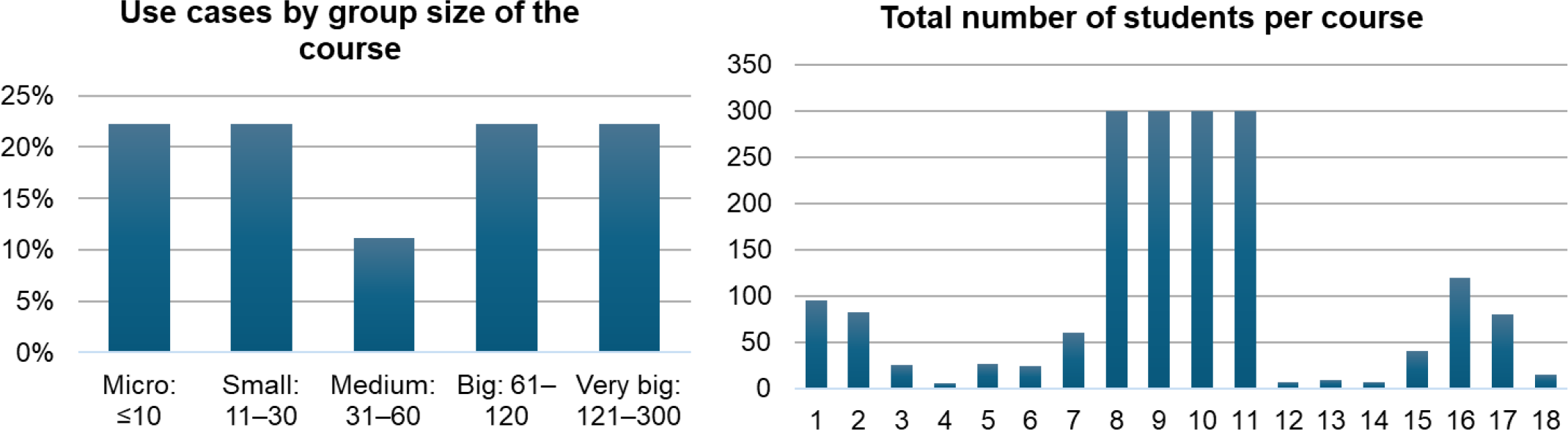
The group sizes for each course also varied considerably between micro groups of less than ten students to very large groups of up to 300 students (see Figure 6). However, the distribution across the group sizes is very even. There were four courses for micro, small, big and very big group sizes and only two courses with a medium sized group. In general, the arithmetic mean is 99.8 and the median is 50 students per course. Due to the large differences in group sizes, the standard deviation is 114.9 students.
Distribution of use cases by group size for each course (n=18) (left) and the number of students in each course (right)

4.1. The depth approach: stand-alone courses for specialisation
Four of the 18 cases were implemented as stand-alone courses focused entirely on “Sustainable product development,” where the entire course was based on the course concept (see Figure 5). These implementations are consistently categorised as having a “Medium” technical level, indicating they are specialised subjects that build upon foundational engineering knowledge. This depth approach was applied in both optional master’s courses at RUB and a mandatory bachelor’s course at WH. A defining characteristic of this approach is its consistent use of competence-oriented assessment methods. Every stand-alone course utilised multiple exam elements such as portfolio, oral exam, learning diary or a presentation all of which are designed to evaluate higher skills of application and competence (for example Reference Wildt, Wildt, Behrendt, Voss and WildtWildt & Wildt, 2011).
4.2. The broad approach: integrated modules for dissemination
The majority of use cases (14 out of 18) exploited the concept’s modularity to integrate sustainability content into existing courses (see Figure 5). The data reveals a correlation between the technical level of the host course and the depth of integration. In courses with a low technical level, such as “Sustainable future”, the integration of sustainability content is ranging from 10% to 32%. These courses provide an introduction to the topic within a methodologically relevant context. In mandatory, basic engineering bachelor’s courses like “Machine Elements I “(at FAU and TU Dortmund) the percentage of integrated content is very small and amounts to just 9% to 14% of the total course. Here, the technical content will rightly continue to be retained for the most part and, where appropriate, enriched with content on sustainable product development. This low-dose and high-reach approach is designed for maximum scalability, introducing sustainability concepts to very large groups of engineering students (e.g., around 300 per year at FAU, around 120 at TU Dortmund) within their foundational technical education. The type of exam for this model is almost entirely a (digital) written exam, an assessment method suitable for testing knowledge efficiently at a large scale.
4.3. Distribution across study levels
The modular concept has proven to be applicable at both the bachelor’s and master’s levels. The in-depth, stand-alone approach was successfully implemented in bachelor (WH) and master (RUB) programmes, demonstrating its suitability for different stages of academic specialisation. The broad approach of integrating less content into highly technical courses is applied in mandatory bachelor programmes. This implementation in an initial phase of the study programme indicates a strategic application of the concept to ensure that all engineering students are exposed to the fundamentals of sustainable design early in their academic careers, regardless of their later specialisation.
5. Discussion
The results of the analysis provide specific answers to the three research questions. The analysis of the 18 use cases reveals that the modular course concept is implemented through two distinct and strategic approaches (RQ1): a comprehensive, stand-alone approach for specialised learning, and a flexible, integrated approach for broad dissemination within existing courses. In stand-alone courses the concept represents the entire course content, such as the dedicated “Sustainable product development” courses at RUB and WH. This approach is applied to both optional master courses and a mandatory bachelor course, indicating its suitability for in-depth specialisation at different academic levels. The broad approach demonstrates the concept’s flexibility. In courses with a lower technical level that are methodologically aligned, such as “Methods of integrated product development”, the integration is substantial, ranging from 10% to 32% of the course content. However, the most widespread implementation is the integration of some content of the concept into courses with a higher technical level. In foundational, mandatory bachelor courses like “Machine Elements I” at FAU and TU Dortmund and “Design Methodology and CAD” at TU Dortmund, the concept accounts for 9% to 14% of the entire course content. This demonstrates a strategic implementation that spans different institutional contexts from large universities to smaller universities of applied sciences by adapting the depth of content to the specific curricular constraints.
Modular course concepts can enhance the development of critical skills (RQ2) by enabling a deliberate alignment between the scope of the content, the learning objectives, and the method of assessment (see constructive alignment for example Reference Wildt, Wildt, Behrendt, Voss and WildtWildt & Wildt, 2011). The data shows two distinct pathways for competency development facilitated by the modular design: one focused on foundational knowledge and the other on applied skills. The development of deep, practical skills for sustainable product design is fostered through the stand-alone course model. In every one of these implementations, the assessment is a complex, competence-oriented format, such as a portfolio, learning diary, or a presentation. These methods require students to actively apply theoretical knowledge, analyse complex problems, create novel solutions, and reflect on their learning process. Conversely, the development of foundational knowledge is enhanced through the integrated module (broad) approach. In these use cases, the assessment is almost exclusively a (digital) written exam. This method is highly effective for efficiently assessing the understanding and recall of core concepts and principles at a large scale. The modularity of the concept enables lecturers, programme directors etc. to choose the appropriate pathway either a comprehensive, project-based course to build deep skills for specialists, or a compact, knowledge-focused module to build a foundational understanding for all engineering students.
A modular course concept, coupled with shared resources, facilitates the integration of complex topics like sustainability through three primary mechanisms (RQ3) lowering the barrier to adoption, enabling scalability, and ensuring transferability. First, the modular design lowers the barrier to entry for lecturers, especially in technically dense core subjects. It provides a pre-packaged, low-friction solution that allows a lecturer to introduce a relevant, interdisciplinary topic without needing to redesign their entire curriculum or sacrifice essential technical content. Second, this compact model enables massive scalability and reach. The data shows this model being delivered to large groups of around 300 students at FAU and around 120 students at TU Dortmund. This demonstrates that a modular approach is highly effective for disseminating foundational knowledge to the entire student body in mandatory courses, achieving a far wider impact than specialised optional courses alone. Finally, the applicability of the idea to provide shared educational resources is confirmed by the concept’s transferability. A successful implementation refers to the delivery of the planned modules, the completion of dedicated tasks and the assessment of the contents. Altogether, five different lecturers have successfully implemented the concept across four different institutions. This indicates that the modules and their accompanying materials are robust and clear enough to be adopted by lecturers who were not part of the original development team, allowing for rapid and widespread dissemination without each institution having to develop their own materials on the topics. Furthermore, the analysed use cases show that the integrated content was retained in subsequent semesters and years.
6. Conclusion
This multi-institutional case study analysis demonstrates that a modular course concept is a highly effective, flexible, and scalable instrument for embedding sustainability within engineering education. Its modular design enables a wide spectrum of applications, from providing brief, foundational introductions to hundreds of students in mandatory technical courses to offering in-depth, skill-oriented specialisation for smaller groups. These are suitable for competence-oriented assessment methods, such as a portfolio, a learning diary or a presentation, which address higher skills of application and competence. In the broad approach, a compact 9-14% of the original contents are effectively integrated into highly technical core engineering courses. This approach represents an accessible strategy for achieving broad dissemination of sustainability principles. The findings strongly suggest that the development and sharing of such scalable, modular frameworks can be a key enabler for accelerating necessary and urgent curriculum evolution in engineering. Future research should focus on empirically measuring and comparing the specific student learning outcomes and competence development achieved in both the depth and broad approaches as well as their feedback on the contents and the didactic methods of the course concept. In addition, qualitative surveys and interviews should be carried out to evaluate how lecturers perceived the integration of the content and how the provision of the materials facilitated the integration.
Acknowledgement
The original course concept, developed by Reference KattwinkelKattwinkel (2023) was part of the project EcoING (2018–2022), which was funded by the German Federal Environmental Foundation (Deutsche Bundesstiftung Umwelt).
Appendix A
Overview of the results of the analysis of the integration of the course content

Table 1 Long description
The table presents a cross-case analysis of the integration of sustainable product development course content across various universities, years, and courses. It includes 18 rows and 9 columns. The columns are labeled as follows: No., University, Year, Course, Technical level of the course, Level, Type of course, Percentage of content, Type of exam, Number of students, and Attendance. The table lists different universities such as Ruhr University Bochum, Friedrich-Alexander University Erlangen-Nuremberg, Technical University Dortmund, and Westphalian University of Applied Sciences. Each row provides details on the specific course, its technical level, whether it is mandatory or optional, the percentage of content dedicated to sustainable product development, the type of exam, the number of students, and the mode of attendance (digital, in person, or hybrid). Notable trends include the integration of the course concept into multiple courses by 2025 and the consistent presence of sustainable product development content in subsequent semesters and years.

 Open access

