

Introduction
Natural and manmade disasters are occurring at an unprecedented rate. Three times as many natural disasters occurred between 2000 and 2009 as occurred between 1980 and 1989, and it is estimated that 217 million people per year have been affected since 1990.Reference Leaning and Guha-Sapir 1 These disasters are sudden, large-scale, catastrophic events that result in destruction, damage, and often death. They can pose a threat to societal infrastructure, create urgent health care needs, and may require outside assistance for response and recovery. Furthermore, the impact can be long-lasting. For example, recent research indicates that one-and-one-half-years after Typhoon Haiyan (Philippines, 2013), “only 17.6 percent of the population feels that life has returned to ‘normal.’”Reference Sherwood, Bradley, Rossi, Guiam and Mellicker 2 (p1) In fact, disasters have increased so much that some populations cannot recover from one disaster before another one strikes. For example, the Philippines experienced three disasters over a four-month period in 2013 and 2014, including an earthquake in October, Typhoon Haiyan in November, and a tropical depression in January.
Additionally, there have been a significant number of manmade disasters worldwide, including the refugee crisis overwhelming much of Europe and the Middle East. Currently, more than 65 million people are displaced worldwide, which is the highest number of displaced persons ever recorded, and it is estimated that an additional 28,300 people are displaced each day. 3
Internet and television scenes of the great human suffering that results from such disasters stir deep desires to help within well-meaning people. Injuries and sickness are among the most widespread types of suffering, making medical aid essential. Medical response depends on multiple factors. Indeed, the most effective medical assistance is carefully orchestrated.
As might be expected, the process of building a competent international medical disaster relief organization is complex, yet many well-intentioned, charitable organizations react hastily after a disaster, sending medical teams without truly understanding what an effective response requires. Consequently, in their genuine effort to help, they may end up contributing to the ensuing chaos. To avoid such unintended consequences, organizations need to properly prepare by applying findings from available research. However, newcomers to this field may find the research overwhelming or hard to find and disaster and humanitarian language difficult to interpret. Even organizations with some experience might benefit from more comprehensive guidance. Consequently, the purpose of this study is to identify and explain some fundamental elements and processes that permeate high-quality, international, medical disaster relief organizations and, consequently, the teams they deploy.
Method
Design
A qualitative descriptive study was selected because successful medical disaster relief organizations are diverse, yet understanding the similarities that contribute to their success can help other organizations who want to begin their own medical disaster relief teams. Intensive, semi-structured interviews in natural settings guided by a constructionist philosophy fit this study well. Rather than responding to pre-determined choices, as would be the case in a quantitative survey design, participants were able to more fully explore the topic and share their personal and professional insights.Reference Rubin and Rubin 4 Adjustments were made to the interview guide based on ongoing data analysis.Reference Polit and Beck 5
Research Ethics
The institutional review board for human subjects at Brigham Young University (Provo, Utah USA) reviewed this study and determined it was exempt. However, data use agreements were obtained from organizations that required them.
Audio-recordings and transcripts of interviews were carefully guarded. All identifying information was removed during transcription. Electronic data were stored on a password-protected computer and on an external hard drive, which were securely stored in the possession of the first author.
Recruitment
Semi-structured interviews were conducted with key personnel from the International Medical Corps (IMC; Washington, DC USA), Operation Smile (Virginia Beach, Virginia USA), Project Hope (Millwood, Virginia USA), Real Medicine Foundation (Los Angeles, California USA), and the Red Cross (Salt Lake City, Utah USA). Organizations were selected for their established success in international medical aid, as well as for their varied purposes within the field of disaster relief efforts and international medical aid. Connections to each organization were made through networks formed by the first author. Recruitment letters requesting interviews were sent to leadership within each organization. In one instance, snowball sampling was used as some participants recommended colleagues with more expertise in certain areas. An ongoing iterative process continued until saturation occurred in major themes and categories.
Data Collection
Data were gathered from 11 purposefully selected participants in 10 face-to-face interviews, one Skype (Skype Technologies; Palo Alto, California USA) interview, and three on-site observations. A total of six females and five males were interviewed. Interviews were conducted between March and October 2016 in locations of the participants’ choosing, including their offices and a café. Each interview was 45 to 90 minutes in duration. Interviews were audio-recorded, professionally transcribed, and carefully reviewed for accuracy. The interview guide consisted of open-ended questions based on review of the literature and the first author’s years of experience in humanitarian work. Sample questions included:
-
1. What measures do you take to ensure a disaster is managed successfully?
-
2. What factors do you consider when deciding whether to go to a particular location?
-
3. How do you handle a situation where resources are limited, running low, or do not exist, and standards of treatments and procedures may be affected?
-
4. What do you feel are the most important characteristics of a successful volunteer?
-
5. How do you determine if a response was successful or not?
-
6. What advice would you give someone planning to set up a disaster relief team?
Furthermore, field observations were conducted at multiple IMC operation sites in Jordan and Greece, including three refugee camps. These field observations provided deeper understanding of the complexities of disaster aid, as well as insight into the challenge of responding to protracted emergencies, such as the Syrian refugee crisis and the Ebola outbreak. During these visits, additional data were acquired from 28 informal interviews with relief workers and leaders, such as health care providers, psychologists, security personnel, case workers, and program directors. Interview questions were tailored according to the individuals’ roles, but did include broad questions such as:
-
1. What would you describe as your unique strengths and contributions?
-
2. What are some of the greatest challenges you face?
-
3. What would you suggest as solutions to those challenges?
Data Analysis
The audio-recorded interviews were repeatedly listened to after transcription to check for accuracy and to make necessary corrections. All four authors read and re-read the transcripts, line by line, and coded them to identify patterns, categories, and themes.
Initially, data were categorized and then coded independently according to topic by identifying, grouping, and labeling related pieces of data. Next, analytic coding was utilized to determine the meaning of the data pieces and their significance. Lastly, coding for themes helped identify the meanings that were woven throughout the data.Reference Morse and Richards 6 Regular research team meetings were held to discuss data analysis and to achieve consensus.
The authors maintained rigor by following Meadow and Morse’s rigor components: verification, validation, and validity.Reference Meadows and Morse 7 Verification is evidenced in the study design, which allowed flexibility between recruiting participants, collecting data, and analyzing data. The iterative process between data collection and data analysis is essential to the rigor of qualitative design.Reference Meadows and Morse 7 Further, data were collected until saturation of the categories was reached.
Steps taken to assure the study remained rigorous while in progress provided evidence of validation.Reference Meadows and Morse 7 These steps included adequate engagement, investigator triangulation, and member checking, which helped clarify meaning and evaluated interpretation of data. For instance, the first author has been engaged in international humanitarian and disaster relief for 11 years. Further, the data were first reviewed independently by the research team and then together at meetings to reach consensus and understanding of the findings. Finally, manuscripts were sent back to each organization for review and any clarification before publication.
Validity means there is little doubt that the findings are accurate.Reference Meadows and Morse 7 This is evidenced by rich description of the categories and themes that support the conclusions.
Results
A thorough content analysis of the interviews revealed major characteristics and guidelines directing the work of effective international medical disaster relief organizations. These patterns of success could be divided into three major categories. First, effective organizations respond to disasters only when they are invited and needs have been identified. Second, successful organizations seek to respond to those needs in the most efficient and sustainable manner possible. This included evaluating their organization’s capacity to help meet those needs, working within existing systems, respecting and considering the local culture, and establishing a minimum standard of care. Finally, successful organizations seek volunteers with characteristics and skills conducive to a positive outcome. By following these basic guidelines, international medical disaster relief organizations had been able to improve the efficiency and quality of their work.
Establish and Assess the Need
The consensus among organizations was that international disaster response should only happen after the host nation has officially requested help. This communication comes in the form of an emergency declaration, coupled with an invitation from the affected country. Once the invitation has been made, medical teams need to have approval from the affected country’s Ministry of Health. Ongoing cooperation with the government is critical to continued success. Organizations and individuals who respond to disasters when governments have not made an official invitation may find themselves unwanted guests and will likely encounter additional obstacles. As Participant A stated: “If you’ve got the Ministry of Health on your side, you’ve got a very strong advocate.”
Once the host nation has sent the request for help, organizations rapidly conduct an initial needs assessment. This is often done by the organization’s lead team. Each disaster is unique and must be assessed on an individual basis because, as Participant J explained: “If you’ve been to one disaster, you’ve been to one disaster.” In other words, no two disasters are the same, so each requires its own unique assessment. Productive and accurate needs assessments include ongoing discussions with the responders in the field, the community, and the government. Regarding reliance on your own team members in the field, Participant H emphasized: “Do your research…. The biggest thing is to trust the people on the ground and talk to them. They’re going to be your best resource no matter what.”
Another important step in assessing needs was to connect with community members, especially the community leaders, and listen to them because they are often most aware of the greatest needs. Referring to communities, Participant A liked to ask: “How are we helping them get back on their feet? How are we helping them address their needs?” Participant I approached community leaders by saying: “We are here to serve your vision for your country… We’re here to serve you. We don’t know better. We just come to be of service.” Accomplishing this requires clear and open communication between organizations and community leaders.
Finally, when assessing needs, the waste of valuable resources could be avoided by communicating with the government at local and national levels. Participants highlighted unfortunate events they had witnessed and felt could have been avoided with improved communication. In one instance, thousands of wheelchairs were sent to a location where they could not be used because the terrain was so rocky. On another occasion, after a massive earthquake, large amounts of non-urgent, unrequested items were left on the tarmac and inhibited planes from landing with crucial supplies. Situations like these could be avoided if organizations communicate and collaborate with the local government. Emphasizing the need to work with governments, Participant H said: “Get to know them. Get to know each other. Because at the end of the day, the government of the host country is going to be the one responsible for dealing with the disaster.”
In the chaos and confusion following a disaster, there are bound to be mistakes. However, by conducting accurate and ongoing needs assessments, such mistakes can be minimized and responses can be more accurate. These assessments are most accurate when they include communication with the team members in the field, members of the community, and the government.
Effectively Respond to the Need
Once the needs are identified, successful international medical disaster relief organizations then attempt to fulfill the needs in the most effective and sustainable manner. This is more likely to be accomplished by following three important principles. First, organizations should evaluate their own capacity to help. Second, organizations must try to work within existing systems and interact in a culturally sensitive manner. These systems include the global humanitarian structure, as well as national and local governments. Third, effective organizations make a diligent effort to fulfill needs while maintaining a minimum standard of care. In other words, they meet or surpass readily accessible, globally accepted policies and procedures.
Evaluate Capacity
All too often during a disaster, organizations both desire and attempt to do more than they technically have the capacity to accomplish. Participant B explained that it is vital for organizations to evaluate the needs and then ask themselves: “What’s our capacity to respond to that need, and then what resources do we have to support that program?” As previously discussed, effective response is accomplished when the organization’s mission and capacity meet the needs on the ground. He further explained that organizations risk subverting themselves by under-resourcing their operations. He suggested it is better to lower the scope and scale of an operation when issues with resources arise, rather than compromising the quality of the work.
This cycle of assessing capacity alongside need must be done continuously. A one-time assessment is insufficient. Participant H cautioned: “It is definitely challenging, because the timeline is always going to be flowing. It is always going to be flexible and changing as the situation goes on.” Even anticipated length of stays are variable and should be re-evaluated on an ongoing basis. As Participant B explained, disasters often shift from the emergency response phase to the “transition and then development phase, which vary depending on the context.” Depending on the organization’s mission, their purpose or expertise may no longer match the most current needs. In summary, it is critical to an organization’s success to be acutely aware of their capabilities and capacity as compared to the need and adjust the scale of their operations accordingly.
Work Through Existing Systems
The second key to an effective response is working within the available systems to the extent possible. Participant G said:
One of the hardest things for any organization who is starting up is recognizing there is an entire international architecture for how response works. You have to plug into that architecture, or else you are going to be that organization who is duplicating efforts and frankly, not understanding how to work within… the system that we have.
“Plugging in” to the system has many benefits. Interview data provide evidence that involvement in the humanitarian structure improves communication, minimizes duplication, increases accountability, encourages partnerships, and provides opportunities for leadership. Two ways to “plug in” to the system are to register with the World Health Organization (WHO; Geneva, Switzerland) as a foreign medical team (FMT) and to participate in the Cluster Approach. First, WHO is the global registering body, and they use the term FMT to refer “to groups of health professionals and supporting staff outside their country of origin, aiming to provide health care specifically to disaster affected populations. They include governmental (both civilian and military) and non-governmental teams.” 8 (p27) Participants discussed the expectation to work within the humanitarian architecture and WHO’s efforts to standardize FMTs. Further, they recognized that registering as an FMT is viewed favorably by major donors, who view this registration as an important legitimizing step for any FMT. Second, participants also discussed the Cluster Approach as a respected and widely used system which allows groups with a similar focus to meet and discuss the needs and scope of the disaster as well as deciding which organization will fulfill those needs. The Cluster Approach was developed by the Inter-Agency Standing Committee (Geneva, Switzerland; New York USA) in 2005 as a response to a resolution by the United Nations to strengthen humanitarian coordination and to foster partnerships. 9 Regarding Cluster meetings, Participant H said:
You arrive in the country…. There is the general overall cluster that everybody goes to that the Minister [of Health] will talk at and give updates. Then there is a mental health cluster. There is a logistical cluster. There is a foreign medical teams cluster. There is an orthopedics cluster…. Depending on what you want to focus on. . . you go to that cluster, and within that cluster you are meeting everybody else that is there doing the same thing. Then you hash out who is going where, who can do what, what capacities can you bring. . .. It works really, really well.
In addition to working within the humanitarian structure, effective organizations work with local communities and governments in a manner sensitive to their customs and culture. This improves coordination and promotes capacity building and sustainability. Each organization expressed this critical principle in a similar fashion using phrases such as “co-responsibility,” “capacity building and empowering and eventual self-sustainability,” “complying with local laws,” “relying on local counterparts,” and “community-level activity.” The ultimate goal of helping communities become completely self-sustaining by building capacity was woven throughout the interviews. Participant I summed it up by saying: “The biggest success is to be obsolete.” In contrast, Participant H explained the danger of imposing help rather than working collaboratively:
We don’t want our team members to go in, treat all the patients, and then the host nurses are not doing anything. They are stuck and being traumatized. They are not moving forward or helping ... If we leave, they don’t know what happened. What did we do? Who did we treat?
Additionally, the value of understanding and engaging with the community in a culturally sensitive fashion cannot be over-stated. Several participants referred to the recent Ebola response as a prime example of the importance of getting “community buy-in.” Participant F shared that people were terrified to send their loved ones into large, sealed buildings to be taken care of by someone “who dropped in from another part of the world in a purple suit.” Only through tireless community engagement efforts were people finally willing to report new cases, to send patients to the health care facilities, and to allow burial practices that did not spread disease. Regarding how to work with communities, Participant H explained:
You should always be there in support, no matter what. If they know who you are and you know their cultures, their customs; you know the corruption; you know everything about what is going on behind the scenes, you are going to be able to provide a support that long-term will be positively impactful for the people.
Maintain a Minimum Standard of Care
The third key to addressing needs in an effective manner was establishing standards of care. Participant B suggested: “Just wanting to do good is not enough. There is some minimum standard against which you need to uphold your programming.” He further pointed out that this can be a bit complicated by saying: “We can’t implement a US standard of care in most of the settings that we work in because it is not practical, and it is not applicable to that situation.” That said, “If we are working in health specifically, there is potential to do harm if the quality of your programming is at a low level. Generally, what you do is… question… your standard of care.” Participant K also discussed the motivation to implement a high standard of care:
I think smaller organizations, or well-intentioned organizations, look at things in terms of “Well it is better than what they’ve got right now,” or “A little bit probably helps,” or “It is better than nothing.” And I do not think that is right. I think that comes back to the core of who we are as an organization. If you would not do it to your own [family member], you should not do it to someone else’s. In making decisions about what is appropriate medical care, I think that is a really important… guiding principle.
The question remains, what standard of care should be used? Participants discussed the complexity of determining the minimum standard of care by explaining that it depends on many variables, including the location of the disaster, the organization’s goals and resources, the type of health services being provided, and the baseline standards of the community. Participant B explained:
Oftentimes, in a more developed country, we might go to the national standard of care. If it is a place where that [national standard] either does not exist or is not to a level that we feel comfortable with, we might revert to a global standard, like a World Health Organization standard…. We do not need to reinvent the wheel…. We look at what data is out there, what evidence there is for best practice, and then we can choose which elements we want to have.
Beyond the obvious advantage to patients, adhering to widely accepted guidelines or standards of care can have unforeseen benefits. For example, working with the Ministry of Health can provide opportunities to positively influence policy, especially in places where standards are lacking. Participant E mentioned a possible approach to the Ministry of Health in these situations, saying:
You are not currently practicing this. We have all this evidence and recommendations from WHO to say that this [protocol] is what can save more lives. Can we do a pilot project to demonstrate that this [protocol] would be best practice in this area to help you work to change your policies?
Additionally, Participant K recalled an unexpected benefit to a community after their local volunteers were required to adhere to their organization’s standards by receiving professional training and certifications:
A lot of the folks that we talked to said that [the training and certifications] allowed them to intervene meaningfully in a resuscitative situation, which they would not have been able to do without the training. But more importantly, a lot of people pointed to the fact that it changed the emergency resuscitative protocols within their hospital and the policies and procedures that support that, so it actually changed the health system.
Quality Volunteers
The last prominent pattern of success focused on the characteristics of quality volunteers and the processes helpful in finding them. Content analysis revealed that the most valued and frequently mentioned attributes fit into three categories: character, flexibility, and experience.
Character
The importance of choosing volunteers with superior character cannot be over-emphasized. Participant I summed up why volunteers with exceptional character are so vital, stating that: “The whole organization is really built on the people.” Consequently, she looked for character in “leader types” who “see the vision [and] get the work done,” and who have an outstanding attitude and work ethic. She described her volunteers as: “The upper part of the Maslow Pyramid…. People who want to contribute to something bigger than themselves.” As each participant discussed volunteers, many desirable characteristics were mentioned. Specific attributes identified by each participant are outlined in Table 1.
Characteristics of Successful Volunteers

Acquiring volunteers with excellent character was also a key to avoiding legal problems. Participant C warned that volunteers can be a “liability based on their personality.” This concern was expressed by other participants as well. For example, one participant voiced concern about volunteers who cannot be trusted to work within their scope of practice. Another participant expressed concern with volunteers who misrepresent the organization when speaking to the media. The number of possible worrisome scenarios is endless and unpredictable, which only strengthens the argument that volunteers with excellent character are essential.
Flexibility
Of all the volunteer attributes, the need for flexibility was one of the two most consistently highlighted. In fact, eight participants mentioned it. Participant J said he thinks flexibility is the “first thing that makes a volunteer successful.” Participant H explained that she relies heavily on volunteers who are emergency room nurses to provide care during a disaster because: “They are very flexible. They are easy going. They will go with the flow. They know exactly what to do when called on…. They have been in highly intense situations before…. They understand that it is a disaster zone. Things are not going to go by the book.”
Some organizations look for volunteers who can adjust to an ever-changing environment and cope with uncertain timelines and significant hardships. Without flexibility: “Some people come in and they want the whole structure set up, and we do not know where we are putting people…. We are saying pack your tent…. They want internet set up. They want cooked meals prepared around the clock” (Participant A). In a disaster zone, inflexible volunteers may also have difficulty taking direction, helping wherever it is needed, and working with different teams and cultures.
Sometimes flexibility manifests itself in the form of resourcefulness and creativity. For example, Participant H shared an instance when volunteers jerry-rigged traction for patients with femur fractures following an earthquake. They filled gallon water bottles with rocks and water and then tied them with a string to the end of each patient’s foot. Ultimately, flexibility takes on many forms, and while inflexible volunteers are a burden, flexible volunteers add incalculable benefit to their organization and the people they serve.
Experience
The last prominent volunteer attribute was prior humanitarian and international experience. This was also mentioned by eight participants. As Participant F explained: “In an emergency, you want to make sure this person can handle the stress of living in the field and seeing what they are going to see. You would prefer it not be their first experience, but we also need a lot of people.” Participant A admitted it was a significant challenge to deploy people who did not have a lot of experience, but explained that their deployment is sometimes the result of having to fill positions in less than 24 hours. Additionally, many participants recognized that volunteers need a starting point. In order to address the challenge of involving inexperienced volunteers, some organizations will not officially approve volunteers until after their first disaster response. Although previous international humanitarian experience is preferred, the magnitude of some disasters necessitates the acceptance of first-time humanitarians and denies organizations the luxury of a lengthy recruitment process.
Screening and Selection
Finally, acquiring volunteers with outstanding character, flexibility, and experience requires an effective screening and selection process. Screening processes that participants mentioned included: resume reviews, skills assessments, evaluations by the human resource department, special training and orientations, telephone and personal interviews, and field evaluations. The value of these processes was brought to light in a statement by Participant H:
We look at their resume; we talk to them on the phone; we ask them why they want to go, what their experience is, have they been before. You can really tell a lot about someone just based on logistically how easy they are to deal with before they are going to go. Do they have a lot of questions? Are they good questions? Are they not good questions? Are they flexible? Are they easy going; are they not? Do they need to be handheld through the process?
As Participant A pointed out, even with an effective screening process, there will be disappointments: “Out of 50 people, there is occasionally going to be two or three that you have got to pull out.” Likewise, Participant H recognized selecting volunteers as “a bit of a gamble,” and Participant C pointed out: “You can ask the questions all you want, and they could have fabulous answers, and then… you do still get surprised.” Perhaps this is because as Participant A said: “Almost never will you interview somebody that they will say they are soft. Everyone thinks of themselves as tough and hardy.” Even without a fail-proof method, each participant emphasized the value of using a carefully developed screening and selection process as an indispensable part of successful international medical disaster relief organizations and a way to maximize the successful selection of quality volunteers.
Discussion
Implications for Practice
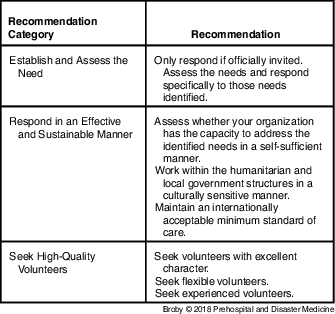
Notable characteristics of effective international medical relief organizations have been identified in this research and include establishing and assessing the need, responding to the need in an effective and sustainable manner, and seeking high-quality volunteers. Organizations are encouraged to emulate these characteristics as they develop and enhance their capacities.
Establish and Assess the Need
First, participants stressed that effective organizations should only send international medical teams to a disaster area after they have officially been invited. Similarly, in 2013 the Global Health Cluster published the Classification and Minimum Standards for Foreign Medical Teams in Sudden Onset Disasters and identified that one of their top concerns was teams responding to disasters without official invitations or approval from local officials.Reference Norton, Von Schreeb, Aitken, Herard and Lajolo 10
Additionally, participants emphasized that international medical relief organizations should only respond when needs have been identified. Further, when organizations fail to adequately assess the need and simply respond with resources to which they have access, their response might not align well with the actual needs in the disaster area. For example, Fisher noted problems occurred during disaster responses when organizations sent medications with labels in languages foreign to the disaster locale or un-needed or expired medications, which presented disposal challenges.Reference Fisher 11 Furthermore, WHO acknowledged that difficulties ensue when well-meaning organizations arrive poorly prepared and uninformed at a disaster site without correspondence with local or national governments or coordination with other international response teams. 12 Thus, to maximize effectiveness, medical disaster relief teams respond after they have been officially invited and have assessed the needs.
Respond in an Effective and Sustainable Manner
The second characteristic participants identified in successful medical disaster relief organizations is that they respond in an efficient and sustainable manner. This entails understanding their organization’s capacity. It also includes working within existing systems, while upholding an internationally recognized minimum standard of care and a respect for diverse cultures.
Participants identified that an efficient response relies on an organization’s ability to evaluate their capacity to respond to a disaster. Cranmer and Bissinger found adequate capacity includes the ability to be self-sufficient. Otherwise, local responders are unduly burdened when FMTs arrive without their own food, water, and transportation.Reference Cranmer and Biddinger 13 Ultimately, an accurate evaluation of capacity can be the difference between helping and hindering during a disaster. Thus, it is vital that organizations only respond when they are sufficiently prepared to take care of themselves as well as those they are attempting to help.
According to participants, another critical component of an effective response is working within both the humanitarian and government structures. In recent years, formal efforts have been made to professionalize and standardize the ever-increasing number of FMTs being deployed to disasters. These efforts attempt to address problems identified in previous disaster responses in which lack of interagency coordination resulted in uneven distribution of services in disaster zones and problems with accountability and adherence to professional standards.Reference Cranmer and Biddinger 13
A major initiative to improve coordination and accountability began in 2013 when the Global Health Cluster introduced registration of FMTs. This registration process allows FMTs to declare their capabilities as well as their commitment to adhere to WHO’s minimum standards. Further, registration facilitates approval by the national government and invitations for deployment, increases logistical support, enables teams to assist where they can be most effective, and more consistently ensures delivery of a minimum standard of care. The Global Health Cluster encourages those who fail to meet registration requirements as an FMT to either not respond to the disaster or join a well-established organization that is registered.Reference Norton, Von Schreeb, Aitken, Herard and Lajolo 10
Finally, participants identified a need for cultural sensitivity in working with local officials and residents. A culturally sensitive partnership between FMTs and locals maximizes the chance of a successful and sustainable response, while minimizing resistance and unintended offenses. Similar to these findings, Benjamin, et al emphasized the importance of mutual respect as FMTs prepare to return home and completely transition ongoing care to local health care providers.Reference Benjamin, Bassily-Marcus, Babu, Silver and Marin 14
Organizations can maximize the effectiveness of their response by evaluating their ability to maintain self-sufficiency while simultaneously responding to the needs. Effective organizations understand that a lack of self-sufficiency can make FMTs part of the problem rather than part of the solution. Disaster responders are also most effective when they work within the humanitarian and government structures, while maintaining internationally recognized minimum standards of care and a respect for different cultures.
Seek High-Quality Volunteers
Another characteristic participants recognized as essential to the success of international medical disaster relief organizations is having high-quality volunteers. According to the participants, disaster settings are unique and require skills beyond traditional professional training. Although they identified several valuable characteristics in the best volunteers, experience and flexibility were the two attributes they most consistently sought after. Concerning experience, Bradt and Drummond found that previous “full-time, hands-on, field-based performance in the acute disaster setting” best qualifies volunteers for FMTs.Reference Bradt and Drummond 15 Unlike experience, participants noted that some characteristics, such as flexibility, are difficult to quantify and, therefore, must be evaluated more subjectively. According to participants, this challenge is why some organizations do not place volunteers in their official database until they have responded to their first disaster and have received positive feedback on their field evaluations. In addition to identifying volunteers with the qualities needed to be successful members of FMTs, Yin, et al recommend that organizations maintain an active volunteer database, which includes the skills, applicable training, certifications, and experience of volunteers. Active and accurate registers will help organizations make timely selection of volunteers and rapidly contact them when a disaster occurs.Reference Yin, He, Arbon, Zhu, Tan and Zhang 16 Ultimately, volunteers with excellent character, flexibility, and experience are foundational to the success of any organization, so a careful screening and selection process should be implemented. Table 2 shows a summary of recommendations for practice.
A Summary of Recommendations for Success in Building/Improving Foreign Medical Teams
Implications for Further Research
Future research on promoting the professionalization, accountability, and effectiveness of international medical disaster response would be helpful. Examples include evaluating how needs and responses change during protracted disasters compared to short-term responses. Likewise, research on similarities and differences when responding to manmade disasters versus natural disasters would be valuable. Finally, further research on the impact of unregistered FMTs and unaffiliated medical volunteers could clarify the value of registering FMTs and requiring volunteers to affiliate with them.
Limitations
While the sample size is relatively small, the focus was on organizations that provide international medical relief. Participants were drawn from representative, well-established organizations with an array of experience in international disaster and humanitarian relief. Interviews were conducted until saturation was reached. Additionally, participant organizations had several differences, including size, location, specialty, and budget. Likewise, participants had their own unique backgrounds and experiences. Despite differences among organizations and participants, strong patterns emerged in the data, fortifying the rigor of the study and validating the findings.
Conclusion
Many international medical disaster relief organizations have joined the effort in recent years to respond to the significant increase in worldwide disasters. In an effort to help these organizations, this study has identified three key characteristics of success found in effective, well-established, international medical disaster relief organizations. These characteristics are first, ensuring an official invitation has been extended and the need for assistance has been identified. Second, the response to that need is done in an effective and sustainable manner. Third, effective organizations strive to obtain high-quality volunteers. International medical disaster response is complex and each disaster has unique characteristics, challenges, and needs. By following the three key characteristics outlined in this research, organizations are more likely to improve the efficiency and quality of their work. In addition, they will be less likely to impede the overall recovery process.



