What Is a Twin Registry?
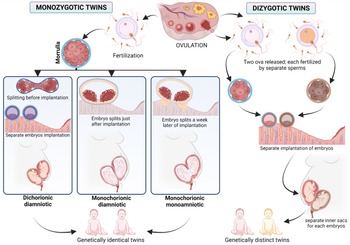
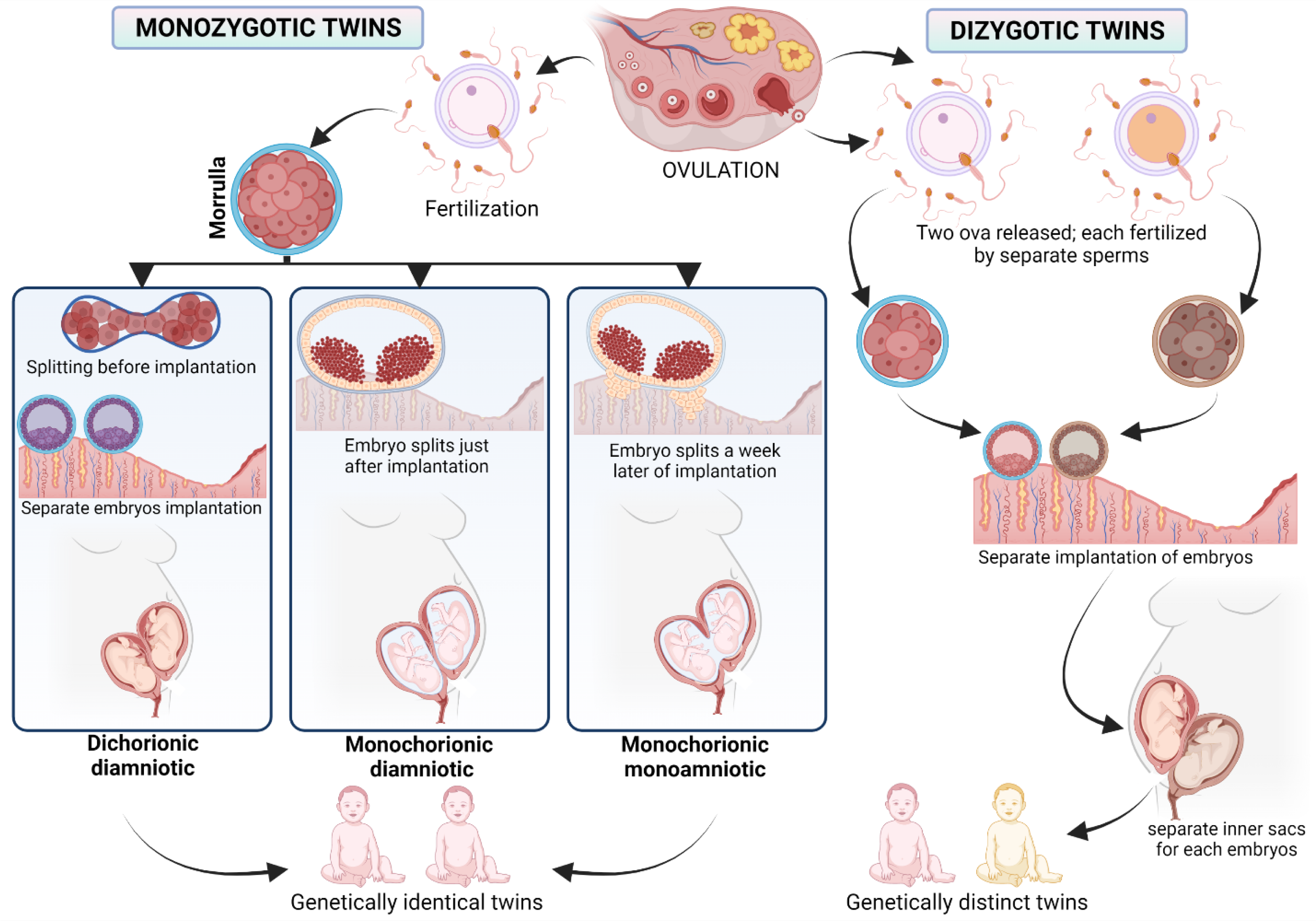
A twin registry is an informational database gathered from both fraternal twins and identical twins, often maintained at the national level or by an academic institution, such as a university, or by other research institutions. There are several twin registries in developed countries; in contrast, only a few twin registries exist in developing countries, such as Nigeria, Mongolia, Cuba and India. Thailand and Sri Lanka have the only twin registries as representatives of WHO South-East Asia Region countries (Hur et al., Reference Hur, Bogl, Ordoñana, Taylor, Hart, Tuvblad, Ystrom, Dalgård, Skytthe and Willemsen2019). According to Spector (Reference Spector2007), twin studies are the most realistic and natural way of researching homo sapiens. Twin registries are exceptionally useful for genetic and epidemiological studies (Campos et al., Reference Campos, Mitchell and Rentería2019; Sahu & Prasuna, Reference Sahu and Prasuna2016). The wealth of information from twin research is invaluable for piecing together the contribution to disease in terms of how much it may be driven by genes or the environment (Campos et al., Reference Campos, Mitchell and Rentería2019; Thomsen, Reference Thomsen2014). Through the meticulous collection and analysis of DNA from twins, we can understand how genes and environment orchestrate complex human traits and their susceptibility to diseases, thereby leading to accurate diagnosis, medical intervention and steps for disease prevention (Hahn et al., Reference Hahn, Johnson and Spinath2013; Røysamb et al., Reference Røysamb, Nes, Czajkowski and Vassend2018; Thomsen, Reference Thomsen2014), as twin registries store data from both identical or monozygotic (MZ) twins and fraternal or dizygotic (DZ) twins. While MZ twins have nearly identical DNA, DZ twins are genetically 50% similar (Hahn et al., Reference Hahn, Johnson and Spinath2013). DZ twins are derived from two separate fertilized eggs, developing into two separate amniotic sacs and placentas. Depending on how early the single fertilized egg divides into two, MZ twins may or may not share the same amniotic compartment (Figure 1). What is compelling is that twin studies can enhance the statistical power of a clinical study by reducing the genetic variability that we frequently encounter between subjects, thereby helping to identify actual disease drivers (Hur et al., Reference Hur, Bogl, Ordoñana, Taylor, Hart, Tuvblad, Ystrom, Dalgård, Skytthe and Willemsen2019; Sham et al., Reference Sham, Purcell, Cherny, Neale and Neale2020). By measuring the concordance rates, which essentially means the presence of the same trait in both members of a pair of twins, along with the probability of one twin having the disorder if the other already has it when expressed as a percentage, researchers can estimate whether contributing factors for that disease or trait are more likely to be driven by hereditary factors or the environment or a blend of both in some proportion (Sham et al., Reference Sham, Purcell, Cherny, Neale and Neale2020; Visscher, Reference Visscher2004). Undoubtedly, genetics plays a significant role in determining traits, but genes are not the sole determining factor as social and cultural factors can profoundly influence the phenotypic landscape. According to Thomas Bouchard (Bouchard et al., Reference Bouchard, Lykken, McGue, Segal and Tellegen1990), ‘On average, identical twins raised separately are about fifty percent similar — and that defeats the widespread belief that identical twins are carbon copies’ (Allen, Reference Allen1998, p. 2). Nevertheless, twin registries have a clear advantage that cannot be undermined. Setting up such a consortium will have far-reaching consequences for our understanding of the fundamental principles of genetics and the pathogenesis of complex traits.
Biology of monozygotic (MZ) and dizygotic (DZ) twins. MZ twins are developed from a single egg fertilized by single sperm that splits into two at the blastocyst stage. They are genetically identical, sharing the same blood groups and sex. MZ twins can share the same placenta, amnion and chorion; or the same placenta with one chorion and two amnion; or a fused placenta with two amnion and two chorion; or separate placenta with two amnion and two chorions
Twinning Frequencies
Worldwide, twinning rates differ vastly between countries (Smits & Monden, Reference Smits and Monden2011). The central African country of Benin has the highest national average of twinning (27.9 twins per 1000 births), and there is an overall trend upward globally (Choi, Reference Choi2011)
India has also witnessed a steep rise in its twinning rate (Das, Reference Das2018) from a low of 7.2/1000 births to a relatively higher 9/1000 births. There are, however, sporadic peaks in certain regions in India due to unknown reasons. Kodinhi, in the southern state of Kerala, alone contributed 1000 twins in a population of 11,000, making it the highest rate in India and six times more than the global average (Varier, Reference Varier2017). What is even more surprising is the increasing numbers of twins with each passing year in this exact same place.
During the period 2010–2012, out of a total of 232,884 births, 4500 (1.93%) twin births were registered in the Indian city of Chennai, that is, 19.3 per 1000 deliveries. Given India’s vast population, twins would be a goldmine for genetic, behavioral and epidemiological studies (Hur et al., Reference Hur, Bogl, Ordoñana, Taylor, Hart, Tuvblad, Ystrom, Dalgård, Skytthe and Willemsen2019). Except for the little-known Chennai twin registry, India currently has no credible, nationwide twin registry in place. It is already late and a missed opportunity; needless to say, India is seriously lagging behind other nations in this respect. Twin research worldwide is a rapidly growing domain, with over 28 countries recruiting large cohorts of twins for exciting and translational research (Craig et al., Reference Craig, Calais-Ferreira, Umstad and Buchwald2020; Hur et al., Reference Hur, Bogl, Ordoñana, Taylor, Hart, Tuvblad, Ystrom, Dalgård, Skytthe and Willemsen2019).
Worldwide Scenarios
Worldwide, established twin registries are doing a remarkable job in curating and cataloging precious samples from twins along with their detailed family histories (Craig et al., Reference Craig, Calais-Ferreira, Umstad and Buchwald2020). Different twin registries encompass a diverse age spectrum, with some recruiting before or at birth, for example the Peri/Postnatal Epigenetic Twins Study (PETS; Loke et al., Reference Loke, Novakovic, Ollikainen, Wallace, Umstad, Permezel, Morley, Ponsonby, Gordon and Galati2013) and the Twin Longitudinal Investigation of FEtal Discordance (TwinLIFE; Groene et al., Reference Groene, Todtenhaupt, van Zwet, van Pel, Berkhout, Haak, Roest, Lopriore, van Klink and Heijmans2019). PETS is a longitudinal cohort of 250 pairs of Australian twins and their mothers who were recruited midway through pregnancy from January 2007 to September 2009, conducted by the Murdoch Children’s Research Institute at the Royal Children’s Hospital, Melbourne. PETS aims to address the developmental origins of the health and disease paradigm (DOHaD), similar to the fetal origin of adult disease as initially proposed by Barker et al. (Reference Barker, Osmond, Kajantie and Eriksson2009) and Calkins and Devaskar (Reference Calkins and Devaskar2011). TwinLIFE is based on the concept that lifelong health is the outcome of events in the intrauterine life shaped by persistent epigenetic changes. Using a prospective longitudinal study on monochorionic twins, its mission is to study the influence of the prenatal environment on health. These concepts postulate that an adverse intrauterine environment predisposes to complex disease in adult life. In PETS, samples are collected first at 28 weeks at gestation (perinatal), next at birth, including placenta samples, and then another at the 18 months’ hospital visit of the twins (postnatal). This is done to study gene expression and the epigenetic marks of DNA methylation. The North of England Survey of Twin and Multiple Pregnancy (Glinianaia et al., Reference Glinianaia, Rankin, Sturgiss, Platt, Crowder and Bell2013; Glinianaia et al., Reference Glinianaia, Rankin, Wright, Sturgiss and Renwick2002; Platt et al., Reference Platt, Glinianaia, Rankin, Wright and Renwick2006) is a population-based Northern Survey of Twin and Multiple Pregnancy (NorSTAMP; Glinianaia et al., Reference Glinianaia, Rankin, Sturgiss, Platt, Crowder and Bell2013). Since 1998, they have recorded multiple pregnancies from the earliest point of ascertainment in pregnancy in the north of England (Glinianaia et al., Reference Glinianaia, Rankin, Wright, Sturgiss and Renwick2002). NorSTAMP allows monitoring of birth rates and pregnancy losses in multiple pregnancies. Other twin registries and studies include the East Flanders Prospective Twin Survey (Derom et al., Reference Derom, Thiery, Rutten, Peeters, Gielen, Bijnens, Vlietinck and Weyers2019; Derom et al., Reference Derom, Vlietinck, Thiery, Leroy, Fryns and Derom2002; Loos et al., Reference Loos, Derom, Vlietinck and Derom1998), the Italian Twin Registry (Fagnani et al., Reference Fagnani, Brescianini, Cotichini, D’Ippolito, Dukic, Giannantonio, Medda, Nisticò, Patriarca and Pulciani2006; Medda et al., Reference Medda, Toccaceli, Fagnani, Nisticò, Brescianini, Salemi, Ferri, D’Ippolito, Alviti and Arnofi2019) and the West Japan Twins and Higher Order Multiple Births Registry (Yokoyama, Reference Yokoyama2013, Reference Yokoyama2019) through to those focusing on all twins, as well as those focusing on older twins (e.g. the Osaka University Center for Twin Study; Honda et al., Reference Honda, Watanabe, Tomizawa, Sakai and Group2019), the Vietnam Era Twin Registry (Forsberg et al., Reference Forsberg, Liu, Mori, Tsai, Sporleder, Moore, Goldberg and Smith2020; Goldberg et al., Reference Goldberg, Curran, Vitek, Henderson and Boyko2002), the Carolina African American Twin Study of Aging (Whitfield, Reference Whitfield2013) and the Consortium on Interplay of Genes and Environment across Multiple Studies (IGMES), which extends to 102-year-old twins (Pedersen et al., Reference Pedersen, Christensen, Dahl, Finkel, Franz, Gatz, Horwitz, Johansson, Johnson and Kremen2013; Pedersen et al., Reference Pedersen, Gatz, Finch, Finkel, Butler, Aslan, Franz, Kaprio, Lapham and McGue2019). IGMES has an impressive collection of data from over 17,500 participants aged 25−102 at baseline (including nearly 2600 MZ and 4300 DZ twin pairs and over 1700 family members). Its mission is to address the effect of early life adversity and social factors on psychological, physical and cognitive abilities in later life (Pedersen et al., Reference Pedersen, Christensen, Dahl, Finkel, Franz, Gatz, Horwitz, Johansson, Johnson and Kremen2013).
Examples of Twin Studies Globally
Ongoing Research
Twins Research Australia (Murphy et al., Reference Murphy, Lam, Cutler, Tyler, Calais-Ferreira, Li, Little, Ferreira, Craig and Scurrah2019)
The COVID-19 Knowledge, Experience, Reaction and Resilience project is a current study investigating the effects of COVID-19 (short, medium and long term) on twins via preliminary surveys in three phases. This raises the question — are twins more at risk of coronavirus?
Swedish Twin Registry
This registry has 30 ongoing projects based on their data related to public health concerns like cancer, dementia, cardiovascular disease (CVD) and allergies. They have collaborated with molecular geneticists who identify various disease-causing genes. There are 400 Swedish twins in the Parkinson’s disease study, which is exploring the role of environmental factors for the disease. The Child and Adolescent Twin Study is investigating how environment and genetics influence the behavior and health of children and adolescents.
Danish Twin Registry
This registry is currently investigating cross-cancer relationships and risk factors of hematologic malignancies, and female sex hormones and cognition in middle-aged and elderly Danish twins, as well as the continuing Nordic Twin Study of Cancer and the IGEMS.
Washington Twin Registry
The COVID-19 Parents of Twins Survey is sent to the parents of the twins aged 13 and younger.
COVID Research in Twin Registries
With nearly 530 million people affected worldwide and causing 65 million deaths, the COVID-19 pandemic is unprecedented in its magnitude. Though a substantial effort has been devoted to developing vaccines, twin research has emerged to be a powerful source of information for the scientific community. Previous studies comparing MZ and DZ twins were performed to identify any genetic component that might drive the susceptibility to different infectious agents (Caires-Júnior et al., Reference Caires-Júnior, Goulart, Melo, Araujo, Alvizi, Soares-Schanoski, de Oliveira, Kobayashi, Griesi-Oliveira, Musso, Amaral, daSilva, Astray, Suárez-Patiño, Ventini, Gomes da Silva, Yamamoto, Ezquina, Naslavsky and Zatz2018; Kwok et al., Reference Kwok, Li, Wei, Tang, Wong and Lee2021).
The Virginia Commonwealth University (VCU) Medical Center in Richmond in the USA initiated a study to address long COVID symptoms in twins to try to determine why some people experience symptoms for much longer than others. Called ‘The Twin 360 Project’, this initiative will help to understand the genetic and environmental factors for long-lasting COVID symptoms. This study aims to unravel the interplay between genetic and environmental factors. It is recruiting hundreds of pairs of twins of all ages, races and ethnicities, both MZ and DZ, as well as higher multiples such as triplets, quadruplets and quintuplets through VCU’s Mid-Atlantic Twin Registry, a database of twins who have expressed interest in participating in research studies. Similarly, a prospective study of 3057 adult twins from the Washington State Twin Registry was performed to investigate associations between changes in physical activity and mental health outcomes during COVID-19 (Duncan et al., Reference Duncan, Avery, Tsang, Williams and Seto2021). Twins were also used to study the disease severity, immune response and hospitalization, as well as response to vaccination, thereby providing a wealth of valuable information on the role of environment and epigenetic changes in overall COVID-19 outcomes (Castro et al., Reference Castro, Silva, Naslavsky, Santos, Magawa, Neto, Passos-Bueno and Zatz2021). These were further reinforced from a UK twin study that determined that about 50% of COVID-19 symptoms such as fever, diarrhea, delirium and loss of taste and smell were tracked to a specific genetic influence.
Why Do We Need a Twin Registry?
Twin registries are an important tool and source for scientific research; in particular, they are useful in the field of molecular genetic and psychological research. They also help in studying the regulation of gene expression, along with the interaction of environmental phenotype variations with genetic factors. By reducing the genetic and environmental variability, this increases the statistical evidence of a genetic study. Twin studies also measure concordance rates in twins, and the associated analytical software acts as a unique epidemiological tool for the researchers.
Establishment of an Indian Twin Registry
Background: Indian Scenario
India is the world’s second-most populous country with the highest population densities. It is also one of the most ethnically, socially, culturally, linguistically and demographically diverse nations. While managing its vast population is a challenge, it needs to take the initiative to harness the immense power of its vast sample size for any epidemiological study.
With a population of 1.4 billion, India has one of the world’s largest number of diabetics (72.96 million cases of diabetes in the adult population of India with a prevalence of 11.8% in urban areas); a cardiovascular age-standardized death rate of 272 per 100,000 population in India, which is higher than the global average of 235 per 100,000 population; asthma affecting 235 million people worldwide, of which 15–20 million people are from India; and a projected number of patients with cancer in India of 1,392,179 for the year 2020. Aggressive urbanization has pushed environmental pollution to a lethal level. Under these circumstances, establishing twin registries and twin cohorts will serve as a valuable tool to interrogate disease susceptibility, which may be derived from predisposing genes or from the influence of an external environment. A longitudinal sampling will be extremely useful to follow the disease dynamics in real time. Further, besides the inception and maintenance of twin registries, strategies to recruit and register subjects, zygosity assessment and detailed sampling and storage need to be meticulously worked out. Once in place, the cohorts may be used to address the following clinically relevant problems: (1) Although several twin studies have been performed at a small scale, there are no dedicated nation-level twin registries to document the birth of twins or to conduct long-term studies. (2) There is no mandatory law for the registration of birth of twins. (3) Implementing a twin registry in India seems challenging as the health workforce is already overburdened managing the healthcare of such a large population, more so since the COVID-19 pandemic. (4) An initiative needs to be taken by tertiary healthcare centers with coordination from regional medical centers and apex medical institutes to set up new centers.
Objectives
Although most twin registries have several common goals, country- and region-specific objectives are charting the local needs of the population. This involves customizing the study to address the priority area of that region or ethnic population. The Chinese National Twin Registry aims to address environmental exposure to the population (Huang et al., Reference Huang, Gao, Lv, Yu, Wu, Wang, Liao, Meng, Wang and Wang2019). India has witnessed a surge in urbanization. Out of the total population of 1210.2 million as of March 2011, 32% (about 377 million) are in urban areas. Over the last decade, the net addition of population in urban areas is 91 million (Ministry of Housing and Urban Affairs, Government of India, n.d.).
This spike in urbanization is associated with a steady rise in pollution, urban particulate materials and other toxic gases, leading to a spike in inflammatory air disease (Ghoshal et al., Reference Ghoshal, Ravindran, Gangwal, Rajadhyaksha, Cho, Muttalif, Lin, Thanaviratananich, Bagga and Faruqi2016; Leung et al., Reference Leung, Wai-san Ko and Wong2012; Wong et al., Reference Wong, Leung and Ko2013). Indian cities rank first in the world in the pollution index. Twin studies investigating the incidence of asthma, chronic obstructive pulmonary disease and other airborne inflammatory symptoms will be of immense value. Further, the differential response of twins to these external exposures is compounded by their environment and geographical location. The immune profile of an individual is shaped not only by their genes but also by their food habits and microbiota profiles (D’Amelio & Sassi, Reference D’Amelio and Sassi2018; Shi et al., Reference Shi, Li, Duan and Niu2017; Wang et al., Reference Wang, Monaco and Donovan2016). Twins settled under different conditions may provide important clues to the role of genetic and environmental factors influencing the disease course and its biology. Likewise, India has one of the world’s highest prevalences of certain cancers, called ‘India centric cancer’, such as oral cancer, tongue cancer, gall bladder cancer, palate cancer, gastric cancer and breast cancer (Badwe et al., Reference Badwe, Dikshit, Laversanne and Bray2014; DSouza et al., Reference DSouza, Murthy and Aras2013; Mathew et al., Reference Mathew, George, KM, Vasudevan and James2019). The incidence, disease trajectory, response to targeted therapy, relapses and remissions, and the survival among twins are completely unknown and have never been addressed. Epigenetic silencing of critical tumor suppressor genes forms a significant component of carcinogenesis. Environmental factors can perturb the epigenetic landscape leading to altered gene expression and disease susceptibility.
Longitudinal sampling of precious biomaterials such as blood, tissue biopsies, saliva and stool can be banked and used to identify disease pathogenesis prospectively. Further, the severity of the cancer is often fine-tuned by individualistic genetic makeup. By virtue of a nearly identical genetic background, a twin oncology sheds light on genetic versus epigenetic drivers in cancer progression. Twin-pharmaco-genomics can provide valuable information on drug response and sensitivity, most importantly, on adverse drug reaction (ADR), something that poses a serious health problem worldwide. Drug abuse is rampant in India due to easy assessability and affordable cost. Ignorance and inadequate drug information account for others (Ganesan et al., Reference Ganesan, Sandhiya and Subrahmanyam2020). The incidence of ADRs ranges from 3.7% to 32.7% in India, with about 3.7% occurring in hospitalized patients. The average direct cost of treating the ADRs was ₹690 (USA$ 15) per patient (Lazarou et al., Reference Lazarou, Pomeranz and Corey1998; Pirmohamed et al., Reference Pirmohamed, James, Meakin, Green, Scott, Walley, Farrar, Park and Breckenridge2004; Tatonetti et al., Reference Tatonetti, Ye, Daneshjou and Altman2012). To what extent twins are affected by ADR is unknown, and a great deal of research and pharmaco-vigilance in this direction is needed.
Sample Types for Twin Studies
Most twin studies store biosamples such as blood, saliva, fecal material and oral swabs to extract DNA for genetic studies. Genetic studies have focused on individual genes and now on whole genomes as technology has progressed. DNA can also be used to study epigenetics, which describes the molecular factors that influence gene activity without changing the primary DNA sequence. With the progress in metagenomics, a detailed gut microbiome profiling will be beneficial for identifying gut bacterial flora that inhabits twins and how they diverge in disease states. Profiling the human gut microbiota reflects the interplay between the host and the microbes and its association with various phenotypes and disease states. The microbiome also profoundly influences the development of cancer and auto-immune disease.
Advantages of Twin Registries
Twin registries worldwide have successfully banked valuable biological materials along with phenotypic and clinical data at multiple time points from thousands of twins, thereby offering a rare opportunity to study complex phenotypes as well as to explore their underlying pathology (van Dongen et al., Reference van Dongen, Slagboom, Draisma, Martin and Boomsma2012). A twin registry was also used to address the genetic influence of diet on metabolism, energy management and uptake of macronutrients (Barron et al., Reference Barron, Bermingham, Brennan, Gibney, Gibney, Ryan and O’Sullivan2016). Twin studies elucidating the influence of genes versus environment on metabolic flux, obesity and diet-related disease are extremely helpful. For a particular trait of interest, the shared genetic and environmental factors help in the estimation of the proportion of variance for a trait of interest that is attributable to variation of genes versus the fraction due to the shared or unshared environment (Boomsma et al., Reference Boomsma, Busjahn and Peltonen2002; Martin et al., Reference Martin, Boomsma and Machin1997). Twin registries are excellent for epigenetic studies. MZ twins discordant for any disease offer an ideal study design as they are matched for many factors, including genetic variation, and this is a real advantage for studying epigenetics.
Challenges and Limitations
Twin studies require voluntary participation by the twins, which results in biases such as selection bias and volunteer bias, which can cause overinclusion of identical and female twins, leading to overestimation of the inherited trait or genetic condition in the respective study. Further, obtaining consent from the parents or twins can be time-consuming and challenging.
Twin studies have evolved gradually over time, but some are still based on assumptions made during 1920 that need to be updated. The results concluded with the help of twin studies are often blown out of proportion by the media and the scientists and hence need a very careful interpretation. Due to a lack of randomization, the results of twin studies are not applied directly to the general population as they are different due to the developmental environment.
India-Centric Problems to Address
India needs to tap its vast human resource efficiently to meticulously study individuals who are exposed to diverse geographical and social-economic conditions. Its varied population with different ethnicities can surely be a goldmine to study complex gene–environment interactions. India has one of the world’s highest incidences of infectious disease. Communicable and noncommunicable diseases disproportionately affect people across certain socioeconomic strata (Banerjee & Dwivedi, Reference Banerjee and Dwivedi2016), with the poor being more affected due to nonaffordable healthcare facilities and lack of awareness. While infectious diseases primarily affect the poor, noncommunicable diseases such as CVD were believed to affect only the affluent in urban settings. A shifting trend is observed lately with many underprivileged people in rural settings who are affected by CVD (Abdul-Aziz et al., Reference Abdul-Aziz, Desikan, Prabhakaran and Schroeder2019; Banerjee & Dwivedi, Reference Banerjee and Dwivedi2016; Subramanian et al., Reference Subramanian, Corsi, Subramanyam and Davey Smith2013). A comprehensive study to follow this emerging trend using twin cohorts who have settled in different social-economic settings will provide such a valuable source of information on the cause of disease and its remedy. Following are specific issues that could be explored with a twin registry in India:
-
1. To investigate how the risk for cardiovascular and cerebrovascular disease may be stratified by dietary and lifestyle changes as well as by genes.
-
2. How does an individual susceptibility to infectious disease vary among twins?
-
3. What epigenetic drivers determine an individual’s susceptibility to mental problems, depression, substance use, and addiction, as well as compliance to de-addiction therapy?
-
4. Comparing MZ and DZ twins gives an idea of the role of genetic and environmental factors on a specific trait, including follow-up longitudinal studies with children of twins and their related cousins for a particular trait.
-
5. An OMICS-based systems biology approach could be used to address the alterations in genomics, epigenomics, metabolomics, glycomics, lipidomics and nutrigenomics to investigate the causes of common diseases and how these may vary between MZ and DZ twins
-
6. To investigate the gut and oral microbiome and correlate microbiota diversity with disease state between twins.
-
7. To investigate the response to drugs, medications and xenobiotics between twins.
-
8. To investigate the incidence of auto-immune diseases and their outcomes.
-
9. To investigate children with neurological or mental disabilities such as cerebral palsy, attention-deficient hyperactivity disorder, autism spectrum disorder, brain injuries and their presentation, and long-term follow-up between twins.
-
10. Toxoplasma gondii, other agents, rubella, cytomegalovirus and herpes simplex virus (TORCH) infection are very common in India, affecting pregnant females and resulting in loss of pregnancy, intrauterine growth retardation, hydrops fetalis and stillbirth. The overall TORCH infection (IgM positivity) positivity rate is 61.1% (88/144) and poses a significant risk. Postnatal complications include failure to thrive, developmental delay, mental disorders, auditory loss, congenital heart diseases and inflammatory diseases. A valuable resource will be to follow up with twins affected by TORCH infection during pregnancy with their long-term complications and health hazard.
Twin Recruitment Plans
Do We Really Need a Twin Registry in India?
Yes, a country like India needs a twin registry to be established and be operational at the earliest. Twinning frequency is pretty high for a country like India and qualified subjects can quickly be recruited at a very young age that will be perfectly representative of the population.
What Utility Will a Twin Registry in India Serve?
Data generated from twin studies are invaluable and of greater statistical significance than those obtained from singletons, with twice the sample size.
How Can India Establish a Twin Registry?
Funding
Twin studies need to be funded by government or federal sources.
Ethical approval
Ethical approval for twin studies needs to be obtained from India’s apex medical body, the Indian Council of Medical Research, the Department of Health Research and the Ministry of Science and Technology, the Government of India.
Capacity building
India needs to set up a human resources training program to run twin registries efficiently. This involves the engagement of personnel with different expertise. An internship program to train people will help advance these programs across the country. An integrated central command needs to be in charge of the overall process and will take the initiative to set up protocols, working standard operating procedure and other official guidelines
Logistics
A network of volunteers, field workers and physicians along with space availability, sample storage facility and dedicated data-keeping are required.
India’s Strength and Challenges in Establishing a Twin Registry
The challenges in setting up a twin registry are many and more so for a country where the initiative must begin from scratch. There are different types of restrictions and hurdles that one needs to overcome first
Cultural Hurdles
India is a diverse, multireligious and multi-ethnic country with varied cultures, languages and beliefs. Setting up a twin registry under these circumstances may pose problems related to sampling, consent, follow-up and further investigation. A possible solution is to educate the public and create awareness through electronic media, social networking platforms and curriculum to overcome the existing dogma, mindset and ideology. The benefits outweigh the risks and other constraints.
Funding Constraints
The budgetary allocation in India for science and technology is just 2−3% of GDP, much less than in several countries. The average overall gross domestic expenditure on research and development (GERD) over the past two decades was 0.75% of GDP. Among the BRICS (i.e. Brazil, Russia, India, China, South Africa) group of nations, India has one of the lowest GERD:GDP ratios. This will pose a considerable challenge in securing stable funding for initiating a twin registry. A possible solution is to increase the budget in science and technology, capacity and infrastructure building as well as invest in newer technologies to efficiently run nationwide registries
Integrating the Expertise
A twin registry involves an integrated and collaborative approach, engaging experts from different domains under common leadership. This also involves the participation of field workers, rural health clinics, physicians, nurses, scientists, researchers, data analysts and data curators. Unless they work together coherently under a central command, the desired milestones may not be achieved.
Digital Twins in Twin Research
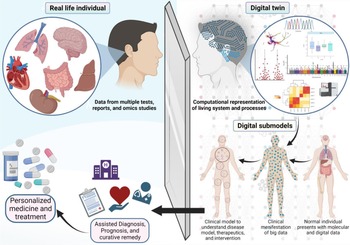
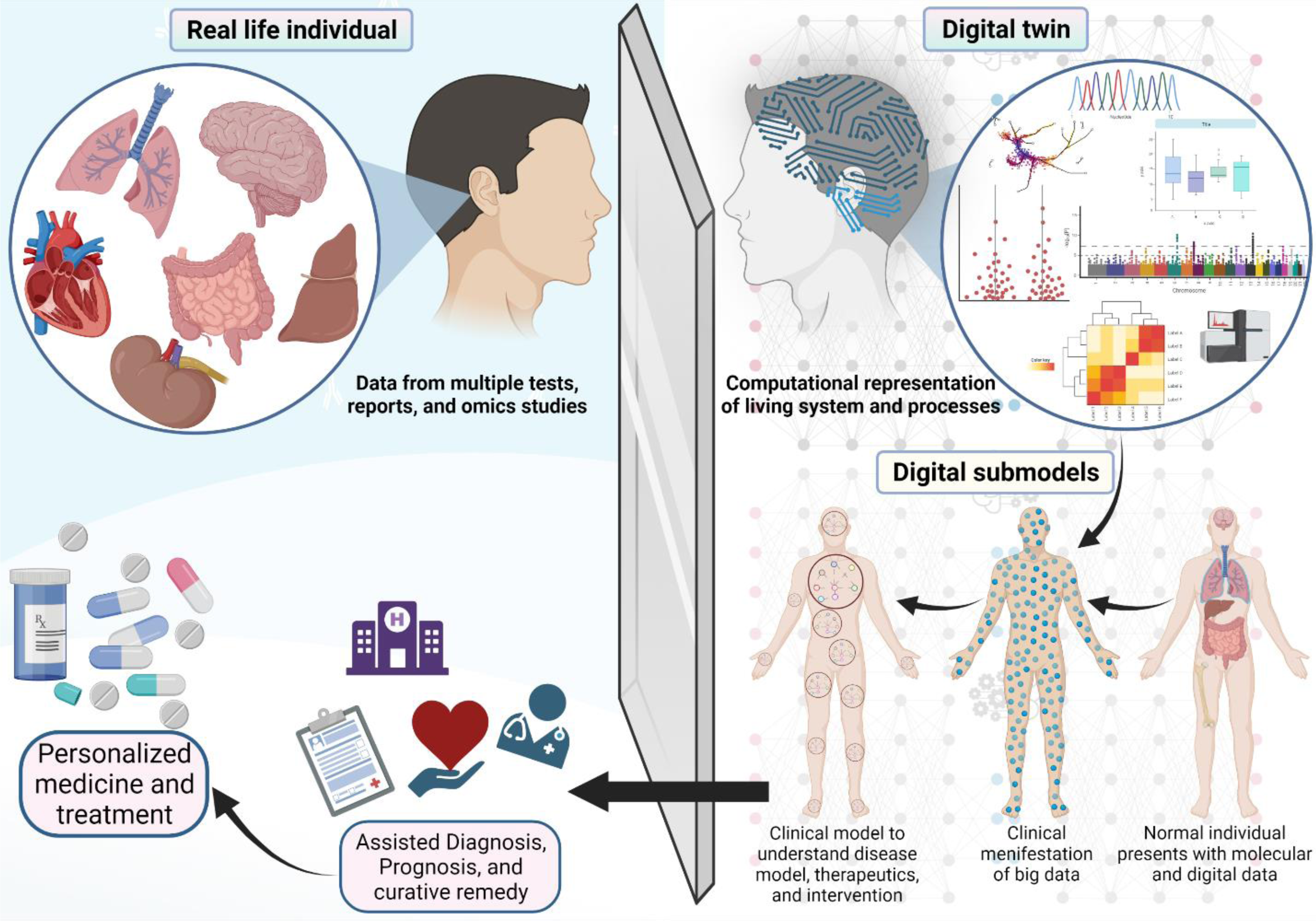
Time course longitudinal studies in twins are sometimes challenging. This can be further complicated by real-life problems related to sampling, quality control between sample collections, nonavailability of one subject and performing analyte assay. One way to address this problem might be to make a digital counterpart of the individual, forming digital twins (DTs; see Figure 2). DTs will enable the capture of all biological parameters in the finest granularity at the cellular and molecular resolution (Bashiardes et al., Reference Bashiardes, Godneva, Elinav and Segal2018; Harris et al., Reference Harris, Hjelmborg, Adami, Czene, Mucci and Kaprio2019). A range of longitudinal clinical data can be collected, analyzed and modeled for future disease prognosis. In twin research, DT may capture all ranges of invaluable data from one twin (biochemical, pathological, radiological) and can extrapolate it to model the healthcare risk in the sibling under a different set of conditions (Masison et al., Reference Masison, Beezley, Mei, Ribeiro, Knapp, Vieira, Adhikari, Scindia, Grauer and Helba2021). This approach will set the foundation for P4 medicine (predictive, preventive, personalized and participative). DTs can be an essential step to personalized medicine and healthcare. With smarter technologies in place that can perform seamless 24×7 healthcare monitoring using wearable gadgets (e.g. fitbits, GOQii smart vital Plus, or a continuous glucose monitor for blood glucose, which works through a tiny sensor inserted under the skin that measures interstitial glucose level), so that monitoring twin health parameters is now easier (Croatti et al., Reference Croatti, Gabellini, Montagna and Ricci2020; Park et al., Reference Park, Mishra, Golledge and Najafi2021; Tao & Qi, Reference Tao and Qi2019; Zobel-Roos et al., Reference Zobel-Roos, Schmidt, Uhlenbrock, Ditz, Köster and Strube2020). Even more interesting is that one can develop disease susceptibility models that detect symptoms early, giving physicians and patients enough time for a contingency plan. The models can use statistical modeling, machine learning and artificial intelligence, mechanistic modeling and a digital framework to integrate and augment experimental and clinical data, identify mechanisms and predict outcomes even under unseen scenarios (Jiang et al., Reference Jiang, Jiang, Zhi, Dong, Li, Ma, Wang, Dong, Shen and Wang2017; Mintz & Brodie, Reference Mintz and Brodie2019; Yu et al., Reference Yu, Beam and Kohane2018). DTs can monitor infection cycles with drug resistance and microbial pathogenesis. Multiple simulations can be performed on DTs to obtain an understanding of the mechanism of drug action in a preclinical setup.
Concept of digital twins in twin research. Using digital-based modeling platforms and artificial intelligence, twin research may be enhanced by simulating different conditions that are not possible in real-life scenarios. Information from these studies will be helpful to understand the effect of external mediators on twin biology and how they respond to these simulations
Conclusion
Twin research is a precious process of unearthing the role of nature versus nurture and how the genome can interact and cross-talk with the environment to shape a phenotype. A country like India must take the strong initiative to invest in twin research by setting up a twin registry so that valuable medical information is not wasted. It is worth appreciating that smaller nations such as Sri Lanka already had well-established twin registries back in 2015 as part of the Colombo Twin and Singleton Follow-up Study (Jayaweera et al., Reference Jayaweera, Craig, Zavos, Abeysinghe, De Alwis, Andras, Dissanayake, Dziedzic, Fernando and Glozier2019; Jayaweera et al., Reference Jayaweera, Warnakula, Dissanayake, Adikari, Siribaddana, Zavos, Rijsdijk, Zunszain, Pariante and Glozier2020; Sumathipala et al., Reference Sumathipala, Siribaddana, De Silva, Fernando, Abeysingha, Dayaratne, De Silva, Warnasuriya and Hotopf2002). If supported now, we might end up reaping its fruits in the next couple of years. Besides a data repository bank, twin research will also substantially improve our knowledge of the underlying population variabilities in common and complex traits and genetics (Hur et al., Reference Hur, Bogl, Ordoñana, Taylor, Hart, Tuvblad, Ystrom, Dalgård, Skytthe and Willemsen2019)
Acknowledgments
The authors would like to thank the Department of Biomedical Informatics at the Indian Council of Medical Research, New Delhi, India for providing computation space and data support and the Department of Biochemistry at All India Institute of Medical Sciences for providing logistics.
Authors’ Contributions
RD and SR drafted the manuscript with assistance from TS, AN, DK and JBS. TS helped to draw the animated images. HS and SK are corresponding authors. SK conceptualized the study and oversees the whole work.
Financial Support
No financial support was received for this study.
Conflict of Interest
None.
Ethical Standards
No approval from ethics was needed for this paper.