

The adoption of automated milking systems (AMSs) has expanded globally since their introduction in the 1990s (Bach and Cabrera, Reference Bach and Cabrera2017), driven by labour shortages and the desire for greater production efficiency, profitability and improved quality of life for farmers. Beyond operational benefits, AMS have also been associated with enhanced individualized animal management, fostering better health and welfare outcomes (Tse et al., Reference Tse, Barkema, Devries, Rushen and Pajor2018a; Matera et al., Reference Matera, Silva Boloña and O'Brien2024). The benefits and worldwide adoption of AMS have attracted increasing research interest, with the number of studies on this technology increasing over the last two decades (Cogato et al., Reference Cogato, Brščić, Guo, Marinello and Pezzuolo2021). Several reviews have summarized technological trends and research gaps, addressing the evolution of the AMS over time and the current status of scientific research and patents (Lyons et al., Reference Lyons, Kerrisk and Garcia2014; John et al., Reference John, Clark, Freeman, Kerrisk, Garcia and Halachmi2016; Cogato et al., Reference Cogato, Brščić, Guo, Marinello and Pezzuolo2021; Marques et al., Reference Marques, Lage, Bruno, Fausak, Endres, Ferreira and Lima2023).
Initially developed for zero-grazing systems (Cogato et al., Reference Cogato, Brščić, Guo, Marinello and Pezzuolo2021; Marques et al., Reference Marques, Lage, Bruno, Fausak, Endres, Ferreira and Lima2023), AMS were later integrated into pasture-based farms (Matera et al., Reference Matera, Silva Boloña and O'Brien2024). On a global scale, it is estimated that only 10–15% of milk production is in pasture-based systems (Moscovici Joubran et al., Reference Moscovici Joubran, Pierce, Garvey, Shalloo and O'Callaghan2021), and the integration of AMS represents less than 1% of farms worldwide (Eastwood and Renwick, Reference Eastwood and Renwick2020). The slower adoption of AMS in pasture-based systems remains less well understood and has been associated with challenges such as greater distances between grazing areas and the milking unit, which can affect cow traffic and system efficiency. In addition, the limited availability of comparative studies evaluating the productive and economic performance of pasture-based AMS relative to conventional milking systems (e.g., herringbone, parallel or rotary systems; Gargiulo et al., Reference Gargiulo, Lyons, Kempton, Armstrong and Garcia2020) may also contribute to this scenario.
Despite the limited integration of AMS and pasture-based systems, studies suggest that this practice offers significant benefits, including reduced feed costs (O'brien and Hennessy, Reference O'brien and Hennessy2017), improved milk quality (O'Callaghan et al., Reference O'Callaghan, Mannion, Hennessy, McAuliffe, O'Sullivan, Leeuwendaal, Beresford, Dillon, Kilcawley and Sheehan2017) and enhanced animal health, thereby contributing to the overall sustainability of dairy production (Shortall et al., Reference Shortall, Shalloo, Foley, Sleator and O'Brien2016). To our knowledge, no previous bibliometric review has focused specifically on pasture-based AMS, underscoring the need for an in-depth analysis of this topic. Also, to provide an overview of vantages and barriers influencing the adoption of AMS in pasture-based systems and to summarize the existing knowledge, this bibliometric review aims to: (1) describe the evolution of research on pasture-based AMS over time; (2) characterize the main research themes; (3) identify the forage species addressed; (4) highlight emerging trends and opportunities for pasture-based AMS; and (5) identify key challenges and directions for future research.
Materials and methods
Protocol
This review was conducted in accordance with the guidelines of the Preferred Reporting Items for Systematic Reviews and Meta-Analyses protocol (PRISMA; Page et al., Reference Page, McKenzie, Bossuyt, Boutron, Hoffmann, Mulrow, Shamseer, Tetzlaff, Akl, Brennan and Chou2021), using a bibliometric review approach. As this study did not involve the use of animals or human subjects, approval from an Animals or Ethics Committee or Human Research Ethics Committee was not required.
Search strategy
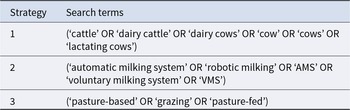
A systematic search was conducted exclusively on March 14, 2025, in the Web of Science (WoS) and Scopus (Scp) databases. An updated search was performed on February 19, 2026, and no additional studies meeting the inclusion criteria were identified. For this purpose, English search terms related to pasture-based AMS were employed, combined with Boolean operators (i.e., AND, OR and NOT) to connect words or phrases, as well as wildcard truncation (indicated by quotation marks ‘’) to encompass different forms of words. Table 1 presents the search terms used. No restrictions on the year of publication were applied. The studies were validated based on the correspondence between their keywords and the search terms used.
Search strategy to identify articles for the systematic review characterizing pasture-based automatic milking systems in dairy cow operations, published in English during March 2025
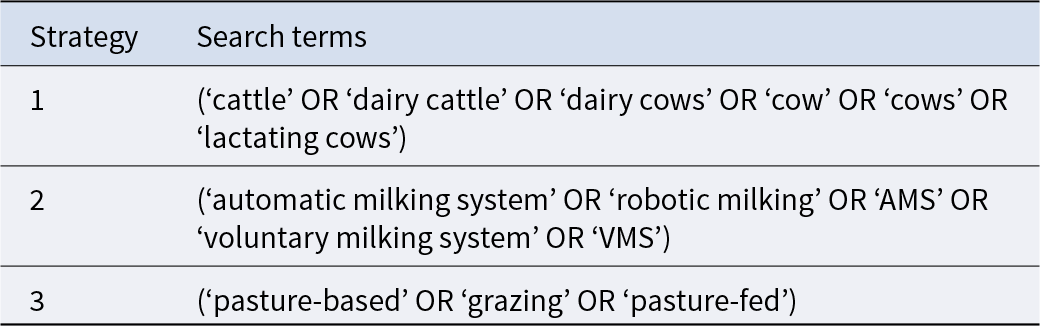
Table 1 Long description
The table lists a three-part keyword strategy for locating research articles. Strategy 1 captures the animal and production context using terms such as cattle, dairy cows, cow, and lactating cows. Strategy 2 targets the milking technology using terms including automatic milking system, robotic milking, AMS, voluntary milking system, and VMS. Strategy 3 narrows results to grazing systems using terms such as pasture-based, grazing, and pasture-fed. Each strategy is a set of synonyms intended to be combined in a database search so results include dairy cows, automated milking, and pasture or grazing conditions. The table provides search terms only and does not report counts of records retrieved or database-specific syntax.
Study inclusion criteria and screening
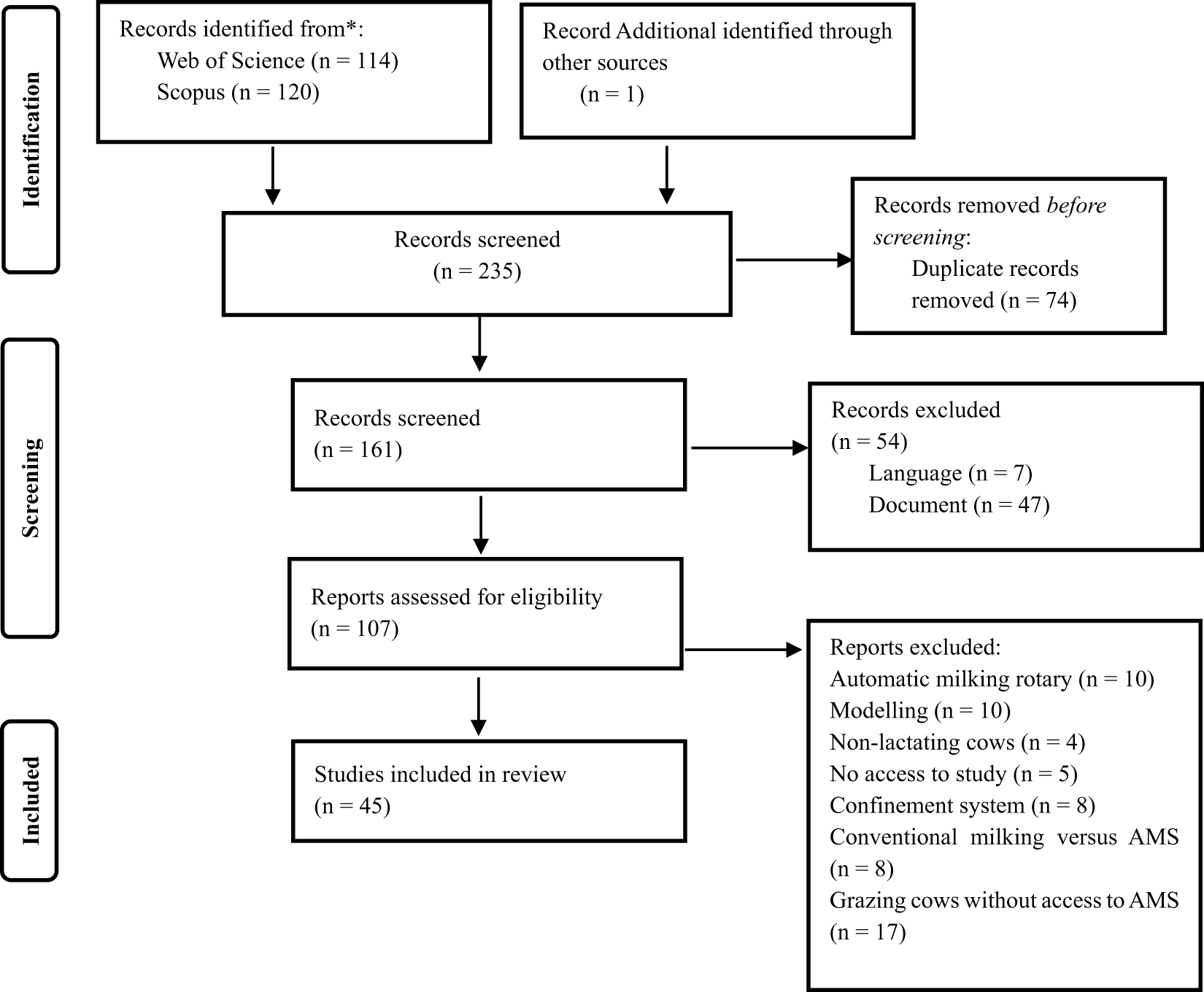
The search conducted in the WoS database returned 114 results, while 120 results were returned by the Scp search. One article was added based on the reference list of previous articles. In total, 235 results were imported into the Mendeley® software. After importing, duplicates were removed, followed by a four-stage screening and evaluation process to select relevant articles. All screening stages were conducted manually by the first author. Titles, abstracts and full texts were carefully read and evaluated to ensure that the selected studies met the inclusion criteria. No automated selection procedures were applied beyond duplicate removal. In the first stage, articles written in languages other than English were excluded. In addition, review articles, theses, books, book chapters, conference proceedings and reports were removed, as it was not possible to ensure that these sources had been peer-reviewed. In the second stage, the titles and abstracts of the selected articles were analysed to exclude literature outside the subject. For example, articles that deal with AMS in confinement, automatic milking rotary, pasture milk production systems without automated milking, studies with non-lactating cows, modelling and/or studies unavailable in the databases consulted were removed. In the third stage, all titles and abstracts were re-evaluated to identify and exclude articles that did not address the main topic of interest. Also, articles containing experimental research wereexcluded if the experiment did not specifically address pasture-based AMS. Finally, in the fourth stage, the remaining articles were included in our review and analysed in detail.
Data extraction
The selected articles were then analysed in R (version 4.4.3; R Core Team, 2025) using the Bibliometrix package (version 4.3.3). The bibliometric analysis was based on terms extracted from the included articles, and research terms emerged from their frequency, co-occurrence and temporal occurrence across the literature corpus, without prior manual categorization by the authors. Bibliometrix is an open-source package developed specifically for carrying out bibliometric and co-citation analyses on scientific publications (Dervis, Reference Dervis2019). The tool makes it possible to investigate the intellectual structure of scientific domains through network analysis, employing multiple correspondence analyses based on keywords, titles and abstracts of studies (Aria and Cuccurullo, Reference Aria and Cuccurullo2017). The co-occurrence network was built to analyse the connections between the terms present in the abstracts of the articles, reflecting the relationship between different areas of knowledge (Cobo et al., Reference Cobo, López-herrera, Herrera-viedma and Herrera2011). In this occurrence network, the size of each node (circle) represents the frequency of occurrence of the term in the selected articles, while the links between the nodes indicate the strength of the associations between the concepts and their respective areas of knowledge (Aria and Cuccurullo, Reference Aria and Cuccurullo2017). To analyse trends in terms used in the pasture-based AMS, a Bibliometrix ‘Trend Topics’ graph (Aria and Cuccurullo, Reference Aria and Cuccurullo2017) was made, which highlights the words in the abstracts of the most popular authors at specific times. To identify trend terms, a minimum frequency threshold of five occurrences and the display of up to three intervals per year were adopted. To explore potential patterns between journals, institutions and keywords, the Bibliometrix ‘three-field plot’ map was constructed. In this map, thicker links indicate stronger collaboration between the connected elements, while thinner links indicate less frequent interaction (Aria and Cuccurullo, Reference Aria and Cuccurullo2017). Additionally, a Microsoft Excel® spreadsheet was created with the information extracted from the selected studies, including study identification, author, year, title, objective, research area, country, herd characteristic (e.g., number of animals, breed, days in lactation, milk production and milking frequency), AMS brand, number of AMS and pasture species.
Results and discussion
Overview
The results of the search, as well as the flow of inclusions and exclusions, are presented in Figure 1. The publication year of the 45 articles included in this review ranged from January 2004 to March 2025. Considering the research advances in this field of the last 20 years, it is important to highlight that the combination of AMS and pasture-based systems was first reported in the early 2000s in New Zealand as part of a research project (Jago et al., Reference Jago, Jackson, Davis, Wieliczko, Copeman, Ohnstad, Claycomb, Woolford, Meijering, Hogeveen and de Koning2004). In the same year, this integration was adopted in Australia, initially on a commercial farm, and in 2006, a pasture-based AMS was implemented as part of the ‘National Future Dairy Program’ (Greenall et al., Reference Greenall, Warren, Warren, Meijering, Hogevven and de Koning2004). Then, several studies have been conducted to investigate pasture-based AMS. The studies published in the last two decades have provided both theoretical and practical knowledge, and have also helped identify knowledge gaps, for both the dairy industry and farmers who use or are interested in adopting the system.
PRISMA flow diagram illustrating the selection process of studies included in the bibliometric analysis of pasture-based automatic milking systems in milk production systems.

Figure 1 Long description
The diagram shows the PRISMA approach to selection of literature, from identification to screening to the final selection of included articles. 235 articles were identified, reduced to 161 after removal of duplicates, with 54 further exclusions, resulting in assessment for eligibility of 107 reports and finally leaving 45 studies for consideration in the review.
Main affiliations, journals and keywords
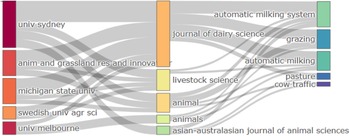
A three-field plot map representing connections among three fields of analysis is shown in Figure 2. The fields of analysis were defined according to the research objectives (Aria and Cuccurullo, Reference Aria and Cuccurullo2017) included in this review. For this analysis, institutional affiliations, journals (or sources) and keywords were selected. Thicker links indicate stronger collaboration between the connected elements, while thinner links represent less frequent interactions. In this way, it is possible to observe patterns in the journals where certain universities commonly publish, allowing for a deeper understanding of each research field and the keywords used (Linnenluecke et al., Reference Linnenluecke, Marrone and Singh2020).
Diagram of the main relationships between affiliations, sources/journals and keywords of the 45 articles included in this review. The figure is organized as a three-field diagram, where each column represents a bibliography dimension and nodes to the most frequent items within each bibliography field (i.e., affiliations, sources/journals and keywords). Connections between nodes indicate co-occurrence within the same study, linking affiliations, publication outlets and thematic keywords. Thicker links indicate a higher frequency of co-occurrence between connected elements, whereas thinner links represent less frequent associations.
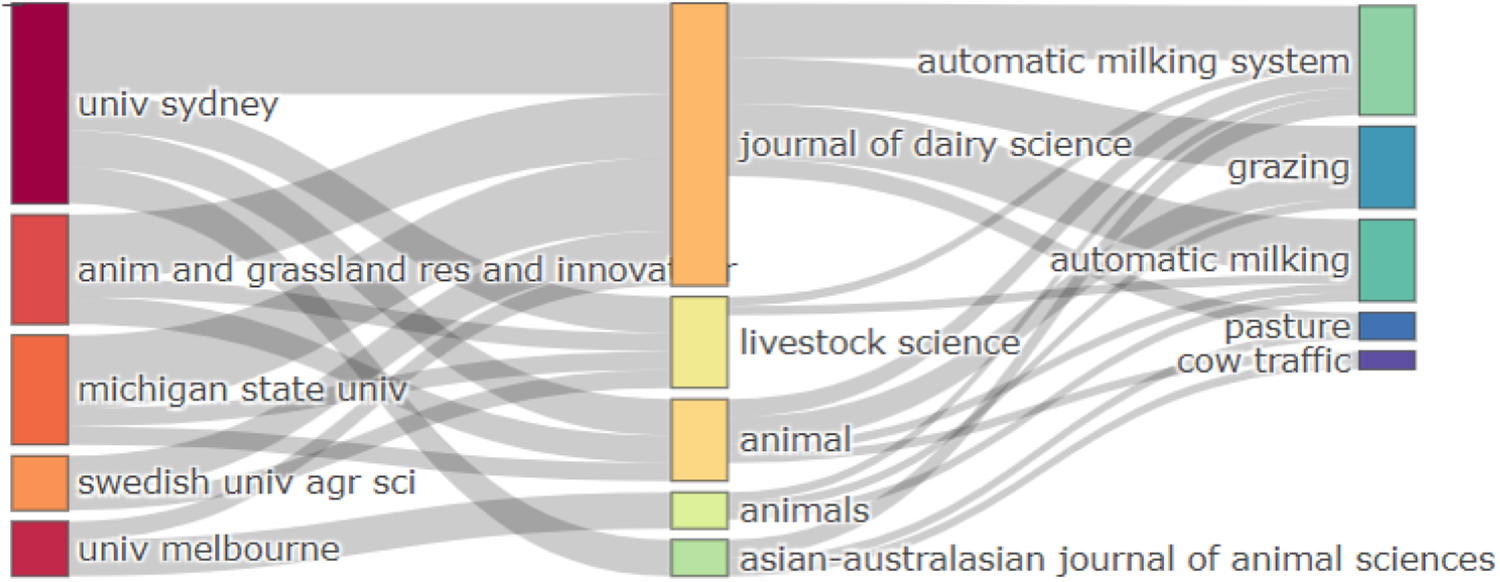
Figure 2 Long description
The diagram displays connections between three fields: affiliations, journals and keywords. The affiliations listed are 'univ sydney', 'anim and grassland res and innova', 'michigan state univ', 'swedish univ agr sci' and 'univ melbourne'. The journals include 'automatic milking system', 'journal of dairy science', 'livestock science', 'animal', 'animals' and 'asian-australasian journal of animal sciences'. Keywords are 'grazing', 'automatic milking', 'pasture' and 'cow traffic'. Lines connect these elements, indicating relationships between affiliations, publication outlets and thematic keywords.
The connection between the University of Sydney and the journal Animal is associated with the five keywords ‘automatic milking system’, ‘automatic milking’, ‘grazing’, ‘pasture’ and ‘cow traffic’, although these interactions are less frequent. The University of Sydney, Michigan State University and the Animal and Grassland Research and Innovation Centre have a strong connection with the Journal of Dairy Science. The high frequency of keywords such as ‘automatic milking system’, ‘automatic milking’ and ‘grazing’ suggests that the journal has established itself as an important outlet for scientific dissemination focused on the interface between pasture-based AMS technologies and the interaction between technological innovation and more sustainable management practices. Additionally, journals such as Livestock Science, Animals and Asian-Australasian Journal of Animal Sciences also appear with interactions involving institutions and keywords, although with lower intensity.
Trends in research on pasture-based AMS
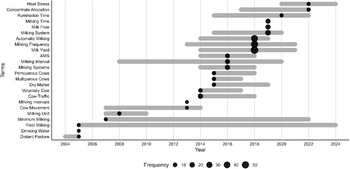
The use of trend graphs provides an overview of the temporal evolution of the most relevant terms over time. The terms analysed are shown in Figure 3. It is observed that the expression ‘milk yield’ peaked at 58 occurrences, followed by ‘milk frequency’, with 48 occurrences, and ‘automatic milking’, with 44 occurrences, during the period from 2015 to 2019. The use of these terms in different periods demonstrates the continued interest in productive performance and system efficiency. Since 2013, there has been a rise in studies focused on cow movement within pasture-based automated milking systems. Starting in 2018, emerging terms such as ‘concentrate allocation’, ‘heat stress’ and ‘pasture-based automatic’ emerged, representing new lines of research.
Trending words in the articles (n = 45) included in the bibliometric review regarding pasture-based automatic milking systems from 2004 to March 2025. The grey line represents the interval of occurrence of the term over time. The black circle indicates the year with the highest concentration of the term, and the size of the circle represents its total frequency.
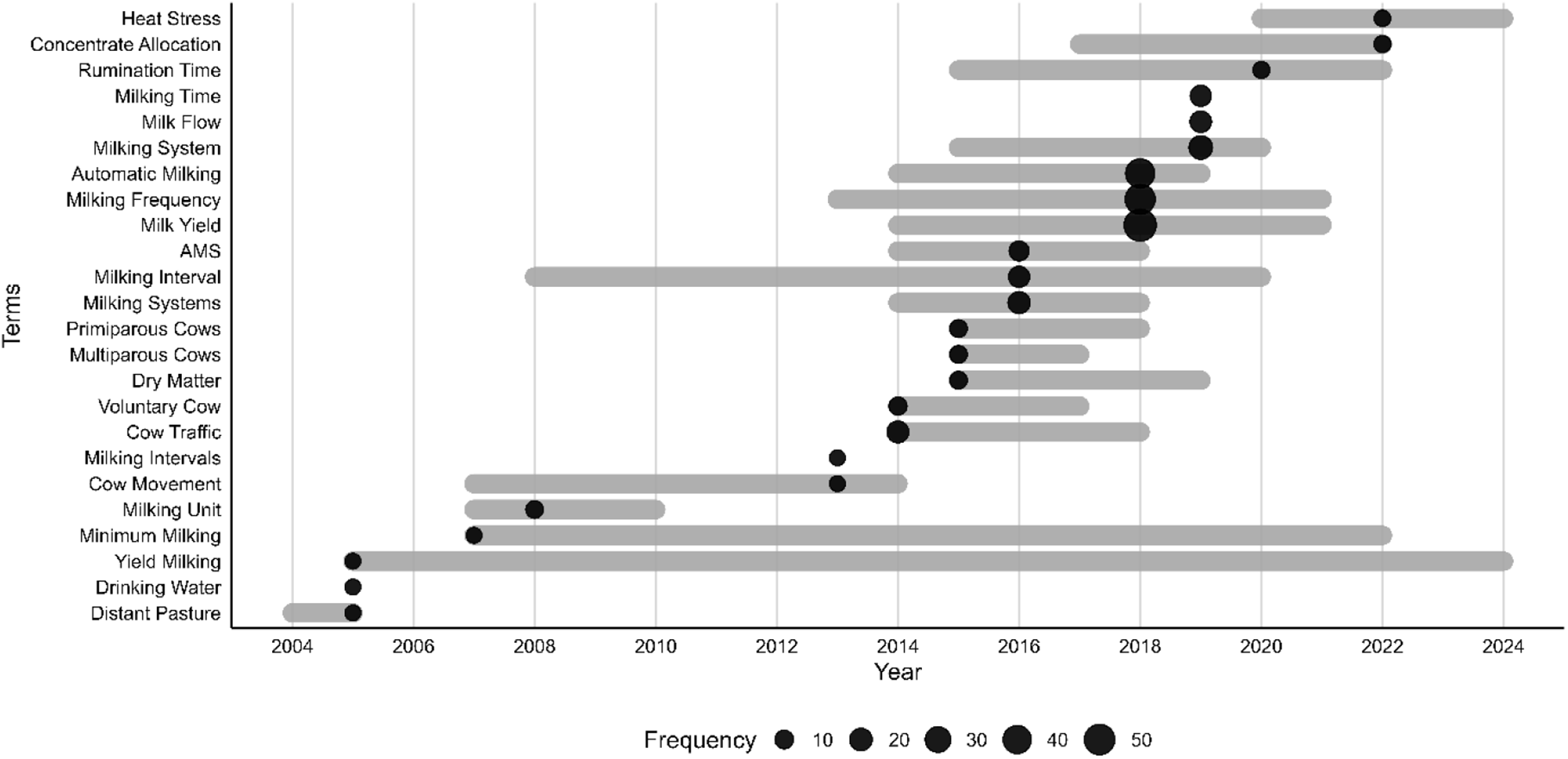
Figure 3 Long description
Trending words in the articles (n = 45) included in the bibliometric review regarding pasture-based automatic milking systems from 2004 to March 2025. A bubble timeline plot with terms listed on the vertical axis and year on the horizontal axis. The horizontal axis label is Year, with tick labels 2004, 2006, 2008, 2010, 2012, 2014, 2016, 2018, 2020, 2022 and 2024. The vertical axis label is Terms. Each term has a horizontal line segment and one black circle placed on that line. A legend below the plot is labeled Frequency and shows circle sizes labeled 10, 20, 30, 40 and 50. Terms listed from top to bottom are: Heat Stress; Concentrate Allocation; Remote Time; Rumination Time; Milk Yield; Milking System; Automatic Milking; Milking Frequency; Milk Yield; AMS; Milking Interval; Milking Systems; Pasture Cows; Multiparous Cows; Dry Matter; Voluntary Cow; Cow Traffic; Milking Interval; Cow Movement; Cow Milking Unit; Minimum Milking; Yield Milking; Drinking Water; Pasture. Black circles appear mainly between 2014 and 2021, with several circles clustered around 2017 to 2019. The largest circles are shown for Milk Yield, Milking Frequency and Automatic Milking. The horizontal line segments for several terms extend across multiple years and some extend from the mid two thousand single digits to the early two thousand twenties.
Geographic location
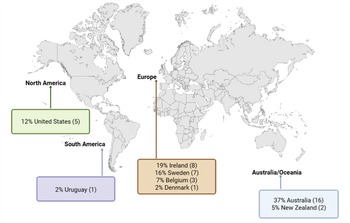
The studies were mainly conducted in Europe (44%, 19/43), followed by Australia/Oceania (42%, 18/43), North America (12%, 5/43) and South America (2%, 1/43), as illustrated in Figure 4. Australia contributed the largest number of studies (37%, 16/43), which may be explained by the high percentage of livestock farming based on pasture (Lessire et al., Reference Lessire, Moula, Hornick and Dufrasne2020). In Australia, approximately 60–65% of a cow’s dry matter comes from grazing over the course of a year (Dairy Australia, 2025). Similarly, New Zealand has 11.1 million hectares of pasture, of which 5.4 million hectares are used for milk production (Schipper et al., Reference Schipper, Parfitt, Ross, Baisden, Claydon and Fraser2010); then, pasture can account for 82% of the composition of dairy cows’ diets (Roche et al., Reference Roche, Berry, Bryant, Burke, Butler, Dillon, Donaghy, Horan, Macdonald and Macmillan2017; Wales and Kolver, Reference Wales and Kolver2017). Ireland is well represented among European countries, as more than 80% of its agricultural area is used for producing pasture, hay and forage silage (European Commission: Agriculture in Ireland, 2025), and approximately 80% of cows’ dry matter intake comes from pasture (O'brien and Hennessy, Reference O'brien and Hennessy2017). Many other countries in Europe, North America and South America also include pasture in their dairy cows’ diets, but with lower inclusion rates than in New Zealand, Ireland and Australia, due to the shorter grazing season or adverse weather conditions (Farina et al., Reference Farina, Baudracco and Bargo2021; Morales et al., Reference Morales, Cockrum, Teixeira, Ferreira and Hanigan2024). In South America, Uruguay stands out, with dairy herd diets consisting, on average, of 56% pasture and 44% conserved forages and concentrates (INALE, 2019).
Geographic distribution of studies (n = 43) included in the bibliometric review regarding pasture-based automatic milking systems.

Figure 4 Long description
The map illustrates the geographic distribution of studies related to pasture-based automatic milking systems across different regions. In North America, 12 percent of studies are from the United States, totaling 5 studies. South America contributes 2 percent with 1 study from Uruguay. Europe accounts for several countries: Ireland with 19 percent (8 studies), Sweden with 16 percent (7 studies), Belgium with 7 percent (3 studies) and Denmark with 2 percent (1 study). Australia/Oceania shows significant contributions, with Australia at 37 percent (16 studies) and New Zealand at 5 percent (2 studies). Each region is marked with a percentage and the number of studies conducted, highlighting the focus areas in the research field.
Breed composition and brands of pasture-based AMSs
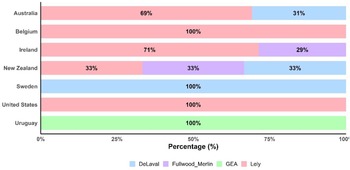
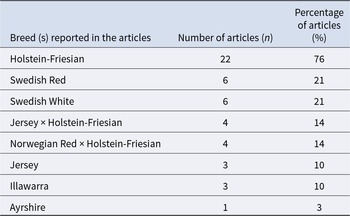
Of the 29 articles that reported the breeds included in the studies (Table 2), the majority evaluated Holstein-Friesian (76%, 22/29), followed by Swedish Red and White (21%, 6/29) and crossbreeds (Jersey × Holstein-Friesian and Norwegian Red × Holstein-Friesian – 14%, 4/29). Cattle breed was not reported in 16 articles (35%, 16/45). The distribution of AMS brands in relation to countries is shown in Figure 5. Thirty-seven articles mentioned the brand of the pasture-based AMS. Lely equipment was referenced in 57% (21/37) of the studies, followed by DeLaval (30%, 11/37), Fullwood Merlin (8%, 3/37) and GEA (3%, 1/37). The number of AMS varied from one to four across the studies, and in only one study (3%, 1/37), there was more than one brand (Lely and DeLaval). It is important to highlight that the Lely brand was already identified as predominant around the world dairy farms in another review (Marques et al., Reference Marques, Lage, Bruno, Fausak, Endres, Ferreira and Lima2023), even in zero-grazing systems. This may be related to Lely’s early development of AMS technology, with the first four units installed in 1992 (Bottema, Reference Bottema, Ipema, Lippus, Metz and Rossing1992).
Percentage of the main brands of milking robots by countries in the studies (n = 37) included in the bibliometric review regarding pasture-based automatic milking systems.

Figure 5 Long description
The stacked bar graph has the horizontal axis label Percentage left parenthesis percent right parenthesis, with tick labels 0 percent, 25 percent, 50 percent, 75 percent, 100 percent. The vertical axis lists Australia, Belgium, Ireland, New Zealand, Sweden, United States, Uruguay. Australia: 69 percent and 31 percent. Belgium: 100 percent. Ireland: 71 percent and 29 percent. New Zealand: 33 percent, 33 percent and 33 percent. Sweden: 100 percent. United States: 100 percent. Uruguay: 100 percent. Legend labels: DeLaval, Fullwood underscore Merlin, G E A, Lely.
Description of dairy cattle breeds reported in the studies included in the bibliometric review regarding pasture-based automatic milking systems
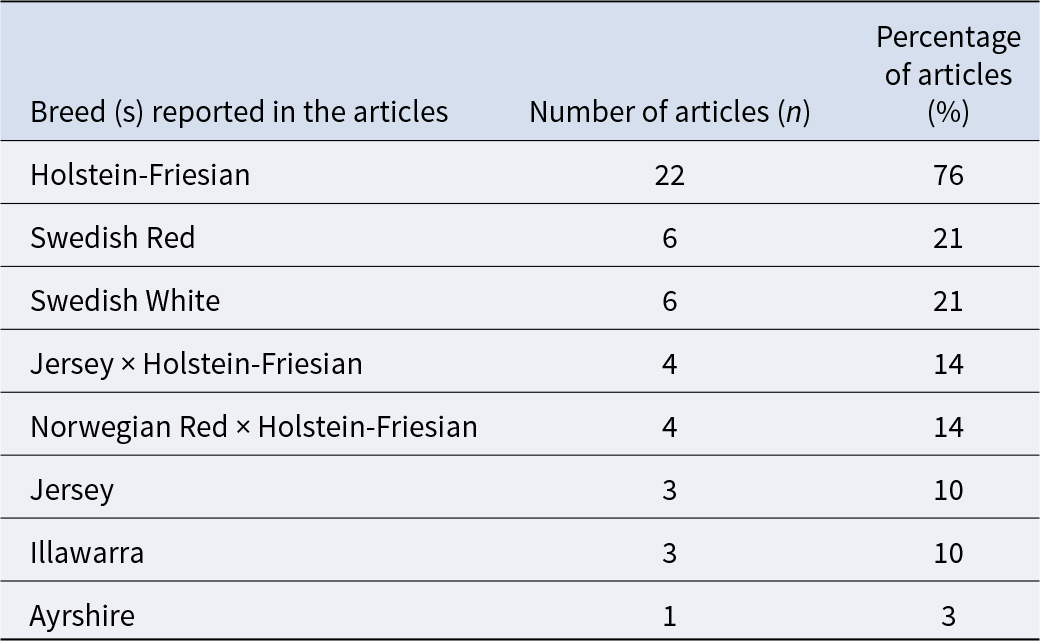
Table 2 Long description
The table summarizes which dairy cattle breeds were reported across the subset of studies that provided breed details. Holstein-Friesian is most common, reported in 22 articles, representing 76 percent of the articles with breed information. Swedish Red and Swedish White are the next most frequent, each reported in 6 articles, or 21 percent. Crossbreeds Jersey by Holstein-Friesian and Norwegian Red by Holstein-Friesian each appear in 4 articles, or 14 percent. Jersey and Illawarra are each reported in 3 articles, or 10 percent, and Ayrshire appears in 1 article, or 3 percent. Percentages are based only on the articles that reported breeds, and totals can exceed 100 percent because some articles mention more than one breed.
Note: The percentages for the breeds, based on the 29 articles that reported them, do not add up to 100%, as more than one breed may be described in a single article.
Values are expressed as the number of articles (n) and the percentage of articles (%) in which each breed was reported. Percentages were calculated based on the total number of articles that provided breed information (n = 29).
Words from abstracts reported for pasture-based AMSs
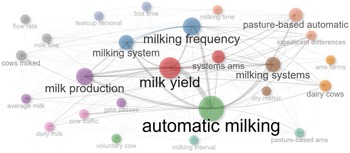
The co-occurrence network analysis and the connections between the most relevant words used in the abstracts are presented in Figure 6. The aim of this analysis is to examine the co-occurrence of specific terms in abstracts of the articles, providing a deeper understanding of the prominent themes, patterns and research areas (Aria and Cuccurullo, Reference Aria and Cuccurullo2017). This analysis contributes to a clearer delineation of the main areas of interest and research directions in this field (Gutiérrez-Salcedo et al., Reference Gutiérrez-Salcedo, Martínez, Moral-Munoz, Herrera-Viedma and Cobo2018). The red cluster focuses on variables associated with milk production. The purple and pink clusters reinforce the relationship between operational dynamics and production performance, suggesting critical factors that influence milk yield in pasture-based AMSs. The brown cluster addresses the performance of the pasture-based AMS and denotes management strategies that directly impact the system’s productivity. Finally, the clusters represented by the colours blue and black are directly associated with the operational efficiency of the milking process.
Co-occurrence network of the words in the abstracts from the 45 articles included in this bibliometric review. The size of the label and circle is determined by the number of times the word was used, and the links show the relationship between the knowledge areas, where the closing words have a strong relationship.

Figure 6 Long description
The diagram illustrates a co-occurrence network of terms associated with automatic milking systems. Central to the network is the term 'automatic milking,' represented by a large green circle, indicating its high frequency of occurrence. Connected to it are various terms such as 'milk yield,' 'milking frequency,' and 'milking system,' each represented by circles of different colors and sizes, reflecting their frequency and relevance. 'Milk yield' is shown with a red circle, 'milking frequency' with a blue circle and 'milking system' with a purple circle. Lines connect these terms, indicating relationships and co-occurrences. Other terms like 'pasture-based automatic,' 'milk production,' and 'systems-ams' are also present, each linked to multiple other terms, forming a complex web of connections. The network visually represents the interrelated concepts and themes within the domain of automatic milking systems, highlighting key areas such as 'pasture-based ams,' 'dairy cows,' and 'significant differences,' among others. The size of each circle and label is determined by the frequency of the term's occurrence, with larger circles indicating more frequently used terms.
Forage species
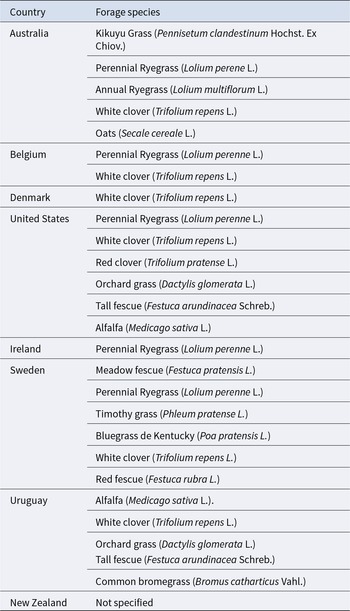
We found that white clover (Trifolium repens L.) and perennial and annual ryegrass (Lolium multiflorum L.) were present in most of the countries included in this review, 87.5% (7/8) and 75% (6/8) of them, respectively (Table 3). In the grazing systems prevalent in northwestern Europe (north temperate climate regions), New Zealand, Australia and the southern part of Latin America (south temperate climate regions), grazed pasture is the main source of food for cattle. In these countries, cows graze for more than 270 days a year (O'Brien et al., Reference O'Brien, Moran and Shalloo2017). Pastures in these regions are composed of different species of grasses and legumes, with perennial ryegrass (Lolium perenne L.) being the predominant species of grasses due to its high productivity and nutritional quality (Morales et al., Reference Morales, Cockrum, Teixeira, Ferreira and Hanigan2024). In addition, legumes have demonstrated not only productive benefits but also environmental ones, standing out for their ability to reduce nitrous oxide emissions, fix atmospheric nitrogen and reduce the carbon footprint (Yan et al., Reference Yan, Humphreys and Holden2013). Nevertheless, the efficiency of pastoral systems depends not only on the choice of forage species but also on the ability to ensure a continuous and balanced supply of forage throughout the year. Another important aspect of these systems is the continuous production of pasture throughout the year, especially in temperate regions, where forage growth can be limited at certain times due to the end of the forage species’ cycle and adverse environmental conditions. To meet the animals’ nutritional requirements, the diet is generally supplemented with concentrates and preserved fodder to guarantee an adequate supply of energy for dairy cows.
Description of forage species by countries in the studies included in the bibliometric review regarding pasture-based automatic milking systems
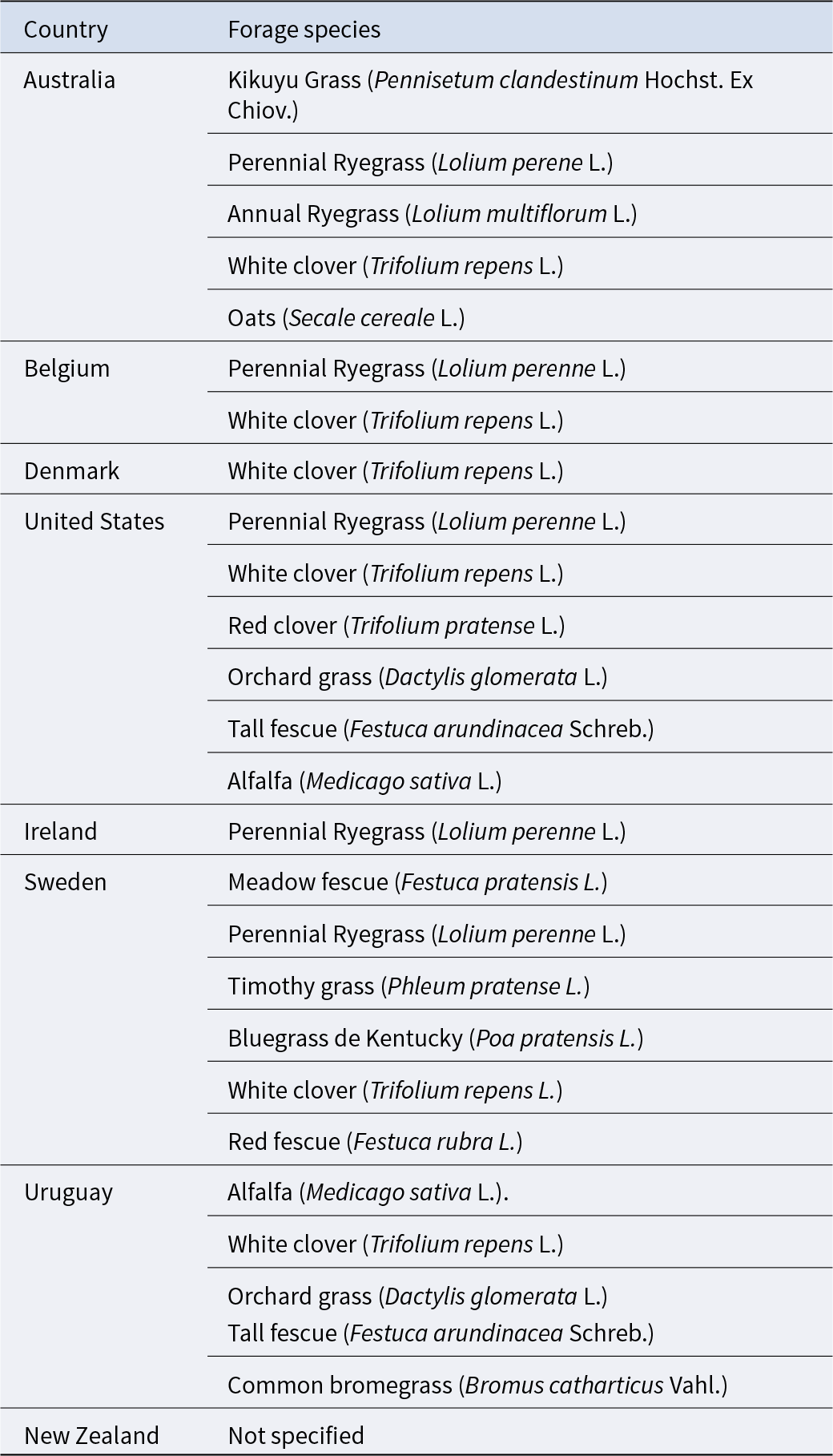
Table 3 Long description
The table lists forage species reported in pasture-based automatic milking system studies, organized by country. Perennial ryegrass and white clover appear in multiple countries, including Australia, Belgium, the United States, Ireland, and Sweden, indicating they are common baseline forages. Australia includes kikuyu grass, perennial and annual ryegrass, white clover, and oats, showing a diverse set of forages. Sweden also reports a broad mix, including meadow fescue, perennial ryegrass, timothy, Kentucky bluegrass, white clover, and red fescue. The United States and Uruguay list several additional species beyond ryegrass and clovers, such as orchard grass, tall fescue, and alfalfa, with the United States also including red clover. Denmark lists only white clover, Belgium lists perennial ryegrass and white clover, and Ireland lists only perennial ryegrass. New Zealand is included but the forage species are not specified, so comparisons for that country are limited.
Relationship between production indicators and forage-to-concentrate ratio
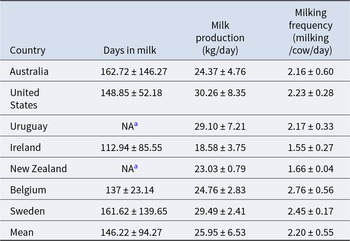
Table 4 summarizes the average values of days in milk, milk production and milking frequency reported in the articles included in this review, grouped by country. Among the articles included in this review, those conducted in Ireland reported lower average milk production (18.58 kg/cow/day; Table 4), whereas studies from the United States reported higher values (30.26 kg/cow/day; Table 4). In Belgium, although some articles reported higher milking frequencies (up to 2.76 milkings/cow/day; Table 4), milk yield values were variable. These differences should be interpreted with caution, as they are influenced by factors such as breed, management and production system. For example, Ireland and New Zealand have a high proportion of pasture in the dairy cows’ diets (∼80%), combined with a low concentrate supply (1.92 kg/cow/day). Australia is characterized by a mixed system, combining grazing (∼50%) with the provision of preserved forage and concentrate (4.00 kg/cow/day). Belgium, the United States and Sweden, in contrast, have a lower proportion of grazing (∼30%) throughout the year and are characterized by more intensive systems, with a higher concentrate supply (6.56 kg/cow/day) in dairy cow diets (Lessire et al., Reference Lessire, Moula, Hornick and Dufrasne2020). However, variations in pasture availability and concentrate supplementation among production systems may directly influence not only milk yield but also cow traffic and milking frequency in AMSs.
Characterization of days in lactation, milk production and milking frequency of cows grouped by countries in the studies included in the bibliometric review regarding pasture-based automatic milking systems
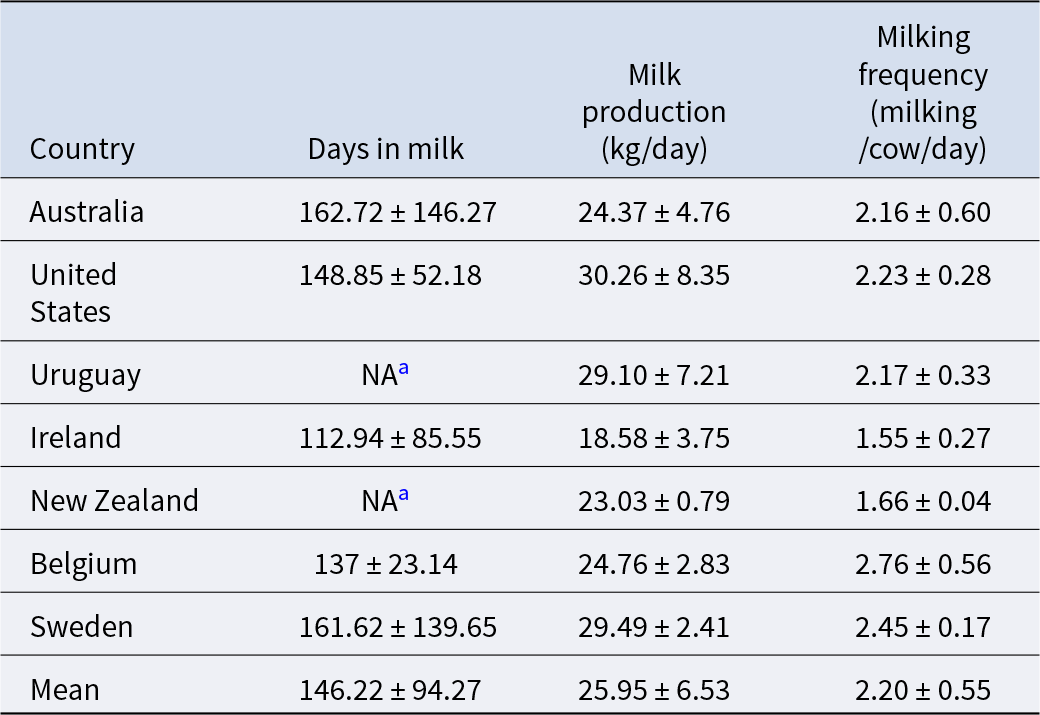
Table 4 Long description
The table summarizes average days in milk, daily milk production, and milking frequency for cows in pasture-based automatic milking system studies, grouped by country. Daily milk production is highest in the United States at about 30 kg per cow per day, followed by Sweden and Uruguay at about 29 kg, and lowest in Ireland at about 19 kg. Milking frequency is highest in Belgium at about 2.8 milkings per cow per day, while Ireland and New Zealand are lowest at about 1.6 to 1.7. Days in milk are reported for Australia, the United States, Ireland, Belgium, and Sweden, ranging from about 113 in Ireland to about 163 in Australia; Uruguay and New Zealand are not available. Across all countries, the overall mean is about 146 days in milk, about 26 kg per cow per day, and about 2.2 milkings per cow per day. Values are study-derived averages and reflect specific research conditions, so they should not be treated as representative of national production systems.
Note: Values represent averages derived from the articles included in this review and are grouped by country for descriptive purposes only. These data reflect specific study conditions and should not be interpreted as representative of national production systems, as they are influenced by factors such as breed, management and production environment.
a NA, not analysed.
Milk production, besides being a key indicator of productive efficiency on dairy farms, is directly associated, in the AMS, with the amount of concentrate offered both in the robot and in the partially mixed diet (PMR) in the feeding area. However, the ideal amount of concentrate to be offered in the robot is still unclear. In general, cows do not consume all the concentrate allocated in the robot when the concentrate supply is high (>4 kg/d; Bach and Cabrera, Reference Bach and Cabrera2017). Furthermore, a high supply of concentrate in the robot can influence the cows’ stay time. The amount of concentrate supplied and ingested in the robot depends on its composition, palatability and physical form (DeVries and Penner, Reference DeVries and Penner2022). Cows typically consume bran-based concentrate at a rate below 200–250 g/min (Spörndly and Åsberg, Reference Spörndly and Åsberg2006; Harper et al., Reference Harper, Oh, Giallongo, Lopes, Weeks, Faugeron and Hristov2016) and pelleted concentrate at rates ranging from 250 to 400 g/min (Kertz et al., Reference Kertz, Darcy and Prewitt1981). Considering an average stay in the robot of about 7 minutes (Castro et al., Reference Castro, Pereira, Amiama and Bueno2012) and an average consumption rate of 250 g/min of concentrate, cows can consume up to 1.7 kg of concentrate per milking session (DeVries and Penner, Reference DeVries and Penner2022).
The relationship between concentrate consumption in the robot and the feeding behaviour of cows also extends to the post-milking period, since both the amount of concentrate ingested during milking and PMR supplementation after that time can influence grazing behaviour and the voluntary return of cows to the milking unit. PMR supplementation in pasture-based AMS can alter cows’ grazing behaviour (Bargo et al., Reference Bargo, Muller, Delahoy and Cassidy2002), such as reducing grazing time and/or the proportion of time spent grazing (Pérez-Ramírez et al., Reference Pérez-Ramírez, Delagarde and Delaby2008; Kennedy et al., Reference Kennedy, Curran, Mayes, McEvoy, Murphy and O'Donovan2011). Nieman et al. (Reference Nieman, Steensma, Rowntree, Beede and Utsumi2015) observed a reduction of 78–36 minutes in access time to pasture per kg of PMR fed to cows on based-pasture AMS. However, this reduction in grazing time had no effect on milk production (Nieman et al., Reference Nieman, Steensma, Rowntree, Beede and Utsumi2015), suggesting that cows may have adjusted the duration and/or intensity of grazing in response to PMR supplementation. The impact of PMR supplementation and the amount of forage consumed by the animals still needs to be thoroughly investigated in pasture-based AMS.
Description of research areas and herds evaluated
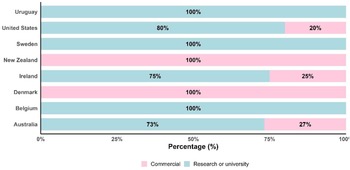
The main topics (33%, 15/45) investigated in the studies included in this review were milk yield, milk composition and AMS efficiency on pasture, followed by cow’s behaviour (27%, 12/45), nutrition (16%, 7/45), heat stress (9%, 4/45), methane emission (7%, 3/45), health disorders (2%, 1/45), economic viability (2%, 1/45), somatic cell count and mastitis (2%, 1/45) and energy consumption (2%, 1/45). There was an increase in the number of studies involving pasture-based AMS in the last decades; however, most of the results obtained remain at an experimental level (Fig. 7). Of the studies analysed, 79% (30/38) utilized research or university herds, while 21% (8/38) were conducted on commercial herds. In the remaining 16% (7/45), the herd origin was not specified. Although most of the studies were conducted in research settings, caution is warranted when extrapolating certain results, as experimental herds typically do not operate under commercial conditions and, in most cases, test the effect of different treatments on variables such as performance in controlled environments. Nevertheless, these studies play a fundamental role in research, providing valuable insights that support systems contribute to decision-making, advancing dairy production and improving milk ability under real management conditions.
Percentage of the main herds by countries in the studies (n = 38) included in the bibliometric review regarding pasture-based automatic milking systems.

Figure 7 Long description
A stacked horizontal bar graph with countries listed on the vertical axis: Uruguay, United States, Sweden, New Zealand, Ireland, Denmark, Belgium, Australia. Horizontal axis label: Percentage left parenthesis percent right parenthesis. Tick labels: 0 percent, 25 percent, 50 percent, 75 percent, 100 percent. Legend entries: Commercial; Research or university. Bar labels by country: Uruguay: 100 percent. United States: 80 percent and 20 percent. Sweden: 100 percent. New Zealand: 100 percent. Ireland: 75 percent and 25 percent. Denmark: 100 percent. Belgium: 100 percent. Australia: 73 percent and 27 percent.
Milk yield, composition and pasture-based AMS efficiency
Among the research areas identified in this review, milk production, milk composition and the efficiency of pasture-based AMS represent 33% of the analysed articles. These themes continue to be among the main topics of investigation, with significant growth in the last 10 years. This subsection describes the main approaches observed in research in this category. In general, studies have highlighted an increase in cow production after the implementation of AMS, with increases that can reach up to 12% (Jacobs and Siegford, Reference Jacobs and Siegford2012). However, this increase is related to milking frequency – one of the main performance indicators in AMS – which in turn is influenced by the interval between milkings and the distribution of cows to the AMS (Lyons et al., Reference Lyons, Kerrisk and Garcia2014).
In addition to milk production and AMS efficiency, milk composition has also been extensively investigated in the last 10 years in this pasture-based system. Pasture-based AMS is largely dependent on pasture conditions. Milk composition in pasture-based systems can be influenced by seasonal variations in forage quality and availability (Timlin et al., Reference Timlin, Tobin, Brodkorb, Murphy, Dillon, Hennessy, O'donovan, Pierce and O'callaghan2021; Hayes et al., Reference Hayes, Wallace, O'donnell, Greene, Hennessy, O'shea, Tobin and Fenelon2023). This challenge can be overcome by offering food supplements (e.g., silage and grain; Ribeiro-Filho et al., Reference Ribeiro-Filho, Dall-orsoletta, Mendes and Delagarde2021) and through a combination of pasture management strategies, such as rotational grazing (Wang and Kreuter, Reference Wang and Kreuter2024; Ge et al., Reference Ge, Xue, Ru, Li, Li, Han, Li and Huang2025). Despite that, a pasture-based diet has been associated with benefits to milk quality, such as increased milk fat and protein content (O'Callaghan et al., Reference O'Callaghan, Faulkner, McAuliffe, O'Sullivan, Hennessy, Dillon, Kilcawley, Stanton and Ross2016; Gulati et al., Reference Gulati, Galvin, Lewis, Hennessy, O'Donovan, McManus, Fenelon and Guinee2018), which may result in higher yields of dairy products (Moscovici Joubran et al., Reference Moscovici Joubran, Pierce, Garvey, Shalloo and O'Callaghan2021) and add value to the raw material.
Cows’ behaviour in pasture-based AMSs
Cow behaviour was one of the main topics analysed in the included articles, representing 27% of the publications. In general, we observed studies focused on behavioural factors that affect the voluntary movement of cows and consequently limit the efficiency of pasture-based milk AMS. The voluntary movement of cows in pasture-based AMS can be impacted by greater distances travelled by the animals and by the cows’ lower motivation to visit the robot. These behavioural limitations reduce milking efficiency, especially in medium and long herds (>200 lactating cows) typical of Australia and New Zealand (Clark et al., Reference Clark, Horadagoda, Kerrisk, Scott, Islam, Kaur and Garcia2013; Wildridge et al., Reference Wildridge, Garcia, Thomson, Jongman, Clark and Kerrisk2017; Gargiulo et al., Reference Gargiulo, Eastwood, Garcia and Lyons2018; John et al., Reference John, Cullen, Oluboyede, Freeman, Kerrisk, Garcia and Clark2019). Long distances not only affect visits to the milking box but also influence how cows access other essential resources. When a cow needs to walk a long distance, its decision to do so depends on its level of motivation and need. For example, when a water trough is located more than 250 m away, cows tend to reduce their water intake if the perceived benefit of drinking water is lower than the benefit of staying in their current location (Phillips, Reference Phillips and Philips2002). This logic applies to a cow’s decision to visit the milking box, because the animals in this system must be motivated to voluntarily walk between the pasture and the AMS several times a day. Sporndly and Wredle (Reference Sporndly and Wredle2004) found that when the distance between the pasture and the AMS was close (50 m), the cows produced on average 1.6 L more milk per day and had a higher milking frequency (2.5 milkings/cow/day), compared to cows that were kept at a greater distance (250 m; 2.3 milkings/cow/day). Thus, the need to reconcile considerable distances between paddocks and milking facilities becomes a key factor in achieving production targets on farms. One example is the provision of concentrate feed inside the milking box, or by implementing a forced or guided cow traffic system, where cows must pass through the AMS before reaching the feed bunk (Bach and Cabrera, Reference Bach and Cabrera2017). In 2016, John et al. (Reference John, Clark, Freeman, Kerrisk, Garcia and Halachmi2016) reviewed the literature on the distribution of milking box utilization and suggested that future research should investigate topics such as the impact of distance to pasture on milking frequency and the interaction between time of day, the AMS location relative to shade and pasture distance on AMS utilization. However, nearly a decade later, this gap remains unaddressed in the literature.
Heat stress in dairy cow in pasture-based AMSs
Another relevant research topic identified in the studies included in this review refers to the impact of heat stress on dairy cows, which accounts for 9% of the studies. A reduction in cow motivation for milking during periods of higher temperatures was observed, impacting milking frequency and milk production. Over the past decade, climatic conditions have been identified as one of the main challenges faced by this pasture-based system. Environmental conditions (especially periods of high temperatures and humidity) change the voluntary movement and cow motivation to access the milking box in pasture-based AMS (Talukder et al., Reference Talukder, Qiu, Thomson, Cheng and Cullen2023). During and after heat events (including at night), a reduction in milking frequency and milk yield has been observed in cows managed under pasture-based AMS (Wildridge et al., Reference Wildridge, Thomson, Garcia, John, Jongman, Clark and Kerrisk2018). Osei-Amponsah et al. (Reference Osei-Amponsah, Dunshea, Leury, Cheng, Cullen, Joy, Abhijith, Zhang and Chauhan2020) reported a decline of up to 14% in milk yield during periods of heat stress in this type of system. However, modifications to the infrastructure (e.g., heat abatement resources) and management in pasture-based AMS farms must be further explored, since the provision of shade and cooling in the pre-milking area may increase the cows’ waiting time for milking compared to systems without heat abatement resources (Wildridge et al., Reference Wildridge, Garcia, Thomson, Jongman, Clark and Kerrisk2017). Given the challenges posed by climatic variables, especially heat stress, it is evident that tools enabling a rapid and precise response to changes in cow behaviour, production and health are needed. In this context, the use of monitoring technologies in AMS emerges as a promising strategy to mitigate the challenges faced in grazing systems. Nevertheless, the integration and strategic use of these technologies in the context of pasture-based AMS represents an area that demands further research and investigation.
Energy consumption in pasture-based AMSs
Energy consumption was addressed in only 2% of the articles, highlighting a potential gap in the literature. Despite its numerous benefits, the adoption of pasture-based AMS still faces significant challenges, particularly related to profitability. One of the main limitations is the reduced profitability compared to conventional milking technologies (Shortall et al., Reference Shortall, Shalloo, Foley, Sleator and O'Brien2016). In addition to the high capital cost required for the implementation of the milking robot, the increased energy consumption can also be considered a contributing factor. For example, in the United States, 62% of large farms (above 500 milking cows) with AMS reported an increase in energy consumption (de Lage et al., Reference de Lage, Marques, Bruno, Endres, Ferreira, Pires, Leão and de Lima2024). This consumption represents between 35 and 40% of the operating cost of AMS (Marques et al., Reference Marques, Lage, Bruno, Fausak, Endres, Ferreira and Lima2023), with 77% of the total energy use allocated to milking (milk pumping, vacuum pumping, water heating and system-related devices), air compression (robotic arms, cleaning of milk lines, entry and exit gates at the robot unit, sorting and post-selection grazing gates) and milk cooling (Shortall et al., Reference Shortall, O'Brien, Sleator and Upton2018). Moreover, electricity consumption is directly related to milking frequency, i.e., the higher the frequency, the greater the energy use. However, this increase may be offset, as higher milk production leads to a dilution of the energy cost per litre of milk, making the system more energy efficient (Shortall et al., Reference Shortall, O'Brien, Sleator and Upton2018). One point to consider in mitigating the increase in energy costs is the use of photovoltaic panels to generate electricity (Weselek et al., Reference Weselek, Ehmann, Zikeli, Lewandowski, Schindele and Hogy2019), which can be combined with the agricultural system to generate shade for grazing dairy cows (Sharpe et al., Reference Sharpe, Heins, Buchanan and Reese2021). In addition, this system significantly reduces the demand for labour (18% – Jacobs and Siegford, Reference Jacobs and Siegford2012; 21% – de Lage et al., Reference de Lage, Marques, Bruno, Endres, Ferreira, Pires, Leão and de Lima2024; and 29% – Bijl et al., Reference Bijl, Kooistra and Hogeveen2007), which is a relevant compensating factor, as well as enabling greater flexibility in producers’ time, less stressful and physically demanding work for the body, easier management of employees, improved herd health and management, and greater involvement and interest from the younger generation (Tse et al., Reference Tse, Barkema, DeVries, Rushen, Vasseur and Pajor2018b). It should also be noted that pasture-based dairy production has the potential to add value, serving an expanding niche market that values attributes such as sustainability, animal welfare and the origin of the raw material.
Final considerations
This bibliometric review was conducted to understand the evolution, trends and research topics related to the use of pasture-based AMSs, allowing us to identify challenges and underexplored research opportunities. The bibliometric analysis highlights a field in transition, focusing on production, milk composition, AMS operational efficiency and pasture use, towards a broader approach that integrates sustainability, economic viability, climate conditions, health issues, etc. Despite advances over the last two decades, the literature still lacks applied research on the distance from the pasture area to the milking site, the use of animal monitoring tools, energy consumption and the relationship between pasture and concentrate use. Furthermore, few studies seek to understand how climate change influences the management of AMS in pasture-based systems and its impacts on production indices, milking behaviour and animal behaviour. In this sense, the bibliometric analysis not only describes the field of research on pasture-based AMS but also provides insights into new research avenues in this area.
Acknowledgements
The author, K.D.M.F., gratefully acknowledges the support of CAPES (Coordination for the Improvement of Higher Education Personnel, Brasília, Distrito Federal, Brazil) for the scholarship received during her Ph.D. in the Graduate Program in Animal Science at the Federal University of Technology – Paraná (UTFPR), Brazil. K.T.D.-S. acknowledges CNPq (National Council for Scientific and Technological Development, Brasília, Distrito Federal, Brazil) for the postdoctoral scholarship (grant no. 151292/2024-8) at the ‘Instituto de Zootecnia’. F.M.C.V. acknowledges the support from CNPq (National Council for Scientific and Technological Development, Brasília, Distrito Federal, Brazil).
Competing interests
The authors declare that they have no conflict of interest.
Author contributions
K.D.M.F.: Conceptualization, data curation, formal analysis, methodology, writing – original draft and writing – review and editing. K.T.D.-S.: Conceptualization and writing – review and editing. M.D.: Conceptualization and writing – review and editing. F.M.C.V.: Conceptualization, validation, and writing – review and editing.
Data availability
The datasets used in this study can be obtained from the corresponding author upon request.
Declaration of generative AI and AI-assisted technologies in the writing process
During the preparation of this work, the author(s) used ChatGPT 5.2 (openai.com) to organize the R scripts for statistical analysis and order to check grammar. After using this tool/service, the author(s) reviewed and edited the content as needed and take(s) full responsibility for the content of the publication.