



1 THE PERFORMANCE
OB-scene represents an explicit artistic act of remediation. The performance consists of a live sonification of biological data gathered in real time through a customised vaginal probe (photoplethysmograph).
This work is conceived for an audience of 30 participants in a small room, such as a changing room or a wider space like a dance studio. The performer occupies one side of the room, back to the wall, legs crossed. A laptop sits to the side, linked to the performer by cables that transfer data from the medical probe to the software, which is running on the computer (Figure 1). The audience is invited to enter the room and sit as soon as the performance starts (not before). In this way, the audience can grasp the scene upon entering, and individuals can find their own comfortable distance from the focus of the performance. In past iterations, this moment of introduction and settling in only lasted a few seconds.
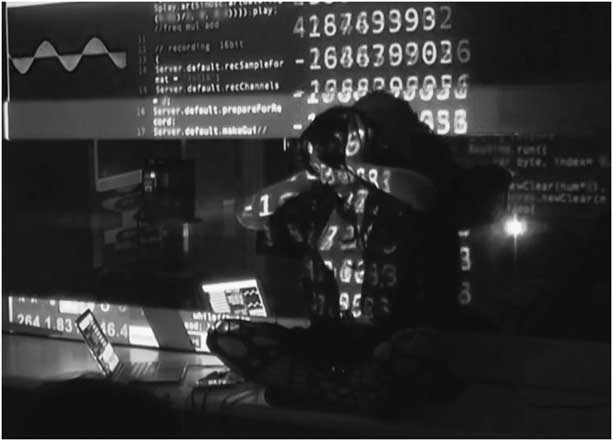
Figure 1 OB-scene performed at the Metabody Forum, 4–9 April 2016, Brunel University.
Mirrors are used as projection surfaces to avoid the use of multiple projectors in the room which would multiply the level of unwanted noise. The room is kept very dark so the mirrors can function both as projection surface and as reflection surface for the visual.
The idea of the projection is derived from the practice of live-coding with Supercollider, in which musicians have moved from graphical programming interfaces to command-line control of audio, projecting their coding on screen.
Many artistsFootnote 1 are used to projecting their laptop screens to give the audience a clearer idea of the various processes involved in generating their sounds. OB-scene does not imply a live coding practice; instead, it represents the use of code and the generation of live data. Therefore, the laptop screen is projected and made visible to the audience, composed of three sections (three windows kept on the screen): the streaming numerical data from the sensor; the code in the Supercollider window, which is static and launched by the performer at the start of the piece; and a live data visualisation of the sinusoidal sound wave generated by the probe.
The probe created for OB-scene is a photoplethysmograph (VPP). In medicine, it has for decades served as the main measuring device to assess female sexual dysfunction (Heiman Reference Heiman1977; Laan, Everaerd, Velde and Geer Reference Laan, Everaerd, Velde and Geer1995). The use of the photoplethysmograph, which takes inspiration from the first medical vaginal probes used for diagnostic purposes by Masters and Johnson (Reference Masters and Johnson1966) and further developed by Geer, Morokoff and Greenwood (Reference Geer, Morokoff and Greenwood1974), introduces a media-archaeological aspect to this work which will be made more explicit later in this article.
This device enabled researchers to focus specifically on sexual arousal in women. In fact, other physiological measures are not able to differentiate sexual arousal from other forms of autonomic arousal (Zuckerman Reference Zuckerman1971). The probe operates on the principle that vasocongestion occurs within the vagina as arousal take place (Masters and Johnson Reference Masters and Johnson1966). The probe is constituted by two main components: a light emitter (infrared diode) directed at the wall of the vagina and a photodetector that detects the backscattered incident light. As vasocongestion occurs, less light is reflected from the tissue, and the output of the photodetector changes to indicate the change (Beck, Sakheim and Barlow Reference Beck, Sakheim and Barlow1983).
The signal AC (Alternating Capacitive Coupling) is used to generate live data for the performance. The probe produces a signal, which can be used to understand two different parameters. The probe can work, in fact, as vaginal pulse amplitude (VPA) or vaginal pressure pulse (VPP) indicator. For this work, the VPP indicator is used.
The interface between the medical probe and the software (Supercollider) is an Arduino Duemilanove, a well-known microcontroller board used to receive and transmit serial data.
Data is processed and transformed, through original software coded in Supercollider, into sound and raw data projected as previously explained in the exhibition space. The sensor probe, software, and the audio composition were all made by the author.
The sound composition is stereo, combining two layers: a composed layer and a live data sonification. The purely composed layer consists of patterns of sounds. In Supercollider the author used two different instances of glitching sounds which play independently between speakers. The glitch sound is an enveloped pink noise which was filter with a high RQ.Footnote 2 The decay time of the noise envelope was modulated with a LFNoise1 which is a stochastic noise generator (linearly interpolated random values). Bass sounds were tuned through two sine oscillators triggered by an impulse generator to widen the spectrum of the composition.
Artists who have inspired this layer of the composition are Alva Noto and Ryuichi Sakamoto who have collaborated over the last 15 years, experimenting with the use of clipped samples in a minimalistic context. Also, the work of Ryoji Ikeda is relevant here, for his experiments with sine tones and noise using high frequencies framed into beat patterns.
The second layer is a direct mapping of the probe signals into a sinusoidal sound (sonification) which persists for the entire duration of the performance and change frequency due to the transformation of the signal (pulse rate accelerates). The effect is a pulsing drone with a slow increase in pulse frequency over time.
The performer is wearing headphones and remains seated for the duration of the piece. The audio played on the headphone is not audible by the audience, serving only as ‘secret audio’ or ‘secret track’, as some audience members referred to it after experiencing the performance. The role of the ‘secret’ audio is to prompt sexual arousal, which produces changes in the data gathered by the vaginal probe.
The audio consists of a short story written for OB-scene and read by an anonymous author. The timeline of the teasing audio was designed to intersect with the sound performance in ways that the audience only experiences second-hand.Footnote 3
The aesthetic choice of minimalism and adoption of electronic purely synthetic sounds as well as sounds generated by analogue signals is tied to the philosophical vision of this work. The author attempts a ‘sentic’ approach in which the emotional response is considered as input to the machine (see further below). Artistic communication during the performance is not mediated by gestures and the presence of the performer is reduced to have minimal impact in term of movements on stage.
The mixture of synthetic sounds and analogue-generated sounds are thought to enhance the perception of integration between the apparently inert technology and the human body with its emotional and physiological changes.
2 THE ACTANT PERFORMER
Recent work by the author consists of digital body-performances, digital audio/video installations, acousmatic compositions and digital environments. Under the broad heading ‘sensing data’, all these projects seek to connect the multiple sensory registers in which we can think about the ‘ecology of things’ (Bennett Reference Bennett2010): the relationships between humans and the environment can be conceived on scales ranging from the intimate to the global. Data, when treated as artistic ‘raw material’, can provide evidence of bodies (and communities) adapting through culture and technology to a changing natural and post-industrial environment.
OB-scene is a performance aiming to stage an environment where audience and performer share a very individual and intimate erotic experience in the same space and soundscape. While the words ‘sensing data’ are used to refer to sensors or systems enabling data-gathering and possibly transforming it into something else, in this work the author intentionally gives less importance to the mechanisms, and considers data as something that can be apprehended by the senses.
In OB-scene, data and machines represent the actant, in the sense of Latour’s ‘Third meaning of technical mediation’ which he describes using the example of a broken overhead projector: it is only when the attention of the audience moves towards the broken silent object that it really becomes the actant. All human gestures around the machine are moved by the object itself which needs to be repaired in order to turn back into a black-box, newly inorganic, unhuman and inert while showing its functionality and serving the humans (Latour Reference Latour2009).
The intent is to flip the common way we look at data as a ‘cold’, ‘unhuman’, ‘inorganic’ or ‘inert’ matter, while at the same time worthy of being understood, visualised or explained. OB-scene abolishes the ‘partition of the sensible’, to use Jacques Rancière’s expression, which defines the forms of part-taking by defining the modes of perception in which they are inscribed (Rancière, Panagia and Bowlby Reference Rancière, Panagia and Bowlby2001). The partition of the sensible constitutes for Rancière a tool to address the reconfiguration of the relationship between politics and aesthetics. In OB-scene, a similar reconfiguration takes place: intentionally, the author does not separate the gesture of the performer from the data produced by the performer. Any gesture and movement if coupled or defined as a part would minimise the agency of the data itself when simply mapped into a sound experience.
With these premises, the involvement of sensors and gestures in the performance is of secondary importance, while the environment and physical response (for both humans and machines) are the main focus. Data and machines do not represent the tools for the body to perform but they perform alongside the human performer. OB-scene is an attempt to elide what we commonly take as distinctive about humans, considering instead the combination of a human body with inert technology as a completely new system, the actual actant performer, the cybernetic organism (cyborg).
The adoption of the cyborg as actant-performer shifts the conceptual focus away from considering OB-scene as a mere performance which utilises new media technology, instead resonating with the more inclusive theory of Wiener who defined cybernetics as ‘communication and control’ together (Wiener Reference Wiener1988).
The ‘artist as cyborg’ can refer not only to the materiality of the forms used to create art (i.e. machines and/or new media technology) but also to an aesthetic which is modelled on the core principles of cybernetics. (Tenney Reference Tenney2010)
In Wiener’s theory, as well as in the work presented in this article, the idea of the cyborg has implications which touch on communication theory at the level of messages sent and received in between parties, system theory (the whole body/system which act as transmitter and receiver) and control theory which is related to the effect that those messages produce in the system (Wiener Reference Wiener2007). For the purposes of this article, the focus is on the cyborg as both image and concept (Biro Reference Biro2009). Biro’s assertion resonates with the idea of cyborgs as ‘simultaneously entities and metaphor, living being and narrative constructions’ (Hayles Reference Hayles1999: 114). OB-scene is intended as a performance of an assemblage of parts (human and unhuman) where the image (entity) and the concept (metaphor) of the cyborg are bound together.
A clear distinction between subjects and objects is needed to prevent the instrumentalisation of humans. However, this work focuses attention on how a process of alienation from a world where technology is considered an enabling commodity could reinforce the possibility to experience the world through the externalisation of feelings, generating new worlds (Laboria Cuboniks 2015).Footnote 4
Technologization and industrialization reveal the essentially musical character of things which, however, does not depend on machines but on alienation, on the externalization of feeling. (Perniola Reference Perniola2004: 70)
Borrowing the ‘naïve ambition’ of Jane Bennett’s vital materiality, OB-scene aims to free the vitality intrinsic to the matter and not to substitute the human with the technology (Bennett Reference Bennett2010).
3 THE AUDIENCE, DESIRE THINKING AND SENSORIAL ASSEMBLAGE
This performance has gone through multiple iterations at exhibitions and conferences.Footnote 5
In all iterations, both theoretical and performative, the teasing audio as well as the vaginal probe were both of great interest to the audience. The author has been asked both to publish the teasing audio and to show the probe just after the performance while still wired to her body. The interest of the audience in the unseen sensuous and anatomical aspect of the performance was not unexpected. The idea of disassembly of the performer (the cyborg) has a very deep appeal of messing with the organised system, trying to discern between inorganic and ‘disorganic’ (Bennett Reference Bennett2010). In Mario Perniola’s words ‘the sex appeal of the inorganic relies on the generous and hospitable spatiality of the world of things, bodies, sound and thoughts, that infinitely welcome us with unlimited accessibility’ (Perniola Reference Perniola2004: 69).
As from Latour’s (Reference Latour2009) broken projector, the actant object becomes the subject of an abstract and endless excitation, which Perniola (Reference Perniola2004) would call ‘neutral sexuality’. On the other hand, the willing dismantling of the cyborg, driven by the desire to denude the cybernetic organism shows the measure in which the erotic relationship between the performer and the audience took place.
For hermeneutic and semiotics aesthetics, it is important to make a clear distinction between subject and object while considering an analysis of a performance (Fischer-Lichte Reference Fischer-Lichte2008). The necessity to analyse the performance with the aim of give a deeper understanding of the relationship with the audience represents only an attempt which is conducted from the point of view of the performer and supplemented by spontaneous feedback from the audience collected after the performance. This feedback was sometimes surprising: some members of the audience had the desire to share with the author/performer their personal perception of arousal. They were surprised how arousal can be triggered by a performance which contains no explicitly erotic representation. The audience noticed a sense of purity and indirect eroticism, which they found peculiar in an audio-video performance.
OB-scene is as an immersive environmental work where the senses, affect and memory were key features of ‘assemblage thinking’ (Hamilakis 2017).
Hamilakis’s exploration of the original thought of Deleuze and Guattari (Reference Deleuze and Guattari1986) on assemblages presents the richness and the potential of considering sensorial assemblages as a space for communal experience with political effects, which resonates with the audience perception of OB-scene and its design purpose.
In OB-scene aesthetics and politics both partake in the constitution of a sensuous framework, which involves contemporary cultural and societal matters of discussion. The concept adopted here is Rancière’s definition of politics as a relation between the partition of the sensible for which art must be explained involving and merging together discourse about practices, forms of visibility and patterns of intelligibility (Apter and Rancière Reference Apter and Rancière2009).Footnote 6 While the audience’s sensuous engagement could be seen as a superficial effect of a scene, the balance between rules that govern what was allowed to be sensed and what was determined as worth perceiving through the senses or recalling mnemonically gave to the performance a profound sense of what Rancière calls ‘an “aesthetics” at the core of politics’ (2004: 8) by means of the partition of the sensible. This work intentionally focuses on the coexistence between what is given and what is not given and it strives to embrace the members of the audience into a sensorial assemblage that includes aesthetic and political implications.
4 SENTIC PERFORMANCE AND LANGUAGE OF THINGS
In previous works of electroacoustic performances, the author focused the attention on the importance of the gesture, trying to program systems to respond to specific gestures with unique sound events (Wessel and Wright Reference Wessel and Wright2002), and by using physical interfaces (sound sculptures) equipped with sensors (Troisi, Chiaramonte, Distante, Miranda, Paci Dalo’ and Saldicco Reference Troisi, Chiaramonte, Distante, Miranda, Paci Dalo’ and Saldicco2010).
The balance between gesture and acoustic results is of great interest for electroacoustic artistic research and there are several artists who considered the body as a source of music or sound; for example, Atau Tanaka (Reference Tanaka2006), Federico Visi (Visi, Coorevits, Schramm and Miranda Reference Visi, Coorevits, Schramm and Miranda2017) and others working on the enhancement of the gesture in live performance through wearable instruments. The research on this front is quite technologically advanced and answer to the need of expressivity in electroacoustic performed music.
While in previous works the author sought to hide the technology and minimise the impact of the machines on the performance, in OB-scene the reverse is the case. Here the author wanted to experiment with a ‘sentic’ approach. Emotional response is conceived as input to the machine, which becomes an active and autonomous participant in both the composition and the performance process (Clynes Reference Clynes1995; D’Escriván Reference D’Escriván2006).
The focus of this article is not on the movements or gestures on music performance but on the interdisciplinary approach which considers a performance as a whole. The performance of the body and the performance of the sound come together without a hierarchy of purpose. In OB-scene it is not the gesture producing the sound, or vice versa; instead, sound and body move together in a kind of symbiosis.
The Australian performer Stelarc has used his body as an engineer would use an interface, adapting its surfaces to the artistic purpose. Stelarc experimented with experimental practices introducing the concept of ‘obsolete body’. His work ‘Amplified Body’ (1994), for example, is conceived as a performance/concert where parameters such as EEG Brainwave, Position sensors, Nasal Thermistor, Electrocardiogram (ECG), Electromyography (EMG) and plethysmogram are transformed into sounds (Stelarc Reference Stelarc1994).
More recently, Marco Donnarumma, a performer based in Berlin, has addressed the relationship between body, politics and technology, implying the use of mechanomyogram and biofeedback. He combines neuromuscular studies, phenomenology, real-time data analysis, performance practice and music composition (Donnarumma Reference Donnarumma2017). In Donnarumma’s work the body and the way it fuses with the technology is the focus of the performance. This is an interdisciplinary approach where methods borrowed from science, technology, bio-art and sound not only intersect but are combined in order to create novel methods of composition and performance.
This process can be located on a developmental trajectory that starts with the use of electronic musical instruments as an augmentation of existing musical techniques. From there it is a short step to the use of the computer as instrument, and later a technological enhancement of the performer, an organic cyborg performer. The adoption of a cyborg performer is not to be considered an effortless approach, but as a shift of focus from the musical instrument as a tool to the performer as a source of ‘things’, and more importantly a source of the ‘language of things’ in the sense of musique concrete methodology and aesthetics (Schaeffer Reference Schaeffer1946).
The idea of ‘the language of things’ may seem commonplace for musicians and an audience used to concrete sounds. However, the adoption of data and its aesthetic implications are for many still a step too far from the ‘natural’ language performed with voice, instruments or objects. In an attempt to enhance ‘things’ through data, OB-scene adopted the idea of musique concrete as presentations of sonorous objects and not as representations of objects (Cox Reference Cox2011). This way of looking at the ‘ecology of things’ is analogous to the ‘animist’ stage of childhood, an experience of the world populated by animate things rather than passive objects (Bennett Reference Bennett2010).
It can be argued that data represents the medium, and not the mere description of objects through numbers. Consequently, the aesthetic idea of this work is to give continuity to the idea of ‘the language of things’, in which ‘things’ are not substituted by data but enhanced by data.
With OB-scene the author intends to present a sonorous object in the form of a cybernetic organism; distinct from a representation of a physiological act or phenomenon happening on the scene. It is important to mention that other artists focused their attention on the vagina as a source of data material or sound. Some examples are ‘Thrist’ by Lauren Lesko, ‘Poetica Vaginal’ by Joe Davis, ‘Vagina Dialogues’ by Miya Masaoka and ‘Uterine Concert Hal’ by Dayna McLeod with different methodologies which are based on an artistic representation of a physiologic intimacy through the use of microphones. OB-scene, by contrast, is centred on the vison of the cyborg as image and concept. The technology is not used to exhibit an intimate physiological nature, it is the body together with the technology that performs, expresses and communicates an intimate emotional state.
5 MEDIA ARCHAEOLOGY AS METHOD FOR TECHNOLOGY-MEDIATED PERFORMANCE
The use of the photoplethysmograph, which takes inspiration from the first medical vaginal probes used for diagnostic purposes by Masters and Johnson (Reference Masters and Johnson1966), introduces a media-archaeological aspect to this work which is worth making more explicit.
There are a few practitioners who have been identified as media-archaeological artists since the 1990s and there are many new artists bringing new ideas in the field taking inspiration from scholarship on media-archaeology (e.g., Zielinski, Huhtamo). The use of obsolete technology for sound performances has been explored with an explicit contextualisation by Sarah Angliss (Parikka Reference Parikka2013). Other artists such as Cildo Meireles took obsolete technology as their material. Meireles’s work ‘Babel’ (2001) consists of analogue radios of varying ages, from large valve radios dating from the 1920s to the smaller cheap mass-produced electronic radios of more recent years (Tate Reference Tate2018). The artist Dani Ploeger in the performance Waste Circuits (2013) used circuit boards from obsolete mobile phones that are melted down on a hot plate and then used to activate the performer’s muscles (Ploeger Reference Ploeger2013).
Parikka (Reference Parikka2013) offers a heuristic tool to attempt to categorise ways in which different artists embraced a media archaeology approach to their work. In his attempt Parikka explores categories of artists who engaged with historical themes, invoked alternative histories offering a critical insight into the new digitality, involved pieces of obsolete technology or engaged with concrete archives.
In developing OB-scene, the author investigated inter-media relations and media-historical borrowings across time. Reinventing new uses for obsolete technology in a non-linear way, as sediment or a layer of media history, served to introduce a more analytical methodology which helped give solidity to the whole performance. It became of interest to analyse if the performance could dig into the question of how and why a certain technology, discourse, or research interest on pleasure and bodies relates to media networks as well as scientific discoveries (Parikka Reference Parikka2013). Adopting Parikka’s categories, OB-scene can be grouped with projects where imaginary media are constructed and not just imagined. Many artists have used dead devices or devices that were never built before, reconstructed and re-employed for a renewed artistic purpose.
In the example of the vaginal probe, the author reconstructs a device, which for political/scientific reasons has been considered less interesting to researchers in the field. The understanding of female sexual physiology was of great controversial interest in the 1960s in the United States, but it only focused on dysfunctions later. The interest in understanding pleasure has been considered of minor importance in comparison to the scientific exploration of pain in sexual physiology. Studies on pleasure are now more focused on the psychological aspect while the physiological component has become secondary. It is important to mention that Masters and Johnson focused their research on sexual function and dysfunction with a clear reference to dominant Western belief and values about sexuality. Their sex therapy programme from many perspectives operated as a sort of institution of social control, as sociologists have argued in critiques of Masters and Johnsons’ methodology and approach to sex therapy (Morrow Reference Morrow2013). In OB-scene the author intentionally wanted to re-construct a medical probe, which was used by Masters and Johnson to dismantle some preconceptions about sexuality, which they argued led to psychological discomfort and an unsatisfactory sexual life.
The intersection between media archaeology and new materialism has been explored by Parikka (Reference Parikka2012), presenting what he calls ‘mediatic phenomena’ without reducing the theoretical approaches of various form of expressions into a mere discourse about ‘media’ or ‘technology’. Parikka suggests that new materialism is not only about intensities of bodies and their capacities of expression, but is also a more fluid concept. ‘Materiality is not just machines – nor is it just solids, and things, or even objects. Materiality leaks in many directions – also concretely’ (Parikka Reference Parikka2012: 98). OB-scene aims not only to give voice to matter but also to give fluidity to a theoretical approach to new materialism where bodies, technologies, code and data represent vibrant bits that catalyse into a mediatic event.
Acknowledgements
Special thanks to Gauti Sigthorsson for his critical reading and knowledgeable insight.


 Open access

