


The importance of childhood circumstances and environment in influencing the risk of affective disorders in adolescence and adult life is well established (Reference Goodman and GotlibGoodman & Gotlib, 1999; Reference Buchanan, Ten Brinke and FlouriBuchanan et al, 2000). Whether the environment encountered in foetal life plays a part in determining biological susceptibility to depression is less clear. Children whose birth weight was low are known to have a higher risk of childhood behavioural problems (Reference Breslau, Klein and AllenBreslau et al, 1988; Reference BreslauBreslau, 1995; Reference Kelly, Nazroo and McMunnKelly et al, 2001) but there is little direct evidence on whether poor foetal growth increases vulnerability to depression either in adolescence or in adult life. The 1970 British Cohort Study is a longitudinal study of individuals born between 5 and 11 April 1970 in England, Wales and Scotland. We used the cohort to examine the relation between birth weight and risk of psychological distress at the age of 16 years and depression at the age of 26 years.
METHOD
Participants
We used data from the birth survey and the first three stages at which the 1970 British Cohort Study was followed up. In the initial study, information was collected on 17 198 babies using questionnaires completed by midwives and data extracted from medical records. The 5-year and 10-year follow-ups were carried out by the Department of Child Health, Bristol University. On both occasions, parents were interviewed by health visitors. The 16-year follow-up was carried out by the International Centre for Child Studies. Information was collected from parents by interview and self-completion questionnaires, and from cohort members by self-completion questionnaires. For the 5-year, 10-year and 16-year follow-ups the cohort was augmented by the inclusion of immigrants to Britain who had been born in the target week in 1970. The 26-year follow-up was a postal survey carried out by the Social Statistics Research Unit (now the Centre for Longitudinal Studies, Institute of Education, London).
Of 16 500 surviving cohort members who were invited to take part in the 16-year follow-up, 11 622 (70%) responded. However, strikes by teachers and public examinations among cohort members reduced the number of respondents for some elements of the survey so that data on psychological distress were available for only 5631 cohort members (34% of those invited to participate). Of these, 5187 (31% of those invited to participate) had taken part in the initial study and had data on birth weight so could be included in our analyses.
A total of 13 475 surviving cohort members were traced and were eligible to take part in the 26-year follow-up. Of these, 9003 returned their postal questionnaire. Data on depression were available for 8976 cohort members (67% of those invited to participate). Of these, 8292 (62% of those invited to participate) had taken part in the initial study and had data on birth weight so could be included in our analyses.
Measures of psychological distress and depression
Psychological distress at the age of 16 years was assessed by the 12-item General Health Questionnaire (GHQ–12; Reference GoldbergGoldberg, 1978). The GHQ is a screening questionnaire for non-psychotic psychological distress, largely depression, suitable for use in general population surveys. A score ≥3 on the GHQ–12 was used to identify cases of psychological distress (Reference BanksBanks, 1983).
Rutter's 24-item Malaise Inventory was used to assess the presence of depression at the age of 26 years (Reference Rutter, Tizard and WhitmoreRutter et al, 1970). This inventory is a self-completion scale developed from the Cornell Medical Index (Reference Brodman, Erdmann and WolffBrodman et al, 1949) to measure levels of psychiatric morbidity. A score ≥7 on the Malaise Inventory has been used to identify cases of depression (Reference Rodgers, Pickles and PowerRodgers et al, 1999). The Malaise Inventory was also used to assess the presence of depression in the mothers of cohort members during the 5-year follow-up. As part of a series of questions on health in the 26-year follow-up, participants were asked ‘Have you suffered from depression for more than a few days since you were 16?’
Missing data
In our analyses we used information from the birth survey (gestational age, father's social class, mother's age, parity and smoking status during pregnancy), from the 5-year follow-up (maternal depression, separation from mother for >1 month, tenure of accommodation, parental divorce/separation and experience of local authority care) and from the 10-year and 16-year follow-ups (parental divorce/separation and experience of local authority care). A preliminary analysis comparing cohort members with and without complete data on these potential confounding variables showed that the strength of the relation between birth weight and score on the Malaise Inventory differed between the two groups. In order to avoid bias due to sample selection, we therefore decided to retain all cohort members in the analyses. This was done by using a distinct category for missing data within each of the potential confounding variables.
Statistical analysis
We used analysis of variance and the χ2 test to examine the relation between birth weight, the presence of depression (defined as a score of ≥7 on the Malaise Inventory) and characteristics of the participants. We used logistic regression to examine the relation between the presence of depression at age 26 years, a reported history of depression between the ages of 16 and 26 years, psychological distress at age 16 years and birth weight, adjusting for gestational age and potential confounding factors. Gestational age was split into five categories (<37 weeks, 37–39 weeks, 40–42 weeks, >42 weeks, not known/unreliable). Birth weight was split into four categories (≤2.50 kg, 2.51–3.00 kg, 3.01–3.50 kg and > 3.50 kg); P values are given for the trend in the odds ratios across the birth weight categories.
RESULTS
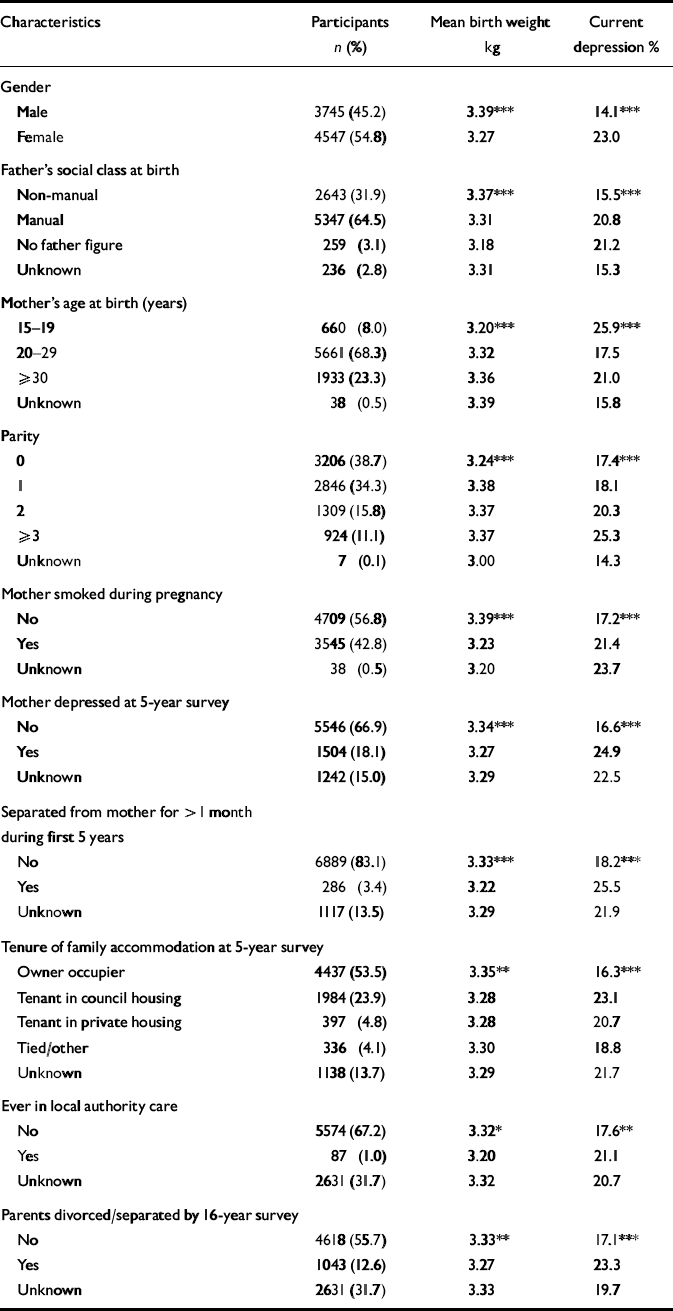
Table 1 shows the perinatal and childhood characteristics of 8292 cohort members who participated in the 26-year follow-up and how these related to birth weight and the prevalence of depression. In total, 1574 (19%) men and women scored ≥7 on the Malaise Inventory, indicating the presence of depression. As expected, depression was more common among women (23% compared with 14.1% of men). The prevalence of depression was significantly higher in people whose fathers had been in a manual occupation or who had no father figure at the time of their birth, in those born to teenage or high-parity mothers and in those whose mothers smoked during pregnancy. Men and women who had been separated from their mothers for over a month in the first 5 years of life were more likely to be currently depressed, as were those whose mothers had themselves been depressed at the time of the 5-year follow-up. Depression was more common in those who had lived in council housing in early childhood, in those whose parents had divorced or separated by the time of the 16-year follow-up and in those who had been in local authority care. All the perinatal and childhood characteristics that were associated with increased prevalence of depression at the 26-year follow-up were also associated with lower mean birth weight, with the exception of mother's parity, where participants born to high-parity mothers tended to have a higher birth weight.
Perinatal and childhood characteristics of the participants at the 26-year follow-up
| Characteristics | Participants n (%) | Mean birth weight kg | Current depression % |
|---|---|---|---|
| Gender | |||
| Male | 3745 (45.2) | 3.39*** | 14.1*** |
| Female | 4547 (54.8) | 3.27 | 23.0 |
| Father's social class at birth | |||
| Non-manual | 2643 (31.9) | 3.37*** | 15.5*** |
| Manual | 5347 (64.5) | 3.31 | 20.8 |
| No father figure | 259 (3.1) | 3.18 | 21.2 |
| Unknown | 236 (2.8) | 3.31 | 15.3 |
| Mother's age at birth (years) | |||
| 15-19 | 660 (8.0) | 3.20*** | 25.9*** |
| 20-29 | 5661 (68.3) | 3.32 | 17.5 |
| ≥ 30 | 1933 (23.3) | 3.36 | 21.0 |
| Unknown | 38 (0.5) | 3.39 | 15.8 |
| Parity | |||
| 0 | 3206 (38.7) | 3.24*** | 17.4*** |
| 1 | 2846 (34.3) | 3.38 | 18.1 |
| 2 | 1309 (15.8) | 3.37 | 20.3 |
| ≥ 3 | 924 (11.1) | 3.37 | 25.3 |
| Unknown | 7 (0.1) | 3.00 | 14.3 |
| Mother smoked during pregnancy | |||
| No | 4709 (56.8) | 3.39*** | 17.2*** |
| Yes | 3545 (42.8) | 3.23 | 21.4 |
| Unknown | 38 (0.5) | 3.20 | 23.7 |
| Mother depressed at 5-year survey | |||
| No | 5546 (66.9) | 3.34*** | 16.6*** |
| Yes | 1504 (18.1) | 3.27 | 24.9 |
| Unknown | 1242 (15.0) | 3.29 | 22.5 |
| Separated from mother for > 1 month during first 5 years | |||
| No | 6889 (83.1) | 3.33*** | 18.2*** |
| Yes | 286 (3.4) | 3.22 | 25.5 |
| Unknown | 1117 (13.5) | 3.29 | 21.9 |
| Tenure of family accommodation at 5-year survey | |||
| Owner occupier | 4437 (53.5) | 3.35** | 16.3*** |
| Tenant in council housing | 1984 (23.9) | 3.28 | 23.1 |
| Tenant in private housing | 397 (4.8) | 3.28 | 20.7 |
| Tied/other | 336 (4.1) | 3.30 | 18.8 |
| Unknown | 1138 (13.7) | 3.29 | 21.7 |
| Ever in local authority care | |||
| No | 5574 (67.2) | 3.32* | 17.6** |
| Yes | 87 (1.0) | 3.20 | 21.1 |
| Unknown | 2631 (31.7) | 3.32 | 20.7 |
| Parents divorced/separated by 16-year survey | |||
| No | 4618 (55.7) | 3.33** | 17.1*** |
| Yes | 1043 (12.6) | 3.27 | 23.3 |
| Unknown | 2631 (31.7) | 3.33 | 19.7 |
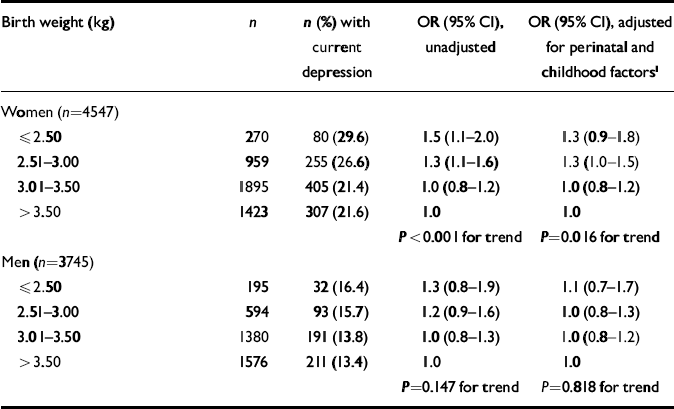
We calculated odds ratios for depression according to birth weight in women and men separately (Table 2). In univariate analysis there was a statistically significant linear association between birth weight and risk of depression in women (P<0.001 for trend). Compared with women who had weighed >3.50 kg at birth, women who had weighed ≤2.50 kg at birth had an odds ratio for depression of 1.5 (95% CI 1.1–2.0). Women who had weighed between 2.51 and 3.00 kg at birth had an odds ratio of 1.3 (95% CI 1.1–1.6). After adjustment for all the potential confounding factors shown in Table 1, together with gestational age at birth, the relation between birth weight and risk of depression was weakened slightly but remained statistically significant (P=0.016 for trend). When we repeated this analysis but excluding women born at <37 weeks’ gestation, the relation between birth weight and risk of depression became slightly stronger (P=0.009). We investigated whether this relation was moderated by any risk factors listed in Table 1 but there were no statistically significant interactions.
Odds ratios (ORs) for depression at age 26 years according to birth weight
| Birth weight (kg) | n | n (%) with current depression | OR (95% CI), unadjusted | OR (95% CI), adjusted for perinatal and childhood factors1 |
|---|---|---|---|---|
| Women (n=4547) | ||||
| ≤ 2.50 | 270 | 80 (29.6) | 1.5 (1.1-2.0) | 1.3 (0.9-1.8) |
| 2.51-3.00 | 959 | 255 (26.6) | 1.3 (1.1-1.6) | 1.3 (1.0-1.5) |
| 3.01-3.50 | 1895 | 405 (21.4) | 1.0 (0.8-1.2) | 1.0 (0.8-1.2) |
| > 3.50 | 1423 | 307 (21.6) | 1.0 | 1.0 |
| P<0.001 for trend | P=0.016 for trend | |||
| Men (n=3745) | ||||
| ≤ 2.50 | 195 | 32 (16.4) | 1.3 (0.8-1.9) | 1.1 (0.7-1.7) |
| 2.51-3.00 | 594 | 93 (15.7) | 1.2 (0.9-1.6) | 1.0 (0.8-1.3) |
| 3.01-3.50 | 1380 | 191 (13.8) | 1.0 (0.8-1.3) | 1.0 (0.8-1.2) |
| > 3.50 | 1576 | 211 (13.4) | 1.0 | 1.0 |
| P=0.147 for trend | P=0.818 for trend |
In men there was a trend towards increasing risk of depression with decreasing birth weight, but this was not statistically significant and it disappeared after adjustment for gestational age and other risk factors (Table 2).
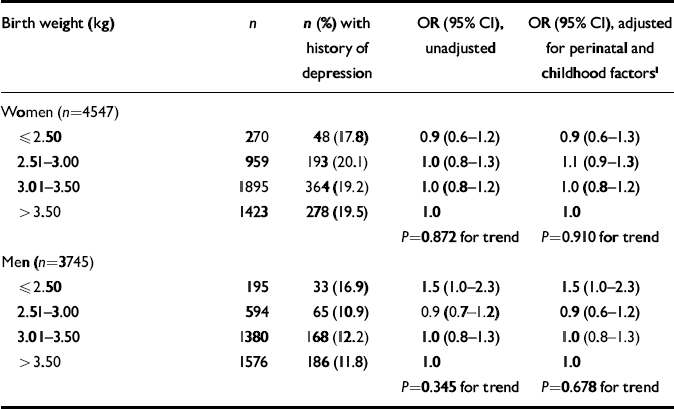
In total, 1335 (16.1%) participants at the 26-year follow-up reported that they had suffered from depression for more than a few days since the 16-year follow-up. These men and women were much more likely to gain scores indicative of current depression on the Malaise Inventory (for men: odds ratio=9.1, 95% CI 7.1–11.5; for women: odds ratio=6.8, 95% CI 5.7–8.1). We found no statistically significant linear trends between birth weight and a reported history of depression in either men or women (Table 3). There was evidence, however, that men who had weighed ≤2.50 kg at birth were more likely than those of normal birth weight to report that they had been depressed in the past. This relation persisted after adjusting for gestational age and potential confounding factors (odds ratio=1.6, 95% CI 1.1–2.3). It was weakened when men born at <37 weeks’ gestation were excluded, although the risk estimate changed little (odds ratio=1.5, 95% CI 0.9–2.4). No such association was seen in women.
Odds ratios (ORs) for a self-reported history of depression between the ages of 16 and 26 years according to birth weight
| Birth weight (kg) | n | n (%) with history of depression | OR (95% CI), unadjusted | OR (95% CI), adjusted for perinatal and childhood factors1 |
|---|---|---|---|---|
| Women (n=4547) | ||||
| ≤ 2.50 | 270 | 48 (17.8) | 0.9 (0.6-1.2) | 0.9 (0.6-1.3) |
| 2.51-3.00 | 959 | 193 (20.1) | 1.0 (0.8-1.3) | 1.1 (0.9-1.3) |
| 3.01-3.50 | 1895 | 364 (19.2) | 1.0 (0.8-1.2) | 1.0 (0.8-1.2) |
| > 3.50 | 1423 | 278 (19.5) | 1.0 | 1.0 |
| P=0.872 for trend | P=0.910 for trend | |||
| Men (n=3745) | ||||
| ≤ 2.50 | 195 | 33 (16.9) | 1.5 (1.0-2.3) | 1.5 (1.0-2.3) |
| 2.51-3.00 | 594 | 65 (10.9) | 0.9 (0.7-1.2) | 0.9 (0.6-1.2) |
| 3.01-3.50 | 1380 | 168 (12.2) | 1.0 (0.8-1.3) | 1.0 (0.8-1.3) |
| > 3.50 | 1576 | 186 (11.8) | 1.0 | 1.0 |
| P=0.345 for trend | P=0.678 for trend |
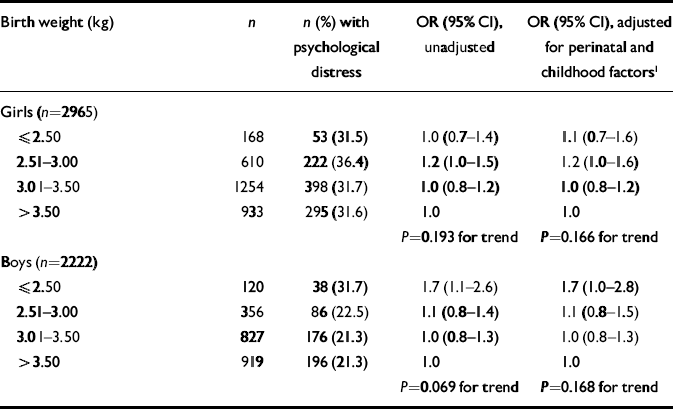
At the 16-year follow-up, 1458 (28.1%) of the 5187 participants scored above the threshold of 3 on the GHQ–12, indicating psychological distress: 32.6% of girls scored ≥3 on the GHQ–12 compared with 22.1% of boys (P<0.001). Among those participants who took part in both the 16-year and 26-year follow-ups, psychological distress at 16 years was a significant predictor of depression at 26 years (for girls: odds ratio=2.4, 95% CI 1.9–2.9; for boys: odds ratio=2.0, 95% CI 1.4–2.8). We found no evidence of a linear association between birth weight and risk of psychological distress in either girls or boys (Table 4). However, boys who had weighed ≤2.5 kg at birth were more likely to be distressed than boys whose birth weight was normal (odds ratio=1.6, 95% CI 1.1–2.5, after multivariate adjustment). This relation remained statistically significant when boys born at <37 weeks’ gestation were excluded (odds ratio=1.7, 95% CI 1.0–2.9).
Odds ratios (ORs) for psychological distress at age 16 years according to birth weight
| Birth weight (kg) | n | n (%) with psychological distress | OR (95% CI), unadjusted | OR (95% CI), adjusted for perinatal and childhood factors1 |
|---|---|---|---|---|
| Girls (n=2965) | ||||
| ≤ 2.50 | 168 | 53 (31.5) | 1.0 (0.7-1.4) | 1.1 (0.7-1.6) |
| 2.51-3.00 | 610 | 222 (36.4) | 1.2 (1.0-1.5) | 1.2 (1.0-1.6) |
| 3.01-3.50 | 1254 | 398 (31.7) | 1.0 (0.8-1.2) | 1.0 (0.8-1.2) |
| > 3.50 | 933 | 295 (31.6) | 1.0 | 1.0 |
| P=0.193 for trend | P=0.166 for trend | |||
| Boys (n=2222) | ||||
| ≤ 2.50 | 120 | 38 (31.7) | 1.7 (1.1-2.6) | 1.7 (1.0-2.8) |
| 2.51-3.00 | 356 | 86 (22.5) | 1.1 (0.8-1.4) | 1.1 (0.8-1.5) |
| 3.01-3.50 | 827 | 176 (21.3) | 1.0 (0.8-1.3) | 1.0 (0.8-1.3) |
| > 3.50 | 919 | 196 (21.3) | 1.0 | 1.0 |
| P=0.069 for trend | P=0.168 for trend |
DISCUSSION
In this large population-based study we found that women who had weighed ≤ 3 kg at birth had an increased risk of being depressed at the age of 26 years. Birth weight was not, however, associated with a self-reported history of depression at age 26 years or with risk of psychological distress at age 16 years. In men there were no significant trends between any of these measures and the whole range of birth weight but, compared with men of normal birth weight, those who had weighed ≤2.5 kg were more likely to report a history of depression at age 26 years and to be psychologically distressed at the age of 16 years.
Strengths and limitations
This study used data from a national birth cohort that has been followed up into adulthood. Detailed information is available about the family and social environment of cohort members from the perinatal period onwards. When examining the relations between birth weight and risk of psychological distress or depression we were able to take account of a number of factors known to increase a child's risk of subsequent psychiatric morbidity, including socio-economic status, maternal depression, early separation from the mother, parental marital disruption and experience of local authority care. The associations shown here between birth weight and risk of depression in women and between low birth weight (≤2.5 kg) and a reported history of depression or risk of psychological distress in men persisted after adjustment for these and other potential confounding factors, such as maternal age, parity and smoking status during pregnancy.
In common with other national birth cohorts that have been followed up into adult life, cohort members born to single mothers, teenage mothers or whose fathers were in manual occupations had lower response rates at follow-up. In the 26-year follow-up, for example, 62% of cohort members were born into a manual social class compared with 64.1% in the initial birth survey. Males were underrepresented in both the 16-year and 26-year follow-ups, making up 42.8% and 45.2% of the participants respectively compared with 51.1% of the original sample. Cohort members who weighed ≤2.5 kg at birth were also underrepresented at these follow-ups, accounting for 5.6% compared with 6.6% of the original sample that survived the neonatal period. Nevertheless, the size of the differences between the original sample and the achieved samples at ages 16 and 26 years was small. In general, the cohort has remained representative of those who took part in the initial birth survey.
One potential weakness of the study is that psychiatric morbidity was assessed solely by means of self-completion scales: the GHQ–12 during the 16-year follow-up and the Malaise Inventory at age 26 years. However, these scales have been widely used in general population samples and their effectiveness at identifying psychiatric morbidity has been demonstrated. In a study of 17-year-olds, for example, the GHQ–12 with a cut-point of 3 correctly identified 83% of those who had a diagnosis of anxiety or depression by clinical interview with 71% sensitivity and 80% specificity (Reference BanksBanks, 1983). A score ≥7 on the Malaise Inventory was able to detect cases of clinically diagnosed depression in women with 73% sensitivity and 81% specificity (Reference Rodgers, Pickles and PowerRodgers et al, 1999).
Comparison with other studies
In an investigation of a Dutch birth cohort, risk of major depression requiring hospitalisation was increased in groups of men and women who were exposed to famine during mid to late gestation in the Hunger Winter of 1944–1945 (Reference Brown, van Os and DriessensBrown et al, 2000). An Italian case–control study of 41 case–control pairs found that patients admitted to hospital with depression were more likely than controls to have been small for gestational age and they had a lower mean birth weight, although this latter difference was of borderline statistical significance (Reference Preti, Cardascia and ZenPreti et al, 2000). Neither study made adjustments for potential confounding factors, although the case–control pairs were matched by gender, time and parity of birth, maternal age and marital status. Both of these studies provide some support for the notion that environmental factors during foetal life may increase susceptibility to depression, but they have the disadvantage that they rely solely on cases severe enough to require hospitalisation.
In a recent study examining the relation between birth weight and depression in 882 elderly men and women in Hertfordshire, UK, cases were identified by means of the Geriatric Depression Scale and the Geriatric Mental State Examination (Reference Thompson, Syddall and RodinThompson et al, 2001). There was a strong association between lower birth weight and risk of depression in men but no such relation was present in women. The authors suggest that one explanation for this discrepancy might be that female foetuses are less vulnerable to the effects of retarded growth in utero. But in the present study of over 8000 men and women aged 26 years, lower birth weight was a significant risk factor for depression in women. There was a non-significant trend in men towards increasing risk of depression with decreasing birth weight, but this disappeared after adjustment for potential confounding factors. In the Hertfordshire study, little information was available about potential confounding factors in the participants’ early environment apart from social class at birth (Reference Thompson, Syddall and RodinThompson et al, 2001).
Middle to late adolescence is a peak risk period for the onset of depression (Reference Lewinsohn, Duncan and StantonLewinsohn et al, 1986). In a longitudinal study of 386 children in the USA who were followed from the age of 5 years, girls who had weighed ≤2.5 kg at birth had a higher risk of depressive symptoms at the age of 18 years, although there was no relation between low birth weight and depressive symptoms in boys (Reference Frost, Reinherz and Pakiz-CamrasFrost et al, 1999). No information was available on maternal and family factors in early life and the study relied on maternal reports of low birth weight. These findings contrast with those of the present, much larger, study in which boys whose birth weight was ≤2.5 kg were nearly twice as likely as those of normal birth weight to be psychologically distressed at age 16 years, but this association was not present in girls. A recent study of over 90 000 18-year-old Swedish boys found that performance on a test of psychological functioning and stress susceptibility was poorest in those with low birth weight and improved with increasing birth weight, but data on potential confounding factors in early life were limited to maternal age and parity (Reference Nilsson, Nyberg and OstergrenNilsson et al, 2001).
Explanations
One explanation for the associations found between lower birth weight and risk of depression or psychological distress may be that adverse environmental exposures in utero influence both size at birth and the set point of the hypothalamic–pituitary–adrenal axis. Animal models have shown that exposure to various stressors during pregnancy results in offspring with lower birth weights, with raised basal or stress-induced glucocorticoid secretion and with increased corticotrophin-releasing hormone activity (Reference WeinstockWeinstock, 2001). These physiological features are very similar to those seen in people with depression (Reference Steckler, Holsboer and ReulSteckler et al, 1999) and suggest that gestational stress at a critical time during foetal development may increase susceptibility to this condition.
Women who are depressed during pregnancy are at higher risk of having children whose birth weight is low (Reference Orr and MillerOrr & Miller, 1995; Reference Paarlberg, Vingerhoets and PasschierPaarlberg et al, 1999). Their children are also more likely to develop emotional problems (Reference Luoma, Tamminen and KaukonenLuoma et al, 2001). One reason for this might be that the ‘gestational stress’ of maternal depression causes permanent changes in hypothalamic–pituitary–adrenal axis settings, but it could also be due to the postnatal effects of exposure to negative maternal affect, cognitions and behaviour and to the stress of living with a depressed mother (Reference Goodman and GotlibGoodman & Gotlib, 1999). We had no data on maternal depression during pregnancy so we were unable to examine whether this explained any of the associations found here, although adjustment for maternal depression at the age of 5 years had little effect on estimates of risk.
The results of this study suggest that women whose birth weight was low or at the lower end of the normal range are more likely to become depressed as young adults. Having a birth weight at the lower end of the normal range did not appear to increase the risk for men, but those whose birth weight was ≤ 2.5 kg were more likely to be psychologically distressed at age 16 years and to report a history of depression at age 26 years. Impaired neurodevelopment during foetal life may increase susceptibility to affective illness.
Clinical Implications and Limitations
CLINICAL IMPLICATIONS
-
▪ Women whose birth weight was low (≤2.5 kg) or at the lower end of the normal range may be more susceptible to depression as adults.
-
▪ Men whose birth weight was low may have a higher risk of depression in adolescence or early adult life.
-
▪ Risk of affective illness may be influenced by neurodevelopment in foetal life.
LIMITATIONS
-
▪ Psychiatric morbidity was assessed solely by self-completion scales.
-
▪ No data were available on maternal depression during pregnancy, which is a possible confounding factor.
-
▪ Males and those whose birth weight was low were underrepresented in the follow-up studies.
Acknowledgements
We thank the Economic and Social Research Council UK Data Archive at the. University of Essex for providing data on the cohort and the National Birthday. Trust, University of Bristol, the International Centre for Child Studies and. the Centre for Longitudinal Studies, who collected the data.




eLetters
No eLetters have been published for this article.