

Since coming to power, President Xi Jinping has made fighting corruption a cornerstone of his administration. His anti-corruption drive is the most vigorous in the Party’s history. To date, a staggering 1.5 million officials have been disciplined.Footnote 1 Could Xi’s determination to stamp out corruption stifle the economy? In the prior decades, Chinese officials made a headlong dash for rapid growth using any means necessary. Now many worry that anti-corruption measures will douse bureaucratic entrepreneurism and risk-taking, qualities displayed by the pro-development leaders featured in Chapter 5.
One indirect way of inferring the development implications of Xi’s anti-corruption campaign is to examine which factors predict the fall of local leaders.Footnote 2 In the lingo of Chinese politics, to “fall from the horse” (luoma) means to be investigated for corruption. This chapter turns from case studies of individual leaders (Chapter 5) to a statistical analysis of 331 city-level Party secretaries – the first-in-command of city governments – who were in office in 2011, a year before Xi’s war on corruption began. This cohort of leaders has borne the brunt of Xi’s unusually intense crackdown ever since its inception.
Are local leaders who deliver impressive economic results and who feature frequently in the media more or less likely to fall? What happens when patrons tumble? Or is the crackdown like a mass raid, where large numbers of officials are shot down in no predictable way?
My analysis finds that patronage, not performance, predicts the likelihood of downfall.Footnote 3 Performance neither exposes nor shields city leaders from investigations. When patrons take a hit, however, the risk of fall for their clients rises steeply. Apart from patronage, the likelihood of downfall also reflects the temporal trends of the campaign: it intensified quickly after 2012, rose to a crescendo in 2014, and then tapered off afterward.
Yet, unlike usual policy campaigns, Xi’s anti-corruption drive has abated but not stopped. Chinese officials today face an environment of intense scrutiny, making this a “new normal” in the bureaucracy rather than a temporary blip. As Xi’s campaign extends beyond fighting graft into ideological control and conformity with the Party line, bureaucratic paralysis has intensified.
Xi’s Crusade against Corruption
On 15 November 2012, Xi Jinping delivered his first speech before the Politburo, the elite body of the CCP. Ominously, his debut came on the heels of a dramatic face-off among the Party’s national elites that concluded with the dismissal of Bo Xilai (see Chapter 5), former party chief of Chongqing and Xi’s political rival for the top seat. Bo was subsequently charged with “grave violations of Party discipline.” Mincing no words, Xi warned that corruption had festered to a point of crisis and would “doom the party and the nation” if left untreated.
Campaigns against corruption are not new in reform-era China. Five such campaigns have taken place since market opening, between 1982 and 1995, making Xi’s the sixth.Footnote 4 Up until 1995, anti-corruption activity was conducted through “campaign-style mass mobilizations.”Footnote 5 Since then, the Party has shifted its methods from episodic crackdowns to systematic capacity-building measures, as I detailed in Chapter 3.Footnote 6
Xi’s campaign (Figure 6.1) is unlike previous campaigns in five remarkable ways. First, it’s unusually long and is still proceeding. As Manion points out, normally, campaigns are “a burst of intensive enforcement” – meaning dramatic but short – as the intense mobilization of resources and manpower can be sustained only for a limited time, much like election campaigns in the United States. Yet this one, already in its sixth year, shows no sign of stopping, making it “not a campaign at all but the new normal in China.”Footnote 7
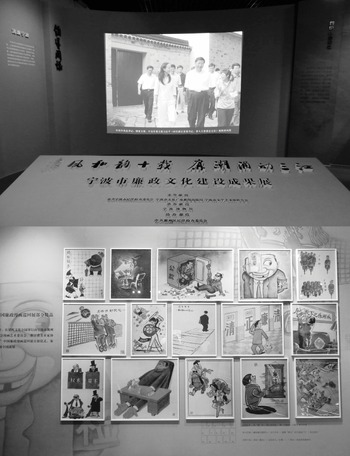
Second, a staggering number of officials have fallen into the dragnet. According to the latest official statistics, between 2012 and 2017, disciplinary authorities received a total of 12 million tips and reports from the public, followed up on 2.7 million leads, investigated 1.5 million cases, and disciplined 1.5 million individuals, including more than 8,900 ting-level (equivalent to city Party secretaries) and 63,000 chu-level (equivalent to county Party secretaries) officials. Criminal charges were pressed against 58,000 offenders.Footnote 8 Among the 1.5 million cases, disciplinary actions ranged from Party censure (warning letters and pep talks), to removal of Party membership, demotion, dismissal, and even criminal penalties, including, in the most serious cases, the death penalty.Footnote 9 In 2018 alone, more than half a million Party cadres were penalized for corruption, including 68 officials at the Central Organization Department, the Party organ that makes appointment decisions at the highest level.Footnote 10
Third, Xi vows to purge corrupt officials of both high and low ranks, or, in his famous phrase, “tigers and flies.” This includes some “mega-tigers” – officials at the highest, national rank.Footnote 11 In 2015, the Central Discipline Inspection Commission released a list of 99 officials at the vice-ministerial level who had fallen. The most towering figure in the list is Zhou Yongkang, who until 2012 was one of China’s nine national leaders (a member of the Politburo Standing Committee) and the Minister in charge of China’s formidable public security apparatus. Other mega-tigers who fell include Ling Jihua (former aide to President Hu Jintao), Guo Boxiong (Vice Chairman of the Central Military Commission), and Sun Zhengcai (Politburo member and provincial Party secretary who succeeded Bo Xilai in Chongqing). A host of provincial leaders, who will later on feature in my data analysis, also fell.
A fourth feature is that the campaign has extended beyond Party and state organs into the military, state-owned enterprises, financial organizations, and, more recently, the state media and universities. In finance, the latest target to fall is Lai Xiaomin, a former chairman of Huarong Asset Management, one of China’s largest state lenders, that was created by central authorities in 1999 to clean up bad debts. Lai was apprehended with “three metric tons of cash hidden at home, a 300 million Yuan bank account in the name of his mother and a history of trading favors for sex,” Caixin reported.Footnote 12 At China Central Television (CCTV), several producers were probed for taking bribes from companies in exchange for not exposing their misconduct on television.Footnote 13 Corruption also appears to have infected China’s higher education system, where violations include misuse of funds, rigging promotions, bribery, and selling degrees. In recent years, the government has nabbed a string of top university administrators.Footnote 14
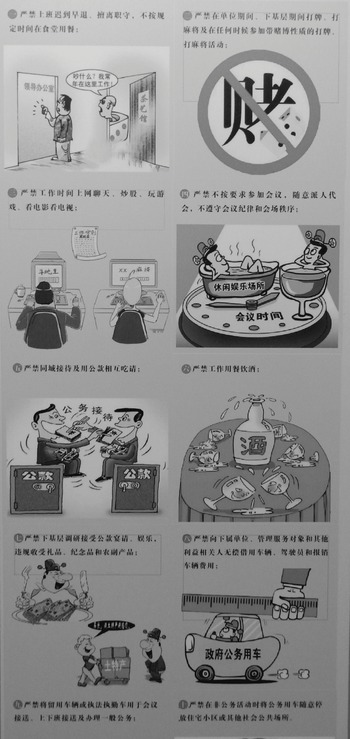
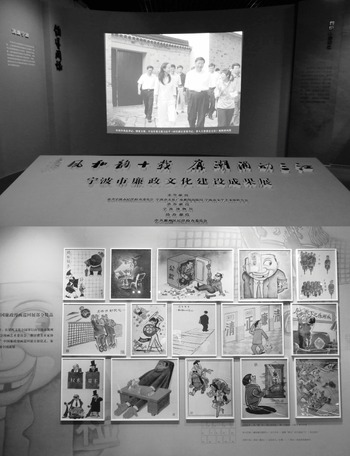
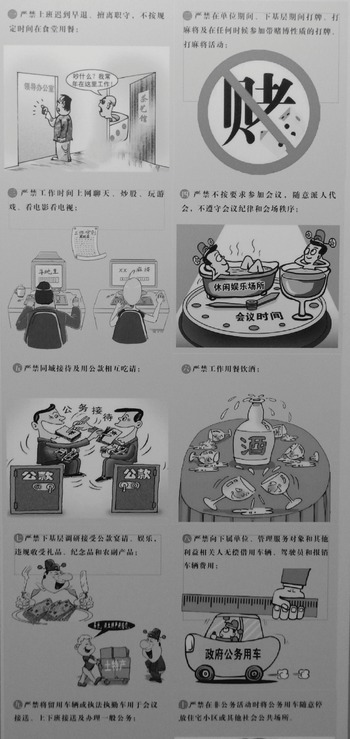
Last but not least, in addition to arresting a litany of officials, the current anti-corruption drive aims to straighten bureaucratic norms. A month after Xi’s maiden speech to the Politburo, the Party issued a list of eight regulations to curb “extravagance and undesirable work practices” (Figure 6.2). The rules are comprehensive, including reducing the number of meetings, restricting overseas visits, and even forbidding leaders from “publishing anything by themselves or issuing congratulatory letters in their own name.”Footnote 15 This norm-correcting exercise was accompanied by an extensive organizational restructuring of various agencies involved in disciplinary work, culminating in the creation of a consolidated super-agency in 2018: the National Supervisory Commission.
In short, Xi has taken the battle on graft to a whole new level, creating the longest, widest-ranging, and most penetrative anti-corruption campaign in the post-Mao era. Indeed, Xi has invented a paradoxical policy tool: a sustained campaign.
Poster on the “eight-point regulations,” including restrictions against gambling, Internet surfing, banqueting, and drinking at work.
What Influences Who Falls?
Both performance and patronage shape political careers in China.Footnote 16 During Xi’s crackdown on corruption, which is a more significant predictor of political survival?
Performance
It is common knowledge that China’s promotion system rewards economic performance, particularly the ability to generate GDP and tax revenue growth.Footnote 17 If this is true, then we should expect that high economic performers are less likely to fall, given that they deliver results and contribute to the Party’s legitimacy.
But performance might also cut in the opposite direction. As we saw in Chapter 5, aggressive growth promoters take more risks and shoulder more personal responsibility for innovative development strategies and policies. Vibrant economic and investment activities also create opportunities for large-scale graft. Furthermore, ambitious leaders like Bo not only deliver growth but proactively court media coverage. Cultivating a high profile may garner unwanted attention and incur enemies, thereby hastening a politician’s fall.Footnote 18
With regard to performance, my statistical analysis will examine two questions.
▪ Are leaders who deliver high economic performance more or less likely to fall?
▪ Are leaders who have a high media profile more or less likely to fall?
Patronage
A second prominent factor is patronage. Dyadic patron–client relations, or “factionalism,” is an enduring feature of Chinese elite politics.Footnote 19 As Nathan describes, “The hierarchy and established communications and authority flow of the existing organization provides a kind of trellis upon which the complex faction is able to extend its own informal, personal loyalties and relations.”Footnote 20 Mega-tigers cultivate an expansive, multi-level network of underlings, protégés, and associates throughout the hierarchy, who collude to generate and share rents from power. When a mega-tiger falls, one would expect his gang to topple with him.
Many commentators believe that the current crackdown is nothing more than an instrument for Xi to purge enemies and install loyalists. For instance, Kevin Rudd, an Australian former politician, dubs the campaign a “masterclass in political warfare.”Footnote 21 An op-ed in The New York Times by Chinese commentator Murong Xuecun calls it a “Stalinist purge.”Footnote 22 Such claims should and can be statistically examined.
If the anti-corruption campaign were simply “political warfare” or a “purge,” then the political status of a city leader’s patron should matter greatly. I define a patron as the particular provincial Party secretary who appointed a city Party secretary to office (more details are given in the data section). Specifically, if a city leader’s patron is a member of the 18th Politburo (2012–2017), we would expect their clients to be protected. But should a Politburo member fall, we would expect to see all or many of his appointees to fall with him (for background, see Box 6.1). The only member of the 18th Politburo who fell was Sun Zhengcai, who was investigated in 2017 on charges of bribery and rumors of conspiring against Xi.Footnote 23
To summarize, my analysis will explore three questions about patronage.
▪ Are city leaders more likely to fall when their provincial-level patrons fall?
▪ Are city leaders whose patrons are members of the Politburo and/or Politburo Standing Committee (PSC) consistently protected from fall?
▪ Did Sun Zhengcai’s fall make his clients more likely to fall?
The Politburo Standing Committee (PSC) is the most powerful body of national leaders that rule China. Once every five years, the Party leadership would announce the seven to nine members who make up this collective leadership. The 18th PSC (2012–2017) had seven members: Xi Jinping, Li Keqiang (Premier), Zhang Dejiang, Yu Zhengsheng, Liu Yunshan, Wang Qishan (who headed the anti-corruption agency), and Zhang Gaoli. The top post within this committee is that of the General Party Secretary, also the nation’s President – which is currently occupied by Xi Jinping.
The PSC is a subset of the Politburo, a larger committee of about 15–25 national leaders that is dubbed “the command headquarters of the Party.”Footnote 24 Politburo members simultaneously hold other positions, serving as ministers, provincial Party secretaries, and military chiefs. They meet regularly to decide national policies for the country.
Ranked in rising order of authority, the party organs are the Party Congress, the Central Committee, the Politburo, and the Politburo Standing Committee. As Lieberthal observes, “In theory the larger the body, the more important it is. In reality, the opposite is true – the smallest committee is the most important structure.”
After Deng Xiaoping took over the reins of power, following Mao’s death, he instituted a norm of collective leadership, embodied at the highest level in the PSC. To prevent any one leader from usurping power for himself, as Mao did, he also abolished the posts of Chairman and Vice-Chairmen of the CCP in 1982.Footnote 25 Today, however, many worry that Xi has been steadily recentralizing personal power, and, by ending constitutional term limits in 2018, placed himself in office for life.Footnote 26
Timing
There is also a third factor: timing. One distinctive feature of the Chinese political system is campaign-style policy implementation, a legacy of the CCP’s revolutionary origins, which, in Perry’s words, is by nature “convulsive.”Footnote 27 In contrast to rule-based, routine policy implementation in technocratic bureaucracies, campaigns involve mass mobilization, where the top commander orients the resources and attention of the entire bureaucracy and even society toward a particular goal. An advantage of this approach, as one official told me, is that “we can get things done fast, especially great things.”Footnote 28 But the extreme intensity of efforts also means that campaigns are usually brief, rising to a feverish peak and then quickly extinguishing. The likelihood of removal from office may simply reflect this generic campaign rhythm. To examine the effects of temporal trends, in addition to performance and patronage, I will conduct an event history analysis.
Data and Measures
For this analysis, I examine subnational political outcomes for officials during the anti-corruption campaign. This cohort covers 331 officials who were Party secretaries of city-level jurisdictions in 2011 throughout China (except in the province-level cities of Beijing, Shanghai, Tianjin, and Chongqing). Party secretaries are the first-in-command at every level of government; they not only exercise supreme authority on political matters such as appointments, but also have the final say on economic and social policies. My data follows these officials even as they are promoted, transferred, or investigated for corruption, creating a panel structure from 2012 to 2017.
An analysis at the city level sheds light on the impact of anti-corruption on local governance and development in ways that are likely to directly affect the lives of residents. In China’s five-tiered hierarchy (center, province, city, county, township), the city is the level of government right below the provinces. One city leader explains the respective roles of different levels of government as follows:Footnote 29
The work of a city Party secretary is at once macro and micro, abstract and concrete. Leaders in the townships [the lowest level] don’t have much authority to solve problems. But cities do possess macro planning powers. Provinces are even more macro. As for the central government, it’s completely macro, concerned with setting strategic direction for the entire country. Policy implementation occurs most concretely at the county level.
As this quote suggests, the first stop in examining local development is the city. An analysis at this level lays the groundwork for analyses at the lower (county and township) levels.
In particular, I focus on the 331 city Party secretaries who were in office in 2011, as they have experienced Xi’s crackdown since its inception in 2012. Given that the current anti-corruption campaign is the most forceful ever conducted by the Party, this may be the most distressed cohort of city leaders in Chinese reform history.
Tables A6.1 and A6.2 in the Appendix summarize the variables in my study. The dependent variable (outcome of interest) is the “fall” of an official, defined as the initiation of any investigation into alleged corruption (rather than a conviction, which may occur years later). Whether or not an official is convicted, investigations end careers. This variable is constructed on the basis of media reports and official reports on the websites of the Procuratorate and Central Committee for Discipline Inspection (CCDI).
Measuring Performance
I measure the performance of city Party secretaries using percentage growth in the city’s share of provincial GDP in 2012 over the previous year. (In the regression, I also included other measures of economic performance, such as annual growth in GDP and tax revenue per capita, but omitted them in the final analysis as they did not change the results.) I believe that growth in share of provincial GDP is a better measure of economic performance than the standard measure of GDP growth because, from the perspective of higher-level superiors, assessments are likely to be made in comparison with peers: whether a city leader delivers a higher share of economic growth to the province is more significant and memorable than absolute GDP growth.Footnote 30 I also include media mentions in 2011,Footnote 31 a measure of the frequency of references in a cluster of Chinese national and local newspapers, normalized by the number of papers in the province.
These measures of performance are no doubt imperfect. As my case studies in Chapter 5 show, the performance of highly competent leaders includes but goes beyond economic growth. Developmental leaders like Bo Xilai and Ji Jianye also make their mark on social development by providing public goods, infrastructure, and welfare services. But instead of exhaustively including every social indicator, I highlight economic performance, as this is still the top deliverable of every leader. I also use media mentions as a proximate measure of public prominence and the ability to deliver newsworthy social outcomes.
Measuring Patronage
To measure the effects of patronage, I employ a stricter definition of patronage than the conventional literature does. Typically, patronage is measured by a client’s (in this case, a city leader’s) proximate connections to leaders at the next higher level of government, such as whether they came from the same province or town, attended the same universities, or previously worked in the same unit.Footnote 32 This loose definition creates the variation that is required for regression analysis but it fails to accurately capture patronage. For example, if a high-level official comes from the same hometown as many lower-level officials, they will all be coded as sharing a patron–client relationship, even though some are not in fact dependent upon the higher-level official.
In authoritarian regimes, power lies in one’s ability to appoint favored candidates or protégés at lower-level positions – this is what defines patronage. Party secretaries control appointments.Footnote 33 Given this feature of China’s political system, I define “patron” as the provincial Party secretary who was in office when a city Party secretary was appointed to a given city. Even if the provincial Party secretary did not personally choose the city Party secretary, he or she at least did not veto the appointment. For example, Chen Chuanping was party secretary of Taiyuan city, Shanxi province, in 2011. He was first appointed to Taiyuan in 2010, when Yuan Chunqing was provincial party secretary of Shanxi. In my dataset, Yuan Chunqing is identified as his patron. Since 2012, 84 percent of the city leaders were transferred to other locations and thus may be coded as having more than one patron between 2012 and 2017. When any one of their patrons falls in a given year, the variable patron fall is coded as 1.
In addition to patron fall, I also coded whether a city leader is a former appointee of a member of the 18th PSC, or of the Politburo, or a client of Sun Zhengcai (the Politburo member who fell in 2017). These measures allow us to examine whether the national political status of patrons affects the likelihood of their clients’ political survival.
Other Variables
I include each city’s GDP per capita in 2011 as a measure of economic wealth. To capture institutional quality, I draw on the National Economic Research Institute (NERI) Marketization Index, a set of province-level indicators that measure the quality of market-supporting institutions.Footnote 34 My analysis includes the NERI index on “state-market relations” and “rule of law,” as these two factors are most relevant to corruption. In provinces where state–market relations are healthy and the rule of law is strong, I expect less corruption, and city leaders should therefore be less susceptible to investigations.
I also coded a variety of characteristics of the city leaders: whether they are localists (served in the same province throughout their careers), in addition to gender, ethnicity, age, and age of joining the CCP. Finally, I code whether the city leaders were transferred between 2012 and 2017. These are later omitted from the final regression and do not affect the results.
Who Stays and Who Falls?
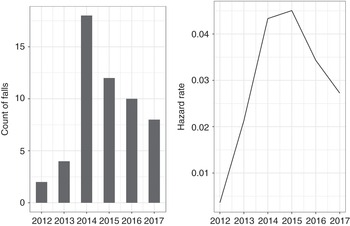
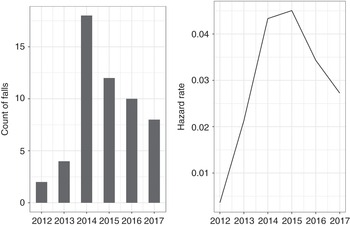
A description of this cohort of 331 city Party secretaries is illuminating as we know little about the patterns of political survival and fall at the sub-provincial level despite intense media coverage of the anti-corruption campaign. The first striking feature is that the number of falls follows an inverted V-shape pattern, as illustrated in Figure 6.3: it started at two in 2012, rose sharply to 18 in 2014, and then declined. In 2017, eight city Party secretaries fell, higher than in 2012 and 2013. By 2017, a total of 54 officials, or 16 percent of the original cohort, had fallen. Taking into account the shrinking size of the cohort each year, Figure 6.3 (right box) visualizes the hazard rate, an estimation of the likelihood of fall using only the number of falls in a given year’s remaining cohort. Just as in the simple counts of falls, the estimated hazard rate rose sharply from 2012 to 2014, peaked in 2015, and tapered off afterward. In short, the crackdown became less intense but did not end.
A second feature that stands out is the high turnover rate among the city Party secretaries (Table 6.1). This is consistent with earlier studies that find average tenure lengths shortening over the years.Footnote 35 Constitutional rules stipulate that local Party secretaries and chief executives should be appointed for a term of five years, up to a maximum of two terms,Footnote 36 but in practice, local leaders rarely stay in one office beyond five years. Among the cohort of 331 Party secretaries, only six secretaries (2 percent) remained “intact” in their original office – that is, they were neither transferred nor investigated – by 2017.Footnote 37 Within a six-year period, 279 (84 percent) were transferred to other localities or positions, and 54 of them (16 percent) fell. The intensity of Xi’s anti-corruption drive has evidently created a volatile and stressful environment for sub-provincial leaders.
| Year | Transferred = 1 | Transferred = 0 | Cumulative falls | Cumulative transfers | ||
|---|---|---|---|---|---|---|
| Fall | Did not fall | Fall | Did not fall | |||
| 2012 | 1 | 72 | 1 | 257 | 2 | 73 |
| 2013 | 3 | 201 | 1 | 124 | 6 | 204 |
| 2014 | 9 | 211 | 9 | 96 | 24 | 220 |
| 2015 | 10 | 242 | 2 | 53 | 36 | 252 |
| 2016 | 8 | 266 | 2 | 19 | 46 | 274 |
| 2017 | 8 | 271 | 0 | 6 | 54 | 279 |
Third, geographic patterns of fall are noteworthy, as summarized in Table 6.2.Footnote 38 The largest number of falls (20) is found in the central region. Shanxi, a major mining province, topped the charts with a total of six fallen city Party secretaries from 2012 to 2017. Second in rank is the Western region, with 15 fallen leaders, followed by the Northeast region at 12, and the coastal – and most prosperous – region at seven falls. With the notable exception of Jiangsu province (three falls), city leaders in the 2011 cohort tended to fall in less prosperous provinces, particularly in mining and heavy industrial rustbelts.
| Region | Total falls in region | Province | Falls in province (2012–2017) |
|---|---|---|---|
| Eastern/Coastal | 7 | Jiangsu | 3 |
| Zhejiang | 1 | ||
| Guangdong | 1 | ||
| Fujian | 1 | ||
| Shandong | 1 | ||
| Central | 20 | Shanxi | 6 |
| Anhui | 3 | ||
| Jiangxi | 2 | ||
| Henan | 3 | ||
| Hubei | 2 | ||
| Hunan | 4 | ||
| Western | 15 | Ningxia | 1 |
| Gansu | 2 | ||
| Shaanxi | 1 | ||
| Inner Mongolia | 2 | ||
| Guangxi | 2 | ||
| Sichuan | 4 | ||
| Guizhou | 1 | ||
| Yunnan | 2 | ||
| Northeastern | 12 | Heilongjiang | 5 |
| Liaoning | 4 | ||
| Jilin | 3 |
Finally, a look at the individual characteristics of the fallen. Among the 54 city Party secretaries who fell, 52 are men; 52 are Han Chinese; their ages in 2011 range between 46 and 59 years old; 47 are localists; 40 were transferred between 2011 and the time they fell; two had patrons in the PSC; 14 had patrons in the Politburo. In the fallen category, 20 percent experienced a patron’s fall, compared with 14 percent among the remaining 277 officials who did not fall. Among the fallen, the median value of their city’s growth in share of provincial GDP is 0.86 percent and the median of media mentions is 9.98, compared with 1.22 percent and 9.13, respectively, in the opposite group. Notably, 22 of the 54 fallen leaders (40 percent) were promoted prior to or in the year they fell, which reiterates my point in Chapter 5: competence and corruption go together in the Chinese political system.
While these descriptive statistics give a rough sense of the characteristics of leaders who fall, they do not identify which of these features are statistically significant predictors of fall, nor do they account for the effects of time. Thus, in the next section, I proceed to a statistical analysis of my data.
An Event History Analysis
Event history analysis (EHA) is a dynamic model that estimates the probability, or hazard rate, of a particular event occurring at particular times. In my case, this event is a “fall” – whether a Party secretary is investigated for corruption. Hazard rates cannot be directly observed; instead, they are estimated using the results of the regression. What can be observed is the binary variable of “fall,” measured as either 1 (yes) or 0 (no).
EHA allows us to compare hazard rates over time, rather than as a composite estimate. Because of its dynamic qualities, EHA is widely used by sociologists and historical institutionalists to study temporally sensitive phenomena such as class mobility, migration, founding of organizations, and policy evolutions.Footnote 39
Yet, in China studies, the bulk of analyses of career patterns, promotion, and corruption investigations do not employ EHA models. Instead, the norm is to use standard logistic regressions, where, as two methodologists describe, “temporal dependence [is treated] more as a statistical nuisance that needs to be ‘controlled for,’ rather than as something substantively interesting.”Footnote 40 In examining an evolving anti-corruption campaign, the effects of time should be taken seriously.
More specifically, my analysis uses a discrete-time hazard model, a variant of EHA. Although Cox proportional-hazard models are the most frequent choice for temporal analysis in the social sciences, these models assume a continuous notion and measurement of time (for example, if the occurrence of investigations is tracked by hour or day). This assumption doesn’t apply in my case, the dependent variable and the associated covariates are aggregated as year-person observations, such that information about when during the year a Party secretary was investigated for corruption is not relevant for my analysis. Discrete-time models also make it easier to deal with time-varying (rather than fixed) covariates and to test relationships that violate the proportional-hazards assumption.
Following Carter and Signorino, I include splines (that is, t, t2, t3), rather than time dummies in my analysis, as this renders temporal dependence “much easier to implement and to interpret.”Footnote 41 Using splines allows us to plot and interpret the hazard, as I do below. I begin my discussion by examining the logistic regression results shown in Table 6.3, in which Models 2 to 5 include splines and Model 4 includes province-level fixed effects.
| Dependent variable: fall | |||||
|---|---|---|---|---|---|
| (1) | (2) | (3) | (4) | (5) | |
| Patron fall | 1.144*** | 1.079*** | 0.815** | 3.368*** | 0.982** |
| (0.374) | (0.401) | (0.404) | (1.071) | (0.389) | |
| Growth in share of provincial GDP (2012) | 2.968 | 3.210 | 3.177 | 6.301 | 3.037 |
| (4.202) | (4.210) | (4.108) | (4.859) | (4.209) | |
| Media mentions (2011) | 0.003 | 0.002 | 0.000 | 0.005 | 0.002 |
| (0.016) | (0.017) | (0.017) | (0.023) | (0.016) | |
| Prefecture GDP per capita (2011) | 0.000 | 0.000 | 0.000 | 0.000 | 0.000 |
| (0.000) | (0.000) | (0.000) | (0.000) | (0.000) | |
| NERI government–market relations (2012) | −0.020 | ||||
| (0.135) | |||||
| NERI rule of law (2012) | 0.154 | ||||
| (0.105) | |||||
| Client of 18th Politburo member | −0.543 | ||||
| (0.377) | |||||
| Client of 18th PSC member | 0.123 | ||||
| (0.750) | |||||
| Client of Sun Zhengcai | 0.795 | ||||
| (0.805) | |||||
| time, time2, and time3 | ✓ | ✓ | ✓ | ✓ | |
| Province fixed effects | ✓ | ||||
| Observations | 1,586 | 1,586 | 1,586 | 1,586 | 1,586 |
| Log likelihood | −211.018 | −203.869 | −203.346 | −181.280 | −204.621 |
| Akaike information criterion | 432.036 | 426.138 | 428.693 | 420.559 | 425.241 |
Note: * p < 0.1; ** p < 0.05; *** p < 0.01.
Across all five models in Table 6.3, it is clear that only patron fall registers a substantial and statistically significant association with the fall of city Party secretaries, which is robust even with the addition of economic variables, NERI institutional indices, specific patron characteristics, and temporal effects. Economic performance (as measured by growth in share of provincial GDP) and media mentions do not show a statistically significant effect, which indicates that high performers are neither more nor less likely to fall during the campaign. The cities’ level of wealth also does not predict the likelihood of fall.
The non-significant results of the NERI indices deserve some attention. Perhaps the single greatest difficulty of studying corruption is that we do not know which official is really corrupt, even after an investigation. It is possible that those who are arrested are not the most corrupt, or that the truly corrupt are not apprehended. But we may reasonably infer that in provinces where the rule of law is strong and where the state is smaller and less interventionist,Footnote 42 there should be less corruption. That both NERI indices are non-significant suggests that the actual prevalence of corruption does not hugely influence the likelihood of fall; instead, patronage is the overwhelming determinant.
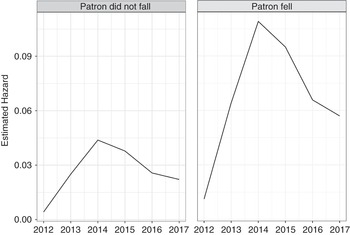
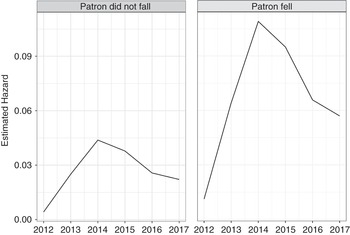
Turning to patronage, Figure 6.4 plots the hazard rate based on Model 5 in Table 6.3, where the effects of patronage are statistically significant at the 90 percent confidence interval. The plot on the left shows the hazard rate for city leaders whose patron did not fall, and that on the right represents the opposite group. The results indicate that the strong effects of patron fall intersect with the temporal rhythm of campaign-style enforcement. Both groups exhibit a wave-like pattern: the hazard rate peaked in 2014 and declined afterward, but, by 2017, had stabilized at levels above 2012. The difference is that city leaders whose patron fell were much more likely to fall than those whose patron survived. In 2012, the former group was only slightly more susceptible than the latter, but in 2013, the gap between the two jumped dramatically by more than two-fold. This large difference persisted until 2017.
Effects of patron’s fall on city leaders’ likelihood of fall.
One might question whether patron fall might be capturing province-level idiosyncrasies; for example, in the earlier descriptive section, we see that provinces reliant on mining and heavy industries had a higher number of falls. But this does not appear to be the case. Adding province fixed effects in Model 4 actually increases the substantive effects of patron fall by a large magnitude and does not decrease its statistical significance.
Although patron fall posts a robust large effect, city leaders’ ties to national leaders do not consistently predict their political outcome, as Model 3 indicates. Clients who were appointed by the current PSC and Politburo members are not consistently protected; some survived, but some fell. Among the 54 fallen city Party secretaries, two had patrons in the PSC (including Premier Li Keqiang and Yu Zhengsheng) and 14 had patrons in the Politburo. Nor is being a client of Sun Zhengcai a statistically significant predictor of downfall; among his seven former appointees, only two fell. Given the relatively small number of city leaders with patrons in the Politburo or ties to Sun Zhengcai, these results must be interpreted with caution. But they do not support popular claims that Xi’s anti-corruption campaign is merely “political warfare” among national leaders.
If I were to explain the results of the regression to city Party secretaries, my response would be: good news, bad news, neutral news. The good news is that the peak of the crackdown is over; the bad news is that it hasn’t stopped. The neutral news is that delivering economic growth and having a high media profile is neither good nor bad, but if a city leader’s patron falls, his clients should be nervous. Finally, having a patron in the Politburo doesn’t necessarily inoculate one from investigations, so even with strong backing at the highest national level, local officials must constantly watch their backs.
Falling across the Country
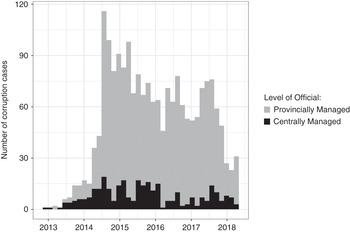
My analysis zooms in on a special cohort of city Party secretaries who experienced the entire anti-corruption drive. Future studies may expand to cover all nationally and provincially appointed leaders. For this purpose, it is useful to explore patterns of investigations across the country. Drawing on the CCDI website, Figure 6.5 shows the number of investigated cases from 2013 to early 2018, divided by rank.Footnote 43
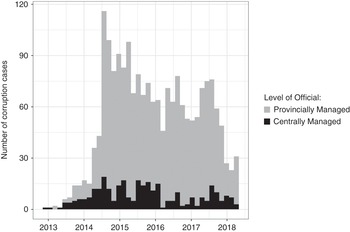
Altogether, 256 investigations involved centrally appointed officials, such as provincial Party secretaries and ministers – represented by the darker bars in Figure 6.5 – an unprecedented number of fallen mega-tigers. Notably, there isn’t a single discernable peak, although fewer officials fell in the latter half of the period examined. Instead, at the national level, we see a string of periodic crackdowns.
Turning to provincially appointed officials, including city-level Party secretaries, mayors, and directors in ministries and large state-owned enterprises, my dataset captures a total of 1,724 corruption cases. Among this group, we see a wave-like campaign rhythm that peaked in 2014, which is consistent with patterns in the smaller cohort I analyzed. In 2013, there were 27 investigations. By the next year, the number had exploded to 385. The 76 cases in the peak month of August was more than all the cases in 2013 combined. Although the trajectory points downward after August, at least 20 officials fell each month from June 2014 to September 2017, with periodic bursts of investigations in the middle of 2016, middle of 2017, and early 2018. The past six years must have been unusually high-stress ones for local leaders.
Will Anti-corruption Measures Dampen Growth?
To assess whether anti-corruption measures will dampen China’s growth, we must distinguish between immediate and long-term effects. In the short term, when opportunistic capitalists can no longer rely upon their patrons to override rules and extend privileges, they do less business, which leads to lower growth.Footnote 44 The unusually harsh scrutiny also makes government officials nervous and risk-averse, which means they would rather do nothing and avoid blame than sign off on initiatives. For example, in 2015, local officials dragged their feet on implementing 45 billion Yuan worth of investment projects, despite approval from the National Development Reform Commission (NDRC).Footnote 45 This is peculiar in an economy known for overzealous investment. Finally, fearful of being implicated in the crackdown on officials, wealthy private entrepreneurs are fleeing abroad, provoking worries about capital flight that is estimated to have approached US$425 billion in 2014.Footnote 46 But, arguably, these are painful but necessary adjustments that accompany the Party’s determination to root out cronyism, which, if successful, should eventually bring about a healthier economy and a more disciplined administration, as economist Yao Yang argued.Footnote 47
Yet Xi’s anti-corruption drive may not reap the expected long-term benefits and could even worsen future prospects for two reasons. First, his campaign has gone beyond hunting down corrupt officials and is fast evolving into a tool for tightening political control. Xi insisted that officials demonstrate loyalty and adhere strictly to Party ideology, as he declared at a speech to the CCDI in 2019, “We must resolutely safeguard the authority of the central Party and the central leadership, ensure that the entire party marches in step and acts in unison.”Footnote 48 In line with this speech, the central disciplinary authorities have expanded the scope of the campaign from policing corruption to monitoring policy implementation and ensuring correct political thinking,Footnote 49 as Xinhua declares:Footnote 50
The CCDI and National Supervisory Commission (NSC) should take the lead in enhancing the Party’s political building, and closely follow the CPC Central Committee with Comrade Xi Jinping at the core in terms of thinking, political orientation and actions … The CCDI and NSC are also required to have the courage to “show their sword and fight” on major issues of principle.
While this message may be intended to empower disciplinary authorities, for Chinese bureaucrats, the subtext is clear: conform to the right “thinking” and don’t argue. In effect, this extinguishes free speech within the bureaucracy, and, as we learnt from the Mao era, when honest feedback and debate was suppressed, disastrous outcomes ensued.Footnote 51 This is why in his monumental speech in 1978 that launched reform and opening, the first point that Deng made was to “think independently and dare to speak out.”
Second, Xi has been simultaneously straitjacketing the bureaucracy and clamping down on social and political freedoms. If Xi seeks to transform bureaucrats from bold but corruption-prone, as seen in prior decades, to being strictly disciplined, then their entrepreneurial, risk-taking functions must be transferred to the private sector and civil society through progressive political liberalization. As Max Weber pointed out, in Western history, the emergence of legal-rational bureaucracy was accompanied by the rise of liberal market economies because the two were complementary. Since coming to office, however, Xi’s policies have stifled freedom both within the Party-state and in society.
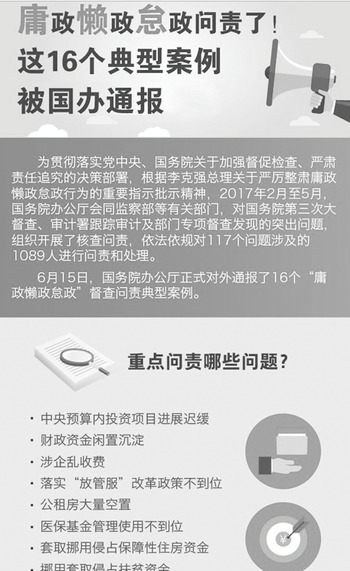
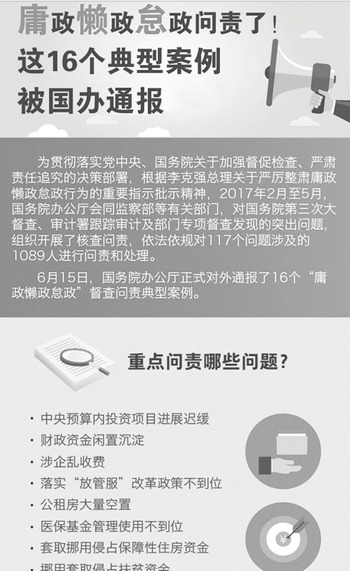
Put differently, the supreme leader’s exhortation of his officials to be both daring and disciplined is not realistic.Footnote 52 This is why we see the emergence of a new problem – inaction and paralysisFootnote 53 – also known as “lazy governance” (lanzheng). Laziness appears so widespread that the State Council issued warnings against it (Figure 6.6) by shaming individual offenders for dereliction of duty, delaying decisions, and leaving funds unused.Footnote 54 Xi also appears concerned about the backlash against the anti-corruption drive and mounting demands on the bureaucracy. The solution? The Central Party Secretariat declared 2019 the “Alleviate the Burden of Grassroots Cadres Year,” by issuing more directives that order higher-level officials not to burden subordinates with conflicting, burdensome mandates.Footnote 55 Under Xi, the irony is that every top-down solution (harsh crackdowns) generates a new problem (inaction) that the regime tries to solve with more top-down solutions (punish inaction).
Screenshot from the website of the Chinese central government, warning against “lazy governance.”
Conclusion
This chapter explored the implications of aggressive anti-corruption measures on China’s future development. I offer four takeaways. First, Xi’s war on graft takes the form of a sustained campaign, which is paradoxical, as campaigns are supposed to be intense but brief. My data shows that, although the crackdown reached its peak in 2014, it is still ongoing.
Second, the turnover rate for local leaders is remarkably high. Of the 331 Party secretaries in my dataset, 16 percent fell, and only six remained in their original office (that is, neither fell nor were transferred) six years later. Amid the unusually harsh scrutiny and steady drumbeat of fallen officials, local leaders must contend with an extremely volatile and stressful environment. Such conditions have a chilling effect.
Third, my analysis finds that performance does not protect local officials from downfall; if anything, their careers – indeed, their very survival – are more closely tied to the rise and fall of their patrons, making the political system more personalist, rather than accountable to rules.Footnote 56 Yet it is too simplistic to dismiss Xi’s anti-corruption campaign as merely a purge among national elites. Not all the appointees of the PSC and Politburo members are shielded from fall; nor did all the appointees of Sun Zhengcai topple with him.
Fourth, observers should look beyond the immediate effects of anti-corruption drives on growth,Footnote 57 and instead, pay attention to a deeper, long-term problem: the misalignment of Xi’s economic and bureaucratic preferences. His administration’s strong leaning toward a state-dominant economy – which calls for proactive, risk-taking officials – is in conflict with the paralyzing effects of his draconian crackdown. No doubt, to survive, the Party must fight corruption and discipline government officials, but achieving this objective would require simultaneous economic and social liberalization.

 Open access