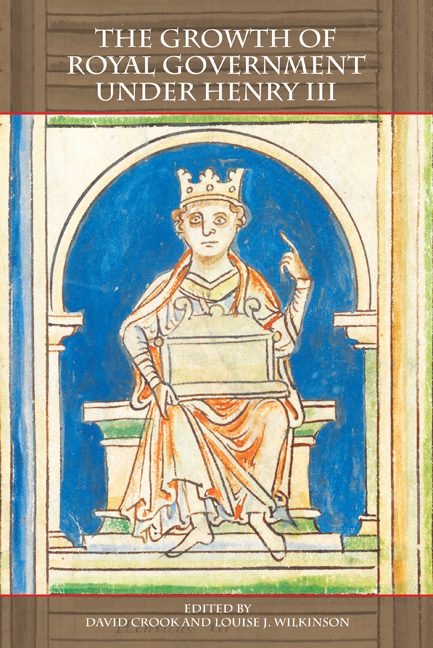
5 - Administering the Irish Fines, 1199–1254: The English Chancery, the Dublin Exchequer and the Seeking of Favours
Published online by Cambridge University Press: 13 April 2021

Summary
The events of the political coup in which Hubert de Burgh, justiciar of England and Ireland, was removed from power in 1232 and replaced with Peter des Roches and his nephew, Peter de Rivallis, are well known. One of the results of this coup over control of the mechanisms of power in England was, whether intended or not, to plant the seeds of a new administrative powerhouse in Ireland. This was the Irish Chancery, granted to the English chancellor, Ralph de Neville, the rolls of which have now been brilliantly reconstructed online by the Irish Chancery project. The resulting online edition (CIRCLE: A Calendar of Irish Chancery Letters, c. 1244–1509) is the place to find out about, and use, the Irish close and patent rolls. What we cannot find here are the Irish fine rolls (or Irish charter rolls), as the Irish Chancery never produced such series. It is the purpose of this discussion to investigate why the Irish Chancery did not produce fine rolls, and to examine how fines concerning Ireland were dealt with instead.
Attention is often drawn in the historiography of medieval Ireland to the removal of its treasure to England under Henry III and Edward I. Given this, and the primary function of the fine rolls in facilitating the collection of debts by the Exchequer, musings over whether the Dublin administration could have produced its own fine rolls do not seem outrageous. Indeed, given their important place within the workings of royal government in England, and the fact that Normandy also produced fine rolls, the surprise might rather be that Ireland did not produce such rolls once the lordship had its own Chancery. But that Ireland did not create such rolls is the inescapable conclusion, even given the paucity of the record evidence surviving from Ireland before the late thirteenth century. Searches among the Irish Chancery material for references to Irish fine rolls are in vain. The material surviving from the closing years of Edward I's reign and the early years of his successor, Edward II, yields nothing. Nothing in terms of references to fine rolls, that is; it is an easy matter to find evidence of fines, since they were recorded on the patent and close rolls in this period at least.
Information
- Type
- Chapter
- Information
- The Growth of Royal Government under Henry III , pp. 72 - 84Publisher: Boydell & BrewerPrint publication year: 2015
Accessibility standard: Unknown
Why this information is here
This section outlines the accessibility features of this content - including support for screen readers, full keyboard navigation and high-contrast display options. This may not be relevant for you.Accessibility Information
Accessibility compliance for the PDF of this chapter is currently unknown
and may be updated in the future.
- 25
- Cited by