

Introduction
At first glance, contemporary East Asian societies (i.e., the more fully developed liberal democracies Japan, South Korea, and Taiwan) may appear rather liberal. For instance, their inhabitants seem to enjoy more economic and social liberties as they have achieved similar levels of economic development as advanced industrial democracies in Western Europe and North America. Even socialist China, despite its authoritarian political regime, has rapidly opened its economy to the world. As such, its citizens, too, have indeed enjoyed enhanced economic liberties because they were allowed to accumulate their wealth, climb social strata, and relocate to follow jobs.
Nevertheless, these East Asian societies still lag behind their Western counterparts in various indices of social mobility and liberty. Specifically, their geographical mobility regarding their careers and jobs is much lower than it is for those in rich Western countries. Additionally, their psychological (relational) mobility – defined as the extent to which individuals have opportunities to form new relationships … and the ability to leave unsatisfying relationships – is less than half that observed in Western liberal societies (Thomson et al. Reference Thomson, Yuki, Talhelm, Schug, Kito, Ayanian, Becker, Becker, Chiu, Choi, Ferreira, Fülöp, Gul, Houghton-Illera, Joasoo, Jong, Kavanagh, Khutkyy, Manzi, Marcinkowska, Milfont, Neto, von Oertzen, Pliskin, Martin, Singh and Visserman2018). While East Asian rice cultures have achieved phenomenal economic development, catching up with most advanced industrial democracies, they have nonetheless been behind in social rights, and especially in women’s rights. In fact, all three East Asian countries under consideration here – China, Japan, and South Korea – are ranked 102nd, 116th, and 99th, respectively, among the approximately 150 countries that comprise the women’s rights index (World Economic Forum 2022). Overall, East Asia has been rapidly adjusting to global capitalism with phenomenal growth performances for the last half century, but the bulk of their cultural norms, in terms of their social organizations, remains akin to their ancestors’ cultural legacies. That is, tight-knit social organizations (Gelfand et al. Reference Gelfand, Raver, Nishii, Leslie, Lun, Lim, Duan, Almaliach, Ang, Arnadottir, Aycan, Boehnke, Boski, Cabecinhas, Chan, Chhokar, D’Amato, Ferrer, Fischlmayr, Fischer, Fülöp, Georgas, Kashima, Kashima, Kim, Lempereur, Marquez, Othman, Overlaet, Panagiotopoulou, Peltzer, Perez-Florizno, Ponomarenko, Realo, Schei, Schmitt, Smith, Soomro, Szabo, Taveesin, Toyama, Van de Vliert, Vohra, Ward and Yamaguchi2011) play critical roles in preserving and bequeathing older generations’ cultures on to the next generation (Hofstede Reference Hofstede2001; Nisbett Reference Nisbett2004).
Thus, the question becomes: Why, exactly, did East Asians lock themselves into such tight-knit collaborative networks, while Westerners liberated themselves from social boundedness? In this article, I suggest that rice farming answers this question, along with ecological and economic conditions. In fact, rice has dominated the East Asian diet, and East Asians depend on it for most of their nutritional intake. In 1928, 80 percent of Beijing workers’ food expenditures were on the grain, and in 1938, farmers in the Tonkin Delta region relied on rice for 98 percent of their calories (Braudel Reference Braudel1995). Japanese farmers considered the consumption of grains other than rice as “pitiable” and cultivating crops other than it as “degrading” (Braudel Reference Braudel1995). Therefore, a typical rice village is a closed, complete economy, and the village is locked in by the rice, as Braudel (Reference Braudel1967) claimed. A rice village needed one unique thing: a substantial and stable water supply for growing rice. Compared to premodern Western Europe, highly developed irrigation systems in China and Japan support this logic (Pomeranz Reference Pomeranz2000; Wittfogel Reference Wittfogel1957). These villages also needed a substantial, instant, continuous, and well-organized labor supply to manage irrigation on time and promptly execute transplantation, weeding, and harvesting. Thus, a rice village needed cohesive and stable coordination systems. Therefore, a typical rice village developed efficiently coordinated labor exchange networks, often run by strict hierarchical status-based relationships.
In fact, it was a carefully crafted “social cage,” whose definition will be elaborated later, but its definition differs from the “iron cage” (Hall and Ikenberry Reference Hall and John Ikenberry1989; Mann Reference Mann1986; Weber Reference Weber1992 [1930]) in the sense that tightly woven social ties and norms encouraged village members to monitor each other and behave as others expected, long before (Weberian) bureaucratic rationalization based on capitalism arrived.Footnote 1 In addition, this article develops the notion of the social cage not as an external, top-down control and monitoring system, but as a horizontal, voluntary, bottom-up incentive mechanism to discourage exit options, if they eventually became hierarchical and “socially constraining.”
One must ask at this point, from where did this social cage originate? What elements of the social cage were utilized and mobilized for rice farming?Footnote 2 How did East Asian farmers utilize the social cage to enhance productivity in rice farming? Finally, does the social cage still persist today?
The next sections delve individually into each of these questions. In the following analyses, one could begin to understand how intensive rice farming and its social or cultural caging practices are interwoven, how such systems are embodied in contemporary daily organizational settings, and, finally, how social organizations built upon lineage-based households generate distinctive social psychological mindsets, which I generally refer to as “culture” (Hofstede Reference Hofstede2001). In other words, I probe historical and ecological contexts in which the rice cultivation system begets its own cultural institutions. In so doing, I reveal how and why East Asians developed not only “tight” but also “long-lasting” (Gelfand et al. Reference Gelfand, Raver, Nishii, Leslie, Lun, Lim, Duan, Almaliach, Ang, Arnadottir, Aycan, Boehnke, Boski, Cabecinhas, Chan, Chhokar, D’Amato, Ferrer, Fischlmayr, Fischer, Fülöp, Georgas, Kashima, Kashima, Kim, Lempereur, Marquez, Othman, Overlaet, Panagiotopoulou, Peltzer, Perez-Florizno, Ponomarenko, Realo, Schei, Schmitt, Smith, Soomro, Szabo, Taveesin, Toyama, Van de Vliert, Vohra, Ward and Yamaguchi2011; Thomson et al. Reference Thomson, Yuki, Talhelm, Schug, Kito, Ayanian, Becker, Becker, Chiu, Choi, Ferreira, Fülöp, Gul, Houghton-Illera, Joasoo, Jong, Kavanagh, Khutkyy, Manzi, Marcinkowska, Milfont, Neto, von Oertzen, Pliskin, Martin, Singh and Visserman2018) social caging systems, which have shaped today’s rigid and less mobile job markets and organizational structures.
The following sections consider the evolution and diffusion processes of wet-rice paddy techniques, that accompanied Zhu Xi’s “Sung Idea” in southern China and broader East Asia, including Korea and (to a lesser extent) Japan. To this end, I conceptualize the “social caging” system of rice cultivating societies, which denotes a social institution of rice-farming societies devised to restrict members’ exit options.
By comparing the Jiangnan area of Southern China, Korea, and Japan during the premodern era (roughly between the seventeenth and nineteenth centuries), as well as comparing these three places with societies in Western Europe and North America, this article offers antecedent, premodern footage of contemporary rice cultivation cultures. By doing so, this article hypothesizes three factors – neo-Confucianism, economic exit options, and tight cultural norms/ties – as complementary institutions in creating the “social cage.” Based on them, this article highlights similar functions of social caging in East Asian rice-cultivation systems and their differences from their Western counterparts. This article then proposes a proposition in conclusion: that community-level collaborative labor organizations originating from rice farming, having operated for several hundred years, still exert their influence on contemporary industrialization processes in East Asia.
The uniqueness of wet-rice farming
In a hypothetical rice-farming community somewhere in East Asia, the most significant task was to fill and drain water from rice fields. Most importantly, rice farming requires managing an extraordinary amount of water and endless labor. For example, the rainy season and typhoons were accompanied by floods. Thus, if drainage channels were torn down, farmers’ work would undoubtedly increase. With the heavy rains during the rainy season or typhoons, farmers often run the risk of losing their lives by going out into paddy fields to manage waterways and dams.
According to one estimate, it would take an average of 75 hours for four farmers to maintain one hectare of paddy waterway (Vermeer Reference Vermeer1977). In particular, compared to wheat farming, the direct seeding method (i.e., sowing directly in the paddy field) requires 3.7 times more labor to manage the agricultural waterway associated with rice farming, and 5.8 times more labor is required when employing the transplanting method (i.e., transplanting seedlings from a seedbed) (Huan-Ping et al. Reference Huan-Ping, Shi-Ming, Er-Da, Ying-Chun and Heng-Yang2013). Regarding the entire labor requirement, rice farming entails, on average, twice as much labor per hectare as wheat. However, rice yield is two to three times beyond that of wheat and other grains (Fei Reference Fei2006 [1939]). In fact, it rewards farmers at a rate that equals their work. Moreover, rice can feed more families; likewise, supporting a growing population requires more rice. The point, here, is clear: the villagers indulged in rice and were then caged in it.
Both individuals and families had to organize communal labor to perform the work that could not be accomplished at the personal or family level. Organizing and managing communal labor in rice-farming villages involved handling so-called “free riders” (Olson Reference Olson1965), something that social scientists call the “commons dilemma” or the “tragedy of the commons” (Hardin Reference Hardin1968), and appropriate punishment mechanisms (Gavrilets and Richerson Reference Gavrilets and Richerson2017).
Rice cultivation as a historical cause
Rice culture, characterized by tight-knit social ties and produced as the outcome of the rice cultivation system, persists and reproduces itself today, even though the rice cultivation system itself has weakened in many parts of East Asia. Stinchcombe (Reference Stinchcombe1968) labeled this kind of causal relationship as a “historical cause,” in contrast to a “constant cause.” In the latter relationship, both cause and outcome continue to survive over a long period of time. In other words, the rice cultivation system occurred in the past, producing its outcomes, value system, and social institutions. These outcomes then operate as causes in reproducing themselves over time, even without the original cause, the rice cultivation system.
The linkage between the rice cultivation system and rice culture is a typical slow-moving causal process (Abbott Reference Abbott1988; Pierson Reference Pierson2004). Both the cause and the outcome developed over an extended period of time, spanning at least hundreds of years, and at its maximum, thousands of years. Figure 1 illustrates how the rice cultivation system evolved and lasted for premodern periods, simultaneously producing its core value and social institutions tight-knit social ties and norms built upon collaborative labor exchange networks. Such a rice cultivation system terminated at T3, as wage labor was introduced and spread during the eighteenth to nineteenth centuries, and then agricultural machinery became dominant in the twentieth century. Even though the rice cultivation system disappeared from paddies and the majority of people no longer reside in rural areas, tight social ties and norms persist from T2 to T4, linking the historical cause and contemporary outcomes – economic development. This article puts primary focus on the former process, the linkage between historical rice cultivation and the making of tight social ties during premodern East Asia, while briefly discussing the latter process, the linkage between tight social ties and economic development.
Rice cultivation as a historical cause.

The social cage: Conceptual lineage
A narrower sense of caging can be found in Max Weber’s work on the “iron cage.” He defined “caging” as a process in which individuals lose their autonomy and are relegated to being an object of state domination by way of its hierarchy, bureaucratic rules, and technical controls (Weber Reference Weber1992 [1930]). Mann (Reference Mann1986) and Hall and Ikenberry (Reference Hall and John Ikenberry1989) further expanded Weber’s definition, reinterpreting it as a part of the civilization process, in which the state binds its people within its territory and institutional monitoring system via bureaucratization so that its people become citizens by the state granting both rights and obligations. Some organizational scholars applied this notion to explain top-down bureaucratic and hierarchical control of employees (Barker Reference Barker1993).
Here, I build the notion of “social caging” by eliminating two elements from this “iron caging” perspective that may complicate its scope. One element is the role of the state in caging processes. In fact, eliminating the state’s role from caging is not always possible; rather, the state in East Asian societies often reaches the lowest levels of local villages and exerts its influence through infiltration strategies (Mattingly Reference Mattingly2019, Reference Mattingly2020; Klein and Lee Reference Klein and Lee2019). For instance, premodern Chinese states utilized mutual monitoring systems in which five to ten households report malfeasances of their neighbors to state bureaucrats. Today’s North Korean state still uses this strategy for ensuring the regime’s stability. South Korean authoritarian governments in the 1970s and the 1980s also leveraged the same surveillance system over both labor and civil society, which was pinpointed as a critical component of the developmental state (Kohli Reference Kohli2004). In addition, Weberian theory assumes that the caging process is deeply embedded in the development of capitalism and modern bureaucracy, which tends to accompany the generalization of instrumental rationality and individuals’ subordination to bureaucracy (Weber Reference Weber1992 [1930]). The Weberian notion of iron caging often leads to criticism of the over-developed Western welfare state, which makes its citizens inactive and passive recipients of social policies (Habermas Reference Habermas1987: 2). Nevertheless, relating caging to the state-driven process of iron caging often overemphasizes the state’s importance, regularly treating East Asian states as “omnipotent” actors while overlooking unique social processes embedded in their production and community structures. That is, key structures that may have originated in premodern production processes, not in modern bureaucratization and rationalization.
The other element to be removed is the notion of emancipatory values prevalent in contemporary studies of liberal democracy and cross-cultural studies (Inglehart and Welzel Reference Inglehart and Welzel2010; Welzel Reference Welzel2013). In particular, this notion was developed by Welzel (Reference Welzel2013) in his seminal work on human empowerment and emancipation. Welzel conceptualized and measured human empowerment as the “extent to which people are capable, motivated, and entitled to exercise universal freedoms” (ibid.: 44). He built sub-indices of emancipatory values, such as autonomy, equality, choice, and voice. These emancipatory values are individual-level measures of modern civic freedoms, civic rights (entitlements), and liberal democracy. Welzel investigates what factors explain these values both within and between cultural zones and countries throughout his book. Moreover, he identified factors, which we know as “modernization factors,” like income, technology, education, generations, and access to information. Through extensive data analyses, he observed that emancipatory values are more closely aligned with citizens’ rights, women’s rights, and liberal democratic institutions over time, which he labels “the rights revolution.”
How does the “social cage” differ from these concepts developed by political scientists? First, the concept of the “social cage,” while similar in several dimensions to these social psychology concepts, does not aim to highlight the West’s superiority over the East. Welzel’s emancipatory values explicitly signify the goals of Western modernization. One such example might be to put Hofstede’s (Reference Hofstede1984, Reference Hofstede2001) individualism versus collectivism dichotomy into this West versus East comparison. I refrain from the Western notion of liberty and from the West’s freedom-based psychological constructs. Although humans do seek emancipation and liberty from various forms of institutional or non-institutional constraints, they simultaneously reside and settle in forms of new obligations. Emancipatory values and institutions that respect individual freedom are modern Western phenomena, which have diffused throughout the world alongside capitalism and several waves of democratization (Boli and Thomas Reference Boli and Thomas1997; Inglehart and Baker Reference Inglehart and Baker2000; Meyer et al. Reference Meyer, Richard Scott and Strang1987). However, these processes are much shorter than the entire human history of survival and settlements. Regardless of my unequivocal support of such values, I do not consider it useful (yet) to impose these contemporary “West vs. East” differences on the central enigma I probe. As is well-known, Western civilization first emerged in the old (Southern Europe), new (America and Oceania), and reformed West (Northern Europe) (Welzel Reference Welzel2013). These same regions are more democratic and advanced in individual rights and entitlements in nearly every realm and measure of modernization, as Inglehart and Baker (Reference Inglehart and Baker2000) have asserted.
I, however, pose a question to these well-researched, modernization studies: How would these studies account for the economic rise of East Asia, Southeast Asia, and South Asia? How would they treat the less- or non-emancipatory features of these societies that are inconsistent with their economic excellence?
In discussing the concept of the “social cage,” I have chosen not to engage the notion of the universal emancipatory values. The “social cage” is not antithetical to the values of contemporary modern merchants who espouse democracy and freedom, both of which were shaped by struggles against autocratic states and feudal aristocratic elites. The social cage simply implies the degree to which individuals or households cannot exit from their socioeconomic relationships when they want to do so. I also postulate that social caging occurs at both the local community and intermediate organizational levels or via informal familial, kinship, or friendship networks. Here, social caging is defined as the degree to which individuals or households are bound to their social and economic relationships, despite their intentions to exit when necessary. It is more similar to the concept of “relational (im)mobility” (Thomson et al. Reference Thomson, Yuki, Talhelm, Schug, Kito, Ayanian, Becker, Becker, Chiu, Choi, Ferreira, Fülöp, Gul, Houghton-Illera, Joasoo, Jong, Kavanagh, Khutkyy, Manzi, Marcinkowska, Milfont, Neto, von Oertzen, Pliskin, Martin, Singh and Visserman2018) or “norm tightness” (Gelfand et al. Reference Gelfand, Raver, Nishii, Leslie, Lun, Lim, Duan, Almaliach, Ang, Arnadottir, Aycan, Boehnke, Boski, Cabecinhas, Chan, Chhokar, D’Amato, Ferrer, Fischlmayr, Fischer, Fülöp, Georgas, Kashima, Kashima, Kim, Lempereur, Marquez, Othman, Overlaet, Panagiotopoulou, Peltzer, Perez-Florizno, Ponomarenko, Realo, Schei, Schmitt, Smith, Soomro, Szabo, Taveesin, Toyama, Van de Vliert, Vohra, Ward and Yamaguchi2011) developed by social psychologists rather than the “iron cage” tradition established by Weberians (Hall and Ikenberry Reference Hall and John Ikenberry1989). It is also conceptually and empirically correlated with the tightness or looseness concept developed by Gelfand et al. (Reference Gelfand, Raver, Nishii, Leslie, Lun, Lim, Duan, Almaliach, Ang, Arnadottir, Aycan, Boehnke, Boski, Cabecinhas, Chan, Chhokar, D’Amato, Ferrer, Fischlmayr, Fischer, Fülöp, Georgas, Kashima, Kashima, Kim, Lempereur, Marquez, Othman, Overlaet, Panagiotopoulou, Peltzer, Perez-Florizno, Ponomarenko, Realo, Schei, Schmitt, Smith, Soomro, Szabo, Taveesin, Toyama, Van de Vliert, Vohra, Ward and Yamaguchi2011).
One major difference between the concept of the “social cage” and these well-developed social psychological constructs is that the former considers “economic opportunities” as one of its essential components. An individual or household’s “uncaging” opportunity could best be provided by opportunities, like a job or purchasing land, outside the cage to which they belong. Migrants are determined to leave their communities, whether beloved or hated, because of potential economic gains (Borjas Reference Borjas1989).
Nevertheless, modernization theory again looms large in developing this notion of the social cage, as the development of communication, transportation, and urbanization eventually provide ample chances for loosening premodern social caging processes, as Welzel and his colleagues (Reference Welzel, Inglehart and Hans-Dieter2003) assert. While I do not completely deny this possibility, I do argue that “social caging institutions” constructed in premodern societies may persist even now, in the form of renewed collaborative production networks (Nakane Reference Nakane1967; Nisbett Reference Nisbett2004), such as in professional offices and factories in modern industrial societies. Indeed, such phenomena are more prevalent in East Asia.
Divulging in a deep, unchanging social structure does not necessarily mean that a lingering structural influence will be completely stable in the future. Rather, the structure will adapt, modernize, and interact with external shocks and new developments made by people today and social institutions (Mahoney and Thelen Reference Mahoney and Thelen2009). In this article, I treat the social caging processes based specifically on the rice cultivation system as a relatively stable – albeit adaptive – structure in East Asia (Lee et al. Reference Lee, Talhelm and Dong2023; Talhelm et al. Reference Talhelm, Zhang, Oishi, Chen, Duan, Lan and Kitayama2014). Rural social structures built upon this system have influenced contemporary capitalist societies (Nakane Reference Nakane1967). Even if the agricultural economy has shrunk as a result of the ruthless forces of industrialization and the service economy, rural social structures and institutions are still the deep, underlying foundation of East Asian capitalism (Lee et al. 2022).
Finally, as the social cage considers the presence or absence of “exit options” in the socioeconomic structures and micro-social ties, slavery may be included as part of the social cage, particularly because the former is defined as status-based, compulsory labor without an exit option. However, alongside the notion of the “social cage,” I do not focus on slavery-like labor systems based on premodern status society (nobi in Joseon and Burakumin in Japan).Footnote 3 Today, slavery is based ultimately on status-maintaining legal institutions stipulated by the state, something that lies beyond this article’s ambit. Furthermore, I work from the position that the slavery system was not primary in typical East Asian premodern villages; rather, the majority of people were independent, small-farm peasants with their own land (Miyajima Reference Miyajima2020).
By limiting the notion of the “social cage” to the degree of geographical, economic, and social exit options (or the sheer presence or absence of them) from communal governance, the social cage is therefore independent of Weberian state-building (Hall and Ikenberry Reference Hall and John Ikenberry1989) as well as of its relationship to despotism (Welzel Reference Welzel2013). In other words, even without the Weberian iron cage, the (functions of) social cage could still induce its settlers to stay rather than exit. Ultimately, by highlighting the absence of exit options, I explore in greater depth how and why members of rice-farming communities choose to continue to operate within their current community’s order and norms.
The definition of “tight social ties”
“Tight social ties” can be understood in two distinct ways. First, they may explicitly refer to “tight social networks” that operate among individuals within a society. In contrast to everyday “loose social networks,” individuals belonging to certain networks or memberships may perceive their ties as being linked through blood, religion, communal memberships, and other long-term relationships. These connections often foster stronger social trust and obligations among members than those without such ties. Such memberships or networks are frequently equated with social capital (Bourdieu Reference Bourdieu and Richardson1986; Putnam Reference Putnam1999) and further categorized into strong social ties, contrasting with weak social ties (Granovetter Reference Granovetter1973).
Second, “tight social ties” may implicitly imply “tight norms,” whereby individuals’ behaviors are rigorously bound and regulated by social norms (Gelfand et al. Reference Gelfand, Raver, Nishii, Leslie, Lun, Lim, Duan, Almaliach, Ang, Arnadottir, Aycan, Boehnke, Boski, Cabecinhas, Chan, Chhokar, D’Amato, Ferrer, Fischlmayr, Fischer, Fülöp, Georgas, Kashima, Kashima, Kim, Lempereur, Marquez, Othman, Overlaet, Panagiotopoulou, Peltzer, Perez-Florizno, Ponomarenko, Realo, Schei, Schmitt, Smith, Soomro, Szabo, Taveesin, Toyama, Van de Vliert, Vohra, Ward and Yamaguchi2011). This second dimension or definition of “tight social ties” may be correlated with the first definition of “strong social ties,” but not necessarily coincide with it.
In this article, when referring to “tight social ties,” I primarily mean the former definition of “tight social networks,” especially when discussing the contemporary outcomes of social cohesion. However, in premodern societies, such tight social ties are often closely associated with “tight norms,” such as neo-Confucianism. In East Asia, neo-Confucianism has gradually weakened over time with modernization, while tight social ties have been redefined and readjusted in factories and offices through collaborative labor organizations.
Economic and geographical social caging
Forces shaping social caging are multidimensional. If ample economic opportunities exist outside one’s community or social relationships, one would by definition have a high number of exit options (Hirschman Reference Hirschman1970). Such opportunities are determined primarily by the availability of economic subsistence styles, that is, the accessibility of wild animals and plants in hunting and gathering societies, arable lands in agricultural societies, and the number of jobs and markets in industrial societies. These basic ecological or economic conditions fundamentally shape the backgrounds of social caging. Even if one were to build a strong social hierarchy from which members could not easily escape, with strong surveillance systems and binding internal norms, the vast size of free land outside the community would encourage members to escape. In the long term, such a strong social hierarchy would not be sustainable under the “pulling” pressures from external opportunities.
As one example of an exit option, the large Spanish and English colonies, which were made available to Europeans and English peoples since the sixteenth century, offered alternatives to their ties to their communities of origin (Pomeranz Reference Pomeranz2000). East coast communities in America in the nineteenth century also experienced this kind of pulling pressure. The large scale of emigration to the West (Turner Reference Turner1920) hindered the aspiring middle classes as well as the disgruntled lower classes from settling in the same community for the long term.
Not only the allure of nearby land but also the presence of ethnic populations with similar language and culture played the role of pulling pressure. For example, both gigantic (Spanish-speaking) Hispanic populations in Southern America and large cities played similar roles in pulling immigrants out of Latin America toward the United States (Portes and Rumbaut Reference Portes and Rumbaut2001; Munshi Reference Munshi2003). As a result, Mexican cities bordering the United States may suffer “unstable” social structures (Martinez Reference Martínez1988) due to their residents’ exit options.
An important point, here, is that these cases of migration opportunities are mostly based on ample modern market opportunities provided by the strongest contemporary economy, the United States. The presence of a strong, large economy in adjacent areas catalyzes “exits” for individuals in peripheral regions. In premodern East Asia, the strong commercial impulses developed in the Jiangnan areas in China and Japan’s Edo-Osaka area catalyzed emigration for surrounding agricultural communities.
If professional opportunities provide alternatives for job seekers, the vast scale of unoccupied land provides exit options for landless farmers. Manchuria and Hokkaido remained uncultivated until the late nineteenth century and played a similar role (i.e., provided an exit option) for poor peasants of the late Joseon and Meiji Japan. In both countries in the late nineteenth and early twentieth centuries, a massive number of migrants ventured into these remote, deserted lands (Kitayama et al. Reference Kitayama, Ishii, Imada, Takemura and Ramaswamy2006; Son and Lee Reference Son and Lee2013). It was the immense population pressure, as well as natural disasters and economic crises and the dissolution of the social status system, that encouraged such mass migration. For instance, after devastating floods, many people were determined to leave their towns in Southern Korea’s Gyeongsang Province during the colonial periods, eventually settling in Manchuria (Son and Lee Reference Son and Lee2013).
Geographical conditions are no less important than economic opportunities. In premodern or outcast regions isolated from transportation infrastructures, residents have little incentive to communicate with outsiders and strangers. Surrounding seas, high mountains, and large stretches of desert or tropical forests isolate a community, limiting contact with outsiders and external opportunities. Such communities are naturally conditioned to be disconnected from external influences, and members thus develop distinctive internal norms, which are not easily integrated into external cultures and institutions.
As such, geographical barriers prevent community members from seeking out external opportunities. Outsiders are unwilling to penetrate such isolated communities because of the high transactional costs incurred by barriers and the steep costs of attempting to communicate with “exotic isolationists.” Moreover, insiders are also unwilling to trade resources with outsiders because they would have already established their own economic subsistence approaches independent of external communities and resources. To this end, a recent study reports that geographical barriers, such as the Alps, have resulted in genetic differences between the Northern and Southern Swiss (Zieger and Utz Reference Zieger and Utz2020).
These two conditions, that is, economic and geographical or ecological, shape the fundamental contexts of social caging processes. Of course, these two conditions do not account for all the processes involved in social caging. Internal shaping processes equally matter. When facing such external circumstances, people build internal hierarchies and solidarity structures to respond to or often to overcome such external constraints or challenges. Social caging utilizes and overcomes its surrounding geographical and economic subsistence conditions. For instance, facing such strong geographic constraints that prevent exit options, settlers of rice-farming villages may build strong status systems to reinforce higher levels of mobilization and exploitation of human labor. Additionally, rice farmers, facing fortified geographical constraints and low rice suitability, may develop intensive farming methods and technologies to increase productivity with a limited supply of land (Boserup Reference Boserup1965; Geertz Reference Geertz1973). In such conditions, strong geographical constraints (e.g., mountains and rivers or oceans), harsh climatic conditions characterized by low rice suitability, and high population density interact with each other, thereby further reinforcing social caging and binding social norms of community maintenance.
Ethnic, linguistic, and religious social caging
When combined with economic and geographical conditions, three additional cultural barriers reinforce social caging. The presence of cultural boundaries shaped by ethnic, linguistic, and religious differences often (if not always) overlap with economic and geographical barriers. While these cultural boundaries must have been shaped primarily by geographical barriers, the territorial borders governed by the state and economic transaction networks may have also contributed to the formation of such differences. Even if large economic market opportunities were to exist in nearby towns, ethnic, linguistic, and religious differences may nonetheless deter direct participation or transactions. Ethnic differences incite fear and suspicion due to dissimilarities in appearances. Furthermore, different languages simply block communication. Finally, religious differences strengthen the sense of “otherness” by revealing varying norms, values, and rituals regarding religious practices (Belot and Ederveen Reference Belot and Ederveen2012). I do not delve into these cultural barriers in this article, not only because they have already been studied extensively, but also because these factors are reflected in geographical distinctions between East Asia and the rest of the world.
The joint labor system
Rice-farming villages necessitated the organization of communal labor. Managing such collective efforts inevitably raised the challenge of dealing with free riders (Olson Reference Olson1965). How should a community respond to individuals who repeatedly shirk their communal responsibilities? The most straightforward solution is expulsion from the labor group. Yet if members are too frequently removed for non-compliance, organizational cohesion deteriorates and the labor pool shrinks. As a result, critical tasks such as irrigation, drainage, planting, and weeding may be delayed or left incomplete, ultimately leading to a decline in the village’s overall agricultural yield.
One notable historical solution to this free-riding issue can be found in Dure, a village-level mandatory labor exchange network in premodern Joseon. Dure had various systems in place to prevent free riders. For one, if one were to skip one’s communal labor obligation or neglect one’s work, they would be disgraced and disciplined in front of others at work sites or at year-end village meetings (Joo Reference Joo1996). In the event of severe violations, a free rider may even be subject to harsh punishment, which could involve beating a person after wrapping them in a straw mat. For example, a Dure in Seosan, Chungcheongnam-do, once had an officer called Gonjangsoe, who would execute beating orders from Jwasang (or Yeongjwa, the head of Dure) (National Folk Museum of Korea 1994). In the Honam region, a military culture that emphasized a top-down hierarchical structure was introduced into the Dure community under the military-farming dual system. Indeed, severe restrictions and often public punishments were imposed on those who deviated from communal labor norms or neglected their duties (Bae Reference Bae2018).
Fei’s ethnographic observation revealed that rural Chinese villages (in Zhejiang Province) maintained sophisticated formal and informal structures to manage communal needs for labor mobilization. Unsurprisingly, the greatest need for cooperative labor in the Yangtzi River valley pertained to irrigation projects. If any village member did not show up for a community irrigation project, they were required to pay a fine (Fei Reference Fei2006 [1939]: 173). Furthermore, the farmers belonging to the same cien shared responsibilities. If someone did not report for work, the others had to give their water to other groups; they also had to bring a significant amount of food (e.g., wine, fruit, and cakes) to the irrigation work site. This arrangement indicates that cien members were responsible for each other’s fair contribution and, therefore, monitored the fulfillment of each other’s obligations. Because an absentee’s reputation would be significantly diminished, each member was expected to do their best to uphold their duty.
In Japanese village communities, moral penalties, including bullying, were imposed on those who violated community rules (Smith Reference Smith1961). Along with these collaborative labor exchange networks, called Kumi, strong communal norms of mutual assistance and obligations were imposed on each member. In Japanese society, if any village member transgressed community norms, they would be separated and persecuted over a course of penal periods (called Murahachibu), forbidden to have contact with other villagers. These community-level customs aimed to maintain the value of “wa” (和) (i.e., harmony) within a mura (village), which, in the Japanese context, means that the entire mura sustains a given homeostasis and is united by a willingness to cooperate. This spirit of wa obliges members to conform to the norms and lives of the collective mura community. As such, communal labor in rice-farming East Asia was an organizational system in which strict rules, such as evaluation, penalties, and disadvantages, were laid out for those who missed or neglected participation. Rice farmers understood that it is much easier to internalize norms within collaborative labor exchange networks “when groups promote peer punishment of free riders” (Gavrilets and Richerson Reference Gavrilets and Richerson2017).
The communal labor system requires skilled labor that operates quickly in a single unit and is perfectly aligned with nature’s cycle. For example, when the monsoon rains start to pour down, villagers must transplant all rice plants at one time. Transplanting was usually done in Pumasi, which required less labor than at Dure (Joo Reference Joo2006). Notably, the most powerful and intense form of this system was used for weeding. On weeding days, the Dure’s top leadership (known as the Jwasang and Chonggakdaebang) would quickly summon young men in the village. While the Jwasang decides on the first and last families for that day’s weeding, the Chonggakdaebang (the Dure’s secretary-general and head of organizing) assigns the necessary tasks. When young men and their wives finished the weeding, then music, food, and alcohol were provided. Communal labor was thus transformed into a feast, enhancing the community’s solidarity. Figure 2, a folk painting from the late Joseon Dynasty, reflects this culture precisely. In the repeated events of communal labor and shared food, the villagers form a close, mutually beneficial reliance. As they eat and drink together after a hard day of labor, they share about their families and childrearing, thereby solidifying their social relationships. Thus, the village community, comprising clans with blood ties, evolved into a much larger “neighbor family.”
Scenes depicting rice planting and threshing harvested rice from the late Joseon Dynasty. (a) Gyeonggikdobyeong and (b) Jeonganaksa.
Source: Beauty of Korea – Genre Paintings and Beauty of Korea – Folk Painting, JoongAng Ilbo, 1985.
Note: (a) Woo Jinho, colored on silk, 146×60cm, Gertrude Klassen, Germany. (b) Colored on paper, 75.0×36.5cm, private collection, Seoul, South Korea.

Individuals in a rice-farming culture are “agents in a group” (Talhelm et al. Reference Talhelm, Zhang, Oishi, Chen, Duan, Lan and Kitayama2014), meaning that they are people in well-woven social relationships. In neighbor family relationships forged out of family, blood relatives, and communal labor, an individual’s private and independent space did not really exist. Furthermore, individuals in this culture learned how to behave and fulfill their group roles at an early age. Their daily lives were filled with duties in relationships tightly interwoven with obligations among parents and children, siblings, relatives, and neighbors. The question, at this juncture, is whether there was any option for escaping these tight social relationships.
The emergence of intensive wet-rice farming in the Song Dynasty
This section addresses the following central question: how were tight-knit social ties maintained in rice-farming communities into the eighteenth and nineteenth centuries, despite the rise of labor migration and commercialization?
To answer this question, I begin by tracing the historical roots of social caging in the technological revolution of the Song Dynasty. I then turn to its ideational consolidation in the neo-Confucian tradition – specifically in China and Korea, but not in Japan – and conclude with its transformation under the rise of wage labor. This section begins with the emergence of intensive wet-rice agriculture as the material foundation of the social cage.
In the thirteenth century, there was an agricultural revolution in Southern China under the Song Dynasty (960–1279) that fundamentally transformed East Asia in subsequent periods. That revolution was catalyzed by the invention and prevalence of intensive wet-rice farming around the Yangzi River.
The farmers of the Yangzi River mountain basins, and not those of the delta region, first utilized intensive wet-rice farming methods because they did not have to rely on large irrigation projects (see the mountain basin areas of the broad Jiangnan area in Figure 3a). Instead, they could build smaller bunds to control tributaries at the foot of a mountain valley. After mountain basin farmers conducted numerous demanding wet-rice farming experiments in these mountain basins, and only after large irrigation projects could control the Yangzi’s main streams (during the Ming Dynasty), could farmers of the deltas apply intensive farming methods to their rice fields (see the narrow Jiangnan area in lower Yangzi River in Figure 3a). As a result, this type of farming developed from the reclaimed land farming system of the Jiangnan region and then later expanded to the surrounding farmlands of Jiangdong, Zhexi, and Zhedong (today’s Zhejiang province) (Shen Reference Shen2017). This spread of wet-rice technology, combined with intensive farming, reached the Jifu (畿辅) region of Huabei (contemporary Beijing and Tianjin areas) during the Ming and Qing Dynasties (Xinhao Reference Xinhao2013).
Geographical conditions with diverse terrains in three East Asian rice-farming areas. (a) River Delta and Mountain Basins in China, (b) River Delta and Mountain Basins in Southern Korea, and (c) River Delta and Mountain Basins in Japan.

One important difference between these developments in Southern China from their northern counterparts was that farmers relied primarily on human rather than animal labor (Pomeranz Reference Pomeranz2000). Simultaneously, they also relied on family members’ labor rather than on wage labor. The enormous Yangzi River delta was divided into small parcels and purchased by large numbers of small farmers or rented out to tenants. The typical form of one unit of labor became small independent families and their temporary collaboration systems.
With the revolution of transplantation techniques and seed improvements, accompanied and supported by better irrigation techniques and organizational revolutions (of labor exchange networks), the productivity of land greatly increased. Therefore, peasants could use their extra time for producing commercial products, such as sugar, silk, hemp-weaving goods, tea, liquor, and small hand-crafts, especially in the Canton areas (Bray Reference Bray2004). In this way, rice farming provided copious room and many incentives for peasants to stay in their communities. Agricultural involution that anchored rice farming in Southern China not only absorbed labor – thereby “maximizing the productivity of land” (Bray Reference Bray2004: 16) – but also contributed to the development of commerce and manufacturing based on agricultural products.
As a result, the emergence of intensive wet-rice farming in Southern China during the Song Dynasty and its social permeation during the Ming Dynasty markedly increased the population not only in Southern China but also in Northern China, Joseon, and Tokugawa Japan, since the seventeenth century. In the eighteenth and nineteenth centuries, the Chinese population skyrocketed from 0.14 billion to 0.41 billion. As for the Japanese, their numbers strengthened rapidly in the seventeenth century but then essentially stagnated during the eighteenth century. In the nineteenth century, it rapidly grew in tandem with industrialization. The Korean population count is estimated to have shot up in the seventeeth and early eighteenth centuries and then gradually expanded in the nineteenth century (Park Reference Park2022). Social caging, accompanied by rice farming in premodern East Asia, discouraged exit options while also offering peasants considerable incentives to stay on their land.
The emergence of neo-confucianism in Southern China and Korea
In the thirteenth to fourteenth centuries, there were multiple dimensions of revolutions, not only in subsistence style but also in ideas and norms in Southern China. Moreover, these revolutions in farming methods and community governance were imported by the newly arising literati in Joseon in the fifteenth century.
In South China, below the Yangzi River, both the wet-rice production revolution and the philosophical revolution led by Zhu Xi occurred during the Song Dynasty (960–1279). One of the core Zhu Xi principles advocated establishing Confucian self-governance and educational institutes (called Seo-Won and Hyang-Kyo in the Joseon Dynasty) at each village level. Another was to deny the traditional aristocratic governance system by expanding the opportunity to serve in the national bureaucracy to all lay people. Since the emergence of Zhu Xi’s neo-Confucian governance method, peasants could enjoy two routes to advance to the upper classes: one through investing in their land and the other through investing in their offspring as human capital.
Zhu Xi’s philosophy of community-governance is delineated in his work, Lesser Learning (小學) (Zhu Reference Zhu2017), which specifies community members’ roles, attitudes, and manners suitable for maintaining mutual trust and aid, social order, and morality in extreme detail. The text stipulates specific codes regulating community-level social solidarity; for instance, what are good and bad behaviors for the community, what kinds of (or what levels of) punishments should be imposed when members violate rules, how do members relieve others’ miseries, how do members monitor each other’s transgressions, what kinds of manners should be observed in mutual communication, and even what kind of good and bad behaviors should be recorded as examples. Zhu Xi recommended that these moral obligations and principles should be reciprocally educated and reinforced through voluntary, private organizations and imposed on each member through community coordination, not via state apparatuses but through community associations (Ubelhor Reference Übelhör, Theodore de Bary and Chaffee1989; Yun Reference Yun2016: 197–8). In a sense, Zhu Xi created the East Asian version of “social capital” (Putnam Reference Putnam1999) in that neither the state nor households were entirely in charge of villagers’ norms and behaviors. Instead, in Zhu Xi’s system, “intermediate associations” assumed roles like mutual monitoring and mutual aid.
In particular, Zhu-Xi stipulated extremely detailed rules regarding mutual manners among hierarchically ordered community members during visits:
When a guest reaches the gate of the house, the host should ask cordially him/her to enter it after the guest pretended to decline (entering). The host should enter the stairs (of the gate) on the right side, while the guest entering them on the left side … If the guest is lower in his/her status/hierarchy than the host, he/she should catch up with the host when the host moves up the stairs. (Excerpted from Zhu Reference Zhu2017, 小學[Lesser Learning], 明倫 [Highlight of Human Ethics])
One important point in Zhu Xi’s normative rule is that “the status or hierarchy” implied ranks (of officials), generational orders of a tribe, or simply age-based ordering. Except for the noble classes and lay persons (mostly peasants), age was the most important criterion for discerning status hierarchy. This age-based social hierarchy posited that elders have greater wisdom and knowledge – especially regarding farming methods and expertise – than younger persons.
Unsurprisingly, neo-Confucian community orders imposed and reinforced this age-based social hierarchy and collaboration system onto wet-rice farming. Not coincidentally, labor exchange networks were also maintained along the same age-based orderings and customs. Zhu Xi’s moral principles established moral norms, first within the family, then between the family and state, and finally solidified them within a village. Notably, both Zhu Xi’s community-centered moral codes and intensive wet-rice farming emerged in the same region during the same era (i.e., Jiangnan areas in Southeast China during the Song Dynasty) and were then disseminated throughout other neighboring regions (Northern China, Joseon, and Vietnam) as one cohesive technology-ideology bundle.
The neo-Confucian community governance system and collaborative labor exchange networks are “institutionally complementary” (Hall and Soskice Reference Hall and Soskice2001). Effectively managing labor exchange networks required strong moral codes accompanied by a robust penal system, and neo-Confucian moral governance provided institutional monitoring, education, and admonishment. The nexus between these two systems guaranteed a community’s Tiáohé (harmony or harmonization, the state or the process of negotiating and coordinating conflicts), which was essential for sustaining labor exchange networks comprising families and lineage-based tribes.
It was the development of wet-rice farming coupled with the rice-paddy technique that propelled social transformation in Southern China and Joseon. The technological revolution – rice seedling transplantation – during the Song Dynasty accompanied stronger community-level labor exchange networks and collaboration systems. Furthermore, neo-Confucianism had an elective affinity with these technological advances, as paddy rice required both more labor input and prompter, large-scale labor mobilization. Therefore, Zhu Xi’s philosophy, which highlighted family and communal ethics, was a perfect ideological amalgam to link production structure with social structure.Footnote 4
The social and cultural legacies of neo-Confucian communal governance as a form of social caging can be observed in contemporary southern China, where large-scale patrilineal organizations are stronger (Freedman Reference Freedman1958), particularized trust is higher (Chung et al. Reference Chung, Lai and Xia2006; Huhe et al. Reference Huhe, Chen and Tang2015), and village-level communities and mechanisms of social control are more robust (He Reference He and Xuefeng2022), compared to northern China.
Spread of the bundle in Joseon Dynasty
The bundle comprising transplantation techniques and neo-Confucianism was imported to Joseon in the late Koryo Dynasty and early Joseon Dynasty in the fourteenth century. The technique was initially experimented with in the mountain basin areas of Kyungsang province (the southeastern part of the Korean peninsula). The southeastern area of Korea is rugged mountain terrain but is also dotted with small basins around the Nak-dong River (see Figure 3b). Farmers here grew rice in the lowlands or mid-mountainous hills around numerous tributaries of the river. This region’s farmers and literati vigorously imported both paddy rice transplantation techniques and neo-Confucianism from Southeast China throughout the fourteenth and fifteenth centuries. The paddy rice technique was tested in these Kyung-Sang province areas in the fourteenth and fifteenth centuries and then spread to the neighboring Chula and Chungcheong Provinces in the sixteenth and seventeenth centuries. The young leader of the new literati, Kwang-jo Cho, asked the King, Jung-Jong, to use Zhu Xi’s moral and educational philosophy in local villages and spread them to local societies. The King published the Yeo Tribe’s Moral Promises and mandated local officials and elites to use this text for stipulating community-level moral codes. Zhu Xi’s moral codes, detailed in Lesser Learning, became village-level norms that were to be strictly followed. The local literati in both the Ming or Qing and Joseon dynasties organized village-level private institutes (called Seo-Won and Hyang-Kyo in Korea and Xiang jiao in China) to enshrine renowned Confucian philosophers and educate the young, burgeoning literati. In such private institutes, young pupils of neo-Confucianism studied the great books by Confucian philosophers and prepared for the national exam en route to becoming one of the central literati working in Hanyang or Beijing for the kings or emperors.Footnote 5 These institutes were not only voluntary organizations of the local literati but also their village-level self-governance institutions, independent of official local state offices. By admitting a small number of peasants’ offspring, they reinforced status-based hierarchical orders between the literati and local peasant classes.
In a sense, these private institutes were premodern (civil) societies independent of a state governance system. Naturally, therefore, kings vigilantly institutionalized them but did gradually allow the local literati to maintain their regional dominance as long as they cooperated with local state officials (Miyajima Reference Miyajima2020: 29–31).
The local peasants also reinforced their preexisting, voluntary labor exchange networks to increase the output of wet-rice cultivation. Zhu Xi’s Lesser Learning and Yeo tribe’s Moral Principles required farmers to follow strictly specified manners when engaging with each other, helping each other during times of trouble, keeping promises, and maintaining mutual trust. In summary, Zhu Xi’s philosophy served as the moral cement for reinforcing reciprocal obligations among rice farmers as well as status distinctions between the local literati and peasants, in both the Song-Ming and in the Joseon Dynasties.
The institutional complementarity between Zhu Xi’s philosophy and the rice cultivation system persisted until the eighteenth century in China and the nineteenth century in Korea. Following this period, the rice cultivation system began to erode with the onset of modernization at least in urban areas, while the tight-knit, collaborative labor exchange system in the paddy fields gradually gave way to wage labor (Liang Reference Liang1978; Liu Reference Liu2005; Yu and Ren Reference Yu and Ren2013). Nevertheless, as previously discussed, the tight social networks resurfaced within collaborative labor organizations in offices and factories during the industrialization processes of the developmental eras.
A different genealogy: Japanese communal governance
In Japan, Zhu Xi’s Sung Idea was imported earlier in the Kamakura era (1185–1333), but it was in the Tokugawa era (1603–1868) that Sung Idea was established as the governance ideology. In contrast to Joseon, the Tokugawa regime did not utilize it as the local communal governance ideology but instead recognized it as an educational ideal for the Samurai and other administrator classes, who were physically isolated from both land and local peasant societies (Miyajima Reference Miyajima2020: 232–238). In fact, the Tokugawa Shogunate feared the possibility of well-organized peasant communities coalescing with the Samurai to rise against the Shogun; therefore, the Samurai were required to stay in town with their daimyos (Park Reference Park2020). Given that the Samurai had been departing from rural communities since the Edo era, Japanese peasant societies enjoyed their autonomous communal governance systems during the Tokugawa regime.
Notably, local Japanese peasants had already established their own communal norms before the Tokugawa regime and, therefore, did not need to redefine their moral principles only in terms of the higher demands for collective labor organizations in wet-rice societies. Given that rural Japanese communities held the strongest communal governance system even without both Zhu Xi’s ideology and the governing Samurai class, Zhu Xi’s ideology, bundled together with the wet-rice transplantation technique, did not play a decisive role in reinforcing the existing communal control system. On the contrary, it spread among the (lower and younger) Samurai class in the eighteenth and nineteenth centuries and served as the justification for their active participation in politics – not only as bureaucratic elites in premodern societies but also as the ruling class in modern industrial society (Bellah Reference Bellah1970 [1957]; Jensen Reference Jensen1986). Of note, the latter was featured by the subversion of the Tokugawa Shugunate and the launch of the Meiji Restoration (in 1868).
To summarize, in Japan, communal controls based on neo-Confucianism were uncommon; nor were they even necessary. This is largely because the traditional Japanese communal control system was strong enough to govern its labor mobilization system.Footnote 6 When the neo-Confucian community control system was introduced in the Song and Ming Dynasties and then imported to the Joseon Dynasty, Shinto and its shrines were ubiquitous in Japanese villages. Even before neo-Confucianism and transplanting rice-farming methods, Japanese farming communities managed several forms and layers of labor mobilization and exchange networks, such as Dozoku, Kumi, and Yui. Moreover, Japanese rural communities had developed strong status-based social hierarchies even without Sung-Confucianism.
The institutional complementarity between Zhu Xi’s philosophy and the rice cultivation system was effective only in China and Joseon, not in Japan. In all three countries, tight social ties developed from the rice cultivation system, but due to the greater (geographical) exit options available in China and Joseon, additional institutional measures were required – specifically, a state-driven “caging” system. Zhu Xi’s philosophy, therefore, functioned not only as an organic, voluntary evolution of social capital from the ground up but also as a state-imposed model of community governance. In premodern Korea (Joseon), Zhu Xi’s philosophy was not only a product of the local literati but also a governance ideology imposed from above by the state. Japan, by contrast, did not require such state intervention because the natural geographical constraints (as an island society) were strong enough to limit peasants’ exit options. From a different perspective, the wider exit options available in China and Korea may have necessitated a stronger ideological constraint mechanism, such as neo-Confucianism. In addition to Zhu Xi’s philosophy operating at both the village and national levels, premodern dynasties in China and Korea also reinforced strong blood-based lineage institutions within and across large families to prevent peasants from exercising their exit options and therefore were able to unify them under the lineage-based rice cultivation system (Miyajima Reference Miyajima2020). Within such blood-based lineage institutions, parents ensured that community norms were passed down to subsequent generations (Tabellini Reference Tabellini2008).
In this sense, while the forms of their community-control ideological power and (dis)incentive systems (which I refer to as “social caging”) varied across all three, their basic economic production (i.e., rice cultivation) system was homogenous across the three East Asian societies being considered in this article.
In Western Europe and England during premodern eras, institutions resembling the tight collaborative labor exchange networks found in East Asia were rare. Instead, premodern Western societies developed feudal relations of authority characterized by vassalage, wherein the lord and the vassal exchanged fiefs and military service/honor (Taylor Reference Taylor1990). Although the vassal was bound to the lands, vassalage was less a system of slavery and more of a contractual relationship with mutual obligations. Furthermore, peasants had opportunities to escape from these relationships, and even in Eastern Europe, where relations between lords and vassals were stricter, lords often had to alleviate burdens from their vassals to retain them. These relationships were open to revision and negotiation (Pomeranz Reference Pomeranz2000), thus possessing a contractual aspect. Consequently, in contrast to the contractual nature of social caging in premodern Europe, characterized by ample exit options, East Asian rice farmers developed village-level norm-based social caging with limited room for exit options.
Determinants of tight social ties in three societies and the west
What determines differences in levels of tight social norms across countries and societies? One underlying factor is whether there were any opportunities available for exiting one’s labor relationships. If such an exit leading into a nearby market were large, communal social norms would be looser, but if there were little room, it would be much easier to build norms around a tight communal control system.
For instance, if a peasant could find better opportunities for wage labor in either a nearby or quite remote village (and had a reasonable level of accessibility to such opportunities) than investing in their own land, then how would the peasant’s neighbors enforce or persuade them to fulfill the village’s common labor exchange requirements in the long term? The person or family may not be there the next morning.
Let me return to East Asia. In this respect, China had a fundamentally different environment from its neighboring nations, Korea and Japan. First of all, the early development of merchant trading and commercialism in the Jiangnan and Guangdong areas also provided alternative opportunities. Second, its vast landmass and population provided ample opportunities for alternative exit options beyond communal obligations. Internal migration options were abundant: even the Qing government encouraged migration from the lower Yangtzi deltas to Sichuan, Hubei, and Shaanxi (Perdue Reference Perdue1982). Thirdly, Chinese peasants had a much wider range of exit options than their Korean and Japanese counterparts, as mainland China developed wage labor much earlier than the other two, as summarized in Table 1. Although Tokugawa Japan may have developed higher agricultural productivity and commercial economies, rural rice communities remained intact, that is, free from urbanization and the commercial boom during the Edo era, as most peasants were bound to their land until the mid-nineteenth century.Footnote 7
Communal governance and production systems in three east Asian wet-rice village communities and England in the eighteenth to nineteenth centuries

Agricultural labor contracts not based on bound labor emerged during the Dang and Song Dynasties in China. In the Southern Song Dynasty, independent peasants became wage laborers during the farming off-seasons and were paid for large construction projects related primarily to state-sponsored irrigation projects. Additionally, they became wage laborers during the busy rice-farming seasons (Liang Reference Liang1978). Since the Song Dynasty, in the surrounding areas of markets and teahouses on bridges and streets in the major ports of large towns and cities in the Jiangnan area, employment relationships in the form of wage labor prevailed (Liu Reference Liu2005; Yu and Ren Reference Yu and Ren2013). For instance, in Jiangsu Province during the Ming Dynasty, medium- to large-sized landlords mostly did not cultivate their own land; instead, they hired laborers, whereas small landlords relied on their own family labor. Furthermore, to control the quality of laborers, they often hired them via intermediaries and held those middlemen accountable should the laborers perform poorly (Huang Reference Huang1990; Wang Reference Wang2016; Zhou Reference Zhou2009). Wage laborers were hired in the hand-craft industries, cotton and textile industries, commerce, transportation, and personal service; they also grew into independent social groups (Chen and Zhang Reference Chen and Zhang2012).
Under the Qing Dynasty, large-scale agricultural employers employed up to 10 or more agricultural workers based on contracts (Wu Reference Wu1983). As a result, women had opportunities to find such jobs in large cities or other towns. In particular, the southeastern part of China developed mega cities beginning in the Song Dynasty in two large delta areas (Guangdong and Zhejiang), thus enabling agricultural laborers to migrate to these cities.
In contrast, in the Joseon Dynasty since the fifteenth century, the literati class, the yangban, emerged and settled in rural areas with their own land, as did the nobi (enslaved persons), which led to their local dominance structure. It was not until the late eighteenth and nineteenth centuries that the small, self-employed peasant class increased in size and wealth. Affluent peasants elevated their status to the yangban by purchasing family pedigree books and, therefore, the status distinctions among the yangban, regular peasants, and even the nobi became increasingly blurry. Thanks to the presence of the yangban in rural areas, more than 90 percent of the population resided in rural areas until the early twentieth century, and most peasants were bound to their lands and communities throughout the eighteenth and nineteenth centuries in Joseon.
In the latter part of the Joseon Dynasty, small independent farmers were reluctant to use the emerging wave of wage laborers and preferred to use their existing informal contracts of labor exchange systems. Rather, it was during the era of Japanese colonization (1910–1945) that community-level labor exchange networks began to be replaced with contract-based wage labor (Ahn Reference Ahn2009). In brief, bound labor remained strong in the eighteenth and early nineteenth centuries in Joseon and the Tokugawa Shogunate, but considerably weakened in Qing China.
Governance and exit options in the premodern period
Table 1 summarizes the divergent developments of communal governance and production systems in three major East Asian rice-farming regions. Village-level communal labor exchange systems evolved in all three regions, but their strengths and durability varied. For example, the strongest form of the labor exchange system evolved in Japan and Southern Korea, but such a system was not very strong in Southern China (and, therefore, even much weaker in northern, wheat-growing China). The salient question, here is, of course, what exactly caused this difference?
In Southern China’s Jiangnan area, community-level moral control, which highlighted loyalty, filial piety, and faithfulness, was well established throughout the three recent dynasties but was not as durable and tight as that of the Joseon Dynasty. The distinction derived from the widespread presence of exit options through wage labor and urban jobs in the Song, Ming, and Qing Dynasties, when compared to the Joseon Dynasty. The Jiangnan area in the Yangzi River Delta in the seventeenth and early eighteenth centuries was the most affluent region, not only in China but also globally along with England (Pomeranz Reference Pomeranz2000).Footnote 8 Hereditary servile labor became increasingly unimportant by the eighteenth century (Elvin Reference Elvin1973). In fact, most bound laborers were released during the Ming-Qing transition period in the seventeenth century in the Yangzi Valley, and bound labor almost disappeared entirely in northern and southern China by the late eighteenth century (Pomeranz Reference Pomeranz2000). During the Qing Dynasty, commercialism flourished: the commodity market was competitive enough for multiple producers and buyers to be engaged in bidding, and merchants used credit markets to secure clients and customers (Pomeranz Reference Pomeranz2000).
In summary, Southern China offered ample opportunities for villagers to escape their social relationships and seek better options in nearby economic centers, such as the Lower Yangzi Valley (Huang Reference Huang1990). Although such commercialization did not reach the height of high capital accumulation and subsequent industrial capitalism – in contrast to England – it is obvious that commercial market economies provided many job opportunities for migrant workers in the late Qing Dynasty.
In the context of alternative hiring systems and job availability, strictly enforced mutual labor exchange norms simply produced more deserters and evaders. However, it may have been difficult to impose strict labor exchange norms from the outset in China. Indeed, it can be hard to identify the specific legacies of strict collaborative labor exchange systems in modern China, even if irrigation-related labor exchange networks and normative sanctions against violators were found in Jiangnan Province in the early twentieth century (Fei Reference Fei2006 [1939]).
Japan was the most affluent nation in East Asia during the premodern period, particularly since the mid-eighteenth century, as illustrated in Figure 4. During the Edo era, Japan’s per capita income caught up with China’s in the early nineteenth century and then surpassed China twofold in the late nineteenth century. According to Angus Maddison’s calculations, China’s per capita income reached $1,542 USD in 1700 but decreased to $962 and $972 in 1800 and 1900, respectively (see Figure 4; Bolt and van Zanden Reference Bolt and van Zanden2025). Such a decline was due primarily to the exploding population increase. However, concurrently, China’s development was not led by a productivity surge but by population growth. In contrast, Japan’s per capita income was $1,073 in 1700 but skyrocketed to $1,317 in 1800 and $2,123 in 1900. Korea’s per capita income was the lowest among the three, at $820 in 1820 and $1,107 in 1911 (Bolt and van Zanden Reference Bolt and van Zanden2020).
GDP per capita (natural logged) from the premodern to modern eras in three East Asian countries, 1700∼1945.
Source: Bolt and van Zanden Reference Bolt and van Zanden2025.
Note: Y-scale is natural logged. Logged values (6.5 to 8.5) are recalculated (exponentiated) and recorded with the original values. Note that the Chinese series is not about Jiangnan Province, but about the entirety of China.

Numerous large cities developed during the Edo era. While the Edo shogunate remained Japan’s political center, many Samurais, merchants, and artisans gathered in Osaka, Kyoto, and jokamachis (where lords reside). While Seoul’s population was only 190,000 in 1669 and 250,000 in the late nineteenth century (Lee Reference Lee2018), Tokyo boasted 1.1 million, and Osaka had 400,000 residents in the eighteenth century. One study estimates that Jiangnan’s urbanization reached 15 percent in 1620 and 16.3 percent – 19.3 percent in 1776, while the entire China’s urbanization rate was only 7.4 percent. In particular, Southern China, including the Jiangnan region, experienced greater population growth than its northern counterparts during this period, owing to well-developed community-based wet-rice cultivation and irrigation systems (Huang Reference Huang1990). Comparably, Japan’s degree of urbanization was 15 percent in the mid-seventeenth century, similar to the Jiangnan area in the seventeenth century. However, Korea’s (Joseon) was merely 3.4 percent. In other words, commercial marketization advanced the most in Japan and then in China, but in Korea, it did not significantly develop.
Nevertheless, it is hard to conclude that Japanese peasants were offered the best exit options thanks to the development of these cities and commerce. Rather, the commercial impulse was primarily for the Samurais, jonins, and city dwellers during the Edo period, as peasants were strictly bound to local land and communities until the Meiji Restoration. Furthermore, they were strictly controlled by the local (dimyos) and central states (shogun).
Among the three regions being compared, southern China, particularly the Jiangnan area, provided extensive commercial exit options to farmers through large cities. In addition, new wet-rice paddies were developed in the middle of the Yangtzi River, Guangdong, and Sichuan during the Qing Dynasty. Although the productivity increase was not accompanied by the expansion of arable lands or a population rise, city growth, coupled with the introduction of wage labor in both rural and urban areas and the decline in bound labor during the Qing Dynasty, created exit options for Chinese peasants.
It is, however, puzzling as to why urban growth did not occur in Joseon. One explanation could be that the dominant yangban class in rural communities in the Joseon Dynasty did not immigrate to Seoul or other main local cities until the late nineteenth century, yet still exerting their influence on peasant societies. In Joseon, Zhu Xi’s Sung Idea reinforced the literati’s local dominance since the seventeenth century (while the popularity of Sung Idea kept declining in the Qing Dynasty). In Joseon, peasants’ exit options were provided geographically, not through developing commercial markets and cities. The Korean peninsula offered a geographical exit option to farmers through access to Manchuria. Migration dramatically increased during the Japanese occupation of Korea beginning in 1909, as the latter part of the Joseon Dynasty (i.e., the colonial government) built railways from Pusan to Seoul and then to Shin-ui-ju and at the northwestern border shared with China.
In summary, bound labor disappeared altogether in China, while urban development and the commercialization of agriculture provided sufficient exit options for peasants. In Joseon, bound labor remained until the late nineteenth century, but, notably, affluent nobi and peasants could purchase yangban statuses, so distinctions among the classes became increasingly blurred. In both China and Joseon, even though upward mobility through civil service examinations did not expand peasants’ exit options because of a fierce competition rate, it was at least possible for them to climb the ladder, either by purchasing the positions or by passing the exams. Interestingly, such mobility was impossible in Japan until the Meiji Restoration (1868) if it did not occur through adopting peasants’ sons or daughters by lower-status Samurais (which was rare).
In China, labor exchange systems and their accompanying communal norms weakened alongside the spread of wage labor. In Joseon, the bundling of Sung Idea and the rice cultivating system was reinforced beginning in the seventeenth century; therefore, the communal governance system, led by the literati class and peasants (called dong-gye), was durable until the late nineteenth and early twentieth centuries. Even without the influence of Sung Idea, peasant societies maintained their communal governance and labor exchange systems in Japan. The absence of Samurais since the Edo era may have helped peasants reinforce their own independent, autonomous governance systems. Alternatively, the shoguns and daimyos figured out how to sustain local control effectively without letting Samurais reside in local villages. Therefore, peasants’ exit options were considerably higher in the latter part of the Qing Dynasty, less so toward the end of the Joseon Dynasty, and the lowest in the late Tokugawa era in Japan.
A comparison with the West
There is no definitive metric for comparing the strength of tight social ties between East Asia and Western Europe in the premodern era. The most viable approach is to examine the exit options available to peasants from their relationships with landlords or local communities. In Western Europe and England, institutions resembling the tight-knit collaborative labor exchange networks found in East Asia were rare. Instead, premodern Western societies developed feudal authority structures characterized by vassalage, in which lords and vassals exchanged fiefs for military service and honor (Taylor 1990). Although vassals were bound to land, vassalage functioned less as a form of slavery and more as a contractual relationship with mutual obligations. Peasants often had opportunities to exit these ties, and even in Eastern Europe, where feudal serfdom was more rigid than in the West (Wallerstein Reference Wallerstein1974), lords were frequently compelled to lighten burdens in order to retain their vassals. These relationships were subject to revision and negotiation (Pomeranz Reference Pomeranz2000), making them inherently contractual.
In England, feudal structures were dismantled before the Industrial Revolution, paving the way for a rapid transition to agricultural capitalism. In France, the presence of numerous small, independent peasants slowed the adoption of wage labor as seen in England, but bound labor was abolished by the time of the Industrial Revolution (Brenner Reference Brenner1976). Most importantly, in the eighteenth and nineteenth centuries, the most viable geographic exit options for Western Europeans included emigration to the Americas (Pomeranz Reference Pomeranz2000). Simultaneously, numerous industrializing cities – such as the Ruhr region in Germany, as well as Paris, Berlin, and London – offered abundant opportunities for labor mobility throughout the nineteenth century.
In contrast, East Asian rice-farming societies developed lineage-based, moral forms of social caging with significantly fewer exit opportunities. Across China, Japan, and Korea, despite some nuanced differences, none had developed exit options comparable to those in Western Europe. Instead, all three societies built moderate to strong systems of communal moral control and labor exchange within villages, fostering dense social ties. Under these conditions, peasants – linked by kinship and long-term residence – had limited incentives to exit their social networks. While Western Europe saw collaborative communal rights in grazing and open-field systems (Ostrom Reference Ostrom1990; Overton Reference Overton1996), the systematic labor exchange norms found in East Asia served different functions and were more socially binding. Although wage labor emerged in East Asia – especially in China during the early stages of industrialization – it did not expand to the scale seen in Western Europe. In the Jiangnan region, combinations of family- or lineage-based cooperative labor and short-term migrant wage labor developed (Li Reference Li1998) but did not evolve into a generalized system of labor mobility. As a result, this form of industriousness did not create explosive exit options as it did in England. In Japan, commercialization and wage labor developed primarily around the Samurai and Jonin classes in urban centers, largely independent of rural peasants’ ability to exit their local social structures.
Major distinctions in the social caging institutions of England and Western Europe compared to those of East Asia include (1) the looser contractual relationships between lords and vassals during the medieval period (Pomeranz Reference Pomeranz2000); (2) the more widespread prevalence of wage labor in both rural and urban settings from the eighteenth century onward (Brenner Reference Brenner1976); and (3) the comparatively weaker commitment of individuals to lineage-based divisions of labor (De Vries Reference Vries2008).
To abbreviate, in England and Western Europe, the Industrious Revolution, migration exits to the Americas, and the concurrent transformation of household labor allocation occurred in a way that liberated individuals from family obligations. In contrast, the East Asian version of the Industrious Revolution manifested as a process of involution, characterized by increased labor input without corresponding productivity gains, and further embedding individuals within the moral and labor obligations of the lineage family (De Vries Reference Vries2008; Huang Reference Huang2002; Pomeranz Reference Pomeranz2000).
Surprisingly, among the three East Asian societies, it was Japan – which had developed the strongest social cage – that first initiated industrialization in the late nineteenth and early twentieth centuries. Following the Meiji Restoration, Japanese leaders were able to mobilize peasants with few exit options toward the national goal of “catching up” through industrialization (and war), by transplanting community-based norms and discipline from rural villages onto the factory shop floor. Decades later, South Korean military leaders adopted a similar path to industrialization in the late twentieth century.
It is noteworthy that all three countries eventually succeeded in initiating their industrialization endeavors, albeit at different stages and did so more rapidly than most other developing countries in Asia and worldwide. Based on these observations, we can tentatively propose a hypothesis that suggests a correlation between the degree of constraint imposed by (rice-based) social caging institutions in premodern societies and the timing/speed of their industrialization. Additionally, if this conjecture holds true, it is plausible to consider that the primary determinants of industrialization in East Asia may differ from those in Western Europe – factors such as the scientific revolution coupled with energy sources (Pomeranz Reference Pomeranz2000), well-established property rights protected by robust legal institutions (North Reference North1990), and Protestant ethics (Weber 2001[1905]).
In the case of East Asian industrialization, it was driven by the elite’s recognition of their lag behind Western capitalism. Consequently, their deliberate efforts to catch up with Western pioneers involved leveraging existing tight-knit social ties, revitalizing old social caging institutions to suit new capitalist objectives, and adjusting them to industrial production processes. Through this process, tight-knit social ties in East Asia not only endured but were also strengthened and reimagined to facilitate the development of manufacturing industries.
Conclusion: Social caging under hierarchical communal systems
In this article, I demonstrate that, under a particular mode of production system – rice cultivation emerged a particular form of social control system that locks people in place. I term this locking-in social caging, which holds a distinct dimension from Weber’s “iron cage.” Social caging was necessary for controlling, containing, and training rice farmers for newly arising transplanting techniques. Growing rice, especially wet paddy rice using transplanting, requires a fairly high level of implicit and explicit knowledge of cultivation processes, ranging from sowing to harvesting, as well as greater water consumption. Compared to wheat and dry-rice farming, wet-rice farming further needed organizational revolution beyond family- or household-level coordination and training. Therefore, East Asian social caging developed a village-level governance system to sustain agile and effective coordination and cooperation within the labor exchange system and among lineage-based families and households.
Villages throughout East Asia developed binding, tight, and long-lasting social caging systems in which family-based actors were disincentivized from exiting their social relationships, while simultaneously having strong incentives to remain in such relationships. Under Zhu Xi’s reigning Sung Idea, Joseon established a strong Confucian communal governance system, in which its agriculture based on wet-rice farming was highly respected. Meanwhile, other commercial and engineering activities were suppressed and disdained.
The Tokugawa regime also maintained its own version of communal status hierarchy in which farmers could not independently change their employment options. Therefore, it was nearly impossible for them to escape the social caging system in which they lived and worked. Even if the Japanese system evolved independently of Confucianism, it was nevertheless the most binding and tightly woven one among rice-cultivating societies, in which individual farmers’ behavior was strictly monitored and coordinated at the village level. Surely, such a governance system was regulated and codified by local daimyos, who were also strictly governed by the shogun (Howland Reference Howland2001). The Tokugawa regime’s ultimate goal was, as Maruyama (Reference Maruyama1974 [1952]) rightfully pointed, was to ensure that domestic control was not only a top-down process but also a horizontal one at the village level.
Among East Asian societies, Chinese villages enjoyed the most opportunities for exiting their social cages, thanks to their vast territories and well-developed market opportunities in the Jiangnan and Guangdong areas. Alternatives to land in the Northern pasture and Western mountainous areas, in addition to jobs in mega cities, provided individuals with many avenues for escaping the binding social obligations and “involution-based” (Geertz Reference Geertz1967; Pomeranz Reference Pomeranz2000) rice cultivation system. The commonality among all three complexes was that community-level collaborative labor organizations operated for several hundred years, locking their members into rice-farming agricultural systems. These hypotheses, which require further empirical support, may serve as a starting point for future studies on the sources of contemporary capitalist development in East Asia.
The implications and contributions of social caging
What, then, are the implications of the evolution of social caging systems in these East Asian societies? By developing and employing the notion of social caging, this article makes the following contributions to the existing literature on East Asian history and society. First, this article introduced the concept of “social caging” as a social institution of premodern farming societies devised to discourage members’ ecological, economic, and psychological options to exit. Through this conceptualization attempt, scholars are now able to compare the extent to which individuals are bound to their social and economic relationships. Second, this article delves into a comparative analysis of social caging processes in three East Asian societies in contrast to their Western counterparts. Social caging is an integral aspect of the civilizational process in both the Western and Eastern contexts. However, the specific mechanisms of social caging processes differed markedly between the two regions. While social caging in Europe (including the UK) was inherently contractual, offering considerable options for exit to nearby towns and countries, the distinctive features of East Asian social caging processes were characterized by tight and binding structures. These structures often dissuaded individuals from disengaging from their social and economic relationships, governance, and systems of social control. I have argued and demonstrated that revealing East Asian premodern systems of social control along with this notion of social caging helps us to better understand the origin(s) of East Asian “collectivist cultures” (Hofstede Reference Hofstede1984).
Third, this article uncovered the comparative-historical, antecedent mechanism of contemporary East Asian social control systems prevalent in the market and civil society organizations. This article analyzed two “institutionally complementary” (Hall and Soskice Reference Hall and Soskice2001) transformations that occurred during the Song Dynasty – namely, the emergence of the wet-rice transplanting technique and the evolution of Zhu Xi’s neo-Confucianism – as the source of the social confinement in contemporary East Asia (at least China and Korea).
Fourth, the concept of the “social cage” discussed in this article sheds light on the origins of the “intense social comparison culture” (Lee et al. Reference Lee, Talhelm and Dong2023) prevalent in contemporary East Asian societies. This article suggests that the higher levels of “enemyship” observed in more interdependent societies (Adams Reference Adams2005; Li et al. Reference Li, Adams, Kurtiş and Hamamura2015), increased social comparison in rice-cultivating societies (Lee et al. Reference Lee, Talhelm and Dong2023), and heightened competition found among East Asians compared to Europeans (Różycka-Tran et al. Reference Różycka-Tran, Boski, Wojciszke, Czarnecka, Słowińska, Białek and Liszewski2015) may stem from the limited exit options characteristic of East Asian societies. Lastly, I propose that East Asian culture exhibits uniqueness not only in comparison to Western wheat culture but also in contrast to other Asian societies. I suggest that one pathway to understanding this uniqueness is by exploring the historical collectivist culture that originated from rice cultivation (Nisbett Reference Nisbett2004; Talhelm et al. Reference Talhelm, Zhang, Oishi, Chen, Duan, Lan and Kitayama2014). In comparison to rice cultivators in Southeast Asia, Africa, and Western counterparts, East Asian rice culture stands out for its tighter, more hierarchical, and more collectivistic social ties. While social caging has been present in all human civilization processes, East Asian rice culture is distinctive in that its caging mechanisms effectively deter members from exiting with low costs, binding them with stronger internal ethics, norms, and mutual vigilance against free-riding and wrongdoing. In a sense, the long duration of these cultural elements is not only deeply ingrained and unchanging, but also it is a toolkit that can be utilized at any historical conjuncture (Swidler Reference Swidler1986). Whenever they have had to devise new organizational frames, East Asians have always picked up rice-based collaboration culture – not only because that is what they know and are accustomed to but also because it has functioned the best.
What were the cultural elements within these social caging institutions that assisted entrepreneurs and workers in adopting new technologies and fostering innovation? I proposed a hypothesis in this article that the institutions developed around social cages in rice-farming villages may have played a pivotal role in the rapid economic development of East Asia. Those cultural characteristics, often considered as legacies of traditional, premodern societies, could have laid the cultural groundwork for industrialization. At the very least, these elements might have been employed in shaping capitalist organizations within offices and factories. This article sheds light on the possibility that social caging, rooted in tight social ties, may have served as a driving force behind the development of capitalism in East Asia, an aspect overlooked in earlier research. Future studies may want to continue examining the psychological dimensions and effects of social caging in contemporary East Asia.
Acknowledgments
This research was supported by the Ministry of Education of the Republic of Korea and the National Research Foundation of Korea (NRF-2021S1A5B1096737).
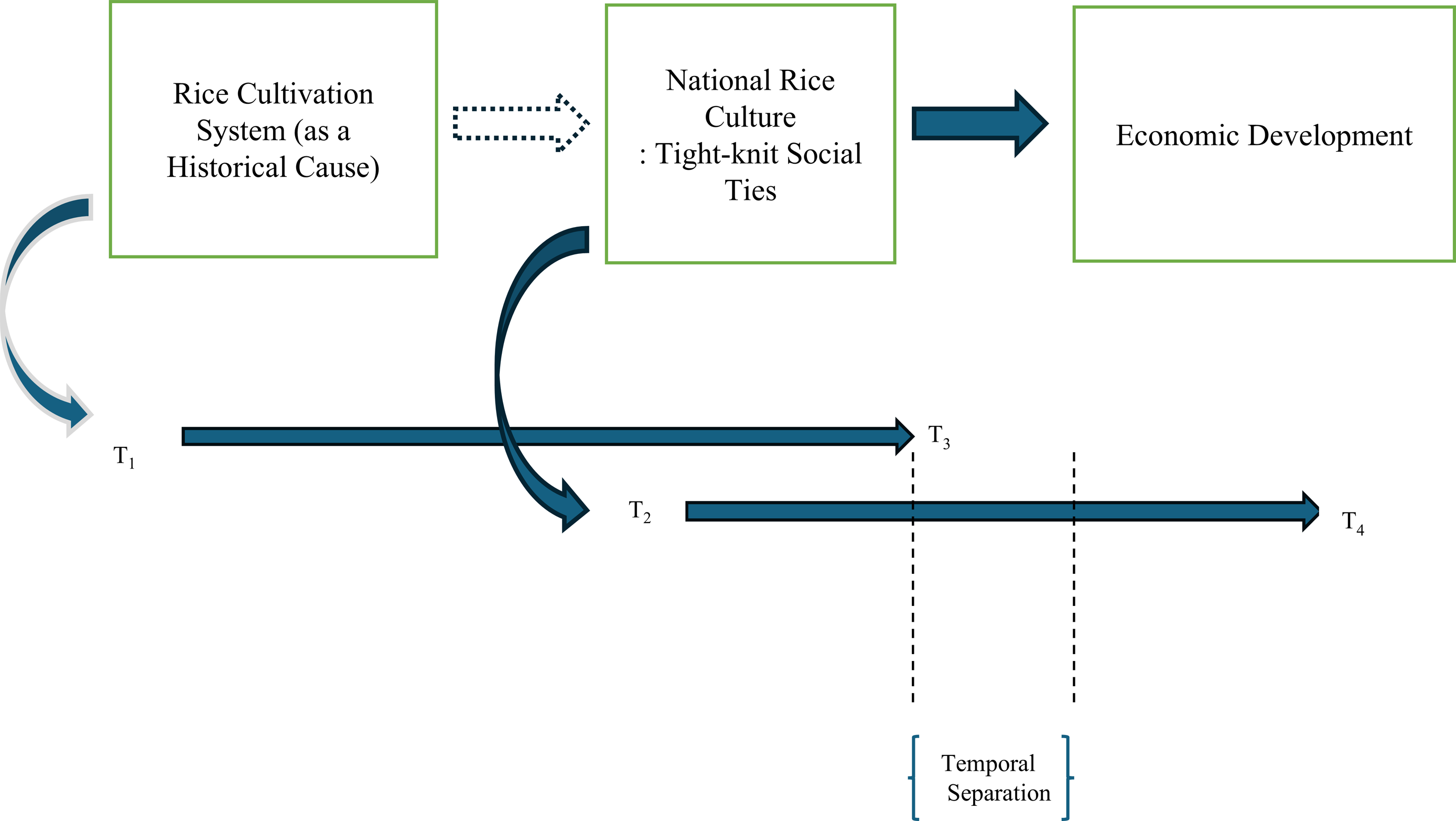


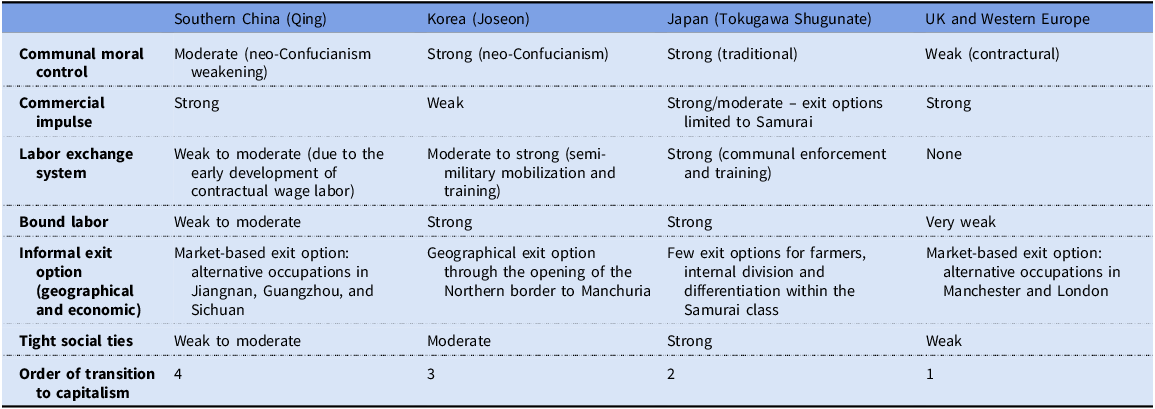


 Open access

