


Introduction
Armed conflict has undergone a dramatic transformation over the last decade. Once limited to the battlefield with clearly defined front lines, modern warfare has become increasingly urbanized, asymmetric, and protracted. Armed conflict is now characterized by blurred combat zones, the involvement of non-state actors, and the frequent targeting of civilian infrastructure. 1 This transformation is marked not only by the proliferation of conflict but also due to the military’s increased use of high-precision and high-energy weapons. The increasing use of explosive weapons in populated areas (EWIPA) has emerged as a defining feature of modern warfare, with widespread and devastating consequences for civilians.Reference Policinski and Kuzmanovic 2 Action on Armed Violence (AOAV) documented 47,476 casualties from explosive weapons in 2023 alone, with civilians accounting for 90% of casualties recorded in populated areas. 3 Civilian deaths increased by 130% compared with 2022, largely due to conflicts in Gaza, Sudan, and Myanmar. 3 Complementary monitoring data recorded 8,826 incidents of explosive violence between August 2023 and July 2024, resulting in 52,050 civilian casualties in regions including Palestine, Myanmar, Pakistan, Sudan, Syria, and Ukraine. 4 – 6 Civilians accounted for 85% of total casualties during this period, highlighting both the global scale of EWIPA-related harm and the disproportionate burden borne by civilians. Consequences are often profound, with attacks resulting in simultaneous injuries or deaths within a single strike.Reference Brackstone, Denny and Wild 7 Thus, there is an urgent need for protective measures tailored toward civilians, and for new frameworks that ensure safe locations and protection of populations caught in the crossfire.
The International Committee of the Red Cross (ICRC) has warned that the indiscriminate effects of EWIPA violate principles of international humanitarian law. 8 In response, the Political Declaration on Strengthening the Protection of Civilians from the Humanitarian Consequences of Explosive Weapons in Populated Areas—endorsed by over 80 countries as of 2023—aims to raise awareness of EWIPA’s humanitarian effects and establish new international standards for protecting civilians from EWIPA. 9 Similarly, the Sendai Framework for Disaster Risk Reduction emphasizes the importance of both structural and non-structural measures in protecting at-risk populations. 10 Non-structural interventions such as risk communication and protective messaging have become essential components of civilian protection in conflict settings where formal shelters may be inaccessible. Despite their relevance, the development and delivery of such guidance remains under-examined and rarely grounded in empirical evidence. 3
In many active conflict zones, civilians lack access to practical guidance on how to shelter during bombardments, shelling, and other explosive attacks.Reference Hansen, Badri and Almalla 11 A recent scoping review conducted by the Explosive Weapons Trauma Care Collective (EXTRACCT) identified limited standardized or empirically validated shelter guidance for civilians exposed to EWIPA, with most recommendations based on expert consensus or adapted military guidance rather than outcome-based evaluation.Reference Hansen, Badri and Almalla 11 However, the review focused primarily on peer-reviewed and open-access humanitarian and medical literature, and may not have captured operational knowledge embedded within civil defense systems, government preparedness guidance, or restricted technical domains such as defense engineering. Few studies have rigorously evaluated sheltering strategies across explosive scenarios, while research in blast physics, protection engineering, and injury epidemiology largely remains within military or highly resourced national preparedness systems. 12 Further, such work is often sensitive in nature and not widely published, so it is infrequently translated into accessible and contextually appropriate guidance for civilians in active conflict settings lacking robust national defense or preparedness infrastructures. Some countries with established civil defense systems, such as Ukraine, have integrated technical knowledge into public-facing guidance and early warning communication. However, many low-resource or highly constrained settings, such as Gaza or Yemen, lack mechanisms to operationalize this knowledge. The challenge in humanitarian settings, then, is not the absence of relevant scientific knowledge, but its limited integration into humanitarian practice and civilian risk communication.
Further research is needed to evaluate current shelter guidance available to civilians and determine the extent to which these recommendations are evidence-based. It is equally important to investigate how such guidance is disseminated by humanitarian actors across organizations and regions. Our primary aim was to conduct a qualitative assessment of shelter guidance currently provided to civilians during explosive violence from the perspectives of international humanitarian experts working in conflict-affected settings. This study did not seek to evaluate the full range of sheltering knowledge of civilians themselves—nor the scientific validity of civilian sheltering principles, per se—but to examine how organizational-level guidance is produced and operationalized in humanitarian practice. Building on the existing scoping review of civilian sheltering guidance for EWIPA,Reference Hansen, Badri and Almalla 11 we conducted interviews with individuals from key humanitarian sectors including emergency response, civilian protection, public health, and mine action groups. We aimed to document sheltering recommendations currently given, identify gaps or inconsistencies in existing guidance, and assess whether these recommendations are based on empirical evidence or field-based experience.
Methods
Recruitment and Data Collection
We conducted once-off in-depth interviews of 30-60 minutes with 10 key stakeholders of international humanitarian organizations in relevant domains such as risk reduction, injury prevention, explosive ordnance risk education, conflict preparedness, and protection. Participants were emailed and interviews were conducted between February and April 2024.
We applied maximum variation purposive sampling to include interviewees working in humanitarian or protection-focused organizations who had experience working in combat settings affected by EWIPA for the last 5-10 years. Eligible participants were senior or technical officers with experience in a wide range of settings. Organizations included the Norwegian People’s Aid (NPA), Humanity and Inclusion (HI), Mines Advisory Group (MAG), Geneva International Centre for Humanitarian Demining (GICHD), United Nations Development Programme (UNDP), and ICRC. This study intentionally focused on international humanitarian organizations involved in the development, coordination, or dissemination of shelter guidance across multiple conflict settings. Perspectives from local organizations, community responders, and civilians were beyond the scope of this study.
Participants were sought through established contacts and international collaborators. We detailed the nature of the study to potential participants. We invited 14 stakeholders to participate, but were unable to arrange interviews with 4 due to availability constraints. Semi-structured interviews were conducted online using Zoom, with all sessions hosted over a secure VPN. Interviews were conducted by HW and EB, both female researchers (a clinician and researcher, respectively) with training in qualitative methods and experience in emergency care and humanitarian response in conflict settings. Interviews were audio-recorded. Only individual participants and both researchers were present in interviews, and no field notes were made. Verbal informed consent was obtained prior to each interview.
Data Collection Tools
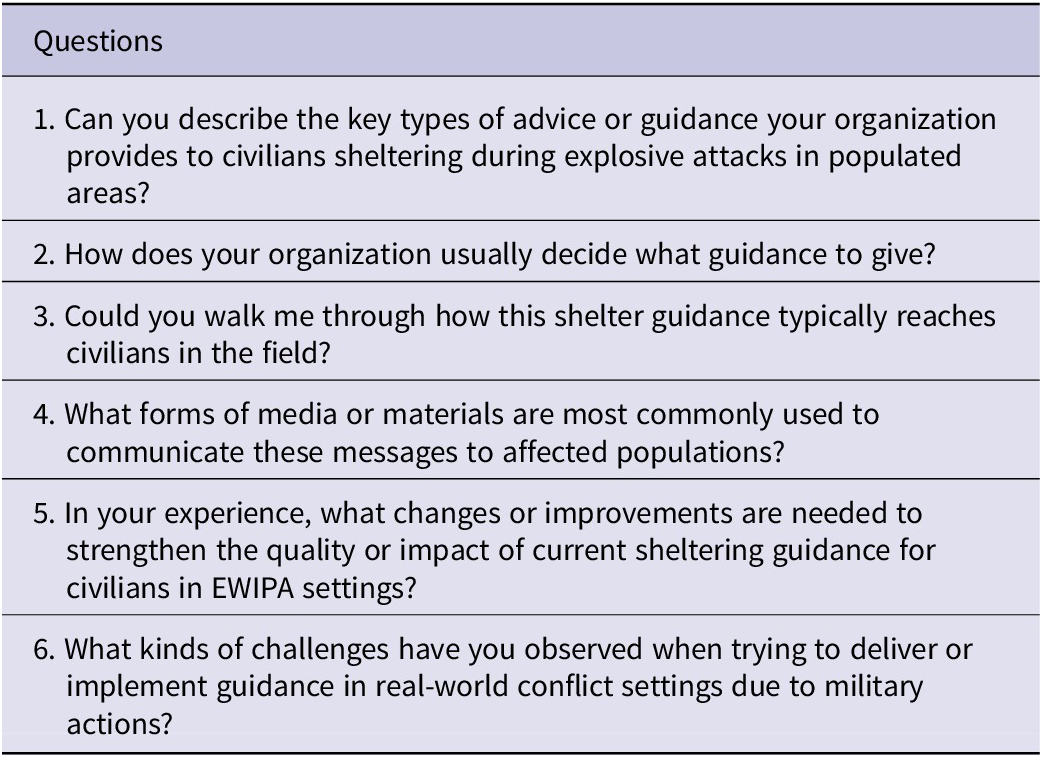
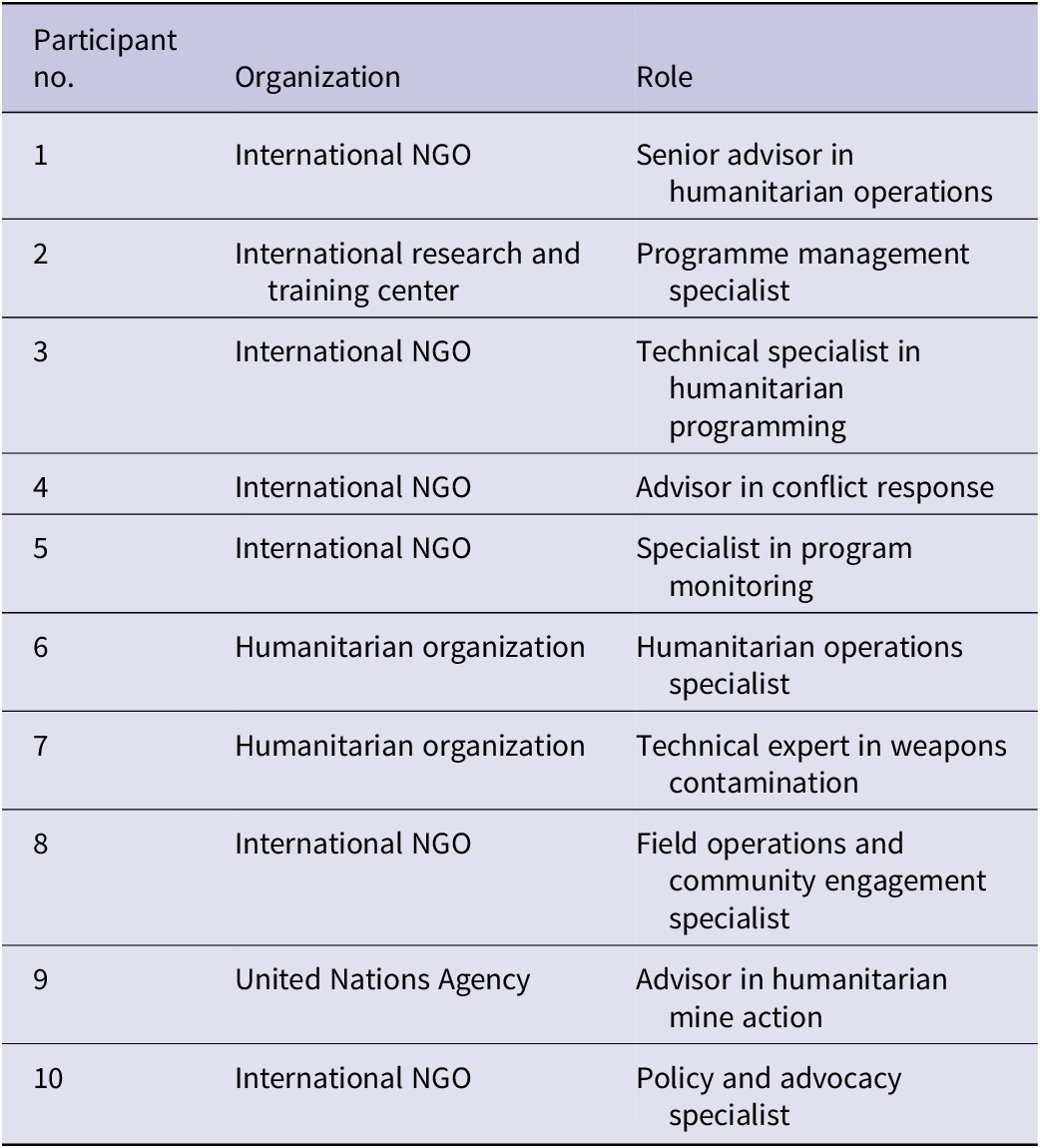
Participants first provided details about their current organization, professional role, and area(s) of expertise (Table 1). Other information was gathered but has been omitted to protect participants’ identities, given the close-knit nature of humanitarian action and protection sectors. A semi-structured interview guide was developed based on a literature review and pilot-tested with a second researcher to ensure clarity and appropriateness (Table 2). The interview guide consisted of seven key open-ended questions and was focused on 4 domains: (1) nature and content of shelter guidance provided to civilians; (2) information sources and development processes of such advice; (3) dissemination channels and formats used to communicate guidance; and (4) barriers to effective civilian sheltering during explosive violence. The interview codebook is included in the Appendix.
Summary of interviewed sector experts

The semi-structured interview guide
Data Preparation and Analysis
Interviews were transcribed verbatim, de-identified, and checked for completeness and accuracy. Transcripts were stored on an encrypted, password-protected server accessible only to the research team. Analysis was conducted using a combination of deductive and inductive approaches. Deductive codes were drawn from the interview guide and research objectives, while inductive codes were derived from emerging data patterns.Reference Fereday and Muir-Cochrane 13 , Reference Tong, Sainsbury and Craig 14 The interview guide was designed to explore key operational dimensions of civilian shelter guidance in EWIPA settings. Coding was performed using Dedoose software (version 9.0.62). 15
Two researchers independently coded transcripts using a shared codebook. Inter-coder agreement was assessed through iterative comparison and discussion rather than statistical coefficients, which is consistent with reflexive thematic analysis.Reference Braun and Clarke 16 Discrepancies were resolved through consensus meetings and resulted in a stable and agreed-upon coding framework. Participants did not provide feedback on findings due to the time-sensitive nature of data collection and challenges of further recontacting participants in conflict-affected settings. See Appendix for the finalized coding framework, themes, and operational definitions.
Ethical Considerations
The study was reviewed and approved by the University of Washington Human Subjects Division (IRB ID: STUDY00019413). All participants provided informed verbal consent before interviews commenced. Participants were assured of confidentiality and the voluntary nature of participation. No identifying information was included or reported in findings. Audio recordings and transcripts were securely stored and accessible only to the research team.
Trustworthiness and Rigor
The interview guide was pilot-tested to ensure credibility, and a standardized protocol was followed across interviews. Triangulation was achieved through the use of multiple coders and iterative discussion of findings (AH, MT). Data collection continued until thematic saturation was reached, defined as the point where no substantively new themes or conceptual insights emerged from the interviews.Reference Braun and Clarke 16 Given the high information power provided by the specialized expertise of the participant pool, this sample size ensured that the 4 domains of the interview guide were comprehensively explored through deductive and inductive lenses.Reference Malterud, Siersma and Guassora 17 Participant quotations are presented in a table to enhance transparency and ground analyses in original data.
Results
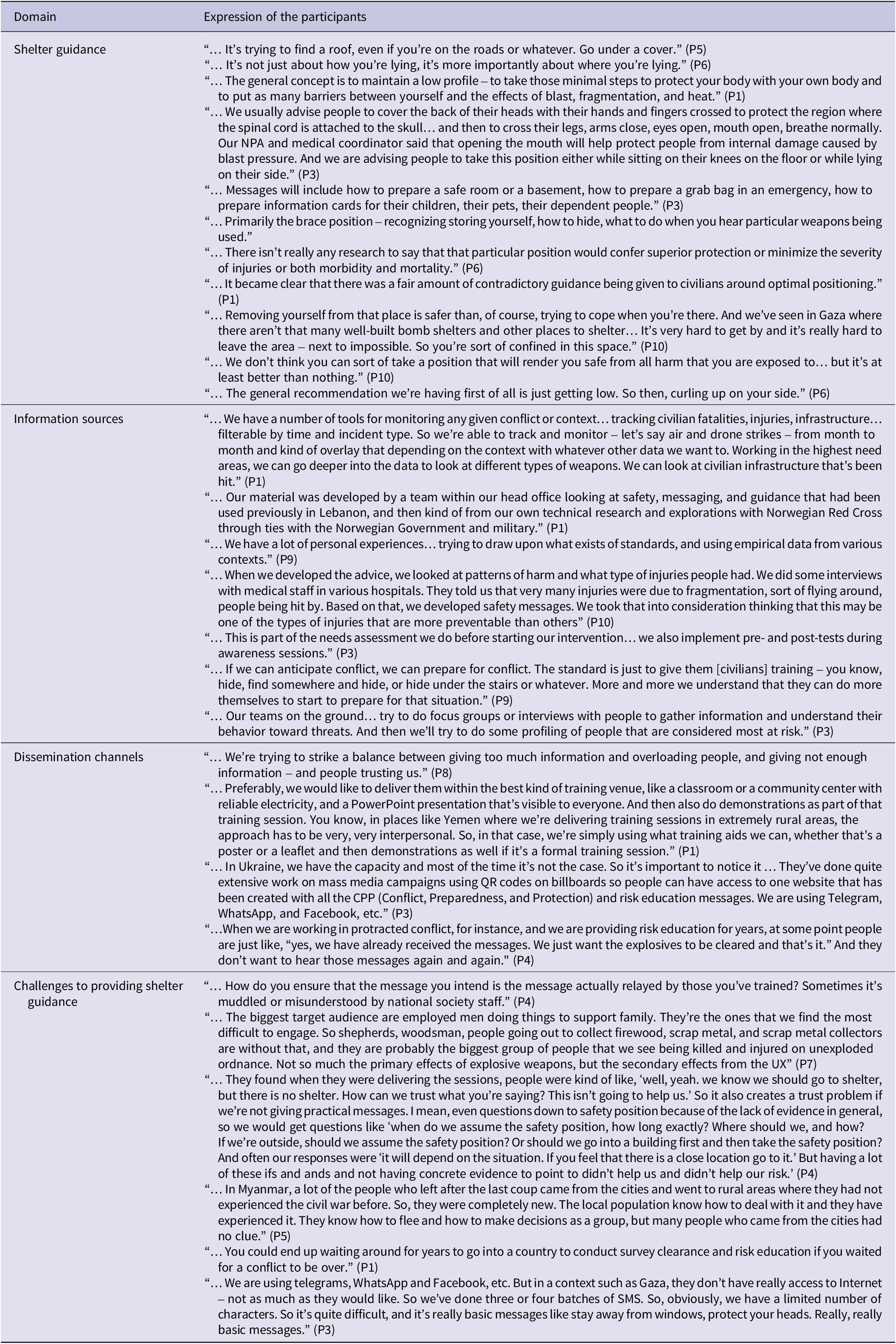
Ten experts were interviewed across six international organizations working in conflict-affected settings. These individuals brought operational experience from diverse conflict-affected contexts, including Gaza, Lebanon, Myanmar, Ukraine, and Yemen, and many contributed to the development or dissemination of shelter guidance at global or regional levels. Analyses were organized around four key domains reflecting the interview guide structure and participants’ detailed responses. See Table 3 for representative quotes by domains of enquiry.
Expression of participants

Domain 1. Shelter Guidance
Experts emphasized the importance of conveying practical information about protective behaviors during explosive attacks. Key recommendations included seeking physical cover, maintaining a low profile, and assuming specific body positions to reduce injury risks from blast, fragmentation, and heat. However, there was considerable variation in detail provided across contexts. Some agencies offered more general advice (e.g., “get low,” or “find cover”), while others recommended specific postures and protective techniques. Several experts acknowledged a lack of empirical evidence supporting any one optimal position, leading to consistencies in guidance across agencies and settings. Shelter guidance was described as “better than nothing” in high-risk areas where civilians were unable to evacuate.
Domain 2. Information Sources
The content of shelter guidance was informed by a combination of field observations, retrospective injury data, expert judgment, and operational experience. Some organizations reported incorporating empirical insights from conflict-specific injury patterns into the development of messages (e.g., fragmentation injury prevalence). In other cases, pre-existing protocols from previous conflicts were adapted to new contexts. Experts also described drawing on needs assessments, including community interviews and pre/post evaluations of safety training, to tailor messaging to specific risks faced by civilians.
Domain 3. Dissemination Channels
Dissemination of shelter guidance varied widely depending on access, infrastructure, and conflict stage. In optimal scenarios, agencies aimed to deliver structured training in community centers or classrooms with visual materials and in-person demonstrations. However, distribution relied on informal methods such as posters, printed leaflets, and interpersonal communication in active or rural conflict zones. Digital platforms were also used in contexts like Ukraine, where technological infrastructure permitted mass media campaigns (e.g., messaging apps, websites, and QR codes on public signage). Despite these efforts, message fatigue was reported in prolonged crises where civilians expressed frustration at repeated exposure to safety messaging without corresponding progress on demining or protection measures.
Domain 4. Barriers and Challenges
Experts identified practical and contextual challenges in delivering effective shelter guidance. A recurrent concern involved messages being misunderstood or diluted when relayed by local trainers or partner organizations, especially with limited oversight or high staff turnover. Difficulties also arose in engaging high-risk subpopulations. Men engaged in outdoor labor were perceived as the least receptive to training but were among the most vulnerable to injury. Furthermore, displaced populations lacked generational or community knowledge that might aid self-protection, such as urban residents newly arrived in rural conflict zones. Finally, experts acknowledged logistical barriers to delivering timely guidance during ongoing conflict, including security risks, funding constraints, and delays accessing affected regions.
Discussion
This qualitative study explored how international humanitarian practitioners conceptualize protective sheltering to inform standardized, accessible, and evidence-based guidance for populations at risk from EWIPA. The aim was not to test the effectiveness of sheltering strategies, but to map existing guidance practices, evidentiary foundations, and perceived limitations from the perspectives of humanitarian actors. Four domains were assessed: (1) nature and content of shelter guidance; (2) information sources and development; (3) dissemination channels; and (4) barriers and challenges to effective civilian sheltering.
Nature and Content of Shelter Guidance
Shelter messaging was a core protection component. Participants noted that simple actions—finding cover, staying low, and shielding vulnerable body parts—can reduce harm, though they do not guarantee safety. Such strategies are crucial where evacuations or shelters are unavailable, particularly in densely populated or besieged areas. 5 , Reference Brackstone, Denny and Wild 7 Guidance varied in specificity: some organizations advised only “get low” or “find cover,” while others suggested specific bracing conditions or head protection. These techniques were based on consensus rather than research, and this variability led to inconsistent and contradictory advice. EXTRACCT’s scoping review similarly identified a lack of standardized, evidence-informed guidance tailored for civilians.Reference Hansen, Badri and Almalla 11
However, a distinction emerged between the existence of scientific blast protection knowledge and its practical availability within humanitarian contexts. Participants’ accounts do not suggest that relevant principles from blast physics or injury prevention are unknown globally, but rather that existing technical knowledge is not systematically translated into guidance that is accessible and adaptable for civilians in low-resource or high-intensity conflict settings.
Information Sources and Development
Participants described instances where conflicting recommendations to shelter—variations in body positioning or safe-room preparation—created confusion among civilians. Inconsistencies may signal uncertainty or unreliability, particularly where institutional trust is fragile and misinformation widespread. This may reduce uptake of otherwise life-preserving guidance or lead individuals to prioritize unverified information sources, thereby undermining shelter guidance effectiveness and public trust. For example, despite the scale of bombardment in Gaza, civilians lacked access to designated shelters or fortified buildings. Over 60% of buildings were destroyed, displacing people into tents or overcrowded schools that offered almost no protection.Reference Scher, Leventhal and Van Den Hoek 18 , 19 No formal alarm or warning system existed to shelter, and warnings were often ineffective due to widespread destruction. 20
This was an important contextual factor shaping the feasibility of civilian shelter guidance. Where advance early warning systems are active (e.g., sirens, digital alerts), shelter guidance can facilitate anticipatory actions that are spatially oriented toward known safe zones. In contrast, in settings where attacks occur with little or no warning, guidance is often reactive and limited to split-second decisions during or immediately after impact. In such cases, participants said that advice focused on body positioning, immediate cover, or micro-environmental features rather than relocation. These represent qualitatively different protection scenarios with distinct implications for risk communication and potential effectiveness.
While civilian perspectives were not directly captured, publicly documented civilian accounts during active conflicts offer illustrative insight into how protective messaging circulates outside formal humanitarian channels. In Gaza, civilians used platforms such as X (formerly Twitter) to share survival strategies during shelling. 21 Such practices demonstrate resilience and community solidarity, but they reveal institutional support gaps. Access to informal survival techniques or digital information-sharing may be limited in many low-income countries, leaving civilians with no reliable sources of protection guidance. The accuracy of crowd-sourced advice is unknown, and in some cases, may be misleading or harmful.Reference Hansen, Badri and Almalla 11
Dissemination Channels
Guidance development drew from field observations, retrospective injury surveillance, expert judgement, and needs assessments with affected communities. No participants reported having direct access to empirical evidence from which to develop shelter guidance. In some cases, conflict-specific data informed recommendations. For example, training materials were adapted accordingly to emphasize protective behaviors against shrapnel when it was reported that fragmentation injuries were the most common blast-related trauma in a given area.
However, the process of evidence integration was not systematic across organizations. Some participants adapted protocols from past conflicts for use in new emergencies, while others relied on operational memory and technical experience. These variations emphasize institutional challenges in translating military or defense-sector knowledge into humanitarian guidance for current conflict zones.Reference Hansen, Badri and Almalla 11 Some organizations have adopted more structured approaches and conducted pre-intervention assessments and post-training evaluations to refine messages, while others utilize focus groups to tailor advice to specific population groups. Together, these approaches highlight the importance of integrating local knowledge and systematic assessment methods in message development. 5
Dissemination of shelter guidance varied widely depending on the security situation, infrastructure, and conflict stage. In Ukraine, agencies delivered multimedia risk education via websites, messaging apps, and QR codes in public spaces. In contrast, low-resource settings relied on interpersonal methods, including community trainers, posters, or oral demonstrations. Digital platforms can reach large audiences rapidly, but also require stable internet access and trust in information sources.Reference West 22 However, message fatigue emerged as a concern in protracted emergencies, especially where repeated exposure to protection messages without visible impact led to frustration or disengagement.Reference Baseman, Revere and Painter 23 Repeated exposure to inconsistent or ambiguous messaging may reduce trust in protection guidance and contribute to disengagement from risk education efforts. These findings align with established principles of risk communication, which emphasize clarity, credibility, and contextual relevance as potentially useful for effective protective messaging.Reference Baseman, Revere and Painter 23 In this sense, the harmonization of shelter guidance across organizations may play an important role in reducing message fatigue and strengthening civilian trust in protection advice.
Barriers and Challenges
Challenges to administering shelter guidance included message distortion during secondary delivery by local trainers. Risks of dilution or misinterpretation are heightened in contexts of rapid staff turnover, limited training, and political sensitivities. Reaching high-risk groups also proved difficult; men engaged in outdoor or manual labor were viewed as especially vulnerable to blast injury, but often least engaged with training. Structural factors such as gender roles, occupational norms, and mistrust of outsiders may contribute to this disconnect.Reference Cojocaru and Dincu 24 Further, displaced populations unfamiliar with local protective practices faced similar challenges, such as urban residents in Myanmar, who often lacked generational knowledge of how to respond to rural armed violence. Operational barriers may also complicate delivery, including security risks, bureaucratic restrictions, and funding constraints. In some cases, organizations waited months or years for permission to conduct risk education.
Finally, participants questioned the credibility of advice such as “go to shelter” when no safe shelters existed, while educators felt underprepared to answer detailed questions due to limited evidence. In Gaza, for example, one participant described how communication constraints added barriers where poor internet access forced reliance on SMS campaigns that reduced messages to basic advice. These issues illustrate how form and substance of guidance may undermine effectiveness.
Comparisons with Existing Institutional Guidance
Findings align with, but extend, existing institutional guidance from the ICRC and United Nations High Commissioner for Refugees (UNHCR). High-level recommendations emphasized by participants—seeking cover, maintaining a low profile, and avoiding windows—are broadly consistent with principles outlined in documents such as the ICRC’s Commander’s Handbook 25 and UNHCR’s emergency shelter standards. 26 However, participants noted that these documents often lack the operational specificity civilians need during active hostilities, particularly regarding optimal body positioning, room selection, or decision-making under pressure. Unlike institutional documents designed for military commanders, shelter planners, or post-displacement contexts, practitioners emphasized real-time constraints, information overload, and the ethical tension of providing advice to civilians without empirical validation. Notably, participants’ practice of tailoring messages based on injury patterns (e.g., fragmentation prevalence) is an adaptive practice not explicitly reflected in current global guidance documents. These divergences highlight gaps between strategic-level guidance and operational realities, and reinforce the need for guidance that is evidence-informed and actionable for civilians.
Implications for Policy and Practice
Greater harmonization of protective advice across organizations and contexts is needed, informed by emerging evidence on injury mechanisms and environmental factors, and supported by improved integration of existing technical and defense-sector knowledge into humanitarian practice. Inconsistent guidance may create public confusion, reduce trust, and undermine uptake.Reference Covello, Sandman and Wolbarst 27 Coordinated messaging grounded in biomechanical and clinical understanding, conflict-specific injury patterns, and local feedback may help to address these challenges. A central and regularly updated library of shelter recommendations, tailored to specific weapons, settings, and population groups, could provide a useful starting point for harmonization efforts.
While the ICRC and United Nations High Commissioner for Refugees (UNHCR) have developed guidelines for sheltering in urban warfare contexts, these recommendations often lack practical detail needed for on-the-ground application. For instance, commander handbooks provide strategic guidance for military commanders, but offer limited actionable advice for civilians. 25 Similarly, UNHCR’s Emergency Shelter Solutions and Standards outlines minimum space requirements and structural considerations, but does not outline specific shelter strategies in urban warfare zones. 28 Our findings reinforce the need for detailed, context-specific sheltering strategies that address immediate civilians needs in conflict settings.
Further, communication strategies must reflect the information ecosystem of conflict settings. Mobile apps, QR codes, and social media can enhance reach and dissemination in digitally connected environments. However, in low-resource or remote areas, interpersonal communication via trusted community actors is vital.Reference Cojocaru and Dincu 24 Hybrid dissemination strategies such as combining mass communication with in-person engagement may be effective in reducing message saturation and ensuring comprehension. Shelter guidance should be embedded within broader civilian protection strategies that include explosive ordnance risk education. In many conflict-affected settings, shelter guidance may be one of the few protective actions available during acute phases of explosive violence. Its effectiveness may depend not only on its content, but also on delivery, trust, and integration.
However, civilian shelter guidance is ultimately constrained by physical and infrastructural characteristics. For example, building materials, access to underground spaces, population density, mobility constraints, and destruction patterns may shape what sheltering advice is realistic. Contexts such as Ukraine permit increased forms of anticipatory sheltering largely infeasible in settings such as Gaza, where widespread destruction and access restrictions limit shelter options.Reference Gillard 29 Our study highlights that no single set of recommendations can be universally applicable across EWIPA-affected settings. Rather, effective shelter guidance must be context-specific, infrastructure-aware, and adaptable to rapidly changing conditions.
Strengths and Limitations
A key strength of this study is its inclusion of practitioners with a diverse operational experience across multiple conflict-affected regions. However, the relatively small sample size reflects the specialized nature of the population; as such, findings are illustrative rather than exhaustive. Further, the study focused exclusively on international humanitarian organizations and did not include local organizations, community responders, or civilians themselves. While international actors play a central role in shaping shelter guidance across contexts, this focus may overlook locally grounded practices, informal coping strategies, and lived experiences of civilians who are the intended end users. This is particularly relevant in regions where recurrent conflict and resource limitations may foster unique sheltering practices, such as in parts of Africa.Reference Baines and Paddon 30 Future research incorporating local organizations and civilian perspectives could provide more contextually grounded and regionally appropriate shelter guidance.
Finally, the study did not systematically differentiate shelter guidance practices by early warning capacity despite this being a critical contextual factor shaping shelter feasibility, nor did the analysis examine how variations in infrastructure or time-to-impact might condition the applicability or effectiveness of specific sheltering advice. Future research and guideline development would benefit from explicitly stratifying recommendations based on early-warning availability. Addressing these contextual dimensions therefore represents an important area for future interdisciplinary research integrating humanitarian practice, engineering, and public health perspectives.
Conclusion
This study explored how civilian shelter guidance is conceptualized, developed, and disseminated by international humanitarian practitioners in EWIPA-affected settings. The findings do not constitute a definitive assessment of shelter guidance effectiveness, nor do they represent the perspectives of local responders or civilians themselves. Rather, they highlight prevailing practices, assumptions, and constraints shaping shelter guidance in contexts where access to empirical evidence remains limited within humanitarian practice. More research is urgently needed to strengthen recommendations. Further, fragmented guidance may risk undermining trust and uptake. Messages must adapt to structural conditions, weapon types, and the needs of vulnerable groups through long-term partnerships. Alongside policy-level efforts to restrict EWIPA, accurate and standardized shelter guidance is a humanitarian obligation.
Author contribution
KB: Writing of first draft, manuscript revisions; JD: Writing of first draft, manuscript revisions; ACH: Protocol development, data analysis, and manuscript revisions; MLT: Protocol development, data analysis, and manuscript revisions; EB: Protocol development, data collection, data analysis, and writing of first draft; AC: Protocol development and data analysis; RT: data analysis and writing of first draft; ST: manuscript revisions; AAA: manuscript revisions; AM: manuscript revisions; HW: Conception, supervision, data analysis, data extraction, manuscript revisions.
Competing interests
No competing interests declared.
Declaration of generative AI and AI-assisted technologies
During the preparation of this work, the author used OpenAI o4-mini for language editing. After using this tool, the author reviewed and edited the content as needed.
Appendix
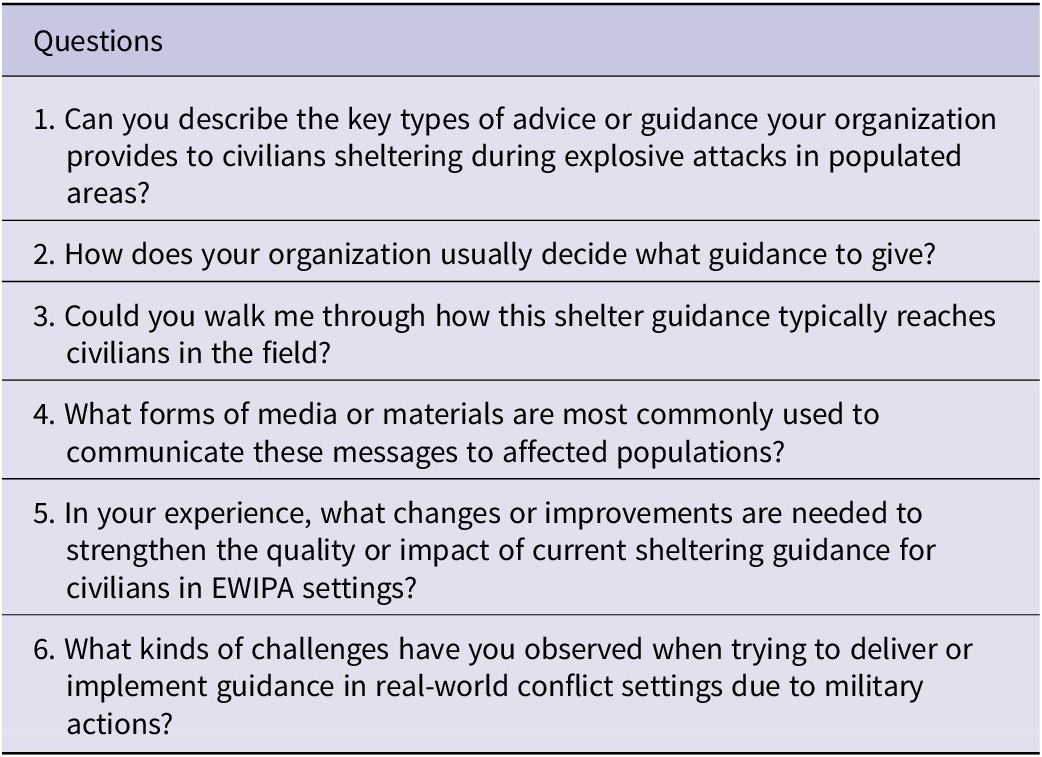
Interview Codebook


 Open access

