


Introduction
Black-faced Spoonbill Platalea minor is the rarest of the six spoonbill species in the world (Matheu and Del Hoyo Reference Matheu, Del Hoyo, Del Hoyo, Elliott and Sargatal1992). This species breeds in the northern Yellow Sea (Hancock et al. Reference Hancock, Kushlan and Kahl2010, IUCN 2014) and winters along the East Asian coast, from Jeju in South Korea to the Red River in Vietnam (Ueta et al. Reference Ueta, Melville, Wang, Ozaki, Kanai, Leader, Wang and Kuo2002). It was described as ‘common’ in south-east China in the 1930s (La Touche 1931–Reference La Touche1934), however, the global population was reduced to less than 300 birds in the 1980s, possibly due to the Korean War, habitat loss and pollution (Kennerley Reference Kennerley1990, Yeung et al. Reference Yeung, Yao, Hsu, Wang and Li2006). Hence, Black-faced Spoonbills were listed as ‘Critically Endangered’ in 1994 by IUCN (Collar et al. Reference Collar, Crosby and Stattersfield1994). Since then, conservationists have been carrying out conservation actions for Black-faced Spoonbills, including the establishment of protected areas, prohibition of hunting and scientific research on population status and ecology (e.g. Swennen and Yu Reference Swennen and Yu2005, Ueng et al. Reference Ueng, Wang and Hou2007, Chan et al. Reference Chan, Fang, Lee, Yamada and Yu2010, Wood et al. Reference Wood, Tomida, Jin Han, Lee, Cho, Nishida, Ibrahim, Hur, Kim and Kim2013). However, many of the major threats to this species, including habitat loss due to industrial development and land reclamation, pollution, and disturbance from human activities such as fisheries and tourism are ongoing and pervasive in both breeding and wintering sites (Chan et al. Reference Chan, Fang, Lee, Yamada and Yu2010, IUCN 2014).
In addition, long-term population monitoring is essential to evaluate the effectiveness of conservation actions (Marsh and Trenham Reference Marsh and Trenham2008) and to provide insights into the factors likely to affect long-term survival of the species. Accurate population monitoring of birds can be logistically challenging especially for migratory species and species with ranges that encompass multiple countries or continents. Surveys of some migratory birds are conducted during the breeding season when most birds in the population congregate in their respective breeding grounds (Robbins et al. Reference Robbins, Bystrak and Geissler1986), whereas surveys may be conducted during the non-breeding season for species whose breeding range covers a large area (Sutherland et al. Reference Sutherland, Newton and Green2004). Comprehensive breeding surveys of the Black-faced Spoonbill are not feasible as the main breeding site for this species is located in the demilitarized zone separating the Democratic People’s Republic of Korea from the Republic of Korea, which is not readily accessible to surveyors (Dahmer et al. Reference Dahmer, Yu, Felley, Yu, Lo and Li2007).
In this study, we analysed the data from 18 years of international surveys that were carried out at 42 sites throughout the wintering range of the Black-faced Spoonbill. We used these data to 1) estimate the global population trend between 1997 and 2014; 2) identify key wintering sites; and 3) evaluate the effectiveness of conservation efforts for this species by incorporating individual site attributes in the population trend analysis. We predicted that the more significant increases in Black-faced Spoonbill populations would occur in sites within protected areas, with low degree of habitat loss / degradation, and with low levels of human disturbance.
Methods
Synchronised surveys and study area
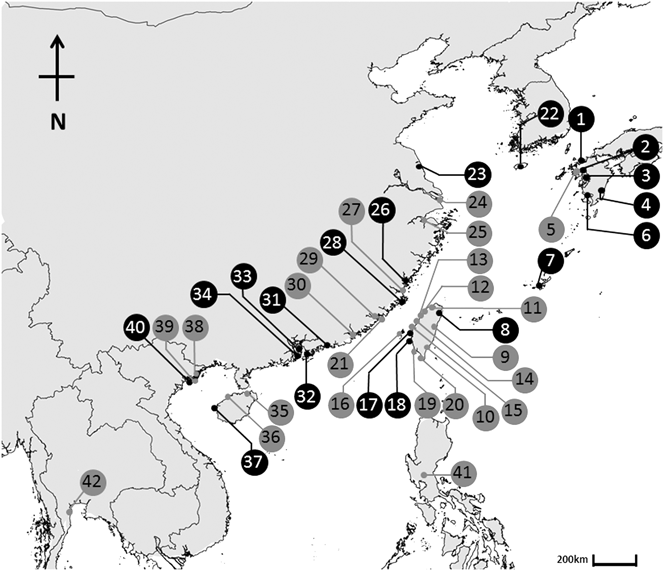
We analysed data from 18 years of synchronised surveys of Black-faced Spoonbills conducted across wintering sites. Surveys took place between 1997 and 2014 at 42 wintering sites of Black-faced Spoonbills in mainland China, Hong Kong, Japan, Macau, the Philippines, South Korea, Taiwan and Thailand (Figure 1). Survey sites were selected based on previously reported sightings of Black-faced Spoonbills. Surveys were conducted in mid-January as resightings of marked individuals with colour rings (n = 41) showed that all individuals arrived at wintering sites by December and no individuals made movements to other study sites between January and February (Y. T. Yu unpubl. data). Surveys were conducted at all sites within a period of three consecutive days. Each site was surveyed once within this period. Voluntary surveyors counted the number of birds with the aid of binoculars or telescopes. The total number of surveyors ranged from 30 in 1997 to 350 in 2014 (Figure S1 in the online supplementary materials). For certain sites in some years, censuses were not conducted owing to lack of manpower, inaccessibility of sites or unstable weather (Table S1). The surveys were coordinated by Tom Dahmer and Mary L. Felley from 1997 to 2003 and by the Hong Kong Bird Watching Society since 2004.
Map of East Asia showing 42 sites where annual synchronised censuses for wintering Black-faced Spoonbills were conducted between 1997 and 2014. Data from sites in black was analysed in this study. The numbers correspond to the sites in Table 1.
Statistical analysis
We excluded sites with over 50% (i.e. more than nine years) of missing data and those with maximum counts of less than 10 individuals from our analysis to reduce the number of missing values. Of the 42 sites where data were available, 23 sites were excluded, hence only 19 were included in the analysis (Table 1 and Figure 1). We regarded these 19 sites as representative of the global wintering population of Black-faced Spoonbills as at least 85% of the total number counted every year were covered by these sites.
Mean (range) number of Black-faced Spoonbill in the survey sites between 1997 and 2014, and 2010 and 2014. Sites in bold indicate that the sites on average hold more than 1% of total population between 2010 and 2014. *Survey was not conducted in Thai Binh Estuary between 2010 and 2014.
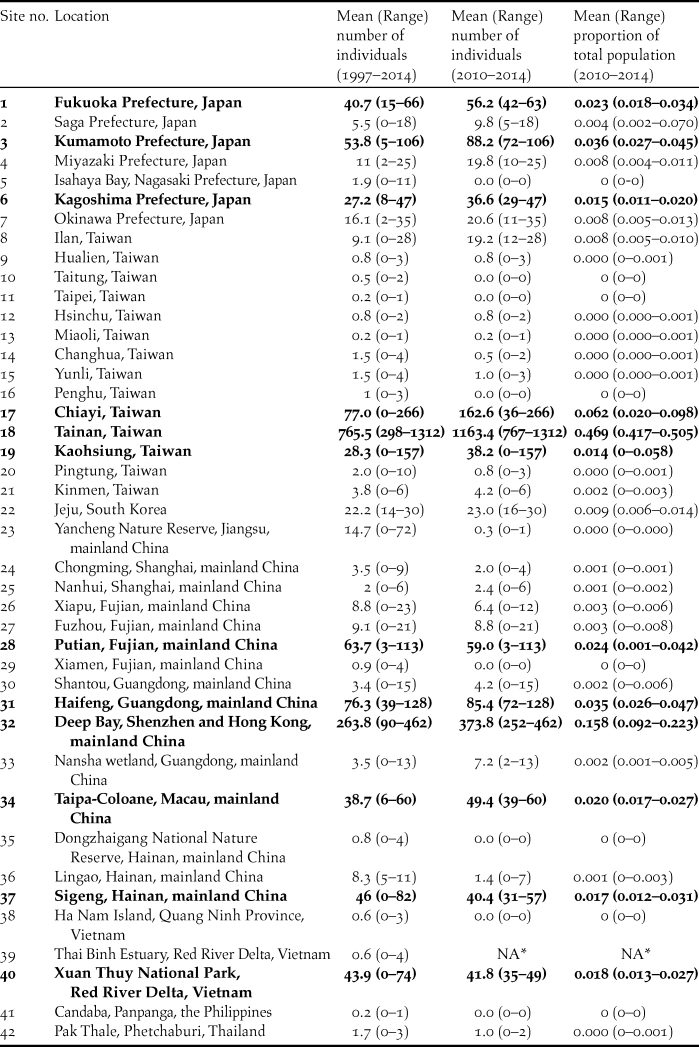
We identified key wintering sites by selecting those that held an average > 1% of the total number of wintering Black-faced Spoonbills between 2010 and 2014 (i.e. 23.3 individuals). We analysed the trends in the number of Black-faced Spoonbills using the software TRIM v3.54 (Pannekoek and van Strien Reference Pannekoek and van Strien2005). TRIM is developed to examine population trends by analysing counts with missing observations across time. We applied a generalised estimating equation approach using Poisson regression. A population index was calculated as the total count of a given year divided by the count of the base year (i.e. the first year when survey was conducted at a given site). An index larger than one indicates a population increase whereas an index smaller than one indicates a population decrease. We fitted the numbers of the spoonbills to the models using standard methods including no time effects and linear trends with change points, then selected the best model based on Akaike’s Information Criterion (Burnham and Anderson Reference Burnham and Anderson2002). TRIM corrected the possible violation of Poisson distributions owing to overdispersion and serial correlation. The global population trends were established using the classification proposed in Gregory et al. (Reference Gregory, Vorisek, Van Strien, Gemlig, Jiguet, Fornasari, Reif, Chylarecki and Burfield2007).
To investigate the impacts of site attributes on the population trends, we incorporated three categorical site attributes in our models: 1) protection status – protected (sites partly or entirely within protected area) or unprotected (sites outside a protected area); 2) degree of habitat loss and degradation – high (sites partly destroyed or degraded by wetland encroachment, reclamation, urbanisation or pollution) or low (sites not partly destroyed or degraded); 3) degree of human disturbance - high (sites with high levels of human activity that disturbed Black-faced Spoonbills, e.g. hunting, commercial collection, recreational activities) or low (sites with low level of human activity). A category was assigned if it applied to a site for over half of the study period, i.e. 9 years. For degree of habitat loss and degradation and degree of human disturbance, the classification of site attributes was primarily based on the information in Chan et al. (Reference Chan, Fang, Lee, Yamada and Yu2010), and verified after subsequent search of scientific papers or reports, and personal communication with local researchers; details are presented in Table S2.
Results
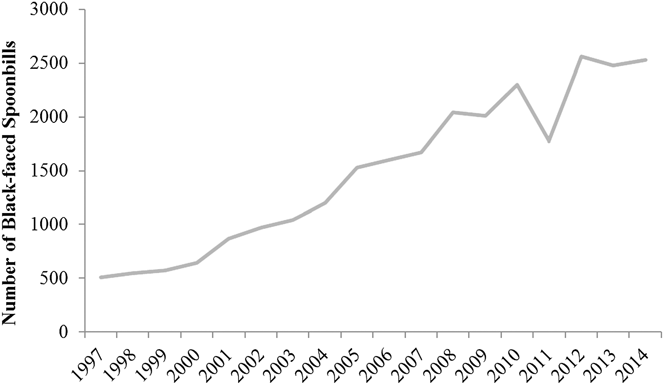
The global wintering population of Black-faced Spoonbill increased from 535 in 1997 to 2,726 in 2014. The best model (as indicated by the lowest AIC score) showed an average annual increase of 8.0% (P < 0.01; Table 2). The global wintering population increased from 1997 to 2010 and experienced a sudden drop in 2011. The population increased subsequently in 2012 then showed a slight drop from 2012 to 2014 (Figure 2). The global wintering population exhibited significant changes in slope in 2010 (Wald = 21.52, df = 4, P < 0.001), 2011 (Wald = 27.82, df = 4, P < 0.001) and 2012 (Wald = 31.46, df = 4, P < 0.001).
Summary of TRIM model selection results for the abundance of wintering Black-faced Spoonbills between 1997 and 2014. Asterisks indicate P-value: ** = P < 0.01. p = protection status; hl = habitat loss and degradation, and hd = human disturbance. AIC, Akaike Information Criterion. OMSI, Overall Multiplicative Slope imputed. SE, Standard Error.

Number of wintering Black-faced Spoonbills counted in this study between 1997 and 2014.
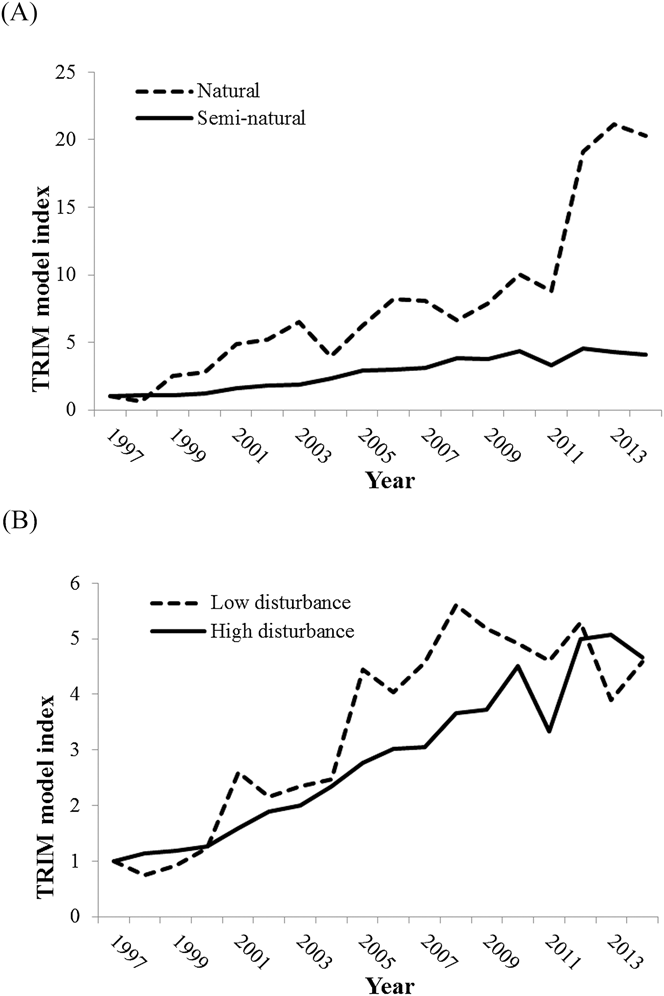
Moreover, the best model included all site attributes including protection status, degree of habitat loss and degradation, and degree of human disturbance. The global population trend was significantly affected by protection status (Wald = 16.85, df = 6, P = 0.010) and degree of human disturbance (Wald = 21.17, df = 6, P = 0.002) but not by degree of habitat loss and degradation (Wald = 10.41, df = 6, P = 0.108; Table 2). The populations in protected sites exhibited a marked increasing trend while the populations in unprotected sites were in decline (Table 3; Figure 3). The populations in sites with low levels of disturbance underwent more substantial increases than those in sites with high levels of disturbance.
Effects of the significant site attributes on the population trend of wintering Black-faced Spoonbills in the best model between 1997 and 2014

TRIM model-predicted population indexes of Black-faced Spoonbills for different level of the significant site covariates, (A) protected status and (B) degree of human disturbance, at 19 sites between 1997 and 2014.
We identified 12 key wintering sites that held 89% of wintering Black-faced Spoonbills in the last five years (i.e. 2009–2014; Table 1). Highest abundances of wintering birds were recorded in Tainan, Deep Bay and Chiayi, which together accounted for 67% of the global wintering population of Black-faced Spoonbills.
Discussion
The increasing number of wintering Black-faced Spoonbills, which is an ‘Endangered’ species, surveyed in this study may reflect a genuine increase of the global population. The upward trend in the populations surveyed may partly be attributed to the increase in the number of survey sites and coverage of surveyed area over time (Figure S1). However, a genuine increase of the global population is supported by two observations. First, over half of the sites where we conducted the surveys throughout the study period, including the most important wintering sites at Chiayi, Deep Bay, Ilan, and Tainan, showed considerable population increases over the survey period. Second, a high return rate (86.6 ± 9.3 %) of ringed individuals in Taiwan (Ueng et al. Reference Ueng, Wang and Hou2007) and high proportions of juveniles (32–53%) in Hong Kong (Anon 2015) were observed in the study period, which may indicate continued successful breeding efforts in this long-lived migratory species. It is also possible that birds displaced from other unknown wintering sites moved onto the study sites, leading to increases in local population sizes. However, even with the increased popularity of birdwatching in the region (Ma et al. Reference Ma, Cheng, Wang and Fu2013), there have been fewer new wintering sites discovered recently, and the populations in those newly identified sites are small relative to the known sites (Wood et al. Reference Wood, Tomida, Jin Han, Lee, Cho, Nishida, Ibrahim, Hur, Kim and Kim2013).
Protected sites exhibited apparent upward trends, which indicates high efficacy of some protected areas in provision of suitable habitats to wintering Black-faced Spoonbills. Among all 42 study sites, Tainan in Taiwan, where Chiku Black-faced Spoonbill Reserve was established in 2002, exhibited the most significant increase in its population, rising from 298 to 1,246 individuals over the study period. Human disturbance can trigger strong behavioural responses by Black-faced Spoonbills and the associated increase in energetic cost incurred in turn may affect their survival or fecundity (Choi et al. Reference Choi, Nam and Lee2015). Effective enforcement against human disturbance is likely to have a positive impact on populations of the wintering Black-faced Spoonbills, supported by our results showing that sites with low levels of human disturbance experienced more significant increases in population sizes than sites with high levels of human disturbance. Illegal activities, such as harvesting of wildlife, are strictly prohibited within protected areas in Tainan and Deep Bay where the two largest wintering populations are located. However, protected areas may not guarantee favourable habitats if effective enforcement cannot be implemented (Bruner et al. Reference Bruner, Gullison, Rice and da Fonseca2001, Zheng et al. Reference Zheng, Zhang, Niu and Gong2012). Our data revealed marked decreasing trends in some protected sites, for example Yancheng Nature Reserve and Dongzhaigang National Nature Reserve. Historically, as many as 72 individuals were recorded in Yancheng Nature Reserve in Jiangsu, mainland China, however only one bird was found in the 2009–2014 period. Rapid expansion of Spartina alterniflora may be responsible for this decline as it reduces roosting and feeding habitats for Black-faced Spoonbills (Jiang et al. Reference Jiang, Hou, Chu, Qian, Wang, Zhang and Zheng2010). In Yancheng, despite its designation as a nature reserve, encroachment of wetland for aquaculture and poisoning of waterbirds still occurred (Chan et al. Reference Chan, Fang, Lee, Yamada and Yu2010, Ke et al. Reference Ke, Zhang, Wang, Chen, Schmullius, Boerner and Wang2011, Zuo et al. Reference Zuo, Li, Zhao, Zhou, Teng and Chen2012). The enforcement efforts against illegal activities in nature reserves (i.e. hunting, poisoning of wildlife, and wetland encroachment), should be critically evaluated and strengthened accordingly in protected areas where apparent declines of Black-faced Spoonbills have been observed.
It was surprising that the number of Black-faced Spoonbills was not affected by the degree of habitat loss and degradation. In Hong Kong, the drain-down practice for harvesting commercial fish in fishponds provides access to a high density of food and suitable water levels and thus suitable feeding habitat for Black-faced Spoonbills (Y. T. Yu unpubl. data). Unlike obligate natural wetland specialists, Black-faced Spoonbills can feed and roost in degraded or artificial habitats if appropriate management is implemented (Yu and Swennen Reference Yu and Swennen2004, Tsai Reference Tsai2009, Chan et al. Reference Chan, Fang, Lee, Yamada and Yu2010). Having said that, human disturbance is usually more intense in artificial habitats, and natural and intact habitats, e.g. intertidal mudflats in estuaries, may still play a significant role in provision of suitable habitats. We suggest that protection of natural and intact habitats and appropriate management of artificial habitats, including minimising human disturbance and provision of suitable feeding environment, are both crucial to accommodate the increasing global population.
From 2010 to 2011, the number of Black-faced Spoonbills in Tainan, Taiwan dropped significantly from 1,185 to 767 individuals, which contributed to an overall decline. It is unlikely that the global population actually declined so significantly in this time period however as (1) no dead spoonbills were discovered as in the massive disease outbreaks in Tainan in 2002 (Yeung et al. Reference Yeung, Yao, Hsu, Wang and Li2006); (2) the number bounced back to 1,307 immediately in 2012; and (3) the ratio of juveniles in Hong Kong remained similar, which may indicate consistent reproductive success (Anon 2015). South China experienced an exceptionally cold winter in 2011, the coldest since 1977 (Hong Kong Observatory 2016). In response to the extreme weather, Black-faced Spoonbills possibly undertook abnormal movements to places not covered by the survey (Senner et al. Reference Senner, Verhoeven, Abad-Gómez, Gutierrez, Hooijmeijer, Kentie, Masero, Tibbitts and Piersma2015). Satellite tracking would be a useful tool to provide more insights into the relationship between weather conditions and movements of wintering Black-faced Spoonbills.
The two largest wintering populations in Deep Bay and Tainan appeared to be declining and levelling off respectively, which causes considerable concern. The number of wintering Black-faced Spoonbills in Deep Bay reached 462 in 2010 but only 252 were recorded in 2014. This decline may in part have been caused by a decline in the food availability and feeding habitats due to the high levels of water pollutants (Cheung et al. Reference Cheung, Poon, Lan and Wong2003, Niu et al. Reference Niu, Wu and Chen2009, Zhao et al. Reference Zhao, Zhuang and Gu2012), expansion of exotic mangrove species (Sonneratia caseolaris and S. apetala), and siltation and loss of fishponds (Ren et al. Reference Ren, Wu, Ning, Huang, Wang, Jian and Lu2011, WWF-HK 2013). In Tainan, despite the sharp increase in population size from 1997 to 2012, the number of wintering spoonbills remained around 1,300, which might be an indicator that local carrying capacity has been reached at that site. Avian disease may also be playing a role in regulating population size at this site. Two bouts of avian botulism (in 2002 and 2015) killed a total of 74 individuals (Yeung et al. Reference Yeung, Yao, Hsu, Wang and Li2006, Yin et al. Reference Yin, Yen, Chang, Mao, Chan and Liao2016), which highlights the risk of disease affecting highly concentrated wintering populations of birds. Continued monitoring of the populations and comprehensive environmental monitoring, for example assessment of pollutant concentration and food availability, are needed to unravel the underlying causes of the emerging trends in population sizes in the key wintering populations.
Historical declines of the Black-faced Spoonbill have been suggested to be associated with habitat loss and disturbance caused by the Korean War, habitat loss and pollution (Yeung et al. Reference Yeung, Yao, Hsu, Wang and Li2006). The population did not recovery immediately after the Korean War which ended in 1953. The latter two factors remain important threats to the spoonbills at present. Along the coasts of East Asia, the level of pollutants including PCBs and DDTs remains high (Monirith et al. Reference Monirith, Ueno, Takahashi, Nakata, Sudaryanto, Subramanian, Karuppiah, Ismail, Muchtar and Zheng2003, Ogata et al. Reference Ogata, Takada, Mizukawa, Hirai, Iwasa, Endo, Mato, Saha, Okuda and Nakashima2009) and the rate of habitat loss and degradation has accelerated in the last twenty years (Yang et al. Reference Yang, Chen, Barter, Piersma, Zhou, Li and Zhang2011, Murray et al. Reference Murray, Clemens, Phinn, Possingham and Fuller2014). We speculate that the detrimental impacts associated with the Korean War, for example harvesting of spoonbills or their eggs for food during famine, may be more pronounced than previously thought. Nevertheless, the decline was likely a cumulative outcome of a combination of factors (Yeung et al. Reference Yeung, Yao, Hsu, Wang and Li2006).
In summary, given the apparent continued increase observed in the global population, the conservation outlook for the endangered Black-faced Spoonbills is deemed to be optimistic. Establishment of protected areas with effective implementation of controls on activities causing disturbance has contributed to the increasing trend. However, the global population is still considerably below the minimum viable population of 7,000 individuals suggested by Yeung et al. (Reference Yeung, Yao, Hsu, Wang and Li2006). Moreover, the populations in the two largest wintering populations have not increased since 2012, and the wintering populations are highly concentrated in a few sites which render them susceptible to disease. Conservation measures in wintering sites, including enhanced enforcement efforts against illegal activities, habitat management and further research efforts, including satellite tracking and environmental monitoring, are needed. Provided that some important breeding grounds remain inaccessible and breeding surveys cannot be carried out there, synchronised surveys across the wintering range should be carried out to monitor the global population, allowing timely responses to any emerging threats to this endangered species.
Supplementary Material
To view supplementary material for this article, please visit https://doi.org/10.1017/S0959270917000016
Acknowledgements
This census was initiated and organized by Tom D. Dahmer and Mary L. Felley from 1993 and they established a well-organised communication network for this census that we followed until now. Some surveyors have participated in every census since 1994. We are particularly indebted to all coordinators and information providers, including Chang-Yang Choi (South Korea); Xiangwu Ceng, Zhihong Chen, Shining Li, Lin Zhi, Bofeng Liu, Gang Lu, Guanghui Ni, Suixing Tian, Menxiu Tong, Shipu Wu, Jin Yang, Li Yao, Ping Yuan(mainland China); Satoru Matsumoto, Takano Shigeki, Yutaka Yamamoto (Japan); Woei-horng Fang, Philip Kuo, Victor Yu (Taiwan); Silvia Choi, Leung Va (Macau); Le Trong Trai, Nguyen Duc Tu, (Vietnam); Carlo Custodio, Mike Lu (Philippines); Uaiphorn Khwanphae (Thailand). We are also extremely gratefully to many NGOs, local bird groups, ecological consultants, research institutes, site managers and government offices for their facilitation of coordination, data collection, and participation, particularly from Jeju Wildlife Research Center (Korea); Japan Black-faced Spoonbill Network, Wild Bird Society of Japan (Japan); Fujian Bird Watching Society, Fujian Wildlife and Wetland Resources Monitoring Center, Hainan Wildlife Conservation Bureau, Shenzhen Bird Watching Society, Wild Bird Society of Shanghai, Xiamen Bird Watching Society (mainland China); Black-faced Spoonbill Conservation Association, Chinese Wild Bird Federation, Wild Bird Society of Chiayi, Wild Bird Society of Ilan, Wild Bird Society of Kaohsiung, Wild Bird Society of Tainan (Taiwan); AEC Ltd., Agriculture, Fisheries and Conservation Department, Kadoorie Farm & Botanic Garden (Hong Kong); Viet Nature Conservation Centre (previously called BirdLife Vietnam) (Vietnam); BirdLife Cambodia Programme (Cambodia); Bird Conservation Society of Thailand (Thailand), Protected Areas and Wildlife Bureau of Department of Environment and Natural Resources and Wild Bird Club of the Philippines (Philippines). We wish it was possible to list the names of the hundreds of participants who contributed directly to this census. This census could only be conducted and continued with their support. We thank Kisup Lee and Hiroko Koike for providing information on the satellite-tracking study and site attributes in Japan. Thanks also go to Caroline Dingle, Anthony Lau and Cornelis Swennen for constructive comments on an earlier version of the manuscript.



